
Articles | Volume 19, issue 6
https://doi.org/10.5194/amt-19-2025-2026
© Author(s) 2026. This work is distributed under
the Creative Commons Attribution 4.0 License.
the Creative Commons Attribution 4.0 License.
https://doi.org/10.5194/amt-19-2025-2026
© Author(s) 2026. This work is distributed under
the Creative Commons Attribution 4.0 License.
the Creative Commons Attribution 4.0 License.
Research article
| 
24 Mar 2026
Research article |
| 24 Mar 2026
| 24 Mar 2026
Towards retrieving cloud top entrainment velocities from MISR cloud motion vectors
Arka Mitra
Environmental Sciences Division, Argonne National Laboratory, Lemont, IL 60439, USA

Environmental Sciences Division, Argonne National Laboratory, Lemont, IL 60439, USA
Related authors
Jungmin Lee, Virendra P. Ghate, Arka Mitra, Lee M. Miller, Raghavendra Krishnamurthy, and Ulrike Egerer
Wind Energ. Sci., 10, 2755–2769, https://doi.org/10.5194/wes-10-2755-2025, https://doi.org/10.5194/wes-10-2755-2025, 2025
Short summary
Short summary
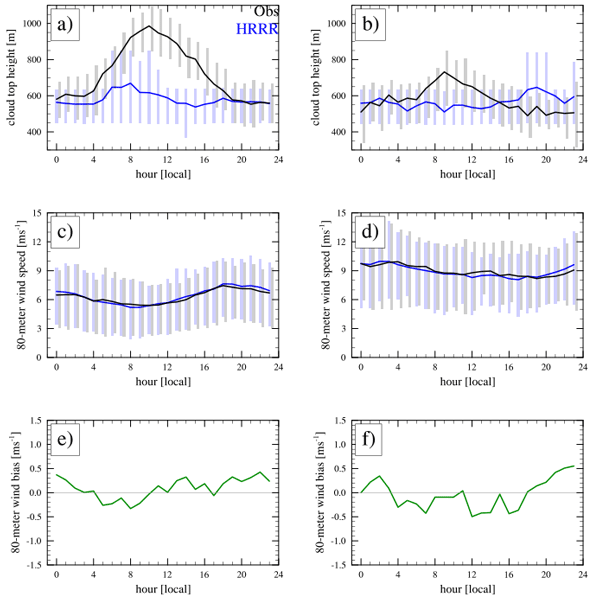
This study evaluates how well the High-Resolution Rapid Refresh (HRRR) model represents wind and cloud patterns off coastal California near Morro Bay and Humboldt. Comparisons with buoy and satellite data show that the model captures overall cloudiness but underestimates cloud top height and misses daily variations. HRRR performs well under cloudy skies but shows larger errors under clear conditions.
Arka Mitra, Virendra Ghate, and Raghavendra Krishnamurthy
Wind Energ. Sci. Discuss., https://doi.org/10.5194/wes-2025-55, https://doi.org/10.5194/wes-2025-55, 2025
Revised manuscript not accepted
Short summary
Short summary
This study introduces a new metric to quantify the spatiotemporal variability of wind resources and a novel numerical technique to locate the optimal wind resource within a large wind farm. The new metric and the novel optimization technique are applied to assist in the pre-construction wind resource assessments of two Californian offshore wind energy areas. This optimization is stable for a diverse choice of wind turbines and is easily scalable and adaptable to any other offshore location.
Jungmin Lee, Virendra P. Ghate, Arka Mitra, Lee M. Miller, Raghavendra Krishnamurthy, and Ulrike Egerer
Wind Energ. Sci., 10, 2755–2769, https://doi.org/10.5194/wes-10-2755-2025, https://doi.org/10.5194/wes-10-2755-2025, 2025
Short summary
Short summary
This study evaluates how well the High-Resolution Rapid Refresh (HRRR) model represents wind and cloud patterns off coastal California near Morro Bay and Humboldt. Comparisons with buoy and satellite data show that the model captures overall cloudiness but underestimates cloud top height and misses daily variations. HRRR performs well under cloudy skies but shows larger errors under clear conditions.
August Mikkelsen, Virendra P. Ghate, Daniel T. McCoy, and Hamish Gordon
EGUsphere, https://doi.org/10.5194/egusphere-2025-4434, https://doi.org/10.5194/egusphere-2025-4434, 2025
Short summary
Short summary
In this study, nearly 10 years of data from a radar wind profiler data stationed in the Azores is processed. The sensitivity and dynamic range of the radar are evaluated over time, and a methodology is developed and implemented to remove degraded data. With the remaining data, measurements of turbulence are retrieved and a climatology of wind data during marine conditions is created, showing increased turbulence in the marine boundary layer during autumn and winter months.
Jordan M. Eissner, David B. Mechem, Yi Jin, Virendra P. Ghate, and James F. Booth
Atmos. Chem. Phys., 25, 11275–11299, https://doi.org/10.5194/acp-25-11275-2025, https://doi.org/10.5194/acp-25-11275-2025, 2025
Short summary
Short summary
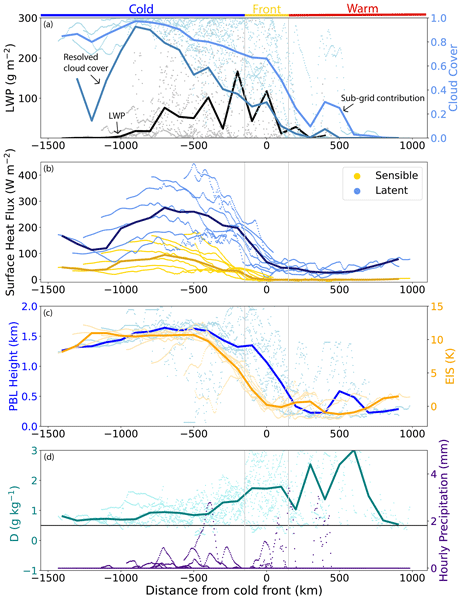
Low-level clouds have important radiative feedbacks and can occur in a range of meteorological conditions, yet our knowledge and prediction of them are insufficient. We evaluate model forecasts of low-level cloud properties across a cold front and the associated environments that they form in. The model represents the meteorological conditions well and produces broken clouds behind the cold front in areas of strong surface forcing, large stability, and large-scale subsiding motion.
Arka Mitra, Virendra Ghate, and Raghavendra Krishnamurthy
Wind Energ. Sci. Discuss., https://doi.org/10.5194/wes-2025-55, https://doi.org/10.5194/wes-2025-55, 2025
Revised manuscript not accepted
Short summary
Short summary
This study introduces a new metric to quantify the spatiotemporal variability of wind resources and a novel numerical technique to locate the optimal wind resource within a large wind farm. The new metric and the novel optimization technique are applied to assist in the pre-construction wind resource assessments of two Californian offshore wind energy areas. This optimization is stable for a diverse choice of wind turbines and is easily scalable and adaptable to any other offshore location.
Maria P. Cadeddu, Virendra P. Ghate, David D. Turner, and Thomas E. Surleta
Atmos. Chem. Phys., 23, 3453–3470, https://doi.org/10.5194/acp-23-3453-2023, https://doi.org/10.5194/acp-23-3453-2023, 2023
Short summary
Short summary
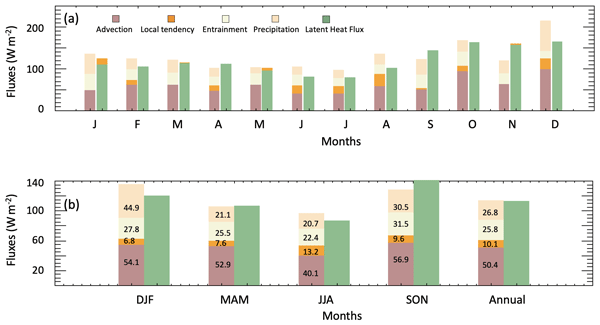
We analyze the variability in marine boundary layer moisture at the Eastern North Atlantic site on a monthly and daily temporal scale and examine its fundamental role in the control of boundary layer cloudiness and precipitation. The study also highlights the complex interaction between large-scale and local processes controlling the boundary layer moisture and the importance of the mesoscale spatial distribution of vapor to support convection and precipitation.
William J. Shaw, Larry K. Berg, Mithu Debnath, Georgios Deskos, Caroline Draxl, Virendra P. Ghate, Charlotte B. Hasager, Rao Kotamarthi, Jeffrey D. Mirocha, Paytsar Muradyan, William J. Pringle, David D. Turner, and James M. Wilczak
Wind Energ. Sci., 7, 2307–2334, https://doi.org/10.5194/wes-7-2307-2022, https://doi.org/10.5194/wes-7-2307-2022, 2022
Short summary
Short summary
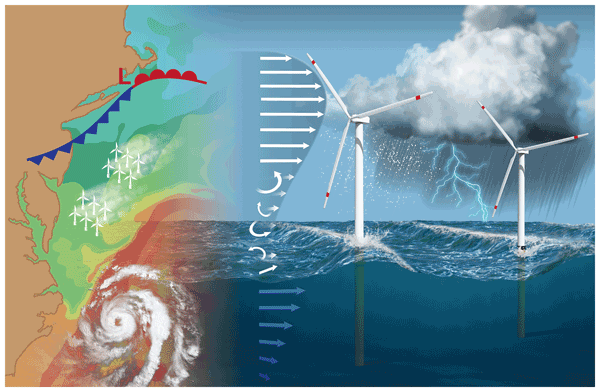
This paper provides a review of prominent scientific challenges to characterizing the offshore wind resource using as examples phenomena that occur in the rapidly developing wind energy areas off the United States. The paper also describes the current state of modeling and observations in the marine atmospheric boundary layer and provides specific recommendations for filling key current knowledge gaps.

Michael P. Jensen, Virendra P. Ghate, Dié Wang, Diana K. Apoznanski, Mary J. Bartholomew, Scott E. Giangrande, Karen L. Johnson, and Mandana M. Thieman
Atmos. Chem. Phys., 21, 14557–14571, https://doi.org/10.5194/acp-21-14557-2021, https://doi.org/10.5194/acp-21-14557-2021, 2021
Short summary
Short summary
This work compares the large-scale meteorology, cloud, aerosol, precipitation, and thermodynamics of closed- and open-cell cloud organizations using long-term observations from the astern North Atlantic. Open-cell cases are associated with cold-air outbreaks and occur in deeper boundary layers, with stronger winds and higher rain rates compared to closed-cell cases. These results offer important benchmarks for model representation of boundary layer clouds in this climatically important region.
Cited articles
Ackerman, A., Kirkpatrick, M., Stevens, D., and Toon, O. B.: The impact of humidity above stratiform clouds on indirect aerosol climate forcing, Nature, 432, 1014–1017, https://doi.org/10.1038/nature03174, 2004.
Albrecht, B. A., Fang, M., and Ghate, V. P.: Exploring stratocumulus cloud-top entrainment processes and parameterizations by using Doppler cloud radar observations, J. Atmos. Sci., 73, 729–742, https://doi.org/10.1175/JAS-D-15-0147.1, 2016.
Atkinson, B. W. and Zhang, J. W.: Mesoscale shallow convection in the atmosphere, Rev. Geophys., 34, 403–431, https://doi.org/10.1029/96RG02623, 1996.
Bony, S. and Dufresne, J.-L.: Marine boundary layer clouds at the heart of tropical cloud feedback uncertainties in climate models, J. Climate, 18, 5155–5171, https://doi.org/10.1175/JCLI3499.1, 2005.
Bony, S. and Stevens, B.: Measuring area-averaged vertical motions with dropsondes, J. Atmos. Sci., 76, 767–783, https://doi.org/10.1175/JAS-D-18-0141.1, 2019.
Borque, P., Luke, E., and Kollias, P.: On the unified estimation of turbulence eddy dissipation rate using Doppler cloud radars and lidars, J. Geophys. Res.-Atmos., 121, 5972–5989, https://doi.org/10.1002/2015JD024543, 2016.
Bretherton, C. S., Blossey, P. N., and Uchida, J.: Cloud droplet sedimentation, entrainment efficiency, and subtropical stratocumulus albedo, Geophys. Res. Lett., 34, L03813, https://doi.org/10.1029/2006GL027648, 2007.
Caldwell, P., Bretherton, C., and Wood, R.: Mixed-layer budget analysis of the diurnal cycle of entrainment in Southeast Pacific stratocumulus, J. Atmos. Sci., 62, 3775–3791, https://doi.org/10.1175/JAS3561.1, 2005.
Copernicus Climate Change Service (C3S) Climate Data Store (CDS): ERA5 hourly data on pressure levels from 1940 to present, C3S CDS [data set], https://doi.org/10.24381/cds.bd0915c6, 2023.
Córdoba, M., Dance, S. L., Kelly, G. A., Nichols, N. K., and Waller, J. A.: Diagnosing atmospheric motion vector observation errors for an operational high-resolution data assimilation system, Q. J. Roy. Meteor. Soc., 143, 333–341, https://doi.org/10.1002/qj.2925, 2017.
de Lozar, A. and Mellado, J. P.: Evaporative cooling amplification of the entrainment in radiatively driven stratocumulus, J. Atmos. Sci., 74, 489–510, https://doi.org/10.1175/JAS-D-16-0240.1, 2017.
Di Girolamo, L., Zhao, G., Zhang, G., Wang, Z., Loveridge, J., and Mitra, A.: Decadal changes in atmospheric circulation detected in cloud motion vectors, Nature, 643, 983–987, https://doi.org/10.1038/s41586-025-09242-1, 2025.
Diner, D. J., Beckert, J. C., Reilly, T. H., Bruegge, C. J., Conel, J. E., Kahn, R. A., Martonchik, J. V., Ackerman, T. P., Davies, R., Gerstl, S. A. W., Gordon, H. R., Muller, J. P., Myneni, R. B., Sellers, P. J., Pinty, B., and Verstraete, M. M.: Multi-angle Imaging SpectroRadiometer (MISR) instrument description and experiment overview, IEEE T. Geosci. Remote, 36, 1072–1087, https://doi.org/10.1109/36.700992, 1998.
Eastman, R. and Wood, R.: The Competing Effects of Stability and Humidity on Subtropical Stratocumulus Entrainment and Cloud Evolution from a Lagrangian Perspective, J. Atmos. Sci., 75, 2563–2578, https://doi.org/10.1175/JAS-D-18-0030.1, 2018
Faloona, I., Lenschow, D. H., Campos, T., Stevens, B., Van Zanten, M., Blomquist, B., Thornton, D., and Bandy, A.: Observations of entrainment in eastern Pacific marine stratocumulus using three conserved scalars, J. Atmos. Sci., 62, 3268–3285, https://doi.org/10.1175/JAS3541.1, 2005.
Gerber, H., Frick, G., Malinowski, S. P., Jonsson, H., Khelif, D., and Krueger, S. K.: Entrainment rates and microphysics in POST stratocumulus, J. Geophys. Res.-Atmos., 118, 12094–12109, https://doi.org/10.1002/jgrd.50878, 2013.
Ghate, V. P., Mechem, D. B., Cadeddu, M. P., Eloranta, E. W., Jensen, M. P., Nordeen, M. L., and Smith, W. L.: Estimates of entrainment in closed cellular marine stratocumulus clouds from the MAGIC field campaign, Q. J. Roy. Meteor. Soc., 145, 1589–1602, https://doi.org/10.1002/qj.3514, 2019.
Grosvenor, D. P., Sourdeval, O., Zuidema, P., Ackerman, A. S., Alexandrov, M. D., Bennartz, R., Boers, R., Cairns, B., Chiu, J. C., Christensen, M., Deneke, H., Diamond, M., Feingold, G., Fridlind, A., Hünerbein, A., Knist, C., Kollias, P., Marshak, A., McCoy, D., Merk, D., Painemal, D., Rausch, J., Rosenfeld, D., Russchenberg, H., Seifert, P., Sinclair, K., Stier, P., van Diedenhoven, B., Wendisch, M., Werner, F., Wood, R., Zhang, Z., and Quaas, J.: Remote sensing of droplet number concentration in warm clouds: A review of the current state of knowledge and perspectives, Rev. Geophys., 56, 409–453, https://doi.org/10.1029/2017RG000593, 2018.
Hersbach, H., Bell, B., Berrisford, P., Hirahara, S., Horányi, A., Mu noz-Sabater, J., Nicolas, J., Peubey, C., Radu, R., Schepers, D., Simmons, A., Soci, C., Abdalla, S., Abellan, X., Balsamo, G., Bechtold, P., Biavati, G., Bidlot, J., Bonavita, M., De Chiara, G., Dahlgren, P., Dee, D., Diamantakis, M., Dragani, R., Flemming, J., Forbes, R., Fuentes, M., Geer, A., Haimberger, L., Healy, S., Hogan, R. J., Hólm, E., Janisková, M., Keeley, S., Laloyaux, P., Lopez, P., Lupu, C., Radnoti, G., de Rosnay, P., Rozum, I., Vamborg, F., Villaume, S., and Thépaut, J.-N.:: The ERA5 global reanalysis, Q. J. Roy. Meteor. Soc., 146, 1999–2049, https://doi.org/10.1002/qj.3803, 2020.
Horváth, Á.: Improvements to MISR stereo motion vectors, J. Atmos. Ocean. Tech., 30, 1584–1601, https://doi.org/10.1175/JTECH-D-12-00183.1, 2013.
Janjić, T., Bormann, N., Bocquet, M., Carton, J. A., Cohn, S. E., Dance, S. L., Losa, S. N., Nichols, N. K., Potthast, R., Waller, J. A., and Weston, P.: On the representation error in data assimilation, Q. J. Roy. Meteor. Soc., 144, 1257–1278, https://doi.org/10.1002/qj.3130, 2018.
Klein, S. A. and Hartmann, D. L.: The seasonal cycle of low stratiform clouds, J. Climate, 6, 1587–1606, https://doi.org/10.1175/1520-0442(1993)006<1587:TSCOLS>2.0.CO;2, 1993.
Lappin, F., de Boer, G., Klein, P., Hamilton, J., Spencer, M., Calmer, R., Segales, A. R., Rhodes, M., Bell, T. M., Buchli, J., Britt, K., Asher, E., Medina, I., Butterworth, B., Otterstatter, L., Ritsch, M., Puxley, B., Miller, A., Jordan, A., Gomez-Faulk, C., Smith, E., Borenstein, S., Thornberry, T., Argrow, B., and Pillar-Little, E.: Data collected using small uncrewed aircraft systems during the TRacking Aerosol Convection interactions ExpeRiment (TRACER), Earth Syst. Sci. Data, 16, 2525–2541, https://doi.org/10.5194/essd-16-2525-2024, 2024.
Lonitz, K. and Horváth, Á.: Comparison of MISR and Meteosat-9 cloud-motion vectors, J. Geophys. Res.-Atmos., 116, D24202, https://doi.org/10.1029/2011JD016047, 2011.
Loveridge, J. and Di Girolamo, L.: Errors in stereoscopic retrievals of cloud top height for single-layer clouds, Atmos. Meas. Tech., 18, 3009–3033, https://doi.org/10.5194/amt-18-3009-2025, 2025.
Luo, S., Liu, Y., Niu, S., and Krueger, S. K.: Parameterizations of entrainment-mixing mechanisms and their effects on cloud droplet spectral width based on numerical simulations, J. Geophys. Res.-Atmos., 125, e2020JD032972, https://doi.org/10.1029/2020JD032972, 2020.
Martin, S., Beyrich, F., and Bange, J.: Observing entrainment processes using a small unmanned aerial vehicle: A feasibility study, Bound.-Lay. Meteorol., 150, 449–467, https://doi.org/10.1007/s10546-013-9880-4, 2014.
Malinowski, S. P., Gerber, H., Jen-La Plante, I., Kopec, M. K., Kumala, W., Nurowska, K., Chuang, P. Y., Khelif, D., and Haman, K. E.: Physics of Stratocumulus Top (POST): turbulent mixing across capping inversion, Atmos. Chem. Phys., 13, 12171–12186, https://doi.org/10.5194/acp-13-12171-2013, 2013.
Marchand, R., Mace, G. G., Ackerman, T., and Stephens, G.: An assessment of Multiangle Imaging Spectroradiometer (MISR) stereo-derived cloud top heights and cloud motion winds using ground-based radars, J. Geophys. Res.-Atmos., 112, D06204, https://doi.org/10.1029/2006JD007091, 2007.
Marchant, B., Platnick, S., Meyer, K., and Wind, G.: Evaluation of the MODIS Collection 6 multilayer cloud detection algorithm through comparisons with CloudSat Cloud Profiling Radar and CALIPSO CALIOP products, Atmos. Meas. Tech., 13, 3263–3275, https://doi.org/10.5194/amt-13-3263-2020, 2020.
Mellado, J. P.: Cloud-top entrainment in stratocumulus clouds, Annu. Rev. Fluid Mech., 49, 145–169, https://doi.org/10.1146/annurev-fluid-010816-060231, 2017.
Mellado, J. P., Stevens, B., and Schmidt, H.: Wind Shear and Buoyancy Reversal at the Top of Stratocumulus, J. Atmos. Sci., 71, 1040–1057, https://doi.org/10.1175/JAS-D-13-0189.1, 2014.
Minnis, P., Sun-Mack, S., Chen, Y., Chang, F.-L., Yost, C. R., Smith, W. L., Heck, P. W., Arduini, R. F., Bedka, S. T., Yi, Y., Hong, G., Jin, Z., Painemal, D., Palikonda, R., Scarino, B. R., Spangenberg, D. A., Smith, R. A., Trepte, Q. Z., Yang, P., and Xie, Y.: CERES Edition-4 cloud property retrievals for climate studies, IEEE T. Geosci. Remote, 58, 2259–2284, https://doi.org/10.1109/TGRS.2020.3008866, 2020.
Mitra, A., Di Girolamo, L., Hong, Y., Zhan, Y., and Mueller, K. J.: Assessment and error analysis of Terra MODIS and MISR cloud-top heights through comparison with ISS-CATS lidar, J. Geophys. Res.-Atmos., 126, e2020JD034281, https://doi.org/10.1029/2020JD034281, 2021.
Mitra, A., Loveridge, J. R., and Di Girolamo, L.: Fusion of MISR stereo cloud heights and Terra-MODIS thermal infrared radiances to estimate two-layered cloud properties, J. Geophys. Res.-Atmos., 128, e2022JD038135, https://doi.org/10.1029/2022JD038135, 2023.
Moeng, C., Stevens, B., and Sullivan, P. P.: Where is the Interface of the Stratocumulus-Topped PBL?, J. Atmos. Sci., 62, 2626–2631, https://doi.org/10.1175/JAS3470.1, 2005.
Moroney, C., Davies, R., and Muller, J.-P.: Operational retrieval of cloud-top heights using MISR data, IEEE T. Geosci. Remote, 40, 1532–1540, https://doi.org/10.1109/TGRS.2002.801150, 2002.
Mueller, K. J., Wu, D. L., Horváth, Á., Jovanovic, V. M., and Diner, D. J.: Assessment of MISR cloud motion vectors relative to geostationary and polar operational environmental satellite atmospheric motion vectors, J. Appl. Meteorol. Clim., 56, 555–572, https://doi.org/10.1175/JAMC-D-16-0112.1, 2017.
Nam, C., Bony, S., Dufresne, J.-L., and Chepfer, H.: The 'too few, too bright' tropical low-cloud problem in CMIP5 models, Geophys. Res. Lett., 39, L21801, https://doi.org/10.1029/2012GL053421, 2012.
NASA/LARC/SD/ASDC: MISR Level 3 Cloud Motion Vector monthly Product in netCDF format V002, NASA Langley Atmospheric Science Data Center DAAC [data set], https://doi.org/10.5067/Terra/MISR/MI3MCMVN_L3.002, 2012.
Norgren, M. S., Small, J. D., Jonsson, H. H., and Chuang, P. Y.: Observational estimates of detrainment and entrainment in non-precipitating shallow cumulus, Atmos. Chem. Phys., 16, 21–33, https://doi.org/10.5194/acp-16-21-2016, 2016.
Painemal, D., Xu, K.-M., Palikonda, R., and Minnis, P.: Entrainment rate diurnal cycle in marine stratiform clouds estimated from geostationary satellite retrievals and a meteorological forecast model, Geophys. Res. Lett., 44, 7482–7489, https://doi.org/10.1002/2017GL074481, 2017.
Platnick, S., Meyer, K. G., King, M. D., Wind, G., Amarasinghe, N., Marchant, B., Arnold, G. T., Zhang, Z., Hubanks, P. A., Holz, R. E., Yang, P., Ridgway, W. L., and Riedi, J.: The MODIS Cloud Optical and Microphysical Products: Collection 6 Updates and Examples From Terra and Aqua, IEEE T. Geosci. Remote, 55, 502–525, https://doi.org/10.1109/TGRS.2016.2610522, 2017.
Salonen, K., Cotton, J., Bormann, N., and Forsythe, M.: Characterizing AMV height-assignment error by comparing best-fit pressure statistics from the Met Office and ECMWF data assimilation systems, J. Appl. Meteorol. Clim., 54, 225–242, https://doi.org/10.1175/JAMC-D-14-0025.1, 2015.
Shupe, M. D., Brooks, I. M., and Canut, G.: Evaluation of turbulent dissipation rate retrievals from Doppler Cloud Radar, Atmos. Meas. Tech., 5, 1375–1385, https://doi.org/10.5194/amt-5-1375-2012, 2012.
Sorooshian, A., MacDonald, A. B., Dadashazar, H., Bates, K. H., Coggon, M. M., Craven, J. S., Crosbie, E., Hersey, S. P., Hodas, N., Lin, J. J., Negrón Marty, A., Maudlin, L. C., Metcalf, A. R., Murphy, S. M., Padró, L. T., Prabhakar, G., Rissman, T. A., Shingler, T., Varutbangkul, V., Wang, Z., Woods, R. K., Chuang, P. Y., Nenes, A., Jonsson, H. H., Flagan, R. C., and Seinfeld, J. H.: A multi-year data set on aerosol-cloud-precipitation-meteorology interactions for marine stratocumulus clouds, Sci. Data, 5, 180026, https://doi.org/10.1038/sdata.2018.26, 2018.
Stevens, B.: Atmospheric moist convection, Annu. Rev. Earth Pl. Sc., 33, 605–643, https://doi.org/10.1146/annurev.earth.33.092203.122658, 2005.
Tornow, F., Ackerman, A. S., Fridlind, A. M., Tselioudis, G., Cairns, B., Painemal, D., and Elsaesser, G.: On the impact of a dry intrusion driving cloud-regime transitions in a midlatitude cold-air outbreak, J. Atmos. Sci., 80, 2881–2896, https://doi.org/10.1175/JAS-D-23-0040.1, 2023.
Vallejos, R., Osorio, M., and Mancilla, A.: Effective sample size of spatial process models, Spat. Stat., 9, 66–92, https://doi.org/10.1016/j.spasta.2014.03.003, 2014.
Velden, C. S. and Bedka, K. M.: Identifying the uncertainty in determining satellite-derived atmospheric motion vector height attribution, J. Appl. Meteorol. Clim., 48, 450–463, https://doi.org/10.1175/2008JAMC1957.1, 2009.
Vial, J., Dufresne, J.-L., and Bony, S.: On the interpretation of inter-model spread in CMIP5 climate sensitivity estimates, Clim. Dynam., 41, 3339–3362, https://doi.org/10.1007/s00382-013-1725-9, 2013.
Vogel, R., Albright, A. L., Vial, J., George, G., Stevens, B., and Bony, S.: Strong cloud–circulation coupling explains weak trade cumulus feedback, Nature, 612, 696–700, https://doi.org/10.1038/s41586-022-05364-y, 2022.
von Engeln, A. and Teixeira, J.: A Planetary Boundary Layer Height Climatology Derived from ECMWF Reanalysis Data, J. Climate, 26, 6575–6590, https://doi.org/10.1175/JCLI-D-12-00385.1, 2013.
Wood, R.: Stratocumulus Clouds, Mon. Weather Rev., 140, 2373–2423, https://doi.org/10.1175/MWR-D-11-00121.1, 2012.
Wood, R. and Bretherton, C. S.: Boundary Layer Depth, Entrainment, and Decoupling in the Cloud-Capped Subtropical and Tropical Marine Boundary Layer, J. Climate, 17, 3576–3588, https://doi.org/10.1175/1520-0442(2004)017<3576:BLDEAD>2.0.CO;2, 2004.
Wood, R. and Hartmann, D. L.: Spatial variability of liquid water path in marine low cloud: The importance of mesoscale cellular convection, J. Climate, 19, 1748–1764, https://doi.org/10.1175/JCLI3702.1, 2006.
Xu, X., Lu, C., Liu, Y., Luo, S., Zhou, X., Endo, S., Zhu, L., and Wang, Y.: Influences of an entrainment–mixing parameterization on numerical simulations of cumulus and stratocumulus clouds, Atmos. Chem. Phys., 22, 5459–5475, https://doi.org/10.5194/acp-22-5459-2022, 2022.
Zhu, L., Wang, Y., Zhu, Y., He, X., Li, J., Wang, Y., Zhou, Y., and Lu, C.: Estimation of entrainment and detrainment rates in cumulus clouds using global satellite observations, Geophys. Res. Lett., 52, e2024GL113780, https://doi.org/10.1029/2024GL113780, 2025a.
Zhu, L., Lu, C., Xiao, D., Gao, S., Wang, Y., Zhu, Y., He, X., Li, Y., and Yang, J.: Parameterization of shallow cumulus entrainment and detrainment rates using global satellite observations: Physical and machine learning approaches, Geophys. Res. Lett., 52, e2025GL117775, https://doi.org/10.1029/2025GL117775, 2025b.
Zuidema, P., Painemal, D., DeZoeke, S. P., and Fairall, C. W.: Stratocumulus cloud-top height estimates and their climatic implications, J. Climate, 22, 4652–4666, 2009.
Short summary
Entrainment of dry warm air from above the cloud into the cloud layer modulates cloud properties and lifetime. Despite its importance, observations of entrainment remain elusive. Presented here is a technique to derive entrainment velocities using cloud top heights, and horizontal winds from the Multi-angle Imaging Spectro-Radiometer (MISR). The results motivate application of the technique to generate global climatology, and perform process-level and model-evaluation studies.
Entrainment of dry warm air from above the cloud into the cloud layer modulates cloud properties...


