
Articles | Volume 19, issue 16
https://doi.org/10.5194/amt-19-5475-2026
© Author(s) 2026. This work is distributed under
the Creative Commons Attribution 4.0 License.
the Creative Commons Attribution 4.0 License.
https://doi.org/10.5194/amt-19-5475-2026
© Author(s) 2026. This work is distributed under
the Creative Commons Attribution 4.0 License.
the Creative Commons Attribution 4.0 License.
Research article
| 
26 Aug 2026
Research article |
| 26 Aug 2026
| 26 Aug 2026
Sensitivity of bi-spectral retrievals to the fixed effective variance assumption in ship tracks

Centre for Climate Repair, University of Cambridge, Cambridge, UK
Alice Cicirello
Centre for Climate Repair, University of Cambridge, Cambridge, UK
Edward Gryspeerdt
Department of Physics, Imperial College London, London, UK
Related authors
Iarla Boyce and Alice Cicirello
EGUsphere, https://doi.org/10.5194/egusphere-2026-5483, https://doi.org/10.5194/egusphere-2026-5483, 2026
This preprint is open for discussion and under review for Atmospheric Chemistry and Physics (ACP).
Short summary
Short summary
Cloud formation depends partly on how readily aerosol particles take up water. Using measurements from a remote Atlantic site, this study shows that a widely used method can mistake differences between individual particles for changes in this property. Reproducing the measurement process showed that this effect explains almost all of the observed change. The resulting bias may lead to underestimates of the number of cloud droplets and misinterpretation of atmospheric observations.
Iarla Boyce and Alice Cicirello
EGUsphere, https://doi.org/10.5194/egusphere-2026-5483, https://doi.org/10.5194/egusphere-2026-5483, 2026
This preprint is open for discussion and under review for Atmospheric Chemistry and Physics (ACP).
Short summary
Short summary
Cloud formation depends partly on how readily aerosol particles take up water. Using measurements from a remote Atlantic site, this study shows that a widely used method can mistake differences between individual particles for changes in this property. Reproducing the measurement process showed that this effect explains almost all of the observed change. The resulting bias may lead to underestimates of the number of cloud droplets and misinterpretation of atmospheric observations.
Izabela Wojciechowska and Edward Gryspeerdt
Atmos. Chem. Phys., 26, 4571–4582, https://doi.org/10.5194/acp-26-4571-2026, https://doi.org/10.5194/acp-26-4571-2026, 2026
Short summary
Short summary
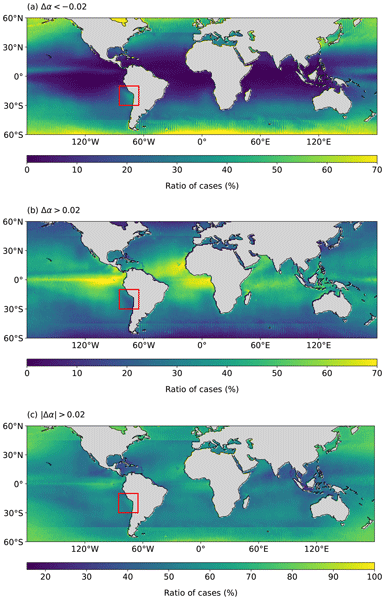
Marine clouds play a major role in cooling the Earth by reflecting sunlight, but predicting how bright they appear is not straightforward. We used satellite data from 2003 to 2021 and examined whether the brightness of marine clouds can be explained by their main properties. We found that the relationship varies across the globe, and that regional differences need to be considered to better understand cloud impact on climate.
Anna Tippett, Paul R. Field, and Edward Gryspeerdt
Atmos. Chem. Phys., 26, 4251–4274, https://doi.org/10.5194/acp-26-4251-2026, https://doi.org/10.5194/acp-26-4251-2026, 2026
Short summary
Short summary
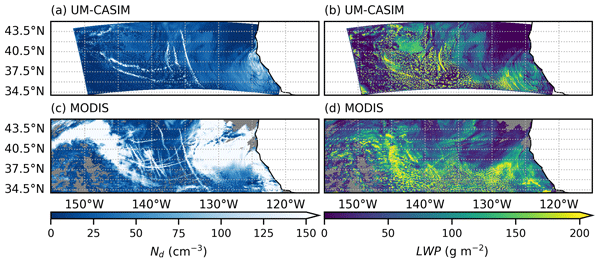
Clouds and their interactions with tiny particles in the air (aerosols) are a large source of uncertainty in climate models. To study Marine Cloud Brightening (MCB), we use ship tracks (changes to clouds from ship pollution). Comparing real ship track data with model results, we find the model struggles under rainy conditions and overestimates effects at high pollution levels, suggesting it needs improvement for reliable MCB simulations.
Vishnu Nair, Edward Gryspeerdt, Antti Arola, Antti Lipponen, and Timo Virtanen
Atmos. Chem. Phys., 26, 4049–4066, https://doi.org/10.5194/acp-26-4049-2026, https://doi.org/10.5194/acp-26-4049-2026, 2026
Short summary
Short summary
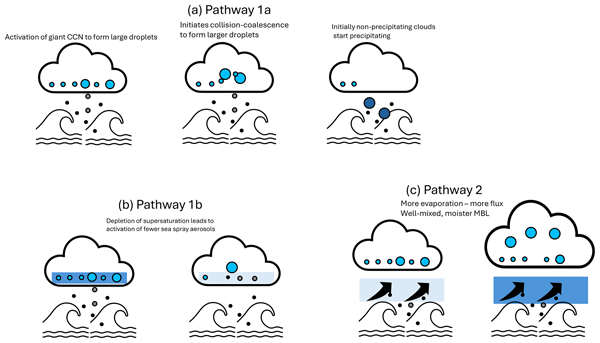
Surface winds affect clouds by generating sea salt aerosols and evaporating water from the ocean and transporting them to the cloud base. Previous studies analysed these processes using satellite snapshots; here we use observations of evolving clouds which capture feedbacks due to time-dependent adjustments of clouds to aerosol changes. We show that even though sea salt changes droplet sizes, evaporation from the ocean surface has a stronger impact on clouds, thus hiding the real aerosol effect.
Oliver G. A. Driver, Marc E. J. Stettler, and Edward Gryspeerdt
Atmos. Chem. Phys., 25, 16411–16433, https://doi.org/10.5194/acp-25-16411-2025, https://doi.org/10.5194/acp-25-16411-2025, 2025
Short summary
Short summary
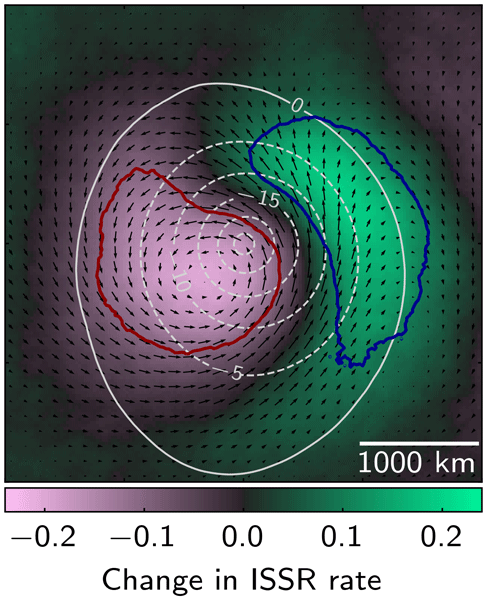
Contrails are ice clouds caused by planes. They have a warming effect, so are important to model. In humid (ice supersaturated) regions, ice crystals are stable so can persist. However, weather model data doesn't represent ice supersaturated regions well enough. We demonstrate that ice supersaturation modelling is structured by North Atlantic storm systems. Averaging many systems, we link the bias to underling processes being modelled, and gain insight into how the existing data could be used.
George Horner and Edward Gryspeerdt
Atmos. Chem. Phys., 25, 5617–5631, https://doi.org/10.5194/acp-25-5617-2025, https://doi.org/10.5194/acp-25-5617-2025, 2025
Short summary
Short summary
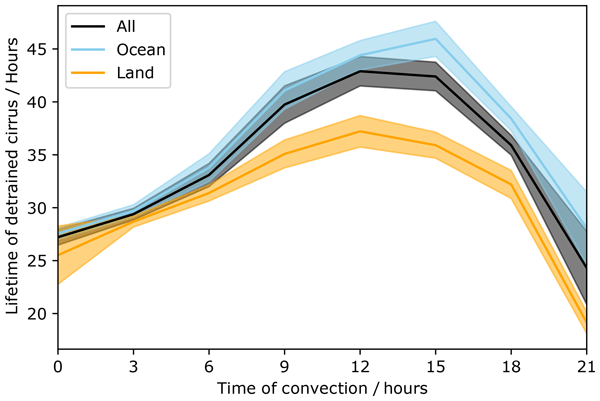
This work tracks the life cycle of thin cirrus clouds that flow out of tropical convective storms. These cirrus clouds are found to have a warming effect on the atmosphere over their whole lifetime. Thin cirrus that originate from land origin convection warm more than those of ocean origin. Moreover, if the lifetime of these cirrus clouds increase, the warming they exert over their whole lifetime also increases. These results help us understand how these clouds might change in a future climate.
Oliver G. A. Driver, Marc E. J. Stettler, and Edward Gryspeerdt
Atmos. Meas. Tech., 18, 1115–1134, https://doi.org/10.5194/amt-18-1115-2025, https://doi.org/10.5194/amt-18-1115-2025, 2025
Short summary
Short summary
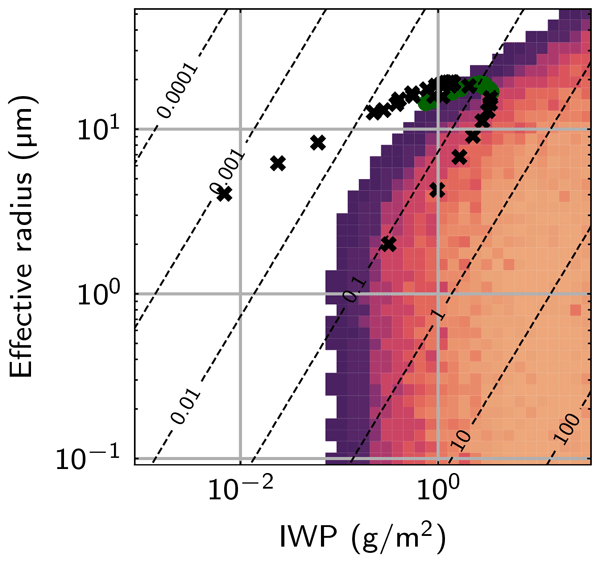
Contrails (clouds caused by planes) play a large role in the climate warming caused by aviation. Satellites are a good tool to validate modelled impact estimates. Many contrails are either too narrow or too disperse to detect. This work shows that only around half of contrails are observable but that the most climatically important are easier to detect. It supports the use of satellites for contrail observation but highlights the need for observability considerations for specific applications.
Harri Kokkola, Juha Tonttila, Silvia M. Calderón, Sami Romakkaniemi, Antti Lipponen, Aapo Peräkorpi, Tero Mielonen, Edward Gryspeerdt, Timo Henrik Virtanen, Pekka Kolmonen, and Antti Arola
Atmos. Chem. Phys., 25, 1533–1543, https://doi.org/10.5194/acp-25-1533-2025, https://doi.org/10.5194/acp-25-1533-2025, 2025
Short summary
Short summary
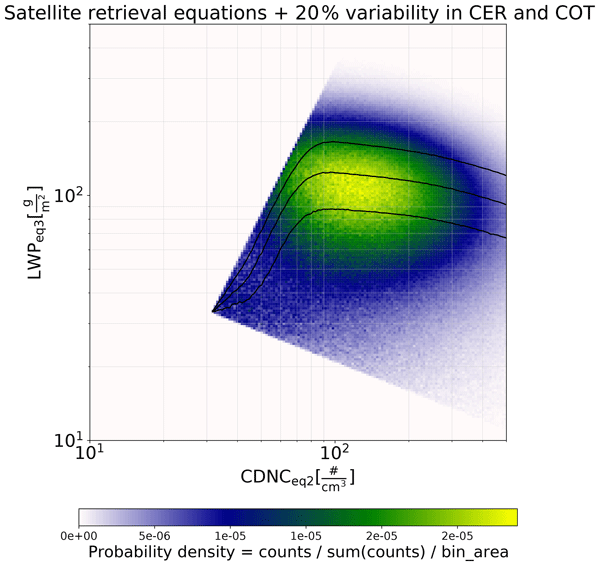
Understanding how atmospheric aerosols affect clouds is a scientific challenge. One question is how aerosols affects the amount of cloud water. We used a cloud-scale model to study these effects on marine clouds. The study showed that variations in cloud properties and instrument noise can cause bias in satellite-derived cloud water content. However, our results suggest that for similar weather conditions with well-defined aerosol concentrations, satellite data can reliably track these effects.
Jade Low, Roger Teoh, Joel Ponsonby, Edward Gryspeerdt, Marc Shapiro, and Marc E. J. Stettler
Atmos. Meas. Tech., 18, 37–56, https://doi.org/10.5194/amt-18-37-2025, https://doi.org/10.5194/amt-18-37-2025, 2025
Short summary
Short summary
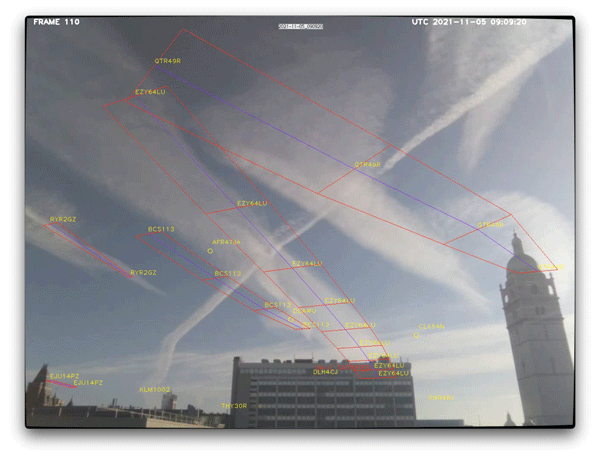
The radiative forcing due to contrails is of the same order of magnitude as aviation CO2 emissions but has a higher uncertainty. Observations are vital to improve our understanding of the contrail lifecycle, improve models, and measure the effect of mitigation action. Here, we use ground-based cameras combined with flight telemetry to track visible contrails and measure their lifetime and width. We evaluate model predictions and demonstrate the capability of this approach.
Anna Tippett, Edward Gryspeerdt, Peter Manshausen, Philip Stier, and Tristan W. P. Smith
Atmos. Chem. Phys., 24, 13269–13283, https://doi.org/10.5194/acp-24-13269-2024, https://doi.org/10.5194/acp-24-13269-2024, 2024
Short summary
Short summary
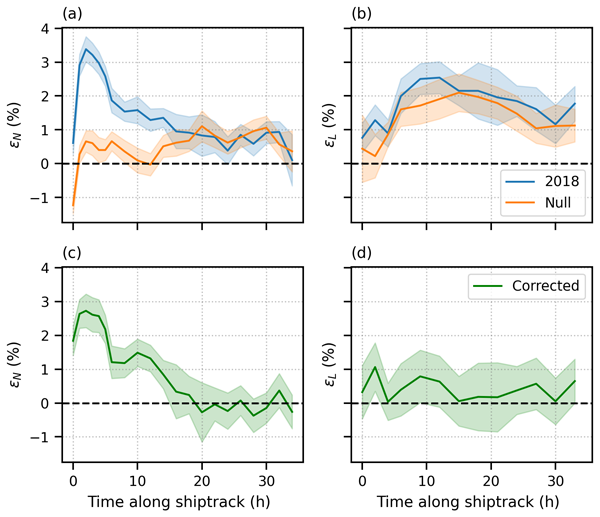
Ship emissions can form artificially brightened clouds, known as ship tracks, and provide us with an opportunity to investigate how aerosols interact with clouds. Previous studies that used ship tracks suggest that clouds can experience large increases in the amount of water (LWP) from aerosols. Here, we show that there is a bias in previous research and that, when we account for this bias, the LWP response to aerosols is much weaker than previously reported.
Rebecca J. Murray-Watson and Edward Gryspeerdt
Atmos. Chem. Phys., 24, 11115–11132, https://doi.org/10.5194/acp-24-11115-2024, https://doi.org/10.5194/acp-24-11115-2024, 2024
Short summary
Short summary
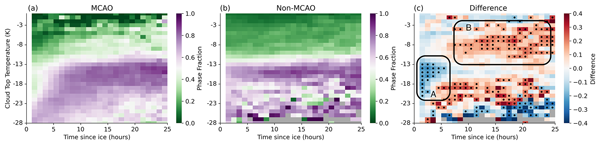
The formation of mixed-phase clouds during marine cold-air outbreaks is not well understood. Our study, using satellite data and Lagrangian trajectories, reveals that the occurrence of these clouds depends on both time and temperature, influenced partly by the presence of biological ice-nucleating particles. This highlights the importance of comprehending local aerosol dynamics for precise modelling of cloud-phase transitions in the Arctic.
Johannes Mülmenstädt, Edward Gryspeerdt, Sudhakar Dipu, Johannes Quaas, Andrew S. Ackerman, Ann M. Fridlind, Florian Tornow, Susanne E. Bauer, Andrew Gettelman, Yi Ming, Youtong Zheng, Po-Lun Ma, Hailong Wang, Kai Zhang, Matthew W. Christensen, Adam C. Varble, L. Ruby Leung, Xiaohong Liu, David Neubauer, Daniel G. Partridge, Philip Stier, and Toshihiko Takemura
Atmos. Chem. Phys., 24, 7331–7345, https://doi.org/10.5194/acp-24-7331-2024, https://doi.org/10.5194/acp-24-7331-2024, 2024
Short summary
Short summary
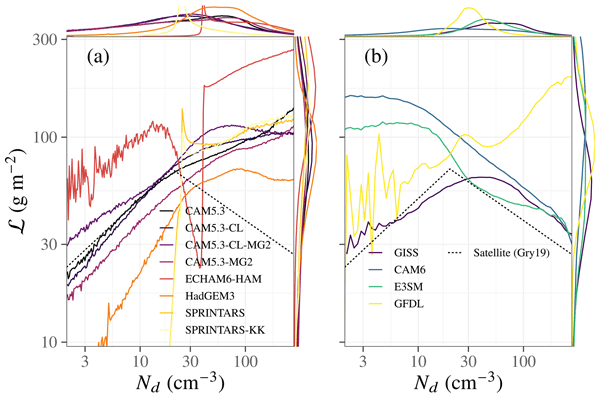
Human activities release copious amounts of small particles called aerosols into the atmosphere. These particles change how much sunlight clouds reflect to space, an important human perturbation of the climate, whose magnitude is highly uncertain. We found that the latest climate models show a negative correlation but a positive causal relationship between aerosols and cloud water. This means we need to be very careful when we interpret observational studies that can only see correlation.
George Horner and Edward Gryspeerdt
Atmos. Chem. Phys., 23, 14239–14253, https://doi.org/10.5194/acp-23-14239-2023, https://doi.org/10.5194/acp-23-14239-2023, 2023
Short summary
Short summary
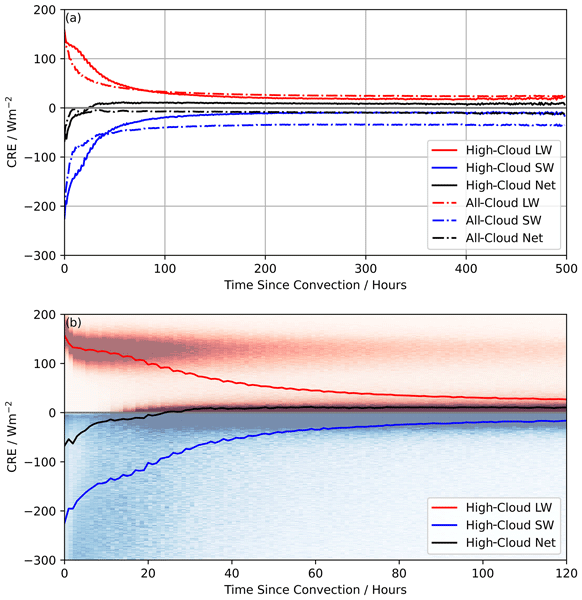
Tropical deep convective clouds, and the thin cirrus (ice) clouds that flow out from them, are important for modulating the energy budget of the tropical atmosphere. This work uses a new method to track the evolution of the properties of these clouds across their entire lifetimes. We find these clouds cool the atmosphere in the first 6 h before switching to a warming regime after the deep convective core has dissipated, which is sustained beyond 120 h from the initial convective event.
Rebecca J. Murray-Watson, Edward Gryspeerdt, and Tom Goren
Atmos. Chem. Phys., 23, 9365–9383, https://doi.org/10.5194/acp-23-9365-2023, https://doi.org/10.5194/acp-23-9365-2023, 2023
Short summary
Short summary
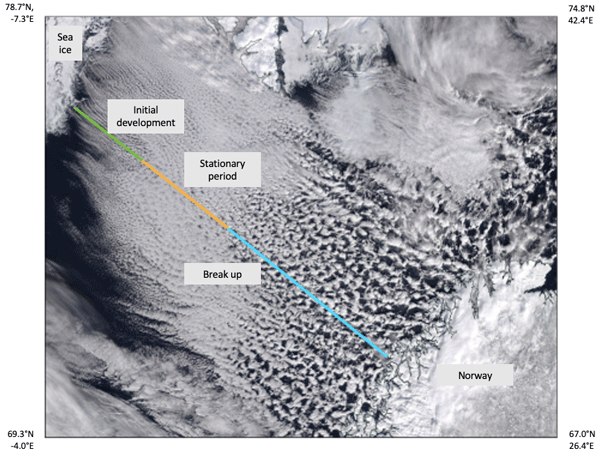
Clouds formed in Arctic marine cold air outbreaks undergo a distinct evolution, but the factors controlling their transition from high-coverage to broken cloud fields are poorly understood. We use satellite and reanalysis data to study how these clouds develop in time and the different influences on their evolution. The aerosol concentration is correlated with cloud break-up; more aerosol is linked to prolonged coverage and a stronger cooling effect, with implications for a more polluted Arctic.
Edward Gryspeerdt, Adam C. Povey, Roy G. Grainger, Otto Hasekamp, N. Christina Hsu, Jane P. Mulcahy, Andrew M. Sayer, and Armin Sorooshian
Atmos. Chem. Phys., 23, 4115–4122, https://doi.org/10.5194/acp-23-4115-2023, https://doi.org/10.5194/acp-23-4115-2023, 2023
Short summary
Short summary
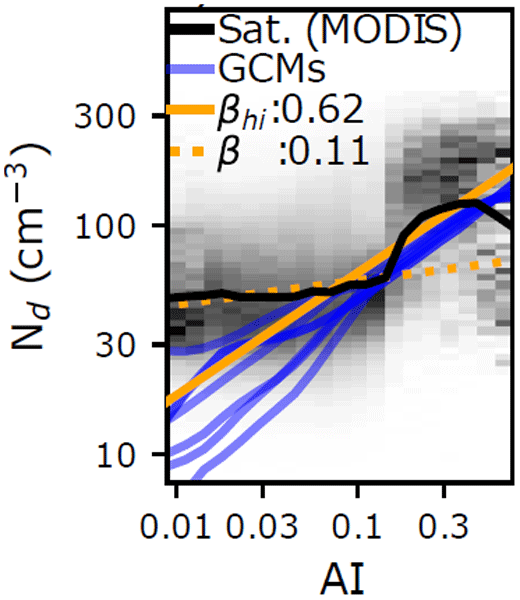
The impact of aerosols on clouds is one of the largest uncertainties in the human forcing of the climate. Aerosol can increase the concentrations of droplets in clouds, but observational and model studies produce widely varying estimates of this effect. We show that these estimates can be reconciled if only polluted clouds are studied, but this is insufficient to constrain the climate impact of aerosol. The uncertainty in aerosol impact on clouds is currently driven by cases with little aerosol.
Edward Gryspeerdt, Franziska Glassmeier, Graham Feingold, Fabian Hoffmann, and Rebecca J. Murray-Watson
Atmos. Chem. Phys., 22, 11727–11738, https://doi.org/10.5194/acp-22-11727-2022, https://doi.org/10.5194/acp-22-11727-2022, 2022
Short summary
Short summary
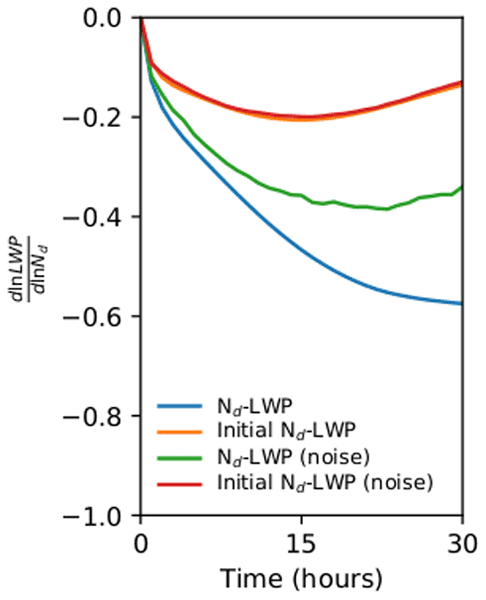
The response of clouds to changes in aerosol remains a large uncertainty in our understanding of the climate. Studies typically look at aerosol and cloud processes in snapshot images, measuring all properties at the same time. Here we use multiple images to characterise how cloud temporal development responds to aerosol. We find a reduction in liquid water path with increasing aerosol, party due to feedbacks. This suggests the aerosol impact on cloud water may be weaker than in previous studies.
Roger Teoh, Ulrich Schumann, Edward Gryspeerdt, Marc Shapiro, Jarlath Molloy, George Koudis, Christiane Voigt, and Marc E. J. Stettler
Atmos. Chem. Phys., 22, 10919–10935, https://doi.org/10.5194/acp-22-10919-2022, https://doi.org/10.5194/acp-22-10919-2022, 2022
Short summary
Short summary
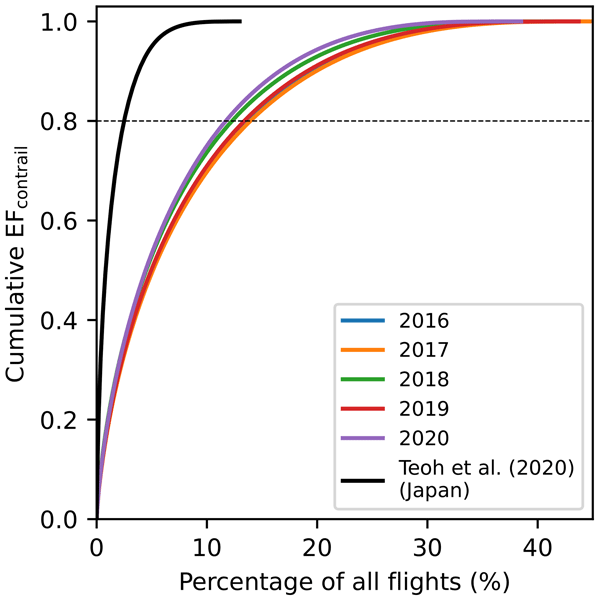
Aircraft condensation trails (contrails) contribute to over half of the climate forcing attributable to aviation. This study uses historical air traffic and weather data to simulate contrails in the North Atlantic over 5 years, from 2016 to 2021. We found large intra- and inter-year variability in contrail radiative forcing and observed a 66 % reduction due to COVID-19. Most warming contrails predominantly result from night-time flights in winter.
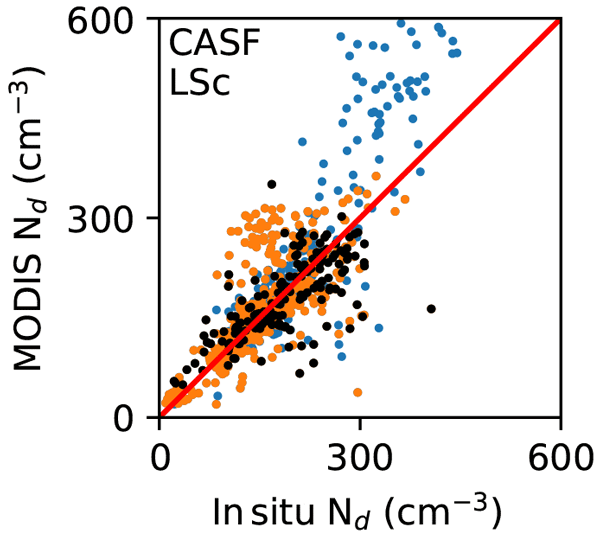
Edward Gryspeerdt, Daniel T. McCoy, Ewan Crosbie, Richard H. Moore, Graeme J. Nott, David Painemal, Jennifer Small-Griswold, Armin Sorooshian, and Luke Ziemba
Atmos. Meas. Tech., 15, 3875–3892, https://doi.org/10.5194/amt-15-3875-2022, https://doi.org/10.5194/amt-15-3875-2022, 2022
Short summary
Short summary
Droplet number concentration is a key property of clouds, influencing a variety of cloud processes. It is also used for estimating the cloud response to aerosols. The satellite retrieval depends on a number of assumptions – different sampling strategies are used to select cases where these assumptions are most likely to hold. Here we investigate the impact of these strategies on the agreement with in situ data, the droplet number climatology and estimates of the indirect radiative forcing.
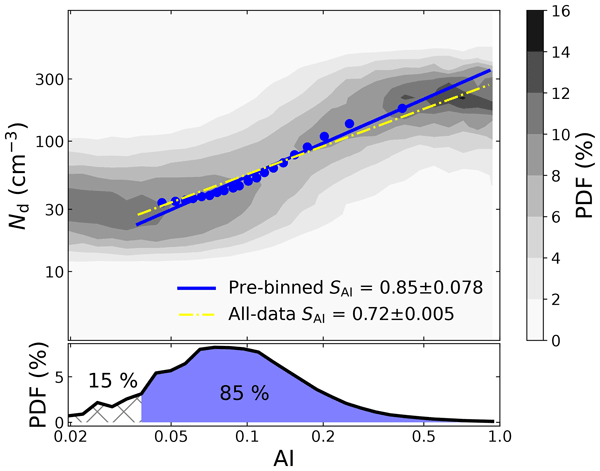
Hailing Jia, Johannes Quaas, Edward Gryspeerdt, Christoph Böhm, and Odran Sourdeval
Atmos. Chem. Phys., 22, 7353–7372, https://doi.org/10.5194/acp-22-7353-2022, https://doi.org/10.5194/acp-22-7353-2022, 2022
Short summary
Short summary
Aerosol–cloud interaction is the most uncertain component of the anthropogenic forcing of the climate. By combining satellite and reanalysis data, we show that the strength of the Twomey effect (S) increases remarkably with vertical velocity. Both the confounding effect of aerosol–precipitation interaction and the lack of vertical co-location between aerosol and cloud are found to overestimate S, whereas the retrieval biases in aerosol and cloud appear to underestimate S.
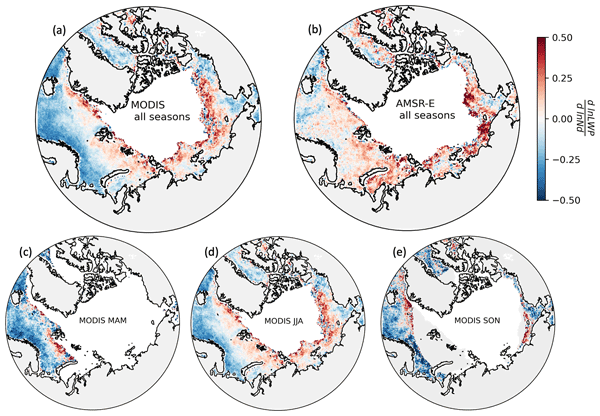
Rebecca J. Murray-Watson and Edward Gryspeerdt
Atmos. Chem. Phys., 22, 5743–5756, https://doi.org/10.5194/acp-22-5743-2022, https://doi.org/10.5194/acp-22-5743-2022, 2022
Short summary
Short summary
Clouds are important to the Arctic surface energy budget, but the impact of aerosols on their properties is largely uncertain. This work shows that the response of liquid water path to cloud droplet number increases is strongly dependent on lower tropospheric stability (LTS), with weaker cooling effects in polluted clouds and at high LTS. LTS is projected to decrease in a warmer Arctic, reducing the cooling effect of aerosols and producing a positive, aerosol-dependent cloud feedback.

Matthew W. Christensen, Andrew Gettelman, Jan Cermak, Guy Dagan, Michael Diamond, Alyson Douglas, Graham Feingold, Franziska Glassmeier, Tom Goren, Daniel P. Grosvenor, Edward Gryspeerdt, Ralph Kahn, Zhanqing Li, Po-Lun Ma, Florent Malavelle, Isabel L. McCoy, Daniel T. McCoy, Greg McFarquhar, Johannes Mülmenstädt, Sandip Pal, Anna Possner, Adam Povey, Johannes Quaas, Daniel Rosenfeld, Anja Schmidt, Roland Schrödner, Armin Sorooshian, Philip Stier, Velle Toll, Duncan Watson-Parris, Robert Wood, Mingxi Yang, and Tianle Yuan
Atmos. Chem. Phys., 22, 641–674, https://doi.org/10.5194/acp-22-641-2022, https://doi.org/10.5194/acp-22-641-2022, 2022
Short summary
Short summary
Trace gases and aerosols (tiny airborne particles) are released from a variety of point sources around the globe. Examples include volcanoes, industrial chimneys, forest fires, and ship stacks. These sources provide opportunistic experiments with which to quantify the role of aerosols in modifying cloud properties. We review the current state of understanding on the influence of aerosol on climate built from the wide range of natural and anthropogenic laboratories investigated in recent decades.
Cited articles
Ackerman, A. S., Kirkpatrick, M. P., Stevens, D. E., and Toon, O. B.: The impact of humidity above stratiform clouds on indirect aerosol climate forcing, Nature, 432, 1014–1017, 2004. a
Albrecht, B. A.: Aerosols, cloud microphysics, and fractional cloudiness, Science, 245, 1227–1230, 1989. a
Bellouin, N., Quaas, J., Gryspeerdt, E., Kinne, S., Stier, P., Watson-Parris, D., Boucher, O., Carslaw, K. S., Christensen, M., Daniau, A.-L., Dufresne, J.-L., Feingold, G., Fiedler, S., Forster, P., Gettelman, A., Haywood, J. M., Lohmann, U., Malavelle, F., Mauritsen, T., McCoy, D. T., Myhre, G., Mülmenstädt, J., Neubauer, D., Possner, A., Rugenstein, M., Sato, Y., Schulz, M., Schwartz, S. E., Sourdeval, O., Storelvmo, T., Toll, V., Winker, D., and Stevens, B.:: Bounding global aerosol radiative forcing of climate change, Rev. Geophys., 58, e2019RG000660, https://doi.org/10.1029/2019RG000660, 2020. a, b
Boyce, I., Gryspeerdt, E., and Cicirello, A.: Analysis code for: Sensitivity of bi-spectral cloud retrievals to the fixed effective variance assumption, Zenodo [software], https://doi.org/10.5281/zenodo.20328197, 2026a. a
Boyce, I., Gryspeerdt, E., and Cicirello, A.: Assessing retrieval biases in ship tracks, Zenodo [data set], https://doi.org/10.5281/zenodo.19699485, 2026b. a
Brenguier, J.-L., Pawlowska, H., Schüller, L., Preusker, R., Fischer, J., and Fouquart, Y.: Radiative properties of boundary layer clouds: Droplet effective radius versus number concentration, J. Atmos. Sci., 57, 803–821, 2000. a
Bretherton, C., Blossey, P. N., and Uchida, J.: Cloud droplet sedimentation, entrainment efficiency, and subtropical stratocumulus albedo, Geophys. Res. Lett., 34, L03813, https://doi.org/10.1029/2006GL027648, 2007. a
Chen, Y.-C., Christensen, M. W., Xue, L., Sorooshian, A., Stephens, G. L., Rasmussen, R. M., and Seinfeld, J. H.: Occurrence of lower cloud albedo in ship tracks, Atmos. Chem. Phys., 12, 8223–8235, https://doi.org/10.5194/acp-12-8223-2012, 2012. a, b
Christensen, M. W. and Stephens, G. L.: Microphysical and macrophysical responses of marine stratocumulus polluted by underlying ships: Evidence of cloud deepening, J. Geophys. Res.-Atmos., 116, D03201, https://doi.org/10.1029/2010JD014638, 2011. a
Christensen, M. W., Gettelman, A., Cermak, J., Dagan, G., Diamond, M., Douglas, A., Feingold, G., Glassmeier, F., Goren, T., Grosvenor, D. P., Gryspeerdt, E., Kahn, R., Li, Z., Ma, P.-L., Malavelle, F., McCoy, I. L., McCoy, D. T., McFarquhar, G., Mülmenstädt, J., Pal, S., Possner, A., Povey, A., Quaas, J., Rosenfeld, D., Schmidt, A., Schrödner, R., Sorooshian, A., Stier, P., Toll, V., Watson-Parris, D., Wood, R., Yang, M., and Yuan, T.: Opportunistic experiments to constrain aerosol effective radiative forcing, Atmos. Chem. Phys., 22, 641–674, https://doi.org/10.5194/acp-22-641-2022, 2022. a
Chun, J.-Y., Wood, R., Blossey, P., and Doherty, S. J.: Microphysical, macrophysical, and radiative responses of subtropical marine clouds to aerosol injections, Atmos. Chem. Phys., 23, 1345–1368, https://doi.org/10.5194/acp-23-1345-2023, 2023. a
Emde, C., Buras-Schnell, R., Kylling, A., Mayer, B., Gasteiger, J., Hamann, U., Kylling, J., Richter, B., Pause, C., Dowling, T., and Bugliaro, L.: The libRadtran software package for radiative transfer calculations (version 2.0.1), Geosci. Model Dev., 9, 1647–1672, https://doi.org/10.5194/gmd-9-1647-2016, 2016. a, b, c
Feingold, G., Ghate, V. P., Russell, L. M., Blossey, P., Cantrell, W., Christensen, M. W., Diamond, M. S., Gettelman, A., Glassmeier, F., Gryspeerdt, E., Haywood, J., Hoffmann, F., Kaul, C. M., Lebsock, M., McComiskey, A. C., McCoy, D. T., Ming, Y., Mülmenstädt, J., Possner, A., Prabhakaran, P., Quinn, P. K., Schmidt, K. S., Shaw, R. A., Singer, C. E., Sorooshian, A., Toll, V., Wan, J. S., Wood, R., Yang, F., Zhang, J., and Zheng, X.: Physical science research needed to evaluate the viability and risks of marine cloud brightening, Sci. Adv., 10, eadi8594, https://doi.org/10.1126/sciadv.adi8594, 2024. a
Forster, P. M., Storelvmo, T., Armour, K., Collins, W., Dufresne, J.-L., Frame, D., Lunt, D. J., Mauritsen, T., Palmer, M. D., Watanabe, M., Wild, M., and Zhang, H.: The Earth's Energy Budget, Climate Feedbacks, and Climate Sensitivity, in: Climate Change 2021: The Physical Science Basis. Contribution of Working Group I to the Sixth Assessment Report of the Intergovernmental Panel on Climate Change, 923–1054, Cambridge University Press, Cambridge, United Kingdom and New York, NY, USA, https://doi.org/10.1017/9781009157896.009, 2021. a
Goren, T., Choudhury, G., Kretzschmar, J., and McCoy, I.: Co-variability drives the inverted-V sensitivity between liquid water path and droplet concentrations, Atmos. Chem. Phys., 25, 3413–3423, https://doi.org/10.5194/acp-25-3413-2025, 2025. a
Grosvenor, D. P., Sourdeval, O., Zuidema, P., Ackerman, A., Alexandrov, M. D., Bennartz, R., Boers, R., Cairns, B., Chiu, J. C., Christensen, M., Deneke, H., Diamond, M., Feingold, G., Fridlind, A., Hünerbein, A., Knist, C., Kollias, P., Marshak, A., McCoy, D., Merk, D., Painemal, D., Rausch, J., Rosenfeld, D., Russchenberg, H., Seifert, P., Sinclair, K., Stier, P., van Diedenhoven, B., Wendisch, M., Werner, F., Wood, R., Zhang, Z., and Quaas, J.: Remote sensing of droplet number concentration in warm clouds: A review of the current state of knowledge and perspectives, Rev. Geophys., 56, 409–453, 2018. a, b, c, d, e
Gryspeerdt, E. and Driver, O.: pyLRT, Zenodo [code], https://doi.org/10.5281/zenodo.11626012, 2024. a, b
Gryspeerdt, E., Mülmenstädt, J., Gettelman, A., Malavelle, F. F., Morrison, H., Neubauer, D., Partridge, D. G., Stier, P., Takemura, T., Wang, H., Wang, M., and Zhang, K.: Surprising similarities in model and observational aerosol radiative forcing estimates, Atmos. Chem. Phys., 20, 613–623, https://doi.org/10.5194/acp-20-613-2020, 2020. a
Gryspeerdt, E., Goren, T., and Smith, T. W. P.: Observing the timescales of aerosol–cloud interactions in snapshot satellite images, Atmos. Chem. Phys., 21, 6093–6109, https://doi.org/10.5194/acp-21-6093-2021, 2021. a, b, c, d
Gryspeerdt, E., Povey, A. C., Grainger, R. G., Hasekamp, O., Hsu, N. C., Mulcahy, J. P., Sayer, A. M., and Sorooshian, A.: Uncertainty in aerosol–cloud radiative forcing is driven by clean conditions, Atmos. Chem. Phys., 23, 4115–4122, https://doi.org/10.5194/acp-23-4115-2023, 2023. a
Hansen, J. E.: Multiple Scattering of Polarized Light in Planetary Atmospheres Part II. Sunlight Reflected by Terrestrial Water Clouds, J. Atmos. Sci., 28, 1400–1426, 1971. a
King, M. D., Tsay, S.-C., Platnick, S. E., Wang, M., and Liou, K.-N.: Cloud retrieval algorithms for MODIS: Optical thickness, effective particle radius, and thermodynamic phase, MODIS Algorithm Theoretical Basis Document, 440, https://modis.gsfc.nasa.gov/data/atbd/atbd_mod05.pdf (last access: 25 August 2026), 1997. a, b, c, d
Koch, D. and Del Genio, A. D.: Black carbon semi-direct effects on cloud cover: review and synthesis, Atmos. Chem. Phys., 10, 7685–7696, https://doi.org/10.5194/acp-10-7685-2010, 2010. a
Lai, R., Teng, S., Yi, B., Letu, H., Min, M., Tang, S., and Liu, C.: Comparison of cloud properties from Himawari-8 and FengYun-4A geostationary satellite radiometers with MODIS cloud retrievals, Remote Sens., 11, 1703, https://doi.org/10.3390/rs11141703, 2019. a
Latham, J., Bower, K., Choularton, T., Coe, H., Connolly, P., Cooper, G., Craft, T., Foster, J., Gadian, A., Galbraith, L., Iacovides, H., Johnston, D., Launder, B., Leslie, B., Meyer, J., Neukermans, A., Ormond, B., Parkes, B., Rasch, P., Rush, J., Salter, S., Stevenson, T., Wang, H., Wang, Q., and Wood, R.: Marine cloud brightening, Philos. T. R. Soc. A, 370, 4217, https://doi.org/10.1098/rsta.2012.0086, 2012. a
Lim, J.-S. and Hoffmann, F.: Aging of droplet size distribution in stratocumulus clouds: regimes of droplet size distribution evolution, Atmos. Chem. Phys., 26, 5427–5446, https://doi.org/10.5194/acp-26-5427-2026, 2026. a
Liu, C. and Teng, S.: Enhancing global cloud property retrieval capabilities by optimizing satellite spectral channels, Science China Earth Sciences, 69, 1–5, https://doi.org/10.1007/s11430-026-1971-7, 2026. a
Liu, C., Song, Y., Zhou, G., Teng, S., Li, B., Xu, N., Lu, F., and Zhang, P.: A cloud optical and microphysical property product for the advanced geosynchronous radiation imager onboard China's Fengyun-4 satellites: The first version, Atmospheric and Oceanic Science Letters, 16, 100337, https://doi.org/10.1016/j.aosl.2023.100337, 2023. a
Liu, Y., Daum, P. H., Guo, H., and Peng, Y.: Dispersion bias, dispersion effect, and the aerosol–cloud conundrum, Environ. Res. Lett., 3, 045021, https://doi.org/10.1088/1748-9326/3/4/045021, 2008. a, b
Maddux, B., Ackerman, S., and Platnick, S.: Viewing geometry dependencies in MODIS cloud products, J. Atmos. Ocean. Tech., 27, 1519–1528, 2010. a
Noone, K. J., Johnson, D. W., Taylor, J. P., Ferek, R. J., Garrett, T., Hobbs, P. V., Durkee, P. A., Nielsen, K., Öström, E., O'Dowd, C. D., Smith, M. H., Russell, L. M., Flagan, R. C., Seinfeld, J. H., De Bock, L., Van Grieken, R. E., Hudson, J. G., Brooks, I., Gasparovic, R. F., and Pockalny, R. A.: A case study of ship track formation in a polluted marine boundary layer, J. Atmos. Sci., 57, 2748–2764, 2000a. a
Noone, K. J., Öström, E., Ferek, R. J., Garrett, T., Hobbs, P. V., Johnson, D. W., Taylor, J. P., Russell, L. M., Flagan, R. C., Seinfeld, J. H., O’Dowd, C. D., Smith, M. H., Durkee, P. A., Nielsen, K., Hudson, J. G., Pockalny, R. A., De Bock, L., Van Grieken, R. E., Gasparovic, R. F., and Brooks, I.: A case study of ships forming and not forming tracks in moderately polluted clouds, J. Atmos. Sci., 57, 2729–2747, 2000b. a
Passer, S. R., Witte, M. K., and Chuang, P. Y.: Aircraft evaluation of MODIS cloud drop number concentration retrievals, Atmos. Meas. Tech., 18, 3819–3831, https://doi.org/10.5194/amt-18-3819-2025, 2025. a
Platnick, S., Meyer, K. G., King, M. D., Wind, G., Amarasinghe, N., Marchant, B., Arnold, G. T., Zhang, Z., Hubanks, P. A., Holz, R. E., Yang, P., Ridgway, W. L., and Riedi, J.: The MODIS cloud optical and microphysical products: Collection 6 updates and examples from Terra and Aqua, IEEE T. Geosci. Remote, 55, 502–525, 2016. a
Quaas, J., Boucher, O., Bellouin, N., and Kinne, S.: Satellite-based estimate of the direct and indirect aerosol climate forcing, J. Geophys. Res.-Atmos., 113, D05204, https://doi.org/10.1029/2007JD008962, 2008. a
Quaas, J., Ming, Y., Menon, S., Takemura, T., Wang, M., Penner, J. E., Gettelman, A., Lohmann, U., Bellouin, N., Boucher, O., Sayer, A. M., Thomas, G. E., McComiskey, A., Feingold, G., Hoose, C., Kristjánsson, J. E., Liu, X., Balkanski, Y., Donner, L. J., Ginoux, P. A., Stier, P., Grandey, B., Feichter, J., Sednev, I., Bauer, S. E., Koch, D., Grainger, R. G., Kirkevåg, A., Iversen, T., Seland, Ø., Easter, R., Ghan, S. J., Rasch, P. J., Morrison, H., Lamarque, J.-F., Iacono, M. J., Kinne, S., and Schulz, M.: Aerosol indirect effects – general circulation model intercomparison and evaluation with satellite data, Atmos. Chem. Phys., 9, 8697–8717, https://doi.org/10.5194/acp-9-8697-2009, 2009. a
Stamnes, K., Tsay, S.-C., Wiscombe, W., and Laszlo, I.: DISORT, a general-purpose Fortran program for discrete-ordinate-method radiative transfer in scattering and emitting layered media: documentation of methodology, Technical report, Stevens Institute of Technology, Hoboken, NJ, https://www.libradtran.org/lib/exe/fetch.php?media=disortreport1.1.pdf (last access: 25 August 2026), 2000. a
Stephens, G. L.: Radiation profiles in extended water clouds. II: Parameterization schemes, J. Atmos. Sci., 35, 2123–2132, 1978. a
Tippett, A., Gryspeerdt, E., Manshausen, P., Stier, P., and Smith, T. W. P.: Weak liquid water path response in ship tracks, Atmos. Chem. Phys., 24, 13269–13283, https://doi.org/10.5194/acp-24-13269-2024, 2024. a, b
Twomey, S.: Pollution and the planetary albedo, Atmos. Environ., 8, 1251–1256, 1974. a
Witte, M. K., Yuan, T., Chuang, P. Y., Platnick, S., Meyer, K. G., Wind, G., and Jonsson, H. H.: MODIS retrievals of cloud effective radius in marine stratocumulus exhibit no significant bias, Geophys. Res. Lett., 45, 10656–10664, https://doi.org/10.1029/2018GL079325, 2018. a
Zhang, J. and Feingold, G.: Distinct regional meteorological influences on low-cloud albedo susceptibility over global marine stratocumulus regions, Atmos. Chem. Phys., 23, 1073–1090, https://doi.org/10.5194/acp-23-1073-2023, 2023. a
Short summary
We tested whether satellites accurately measure clouds affected by ship pollution. Using computer simulations, we found that satellites overestimate how much cloud droplet numbers rise in polluted ship tracks compared to nearby clean clouds. This means the cooling effect of pollution on clouds may be overstated, which matters for strategies like marine cloud brightening that aim to boost this cooling effect deliberately.
We tested whether satellites accurately measure clouds affected by ship pollution. Using...


