
Articles | Volume 19, issue 17
https://doi.org/10.5194/amt-19-5683-2026
© Author(s) 2026. This work is distributed under
the Creative Commons Attribution 4.0 License.
the Creative Commons Attribution 4.0 License.
https://doi.org/10.5194/amt-19-5683-2026
© Author(s) 2026. This work is distributed under
the Creative Commons Attribution 4.0 License.
the Creative Commons Attribution 4.0 License.
Research article
| 
07 Sep 2026
Research article |
| 07 Sep 2026
| 07 Sep 2026
CRUX-1.0: an automatic GHG and Ozone observation system for inland Antarctica Plateau
Biao Tian
State Key Laboratory of Disaster Weather Science and Technology, Chinese Academy of Meteorological Sciences, Beijing 100081, China
School of Earth and Space Sciences, Peking University, Beijing 100871, China

State Key Laboratory of Disaster Weather Science and Technology, Chinese Academy of Meteorological Sciences, Beijing 100081, China
Key Laboratory of Polar Atmosphere-ocean-ice System for Weather and Climate, Ministry of Education, Shanghai 200438, China
Kongju Zhu
State Key Laboratory of Disaster Weather Science and Technology, Chinese Academy of Meteorological Sciences, Beijing 100081, China
Xu Yao
Polar Research Institute of China, Shanghai 200136, China
Yixi Zhao
State Key Laboratory of Disaster Weather Science and Technology, Chinese Academy of Meteorological Sciences, Beijing 100081, China
Wenqian Zhang
State Key Laboratory of Disaster Weather Science and Technology, Chinese Academy of Meteorological Sciences, Beijing 100081, China
Diyi Yang
Haining Meteorological Bureau, Haining 314400, China
Weijun Sun
College of Geography and Environment, Shandong Normal University, Jinan 250014, China
Yining Yu
State Key Laboratory of Disaster Weather Science and Technology, Chinese Academy of Meteorological Sciences, Beijing 100081, China
Shoudong Zhao
State Key Laboratory of Disaster Weather Science and Technology, Chinese Academy of Meteorological Sciences, Beijing 100081, China
Yige Cui
State Key Laboratory of Disaster Weather Science and Technology, Chinese Academy of Meteorological Sciences, Beijing 100081, China
Chuanjin Li
Polar Research Institute of China, Shanghai 200136, China
Jie Tang
State Key Laboratory of Disaster Weather Science and Technology, Chinese Academy of Meteorological Sciences, Beijing 100081, China
Cunde Xiao
Key Laboratory of Polar Atmosphere-ocean-ice System for Weather and Climate, Ministry of Education, Shanghai 200438, China
College of Environmental Sciences and Engineering, Peking University, Beijing 100871, China
Renhe Zhang
Key Laboratory of Polar Atmosphere-ocean-ice System for Weather and Climate, Ministry of Education, Shanghai 200438, China
Related authors
Jiayi Sun, Junmei Lv, Haoran Li, Wenqian Zhang, Biao Tian, and Minghu Ding
The Cryosphere, 20, 4049–4059, https://doi.org/10.5194/tc-20-4049-2026, https://doi.org/10.5194/tc-20-4049-2026, 2026
Short summary
Short summary
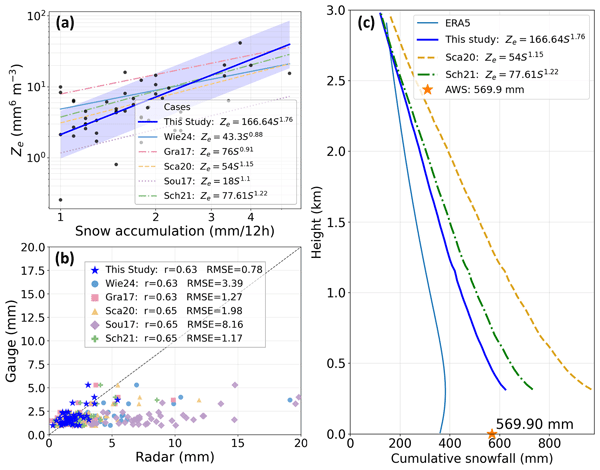
This study reports two years of Micro Rain Radar observations from Great Wall Station, from March 2024 to February 2026. Near-surface precipitation and snowfall occurred during 32 % and 21 % of the time. The signal changed little with height, suggesting frequent shallow snowfall. Weak winds had little effect, while stronger winds likely affected radar observations below 0.7 km. A radar-based snowfall estimate shows that the ERA5 reanalysis product underestimates cumulative snowfall.
Ruiqi Nan, Biao Tian, Xinfeng Ling, Weijun Sun, Yixi Zhao, Dongqi Zhang, Chuanjin Li, Xin Wang, Jie Tang, Bo Yao, and Minghu Ding
Earth Syst. Sci. Data, 17, 6097–6111, https://doi.org/10.5194/essd-17-6097-2025, https://doi.org/10.5194/essd-17-6097-2025, 2025
Short summary
Short summary
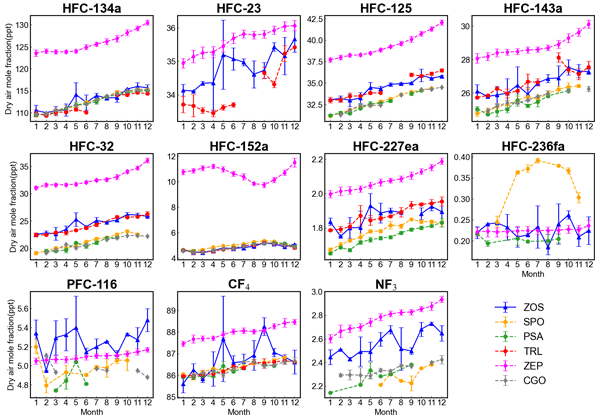
This study presents the first dataset of 11 fluorinated greenhouse gases observed in 2021 at Zhongshan Station, Antarctica. The concentrations of most gases increased and were higher than at two other Antarctic stations. Their sources were linked to industrial activities such as refrigeration and electronics. Although limited to one year, the data provide important background information for detecting future changes in the Antarctic atmosphere.
Shuyu Zhao, Tian Feng, Xuexi Tie, Biao Tian, Xiao Hu, Bo Hu, Dong Yang, Sinan Gu, and Minghu Ding
Atmos. Chem. Phys., 25, 12483–12496, https://doi.org/10.5194/acp-25-12483-2025, https://doi.org/10.5194/acp-25-12483-2025, 2025
Short summary
Short summary
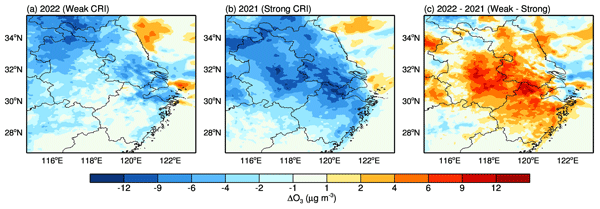
This study investigated how cloud–radiation interactions influence ozone formation in a warming climate. Using measurements, reanalysis data, and models, we found that cloud–radiation interactions can worsen O3 pollution, and climate warming will amplify the influence. We highlight that climate change will pose greater challenges for China's O3 pollution prevention and control, and actions such as reducing O3 precursors emissions and mitigating climate change are urgently needed.
Lijing Chen, Lei Zhang, Yong She, Zhaoliang Zeng, Yu Zheng, Biao Tian, Wenqian Zhang, Zhaohui Liu, Huizheng Che, and Minghu Ding
Atmos. Chem. Phys., 25, 727–739, https://doi.org/10.5194/acp-25-727-2025, https://doi.org/10.5194/acp-25-727-2025, 2025
Short summary
Short summary
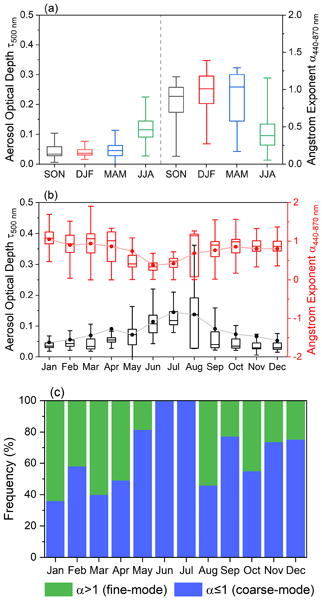
Aerosol optical depth (AOD) at Zhongshan Station varies seasonally, with lower values in summer and higher values in winter. Winter and spring AOD increases due to reduced fine-mode particles, while summer and autumn increases are linked to particle growth. Diurnal AOD variation correlates positively with temperature but negatively with wind speed and humidity. Backward trajectories show that aerosols on high-AOD (low-AOD) days primarily originate from the ocean (interior Antarctica).
Wenhao Zhou, Shunde Pan, Chunxiang Ye, Jianshu Wang, Chong Zhang, Haoqi Wang, Shaojie Song, Weili Lin, and Tong Zhu
EGUsphere, https://doi.org/10.5194/egusphere-2026-5878, https://doi.org/10.5194/egusphere-2026-5878, 2026
This preprint is open for discussion and under review for Atmospheric Chemistry and Physics (ACP).
Short summary
Short summary
Air quality models often miss a source of nitrous acid, a gas that drives reactions affecting pollution. We used laboratory and field data to model how sunlight turns nitrate in grime on outdoor surfaces into nitrous acid. Adding this process to an air quality model for China explained up to 85 % of the gap between modelled and measured levels. It was especially important in clean air, showing that nitrate stored on surfaces can keep shaping ozone and particle pollution after the air clears.
Qiqi Mo, Longjie Wen, Gang Zhao, Chunxiang Ye, Jie Sun, Weili Lin, Fengjun Shen, Tong Liu, Yicheng Gao, Yi Chen, Tiantian Zhang, and Tong Zhu
Atmos. Chem. Phys., 26, 11473–11489, https://doi.org/10.5194/acp-26-11473-2026, https://doi.org/10.5194/acp-26-11473-2026, 2026
Short summary
Short summary
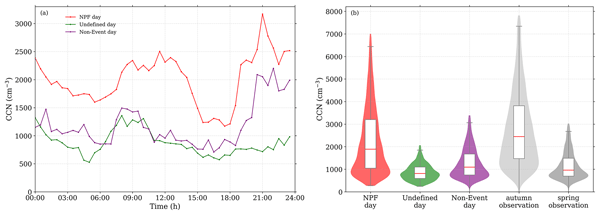
Measurements in Lhasa show that new airborne particles formed on most observation days. They were more frequent during the autumn campaign than during the spring campaign and were linked to increases in particles that can help form clouds. The findings improve our understanding of how city air may affect clouds and climate in high-altitude regions.
Jiayi Sun, Junmei Lv, Haoran Li, Wenqian Zhang, Biao Tian, and Minghu Ding
The Cryosphere, 20, 4049–4059, https://doi.org/10.5194/tc-20-4049-2026, https://doi.org/10.5194/tc-20-4049-2026, 2026
Short summary
Short summary
This study reports two years of Micro Rain Radar observations from Great Wall Station, from March 2024 to February 2026. Near-surface precipitation and snowfall occurred during 32 % and 21 % of the time. The signal changed little with height, suggesting frequent shallow snowfall. Weak winds had little effect, while stronger winds likely affected radar observations below 0.7 km. A radar-based snowfall estimate shows that the ERA5 reanalysis product underestimates cumulative snowfall.
Xiyue Zhang, Minghu Ding, Diyi Yang, Bin Cheng, Ian Allison, Kongju Zhu, Yuande Yang, Xiangbin Cui, Petra Heil, Chuanjin Li, and Cunde Xiao
EGUsphere, https://doi.org/10.5194/egusphere-2026-2150, https://doi.org/10.5194/egusphere-2026-2150, 2026
Short summary
Short summary
Stake measurements underestimate Antarctic surface mass balance (SMB) due to firn compaction. Using a firn densification model, we correct 2008-2024 stake records from Dome A. The corrected mean annual SMB is 24.14 kg m-2 yr-1, 8.8 % higher than uncorrected values, whereas RACMO2.4p1 gives 17.50 kg m-2 yr-1. The net vapor flux is equivalent to 5.7 % of the total mass input. This framework provides observational benchmarks for climate models, and supports oldest‑ice drilling at Dome A.
Chengyan Liu, Zhaomin Wang, Dake Chen, Xianxian Han, Hengling Leng, Xi Liang, Liangjun Yan, Xiang Li, Craig Stevens, Andrew McC. Hogg, Kazuya Kusahara, Kaihe Yamazaki, Kay I. Ohshima, Meng Zhou, Xiao Cheng, Dongxiao Wang, Changming Dong, Jiping Liu, Qinghua Yang, Xichen Li, Ruibo Lei, Minghu Ding, Zhaoru Zhang, Dujuan Kang, Di Qi, Tongya Liu, Jihai Dong, Lu An, Ru Chen, Tong Zhang, Xiaoming Hu, Bo Han, Haibo Bi, Qi Shu, Longjiang Mu, Shiming Xu, Hu Yang, Hailong Liu, Tingfeng Dou, Zhixuan Feng, Lei Zheng, Xueyuan Tang, Guitao Shi, Yongqing Cai, Bingrui Li, Yang Wu, Xia Lin, Wenjin Sun, Yu Liu, Kai Yu, Yu Zhang, Weizeng Shao, Xiaoyu Wang, Shaojun Zheng, Chengyi Yuan, Chunxia Zhou, Jian Liu, Yang Liu, Yue Xia, Xiaoyu Pan, Jiabao Zeng, Kechen Liu, Jiahao Fan, Chen Cheng, and Qi Li
Geosci. Model Dev., 19, 2985–3033, https://doi.org/10.5194/gmd-19-2985-2026, https://doi.org/10.5194/gmd-19-2985-2026, 2026
Short summary
Short summary
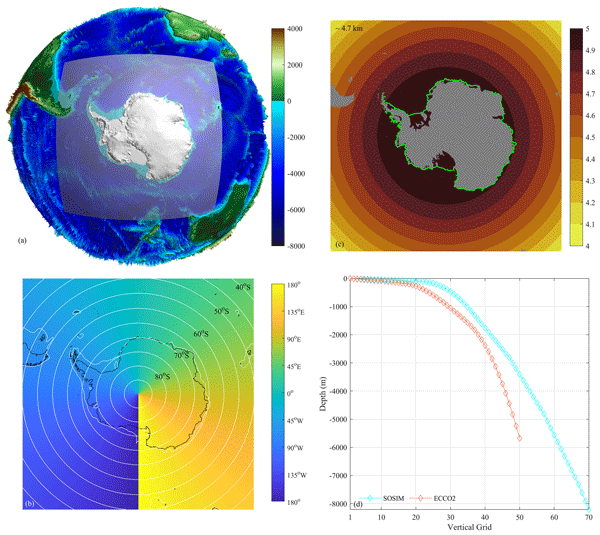
We developed a high-resolution computer model to simulate how the ocean, sea ice, and ice shelves interact around Antarctica. This helps us understand their critical role in global climate and sea-level rise. Our model successfully captures essential features like major currents and seasonal ice changes. Despite some remaining biases, it provides a useful tool for predicting future changes in this vital and rapidly evolving region.
Yifan Yang, Tingfeng Dou, Gaojie Xu, Rui Zhou, Bo Li, Letu Husi, Wenyu Wang, and Cunde Xiao
Earth Syst. Sci. Data, 18, 1287–1305, https://doi.org/10.5194/essd-18-1287-2026, https://doi.org/10.5194/essd-18-1287-2026, 2026
Short summary
Short summary
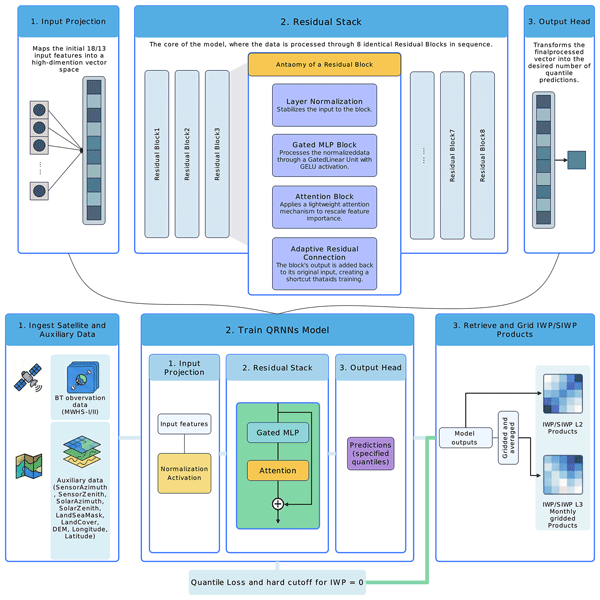
We developed "FYAI" (Fengyun Satellite-Based Dataset for Atmospheric Ice Water Path), a fifteen-year dataset (2010–2024) derived from Chinese Fengyun satellites. Using artificial intelligence, we mapped global atmospheric ice. This continuous record fills critical gaps in observation. It provides scientists with a vital tool to improve weather forecasts and better understand how atmospheric ice interacts with the global climate system.
Ruiqi Nan, Biao Tian, Xinfeng Ling, Weijun Sun, Yixi Zhao, Dongqi Zhang, Chuanjin Li, Xin Wang, Jie Tang, Bo Yao, and Minghu Ding
Earth Syst. Sci. Data, 17, 6097–6111, https://doi.org/10.5194/essd-17-6097-2025, https://doi.org/10.5194/essd-17-6097-2025, 2025
Short summary
Short summary
This study presents the first dataset of 11 fluorinated greenhouse gases observed in 2021 at Zhongshan Station, Antarctica. The concentrations of most gases increased and were higher than at two other Antarctic stations. Their sources were linked to industrial activities such as refrigeration and electronics. Although limited to one year, the data provide important background information for detecting future changes in the Antarctic atmosphere.
Tong Zhang, Wei Yang, Yuzhe Wang, Chuanxi Zhao, Qingyun Long, and Cunde Xiao
The Cryosphere, 19, 4487–4498, https://doi.org/10.5194/tc-19-4487-2025, https://doi.org/10.5194/tc-19-4487-2025, 2025
Short summary
Short summary
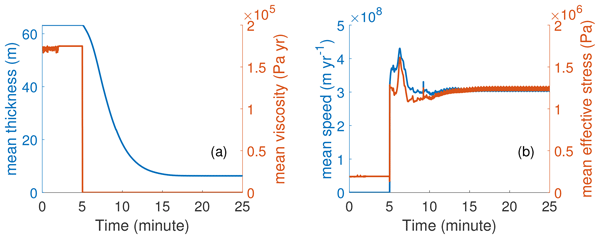
This study investigates the 2018 Sedongpu glacier detachment in Southeastern Tibet using a two-dimensional ice flow model that includes an ice stiffness and basal slip positive feedback mechanism. The model simulates rapid transitions in glacier flow, triggering detachment when ice stress exceeds yield strength. The results, including ice speed and duration, align with observations, demonstrating the potential for early warning of similar hazards in the region.
Shuyu Zhao, Tian Feng, Xuexi Tie, Biao Tian, Xiao Hu, Bo Hu, Dong Yang, Sinan Gu, and Minghu Ding
Atmos. Chem. Phys., 25, 12483–12496, https://doi.org/10.5194/acp-25-12483-2025, https://doi.org/10.5194/acp-25-12483-2025, 2025
Short summary
Short summary
This study investigated how cloud–radiation interactions influence ozone formation in a warming climate. Using measurements, reanalysis data, and models, we found that cloud–radiation interactions can worsen O3 pollution, and climate warming will amplify the influence. We highlight that climate change will pose greater challenges for China's O3 pollution prevention and control, and actions such as reducing O3 precursors emissions and mitigating climate change are urgently needed.
Gang Zhao, Ping Tian, Chunxiang Ye, Weili Lin, Yicheng Gao, Jie Sun, Yi Chen, Fengjun Shen, and Tong Zhu
EGUsphere, https://doi.org/10.5194/egusphere-2025-3012, https://doi.org/10.5194/egusphere-2025-3012, 2025
Preprint archived
Short summary
Short summary
Understanding aerosol size distribution helps us predict how aerosols move, grow, and interact with the environment and climate. We used "maximum entropy" to demonstrate that the aerosol particle number size distribution would follow the Weibull distribution in the clean atmosphere during the new particle formation and growth process. The observations showed good consistency with the theoretical analysis.
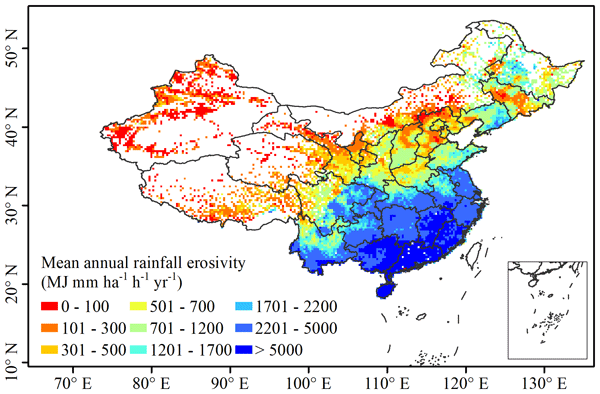
Yueli Chen, Yun Xie, Xingwu Duan, and Minghu Ding
Earth Syst. Sci. Data, 17, 1265–1274, https://doi.org/10.5194/essd-17-1265-2025, https://doi.org/10.5194/essd-17-1265-2025, 2025
Short summary
Short summary
Rainfall erosivity maps are crucial for identifying key areas of water erosion. Due to the limited historical precipitation data, there are certain biases in rainfall erosivity estimates in China. This study develops a new rainfall erosivity map for mainland China using 1 min precipitation data from 60 129 weather stations, revealing that areas exceeding 4000 MJ mm ha−1 h−1yr−1 of annual rainfall erosivity are mainly concentrated in southern China and on the southern Tibetan Plateau.

Tianli Xie, Zhen-Qiang Zhou, Renhe Zhang, Bingyi Wu, and Peng Zhang
The Cryosphere, 19, 1303–1312, https://doi.org/10.5194/tc-19-1303-2025, https://doi.org/10.5194/tc-19-1303-2025, 2025
Short summary
Short summary
As the Arctic warms, changes in sea ice and sea surface temperature are altering global climate patterns. Our study links Barents–Kara Sea (BKS) ice loss and rising sea surface temperatures to increased summer rainfall in the Yangtze River basin. The thermal forcing from the BKS triggers a Rossby wave train that enhances moisture transport and anomalous ascending motions, leading to increased rainfall. Understanding this connection is crucial for predicting summer rainfall in East Asia.
Lijing Chen, Lei Zhang, Yong She, Zhaoliang Zeng, Yu Zheng, Biao Tian, Wenqian Zhang, Zhaohui Liu, Huizheng Che, and Minghu Ding
Atmos. Chem. Phys., 25, 727–739, https://doi.org/10.5194/acp-25-727-2025, https://doi.org/10.5194/acp-25-727-2025, 2025
Short summary
Short summary
Aerosol optical depth (AOD) at Zhongshan Station varies seasonally, with lower values in summer and higher values in winter. Winter and spring AOD increases due to reduced fine-mode particles, while summer and autumn increases are linked to particle growth. Diurnal AOD variation correlates positively with temperature but negatively with wind speed and humidity. Backward trajectories show that aerosols on high-AOD (low-AOD) days primarily originate from the ocean (interior Antarctica).
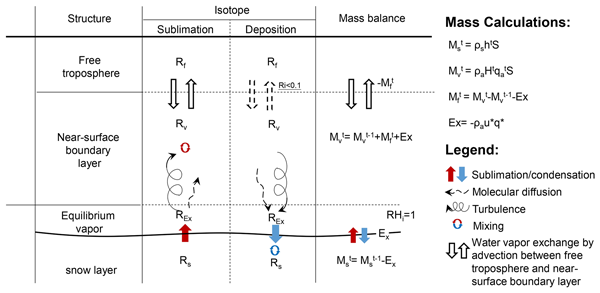
Tianming Ma, Zhuang Jiang, Minghu Ding, Pengzhen He, Yuansheng Li, Wenqian Zhang, and Lei Geng
The Cryosphere, 18, 4547–4565, https://doi.org/10.5194/tc-18-4547-2024, https://doi.org/10.5194/tc-18-4547-2024, 2024
Short summary
Short summary
We constructed a box model to evaluate the isotope effects of atmosphere–snow water vapor exchange at Dome A, Antarctica. The results show clear and invisible diurnal changes in surface snow isotopes under summer and winter conditions, respectively. The model also predicts that the annual net effects of atmosphere–snow water vapor exchange would be overall enrichments in snow isotopes since the effects in summer appear to be greater than those in winter at the study site.
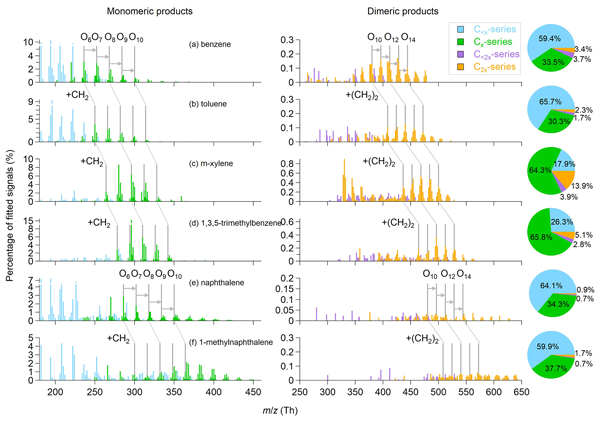
Xi Cheng, Yong Jie Li, Yan Zheng, Keren Liao, Theodore K. Koenig, Yanli Ge, Tong Zhu, Chunxiang Ye, Xinghua Qiu, and Qi Chen
Atmos. Chem. Phys., 24, 2099–2112, https://doi.org/10.5194/acp-24-2099-2024, https://doi.org/10.5194/acp-24-2099-2024, 2024
Short summary
Short summary
In this study we conducted laboratory measurements to investigate the formation of gas-phase oxygenated organic molecules (OOMs) from six aromatic volatile organic compounds (VOCs). We provide a thorough analysis on the effects of precursor structure (substituents and ring numbers) on product distribution and highlight from a laboratory perspective that heavy (e.g., double-ring) aromatic VOCs are important in initial particle growth during secondary organic aerosol formation.
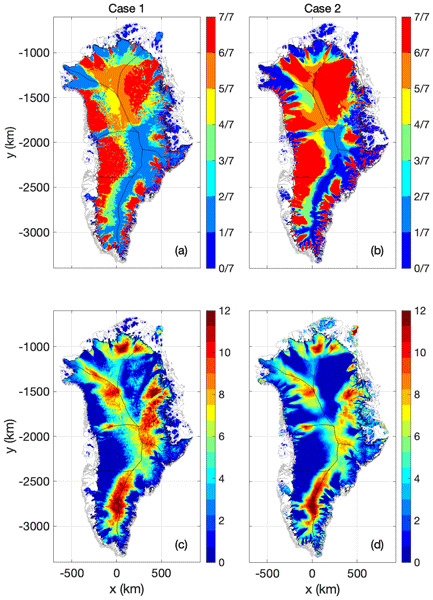
Tong Zhang, William Colgan, Agnes Wansing, Anja Løkkegaard, Gunter Leguy, William H. Lipscomb, and Cunde Xiao
The Cryosphere, 18, 387–402, https://doi.org/10.5194/tc-18-387-2024, https://doi.org/10.5194/tc-18-387-2024, 2024
Short summary
Short summary
The geothermal heat flux determines how much heat enters from beneath the ice sheet, and thus impacts the temperature and the flow of the ice sheet. In this study we investigate how much geothermal heat flux impacts the initialization of the Greenland ice sheet. We use the Community Ice Sheet Model with two different initialization methods. We find a non-trivial influence of the choice of heat flow boundary conditions on the ice sheet initializations for further designs of ice sheet modeling.
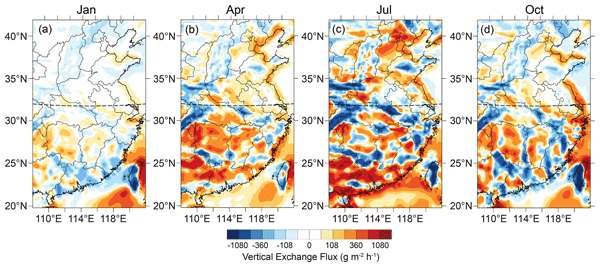
Xipeng Jin, Xuhui Cai, Xuesong Wang, Qianqian Huang, Yu Song, Ling Kang, Hongsheng Zhang, and Tong Zhu
Atmos. Chem. Phys., 24, 259–274, https://doi.org/10.5194/acp-24-259-2024, https://doi.org/10.5194/acp-24-259-2024, 2024
Short summary
Short summary
This work presents a climatology of water vapour exchange flux between the atmospheric boundary layer (ABL) and free troposphere (FT) over eastern China. The water vapour exchange maintains ABL humidity in cold months and moistens the FT in warm seasons, and its distribution has terrain-dependent features. The exchange flux is correlated with the El Niño–Southern Oscillation (ENSO) index and precipitation pattern. The study provides new insight into moisture transport and extreme weather.
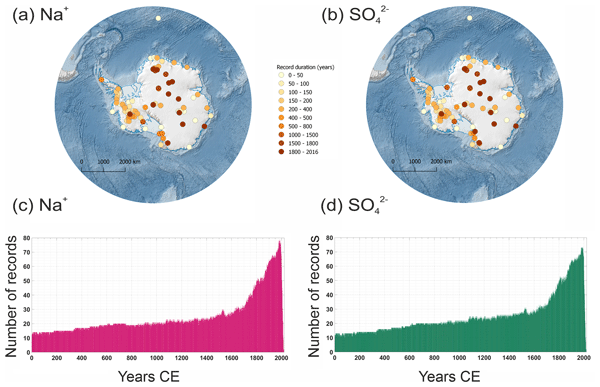
Elizabeth R. Thomas, Diana O. Vladimirova, Dieter R. Tetzner, B. Daniel Emanuelsson, Nathan Chellman, Daniel A. Dixon, Hugues Goosse, Mackenzie M. Grieman, Amy C. F. King, Michael Sigl, Danielle G. Udy, Tessa R. Vance, Dominic A. Winski, V. Holly L. Winton, Nancy A. N. Bertler, Akira Hori, Chavarukonam M. Laluraj, Joseph R. McConnell, Yuko Motizuki, Kazuya Takahashi, Hideaki Motoyama, Yoichi Nakai, Franciéle Schwanck, Jefferson Cardia Simões, Filipe Gaudie Ley Lindau, Mirko Severi, Rita Traversi, Sarah Wauthy, Cunde Xiao, Jiao Yang, Ellen Mosely-Thompson, Tamara V. Khodzher, Ludmila P. Golobokova, and Alexey A. Ekaykin
Earth Syst. Sci. Data, 15, 2517–2532, https://doi.org/10.5194/essd-15-2517-2023, https://doi.org/10.5194/essd-15-2517-2023, 2023
Short summary
Short summary
The concentration of sodium and sulfate measured in Antarctic ice cores is related to changes in both sea ice and winds. Here we have compiled a database of sodium and sulfate records from 105 ice core sites in Antarctica. The records span all, or part, of the past 2000 years. The records will improve our understanding of how winds and sea ice have changed in the past and how they have influenced the climate of Antarctica over the past 2000 years.
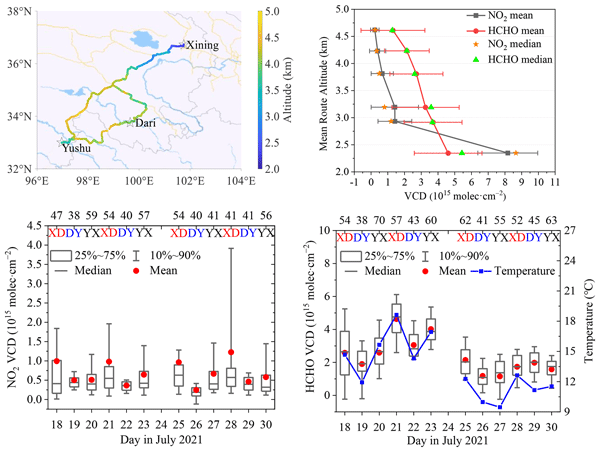
Siyang Cheng, Xinghong Cheng, Jianzhong Ma, Xiangde Xu, Wenqian Zhang, Jinguang Lv, Gang Bai, Bing Chen, Siying Ma, Steffen Ziegler, Sebastian Donner, and Thomas Wagner
Atmos. Chem. Phys., 23, 3655–3677, https://doi.org/10.5194/acp-23-3655-2023, https://doi.org/10.5194/acp-23-3655-2023, 2023
Short summary
Short summary
We made mobile MAX-DOAS measurements in the background atmosphere over the Tibetan Plateau in summer 2021. We retrieved the tropospheric NO2 and HCHO vertical column densities (VCDs) along extended driving routes and found a decreasing trend of the VCDs with altitude. Elevated NO2 VCDs along the driving routes could be attributed to enhanced traffic emissions from the towns crossed. The spatio-temporal distribution of the HCHO VCDs correlated strongly with the surface temperature.
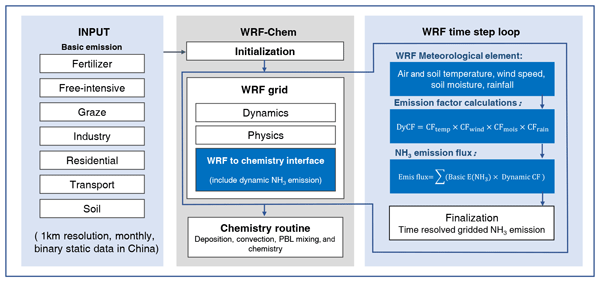
Chuanhua Ren, Xin Huang, Tengyu Liu, Yu Song, Zhang Wen, Xuejun Liu, Aijun Ding, and Tong Zhu
Geosci. Model Dev., 16, 1641–1659, https://doi.org/10.5194/gmd-16-1641-2023, https://doi.org/10.5194/gmd-16-1641-2023, 2023
Short summary
Short summary
Ammonia in the atmosphere has wide impacts on the ecological environment and air quality, and its emission from soil volatilization is highly sensitive to meteorology, making it challenging to be well captured in models. We developed a dynamic emission model capable of calculating ammonia emission interactively with meteorological and soil conditions. Such a coupling of soil emission with meteorology provides a better understanding of ammonia emission and its contribution to atmospheric aerosol.
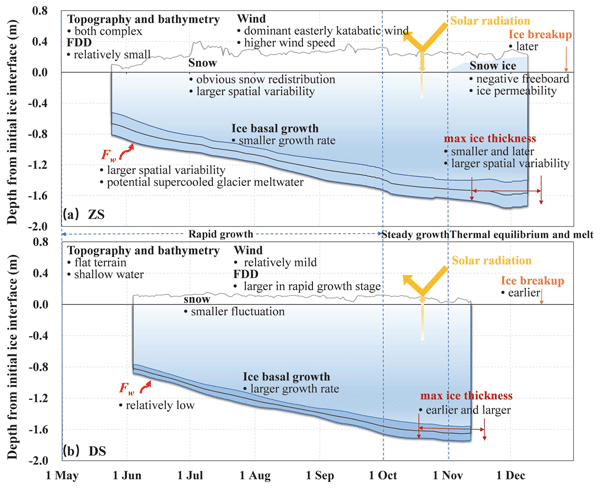
Na Li, Ruibo Lei, Petra Heil, Bin Cheng, Minghu Ding, Zhongxiang Tian, and Bingrui Li
The Cryosphere, 17, 917–937, https://doi.org/10.5194/tc-17-917-2023, https://doi.org/10.5194/tc-17-917-2023, 2023
Short summary
Short summary
The observed annual maximum landfast ice (LFI) thickness off Zhongshan (Davis) was 1.59±0.17 m (1.64±0.08 m). Larger interannual and local spatial variabilities for the seasonality of LFI were identified at Zhongshan, with the dominant influencing factors of air temperature anomaly, snow atop, local topography and wind regime, and oceanic heat flux. The variability of LFI properties across the study domain prevailed at interannual timescales, over any trend during the recent decades.
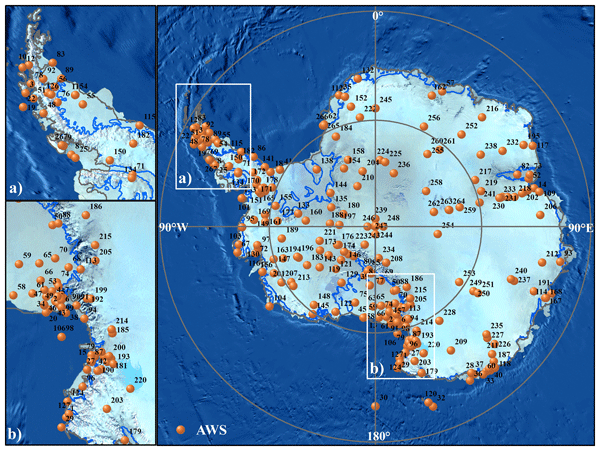
Yetang Wang, Xueying Zhang, Wentao Ning, Matthew A. Lazzara, Minghu Ding, Carleen H. Reijmer, Paul C. J. P. Smeets, Paolo Grigioni, Petra Heil, Elizabeth R. Thomas, David Mikolajczyk, Lee J. Welhouse, Linda M. Keller, Zhaosheng Zhai, Yuqi Sun, and Shugui Hou
Earth Syst. Sci. Data, 15, 411–429, https://doi.org/10.5194/essd-15-411-2023, https://doi.org/10.5194/essd-15-411-2023, 2023
Short summary
Short summary
Here we construct a new database of Antarctic automatic weather station (AWS) meteorological records, which is quality-controlled by restrictive criteria. This dataset compiled all available Antarctic AWS observations, and its resolutions are 3-hourly, daily and monthly, which is very useful for quantifying spatiotemporal variability in weather conditions. Furthermore, this compilation will be used to estimate the performance of the regional climate models or meteorological reanalysis products.
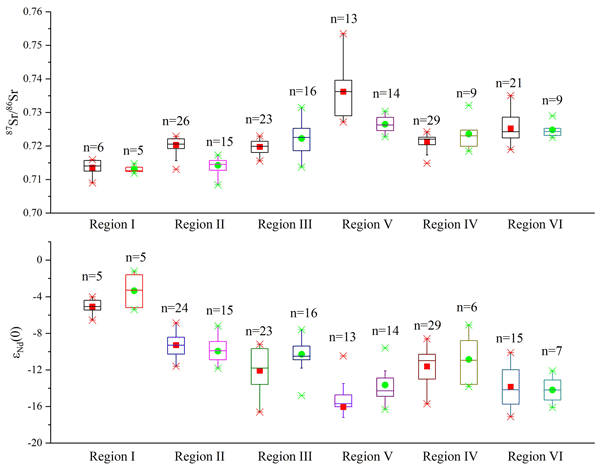
Zhiheng Du, Jiao Yang, Lei Wang, Ninglian Wang, Anders Svensson, Zhen Zhang, Xiangyu Ma, Yaping Liu, Shimeng Wang, Jianzhong Xu, and Cunde Xiao
Earth Syst. Sci. Data, 14, 5349–5365, https://doi.org/10.5194/essd-14-5349-2022, https://doi.org/10.5194/essd-14-5349-2022, 2022
Short summary
Short summary
A dataset of the radiogenic strontium and neodymium isotopic compositions from the three poles (the third pole, the Arctic, and Antarctica) were integrated to obtain new findings. The dataset enables us to map the standardized locations in the three poles, while the use of sorting criteria related to the sample type permits us to trace the dust sources and sinks. The purpose of this dataset is to try to determine the variable transport pathways of dust at three poles.
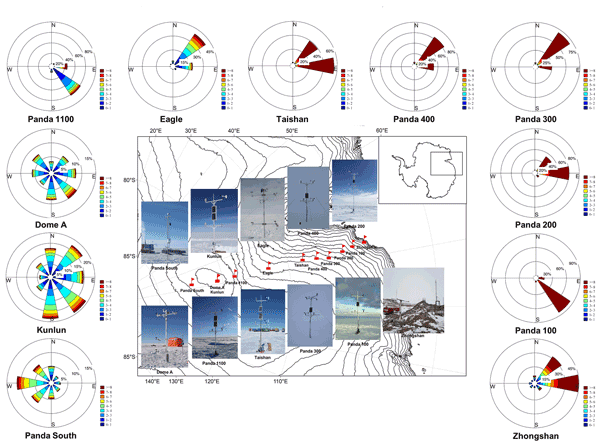
Minghu Ding, Xiaowei Zou, Qizhen Sun, Diyi Yang, Wenqian Zhang, Lingen Bian, Changgui Lu, Ian Allison, Petra Heil, and Cunde Xiao
Earth Syst. Sci. Data, 14, 5019–5035, https://doi.org/10.5194/essd-14-5019-2022, https://doi.org/10.5194/essd-14-5019-2022, 2022
Short summary
Short summary
The PANDA automatic weather station (AWS) network consists of 11 stations deployed along a transect from the coast (Zhongshan Station) to the summit of the East Antarctic Ice Sheet (Dome A). It covers the different climatic and topographic units of East Antarctica. All stations record hourly air temperature, relative humidity, air pressure, wind speed and direction at two or three heights. The PANDA AWS dataset commences from 1989 and is planned to be publicly available into the future.
Jizu Chen, Wentao Du, Shichang Kang, Xiang Qin, Weijun Sun, Yang Li, Yushuo Liu, Lihui Luo, and Youyan Jiang
The Cryosphere Discuss., https://doi.org/10.5194/tc-2022-179, https://doi.org/10.5194/tc-2022-179, 2022
Preprint withdrawn
Short summary
Short summary
This study developed a dynamic deposition model of light absorbing particles (LAPs), which coupled with a surface energy and mass balance model. Based on the coupled model, we assessed atmospheric deposited BC effect on glacier melting, and quantified global warming and increment of emitted black carbon respective contributions to current accelerated glacier melting.
Xipeng Jin, Xuhui Cai, Mingyuan Yu, Yu Song, Xuesong Wang, Hongsheng Zhang, and Tong Zhu
Atmos. Chem. Phys., 22, 11409–11427, https://doi.org/10.5194/acp-22-11409-2022, https://doi.org/10.5194/acp-22-11409-2022, 2022
Short summary
Short summary
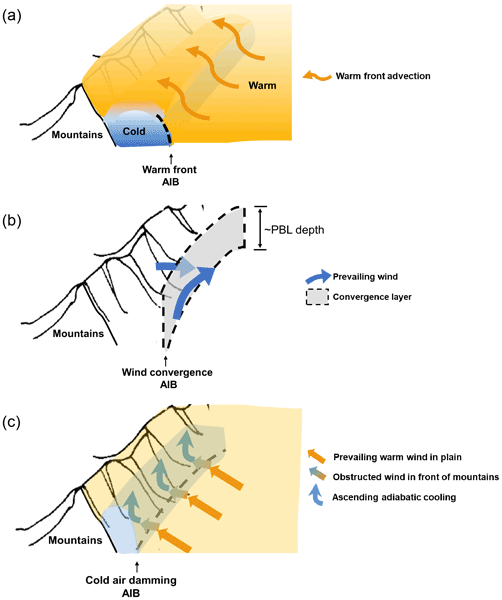
Meteorological discontinuities in the vertical direction define the lowest atmosphere as the boundary layer, while in the horizontal direction it identifies the contrast zone as the internal boundary. Both of them determine the polluted air mass dimension over the North China Plain. This study reveals the boundary layer structures under three categories of internal boundaries, modified by thermal, dynamical, and blending effects. It provides a new insight to understand regional pollution.

Yueli Chen, Xingwu Duan, Minghu Ding, Wei Qi, Ting Wei, Jianduo Li, and Yun Xie
Earth Syst. Sci. Data, 14, 2681–2695, https://doi.org/10.5194/essd-14-2681-2022, https://doi.org/10.5194/essd-14-2681-2022, 2022
Short summary
Short summary
We reconstructed the first annual rainfall erosivity dataset for the Tibetan Plateau in China. The dataset covers 71 years in a 0.25° grid. The reanalysis precipitation data are employed in combination with the densely spaced in situ precipitation observations to generate the dataset. The dataset can supply fundamental data for quantifying the water erosion, and extend our knowledge of the rainfall-related hazard prediction on the Tibetan Plateau.
Cited articles
Bauguitte, S. J.-B., Brough, N., Frey, M. M., Jones, A. E., Maxfield, D. J., Roscoe, H. K., Rose, M. C., and Wolff, E. W.: A network of autonomous surface ozone monitors in Antarctica: technical description and first results, Atmos. Meas. Tech., 4, 645–658, https://doi.org/10.5194/amt-4-645-2011, 2011.
Bortoli, D. and Kostadinov, I. K.: Stratospheric ozone and nitrogen dioxide amount obtained with GASCOD-type DOAS spectrometer at Terra Nova Bay Station (Antarctica) during December 2000–January 2001, Proc. SPIE, 4544, 225–235, https://doi.org/10.1117/12.454255, 2002.
Chen, H., Winderlich, J., Gerbig, C., Hoefer, A., Rella, C. W., Crosson, E. R., Van Pelt, A. D., Steinbach, J., Kolle, O., Beck, V., Daube, B. C., Gottlieb, E. W., Chow, V. Y., Santoni, G. W., and Wofsy, S. C.: High-accuracy continuous airborne measurements of greenhouse gases (CO2 and CH4) using the cavity ring-down spectroscopy (CRDS) technique, Atmos. Meas. Tech., 3, 375–386, https://doi.org/10.5194/amt-3-375-2010, 2010.
Das, S. S., Ratnam, M. V., Uma, K. N., Subrahmanyam, K. V., Girach, I. A., Patra, A. K., Aneesh, S., Suneeth, K. V., Kumar, K. K., Kesarkar, A. P., Sijikumar, S., and Ramkumar, G.: Influence of tropical cyclones on tropospheric ozone: possible implications, Atmos. Chem. Phys., 16, 4837–4847, https://doi.org/10.5194/acp-16-4837-2016, 2016.
DiGangi, J., Choi, Y., Nowak, J., and Davis, K. J.: ACT-America: L2 In Situ Atmospheric CO2, CO, CH4, and O3 Concentrations, Eastern USA, ORNL DAAC, Oak Ridge, Tennessee, USA, https://doi.org/10.3334/ORNLDAAC/1679, 2018.
Ding, M., Tian, B., Ashley, M. C. B., Putero, D., Zhu, Z., Wang, L., Yang, S., Li, C., and Xiao, C.: Year-round record of near-surface ozone and O3 enhancement events (OEEs) at Dome A, East Antarctica, Earth Syst. Sci. Data, 12, 3529–3544, https://doi.org/10.5194/essd-12-3529-2020, 2020a.
Ding, M., Yang, D., van den Broeke, M. R., Allison, I., Xiao, C., Qin, D., and Huai, B.: The surface energy balance at Panda 1 Station, Princess Elizabeth Land: a typical katabatic wind region in East Antarctica, J. Geophys. Res.-Atmos., 125, e2019JD030378, https://doi.org/10.1029/2019JD030378, 2020b.
Ding, M., Zou, X., Sun, Q., Yang, D., Zhang, W., Bian, L., Lu, C., Allison, I., Heil, P., and Xiao, C.: The PANDA automatic weather station network between the coast and Dome A, East Antarctica, Earth Syst. Sci. Data, 14, 5019–5035, https://doi.org/10.5194/essd-14-5019-2022, 2022.
Ekeberg, D., Ogner, G., and Fongen, H.: Determination of CH4, CO2, and N2O in air samples and soil atmosphere by gas chromatography mass spectrometry, GC-MS, J. Environ. Monitor., 6, 621–623, https://doi.org/10.1039/B401315H, 2004.
Global Atmosphere Watch (GAW): Global Atmosphere Watch Measurements Guide, GAW Report No. 143, World Meteorological Organization (WMO), Geneva, https://library.wmo.int/idurl/4/41180 (last access: 14 December 2025), 2001.
Griffith, D., Petersen, A. K., Naylor, T., Harvey, M., and Smith, M.: Innovative techniques to measure greenhouse gas emissions from land systems, Report to the Australian Government Department of Climate Change, 0807, 1–35, https://www.researchgate.net/ profile/Mike-Harvey/publication/322406089_Innovative_Techni ques_to_Measure_Greenhouse_gases_emissions_from_land_ systems/links/5a57ef4d0f7e9bbacbdfad56/Innovative-Techniqu es-to-Measure-Greenhouse-gases-emissions-from-land-systems. pdf (last access: 14 December 2025), 2009.
Griffiths, P. R.: Fourier transform infrared spectrometry, Science, 222, 297–302, https://doi.org/10.1126/science.6623077, 1983.
Griffiths, P. T., Keeble, J., Shin, Y. M., Abraham, N. L., Archibald, A. T., and Pyle, J. A.: On the changing role of the stratosphere on the tropospheric ozone budget: 1979–2010, Geophys. Res. Lett., 47, e2019GL086901, https://doi.org/10.1029/2019gl086901, 2020.
Heintzenberg, J.: Arctic haze: air pollution in polar regions, Ambio, 18, 50–55, 1989.
Hintsa, E. J., Allsup, G. P., Eck, C. F., Hosom, D. S., Purcell, M. J., Roberts, A. A., Scott, D. R., Sholkovitz, E. R., Rawlins, W. T., Mulhall, P. A., Lightner, K., McMillan, W. W., Song, J., and Newchurch, M. J.: New ozone measurement systems for autonomous operation on ocean buoys and towers, J. Atmos. Ocean. Tech., 21, 1007–1016, 2004.
Keeling, C. D.: Atmospheric CO2 variations at Mauna Loa Observatory, Hawaii, Tellus, 28, 538–551, 1976.
Köne, A. Ç. and Büke, T.: Forecasting of CO2 emissions from fuel combustion using trend analysis, Renew. Sust. Energ. Rev., 14, 2906–2915, https://doi.org/10.1016/j.rser.2010.06.006, 2010.
Kwon, J., Ahn, G., Kim, G., Kim, J. C., and Kim, H.: A study on NDIR-based CO2 sensor to apply remote air quality monitoring system, 2009 ICCAS-SICE, 1683–1687, ISBN: 978-4-907764-34-0, 2009.
Liu, M., Song, Y., Matsui, H., Shang, F., Kang, L., Cai, X., Zhang, H., and Zhu, T.: Enhanced atmospheric oxidation toward carbon neutrality reduces methane's climate forcing, Nat. Commun., 15, 1362, https://doi.org/10.1038/s41467-024-47436-9, 2024.
Mahesh, A., Montzka, S. A., and Dutton, G. S.: Calibration of flask sampling systems for atmospheric trace gas measurements, J. Atmos. Ocean. Tech., 20, 1862–1872, 2003.
Nan, R. Q., Tian, B., Sun, W. J., Li, C. J., and Ding, M. H.: Comparative study on the precision of greenhouse gas analyzers based on LICOR-830 and Picarro G2301, J. Shandong Norm. Univ. Nat. Sci., 39, 52–61, https://doi.org/10.3969/j.issn.1001-4748.2024.01.005, 2024.
Ollison, W. M., Crow, W., and Spicer, C. W.: Field testing of new-technology ambient air ozone monitors, J. Air Waste Manage., 63, 855–863, https://doi.org/10.1080/10962247.2013.796898, 2013.
Popa, M. E., Gloor, M., Manning, A. C., Jordan, A., Schultz, U., Haensel, F., Seifert, T., and Heimann, M.: Measurements of greenhouse gases and related tracers at Bialystok tall tower station in Poland, Atmos. Meas. Tech., 3, 407–427, https://doi.org/10.5194/amt-3-407-2010, 2010.
Prinn, R. G., Weiss, R. F., Arduini, J., Arnold, T., DeWitt, H. L., Fraser, P. J., Ganesan, A. L., Gasore, J., Harth, C. M., Hermansen, O., Kim, J., Krummel, P. B., Li, S., Loh, Z. M., Lunder, C. R., Maione, M., Manning, A. J., Miller, B. R., Mitrevski, B., Mühle, J., O'Doherty, S., Park, S., Reimann, S., Rigby, M., Saito, T., Salameh, P. K., Schmidt, R., Simmonds, P. G., Steele, L. P., Vollmer, M. K., Wang, R. H., Yao, B., Yokouchi, Y., Young, D., and Zhou, L.: History of chemically and radiatively important atmospheric gases from the Advanced Global Atmospheric Gases Experiment (AGAGE), Earth Syst. Sci. Data, 10, 985-1018, https://doi.org/10.5194/essd-10-985-2018, 2018.
Sturm, P., Wanner, H., and Schwikowski, M.: Impact of extreme weather events on high-alpine atmospheric observations at Jungfraujoch, Atmos. Res., 116, 1–12, 2012.
Tanimoto, H., Mukai, H., Hashimoto, S., and Kajii, Y.: Intercomparison of ultraviolet photometry and gas-phase titration techniques for ozone reference standards at ambient levels, J. Geophys. Res.-Atmos., 111, D16305, https://doi.org/10.1029/2005JD006983, 2006.
Tian, B., Ding, M., Putero, D., Li, C., Zhang, D., Tang, J., Zheng, X., Bian, L., and Xiao, C.: Multi-year variation of near-surface ozone at Zhongshan Station, Antarctica, Environ. Res. Lett., 17, 044021, https://doi.org/10.1088/1748-9326/ac583c, 2022.
Tian, B., Zhao, Y., Zhu, K., and Ding, M.: Near-surface carbon dioxide and ozone observations at Chinese Taishan Station in Antarctica (2024.02.10–2024.03.12), National Tibetan Plateau/Third Pole Environment Data Center, https://doi.org/10.11888/Atmos.tpdc.303486, 2026.
Wang, S., Tian B., Ding M., Zhang D., Zhang T., and Sun W.: Usage and performance assessment of a novelanalyzer-Model 205, Optical Instruments, 39, 58–63, https://joi.usst.edu.cn/ch/reader/create_pdf.aspx?file_no=20170211&flag=1&journal_id=gxq&year_id=2017 (last access: 14 December 2025), 2017.
Williams, E. J., Fehsenfeld, F. C., Jobson, B. T., and Holloway, J. S.: Comparison of ultraviolet absorbance, chemiluminescence, and DOAS instruments for ambient ozone monitoring, Environ. Sci. Technol., 40, 5755–5762, https://doi.org/10.1021/es0523542, 2006.
Xia, T., Catalan, J., Hu, C., and Batterman, S.: Development of a mobile platform for monitoring gaseous, particulate, and greenhouse gas (GHG) pollutants, Environ. Monit. Assess., 193, 7, https://doi.org/10.1007/s10661-020-08769-2, 2023.
Xu, M., Peng, B., Zhu, X., and Guo, Y.: Multi-gas detection system based on non-dispersive infrared (NDIR) spectral technology, Sensors-Basel, 22, 836, https://doi.org/10.3390/s22030836, 2022.
Short summary
Scarce reliable greenhouse‑gas observations plague inland Antarctica. The low‑power (<350 W) CRUX‑1.0 integrates four subsystems for simultaneous CO₂‑O₃ monitoring. Its one‑month Taishan Station test shows stable performance, with post‑calibration CV (coefficient of variation) < 5.6 %. Measured mixing ratios exhibit good comparability with South Pole Station data. Capable of unattended operation, CRUX‑1.0 is promising for data‑scarce polar inland deployment.
Scarce reliable greenhouse‑gas observations plague inland Antarctica. The low‑power...


