
Articles | Volume 19, issue 20
https://doi.org/10.5194/amt-19-6553-2026
© Author(s) 2026. This work is distributed under
the Creative Commons Attribution 4.0 License.
the Creative Commons Attribution 4.0 License.
https://doi.org/10.5194/amt-19-6553-2026
© Author(s) 2026. This work is distributed under
the Creative Commons Attribution 4.0 License.
the Creative Commons Attribution 4.0 License.
Research article
| 
19 Oct 2026
Research article |
| 19 Oct 2026
| 19 Oct 2026
A prototype algorithm for all-sky atmospheric temperature profile retrieval over ocean based on channel optimization for the FY-4M satellite
Yu Wang
School of Earth and Space Sciences, Joint Laboratory of Fengyun Remote Sensing, University of Science and Technology of China, Hefei, 230026, China
China Meteorological Administration Xiong'an Atmospheric Boundary Layer Key Laboratory, Xiong'an New Area, Baoding, 071800, China
Xinbin Ma
School of Earth and Space Sciences, Joint Laboratory of Fengyun Remote Sensing, University of Science and Technology of China, Hefei, 230026, China
Banghai Wu
Aviation Industry Corporation of China Leihua Electronic Technology Institute, Wuxi, 214063, China
Qiang Guo
National Satellite Meteorological Center (National Center for Space Weather), China Meteorological Administration, Beijing, 100081, China
Jing Xi
CORRESPONDING AUTHOR

School of Earth and Space Sciences, Joint Laboratory of Fengyun Remote Sensing, University of Science and Technology of China, Hefei, 230026, China
China Meteorological Administration Xiong'an Atmospheric Boundary Layer Key Laboratory, Xiong'an New Area, Baoding, 071800, China
Rui Li
School of Earth and Space Sciences, Joint Laboratory of Fengyun Remote Sensing, University of Science and Technology of China, Hefei, 230026, China
Xin Wang
National Satellite Meteorological Center (National Center for Space Weather), China Meteorological Administration, Beijing, 100081, China
Xiaoqing Li
National Satellite Meteorological Center (National Center for Space Weather), China Meteorological Administration, Beijing, 100081, China
Related authors
Jing Xi, Yu Wang, Rui Li, Banghai Wu, Xiaoye Fan, Xinbin Ma, and Zixiang Meng
Atmos. Chem. Phys., 26, 15–32, https://doi.org/10.5194/acp-26-15-2026, https://doi.org/10.5194/acp-26-15-2026, 2026
Short summary
Short summary
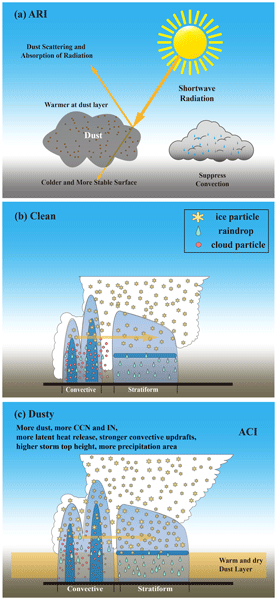
The impacts of Saharan dust aerosols on 3-D structure of organized precipitation systems of different horizontal sizes over the tropical Atlantic Ocean in spring were studied using multiple satellite observations. Results show that under comparable thermodynamic conditions, dust-laden precipitation systems have higher storm tops, broader upper-level precipitation areas with more large particles, stronger convective activities, and heavier surface rain rates than clean ones.
Yixiao Fu, Cheng-Zhi Zou, Peng Zhang, Banghai Wu, Shengli Wu, Shi Liu, and Yu Wang
Earth Syst. Sci. Data, 17, 4651–4670, https://doi.org/10.5194/essd-17-4651-2025, https://doi.org/10.5194/essd-17-4651-2025, 2025
Short summary
Short summary
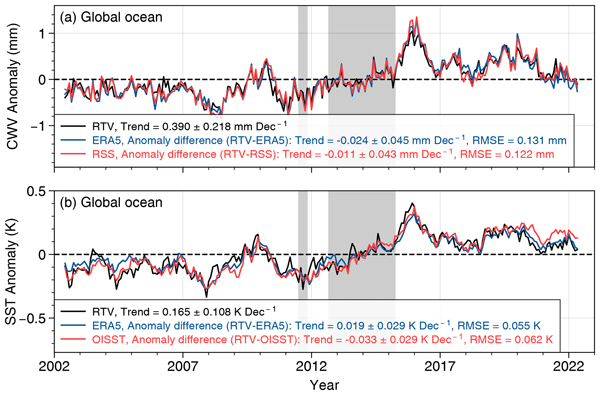
This study presents a climate data record (CDR) of atmospheric column water vapor and sea surface temperature using over two decades of stable-orbit satellite-based passive microwave imagery observations. The evaluation results show that the CDR has long-term consistency and continuity, and is more accurate than other similar products in climate covariability, suggesting that the CDR is suitable for climate change research and for constraining climate model simulations.
Panxiang Zhang, Peng Zhang, Gang Ma, Rui Li, Lu Lee, Wenguang Bai, and Chengli Qi
EGUsphere, https://doi.org/10.5194/egusphere-2025-5121, https://doi.org/10.5194/egusphere-2025-5121, 2026
Short summary
Short summary
To enhance atmospheric transmittance accuracy in strong water vapor absorption bands, this study proposes an optimized scheme for the fast transmittance algorithm applied to the Hyperspectral Infrared Atmospheric Sounder-II. It introduces a transmittance threshold for sample selection and a weighted least squares regression with transmittance weighting. Validation against line-by-line models and observations shows significant improvements in forward model accuracy and stability at 6.7 μm.
Jing Xi, Yu Wang, Rui Li, Banghai Wu, Xiaoye Fan, Xinbin Ma, and Zixiang Meng
Atmos. Chem. Phys., 26, 15–32, https://doi.org/10.5194/acp-26-15-2026, https://doi.org/10.5194/acp-26-15-2026, 2026
Short summary
Short summary
The impacts of Saharan dust aerosols on 3-D structure of organized precipitation systems of different horizontal sizes over the tropical Atlantic Ocean in spring were studied using multiple satellite observations. Results show that under comparable thermodynamic conditions, dust-laden precipitation systems have higher storm tops, broader upper-level precipitation areas with more large particles, stronger convective activities, and heavier surface rain rates than clean ones.
Yixiao Fu, Cheng-Zhi Zou, Peng Zhang, Banghai Wu, Shengli Wu, Shi Liu, and Yu Wang
Earth Syst. Sci. Data, 17, 4651–4670, https://doi.org/10.5194/essd-17-4651-2025, https://doi.org/10.5194/essd-17-4651-2025, 2025
Short summary
Short summary
This study presents a climate data record (CDR) of atmospheric column water vapor and sea surface temperature using over two decades of stable-orbit satellite-based passive microwave imagery observations. The evaluation results show that the CDR has long-term consistency and continuity, and is more accurate than other similar products in climate covariability, suggesting that the CDR is suitable for climate change research and for constraining climate model simulations.

Qiang Guo, Yuning Liu, Xin Wang, and Wen Hui
Atmos. Meas. Tech., 17, 4613–4627, https://doi.org/10.5194/amt-17-4613-2024, https://doi.org/10.5194/amt-17-4613-2024, 2024
Short summary
Short summary
Non-linearity (NL) correction is a critical procedure to guarantee that the calibration accuracy of a spaceborne sensor approaches a reasonable level. Different from the classical method, a new NL correction method for a spaceborne Fourier transform spectrometer is proposed. To overcome the inaccurate linear coefficient from two-point calibration influencing NL correction, an iteration algorithm is established that is suitable for NL correction of both infrared and microwave sensors.

Hongxia Zhu, Rui Li, Shuping Yang, Chun Zhao, Zhe Jiang, and Chen Huang
Atmos. Chem. Phys., 23, 2421–2437, https://doi.org/10.5194/acp-23-2421-2023, https://doi.org/10.5194/acp-23-2421-2023, 2023
Short summary
Short summary
The impacts of atmospheric dust aerosols and cloud dynamic conditions on precipitation vertical development in southeastern China were studied using multiple satellite observations. It was found that the precipitating drops under dusty conditions grow faster in the middle layer but slower in the upper and lower layers compared with their pristine counterparts. Quantitative estimation of the sensitivity of the precipitation top temperature to the dust aerosol optical depth is also provided.
Tai-Long He, Dylan B. A. Jones, Kazuyuki Miyazaki, Kevin W. Bowman, Zhe Jiang, Xiaokang Chen, Rui Li, Yuxiang Zhang, and Kunna Li
Atmos. Chem. Phys., 22, 14059–14074, https://doi.org/10.5194/acp-22-14059-2022, https://doi.org/10.5194/acp-22-14059-2022, 2022
Short summary
Short summary
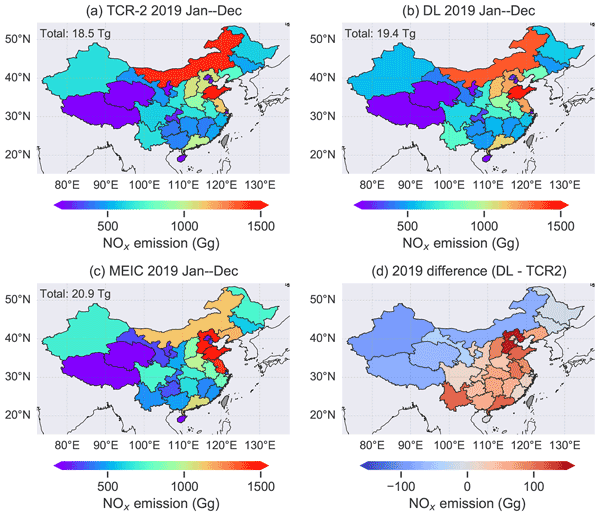
We use a deep-learning (DL) model to estimate Chinese NOx emissions by combining satellite analysis and in situ measurements. Our results are consistent with conventional analyses of Chinese NOx emissions. Comparison with mobility data shows that the DL model has a better capability to capture changes in NOx. We analyse Chinese NOx emissions during the COVID-19 pandemic lockdown period. Our results illustrate the potential use of DL as a complementary tool for conventional air quality studies.
Cited articles
Aires, F., Prigent, C., Orlandi, E., Milz, M., Eriksson, P., Crewell, S., Lin, C.-C., and Kangas, V.: Microwave hyperspectral measurements for temperature and humidity atmospheric profiling from satellite: the clear-sky case, J. Geophys. Res.-Atmos., 120, 11334–11351, https://doi.org/10.1002/2015JD023331, 2015.
Aires, F., Prigent, C., Buehler, S. A., Eriksson, P., Milz, M., and Crewell, S.: Towards more realistic hypotheses for the information content analysis of cloudy/precipitating situations – application to a hyperspectral instrument in the microwave, Q. J. Roy. Meteor. Soc., 145, 1–14, https://doi.org/10.1002/qj.3315, 2019.
Berg, W.: GPM GMI_R Common Calibrated Brightness Temperatures Collocated L1C 1.5 h 13 km V05, Goddard Earth Sciences Data and Information Services Center (GES DISC), Greenbelt, MD, USA [data set], https://doi.org/10.5067/GPM/GMI/R/1C/05, 2016.
Bi, Y., Yang, J., Wei, C., Dou, F., Xu, W., An, D., Luan, Y., Feng, J., and Zhang, L.: Atmospheric temperature measurements using microwave hyper-spectrum from geostationary satellite: band design, weighting functions and information content, Remote Sens., 16, 289, https://doi.org/10.3390/rs16020289, 2024.
Birman, C., Mahfouf, J. F., Milz, M., Mendrok, J., Buehler, S. A., and Brath, M.: Information content on hydrometeors from millimeter and sub-millimeter wavelengths, Tellus A Dyn. Meteorol. Oceanogr., 69, 1271562, https://doi.org/10.1080/16000870.2016.1271562, 2017.
Bormann, N., Geer, A., and English, S. J.: Evaluation of the microwave ocean surface emissivity model FASTEM-5 in the IFS, Eur. Centre Medium-Range Weather Forecasts, Reading, UK, Tech. Memo. 667, https://doi.org/10.21957/l936s9df, 2012.
Chedin, A., Scott, N. A., Wahiche, C., and Moulinier, P.: The improved initialization inversion method: a high resolution physical method for temperature retrievals from satellites of the TIROS-N series, J. Appl. Meteor. Climatol., 24, 128–143, https://doi.org/10.1175/1520-0450(1985)024<0128:TIIIMA>2.0.CO;2, 1985.
Chen, K., Suo, Z., Han, W., and Cai, B.: OSSEs on the FY-4M geostationary microwave satellite based on CMA-GFS and CMA-MESO, IEEE Trans. Geosci. Remote Sens., 62, 5302819, https://doi.org/10.1109/TGRS.2024.3487859, 2024.
Chen, K., Suo, Z., Han, W., Cai, B., and Chen, Y.: Assessing the potential impact of microwave sounders on typhoon prediction using OSSEs: a comparative study between LEO constellation and GEO satellites, IEEE Geosci. Remote Sens. Lett., 22, 1–5, https://doi.org/10.1109/LGRS.2025.3548908, 2025.
Christensen, J., Carlstrom, A., Ekstrom, H., Emrich, A., Embretsén, J., and De Maagt, P.: GAS: The geostationary atmospheric sounder, in: Proc. IEEE Int. Geosci. Remote Sens. Symp. (IGARSS), Barcelona, Spain, 23–28 July 2007, 223–226, https://doi.org/10.1109/IGARSS.2007.4422770, 2007.
Copernicus Climate Change Service, Climate Data Store: ERA5 hourly data on pressure levels from 1940 to present, Copernicus Climate Change Service (C3S) Climate Data Store (CDS) [data set], https://doi.org/10.24381/cds.bd0915c6, 2023a.
Copernicus Climate Change Service, Climate Data Store: ERA5 hourly data on single levels from 1940 to present, Copernicus Climate Change Service (C3S) Climate Data Store (CDS) [data set], https://doi.org/10.24381/cds.adbb2d47, 2023b.
Draper, D. W., Newell, D. A., Wentz, F. J., Krimchansky, S., and Skofronick-Jackson, G. M.: The global precipitation measurement (GPM) microwave imager (GMI): instrument overview and early on-orbit performance, IEEE J. Sel. Topics Appl. Earth Observ. Remote Sens., 8, 3452–3462, https://doi.org/10.1109/JSTARS.2015.2403303, 2015.
Evans, K. F., Turk, J., Wong, T., and Stephens, G. L.: A Bayesian approach to microwave precipitation profile retrieval, J. Appl. Meteor. Climatol., 34, 260–279, https://doi.org/10.1175/1520-0450-34.1.260, 1995.
Gasiewski, A. J., Barrett, J. W., Bonanni, P. G., and Staelin, D. H.: Aircraft-based radiometric imaging of tropospheric temperature and precipitation using the 118.75-GHz oxygen resonance, J. Appl. Meteor. Climatol., 29, 620–632, https://doi.org/10.1175/1520-0450(1990)029<0620:ABRIOT>2.0.CO;2, 1990.
Gong, J. and Wu, D. L.: Microphysical properties of frozen particles inferred from Global Precipitation Measurement (GPM) Microwave Imager (GMI) polarimetric measurements, Atmos. Chem. Phys., 17, 2741–2757, https://doi.org/10.5194/acp-17-2741-2017, 2017.
He, J., Zhang, S., and Wang, Z.: Advanced microwave atmospheric sounder (AMAS) channel specifications and T/V calibration results on FY-3C satellite, IEEE Trans. Geosci. Remote Sens., 53, 481–493, https://doi.org/10.1109/TGRS.2014.2324173, 2015.
He, W., Chen, H., Xuan, Y., Li, J., Duan, M., and Nan, W.: Ground mobile observation system for measuring multisurface microwave emissivity, Atmos. Meas. Tech., 14, 7069–7078, https://doi.org/10.5194/amt-14-7069-2021, 2021.
He, W., Xia, X., Wu, S., Zhang, P., Chen, H., Xia, X., Zhou, Y., and Cai, M.: A rapid assessment of MWRI-RM/FY3G brightness temperature, Atmos. Ocean. Sci. Lett., 17, 100466, https://doi.org/10.1016/j.aosl.2024.100466, 2024.
Hersbach, H., Bell, B., Berrisford, P., Hirahara, S., Horányi, A., Muñoz-Sabater, J., Nicolas, J., Peubey, C., Radu, R., Schepers, D., Simmons, A., Soci, C., Abdalla, S., Abellan, X., Balsamo, G., Bechtold, P., Biavati, G., Bidlot, J., Bonavita, M., De Chiara, G., Dahlgren, P., Dee, D., Diamantakis, M., Dragani, R., Flemming, J., Forbes, R., Fuentes, M., Geer, A., Haimberger, L., Healy, S., Hogan, R. J., Hólm, E., Janisková, M., Keeley, S., Laloyaux, P., Lopez, P., Lupu, C., Radnoti, G., de Rosnay, P., Rozum, I., Vamborg, F., Villaume, S., and Thépaut, J.-N.: The ERA5 global reanalysis, Q. J. Roy. Meteor. Soc., 146, 1999–2049, https://doi.org/10.1002/qj.3803, 2020.
Hu, J., Li, R., Zhang, P., Wang, Y., Wu, S., Letu, H., and Weng, F.: Global retrieval of harmonized microwave land surface emissivity leveraging multi-sensor measurements from GMI, AMSR2 and MWRIs, Remote Sens. Environ., 334, 115169, https://doi.org/10.1016/j.rse.2025.115169, 2026.
Koshelev, M. A., Vilkov, I. N., Makarov, D. S., Tretyakov, M. Yu., Vispoel, B., Gamache, R. R., Cimini, D., Romano, F., and Rosenkranz, P. W.: Water vapor line profile at 183-GHz: Temperature dependence of broadening, shifting, and speed-dependent shape parameters, J. Quant. Spectrosc. Radiat. Transfer, 262, 107472, https://doi.org/10.1016/j.jqsrt.2020.107472, 2021.
Kummerow, C.: GPM GMI (GPROF) Climate-based Radiometer Precipitation Profiling L2A 1.5 h 4 km × 4 km V07, Goddard Earth Sciences Data and Information Services Center (GES DISC), Greenbelt, MD, USA [data set], https://doi.org/10.5067/GPM/GMI/GPROFCLIM/2A/07, 2022.
Kummerow, C., Berg, W., Thomas-Stahle, J., and Masunaga, H.: Quantifying global uncertainties in a simple microwave rainfall algorithm, J. Atmos. Ocean. Tech., 23, 23–37, https://doi.org/10.1175/JTECH1827.1, 2006.
Kummerow, C. D., Ringerud, S., Crook, J., Randel, D., and Berg, W.: An observationally generated a priori database for microwave rainfall retrievals, J. Atmos. Ocean. Tech., 28, 113–130, https://doi.org/10.1175/2010JTECHA1468.1, 2011.
Kummerow, C. D., Randel, D. L., Kulie, M., Wang, N.-Y., Ferraro, R., Munchak, S. J., and Petkovic, V.: The evolution of the Goddard profiling algorithm to a fully parametric scheme, J. Atmos. Ocean. Tech., 32, 2265–2280, https://doi.org/10.1175/JTECH-D-15-0039.1, 2015.
Kummerow, C. D., Poczatek, J. C., Almond, S., Berg, W., Jarrett, O., Jones, A., Kantner, M., and Kuo, C. P.: Hyperspectral microwave sensors – Advantages and limitations, IEEE J. Sel. Topics Appl. Earth Observ. Remote Sens., 15, 764–775, https://doi.org/10.1109/JSTARS.2021.3133382, 2022.
Lambrigtsen, B., Tanner, A., Gaier, T., Kangaslahti, P., and Brown, S.: Prototyping a new earth observing sensor – GeoSTAR, in: Proc. IEEE Aerosp. Conf., Big Sky, Montana, USA, 3–10 March 2007, 1–9, https://doi.org/10.1109/AERO.2007.352690, 2007.
Lambrigtsen, B., Gaier, T., Kangaslahti, P., Lim, B., Tanner, A., and Ruf, C.: Enabling the NASA decadal–survey “PATH” mission, in: Proc. IEEE Int. Geosci. Remote Sens. Symp. (IGARSS), Beijing, China, 10–15 July 2016, 3949–3951, https://doi.org/10.1109/IGARSS.2016.7730026, 2016.
Lawrence, H., Carminati, F., Bell, W., Bormann, N., Newman, S., Atkinson, N., Geer, A., Migliorini, S., Lu, Q., and Chen, K.: An evaluation of FY-3C MWRI and assessment of the long-term quality of FY-3C MWHS-2 at ECMWF and the Met Office, Eur. Centre Medium-Range Weather Forecasts, Reading, UK, Tech. Memo. 798, https://doi.org/10.21957/lhuph6fb3, 2017.
Li, R., Wang, Y., Hu, J., Wang, Y., Min, Q., Bergeron, Y., Valeria, O., Gao, Z., Liu, J., and Fu, Y.: Spatiotemporal variations of satellite microwave emissivity difference vegetation index in China under clear and cloudy skies, Earth Space Sci., 7, e2020EA001145, https://doi.org/10.1029/2020ea001145, 2020.
Li, R., Hu, J., Wu, S., Zhang, P., Letu, H., Wang, Y., Wang, X., Fu, Y., Zhou, R., and Sun, L.: Spatiotemporal variations of microwave land surface emissivity (MLSE) over China derived from four-year recalibrated Fengyun 3B MWRI data, Adv. Atmos. Sci., 39, 1536–1560, https://doi.org/10.1007/s00376-022-1314-0, 2022.
Liu, G.: A fast and accurate model for microwave radiance calculations, J. Meteorol. Soc. Jpn., 76, 335–343, https://doi.org/10.2151/jmsj1965.76.2_335, 1998.
Liu, Q., Weng, F., and English, S. J.: An improved fast microwave water emissivity model, IEEE Trans. Geosci. Remote Sens., 49, 1238–1250, https://doi.org/10.1109/TGRS.2010.2064779, 2011.
Liu, S., Xu, J., Chen, L., Liu, H., Wang, W., He, J., Zhu, S., and Shi, J.: Comprehensive validation of temperature and humidity profile retrievals from FengYun-3E, IEEE Trans. Geosci. Remote Sens., 64, 4102214, https://doi.org/10.1109/TGRS.2026.3658572, 2026.
Mahfouf, J.-F., Birman, C., Aires, F., Prigent, C., Orlandi, E., and Milz, M.: Information content on temperature and water vapour from a hyper-spectral microwave sensor, Q. J. Roy. Meteor. Soc., 141, 3268–3284, https://doi.org/10.1002/qj.2608, 2015.
Mech, M., Maahn, M., Kneifel, S., Ori, D., Orlandi, E., Kollias, P., Schemann, V., and Crewell, S.: PAMTRA 1.0: the Passive and Active Microwave radiative TRAnsfer tool for simulating radiometer and radar measurements of the cloudy atmosphere, Geosci. Model Dev., 13, 4229–4251, https://doi.org/10.5194/gmd-13-4229-2020, 2020.
Mo, T., Goldberg, M. D., Crosby, D. S., and Cheng, Z.: Recalibration of the NOAA microwave sounding unit, J. Geophys. Res.-Atmos., 106, 10145–10150, https://doi.org/10.1029/2001JD900027, 2001.
Rodgers, C. D.: Information content and optimisation of high spectral resolution remote measurements, Adv. Space Res., 21, 361–367, https://doi.org/10.1016/S0273-1177(97)00915-0, 1998.
Rodgers, C. D.: Inverse methods for atmospheric sounding: Theory and practice, World Scientific, Singapore, https://doi.org/10.1142/3171, 2000.
Sahoo, S., Bosch-Lluis, X., Reising, S. C., and Vivekanandan, J.: Radiometric information content for water vapor and temperature profiling in clear skies between 10 and 200 GHz, IEEE J. Sel. Topics Appl. Earth Observ. Remote Sens., 8, 859–871, https://doi.org/10.1109/JSTARS.2014.2364394, 2015.
Tretyakov, M. Y., Parshin, V. V., Shanin, V. N., Myasnikova, S. E., Koshelev, M. A., and Krupnov, A. F.: Real atmosphere laboratory measurements of the 118-GHz oxygen line: Shape, shift, and broadening of the line, J. Mol. Spectrosc., 208, 110–112, https://doi.org/10.1006/jmsp.2001.8363, 2001.
Wang, D., Tong, L., Gong, X., Guan, X., Wang, P., and Gao, B.: Retrieval of atmospheric temperature profiles from hyperspectral microwave radiative data based on the neural network, in: Proc. IEEE Int. Geosci. Remote Sens. Symp. (IGARSS), Brussels, Belgium, 11–16 July 2021, 7095–7098, https://doi.org/10.1109/IGARSS47720.2021.9554282, 2021.
Weng, F., Zhao, L., Ferraro, R. R., Poe, G., Li, X., and Grody, N. C.: Advanced microwave sounding unit cloud and precipitation algorithms, Radio Sci., 38, 8068, https://doi.org/10.1029/2002RS002679, 2003.
Weng, F., Zou, X., Sun, N., Yang, H., Tian, M., Blackwell, W. J., Wang, X., Lin, L., and Anderson, K.: Calibration of Suomi national polar‐orbiting partnership advanced technology microwave sounder, J. Geophys. Res.-Atmos., 118, 11187–11200, https://doi.org/10.1002/jgrd.50840, 2013.
Wentz, F. J. and Draper, D.: On-orbit absolute calibration of the Global Precipitation Measurement Microwave Imager, J. Atmos. Ocean. Tech., 33, 1393–1412, https://doi.org/10.1175/JTECH-D-15-0212.1, 2016.
Wu, B., Li, X., Wang, Y., Fan, X., Zhang, P., Chen, L., and Fu, Y.: A prototype precipitation retrieval algorithm for passive microwave observations from the FY-3G satellite, J. Remote Sens., 6, 1057, https://doi.org/10.34133/remotesensing.1057, 2026.
Xiao, X. and Weng, F.: A comparison of information content at microwave to millimeter wave bands for atmospheric sounding, Remote Sens., 14, 6124, https://doi.org/10.3390/rs14236124, 2022.
Xie, Z., Li, X., Yao, C., Jiang, L., and Li, X.: Research on geostationary orbit microwave radiometer technology, Aerosp. Shanghai, 35, 20–28, https://doi.org/10.19328/j.cnki.1006-1630.2018.02.003, 2018a.
Xie, Z., Xu, H., An, D., He, J., Zhang, D., and Zhu, Z.: Remote sensing technology of experimental microwave radiometer in geostationary orbit, Aerosp. Shanghai, 35, 49–59, https://doi.org/10.19328/j.cnki.1006-1630.2018.02.006, 2018b.
Xue, Q., Guan, L., and Shi, X.: One-dimensional variational retrieval of temperature and humidity profiles from the FY4A GIIRS, Adv. Atmos. Sci., 39, 471–486, https://doi.org/10.1007/s00376-021-1032-z, 2022.
Yan, X., Liang, C., Jiang, Y., Luo, N., Zang, Z., and Li, Z.: A deep learning approach to improve the retrieval of temperature and humidity profiles from a ground-based microwave radiometer, IEEE Trans. Geosci. Remote Sens., 58, 8427–8437, https://doi.org/10.1109/TGRS.2020.2987896, 2020.
Yang, H., Chen, Z., Sun, S., Li, M., Cai, W., Wu, L., Cai, J., Sun, B., Ma, K., and Ma, X.: Observations reveal intense air‐sea exchanges over submesoscale ocean front, Geophys. Res. Lett., 51, e2023GL106840, https://doi.org/10.1029/2023GL106840, 2024.
Yin, M. and Liu, G.: Developing an a priori database for passive microwave snow water retrievals over ocean, J. Geophys. Res.-Atmos., 122, 12960–12981, https://doi.org/10.1002/2017JD027636, 2017.
Zhang, L., Ma, Y., Lei, L., Wang, Y., Jin, S., and Gong, W.: Improving atmospheric temperature and relative humidity profiles retrieval based on ground-based multichannel microwave radiometer and millimeter-wave cloud radar, Atmosphere, 15, 1064, https://doi.org/10.3390/atmos15091064, 2024.
Zhang, P., Xu, Z., Guan, M., Xie, L., Xian, D., and Liu, C.: Progress of Fengyun meteorological satellites since 2020, Chinese J. Space Sci., 42, 724–732, https://doi.org/10.11728/cjss2022.04.yg14, 2022.
Zhang, P., Gu, S., Chen, L., Shang, J., Lin, M., Zhu, A., Yin, H., Wu, Q., Shou, Y., Sun, F., Xu, H., Yang, G., Wang, H., Li, L., Zhang, H., Chen, S., and Lu, N.: FY-3G satellite instruments and precipitation products: First report of China's Fengyun rainfall mission in-orbit, J. Remote Sens., 3, 0097, https://doi.org/10.34133/remotesensing.0097, 2023.
Zhou, L., Lei, L., Whitaker, J. S., and Tan, Z.-M.: An adaptive channel selection method for assimilating the hyperspectral infrared radiances, Mon. Weather Rev., 152, 793–810, https://doi.org/10.1175/MWR-D-23-0131.1, 2024.
Short summary
China’s Fengyun-4M, planned for launch in late 2026, will be the first geostationary satellite to carry a passive microwave instrument, opening a new era of weather observation. To better use its more than one hundred channels, we developed a retrieval method and an optimized channel setup for all-sky temperature profile retrieval over ocean. The results indicate that this algorithm shows low errors while reducing computing time, which is a preferred choice for future operational use.
China’s Fengyun-4M, planned for launch in late 2026, will be the first geostationary satellite...


