
Articles | Volume 19, issue 20
https://doi.org/10.5194/amt-19-6719-2026
© Author(s) 2026. This work is distributed under
the Creative Commons Attribution 4.0 License.
the Creative Commons Attribution 4.0 License.
https://doi.org/10.5194/amt-19-6719-2026
© Author(s) 2026. This work is distributed under
the Creative Commons Attribution 4.0 License.
the Creative Commons Attribution 4.0 License.
Research article
| 
26 Oct 2026
Research article |
| 26 Oct 2026
| 26 Oct 2026
Ultra-lightweight mid-IR methane sensor for in-situ UAV-based measurements: Design and demonstration
Meghan N. Beattie
Metrology Research Centre, National Research Council Canada, 1200 Montreal Road, Ottawa, ON K1A 0R6, Canada
Chase Sun
Metrology Research Centre, National Research Council Canada, 1200 Montreal Road, Ottawa, ON K1A 0R6, Canada
Roger MacLeod
Natural Resources Canada, Geological Survey of Canada, Pacific Division, 9860 W. Saanich Road, Sidney, British Columbia, V8L 4B2, Canada
Nicaulas A. Sabourin
Quantum and Nanotechnologies Research Centre, National Research Council Canada, 1200 Montreal Road, Ottawa, Ontario, K1A 0R6, Canada
Peter D. Morse
Natural Resources Canada, Geological Survey of Canada, Northern Division, 601 Booth Street, Ottawa, Ontario, K1A 0E8, Canada
Gregory J. Smallwood
Metrology Research Centre, National Research Council Canada, 1200 Montreal Road, Ottawa, ON K1A 0R6, Canada
Joel C. Corbin
Metrology Research Centre, National Research Council Canada, 1200 Montreal Road, Ottawa, ON K1A 0R6, Canada
Jalal Norooz Oliaee
CORRESPONDING AUTHOR

Metrology Research Centre, National Research Council Canada, 1200 Montreal Road, Ottawa, ON K1A 0R6, Canada
Related authors
Abdullah Bolek, Meghan N. Beattie, Jalal Norooz Oliaee, Roger MacLeod, June Skeeter, Peter Morse, Martin Heimann, and Mathias Göckede
Atmos. Meas. Tech., 19, 3983–3998, https://doi.org/10.5194/amt-19-3983-2026, https://doi.org/10.5194/amt-19-3983-2026, 2026
Short summary
Short summary
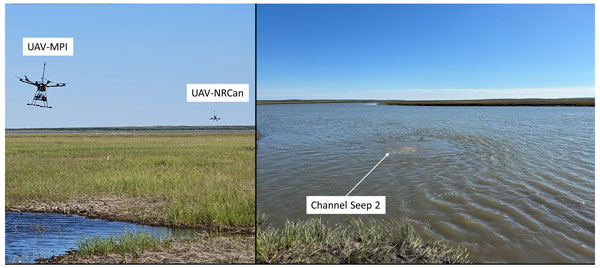
Uncrewed aerial vehicles (UAVs) equipped with greenhouse gas (GHG) analyzers are crucial for monitoring hard-to-reach areas where traditional techniques are impractical. Here, we deployed UAVs with different types of GHG analyzers and applied three different emission rate quantification methods over a known geological methane seep. Our results demonstrate that UAV-based approaches can reliably quantify emissions from remote methane point sources that would otherwise be difficult to measure.
Timothy A. Sipkens, Joel C. Corbin, Kerry Chen, Laura-Helena Rivellini, Jonathan Abbatt, and Jason S. Olfert
Atmos. Meas. Tech., 19, 3123–3136, https://doi.org/10.5194/amt-19-3123-2026, https://doi.org/10.5194/amt-19-3123-2026, 2026
Short summary
Short summary
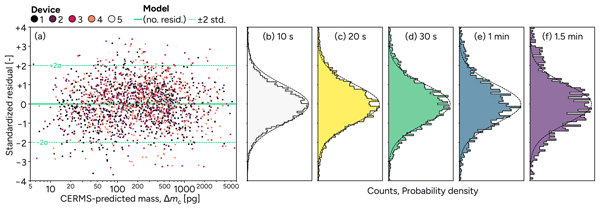
Aethalometers measure black carbon mass concentrations using light attenuation through a filter capturing particles. This work compares five micro-aethalometers using known mass concentrations of laboratory-generated soot. Uncertainties were found to scale with mass concentration, and an expression is given for the uncertainty as a function of mass concentration, sampling interval, and flow rate. An open-source algorithm is provided for the reanalysis of aethalometer data.
Timothy A. Sipkens, Joel C. Corbin, Brett Smith, Stéphanie Gagné, Prem Lobo, Benjamin T. Brem, Mark P. Johnson, and Gregory J. Smallwood
Atmos. Meas. Tech., 17, 4291–4302, https://doi.org/10.5194/amt-17-4291-2024, https://doi.org/10.5194/amt-17-4291-2024, 2024
Short summary
Short summary
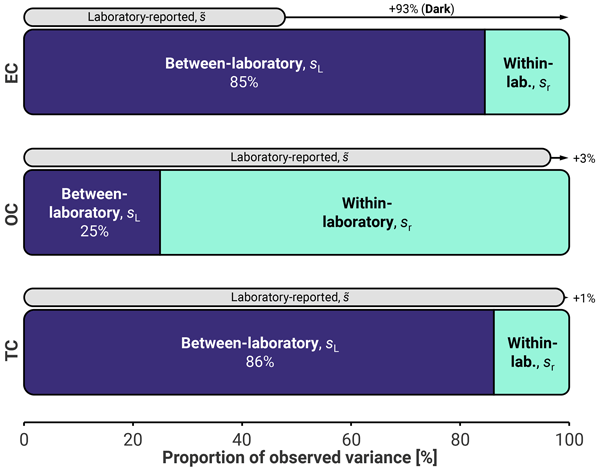
Carbonaceous particles, such as soot, contribute to climate forcing, air pollution, and human health impacts. Thermal–optical analysis is a calibration standard used to measure these particles, but significant differences have been observed in the measurements across identical instruments. We report on the reproducibility of these measurements for aircraft emissions, which range from 8.0 % of the nominal value for organic carbon to 17 % for elemental carbon.
Arash Naseri, Joel C. Corbin, and Jason S. Olfert
Atmos. Meas. Tech., 17, 3719–3738, https://doi.org/10.5194/amt-17-3719-2024, https://doi.org/10.5194/amt-17-3719-2024, 2024
Short summary
Short summary
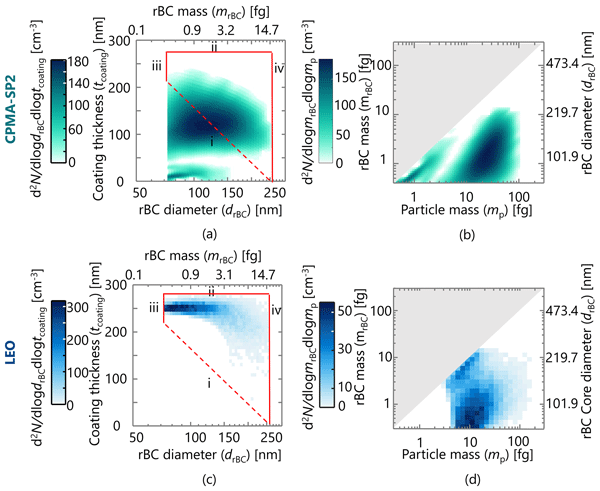
It is crucial to accurately measure the mixing states of light-absorbing carbon particles from emission sources like wildfires and biomass combustion to decrease climate forcing uncertainties. This study compares methods that measure light-absorbing carbon in the atmosphere. The CPMA-SP2 method offers more accurate results than traditional light-scattering methods, such as the leading-edge-only (LEO) method, thereby enhancing the accuracy of measuring the mixing states of light-absorbing carbon.
Daniel Wesley, Scott Dallimore, Roger MacLeod, Torsten Sachs, and David Risk
The Cryosphere, 17, 5283–5297, https://doi.org/10.5194/tc-17-5283-2023, https://doi.org/10.5194/tc-17-5283-2023, 2023
Short summary
Short summary
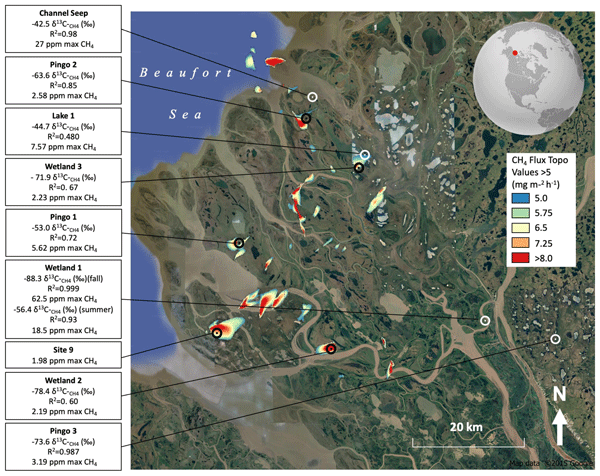
The Mackenzie River delta (MRD) is an ecosystem with high rates of methane production from biologic and geologic sources, but little research has been done to determine how often geologic or biogenic methane is emitted to the atmosphere. Stable carbon isotope analysis was used to identify the source of CH4 at several sites. Stable carbon isotope (δ13C-CH4) signatures ranged from −42 to −88 ‰ δ13C-CH4, indicating that CH4 emission in the MRD is caused by biologic and geologic sources.
Joel C. Corbin, Tobias Schripp, Bruce E. Anderson, Greg J. Smallwood, Patrick LeClercq, Ewan C. Crosbie, Steven Achterberg, Philip D. Whitefield, Richard C. Miake-Lye, Zhenhong Yu, Andrew Freedman, Max Trueblood, David Satterfield, Wenyan Liu, Patrick Oßwald, Claire Robinson, Michael A. Shook, Richard H. Moore, and Prem Lobo
Atmos. Meas. Tech., 15, 3223–3242, https://doi.org/10.5194/amt-15-3223-2022, https://doi.org/10.5194/amt-15-3223-2022, 2022
Short summary
Short summary
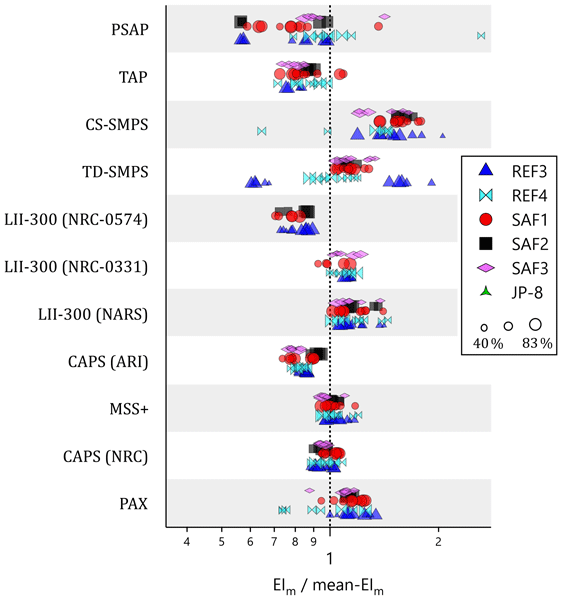
The combustion of sustainable aviation fuels in aircraft engines produces particulate matter (PM) emissions with different properties than conventional fuels due to changes in fuel composition. Consequently, the response of various diagnostic instruments to PM emissions may be impacted. We found no significant instrument biases in terms of particle mass, number, and size measurements for conventional and sustainable aviation fuel blends despite large differences in the magnitude of emissions.

Ruoyang Yuan, Prem Lobo, Greg J. Smallwood, Mark P. Johnson, Matthew C. Parker, Daniel Butcher, and Adrian Spencer
Atmos. Meas. Tech., 15, 241–259, https://doi.org/10.5194/amt-15-241-2022, https://doi.org/10.5194/amt-15-241-2022, 2022
Short summary
Short summary
The relationship between the non-volatile particulate matter (nvPM) mass emissions produced by different engine sources and the response of the LII 300 instrument, used for regulatory measurements of nvPM mass emissions in aircraft engine certification tests, was investigated for different sources and operating conditions. Laser fluence optimisation was required for real-time nvPM mass concentration measurements. These results will inform the development of updated calibration protocols.
Sebastian Düsing, Albert Ansmann, Holger Baars, Joel C. Corbin, Cyrielle Denjean, Martin Gysel-Beer, Thomas Müller, Laurent Poulain, Holger Siebert, Gerald Spindler, Thomas Tuch, Birgit Wehner, and Alfred Wiedensohler
Atmos. Chem. Phys., 21, 16745–16773, https://doi.org/10.5194/acp-21-16745-2021, https://doi.org/10.5194/acp-21-16745-2021, 2021
Short summary
Short summary
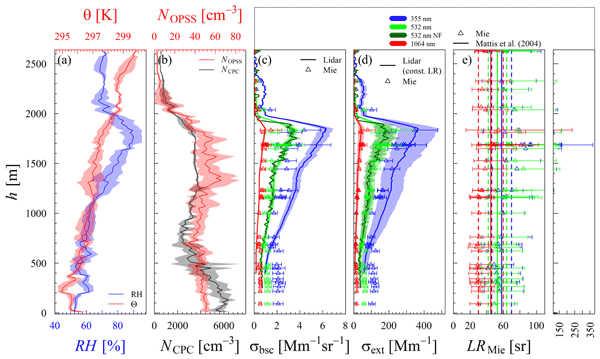
The work deals with optical properties of aerosol particles in dried and atmospheric states. Based on two measurement campaigns in the rural background of central Europe, different measurement approaches were compared with each other, such as modeling based on Mie theory and direct in situ or remote sensing measurements. Among others, it was shown that the aerosol extinction-to-backscatter ratio is relative humidity dependent, and refinement with respect to the model input parameters is needed.
Dawei Hu, M. Rami Alfarra, Kate Szpek, Justin M. Langridge, Michael I. Cotterell, Claire Belcher, Ian Rule, Zixia Liu, Chenjie Yu, Yunqi Shao, Aristeidis Voliotis, Mao Du, Brett Smith, Greg Smallwood, Prem Lobo, Dantong Liu, Jim M. Haywood, Hugh Coe, and James D. Allan
Atmos. Chem. Phys., 21, 16161–16182, https://doi.org/10.5194/acp-21-16161-2021, https://doi.org/10.5194/acp-21-16161-2021, 2021
Short summary
Short summary
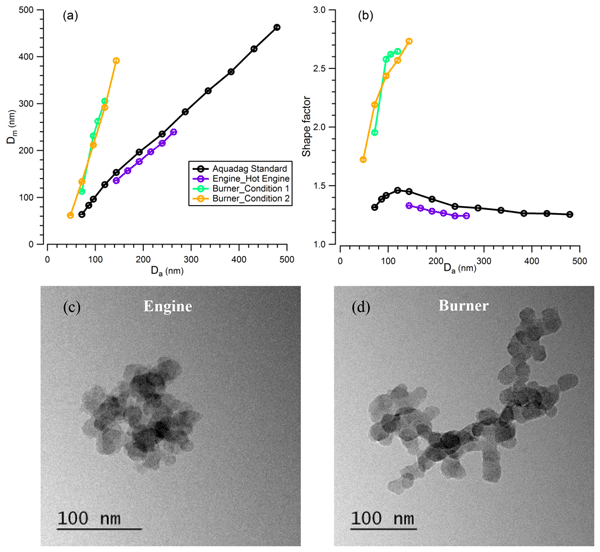
Here, we developed new techniques for investigating these properties in the laboratory and applied these to BC and BrC from different sources, including diesel exhaust, inverted propane flame and wood combustion. These have allowed us to quantify the changes in shape and chemical composition of different soots according to source and variables such as the moisture content of wood.
Cited articles
Andersen, T., Vinkovic, K., de Vries, M., Kers, B., Necki, J., Swolkien, J., Roiger, A., Peters, W., and Chen, H.: Quantifying methane emissions from coal mining ventilation shafts using an unmanned aerial vehicle (UAV)-based active AirCore system, Atmos. Environ. X, 12, https://doi.org/10.1016/j.aeaoa.2021.100135, 2021. a, b
Barlow, R., Brazzale, A. R., and Volobouev, I.: Asymmetric errors, Nuclear Instruments and Methods in Physics Research, Section A: Accelerators, Spectrometers, Detectors and Associated Equipment, 1082, https://doi.org/10.1016/j.nima.2025.170857, 2026. a
Berchet, A., Pison, I., Crill, P. M., Thornton, B., Bousquet, P., Thonat, T., Hocking, T., Thanwerdas, J., Paris, J.-D., and Saunois, M.: Using ship-borne observations of methane isotopic ratio in the Arctic Ocean to understand methane sources in the Arctic, Atmos. Chem. Phys., 20, 3987–3998, https://doi.org/10.5194/acp-20-3987-2020, 2020. a
Blackmore, D. C., Hickey, J.-P., Wigle, A., Osadetz, K., and Daun, K. J.: A Bayesian technique for quantifying methane emissions using vehicle-mounted sensors with a Gaussian plume model, Atmos. Environ., p. 121002, https://doi.org/10.1016/j.atmosenv.2024.121002, 2024. a
Bolek, A., Heimann, M., and Göckede, M.: UAV-based in situ measurements of CO2 and CH4 fluxes over complex natural ecosystems, Atmos. Meas. Tech., 17, 5619–5636, https://doi.org/10.5194/amt-17-5619-2024, 2024. a, b
Bolek, A., Beattie, M. N., Norooz Oliaee, J., MacLeod, R., Skeeter, J., Morse, P., Heimann, M., and Göckede, M.: Application of UAV-based methods for quantifying methane point source emissions over an Arctic geological seep, Atmos. Meas. Tech., 19, 3983–3998, https://doi.org/10.5194/amt-19-3983-2026, 2026. a, b, c, d, e
Bonne, J.-L., Donnat, L., Albora, G., Burgalat, J., Chauvin, N., Combaz, D., Cousin, J., Decarpenterie, T., Duclaux, O., Dumelié, N., Galas, N., Juery, C., Parent, F., Pineau, F., Maunoury, A., Ventre, O., Bénassy, M.-F., and Joly, L.: A measurement system for CO2 and CH4 emissions quantification of industrial sites using a new in situ concentration sensor operated on board uncrewed aircraft vehicles, Atmos. Meas. Tech., 17, 4471–4491, https://doi.org/10.5194/amt-17-4471-2024, 2024. a, b, c, d, e, f
Caulton, D. R., Li, Q., Bou-Zeid, E., Fitts, J. P., Golston, L. M., Pan, D., Lu, J., Lane, H. M., Buchholz, B., Guo, X., McSpiritt, J., Wendt, L., and Zondlo, M. A.: Quantifying uncertainties from mobile-laboratory-derived emissions of well pads using inverse Gaussian methods, Atmos. Chem. Phys., 18, 15145–15168, https://doi.org/10.5194/acp-18-15145-2018, 2018. a, b, c
Conley, S., Faloona, I., Mehrotra, S., Suard, M., Lenschow, D. H., Sweeney, C., Herndon, S., Schwietzke, S., Pétron, G., Pifer, J., Kort, E. A., and Schnell, R.: Application of Gauss's theorem to quantify localized surface emissions from airborne measurements of wind and trace gases, Atmos. Meas. Tech., 10, 3345–3358, https://doi.org/10.5194/amt-10-3345-2017, 2017. a, b, c
Cossel, K. C., Waxman, E. M., Hoenig, E., Hesselius, D., Chaote, C., Coddington, I., and Newbury, N. R.: Ground-to-UAV, laser-based emissions quantification of methane and acetylene at long standoff distances, Atmos. Meas. Tech., 16, 5697–5707, https://doi.org/10.5194/amt-16-5697-2023, 2023. a
Cui, R., Dong, L., Wu, H., Li, S., Yin, X., Zhang, L., Ma, W., Yin, W., and Tittel, F. K.: Calculation model of dense spot pattern multi-pass cells based on a spherical mirror aberration, Opt. Lett., 44, 1108, https://doi.org/10.1364/ol.44.001108, 2019. a
Detto, M., Verfaillie, J., Anderson, F., Xu, L., and Baldocchi, D.: Comparing laser-based open- and closed-path gas analyzers to measure methane fluxes using the eddy covariance method, Agr. Forest Meteorol., 151, 1312–1324, https://doi.org/10.1016/j.agrformet.2011.05.014, 2011. a
Donahue, C. P., Oberoi, K., Dillon, J. W., Hengst, V., Kennedy, B., Kearney, W., Lennox, J., Rehbein, E., Sykes, R., Dudiak, C. D., Altamura, D. T., Doherty, G., Roos, P. A., Brasseur, J. K., and Thorpe, M. J.: Aerial LiDAR-Based, Source-Resolved Methane Emissions Inventory: Permian Basin Case Study for Benchmarking U.S. Emissions, Environ. Sci. Technol., 60, 13968–13979, https://doi.org/10.1021/acs.est.5c15184, 2026. a, b
Dooley, J. F., Minschwaner, K., Dubey, M. K., El Abbadi, S. H., Sherwin, E. D., Meyer, A. G., Follansbee, E., and Lee, J. E.: A new aerial approach for quantifying and attributing methane emissions: implementation and validation, Atmos. Meas. Tech., 17, 5091–5111, https://doi.org/10.5194/amt-17-5091-2024, 2024. a, b, c, d, e, f, g, h
Duren, R. M., Thorpe, A. K., Foster, K. T., Rafiq, T., Hopkins, F. M., Yadav, V., Bue, B. D., Thompson, D. R., Conley, S., Colombi, N. K., Frankenberg, C., McCubbin, I. B., Eastwood, M. L., Falk, M., Herner, J. D., Croes, B. E., Green, R. O., and Miller, C. E.: California’s methane super-emitters, Nature, 575, 180–184, https://doi.org/10.1038/s41586-019-1720-3, 2019. a, b
D’Amato, F., Barucci, M., Bianchini, G., and Viciani, S.: Quantum cascade laser (QCL) in airborne atmospheric measurements: a review [Invited], Opt. Express, 33, 22745, https://doi.org/10.1364/oe.558437, 2025. a, b, c, d
El Abbadi, S. H., Chen, Z., Burdeau, P. M., Rutherford, J. S., Chen, Y., Zhang, Z., Sherwin, E. D., and Brandt, A. R.: Technological Maturity of Aircraft-Based Methane Sensing for Greenhouse Gas Mitigation, Environ. Sci. Technol., 58, 9591–9600, https://doi.org/10.1021/acs.est.4c02439, 2024. a, b
Engel, G. S. and Moyer, E. J.: Precise multipass Herriott cell design: Derivation of controlling design equations, Opt. Lett., 32, 704, https://doi.org/10.1364/OL.32.000704, 2007. a
Environment and Climate Change Canada: Canadian Climate Data for Ottawa Intl A (Climate ID: 6106001, Daily, 2011–2026), downloaded from weatherstats.ca based on Environment and Climate Change Canada data, https://ottawa.weatherstats.ca/download.html (last access: 26 March 2026), 2026. a
Fish, R., Municchi, F., Sprinkle, B., and Hammerling, D.: A comparison of turbulent CFD with Gaussian dispersion models on a methane emission test site, Atmos. Environ. X, 27, https://doi.org/10.1016/j.aeaoa.2025.100326, 2025. a
Gan, Q., Feng, Z., Zhang, D., Ma, S., Yang, X., and Yin, X.: High-Flow-Rate Trace Formaldehyde Detection Based on Ultraviolet Photoacoustic Spectroscopy Using a Long Resonant Photoacoustic Cell, Sensors, 26, https://doi.org/10.3390/s26051410, 2026. a
Goldenstein, C. S., Miller, V. A., Spearrin, R. M., and Strand, C. L.: SpectraPlot.com: Integrated spectroscopic modeling of atomic and molecular gases, J. Quant. Spectrosc. Ra., 200, 249–257, https://doi.org/10.1016/j.jqsrt.2017.06.007, 2017. a, b
Golston, L. M., Tao, L., Brosy, C., Schäfer, K., Wolf, B., McSpiritt, J., Buchholz, B., Caulton, D. R., Pan, D., Zondlo, M. A., Yoel, D., Kunstmann, H., and McGregor, M.: Lightweight mid-infrared methane sensor for unmanned aerial systems, Appl. Phys. B, 123, https://doi.org/10.1007/s00340-017-6735-6, 2017. a, b
Gordon, I., Rothman, L., Hargreaves, R., Gomez, F., Bertin, T., Hill, C., Kochanov, R., Tan, Y., Wcisło, P., Makhnev, V. Y., Bernath, P., Birk, M., Boudon, V., Campargue, A., Coustenis, A., Drouin, B., Gamache, R., Hodges, J., Jacquemart, D., Mlawer, E., Nikitin, A., Perevalov, V., Rotger, M., Robert, S., Tennyson, J., Toon, G., Tran, H., Tyuterev, V., Adkins, E., Barbe, A., Bailey, D., Bielska, K., Bizzocchi, L., Blake, T., Bowesman, C., Cacciani, P., Čermák, P., Császár, A., Denis, L., Egbert, S., Egorov, O., Ermilov, A. Y., Fleisher, A., Fleurbaey, H., Foltynowicz, A., Furtenbacher, T., Germann, M., Guest, E., Harrison, J., Hartmann, J.-M., Hjältén, A., Hu, S.-M., Huang, X., Johnson, T., Jóźwiak, H., Kassi, S., Khan, M., Kwabia-Tchana, F., Lee, T., Lisak, D., Liu, A.-W., Lyulin, O., Malarich, N., Manceron, L., Marinina, A., Massie, S., Mascio, J., Medvedev, E., Meshkov, V., Mellau, G. C., Melosso, M., Mikhailenko, S., Mondelain, D., Müller, H., O’Donnell, M., Owens, A., Perrin, A., Polyansky, O., Raston, P., Reed, Z., Rey, M., Richard, C., Rieker, G., Röske, C., Sharpe, S., Starikova, E., Stolarczyk, N., Stolyarov, A., Sung, K., Tamassia, F., Terragni, J., Ushakov, V., Vasilchenko, S., Vispoel, B., Vodopyanov, K., Wagner, G., Wójtewicz, S., Yurchenko, S., and Zobov, N.: The HITRAN2024 molecular spectroscopic database, J. Quant. Spectrosc. Ra., p. 109807, https://doi.org/10.1016/j.jqsrt.2026.109807, 2026. a, b, c
Gordon, M., Li, S.-M., Staebler, R., Darlington, A., Hayden, K., O'Brien, J., and Wolde, M.: Determining air pollutant emission rates based on mass balance using airborne measurement data over the Alberta oil sands operations, Atmos. Meas. Tech., 8, 3745–3765, https://doi.org/10.5194/amt-8-3745-2015, 2015. a, b, c
Han, T., Liggio, J., Narayan, J., Liu, Y., Hayden, K., Mittermeier, R., Darlington, A., Wheeler, M., Cober, S., Zhang, Y., Xie, C., Yang, Y., Huang, Y., Wolde, M., Smyth, S., Barrigar, O., and Li, S. M.: Quantification of Methane Emissions from Cold Heavy Oil Production with Sand Extraction in Alberta and Saskatchewan, Canada, Environ. Sci. Technol., https://doi.org/10.1021/acs.est.4c02333, 2024. a
Herriott, D., Kogelnik, H., and Kompfner, R.: Off-Axis Paths in Spherical Mirror Interferometers, Appl. Opt., 3, 523–526, 1964. a
Khaleghi, A., MacKay, K., Darlington, A., James, L. A., and Risk, D.: Methane emission rate estimates of offshore oil platforms in Newfoundland and Labrador, Canada, Elementa, 12, https://doi.org/10.1525/elementa.2024.00025, 2024. a, b
Kumar, P., Broquet, G., Yver-Kwok, C., Laurent, O., Gichuki, S., Caldow, C., Cropley, F., Lauvaux, T., Ramonet, M., Berthe, G., Martin, F., Duclaux, O., Juery, C., Bouchet, C., and Ciais, P.: Mobile atmospheric measurements and local-scale inverse estimation of the location and rates of brief CH4 and CO2 releases from point sources, Atmos. Meas. Tech., 14, 5987–6003, https://doi.org/10.5194/amt-14-5987-2021, 2021. a, b, c
Kumar, P., Broquet, G., Caldow, C., Laurent, O., Gichuki, S., Cropley, F., Yver-Kwok, C., Fontanier, B., Lauvaux, T., Ramonet, M., Shah, A., Berthe, G., Martin, F., Duclaux, O., Juery, C., Bouchet, C., Pitt, J., and Ciais, P.: Near-field atmospheric inversions for the localization and quantification of controlled methane releases using stationary and mobile measurements, Q. J. Roy. Meteorol. Soc., 148, 1886–1912, https://doi.org/10.1002/qj.4283, 2022. a
Li, J., Nair, A. P., Schwarm, K. K., Pineda, D. I., and Spearrin, R. M.: Temperature-dependent line mixing in the R-branch of the v3 band of methane, J. Quant. Spectrosc. Ra., 255, https://doi.org/10.1016/j.jqsrt.2020.107271, 2020. a
Maazallahi, H., Delre, A., Scheutz, C., Fredenslund, A. M., Schwietzke, S., Denier van der Gon, H., and Röckmann, T.: Intercomparison of detection and quantification methods for methane emissions from the natural gas distribution network in Hamburg, Germany, Atmos. Meas. Tech., 16, 5051–5073, https://doi.org/10.5194/amt-16-5051-2023, 2023. a, b
MacKay, K., Lavoie, M., Bourlon, E., Atherton, E., O’Connell, E., Baillie, J., Fougère, C., and Risk, D.: Methane emissions from upstream oil and gas production in Canada are underestimated, Sci. Rep., 11, https://doi.org/10.1038/s41598-021-87610-3, 2021. a
Martinez, B., Miller, T. W., and Yalin, A. P.: Cavity ring-down methane sensor for small unmanned aerial systems, Sensors, 20, 454, https://doi.org/10.3390/s20020454, 2020. a
McDermitt, D., Burba, G., Xu, L., Anderson, T., Komissarov, A., Riensche, B., Schedlbauer, J., Starr, G., Zona, D., Oechel, W., Oberbauer, S., and Hastings, S.: A new low-power, open-path instrument for measuring methane flux by eddy covariance, in: Applied Physics B: Lasers and Optics, vol. 102, pp. 391–405, ISSN 09462171, https://doi.org/10.1007/s00340-010-4307-0, 2011. a
Mønster, J., Samuelsson, J., Kjeldsen, P., and Scheutz, C.: Quantification of methane emissions from 15 Danish landfills using the mobile tracer dispersion method, Waste Manage., 35, 177–186, https://doi.org/10.1016/j.wasman.2014.09.006, 2015. a
Mønster, J. G., Samuelsson, J., Kjeldsen, P., Rella, C. W., and Scheutz, C.: Quantifying methane emission from fugitive sources by combining tracer release and downwind measurements - A sensitivity analysis based on multiple field surveys, Waste Manage., 34, 1416–1428, https://doi.org/10.1016/j.wasman.2014.03.025, 2014. a
Morales, R., Ravelid, J., Vinkovic, K., Korbeń, P., Tuzson, B., Emmenegger, L., Chen, H., Schmidt, M., Humbel, S., and Brunner, D.: Controlled-release experiment to investigate uncertainties in UAV-based emission quantification for methane point sources, Atmos. Meas. Tech., 15, 2177–2198, https://doi.org/10.5194/amt-15-2177-2022, 2022. a, b, c, d
Nathan, B. J., Golston, L. M., O'Brien, A. S., Ross, K., Harrison, W. A., Tao, L., Lary, D. J., Johnson, D. R., Covington, A. N., Clark, N. N., and Zondlo, M. A.: Near-Field Characterization of Methane Emission Variability from a Compressor Station Using a Model Aircraft, Environ. Sci. Technol., 49, 7896–7903, https://doi.org/10.1021/acs.est.5b00705, 2015. a, b
Norooz Oliaee, J., Sabourin, N. A., Festa-Bianchet, S. A., Gupta, J. A., Johnson, M. R., Thomson, K. A., Smallwood, G. J., and Lobo, P.: Development of a Sub-ppb Resolution Methane Sensor Using a GaSb-Based DFB Diode Laser near 3270 nm for Fugitive Emission Measurement, ACS Sensors, 7, 564–572, https://doi.org/10.1021/acssensors.1c02444, 2022. a, b, c, d, e, f
Ort, L., Röder, L. L., Parchatka, U., Königstedt, R., Crowley, D., Kunz, F., Wittkowski, R., Lelieveld, J., and Fischer, H.: In-flight characterization of a compact airborne quantum cascade laser absorption spectrometer, Atmos. Meas. Tech., 17, 3553–3565, https://doi.org/10.5194/amt-17-3553-2024, 2024. a
Roscioli, J. R., Yacovitch, T. I., Floerchinger, C., Mitchell, A. L., Tkacik, D. S., Subramanian, R., Martinez, D. M., Vaughn, T. L., Williams, L., Zimmerle, D., Robinson, A. L., Herndon, S. C., and Marchese, A. J.: Measurements of methane emissions from natural gas gathering facilities and processing plants: measurement methods, Atmos. Meas. Tech., 8, 2017–2035, https://doi.org/10.5194/amt-8-2017-2015, 2015. a
Röder, L. L., Ort, L., Lelieveld, J., and Fischer, H.: Quantitative analysis of temporal stability and instrument performance during field experiments of an airborne QCLAS via Allan–Werle-plots, Appl. Phys. B, 130, https://doi.org/10.1007/s00340-024-08254-5, 2024. a, b
Scheutz, C., Samuelsson, J., Fredenslund, A. M., and Kjeldsen, P.: Quantification of multiple methane emission sources at landfills using a double tracer technique, Waste Manage., 31, 1009–1017, https://doi.org/10.1016/j.wasman.2011.01.015, 2011. a
Scheutz, C., Knudsen, J. E., Vechi, N. T., and Knudsen, J.: Validation and demonstration of a drone-based method for quantifying fugitive methane emissions, J. Environ. Manage., 373, https://doi.org/10.1016/j.jenvman.2024.123467, 2025. a, b, c, d
Shah, A., Pitt, J. R., Ricketts, H., Leen, J. B., Williams, P. I., Kabbabe, K., Gallagher, M. W., and Allen, G.: Testing the near-field Gaussian plume inversion flux quantification technique using unmanned aerial vehicle sampling, Atmos. Meas. Tech., 13, 1467–1484, https://doi.org/10.5194/amt-13-1467-2020, 2020. a, b, c, d
Shaw, J. T., Shah, A., Yong, H., and Allen, G.: Methods for quantifying methane emissions using unmanned aerial vehicles: A review, Phil. Trans. R. Soc. A, 379, https://doi.org/10.1098/rsta.2020.0450, 2021. a
Smith, B. J., Buckingham, S., Touzel, D. F., Corbett, A. M., and Tavner, C.: Development of Methods for Top-Down Methane Emission Measurements of Oil and Gas Facilities in an Offshore Environment Using a Miniature Methane Spectrometer and Long-Endurance Uncrewed Aerial System, in: SPE Production & Operations, vol. 565, pp. 565–577, Society of Petroleum Engineers, https://doi.org/10.2118/206181-PA, 2023. a, b
Soskind, M. G., Li, N. P., Moore, D. P., Chen, Y., Wendt, L. P., McSpiritt, J., Zondlo, M. A., and Wysocki, G.: Stationary and drone-assisted methane plume localization with dispersion spectroscopy, Remote Sens. Environ., 289, https://doi.org/10.1016/j.rse.2023.113513, 2023. a
Takriti, M., Wynn, P. M., Elias, D. M., Ward, S. E., Oakley, S., and McNamara, N. P.: Mobile methane measurements: Effects of instrument specifications on data interpretation, reproducibility, and isotopic precision, Atmos. Environ., 246, https://doi.org/10.1016/j.atmosenv.2020.118067, 2021. a
Tettenborn, J., Zavala-Araiza, D., Stroeken, D., Maazallahi, H., van der Veen, C., Hensen, A., Velzeboer, I., van den Bulk, P., Vogel, F., Gillespie, L., Ars, S., France, J., Lowry, D., Fisher, R., and Röckmann, T.: Improving consistency in methane emission quantification from the natural gas distribution systems across measurement devices, Atmos. Meas. Tech., 18, 3569–3584, https://doi.org/10.5194/amt-18-3569-2025, 2025. a, b, c
Thorpe, M. J., Kreitinger, A., Seger, E., Greenfield, N., Wilson, C., Trey, P., Kreitinger, S., Gordon, S., Schmitt, R., and Roos, P.: Gas Mapping LiDAR for large-area leak detection and emissions monitoring applications, in: Conference on Lasers and Electro-Optics, p. AF2B.1, Optica Publishing Group, https://doi.org/10.1364/CLEO_AT.2017.AF2B.1, 2017. a
Tuzson, B., Graf, M., Ravelid, J., Scheidegger, P., Kupferschmid, A., Looser, H., Morales, R. P., and Emmenegger, L.: A compact QCL spectrometer for mobile, high-precision methane sensing aboard drones, Atmos. Meas. Tech., 13, 4715–4726, https://doi.org/10.5194/amt-13-4715-2020, 2020. a, b, c, d
Tyner, D. R. and Johnson, M. R.: Where the Methane Is - Insights from Novel Airborne LiDAR Measurements Combined with Ground Survey Data, Environ. Sci. Technol., 55, 9773–9783, https://doi.org/10.1021/acs.est.1c01572, 2021. a
Visscher, A. D.: Air Dispersion Modeling, John Wiley & Sons, Inc., https://doi.org/10.1002/9781118723098, 2014. a, b
Vogel, F., Ars, S., Wunch, D., Lavoie, J., Gillespie, L., Maazallahi, H., Röckmann, T., Nęcki, J., Bartyzel, J., Jagoda, P., Lowry, D., France, J., Fernandez, J., Bakkaloglu, S., Fisher, R., Lanoiselle, M., Chen, H., Oudshoorn, M., Yver-Kwok, C., Defratyka, S., Morgui, J. A., Estruch, C., Curcoll, R., Grossi, C., Chen, J., Dietrich, F., Forstmaier, A., van der Gon, H. A. D., Dellaert, S. N., Salo, J., Corbu, M., Iancu, S. S., Tudor, A. S., Scarlat, A. I., and Calcan, A.: Ground-Based Mobile Measurements to Track Urban Methane Emissions from Natural Gas in 12 Cities across Eight Countries, Environ. Sci. Technol., 58, 2271–2281, https://doi.org/10.1021/acs.est.3c03160, 2024. a
Werle, P.: Accuracy and precision of laser spectrometers for trace gas sensing in the presence of optical fringes and atmospheric turbulence, Appl. Phys. B, 102, 313–329, https://doi.org/10.1007/s00340-010-4165-9, 2011. a, b, c
Wharton, S., Brown, M. J., Dexheimer, D., Fast, J. D., Newsom, R. K., Schalk, W. W., and Wiersema, D. J.: Capturing plume behavior in complex terrain: an overview of the Nevada National Security Site Meteorological Experiment (METEX21), Front. Earth Sci., 11, https://doi.org/10.3389/feart.2023.1251153, 2023. a
Yang, S., Talbot, R. W., Frish, M. B., Golston, L. M., Aubut, N. F., Zondlo, M. A., Gretencord, C., and McSpiritt, J.: Natural gas fugitive leak detection using an unmanned aerial vehicle: Measurement system description and mass balance approach, Atmosphere, 9, https://doi.org/10.3390/atmos9100383, 2018. a
Zhou, X., Montazeri, A., and Albertson, J. D.: Mobile sensing of point-source gas emissions using Bayesian inference: An empirical examination of the likelihood function, Atmos. Environ., 218, https://doi.org/10.1016/j.atmosenv.2019.116981, 2019. a
Short summary
Detecting and quantifying airborne pollutants near the ground surface and over inaccessible terrain, such as wetlands or unpaved roads, poses a challenge for ground-based measurements, such as trucks. Small drones equipped with precise and rapid-response laser-based sensors can conveniently fly over such areas and collect data. Here we report a sensor for natural gas detection and show that it can accurately quantify leak rates that may be missed by other mobile detection methods.
Detecting and quantifying airborne pollutants near the ground surface and over inaccessible...


