
Articles | Volume 19, issue 22
https://doi.org/10.5194/amt-19-7693-2026
© Author(s) 2026. This work is distributed under
the Creative Commons Attribution 4.0 License.
https://doi.org/10.5194/amt-19-7693-2026
© Author(s) 2026. This work is distributed under
the Creative Commons Attribution 4.0 License.
Research article
| 
23 Nov 2026
Research article |
| 23 Nov 2026
A Compact Fabry-Perot Interferometer with a Solid Etalon for Measuring Upper Atmospheric Wind and Temperature
Tiancai Wang
State Key Laboratory of Solar Activity and Space Weather, National Space Science Center, Chinese Academy of Sciences, Beijing, 100190, China
National Field Observation and Research Station (Hainan) for Space Weather, Hainan, 571734, China

State Key Laboratory of Solar Activity and Space Weather, National Space Science Center, Chinese Academy of Sciences, Beijing, 100190, China
National Field Observation and Research Station (Hainan) for Space Weather, Hainan, 571734, China
University of Chinese Academy of Sciences, Beijing, 100049, China
Guangyi Zhu
State Key Laboratory of Solar Activity and Space Weather, National Space Science Center, Chinese Academy of Sciences, Beijing, 100190, China
National Field Observation and Research Station (Hainan) for Space Weather, Hainan, 571734, China
Wei Yuan
State Key Laboratory of Solar Activity and Space Weather, National Space Science Center, Chinese Academy of Sciences, Beijing, 100190, China
National Field Observation and Research Station (Hainan) for Space Weather, Hainan, 571734, China
Zhongqi Tan
College of Advanced Interdisciplinary Studies, National University of Defense Technology, Changsha, 410073, China
Weijun Liu
State Key Laboratory of Solar Activity and Space Weather, National Space Science Center, Chinese Academy of Sciences, Beijing, 100190, China
National Field Observation and Research Station (Hainan) for Space Weather, Hainan, 571734, China
University of Chinese Academy of Sciences, Beijing, 100049, China
Qiucheng Gong
CORRESPONDING AUTHOR
College of Advanced Interdisciplinary Studies, National University of Defense Technology, Changsha, 410073, China
Hong Gao
State Key Laboratory of Solar Activity and Space Weather, National Space Science Center, Chinese Academy of Sciences, Beijing, 100190, China
National Field Observation and Research Station (Hainan) for Space Weather, Hainan, 571734, China
University of Chinese Academy of Sciences, Beijing, 100049, China
Jiyao Xu
State Key Laboratory of Solar Activity and Space Weather, National Space Science Center, Chinese Academy of Sciences, Beijing, 100190, China
National Field Observation and Research Station (Hainan) for Space Weather, Hainan, 571734, China
University of Chinese Academy of Sciences, Beijing, 100049, China
Related authors
Xiaolong Wei, Guoying Jiang, Yajun Zhu, Jiyao Xu, Weijun Liu, Tiancai Wang, Guangyi Zhu, and Wei Yuan
Atmos. Meas. Tech., 18, 6959–6977, https://doi.org/10.5194/amt-18-6959-2025, https://doi.org/10.5194/amt-18-6959-2025, 2025
Short summary
Short summary
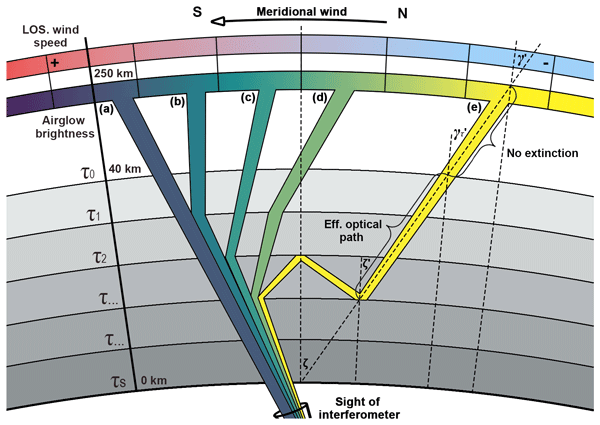
Scattered airglow can bias thermospheric wind observations by ground-based interferometers, especially when brightness is spatially uneven due to auroras. We simulated lower atmospheric scattering during two mid-latitude auroral events and confirmed that scattering can lead to line-of-sight speed biases, thereby increasing the horizontal differences between opposite cardinal directions. This scattering impact needs to be carefully considered in thermospheric dynamics analysis.
Qinzeng Li, Jiyao Xu, Wei Yuan, Angel An, Shengyang Gu, Oscar A. van der Velde, Yajun Zhu, and Xiaolong Wei
Atmos. Chem. Phys., 26, 16703–16718, https://doi.org/10.5194/acp-26-16703-2026, https://doi.org/10.5194/acp-26-16703-2026, 2026
Short summary
Short summary
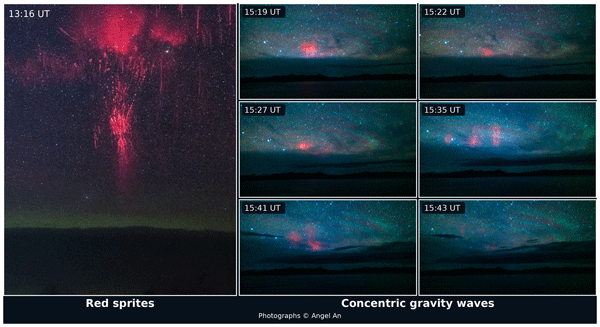
On 19 May 2022, a powerful thunderstorm outbreak south of the Himalayas produced both unusual high-altitude lightning and large atmospheric waves. Using satellite and ground-based observations, we tracked the waves over distances exceeding 3000 km. Some waves observed at the highest altitudes were likely generated by the breakdown of earlier waves. The results show how severe storms can affect atmospheric regions far above the weather systems that create them.
Zheng Wang, Quanhan Li, Zehao Wang, Qinzeng Li, Yajun Zhu, Guojun Wang, Yusen Tian, and Xiao Wang
EGUsphere, https://doi.org/10.5194/egusphere-2026-6656, https://doi.org/10.5194/egusphere-2026-6656, 2026
This preprint is open for discussion and under review for Annales Geophysicae (ANGEO).
Short summary
Short summary
At Hainan, replacing the modeled lower ionosphere with an observed profile improves agreement with satellite-based total electron content after midnight but worsens it in the afternoon. The contrast persists when the lower and upper parts meet at the observed peak. The results show why local observations should be used with attention to both parts of the ionosphere: a better lower profile alone need not improve the total column.
Zheng Wang, Yusen Tian, Guangwei Cao, Guojun Wang, Guangyuan Tan, Kai Ding, Yajun Zhu, and Xiao Wang
EGUsphere, https://doi.org/10.5194/egusphere-2026-5242, https://doi.org/10.5194/egusphere-2026-5242, 2026
Short summary
Short summary
Six years of observations over Hainan show that background plasma and short-timescale ionospheric structure follow different seasonal and daily cycles. Winter disturbances strengthen during the afternoon and evolve over or pass through the region. Summer disturbances intensify near midnight but are concentrated in particular directions or areas, revealing a more uneven horizontal distribution.
Liang Zhang, Zhongfang Liu, and Yajun Zhu
EGUsphere, https://doi.org/10.5194/egusphere-2026-4809, https://doi.org/10.5194/egusphere-2026-4809, 2026
Short summary
Short summary
Using 24 years of SABER and MLS satellite data, we show that the T80 index dominates interannual and daily variability of MLT density. Stronger upwelling (lower T80) generates a vertical density dipole over southern high latitudes (R = 0.98 at 95 km) via column adjustment and local thermal effects, while an anti-phased pattern appears at low latitudes. The robust T80-density linkage enables one-month-ahead statistical forecasts of MLT density (R up to 0.90).
Liang Zhang, Zhongfang Liu, and Yajun Zhu
EGUsphere, https://doi.org/10.5194/egusphere-2026-3749, https://doi.org/10.5194/egusphere-2026-3749, 2026
Preprint archived
Short summary
Short summary
The T80 index, a proxy for summer polar upwelling, provides a near-perfect description (R = 0.98) and a one- to two-month forecast (R = 0.90) of the Southern Hemisphere summer mesopause height. The mechanism involves a vertical dipole temperature response through coupled dynamics, microphysics, and chemistry: stronger upwelling cools below ~90 km via adiabatic ascent and warms above ~90 km via chemical and radiative heating, shifting the temperature minimum downward.
Gang Chen, Yimeng Xu, Guotao Yang, Wuhu Feng, Jiyao Xu, Shaodong Zhang, Guozhu Li, Hanxian Fang, Lifang Du, Haoran Zheng, Xuewu Cheng, Faquan Li, Yuchang Xun, Kaiming Huang, and Chunxiao Yan
EGUsphere, https://doi.org/10.5194/egusphere-2026-2356, https://doi.org/10.5194/egusphere-2026-2356, 2026
Short summary
Short summary
A new lidar for calcium ion (Ca+) observations has been operated in Yanqing, Beijing, China. Cloud-like Ca+ are observed to occur at altitudes of 120–300 km, and these clouds are composed of striped structures. These Ca+ are found to descend into Es layer and the main metal layer, and increase their ion density. According to the stripe-like structures and their influence on the metal ion layers, we believe that these metal ions observed by the lidar in Beijing come from meteoroids trails
Xiaolin Wu, Yajun Zhu, Anne K. Smith, Martin Kaufmann, Guoying Jiang, Shuai Liu, and Jiyao Xu
Atmos. Chem. Phys., 26, 4669–4683, https://doi.org/10.5194/acp-26-4669-2026, https://doi.org/10.5194/acp-26-4669-2026, 2026
Short summary
Short summary
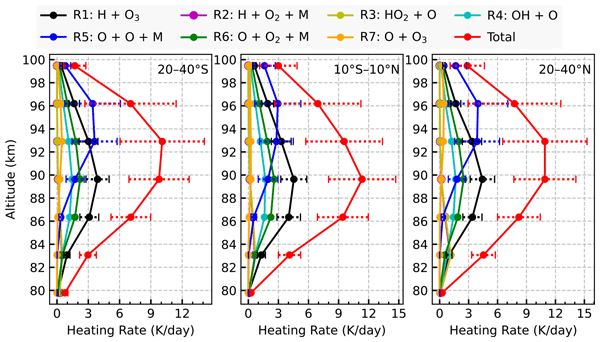
Chemical reactions are key to the energy budget of the upper mesosphere–lower thermosphere, but this process remains poorly quantified. We derived a new dataset of nighttime chemical heating by combining observations from two different satellite instruments. The main exothermic reactions, hydrogen reacting with ozone and oxygen recombination, dominate at different altitudes and vary seasonally. The new results revise previous estimates and provide constraints on the mesopause energy budget.
Shuai Liu, Guoying Jiang, Bingxian Luo, Xiao Liu, Jiyao Xu, Yajun Zhu, and Wen Yi
Atmos. Chem. Phys., 25, 17725–17746, https://doi.org/10.5194/acp-25-17725-2025, https://doi.org/10.5194/acp-25-17725-2025, 2025
Short summary
Short summary
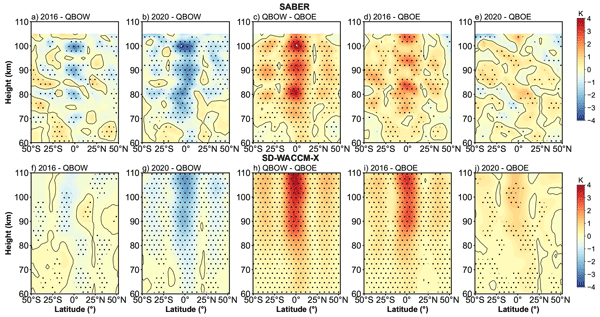
Disruptions of the Quasi-Biennial Oscillation modulate the migrating diurnal tide in the mesosphere and lower thermosphere. During the events, wavelengths and phases of the tide remain unchanged, but its amplitude strengthens. The variation of heating sources, dissipation, zonal wind latitude shear and gravity wave drag may contribute to the amplification of the tide amplitude. These features provide insight into the dynamical coupling of troposphere, stratosphere, mesosphere and lower thermosphere.
Xiaolong Wei, Guoying Jiang, Yajun Zhu, Jiyao Xu, Weijun Liu, Tiancai Wang, Guangyi Zhu, and Wei Yuan
Atmos. Meas. Tech., 18, 6959–6977, https://doi.org/10.5194/amt-18-6959-2025, https://doi.org/10.5194/amt-18-6959-2025, 2025
Short summary
Short summary
Scattered airglow can bias thermospheric wind observations by ground-based interferometers, especially when brightness is spatially uneven due to auroras. We simulated lower atmospheric scattering during two mid-latitude auroral events and confirmed that scattering can lead to line-of-sight speed biases, thereby increasing the horizontal differences between opposite cardinal directions. This scattering impact needs to be carefully considered in thermospheric dynamics analysis.
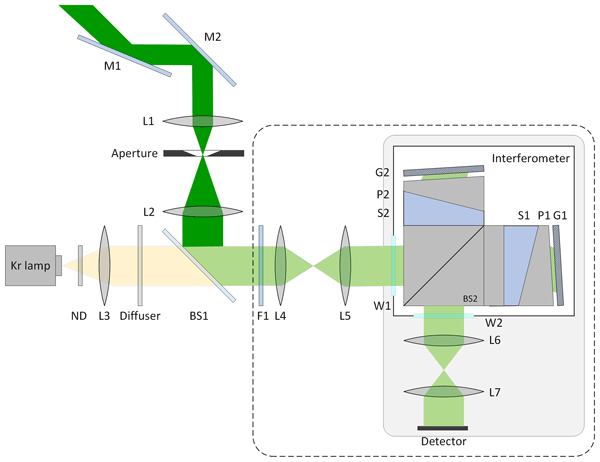
Guangyi Zhu, Yajun Zhu, Martin Kaufmann, Tiancai Wang, Weijun Liu, Wei Yuan, Siyin Liu, Guotao Yang, and Jiyao Xu
Atmos. Meas. Tech., 18, 5985–5997, https://doi.org/10.5194/amt-18-5985-2025, https://doi.org/10.5194/amt-18-5985-2025, 2025
Short summary
Short summary
Winds in the mesopause region (85–100 km altitude) drive upper-atmospheric dynamics and energy transfer. We present the Asymmetric Spatial Heterodyne Spectrometer, a ground-based instrument, to measure winds by observing the green airglow of atomic oxygen. Lab tests demonstrated the instrument achieves better than 2 m/s accuracy. Field measurements at a high-latitude site in China showed strong agreement with independent LiDAR data, confirming that the system delivers reliable wind retrievals.
Qinzeng Li, Jiyao Xu, Yajun Zhu, Cristiano M. Wrasse, José V. Bageston, Wei Yuan, Xiao Liu, Weijun Liu, Ying Wen, Hui Li, and Zhengkuan Liu
Atmos. Chem. Phys., 25, 9719–9736, https://doi.org/10.5194/acp-25-9719-2025, https://doi.org/10.5194/acp-25-9719-2025, 2025
Short summary
Short summary
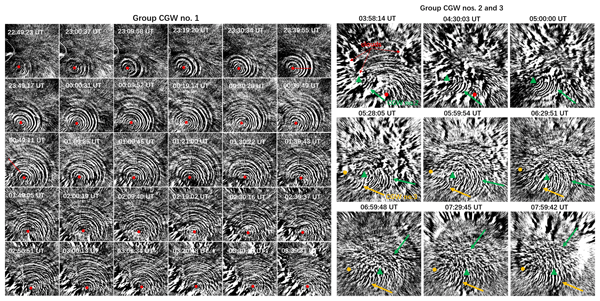
This study explores intense concentric gravity waves (CGWs) based on ground-based and multi-satellite observations over southern Brazil, revealing significant airglow perturbations and strong momentum release. Triggered by deep convection and enabled by weaker wind fields, these CGWs reached the mesopause and thermosphere. Consistent detection via OI and OH airglow emissions confirms their vertical propagation, while asymmetric thermosphere propagation is linked to Doppler-induced wavelength changes.
Qinzeng Li, Jiyao Xu, Aditya Riadi Gusman, Hanli Liu, Wei Yuan, Weijun Liu, Yajun Zhu, and Xiao Liu
Atmos. Chem. Phys., 24, 8343–8361, https://doi.org/10.5194/acp-24-8343-2024, https://doi.org/10.5194/acp-24-8343-2024, 2024
Short summary
Short summary
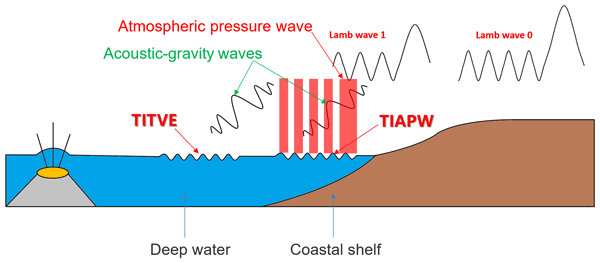
The 2022 Hunga Tonga–Hunga Ha’apai (HTHH) volcanic eruption not only triggered broad-spectrum atmospheric waves but also generated unusual tsunamis which can generate atmospheric gravity waves (AGWs). Multiple strong atmospheric waves were observed in the far-field area of the 2022 HTHH volcano eruption in the upper atmosphere by a ground-based airglow imager network. AGWs caused by tsunamis can propagate to the mesopause region; there is a good match between atmospheric waves and tsunamis.
Daochun Yu, Haitao Li, Baoquan Li, Mingyu Ge, Youli Tuo, Xiaobo Li, Wangchen Xue, Yaning Liu, Aoying Wang, Yajun Zhu, and Bingxian Luo
Atmos. Meas. Tech., 15, 3141–3159, https://doi.org/10.5194/amt-15-3141-2022, https://doi.org/10.5194/amt-15-3141-2022, 2022
Short summary
Short summary
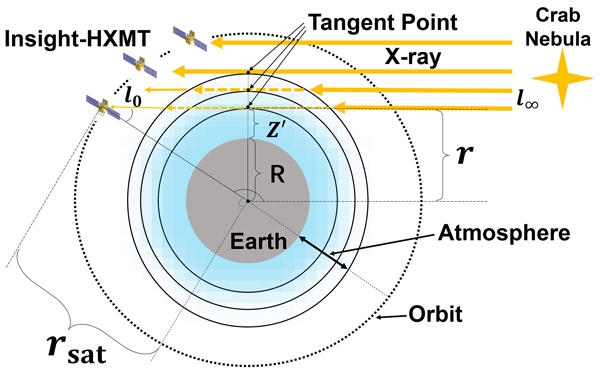
In this work, the measurement of vertical atmospheric density profiles using X-ray Earth occultation is investigated. The Earth’s density profile for the lower thermosphere is obtained with Insight-HXMT. It is shown that the Insight-HXMT X-ray satellite of China can be used as an X-ray atmospheric diagnostics instrument for the upper atmosphere. The Insight-HXMT satellite can, with other X-ray astronomical satellites in orbit, form a network for X-ray Earth occultation sounding in the future.
Cited articles
Adachi, T., Yamaoka, M., Yamamoto, M., Otsuka, Y., Liu, H., Hsiao, C., Chen, A. B., and Hsu, R.: Midnight latitude-altitude distribution of 630 nm airglow in the Asian sector measured with FORMOSAT-2/ISUAL, J. Geophys. Res.-Space Phys., 115, 2009JA015147, https://doi.org/10.1029/2009JA015147, 2010.
Anderson, C., Conde, M., Dyson, P., Davies, T., and Kosch, M. J.: Thermospheric winds and temperatures above Mawson, Antarctica, observed with an all-sky imaging, Fabry-Perot spectrometer, Ann. Geophys., 27, 2225–2235, https://doi.org/10.5194/angeo-27-2225-2009, 2009.
Aruliah, A. L., Griffin, E. M., Yiu, H.-C. I., McWhirter, I., and Charalambous, A.: SCANDI – an all-sky Doppler imager for studies of thermospheric spatial structure, Ann. Geophys., 28, 549–567, https://doi.org/10.5194/angeo-28-549-2010, 2010.
Biondi, M. A., Sipler, D. P., Zipf, M. E., and Baumgardner, J. L.: All-sky Doppler interferometer for thermospheric dynamics studies, Appl. Opt., 34, 1646–1654, https://doi.org/10.1364/AO.34.001646, 1995.
Chiang, C.-Y., Tam, S. W.-Y., and Chang, T.-F.: Variations of the 630.0 nm airglow emission with meridional neutral wind and neutral temperature around midnight, Ann. Geophys., 36, 1471–1481, https://doi.org/10.5194/angeo-36-1471-2018, 2018.
Chinese Meridian Project Data Center: Atmospheric Wind Speed of Dual-Channel Optical Interferometer at SiZiWang Observatory, Version V1.0, National Space Science Data Center, https://doi.org/10.12176/01.05.00307-V01, 2026.
Conde, M. and Smith, R. W.: Phase compensation of a separation scanned, all-sky imaging Fabry–Perot spectrometer for auroral studies, Appl. Opt., 36, 5441–5450, https://doi.org/10.1364/AO.36.005441, 1997.
Dao, P., Farley, R., Tao, X., and Gardner, C.: Lidar Observations of the Temperature Profile Between 25 and 103 Km - Evidence of Strong Tidal Perturbation, Geophys. Res. Lett., 22, 2825–2828, https://doi.org/10.1029/95GL02950, 1995.
Dhadly, M., Sassi, F., Emmert, J., Drob, D., Conde, M., Wu, Q., Makela, J., Budzien, S., and Nicholas, A.: Neutral winds from mesosphere to thermosphere – past, present, and future outlook, Front. Astron. Space Sci., 9, 1050586, https://doi.org/10.3389/fspas.2022.1050586, 2023.
Englert, C. R., Harlander, J. M., Emmert, J. T., Babcock, D. D., and Roesler, F. L.: Initial ground-based thermospheric wind measurements using Doppler asymmetric spatial heterodyne spectroscopy (DASH), Opt. Express, 18, 27416–27430, https://doi.org/10.1364/OE.18.027416, 2010.
Englert, C. R., Harlander, J. M., Brown, C. M., Meriwether, J. W., Makela, J. J., Castelaz, M., Emmert, J. T., Drob, D. P., and Marr, K. D.: Coincident thermospheric wind measurements using ground-based Doppler Asymmetric Spatial Heterodyne (DASH) and Fabry–Perot Interferometer (FPI) instruments, J. Atmos. Sol. Terr. Phys., 86, 92–98, https://doi.org/10.1016/j.jastp.2012.07.002, 2012.
Fisher, G. M., Niciejewski, R. J., Killeen, T. L., Gault, W. A., Shepherd, G. G., Brown, S., and Wu, Q.: Twelve-hour tides in the winter northern polar mesosphere and lower thermosphere, J. Geophys. Res.-Space Phys., 107, SIA 24-1–SIA 24-16, https://doi.org/10.1029/2001JA000294, 2002.
Gao, H., Xu, J., Ward, W., and Smith, A. K.: Temporal evolution of nightglow emission responses to SSW events observed by TIMED/SABER, J. Geophys. Res.-Atmos., 116, https://doi.org/10.1029/2011JD015936, 2011.
Grawe, M. A., Chu, K. T., and Makela, J. J.: Measurement of atmospheric neutral wind and temperature from Fabry–Perot interferometer data using piloted deconvolution, Appl. Opt., 58, 3685, https://doi.org/10.1364/AO.58.003685, 2019.
Harding, B. J., Gehrels, T. W., and Makela, J. J.: Nonlinear regression method for estimating neutral wind and temperature from Fabry–Perot interferometer data, Appl. Opt., 53, 666–673, https://doi.org/10.1364/AO.53.000666, 2014.
Hernandez, G.: Measurement Of Thermospheric Temperatures And Winds By Remote Fabry-Perot Spectrometry, Opt. Eng., 19, 518–532, https://doi.org/10.1117/12.7972553, 1980.
Immel, T. J., Harding, B. J., Heelis, R. A., Maute, A., Forbes, J. M., England, S. L., Mende, S. B., Englert, C. R., Stoneback, R. A., Marr, K., Harlander, J. M., and Makela, J. J.: Regulation of ionospheric plasma velocities by thermospheric winds, Nat. Geosci., 14, 893–898, https://doi.org/10.1038/s41561-021-00848-4, 2021.
Jacka, F., Bower, A. R. D., Creighton, D. F., and Wilksch, P. A.: A large-aperture high-resolution Fabry-Perot spectrometer for airglow studies, J. Phys. E: Sci. Instrum., 13, 562–568, https://doi.org/10.1088/0022-3735/13/5/023, 1980.
Jia, Y., Chen, G., Xu, J., Yan, C., Zhang, S., Hu, L., Jia, W., Zhang, M., Gong, W., Xu, Y., Hu, P., and Yang, M.: Why Do Small-Scale Irregularities Migrate Beyond the Equatorial Plasma Bubble?, Geophys. Res. Lett., 52, e2024GL114399, https://doi.org/10.1029/2024GL114399, 2025.
Jiang, G., Xu, J., Wang, W., Yuan, W., Zhang, S., Yu, T., Zhang, X., Huang, C., Kerr, R. B., Noto, J., Li, J., Liu, W., and Li, Q.: A Comparison of Quiet Time Thermospheric Winds Between FPI Observations and Model Calculations, J. Geophys. Res.-Space Phys., 123, 7789–7805, https://doi.org/10.1029/2018JA025424, 2018.
Jiang, G., Xiong, C., Stolle, C., Xu, J., Yuan, W., Makela, J. J., Harding, B. J., Kerr, R. B., March, G., and Siemes, C.: Comparison of Thermospheric Winds Measured by GOCE and Ground-Based FPIs at Low and Middle Latitudes, J. Geophys. Res.-Space Phys., 126, e2020JA028182, https://doi.org/10.1029/2020JA028182, 2021.
Kerr, R. B., Kapali, S., Harding, B. J., Riccobono, J., Migliozzi, M. A., Souza, J. R., Mesquita, R., Dandenault, P., Wu, Q., Pimenta, A. A., Peres, L., and Silva, R.: Spectral Contamination of the 6300 Å Emission in Single-Etalon Fabry-Perot Interferometers, J. Geophys. Res.-Space Phys., 128, e2023JA031601, https://doi.org/10.1029/2023JA031601, 2023.
Killeen, T. L. and Hays, P. B.: Doppler line profile analysis for a multichannel Fabry-Perot interferometer, Appl. Opt., 23, 612–620, https://doi.org/10.1364/AO.23.000612, 1984.
Kristoffersen, S. K., Ward, W. E., and Meek, C. E.: Wind comparisons between meteor radar and Doppler shifts in airglow emissions using field-widened Michelson interferometers, Atmos. Meas. Tech., 17, 3995–4014, https://doi.org/10.5194/amt-17-3995-2024, 2024.
Langille, J. A., Ward, W. E., Scott, A., and Arsenault, D. L.: Measurement of two-dimensional Doppler wind fields using a field widened Michelson interferometer, Appl. Opt., 52, 1617–1628, https://doi.org/10.1364/AO.52.001617, 2013.
Li, H., Zhang, J., Wang, W., Sun, L., Xu, J., Deng, X., Lan, A., Yan, J., Nishitani, N., and Wang, C.: Medium Scale Traveling Ionospheric Disturbances Observed by the SuperDARN Radars Located in the Asian Mid-Latitude, J. Geophys. Res.-Space Phys., 130, e2025JA033978, https://doi.org/10.1029/2025JA033978, 2025.
Li, W., Chen, Y., Liu, L., Trondsen, T. S., Unick, C., Wyatt, D., Ning, B., Li, G., Huang, C., Yang, S., and Le, H.: Variations of Thermospheric Winds Observed by a Fabry–Perot Interferometer at Mohe, China, J. Geophys. Res.-Space Phys., 126, e2020JA028655, https://doi.org/10.1029/2020JA028655, 2021.
Li, W., Liu, L., Chen, Y., Yang, Y., Han, T., Ding, F., Le, H., and Zhang, R.: Multi-Instruments Observation of Ionospheric-Thermospheric Dynamic Coupling Over Mohe (53.5° N, 122.3° E) During the April 2023 Geomagnetic Storm, J. Geophys. Res.-Space Phys., 128, e2023JA032141, https://doi.org/10.1029/2023JA032141, 2023.
Liu, W. J., Zhu, Y. J., Xu, J. Y., Li, Q. Z., Yuan, W., Zhu, G. Y., Wang, T. C., Yang, G. T., Du, L. F., Liu, S. Y., and Li, F. Q.: Validation of Neutral Wind in the Mesopause Measured by a Dual-Channel Optical Interferometer (DCOI) Network of the Chinese Meridian Project, Space Weather, 23, e2025SW004468, https://doi.org/10.1029/2025SW004468, 2025.
Liu, X., Xu, J., Zhang, S., Zhou, Q., and Yuan, W.: Solar activity dependency of multiday oscillations in the nighttime thermospheric winds observed by Fabry-Perot interferometer, J. Geophys. Res.-Space Phys., 120, 5871–5881, https://doi.org/10.1002/2015JA021375, 2015.
Makela, J. J., Meriwether, J. W., Lima, J. P., Miller, E. S., and Armstrong, S. J.: The Remote Equatorial Nighttime Observatory of Ionospheric Regions Project and the International Heliospherical Year, Earth, Moon and Planets, 104, 211–226, https://doi.org/10.1007/s11038-008-9289-0, 2009.
Makela, J. J., Meriwether, J. W., Huang, Y., and Sherwood, P. J.: Simulation and analysis of a multi-order imaging Fabry–Perot interferometer for the study of thermospheric winds and temperatures, Appl. Opt., 50, 4403–4416, https://doi.org/10.1364/AO.50.004403, 2011.
Makela, J. J., Harding, B. J., Meriwether, J. W., Mesquita, R., Sanders, S., Ridley, A. J., Castellez, M. W., Ciocca, M., Earle, G. D., Frissell, N. A., Hampton, D. L., Gerrard, A. J., Noto, J., and Martinis, C. R.: Storm time response of the midlatitude thermosphere: Observations from a network of Fabry-Perot interferometers, J. Geophys. Res.-Space Phys., 119, 6758–6773, https://doi.org/10.1002/2014JA019832, 2014.
Makela, J. J., Baughman, M., Navarro, L. A., Harding, B. J., Englert, Christoph. R., Harlander, J. M., Marr, K. D., Benkhaldoun, Z., Kaab, M., and Immel, T. J.: Validation of ICON-MIGHTI Thermospheric Wind Observations: 1. Nighttime Red-Line Ground-Based Fabry-Perot Interferometers, J. Geophys. Res.-Space Phys., 126, e2020JA028726, https://doi.org/10.1029/2020JA028726, 2021.
Marquardt, D. W.: An Algorithm for Least-Squares Estimation of Nonlinear Parameters, J. Soc. Ind. Appl. Math., 11, 431–441, https://doi.org/10.1137/0111030, 1963.
Meriwether, J., Tepley, C., Price, S., Hays, P., and Cogger, L.: Remote Ground-Based Observations of Terrestrial Airglow Emissions and Thermospheric Dynamics at Calgary, Alberta, Canada, Opt. Eng., 22, 128–131, https://doi.org/10.1117/12.7973060, 1983.
Meriwether, J. W.: Studies of thermospheric dynamics with a Fabry–Perot interferometer network: A review, J. Atmos. Sol. Terr. Phys., 68, 1576–1589, https://doi.org/10.1016/j.jastp.2005.11.014, 2006.
Meriwether, J. W., Makela, J. J., Fisher, D. J., Buriti, R. A., Medeiros, A. F., Akmaev, R. A., Fuller-Rowell, T. J., and Wu, F.: Comparisons of thermospheric wind and temperature measurements in equatorial Brazil to Whole Atmosphere Model Predictions, J. Atmos. Sol. Terr. Phys., 103, 103–112, https://doi.org/10.1016/j.jastp.2013.04.002, 2013.
Nakajima, H., Okano, S., Fukunishi, H., and Ono, T.: Observations of thermospheric wind velocities and temperatures by the use of a Fabry–Perot Doppler imaging system at Syowa Station, Antarctica, Appl. Opt., 34, 8382–8395, https://doi.org/10.1364/AO.34.008382, 1995.
Nakamura, Y., Shiokawa, K., Otsuka, Y., Oyama, S., Nozawa, S., Komolmis, T., Komonjida, S., Neudegg, D., Yuile, C., Meriwether, J., Shinagawa, H., and Jin, H.: Measurement of thermospheric temperatures using OMTI Fabry–Perot interferometers with 70-mm etalon, Earth Planet. Space, 69, 57, https://doi.org/10.1186/s40623-017-0643-1, 2017.
Okoh, D., Bounhir, A., Habarulema, J. B., Rabiu, B., Katamzi-Joseph, Z., Ojo, T., Wu, Q., and Makela, J. J.: Thermospheric Neutral Wind Measurements and Investigations across the African Region-A Review, Atmosphere, 13, 863, https://doi.org/10.3390/atmos13060863, 2022.
Otsuka, Y., Kadota, T., Shiokawa, K., Ogawa, T., Kawamura, S., Fukao, S., and Zhang, S.-R.: Optical and radio measurements of a 630-nm airglow enhancement over Japan on 9 September 1999, J. Geophys. Res.-Space Phys., 108, 2002JA009594, https://doi.org/10.1029/2002JA009594, 2003.
Oyama, S., Vanhamäki, H., Cai, L., Shinbori, A., Hosokawa, K., Sakanoi, T., Shiokawa, K., Aikio, A., Virtanen, I. I., Ogawa, Y., Miyoshi, Y., Kurita, S., and Nishitani, N.: Thermospheric Wind Response to March 2023 Storm: Largest Wind Ever Observed With a Fabry-Perot Interferometer in Tromsø, Norway Since 2009, Space Weather, 22, e2023SW003728, https://doi.org/10.1029/2023SW003728, 2024.
Rees, D., Fuller-Rowell, T. J., Lyons, A., Killeen, T. L., and Hays, P. B.: Stable and rugged etalon for the Dynamics Explorer Fabry-Perot interferometer 1: Design and construction, Appl. Opt., 21, 3896–3902, https://doi.org/10.1364/AO.21.003896, 1982.
Saha, S. and Pallamraju, D.: Latitudinal variations in the nocturnal behaviour of OI 630 nm airglow emissions and their relationship with equatorial electrodynamics, J. Atmos. Sol. Terr. Phys., 241, 105965, https://doi.org/10.1016/j.jastp.2022.105965, 2022.
Schmidt, A. L., Meriwether, J. W., Cooper, M. B., Gerrard, A. J., Goodwin, L. V., Zhang, S.-R., and Ye, Y.: Detection of wave activity in measurements of thermospheric vertical winds and temperatures at subauroral latitudes, Front. Astron. Space Sci., 12, 1613164, https://doi.org/10.3389/fspas.2025.1613164, 2025.
Shiokawa, K., Kadota, T., Ejiri, M. K., Otsuka, Y., and Ogawa, T.: Three-channel imaging Fabry–Perot interferometer for measurement of mid-latitude airglow, Appl. Opt., 40, 4286–4296, https://doi.org/10.1364/AO.40.004286, 2001.
Shiokawa, K., Kadota, T., Otsuka, Y., Ogawa, T., Nakamura, T., and Fukao, S.: A two-channel Fabry-Perot interferometer with thermoelectric-cooled CCD detectors for neutral wind measurement in the upper atmosphere, Earth, Planet. Space, 55, 271–275, https://doi.org/10.1186/BF03351759, 2003.
Shiokawa, K., Otsuka, Y., Oyama, S., Nozawa, S., Satoh, M., Katoh, Y., Hamaguchi, Y., Yamamoto, Y., and Meriwether, J.: Development of low-cost sky-scanning Fabry-Perot interferometers for airglow and auroral studies, Earth, Planet. Space, 64, 1033–1046, https://doi.org/10.5047/eps.2012.05.004, 2012.
Sivjee, G. G., Hallinan, T. J., and Swenson, G. R.: Fabry-Perot-interferometer imaging system for thermospheric temperature and wind measurements, Appl. Opt., 19, 2206–2209, https://doi.org/10.1364/AO.19.002206, 1980.
Sun, L., Fang, X., Li, T., Yang, C., and Dou, X.: Design of a three-frequency Rayleigh lidar for simultaneous temperature and wind measurements, Opt. Express, 32, 25995, https://doi.org/10.1364/OE.527608, 2024.
Tesema, F., Mesquita, R., Meriwether, J., Damtie, B., Nigussie, M., Makela, J., Fisher, D., Harding, B., Yizengaw, E., and Sanders, S.: New results on equatorial thermospheric winds and temperatures from Ethiopia, Africa, Ann. Geophys., 35, 333–344, https://doi.org/10.5194/angeo-35-333-2017, 2017.
Trondsen, T. S., Unick, C., Wyatt, D., Meriwether, J. W., Chen, Y., and Li, W.: An Apochromatic Lens Based Fabry-Pérot Interferometer for Accurate Measurements of Lower Thermospheric Neutral Wind Velocity and Temperature, in: AGU Fall Meeting 2019, Abstract SA33B-3155, https://keoscientific.com/wp-content/uploads/keosci-arinae-fpi-agu2019-poster.pdf (last access: 20 November 2026), 2019.
Tsuda, T.: Characteristics of atmospheric gravity waves observed using the MU (Middle and Upper atmosphere) radar and GPS (Global Positioning System) radio occultation, Proc. Jpn. Acad. Ser. B-Phys. Biol. Sci., 90, 12–27, https://doi.org/10.2183/pjab.90.12, 2014.
Vasilyev, R. V., Artamonov, M. F., Beletsky, A. B., Zherebtsov, G. A., Medvedeva, I. V., Mikhalev, A. V., and Syrenova, T. E.: Registering Upper Atmosphere Parameters in East Siberia with Fabry–Perot Interferometer Keo Scientific “Arinae,” Solar-Terrest. Phys., 3, 61–75, https://doi.org/10.12737/szf-33201707, 2017.
Wang, C.: New chains of space weather monitoring stations in China, Space Weather, 8, https://doi.org/10.1029/2010SW000603, 2010.
Wang, C., Xu, J., Chen, Z., Li, H., Feng, X., Huang, Z., and Wang, J.: China's ground-based space environment monitoring network – Chinese meridian project (CMP), Space Weather, 22, e2024SW003972, https://doi.org/10.1029/2024SW003972, 2024.
Wang, H., Wang, Y., and Fu, J.: A Tiny Fabry-Perot Interferometer with Postpositional Filter for Measurement of the Thermospheric Wind, Acta Geophys., 64, 2748–2760, https://doi.org/10.1515/acgeo-2016-0089, 2016.
Wang, T.: A Compact Fabry-Perot Interferometer with a Solid Etalon for Measuring Upper Atmospheric Wind and Temperature, Zenodo [data set], https://doi.org/10.5281/zenodo.23664978, 2026.
Wang, T., Zhu, Y., Zhu, G., Xu, J., Ward, W. E., Liu, W., Wu, X., and Yuan, W.: Development and experimental validation of a signal-tracking Fabry-Perot interferometer for upper atmospheric wind measurements, Opt. Express, 33, 39724–39739, https://doi.org/10.1364/OE.570721, 2025.
Wei, D., Zhu, Y., Liu, J., Gong, Q., Kaufmann, M., Olschewski, F., Knieling, P., Xu, J., Koppmann, R., and Riese, M.: Thermally stable monolithic Doppler asymmetric spatial heterodyne interferometer: optical design and laboratory performance, Opt. Express, 28, 19887–19900, https://doi.org/10.1364/OE.394101, 2020.
Wei, Y., Gu, S., Li, N., Qin, Y., Sun, R., Wang, D., Hu, G., Le, H., and Yuan, W.: Passive optical observation of mesosphere and thermosphere wind over three stations in China, J. Geophys. Res.-Space Phys., 129, e2023JA032214, https://doi.org/10.1029/2023JA032214, 2024.
Wu, Q., Gablehouse, R. D., Solomon, S. C., Killeen, T. L., and She, C.-Y.: A new Fabry-Perot interferometer for upper atmosphere research, in: Fourth International Asia-Pacific Environmental Remote Sensing Symposium 2004: Remote Sensing of the Atmosphere, Ocean, Environment, and Space, 218–227, https://doi.org/10.1117/12.573084, 2004.
Wu, Q., Yuan, W., Xu, J., Huang, C., Zhang, X., Wang, J., and Li, T.: First U.S.-China joint ground-based Fabry-Perot interferometer observations of longitudinal variations in the thermospheric winds: US-China Joint FPI Observations, J. Geophys. Res.-Space Phys., 119, 5755–5763, https://doi.org/10.1002/2014JA020089, 2014.
Wu, Q., Knipp, D., Liu, J., Wang, W., Varney, R., Gillies, R., Erickson, P., Greffen, M., Reimer, A., Häggström, I., Jee, G., and Kwak, Y.-S.: HIWIND Observation of Summer Season Polar Cap Thermospheric Winds, J. Geophys. Res.-Space Phys., 124, 9270–9277, https://doi.org/10.1029/2019JA027258, 2019.
Xu, J., Li, Q., Sun, L., Liu, X., Yuan, W., Wang, W., Yue, J., Zhang, S., Liu, W., Jiang, G., Wu, K., Gao, H., and Lai, C.: The Ground-Based Airglow Imager Network in China: Recent Observational Results, in: Upper Atmosphere Dynamics and Energetics, American Geophysical Union, 365–394, https://doi.org/10.1002/9781119815631.ch19, 2021.
Yang, C., Zhao, B., Jin, Y., Huang, C., Yao, X., and Wan, W.: Climatology of Nighttime Upper Thermospheric Winds From Fabry-Perot Interferometer 2011–2019 Measurements Over Kelan (38.7° N, 111.6° E), China: Local Time, Seasonal, Solar Cycle, and Geomagnetic Activity Dependence, J. Geophys. Res.-Space Phys., 125, e2020JA027892, https://doi.org/10.1029/2020JA027892, 2020.
Yi, W., Xue, X., Reid, I. M., Murphy, D. J., Hall, C. M., Tsutsumi, M., Ning, B., Li, G., Vincent, R. A., Chen, J., Wu, J., Chen, T., and Dou, X.: Climatology of the mesopause relative density using a global distribution of meteor radars, Atmos. Chem. Phys., 19, 7567–7581, https://doi.org/10.5194/acp-19-7567-2019, 2019.
Yuan, W., Xu, J., Ma, R., Wu, Q., Jiang, G., Gao, H., Liu, X., and Chen, S.: First observation of mesospheric and thermospheric winds by a Fabry-Perot interferometer in China, Chin. Sci. Bull., 55, 4046–4051, https://doi.org/10.1007/s11434-010-4192-2, 2010.
Yue, X., Wan, W., Ning, B., Jin, L., Ding, F., Zhao, B., Zeng, L., Ke, C., Deng, X., Wang, J., Hao, H., Zhang, N., Luo, J., Wang, Y., Li, M., Cai, Y., and Liu, F.: Development of the Sanya Incoherent Scatter Radar and Preliminary Results, J. Geophys. Res.-Space Phys., 127, e2022JA030451, https://doi.org/10.1029/2022JA030451, 2022.
Zhang, N., Lei, J., Yue, X., Cai, Y., Wang, J., Wang, Y., Ding, F., Zhu, Y., and Ning, B.: Determination of the Mysterious O+-O Collision Frequency Factor From the Sanya Incoherent Scatter Radar Measurements, Geophys. Res. Lett., 52, e2025GL115928, https://doi.org/10.1029/2025GL115928, 2025.
Zhu, G., Zhu, Y., Kaufmann, M., Wang, T., Liu, W., and Xu, J.: An Efficient Calibration System of Optical Interferometer for Measuring Middle and Upper Atmospheric Wind, Remote Sens., 15, 1898, https://doi.org/10.3390/rs15071898, 2023.
Short summary
The Fabry-Perot interferometer (FPI) is a vital optical instrument for measuring atmospheric wind and temperature. However, traditional FPIs are often bulky and sensitive to pressure changes of the interference cavity. We have developed a novel FPI that uses an all-solid-state interference cavity to provide an aviable alternative. Laboratory and field tests demonstrated its excellent accuracy and close agreement with established instruments.
The Fabry-Perot interferometer (FPI) is a vital optical instrument for measuring atmospheric...


Altmetrics
Final-revised paper
Preprint