
Articles | Volume 18, issue 22
https://doi.org/10.5194/amt-18-6959-2025
© Author(s) 2025. This work is distributed under
the Creative Commons Attribution 4.0 License.
the Creative Commons Attribution 4.0 License.
https://doi.org/10.5194/amt-18-6959-2025
© Author(s) 2025. This work is distributed under
the Creative Commons Attribution 4.0 License.
the Creative Commons Attribution 4.0 License.
Research article
| 
24 Nov 2025
Research article |
| 24 Nov 2025
| 24 Nov 2025
Impact of lower atmospheric scattering on ground-based optical thermospheric wind observations with spatially uneven airglow
Xiaolong Wei
State Key Laboratory of Solar Activity and Space Weather, National Space Science Center, Chinese Academy of Sciences, Beijing, 100190, China
College of Earth and Planetary Sciences, University of Chinese Academy of Sciences, Beijing, 100049, China
Hainan National Field Science Observation and Research Observatory for Space Weather, Hainan, 571734, China
Guoying Jiang
CORRESPONDING AUTHOR

State Key Laboratory of Solar Activity and Space Weather, National Space Science Center, Chinese Academy of Sciences, Beijing, 100190, China
School of Astronomy and Space Science, University of Chinese Academy of Sciences, Beijing, 100049, China
Hainan National Field Science Observation and Research Observatory for Space Weather, Hainan, 571734, China
State Key Laboratory of Solar Activity and Space Weather, National Space Science Center, Chinese Academy of Sciences, Beijing, 100190, China
School of Astronomy and Space Science, University of Chinese Academy of Sciences, Beijing, 100049, China
Hainan National Field Science Observation and Research Observatory for Space Weather, Hainan, 571734, China
Jiyao Xu
State Key Laboratory of Solar Activity and Space Weather, National Space Science Center, Chinese Academy of Sciences, Beijing, 100190, China
Hainan National Field Science Observation and Research Observatory for Space Weather, Hainan, 571734, China
Weijun Liu
State Key Laboratory of Solar Activity and Space Weather, National Space Science Center, Chinese Academy of Sciences, Beijing, 100190, China
Hainan National Field Science Observation and Research Observatory for Space Weather, Hainan, 571734, China
Tiancai Wang
State Key Laboratory of Solar Activity and Space Weather, National Space Science Center, Chinese Academy of Sciences, Beijing, 100190, China
College of Earth and Planetary Sciences, University of Chinese Academy of Sciences, Beijing, 100049, China
Hainan National Field Science Observation and Research Observatory for Space Weather, Hainan, 571734, China
Guangyi Zhu
State Key Laboratory of Solar Activity and Space Weather, National Space Science Center, Chinese Academy of Sciences, Beijing, 100190, China
Hainan National Field Science Observation and Research Observatory for Space Weather, Hainan, 571734, China
Wei Yuan
State Key Laboratory of Solar Activity and Space Weather, National Space Science Center, Chinese Academy of Sciences, Beijing, 100190, China
Hainan National Field Science Observation and Research Observatory for Space Weather, Hainan, 571734, China
Related authors
Qinzeng Li, Jiyao Xu, Wei Yuan, Angel An, Shengyang Gu, Oscar A. van der Velde, Yajun Zhu, and Xiaolong Wei
EGUsphere, https://doi.org/10.5194/egusphere-2026-4160, https://doi.org/10.5194/egusphere-2026-4160, 2026
This preprint is open for discussion and under review for Atmospheric Chemistry and Physics (ACP).
Short summary
Short summary
On 19 May 2022, a powerful thunderstorm outbreak south of the Himalayas produced both unusual high-altitude lightning and large atmospheric waves. Using satellite and ground-based observations, we tracked the waves over distances exceeding 3000 kilometers. Some waves observed at the highest altitudes were likely generated by the breakdown of earlier waves. The results show how severe storms can affect atmospheric regions far above the weather systems that create them.
Zheng Wang, Yusen Tian, Guangwei Cao, Guojun Wang, Guangyuan Tan, Kai Ding, Yajun Zhu, and Xiao Wang
EGUsphere, https://doi.org/10.5194/egusphere-2026-5242, https://doi.org/10.5194/egusphere-2026-5242, 2026
This preprint is open for discussion and under review for Annales Geophysicae (ANGEO).
Short summary
Short summary
Six years of observations over Hainan show that background plasma and short-timescale ionospheric structure follow different seasonal and daily cycles. Winter disturbances strengthen during the afternoon and evolve over or pass through the region. Summer disturbances intensify near midnight but are concentrated in particular directions or areas, revealing a more uneven horizontal distribution.
Tiancai Wang, Yajun Zhu, Guangyi Zhu, Wei Yuan, Zhongqi Tan, Weijun Liu, Qiucheng Gong, Hong Gao, and Jiyao Xu
EGUsphere, https://doi.org/10.5194/egusphere-2026-2475, https://doi.org/10.5194/egusphere-2026-2475, 2026
Short summary
Short summary
The Fabry-Perot interferometer (FPI) is a vital optical instrument for measuring atmospheric wind and temperature. However, traditional FPIs are often bulky and sensitive to pressure changes of the interference cavity. We have developed a novel FPI that uses an all-solid-state interference cavity to provide an aviable alternative. Laboratory and field tests demonstrated its excellent accuracy and close agreement with established instruments.
Liang Zhang, Zhongfang Liu, and Yajun Zhu
EGUsphere, https://doi.org/10.5194/egusphere-2026-4809, https://doi.org/10.5194/egusphere-2026-4809, 2026
Short summary
Short summary
Using 24 years of SABER and MLS satellite data, we show that the T80 index dominates interannual and daily variability of MLT density. Stronger upwelling (lower T80) generates a vertical density dipole over southern high latitudes (R = 0.98 at 95 km) via column adjustment and local thermal effects, while an anti-phased pattern appears at low latitudes. The robust T80-density linkage enables one-month-ahead statistical forecasts of MLT density (R up to 0.90).
Qinzeng Li, Jiyao Xu, Wei Yuan, Angel An, Shengyang Gu, Oscar A. van der Velde, Yajun Zhu, and Xiaolong Wei
EGUsphere, https://doi.org/10.5194/egusphere-2026-4160, https://doi.org/10.5194/egusphere-2026-4160, 2026
This preprint is open for discussion and under review for Atmospheric Chemistry and Physics (ACP).
Short summary
Short summary
On 19 May 2022, a powerful thunderstorm outbreak south of the Himalayas produced both unusual high-altitude lightning and large atmospheric waves. Using satellite and ground-based observations, we tracked the waves over distances exceeding 3000 kilometers. Some waves observed at the highest altitudes were likely generated by the breakdown of earlier waves. The results show how severe storms can affect atmospheric regions far above the weather systems that create them.
Liang Zhang, Zhongfang Liu, and Yajun Zhu
EGUsphere, https://doi.org/10.5194/egusphere-2026-3749, https://doi.org/10.5194/egusphere-2026-3749, 2026
Short summary
Short summary
The T80 index, a proxy for summer polar upwelling, provides a near-perfect description (R = 0.98) and a one- to two-month forecast (R = 0.90) of the Southern Hemisphere summer mesopause height. The mechanism involves a vertical dipole temperature response through coupled dynamics, microphysics, and chemistry: stronger upwelling cools below ~90 km via adiabatic ascent and warms above ~90 km via chemical and radiative heating, shifting the temperature minimum downward.
Gang Chen, Yimeng Xu, Guotao Yang, Wuhu Feng, Jiyao Xu, Shaodong Zhang, Guozhu Li, Hanxian Fang, Lifang Du, Haoran Zheng, Xuewu Cheng, Faquan Li, Yuchang Xun, Kaiming Huang, and Chunxiao Yan
EGUsphere, https://doi.org/10.5194/egusphere-2026-2356, https://doi.org/10.5194/egusphere-2026-2356, 2026
Short summary
Short summary
A new lidar for calcium ion (Ca+) observations has been operated in Yanqing, Beijing, China. Cloud-like Ca+ are observed to occur at altitudes of 120–300 km, and these clouds are composed of striped structures. These Ca+ are found to descend into Es layer and the main metal layer, and increase their ion density. According to the stripe-like structures and their influence on the metal ion layers, we believe that these metal ions observed by the lidar in Beijing come from meteoroids trails
Xiaolin Wu, Yajun Zhu, Anne K. Smith, Martin Kaufmann, Guoying Jiang, Shuai Liu, and Jiyao Xu
Atmos. Chem. Phys., 26, 4669–4683, https://doi.org/10.5194/acp-26-4669-2026, https://doi.org/10.5194/acp-26-4669-2026, 2026
Short summary
Short summary
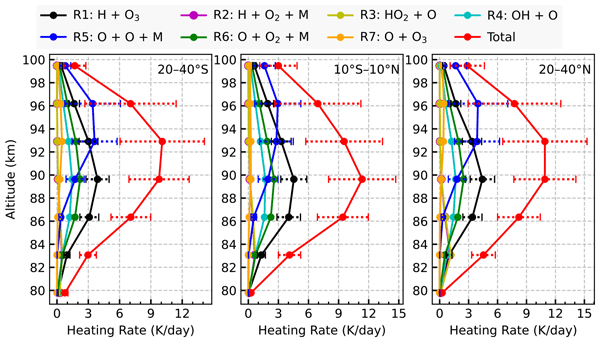
Chemical reactions are key to the energy budget of the upper mesosphere–lower thermosphere, but this process remains poorly quantified. We derived a new dataset of nighttime chemical heating by combining observations from two different satellite instruments. The main exothermic reactions, hydrogen reacting with ozone and oxygen recombination, dominate at different altitudes and vary seasonally. The new results revise previous estimates and provide constraints on the mesopause energy budget.
Shuai Liu, Guoying Jiang, Bingxian Luo, Xiao Liu, Jiyao Xu, Yajun Zhu, and Wen Yi
Atmos. Chem. Phys., 25, 17725–17746, https://doi.org/10.5194/acp-25-17725-2025, https://doi.org/10.5194/acp-25-17725-2025, 2025
Short summary
Short summary
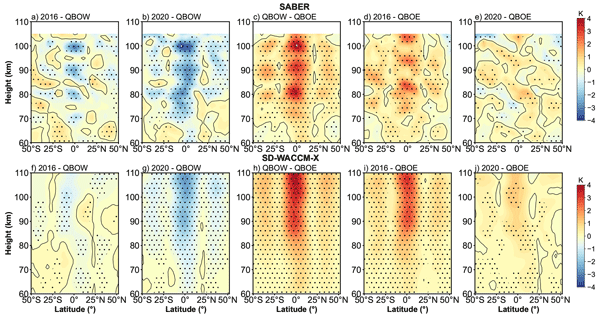
Disruptions of the Quasi-Biennial Oscillation modulate the migrating diurnal tide in the mesosphere and lower thermosphere. During the events, wavelengths and phases of the tide remain unchanged, but its amplitude strengthens. The variation of heating sources, dissipation, zonal wind latitude shear and gravity wave drag may contribute to the amplification of the tide amplitude. These features provide insight into the dynamical coupling of troposphere, stratosphere, mesosphere and lower thermosphere.
Guangyi Zhu, Yajun Zhu, Martin Kaufmann, Tiancai Wang, Weijun Liu, Wei Yuan, Siyin Liu, Guotao Yang, and Jiyao Xu
Atmos. Meas. Tech., 18, 5985–5997, https://doi.org/10.5194/amt-18-5985-2025, https://doi.org/10.5194/amt-18-5985-2025, 2025
Short summary
Short summary
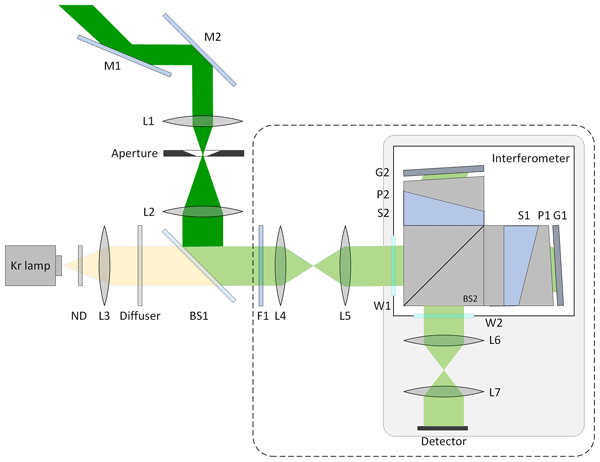
Winds in the mesopause region (85–100 km altitude) drive upper-atmospheric dynamics and energy transfer. We present the Asymmetric Spatial Heterodyne Spectrometer, a ground-based instrument, to measure winds by observing the green airglow of atomic oxygen. Lab tests demonstrated the instrument achieves better than 2 m/s accuracy. Field measurements at a high-latitude site in China showed strong agreement with independent LiDAR data, confirming that the system delivers reliable wind retrievals.
Qinzeng Li, Jiyao Xu, Yajun Zhu, Cristiano M. Wrasse, José V. Bageston, Wei Yuan, Xiao Liu, Weijun Liu, Ying Wen, Hui Li, and Zhengkuan Liu
Atmos. Chem. Phys., 25, 9719–9736, https://doi.org/10.5194/acp-25-9719-2025, https://doi.org/10.5194/acp-25-9719-2025, 2025
Short summary
Short summary
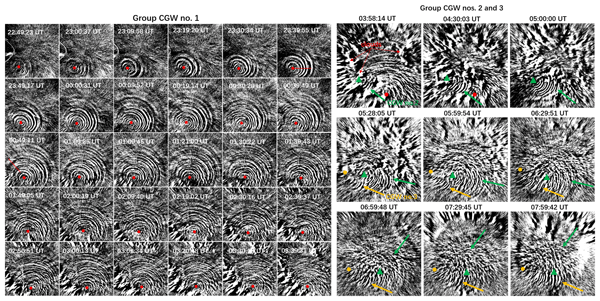
This study explores intense concentric gravity waves (CGWs) based on ground-based and multi-satellite observations over southern Brazil, revealing significant airglow perturbations and strong momentum release. Triggered by deep convection and enabled by weaker wind fields, these CGWs reached the mesopause and thermosphere. Consistent detection via OI and OH airglow emissions confirms their vertical propagation, while asymmetric thermosphere propagation is linked to Doppler-induced wavelength changes.
Qinzeng Li, Jiyao Xu, Aditya Riadi Gusman, Hanli Liu, Wei Yuan, Weijun Liu, Yajun Zhu, and Xiao Liu
Atmos. Chem. Phys., 24, 8343–8361, https://doi.org/10.5194/acp-24-8343-2024, https://doi.org/10.5194/acp-24-8343-2024, 2024
Short summary
Short summary
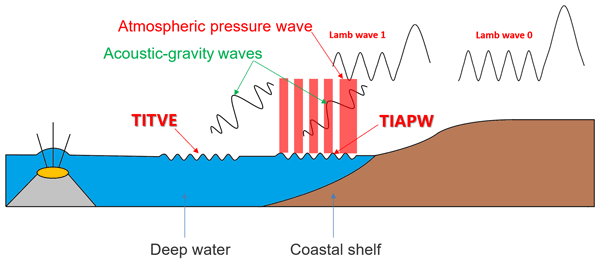
The 2022 Hunga Tonga–Hunga Ha’apai (HTHH) volcanic eruption not only triggered broad-spectrum atmospheric waves but also generated unusual tsunamis which can generate atmospheric gravity waves (AGWs). Multiple strong atmospheric waves were observed in the far-field area of the 2022 HTHH volcano eruption in the upper atmosphere by a ground-based airglow imager network. AGWs caused by tsunamis can propagate to the mesopause region; there is a good match between atmospheric waves and tsunamis.
Daochun Yu, Haitao Li, Baoquan Li, Mingyu Ge, Youli Tuo, Xiaobo Li, Wangchen Xue, Yaning Liu, Aoying Wang, Yajun Zhu, and Bingxian Luo
Atmos. Meas. Tech., 15, 3141–3159, https://doi.org/10.5194/amt-15-3141-2022, https://doi.org/10.5194/amt-15-3141-2022, 2022
Short summary
Short summary
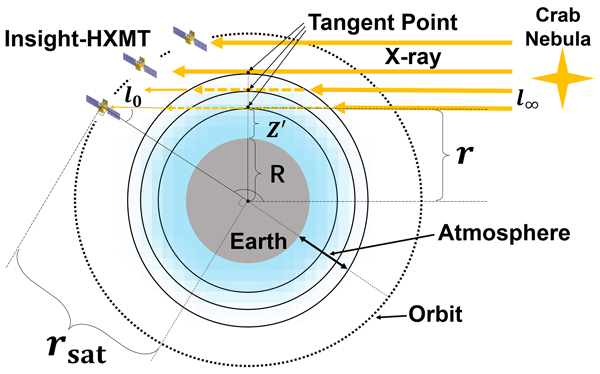
In this work, the measurement of vertical atmospheric density profiles using X-ray Earth occultation is investigated. The Earth’s density profile for the lower thermosphere is obtained with Insight-HXMT. It is shown that the Insight-HXMT X-ray satellite of China can be used as an X-ray atmospheric diagnostics instrument for the upper atmosphere. The Insight-HXMT satellite can, with other X-ray astronomical satellites in orbit, form a network for X-ray Earth occultation sounding in the future.
Cited articles
Abreu, V. J., Schmitt, G. A., Hays, P. B., Meriwether, J. W., Tepley, C. A., and Cogger, L. L.: Atmospheric Scattering Effects on Ground-Based Measurements of Thermospheric Winds, Planet Space Sci., 31, 303–310, https://doi.org/10.1016/0032-0633(83)90080-6, 1983.
Anderson, C., Conde, M., and McHarg, M. G.: Neutral thermospheric dynamics observed with two scanning Doppler imagers: 2. Vertical winds, J. Geophys. Res.-Space, 117, A03305, https://doi.org/10.1029/2011ja017157, 2012.
Ashburn, E. V.: The Effect of Rayleigh Scattering and Ground Reflection Upon the Determination of the Height of the Night Airglow, J. Atmos. Terr. Phys., 5, 83–91, https://doi.org/10.1016/0021-9169(54)90012-4, 1954.
Biondi, M. A. and Feibelman, W. A.: Twilight and nightglow spectral line shapes of oxygen λ6300 and λ5577 radiation, Planet Space Sci., 16, 431–443, https://doi.org/10.1016/0032-0633(68)90158-X, 1968.
Biondi, M. A., Sipler, D. P., Zipf, M. E., and Baumgardner, J. L.: All-Sky Doppler Interferometer for Thermospheric Dynamics Studies, Appl. Optics, 34, 1646–1654, https://doi.org/10.1364/Ao.34.001646, 1995.
Burnside, R. G. and Tepley, C. A.: Optical Observations of Thermospheric Neutral Winds at Arecibo between 1980 and 1987, J. Geophys. Res.-Space, 94, 2711–2716, https://doi.org/10.1029/JA094iA03p02711, 1989.
Burnside, R. G., Herrero, F. A., Meriwether, J. W., and Walker, J. C. G.: Optical observations of thermospheric dynamics at Arecibo, J. Geophys. Res.-Space, 86, 5532–5540, https://doi.org/10.1029/JA086iA07p05532, 1981.
Conde, M. and Smith, R. W.: Mapping Thermospheric Winds in the Auroral-Zone, Geophys. Res. Lett., 22, 3019–3022, https://doi.org/10.1029/95gl02437, 1995.
Conde, M., Craven, J. D., Immel, T., Hoch, E., Stenbaek-Nielsen, H., Hallinan, T., Smith, R. W., Olson, J., Sun, W., Frank, L. A., and Sigwarth, J.: Assimilated observations of thermospheric winds, the aurora, and ionospheric currents over Alaska, J. Geophys. Res.-Space, 106, 10493–10508, https://doi.org/10.1029/2000ja000135, 2001.
Crickmore, R. I., Dudeney, J. R., and Rodger, A. S.: Vertical Thermospheric Winds at the Equatorward Edge of the Auroral Oval, J. Atmos. Terr. Phys., 53, 485–492, https://doi.org/10.1016/0021-9169(91)90076-J, 1991.
Dhadly, M., Emmert, J., Drob, D., Conde, M., Doornbos, E., Shepherd, G., Makela, J., Wu, Q., Niciejewski, R., and Ridley, A.: Seasonal dependence of northern high-latitude upper thermospheric winds: A quiet time climatological study based on ground-based and space-based measurements, J. Geophys. Res.-Space, 122, 2619–2644, https://doi.org/10.1002/2016JA023688, 2017.
Emmert, J. T., Fejer, B. G., Fesen, C. G., Shepherd, G. G., and Solheim, B. H.: Climatology of middle- and low-latitude daytime region disturbance neutral winds measured by Wind Imaging Interferometer (WINDII), J. Geophys. Res.-Space, 106, 24701–24712, https://doi.org/10.1029/2000ja000372, 2001.
Emmert, J. T., Faivre, M. L., Hernandez, G., Jarvis, M. J., Meriwether, J. W., Niciejewski, R. J., Sipler, D. P., and Tepley, C. A.: Climatologies of nighttime upper thermospheric winds measured by ground-based Fabry-Perot interferometers during geomagnetically quiet conditions: 1. Local time, latitudinal, seasonal, and solar cycle dependence, J. Geophys. Res.-Space, 111, A12302, https://doi.org/10.1029/2006ja011948, 2006.
Englert, C. R., Babcock, D. D., and Harlander, J. M.: Doppler asymmetric spatial heterodyne spectroscopy (DASH): concept and experimental demonstration, Appl. Optics, 46, 7297–7307, https://doi.org/10.1364/Ao.46.007297, 2007.
Englert, C. R., Harlander, J. M., Emmert, J. T., Babcock, D. D., and Roesler, F. L.: Initial ground-based thermospheric wind measurements using Doppler asymmetric spatial heterodyne spectroscopy (DASH), Opt. Express, 18, 27416–27430, https://doi.org/10.1364/Oe.18.027416, 2010.
Fejer, B. G., Emmert, J. T., and Sipler, D. P.: Climatology and storm time dependence of nighttime thermospheric neutral winds over Millstone Hill, J. Geophys. Res.-Space, 107, https://doi.org/10.1029/2001ja000300, 2002.
Friedman, J. F. and Herrero, F. A.: Fabry-Perot interferometer measurements of thermospheric neutral wind gradients and reversals at Arecibo, Geophys. Res. Lett., 9, 785–788, https://doi.org/10.1029/GL009i007p00785, 1982.
Gonzalez-Esparza, J. A., Sanchez-Garcia, E., Sergeeva, M., Corona-Romero, P., Gonzalez-Mendez, L. X., Valdes-Galicia, J. F., Aguilar-Rodriguez, E., Rodriguez-Martinez, M., Ramirez-Pacheco, C., Castellanos, C. I., Pazos, M., Mendoza, B., Gatica-Acevedo, V. J., Melgarejo-Morales, A., Caraballo, R., Andrade-Mascote, E., Villanueva-Hernandez, P., Bonifaz-Alfonzo, R., Sierra, P., Romero-Hernandez, E., Peralta-Mendoza, I., Perez-Tijerina, E., Mejia-Ambriz, J. C., Guerrero-Peña, C., Caccavari, A., Cifuentes-Nava, G., and Hernandez-Quintero, E.: The Mother's Day Geomagnetic Storm on 10 May 2024: Aurora Observations and Low Latitude Space Weather Effects in Mexico, Space Weather, 22, e2024SW004111, https://doi.org/10.1029/2024SW004111, 2024.
Guo, W. and McEwen, D. J.: Vertical winds in the central polar cap, Geophys. Res. Lett., 30, 1725, https://doi.org/10.1029/2003gl017124, 2003.
Guo, X., Zhao, B. Q., Yu, T. T., Hao, H. L., Sun, W. J., Wang, G. J., He, M. S., Mao, T., Li, G. Z., and Ren, Z. P.: East-West Difference in the Ionospheric Response During the Recovery Phase of May 2024 Super Geomagnetic Storm Over the East Asian, J. Geophys. Res.-Space, 129, e2024JA033170, https://doi.org/10.1029/2024JA033170, 2024.
Hajra, R., Tsurutani, B. T., Lakhina, G. S., Lu, Q. M., and Du, A. M.: Interplanetary Causes and Impacts of the 2024 May Superstorm on the Geosphere: An Overview, Astrophys. J., 974, 264, https://doi.org/10.3847/1538-4357/ad7462, 2024.
Hansen, J. E. and Travis, L. D.: Light-Scattering in Planetary Atmospheres, Space Sci. Rev., 16, 527–610, https://doi.org/10.1007/Bf00168069, 1974.
Harding, B. J., Makela, J. J., Qin, J., Fisher, D. J., Martinis, C. R., Noto, J., and Wrasse, C. M.: Atmospheric scattering effects on ground-based measurements of thermospheric vertical wind, horizontal wind, and temperature, J. Geophys. Res.-Space, 122, 7654–7669, https://doi.org/10.1002/2017JA023942, 2017a.
Harding, B. J., Qin, J., and Makela, J. J.: Ground-Based Optical Measurements of Quiet Time Thermospheric Wind and Temperature: Atmospheric Scattering Corrections, J. Geophys. Res.-Space, 122, 11624–11632, https://doi.org/10.1002/2017JA024705, 2017b.
Harlander, J. M., Englert, C. R., Brown, C. M., Marr, K. D., Miller, I. J., Zastera, V., Bach, B. W., and Mende, S. B.: Michelson Interferometer for Global High-Resolution Thermospheric Imaging (MIGHTI): Monolithic Interferometer Design and Test, Space Sci. Rev., 212, 601–613, https://doi.org/10.1007/s11214-017-0374-4, 2017.
Hays, P. B., Killeen, T. L., Spencer, N. W., Wharton, L. E., Roble, R. G., Emery, B. A., Fullerrowell, T. J., Rees, D., Frank, L. A., and Craven, J. D.: Observations of the Dynamics of the Polar Thermosphere, J. Geophys. Res.-Space, 89, 5597–5612, https://doi.org/10.1029/JA089iA07p05597, 1984.
He, Q., Fang, Z., Shoshanim, O., Brown, S. S., and Rudich, Y.: Scattering and absorption cross sections of atmospheric gases in the ultraviolet–visible wavelength range (307–725 nm), Atmos. Chem. Phys., 21, 14927–14940, https://doi.org/10.5194/acp-21-14927-2021, 2021.
Hernandez, G. and Roble, R. G.: Direct Measurements of Nighttime Thermospheric Winds and Temperatures. 2. Geomagnetic Storms, J. Geophys. Res.-Space, 81, 5173–5181, https://doi.org/10.1029/JA081i028p05173, 1976.
Holben, B. N., Tanré, D., Smirnov, A., Eck, T. F., Slutsker, I., Abuhassan, N., Newcomb, W. W., Schafer, J. S., Chatenet, B., Lavenu, F., Kaufman, Y. J., Castle, J. V., Setzer, A., Markham, B., Clark, D., Frouin, R., Halthore, R., Karnieli, A., O'Neill, N. T., Pietras, C., Pinker, R. T., Voss, K., and Zibordi, G.: An emerging ground-based aerosol climatology:: Aerosol optical depth from AERONET, J. Geophys. Res.-Atmos., 106, 12067–12097, https://doi.org/10.1029/2001jd900014, 2001.
Huang, C., Xu, J. Y., Zhang, X. X., Liu, D. D., Yuan, W., and Jiang, G. Y.: Mid-latitude thermospheric wind changes during the St. Patrick's Day storm of 2015 observed by two Fabry-Perot interferometers in China, Adv. Space Res., 61, 1873–1879, https://doi.org/10.1016/j.asr.2017.10.013, 2018.
Innis, J. L., Greet, P. A., Murphy, D. J., Conde, M. G., and Dyson, P. L.: A large vertical wind in the thermosphere at the auroral oval/polar cap boundary seen simultaneously from Mawson and Davis, Antarctica, J. Atmos. Sol.-Terr. Phy., 61, 1047–1058, https://doi.org/10.1016/S1364-6826(99)00060-7, 1999.
Ishii, M., Oyama, S., Nozawa, S., Fujii, R., Sagawa, E., Watari, S., and Shinagawa, H.: Dynamics of Neutral Wind in the polar region observed with two Fabry-Perot interferometers, Earth Planets Space, 51, 833–844, https://doi.org/10.1186/Bf03353242, 1999.
Ishii, M., Conde, M., Smith, R. W., Krynicki, M., Sagawa, E., and Watari, S.: Vertical wind observations with two Fabry-Perot interferometers at Poker Flat, Alaska, J. Geophys. Res.-Space, 106, 10537–10551, https://doi.org/10.1029/2000JA900148, 2001.
Jiang, G., Xu, J., Wang, W., Yuan, W., Zhang, S., Yu, T., Zhang, X., Huang, C., Kerr, R. B., Noto, J., Li, J., Liu, W., and Li, Q.: A Comparison of Quiet Time Thermospheric Winds Between FPI Observations and Model Calculations, J. Geophys. Res.-Space, 123, 7789–7805, https://doi.org/10.1029/2018JA025424, 2018.
Kataoka, R., Miyoshi, Y., Shiokawa, K., Nishitani, N., Keika, K., Amano, T., and Seki, K.: Magnetic Storm-Time Red Aurora as Seen From Hokkaido, Japan on 1 December 2023 Associated With High-Density Solar Wind, Geophys. Res. Lett., 51, e2024GL108778, https://doi.org/10.1029/2024GL108778, 2024a.
Kataoka, R., Reddy, S. A., Nakano, S., Pettit, J., and Nakamura, Y.: Extended magenta aurora as revealed by citizen science, Scientific Reports, 14, 25849, https://doi.org/10.1038/s41598-024-75184-9, 2024b.
Killeen, T. L., Won, Y. I., Niciejewski, R. J., and Burns, A. G.: Upper Thermosphere Winds and Temperatures in the Geomagnetic Polar-Cap – Solar-Cycle, Geomagnetic-Activity, and Interplanetary Magnetic-Field Dependencies, J. Geophys. Res.-Space, 100, 21327–21342, https://doi.org/10.1029/95ja01208, 1995.
Li, J., Carlson, B. E., Yung, Y. L., Lv, D. R., Hansen, J., Penner, J. E., Liao, H., Ramaswamy, Kahn, R. A., Zhang, P., Dubovik, O., Ding, A. J., Lacis, A. A., Zhang, L., and Dong, Y. M.: Scattering and absorbing aerosols in the climate system, Nature Reviews Earth & Environment, 3, 363–379, https://doi.org/10.1038/s43017-022-00296-7, 2022.
Li, W. B., Liu, L. B., Chen, Y. D., Yang, Y. Y., Han, T. W., Ding, F., Le, H. J., and Zhang, R. L.: Multi-Instruments Observation of Ionospheric-Thermospheric Dynamic Coupling Over Mohe (53.5° N, 122.3° E) During the April 2023 Geomagnetic Storm, J. Geophys. Res.-Space, 128, e2023JA032141, https://doi.org/10.1029/2023JA032141, 2023.
Liu, W. J., Zhu, Y. J., Xu, J. Y., Li, Q. Z., Yuan, W., Zhu, G. Y., Wang, T. C., Yang, G. T., Du, L. F., Liu, S. Y., and Li, F. Q.: Validation of Neutral Wind in the Mesopause Measured by a Dual-Channel Optical Interferometer (DCOI) Network of the Chinese Meridian Project, Space Weather, 23, e2025SW004468, https://doi.org/10.1029/2025SW004468, 2025.
Ma, L. X., Yu, Y. Q., Ding, X. Q., Liu, X. Y., An, D. P., Zhou, C. L., Cao, J. B., and Shiokawa, K.: Mid-Latitude Auroras and Energetic Particle Precipitation Occurred Unusually in a Moderate Magnetic Storm on 1 December 2023, Geophys. Res. Lett., 51, e2024GL110764, https://doi.org/10.1029/2024GL110764, 2024.
Makela, J. J., Harding, B. J., Meriwether, J. W., Mesquita, R., Sanders, S., Ridley, A. J., Castellez, M. W., Ciocca, M., Earle, G. D., Frissell, N. A., Hampton, D. L., Gerrard, A. J., Noto, J., and Martinis, C. R.: Storm time response of the midlatitude thermosphere: Observations from a network of Fabry-Perot interferometers, J. Geophys. Res.-Space, 119, 6758–6773, https://doi.org/10.1002/2014JA019832, 2014.
Matzka, J., Bronkalla, O., Tornow, K., Elger, K., and Stolle, C.: Geomagnetic Kp index, V. 1.0., GFZ Data Services [data set], https://doi.org/10.5880/Kp.0001, 2021.
Mikhalev, A.: Auroras during extreme geomagnetic storms: Some features of mid-latitude aurora on February 11, 1958, Solar-Terrestrial Physics, 10, 55–61, https://doi.org/10.12737/stp-102202406, 2024.
Nakajima, H., Okano, S., Fukunishi, H., and Ono, T.: Observations of thermospheric wind velocities and temperatures by the use of a Fabry-Perot Doppler imaging system at Syowa Station, Antarctica, Appl. Optics, 34, 8382–8395, https://doi.org/10.1364/Ao.34.008382, 1995.
Nanjo, S. and Shiokawa, K.: Spatial structures of blue low-latitude aurora observed from Japan during the extreme geomagnetic storm of May 2024, Earth Planets Space, 76, 156, https://doi.org/10.1186/s40623-024-02090-9, 2024.
Price, G. D., Smith, R. W., and Hernandez, G.: Simultaneous Measurements of Large Vertical Winds in the Upper and Lower Thermosphere, J. Atmos. Terr. Phys., 57, 631–643, https://doi.org/10.1016/0021-9169(94)00103-U, 1995.
Ranjan, A. K. and Pallamraju, D.: Latitudinal Distribution of Thermospheric Nitric Oxide (NO) Infrared Radiative Cooling During May and October 2024 Geomagnetic Storms, J. Geophys. Res.-Space, 130, e2024JA033559, https://doi.org/10.1029/2024JA033559, 2025.
Rees, D., Smith, M. F., and Gordon, R.: The Generation of Vertical Thermospheric Winds and Gravity-Waves at Auroral Latitudes. 2. Theory and Numerical Modeling of Vertical Winds, Planet Space Sci., 32, 685, https://doi.org/10.1016/0032-0633(84)90093-X, 1984.
Sakanoi, T., Fukunishi, H., Okano, S., Sato, N., Yamagishi, H., and Yukimatu, A. S.: Dynamical coupling of neutrals and ions in the high-latitude F region: Simultaneous FPI and HF radar observations at Syowa Station, Antarctica, J. Geophys. Res.-Space, 107, https://doi.org/10.1029/2001JA007530, 2002.
Shinagawa, H. and Oyama, S.: A two-dimensional simulation of thermospheric vertical winds in the vicinity of an auroral arc, Earth Planets Space, 58, 1173–1181, https://doi.org/10.1186/BF03352007, 2006.
Shiokawa, K., Katoh, Y., Satoh, M., Ejiri, M. K., and Ogawa, T.: Integrating-sphere calibration of all-sky cameras for nightglow measurements, Adv. Space Res., 26, 1025–1028, https://doi.org/10.1016/S0273-1177(00)00052-1, 2000.
Singh, R., Scipión, D. E., Kuyeng, K., Condor, P., Flores, R., Pacheco, E., de la Jara, C., and Manay, E.: Ionospheric Responses to an Extreme (G5-Level) Geomagnetic Storm Using Multi-Instrument Measurements at the Jicamarca Radio Observatory on 10–11 October 2024, J. Geophys. Res.-Space, 130, e2024JA033642, https://doi.org/10.1029/2024JA033642, 2025.
Smith, R. W. and Hernandez, G.: Vertical Winds in the Thermosphere within the Polar-Cap, J. Atmos. Terr. Phys., 57, 611–620, https://doi.org/10.1016/0021-9169(94)00101-S, 1995.
Sobolev, V. V.: Light Scattering in Planetary Atmospheres, International series of monographs in natural philosophy, Vol. 76, Pergamon Press Ltd., Oxford, United Kingdom, 256 pp., https://doi.org/10.1016/C2013-0-05661-7, 1975.
Themens, D. R., Elvidge, S., McCaffrey, A., Jayachandran, P. T., Coster, A., Varney, R. H., Galkin, I., Goodwin, L. V., Watson, C., Maguire, S., Kavanagh, A. J., Zhang, S. R., Goncharenko, L., Bhatt, A., Dorrian, G., Groves, K., Wood, A. G., and Reid, B.: The High Latitude Ionospheric Response to the Major May 2024 Geomagnetic Storm: A Synoptic View, Geophys. Res. Lett., 51, e2024GL111677, https://doi.org/10.1029/2024GL111677, 2024.
Wang, C., Xu, J., Chen, Z., Li, H., Feng, X., Huang, Z., and Wang, J.: China's Ground-Based Space Environment Monitoring Network – Chinese Meridian Project (CMP), Space Weather, 22, e2024SW003972, https://doi.org/10.1029/2024sw003972, 2024.
Wang, X., Aa, E., Chen, Y., Zhang, J., Zhu, Y., Cai, L., Lu, X., Luo, B., Liu, S., Li, M., Shen, H., and Yuan, T.: Midlatitude Neutral Wind Response During the Mother's Day Super-Intense Geomagnetic Storm in 2024 Using Observations From the Chinese Meridian Project, J. Geophys. Res.-Space, 130, e2024JA033574, https://doi.org/10.1029/2024JA033574, 2025.
Wei, D., Zhu, Y., Liu, J., Gong, Q., Kaufmann, M., Olschewski, F., Knieling, P., Xu, J., Koppmann, R., and Riese, M.: Thermally stable monolithic Doppler asymmetric spatial heterodyne interferometer: optical design and laboratory performance, Opt. Express, 28, 19887–19900, https://doi.org/10.1364/oe.394101, 2020.
Wu, Q., Yuan, W., Xu, J. Y., Huang, C., Zhang, X. X., Wang, J. S., and Li, T.: First U.S.-China joint ground-based Fabry-Perot interferometer observations of longitudinal variations in the thermospheric winds, J. Geophys. Res.-Space, 119, 5755–5763, https://doi.org/10.1002/2014ja020089, 2014.
Xu, H., Shiokawa, K., Oyama, S., and Otsuka, Y.: Thermospheric wind variations observed by a Fabry-Perot interferometer at Tromso, Norway, at substorm onsets, Earth Planets Space, 71, 93, https://doi.org/10.1186/s40623-019-1072-0, 2019.
Yang, C., Zhao, B., Jin, Y., Huang, C., Yao, X., and Wan, W.: Climatology of Nighttime Upper Thermospheric Winds From Fabry-Perot Interferometer 2011–2019 Measurements Over Kelan (38.7° N, 111.6° E), China: Local Time, Seasonal, Solar Cycle, and Geomagnetic Activity Dependence, J. Geophys. Res.-Space, 125, e2020JA027892, https://doi.org/10.1029/2020JA027892, 2020.
Yu, T., Huang, C., Zhao, G. X., Mao, T., Wang, Y. G., Zeng, Z. C., Wang, J. S., and Xia, C. L.: A preliminary study of thermosphere and mesosphere wind observed by Fabry-Perot over Kelan, China, J. Geophys. Res.-Space, 119, 4981–4997, https://doi.org/10.1002/2013ja019492, 2014.
Yuan, W., Xu, J. Y., Ma, R. P., Wu, Q. A., Jiang, G. Y., Gao, H., Liu, X. A., and Chen, S. Z.: First observation of mesospheric and thermospheric winds by a Fabry-Perot interferometer in China, Chinese Sci. Bull., 55, 4046–4051, https://doi.org/10.1007/s11434-010-4192-2, 2010.
Zhang, K. D., Wang, H., Liu, J., Song, H. M., and Xia, H.: The Quasi-Periodic Nighttime Traveling Ionospheric Disturbances on 13 May 2024 During the Recovery Phase of a SuperStorm, J. Geophys. Res.-Space, 130, e2024JA033257, https://doi.org/10.1029/2024JA033257, 2025.
Zhu, G., Zhu, Y., Kaufmann, M., Wang, T., Liu, W., and Xu, J.: An Efficient Calibration System of Optical Interferometer for Measuring Middle and Upper Atmospheric Wind, Remote Sensing, 15, 1898, https://doi.org/10.3390/rs15071898, 2023.
Short summary
Scattered airglow can bias thermospheric wind observations by ground-based interferometers, especially when brightness is spatially uneven due to auroras. We simulated lower atmospheric scattering during two mid-latitude auroral events and confirmed that scattering can lead to line-of-sight speed biases, thereby increasing the horizontal differences between opposite cardinal directions. This scattering impact needs to be carefully considered in thermospheric dynamics analysis.
Scattered airglow can bias thermospheric wind observations by ground-based interferometers,...


