
Articles | Volume 18, issue 23
https://doi.org/10.5194/amt-18-7267-2025
© Author(s) 2025. This work is distributed under
the Creative Commons Attribution 4.0 License.
the Creative Commons Attribution 4.0 License.
https://doi.org/10.5194/amt-18-7267-2025
© Author(s) 2025. This work is distributed under
the Creative Commons Attribution 4.0 License.
the Creative Commons Attribution 4.0 License.
Research article
| 
02 Dec 2025
Research article |
| 02 Dec 2025
| 02 Dec 2025
Evaluation of the dust-dominated total AOD extracted from the PMAp satellite Climate Data Record
Anu-Maija Sundström
CORRESPONDING AUTHOR

Space and Earth Observation Centre, Finnish Meteorological Institute, Helsinki, 00560, Finland
Marie Doutriaux-Boucher
EUMETSAT, 64295 Darmstadt, Germany
Soheila Jafariserajehlou
EUMETSAT, 64295 Darmstadt, Germany
Dominika Leskow-Czyzewska
EUMETSAT, 64295 Darmstadt, Germany
Simone Mantovani
MEEO, Ferrara, 44121, Italy
Noemi Fazzini
MEEO, Ferrara, 44121, Italy
Bertrand Fougnie
EUMETSAT, 64295 Darmstadt, Germany
Federico Fierli
EUMETSAT, 64295 Darmstadt, Germany
Related authors
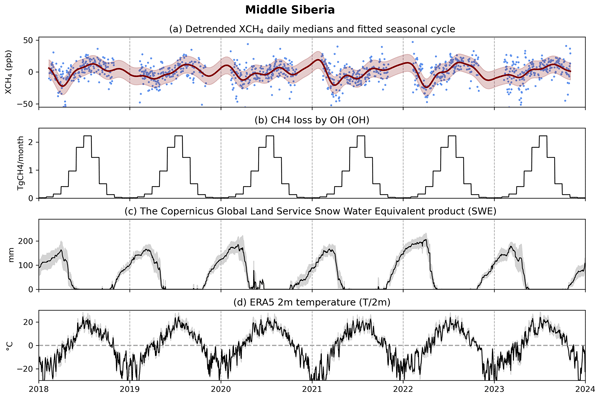
Ella Kivimäki, Maria Tenkanen, Tuula Aalto, Michael Buchwitz, Kari Luojus, Jouni Pulliainen, Kimmo Rautiainen, Oliver Schneising, Anu-Maija Sundström, Johanna Tamminen, Aki Tsuruta, and Hannakaisa Lindqvist
Biogeosciences, 22, 5193–5230, https://doi.org/10.5194/bg-22-5193-2025, https://doi.org/10.5194/bg-22-5193-2025, 2025
Short summary
Short summary
We study how environmental variables influencing natural methane fluxes explain the seasonal variability in satellite-observed methane in Northern Hemisphere high-latitude wetland areas. Using two atmospheric model set-ups, we assess consistency with satellite data. Methane loss through reaction with hydroxyl radicals and links with snow cover, temperature, and snowmelt had the strongest influence. Our study highlights the value of satellite observations for understanding large-scale wetland emissions.
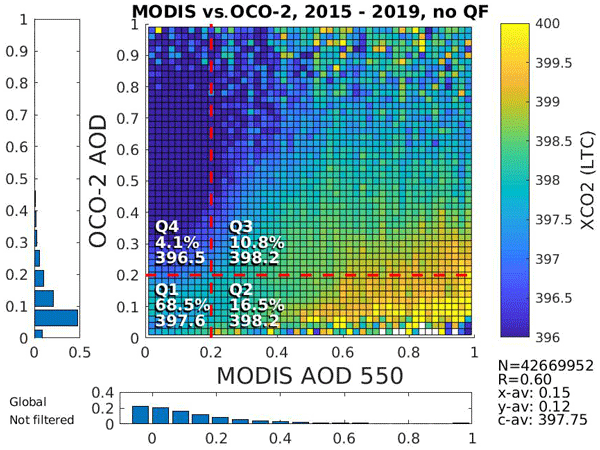
Timo H. Virtanen, Anu-Maija Sundström, Elli Suhonen, Antti Lipponen, Antti Arola, Christopher O'Dell, Robert R. Nelson, and Hannakaisa Lindqvist
Atmos. Meas. Tech., 18, 929–952, https://doi.org/10.5194/amt-18-929-2025, https://doi.org/10.5194/amt-18-929-2025, 2025
Short summary
Short summary
We find that small particles suspended in the air (aerosols) affect the satellite observations of carbon dioxide (CO2) made by the Orbiting Carbon Observatory-2 satellite instrument. Satellite estimates of CO2 appear to be too high for clean areas and too low for polluted areas. Our results show that CO2 and aerosols are often co-emitted, and this is partly masked out in the current retrievals. Correctly accounting for the aerosol effect is important for CO2 emission estimates by satellites.
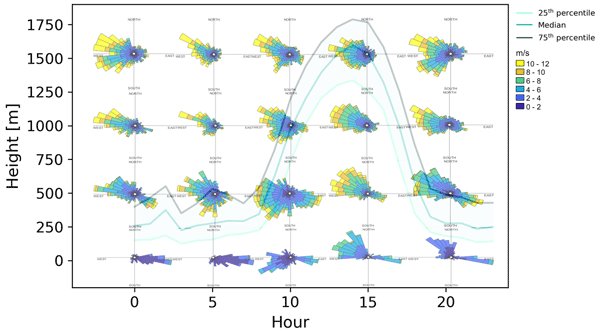
Jutta Kesti, Ewan J. O'Connor, Anne Hirsikko, John Backman, Maria Filioglou, Anu-Maija Sundström, Juha Tonttila, Heikki Lihavainen, Hannele Korhonen, and Eija Asmi
Atmos. Chem. Phys., 24, 9369–9386, https://doi.org/10.5194/acp-24-9369-2024, https://doi.org/10.5194/acp-24-9369-2024, 2024
Short summary
Short summary
The study combines aerosol particle measurements at the surface and vertical profiling of the atmosphere with a scanning Doppler lidar to investigate how particle transportation together with boundary layer evolution can affect particle and SO2 concentrations at the surface in the Arabian Peninsula region. The instrumentation enabled us to see elevated nucleation mode particle and SO2 concentrations at the surface when air masses transported from polluted areas are mixed in the boundary layer.
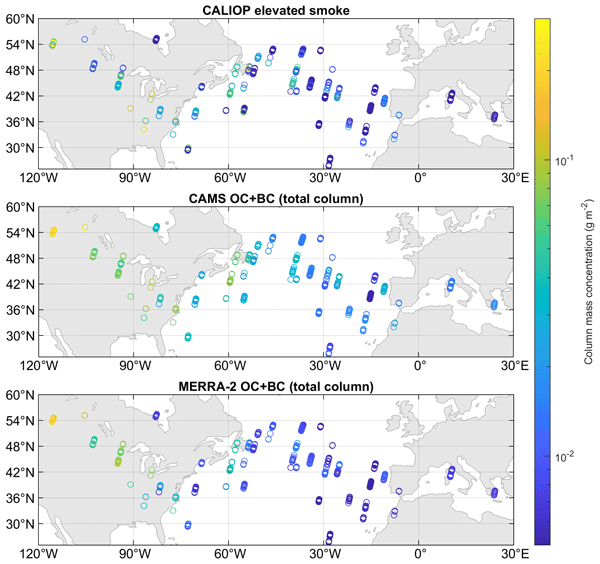
Xiaoxia Shang, Antti Lipponen, Maria Filioglou, Anu-Maija Sundström, Mark Parrington, Virginie Buchard, Anton S. Darmenov, Ellsworth J. Welton, Eleni Marinou, Vassilis Amiridis, Michael Sicard, Alejandro Rodríguez-Gómez, Mika Komppula, and Tero Mielonen
Atmos. Chem. Phys., 24, 1329–1344, https://doi.org/10.5194/acp-24-1329-2024, https://doi.org/10.5194/acp-24-1329-2024, 2024
Short summary
Short summary
In June 2019, smoke particles from a Canadian wildfire event were transported to Europe. The long-range-transported smoke plumes were monitored with a spaceborne lidar and reanalysis models. Based on the aerosol mass concentrations estimated from the observations, the reanalysis models had difficulties in reproducing the amount and location of the smoke aerosols during the transport event. Consequently, more spaceborne lidar missions are needed for reliable monitoring of aerosol plumes.
Markku Kulmala, Anna Lintunen, Hanna Lappalainen, Annele Virtanen, Chao Yan, Ekaterina Ezhova, Tuomo Nieminen, Ilona Riipinen, Risto Makkonen, Johanna Tamminen, Anu-Maija Sundström, Antti Arola, Armin Hansel, Kari Lehtinen, Timo Vesala, Tuukka Petäjä, Jaana Bäck, Tom Kokkonen, and Veli-Matti Kerminen
Atmos. Chem. Phys., 23, 14949–14971, https://doi.org/10.5194/acp-23-14949-2023, https://doi.org/10.5194/acp-23-14949-2023, 2023
Short summary
Short summary
To be able to meet global grand challenges, we need comprehensive open data with proper metadata. In this opinion paper, we describe the SMEAR (Station for Measuring Earth surface – Atmosphere Relations) concept and include several examples (cases), such as new particle formation and growth, feedback loops and the effect of COVID-19, and what has been learned from these investigations. The future needs and the potential of comprehensive observations of the environment are summarized.
Chao Yan, Yicheng Shen, Dominik Stolzenburg, Lubna Dada, Ximeng Qi, Simo Hakala, Anu-Maija Sundström, Yishuo Guo, Antti Lipponen, Tom V. Kokkonen, Jenni Kontkanen, Runlong Cai, Jing Cai, Tommy Chan, Liangduo Chen, Biwu Chu, Chenjuan Deng, Wei Du, Xiaolong Fan, Xu-Cheng He, Juha Kangasluoma, Joni Kujansuu, Mona Kurppa, Chang Li, Yiran Li, Zhuohui Lin, Yiliang Liu, Yuliang Liu, Yiqun Lu, Wei Nie, Jouni Pulliainen, Xiaohui Qiao, Yonghong Wang, Yifan Wen, Ye Wu, Gan Yang, Lei Yao, Rujing Yin, Gen Zhang, Shaojun Zhang, Feixue Zheng, Ying Zhou, Antti Arola, Johanna Tamminen, Pauli Paasonen, Yele Sun, Lin Wang, Neil M. Donahue, Yongchun Liu, Federico Bianchi, Kaspar R. Daellenbach, Douglas R. Worsnop, Veli-Matti Kerminen, Tuukka Petäjä, Aijun Ding, Jingkun Jiang, and Markku Kulmala
Atmos. Chem. Phys., 22, 12207–12220, https://doi.org/10.5194/acp-22-12207-2022, https://doi.org/10.5194/acp-22-12207-2022, 2022
Short summary
Short summary
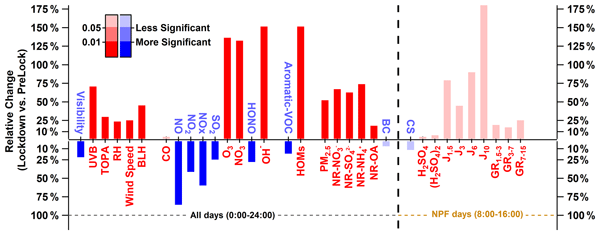
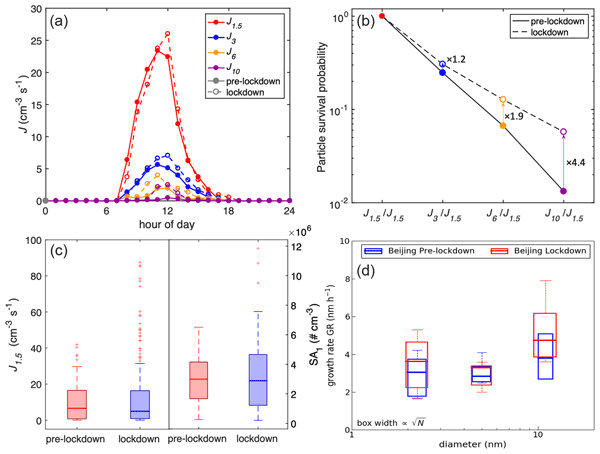
Atmospheric new particle formation (NPF) is a dominant source of atmospheric ultrafine particles. In urban environments, traffic emissions are a major source of primary pollutants, but their contribution to NPF remains under debate. During the COVID-19 lockdown, traffic emissions were significantly reduced, providing a unique chance to examine their relevance to NPF. Based on our comprehensive measurements, we demonstrate that traffic emissions alone are not able to explain the NPF in Beijing.
Sarah Safieddine, Selviga Sinnathamby, Juliette Hadji-Lazaro, Marie Doutriaux-Boucher, Darren Ghent, Simon Whitburn, Lieven Clarisse, and Cathy Clerbaux
Earth Obs., 1, 59–75, https://doi.org/10.5194/eo-1-59-2026, https://doi.org/10.5194/eo-1-59-2026, 2026
Short summary
Short summary
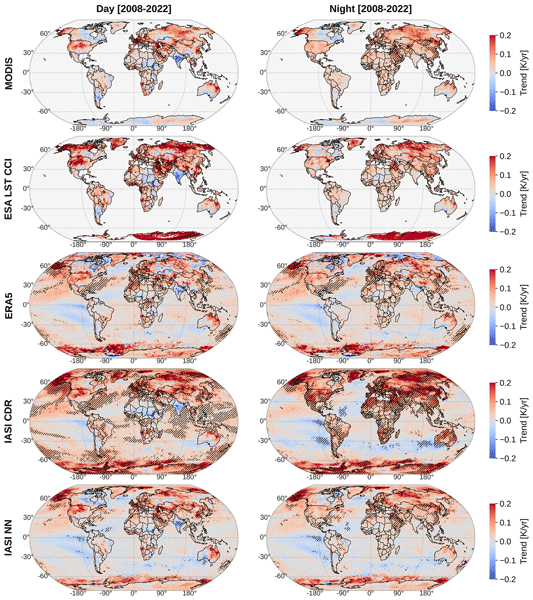
Land and sea surface temperatures, collectively called skin temperature (Tskin), are available from satellite measurements since few decades now and provide a holistic view of the Earth's climate system. Here we review 6 different datasets of Tskin to show that climate change signature is clear from the different datasets with notable exception, such as a significant cooling in India, parts of Africa and the Pacific.
Selviga Sinnathamby, Sarah Safieddine, Anne Boynard, Juliette Hadji-Lazaro, Solène Turquety, Simon Whitburn, Lieven Clarisse, Marie Doutriaux-Boucher, Pierre Coheur, and Cathy Clerbaux
EGUsphere, https://doi.org/10.5194/egusphere-2026-4393, https://doi.org/10.5194/egusphere-2026-4393, 2026
This preprint is open for discussion and under review for Atmospheric Chemistry and Physics (ACP).
Short summary
Short summary
South and East Asia have experienced contrasting air pollution changes over recent decades, with implications for regional surface temperature. Using satellite observations and CMIP6 simulations, we assess how pollutant trends relate to temperature changes and whether models reproduce these contrasts. While CMIP6 models capture some air pollution changes under certain scenarios, they fail to reproduce the regional temperature contrast, highlighting the need for extended historical simulations.
Ella Kivimäki, Maria Tenkanen, Tuula Aalto, Michael Buchwitz, Kari Luojus, Jouni Pulliainen, Kimmo Rautiainen, Oliver Schneising, Anu-Maija Sundström, Johanna Tamminen, Aki Tsuruta, and Hannakaisa Lindqvist
Biogeosciences, 22, 5193–5230, https://doi.org/10.5194/bg-22-5193-2025, https://doi.org/10.5194/bg-22-5193-2025, 2025
Short summary
Short summary
We study how environmental variables influencing natural methane fluxes explain the seasonal variability in satellite-observed methane in Northern Hemisphere high-latitude wetland areas. Using two atmospheric model set-ups, we assess consistency with satellite data. Methane loss through reaction with hydroxyl radicals and links with snow cover, temperature, and snowmelt had the strongest influence. Our study highlights the value of satellite observations for understanding large-scale wetland emissions.
Anne Boynard, Catherine Wespes, Juliette Hadji-Lazaro, Selviga Sinnathamby, Daniel Hurtmans, Pierre-François Coheur, Marie Doutriaux-Boucher, Jacobus Onderwaater, Wolfgang Steinbrecht, Elyse A. Pennington, Kevin Bowman, and Cathy Clerbaux
Atmos. Chem. Phys., 25, 11719–11755, https://doi.org/10.5194/acp-25-11719-2025, https://doi.org/10.5194/acp-25-11719-2025, 2025
Short summary
Short summary
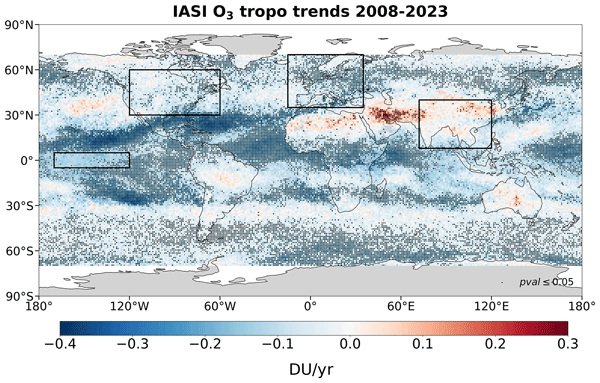
This study analyzes 16 years of global ozone data to assess its impact on air quality and climate. Using satellite measurements, we observed a global decrease in tropospheric ozone, particularly in tropical and European regions. The drop became more noticeable around 2020, partly due to reduced emissions during the pandemic. The study highlights the need for better data processing and integration to more accurately monitor ozone changes over time.
Timo H. Virtanen, Anu-Maija Sundström, Elli Suhonen, Antti Lipponen, Antti Arola, Christopher O'Dell, Robert R. Nelson, and Hannakaisa Lindqvist
Atmos. Meas. Tech., 18, 929–952, https://doi.org/10.5194/amt-18-929-2025, https://doi.org/10.5194/amt-18-929-2025, 2025
Short summary
Short summary
We find that small particles suspended in the air (aerosols) affect the satellite observations of carbon dioxide (CO2) made by the Orbiting Carbon Observatory-2 satellite instrument. Satellite estimates of CO2 appear to be too high for clean areas and too low for polluted areas. Our results show that CO2 and aerosols are often co-emitted, and this is partly masked out in the current retrievals. Correctly accounting for the aerosol effect is important for CO2 emission estimates by satellites.
Jutta Kesti, Ewan J. O'Connor, Anne Hirsikko, John Backman, Maria Filioglou, Anu-Maija Sundström, Juha Tonttila, Heikki Lihavainen, Hannele Korhonen, and Eija Asmi
Atmos. Chem. Phys., 24, 9369–9386, https://doi.org/10.5194/acp-24-9369-2024, https://doi.org/10.5194/acp-24-9369-2024, 2024
Short summary
Short summary
The study combines aerosol particle measurements at the surface and vertical profiling of the atmosphere with a scanning Doppler lidar to investigate how particle transportation together with boundary layer evolution can affect particle and SO2 concentrations at the surface in the Arabian Peninsula region. The instrumentation enabled us to see elevated nucleation mode particle and SO2 concentrations at the surface when air masses transported from polluted areas are mixed in the boundary layer.
Xiaoxia Shang, Antti Lipponen, Maria Filioglou, Anu-Maija Sundström, Mark Parrington, Virginie Buchard, Anton S. Darmenov, Ellsworth J. Welton, Eleni Marinou, Vassilis Amiridis, Michael Sicard, Alejandro Rodríguez-Gómez, Mika Komppula, and Tero Mielonen
Atmos. Chem. Phys., 24, 1329–1344, https://doi.org/10.5194/acp-24-1329-2024, https://doi.org/10.5194/acp-24-1329-2024, 2024
Short summary
Short summary
In June 2019, smoke particles from a Canadian wildfire event were transported to Europe. The long-range-transported smoke plumes were monitored with a spaceborne lidar and reanalysis models. Based on the aerosol mass concentrations estimated from the observations, the reanalysis models had difficulties in reproducing the amount and location of the smoke aerosols during the transport event. Consequently, more spaceborne lidar missions are needed for reliable monitoring of aerosol plumes.
Markku Kulmala, Anna Lintunen, Hanna Lappalainen, Annele Virtanen, Chao Yan, Ekaterina Ezhova, Tuomo Nieminen, Ilona Riipinen, Risto Makkonen, Johanna Tamminen, Anu-Maija Sundström, Antti Arola, Armin Hansel, Kari Lehtinen, Timo Vesala, Tuukka Petäjä, Jaana Bäck, Tom Kokkonen, and Veli-Matti Kerminen
Atmos. Chem. Phys., 23, 14949–14971, https://doi.org/10.5194/acp-23-14949-2023, https://doi.org/10.5194/acp-23-14949-2023, 2023
Short summary
Short summary
To be able to meet global grand challenges, we need comprehensive open data with proper metadata. In this opinion paper, we describe the SMEAR (Station for Measuring Earth surface – Atmosphere Relations) concept and include several examples (cases), such as new particle formation and growth, feedback loops and the effect of COVID-19, and what has been learned from these investigations. The future needs and the potential of comprehensive observations of the environment are summarized.
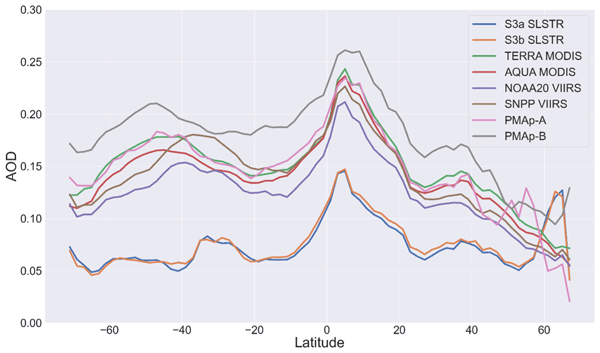
Sebastien Garrigues, Samuel Remy, Julien Chimot, Melanie Ades, Antje Inness, Johannes Flemming, Zak Kipling, Istvan Laszlo, Angela Benedetti, Roberto Ribas, Soheila Jafariserajehlou, Bertrand Fougnie, Shobha Kondragunta, Richard Engelen, Vincent-Henri Peuch, Mark Parrington, Nicolas Bousserez, Margarita Vazquez Navarro, and Anna Agusti-Panareda
Atmos. Chem. Phys., 22, 14657–14692, https://doi.org/10.5194/acp-22-14657-2022, https://doi.org/10.5194/acp-22-14657-2022, 2022
Short summary
Short summary
The Copernicus Atmosphere Monitoring Service (CAMS) provides global monitoring of aerosols using the ECMWF forecast model constrained by the assimilation of satellite aerosol optical depth (AOD). This work aims at evaluating two new satellite AODs to enhance the CAMS aerosol global forecast. It highlights the spatial and temporal differences between the satellite AOD products at the model spatial resolution, which is essential information to design multi-satellite AOD data assimilation schemes.
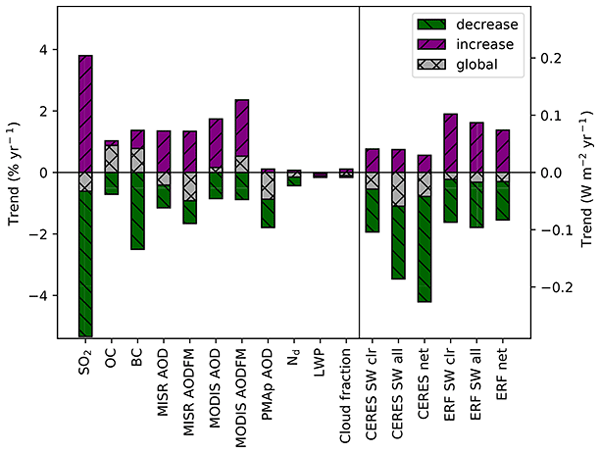
Johannes Quaas, Hailing Jia, Chris Smith, Anna Lea Albright, Wenche Aas, Nicolas Bellouin, Olivier Boucher, Marie Doutriaux-Boucher, Piers M. Forster, Daniel Grosvenor, Stuart Jenkins, Zbigniew Klimont, Norman G. Loeb, Xiaoyan Ma, Vaishali Naik, Fabien Paulot, Philip Stier, Martin Wild, Gunnar Myhre, and Michael Schulz
Atmos. Chem. Phys., 22, 12221–12239, https://doi.org/10.5194/acp-22-12221-2022, https://doi.org/10.5194/acp-22-12221-2022, 2022
Short summary
Short summary
Pollution particles cool climate and offset part of the global warming. However, they are washed out by rain and thus their effect responds quickly to changes in emissions. We show multiple datasets to demonstrate that aerosol emissions and their concentrations declined in many regions influenced by human emissions, as did the effects on clouds. Consequently, the cooling impact on the Earth energy budget became smaller. This change in trend implies a relative warming.
Chao Yan, Yicheng Shen, Dominik Stolzenburg, Lubna Dada, Ximeng Qi, Simo Hakala, Anu-Maija Sundström, Yishuo Guo, Antti Lipponen, Tom V. Kokkonen, Jenni Kontkanen, Runlong Cai, Jing Cai, Tommy Chan, Liangduo Chen, Biwu Chu, Chenjuan Deng, Wei Du, Xiaolong Fan, Xu-Cheng He, Juha Kangasluoma, Joni Kujansuu, Mona Kurppa, Chang Li, Yiran Li, Zhuohui Lin, Yiliang Liu, Yuliang Liu, Yiqun Lu, Wei Nie, Jouni Pulliainen, Xiaohui Qiao, Yonghong Wang, Yifan Wen, Ye Wu, Gan Yang, Lei Yao, Rujing Yin, Gen Zhang, Shaojun Zhang, Feixue Zheng, Ying Zhou, Antti Arola, Johanna Tamminen, Pauli Paasonen, Yele Sun, Lin Wang, Neil M. Donahue, Yongchun Liu, Federico Bianchi, Kaspar R. Daellenbach, Douglas R. Worsnop, Veli-Matti Kerminen, Tuukka Petäjä, Aijun Ding, Jingkun Jiang, and Markku Kulmala
Atmos. Chem. Phys., 22, 12207–12220, https://doi.org/10.5194/acp-22-12207-2022, https://doi.org/10.5194/acp-22-12207-2022, 2022
Short summary
Short summary
Atmospheric new particle formation (NPF) is a dominant source of atmospheric ultrafine particles. In urban environments, traffic emissions are a major source of primary pollutants, but their contribution to NPF remains under debate. During the COVID-19 lockdown, traffic emissions were significantly reduced, providing a unique chance to examine their relevance to NPF. Based on our comprehensive measurements, we demonstrate that traffic emissions alone are not able to explain the NPF in Beijing.
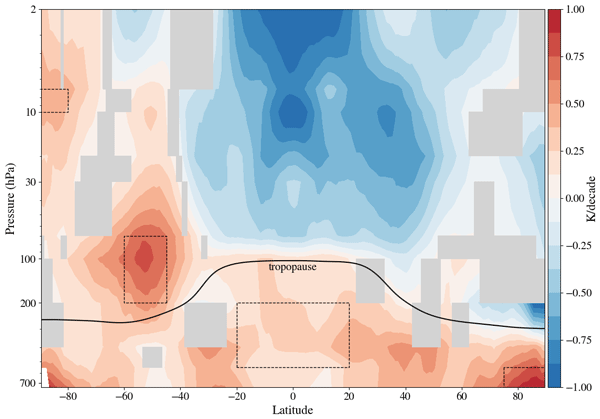
Marie Bouillon, Sarah Safieddine, Simon Whitburn, Lieven Clarisse, Filipe Aires, Victor Pellet, Olivier Lezeaux, Noëlle A. Scott, Marie Doutriaux-Boucher, and Cathy Clerbaux
Atmos. Meas. Tech., 15, 1779–1793, https://doi.org/10.5194/amt-15-1779-2022, https://doi.org/10.5194/amt-15-1779-2022, 2022
Short summary
Short summary
The IASI instruments have been observing Earth since 2007. We use a neural network to retrieve atmospheric temperatures. This new temperature data record is validated against other datasets and shows good agreement. We use this new dataset to compute trends over the 2008–2020 period. We found a warming of the troposphere, more important at the poles. In the stratosphere, we found that temperatures decrease everywhere except at the South Pole. The cooling is more pronounced at the South pole.
Cited articles
Abdullaev, S. F. and Sokolik, I. N.: Main Characteristics of Dust Storm sand Their Radiative Impacts: With a Focus on Tajikistan, J. Atmos. Sci. Res., 2, 2, https://doi.org/10.30564/jasr.v2i2.352, 2019.
Ansmann, A., Tesche, M., Althausen, D., Müller, D., Seifert, P., Freudenthaler, V., Heese, B., Wiegner, M., Pisani, G., Knippertz, P., and Dubovik, O.: Influence of Saharan dust on cloud glaciation in southern Morocco during the Saharan Mineral Dust Experiment, J. Geophys. Res., 113, D40148, https://doi.org/10.1029/2007JD008785, 2008.
Callewaert, S., Vandenbussche, S., Kumps, N., Kylling, A., Shang, X., Komppula, M., Goloub, P., and De Mazière, M.: The Mineral Aerosol Profiling from Infrared Radiances (MAPIR) algorithm: version 4.1 description and evaluation, Atmos. Meas. Tech., 12, 3673–3698, https://doi.org/10.5194/amt-12-3673-2019, 2019.
Cavalieri, O., Cairo, F., Fierli, F., Di Donfrancesco, G., Snels, M., Viterbini, M., Cardillo, F., Chatenet, B., Formenti, P., Marticorena, B., and Rajot, J. L.: Variability of aerosol vertical distribution in the Sahel, Atmos. Chem. Phys., 10, 12005–12023, https://doi.org/10.5194/acp-10-12005-2010, 2010.
Clarisse, L., Coheur, P.-F., Prata, F., Hadji-Lazaro, J., Hurtmans, D., and Clerbaux, C.: A unified approach to infrared aerosol remote sensing and type specification, Atmos. Chem. Phys., 13, 2195–2221, https://doi.org/10.5194/acp-13-2195-2013, 2013.
Clarisse, L., Clerbaux, C., Franco, B., Hadji-Lazaro, J., Whitburn, S., Kopp, A. K., Hurtmans, D., and Coheur, P.-F.: A Decadal Data Set of Global Atmospheric Dust Retrieved From IASI Satellite Measurements, J. Geophys. Res.-Atmos., 124, 1618–1647, https://doi.org/10.1029/2018JD029701, 2019.
Cuesta, J., Edouart, D., Mimouni, M., Flamant, P. H., Loth, C., Gibert, F., Marnas, F., Bouklila, A., Kharef, M., Ouchene, B., Kadi, M., and Flamant, C.: Multiplatform observations of the seasonal evolution of the Saharan atmospheric boundary layer in Tamanrasset, Algeria, in the framework of the African Monsoon Multidisciplinary Analysis field campaign conducted in 2006, J. Geophys. Res., 113, 22 pp., https://doi.org/10.1029/2007JD009417, 2008.
Derimian, Y., Karnieli, A., Kaufman, Y. J., Andreae, M. O., Andreae, T. W., Dubovik, O., Maenhaut, W., and Koren, I.: The role of iron and black carbon in aerosol light absorption, Atmos. Chem. Phys., 8, 3623–3637, https://doi.org/10.5194/acp-8-3623-2008, 2008.
Dominguez-Rodriguez, A., Baez-Ferrer, N., Rodríguez, S. B., Avanzas, P., Abreu-Gonzalez, P., Terradellas, E., Cuevas, E., Basart, S., and Werner, E.: Saharan Dust Events in the Dust Belt – Canary Islands – and the Observed Association with in-Hospital Mortality of Patients with Heart Failure, J. Clin. Med., 9, 376, https://doi.org/10.3390/jcm9020376, 2020.
Doutriaux-Boucher, M., Jafariserajehlou, S., Huckle, R., Petraityte, K., Holdak, A., Fougnie, B., and Schulz, J: Quality Evaluation Report for the Polar Multi-sensor Aerosol product (PMAp), Release 1, OD6.1, ref: C3S_311b T6.1 M10 D6.1, EUMETSAT, https://user.eumetsat.int/s3/eup-strapi-media/C3_S_311b_T6_2_Quality_Evaluation_Report_PM_Ap_4c1986dd76.pdf (last access: 28 November 2025), 2022.
Dubovik, O., and King, M. D.: A flexible inversion algorithm for retrieval of aerosol optical properties from Sun and sky radiance measurements, J. Geophys. Res., 105(D16), 20673–20696, https://doi.org/10.1029/2000JD900282, 2000.
EUMETSAT: IASI Level 1C Climate Data Record Release 1 – Metop-A, European Organisation for the Exploitation of Meteorological Satellites [data set], https://doi.org/10.15770/EUM_SEC_CLM_0014, 2018.
EUMETSAT: GOME-2 Level 1B Fundamental Data Record Release 3 – Metop-A and -B, European Organisation for the Exploitation of Meteorological Satellites [data set], https://doi.org/10.15770/EUM_SEC_CLM_0039, 2022a.
EUMETSAT: Polar Multi-Sensor Aerosol Optical Properties Climate Data Record Release 1 – Metop-A and -B, European Organisation for the Exploitation of Meteorological Satellites [data set], https://doi.org/10.15770/EUM_SEC_CLM_0053, 2022b.
Gama, C., Pio, C., Monteiro, A., Russo, M., Fernandes, A. P., Borrego, C., Baldasano, J. M., and Tchepel, O.: Comparison of Methodologies for Assessing Desert Dust Contribution to Regional PM10 and PM2.5 Levels: A One-Year Study Over Portugal, Atmosphere, 11, 134, https://doi.org/10.3390/atmos11020134, 2020.
Garrigues, S., Remy, S., Chimot, J., Ades, M., Inness, A., Flemming, J., Kipling, Z., Laszlo, I., Benedetti, A., Ribas, R., Jafariserajehlou, S., Fougnie, B., Kondragunta, S., Engelen, R., Peuch, V.-H., Parrington, M., Bousserez, N., Vazquez Navarro, M., and Agusti-Panareda, A.: Monitoring multiple satellite aerosol optical depth (AOD) products within the Copernicus Atmosphere Monitoring Service (CAMS) data assimilation system, Atmos. Chem. Phys., 22, 14657–14692, https://doi.org/10.5194/acp-22-14657-2022, 2022.
Giles, D. M., Sinyuk, A., Sorokin, M. G., Schafer, J. S., Smirnov, A., Slutsker, I., Eck, T. F., Holben, B. N., Lewis, J. R., Campbell, J. R., Welton, E. J., Korkin, S. V., and Lyapustin, A. I.: Advancements in the Aerosol Robotic Network (AERONET) Version 3 database – automated near-real-time quality control algorithm with improved cloud screening for Sun photometer aerosol optical depth (AOD) measurements, Atmos. Meas. Tech., 12, 169–209, https://doi.org/10.5194/amt-12-169-2019, 2019.
Gkikas, A., Hatzianastassiou, N., Mihalopoulos, N., Katsoulis, V., Kazadzis, S., Pey, J., Querol, X., and Torres, O.: The regime of intense desert dust episodes in the Mediterranean based on contemporary satellite observations and ground measurements, Atmos. Chem. Phys., 13, 12135–12154, https://doi.org/10.5194/acp-13-12135-2013, 2013.
Gkikas, A., Proestakis, E., Amiridis, V., Kazadzis, S., Di Tomaso, E., Tsekeri, A., Marinou, E., Hatzianastassiou, N., and Pérez García-Pando, C.: ModIs Dust AeroSol (MIDAS): a global fine-resolution dust optical depth data set, Atmos. Meas. Tech., 14, 309–334, https://doi.org/10.5194/amt-14-309-2021, 2021.
Grzegorski, M., Poli, G., Cacciari, A., Jafariserajehlou, S., Holdak, A., Lang, R., Vazquez-Navarro, M., Munro, R., and Fougnie, B.: Multi-Sensor Retrieval of Aerosol Optical Properties for Near-Real-Time Applications Using the Metop Series of Satellites: Concept, Detailed Description, and First Validation, Remote Sens., 14, 85, https://doi.org/10.3390/rs14010085, 2022.
Hasekamp, O. P., Tuinder, O., and Stammes, P.: Final Report of the O3M-SAF Activity: Aerosol Retrieval from GOME-2: Improving Computational Efficiency and First Application, http://o3msaf.fmi.fi/docs/vs/2008/Hasekamp_final_report.pdf (last access: 15 February 2025), 2008.
Holben, B. N., Eck, T. F., Slutsker, I., Tanré, D., Buis, J. P., Setzer, A., Vermote, E., Reagan, J. A., Kaufman, Y. J., Nakajima, T., Lavenu, F., Jankowiak, I., and Smirnov, A.: AERONET – A Federated Instrument Network and Data Archive for Aerosol Characterization, Remote Sens. Environ., 66, 1–16, https://doi.org/10.1016/S0034-4257(98)00031-5, 1998.
Holben, B., Tanré, D., Smirnov, A., Eck, T. F., Slutsker, I., Abuhassan, N., Newcomb, W. W., Schafer, J. S., Chatenet, B., Lavenu, F., Kaufman, Y. J., Vande Castle, J., Setzer, A., Markham, B., Clark, D., Frouin, R., Halthore, R., Karneli, A., O'Neill, N. T., Pietras, C., Pinker, R. T., Voss, K., and Zibordi, G.: An emerging ground-based aerosol climatology: Aerosol optical depth from AERONET, J. Geophys. Res., 106, 12067–12097, https://doi.org/10.1029/2001JD900014, 2001.
Huang, J., Arnott, W. P., Barnard, J. C., and Holmes, H. A.: Theoretical Uncertainty Analysis of Satellite Retrieved Aerosol Optical Depth Associated with Surface Albedo and Aerosol Optical Properties, Remote Sens., 13, 344, https://doi.org/10.3390/rs13030344, 2021.
Ji, W., Yang, L., Tian, X., Bilal, M., Pei, X., Zheng, Y., Lu, X., and Cheng, X.: Long-term validation and error analysis of DB and MAIAC aerosol products over bright surface of China, Atmos. Res., 297, https://doi.org/10.1016/j.atmosres.2023.107106, 2024.
Karydis, V. A., Tsimpidi, A. P., Bacer, S., Pozzer, A., Nenes, A., and Lelieveld, J.: Global impact of mineral dust on cloud droplet number concentration, Atmos. Chem. Phys., 17, 5601–5621, https://doi.org/10.5194/acp-17-5601-2017, 2017.
Khaniabadi, Y., Daryanoosh, S., Amrane, A., Polosa, R., Hopke, P., Goudarzi, G., Mohammadi, M., Sicard, P., and Armin, H.: Impact of Middle Eastern Dust storms on human health, Atmos. Poll. Res., 8, 606–613, https://doi.org/10.1016/j.apr.2016.11.005, 2017.
Klüser, L. and Popp, T.: Large-Scale Analysis of Relationships between Mineral Dust, Ice Cloud Properties, and Precipitation from Satellite Observations Using a Bayesian Approach: Theoretical Basis and First Results for the Tropical Atlantic Ocean, Adv. Meteorol., 5278120, https://doi.org/10.1155/2017/5278120, 2017.
Kok, J. F., Parteli, E. J. R., Michaels, T. I., and Karam, D. B.: The physics of wind-blown sand and dust, Reports on Progress in Physics, 75, 106901, https://doi.org/10.1088/0034-4885/75/10/106901, 2012.
Kok, J. F., Adebiyi, A. A., Albani, S., Balkanski, Y., Checa-Garcia, R., Chin, M., Colarco, P. R., Hamilton, D. S., Huang, Y., Ito, A., Klose, M., Li, L., Mahowald, N. M., Miller, R. L., Obiso, V., Pérez García-Pando, C., Rocha-Lima, A., and Wan, J. S.: Contribution of the world's main dust source regions to the global cycle of desert dust, Atmos. Chem. Phys., 21, 8169–8193, https://doi.org/10.5194/acp-21-8169-2021, 2021.
Li, H. and Wang, C.: Impact of dust radiation effect on simulations of temperature and wind – A case study in Taklimakan Desert, Atm. Res., 273, 106163, https://doi.org/10.1016/j.atmosres.2022.106163, 2022.
Mahowald, N. M., Kloster, S., Engelstaedter, S., Moore, J. K., Mukhopadhyay, S., McConnell, J. R., Albani, S., Doney, S. C., Bhattacharya, A., Curran, M. A. J., Flanner, M. G., Hoffman, F. M., Lawrence, D. M., Lindsay, K., Mayewski, P. A., Neff, J., Rothenberg, D., Thomas, E., Thornton, P. E., and Zender, C. S.: Observed 20th century desert dust variability: impact on climate and biogeochemistry, Atmos. Chem. Phys., 10, 10875–10893, https://doi.org/10.5194/acp-10-10875-2010, 2010.
Morales-Medina, M., Ortíz-Martínez, A., Pérez-Cardona, C., Rueda-Roa, D., Otis, D., Pérez-Matías, E., Muller-Karger, F., Mayol-Bracero, O., and Méndez-Lázaro, P.: Who Is Affected by Saharan Dust in the Caribbean? A Spatial Analysis and Citizen's Perspective from Puerto Rico during the Godzilla Dust Event in June 2020, Wea. Climate Soc., 16, 205–219, https://doi.org/10.1175/WCAS-D-23-0007.1, 2024.
Nelli, N., Fissehaye, S., Francis, D., Fonseca, R., Temimi, M., Weston, M., Abida, R., and Nesterov, O.: Characteristics of atmospheric aerosols over the UAE inferred from CALIPSO and sun photometer aerosol optical depth, Earth and Space Science, 8, e2020EA001360, https://doi.org/10.1029/2020EA001360, 2021.
Parajuli, S. P., Stenchikov, G. L., Ukhov, A., Shevchenko, I., Dubovik, O., and Lopatin, A.: Aerosol vertical distribution and interactions with land/sea breezes over the eastern coast of the Red Sea from lidar data and high-resolution WRF-Chem simulations, Atmos. Chem. Phys., 20, 16089–16116, https://doi.org/10.5194/acp-20-16089-2020, 2020.
Peyridieu, S., Chédin, A., Capelle, V., Tsamalis, C., Pierangelo, C., Armante, R., Crevoisier, C., Crépeau, L., Siméon, M., Ducos, F., and Scott, N. A.: Characterisation of dust aerosols in the infrared from IASI and comparison with PARASOL, MODIS, MISR, CALIOP, and AERONET observations, Atmos. Chem. Phys., 13, 6065–6082, https://doi.org/10.5194/acp-13-6065-2013, 2013.
Prospero, J., Barkley, A., Gaston, C., Gatineau, A., Campos y Sansano, A., and Panechou, K.: Characterizing and Quantifying African Dust Transport and Deposition to South America: Implications for the Phosphorus Budget in the Amazon Basin, Global Biogeochem. Cycles, 34, 24 pp.,https://doi.org/10.1029/2020GB006536, 2020.
Ramírez-Romero, C., Jaramillo, A., Córdoba, M. F., Raga, G. B., Miranda, J., Alvarez-Ospina, H., Rosas, D., Amador, T., Kim, J. S., Yakobi-Hancock, J., Baumgardner, D., and Ladino, L. A.: African dust particles over the western Caribbean – Part I: Impact on air quality over the Yucatán Peninsula, Atmos. Chem. Phys., 21, 239–253, https://doi.org/10.5194/acp-21-239-2021, 2021.
Roesch, C., Roesch, M., Wolf, M. J., Zawadowicz, M. A., AlAloula, R., Awwad, Z., and Cziczo, D. J.: CCN and INP activity of middle eastern soil dust, Aeolian Res., 52, 100729, https://doi.org/10.1016/j.aeolia.2021.100729, 2021.
Rosenfeld, D., Rudich, Y., and Lahav, R.: Desert dust suppressing precipitation: a possible desertification feedback loop, P. Natl. Acad. Sci. USA, 98, 5975–5980, 2001.
Salvador, P., Alonso-Pérez, S., Pey, J., Artíñano, B., de Bustos, J. J., Alastuey, A., and Querol, X.: African dust outbreaks over the western Mediterranean Basin: 11-year characterization of atmospheric circulation patterns and dust source areas, Atmos. Chem. Phys., 14, 6759–6775, https://doi.org/10.5194/acp-14-6759-2014, 2014.
Samman, A. E. and Butt, M. J.: Aerosol Types and Their Climatology over the Dust Belt Region, Atmosphere, 14, 11, https://doi.org/10.3390/atmos14111610, 2023.
Schepanski, K., Heinold, B., and Tegen, I.: Harmattan, Saharan heat low, and West African monsoon circulation: modulations on the Saharan dust outflow towards the North Atlantic, Atmos. Chem. Phys., 17, 10223–10243, https://doi.org/10.5194/acp-17-10223-2017, 2017.
Tilstra, L. G., Tuinder, O. N. E., Wang, P., and Stammes, P.: Surface reflectivity climatologies from UV to NIR determined from Earth observations by GOME-2 and SCIAMACHY, J. Geophys. Res. Atmos., 122, 4084–4111, https://doi.org/10.1002/2016JD025940, 2017.
Vandenbussche, S., Kochenova, S., Vandaele, A. C., Kumps, N., and De Mazière, M.: Retrieval of desert dust aerosol vertical profiles from IASI measurements in the TIR atmospheric window, Atmos. Meas. Tech., 6, 2577–2591, https://doi.org/10.5194/amt-6-2577-2013, 2013.
Vandenbussche, S., Callewaert, S., Schepanski, K., and De Mazière, M.: North African mineral dust sources: new insights from a combined analysis based on 3D dust aerosol distributions, surface winds and ancillary soil parameters, Atmos. Chem. Phys., 20, 15127–15146, https://doi.org/10.5194/acp-20-15127-2020, 2020.
Voss, K. K. and A. T. Evan: A New Satellite-Based Global Climatology of Dust Aerosol Optical Depth, J. Appl. Meteor. Climatol., 59, 83–102, https://doi.org/10.1175/JAMC-D-19-0194.1, 2020.
Zhao, A., Ryder, C. L., and Wilcox, L. J.: How well do the CMIP6 models simulate dust aerosols?, Atmos. Chem. Phys., 22, 2095–2119, https://doi.org/10.5194/acp-22-2095-2022, 2022.
Short summary
This study evaluates dust particles, their identification, amount and variability in the atmosphere using Metop-satellite observations from 2007 to 2019. Results show reliable detection of dust and consistent spatial and seasonal patterns. Dust-dominated observations have moderate to good accuracy against ground-based measurements, though biases and outliers occur. Sampling density varies across regions, but satellites still provide valuable contributions to global dust monitoring.
This study evaluates dust particles, their identification, amount and variability in the...


