
Articles | Volume 18, issue 23
https://doi.org/10.5194/amt-18-7465-2025
© Author(s) 2025. This work is distributed under
the Creative Commons Attribution 4.0 License.
the Creative Commons Attribution 4.0 License.
https://doi.org/10.5194/amt-18-7465-2025
© Author(s) 2025. This work is distributed under
the Creative Commons Attribution 4.0 License.
the Creative Commons Attribution 4.0 License.
Research article
| 
08 Dec 2025
Research article |
| 08 Dec 2025
| 08 Dec 2025
Early evolution of the ozone mini-hole generated by the Australian bushfires 2019–2020 observed from satellite and ground-based instruments

Univ. Paris Est Créteil and Université de Paris, CNRS, Laboratoire Interuniversitaire des Systèmes Atmosphériques, Institut Pierre Simon Laplace, Créteil, France
Pasquale Sellitto
CORRESPONDING AUTHOR
Univ. Paris Est Créteil and Université de Paris, CNRS, Laboratoire Interuniversitaire des Systèmes Atmosphériques, Institut Pierre Simon Laplace, Créteil, France
Istituto Nazionale di Geofisica e Vulcanologia, Osservatorio Etneo, Catania, Italy
Maxim Eremenko
Univ. Paris Est Créteil and Université de Paris, CNRS, Laboratoire Interuniversitaire des Systèmes Atmosphériques, Institut Pierre Simon Laplace, Créteil, France
Silvia Bucci
Institut für Meteorologie und Geophysik, University of Vienna, Vienna, Austria
Tran M. Nguyet
Univ. Paris Est Créteil and Université de Paris, CNRS, Laboratoire Interuniversitaire des Systèmes Atmosphériques, Institut Pierre Simon Laplace, Créteil, France
Martin Schwell
Univ. Paris Est Créteil and Université de Paris, CNRS, Laboratoire Interuniversitaire des Systèmes Atmosphériques, Institut Pierre Simon Laplace, Créteil, France
Bernard Legras
Laboratoire de Météorologie Dynamique, UMR CNRS 8539, École Normale Supérieure, PSL Research University, École Polytechnique, Sorbonne Universités, École des Ponts PARISTECH, Institut Pierre Simon Laplace, Paris, France
Related authors
Pasquale Sellitto, Redha Belhadji, Bernard Legras, Aurélien Podglajen, and Clair Duchamp
Atmos. Chem. Phys., 25, 6353–6364, https://doi.org/10.5194/acp-25-6353-2025, https://doi.org/10.5194/acp-25-6353-2025, 2025
Short summary
Short summary
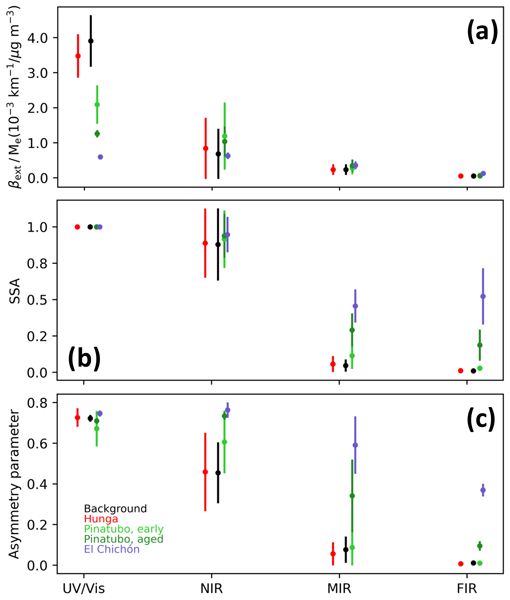
The Hunga Tonga–Hunga Ha’apai volcano erupted on 15 January 2022, producing the largest stratospheric aerosol perturbation of the last 30 years. Stratospheric volcanic aerosols usually produce a transient climate cooling; these impacts depend on volcanic aerosol composition/size, due to size-dependent interactions with solar/terrestrial radiation. We demonstrate that the Hunga Tonga–Hunga Ha’apai stratospheric aerosols have a larger cooling potential per unit mass than the past climate-relevant El Chichón (1984) and Pinatubo (1991) eruptions.
Pasquale Sellitto, Redha Belhadji, Juan Cuesta, Aurélien Podglajen, and Bernard Legras
Atmos. Chem. Phys., 23, 15523–15535, https://doi.org/10.5194/acp-23-15523-2023, https://doi.org/10.5194/acp-23-15523-2023, 2023
Short summary
Short summary
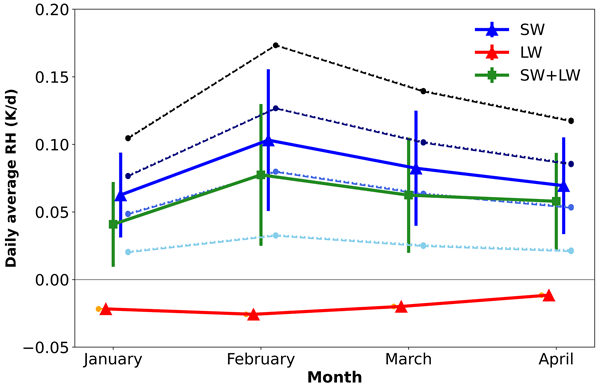
Record-breaking wildfires ravaged south-eastern Australia during the fire season 2019–2020. These fires injected a smoke plume in the stratosphere, which dispersed over the whole Southern Hemisphere and interacted with solar and terrestrial radiation. A number of detached smoke bubbles were also observed emanating from this plume and ascending quickly to over 35 km altitude. Here we study how absorption of radiation generated ascending motion of both the the hemispheric plume and the vortices.
Pasquale Sellitto, Redha Belhadji, Corinna Kloss, and Bernard Legras
Atmos. Chem. Phys., 22, 9299–9311, https://doi.org/10.5194/acp-22-9299-2022, https://doi.org/10.5194/acp-22-9299-2022, 2022
Short summary
Short summary
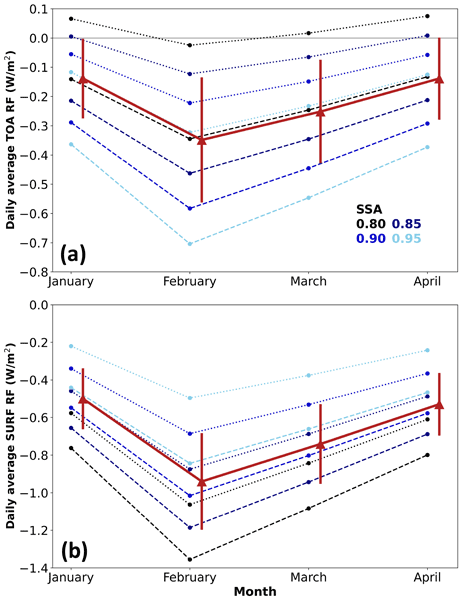
As a consequence of extreme heat and drought, record-breaking wildfires ravaged south-eastern Australia during the fire season in 2019–2020. Fires injected a smoke plume very high up to the stratosphere, which dispersed quite quickly to the whole Southern Hemisphere and interacted with solar radiation, reflecting and absorbing part of it – thus producing impacts on the climate system. Here we estimate this impact on radiation and we study how it depends on the properties and ageing of the plume.
Pasquale Sellitto, Mona Kosary, Michael Höpfner, Bernd Funke, Alex Hoffmann, Jörn Ungermann, Quentin Errera, Simone Tilmes, and Björn-Martin Sinnhuber
Atmos. Meas. Tech., 19, 6379–6393, https://doi.org/10.5194/amt-19-6379-2026, https://doi.org/10.5194/amt-19-6379-2026, 2026
Short summary
Short summary
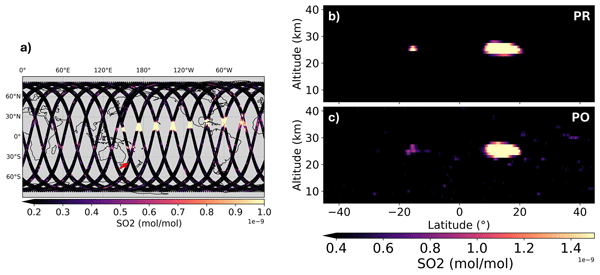
To counterbalance human-caused global warming, highly controversial geoengineering techniques, based on stratospheric aerosol injection (SAI), have been proposed as a complement to climate change mitigation. Possible unilateral SAI deployments or tests are a risk. We show that existing satellite instruments do not have the capability to detect unilateral SAI experiments and we propose a future satellite technique, infrared limb emission sounding, that can provide this missing capability.
Mona Kosary, Pasquale Sellitto, Michael Höpfner, Bernd Funke, Alex Hoffmann, Jörn Ungermann, Quentin Errera, Simone Tilmes, and Björn-Martin Sinnhuber
EGUsphere, https://doi.org/10.5194/egusphere-2026-4654, https://doi.org/10.5194/egusphere-2026-4654, 2026
Short summary
Short summary
We investigated whether future satellites could track changes in the ozone layer if reflective particles were deliberately added high in the atmosphere to cool the planet. Using climate model simulations, we created virtual satellite measurements and compared them with the original data. The method captured the key changes, especially stronger ozone loss and delayed recovery over Antarctica, while showing low artificial distortion. This suggests such satellites could provide important oversight.
Corinna Kloss, Gwenaël Berthet, Pasquale Sellitto, Irene Bartolome Garcia, Emmanuel Briaud, Rubel Chandra Das, Stéphane Chevrier, Nicolas Dumelié, Lilian Joly, Thomas Lecas, Pauline Marbach, Felix Ploeger, Jean-Baptiste Renard, Jean-Paul Vernier, Frank G. Wienhold, and Michaela I. Hegglin
Atmos. Chem. Phys., 26, 8981–8997, https://doi.org/10.5194/acp-26-8981-2026, https://doi.org/10.5194/acp-26-8981-2026, 2026
Short summary
Short summary
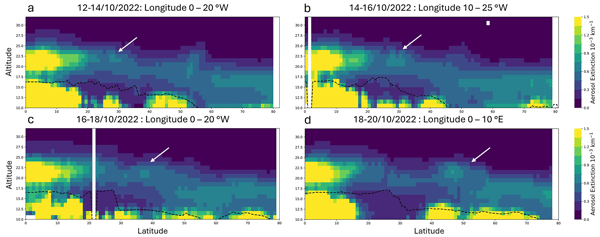
In October 2022, we detected volcanic particles in the stratosphere over France, linked to the January 2022 Hunga eruption in the South Pacific. Found between 17 and 23 km altitude, they were traced back to the tropics using trajectory simulations and satellite data. Their optical properties matched those in the Southern Hemisphere. The particles spread across the Northern Hemisphere, reflecting sunlight and slightly cooling the surface – a small but non-negligible effect.
Pasquale Sellitto, Maxim Eremenko, Paola Formenti, Perla Alalam, Michael Höpfner, and Claudia Di Biagio
Atmos. Meas. Tech., 19, 2751–2762, https://doi.org/10.5194/amt-19-2751-2026, https://doi.org/10.5194/amt-19-2751-2026, 2026
Short summary
Short summary
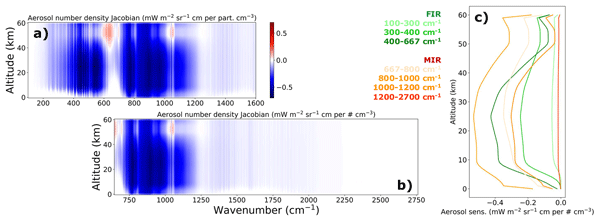
The Far-infrared Outgoing Radiation Understanding and Monitoring (FORUM) mission will bring the first satellite instrument capable of observing the Earth's far infrared (FIR) spectra with a high spectral resolution. FORUM will crucially contribute to water vapour, clouds and surface observations. We found that FORUM will provide also a significant sensitivity to dust aerosol, especially in cases of large burdens of mid-to-long-range transported plumes of dust in the free and upper troposphere.
Sachiko Okamoto, Juan Cuesta, Gaëlle Dufour, Maxim Eremenko, Kazuyuki Miyazaki, Cathy Boonne, Hiroshi Tanimoto, Jeff Peischl, and Chelsea Thompson
Atmos. Chem. Phys., 26, 4685–4709, https://doi.org/10.5194/acp-26-4685-2026, https://doi.org/10.5194/acp-26-4685-2026, 2026
Short summary
Short summary
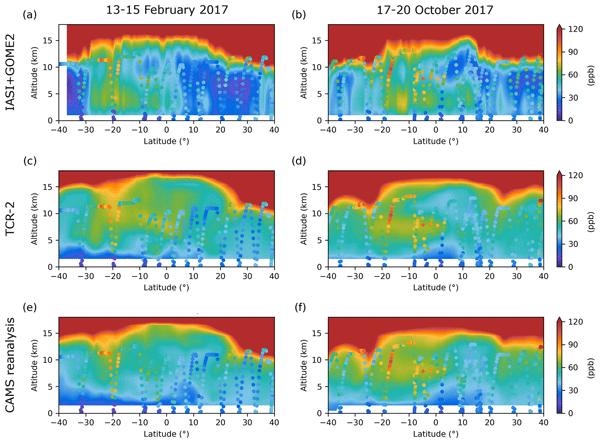
We analyse the distribution of tropospheric ozone over the Atlantic during February and October 2017 using a multispectral satellite synergism called IASI+GOME2, two chemistry reanalysis products and in situ airborne measurements. It reveals that a significant overestimation of two chemistry reanalysis products of lowermost troposphere ozone over the Atlantic in the Northern Hemisphere due to the overestimations of ozone precursors from anthropogenic sources from North America.

Clair Duchamp, Bernard Legras, Aurélien Podglajen, Pasquale Sellitto, Adam E. Bourassa, Alexei Rozanov, Ghassan Taha, and Daniel J. Zawada
Atmos. Meas. Tech., 19, 1675–1696, https://doi.org/10.5194/amt-19-1675-2026, https://doi.org/10.5194/amt-19-1675-2026, 2026
Short summary
Short summary
We analyzed the stratospheric aerosol plume from the 2022 Hunga eruption using satellite lidar data. We implemented a method to retrieve some aerosol properties, as standard products failed in this case. We found very high optical depth values in the days following the eruption, which decreased rapidly but remained elevated for months. Our results are broadly validated, though some satellite products underestimate the values due, in part, to the unusual aerosol size distribution in the plume.
Sylvia C. Sullivan, Aiko Voigt, Edgardo Sepúlveda Araya, Silvia Bucci, Annette Miltenberger, Meredith K. Kupinski, Christian Rolf, and Martina Krämer
Atmos. Chem. Phys., 26, 1685–1698, https://doi.org/10.5194/acp-26-1685-2026, https://doi.org/10.5194/acp-26-1685-2026, 2026
Short summary
Short summary
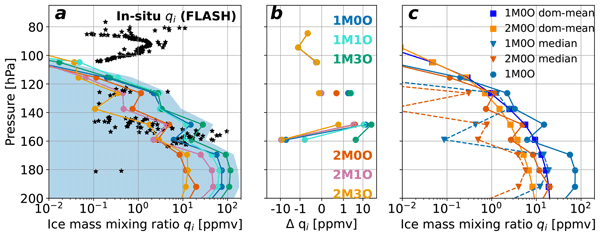
We assess the temperature, moisture, and dynamics in the upper troposphere-lower stratosphere simulated over South Asia in a high-resolution model relative to aircraft data. The lower stratosphere tends to be too warm, too dry, and too quiescent in the model, and as a result, too few ice clouds are predicted to form there. These biases could affect radiative balance and circulation in other areas also, as significant upward transport of moisture and pollutants occurs during the Asian monsoon.
Claudia Di Biagio, Elisa Bru, Avila Orta, Servanne Chevaillier, Clarissa Baldo, Antonin Bergé, Mathieu Cazaunau, Sandra Lafon, Sophie Nowak, Edouard Pangui, Meinrat O. Andreae, Pavla Dagsson-Waldhauserova, Kebonyethata Dintwe, Konrad Kandler, James S. King, Amelie Chaput, Gregory S. Okin, Stuart Piketh, Thuraya Saeed, David Seibert, Zongbo Shi, Earle Williams, Pasquale Sellitto, and Paola Formenti
Atmos. Chem. Phys., 26, 1079–1091, https://doi.org/10.5194/acp-26-1079-2026, https://doi.org/10.5194/acp-26-1079-2026, 2026
Short summary
Short summary
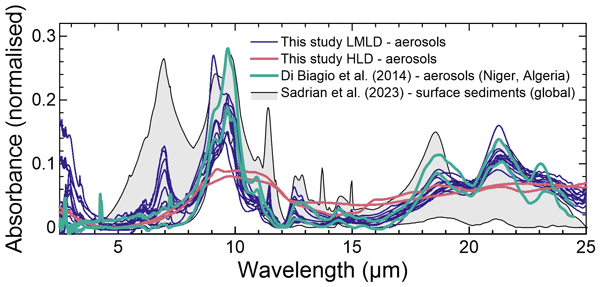
Spectroscopy measurements show that the absorbance of dust in the far-infrared up to 25 µm is comparable in intensity to that in the mid-infrared (3–15 µm) suggesting possible relevance for its direct radiative effect. Absorption signatures differ between Icelandic and low/mid-latitude dust due to differences in mineralogical composition. Spectral differences could be used to characterise the mineralogy and trace the origin of airborne dust based on infrared remote sensing observations.
Pasquale Sellitto, Audrey Gaudel, and Bastien Sauvage
Atmos. Chem. Phys., 25, 13299–13309, https://doi.org/10.5194/acp-25-13299-2025, https://doi.org/10.5194/acp-25-13299-2025, 2025
Short summary
Short summary
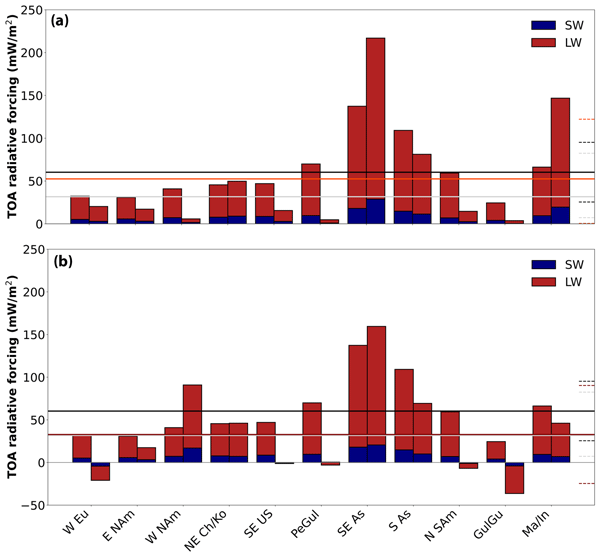
Tropospheric ozone is a potent greenhouse gas: its anthropogenic levels rise contributes to climate change. We evaluate tropospheric ozone trends and climate impacts with aircraft data and a radiative model, comparing a baseline period (1994–2004) to different recent time periods (2011–2016 to 2020-2023). Tropospheric ozone levels increasing trends progressively stopped and even decreased in the upper troposphere. Correspondingly, the decadal ozone radiative forcing is progressively decreasing.
Gaëlle Dufour, Maxim Eremenko, Juan Cuesta, Gérard Ancellet, Michael Gill, Eliane Maillard Barras, and Roeland Van Malderen
Atmos. Meas. Tech., 18, 5049–5070, https://doi.org/10.5194/amt-18-5049-2025, https://doi.org/10.5194/amt-18-5049-2025, 2025
Short summary
Short summary
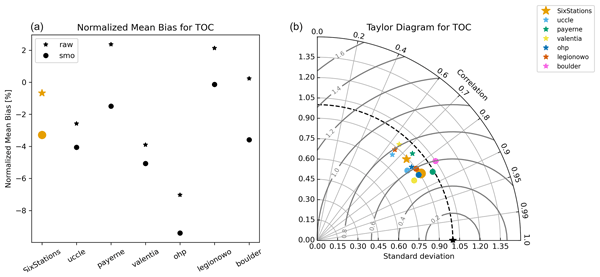
Tropospheric ozone from the three Infrared Atmospheric Sounding Interferometer (IASI) instruments is very consistent (<1 %). The validation against homogenized ozone sondes reveals an overall good agreement with slight biases (3 %–6 %) in tropospheric ozone and a possible temporal drift, but this is difficult to assess due to the limited number of sites. No specific trends are estimated for the tropospheric ozone column for the period 2008–2022, but persistent negative trends are observed in the lower troposphere.
Pasquale Sellitto, Redha Belhadji, Bernard Legras, Aurélien Podglajen, and Clair Duchamp
Atmos. Chem. Phys., 25, 6353–6364, https://doi.org/10.5194/acp-25-6353-2025, https://doi.org/10.5194/acp-25-6353-2025, 2025
Short summary
Short summary
The Hunga Tonga–Hunga Ha’apai volcano erupted on 15 January 2022, producing the largest stratospheric aerosol perturbation of the last 30 years. Stratospheric volcanic aerosols usually produce a transient climate cooling; these impacts depend on volcanic aerosol composition/size, due to size-dependent interactions with solar/terrestrial radiation. We demonstrate that the Hunga Tonga–Hunga Ha’apai stratospheric aerosols have a larger cooling potential per unit mass than the past climate-relevant El Chichón (1984) and Pinatubo (1991) eruptions.
Michaël Sicard, Alexandre Baron, Marion Ranaivombola, Dominique Gantois, Tristan Millet, Pasquale Sellitto, Nelson Bègue, Hassan Bencherif, Guillaume Payen, Nicolas Marquestaut, and Valentin Duflot
Atmos. Chem. Phys., 25, 367–381, https://doi.org/10.5194/acp-25-367-2025, https://doi.org/10.5194/acp-25-367-2025, 2025
Short summary
Short summary
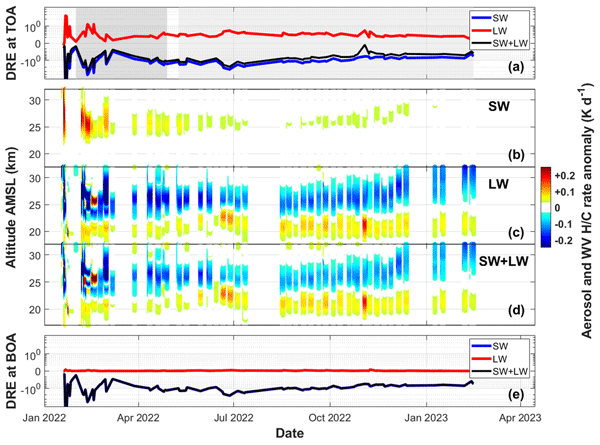
This study quantifies the radiative impact over Réunion Island (21° S, 55° E) of the aerosols and water vapor injected into the stratosphere by the Hunga volcano in the South Pacific. The overall aerosol and water vapor impact on the Earth’s radiation budget for the whole period is negative (cooling, -0.82 ± 0.35 W m-2) and dominated by the aerosols. At the Earth’s surface, aerosols are the main drivers and produce a negative (cooling, -1.04 ± 0.36 W m-2) radiative impact.
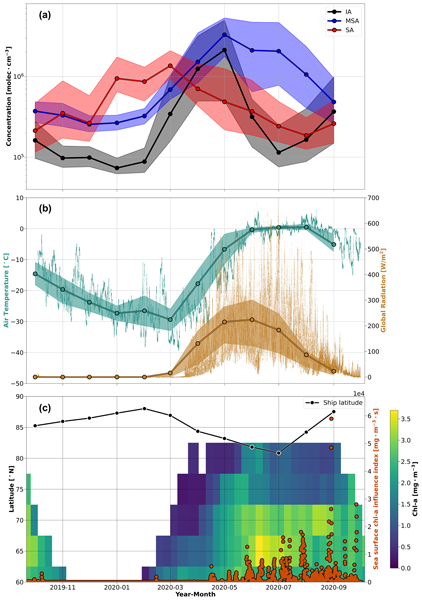
Matthew Boyer, Diego Aliaga, Lauriane L. J. Quéléver, Silvia Bucci, Hélène Angot, Lubna Dada, Benjamin Heutte, Lisa Beck, Marina Duetsch, Andreas Stohl, Ivo Beck, Tiia Laurila, Nina Sarnela, Roseline C. Thakur, Branka Miljevic, Markku Kulmala, Tuukka Petäjä, Mikko Sipilä, Julia Schmale, and Tuija Jokinen
Atmos. Chem. Phys., 24, 12595–12621, https://doi.org/10.5194/acp-24-12595-2024, https://doi.org/10.5194/acp-24-12595-2024, 2024
Short summary
Short summary
We analyze the seasonal cycle and sources of gases that are relevant for the formation of aerosol particles in the central Arctic. Since theses gases can form new particles, they can influence Arctic climate. We show that the sources of these gases are associated with changes in the Arctic environment during the year, especially with respect to sea ice. Therefore, the concentration of these gases will likely change in the future as the Arctic continues to warm.
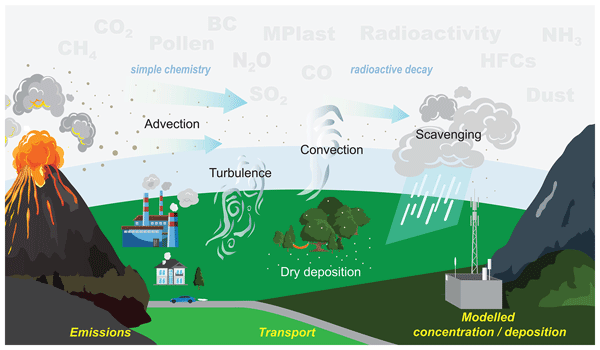
Lucie Bakels, Daria Tatsii, Anne Tipka, Rona Thompson, Marina Dütsch, Michael Blaschek, Petra Seibert, Katharina Baier, Silvia Bucci, Massimo Cassiani, Sabine Eckhardt, Christine Groot Zwaaftink, Stephan Henne, Pirmin Kaufmann, Vincent Lechner, Christian Maurer, Marie D. Mulder, Ignacio Pisso, Andreas Plach, Rakesh Subramanian, Martin Vojta, and Andreas Stohl
Geosci. Model Dev., 17, 7595–7627, https://doi.org/10.5194/gmd-17-7595-2024, https://doi.org/10.5194/gmd-17-7595-2024, 2024
Short summary
Short summary
Computer models are essential for improving our understanding of how gases and particles move in the atmosphere. We present an update of the atmospheric transport model FLEXPART. FLEXPART 11 is more accurate due to a reduced number of interpolations and a new scheme for wet deposition. It can simulate non-spherical aerosols and includes linear chemical reactions. It is parallelised using OpenMP and includes new user options. A new user manual details how to use FLEXPART 11.
Pasquale Sellitto, Redha Belhadji, Juan Cuesta, Aurélien Podglajen, and Bernard Legras
Atmos. Chem. Phys., 23, 15523–15535, https://doi.org/10.5194/acp-23-15523-2023, https://doi.org/10.5194/acp-23-15523-2023, 2023
Short summary
Short summary
Record-breaking wildfires ravaged south-eastern Australia during the fire season 2019–2020. These fires injected a smoke plume in the stratosphere, which dispersed over the whole Southern Hemisphere and interacted with solar and terrestrial radiation. A number of detached smoke bubbles were also observed emanating from this plume and ascending quickly to over 35 km altitude. Here we study how absorption of radiation generated ascending motion of both the the hemispheric plume and the vortices.
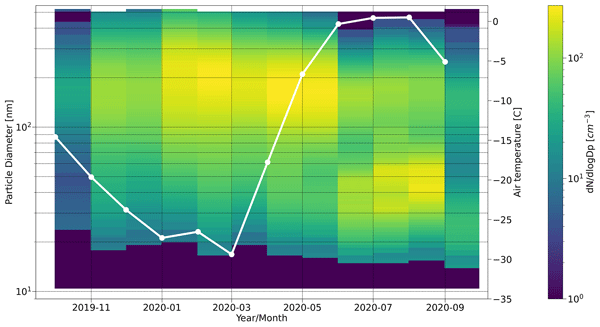
Matthew Boyer, Diego Aliaga, Jakob Boyd Pernov, Hélène Angot, Lauriane L. J. Quéléver, Lubna Dada, Benjamin Heutte, Manuel Dall'Osto, David C. S. Beddows, Zoé Brasseur, Ivo Beck, Silvia Bucci, Marina Duetsch, Andreas Stohl, Tiia Laurila, Eija Asmi, Andreas Massling, Daniel Charles Thomas, Jakob Klenø Nøjgaard, Tak Chan, Sangeeta Sharma, Peter Tunved, Radovan Krejci, Hans Christen Hansson, Federico Bianchi, Katrianne Lehtipalo, Alfred Wiedensohler, Kay Weinhold, Markku Kulmala, Tuukka Petäjä, Mikko Sipilä, Julia Schmale, and Tuija Jokinen
Atmos. Chem. Phys., 23, 389–415, https://doi.org/10.5194/acp-23-389-2023, https://doi.org/10.5194/acp-23-389-2023, 2023
Short summary
Short summary
The Arctic is a unique environment that is warming faster than other locations on Earth. We evaluate measurements of aerosol particles, which can influence climate, over the central Arctic Ocean for a full year and compare the data to land-based measurement stations across the Arctic. Our measurements show that the central Arctic has similarities to but also distinct differences from the stations further south. We note that this may change as the Arctic warms and sea ice continues to decline.
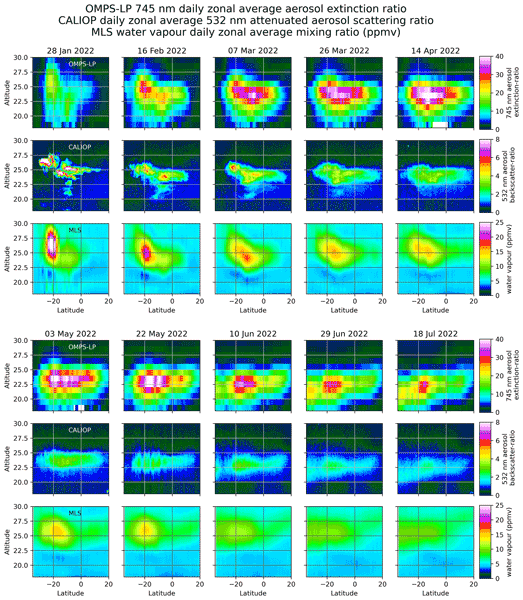
Bernard Legras, Clair Duchamp, Pasquale Sellitto, Aurélien Podglajen, Elisa Carboni, Richard Siddans, Jens-Uwe Grooß, Sergey Khaykin, and Felix Ploeger
Atmos. Chem. Phys., 22, 14957–14970, https://doi.org/10.5194/acp-22-14957-2022, https://doi.org/10.5194/acp-22-14957-2022, 2022
Short summary
Short summary
The long-duration atmospheric impact of the Tonga eruption in January 2022 is a plume of water and sulfate aerosols in the stratosphere that persisted for more than 6 months. We study this evolution using several satellite instruments and analyse the unusual behaviour of this plume as sulfates and water first moved down rapidly and then separated into two layers. We also report the self-organization in compact and long-lived patches.

Mathieu Lachatre, Sylvain Mailler, Laurent Menut, Arineh Cholakian, Pasquale Sellitto, Guillaume Siour, Henda Guermazi, Giuseppe Salerno, and Salvatore Giammanco
Atmos. Chem. Phys., 22, 13861–13879, https://doi.org/10.5194/acp-22-13861-2022, https://doi.org/10.5194/acp-22-13861-2022, 2022
Short summary
Short summary
In this study, we have evaluated the predominance of various pathways of volcanic SO2 conversion to sulfates in the upper troposphere. We show that the main conversion pathway was gaseous oxidation by OH, although the liquid pathways were expected to be predominant. These results are interesting with respect to a better understanding of sulfate formation in the middle and upper troposphere and are an important component to help evaluate particulate matter radiative forcing.
Pasquale Sellitto, Redha Belhadji, Corinna Kloss, and Bernard Legras
Atmos. Chem. Phys., 22, 9299–9311, https://doi.org/10.5194/acp-22-9299-2022, https://doi.org/10.5194/acp-22-9299-2022, 2022
Short summary
Short summary
As a consequence of extreme heat and drought, record-breaking wildfires ravaged south-eastern Australia during the fire season in 2019–2020. Fires injected a smoke plume very high up to the stratosphere, which dispersed quite quickly to the whole Southern Hemisphere and interacted with solar radiation, reflecting and absorbing part of it – thus producing impacts on the climate system. Here we estimate this impact on radiation and we study how it depends on the properties and ageing of the plume.
Sergey M. Khaykin, Elizabeth Moyer, Martina Krämer, Benjamin Clouser, Silvia Bucci, Bernard Legras, Alexey Lykov, Armin Afchine, Francesco Cairo, Ivan Formanyuk, Valentin Mitev, Renaud Matthey, Christian Rolf, Clare E. Singer, Nicole Spelten, Vasiliy Volkov, Vladimir Yushkov, and Fred Stroh
Atmos. Chem. Phys., 22, 3169–3189, https://doi.org/10.5194/acp-22-3169-2022, https://doi.org/10.5194/acp-22-3169-2022, 2022
Short summary
Short summary
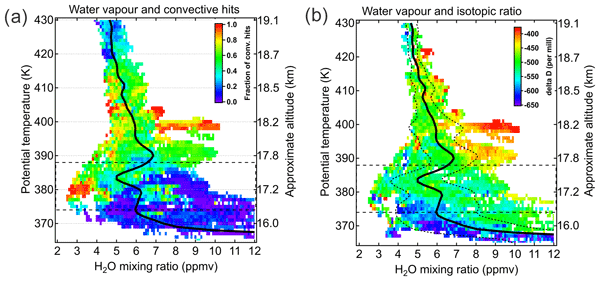
The Asian monsoon anticyclone is the key contributor to the global annual maximum in lower stratospheric water vapour. We investigate the impact of deep convection on the lower stratospheric water using a unique set of observations aboard the high-altitude M55-Geophysica aircraft deployed in Nepal in summer 2017 within the EU StratoClim project. We find that convective plumes of wet air can persist within the Asian anticyclone for weeks, thereby enhancing the occurrence of high-level clouds.

Gaëlle Dufour, Didier Hauglustaine, Yunjiang Zhang, Maxim Eremenko, Yann Cohen, Audrey Gaudel, Guillaume Siour, Mathieu Lachatre, Axel Bense, Bertrand Bessagnet, Juan Cuesta, Jerry Ziemke, Valérie Thouret, and Bo Zheng
Atmos. Chem. Phys., 21, 16001–16025, https://doi.org/10.5194/acp-21-16001-2021, https://doi.org/10.5194/acp-21-16001-2021, 2021
Short summary
Short summary
The IASI observations and the LMDZ-OR-INCA model simulations show negative ozone trends in the Central East China region in the lower free (3–6 km column) and the upper free (6–9 km column) troposphere. Sensitivity studies from the model show that the Chinese anthropogenic emissions contribute to more than 50 % in the trend. The reduction in NOx emissions that has occurred since 2013 in China seems to lead to a decrease in ozone in the free troposphere, contrary to the increase at the surface.
Cited articles
Ansmann, A., Ohneiser, K., Chudnovsky, A., Knopf, D. A., Eloranta, E. W., Villanueva, D., Seifert, P., Radenz, M., Barja, B., Zamorano, F., Jimenez, C., Engelmann, R., Baars, H., Griesche, H., Hofer, J., Althausen, D., and Wandinger, U.: Ozone depletion in the Arctic and Antarctic stratosphere induced by wildfire smoke, Atmos. Chem. Phys., 22, 11701–11726, https://doi.org/10.5194/acp-22-11701-2022, 2022.
Bernath, P., Boone, C., and Crouse, J.: Wildfire smoke destroys stratospheric ozone, Science 375, 1292–1295, https://doi.org/10.1126/science.abm5611, 2022.
Björklund, R., Vigouroux, C., Effertz, P., Garcia, O., Geddes, A., Hannigan, J., Miyagawa, K., Kotkamp, M., Langerock, B., Nedoluha, G., Ortega, I., Petropavlovskikh, I., Poyraz, D., Querel, R., Robinson, J., Shiona, H., Smale, D., Smale, P., Van Malderen, R., and De Mazière, M.: Intercomparison of long-term ground-based measurements of tropospheric and stratospheric ozone at Lauder, New Zealand (45S), EGUsphere [preprint], https://doi.org/10.5194/egusphere-2023-2668, 2023.
Clarisse, L., R'Honi, Y., Coheur, P.-F., Hurtmans, D., and Clerbaux, C.: Thermal infrared nadir observations of 24 atmospheric gases, Geophys. Res. Lett., 38, L10802, https://doi.org/10.1029/2011GL047271, 2011.
Clarisse, L., Coheur, P.-F., Prata, F., Hadji-Lazaro, J., Hurtmans, D., and Clerbaux, C.: A unified approach to infrared aerosol remote sensing and type specification, Atmos. Chem. Phys., 13, 2195–2221, https://doi.org/10.5194/acp-13-2195-2013, 2013.
Clerbaux, C., Hadji-Lazaro, J., Turquety, S., George, M., Coheur, P.-F., Hurtmans, D., Wespes, C., Herbin, H., Blumstein, D., Tourniers, B., and Phulpin, T.: The IASI/MetOp1 Mission: First observations and highlights of its potential contribution to GMES2, Space Res. Today, 168, 19–24, https://doi.org/10.1016/S0045-8732(07)80046-5, 2007.
Cunningham, C. X., Williamson, G. J., and Bowman, D. M. J. S.: Increasing frequency and intensity of the most extreme wildfires on Earth, Nat. Ecol. Evol., 8, 1420–1425, https://doi.org/10.1038/s41559-024-02452-2, 2024.
Davey, S. M. and Sarre, A.: Editorial: the 2019/20 Black Summer bushfires, Aust. For., 83, 47–51, https://doi.org/10.1080/00049158.2020.1769899, 2020.
Dowdy, A. J., Ye, H., Pepler, A., Thatcher, M., Osbrough, S. L., Evans, J. P., Di Virgilio, G., and McCarthy, N.: Future changes in extreme weather and pyroconvection risk factors for Australian wildfires, Sci. Rep., 9, 10073, https://doi.org/10.1038/s41598-019-46362-x, 2019.
Dufour, G., Eremenko, M., Griesfeller, A., Barret, B., LeFlochmoën, E., Clerbaux, C., Hadji-Lazaro, J., Coheur, P.-F., and Hurtmans, D.: Validation of three different scientific ozone products retrieved from IASI spectra using ozonesondes, Atmos. Meas. Tech., 5, 611–630, https://doi.org/10.5194/amt-5-611-2012, 2012.
Dufour, G., Eremenko, M., Beekmann, M., Cuesta, J., Foret, G., Fortems-Cheiney, A., Lachâtre, M., Lin, W., Liu, Y., Xu, X., and Zhang, Y.: Lower tropospheric ozone over the North China Plain: variability and trends revealed by IASI satellite observations for 2008–2016, Atmos. Chem. Phys., 18, 16439–16459, https://doi.org/10.5194/acp-18-16439-2018, 2018.
Eremenko, M., Dufour, G., Foret, G., Keim, C., Orphal, J., Beekmann, M., Bergametti, G., and Flaud, J.-M.: Tropospheric ozone distributions over Europe during the heat wave in July 2007 observed from infrared nadir spectra recorded by IASI, Geophys. Res. Lett., 35, 2008GL034803, https://doi.org/10.1029/2008GL034803, 2008.
FTIR Lauder: Column— multiple species, Profile – multiple species FTIR Spectrometer (Bruker 120M/120HR/125HR) at Lauder, New Zealand, Network for the Detection of Atmospheric Composition Change, https://ndacc.larc.nasa.gov/instruments/ftir-spectrometer/column-multiple-species-profile-multiple-species-ftir-spectrometer-2 (last access: 30 November 2025), 2025.
Garane, K., Koukouli, M.-E., Verhoelst, T., Lerot, C., Heue, K.-P., Fioletov, V., Balis, D., Bais, A., Bazureau, A., Dehn, A., Goutail, F., Granville, J., Griffin, D., Hubert, D., Keppens, A., Lambert, J.-C., Loyola, D., McLinden, C., Pazmino, A., Pommereau, J.-P., Redondas, A., Romahn, F., Valks, P., Van Roozendael, M., Xu, J., Zehner, C., Zerefos, C., and Zimmer, W.: TROPOMI/S5P total ozone column data: global ground-based validation and consistency with other satellite missions, Atmos. Meas. Tech., 12, 5263–5287, https://doi.org/10.5194/amt-12-5263-2019, 2019.
Goldberg, M. and Zhou, L.: The joint polar satellite system – Overview, instruments, proving ground and risk reduction activities, in: 2017 IEEE International Geoscience and Remote Sensing Symposium (IGARSS), 23–28 July 2017, Fort Worth, TX, USA, IEEE, 2776–2778, https://doi.org/10.1109/IGARSS.2017.8127573, ISBN 978-1-5090-4951-6, 2017.
Guermazi, H., Sellitto, P., Cuesta, J., Eremenko, M., Lachatre, M., Mailler, S., Carboni, E., Salerno, G., Caltabiano, T., Menut, L., Serbaji, M. M., Rekhiss, F., and Legras, B.: Quantitative Retrieval of Volcanic Sulphate Aerosols from IASI Observations, Remote Sensing, 13, 1808, https://doi.org/10.3390/rs13091808, 2021.
Hirsch, E. and Koren, I.: Record-breaking aerosol levels explained by smoke injection into the stratosphere, Science, 371, 1269–1274, https://doi.org/10.1126/science.abe1415, 2021.
Johnson, E. A. and Miyanishi, K.: Forest Fires: Behavior and Ecological Effects, Elsevier Science, https://doi.org/10.1016/B978-0-123-86660-8.X5000-4, 2001.
Kablick, G. P. III, Allen, D. R., Fromm, M. D., and Nedoluha, G. E.: Australian pyroCb smoke generates synoptic-scale stratospheric anticyclones, Geophysical Research Letters, 47, e2020GL088101, https://doi.org/10.1029/2020GL088101, 2020.
Khaykin, S., Legras, B., Bucci, S., Sellitto, P., Isaksen, L., Tencé, F., Bekki, S., Bourassa, A., Rieger, L., Zawada, D., Jumelet, J., and Godin-Beekmann, S.: The 2019/20 Australian wildfires generated a persistent smoke-charged vortex rising up to 35 km altitude, Commun. Earth Environ., 1, 22, https://doi.org/10.1038/s43247-020-00022-5, 2020.
Kloss, C., Sellitto, P., Von Hobe, M., Berthet, G., Smale, D., Krysztofiak, G., Xue, C., Qiu, C., Jégou, F., Ouerghemmi, I., and Legras, B.: Australian Fires 2019–2020: Tropospheric and Stratospheric Pollution Throughout the Whole Fire Season, Front. Environ. Sci., 9, 652024, https://doi.org/10.3389/fenvs.2021.652024, 2021.
Ohneiser, K., Ansmann, A., Kaifler, B., Chudnovsky, A., Barja, B., Knopf, D. A., Kaifler, N., Baars, H., Seifert, P., Villanueva, D., Jimenez, C., Radenz, M., Engelmann, R., Veselovskii, I., and Zamorano, F.: Australian wildfire smoke in the stratosphere: the decay phase in 2020/2021 and impact on ozone depletion, Atmos. Chem. Phys., 22, 7417–7442, https://doi.org/10.5194/acp-22-7417-2022, 2022.
OMPS-LP: OSIRIS Level 2 Data Products, University of Saskatchewan, https://research-groups.usask.ca/osiris/data-products.php#OSIRISLevel2DataProducts (last access: 30 November 2025), 2025.
Peterson, D. A., Fromm, M. D., and McRae, R. H. D.: Australia's Black Summer pyrocumulonimbus super outbreak reveals potential for increasingly extreme stratospheric smoke events, npj Clim. Atmos. Sci., 4, 38, https://doi.org/10.1038/s41612-021-00192-9, 2021.
Podglajen, A., Legras, B., Lapeyre, G., Plougonven, R., Zeitlin, V., Brémaud, V., and Sellitto, P.: Dynamics of diabatically forced anticyclonic plumes in the stratosphere, Q. J. R. Meteorol. Soc., 150, 1538–1565, https://doi.org/10.1002/qj.4658, 2024.
Rodgers, C. D.: Inverse Methods for Atmospheric Sounding: Theory and Practice, Series on Atmospheric, Oceanic and Planetary Physics, World Scientific, https://doi.org/10.1142/3171, 2000.
Sakai, T., Uchino, O., Nagai, T., Liley, B., Querel, R., Morino, I., Jin, Y., Fujimoto, T., Oikawa, E., and Oshima, N.: Stratospheric aerosol backscatter and depolarization ratio observed with ground-based lidar at Tsukuba, Japan, and Lauder, New Zealand, J. Geophys. Res. Atmos., 130, e2024JD041329, https://doi.org/10.1029/2024JD041329, 2025.
Sellitto, P., Belhadji, R., Kloss, C., and Legras, B.: Radiative impacts of the Australian bushfires 2019–2020 – Part 1: Large-scale radiative forcing, Atmos. Chem. Phys., 22, 9299–9311, https://doi.org/10.5194/acp-22-9299-2022, 2022.
Sellitto, P., Belhadji, R., Cuesta, J., Podglajen, A., and Legras, B.: Radiative impacts of the Australian bushfires 2019–2020 – Part 2: Large-scale and in-vortex radiative heating, Atmos. Chem. Phys., 23, 15523–15535, https://doi.org/10.5194/acp-23-15523-2023, 2023.
Solomon, S., Dube, K., Stone, K., Yu, P., Kinnison, D., Toon, O. B., Strahan, S. E., Rosenlof, K. H., Portmann, R., Davis, S., Randel, W., Bernath, P., Boone, C., Bardeen, C. G., Bourassa, A., Zawada, D., and Degenstein, D.: On the stratospheric chemistry of midlatitude wildfire smoke, Proc. Natl. Acad. Sci., 119, e2117325119, https://doi.org/10.1073/pnas.2117325119, 2022.
Stiller, G. P., von Clarmann, T., Dudhia, A., Echle, G., Funke, B., Glatthor, N., Hase, F., Höpfner, M., Kellmann, S., Kemnitzer, H., Kuntz, M., Linden, A., Linder, M., Stiller, G. P., and Zorn, S.: The Karlsruhe Optimized and Precise Radiative Transfer Algorithm (KOPRA), vol. FZKA 6487 of Wissenschaftliche Berichte, edited by: Stiller, G. P., Forschungszentrum Karlsruhe, Germany, https://books.google.fr/books/about/The_Karlsruhe_Optimized_and_Precise_Radi.html?id=hAqKHAAACAAJ&redir_esc=y (last access: 30 November 2025), 2000.
Taha, G., Loughman, R., Zhu, T., Thomason, L., Kar, J., Rieger, L., and Bourassa, A.: OMPS LP Version 2.0 multi-wavelength aerosol extinction coefficient retrieval algorithm, Atmos. Meas. Tech., 14, 1015–1036, https://doi.org/10.5194/amt-14-1015-2021, 2021.
TROPOMI: TROPOMI Level 2 Ozone (O3) Total Column Products in NRT – Sentinel-5P, EUMETSAT User Portal, https://user.eumetsat.int/catalogue/EO:EUM:DAT:0077/access (last access: 30 November 2025), 2025.
Veefkind, J. P., Aben, I., McMullan, K., Förster, H., de Vries, J., Otter, G., Claas, J., Eskes, H., de Haan, J., Kleipool, Q., van Weele, M., Hasekamp, O., Hoogeveen, R., Landgraf, J., Snel, R., Tol, P., Ingmann, P., Voors, R., Kruizinga, B., Vink, R., Visser, H., and Levelt, P.: TROPOMI on the ESA Sentinel-5 Precursor: A GMES mission for global observations of the atmospheric composition for climate, air quality and ozone layer applications, Remote Sens. Environ., 120, 70–83, https://doi.org/10.1016/j.rse.2011.09.027, 2012.
Yu, P., Davis, S. M., Toon, O. B., Portmann, R. W., Bardeen, C. G., Barnes, J. E., Telg, H., Maloney, C., and Rosenlof, K. H.: Persistent Stratospheric Warming Due to 2019–2020 Australian Wildfire Smoke, Geophys. Res. Lett., 48, https://doi.org/10.1029/2021GL092609, 2021.
Zawada, D. J., Rieger, L. A., Bourassa, A. E., and Degenstein, D. A.: Tomographic retrievals of ozone with the OMPS Limb Profiler: algorithm description and preliminary results, Atmos. Meas. Tech., 11, 2375–2393, https://doi.org/10.5194/amt-11-2375-2018, 2018.
Short summary
The 2019–2020 Australian wildfires triggered massive Pyro-cumulonimbus clouds, injecting smoke aerosols into the stratosphere and forming a self-sustaining vortex that reached 35 km altitude. This vortex created a transient ozone mini-hole. Using satellite and ground-based observations, we tracked a 30–40 % initial ozone depletion, which decayed to ~7 % within a month. These findings highlight the impact of extreme wildfires on stratospheric dynamics and ozone composition.
The 2019–2020 Australian wildfires triggered massive Pyro-cumulonimbus clouds, injecting smoke...


