Articles | Volume 18, issue 23
https://doi.org/10.5194/amt-18-7565-2025
© Author(s) 2025. This work is distributed under
the Creative Commons Attribution 4.0 License.
https://doi.org/10.5194/amt-18-7565-2025
© Author(s) 2025. This work is distributed under
the Creative Commons Attribution 4.0 License.
Retrievals of vertically resolved aerosol microphysical particle parameters with regularization from spaceborne Aerosol and Carbon dioxide Detection Lidar (ACDL)
Ziyu Bi
Wangzhijiang Innovation Center for Laser, Aerospace Laser Technology and System Department, Shanghai Institute of Optics and Fine Mechanics, Chinese Academy of Sciences, Shanghai 201800, China
Center of Materials Science and Optoelectronics Engineering, University of Chinese Academy of Sciences, Beijing 100049, China
Jianbo Hu
Wangzhijiang Innovation Center for Laser, Aerospace Laser Technology and System Department, Shanghai Institute of Optics and Fine Mechanics, Chinese Academy of Sciences, Shanghai 201800, China
Center of Materials Science and Optoelectronics Engineering, University of Chinese Academy of Sciences, Beijing 100049, China
Yuan Xie
Wangzhijiang Innovation Center for Laser, Aerospace Laser Technology and System Department, Shanghai Institute of Optics and Fine Mechanics, Chinese Academy of Sciences, Shanghai 201800, China
Shanghai Key Laboratory of All Solid-State Laser and Applied Techniques, Shanghai Institute of Optics and Fine Mechanics, Chinese Academy of Sciences, Shanghai 201800, China
Decang Bi
Wangzhijiang Innovation Center for Laser, Aerospace Laser Technology and System Department, Shanghai Institute of Optics and Fine Mechanics, Chinese Academy of Sciences, Shanghai 201800, China
Shanghai Key Laboratory of All Solid-State Laser and Applied Techniques, Shanghai Institute of Optics and Fine Mechanics, Chinese Academy of Sciences, Shanghai 201800, China
Center of Materials Science and Optoelectronics Engineering, University of Chinese Academy of Sciences, Beijing 100049, China
Xiaopeng Zhu
Wangzhijiang Innovation Center for Laser, Aerospace Laser Technology and System Department, Shanghai Institute of Optics and Fine Mechanics, Chinese Academy of Sciences, Shanghai 201800, China
Shanghai Key Laboratory of All Solid-State Laser and Applied Techniques, Shanghai Institute of Optics and Fine Mechanics, Chinese Academy of Sciences, Shanghai 201800, China
Center of Materials Science and Optoelectronics Engineering, University of Chinese Academy of Sciences, Beijing 100049, China
Jiqiao Liu
CORRESPONDING AUTHOR
Wangzhijiang Innovation Center for Laser, Aerospace Laser Technology and System Department, Shanghai Institute of Optics and Fine Mechanics, Chinese Academy of Sciences, Shanghai 201800, China
Shanghai Key Laboratory of All Solid-State Laser and Applied Techniques, Shanghai Institute of Optics and Fine Mechanics, Chinese Academy of Sciences, Shanghai 201800, China
Center of Materials Science and Optoelectronics Engineering, University of Chinese Academy of Sciences, Beijing 100049, China
Weibiao Chen
CORRESPONDING AUTHOR
Wangzhijiang Innovation Center for Laser, Aerospace Laser Technology and System Department, Shanghai Institute of Optics and Fine Mechanics, Chinese Academy of Sciences, Shanghai 201800, China
Shanghai Key Laboratory of All Solid-State Laser and Applied Techniques, Shanghai Institute of Optics and Fine Mechanics, Chinese Academy of Sciences, Shanghai 201800, China
Center of Materials Science and Optoelectronics Engineering, University of Chinese Academy of Sciences, Beijing 100049, China
Related authors
No articles found.
Xuanye Zhang, Hailong Yang, Lingbing Bu, Zengchang Fan, Wei Xiao, Binglong Chen, Lu Zhang, Sihan Liu, Zhongting Wang, Jiqiao Liu, Weibiao Chen, and Xuhui Lee
Atmos. Chem. Phys., 25, 6725–6740, https://doi.org/10.5194/acp-25-6725-2025, https://doi.org/10.5194/acp-25-6725-2025, 2025
Short summary
Short summary
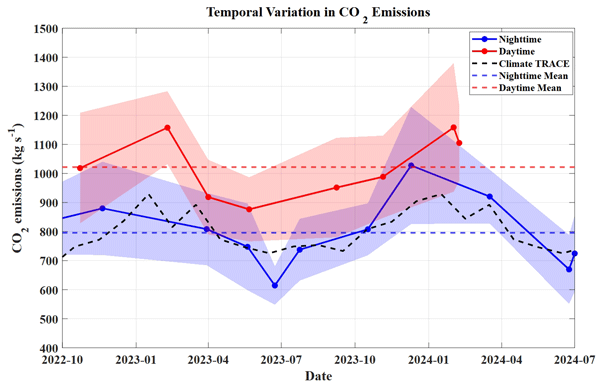
This study utilized the IPDA (integrated path differential absorption) lidar on board the DQ-1 satellite to monitor emissions from localized strong point sources and, for the first time, observed the diurnal variation in CO2 emissions from a high-latitude power plant. Overall, power plant CO2 emissions were largely consistent with local electricity consumption patterns, with most plants emitting less at night than during the day and with higher emissions in winter compared to spring and autumn.
Fanqian Meng, Junwu Tang, Guangyao Dai, Wenrui Long, Kangwen Sun, Zhiyu Zhang, Xiaoquan Song, Jiqiao Liu, Weibiao Chen, and Songhua Wu
Atmos. Meas. Tech., 18, 2021–2039, https://doi.org/10.5194/amt-18-2021-2025, https://doi.org/10.5194/amt-18-2021-2025, 2025
Short summary
Short summary
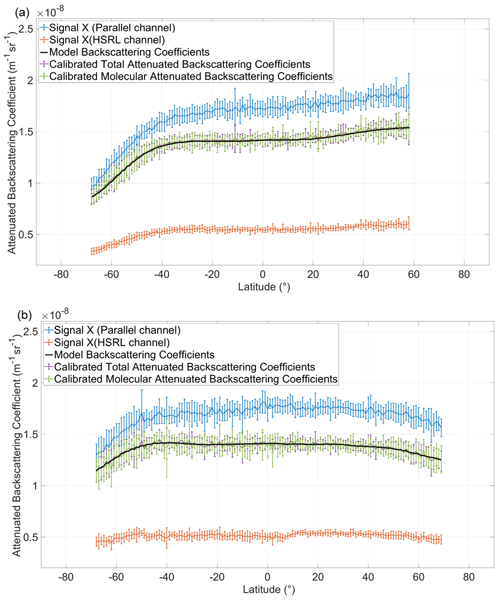
This paper presents a comprehensive calibration procedure for the first spaceborne high-spectral-resolution lidar with an iodine vapor absorption filter Aerosol and Carbon Detection Lidar (ACDL) on board DQ-1 by utilizing nighttime 532 nm multi-channel data. We analyzed the error sources of the multi-channel calibration coefficients and assessed the results. The results indicate that the uncertainty of the clear-air scattering ratio was within the anticipated range of 7.9 %.
Chenxing Zha, Lingbing Bu, Zhi Li, Qin Wang, Ahmad Mubarak, Pasindu Liyanage, Jiqiao Liu, and Weibiao Chen
Atmos. Meas. Tech., 17, 4425–4443, https://doi.org/10.5194/amt-17-4425-2024, https://doi.org/10.5194/amt-17-4425-2024, 2024
Short summary
Short summary
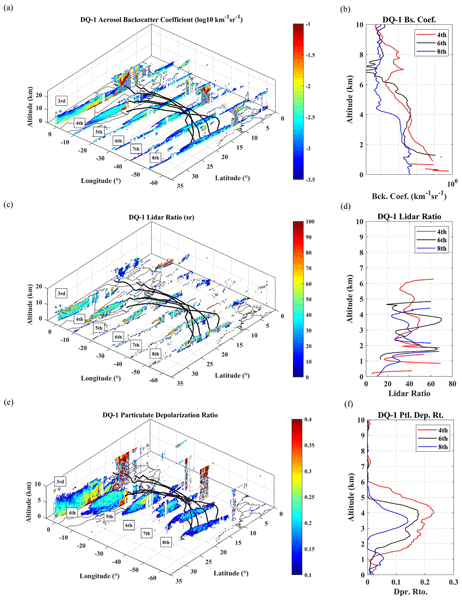
China has launched the atmospheric environment monitoring satellite DQ-1, which consists of an advanced lidar system. Our research presents a retrieval algorithm of the DQ-1 lidar system, and the retrieval results are consistent with other datasets. We also use the DQ-1 dataset to investigate dust and volcanic aerosols. This research shows that the DQ-1 lidar system can accurately measure the Earth's atmosphere and has potential for scientific applications.
Kangwen Sun, Guangyao Dai, Songhua Wu, Oliver Reitebuch, Holger Baars, Jiqiao Liu, and Suping Zhang
Atmos. Chem. Phys., 24, 4389–4409, https://doi.org/10.5194/acp-24-4389-2024, https://doi.org/10.5194/acp-24-4389-2024, 2024
Short summary
Short summary
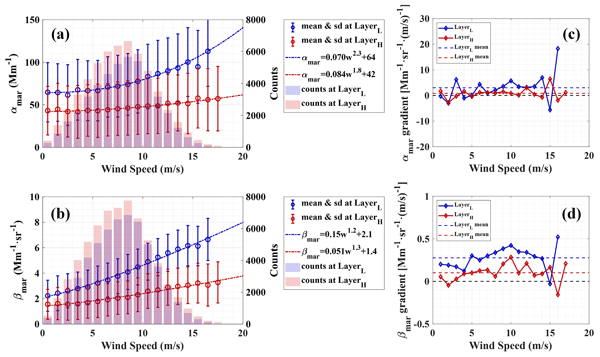
This paper investigates the correlation between marine aerosol optical properties and wind speeds over remote oceans using the spaceborne lidars ALADIN and CALIOP. Three remote ocean areas are selected. Pure marine aerosol optical properties at 355 nm are derived from ALADIN. The relationships between marine aerosol optical properties and wind speeds are analyzed within and above the marine atmospheric boundary layer, revealing the effect of wind speed on marine aerosols over remote oceans.
Guangyao Dai, Songhua Wu, Wenrui Long, Jiqiao Liu, Yuan Xie, Kangwen Sun, Fanqian Meng, Xiaoquan Song, Zhongwei Huang, and Weibiao Chen
Atmos. Meas. Tech., 17, 1879–1890, https://doi.org/10.5194/amt-17-1879-2024, https://doi.org/10.5194/amt-17-1879-2024, 2024
Short summary
Short summary
An overview is given of the main algorithms applied to derive the aerosol and cloud optical property product of the Aerosol and Carbon Detection Lidar (ACDL), which is capable of globally profiling aerosol and cloud optical properties with high accuracy. The paper demonstrates the observational capabilities of ACDL for aerosol and cloud vertical structure and global distribution through two optical property product measurement cases and global aerosol optical depth profile observations.
Qiantao Liu, Zhongwei Huang, Jiqiao Liu, Weibiao Chen, Qingqing Dong, Songhua Wu, Guangyao Dai, Meishi Li, Wuren Li, Ze Li, Xiaodong Song, and Yuan Xie
Atmos. Meas. Tech., 17, 1403–1417, https://doi.org/10.5194/amt-17-1403-2024, https://doi.org/10.5194/amt-17-1403-2024, 2024
Short summary
Short summary
The achieved results revealed that the ACDL observations were in good agreement with the ground-based lidar measurements during dust events. The heights of cloud top and bottom from these two measurements were well matched and comparable. This study proves that the ACDL provides reliable observations of aerosol and cloud in the presence of various climatic conditions, which helps to further evaluate the impacts of aerosol on climate and the environment, as well as on the ecosystem in the future.
Fanqian Meng, Junwu Tang, Guangyao Dai, Wenrui Long, Kangwen Sun, Zhiyu Zhang, Xiaoquan Song, Jiqiao Liu, Weibiao Chen, and Songhua Wu
EGUsphere, https://doi.org/10.5194/egusphere-2024-588, https://doi.org/10.5194/egusphere-2024-588, 2024
Preprint archived
Short summary
Short summary
This paper presents a comprehensive calibration procedure for the first spaceborne high-spectral-resolution lidar with an iodine vapor absorption filter ACDL on board DQ-1 by utilizing nighttime 532 nm multi-channel data. And analyzed the error sources of the multi-channel calibration coefficients and assessed the results. The results shows that the ACDL polarization channel calibration is reliable and operates within the expected error range of approximately 5 %.
Qin Wang, Farhan Mustafa, Lingbing Bu, Shouzheng Zhu, Jiqiao Liu, and Weibiao Chen
Atmos. Meas. Tech., 14, 6601–6617, https://doi.org/10.5194/amt-14-6601-2021, https://doi.org/10.5194/amt-14-6601-2021, 2021
Short summary
Short summary
In this work, an airborne experiment was carried out to validate a newly developed CO2 monitoring IPDA lidar against the in situ measurements obtained from a commercial CO2 monitoring instrument installed on an aircraft. The XCO2 values calculated with the IPDA lidar measurements were compared with the dry-air CO2 mole fraction measurements obtained from the in situ instruments, and the results showed a good agreement between the two datasets.
Cited articles
Amiridis, V., Marinou, E., Tsekeri, A., Wandinger, U., Schwarz, A., Giannakaki, E., Mamouri, R., Kokkalis, P., Binietoglou, I., Solomos, S., Herekakis, T., Kazadzis, S., Gerasopoulos, E., Proestakis, E., Kottas, M., Balis, D., Papayannis, A., Kontoes, C., Kourtidis, K., Papagiannopoulos, N., Mona, L., Pappalardo, G., Le Rille, O., and Ansmann, A.: LIVAS: a 3-D multi-wavelength aerosol/cloud database based on CALIPSO and EARLINET, Atmos. Chem. Phys., 15, 7127–7153, https://doi.org/10.5194/acp-15-7127-2015, 2015.
Ansmann, A., Ohneiser, K., Mamouri, R.-E., Knopf, D. A., Veselovskii, I., Baars, H., Engelmann, R., Foth, A., Jimenez, C., Seifert, P., and Barja, B.: Tropospheric and stratospheric wildfire smoke profiling with lidar: mass, surface area, CCN, and INP retrieval, Atmos. Chem. Phys., 21, 9779–9807, https://doi.org/10.5194/acp-21-9779-2021, 2021.
Chen, W., Liu, J., Hou, X., Zang, H., Ma, X., Wan, Y., and Zhu, X.: Lidar Technology for Atmosphere Environment Monitoring Satellite, Aerospace Shangha (Chinese and English), 40, 13, https://doi.org/10.19328/j.cnki.2096-8655.2023.03.002, 2023.
Chen, W. B., Liu, J. Q., Hou, X., Zang, H. G., Wan, Y., Zhu, X. P., Ma, X. H., Chen, D. J., and Li, R.: Spaceborne Aerosol and Carbon Dioxide Detection Lidar (ACDL) Status and Progress, 3rd International Workshop on Space-Based Lidar Remote Sensing Techniques and Emerging Technologies, Greece, 18–23 June, WOS:001265236100009, 97–107, https://doi.org/10.1007/978-3-031-53618-2_9, 2024.
Dai, G., Wu, S., Long, W., Liu, J., Xie, Y., Sun, K., Meng, F., Song, X., Huang, Z., and Chen, W.: Aerosol and cloud data processing and optical property retrieval algorithms for the spaceborne ACDL/DQ-1, Atmos. Meas. Tech., 17, 1879–1890, https://doi.org/10.5194/amt-17-1879-2024, 2024.
Di, H., Wang, Q., Hua, H., Li, S., Yan, Q., Liu, J., Song, Y., and Hua, D.: Aerosol Microphysical Particle Parameter Inversion and Error Analysis Based on Remote Sensing Data, Remote Sensing, 10, 1753, https://doi.org/10.3390/rs10111753, 2018.
Dong, J., Liu, J., Bi, D., Ma, X., Zhu, X., Zhu, X., and Chen, W.: Optimal iodine absorption line applied for spaceborne high spectral resolution lidar, Appl. Optics, 57, 5413–5419, https://doi.org/10.1364/AO.57.005413, 2018.
Donovan, D. P. and Carswell, A. I.: Principal component analysis applied to multiwavelength lidar aerosol backscatter and extinction measurements, Appl. Optics, 36, 9406–9424, https://doi.org/10.1364/AO.36.009406, 1997.
Dubovik, O., Holben, B., Eck, T. F., Smirnov, A., Kaufman, Y. J., King, M. D., Tanré, D., and Slutsker, I.: Variability of Absorption and Optical Properties of Key Aerosol Types Observed in Worldwide Locations, J. Atmos. Sci., 59, 590–608, https://doi.org/10.1175/1520-0469(2002)059<0590:VOAAOP>2.0.CO;2, 2002.
Fan, C., Chen, C., Liu, J., Xie, Y., Li, K., Zhu, X., Zhang, L., Cao, X., Han, G., Huang, Y., Gu, Q., and Chen, W.: Preliminary analysis of global column-averaged CO2 concentration data from the spaceborne aerosol and carbon dioxide detection lidar onboard AEMS, Opt. Express, 32, 21870–21886, https://doi.org/10.1364/OE.517736, 2024.
Giles, D. M., Sinyuk, A., Sorokin, M. G., Schafer, J. S., Smirnov, A., Slutsker, I., Eck, T. F., Holben, B. N., Lewis, J. R., Campbell, J. R., Welton, E. J., Korkin, S. V., and Lyapustin, A. I.: Advancements in the Aerosol Robotic Network (AERONET) Version 3 database – automated near-real-time quality control algorithm with improved cloud screening for Sun photometer aerosol optical depth (AOD) measurements, Atmos. Meas. Tech., 12, 169–209, https://doi.org/10.5194/amt-12-169-2019, 2019.
Haarig, M., Ansmann, A., Gasteiger, J., Kandler, K., Althausen, D., Baars, H., Radenz, M., and Farrell, D. A.: Dry versus wet marine particle optical properties: RH dependence of depolarization ratio, backscatter, and extinction from multiwavelength lidar measurements during SALTRACE, Atmos. Chem. Phys., 17, 14199–14217, https://doi.org/10.5194/acp-17-14199-2017, 2017.
Hu, J., Wang, X., Zhao, S., Wang, Z., Yang, J., Dai, G., Xie, Y., Zhu, X., Liu, D., Hou, X., Liu, J., and Chen, W.: Spaceborne High Spectral Resolution Lidar for Atmospheric Aerosols and Clouds Profiles Measurement, Acta Optica Sinica, 43, 1899901, https://doi.org/10.3788/AOS231437, 2023.
Hu, Q., Wang, H., Goloub, P., Li, Z., Veselovskii, I., Podvin, T., Li, K., and Korenskiy, M.: The characterization of Taklamakan dust properties using a multiwavelength Raman polarization lidar in Kashi, China, Atmos. Chem. Phys., 20, 13817–13834, https://doi.org/10.5194/acp-20-13817-2020, 2020.
Hunt, W. H., Winker, D. M., Vaughan, M. A., Powell, K. A., Lucker, P. L., and Weimer, C.: CALIPSO Lidar Description and Performance Assessment, J. Atmos. Ocean. Tech., 26, 1214–1228, https://doi.org/10.1175/2009JTECHA1223.1, 2009.
IPCC: Climate change 2007: Synthesis Report. Contribution of Working Group I, II and III to the Fourth Assessment Report of the Intergovernmental Panel on Climate Change, IPCC, Geneva, Switzerland, 104 pp., ISBN 92-9169-122-4, 2007.
IPCC: Climate Change 2013: The Physical Science Basis. Contribution of Working Group I to the Fifth Assessment Report of the Intergovernmental Panel on Climate Change, Cambridge University Press, Cambridge, United Kingdom and New York, NY, USA, 1535 pp., ISBN 978-1-107-05799-1, 2013.
Jain, P., Barber, Q. E., Taylor, S. W., Whitman, E., Castellanos Acuna, D., Boulanger, Y., Chavardès, R. D., Chen, J., Englefield, P., Flannigan, M., Girardin, M. P., Hanes, C. C., Little, J., Morrison, K., Skakun, R. S., Thompson, D. K., Wang, X., and Parisien, M.-A.: Drivers and Impacts of the Record-Breaking 2023 Wildfire Season in Canada, Nat. Commun., 15, 6764, https://doi.org/10.1038/s41467-024-51154-7, 2024.
Kim, M.-H., Omar, A. H., Tackett, J. L., Vaughan, M. A., Winker, D. M., Trepte, C. R., Hu, Y., Liu, Z., Poole, L. R., Pitts, M. C., Kar, J., and Magill, B. E.: The CALIPSO version 4 automated aerosol classification and lidar ratio selection algorithm, Atmos. Meas. Tech., 11, 6107–6135, https://doi.org/10.5194/amt-11-6107-2018, 2018.
Kolgotin, A., Müller, D., Korenskiy, M., and Veselovskii, I.: ORACLES Campaign, September 2016: Inversion of HSRL-2 Observations with Regularization Algorithm into Particle Microphysical Parameters and Comparison to Airborne In-Situ Data, Atmosphere, 14, 1661, https://doi.org/10.3390/atmos14111661, 2023.
Li, S. W., Di, H. G., Zhang, X. Q., Xin, W. H., Zeng, N., Ma, H., Li, Y., and Hua, D. X.: Retrieval of aerosol microphysical parameters based on a few optical parameters from lidar, Microw. Opt. Techn. Let., 65, 1065–1072, https://doi.org/10.1002/mop.33131, 2023.
Liu, Q., Huang, Z., Liu, J., Chen, W., Dong, Q., Wu, S., Dai, G., Li, M., Li, W., Li, Z., Song, X., and Xie, Y.: Validation of initial observation from the first spaceborne high-spectral-resolution lidar with a ground-based lidar network, Atmos. Meas. Tech., 17, 1403–1417, https://doi.org/10.5194/amt-17-1403-2024, 2024.
Liu, Z., Hunt, W., Vaughan, M., Hostetler, C., McGill, M., Powell, K., Winker, D., and Hu, Y.: Estimating random errors due to shot noise in backscatter lidar observations, Appl. Optics, 45, 4437–4447, https://doi.org/10.1364/AO.45.004437, 2006.
Mao, J., Zhang, J., and Wang, M.: Summary comment on research of atmospheric aerosl in China, Acta Meteorol. Sin., 60, 625–634, 2002.
Müller, D., Wandinger, U., and Ansmann, A.: Microphysical particle parameters from extinction and backscatter lidar data by inversion with regularization: theory, Appl. Optics, 38, 2346–2357, https://doi.org/10.1364/AO.38.002346, 1999.
Müller, D., Chemyakin, E., Kolgotin, A., Ferrare, R. A., Hostetler, C. A., and Romanov, A.: Automated, unsupervised inversion of multiwavelength lidar data with TiARA: assessment of retrieval performance of microphysical parameters using simulated data, Appl. Optics, 58, 4981–5008, https://doi.org/10.1364/AO.58.004981, 2019.
Omar, A. H., Won, J.-G., Winker, D. M., Yoon, S.-C., Dubovik, O., and McCormick, M. P.: Development of global aerosol models using cluster analysis of Aerosol Robotic Network (AERONET) measurements, J. Geophys. Res., 110, D10S14, https://doi.org/10.1029/2004JD004874, 2005.
Omar, A. H., Winker, D. M., Vaughan, M. A., Hu, Y., Trepte, C. R., Ferrare, R. A., Lee, K.-P., Hostetler, C. A., Kittaka, C., Rogers, R. R., Kuehn, R. E., and Liu, Z.: The CALIPSO Automated Aerosol Classification and Lidar Ratio Selection Algorithm, J. Atmos. Ocean. Tech., 26, 1994–2014, https://doi.org/10.1175/2009JTECHA1231.1, 2009.
Patel, P. N., Jiang, J. H., Gautam, R., Gadhavi, H., Kalashnikova, O., Garay, M. J., Gao, L., Xu, F., and Omar, A.: A remote sensing algorithm for vertically resolved cloud condensation nuclei number concentrations from airborne and spaceborne lidar observations, Atmos. Chem. Phys., 24, 2861–2883, https://doi.org/10.5194/acp-24-2861-2024, 2024.
Pérez-Ramírez, D., Whiteman, D. N., Veselovskii, I., Kolgotin, A., Korenskiy, M., and Alados-Arboledas, L.: Effects of systematic and random errors on the retrieval of particle microphysical properties from multiwavelength lidar measurements using inversion with regularization, Atmos. Meas. Tech., 6, 3039–3054, https://doi.org/10.5194/amt-6-3039-2013, 2013.
Pérez-Ramírez, D., Whiteman, D. N., Veselovskii, I., Colarco, P., Korenski, M., and da Silva, A.: Retrievals of aerosol single scattering albedo by multiwavelength lidar measurements: Evaluations with NASA Langley HSRL-2 during discover-AQ field campaigns, Remote Sens. Environ., 222, 144–164, https://doi.org/10.1016/j.rse.2018.12.022, 2019.
Pérez-Ramírez, D., Whiteman, D. N., Veselovskii, I., Korenski, M., Colarco, P. R., and da Silva, A. M.: Optimized profile retrievals of aerosol microphysical properties from simulated spaceborne multiwavelength Lidar, J. Quant. Spectrosc. Ra., 246, https://doi.org/10.1016/j.jqsrt.2020.106932, 2020.
Pérez-Ramírez, D., Whiteman, D. N., Veselovskii, I., Ferrare, R., Titos, G., Granados-Muñoz, M. J., Sánchez-Hernández, G., and Navas-Guzmán, F.: Spatiotemporal changes in aerosol properties by hygroscopic growth and impacts on radiative forcing and heating rates during DISCOVER-AQ 2011, Atmos. Chem. Phys., 21, 12021–12048, https://doi.org/10.5194/acp-21-12021-2021, 2021.
Proestakis, E., Gkikas, A., Georgiou, T., Kampouri, A., Drakaki, E., Ryder, C. L., Marenco, F., Marinou, E., and Amiridis, V.: A near-global multiyear climate data record of the fine-mode and coarse-mode components of atmospheric pure dust, Atmos. Meas. Tech., 17, 3625–3667, https://doi.org/10.5194/amt-17-3625-2024, 2024.
Veselovskii, I., Kolgotin, A., Griaznov, V., Müller, D., Franke, K., and Whiteman, D. N.: Inversion of multiwavelength Raman lidar data for retrieval of bimodal aerosol size distribution, Appl. Optics, 43, 1180–1195, https://doi.org/10.1364/AO.43.001180, 2004.
Veselovskii, I., Kolgotin, A., Griaznov, V., Müller, D., Wandinger, U., and Whiteman, D. N.: Inversion with regularization for the retrieval of tropospheric aerosol parameters from multiwavelength lidar sounding, Appl. Optics, 41, 3685–3699, https://doi.org/10.1364/AO.41.003685, 2002.
Veselovskii, I., Dubovik, O., Kolgotin, A., Korenskiy, M., Whiteman, D. N., Allakhverdiev, K., and Huseyinoglu, F.: Linear estimation of particle bulk parameters from multi-wavelength lidar measurements, Atmos. Meas. Tech., 5, 1135–1145, https://doi.org/10.5194/amt-5-1135-2012, 2012.
Veselovskii, I., Dubovik, O., Kolgotin, A., Lapyonok, T., Di Girolamo, P., Summa, D., Whiteman, D. N., Mishchenko, M., and Tanré, D.: Application of randomly oriented spheroids for retrieval of dust particle parameters from multiwavelength lidar measurements, J. Geophys. Res., 115, D21203, https://doi.org/10.1029/2010JD014139, 2010.
Veselovskii, I., Whiteman, D. N., Korenskiy, M., Suvorina, A., Kolgotin, A., Lyapustin, A., Wang, Y., Chin, M., Bian, H., Kucsera, T. L., Pérez-Ramírez, D., and Holben, B.: Characterization of forest fire smoke event near Washington, DC in summer 2013 with multi-wavelength lidar, Atmos. Chem. Phys., 15, 1647–1660, https://doi.org/10.5194/acp-15-1647-2015, 2015.
Veselovskii, I., Goloub, P., Podvin, T., Bovchaliuk, V., Derimian, Y., Augustin, P., Fourmentin, M., Tanre, D., Korenskiy, M., Whiteman, D. N., Diallo, A., Ndiaye, T., Kolgotin, A., and Dubovik, O.: Retrieval of optical and physical properties of African dust from multiwavelength Raman lidar measurements during the SHADOW campaign in Senegal, Atmos. Chem. Phys., 16, 7013–7028, https://doi.org/10.5194/acp-16-7013-2016, 2016.
Wang, N., Xiao, D., Veselovskii, I., Wang, Y., Russell, L. M., Zhao, C., Guo, J., Li, C., Gross, S., Liu, X., Ni, X., Tan, L., Liu, Y., Zhang, K., Tong, Y., Wu, L., Chen, F., Wang, B., Liu, C., Chen, W., and Liu, D.: This is FAST: multivariate Full-permutAtion based Stochastic foresT method–improving the retrieval of fine-mode aerosol microphysical properties with multi-wavelength lidar, Remote Sens. Environ., 280, 113226, https://doi.org/10.1016/j.rse.2022.113226, 2022.
Whiteman, D. N., Pérez-Ramírez, D., Veselovskii, I., Colarco, P., and Buchard, V.: Retrievals of aerosol microphysics from simulations of spaceborne multiwavelength lidar measurements, J. Quant. Spectrosc. Ra., 205, 27–39, https://doi.org/10.1016/j.jqsrt.2017.09.009, 2018.
Winker, D. M., Vaughan, M. A., Omar, A., Hu, Y., Powell, K. A., Liu, Z., Hunt, W. H., and Young, S. A.: Overview of the CALIPSO Mission and CALIOP Data Processing Algorithms, J. Atmos. Ocean. Tech., 26, 2310–2323, https://doi.org/10.1175/2009JTECHA1281.1, 2009.
Yan, Q., Di, H., Zhao, J., Wen, X., Wang, Y., Song, Y., and Hua, D.: Improved algorithm of aerosol particle size distribution based on remote sensing data, Appl. Optics, 58, 8075–8082, https://doi.org/10.1364/ao.58.008075, 2019.
Zhu, Y., Yang, J., Zhang, X., Liu, J., Zhu, X., Zang, H., Xia, T., Fan, C., Chen, X., Sun, Y., Hou, X., and Chen, W.: Performance Improvement of Spaceborne Carbon Dioxide Detection IPDA LIDAR Using Linearty Optimized Amplifier of Photo-Detector, Remote Sens., 13, 2007, https://doi.org/10.3390/rs13102007, 2021.

Short summary
We developed an improved method to estimate the size and amount of aerosol particles using measurements from the world’s first spaceborne high spectral resolution lidar. Tests with different aerosol types show that the method can provide reliable results and improve the description of larger particles. This work demonstrates the potential of future satellite observations to deliver a clearer picture of global air pollution and its role in climate.
We developed an improved method to estimate the size and amount of aerosol particles using...