
Articles | Volume 19, issue 3
https://doi.org/10.5194/amt-19-1059-2026
© Author(s) 2026. This work is distributed under
the Creative Commons Attribution 4.0 License.
the Creative Commons Attribution 4.0 License.
https://doi.org/10.5194/amt-19-1059-2026
© Author(s) 2026. This work is distributed under
the Creative Commons Attribution 4.0 License.
the Creative Commons Attribution 4.0 License.
Research article
| 
16 Feb 2026
Research article |
| 16 Feb 2026
| 16 Feb 2026
Improved estimation of diurnal variations in near-global PBLH through a hybrid WCT and transfer learning approach
Yarong Li
College of Earth and Environmental Sciences, Lanzhou University, Lanzhou, China
State Key Laboratory of Severe Weaher Meteorological Science and Technology, Chinese Academy of Meteorological Sciences, Beijing, China
Zeyang Liu
College of Electronic and Information Engineering, West Anhui University, Lu'an, China
Jianjun He
CORRESPONDING AUTHOR

State Key Laboratory of Severe Weaher Meteorological Science and Technology, Chinese Academy of Meteorological Sciences, Beijing, China
Related authors
Yarong Li and Jianjun He
EGUsphere, https://doi.org/10.5194/egusphere-2026-4593, https://doi.org/10.5194/egusphere-2026-4593, 2026
This preprint is open for discussion and under review for Geoscientific Model Development (GMD).
Short summary
Short summary
We develop coupled WRF-CLM5 (Weather Research and Forecasting-Community Land Model, version 5) model to improve carbon-nitrogen interactions. Experiments show WRF-CLM5 reduces gross/net primary production overestimation significantly. Nitrogen uptake is dominated by active/symbiotic pathways. Enhanced carbon-nitrogen representation improves latent heat but compromises sensible heat simulation. The model advances regional climate modeling, but needs better initialization and calibration.
Yarong Li and Jianjun He
EGUsphere, https://doi.org/10.5194/egusphere-2026-4593, https://doi.org/10.5194/egusphere-2026-4593, 2026
This preprint is open for discussion and under review for Geoscientific Model Development (GMD).
Short summary
Short summary
We develop coupled WRF-CLM5 (Weather Research and Forecasting-Community Land Model, version 5) model to improve carbon-nitrogen interactions. Experiments show WRF-CLM5 reduces gross/net primary production overestimation significantly. Nitrogen uptake is dominated by active/symbiotic pathways. Enhanced carbon-nitrogen representation improves latent heat but compromises sensible heat simulation. The model advances regional climate modeling, but needs better initialization and calibration.
Suping Zhao, Shaofeng Qi, Jianjun He, Ye Yu, Longxiang Dong, Tong Zhang, Guo Zhao, and Yiting Lv
EGUsphere, https://doi.org/10.5194/egusphere-2025-3130, https://doi.org/10.5194/egusphere-2025-3130, 2025
Preprint archived
Short summary
Short summary
Upper-air secondary pollutants can downward invade to PBL by strong turbulence at the sloped terrain. The results are helpful for understanding formation mechanism of heavy air pollution at the complex terrain, and then taking the targeted countermeasures.
Huan Zhang, Sunling Gong, Lei Zhang, Jingwei Ni, Jianjun He, Yaqiang Wang, Xu Wang, Lixin Shi, Jingyue Mo, Huabing Ke, and Shuhua Lu
Atmos. Chem. Phys., 22, 2221–2236, https://doi.org/10.5194/acp-22-2221-2022, https://doi.org/10.5194/acp-22-2221-2022, 2022
Short summary
Short summary
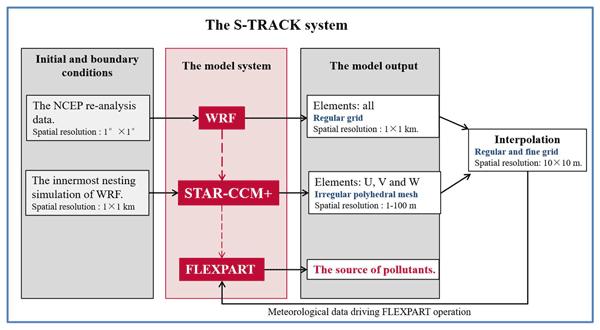
This study established a multi-model simulation system for street-level circulation and pollutant tracking and applied to real building scenarios and atmospheric conditions. Results showed that for a particular site the potential contribution ratio varies with the height of the site, with a peak not at the ground but at a certain height. This work is of significance for urban planning and improvement of urban air quality.
Cited articles
Altmann, A., Toloşi, L., Sander, O., and Lengauer, T.: Permutation importance: a corrected feature importance measure, Bioinformatics, 26, 1340–1347, 2010.
Breiman, L.: Random Forests, Mach. Learn., 45, 5–32, https://doi.org/10.1023/A:1010933404324, 2001.
Che, H., Gui, K., Xia, X., Wang, Y., Holben, B. N., Goloub, P., Cuevas-Agulló, E., Wang, H., Zheng, Y., Zhao, H., and Zhang, X.: Large contribution of meteorological factors to inter-decadal changes in regional aerosol optical depth, Atmos. Chem. Phys., 19, 10497–10523, https://doi.org/10.5194/acp-19-10497-2019, 2019.
Chen, S., Tong, B., Russell, L. M., Wei, J., Guo, J., Mao, F., Li, Z., and Deng, Z.: Lidar-based daytime boundary layer height variation and impact on the regional satellite-based PM2.5 estimate, Remote Sens. Environ., 281, 113243, https://doi.org/10.1016/j.rse.2022.113243, 2022.
Davy, R. and Esau, I.: Differences in the efficacy of climate forcings explained by variations in atmospheric boundary layer depth, Nat. Commun., 7, 11690, https://doi.org/10.1038/ncomms11690, 2016.
de Arruda Moreira, G., Sánchez-Hernández, G., Guerrero-Rascado, J. L., Cazorla, A., and Alados-Arboledas, L.: Estimating the urban atmospheric boundary layer height from remote sensing applying machine learning techniques, Atmos. Res., 266, 105962, https://doi.org/10.1016/j.atmosres.2021.105962, 2022.
Ding, A. J., Fu, C. B., Yang, X. Q., Sun, J. N., Petäjä, T., Kerminen, V.-M., Wang, T., Xie, Y., Herrmann, E., Zheng, L. F., Nie, W., Liu, Q., Wei, X. L., and Kulmala, M.: Intense atmospheric pollution modifies weather: a case of mixed biomass burning with fossil fuel combustion pollution in eastern China, Atmos. Chem. Phys., 13, 10545–10554, https://doi.org/10.5194/acp-13-10545-2013, 2013.
Durre, I. and Yin, X.: Enhanced radiosonde data for studies of vertical structure, Bull. Am. Meteorol. Soc., 89, 1257–1262, 2008.
Gamage, N. and Hagelberg, C.: Detection and Analysis of Microfronts and Associated Coherent Events Using Localized Transforms, J. Atmos. Sci., 50, 750–756, https://doi.org/10.1175/1520-0469(1993)050<0750:DAAOMA>2.0.CO;2, 1993.
Garratt, J. R.: Review: the atmospheric boundary layer, Earth-Sci. Rev., 37, 89–134, https://doi.org/10.1016/0012-8252(94)90026-4, 1994.
Gelaro, R., McCarty, W., Suárez, M. J., Todling, R., Molod, A., Takacs, L., Randles, C. A., Darmenov, A., Bosilovich, M. G., Reichle, R., Wargan, K., Coy, L., Cullather, R., Draper, C., Akella, S., Buchard, V., Conaty, A., da Silva, A. M., Gu, W., Kim, G.-K., Koster, R., Lucchesi, R., Merkova, D., Nielsen, J. E., Partyka, G., Pawson, S., Putman, W., Rienecker, M., Schubert, S. D., Sienkiewicz, M., and Zhao, B.: The Modern-Era Retrospective Analysis for Research and Applications, Version 2 (MERRA-2), J. Climate, 30, 5419–5454, https://doi.org/10.1175/JCLI-D-16-0758.1, 2017.
Guo, J., Zhang, J., Yang, K., Liao, H., Zhang, S., Huang, K., Lv, Y., Shao, J., Yu, T., Tong, B., Li, J., Su, T., Yim, S. H. L., Stoffelen, A., Zhai, P., and Xu, X.: Investigation of near-global daytime boundary layer height using high-resolution radiosondes: first results and comparison with ERA5, MERRA-2, JRA-55, and NCEP-2 reanalyses, Atmos. Chem. Phys., 21, 17079–17097, https://doi.org/10.5194/acp-21-17079-2021, 2021.
Guo, J., Zhang, J., Shao, J., Chen, T., Bai, K., Sun, Y., Li, N., Wu, J., Li, R., Li, J., Guo, Q., Cohen, J. B., Zhai, P., Xu, X., and Hu, F.: A merged continental planetary boundary layer height dataset based on high-resolution radiosonde measurements, ERA5 reanalysis, and GLDAS, Earth Syst. Sci. Data, 16, 1–14, https://doi.org/10.5194/essd-16-1-2024, 2024.
He, K., Zhang, X., Ren, S., and Sun, J.: Deep Residual Learning for Image Recognition, in: 2016 IEEE Conference on Computer Vision and Pattern Recognition (CVPR), Las Vegas, NV, USA, 770–778, https://doi.org/10.1109/CVPR.2016.90, 2016.
Hersbach, H., Bell, B., Berrisford, P., Biavati, G., Horányi, A., Muñoz Sabater, J., Nicolas, J., Peubey, C., Radu, R., Rozum, I., Schepers, D., Simmons, A., Soci, C., Dee, D., and Thépaut, J.-N.: ERA5 hourly data on single levels from 1940 to present, Copernicus Climate Change Service (C3S) Climate Data Store (CDS) [data set], https://doi.org/10.24381/cds.adbb2d47, 2023.
Holtslag, A. A. M., Svensson, G., Baas, P., Basu, S., Beare, B., Beljaars, A. C. M., Bosveld, F. C., Cuxart, J., Lindvall, J., Steeneveld, G. J., Tjernström, M., and Van De Wiel, B. J. H.: Stable Atmospheric Boundary Layers and Diurnal Cycles: Challenges for Weather and Climate Models, Bull. Am. Meteorol. Soc., 94, 1691–1706, https://doi.org/10.1175/BAMS-D-11-00187.1, 2013.
Huang, X., Wang, Y., Shang, Y., Song, X., Zhang, R., Wang, Y., and Liu, C.: Contrasting the effect of aerosol properties on the planetary boundary layer height in Beijing and Nanjing, Atmos. Environ., 308, 119861, https://doi.org/10.1016/j.atmosenv.2023.119861, 2023.
Jordan, N. S., Hoff, R. M., and Bacmeister, J. T.: Validation of Goddard Earth Observing System version 5 MERRA planetary boundary layer heights using CALIPSO, J. Geophys. Res. Atmos., 115, D24217, https://doi.org/10.1029/2009JD013777, 2010.
Kim, M. H., Yeo, H., Park, S., Park, D. H., Omar, A., Nishizawa, T., Choi, Y., and Kim, S. W.: Assessing CALIOP-Derived Planetary Boundary Layer Height Using Ground-Based Lidar, Remote Sens., 13, 1496, https://doi.org/10.3390/rs13081496, 2021.
Krishnamurthy, R., Newsom, R. K., Berg, L. K., Xiao, H., Ma, P.-L., and Turner, D. D.: On the estimation of boundary layer heights: a machine learning approach, Atmos. Meas. Tech., 14, 4403–4424, https://doi.org/10.5194/amt-14-4403-2021, 2021.
Kumar, A., Singh, N., Anshumali, and Solanki, R.: Evaluation and utilization of MODIS and CALIPSO aerosol retrievals over a complex terrain in Himalaya, Remote Sens. Environ., 206, 139–155, https://doi.org/10.1016/j.rse.2017.12.019, 2018.
LeMone, M. A., Angevine, W. M., Bretherton, C. S., Chen, F., Dudhia, J., Fedorovich, E., Katsaros, K. B., Lenschow, D. H., Mahrt, L., Patton, E. G., Sun, J., Tjernström, M., and Weil, J.: 100 Years of Progress in Boundary Layer Meteorology, Meteorol. Monogr., 59, 9.1–9.85, https://doi.org/10.1175/AMSMONOGRAPHS-D-18-0013.1, 2019.
Li, Y.: Refined satellite measurements of diurnal variation in near-global PBLH through a ResNet-transfer learning approach, Zenodo [data set], https://doi.org/10.5281/zenodo.16907935, 2025.
Li, Y., Li, J., Zhao, Y., Lei, M., Zhao, Y., Jian, B., Yang, Y., Huang, J., and Bei, N.: Long-term variation of boundary layer height and possible contribution factors: A global analysis, Sci. Total Environ., 796, 148989, https://doi.org/10.1016/j.scitotenv.2021.148989, 2021.
Li, Y., Li, J., Xu, S., Li, J., He, J., and Huang, J.: Diurnal variation in the near-global planetary boundary layer height from satellite-based CATS lidar: Retrieval, evaluation, and influencing factors, Remote Sens. Environ., 299, 113847, https://doi.org/10.1016/j.rse.2023.113847, 2023.
Li, Y., He, J., Ren, Y., and Wang, H.: Aerosol-PBL relationship under diverse meteorological conditions: Insights from satellite/radiosonde measurements in North China, Atmos. Res., 321, 108125, https://doi.org/10.1016/j.atmosres.2025.108125, 2025.
Li, Z., Guo, J., Ding, A., Liao, H., Liu, J., Sun, Y., Wang, T., Xue, H., Zhang, H., and Zhu, B.: Aerosol and boundary-layer interactions and impact on air quality, Natl. Sci. Rev., 4, 810–833, https://doi.org/10.1093/nsr/nwx117, 2017.
Liu, B., Ma, Y., Liu, J., Gong, W., Wang, W., and Zhang, M.: Graphics algorithm for deriving atmospheric boundary layer heights from CALIPSO data, Atmos. Meas. Tech., 11, 5075–5085, https://doi.org/10.5194/amt-11-5075-2018, 2018.
Liu, F., Yi, F., Yin, Z., Zhang, Y., He, Y., and Yi, Y.: Measurement report: characteristics of clear-day convective boundary layer and associated entrainment zone as observed by a ground-based polarization lidar over Wuhan (30.5° N, 114.4° E), Atmos. Chem. Phys., 21, 2981–2998, https://doi.org/10.5194/acp-21-2981-2021, 2021.
Liu, J., Huang, J., Chen, B., Zhou, T., Yan, H., Jin, H., Huang, Z., and Zhang, B.: Comparisons of PBL heights derived from CALIPSO and ECMWF reanalysis data over China, J. Quant. Spectrosc. Ra., 153, 102–112, https://doi.org/10.1016/j.jqsrt.2014.10.011, 2015.
McGrath-Spangler, E. L. and Denning, A. S.: Estimates of North American summertime planetary boundary layer depths derived from space-borne lidar, J. Geophys. Res.-Atmos., 117, D15101, https://doi.org/10.1029/2012JD017615, 2012.
Medeiros, B., Hall, A., and Stevens, B.: What Controls the Mean Depth of the PBL?, J. Climate, 18, 3157–3172, https://doi.org/10.1175/JCLI3417.1, 2005.
Mei, L., Wang, X., Gong, Z., Liu, K., Hua, D., and Wang, X.: Retrieval of the planetary boundary layer height from lidar measurements by a deep-learning method based on the wavelet covariance transform, Opt. Express, 30, 1650–16518, https://doi.org/10.1364/OE.454094, 2022.
Nguyen, P., Gite, R., Yang, Z., and Halem, M.: Deep Neural Network Architecture Search for Emulating Physical Parameterization of Planetary Boundary Layer Height, in: 2021 IEEE International Geoscience and Remote Sensing Symposium IGARSS, Brussels, Belgium, 7441–7444, https://doi.org/10.1109/IGARSS47720.2021.9553361, 2021.
Nowottnick, E. P., Christian, K. E., Yorks, J. E., McGill, M. J., Midzak, N., Selmer, P. A., and Kupchock, A. W.: Aerosol Detection from the Cloud–Aerosol Transport System on the International Space Station: Algorithm Overview and Implications for Diurnal Sampling, Atmosphere, 13, 1390, https://doi.org/10.3390/atmos13091390, 2022.
Palm, S. P., Selmer, P., Yorks, J., Nicholls, S., and Nowottnick, E.: Planetary Boundary Layer Height Estimates From ICESat-2 and CATS Backscatter Measurements, Front. Remote Sens., 2, 716951, https://doi.org/10.3389/frsen.2021.716951, 2021.
Pan, S. J. and Yang, Q.: A Survey on Transfer Learning, IEEE T. Knowl. Data En., 22, 1345–1359, https://doi.org/10.1109/TKDE.2009.191, 2010.
Pearson, G., Davies, F., and Collier, C.: Remote sensing of the tropical rain forest boundary layer using pulsed Doppler lidar, Atmos. Chem. Phys., 10, 5891–5901, https://doi.org/10.5194/acp-10-5891-2010, 2010.
Peng, K., Xin, J., Zhu, X., Wang, X., Cao, X., Ma, Y., Wang, Z., Wu, H., and Zhang, W.: Machine learning model to accurately estimate the planetary boundary layer height of Beijing urban area with ERA5 data, Atmos. Res., 293, 106928, https://doi.org/10.1016/j.atmosres.2023.106928, 2023.
Rieutord, T., Aubert, S., and Machado, T.: Deriving boundary layer height from aerosol lidar using machine learning: KABL and ADABL algorithms, Atmos. Meas. Tech., 14, 4335–4353, https://doi.org/10.5194/amt-14-4335-2021, 2021.
Seidel, D. J., Ao, C. O., and Li, K.: Estimating climatological planetary boundary layer heights from radiosonde observations: Comparison of methods and uncertainty analysis, J. Geophys. Res. Atmos., 115, D16113, https://doi.org/10.1029/2009JD013680, 2010.
Seidel, D. J., Zhang, Y., Beljaars, A., Golaz, J. C., Jacobson, A. R., and Medeiros, B.: Climatology of the planetary boundary layer over the continental United States and Europe, J. Geophys. Res. Atmos., 117, D17106, https://doi.org/10.1029/2012JD018143, 2012.
Sleeman, J., Halem, M., Yang, Z., Caicedo, V., Demoz, B., and Delgado, R.: A Deep Machine Learning Approach for Lidar Based Boundary Layer Height Detection, in: IGARSS 2020 – 2020 IEEE International Geoscience and Remote Sensing Symposium, Waikoloa, HI, USA, 3988–3991, https://doi.org/10.1109/IGARSS39084.2020.9323745, 2020.
Stull, R. B.: An Introduction to Boundary Layer Meteorology, Springer Netherlands, Dordrecht, ISBN 978-90-277-2769-5, https://doi.org/10.1007/978-94-009-3027-8, 1988.
Su, T. and Zhang, Y.: Deep-learning-derived planetary boundary layer height from conventional meteorological measurements, Atmos. Chem. Phys., 24, 6477–6493, https://doi.org/10.5194/acp-24-6477-2024, 2024.
Su, T., Li, J., Li, C., Xiang, P., Lau, A. K. H., Guo, J., Yang, D., and Miao, Y.: An intercomparison of long-term planetary boundary layer heights retrieved from CALIPSO, ground-based lidar, and radiosonde measurements over Hong Kong, J. Geophys. Res.-Atmos., 122, 3929–3943, https://doi.org/10.1002/2016JD025937, 2017.
Su, T., Li, Z., and Kahn, R.: A new method to retrieve the diurnal variability of planetary boundary layer height from lidar under different thermodynamic stability conditions, Remote Sens. Environ., 237, 111519, https://doi.org/10.1016/j.rse.2019.111519, 2020.
Vogelezang, D. H. P. and Holtslag, A. A. M.: Evaluation and model impacts of alternative boundary-layer height formulations, Bound. Lay. Meteorol., 81, 245–269, https://doi.org/10.1007/BF02430331, 1996.
Wang, Z., Cao, X., Zhang, L., Notholt, J., Zhou, B., Liu, R., and Zhang, B.: Lidar measurement of planetary boundary layer height and comparison with microwave profiling radiometer observation, Atmos. Meas. Tech., 5, 1965–1972, https://doi.org/10.5194/amt-5-1965-2012, 2012.
Winker, D. M., Hunt, W. H., and McGill, M. J.: Initial performance assessment of CALIOP, Geophys. Res. Lett., 34, L19803, https://doi.org/10.1029/2007GL030135, 2007.
Yorks, J. E., McGill, M. J., Palm, S. P., Hlavka, D. L., Selmer, P. A., Nowottnick, E. P., Vaughan, M. A., Rodier, S. D., and Hart, W. D.: An overview of the CATS level 1 processing algorithms and data products, Geophys. Res. Lett., 43, 4632–4639, https://doi.org/10.1002/2016GL068006, 2016.
Yu, Y., Kalashnikova, O. V., Garay, M. J., Lee, H., Choi, M., Okin, G. S., Yorks, J. E., Campbell, J. R., and Marquis, J.: A global analysis of diurnal variability in dust and dust mixture using CATS observations, Atmos. Chem. Phys., 21, 1427–1447, https://doi.org/10.5194/acp-21-1427-2021, 2021.
Yue, M., Wang, M., Guo, J., Zhang, H., Dong, X., and Liu, Y.: Long-Term Trend Comparison of Planetary Boundary Layer Height in Observations and CMIP6 Models over China, J. Climate, 34, 8237–8256, https://doi.org/10.1175/JCLI-D-20-1002.1, 2021.
Zhang, Y., Seidel, D. J., and Zhang, S.: Trends in Planetary Boundary Layer Height over Europe, J. Climate, 26, 10071–10076, https://doi.org/10.1175/JCLI-D-13-00108.1, 2013.
Zhao, Y., Li, J., Zhang, L., Deng, C., Li, Y., Jian, B., and Huang, J.: Diurnal cycles of cloud cover and its vertical distribution over the Tibetan Plateau revealed by satellite observations, reanalysis datasets, and CMIP6 outputs, Atmos. Chem. Phys., 23, 743–769, https://doi.org/10.5194/acp-23-743-2023, 2023.
Short summary
An attention-augmented ResNet and a transfer training are implemented to derive diurnal variations in near-global planetary boundary layer height. The transfer-trained model shows superior performances compared to conventional algorithms and non-transfer trained mode. The model predicted more reliable diurnal behaviors, with daily amplitude and peak timing approaching radiosonde results.
An attention-augmented ResNet and a transfer training are implemented to derive diurnal...


