
Articles | Volume 19, issue 3
https://doi.org/10.5194/amt-19-1117-2026
© Author(s) 2026. This work is distributed under
the Creative Commons Attribution 4.0 License.
the Creative Commons Attribution 4.0 License.
https://doi.org/10.5194/amt-19-1117-2026
© Author(s) 2026. This work is distributed under
the Creative Commons Attribution 4.0 License.
the Creative Commons Attribution 4.0 License.
Research article
| 
16 Feb 2026
Research article |
| 16 Feb 2026
| 16 Feb 2026
Assessment of the Fugitive Emission Distributed Sampling (FEDS) system: a mobile, multi-inlet system for continuous emissions monitoring
Jacob T. Shaw
National Physical Laboratory, Hampton Road, Teddington, Middlesex, TW11 0LW, UK
Neil Howes
National Physical Laboratory, Hampton Road, Teddington, Middlesex, TW11 0LW, UK
Jessica Connolly
National Physical Laboratory, Hampton Road, Teddington, Middlesex, TW11 0LW, UK
Dragos E. Buculei
National Physical Laboratory, Hampton Road, Teddington, Middlesex, TW11 0LW, UK
Jamie Ryan
National Physical Laboratory, Hampton Road, Teddington, Middlesex, TW11 0LW, UK
Jon Helmore
National Physical Laboratory, Hampton Road, Teddington, Middlesex, TW11 0LW, UK
Nigel Yarrow
National Physical Laboratory, Hampton Road, Teddington, Middlesex, TW11 0LW, UK
David Butterfield
National Physical Laboratory, Hampton Road, Teddington, Middlesex, TW11 0LW, UK
Fabrizio Innocenti
National Physical Laboratory, Hampton Road, Teddington, Middlesex, TW11 0LW, UK
Rod Robinson
CORRESPONDING AUTHOR

National Physical Laboratory, Hampton Road, Teddington, Middlesex, TW11 0LW, UK
Related authors
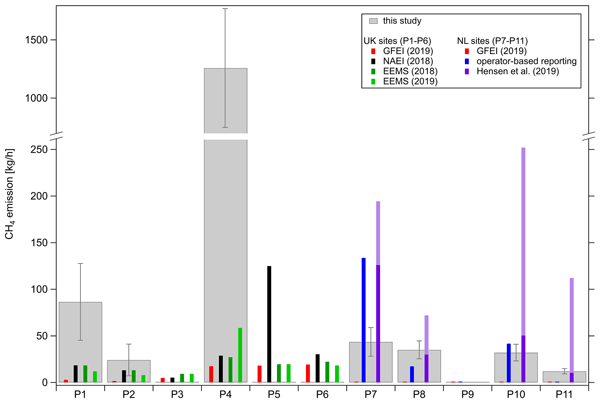
Magdalena Pühl, Anke Roiger, Alina Fiehn, Alan M. Gorchov Negron, Eric A. Kort, Stefan Schwietzke, Ignacio Pisso, Amy Foulds, James Lee, James L. France, Anna E. Jones, Dave Lowry, Rebecca E. Fisher, Langwen Huang, Jacob Shaw, Prudence Bateson, Stephen Andrews, Stuart Young, Pamela Dominutti, Tom Lachlan-Cope, Alexandra Weiss, and Grant Allen
Atmos. Chem. Phys., 24, 1005–1024, https://doi.org/10.5194/acp-24-1005-2024, https://doi.org/10.5194/acp-24-1005-2024, 2024
Short summary
Short summary
In April–May 2019 we carried out an airborne field campaign in the southern North Sea with the aim of studying methane emissions of offshore gas installations. We determined methane emissions from elevated methane measured downstream of the sampled installations. We compare our measured methane emissions with estimated methane emissions from national and global annual inventories. As a result, we find inconsistencies of inventories and large discrepancies between measurements and inventories.

Jacob T. Shaw, Amy Foulds, Shona Wilde, Patrick Barker, Freya A. Squires, James Lee, Ruth Purvis, Ralph Burton, Ioana Colfescu, Stephen Mobbs, Samuel Cliff, Stéphane J.-B. Bauguitte, Stuart Young, Stefan Schwietzke, and Grant Allen
Atmos. Chem. Phys., 23, 1491–1509, https://doi.org/10.5194/acp-23-1491-2023, https://doi.org/10.5194/acp-23-1491-2023, 2023
Short summary
Short summary
Flaring is used by the oil and gas sector to dispose of unwanted natural gas or for safety. However, few studies have assessed the efficiency with which the gas is combusted. We sampled flaring emissions from offshore facilities in the North Sea. Average measured flaring efficiencies were ~ 98 % but with a skewed distribution, including many flares of lower efficiency. NOx and ethane emissions were also measured. Inefficient flaring practices could be a target for mitigating carbon emissions.
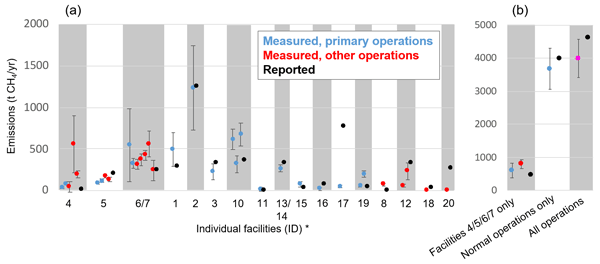
Amy Foulds, Grant Allen, Jacob T. Shaw, Prudence Bateson, Patrick A. Barker, Langwen Huang, Joseph R. Pitt, James D. Lee, Shona E. Wilde, Pamela Dominutti, Ruth M. Purvis, David Lowry, James L. France, Rebecca E. Fisher, Alina Fiehn, Magdalena Pühl, Stéphane J. B. Bauguitte, Stephen A. Conley, Mackenzie L. Smith, Tom Lachlan-Cope, Ignacio Pisso, and Stefan Schwietzke
Atmos. Chem. Phys., 22, 4303–4322, https://doi.org/10.5194/acp-22-4303-2022, https://doi.org/10.5194/acp-22-4303-2022, 2022
Short summary
Short summary
We measured CH4 emissions from 21 offshore oil and gas facilities in the Norwegian Sea in 2019. Measurements compared well with operator-reported emissions but were greatly underestimated when compared with a 2016 global fossil fuel inventory. This study demonstrates the need for up-to-date and accurate inventories for use in research and policy and the important benefits of best-practice reporting methods by operators. Airborne measurements are an effective tool to validate such inventories.
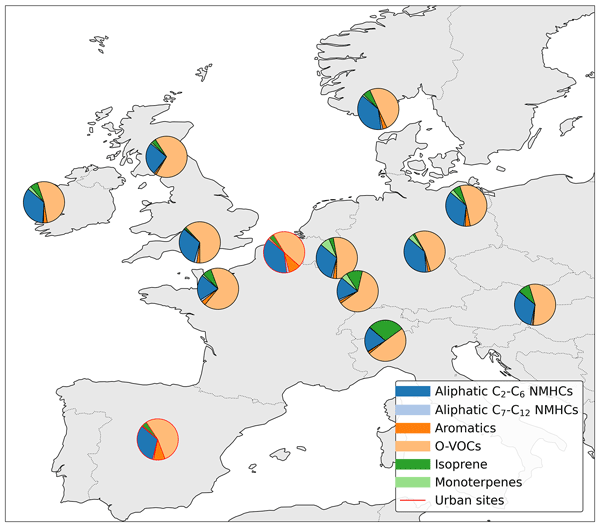
Wenche Aas, Thérèse Salameh, Robert Wegener, Heidi Hellén, Jean-Luc Jaffrezo, Pontus Roldin, Elisabeth Alonso-Blanco, Andres Alastuey, Crist Amelynck, Jgor Arduini, Benjamin Bergmans, Marie Bertrand, Agnes Borbon, Efstratios Bourtsoukidis, Laetitia Bouvier, David Butterfield, Iris Buxbaum, Darius Ceburnis, Anja Claude, Augustin Colette, Aurélie Colomb, Sophie Darfeuil, James Dernie, Maximilien Desservettaz, Elías Díaz-Ramiro, Marvin Dufresne, René Dubus, Mario Duval, Marie Dury, Anna Font, Kirsten N. Fossum, Evelyn Freney, Gotzon Gangoiti, Yao Ge, Maria Carmen Gomez, Francisco J. Gómez-Moreno, Marie Gohy, Valérie Gros, Paul Hamer, Bryan Hellack, Hartmut Herrmann, Robert Holla, Adéla Holubová, Niels R. Jensen, Tuija Jokinen, Matthew Jones, Uwe Käfer, Lukas Kesper, Dieter Klemp, Dagmar Kubistin, Angela Marinoni, Martina Mazzini, Vy Ngoc Thuy Dinh, Jurgita Ovadnevaite, Tuukka Petäjä, Miguel Portillo-Estrada, Jitka Přívozníková, Jean-Philippe Putaud, Stefan Reimann, Laura Renzi, Veronique Riffault, Stuart Ritchie, Chris Robins, Begoña Artíñano Rodríguez de Torres, Laurent Poulain, Julian Rüdiger, Agnieszka Sanocka, Estibaliz Saez de Camara Oleaga, Niels Schoon, Roger Seco, Ivan Simmons, Leïla Simon, David Simpson, Sverre Solberg, Emmanuel Tison, August Thomasson, Svetlana Tsyro, Marsailidh Twigg, Toni Tykkä, Bert Verreyken, Ågot Watne, Katie Williams, Ana Maria Yáñez-Serrano, Karen Yeung, Ilona Ylivinkka, and Karl Espen Yttri
Atmos. Chem. Phys., 26, 8717–8751, https://doi.org/10.5194/acp-26-8717-2026, https://doi.org/10.5194/acp-26-8717-2026, 2026
Short summary
Short summary
A one-week intensive measurement campaign during the 2022 European heatwave included monitoring of ozone, volatile organic compounds, aerosol chemical composition, and organic tracers to investigate air pollution sources. Results showed that emissions from vegetation and human activities contributed to peaks in ozone and secondary organic aerosol particles. Differences between measurements and model simulations underline the need for better characterization of sources and formation pathways.
Maria Tsivlidou, Jamie McQuilkin, Hugo Ricketts, Kieran Wood, Jonathan Helmore, David Lowry, and Grant Allen
EGUsphere, https://doi.org/10.5194/egusphere-2026-1665, https://doi.org/10.5194/egusphere-2026-1665, 2026
Short summary
Short summary
We assess a drone-based method to measure methane emissions using controlled release experiments at two sites. Estimated emission rates showed very good agreement with known release rates, demonstrating good accuracy. This work supports the development of direct emission measurement methods, which are essential for tracking emissions, informing reduction strategies, and improving greenhouse gas reporting, for local sources such as waste management.
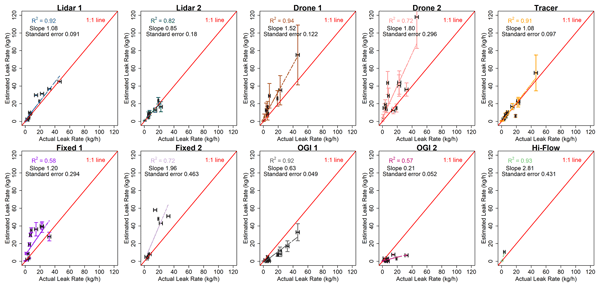
Yunsong Liu, Jean-Daniel Paris, Gregoire Broquet, Violeta Bescós Roy, Tania Meixus Fernandez, Rasmus Andersen, Andrés Russu Berlanga, Emil Christensen, Yann Courtois, Sebastian Dominok, Corentin Dussenne, Travis Eckert, Andrew Finlayson, Aurora Fernández de la Fuente, Catlin Gunn, Ram Hashmonay, Juliano Grigoleto Hayashi, Jonathan Helmore, Soeren Honsel, Fabrizio Innocenti, Matti Irjala, Torgrim Log, Cristina Lopez, Francisco Cortés Martínez, Jonathan Martinez, Adrien Massardier, Helle Gottschalk Nygaard, Paula Agregan Reboredo, Elodie Rousset, Axel Scherello, Matthias Ulbricht, Damien Weidmann, Oliver Williams, Nigel Yarrow, Murès Zarea, Robert Ziegler, Jean Sciare, Mihalis Vrekoussis, and Philippe Bousquet
Atmos. Meas. Tech., 17, 1633–1649, https://doi.org/10.5194/amt-17-1633-2024, https://doi.org/10.5194/amt-17-1633-2024, 2024
Short summary
Short summary
We investigated the performance of 10 methane emission quantification techniques in a blind controlled-release experiment at an inerted natural gas compressor station. We reported their respective strengths, weaknesses, and potential complementarity depending on the emission rates and atmospheric conditions. Additionally, we assess the dependence of emission quantification performance on key parameters such as wind speed, deployment constraints, and measurement duration.
Magdalena Pühl, Anke Roiger, Alina Fiehn, Alan M. Gorchov Negron, Eric A. Kort, Stefan Schwietzke, Ignacio Pisso, Amy Foulds, James Lee, James L. France, Anna E. Jones, Dave Lowry, Rebecca E. Fisher, Langwen Huang, Jacob Shaw, Prudence Bateson, Stephen Andrews, Stuart Young, Pamela Dominutti, Tom Lachlan-Cope, Alexandra Weiss, and Grant Allen
Atmos. Chem. Phys., 24, 1005–1024, https://doi.org/10.5194/acp-24-1005-2024, https://doi.org/10.5194/acp-24-1005-2024, 2024
Short summary
Short summary
In April–May 2019 we carried out an airborne field campaign in the southern North Sea with the aim of studying methane emissions of offshore gas installations. We determined methane emissions from elevated methane measured downstream of the sampled installations. We compare our measured methane emissions with estimated methane emissions from national and global annual inventories. As a result, we find inconsistencies of inventories and large discrepancies between measurements and inventories.
Sara M. Defratyka, James L. France, Rebecca E. Fisher, Dave Lowry, Julianne M. Fernandez, Semra Bakkaloglu, Camille Yver-Kwok, Jean-Daniel Paris, Philippe Bousquet, Tim Arnold, Chris Rennick, Jon Helmore, Nigel Yarrow, and Euan G. Nisbet
EGUsphere, https://doi.org/10.5194/egusphere-2023-1490, https://doi.org/10.5194/egusphere-2023-1490, 2023
Preprint archived
Short summary
Short summary
We are focused on verification of δ13CH4 measurements in near-source conditions and we have provided an insight into the impact of chosen calculation methods for determined isotopic signatures. Our study offers a step forward for establishing an unified, robust, and reliable analytical technique to determine δ13CH4 of methane sources. Our recommended analytical approach reduces biases and uncertainties coming from measurement conditions, data clustering and various available fitting methods.
Jacob T. Shaw, Amy Foulds, Shona Wilde, Patrick Barker, Freya A. Squires, James Lee, Ruth Purvis, Ralph Burton, Ioana Colfescu, Stephen Mobbs, Samuel Cliff, Stéphane J.-B. Bauguitte, Stuart Young, Stefan Schwietzke, and Grant Allen
Atmos. Chem. Phys., 23, 1491–1509, https://doi.org/10.5194/acp-23-1491-2023, https://doi.org/10.5194/acp-23-1491-2023, 2023
Short summary
Short summary
Flaring is used by the oil and gas sector to dispose of unwanted natural gas or for safety. However, few studies have assessed the efficiency with which the gas is combusted. We sampled flaring emissions from offshore facilities in the North Sea. Average measured flaring efficiencies were ~ 98 % but with a skewed distribution, including many flares of lower efficiency. NOx and ethane emissions were also measured. Inefficient flaring practices could be a target for mitigating carbon emissions.
Amy Foulds, Grant Allen, Jacob T. Shaw, Prudence Bateson, Patrick A. Barker, Langwen Huang, Joseph R. Pitt, James D. Lee, Shona E. Wilde, Pamela Dominutti, Ruth M. Purvis, David Lowry, James L. France, Rebecca E. Fisher, Alina Fiehn, Magdalena Pühl, Stéphane J. B. Bauguitte, Stephen A. Conley, Mackenzie L. Smith, Tom Lachlan-Cope, Ignacio Pisso, and Stefan Schwietzke
Atmos. Chem. Phys., 22, 4303–4322, https://doi.org/10.5194/acp-22-4303-2022, https://doi.org/10.5194/acp-22-4303-2022, 2022
Short summary
Short summary
We measured CH4 emissions from 21 offshore oil and gas facilities in the Norwegian Sea in 2019. Measurements compared well with operator-reported emissions but were greatly underestimated when compared with a 2016 global fossil fuel inventory. This study demonstrates the need for up-to-date and accurate inventories for use in research and policy and the important benefits of best-practice reporting methods by operators. Airborne measurements are an effective tool to validate such inventories.
Cited articles
Allen, G.: How to quantify anthropogenic methane emissions with aircraft surveys, Commun. Earth Environ., 4, 140, https://doi.org/10.1038/s43247-023-00794-6, 2023.
Bell, C., Ilonze, C., Duggan, A., and Zimmerle, D.: Performance of continuous emission monitoring solutions under a single-blind controlled testing protocol, Environ. Sci. Technol., 57, 5794–5805, https://doi.org/10.1021/acs.est.2c09235, 2023.
Bennett, N. D., Croke, B. F. W., Guariso, G., Guillaume, J. H. A., Hamilton, S. H., Jakeman, A. J., Marsili-Libelli, S., Newham, L. T. H., Norton, J. P., Perrin, C., Pierce, S. A., Robson, B., Seppelt, R., Voinov, A. A., Fath, B. D., and Andreassian, V.: Characterising performance of environmental models, Env. Model. Soft., 40, 1–20, https://doi.org/10.1016/j.envsoft.2012.09.011, 2013.
British Standards Institution: BS EN 17628:2022, Fugitive and diffuse emissions of common concern to industry sectors, Standard method to determine diffuse emissions of volate organic compounds into the atmosphere, EH/2/1, ISBN 9780539140040, https://knowledge.bsigroup.com/products/fugitive-and-diffuse-emissions-of-common-concern-to-industry-sectors-standard-method-to-determine-diffuse-emissions-of-volatile-organic-compounds-into-the-atmosphere (last access: February 2026), 2022.
Connor, A., Shaw, J. T., Yarrow, N., Howes, N., Helmore, J., Finlayson, A., Barker, P., and Robinson, R.: A framework for describing and classifying methane reporting requirements, emission sources, and monitoring methods, Env. Sci. Atmos., https://doi.org/10.1039/D4EA00120F, 2024.
Crenna, B. P., Flesch, T. K., and Wilson, J. D.: Influence of source-sensor geometry on multi-source emission rate estimates, Atmos. Environ., 42, 7373–7383, https://doi.org/10.1016/j.atmosenv.2008.06.019, 2008.
Cusworth, D. H., Duren, R. M., Yadav, V., Thorpe, A. K., Verhulst, K., Sander, S., Hopkins, F., Rafiq, T., and Miller, C. E.: Synthesis of methane observations across scales: Strategies for deploying a multitiered observing network, Geophys. Res. Lett., 47, e2020GL087869, https://doi.org/10.1029/2020GL087869, 2020.
Day, R. E., Emerson, E., Bell, C., and Zimmerle, D.: Point sensor networks struggle to detect and quantify short controlled releases at oil and gas sites, Sensors, 24, 2419, https://doi.org/10.3390/s24082419, 2024.
Defratyka, S. M., France, J. L., Fisher, R. E., Lowry, D., Fernandez, J. M., Bakkaloglu, S., Yver-Kwok, C., Paris, J.-D., Bousquet, P., Arnold, T., Rennick, C., Helmore, J., Yarrow, N., and Nisbet, E. G.: Evaluation of data processing strategies for methane isotopic signatures determined during near-source measurements, Tellus B Chem. Phys. Met., 77, 1–17, https://doi.org/10.16993/tellusb.1878, 2025.
Erland, B. M., Thorpe, A. K., and Gamon, J. A.: Recent advances toward transparent methane emissions monitoring: A review, Environ. Sci. Technol., 56, 16567–16581, https://doi.org/10.1021/acs.est.2c02136, 2022.
EU 2024/1787: Regulation (EU) 2024/1787 of the European Parliament and of the Council of 13 June 2024 on the reduction of methane emissions in the energy sector and amending Regulation (EU) 2019/942 (Text with EEA relevance), Document 32024R1787, http://data.europa.eu/eli/reg/2024/1787/oj (last access: October 2025), 2024.
European Commission: Launch by United States, the European Union, and Partners of the Global Methane Pledge to Keep 1.5 °C Within Reach, Statement/21/5766/, https://ec.europa.eu/commission/presscorner/detail/en/statement_21_5766 (last access: May 2023), 2021.
Flesch, T. K., Wilson, J. D., and Yee, E.: Backward-time Lagrangian stochastic dispersion models and their application to estimate gaseous emissions, J. Appl. Meteorol., 34, 1320–1332, https://doi.org/10.1175/1520-0450(1995)034%3C1320:BTLSDM{%}3E2.0.CO;2, 1995.
Flesch, T. K., Harper, L. A., Powell, J. M., and Wilson, J. D.: Inverse-dispersion calculation of ammonia emissions from Wisconsin dairy farms, Trans. ASABE, 52, 253–265, https://doi.org/10.13031/2013.25946, 2009.
Foster-Wittig, T. A., Thoma, E. D., and Alberston, J. D.: Estimation of point source fugitive emission rates from a single sensor time series: A conditionally-sampled Gaussian plume reconstruction, Atmos. Environ., 115, 101–109, https://doi.org/10.1016/j.atmosenv.2015.05.042, 2015.
Fox, T. A., Barchyn, T. E., Risk, D., Ravikumar, A. P., and Hugenholtz, C. H.: A review of close-range and screening technologies for mitigating fugitive methane emissions in upstream oil and gas, Environ. Res. Lett., 14, 053002, https://doi.org/10.1088/1748-9326/ab0cc3, 2019.
France, J. L., Bateson, P., Dominutti, P., Allen, G., Andrews, S., Bauguitte, S., Coleman, M., Lachlan-Cope, T., Fisher, R. E., Huang, L., Jones, A. E., Lee, J., Lowry, D., Pitt, J., Purvis, R., Pyle, J., Shaw, J., Warwick, N., Weiss, A., Wilde, S., Witherstone, J., and Young, S.: Facility level measurement of offshore oil and gas installations from a medium-sized airborne platform: method development for quantification and source identification of methane emissions, Atmos. Meas. Tech., 14, 71–88, https://doi.org/10.5194/amt-14-71-2021, 2021.
Gardiner, T., Helmore, J., Innocenti, F., and Robinson, R.: Field validation of remote sensing methane emission measurements, Remote Sens., 9, 956, https://doi.org/10.3390/rs9090956, 2017.
Ilonze, C., Emerson, E., Duggan, A., and Zimmerle, D.: Assessing the progress of the performance of continuous monitoring solutions under a single-blind controlled testing protocol, Env. Sci. Technol., 58, 10941–10955, https://doi.org/10.1021/acs.est.3c08511, 2024.
Jacob, D. J., Varon, D. J., Cusworth, D. H., Dennison, P. E., Frankenberg, C., Gautam, R., Guanter, L., Kelley, J., McKeever, J., Ott, L. E., Poulter, B., Qu, Z., Thorpe, A. K., Worden, J. R., and Duren, R. M.: Quantifying methane emissions from the global scale down to point sources using satellite observations of atmospheric methane, Atmos. Chem. Phys., 22, 9617–9646, https://doi.org/10.5194/acp-22-9617-2022, 2022.
Jones, A. R., Thomson, D. J., Hort, M., and Devinish, B.: The UK Met Office's next generation atmospheric dispersion model, NAME III, in: Air Pollution Modeling and its Application XVII, Proceedings of the 27th NATO/CCMS International Technical Meeting on Air Pollution Modelling and its Application, Springer, edited by: Borrego, C., and Norman, A.-L., 580–589, https://doi.org/10.1007/978-0-387-68854-1_62, 2007.
Kumar, P., Broquet, G., Caldow, C., Laurent, O., Gichuki, S., Cropley, F., Yver-Kwok, C., Fontanier, B., Lauvaux, T., Ramonet, M., Shah, A., Berthe, G., Martin, F., Duclaux, O., Juery, C., Bouchet, C., Pitt, J., Ciais, P.: Near-field atmospheric inversions for the localization and quantification of controlled methane releases using stationary and mobile measurements, Q. J. Roy. Meteor. Soc., 148, 1886–1912, https://doi.org/10.1002/qj.4283, 2022.
Lin, J. Y. J., Buehler, C., Datta, A., Gentner, D. R., Koehler, K., and Zamora, M. L.: Laboratory and field evaluation of a low-cost methane sensor and key environmental factors for sensor calibration, Environ. Sci.: Atmos., 3, 683–694, https://doi.org/10.1039/D2EA00100D, 2023.
Mbua, M., Riddick, S. N., Kiplimo, E., Shonkwiler, K. B., Hodshire, A., and Zimmerle, D.: Evaluating the feasibility of using downwind methods to quantify point source oil and gas emissions using continuously monitoring fence-line sensors, Atmos. Meas. Tech., 18, 5687–5703, https://doi.org/10.5194/amt-18-5687-2025, 2025.
McManemin, A., Juéry, C., Blandin, V., France, J. L., Burdeau, P., and Brandt, A. R.: Controlled release testing of commercially available methane emission measurement technologies at the TADI facility, EGUsphere [preprint], https://doi.org/10.5194/egusphere-2025-3793, 2025.
Mönster, J., Kjeldsen, P., and Scheutz, C.: Methodologies for measuring fugitive methane emissions from landfills – A review, Waste Manag., 87, 835–859, https://doi.org/10.1016/j.wasman.2018.12.047, 2019.
Nisbet, E. G.: The urgent need to cut methane emissions, Natl. Sci. Rev., 9, https://doi.org/10.1093/nsr/nwab221, 2022a.
Nisbet, E. G.: Methane's unknowns better known, Nat. Geosci., 15, 861–862, https://doi.org/10.1038/s41561-022-01049-3, 2022b.
Nisbet, E. G., Fisher, R. E., Lowry, D., France, J. L., Allen, G., Bakkaloglu, S., Broderick, T. J., Cain, M., Coleman, M., Fernandez, J., Forster, G., Griffiths, P. T., Iverach, C. P., Kelly, B. F. J., Manning, M. R., Nisbet-Jones, P. B. R., Pyle, J. A., Townsend-Small, A., al-Shalaan, A., Warwick, N., and Zazzeri, G.: Methane mitigation: Methods to reduce emissions, on the Path to the Paris Agreement, Rev. Geophys., 58, e2019RG000675, https://doi.org/10.1029/2019RG000675, 2020.
Ocko, I. B., Sun, T., Shindell, D., Oppenheimer, M., Hristov, A. N., Pacala, S. W., Mauzerall, D. L., Xu, Y., and Hamburg, S. P.: Acting rapidly to deploy readily available methane mitigation measures by sector can immediately slow global warming, Env. Res. Lett., 16, 054042, https://doi.org/10.1088/1748-9326/abf9c8, 2021.
Olczak, M., Piebalgs, A., and Balcombe, P.: A global review of methane policies reveals that only 13 % of emissions are covered with unclear effectiveness, One Earth, 6, 519–535, https://doi.org/10.1016/j.oneear.2023.04.009, 2023.
Pisso, I., Sollum, E., Grythe, H., Kristiansen, N. I., Cassiani, M., Eckhardt, S., Arnold, D., Morton, D., Thompson, R. L., Groot Zwaaftink, C. D., Evangeliou, N., Sodemann, H., Haimberger, L., Henne, S., Brunner, D., Burkhart, J. F., Fouilloux, A., Brioude, J., Philipp, A., Seibert, P., and Stohl, A.: The Lagrangian particle dispersion model FLEXPART version 10.4, Geosci. Model Dev., 12, 4955–4997, https://doi.org/10.5194/gmd-12-4955-2019, 2019.
Ravikumar, A. P., Sreedhara, S., Wang, J., Englander, J., Roda-Stuart, D., Bell, C., Zimmerle, D., Lyon, D., Mogstad, I., Ratner, B., and Brandt, A. R.: Single-blind inter-comparison of methane detection technologies – results from the Stanford/EDF Mobile Monitoring Challenge, Elem. Sci. Anthrop., 7, 37, https://doi.org/10.1525/elementa.373, 2019.
Riddick, S. N., Connors, S., Robinson, A. D., Manning, A. J., Jones, P. S. D., Lowry, D., Nisbet, E., Skelton, R. L., Allen, G., Pitt, J., and Harris, N. R. P.: Estimating the size of a methane emission point source at different scales: from local to landscape, Atmos. Chem. Phys., 17, 7839–7851, https://doi.org/10.5194/acp-17-7839-2017, 2017.
Riddick, S. N., Mauzerall, D. L., Celia, M., Allen, G., Pitt, J., Kang, M., and Riddick, J. C.: The calibration and deployment of a low-cost methane sensor, Atmos. Environ., 230, 117440, https://doi.org/10.1016/j.atmosenv.2020.117440, 2020.
Riddick, S. N., Ancona, R., Cheptonui, F., Bell, C. S., Duggan, A., Bennett, K. E., and Zimmerle, D. J.: A cautionary report of calculating methane emissions using low-cost fence-line sensors, Elem. Sci. Anth., 10, 00021, https://doi.org/10.1525/elementa.2022.00021, 2022a.
Riddick, S. N. Cheptonui, F., Yuan, K., Mbua, M., Day, R., Vaughn, T. L., Duggan, A., Bennett, K. E., and Zimmerle, D. J.: Estimating regional methane emission factors from energy and agricultural sources using a portable measurement system: Case study of the Denver-Julesburg Basin, Sensors, 22, 7410, https://doi.org/10.3390/s22197410, 2022b.
Rivera-Martinez, R., Kumar, P., Laurent, O., Broquet, G., Caldow, C., Cropley, F., Santaren, D., Shah, A., Mallet, C., Ramonet, M., Rivier, L., Juery, C., Duclaux, O., Bouchet, C., Allegrini, E., Utard, H., and Ciais, P.: Using metal oxide gas sensors to estimate the emission rates and locations of methane leaks in an industrial site: assessment with controlled methane releases, Atmos. Meas. Tech., 17, 4257–4290, https://doi.org/10.5194/amt-17-4257-2024, 2024.
Shah, A., Allen, G., Pitt, J. R., Ricketts, H., Williams, P. I., Helmore, J., Finlayson, A., Robinson, R., Kabbabe, K., Hollingsworth, P., Rees-White, T. C., Beaven, R., Scheutz, C., and Bourn, M.: A near-field Gaussian plume inversion flux quantification method, applied to unmanned aerial vehicle sampling, Atmosphere, 10, 396, https://doi.org/10.3390/atmos10070396, 2019.
Shah, A., Laurent, O., Kumar, P., Broquet, G., Loigerot, L., Depelchin, T., Lozano, M., Yver Kwok, C., Philippon, C., Romand, C., Allegrini, E., Trombetti, M., and Ciais, P.: Accuracy of tracer-based methane flux quantification: underlying impact of calibrating acetylene measurements, Atmos. Meas. Tech., 18, 3425–3451, https://doi.org/10.5194/amt-18-3425-2025, 2025a.
Shah, A., Laurent, O., Broquet, G., Romand, C., and Ciais, P.: Characterising changes in the methane response of a semiconductor-based metal oxide sensor over time, Environ. Sci. Atmos., 5, 1119–1143, https://doi.org/10.1039/D5EA00046G, 2025b.
Shaw, J. T., Allen, G., Pitt, J., Mead, M. I., Purvis, R. M., Dunmore, R., Wilde, S., Shah, A., Barker, P., Bateson, P., Bacak, A., Lewis, A. C., Lowry, D., Fisher, R., Lanoisellé, M., and Ward, R. S.: A baseline of atmospheric greenhouse gases for prospective UK shale gas sites, Sci. Total Env., 684, 1–13, https://doi.org/10.1016/j.scitotenv.2019.05.266, 2019.
Shaw, J. T., Allen, G., Pitt, J., Shah, A., Wilde, S., Stamford, L., Fan, Z., Ricketts, H., Williams, P. I., Bateson, P., Barker, P., Purvis, R., Lowry, D., Fisher, R., France, J., Coleman, M., Lewis, A. C., Risk, D. A., and Ward, R. S.: Methane flux from flowback operations at a shale gas site, J. Air Waste Ma., 70, 12, https://doi.org/10.1080/10962247.2020.1811800, 2020.
Shaw, J. T., Shah, A., Yong, H., and Allen, G.: Methods for quantifying methane emissions using unmanned aerial vehicles: a review, Phil. Trans. R. Soc. A, 379, 20200450, https://doi.org/10.1098/rsta.2020.0450, 2021.
Shirvaikar, V. V.: Persistence of wind direction, Atmos. Environ., 6, 889–898, https://doi.org/10.1016/0004-6981(72)90097-2, 1972.
Tollefson, J.: Scientists raise alarm over “dangerously fast” growth in atmospheric methane, Nature, https://doi.org/10.1038/d41586-022-00312-2, 2022.
US EPA: Draft “Other Test Method” OTM-33 Geospatial Measurement of Air Pollution, Remote Emissions Quantification (GMAP-REQ), https://www.epa.gov/emc (last access: June 2023), 2014.
Wang, J. L., Daniels, W. S., Hammerling, D. M., Harrison, M., Burmaster, K., George, F. C., and Ravikumar, A. P.: Multiscale methane measurements at oil and gas facilities reveal necessary frameworks for improved emissions accounting, Environ. Sci. Technol., 56, 14743–14752, https://doi.org/10.1021/acs.est.2c06211, 2022.
Wickström, K., Ivarsson, P., and Silva, G.: Airviro Specification v3.20, Part II: Appendices, Appendix E, Swedish Meteorological and Hydrological Institute, 2010.
Yang, X., Kuru, E., Zhang, X., Zhang, S., Wang, R., Ye, J., Yang, D., Klemeš, J. J., and Wang, B.: Direct measurement of methane emissions from the upstream oil and gas sector: Review of measurement results and technology advances (2018–2022), J. Clean. Prod., 414, 137693, https://doi.org/10.1016/j.jclepro.2023.137693, 2023.
Short summary
The Fugitive Emission Distributed Sampling (FEDS) system is used to measure emissions from local-scale sources (up to ~1×1 km). FEDS uses a state-of-the-art gas analyser linked to many sampling locations. Controlled amounts of methane were released to test the accuracy of the FEDS system. Results were promising even when using different models to estimate the amount of methane released. Results were better when the wind was consistent. FEDS could be used for measuring emissions over many months.
The Fugitive Emission Distributed Sampling (FEDS) system is used to measure emissions from...


