
Articles | Volume 19, issue 4
https://doi.org/10.5194/amt-19-1147-2026
© Author(s) 2026. This work is distributed under
the Creative Commons Attribution 4.0 License.
the Creative Commons Attribution 4.0 License.
https://doi.org/10.5194/amt-19-1147-2026
© Author(s) 2026. This work is distributed under
the Creative Commons Attribution 4.0 License.
the Creative Commons Attribution 4.0 License.
Research article
| 
17 Feb 2026
Research article |
| 17 Feb 2026
| 17 Feb 2026
A systematic comparison of ACE-FTS δD retrievals with airborne in situ sampling
Benjamin W. Clouser
CORRESPONDING AUTHOR

Department of the Geophysical Sciences, University of Chicago, Chicago, IL, USA
Carly C. KleinStern
Department of Physics, University of Chicago, Chicago, IL, USA
Adrien Desmoulin
Department of the Geophysical Sciences, University of Chicago, Chicago, IL, USA
Clare E. Singer
Department of the Geophysical Sciences, University of Chicago, Chicago, IL, USA
Jason M. St. Clair
Atmospheric Chemistry and Dynamics Laboratory, NASA Goddard Space Flight Center, Greenbelt, MD, USA
GESTAR-II, University of Maryland Baltimore County, Baltimore, MD, USA
Thomas F. Hanisco
Atmospheric Chemistry and Dynamics Laboratory, NASA Goddard Space Flight Center, Greenbelt, MD, USA
David S. Sayres
Harvard John A. Paulson School of Engineering and Applied Sciences, Harvard University, Cambridge, MA, USA
Elisabeth J. Moyer
Department of the Geophysical Sciences, University of Chicago, Chicago, IL, USA
Related authors
Carly KleinStern, Benjamin Clouser, Thaopaul Bui, Jonathan Dean-Day, Adrien Desmoulin, James Franke, Hisashi Nakamura, Rei Ueyama, Shingo Watanabe, and Elisabeth Moyer
EGUsphere, https://doi.org/10.5194/egusphere-2026-4533, https://doi.org/10.5194/egusphere-2026-4533, 2026
This preprint is open for discussion and under review for Atmospheric Chemistry and Physics (ACP).
Short summary
Short summary
Tropical cyclones (TCs) create gravity waves that spread in near-concentric rings above the storm, creating temperature fluctuations that help dry the stratosphere via cirrus formation. Understanding the amplitudes of those waves has been difficult because few direct measurements exist. We show new measurements taken during a high-altitude overflight of TC Hinnamnor in 2022. The large wave observed suggests that TC gravity waves are underestimated in the commonly-used ERA5 reanalysis.
Benjamin W. Clouser, Laszlo C. Sarkozy, Clare E. Singer, Carly C. KleinStern, Adrien Desmoulin, Dylan Gaeta, Sergey Khaykin, Stephen Gabbard, Stephen Shertz, and Elisabeth J. Moyer
Atmos. Meas. Tech., 18, 6465–6491, https://doi.org/10.5194/amt-18-6465-2025, https://doi.org/10.5194/amt-18-6465-2025, 2025
Short summary
Short summary
The water molecule comes in several different varieties, which are nearly indistinguishable in daily life. However, slight differences between the water molecule types can be exploited to achieve better scientific understanding of parts of Earth's atmosphere. In this work we describe the design, construction, and operation of an instrument meant to measure these molecules aboard research aircraft up to altitudes of 20 km.
Paul Konopka, Christian Rolf, Marc von Hobe, Sergey M. Khaykin, Benjamin Clouser, Elisabeth Moyer, Fabrizio Ravegnani, Francesco D'Amato, Silvia Viciani, Nicole Spelten, Armin Afchine, Martina Krämer, Fred Stroh, and Felix Ploeger
Atmos. Chem. Phys., 23, 12935–12947, https://doi.org/10.5194/acp-23-12935-2023, https://doi.org/10.5194/acp-23-12935-2023, 2023
Short summary
Short summary
We studied water vapor in a critical region of the atmosphere, the Asian summer monsoon anticyclone, using rare in situ observations. Our study shows that extremely high water vapor values observed in the stratosphere within the Asian monsoon anticyclone still undergo significant freeze-drying and that water vapor concentrations set by the Lagrangian dry point are a better proxy for the stratospheric water vapor budget than rare observations of enhanced water mixing ratios.
Kara D. Lamb, Jerry Y. Harrington, Benjamin W. Clouser, Elisabeth J. Moyer, Laszlo Sarkozy, Volker Ebert, Ottmar Möhler, and Harald Saathoff
Atmos. Chem. Phys., 23, 6043–6064, https://doi.org/10.5194/acp-23-6043-2023, https://doi.org/10.5194/acp-23-6043-2023, 2023
Short summary
Short summary
This study investigates how ice grows directly from vapor in cirrus clouds by comparing observations of populations of ice crystals growing in a cloud chamber against models developed in the context of single-crystal laboratory studies. We demonstrate that previous discrepancies between different experimental measurements do not necessarily point to different physical interpretations but are rather due to assumptions that were made in terms of how experiments were modeled in previous studies.
Clare E. Singer, Benjamin W. Clouser, Sergey M. Khaykin, Martina Krämer, Francesco Cairo, Thomas Peter, Alexey Lykov, Christian Rolf, Nicole Spelten, Armin Afchine, Simone Brunamonti, and Elisabeth J. Moyer
Atmos. Meas. Tech., 15, 4767–4783, https://doi.org/10.5194/amt-15-4767-2022, https://doi.org/10.5194/amt-15-4767-2022, 2022
Short summary
Short summary
In situ measurements of water vapor in the upper troposphere are necessary to study cloud formation and hydration of the stratosphere but challenging due to cold–dry conditions. We compare measurements from three water vapor instruments from the StratoClim campaign in 2017. In clear sky (clouds), point-by-point differences were <1.5±8 % (<1±8 %). This excellent agreement allows detection of fine-scale structures required to understand the impact of convection on stratospheric water vapor.
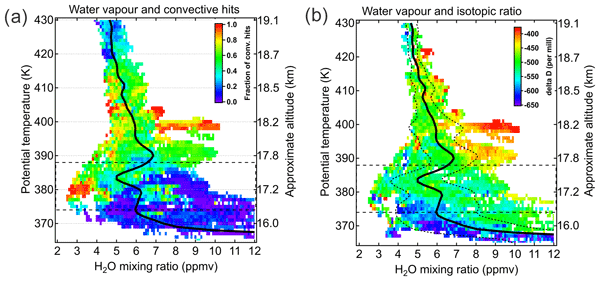
Sergey M. Khaykin, Elizabeth Moyer, Martina Krämer, Benjamin Clouser, Silvia Bucci, Bernard Legras, Alexey Lykov, Armin Afchine, Francesco Cairo, Ivan Formanyuk, Valentin Mitev, Renaud Matthey, Christian Rolf, Clare E. Singer, Nicole Spelten, Vasiliy Volkov, Vladimir Yushkov, and Fred Stroh
Atmos. Chem. Phys., 22, 3169–3189, https://doi.org/10.5194/acp-22-3169-2022, https://doi.org/10.5194/acp-22-3169-2022, 2022
Short summary
Short summary
The Asian monsoon anticyclone is the key contributor to the global annual maximum in lower stratospheric water vapour. We investigate the impact of deep convection on the lower stratospheric water using a unique set of observations aboard the high-altitude M55-Geophysica aircraft deployed in Nepal in summer 2017 within the EU StratoClim project. We find that convective plumes of wet air can persist within the Asian anticyclone for weeks, thereby enhancing the occurrence of high-level clouds.
Xiaoyi Zhao, Vitali Fioletov, Irina Petropavlovskikh, Voltaire Velazco, Alberto Redondas, Anna Solomatnikova, Corinne Vigouroux, Kimberly Strong, Michel Van Roozendael, Andrea Pazmino, Thomas F. Hanisco, Alexander Cede, Martin Tiefengraber, Gordon Labow, Masatomo Fujiwara, Ronald van der A, Debora Griffin, Chris McLinden, Tom Kralidis, Wolfgang Steinbrecht, and Sum Chi Lee
Atmos. Chem. Phys., 26, 13693–13720, https://doi.org/10.5194/acp-26-13693-2026, https://doi.org/10.5194/acp-26-13693-2026, 2026
Short summary
Short summary
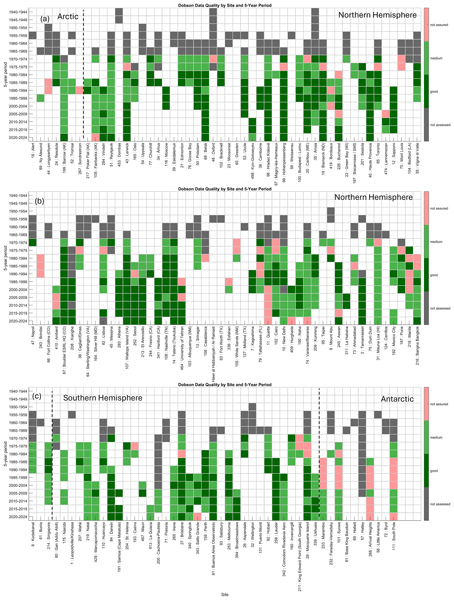
Total column ozone (TCO) records from six ground-based networks are compiled and evaluated using multiple satellites and reanalysis data. Station performance (1940–2024) is assessed using harmonized metrics. Ground-based annual means agree within ±2 %, while pre-satellite reanalyses show larger biases (up to −5 %). The resulting quality-assessed dataset supports trend analysis and satellite validation.
Abby Sebol, Glenn M. Wolfe, Timothy Canty, Jason St. Clair, Erin Delaria, Jennifer Kaiser, Nidhi Desai, Andrew Rollins, Eleanor Waxman, Kristen Zuraski, Bryan Place, Apoorva Pandey, Akanksha Singh, Allison Ring, Charles Gatebe, and Jonathan Dean-Day
Atmos. Meas. Tech., 19, 5539–5552, https://doi.org/10.5194/amt-19-5539-2026, https://doi.org/10.5194/amt-19-5539-2026, 2026
Short summary
Short summary
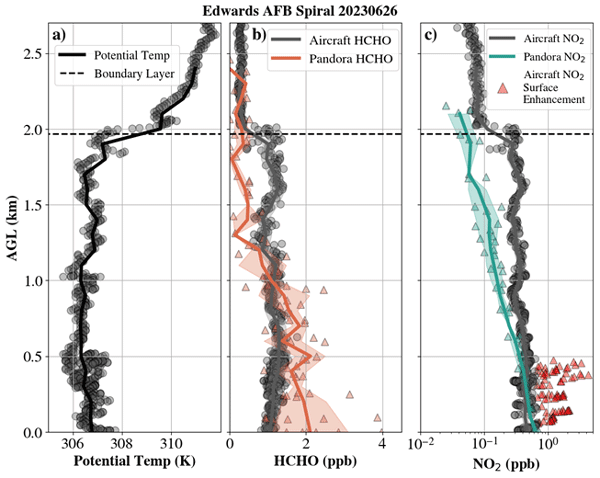
Ground-based spectrometers measuring HCHO and NO2 were compared to airborne in situ observations in the Summer 2023. Total column HCHO is within uncertainty, but with high biases near the surface. NO2 results are highly sensitive to the viewing angle of the ground monitor which must be considered during validation studies. Spectrometers in NYC show good agreement with a geostationary satellite on clear-sky days. Further quantified uncertainty for the monitors is necessary.
Carly KleinStern, Benjamin Clouser, Thaopaul Bui, Jonathan Dean-Day, Adrien Desmoulin, James Franke, Hisashi Nakamura, Rei Ueyama, Shingo Watanabe, and Elisabeth Moyer
EGUsphere, https://doi.org/10.5194/egusphere-2026-4533, https://doi.org/10.5194/egusphere-2026-4533, 2026
This preprint is open for discussion and under review for Atmospheric Chemistry and Physics (ACP).
Short summary
Short summary
Tropical cyclones (TCs) create gravity waves that spread in near-concentric rings above the storm, creating temperature fluctuations that help dry the stratosphere via cirrus formation. Understanding the amplitudes of those waves has been difficult because few direct measurements exist. We show new measurements taken during a high-altitude overflight of TC Hinnamnor in 2022. The large wave observed suggests that TC gravity waves are underestimated in the commonly-used ERA5 reanalysis.
Hui Li, Philippe Ciais, Frédéric Chevallier, Bo Zheng, Paul I. Palmer, Frank Hase, Morgan Lopez, Elsa M. Ordway, Shushi Peng, Danielle Monteverde, Michel Ramonet, Jason M. St. Clair, Le Bienfaiteur Sagang, and Benjamin Poulter
Atmos. Chem. Phys., 26, 11893–11908, https://doi.org/10.5194/acp-26-11893-2026, https://doi.org/10.5194/acp-26-11893-2026, 2026
Short summary
Short summary
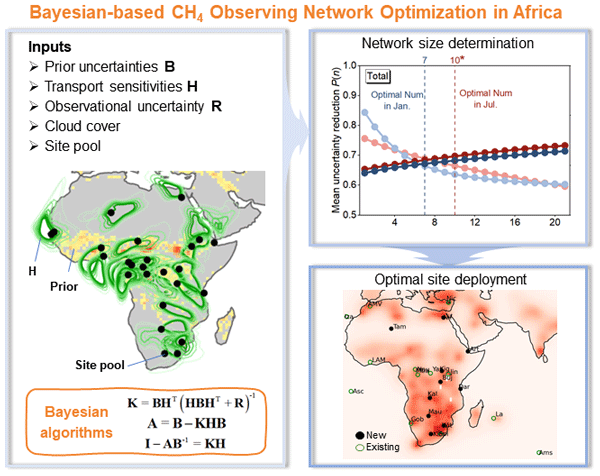
We studied how to best place methane monitoring instruments across Africa to better understand where emissions come from. Because observations can overlap in what they detect, adding more sites does not always improve results equally. Using a statistical approach, we identified both the ideal number and locations of sites (ten new sites can reduce emission uncertainty by over 65 % for total African CH4). Our results help guide cost-effective monitoring strategies in regions with limited data.
Apoorva Pandey, Bryan K. Place, Thomas F. Hanisco, Jong-Uk Park, Elena S. Lind, Jason M. St. Clair, Erin R. Delaria, Glenn M. Wolfe, Ronaldo Lopez, Paul V. Zimba, and K. Lee Thornhill
EGUsphere, https://doi.org/10.5194/egusphere-2026-3479, https://doi.org/10.5194/egusphere-2026-3479, 2026
Short summary
Short summary
The burden and vertical distribution of formaldehyde affects air quality and health. Pandora ground instruments observe formaldehyde in the lower atmosphere using scattered sunlight. The quality of these continuous daytime measurements needs evaluation. We compared these measurements with aircraft observations at four U.S. East Coast sites and found strong agreement at all comparison sites. We also improved the Pandora algorithm to better capture the vertical distribution of formaldehyde.
Sylwester Arabas, Agnieszka Żaba, Daria Klimaszewska, Emma C. Ware, Clare E. Singer, Manhal Alhilali, Jason Barr, Daniel G. Partridge, Shin-ichiro Shima, and Robert Wood
EGUsphere, https://doi.org/10.5194/egusphere-2026-3906, https://doi.org/10.5194/egusphere-2026-3906, 2026
This preprint is open for discussion and under review for Geoscientific Model Development (GMD).
Short summary
Short summary
The paper focuses on the use of Python and its package ecosystem for modeling the dynamics of atmospheric aerosol and cloud droplets. We highlight that concise code and high-level abstractions (incl. programmatic expression of physical units) can be used without performance tradeoffs. The paper features two cloud-microphysics classics: an adiabatic parcel model and a Monte-Carlo coagulation solver. The presented code constitutes a single Jupyter notebook that can be executed "in the cloud".
David Wilmouth, Jennifer Hare, Laila Howar, Ross Salawitch, Eric Hintsa, Jessica Smith, David Sayres, James Anderson, Jason St. Clair, Erin Delaria, Reem Hannun, Thomas Hanisco, Daniel Czizco, Xiaoli Shen, Cameron Homeyer, Michelle Santee, T. Paul Bui, Paul Newman, Frank Keutsch, and Kenneth Bowman
EGUsphere, https://doi.org/10.5194/egusphere-2026-3480, https://doi.org/10.5194/egusphere-2026-3480, 2026
Short summary
Short summary
Inorganic chlorine chemistry in the stratosphere is extensively examined over two summers using high precision in situ aircraft data and satellite data. Measured values both agree and enable refinement to current understanding. Chlorine measurements obtained under perturbed stratospheric conditions of enhanced water vapor from convective storms or aged organic aerosol from wildfires do not appear significantly different from chlorine measurements obtained in the background stratosphere.
Young Ro Lee, Linda Arterburn, Masayuki Takeuchi, David J. Tanner, James M. Roberts, Behrooz Roozitalab, Daun Jeong, Alan J. Hills, Rebecca S. Hornbrook, Eric C. Apel, Simone Meinardi, Barbara Barletta, Nicola J. Blake, Donald R. Blake, Saewung Kim, Wojciech Wojnowski, Felix Piel, Armin Wisthaler, Katherine Ball, John D. Crounse, Paul O. Wennberg, Jason Miech, Yonghoon Choi, Joshua P. DiGangi, Glenn S. Diskin, Abby Sebol, Erin R. Delaria, Reem A. Hannun, Jason M. St. Clair, Glenn M. Wolfe, Changmin Cho, Courtney Owen, Kirk Lesko, Alessandro Franchin, Edward L. Winstead, Luke D. Ziemba, Richard Moore, Elizabeth B. Wiggins, Guy Symonds, Dongwook Kim, Douglas A. Day, Pedro Campuzano-Jost, Jose L. Jimenez, Kirk Ullmann, Samuel R. Hall, James H. Crawford, and L. Gregory Huey
Atmos. Chem. Phys., 26, 8695–8715, https://doi.org/10.5194/acp-26-8695-2026, https://doi.org/10.5194/acp-26-8695-2026, 2026
Short summary
Short summary
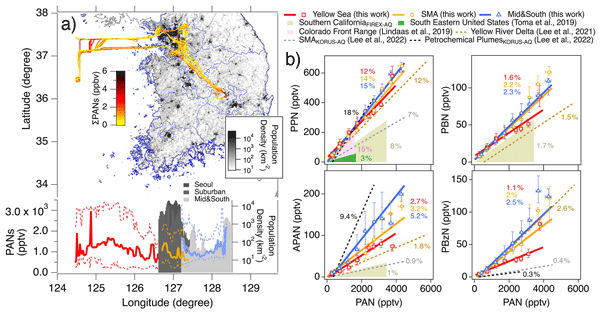
We flew a large variety of instruments on the NASA DC-8 research aircraft to measure pollution over South Korea in the winter of 2024. This works focuses on acyl peroxynitrates (PANs for short) which are formed by chemistry in air. We found high levels of PANs often associated with industrial emissions of pollutants such as ethanol and ethylene oxide. This work helps to understand how to reduce pollution of this sort.
Julianna A. Christopoulos, Pablo E. Saide, Manas R. Mohanty, Nattamon Maneenoi, Jhoon Kim, Laura Judd, Katherine R. Travis, Savitri Garivait, Agapol Junpen, Kazuyuki Miyazaki, Jinkyul Choi, Takashi Sekiya, David Peterson, Theodore M. McHardy, Nicholas Gapp, Jason M. St. Clair, Erin Delaria, Glenn M. Wolfe, Abby Sebol, Alessandro Franchin, Changmin Cho, Morgan L. Silverman, and James H. Crawford
Atmos. Chem. Phys., 26, 8021–8050, https://doi.org/10.5194/acp-26-8021-2026, https://doi.org/10.5194/acp-26-8021-2026, 2026
Short summary
Short summary
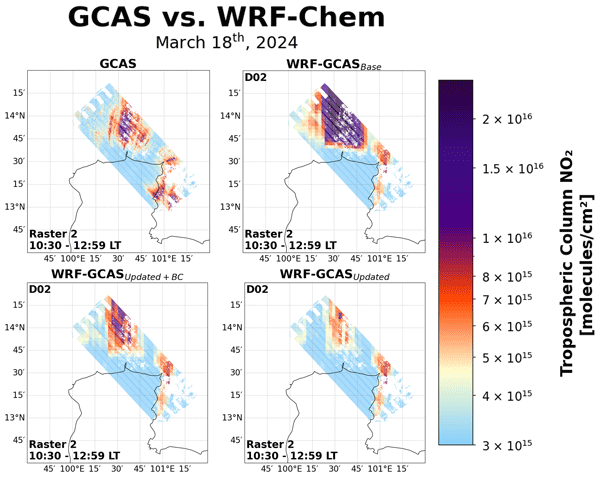
Air quality in rapidly growing cities is difficult to model because emissions vary during the day and are often poorly constrained. We demonstrate a methodology for constraining urban emissions using hourly satellite observations combined with high-resolution air quality modeling in Bangkok. We find that emissions inventories likely overestimate nitrogen dioxide emissions, and that updated emissions improve agreement between the model and independent aircraft and ground-based observations.
Jinkyul Choi, Kazuyuki Miyazaki, Takashi Sekiya, Jinhyeok Yu, Shin-Ya Ogino, Henk Eskes, Pieter Rijdijk, Ryan Bennett, Anke Roiger, Leon Knez, Glenn S. Diskin, Jason A. Miech, Joshua P. DiGangi, Yonghoon Choi, Alessandro Franchin, Changmin Cho, Eric C. Apel, Louisa K. Emmons, Nattamon Maneenoi, Jason M. St. Clair, Reem A. Hannun, Glenn M. Wolfe, Erin Delaria, Abby Sebol, Donald R. Blake, Monica Crippa, Rachel M. Hoesly, Steven J. Smith, Jung-Hun Woo, Le Kuai, and Ronald Macatangay
EGUsphere, https://doi.org/10.5194/egusphere-2026-2380, https://doi.org/10.5194/egusphere-2026-2380, 2026
Short summary
Short summary
Asia produces half of the world's air pollution, yet emission estimates from different sources disagree widely. We assimilated satellite observations of six pollutant species to correct both concentrations and emissions. Aircraft measurements from a 2024 NASA campaign across four Asian countries confirmed the improvements. Our results reveal underreported emissions in some countries, overestimated vegetation emissions, unresolved fire estimates, and weather control on cross-border pollution.
Changmin Cho, Alessandro Franchin, Frank Flocke, Kirk Lesko, Courtney Owen, Samuel R. Hall, Kirk Ullmann, Eric C. Apel, Alan J. Hills, Rebecca S. Hornbrook, Behrooz Roozitalab, Daun Jeong, Glenn S. Diskin, Yonghoon Choi, Joshua P. DiGangi, Jason Miech, Glenn M. Wolfe, Thomas F. Hanisco, Jason M. St. Clair, Jin Liao, Erin R. Delaria, Abby Sebol, Reem A. Hannun, Paul O. Wennberg, Katherine Ball, Young Ro Lee, L. Gregory Huey, David J. Tanner, Linda Arterburn, Donald R. Blake, Nicola J. Blake, Barbara Barletta, Simone Meinardi, Kyung-Eun Min, Heejoo Kang, Woohui Nam, Armin Wisthaler, Felix Piel, Wojciech Wojnowski, Jack Dibb, and James Crawford
Atmos. Chem. Phys., 26, 6097–6116, https://doi.org/10.5194/acp-26-6097-2026, https://doi.org/10.5194/acp-26-6097-2026, 2026
Short summary
Short summary
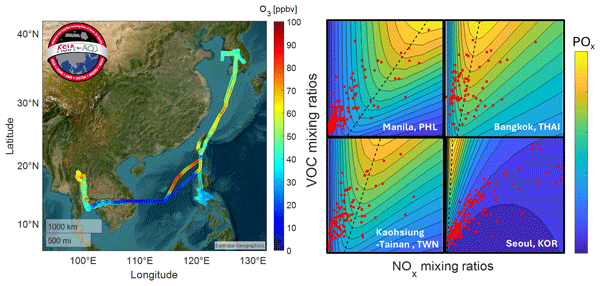
Ozone pollution is a challenge in Asian cities due to its nonlinear response to precursor controls. Using aircraft measurements, we examined how ozone production depends on nitrogen oxides and volatile organic compounds using a new isopleth-based approach. Ozone production is limited by nitrogen oxides in Metro Manila and Tainan–Kaohsiung, mixed in Bangkok, and limited by volatile organic compounds in Seoul. These results inform city-specific control strategies to reduce ozone in urban areas.
Daun Jeong, Rebecca S. Hornbrook, Alan J. Hills, Glenn Diskin, Hannah S. Halliday, Joshua P. DiGangi, Alan Fried, Dirk Richter, James Walega, Petter Weibring, Thomas F. Hanisco, Glenn M. Wolfe, Jason St. Clair, Jeff Peischl, Armin Wisthaler, Tomas Mikoviny, John B. Nowak, Felix Piel, Laura Tomsche, Christopher D. Holmes, Amber Soja, Emily Gargulinski, James H. Crawford, Jack Dibb, Carsten Warneke, Joshua Schwarz, and Eric C. Apel
Atmos. Meas. Tech., 19, 2985–3000, https://doi.org/10.5194/amt-19-2985-2026, https://doi.org/10.5194/amt-19-2985-2026, 2026
Short summary
Short summary
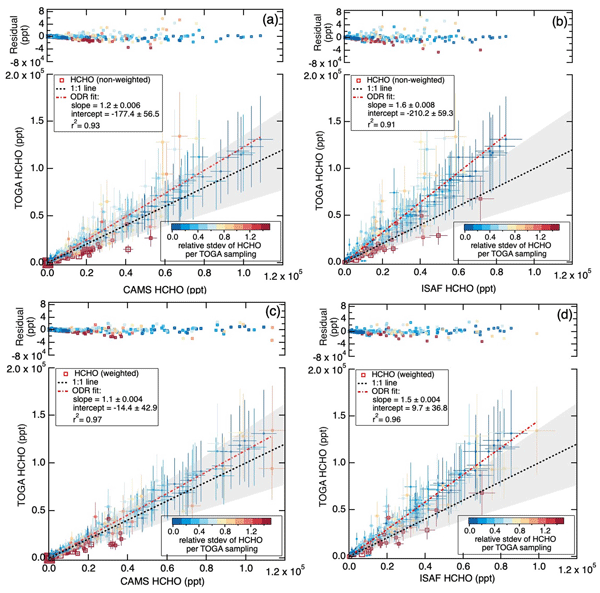
Formaldehyde is an important atmospheric species that is present at all times throughout the troposphere. Accurately measuring formaldehyde is necessary for understanding key atmospheric chemical cycles. We describe here the first wide-scale demonstration of the gas chromatographic mass spectrometric (GC/MS) technique (NSF NCAR TOGA-TOF (National Science Foundation - National Center for Atmospheric Research - Trace Organic Gas Analyzer with Time-of-Flight mass spectrometer)) for quantifying formaldehyde in the atmosphere and we show this technique to be highly sensitive and selective.
James R. Campbell, Brice Temime-Roussel, Barbara D'Anna, Kathy S. Law, Weihang Zhang, Rodney J. Weber, Michael Battaglia Jr., Kayane K. Dingilian, Meeta Cesler-Maloney, Jason M. St. Clair, and Jingqiu Mao
EGUsphere, https://doi.org/10.5194/egusphere-2026-2073, https://doi.org/10.5194/egusphere-2026-2073, 2026
Short summary
Short summary
Fairbanks, Alaska experiences episodes of high concentrations of PM2.5 pollution in the wintertime. The sources and mixing ratios of gas-phase pollution, and the extent to which it affects the formation of PM2.5, are not well understood. Here, we examine the sources of gas-phase species measured in wintertime Fairbanks. We compare these results with other PM2.5 measurements to determine how various sources can affect the formation of PM2.5 pollution.
Benjamin W. Clouser, Laszlo C. Sarkozy, Clare E. Singer, Carly C. KleinStern, Adrien Desmoulin, Dylan Gaeta, Sergey Khaykin, Stephen Gabbard, Stephen Shertz, and Elisabeth J. Moyer
Atmos. Meas. Tech., 18, 6465–6491, https://doi.org/10.5194/amt-18-6465-2025, https://doi.org/10.5194/amt-18-6465-2025, 2025
Short summary
Short summary
The water molecule comes in several different varieties, which are nearly indistinguishable in daily life. However, slight differences between the water molecule types can be exploited to achieve better scientific understanding of parts of Earth's atmosphere. In this work we describe the design, construction, and operation of an instrument meant to measure these molecules aboard research aircraft up to altitudes of 20 km.
Prajjwal Rawat, James H. Crawford, Katherine R. Travis, Laura M. Judd, Mary Angelique G. Demetillo, Lukas C. Valin, James J. Szykman, Andrew Whitehill, Eric Baumann, and Thomas F. Hanisco
Atmos. Meas. Tech., 18, 2899–2917, https://doi.org/10.5194/amt-18-2899-2025, https://doi.org/10.5194/amt-18-2899-2025, 2025
Short summary
Short summary
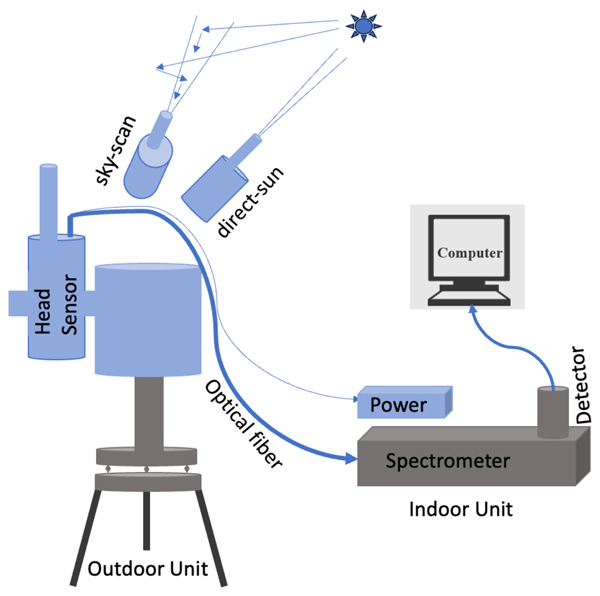
The Pandonia Global Network (PGN) consists of Pandora spectrometers that observe trace gases at a high time resolution to validate satellite observations and understand local air quality. To aid users, PGN assigns quality flags that assure scientifically valid data but eliminate large amounts of data appropriate for scientific applications. A new method based on contemporaneous data in two independent observation modes is proven using complementary ground-based and airborne observations.
Jin Liao, Glenn M. Wolfe, Alexander E. Kotsakis, Julie M. Nicely, Jason M. St. Clair, Thomas F. Hanisco, Gonzalo González Abad, Caroline R. Nowlan, Zolal Ayazpour, Isabelle De Smedt, Eric C. Apel, and Rebecca S. Hornbrook
Atmos. Meas. Tech., 18, 1–16, https://doi.org/10.5194/amt-18-1-2025, https://doi.org/10.5194/amt-18-1-2025, 2025
Short summary
Short summary
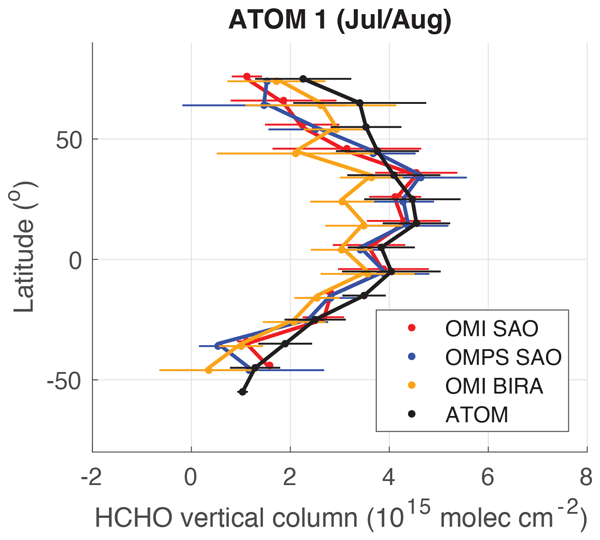
Validation of satellite HCHO over the remote marine regions is relatively low, and modeled HCHO in these regions is usually added as a global satellite HCHO background. This paper intercompares three satellite HCHO retrievals and validates them against in situ observations from the NASA ATom mission. All retrievals are correlated with ATom-integrated columns over remote oceans, with OMI SAO (v004) showing the best agreement. A persistent low bias is found in all retrievals at high latitudes.
Bryan N. Duncan, Daniel C. Anderson, Arlene M. Fiore, Joanna Joiner, Nickolay A. Krotkov, Can Li, Dylan B. Millet, Julie M. Nicely, Luke D. Oman, Jason M. St. Clair, Joshua D. Shutter, Amir H. Souri, Sarah A. Strode, Brad Weir, Glenn M. Wolfe, Helen M. Worden, and Qindan Zhu
Atmos. Chem. Phys., 24, 13001–13023, https://doi.org/10.5194/acp-24-13001-2024, https://doi.org/10.5194/acp-24-13001-2024, 2024
Short summary
Short summary
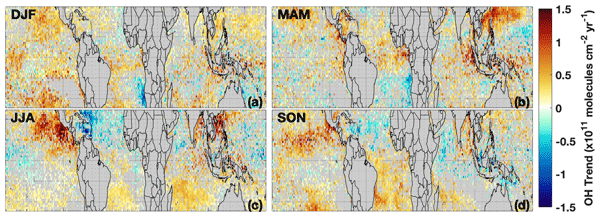
Trace gases emitted to or formed within the atmosphere may be chemically or physically removed from the atmosphere. One trace gas, the hydroxyl radical (OH), is responsible for initiating the chemical removal of many trace gases, including some greenhouse gases. Despite its importance, scientists have not been able to adequately measure OH. In this opinion piece, we discuss promising new methods to indirectly constrain OH using satellite data of trace gases that control the abundance of OH.
T. Nash Skipper, Emma L. D'Ambro, Forwood C. Wiser, V. Faye McNeill, Rebecca H. Schwantes, Barron H. Henderson, Ivan R. Piletic, Colleen B. Baublitz, Jesse O. Bash, Andrew R. Whitehill, Lukas C. Valin, Asher P. Mouat, Jennifer Kaiser, Glenn M. Wolfe, Jason M. St. Clair, Thomas F. Hanisco, Alan Fried, Bryan K. Place, and Havala O.T. Pye
Atmos. Chem. Phys., 24, 12903–12924, https://doi.org/10.5194/acp-24-12903-2024, https://doi.org/10.5194/acp-24-12903-2024, 2024
Short summary
Short summary
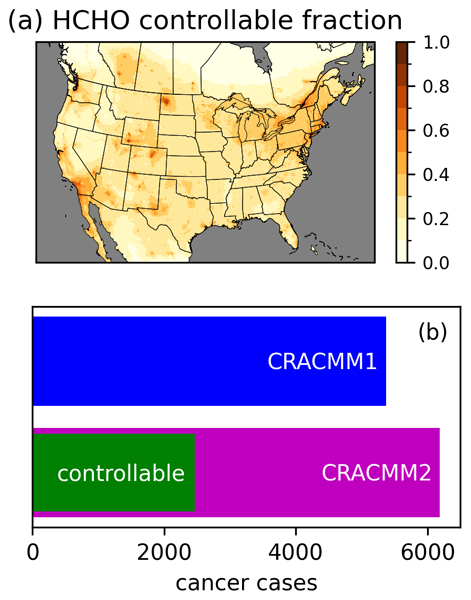
We develop the Community Regional Atmospheric Chemistry Multiphase Mechanism (CRACMM) version 2 to improve predictions of formaldehyde in ambient air compared to satellite-, aircraft-, and ground-based observations. With the updated chemistry, we estimate the cancer risk from inhalation exposure to ambient formaldehyde across the contiguous USA and predict that 40 % of this risk is controllable through reductions in anthropogenic emissions of nitrogen oxides and reactive organic carbon.
Steven A. Bailey, Reem A. Hannun, Andrew K. Swanson, and Thomas F. Hanisco
Atmos. Meas. Tech., 17, 5903–5910, https://doi.org/10.5194/amt-17-5903-2024, https://doi.org/10.5194/amt-17-5903-2024, 2024
Short summary
Short summary
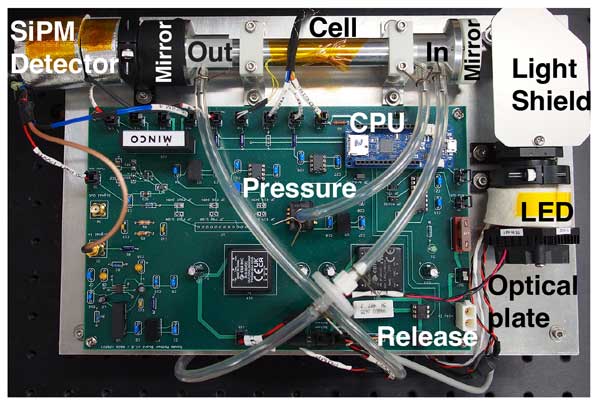
We have developed a portable, optically based instrument that measures NO2. It consumes less than 6 W of power, so it can easily run off a small battery. This instrument has made both balloon and UAV flights. NO2 measurement results compare favorably with other known NO2 instruments. We find this instrument to be stable with repeatable results compared with calibration sources. Material cost to build a single instrument is around USD 4000. This could be lowered with economies of scale.
Andrea E. Gordon, Cameron R. Homeyer, Jessica B. Smith, Rei Ueyama, Jonathan M. Dean-Day, Elliot L. Atlas, Kate Smith, Jasna V. Pittman, David S. Sayres, David M. Wilmouth, Apoorva Pandey, Jason M. St. Clair, Thomas F. Hanisco, Jennifer Hare, Reem A. Hannun, Steven Wofsy, Bruce C. Daube, and Stephen Donnelly
Atmos. Chem. Phys., 24, 7591–7608, https://doi.org/10.5194/acp-24-7591-2024, https://doi.org/10.5194/acp-24-7591-2024, 2024
Short summary
Short summary
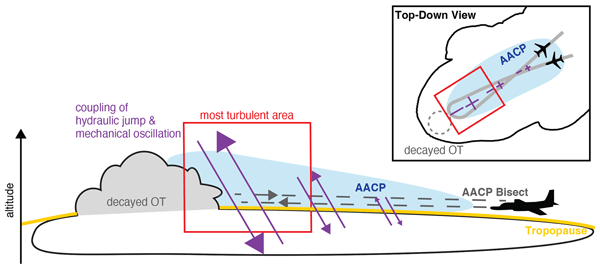
In situ airborne observations of ongoing tropopause-overshooting convection and an above-anvil cirrus plume from the 31 May 2022 flight of the Dynamics and Chemistry of the Summer Stratosphere (DCOTSS) field campaign are examined. Upper troposphere and lower stratosphere composition changes are evaluated along with possible contributing dynamical and physical processes. Measurements reveal multiple changes in air mass composition and stratospheric hydration throughout the flight.
Georgios I. Gkatzelis, Matthew M. Coggon, Chelsea E. Stockwell, Rebecca S. Hornbrook, Hannah Allen, Eric C. Apel, Megan M. Bela, Donald R. Blake, Ilann Bourgeois, Steven S. Brown, Pedro Campuzano-Jost, Jason M. St. Clair, James H. Crawford, John D. Crounse, Douglas A. Day, Joshua P. DiGangi, Glenn S. Diskin, Alan Fried, Jessica B. Gilman, Hongyu Guo, Johnathan W. Hair, Hannah S. Halliday, Thomas F. Hanisco, Reem Hannun, Alan Hills, L. Gregory Huey, Jose L. Jimenez, Joseph M. Katich, Aaron Lamplugh, Young Ro Lee, Jin Liao, Jakob Lindaas, Stuart A. McKeen, Tomas Mikoviny, Benjamin A. Nault, J. Andrew Neuman, John B. Nowak, Demetrios Pagonis, Jeff Peischl, Anne E. Perring, Felix Piel, Pamela S. Rickly, Michael A. Robinson, Andrew W. Rollins, Thomas B. Ryerson, Melinda K. Schueneman, Rebecca H. Schwantes, Joshua P. Schwarz, Kanako Sekimoto, Vanessa Selimovic, Taylor Shingler, David J. Tanner, Laura Tomsche, Krystal T. Vasquez, Patrick R. Veres, Rebecca Washenfelder, Petter Weibring, Paul O. Wennberg, Armin Wisthaler, Glenn M. Wolfe, Caroline C. Womack, Lu Xu, Katherine Ball, Robert J. Yokelson, and Carsten Warneke
Atmos. Chem. Phys., 24, 929–956, https://doi.org/10.5194/acp-24-929-2024, https://doi.org/10.5194/acp-24-929-2024, 2024
Short summary
Short summary
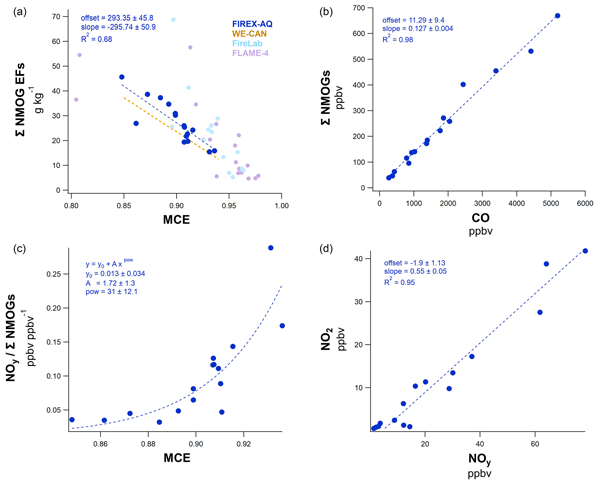
This study reports emissions of gases and particles from wildfires. These emissions are related to chemical proxies that can be measured by satellite and incorporated into models to improve predictions of wildfire impacts on air quality and climate.
Paul Konopka, Christian Rolf, Marc von Hobe, Sergey M. Khaykin, Benjamin Clouser, Elisabeth Moyer, Fabrizio Ravegnani, Francesco D'Amato, Silvia Viciani, Nicole Spelten, Armin Afchine, Martina Krämer, Fred Stroh, and Felix Ploeger
Atmos. Chem. Phys., 23, 12935–12947, https://doi.org/10.5194/acp-23-12935-2023, https://doi.org/10.5194/acp-23-12935-2023, 2023
Short summary
Short summary
We studied water vapor in a critical region of the atmosphere, the Asian summer monsoon anticyclone, using rare in situ observations. Our study shows that extremely high water vapor values observed in the stratosphere within the Asian monsoon anticyclone still undergo significant freeze-drying and that water vapor concentrations set by the Lagrangian dry point are a better proxy for the stratospheric water vapor budget than rare observations of enhanced water mixing ratios.
Serin Kim, Daewon Kim, Hyunkee Hong, Lim-Seok Chang, Hanlim Lee, Deok-Rae Kim, Donghee Kim, Jeong-Ah Yu, Dongwon Lee, Ukkyo Jeong, Chang-Kuen Song, Sang-Woo Kim, Sang Seo Park, Jhoon Kim, Thomas F. Hanisco, Junsung Park, Wonei Choi, and Kwangyul Lee
Atmos. Meas. Tech., 16, 3959–3972, https://doi.org/10.5194/amt-16-3959-2023, https://doi.org/10.5194/amt-16-3959-2023, 2023
Short summary
Short summary
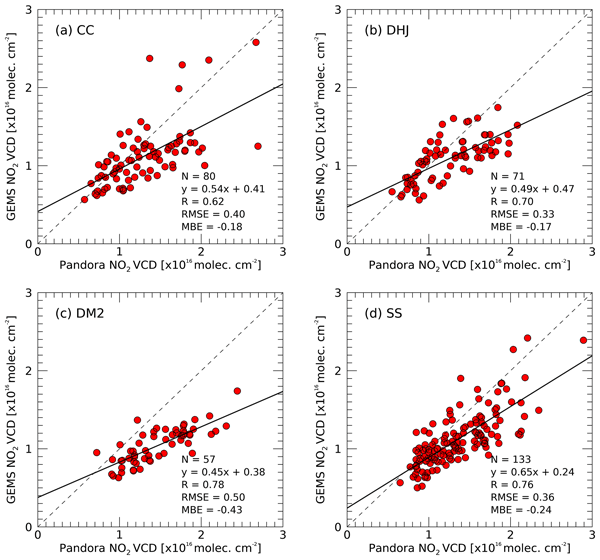
A first evaluation of the Geostationary Environmental Monitoring Spectrometer (GEMS) NO2 was carried out via comparison with the NO2 data obtained from the ground-based Pandora direct-sun measurements at four sites in Seosan, Republic of Korea. Comparisons between GEMS NO2 and Pandora NO2 were performed according to GEMS cloud fraction. GEMS NO2 showed good agreement with that of Pandora NO2 under less cloudy conditions.
Emma L. Yates, Laura T. Iraci, Susan S. Kulawik, Ju-Mee Ryoo, Josette E. Marrero, Caroline L. Parworth, Jason M. St. Clair, Thomas F. Hanisco, Thao Paul V. Bui, Cecilia S. Chang, and Jonathan M. Dean-Day
Earth Syst. Sci. Data, 15, 2375–2389, https://doi.org/10.5194/essd-15-2375-2023, https://doi.org/10.5194/essd-15-2375-2023, 2023
Short summary
Short summary
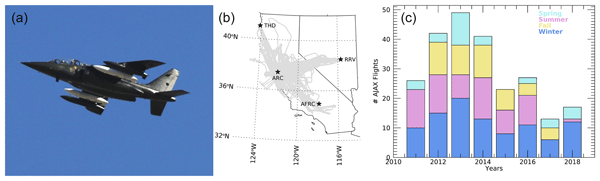
The Alpha Jet Atmospheric eXperiment (AJAX) flew scientific flights between 2011 and 2018 providing measurements of carbon dioxide, methane, ozone, formaldehyde, water vapor and meteorological parameters over California and Nevada, USA. AJAX was a multi-year, multi-objective, multi-instrument program with a variety of sampling strategies resulting in an extensive dataset of interest to a wide variety of users. AJAX measurements have been published at https://asdc.larc.nasa.gov/project/AJAX.
Kara D. Lamb, Jerry Y. Harrington, Benjamin W. Clouser, Elisabeth J. Moyer, Laszlo Sarkozy, Volker Ebert, Ottmar Möhler, and Harald Saathoff
Atmos. Chem. Phys., 23, 6043–6064, https://doi.org/10.5194/acp-23-6043-2023, https://doi.org/10.5194/acp-23-6043-2023, 2023
Short summary
Short summary
This study investigates how ice grows directly from vapor in cirrus clouds by comparing observations of populations of ice crystals growing in a cloud chamber against models developed in the context of single-crystal laboratory studies. We demonstrate that previous discrepancies between different experimental measurements do not necessarily point to different physical interpretations but are rather due to assumptions that were made in terms of how experiments were modeled in previous studies.
Hao Guo, Clare M. Flynn, Michael J. Prather, Sarah A. Strode, Stephen D. Steenrod, Louisa Emmons, Forrest Lacey, Jean-Francois Lamarque, Arlene M. Fiore, Gus Correa, Lee T. Murray, Glenn M. Wolfe, Jason M. St. Clair, Michelle Kim, John Crounse, Glenn Diskin, Joshua DiGangi, Bruce C. Daube, Roisin Commane, Kathryn McKain, Jeff Peischl, Thomas B. Ryerson, Chelsea Thompson, Thomas F. Hanisco, Donald Blake, Nicola J. Blake, Eric C. Apel, Rebecca S. Hornbrook, James W. Elkins, Eric J. Hintsa, Fred L. Moore, and Steven C. Wofsy
Atmos. Chem. Phys., 23, 99–117, https://doi.org/10.5194/acp-23-99-2023, https://doi.org/10.5194/acp-23-99-2023, 2023
Short summary
Short summary
We have prepared a unique and unusual result from the recent ATom aircraft mission: a measurement-based derivation of the production and loss rates of ozone and methane over the ocean basins. These are the key products of chemistry models used in assessments but have thus far lacked observational metrics. It also shows the scales of variability of atmospheric chemical rates and provides a major challenge to the atmospheric models.
Pamela S. Rickly, Hongyu Guo, Pedro Campuzano-Jost, Jose L. Jimenez, Glenn M. Wolfe, Ryan Bennett, Ilann Bourgeois, John D. Crounse, Jack E. Dibb, Joshua P. DiGangi, Glenn S. Diskin, Maximilian Dollner, Emily M. Gargulinski, Samuel R. Hall, Hannah S. Halliday, Thomas F. Hanisco, Reem A. Hannun, Jin Liao, Richard Moore, Benjamin A. Nault, John B. Nowak, Jeff Peischl, Claire E. Robinson, Thomas Ryerson, Kevin J. Sanchez, Manuel Schöberl, Amber J. Soja, Jason M. St. Clair, Kenneth L. Thornhill, Kirk Ullmann, Paul O. Wennberg, Bernadett Weinzierl, Elizabeth B. Wiggins, Edward L. Winstead, and Andrew W. Rollins
Atmos. Chem. Phys., 22, 15603–15620, https://doi.org/10.5194/acp-22-15603-2022, https://doi.org/10.5194/acp-22-15603-2022, 2022
Short summary
Short summary
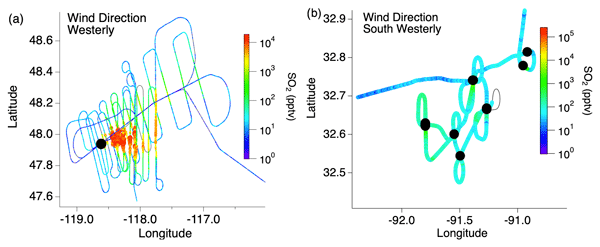
Biomass burning sulfur dioxide (SO2) emission factors range from 0.27–1.1 g kg-1 C. Biomass burning SO2 can quickly form sulfate and organosulfur, but these pathways are dependent on liquid water content and pH. Hydroxymethanesulfonate (HMS) appears to be directly emitted from some fire sources but is not the sole contributor to the organosulfur signal. It is shown that HMS and organosulfur chemistry may be an important S(IV) reservoir with the fate dependent on the surrounding conditions.
Ilann Bourgeois, Jeff Peischl, J. Andrew Neuman, Steven S. Brown, Hannah M. Allen, Pedro Campuzano-Jost, Matthew M. Coggon, Joshua P. DiGangi, Glenn S. Diskin, Jessica B. Gilman, Georgios I. Gkatzelis, Hongyu Guo, Hannah A. Halliday, Thomas F. Hanisco, Christopher D. Holmes, L. Gregory Huey, Jose L. Jimenez, Aaron D. Lamplugh, Young Ro Lee, Jakob Lindaas, Richard H. Moore, Benjamin A. Nault, John B. Nowak, Demetrios Pagonis, Pamela S. Rickly, Michael A. Robinson, Andrew W. Rollins, Vanessa Selimovic, Jason M. St. Clair, David Tanner, Krystal T. Vasquez, Patrick R. Veres, Carsten Warneke, Paul O. Wennberg, Rebecca A. Washenfelder, Elizabeth B. Wiggins, Caroline C. Womack, Lu Xu, Kyle J. Zarzana, and Thomas B. Ryerson
Atmos. Meas. Tech., 15, 4901–4930, https://doi.org/10.5194/amt-15-4901-2022, https://doi.org/10.5194/amt-15-4901-2022, 2022
Short summary
Short summary
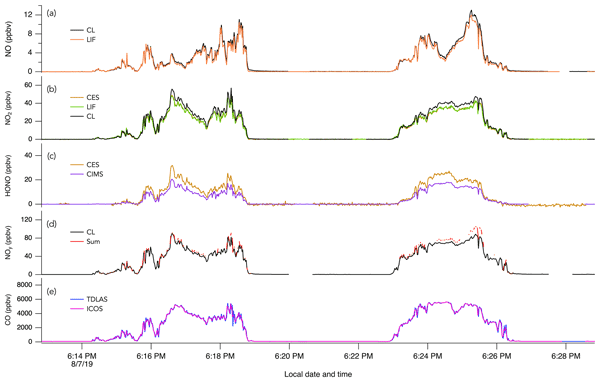
Understanding fire emission impacts on the atmosphere is key to effective air quality management and requires accurate measurements. We present a comparison of airborne measurements of key atmospheric species in ambient air and in fire smoke. We show that most instruments performed within instrument uncertainties. In some cases, further work is needed to fully characterize instrument performance. Comparing independent measurements using different techniques is important to assess their accuracy.
Clare E. Singer, Benjamin W. Clouser, Sergey M. Khaykin, Martina Krämer, Francesco Cairo, Thomas Peter, Alexey Lykov, Christian Rolf, Nicole Spelten, Armin Afchine, Simone Brunamonti, and Elisabeth J. Moyer
Atmos. Meas. Tech., 15, 4767–4783, https://doi.org/10.5194/amt-15-4767-2022, https://doi.org/10.5194/amt-15-4767-2022, 2022
Short summary
Short summary
In situ measurements of water vapor in the upper troposphere are necessary to study cloud formation and hydration of the stratosphere but challenging due to cold–dry conditions. We compare measurements from three water vapor instruments from the StratoClim campaign in 2017. In clear sky (clouds), point-by-point differences were <1.5±8 % (<1±8 %). This excellent agreement allows detection of fine-scale structures required to understand the impact of convection on stratospheric water vapor.
Tianlang Zhao, Jingqiu Mao, William R. Simpson, Isabelle De Smedt, Lei Zhu, Thomas F. Hanisco, Glenn M. Wolfe, Jason M. St. Clair, Gonzalo González Abad, Caroline R. Nowlan, Barbara Barletta, Simone Meinardi, Donald R. Blake, Eric C. Apel, and Rebecca S. Hornbrook
Atmos. Chem. Phys., 22, 7163–7178, https://doi.org/10.5194/acp-22-7163-2022, https://doi.org/10.5194/acp-22-7163-2022, 2022
Short summary
Short summary
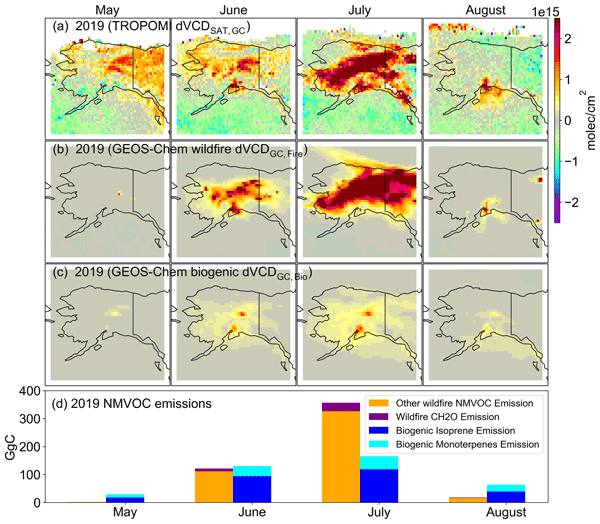
Monitoring formaldehyde (HCHO) can help us understand Arctic vegetation change. Here, we compare satellite data and model and show that Alaska summertime HCHO is largely dominated by a background from methane oxidation during mild wildfire years and is dominated by wildfire (largely from direct emission of fire) during strong fire years. Consequently, it is challenging to use satellite HCHO to study vegetation change in the Arctic region.
Glenn M. Wolfe, Thomas F. Hanisco, Heather L. Arkinson, Donald R. Blake, Armin Wisthaler, Tomas Mikoviny, Thomas B. Ryerson, Ilana Pollack, Jeff Peischl, Paul O. Wennberg, John D. Crounse, Jason M. St. Clair, Alex Teng, L. Gregory Huey, Xiaoxi Liu, Alan Fried, Petter Weibring, Dirk Richter, James Walega, Samuel R. Hall, Kirk Ullmann, Jose L. Jimenez, Pedro Campuzano-Jost, T. Paul Bui, Glenn Diskin, James R. Podolske, Glen Sachse, and Ronald C. Cohen
Atmos. Chem. Phys., 22, 4253–4275, https://doi.org/10.5194/acp-22-4253-2022, https://doi.org/10.5194/acp-22-4253-2022, 2022
Short summary
Short summary
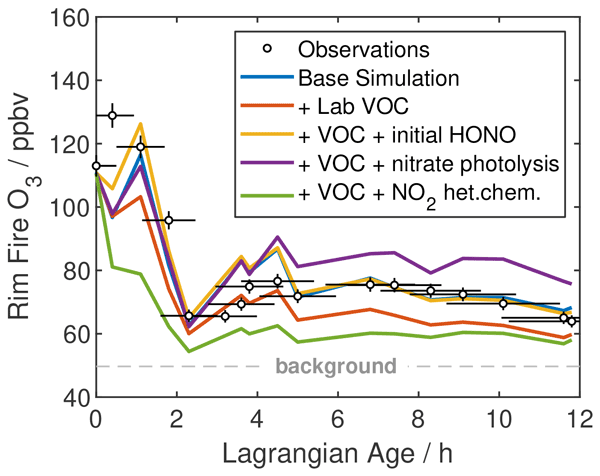
Smoke plumes are chemically complex. This work combines airborne observations of smoke plume composition with a photochemical model to probe the production of ozone and the fate of reactive gases in the outflow of a large wildfire. Model–measurement comparisons illustrate how uncertain emissions and chemical processes propagate into simulated chemical evolution. Results provide insight into how this system responds to perturbations, which can help guide future observation and modeling efforts.
Sergey M. Khaykin, Elizabeth Moyer, Martina Krämer, Benjamin Clouser, Silvia Bucci, Bernard Legras, Alexey Lykov, Armin Afchine, Francesco Cairo, Ivan Formanyuk, Valentin Mitev, Renaud Matthey, Christian Rolf, Clare E. Singer, Nicole Spelten, Vasiliy Volkov, Vladimir Yushkov, and Fred Stroh
Atmos. Chem. Phys., 22, 3169–3189, https://doi.org/10.5194/acp-22-3169-2022, https://doi.org/10.5194/acp-22-3169-2022, 2022
Short summary
Short summary
The Asian monsoon anticyclone is the key contributor to the global annual maximum in lower stratospheric water vapour. We investigate the impact of deep convection on the lower stratospheric water using a unique set of observations aboard the high-altitude M55-Geophysica aircraft deployed in Nepal in summer 2017 within the EU StratoClim project. We find that convective plumes of wet air can persist within the Asian anticyclone for weeks, thereby enhancing the occurrence of high-level clouds.
Jin Liao, Glenn M. Wolfe, Reem A. Hannun, Jason M. St. Clair, Thomas F. Hanisco, Jessica B. Gilman, Aaron Lamplugh, Vanessa Selimovic, Glenn S. Diskin, John B. Nowak, Hannah S. Halliday, Joshua P. DiGangi, Samuel R. Hall, Kirk Ullmann, Christopher D. Holmes, Charles H. Fite, Anxhelo Agastra, Thomas B. Ryerson, Jeff Peischl, Ilann Bourgeois, Carsten Warneke, Matthew M. Coggon, Georgios I. Gkatzelis, Kanako Sekimoto, Alan Fried, Dirk Richter, Petter Weibring, Eric C. Apel, Rebecca S. Hornbrook, Steven S. Brown, Caroline C. Womack, Michael A. Robinson, Rebecca A. Washenfelder, Patrick R. Veres, and J. Andrew Neuman
Atmos. Chem. Phys., 21, 18319–18331, https://doi.org/10.5194/acp-21-18319-2021, https://doi.org/10.5194/acp-21-18319-2021, 2021
Short summary
Short summary
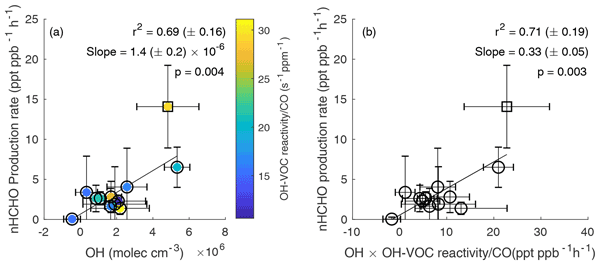
Formaldehyde (HCHO) is an important oxidant precursor and affects the formation of O3 and other secondary pollutants in wildfire plumes. We disentangle the processes controlling HCHO evolution from wildfire plumes sampled by NASA DC-8 during FIREX-AQ. We find that OH abundance rather than normalized OH reactivity is the main driver of fire-to-fire variability in HCHO secondary production and estimate an effective HCHO yield per volatile organic compound molecule oxidized in wildfire plumes.
Cited articles
ACCLIP Team: ACCLIP Campaign Data, National Aeronautics and Space Administration [data set], https://www-air.larc.nasa.gov/missions/acclip/index.html (last access: 15 May 2025), 2022. a
Bernath, P. F., McElroy, C. T., Abrams, M. C., Boone, C. D., Butler, M., Camy-Peyret, C., Carleer, M., Clerbaux, C., Coheur, P.-F., Colin, R., DeCola, P., DeMazière, M., Drummond, J. R., Dufour, D., Evans, W. F. J., Fast, H., Fussen, D., Gilbert, K., Jennings, D. E., Llewellyn, E. J., Lowe, R. P., Mahieu, E., McConnell, J. C., McHugh, M., McLeod, S. D., Michaud, R., Midwinter, C., Nassar, R., Nichitiu, F., Nowlan, C., Rinsland, C. P., Rochon, Y. J., Rowlands, N., Semeniuk, K., Simon, P., Skelton, R., Sloan, J. J., Soucy, M.-A., Strong, K., Tremblay, P., Turnbull, D., Walker, K. A., Walkty, I., Wardle, D. A., Wehrle, V., Zander, R., and Zou, J.: Atmospheric Chemistry Experiment (ACE): Mission overview, Geophys. Res. Lett., 32, https://doi.org/10.1029/2005GL022386, 2005. a, b
Boone, C., Bernath, P., and Lecours, M.: Version 5 retrievals for ACE-FTS and ACE-imagers, J. Quant. Spectrosc. Ra., 310, 108749, https://doi.org/10.1016/j.jqsrt.2023.108749, 2023. a
Boone, C. D., Nassar, R., Walker, K. A., Rochon, Y., McLeod, S. D., Rinsland, C. P., and Bernath, P. F.: Retrievals for the atmospheric chemistry experiment Fourier-transform spectrometer, Appl. Optics, 44, 7218–7231, https://doi.org/10.1364/AO.44.007218, 2005. a, b
Cairo, F., Di Donfrancesco, G., Snels, M., Fierli, F., Viterbini, M., Borrmann, S., and Frey, W.: A comparison of light backscattering and particle size distribution measurements in tropical cirrus clouds, Atmos. Meas. Tech., 4, 557–570, https://doi.org/10.5194/amt-4-557-2011, 2011. a
Charlesworth, E., Plöger, F., Birner, T., Baikhadzhaev, R., Abalos, M., Abraham, N. L., Akiyoshi, H., Bekki, S., Dennison, F., Jöckel, P., Keeble, J., Kinnison, D., Morgenstern, O., Plummer, D., Rozanov, E., Strode, S., Zeng, G., Egorova, T., and Riese, M.: Stratospheric water vapor affecting atmospheric circulation, Nat. Commun., 14, 3925, https://doi.org/10.1038/s41467-023-39559-2, 2023. a
Clouser, B. W., Sarkozy, L. C., Singer, C. E., KleinStern, C. C., Desmoulin, A., Gaeta, D., Khaykin, S., Gabbard, S., Shertz, S., and Moyer, E. J.: The airborne chicago water isotope spectrometer: an integrated cavity output spectrometer for measurements of the
De Los Ríos, K., Ordoñez, P., Stiller, G. P., Raspollini, P., Gai, M., Walker, K. A., Peña-Ortiz, C., and Acosta, L.: Comparison of the H2O, HDO and δD stratospheric climatologies between the MIPAS-ESA V8, MIPAS-IMK V5 and ACE-FTS V4.1/4.2 satellite datasets, Atmos. Meas. Tech., 17, 3401–3418, https://doi.org/10.5194/amt-17-3401-2024, 2024. a
Dessler, A. E., Schoeberl, M. R., Wang, T., Davis, S. M., and Rosenlof, K. H.: Stratospheric water vapor feedback, P. Natl. Acad. Sci. USA, 110, 18087–18091, https://doi.org/10.1073/pnas.1310344110, 2013. a
Dollner, M., Gasteiger, J., Schöberl, M., Gattringer, A., Beres, N. D., Bui, P. T., Diskin, G., and Weinzierl, B.: The Cloud Indicator: A novel algorithm for automatic detection and classification of clouds using airborne in situ observations, Atmos. Res., 308, 107504, https://doi.org/10.1016/j.atmosres.2024.107504, 2024. a
Eichinger, R., Jöckel, P., Brinkop, S., Werner, M., and Lossow, S.: Simulation of the isotopic composition of stratospheric water vapour – Part 1: Description and evaluation of the EMAC model, Atmos. Chem. Phys., 15, 5537–5555, https://doi.org/10.5194/acp-15-5537-2015, 2015. a
Eremenko, M. N., Zasetsky, A. Y., Boone, C. D., and Sloan, J. J.: Properties of high-altitude tropical cirrus clouds determined from ACE FTS observations, Geophys. Res. Lett., 32, https://doi.org/10.1029/2005GL022428, 2005. a
Fahey, D. W., Gao, R.-S., Möhler, O., Saathoff, H., Schiller, C., Ebert, V., Krämer, M., Peter, T., Amarouche, N., Avallone, L. M., Bauer, R., Bozóki, Z., Christensen, L. E., Davis, S. M., Durry, G., Dyroff, C., Herman, R. L., Hunsmann, S., Khaykin, S. M., Mackrodt, P., Meyer, J., Smith, J. B., Spelten, N., Troy, R. F., Vömel, H., Wagner, S., and Wienhold, F. G.: The AquaVIT-1 intercomparison of atmospheric water vapor measurement techniques, Atmos. Meas. Tech., 7, 3177–3213, https://doi.org/10.5194/amt-7-3177-2014, 2014. a
Farmer, C. B.: High resolution infrared spectroscopy of the Sun and the Earth's atmosphere from space, Microchim. Acta, 93, 189–214, 1987. a
Fischer, H., Birk, M., Blom, C., Carli, B., Carlotti, M., von Clarmann, T., Delbouille, L., Dudhia, A., Ehhalt, D., Endemann, M., Flaud, J. M., Gessner, R., Kleinert, A., Koopman, R., Langen, J., López-Puertas, M., Mosner, P., Nett, H., Oelhaf, H., Perron, G., Remedios, J., Ridolfi, M., Stiller, G., and Zander, R.: MIPAS: an instrument for atmospheric and climate research, Atmos. Chem. Phys., 8, 2151–2188, https://doi.org/10.5194/acp-8-2151-2008, 2008. a
Fueglistaler, S., Dessler, A. E., Dunkerton, T. J., Folkins, I., Fu, Q., and Mote, P. W.: Tropical tropopause layer, Rev. Geophys., 47, https://doi.org/10.1029/2008RG000267, 2009. a, b
Galewsky, J., Steen-Larsen, H. C., Field, R. D., Worden, J., Risi, C., and Schneider, M.: Stable isotopes in atmospheric water vapor and applications to the hydrologic cycle, Rev. Geophys., 54, 809–865, https://doi.org/10.1002/2015RG000512, 2016. a
Gettelman, A., Kinnison, D. E., Dunkerton, T. J., and Brasseur, G. P.: Impact of monsoon circulations on the upper troposphere and lower stratosphere, J. Geophys. Res.-Atmos., 109, https://doi.org/10.1029/2004JD004878, 2004. a
Gordon, I., Rothman, L., Hargreaves, R., Hashemi, R., Karlovets, E., Skinner, F., Conway, E., Hill, C., Kochanov, R., Tan, Y., Wcisło, P., Finenko, A., Nelson, K., Bernath, P., Birk, M., Boudon, V., Campargue, A., Chance, K., Coustenis, A., Drouin, B., Flaud, J., Gamache, R., Hodges, J., Jacquemart, D., Mlawer, E., Nikitin, A., Perevalov, V., Rotger, M., Tennyson, J., Toon, G., Tran, H., Tyuterev, V., Adkins, E., Baker, A., Barbe, A., Canè, E., Császár, A., Dudaryonok, A., Egorov, O., Fleisher, A., Fleurbaey, H., Foltynowicz, A., Furtenbacher, T., Harrison, J., Hartmann, J., Horneman, V., Huang, X., Karman, T., Karns, J., Kassi, S., Kleiner, I., Kofman, V., Kwabia–Tchana, F., Lavrentieva, N., Lee, T., Long, D., Lukashevskaya, A., Lyulin, O., Makhnev, V., Matt, W., Massie, S., Melosso, M., Mikhailenko, S., Mondelain, D., Müller, H., Naumenko, O., Perrin, A., Polyansky, O., Raddaoui, E., Raston, P., Reed, Z., Rey, M., Richard, C., Tóbiás, R., Sadiek, I., Schwenke, D., Starikova, E., Sung, K., Tamassia, F., Tashkun, S., Vander Auwera, J., Vasilenko, I., Vigasin, A., Villanueva, G., Vispoel, B., Wagner, G., Yachmenev, A., and Yurchenko, S.: The HITRAN2020 molecular spectroscopic database, J. Quant. Spectrosc. Ra., 277, 107949, https://doi.org/10.1016/j.jqsrt.2021.107949, 2022. a
Hagemann, R., Nief, G., and Roth, E.: Absolute isotopic scale for deuterium analysis of natural waters. Absolute
Hanisco, T. F., Moyer, E. J., Weinstock, E. M., St. Clair, J. M., Sayres, D. S., Smith, J. B., Lockwood, R., Anderson, J. G., Dessler, A. E., Keutsch, F. N., Spackman, J. R., Read, W. G., and Bui, T. P.: Observations of deep convective influence on stratospheric water vapor and its isotopic composition, Geophys. Res. Lett., 34, https://doi.org/10.1029/2006GL027899, 2007. a, b
Held, I. M. and Soden, B. J.: Water Vapor Feedback and Global Warming, Annu. Rev. Env. Resour., 25, 441–475, https://doi.org/10.1146/annurev.energy.25.1.441, 2000. a
Herbin, H., Hurtmans, D., Clerbaux, C., Clarisse, L., and Coheur, P.-F.:
Hintsa, E. J., Weinstock, E. M., Anderson, J. G., May, R. D., and Hurst, D. F.: On the accuracy of in situ water vapor measurements in the troposphere and lower stratosphere with the Harvard Lyman-α hygrometer, J. Geophys. Res.-Atmos., 104, 8183–8189, https://doi.org/10.1029/1998JD100110, 1999. a
Hoffmann, L. and Spang, R.: An assessment of tropopause characteristics of the ERA5 and ERA-Interim meteorological reanalyses, Atmos. Chem. Phys., 22, 4019–4046, https://doi.org/10.5194/acp-22-4019-2022, 2022. a
Högberg, C., Lossow, S., Khosrawi, F., Bauer, R., Walker, K. A., Eriksson, P., Murtagh, D. P., Stiller, G. P., Steinwagner, J., and Zhang, Q.: The SPARC water vapour assessment II: profile-to-profile and climatological comparisons of stratospheric δD(H2O) observations from satellite, Atmos. Chem. Phys., 19, 2497–2526, https://doi.org/10.5194/acp-19-2497-2019, 2019. a
Irion, F. W., Moyer, E. J., Gunson, M. R., Rinsland, C. P., Yung, Y. L., Michelsen, H. A., Salawitch, R. J., Chang, A. Y., Newchurch, M. J., Abbas, M. M., Abrams, M. C., and Zander, R.: Stratospheric observations of CH3D and HDO from ATMOS infrared solar spectra: Enrichments of deuterium in methane and implications for HD, Geophys. Res. Lett., 23, 2381–2384, https://doi.org/10.1029/96GL01402, 1996. a
Keeble, J., Hassler, B., Banerjee, A., Checa-Garcia, R., Chiodo, G., Davis, S., Eyring, V., Griffiths, P. T., Morgenstern, O., Nowack, P., Zeng, G., Zhang, J., Bodeker, G., Burrows, S., Cameron-Smith, P., Cugnet, D., Danek, C., Deushi, M., Horowitz, L. W., Kubin, A., Li, L., Lohmann, G., Michou, M., Mills, M. J., Nabat, P., Olivié, D., Park, S., Seland, Ø., Stoll, J., Wieners, K.-H., and Wu, T.: Evaluating stratospheric ozone and water vapour changes in CMIP6 models from 1850 to 2100, Atmos. Chem. Phys., 21, 5015–5061, https://doi.org/10.5194/acp-21-5015-2021, 2021. a
Khaykin, S., Podglajen, A., Ploeger, F., Grooß, J.-U., Tencé, F., Bekki, S., Khlopenkov, K., Bedka, K., Rieger, L., Baron, A., Godin-Beekmann, S., Legras, B., Sellitto, P., Sakai, T., Barnes, J., Uchino, O., Morino, I., Nagai, T., Wing, R., Baumgarten, G., Gerding, M., Duflot, V., Payen, G., Jumelet, J., Querel, R., Liley, B., Bourassa, A., Clouser, B., Feofilov, A., Hauchecorne, A., and Ravetta, F: Global perturbation of stratospheric water and aerosol burden by Hunga eruption, Communications Earth & Environment, 3, 316, https://doi.org/10.1038/s43247-022-00652-x, 2022a. a
Khaykin, S. M., Moyer, E., Krämer, M., Clouser, B., Bucci, S., Legras, B., Lykov, A., Afchine, A., Cairo, F., Formanyuk, I., Mitev, V., Matthey, R., Rolf, C., Singer, C. E., Spelten, N., Volkov, V., Yushkov, V., and Stroh, F.: Persistence of moist plumes from overshooting convection in the Asian monsoon anticyclone, Atmos. Chem. Phys., 22, 3169–3189, https://doi.org/10.5194/acp-22-3169-2022, 2022b. a
Krämer, M., Rolf, C., Luebke, A., Afchine, A., Spelten, N., Costa, A., Meyer, J., Zöger, M., Smith, J., Herman, R. L., Buchholz, B., Ebert, V., Baumgardner, D., Borrmann, S., Klingebiel, M., and Avallone, L.: A microphysics guide to cirrus clouds – Part 1: Cirrus types, Atmos. Chem. Phys., 16, 3463–3483, https://doi.org/10.5194/acp-16-3463-2016, 2016. a
Krämer, M., Rolf, C., Spelten, N., Afchine, A., Fahey, D., Jensen, E., Khaykin, S., Kuhn, T., Lawson, P., Lykov, A., Pan, L. L., Riese, M., Rollins, A., Stroh, F., Thornberry, T., Wolf, V., Woods, S., Spichtinger, P., Quaas, J., and Sourdeval, O.: A microphysics guide to cirrus – Part 2: Climatologies of clouds and humidity from observations, Atmos. Chem. Phys., 20, 12569–12608, https://doi.org/10.5194/acp-20-12569-2020, 2020. a
Kremser, S., Wohltmann, I., Rex, M., Langematz, U., Dameris, M., and Kunze, M.: Water vapour transport in the tropical tropopause region in coupled Chemistry-Climate Models and ERA-40 reanalysis data, Atmos. Chem. Phys., 9, 2679–2694, https://doi.org/10.5194/acp-9-2679-2009, 2009. a
Kuang, Z., Toon, G. C., Wennberg, P. O., and Yung, Y. L.: Measured
Liuzzi, G., Masiello, G., Serio, C., Venafra, S., and Camy-Peyret, C.: Physical inversion of the full IASI spectra: Assessment of atmospheric parameters retrievals, consistency of spectroscopy and forward modelling, J. Quant. Spectrosc. Ra., 182, 128–157, https://doi.org/10.1016/j.jqsrt.2016.05.022, 2016. a, b
Lossow, S., Steinwagner, J., Urban, J., Dupuy, E., Boone, C. D., Kellmann, S., Linden, A., Kiefer, M., Grabowski, U., Glatthor, N., Höpfner, M., Röckmann, T., Murtagh, D. P., Walker, K. A., Bernath, P. F., von Clarmann, T., and Stiller, G. P.: Comparison of HDO measurements from Envisat/MIPAS with observations by Odin/SMR and SCISAT/ACE-FTS, Atmos. Meas. Tech., 4, 1855–1874, https://doi.org/10.5194/amt-4-1855-2011, 2011. a
Lossow, S., Högberg, C., Khosrawi, F., Stiller, G. P., Bauer, R., Walker, K. A., Kellmann, S., Linden, A., Kiefer, M., Glatthor, N., von Clarmann, T., Murtagh, D. P., Steinwagner, J., Röckmann, T., and Eichinger, R.: A reassessment of the discrepancies in the annual variation of δD-H2O in the tropical lower stratosphere between the MIPAS and ACE-FTS satellite data sets, Atmos. Meas. Tech., 13, 287–308, https://doi.org/10.5194/amt-13-287-2020, 2020. a
Louet, J. and Bruzzi, S.: ENVISAT mission and system, in: IEEE 1999 International Geoscience and Remote Sensing Symposium, IGARSS'99, Cat. No. 99CH36293, IEEE, 3, 1680–1682, 1999. a
Moyer, E. J., Irion, F. W., Yung, Y. L., and Gunson, M. R.: ATMOS stratospheric deuterated water and implications for troposphere-stratosphere transport, Geophys. Res. Lett., 23, 2385–2388, https://doi.org/10.1029/96GL01489, 1996. a
Murtagh, D., Frisk, U., Merino, F., Ridal, M., Jonsson, A., Stegman, J., Witt, G., Eriksson, P., Jiménez, C., Megie, G., Noë, J. d. l., Ricaud, P., Baron, P., Pardo, J. R., Hauchcorne, A., Llewellyn, E. J., Degenstein, D. A., Gattinger, R. L., Lloyd, N. D., Evans, W. F., McDade, I. C., Haley, C. S., Sioris, C., Savigny, C. v., Solheim, B. H., McConnell, J. C., Strong, K., Richardson, E. H., Leppelmeier, G. W., Kyrölä, E., Auvinen, H., and Oikarinen, L.: An overview of the Odin atmospheric mission, Can. J. Phys., 80, 309–319, https://doi.org/10.1139/p01-157, 2002. a
Murtagh, D., Skyman, A., Rydberg, B., and Eriksson, P.: Odin/SMR product validation and evolution report, Tech. rep., Technical report, Chalmers 20 University of Technology, Department of Space, 2020. a
NASA ESPO archive: CR-AVE, TC4, AVE-WIIF Campaign Data, National Aeronautics and Space Administration [data set], https://espoarchive.nasa.gov/archive/browse (last access: 25 November, 2025), 2025 a
Nassar, R., Bernath, P. F., Boone, C. D., Gettelman, A., McLeod, S. D., and Rinsland, C. P.: Variability in
Noone, K. J., Ogren, J. A., Heintzenberg, J., Charlson, R. J., and Covert, D. S.: Design and Calibration of a Counterflow Virtual Impactor for Sampling of Atmospheric Fog and Cloud Droplets, Aerosol Sci. Tech., 8, 235–244, https://doi.org/10.1080/02786828808959186, 1988. a
Randel, W. J., Moyer, E., Park, M., Jensen, E., Bernath, P., Walker, K., and Boone, C.: Global variations of HDO and
Rinsland, C., Gunson, M., Wang, P.-H., Arduini, R., Baum, B., Minnis, P., Goldman, A., Abrams, M., Zander, R., Mahiue, E., Salawitch, R., Michelsen, H., Irion, F., and Newchurch, M.: ATMOS/ATLAS 3 infrared profile measurements of clouds in the tropical and subtropical upper troposphere, J. Quant. Spectrosc. Ra., 60, 903–919, https://doi.org/10.1016/S0022-4073(98)00093-4, 1998. a
Sayres, D. S., Moyer, E. J., Hanisco, T. F., St. Clair, J. M., Keutsch, F. N., O'Brien, A., Allen, N. T., Lapson, L., Demusz, J. N., Rivero, M., Martin, T., Greenberg, M., Tuozzolo, C., Engel, G. S., Kroll, J. H., Paul, J. B., and Anderson, J. G.: A new cavity based absorption instrument for detection of water isotopologues in the upper troposphere and lower stratosphere, Rev. Sci. Instrum., 80, 044102, https://doi.org/10.1063/1.3117349, 2009. a, b
Sayres, D. S., Pfister, L., Hanisco, T. F., Moyer, E. J., Smith, J. B., Clair, J. M. S., O'Brien, A. S., Witinski, M. F., Legg, M., and Anderson, J. G.: Influence of convection on the water isotopic composition of the tropical tropopause layer and tropical stratosphere, J. Geophys. Res.-Atmos., 115, D00J20, https://doi.org/10.1029/2009JD013100, 2010. a
Schneider, M., Ertl, B., Diekmann, C. J., Khosrawi, F., Weber, A., Hase, F., Höpfner, M., García, O. E., Sepúlveda, E., and Kinnison, D.: Design and description of the MUSICA IASI full retrieval product, Earth Syst. Sci. Data, 14, 709–742, https://doi.org/10.5194/essd-14-709-2022, 2022. a
Shindell, D. T.: Climate and ozone response to increased stratospheric water vapor, Geophys. Res. Lett., 28, 1551–1554, https://doi.org/10.1029/1999GL011197, 2001. a, b
Singer, C. E., Clouser, B. W., Khaykin, S. M., Krämer, M., Cairo, F., Peter, T., Lykov, A., Rolf, C., Spelten, N., Afchine, A., Brunamonti, S., and Moyer, E. J.: Intercomparison of upper tropospheric and lower stratospheric water vapor measurements over the Asian Summer Monsoon during the StratoClim campaign, Atmos. Meas. Tech., 15, 4767–4783, https://doi.org/10.5194/amt-15-4767-2022, 2022. a
St. Clair, J. M., Hanisco, T. F., Weinstock, E. M., Moyer, E. J., Sayres, D. S., Keutsch, F. N., Kroll, J. H., Demusz, J. N., Allen, N. T., Smith, J. B., Spackman, J. R., and Anderson, J. G.: A new photolysis laser-induced fluorescence instrument for the detection of H2O and HDO in the lower stratosphere, Rev. Sci. Instrum., 79, 064101, https://doi.org/10.1063/1.2940221, 2008. a, b, c
Steinwagner, J., Milz, M., von Clarmann, T., Glatthor, N., Grabowski, U., Höpfner, M., Stiller, G. P., and Röckmann, T.: HDO measurements with MIPAS, Atmos. Chem. Phys., 7, 2601–2615, https://doi.org/10.5194/acp-7-2601-2007, 2007. a
Stenke, A. and Grewe, V.: Simulation of stratospheric water vapor trends: impact on stratospheric ozone chemistry, Atmos. Chem. Phys., 5, 1257–1272, https://doi.org/10.5194/acp-5-1257-2005, 2005. a
StratoClim Team: StratoClim Campaign Data, Deutsches Zentrum fur Luft- und Raumfahrt [data set], https://halo-db.pa.op.dlr.de/mission/101 (last access: 15 May 2025), 2021. a
Thurnherr, I., Sodemann, H., Trent, T., Werner, M., and Bösch, H.: Evaluating TROPOMI δD Column Retrievals With In Situ Airborne Field Campaign Measurements Using Expanded Collocation Criterion, Earth and Space Science, 11, e2023EA003400, https://doi.org/10.1029/2023EA003400, 2024. a
Tritscher, I., Pitts, M. C., Poole, L. R., Alexander, S. P., Cairo, F., and Chipperfield, M. P.: Polar Stratospheric Clouds: Satellite Observations, Processes, and Role in Ozone Depletion, Rev. Geophys., 59, e2020RG000702, https://doi.org/10.1029/2020RG000702, 2021. a
Twohy, C. H., Schanot, A. J., and Cooper, W. A.: Measurement of Condensed Water Content in Liquid and Ice Clouds Using an Airborne Counterflow Virtual Impactor, J. Atmos. Ocean. Tech., 14, 197–202, https://doi.org/10.1175/1520-0426(1997)014<0197:MOCWCI>2.0.CO;2, 1997. a
Webster, C. R. and Heymsfield, A. J.: Water Isotope Ratios
Weinstock, E. M., Hintsa, E. J., Dessler, A. E., Oliver, J. F., Hazen, N. L., Demusz, J. N., Allen, N. T., Lapson, L. B., and Anderson, J. G.: New fast response photofragment fluorescence hygrometer for use on the NASA ER‐2 and the Perseus remotely piloted aircraft, Rev. Sci. Instrum., 65, 3544–3554, https://doi.org/10.1063/1.1144536, 1994. a
Weinstock, E. M., Smith, J. B., Sayres, D., Spackman, J. R., Pittman, J. V., Allen, N., Demusz, J., Greenberg, M., Rivero, M., Solomon, L., and Anderson, J. G.: Measurements of the Total Water Content of Cirrus Clouds. Part I: Instrument Details and Calibration, J. Atmos. Ocean. Tech., 23, 1397–1409, https://doi.org/10.1175/JTECH1928.1, 2006. a
Zelinger, Z., Barret, B., Kubát, P., Ricaud, P., Attie, J.-L., Le Flochmoën, E., Urban, J., Murtagh, D., and Střižík, M.: Observation of HD18O, CH3OH and vibrationally-excited N2O from Odin/SMR measurements, Mol. Phys., 104, 2815–2820, https://doi.org/10.1080/00268970600875380, 2006. a
Zondlo, M. A., Hudson, P. K., Prenni, A. J., and Tolbert, M. A.: Chemistry and Microphysics of Polar Stratospheric Clouds and Cirrus Clouds, Annu. Rev. Phys. Chem., 51, 473–499, https://doi.org/10.1146/annurev.physchem.51.1.473, 2000. a
Zou, L., Hoffmann, L., Müller, R., and Spang, R.: Variability and trends of the tropical tropopause derived from a 1980–2021 multi-reanalysis assessment, Frontiers in Earth Science, 11, 1177502, https://doi.org/10.3389/feart.2023.1177502, 2023. a
Short summary
Water molecules comes in several varieties, of which H216O is the most common. These varieties behave differently enough under freezing to create strong changes in the ratio of heavy to light water molecules. Here we compare observations of these ratios from satellites and high-altitude airborne instruments. These observations provide information about how air reaches the upper parts of the atmosphere, so it is important to reconcile difference between different modes of observations.
Water molecules comes in several varieties, of which H216O is the most common. These varieties...


