
Articles | Volume 19, issue 4
https://doi.org/10.5194/amt-19-1487-2026
© Author(s) 2026. This work is distributed under
the Creative Commons Attribution 4.0 License.
the Creative Commons Attribution 4.0 License.
https://doi.org/10.5194/amt-19-1487-2026
© Author(s) 2026. This work is distributed under
the Creative Commons Attribution 4.0 License.
the Creative Commons Attribution 4.0 License.
Research article
| 
27 Feb 2026
Research article |
| 27 Feb 2026
| 27 Feb 2026
Validation and comparison of cloud properties retrieved from passive satellites over the Southern Ocean
Arathy A. Kurup
CORRESPONDING AUTHOR

School of Earth, Atmosphere and Environment, Monash University, Melbourne, VIC 3800, Australia
ARC SRI Securing Antarctica's Environmental Future, Melbourne, VIC 3800, Australia
ARC Centre of Excellence for the Weather of the 21st Century, Monash University, Melbourne, VIC 3800, Australia
Caroline Poulsen
Bureau of Meteorology, Melbourne, VIC, 3001, Australia
Steven T. Siems
School of Earth, Atmosphere and Environment, Monash University, Melbourne, VIC 3800, Australia
ARC SRI Securing Antarctica's Environmental Future, Melbourne, VIC 3800, Australia
ARC Centre of Excellence for the Weather of the 21st Century, Monash University, Melbourne, VIC 3800, Australia
Daniel J. V. Robbins
School of Earth, Atmosphere and Environment, Monash University, Melbourne, VIC 3800, Australia
now at: RAL Space, STFC Rutherford Appleton Laboratory, Harwell, OX11 0QX, UK
Related authors
No articles found.
Lara S. Richards, Yi Huang, Michael A. Barnes, Chenhui Jin, Fadhlil R. Muhammad, Daniel P. Harrison, and Steven T. Siems
Weather Clim. Dynam., 7, 1977–1993, https://doi.org/10.5194/wcd-7-1977-2026, https://doi.org/10.5194/wcd-7-1977-2026, 2026
Short summary
Short summary
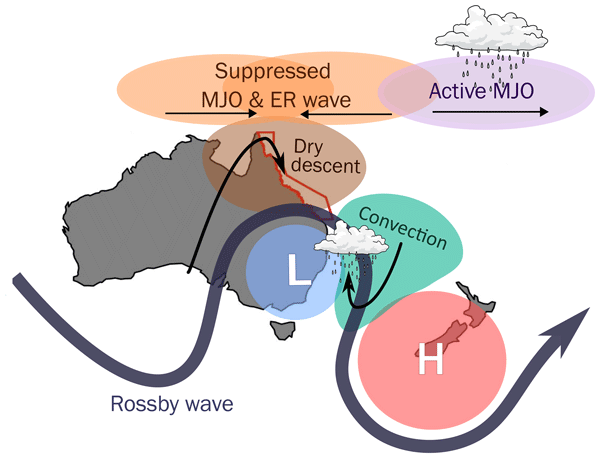
The doldrums are regions of light winds and relatively clear skies found in the tropics. They often occur during severe coral bleaching events on the Great Barrier Reef yet remain poorly understood. This study examines why the doldrums form and persist, identifying how both tropical and extratropical weather systems align to first form the doldrums and how the stalling of these weather systems prolongs the doldrums over the Great Barrier Reef.
Caleb Mynard, Emily B. Franklin, Joel Alroe, Karen Westwood, Brandon J. McNabb, Robert Strzepek, Philippe D. Tortell, Steven T. Siems, Antonio Patti, Suzie Molloy, Alan Griffiths, Branka Miljevic, Marc D. Mallet, Ruhi Humphries, and Erin Dunne
Atmos. Chem. Phys., 26, 11583–11604, https://doi.org/10.5194/acp-26-11583-2026, https://doi.org/10.5194/acp-26-11583-2026, 2026
Short summary
Short summary
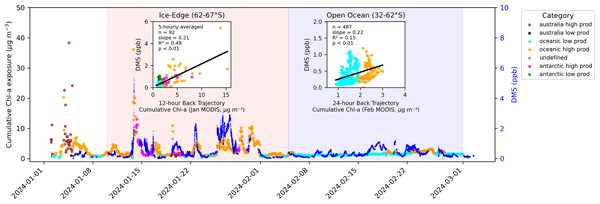
Marine sulfur gases help form climate-cooling particles, but their controls over the Southern Ocean are unclear. During a summer research voyage we measured these gases and linked them to ocean and atmospheric conditions. Near Antarctica, coastal blooms drove sharp rises in dimethyl sulfide while methanethiol remained low. Over the open ocean, both gases varied together, mainly influenced by ocean mixing and temperature, suggesting models should treat coastal and open ocean regions separately.
A. V. Sreenath, Peter T. May, Steven Siems, Heather Corden, and Alexis Berne
EGUsphere, https://doi.org/10.5194/egusphere-2026-4159, https://doi.org/10.5194/egusphere-2026-4159, 2026
This preprint is open for discussion and under review for Atmospheric Chemistry and Physics (ACP).
Short summary
Short summary
We investigated how synoptic weather regimes control cloud growth and surface precipitation at Dumont d’Urville, East Antarctica. Multi-instrument observations show that synoptic forcing determines hydrometeor growth and precipitation formation aloft, while boundary-layer conditions, including local downslope flow and near-surface moisture, control how much precipitation reaches the surface.
Xiaoshen Sun, Chris Medcraft, Ramon Braga, Peter Butcherine, Zoran Ristovski, Steven Siems, Christian J. Sanders, and Daniel P. Harrison
EGUsphere, https://doi.org/10.5194/egusphere-2026-1729, https://doi.org/10.5194/egusphere-2026-1729, 2026
This preprint is open for discussion and under review for Atmospheric Measurement Techniques (AMT).
Short summary
Short summary
We propose a novel method to detect and track sea spray particles released during marine cloud brightening (MCB) over the Great Barrier Reef. Using aircraft measurements, we showed that these released particles can be separated from the research ship and aircraft exhaust and tracked as they spread horizontally and vertically. This improves our ability to trace added sea spray aerosols and supports future work on how they may affect clouds.
Marta Luffarelli, Nicolas Misk, Analy Baltodano, Thomas Popp, Stefan Kinne, Ulrike Stöffelmair, Michael Schulz, Jan Griesfeller, Ove W. Haugvalstad, Martin Stengel, Sarah Brüning, Gareth Thomas, Elisa Carboni, Daniel Robbins, and Michael Eisinger
Earth Syst. Sci. Data Discuss., https://doi.org/10.5194/essd-2026-327, https://doi.org/10.5194/essd-2026-327, 2026
Preprint under review for ESSD
Short summary
Short summary
Understanding how aerosol particles affect clouds is essential for improving climate predictions, yet current satellite data are not always reliable or suitable for this purpose. This study evaluates major datasets for analysing aerosol effects on liquid clouds, dust-driven cloud glaciation, and a potential climate indicator to monitor aerosol-cloud interactions.
Adrien Guyot, Jacob Vile, Louis Soulard-Fischer, Hamish McGowan, Alain Protat, and Caroline Poulsen
EGUsphere, https://doi.org/10.5194/egusphere-2026-1907, https://doi.org/10.5194/egusphere-2026-1907, 2026
Short summary
Short summary
We studied how extreme wildfire clouds are detected from space and compared this with weather radar and lightning observations. We found that satellites can reliably detect when these clouds begin, but later tend to track spreading cloud tops rather than the active storm itself. This can make events appear larger and longer-lasting than they are. Combining different types of observations is therefore essential to better understand and monitor these dangerous fire-driven storms.
Anna M. Ukkola, Steven Thomas, Elisabeth Vogel, Ulrike Bende-Michl, Steven Siems, Vjekoslav Matic, and Wendy Sharples
Hydrol. Earth Syst. Sci., 30, 1463–1485, https://doi.org/10.5194/hess-30-1463-2026, https://doi.org/10.5194/hess-30-1463-2026, 2026
Short summary
Short summary
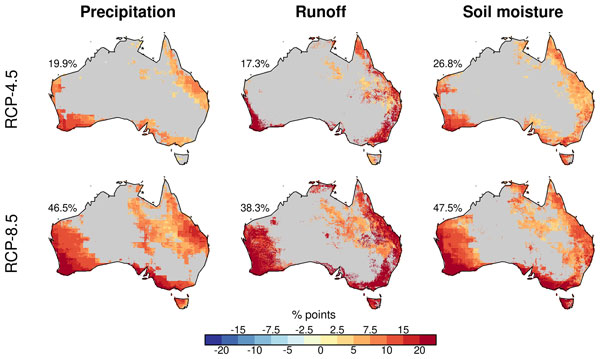
Future drought changes in Australia –the driest inhabited continent on Earth– have remained stubbornly uncertain. We assess future drought changes in Australia using projections from climate and hydrological models. We show an increasing probability of drought in highly-populated and agricultural regions of Australia in coming decades, suggesting potential impacts on agricultural activities, ecosystems and urban water supply.
Wenhui Zhao, Yi Huang, Steven Siems, and Daniel Harrison
EGUsphere, https://doi.org/10.5194/egusphere-2026-1251, https://doi.org/10.5194/egusphere-2026-1251, 2026
Short summary
Short summary
Using convection-permitting WRF simulations, this study examines how marine cloud brightening over the GBR depends on aerosol emission strength and spatial distribution. Densely spaced sources generate more uniform aerosol enhancements and stronger cloud microphysical responses than sparsely distributed sources, despite identical emissions. CDNC and optical depth increase strongly, indicating a dominant Twomey effect, while cloud water and coverage respond weakly.

Lara S. Richards, Steven T. Siems, Yi Huang, Daniel P. Harrison, and Wenhui Zhao
Weather Clim. Dynam., 7, 109–127, https://doi.org/10.5194/wcd-7-109-2026, https://doi.org/10.5194/wcd-7-109-2026, 2026
Short summary
Short summary
By studying the variability of the trade winds during the Great Barrier Reef coral bleaching season, we show that ocean heating and a higher risk of coral bleaching are linked to the breakdown of the trade winds into either calm and clear conditions or a monsoon-like northerly flow. Years with mass coral bleaching are also associated with more "calm and clear" days in the warmest months and fewer strong trade wind days on the fringe months of the bleaching season.
A. V. Sreenath, Tahereh Alinejadtabrizi, Steven Siems, Peter T. May, Haifeng Zhang, and Eric Schulz
Weather Clim. Dynam., 6, 1797–1813, https://doi.org/10.5194/wcd-6-1797-2025, https://doi.org/10.5194/wcd-6-1797-2025, 2025
Short summary
Short summary
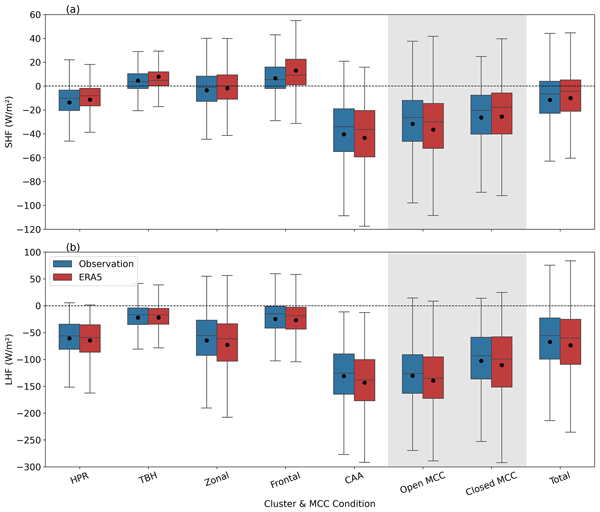
Using 14 years of observations from mooring, we reported that cold air advection creates intense surface flux exchange over the southern ocean, linked with strong boundary layer instability. Results also indicate that cold air advection creates frequent open mesoscale cellular convective clouds. The flux exchange for open and closed mesoscale cellular convective clouds is comparable, suggesting a limited role of the surface flux in the transition of these boundary layer clouds.
Zhaoyang Kong, Andrew T. Prata, Peter T. May, Ariaan Purich, Yi Huang, and Steven T. Siems
Weather Clim. Dynam., 6, 1643–1660, https://doi.org/10.5194/wcd-6-1643-2025, https://doi.org/10.5194/wcd-6-1643-2025, 2025
Short summary
Short summary
To investigate why ERA5 (European Centre for Medium-Range Weather Forecasts Reanalysis v5) does not accurately capture the observed increase in annual precipitation at Macquarie Island during 1979 to 2023, we classify daily synoptic systems using k-means clustering. Find that the increase in mean intensity across all systems is the main contributor to the observed annual precipitation trend and the resulting discrepancy, rather than changes in the frequency. And this increase may also have a substantial impact on the freshwater fluxes over the Southern Ocean.
Tahereh Alinejadtabrizi, Yi Huang, Francisco Lang, Steven Siems, Michael Manton, Luis Ackermann, Melita Keywood, Ruhi Humphries, Paul Krummel, Alastair Williams, and Greg Ayers
Atmos. Chem. Phys., 25, 2631–2648, https://doi.org/10.5194/acp-25-2631-2025, https://doi.org/10.5194/acp-25-2631-2025, 2025
Short summary
Short summary
Clouds over the Southern Ocean are crucial to Earth's energy balance, but understanding the factors that control them is complex. Our research examines how weather patterns affect tiny particles called cloud condensation nuclei (CCN), which influence cloud properties. Using data from Kennaook / Cape Grim, we found that winter air from Antarctica brings cleaner conditions with lower CCN, while summer patterns from Australia transport more particles. Precipitation also helps reduce CCN in winter.
Daniel J. V. Robbins, Caroline A. Poulsen, Steven T. Siems, Simon R. Proud, Andrew T. Prata, Roy G. Grainger, and Adam C. Povey
Atmos. Meas. Tech., 17, 3279–3302, https://doi.org/10.5194/amt-17-3279-2024, https://doi.org/10.5194/amt-17-3279-2024, 2024
Short summary
Short summary
Extreme wildfire events are becoming more common with climate change. The smoke plumes associated with these wildfires are not captured by current operational satellite products due to their high optical thickness. We have developed a novel aerosol retrieval for the Advanced Himawari Imager to study these plumes. We find very high values of optical thickness not observed in other operational satellite products, suggesting these plumes have been missed in previous studies.
Francisco Lang, Steven T. Siems, Yi Huang, Tahereh Alinejadtabrizi, and Luis Ackermann
Atmos. Chem. Phys., 24, 1451–1466, https://doi.org/10.5194/acp-24-1451-2024, https://doi.org/10.5194/acp-24-1451-2024, 2024
Short summary
Short summary
Marine low-level clouds play a crucial role in the Earth's energy balance, trapping heat from the surface and reflecting sunlight back into space. These clouds are distinguishable by their large-scale spatial structures, primarily characterized as hexagonal patterns with either filled (closed) or empty (open) cells. Utilizing satellite observations, these two cloud type patterns have been categorized over the Southern Ocean and North Pacific Ocean through a pattern recognition program.
Andrew T. Prata, Roy G. Grainger, Isabelle A. Taylor, Adam C. Povey, Simon R. Proud, and Caroline A. Poulsen
Atmos. Meas. Tech., 15, 5985–6010, https://doi.org/10.5194/amt-15-5985-2022, https://doi.org/10.5194/amt-15-5985-2022, 2022
Short summary
Short summary
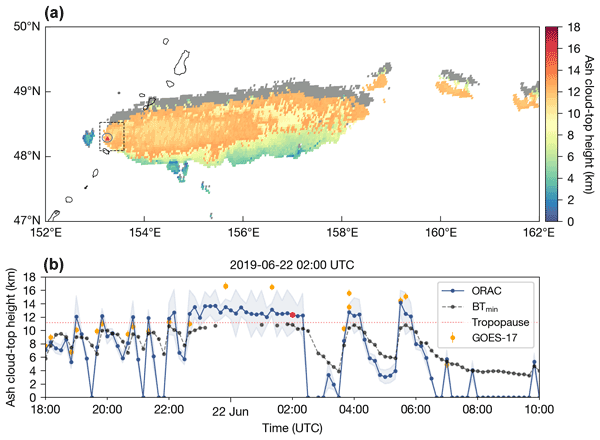
Satellite observations are often used to track ash clouds and estimate their height, particle sizes and mass; however, satellite-based techniques are always associated with some uncertainty. We describe advances in a satellite-based technique that is used to estimate ash cloud properties for the June 2019 Raikoke (Russia) eruption. Our results are significant because ash warning centres increasingly require uncertainty information to correctly interpret,
aggregate and utilise the data.
Daniel Robbins, Caroline Poulsen, Steven Siems, and Simon Proud
Atmos. Meas. Tech., 15, 3031–3051, https://doi.org/10.5194/amt-15-3031-2022, https://doi.org/10.5194/amt-15-3031-2022, 2022
Short summary
Short summary
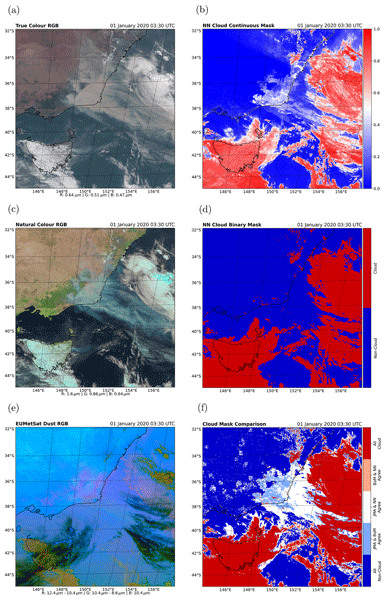
A neural network (NN)-based cloud mask for a geostationary satellite instrument, AHI, is developed using collocated data and is better at not classifying thick aerosols as clouds versus the Japanese Meteorological Association and the Bureau of Meteorology masks, identifying 1.13 and 1.29 times as many non-cloud pixels than each mask, respectively. The improvement during the day likely comes from including the shortest wavelength bands from AHI in the NN mask, which the other masks do not use.
Francisco Lang, Luis Ackermann, Yi Huang, Son C. H. Truong, Steven T. Siems, and Michael J. Manton
Atmos. Chem. Phys., 22, 2135–2152, https://doi.org/10.5194/acp-22-2135-2022, https://doi.org/10.5194/acp-22-2135-2022, 2022
Short summary
Short summary
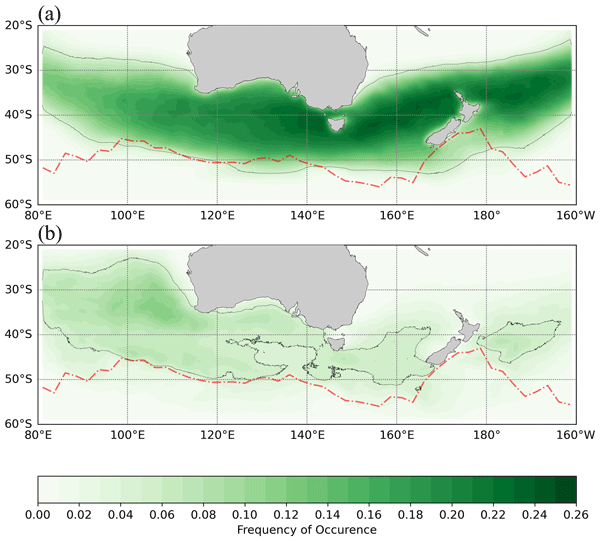
Marine low-level clouds cover vast areas of the Southern Ocean, and they are essential to the Earth system energy balance. We use 3 years of satellite observations to group low-level clouds by their spatial structure using a pattern-recognizing program. We studied two primary cloud type patterns, i.e. open and closed clouds. Open clouds are uniformly distributed over the storm track, while closed clouds are most predominant in the southeastern Indian Ocean. Closed clouds exhibit a daily cycle.
Cited articles
Ahn, E., Huang, Y., Chubb, T., Baumgardner, D., Isaac, P., and Hoog, M.: In situ observations of wintertime low-altitude clouds over the Southern Ocean, Q. J. Roy. Meteor. Soc., 143, 1381–1394, https://doi.org/10.1002/qj.3011, 2017.. a
Ahn, E., Huang, Y., Siems, S. T., and Manton, M. J.: A comparison of cloud microphysical properties derived from MODIS and CALIPSO with in situ measurements over the wintertime Southern Ocean, J. Geophys. Res.-Atmos., 123, 11120–11140, https://doi.org/10.1029/2018JD028535, 2018. a, b
Amarasinghe, N., Platnick, S., and Meyer, K.: Overview of the MODIS Collection 6 Cloud Optical Property (MOD06) Retrieval Look-up Tables, Tech. Rep., NASA Goddard Space Flight Center, https://atmosphereimager.gsfc.nasa.gov/sites/default/files/ModAtmo/C6_LUT_document_final.pdf (last access: 15 December 2025), 2017. a
Baum, B., Menzel, W., Frey, R., Tobin, D., Holz, R., Ackerman, S., Heidinger, A., and Yang, P.: MODIS Cloud-Top Property Refinements for Collection 6, J. Appl. Meteorol. Clim., 51, 1145–1163, https://doi.org/10.1175/JAMC-D-11-0203.1, 2012. a
Baum, B. A., Arduini, R. F., Wielicki, B. A., Minnis, P., and Tsay, S.-C.: Multilevel cloud retrieval using multispectral HIRS and AVHRR data: Nighttime oceanic analysis, J. Geophys. Res.-Atmos., 99, 5499–5514, https://doi.org/10.1029/93JD02856, 1994. a
Baum, B. A., Heymsfield, A. J., Yang, P., and Bedka, S. T.: Bulk scattering properties for the remote sensing of ice clouds. Part I: Microphysical data and models, J. Appl. Meteorol., 44, 1885–1895, https://doi.org/10.1175/JAM2308.1, 2005a. a
Baum, B. A., Yang, P., Heymsfield, A. J., Platnick, S., King, M. D., Hu, Y., and Bedka, S. T.: Bulk scattering properties for the remote sensing of ice clouds. Part II: Narrowband models, J. Appl. Meteorol., 44, 1896–1911, https://doi.org/10.1175/JAM2309.1, 2005b. a
Baum, B. A., Yang, P., Heymsfield, A. J., Schmitt, C. G., Xie, Y., Bansemer, A., Hu, Y.-X., and Zhang, Z.: Improvements in shortwave bulk scattering and absorption models for the remote sensing of ice clouds, J. Appl. Meteorol. Clim., 50, 1037–1056, https://doi.org/10.1175/2010JAMC2608.1, 2011. a
Bodas-Salcedo, A., Hill, P., Furtado, K., Williams, K., Field, P., Manners, J., Hyder, P., and Kato, S.: Large contribution of supercooled liquid clouds to the solar radiation budget of the Southern Ocean, J. Climate, 29, 4213–4228, https://doi.org/10.1175/JCLI-D-15-0564.1, 2016. a, b
Carrasco, J. F., Bromwich, D. H., and Monaghan, A. J.: Distribution and characteristics of mesoscale cyclones in the Antarctic: Ross Sea eastward to the Weddell Sea, Mon. Weather Rev., 131, 289–301, https://doi.org/10.1175/1520-0493(2003)131<0289:DACOMC>2.0.CO;2, 2003. a
Chang, F.-L., Minnis, P., Ayers, J., McGill, M., Palikonda, R., Spangenberg, D., Smith, W., and Yost, C.: Evaluation of satellite-based upper troposphere cloud top height retrievals in multi-layer cloud conditions during TC4, J. Geophys. Res., 115, https://doi.org/10.1029/2009jd013305, 2010. a
Chen, T., Zhang, Y., and Rossow, W.: Sensitivity of Atmospheric Radiative Heating Rate Profiles to Variations of Cloud Layer Overlap, J. Climate, 13, 2941–2959, https://doi.org/10.1175/1520-0442(2000)013<2941:SOARHR>2.0.CO;2, 2000. a
Davies, R., Loveridge, J., and Rampal, N.: Observed cloud morphology and inferred microphysics over the South Pacific from MISR and MODIS measurements of shortwave reflectivity, in: AIP Conference Proceedings, vol. 1810, AIP Publishing LLC, p. 130001, https://doi.org/10.1063/1.4975583, 2017. a, b
Dong, X., Minnis, P., Xi, B., Sun-Mack, S., and Chen, Y.: Comparison of CERES-MODIS stratus cloud properties with ground-based measurements at the DOE ARM Southern Great Plains site, J. Geophys. Res.-Atmos., 113, https://doi.org/10.1029/2007JD008438, 2008. a
Foster, M. J., Phillips, C., Heidinger, A. K., and Program, N. C.: NOAA Climate Data Record (CDR) of Advanced Very High Resolution Radiometer (AVHRR) and High-resolution Infra-Red Sounder (HIRS) Reflectance, Brightness Temperature, and Cloud Products from Pathfinder Atmospheres – Extended (PATMOS-x), Version 6.0, NOAA National Centers for Environmental Information, https://doi.org/10.7289/V5X9287S, 2021. a
Foster, M. J., Phillips, C., Heidinger, A. K., Borbas, E. E., Li, Y., Menzel, W. P., Walther, A., and Weisz, E.: Patmos-x version 6.0: 40 years of merged avhrr and hirs global cloud data, J. Climate, 36, 1143–1160, https://doi.org/10.1175/JCLI-D-22-0147.1, 2023. a, b, c, d
Frey, W., Morrison, A., Kay, J., Guzman, R., and Chepfer, H.: The combined influence of observed Southern Ocean clouds and sea ice on top-of-atmosphere albedo, J. Geophys. Res.-Atmos., 123, 4461–4475, https://doi.org/10.1029/2018JD028505, 2018. a, b, c
Fu, Y., Chen, Y., Li, R., Qin, F., Xian, T., Yu, L., Zhang, A., Liu, G., and Zhang, X.: Lateral boundary of cirrus cloud from CALIPSO observations, Sci. Rep., 7, 14221, https://doi.org/10.1038/s41598-017-14665-6, 2017. a
Håkansson, N., Adok, C., Thoss, A., Scheirer, R., and Hörnquist, S.: Neural network cloud top pressure and height for MODIS, Atmos. Meas. Tech., 11, 3177–3196, https://doi.org/10.5194/amt-11-3177-2018, 2018. a
Hanssen, A. and Kuipers, W.: On the Relationship Between the Frequency of Rain and Various Meteorological Parameters: (with Reference to the Problem Ob Objective Forecasting), Koninkl. Nederlands Meterologisch Institut. Mededelingen en Verhandelingen, Staatsdrukkerij – en Uitgeverijbedrijf, https://books.google.com.au/books?id=nTZ8OgAACAAJ, 1965. a
Heidinger, A.: Algorithm theoretical basis document ABI cloud height, Tech. Rep., NOAA NESDIS Center for Satellite Applications and Research, http://www.goes-r.gov/products/ATBDs/baseline/Cloud_CldHeight_v2.0_no_color.pdf (last access: 15 December 2025), 2011. a
Heidinger, A. and Pavolonis, M.: Global Daytime Distribution of Overlapping Cirrus Cloud from NOAA's Advanced Very High-Resolution Radiometer, J. Climate, 18, 4772–4784, https://doi.org/10.1175/JCLI3535.1, 2005. a
Heidinger, A. K. and Pavolonis, M. J.: Gazing at cirrus clouds for 25 years through a split window. Part I: Methodology, J. Appl. Meteorol. Clim., 48, 1100–1116, https://doi.org/10.1175/2008JAMC1882.1, 2009. a, b
Heidinger, A. K., Foster, M. J., Walther, A., and Zhao, X. T.: THE PATHFINDER ATMOSPHERES–EXTENDED AVHRR CLIMATE DATASET, B. Am. Meteorol. Soc., 95, 909–922, https://doi.org/10.1175/BAMS-D-12-00246.1, 2014. a
Henderson, D. and L'Ecuyer, T.: level 2B fluxes and heating rates with lidar [2B-FLXHR-LIDAR] process description and interface control document, CloudSat Project Rep, Tech. Rep., CloudSat Project, Colorado State University, https://www.cloudsat.cira.colostate.edu/cloudsat-static/info/dl/2b-flxhr-lidar/2B-FLXHR-LIDAR_PDICD.P2_R05.rev0.pdf (last access: 15 December 2025), 2023. a, b
Henderson, D. S., L'ecuyer, T., Stephens, G., Partain, P., and Sekiguchi, M.: A multisensor perspective on the radiative impacts of clouds and aerosols, J. Appl. Meteorol. Clim., 52, 853–871, https://doi.org/10.1175/JAMC-D-12-025.1, 2013. a
Hersbach, H., Bell, B., Berrisford, P., Hirahara, S., Horányi, A., Muñoz-Sabater, J., Nicolas, J., Peubey, C., Radu, R., Schepers, D., and Simmons, A.: The ERA5 global reanalysis, Q. J. Roy. Meteor. Soc., 146, 1999–2049, https://doi.org/10.1002/qj.3803, 2020. a
Hinkelman, L. and Marchand, R.: Evaluation of CERES and CloudSat Surface Radiative Fluxes Over Macquarie Island, the Southern Ocean, Earth and Space Science, 7, https://doi.org/10.1029/2020EA001224, 2020. a, b, c
Hollmann, R. and Wetterdienst, D.: ESA Cloud_cci Product Validation and Intercomparison Report (PVIR), https://doi.org/10.5676/DWD/ESA_Cloud_cci/AVHRR-PM/V003, 2020. a
Holz, R., Ackerman, S., Nagle, F., Frey, R., Dutcher, S., Kuehn, R., Vaughan, M., and Baum, B.: Global Moderate Resolution Imaging Spectroradiometer (MODIS) cloud detection and height evaluation using CALIOP, J. Geophys. Res., 113, https://doi.org/10.1029/2008jd009837, 2008. a
Hu, Y., Rodier, S., Xu, K.-m., Sun, W., Huang, J., Lin, B., Zhai, P., and Josset, D.: Occurrence, liquid water content, and fraction of supercooled water clouds from combined CALIOP/IIR/MODIS measurements, J. Geophys. Res.-Atmos., 115, https://doi.org/10.1029/2009JD012384, 2010. a
Huang, Y., Siems, S. T., Manton, M. J., Protat, A., and Delanoë, J.: A study on the low-altitude clouds over the Southern Ocean using the DARDAR-MASK, J. Geophys. Res.-Atmos., 117, https://doi.org/10.1029/2012JD017800, 2012. a, b
Huang, Y., Protat, A., Siems, S. T., and Manton, M. J.: A-Train observations of maritime midlatitude storm-track cloud systems: Comparing the Southern Ocean against the North Atlantic, J. Climate, 28, 1920–1939, https://doi.org/10.1175/JCLI-D-14-00169.1, 2015. a, b, c, d
Joiner, J., Vasilkov, A. P., Bhartia, P. K., Wind, G., Platnick, S., and Menzel, W. P.: Detection of multi-layer and vertically-extended clouds using A-train sensors, Atmos. Meas. Tech., 3, 233–247, https://doi.org/10.5194/amt-3-233-2010, 2010. a, b, c
Kang, L., Marchand, R., and Smith, W.: Evaluation of MODIS and Himawari-8 Low Clouds Retrievals Over the Southern Ocean With in Situ Measurements from the SOCRATES Campaign, Earth and Space Science, 8, https://doi.org/10.1029/2020EA001397, 2021. a, b
Karlsson, K.-G. and Devasthale, A.: Inter-comparison and evaluation of the four longest satellite-derived cloud climate data records: CLARA-A2, ESA Cloud CCI V3, ISCCP-HGM, and PATMOS-x, Remote Sensing, 10, 1567, https://doi.org/10.3390/rs10101567, 2018. a
Karlsson, K.-G. and Johansson, E.: On the optimal method for evaluating cloud products from passive satellite imagery using CALIPSO-CALIOP data: example investigating the CM SAF CLARA-A1 dataset, Atmos. Meas. Tech., 6, 1271–1286, https://doi.org/10.5194/amt-6-1271-2013, 2013. a, b
Karlsson, K.-G., Devasthale, A., Stengel, M., Solodovnik, Irina Meirink, J. F., and Benas, N.: Algorithm Theoretical Basis Document – CM SAF Cloud, Albedo, Radiation data record, AVHRR-based, Edition 2 (CLARA-A2) – Cloud Fraction, Tech. Rep., SAF/CM/DWD/ATBD/CMA_AVHRR version 2.0, https://doi.org/10.5676/EUM_SAF_CM/CLARA_AVHRR/V002_01, 2016. a
Karlsson, K.-G., Devasthale, A., and Eliasson, S.: Global Cloudiness and Cloud Top Information from AVHRR in the 42-Year CLARA-A3 Climate Data Record Covering the Period 1979–2020, Remote Sensing, 15, 3044, https://doi.org/10.3390/rs15123044, 2023a. a, b
Karlsson, K.-G., Riihelä, A., Trentmann, J., Stengel, M., Solodovnik, I., Meirink, J. F., Devasthale, A., Jääskeläinen, E., Kallio-Myers, V., Eliasson, S., Benas, N., Johansson, E., Stein, D., Finkensieper, S., Håkansson, N., Akkermans, T., Clerbaux, N., Selbach, N., Marc, S., and Hollmann, R.: CLARA-A3: CM SAF cLoud, Albedo and surface RAdiation dataset from AVHRR data – Edition 3, Satellite Application Facility on Climate Monitoring [data set], https://doi.org/10.5676/EUM_SAF_CM/CLARA_AVHRR/V003, 2023b. a, b, c
Karlsson, K.-G., Stengel, M., Meirink, J. F., Riihelä, A., Trentmann, J., Akkermans, T., Stein, D., Devasthale, A., Eliasson, S., Johansson, E., Håkansson, N., Solodovnik, I., Benas, N., Clerbaux, N., Selbach, N., Schröder, M., and Hollmann, R.: CLARA-A3: The third edition of the AVHRR-based CM SAF climate data record on clouds, radiation and surface albedo covering the period 1979 to 2023, Earth Syst. Sci. Data, 15, 4901–4926, https://doi.org/10.5194/essd-15-4901-2023, 2023c. a
Kawamoto, K., Minnis, P., Smith Jr., W. L., and Rapp, A. D.: Detecting multilayer clouds using satellite solar and IR channels, in: Proc. 11th AMS Conf. Cloud Physics, Ogden, UT, 3–7 June 2002, 2002. a
King, J. C. and Turner, J.: Antarctic meteorology and climatology, Cambridge University Press, ISBN-10 0521465605, ISBN-13 9780521465602, 1997. a
Lachlan-Cope, T.: Antarctic clouds, Polar Res., 29, 150–158, https://doi.org/10.1111/j.1751-8369.2010.00148.x, 2010. a
L'Ecuyer, T. S., Wood, N. B., Haladay, T., Stephens, G. L., and Stackhouse Jr., P. W.: Impact of clouds on atmospheric heating based on the R04 CloudSat fluxes and heating rates data set, J. Geophys. Res.-Atmos., 113, https://doi.org/10.1029/2008JD009951, 2008. a
Leinonen, J., Lebsock, M. D., Stephens, G. L., and Suzuki, K.: Improved retrieval of cloud liquid water from CloudSat and MODIS, J. Appl. Meteorol. Clim., 55, 1831–1844, https://doi.org/10.1175/JAMC-D-16-0077.1, 2016. a
Li, J., Yi, Y., Minnis, P., Huang, J., Yan, H., and Ma, Y.: Radiative effect differences between multi-layered and single-layer clouds derived from CERES, CALIPSO, and CloudSat data, J. Quant. Spectrosc. Ra., 112, 361–375, https://doi.org/10.1016/j.jqsrt.2010.10.006, 2011. a
Li, W., Zhang, F., Lin, H., Chen, X., Li, J., and Han, W.: Cloud detection and classification algorithms for Himawari-8 imager measurements based on deep learning, IEEE T. Geosci. Remote, 60, 1–17, https://doi.org/10.1109/TGRS.2022.3153129, 2022. a
L'Ecuyer, T., Hang, Y., Matus, A., and Wang, Z.: Reassessing the Effect of Cloud Type on Earth's Energy Balance in the Age of Active Spaceborne Observations. Part I: Top of atmosphere and surface, Part I: Top of Atmosphere and Surface, J. Climate, 32, 6197–6217, https://doi.org/10.1175/jcli-d-18-0753.1, 2019. a, b, c
Mace, G., Zhang, Q., Vaughan, M., Marchand, R., Stephens, G., Trepte, C., and Winker, D.: A description of hydrometeor layer occurrence statistics derived from the first year of merged CloudSat and CALIPSO data, J. Geophys. Res. Atmospheres, 114, https://doi.org/10.1029/2007JD009755, 2009. a, b
Mace, G. G., Protat, A., and Benson, S.: Mixed-phase clouds over the southern ocean as observed from satellite and surface based lidar and radar, J. Geophys. Res.-Atmos., 126, e2021JD034569, https://doi.org/10.1029/2021JD034569, 2021. a
Marchand, R.: Macquarie Island Cloud and Radiation Experiment (MICRE) Field Campaign Report, Tech. Rep., U.S. Department of Energy, https://doi.org/10.2172/1602536, 2020. a
Marchand, R. and Ackerman, T.: An analysis of cloud cover in multiscale modeling framework global climate model simulations using 4 and 1 km horizontal grids, J. Geophys. Res.-Atmos., 115, https://doi.org/10.1029/2009JD013423, 2010. a
Marchant, B., Platnick, S., Meyer, K., and Wind, G.: Evaluation of the MODIS Collection 6 multilayer cloud detection algorithm through comparisons with CloudSat Cloud Profiling Radar and CALIPSO CALIOP products, Atmos. Meas. Tech., 13, 3263–3275, https://doi.org/10.5194/amt-13-3263-2020, 2020. a, b
McFarquhar, G., Maarchand, R., Bretherton, C., Alexander, S., Protat, A., Siems, S., Wood, R., and DeMott, P.: Measurements of Aerosols, Radiation, and Clouds over the Southern Ocean (MARCUS) Field Campaign Report, https://www.osti.gov/biblio/1524775, 2019. a
McFarquhar, G., Bretherton, C., Marchand, R., Protat, A., DeMott, P., and Alexander, S.: Observations of clouds, aerosols, precipitation, and surface radiation over the Southern Ocean, B. Am. Meteorol. Soc., 102, 894–928, https://doi.org/10.1175/BAMS-D-20-0132.1, 2021. a, b, c, d
Menzel, W. P., Frey, R. A., Zhang, H., Wylie, D. P., Moeller, C. C., Holz, R. E., Maddux, B., Baum, B. A., Strabala, K. I., and Gumley, L. E.: MODIS global cloud-top pressure and amount estimation: Algorithm description and results, J. Appl. Meteorol. Clim., 47, 1175–1198, https://doi.org/10.1175/2007JAMC1705.1, 2008. a, b, c
Minnis, P., Sun-Mack, S., Chen, Y., Chang, F.-L., Yost, C. R., Smith, W. L., Heck, P. W., Arduini, R. F., Bedka, S. T., Yi, Y., and Hong, G.: CERES MODIS cloud product retrievals for edition 4–Part I: Algorithm changes, IEEE T. Geosci. Remote, 59, 2744–2780, https://doi.org/10.1109/TGRS.2020.3008866, 2020. a
Mitra, A., Girolamo, L., Hong, Y., Zhan, Y., and Mueller, K.: Assessment and Error Analysis of Terra-MODIS and MISR Cloud-Top Heights Through Comparison With ISS-CATS Lidar, J. Geophys. Res.-Atmos., 126, https://doi.org/10.1029/2020jd034281, 2021. a
Morrison, A., Siems, S., and Manton, M.: A three-year climatology of cloud-top phase over the Southern Ocean and North Pacific, J. Climate, 24, 2405–2418, https://doi.org/10.1175/2010JCLI3842.1, 2011. a
Müller, R., Haussler, S., and Jerg, M.: The role of NWP filter for the satellite based detection of cumulonimbus clouds, Remote Sensing, 10, 386, https://doi.org/10.3390/rs10030386, 2018. a
Nakajima, T. and King, M. D.: Determination of the optical thickness and effective particle radius of clouds from reflected solar radiation measurements. Part I: Theory, J. Atmos. Sci., 47, 1878–1893, https://doi.org/10.1175/1520-0469(1990)047<1878:DOTOTA>2.0.CO;2, 1990. a
Noel, V., Chepfer, H., Chiriaco, M., Winker, D., Okamoto, H., Hagihara, Y., Cesana, G., and Lacour, A.: Disagreement among global cloud distributions from CALIOP, passive satellite sensors and general circulation models, arXiv [preprint], https://doi.org/10.48550/arXiv.1803.06143, 2018. a
Ovarlez, J., Gayet, J.-F., Gierens, K., Ström, J., Ovarlez, H., Auriol, F., Busen, R., and Schumann, U.: Water vapour measurements inside cirrus clouds in Northern and Southern hemispheres during INCA, Geophys. Res. Lett., 29, 60–1, https://doi.org/10.1029/2001gl014440, 2002. a
Palm, S. P., Strey, S. T., Spinhirne, J., and Markus, T.: Influence of Arctic sea ice extent on polar cloud fraction and vertical structure and implications for regional climate, J. Geophys. Res.-Atmos., 115, https://doi.org/10.1029/2010JD013900, 2010. a, b
Pavolonis, M. J. and Heidinger, A. K.: Daytime cloud overlap detection from AVHRR and VIIRS, J. Appl. Meteorol. Clim., 43, 762–778, https://doi.org/10.1175/2099.1, 2004. a
Platnick, S., King, M. D., Meyer, K. G., Wind, G., Amarasinghe, N., Marchant, B., Arnold, G. T., Zhang, Z., Hubanks, P. A., Ridgway, B., and Reidi, J.: MODIS cloud optical properties: User guide for the Collection 6 Level-2 MOD06/MYD06 product and associated Level-3 Datasets, NASA MODIS Atmosphere Team, https://atmosphere-imager.gsfc.nasa.gov/sites/default/files/ModAtmo/C6MOD06OPUserGuide_0.pdf (last access: 28 July 2025), 2015a. a
Platnick, S., Ackerman, S. A., King, M. D., Meyer, K. G., Menzel, W. P., Holz, R. E., Baum, B. A., Yang, P., and Frey, R. A.: MODIS Atmosphere L2 Cloud Product (06_L2), NASA MODIS Adaptive Processing System, Goddard Space Flight Center, USA [data set], https://doi.org/10.5067/MODIS/MYD06_L2.061 (last access: December 2025), 2015b. a
Platnick, S., Meyer, K. G., King, M. D., Wind, G., Amarasinghe, N., Marchant, B., Arnold, G. T., Zhang, Z., Hubanks, P. A., Holz, R. E., and Yang, P.: The MODIS cloud optical and microphysical products: Collection 6 updates and examples from Terra and Aqua, IEEE T. Geosci. Remote, 55, 502–525, https://doi.org/10.1109/TGRS.2016.2610522, 2016. a, b
Platnick, S., Meyer, K. G., Hubanks, P., Holz, R., Ackerman, S. A., and Heidinger, A. K.: CLDPROP_M3_MODIS_Aqua - MODIS/Aqua Cloud Properties Level 3 monthly, 1x1 degree grid, NASA MODIS Adaptive Processing System, Goddard Space Flight Center, USA [data set], https://doi.org/10.5067/MODIS/CLDPROP_M3_MODIS_Aqua.011, 2019. a, b
Ritman, M., Poulsen, C., Siems, S., and Robbins, D.: Developing and interpreting a Neural Network approach to multi-layer cloud system identification in Himawari-8/9, Abstract Book of the Australian Meteorological and Oceanographic Society Conference 2022 (AMOS), presented at the AMOS Conference, Australia, 2022. a, b, c
Sassen, K., Wang, Z., and Liu, D.: Global distribution of cirrus clouds from CloudSat/Cloud-Aerosol lidar and infrared pathfinder satellite observations (CALIPSO) measurements, J. Geophys. Res.-Atmos., 113, https://doi.org/10.1029/2008JD009972, 2008. a, b
Schuddeboom, A. and McDonald, A.: The Southern Ocean radiative bias, cloud compensating errors, and equilibrium climate sensitivity in CMIP6 models, J. Geophys. Res.-Atmos., 126, e2021JD035310, https://doi.org/10.1029/2021JD035310, 2021. a, b
Simmonds, I., Keay, K., and Lim, E.-P.: Synoptic activity in the seas around Antarctica, Mon. Weather Rev., 131, 272–288, https://doi.org/10.1175/1520-0493(2003)131<0272:SAITSA>2.0.CO;2, 2003. a
Simpsom, J., McIntire, T., Stitt, J., and Hufford, G.: Improved cloud detection in AVHRR daytime and night-time scenes over the ocean, Int. J. Remote Sens., 22, 2585–2615, https://doi.org/10.1080/01431160119916, 2001. a
Sourdeval, O., C.-Labonnote, L., Baran, A., Mülmenstädt, J., and Brogniez, G.: A methodology for simultaneous retrieval of ice and liquid water cloud properties. Part 2: Near-global retrievals and evaluation against A-Train products, Q. J. Roy. Meteor. Soc., 142, 3063–3081, https://doi.org/10.1002/qj.2889, 2016. a
Stephens, G. L., Vane, D. G., Boain, R. J., Mace, G. G., Sassen, K., Wang, Z., Illingworth, A. J., O'connor, E. J., Rossow, W. B., Durden, S. L., and Miller, S. D.: The CloudSat mission and the A-Train: A new dimension of space-based observations of clouds and precipitation, B. Am. Meteorol. Soc., 83, 1771–1790, https://doi.org/10.1175/BAMS-83-12-1771, 2002. a
Sun-Mack, S., Minnis, P., Chen, Y., Yi, Y., Huang, J., Lin, B., Fan, A., Gibson, S., and Chang, F.-L.: Multilayered Clouds Identification and Retrieval for CERES Using MODIS, in: 12th Conference on Atmospheric Radiation, American Meteorological Society, https://www-pm.larc.nasa.gov/ceres/pub/conference/SunMack.ATRAD.ext.06.pdf (last access: 15 December 2025), 2006. a, b
Tan, Z., Liu, C., Ma, S., Wang, X., Shang, J., Wang, J., Ai, W., and Yan, W.: Detecting Multi-layer Clouds From the Geostationary Advanced Himawari Imager Using Machine Learning Techniques, IEEE T. Geosci. Remote, 60, 1–12, https://doi.org/10.1109/TGRS.2021.3087714, 2022. a
Trenberth, K. E. and Fasullo, J. T.: Simulation of present-day and twenty-first-century energy budgets of the southern oceans, J. Climate, 23, 440–454, https://doi.org/10.1175/2009JCLI3152.1, 2010. a
Truong, S. C. H., Huang, Y., Lang, F., Messmer, M., Simmonds, I., Siems, S. T., and Manton, M. J.: A Climatology of the Marine Atmospheric Boundary Layer Over the Southern Ocean from Four Field Campaigns During 2016–2018, J. Geophys. Res.-Atmos., 125, https://doi.org/10.1029/2020JD033214, 2020. a, b
Truong, S. C. H., Huang, Y., Siems, S. T., Manton, M. J., and Lang, F.: Biases in the thermodynamic structure over the Southern Ocean in ERA5 and their radiative implications, Int. J. Climatol., https://doi.org/10.1002/joc.7672, 2022. a
Wall, C. J., Kohyama, T., and Hartmann, D. L.: Low-cloud, boundary layer, and sea ice interactions over the Southern Ocean during winter, J. Climate, 30, 4857–4871, https://doi.org/10.1175/JCLI-D-16-0483.1, 2017. a, b
Walther, A. and Heidinger, A. K.: Implementation of the daytime cloud optical and microphysical properties algorithm (DCOMP) in PATMOS-x, J. Appl. Meteorol. Clim., 51, 1371–1390, https://doi.org/10.1175/JAMC-D-11-0108.1, 2012. a
Walther, A., Heidinger, A. K., and Miller, S.: The expected performance of cloud optical and microphysical properties derived from Suomi NPP VIIRS day/night band lunar reflectance, J. Geophys. Res.-Atmos., 118, 13–230, https://doi.org/10.1002/2013JD020478, 2013. a
Wang, T., Fetzer, E., Wong, S., Kahn, B., and Yue, Q.: Validation of MODIS cloud mask and multi-layer flag using CloudSat-CALIPSO cloud profiles and a cross-reference of their cloud classifications, J. Geophys. Res.-Atmos., 121, 620–611, 635, https://doi.org/10.1002/2016jd025239, 2016. a
Wang, Z.: CloudSat 2B-CLDCLASS-LIDAR product process description and interface control document, Process Description and Interface Control Document (PDICD) P1_R05, CloudSat Project Rep., https://www.cloudsat.cira.colostate.edu/cloudsat-static/info/dl/2b-cldclass-lidar/2B-CLDCLASS-LIDAR_PDICD.P1_R05.rev0_.pdf (last access: 15 December 2025), 2019. a
Wang, Z., Vane, D., Stephens, G., and Reinke, D.: CloudSat Project: Level 2 combined radar and lidar cloud scenario classification product process description and interface control document, California Institute of Technology, Calif, p. 61, https://www-calipso.larc.nasa.gov/resources/pdfs/PC-SCI-202_Part3_v1.0.pdf (last access: 15 December 2025), 2013. a, b
Winker, D. M., Pelon, J. R., and McCormick, M. P.: CALIPSO mission: spaceborne lidar for observation of aerosols and clouds, in: Lidar Remote Sensing for Industry and Environment Monitoring III, vol. 4893, SPIE, 1–11, https://doi.org/10.1117/12.466539, 2003. a
Wu, W., Liu, Y., and Betts, A. K.: Observationally based evaluation of NWP reanalyses in modeling cloud properties over the Southern Great Plains, J. Geophys. Res.-Atmos., 117, https://doi.org/10.1029/2011JD016971, 2012. a
Xi, B., Dong, X., Zheng, X., and Wu, P.: Cloud phase and macrophysical properties over the Southern Ocean during the MARCUS field campaign, Atmos. Meas. Tech., 15, 3761–3777, https://doi.org/10.5194/amt-15-3761-2022, 2022. a, b
Yang, P., Bi, L., Baum, B. A., Liou, K.-N., Kattawar, G. W., Mishchenko, M. I., and Cole, B.: Spectrally consistent scattering, absorption, and polarization properties of atmospheric ice crystals at wavelengths from 0.2 to 100 µm, J. Atmos. Sci., 70, 330–347, https://doi.org/10.1175/JAS-D-12-039.1, 2013. a, b
Yang, X., Ge, J., Hu, X., Wang, M., and Han, Z.: Cloud-Top Height Comparison from Multi-Satellite Sensors and Ground-Based Cloud Radar over SACOL Site, Remote Sensing, 13, 2715, https://doi.org/10.3390/rs13142715, 2021. a, b
Yost, C. R., Minnis, P., Sun-Mack, S., Smith Jr., W. L., and Trepte, Q. Z.: VIIRS Edition 1 Cloud Properties for CERES, Part 2: Evaluation with CALIPSO, Remote Sensing, 15, 1349, https://doi.org/10.3390/rs15051349, 2023. a, b, c
Zelinka, M. D., Myers, T. A., McCoy, D. T., Po-Chedley, S., Caldwell, P. M., Ceppi, P., Klein, S. A., and Taylor, K. E.: Causes of higher climate sensitivity in CMIP6 models, Geophys. Res. Lett., 47, e2019GL085782, https://doi.org/10.1029/2019GL085782, 2020. a, b
Short summary
Southern Ocean (SO) clouds are crucial in defining the Earth's radiation budget. They are primarily observed by satellites, due to a lack of surface observations. This study validated cloud top height and cloud mask and compared the microphysics products from 3 satellite cloud datasets over the SO. The study revealed significant differences in cloud property retrievals between the sensors. Multilayer clouds play a major role in the differences when validated with active satellite measurements.
Southern Ocean (SO) clouds are crucial in defining the Earth's radiation budget. They are...


