
Articles | Volume 19, issue 4
https://doi.org/10.5194/amt-19-1515-2026
© Author(s) 2026. This work is distributed under
the Creative Commons Attribution 4.0 License.
the Creative Commons Attribution 4.0 License.
https://doi.org/10.5194/amt-19-1515-2026
© Author(s) 2026. This work is distributed under
the Creative Commons Attribution 4.0 License.
the Creative Commons Attribution 4.0 License.
Research article
| 
02 Mar 2026
Research article |
| 02 Mar 2026
| 02 Mar 2026
All-in-one: validation and versatile applications of a novel chemical ionization mass spectrometer for simultaneous measurements of volatile organic and inorganic compounds
Yunhua Chang
CORRESPONDING AUTHOR

State Key Laboratory of Climate System Prediction and Risk Management, Center for Atmospheric Chemistry and Isotope Research, Nanjing University of Information Science & Technology, Nanjing 210044, China
State Key Laboratory of Atmospheric Environment and Extreme Meteorology, Institute of Atmospheric Physics, Chinese Academy of Sciences, Beijing 100029, China
Tianhao Ding
State Key Laboratory of Climate System Prediction and Risk Management, Center for Atmospheric Chemistry and Isotope Research, Nanjing University of Information Science & Technology, Nanjing 210044, China
Haifeng Yu
State Key Laboratory of Climate System Prediction and Risk Management, Center for Atmospheric Chemistry and Isotope Research, Nanjing University of Information Science & Technology, Nanjing 210044, China
Yuanjian Yang
State Key Laboratory of Climate System Prediction and Risk Management, Center for Atmospheric Chemistry and Isotope Research, Nanjing University of Information Science & Technology, Nanjing 210044, China
Liang Zhu
Tofwerk China, Nanjing, 411800, China
Xiaozheng Liu
Tofwerk China, Nanjing, 411800, China
Wen Tan
CORRESPONDING AUTHOR
Tofwerk China, Nanjing, 411800, China
Related authors
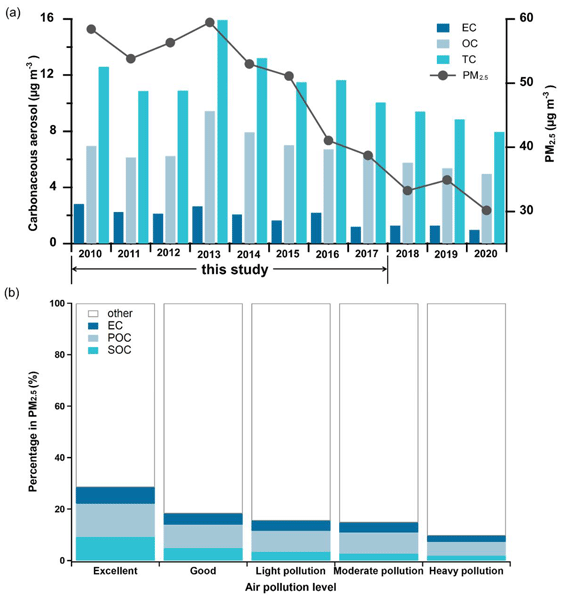
Haifeng Yu, Yunhua Chang, Lin Cheng, Yusen Duan, and Jianlin Hu
Atmos. Chem. Phys., 25, 5355–5369, https://doi.org/10.5194/acp-25-5355-2025, https://doi.org/10.5194/acp-25-5355-2025, 2025
Short summary
Short summary
This study presents long-term measurements and comprehensive analysis of carbonaceous aerosols in fine particles in Shanghai. We further estimated primary and secondary carbon levels, examining their temporal variations on interannual, monthly, seasonal, and diurnal scales. Through rigorous statistical analysis and correlation studies with meteorological parameters and pollutant concentrations, the origins, formation mechanisms, and spatial distribution patterns of secondary organic carbon were elucidated.
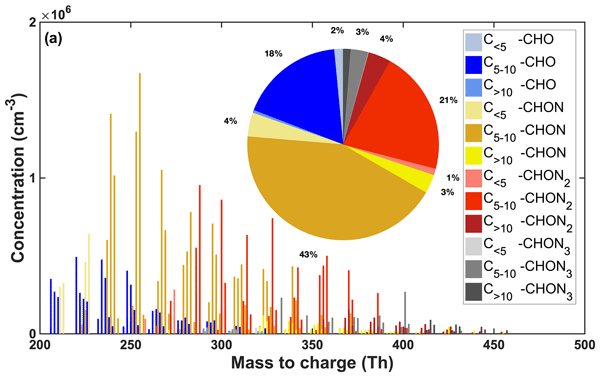
Yiqun Lu, Yingge Ma, Dan Dan Huang, Shengrong Lou, Sheng'ao Jing, Yaqin Gao, Hongli Wang, Yanjun Zhang, Hui Chen, Yunhua Chang, Naiqiang Yan, Jianmin Chen, Christian George, Matthieu Riva, and Cheng Huang
Atmos. Chem. Phys., 23, 3233–3245, https://doi.org/10.5194/acp-23-3233-2023, https://doi.org/10.5194/acp-23-3233-2023, 2023
Short summary
Short summary
N-containing oxygenated organic molecules have been identified as important precursors of aerosol particles. We used an ultra-high-resolution mass spectrometer coupled with an online sample inlet to accurately measure their molecular composition, concentration level and variation patterns. We show their formation process and influencing factors in a Chinese megacity involving various volatile organic compound precursors and atmospheric oxidants, and we highlight the influence of PM2.5 episodes.
Guicai Ning, Jiayi Xing, Tianliang Zhao, Shigong Wang, Yuanjian Yang, and Xiangde Xu
EGUsphere, https://doi.org/10.5194/egusphere-2026-5585, https://doi.org/10.5194/egusphere-2026-5585, 2026
This preprint is open for discussion and under review for Atmospheric Chemistry and Physics (ACP).
Short summary
Short summary
Local atmospheric circulations are frequent and diverse over plateau-basin regions, yet their vertical structures remain unclear. Here, we develop and apply a physical-constrained framework to identify terrain-driven circulations over the Tibetan Plateau-Sichuan Basin and quantify their intensity, spatial extent, and central height. Three typical local circulations including one-cell, two-cell, and three-cell circulations are detected, which become more frequent while spatial extent shrinks.
Jiawei Yan, Lu Zhang, Yizhou Xu, Xinfeng Ling, Weiwei Ding, Yubin Li, Yuan Wang, and Yuanjian Yang
EGUsphere, https://doi.org/10.5194/egusphere-2026-3201, https://doi.org/10.5194/egusphere-2026-3201, 2026
Short summary
Short summary
Paddy fields play an important role in greenhouse gas budgets and carbon cycling. Based on in-situ observation, we found that under calm nighttime conditions, weak turbulent mixing renders carbon dioxide and methane accumulate near the surface, whereas short bursts of turbulence rapidly disperse them upward. This transport processes cannot be fully described by conventional physical framework due to the influence of submeso motions. The understanding is helpful to improve the relevant models.
Fu Luo, Yuanjian Yang, Ting Sun, Zuofang Zheng, Xueyan Bi, Guoyu Ren, and Simone Lolli
EGUsphere, https://doi.org/10.5194/egusphere-2026-3392, https://doi.org/10.5194/egusphere-2026-3392, 2026
Short summary
Short summary
Cities are hotter than surrounding countryside, and heatwaves intensify this contrast. How combined warming reshapes air above different urban areas remains unclear. Using a high-resolution model, we examined two 2020 heatwaves over Guangzhou, China, finding extra warming strongest above densely built neighbourhoods and weakest over open low-rise areas. Dense areas retain heat overnight, adding to next-day warming and showing how urban form shapes extreme heat from surface to lower atmosphere.
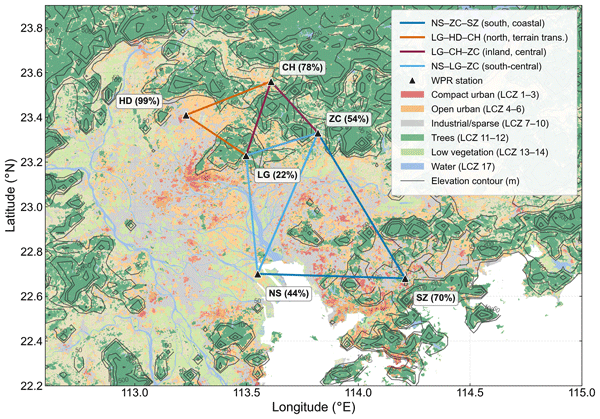
Wanju Li, Lifang Sheng, Xueyan Bi, Zehao Huang, Yali Luo, Shiqi Xiao, Chao Liu, Yang Yang, Jiandong Wang, Yuanjian Yang, and Simone Lolli
Atmos. Chem. Phys., 26, 11943–11965, https://doi.org/10.5194/acp-26-11943-2026, https://doi.org/10.5194/acp-26-11943-2026, 2026
Short summary
Short summary
Heavy rain in South China often strikes suddenly far from weather fronts and is hard to forecast. Using five years of radar wind data and rainfall records from Guangdong, we studied 226 events and found warning signs one to four hours before onset that differ by region. In the west, strengthening low-level winds drive the rain; in the Pearl River Delta, friction reshapes the surface wind; in the east, warm surface air stores energy that fuels the storm.
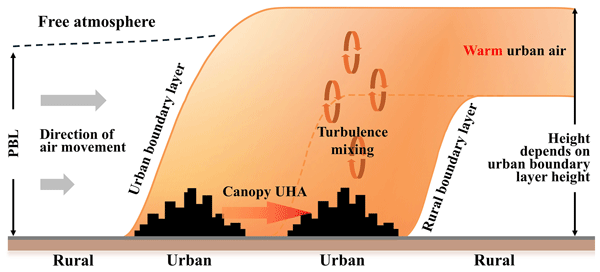
Jiesheng Xue, Yuanjian Yang, Guoyu Ren, and Simone Lolli
Atmos. Chem. Phys., 26, 11543–11560, https://doi.org/10.5194/acp-26-11543-2026, https://doi.org/10.5194/acp-26-11543-2026, 2026
Short summary
Short summary
With the reduction in inter-city distances, the wind carries heat downstream to neighboring cities. Focusing on the urban agglomeration area in China, we demonstrate the spatiotemporal variations of this heat transfer process, the moderating influence of meteorological factors, and quantify its effect on the intensity of the urban heat island in downstream cities. The results highlight the necessity of considering inter-city heat interactions in thermal risk management.
Wenjie Zhang, Mengxi Qu, Ranhao Sun, Jiarui Zhao, Guicai Ning, Aziz Inamov, Zokhid Mamatkulovd, Di Zhou, Bakhtiyor Pulatov, and Yuanjian Yang
EGUsphere, https://doi.org/10.5194/egusphere-2026-2290, https://doi.org/10.5194/egusphere-2026-2290, 2026
Short summary
Short summary
MODIS satellite temperature data lack full validation across China. Using 18 years of balloon data from 74 stations, we evaluated its accuracy, lower-atmosphere stability, and inversion detection. Nighttime accuracy exceeds daytime; upper layers outperform lower layers . A bias exists at 700 hPa. Stability retrieval is more reliable by day. Inversion detection rates are low: 6.6 % day, 13.1 % night. This guides appropriate use of MOD07_L2 in atmospheric science, hydrology, and ecology.
Daihao Yu, Qiuwei Xia, Saifen Yu, Yixiang Chen, Keyi Xu, Haobin Han, Jianjun Guo, Kexin Guo, Jiadong Hu, Zhen Zhang, Jing Cai, Yuanjian Yang, and Haiyun Xia
EGUsphere, https://doi.org/10.5194/egusphere-2025-6470, https://doi.org/10.5194/egusphere-2025-6470, 2026
Short summary
Short summary
Industrial parks are critical nodes in the global carbon cycle. This study combines high-resolution lidar observations and the WRF-GHG model to examine CO2 accumulation and dispersion in a semi-enclosed bay. Distinct diurnal patterns emerge: nighttime accumulation and daytime dispersion driven by terrain, atmospheric stability and sea breezes. WRF-GHG captures temporal trends, but it underestimates CO2 levels, indicating limitations in emission inventories and terrain-wind interactions.
Yuanjian Yang, Chenjie Qian, Minxuan Zhang, Chenchao Zhan, Zhenxin Liu, Pak Wai Chan, Xueyan Bi, Meng Gao, and Simone Lolli
Atmos. Meas. Tech., 19, 1345–1363, https://doi.org/10.5194/amt-19-1345-2026, https://doi.org/10.5194/amt-19-1345-2026, 2026
Short summary
Short summary
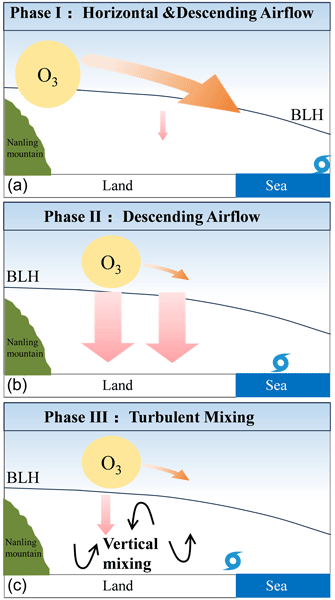
Up to ~ 40 % of ozone pollution in the Greater Bay Area of China is related to tropical cyclones. The O3 pollution was found to be transported from inland areas to coastal areas. The transport process can be roughly divided into three phases: downdraft control, horizontal transport, and vertical mixing.
Jialu Xu, Yingjie Zhang, Yuying Wang, Xing Yan, Bin Zhu, Chunsong Lu, Yuanjian Yang, Yele Sun, Junhui Zhang, Xiaofan Zuo, Zhanghanshu Han, and Rui Zhang
Atmos. Chem. Phys., 25, 18599–18616, https://doi.org/10.5194/acp-25-18599-2025, https://doi.org/10.5194/acp-25-18599-2025, 2025
Short summary
Short summary
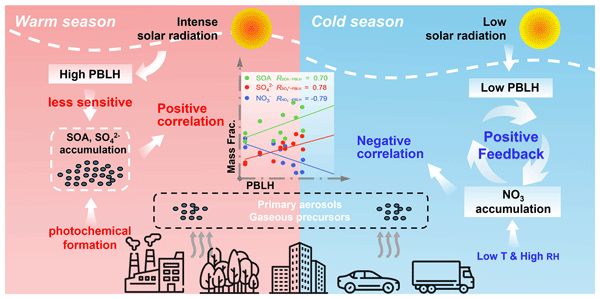
We conducted a year-long study in Nanjing to explore how the height of the atmospheric boundary layer affects fine particle pollution. We found that low boundary layers in winter trap pollutants like nitrate and primary particles, while higher layers in summer help form secondary pollutants like sulfate and organic aerosols. These findings show that boundary layer dynamics are key to understanding and managing seasonal air pollution.
Junhui Zhang, Yuying Wang, Jialu Xu, Xiaofan Zuo, Chunsong Lu, Bin Zhu, Yuanjian Yang, Xing Yan, and Yele Sun
Atmos. Chem. Phys., 25, 17413–17428, https://doi.org/10.5194/acp-25-17413-2025, https://doi.org/10.5194/acp-25-17413-2025, 2025
Short summary
Short summary
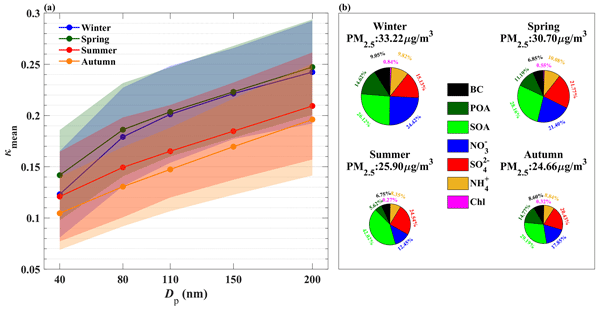
We conducted a year-long study in Nanjing to understand how tiny airborne particles take up water, which affects air quality and climate. We found that particle water uptake varies by season and size, with lower values in summer due to more organic materials. Local pollution mainly influences smaller particles, while larger ones are shaped by air mass transport. These findings help improve climate models and support better air pollution control in fast-growing cities.

Tao Shi, Yuanjian Yang, Ping Qi, and Simone Lolli
Atmos. Chem. Phys., 25, 17069–17090, https://doi.org/10.5194/acp-25-17069-2025, https://doi.org/10.5194/acp-25-17069-2025, 2025
Short summary
Short summary
Using Beijing’s Fifth Ring Road, the team combined data and models. Heatwave results: canopy heat island was 91.3 % stronger day/52.7 % night. Day heat relied on building coverage, night on sky visibility. Tall buildings block sun by day, trap heat at night. Night ventilation cools, day winds spread heat. Urban design must consider day-night cycles to fight extreme heat, guiding risk reduction.
Tao Shi, Yuanjian Yang, Gaopeng Lu, Zuofang Zheng, Yucheng Zi, Ye Tian, Lei Liu, and Simone Lolli
Atmos. Chem. Phys., 25, 9219–9234, https://doi.org/10.5194/acp-25-9219-2025, https://doi.org/10.5194/acp-25-9219-2025, 2025
Short summary
Short summary
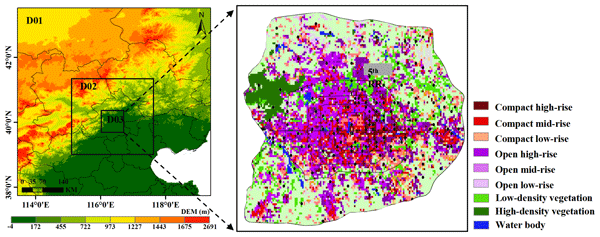
The city significantly influences thunderstorm and lightning activity, yet the potential mechanisms remain largely unexplored. Our study has revealed that both city size and building density play pivotal roles in modulating thunderstorm and lightning activity. This research not only deepens our understanding of urban meteorology but also lays an important foundation for developing accurate and targeted urban thunderstorm risk prediction models.
Haifeng Yu, Yunhua Chang, Lin Cheng, Yusen Duan, and Jianlin Hu
Atmos. Chem. Phys., 25, 5355–5369, https://doi.org/10.5194/acp-25-5355-2025, https://doi.org/10.5194/acp-25-5355-2025, 2025
Short summary
Short summary
This study presents long-term measurements and comprehensive analysis of carbonaceous aerosols in fine particles in Shanghai. We further estimated primary and secondary carbon levels, examining their temporal variations on interannual, monthly, seasonal, and diurnal scales. Through rigorous statistical analysis and correlation studies with meteorological parameters and pollutant concentrations, the origins, formation mechanisms, and spatial distribution patterns of secondary organic carbon were elucidated.
Tao Shi, Yuanjian Yang, Lian Zong, Min Guo, Ping Qi, and Simone Lolli
Atmos. Chem. Phys., 25, 4989–5007, https://doi.org/10.5194/acp-25-4989-2025, https://doi.org/10.5194/acp-25-4989-2025, 2025
Short summary
Short summary
Our study explored the daily temperature patterns in urban areas of the Yangtze River Delta, focusing on how weather and human activities impact these patterns. We found that temperatures were higher at night, and weather patterns had a bigger impact during the day, while human activities mattered more at night. This helps us understand and address urban overheating.
Fengjiao Chen, Yuanjian Yang, Lu Yu, Yang Li, Weiguang Liu, Yan Liu, and Simone Lolli
Atmos. Chem. Phys., 25, 1587–1601, https://doi.org/10.5194/acp-25-1587-2025, https://doi.org/10.5194/acp-25-1587-2025, 2025
Short summary
Short summary
The microphysical mechanisms of precipitation responsible for the varied impacts of aerosol particles on shallow precipitation remain unclear. This study reveals that coarse aerosol particles invigorate shallow rainfall through enhanced coalescence processes, whereas fine aerosol particles suppress shallow rainfall through intensified microphysical breaks. These impacts are independent of thermodynamic environments but are more significant in low-humidity conditions.
Tao Shi, Yuanjian Yang, Ping Qi, and Simone Lolli
Atmos. Chem. Phys., 24, 12807–12822, https://doi.org/10.5194/acp-24-12807-2024, https://doi.org/10.5194/acp-24-12807-2024, 2024
Short summary
Short summary
This paper explored the formation mechanisms of the amplified canopy urban heat island intensity (ΔCUHII) during heat wave (HW) periods in the megacity of Beijing from the perspectives of mountain–valley breeze and urban morphology. During the mountain breeze phase, high-rise buildings with lower sky view factors (SVFs) had a pronounced effect on the ΔCUHII. During the valley breeze phase, high-rise buildings exerted a dual influence on the ΔCUHII.
Chaman Gul, Shichang Kang, Yuanjian Yang, Xinlei Ge, and Dong Guo
EGUsphere, https://doi.org/10.5194/egusphere-2024-1144, https://doi.org/10.5194/egusphere-2024-1144, 2024
Preprint archived
Short summary
Short summary
Long-term variations in upper atmospheric temperature and water vapor in the selected domains of time and space are presented. The temperature during the past two decades showed a cooling trend and water vapor showed an increasing trend and had an inverse relation with temperature in selected domains of space and time. Seasonal temperature variations are distinct, with a summer minimum and a winter maximum. Our results can be an early warning indication for future climate change.
Fangbing Li, Dan Dan Huang, Linhui Tian, Bin Yuan, Wen Tan, Liang Zhu, Penglin Ye, Douglas Worsnop, Ka In Hoi, Kai Meng Mok, and Yong Jie Li
Atmos. Meas. Tech., 17, 2415–2427, https://doi.org/10.5194/amt-17-2415-2024, https://doi.org/10.5194/amt-17-2415-2024, 2024
Short summary
Short summary
The responses of protonated, adduct, and fragmented ions of 21 volatile organic compounds (VOCs) were investigated with varying instrument settings and relative humidity (RH) in a Vocus proton-transfer-reaction mass spectrometer (PTR-MS). The protonated ions of most VOCs studied show < 15 % variation in sensitivity, except for some long-chain aldehydes. The relationship between sensitivity and PTR rate constant is complicated by the influences from ion transmission and protonated ion fraction.
Yuan Wang, Qiangqiang Yuan, Tongwen Li, Yuanjian Yang, Siqin Zhou, and Liangpei Zhang
Earth Syst. Sci. Data, 15, 3597–3622, https://doi.org/10.5194/essd-15-3597-2023, https://doi.org/10.5194/essd-15-3597-2023, 2023
Short summary
Short summary
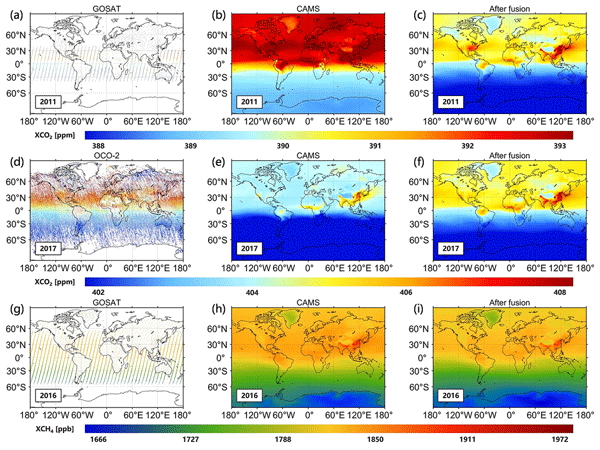
We propose a novel spatiotemporally self-supervised fusion method to establish long-term daily seamless global XCO2 and XCH4 products. Results show that the proposed method achieves a satisfactory accuracy that distinctly exceeds that of CAMS-EGG4 and is superior or close to those of GOSAT and OCO-2. In particular, our fusion method can effectively correct the large biases in CAMS-EGG4 due to the issues from assimilation data, such as the unadjusted anthropogenic emission for COVID-19.
Yaqin Gao, Hongli Wang, Lingling Yuan, Shengao Jing, Bin Yuan, Guofeng Shen, Liang Zhu, Abigail Koss, Yingjie Li, Qian Wang, Dan Dan Huang, Shuhui Zhu, Shikang Tao, Shengrong Lou, and Cheng Huang
Atmos. Chem. Phys., 23, 6633–6646, https://doi.org/10.5194/acp-23-6633-2023, https://doi.org/10.5194/acp-23-6633-2023, 2023
Short summary
Short summary
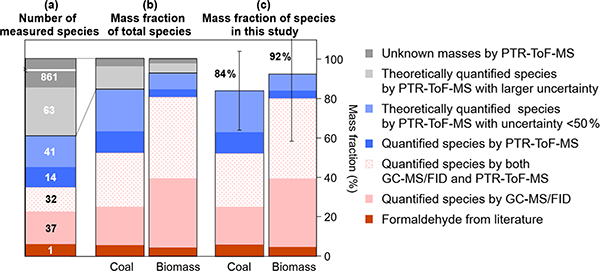
A near-complete speciation of reactive organic gases from residential combustion was developed to get more insights into their atmospheric effects. Oxygenated species, higher hydrocarbons and nitrogen-containing species played larger roles in these emissions compared with common hydrocarbons. Based on the near-complete speciation, these emissions were largely underestimated, leading to more underestimation of their hydroxyl radical reactivity and secondary organic aerosol formation potential.
Yiqun Lu, Yingge Ma, Dan Dan Huang, Shengrong Lou, Sheng'ao Jing, Yaqin Gao, Hongli Wang, Yanjun Zhang, Hui Chen, Yunhua Chang, Naiqiang Yan, Jianmin Chen, Christian George, Matthieu Riva, and Cheng Huang
Atmos. Chem. Phys., 23, 3233–3245, https://doi.org/10.5194/acp-23-3233-2023, https://doi.org/10.5194/acp-23-3233-2023, 2023
Short summary
Short summary
N-containing oxygenated organic molecules have been identified as important precursors of aerosol particles. We used an ultra-high-resolution mass spectrometer coupled with an online sample inlet to accurately measure their molecular composition, concentration level and variation patterns. We show their formation process and influencing factors in a Chinese megacity involving various volatile organic compound precursors and atmospheric oxidants, and we highlight the influence of PM2.5 episodes.
Yilin Chen, Yuanjian Yang, and Meng Gao
Atmos. Meas. Tech., 16, 1279–1294, https://doi.org/10.5194/amt-16-1279-2023, https://doi.org/10.5194/amt-16-1279-2023, 2023
Short summary
Short summary
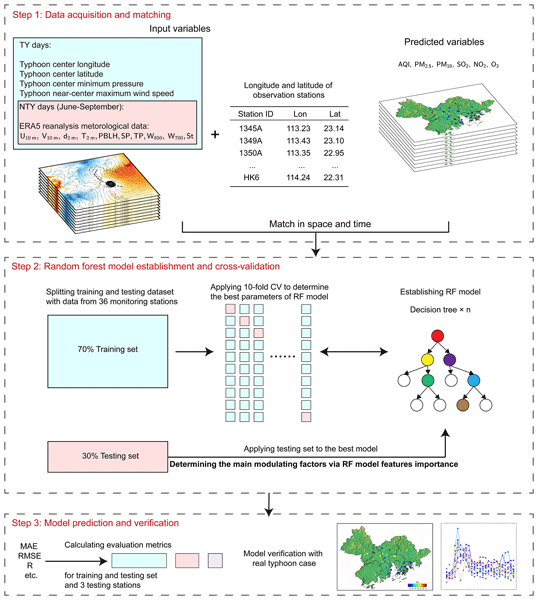
The Guangdong–Hong Kong–Macao Greater Bay Area suffers from summertime air pollution events related to typhoons. The present study leverages machine learning to predict typhoon-associated air quality over the area. The model evaluation shows that the model performs excellently. Moreover, the change in meteorological drivers of air quality on typhoon days and non-typhoon days suggests that air pollution control strategies should have different focuses on typhoon days and non-typhoon days.
Hui Zhang, Ming Luo, Yongquan Zhao, Lijie Lin, Erjia Ge, Yuanjian Yang, Guicai Ning, Jing Cong, Zhaoliang Zeng, Ke Gui, Jing Li, Ting On Chan, Xiang Li, Sijia Wu, Peng Wang, and Xiaoyu Wang
Earth Syst. Sci. Data, 15, 359–381, https://doi.org/10.5194/essd-15-359-2023, https://doi.org/10.5194/essd-15-359-2023, 2023
Short summary
Short summary
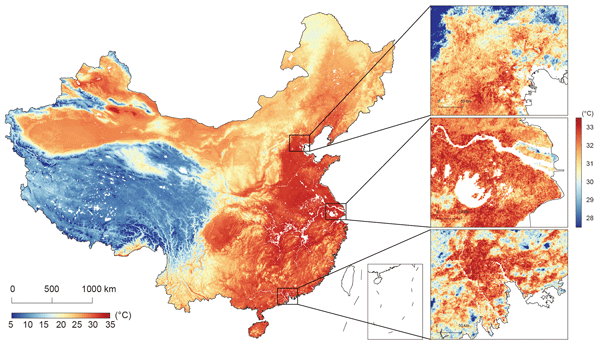
We generate the first monthly high-resolution (1 km) human thermal index collection (HiTIC-Monthly) in China over 2003–2020, in which 12 human-perceived temperature indices are generated by LightGBM. The HiTIC-Monthly dataset has a high accuracy (R2 = 0.996, RMSE = 0.693 °C, MAE = 0.512 °C) and describes explicit spatial variations for fine-scale studies. It is freely available at https://zenodo.org/record/6895533 and https://data.tpdc.ac.cn/disallow/036e67b7-7a3a-4229-956f-40b8cd11871d.
Fan Wang, Gregory R. Carmichael, Jing Wang, Bin Chen, Bo Huang, Yuguo Li, Yuanjian Yang, and Meng Gao
Atmos. Chem. Phys., 22, 13341–13353, https://doi.org/10.5194/acp-22-13341-2022, https://doi.org/10.5194/acp-22-13341-2022, 2022
Short summary
Short summary
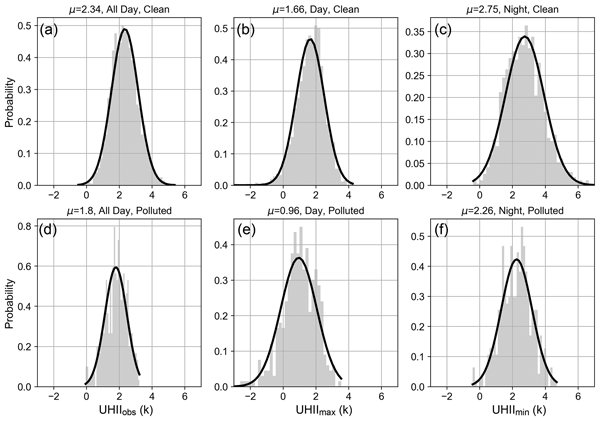
Unprecedented urbanization in China has led to serious urban heat island (UHI) issues, exerting intense heat stress on urban residents. We find diverse influences of aerosol pollution on urban heat island intensity (UHII) under different circulations. Our results also highlight the role of black carbon in aggravating UHI, especially during nighttime. It could thus be targeted for cooperative management of heat islands and aerosol pollution.
Zexia Duan, Zhiqiu Gao, Qing Xu, Shaohui Zhou, Kai Qin, and Yuanjian Yang
Earth Syst. Sci. Data, 14, 4153–4169, https://doi.org/10.5194/essd-14-4153-2022, https://doi.org/10.5194/essd-14-4153-2022, 2022
Short summary
Short summary
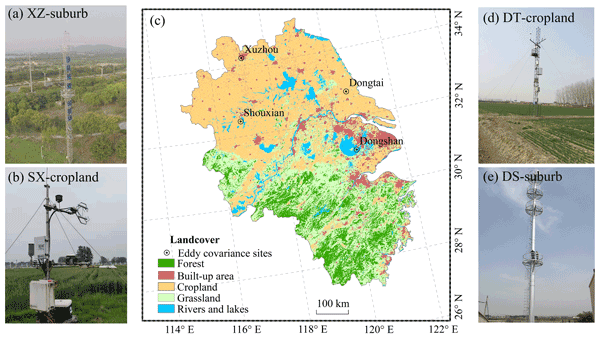
Land–atmosphere interactions over the Yangtze River Delta (YRD) in China are becoming more varied and complex, as the area is experiencing rapid land use changes. In this paper, we describe a dataset of microclimate and eddy covariance variables at four sites in the YRD. This dataset has potential use cases in multiple research fields, such as boundary layer parametrization schemes, evaluation of remote sensing algorithms, and development of climate models in typical East Asian monsoon regions.
Lian Zong, Yuanjian Yang, Haiyun Xia, Meng Gao, Zhaobin Sun, Zuofang Zheng, Xianxiang Li, Guicai Ning, Yubin Li, and Simone Lolli
Atmos. Chem. Phys., 22, 6523–6538, https://doi.org/10.5194/acp-22-6523-2022, https://doi.org/10.5194/acp-22-6523-2022, 2022
Short summary
Short summary
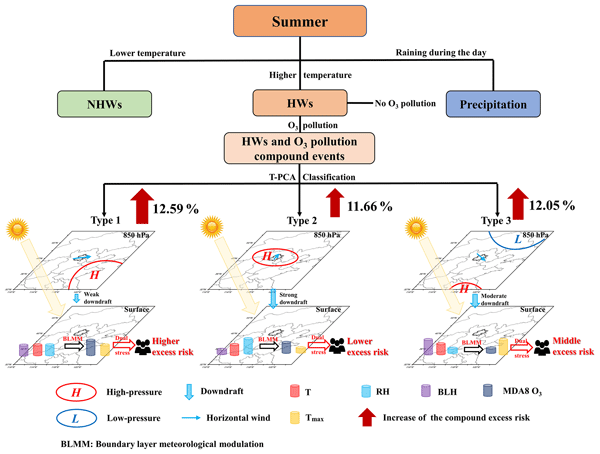
Heatwaves (HWs) paired with higher ozone (O3) concentration at surface level pose a serious threat to human health. Taking Beijing as an example, three unfavorable synoptic weather patterns were identified to dominate the compound HW and O3 pollution events. Under the synergistic stress of HWs and O3 pollution, public mortality risk increased, and synoptic patterns and urbanization enhanced the compound risk of events in Beijing by 33.09 % and 18.95 %, respectively.
Kun Zhang, Zhiqiang Liu, Xiaojuan Zhang, Qing Li, Andrew Jensen, Wen Tan, Ling Huang, Yangjun Wang, Joost de Gouw, and Li Li
Atmos. Chem. Phys., 22, 4853–4866, https://doi.org/10.5194/acp-22-4853-2022, https://doi.org/10.5194/acp-22-4853-2022, 2022
Short summary
Short summary
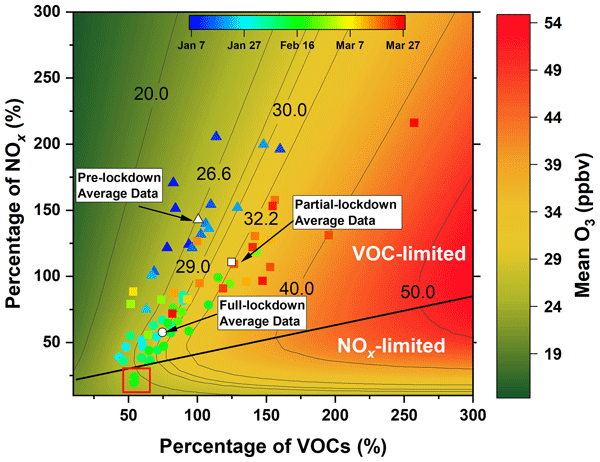
A significant increase in O3 concentrations was found during the lockdown period of COVID-19 in most areas of China. By field measurements coupled with machine learning, an observation-based model (OBM) and sensitivity analysis, we found the changes in the NOx / VOC ratio were a key reason for the significant rise in O3. To restrain O3 pollution, more efforts should be devoted to the control of anthropogenic OVOCs, alkenes and aromatics.
Shaohui Zhou, Yuanjian Yang, Zhiqiu Gao, Xingya Xi, Zexia Duan, and Yubin Li
Atmos. Meas. Tech., 15, 757–773, https://doi.org/10.5194/amt-15-757-2022, https://doi.org/10.5194/amt-15-757-2022, 2022
Short summary
Short summary
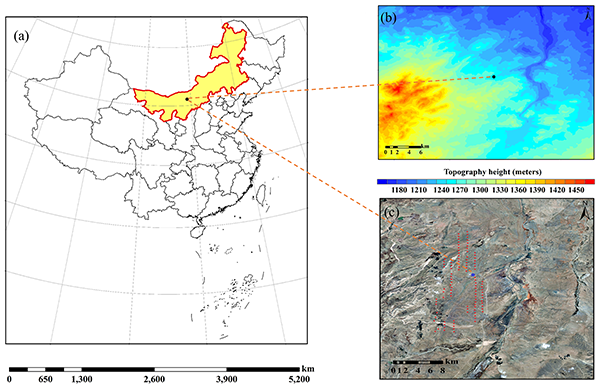
Our research has determined the possible relationship between Weibull natural wind mesoscale parameter c and shape factor k with height under the conditions of a desert steppe terrain in northern China, which has great potential in wind power generation. We have gained an enhanced understanding of the seasonal changes in the surface roughness of the desert grassland and the changes in the incoming wind direction.
Shihan Chen, Yuanjian Yang, Fei Deng, Yanhao Zhang, Duanyang Liu, Chao Liu, and Zhiqiu Gao
Atmos. Meas. Tech., 15, 735–756, https://doi.org/10.5194/amt-15-735-2022, https://doi.org/10.5194/amt-15-735-2022, 2022
Short summary
Short summary
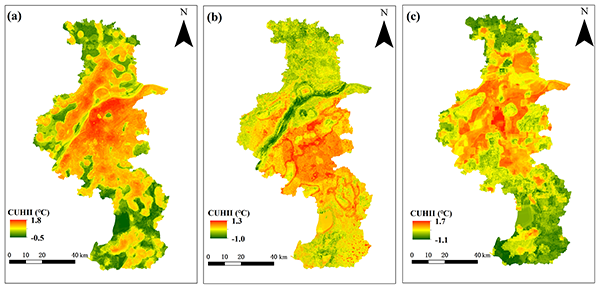
This paper proposes a method for evaluating canopy UHI intensity (CUHII) at high resolution by using remote sensing data and machine learning with a random forest (RF) model. The spatial distribution of CUHII was evaluated at 30 m resolution based on the output of the RF model. The present RF model framework for real-time monitoring and assessment of high-resolution CUHII provides scientific support for studying the changes and causes of CUHII.
Xinyan Li, Yuanjian Yang, Jiaqin Mi, Xueyan Bi, You Zhao, Zehao Huang, Chao Liu, Lian Zong, and Wanju Li
Atmos. Meas. Tech., 14, 7007–7023, https://doi.org/10.5194/amt-14-7007-2021, https://doi.org/10.5194/amt-14-7007-2021, 2021
Short summary
Short summary
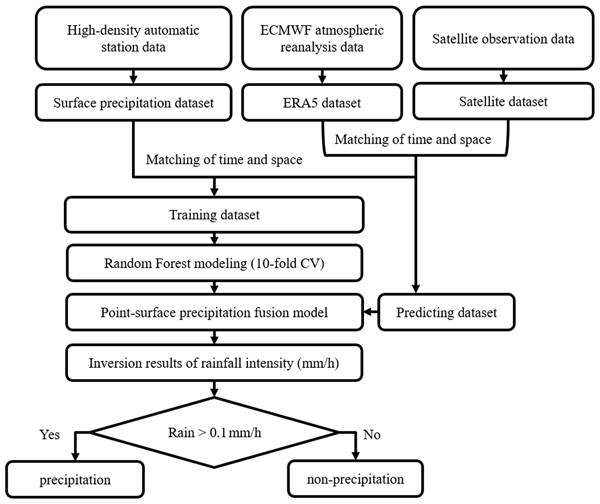
A random forest (RF) model framework for Fengyun-4A (FY-4A) daytime and nighttime quantitative precipitation estimation (QPE) is established using FY-4A multi-band spectral information, cloud parameters, high-density precipitation observations and physical quantities from reanalysis data. The RF model of FY-4A QPE has a high accuracy in estimating precipitation at the heavy-rain level or below, which has advantages for quantitative estimation of summer precipitation over East Asia in future.
Cited articles
Almeida, J., Schobesberger, S., Kürten, A., Ortega, I. K., Kupiainen-Määttä, O., Praplan, A. P., Adamov, A., Amorim, A., Bianchi, F., Breitenlechner, M., David, A., Dommen, J., Donahue, N. M., Downard, A., Dunne, E., Duplissy, J., Ehrhart, S., Flagan, R. C., Franchin, A., Guida, R., Hakala, J., Hansel, A., Heinritzi, M., Henschel, H., Jokinen, T., Junninen, H., Kajos, M., Kangasluoma, J., Keskinen, H., Kupc, A., Kurtén, T., Kvashin, A. N., Laaksonen, A., Lehtipalo, K., Leiminger, M., Leppä, J., Loukonen, V., Makhmutov, V., Mathot, S., McGrath, M. J., Nieminen, T., Olenius, T., Onnela, A., Petäjä, T., Riccobono, F., Riipinen, I., Rissanen, M., Rondo, L., Ruuskanen, T., Santos, F. D., Sarnela, N., Schallhart, S., Schnitzhofer, R., Seinfeld, J. H., Simon, M., Sipilä, M., Stozhkov, Y., Stratmann, F., Tomé, A., Tröstl, J., Tsagkogeorgas, G., Vaattovaara, P., Viisanen, Y., Virtanen, A., Vrtala, A., Wagner, P. E., Weingartner, E., Wex, H., Williamson, C., Wimmer, D., Ye, P., Yli-Juuti, T., Carslaw, K. S., Kulmala, M., Curtius, J., Baltensperger, U., Worsnop, D. R., Vehkamäki, H., and Kirkby, J.: Molecular understanding of sulphuric acid–amine particle nucleation in the atmosphere, Nature, 502, 359–363, https://doi.org/10.1038/nature12663, 2013.
Barletta, B., Meinardi, S., Sherwood Rowland, F., Chan, C.-Y., Wang, X., Zou, S., Yin Chan, L., and Blake, D. R.: Volatile organic compounds in 43 Chinese cities, Atmos. Environ., 39, 5979–5990, https://doi.org/10.1016/j.atmosenv.2005.06.029, 2005.
Behera, S. N., Sharma, M., Aneja, V. P., and Balasubramanian, R.: Ammonia in the atmosphere: a review on emission sources, atmospheric chemistry and deposition on terrestrial bodies, Environmental Science and Pollution Research, 20, 8092–8131, https://doi.org/10.1007/s11356-013-2051-9, 2013.
Bond, J. A. and Bolt, H. M.: Review of The Toxicology of Styrene, CRC Critical Reviews in Toxicology, 19, 227–249, https://doi.org/10.3109/10408448909037472, 1989.
Chang, Y., Zou, Z., Deng, C., Huang, K., Collett, J. L., Lin, J., and Zhuang, G.: The importance of vehicle emissions as a source of atmospheric ammonia in the megacity of Shanghai, Atmos. Chem. Phys., 16, 3577–3594, https://doi.org/10.5194/acp-16-3577-2016, 2016.
Chang, Y., Zou, Z., Zhang, Y., Deng, C., Hu, J., Shi, Z., Dore, A. J., and Collett Jr., J. L.: Assessing Contributions of Agricultural and Nonagricultural Emissions to Atmospheric Ammonia in a Chinese Megacity, Environmental Science & Technology, 53, 1822–1833, https://doi.org/10.1021/acs.est.8b05984, 2019.
Chang, Y., Gao, Y., Lu, Y., Qiao, L., Kuang, Y., Cheng, K., Wu, Y., Lou, S., Jing, S., Wang, H., and Huang, C.: Discovery of a Potent Source of Gaseous Amines in Urban China, Environmental Science & Technology Letters, 8, 725–731, https://doi.org/10.1021/acs.estlett.1c00229, 2021.
Chang, Y., Wang, H., Gao, Y., Jing, S. a., Lu, Y., Lou, S., Kuang, Y., Cheng, K., Ling, Q., Zhu, L., Tan, W., and Huang, R.-J.: Nonagricultural Emissions Dominate Urban Atmospheric Amines as Revealed by Mobile Measurements, Geophysical Research Letters, 49, e2021GL097640, https://doi.org/10.1029/2021GL097640, 2022.
Chen, R., Shiue, A., Liu, J., Zhi, Y., Zhang, D., Xia, F., and Leggett, G.: Integrated on-site collection and off-site analysis of airborne molecular contamination in cleanrooms for integrated circuit manufacturing processes, Building and Environment, 214, 108941, https://doi.org/10.1016/j.buildenv.2022.108941, 2022.
de Gouw, J. and Warneke, C.: Measurements of volatile organic compounds in the earth's atmosphere using proton-transfer-reaction mass spectrometry, Mass Spectrometry Reviews, 26, 223–257, https://doi.org/10.1002/mas.20119, 2007.
Den, W., Bai, H., and Kang, Y.: Organic Airborne Molecular Contamination in Semiconductor Fabrication Clean Rooms: A Review, Journal of the Electrochemical Society, 153, G149, https://doi.org/10.1149/1.2147286, 2006.
Den, W., Hu, S.-C., Garza, C. M., and Ali Zargar, O.: Review – Airborne Molecular Contamination: Recent Developments in the Understanding and Minimization for Advanced Semiconductor Device Manufacturing, ECS Journal of Solid State Science and Technology, 9, 064003, https://doi.org/10.1149/2162-8777/aba080, 2020.
Ding, S. and Jiao, N.: N,N-Dimethylformamide: A Multipurpose Building Block, Angewandte Chemie International Edition, 51, 9226–9237, https://doi.org/10.1002/anie.201200859, 2012.
Ehn, M., Thornton, J. A., Kleist, E., Sipilä, M., Junninen, H., Pullinen, I., Springer, M., Rubach, F., Tillmann, R., Lee, B., Lopez-Hilfiker, F., Andres, S., Acir, I.-H., Rissanen, M., Jokinen, T., Schobesberger, S., Kangasluoma, J., Kontkanen, J., Nieminen, T., Kurtén, T., Nielsen, L. B., Jørgensen, S., Kjaergaard, H. G., Canagaratna, M., Maso, M. D., Berndt, T., Petäjä, T., Wahner, A., Kerminen, V.-M., Kulmala, M., Worsnop, D. R., Wildt, J., and Mentel, T. F.: A large source of low-volatility secondary organic aerosol, Nature, 506, 476–479, https://doi.org/10.1038/nature13032, 2014.
Gescher, A.: Metabolism of N,N-dimethylformamide: Key to the understanding of its toxicity, Chemical Research in Toxicology, 6, 245–251, https://doi.org/10.1021/tx00033a001, 1993.
Gu, B., Zhang, L., Van Dingenen, R., Vieno, M., Van Grinsven, H. J. M., Zhang, X., Zhang, S., Chen, Y., Wang, S., Ren, C., Rao, S., Holland, M., Winiwarter, W., Chen, D., Xu, J., and Sutton, M. A.: Abating ammonia is more cost-effective than nitrogen oxides for mitigating PM2.5 air pollution, Science, 374, 758–762, https://doi.org/10.1126/science.abf8623, 2021.
Gu, M., Pan, Y., Walters, W. W., Sun, Q., Song, L., Wang, Y., Xue, Y., and Fang, Y.: Vehicular Emissions Enhanced Ammonia Concentrations in Winter Mornings: Insights from Diurnal Nitrogen Isotopic Signatures, Environmental Science & Technology, 56, 1578–1585, https://doi.org/10.1021/acs.est.1c05884, 2022.
Guenther, A., Hewitt, C. N., Erickson, D., Fall, R., Geron, C., Graedel, T., Harley, P., Klinger, L., Lerdau, M., McKay, W. A., Pierce, T., Scholes, B., Steinbrecher, R., Tallamraju, R., Taylor, J., and Zimmerman, P.: A global model of natural volatile organic compound emissions, Journal of Geophysical Research: Atmospheres, 100, 8873–8892, https://doi.org/10.1029/94JD02950, 1995.
Hanson, D. R., McMurry, P. H., Jiang, J., Tanner, D., and Huey, L. G.: Ambient Pressure Proton Transfer Mass Spectrometry: Detection of Amines and Ammonia, Environmental Science & Technology, 45, 8881–8888, https://doi.org/10.1021/es201819a, 2011.
Huang, G., Hou, J., and Zhou, X.: A Measurement Method for Atmospheric Ammonia and Primary Amines Based on Aqueous Sampling, OPA Derivatization and HPLC Analysis, Environmental Science & Technology, 43, 5851–5856, https://doi.org/10.1021/es900988q, 2009.
Isaacman, G., Kreisberg, N. M., Worton, D. R., Hering, S. V., and Goldstein, A. H.: A versatile and reproducible automatic injection system for liquid standard introduction: application to in-situ calibration, Atmos. Meas. Tech., 4, 1937–1942, https://doi.org/10.5194/amt-4-1937-2011, 2011.
Kirkby, J., Curtius, J., Almeida, J., Dunne, E., Duplissy, J., Ehrhart, S., Franchin, A., Gagné, S., Ickes, L., Kürten, A., Kupc, A., Metzger, A., Riccobono, F., Rondo, L., Schobesberger, S., Tsagkogeorgas, G., Wimmer, D., Amorim, A., Bianchi, F., Breitenlechner, M., David, A., Dommen, J., Downard, A., Ehn, M., Flagan, R. C., Haider, S., Hansel, A., Hauser, D., Jud, W., Junninen, H., Kreissl, F., Kvashin, A., Laaksonen, A., Lehtipalo, K., Lima, J., Lovejoy, E. R., Makhmutov, V., Mathot, S., Mikkilä, J., Minginette, P., Mogo, S., Nieminen, T., Onnela, A., Pereira, P., Petäjä, T., Schnitzhofer, R., Seinfeld, J. H., Sipilä, M., Stozhkov, Y., Stratmann, F., Tomé, A., Vanhanen, J., Viisanen, Y., Vrtala, A., Wagner, P. E., Walther, H., Weingartner, E., Wex, H., Winkler, P. M., Carslaw, K. S., Worsnop, D. R., Baltensperger, U., and Kulmala, M.: Role of sulphuric acid, ammonia and galactic cosmic rays in atmospheric aerosol nucleation, Nature, 476, 429–433, https://doi.org/10.1038/nature10343, 2011.
Lee, B. H., Lopez-Hilfiker, F. D., Mohr, C., Kurtén, T., Worsnop, D. R., and Thornton, J. A.: An Iodide-Adduct High-Resolution Time-of-Flight Chemical-Ionization Mass Spectrometer: Application to Atmospheric Inorganic and Organic Compounds, Environmental Science & Technology, 48, 6309–6317, https://doi.org/10.1021/es500362a, 2014.
Li, M.-J. and Zeng, T.: The deleterious effects of N,N-dimethylformamide on liver: A mini-review, Chemico-Biological Interactions, 298, 129–136, https://doi.org/10.1016/j.cbi.2018.12.011, 2019.
Link, M. F., Claflin, M. S., Cecelski, C. E., Akande, A. A., Kilgour, D., Heine, P. A., Coggon, M., Stockwell, C. E., Jensen, A., Yu, J., Huynh, H. N., Ditto, J. C., Warneke, C., Dresser, W., Gemmell, K., Jorga, S., Robertson, R. L., de Gouw, J., Bertram, T., Abbatt, J. P. D., Borduas-Dedekind, N., and Poppendieck, D.: Product ion distributions using H3O+ proton-transfer-reaction time-of-flight mass spectrometry (PTR-ToF-MS): mechanisms, transmission effects, and instrument-to-instrument variability, Atmos. Meas. Tech., 18, 1013–1038, https://doi.org/10.5194/amt-18-1013-2025, 2025.
Liu, Y., Wang, H., Jing, S., Peng, Y., Gao, Y., Yan, R., Wang, Q., Lou, S., Cheng, T., and Huang, C.: Strong regional transport of volatile organic compounds (VOCs) during wintertime in Shanghai megacity of China, Atmos. Environ., 244, 117940, https://doi.org/10.1016/j.atmosenv.2020.117940, 2021.
Mansouri, M., Koval, P., Sharifzadeh, S., and Sánchez-Portal, D.: Molecular Doping in the Organic Semiconductor Diindenoperylene: Insights from Many-Body Perturbation Theory, J. Phys. Chem. C Nanomater Interfaces, 127, 16668–16678, https://doi.org/10.1021/acs.jpcc.3c03758, 2023.
McDonald Brian, C., de Gouw Joost, A., Gilman Jessica, B., Jathar Shantanu, H., Akherati, A., Cappa Christopher, D., Jimenez Jose, L., Lee-Taylor, J., Hayes Patrick, L., McKeen Stuart, A., Cui Yu, Y., Kim, S.-W., Gentner Drew, R., Isaacman-VanWertz, G., Goldstein Allen, H., Harley Robert, A., Frost Gregory, J., Roberts James, M., Ryerson Thomas, B., and Trainer, M.: Volatile chemical products emerging as largest petrochemical source of urban organic emissions, Science, 359, 760–764, https://doi.org/10.1126/science.aaq0524, 2018.
Mohr, C., Thornton, J. A., Heitto, A., Lopez-Hilfiker, F. D., Lutz, A., Riipinen, I., Hong, J., Donahue, N. M., Hallquist, M., Petäjä, T., Kulmala, M., and Yli-Juuti, T.: Molecular identification of organic vapors driving atmospheric nanoparticle growth, Nature Communications, 10, 4442, https://doi.org/10.1038/s41467-019-12473-2, 2019.
Murphy, S. M., Sorooshian, A., Kroll, J. H., Ng, N. L., Chhabra, P., Tong, C., Surratt, J. D., Knipping, E., Flagan, R. C., and Seinfeld, J. H.: Secondary aerosol formation from atmospheric reactions of aliphatic amines, Atmos. Chem. Phys., 7, 2313–2337, https://doi.org/10.5194/acp-7-2313-2007, 2007.
Muzart, J.: N,N-Dimethylformamide: much more than a solvent, Tetrahedron, 65, 8313–8323, https://doi.org/10.1016/j.tet.2009.06.091, 2009.
Nie, W., Yan, C., Huang, D. D., Wang, Z., Liu, Y., Qiao, X., Guo, Y., Tian, L., Zheng, P., Xu, Z., Li, Y., Xu, Z., Qi, X., Sun, P., Wang, J., Zheng, F., Li, X., Yin, R., Dallenbach, K. R., Bianchi, F., Petäjä, T., Zhang, Y., Wang, M., Schervish, M., Wang, S., Qiao, L., Wang, Q., Zhou, M., Wang, H., Yu, C., Yao, D., Guo, H., Ye, P., Lee, S., Li, Y. J., Liu, Y., Chi, X., Kerminen, V.-M., Ehn, M., Donahue, N. M., Wang, T., Huang, C., Kulmala, M., Worsnop, D., Jiang, J., and Ding, A.: Secondary organic aerosol formed by condensing anthropogenic vapours over China's megacities, Nat. Geosci., 15, 255–261, https://doi.org/10.1038/s41561-022-00922-5, 2022.
Norman, M., Hansel, A., and Wisthaler, A.: O
Park, J. H., Goldstein, A. H., Timkovsky, J., Fares, S., Weber, R., Karlik, J., and Holzinger, R.: Active Atmosphere-Ecosystem Exchange of the Vast Majority of Detected Volatile Organic Compounds, Science, 341, 643–647, https://doi.org/10.1126/science.1235053, 2013.
Pfeifer, J., Simon, M., Heinritzi, M., Piel, F., Weitz, L., Wang, D., Granzin, M., Müller, T., Bräkling, S., Kirkby, J., Curtius, J., and Kürten, A.: Measurement of ammonia, amines and iodine compounds using protonated water cluster chemical ionization mass spectrometry, Atmos. Meas. Tech., 13, 2501–2522, https://doi.org/10.5194/amt-13-2501-2020, 2020.
Place, B. K., Quilty, A. T., Di Lorenzo, R. A., Ziegler, S. E., and VandenBoer, T. C.: Quantitation of 11 alkylamines in atmospheric samples: separating structural isomers by ion chromatography, Atmos. Meas. Tech., 10, 1061–1078, https://doi.org/10.5194/amt-10-1061-2017, 2017.
Priestley, M., Le Breton, M., Bannan, T. J., Leather, K. E., Bacak, A., Reyes-Villegas, E., De Vocht, F., Shallcross, B. M. A., Brazier, T., Anwar Khan, M., Allan, J., Shallcross, D. E., Coe, H., and Percival, C. J.: Observations of Isocyanate, Amide, Nitrate, and Nitro Compounds From an Anthropogenic Biomass Burning Event Using a ToF-CIMS, Journal of Geophysical Research: Atmospheres, 123, 7687–7704, https://doi.org/10.1002/2017JD027316, 2018.
Pye, H. O. T., D'Ambro, E. L., Lee, B. H., Schobesberger, S., Takeuchi, M., Zhao, Y., Lopez-Hilfiker, F., Liu, J., Shilling, J. E., Xing, J., Mathur, R., Middlebrook, A. M., Liao, J., Welti, A., Graus, M., Warneke, C., de Gouw, J. A., Holloway, J. S., Ryerson, T. B., Pollack, I. B., and Thornton, J. A.: Anthropogenic enhancements to production of highly oxygenated molecules from autoxidation, Proceedings of the National Academy of Sciences, 116, 6641–6646, https://doi.org/10.1073/pnas.1810774116, 2019.
Reinecke, T., Leiminger, M., Jordan, A., Wisthaler, A., and Müller, M.: Ultrahigh Sensitivity PTR-MS Instrument with a Well-Defined Ion Chemistry, Anal. Chem., 95, 11879–11884, https://doi.org/10.1021/acs.analchem.3c02669, 2023.
Riva, M., Pospisilova, V., Frege, C., Perrier, S., Bansal, P., Jorga, S., Sturm, P., Thornton, J. A., Rohner, U., and Lopez-Hilfiker, F.: Evaluation of a reduced-pressure chemical ion reactor utilizing adduct ionization for the detection of gaseous organic and inorganic species, Atmos. Meas. Tech., 17, 5887–5901, https://doi.org/10.5194/amt-17-5887-2024, 2024.
Scheff, P. A. and Wadden, R. A.: Receptor modeling of volatile organic compounds. 1. Emission inventory and validation, Environmental Science & Technology, 27, 617–625, https://doi.org/10.1021/es00041a005, 1993.
Seinfeld, J. H. and Pandis, S. N.: Atmospheric chemistry and physics: From air pollution to climate change, John Wiley & Sons, ISBN 9781118947401, 2012.
Sullivan, A. P., Benedict, K. B., Carrico, C. M., Dubey, M. K., Schichtel, B. A., and Collett, J. L.: A Quantitative Method to Measure and Speciate Amines in Ambient Aerosol Samples, Atmosphere, 11, 808, https://doi.org/10.3390/atmos11080808, 2020.
Tiszenkel, L., Flynn, J. H., and Lee, S.-H.: Measurement report: Urban ammonia and amines in Houston, Texas, Atmos. Chem. Phys., 24, 11351–11363, https://doi.org/10.5194/acp-24-11351-2024, 2024.
Van Damme, M., Clarisse, L., Whitburn, S., Hadji-Lazaro, J., Hurtmans, D., Clerbaux, C., and Coheur, P.-F.: Industrial and agricultural ammonia point sources exposed, Nature, 564, 99–103, https://doi.org/10.1038/s41586-018-0747-1, 2018.
VandenBoer, T. C., Petroff, A., Markovic, M. Z., and Murphy, J. G.: Size distribution of alkyl amines in continental particulate matter and their online detection in the gas and particle phase, Atmos. Chem. Phys., 11, 4319–4332, https://doi.org/10.5194/acp-11-4319-2011, 2011.
Vera, T., Villanueva, F., Wimmerová, L., and Tolis, E. I.: An overview of methodologies for the determination of volatile organic compounds in indoor air, Applied Spectroscopy Reviews, 57, 625–674, https://doi.org/10.1080/05704928.2022.2085735, 2022.
Wang, M., Qin, W., Chen, W., Zhang, L., Zhang, Y., Zhang, X., and Xie, X.: Seasonal variability of VOCs in Nanjing, Yangtze River delta: Implications for emission sources and photochemistry, Atmos. Environ., 223, 117254, https://doi.org/10.1016/j.atmosenv.2019.117254, 2020a.
Wang, M., Kong, W., Marten, R., He, X.-C., Chen, D., Pfeifer, J., Heitto, A., Kontkanen, J., Dada, L., Kürten, A., Yli-Juuti, T., Manninen, H. E., Amanatidis, S., Amorim, A., Baalbaki, R., Baccarini, A., Bell, D. M., Bertozzi, B., Bräkling, S., Brilke, S., Murillo, L. C., Chiu, R., Chu, B., De Menezes, L.-P., Duplissy, J., Finkenzeller, H., Carracedo, L. G., Granzin, M., Guida, R., Hansel, A., Hofbauer, V., Krechmer, J., Lehtipalo, K., Lamkaddam, H., Lampimäki, M., Lee, C. P., Makhmutov, V., Marie, G., Mathot, S., Mauldin, R. L., Mentler, B., Müller, T., Onnela, A., Partoll, E., Petäjä, T., Philippov, M., Pospisilova, V., Ranjithkumar, A., Rissanen, M., Rörup, B., Scholz, W., Shen, J., Simon, M., Sipilä, M., Steiner, G., Stolzenburg, D., Tham, Y. J., Tomé, A., Wagner, A. C., Wang, D. S., Wang, Y., Weber, S. K., Winkler, P. M., Wlasits, P. J., Wu, Y., Xiao, M., Ye, Q., Zauner-Wieczorek, M., Zhou, X., Volkamer, R., Riipinen, I., Dommen, J., Curtius, J., Baltensperger, U., Kulmala, M., Worsnop, D. R., Kirkby, J., Seinfeld, J. H., El-Haddad, I., Flagan, R. C., and Donahue, N. M.: Rapid growth of new atmospheric particles by nitric acid and ammonia condensation, Nature, 581, 184–189, https://doi.org/10.1038/s41586-020-2270-4, 2020b.
Wang, V.-S. and Lu, M.-Y.: Application of solid-phase microextraction and gas chromatography–mass spectrometry for measuring chemicals in saliva of synthetic leather workers, Journal of Chromatography B, 877, 24–32, https://doi.org/10.1016/j.jchromb.2008.11.006, 2009.
Yan, F., Chen, W., Wang, X., Jia, S., Mao, J., Cao, J., and Chang, M.: Significant Increase in Ammonia Emissions in China: Considering Nonagricultural Sectors Based on Isotopic Source Apportionment, Environmental Science & Technology, 58, 2423–2433, https://doi.org/10.1021/acs.est.3c07222, 2024.
Yang, D., Zhu, S., Ma, Y., Zhou, L., Zheng, F., Wang, L., Jiang, J., and Zheng, J.: Emissions of Ammonia and Other Nitrogen-Containing Volatile Organic Compounds from Motor Vehicles under Low-Speed Driving Conditions, Environmental Science & Technology, 56, 5440–5447, https://doi.org/10.1021/acs.est.2c00555, 2022.
Yao, L., Wang, M.-Y., Wang, X.-K., Liu, Y.-J., Chen, H.-F., Zheng, J., Nie, W., Ding, A.-J., Geng, F.-H., Wang, D.-F., Chen, J.-M., Worsnop, D. R., and Wang, L.: Detection of atmospheric gaseous amines and amides by a high-resolution time-of-flight chemical ionization mass spectrometer with protonated ethanol reagent ions, Atmos. Chem. Phys., 16, 14527–14543, https://doi.org/10.5194/acp-16-14527-2016, 2016.
Yao, L., Garmash, O., Bianchi, F., Zheng, J., Yan, C., Kontkanen, J., Junninen, H., Mazon, S. B., Ehn, M., Paasonen, P., Sipilä, M., Wang, M., Wang, X., Xiao, S., Chen, H., Lu, Y., Zhang, B., Wang, D., Fu, Q., Geng, F., Li, L., Wang, H., Qiao, L., Yang, X., Chen, J., Kerminen, V.-M., Petäjä, T., Worsnop, D. R., Kulmala, M., and Wang, L.: Atmospheric new particle formation from sulfuric acid and amines in a Chinese megacity, Science, 361, 278–281, https://doi.org/10.1126/science.aao4839, 2018.
You, Y., Kanawade, V. P., de Gouw, J. A., Guenther, A. B., Madronich, S., Sierra-Hernández, M. R., Lawler, M., Smith, J. N., Takahama, S., Ruggeri, G., Koss, A., Olson, K., Baumann, K., Weber, R. J., Nenes, A., Guo, H., Edgerton, E. S., Porcelli, L., Brune, W. H., Goldstein, A. H., and Lee, S.-H.: Atmospheric amines and ammonia measured with a chemical ionization mass spectrometer (CIMS), Atmos. Chem. Phys., 14, 12181–12194, https://doi.org/10.5194/acp-14-12181-2014, 2014.
Yuan, B., Koss, A. R., Warneke, C., Coggon, M., Sekimoto, K., and de Gouw, J. A.: Proton-Transfer-Reaction Mass Spectrometry: Applications in Atmospheric Sciences, Chemical Reviews, 117, 13187–13229, https://doi.org/10.1021/acs.chemrev.7b00325, 2017a.
Yuan, B., Coggon, M. M., Koss, A. R., Warneke, C., Eilerman, S., Peischl, J., Aikin, K. C., Ryerson, T. B., and de Gouw, J. A.: Emissions of volatile organic compounds (VOCs) from concentrated animal feeding operations (CAFOs): chemical compositions and separation of sources, Atmos. Chem. Phys., 17, 4945–4956, https://doi.org/10.5194/acp-17-4945-2017, 2017b.
Zhang, Y., Wang, L., Sun, T., and Huang, B.: Vehicle-based monitoring and AI unravel patterns of on-road carbon and pollutant emissions, The Innovation Geoscience, 2, 100085, https://doi.org/10.59717/j.xinn-geo.2024.100085, 2024.
Zheng, J., Ma, Y., Chen, M., Zhang, Q., Wang, L., Khalizov, A. F., Yao, L., Wang, Z., Wang, X., and Chen, L.: Measurement of atmospheric amines and ammonia using the high resolution time-of-flight chemical ionization mass spectrometry, Atmos. Environ., 102, 249–259, https://doi.org/10.1016/j.atmosenv.2014.12.002, 2015.
Zhu, H., Wang, H., Jing, S., Wang, Y., Cheng, T., Tao, S., Lou, S., Qiao, L., Li, L., and Chen, J.: Characteristics and sources of atmospheric volatile organic compounds (VOCs) along the mid-lower Yangtze River in China, Atmos. Environ., 190, 232–240, https://doi.org/10.1016/j.atmosenv.2018.07.026, 2018.
Short summary
We validate a novel chemical ionization mass spectrometer for simultaneous measurements of volatile organic and inorganic compounds. A field comparison with a Cavity Ring-Down Spectroscopy analyzer for NH3 validated its accuracy and superior time resolution for capturing transient pollution peaks. Versatility is demonstrated across three key applications: stationary urban monitoring, mobile source mapping, and industrial process control.
We validate a novel chemical ionization mass spectrometer for simultaneous measurements of...


