
Articles | Volume 19, issue 5
https://doi.org/10.5194/amt-19-1697-2026
© Author(s) 2026. This work is distributed under
the Creative Commons Attribution 4.0 License.
the Creative Commons Attribution 4.0 License.
https://doi.org/10.5194/amt-19-1697-2026
© Author(s) 2026. This work is distributed under
the Creative Commons Attribution 4.0 License.
the Creative Commons Attribution 4.0 License.
Research article
| 
09 Mar 2026
Research article |
| 09 Mar 2026
| 09 Mar 2026
A comparative study of mesospheric zonal wind observations from Na lidar and multistatic meteor radars above Hefei, China
Chao Ban
State Key Laboratory of Atmospheric Environment and Extreme Meteorology, Institute of Atmospheric Physics, Chinese Academy of Sciences, Beijing, China
Laboratory of Middle Atmosphere and Global Environment Observation, Institute of Atmospheric Physics, Chinese Academy of Sciences, Beijing, China
Xin Fang
CORRESPONDING AUTHOR

CAS Key Laboratory of Geospace Environment, School of Earth and Space Sciences, University of Science and Technology of China, Hefei, China
CAS Key Laboratory of Geospace Environment, School of Earth and Space Sciences, University of Science and Technology of China, Hefei, China
CAS Center for Excellence in Comparative Planetology, University of Science and Technology of China, Hefei, China
Anhui Mengcheng National Geophysical Observatory and Research Station, School of Earth and Space Sciences, University of Science and Technology of China, Hefei, China
CAS Key Laboratory of Geospace Environment, School of Earth and Space Sciences, University of Science and Technology of China, Hefei, China
CAS Center for Excellence in Comparative Planetology, University of Science and Technology of China, Hefei, China
Anhui Mengcheng National Geophysical Observatory and Research Station, School of Earth and Space Sciences, University of Science and Technology of China, Hefei, China
Gunter Stober
Institute of Applied Physics and Oeschger Center for Climate Change Research, Microwave Physics, University of Bern, Bern, Switzerland
Weilin Pan
State Key Laboratory of Atmospheric Environment and Extreme Meteorology, Institute of Atmospheric Physics, Chinese Academy of Sciences, Beijing, China
Laboratory of Middle Atmosphere and Global Environment Observation, Institute of Atmospheric Physics, Chinese Academy of Sciences, Beijing, China
University of Chinese Academy of Sciences, Beijing, China
CAS Key Laboratory of Geospace Environment, School of Earth and Space Sciences, University of Science and Technology of China, Hefei, China
CAS Center for Excellence in Comparative Planetology, University of Science and Technology of China, Hefei, China
Xianghui Xue
CAS Key Laboratory of Geospace Environment, School of Earth and Space Sciences, University of Science and Technology of China, Hefei, China
CAS Center for Excellence in Comparative Planetology, University of Science and Technology of China, Hefei, China
Anhui Mengcheng National Geophysical Observatory and Research Station, School of Earth and Space Sciences, University of Science and Technology of China, Hefei, China
Related authors
Yuxia Jia, Chao Ban, Tao Li, Xin Fang, Zhaopeng Wu, Jianfei Wu, Weilin Pan, and Chengyun Yang
Atmos. Chem. Phys., 26, 11409–11420, https://doi.org/10.5194/acp-26-11409-2026, https://doi.org/10.5194/acp-26-11409-2026, 2026
Short summary
Short summary
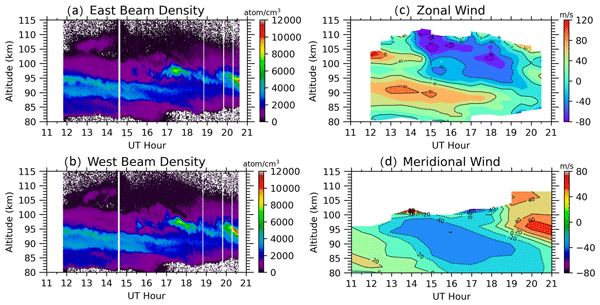
In this study, a sodium lidar at the University of Science and Technology of China (USTC) observed multiple sporadic sodium layers (SSLs) and enhanced sodium patterns (ESPs) during a single night. By combining observations from a meteor radar and an ionosonde in Wuhan, the results show that horizontal winds can not only directly transport sodium atoms through advection but also indirectly influence sodium density by modulating ion convergence and Es layers via atmospheric waves.
Chuan Huang, Zhaofeng Wang, Chaomei Wu, Jinru Cheng, Tangsheng Cheng, Zhenwei Liu, Chen Liang, Tingdi Chen, Weilong Luo, Chong Wang, Ruocan Zhao, and Xianghui Xue
EGUsphere, https://doi.org/10.5194/egusphere-2026-6508, https://doi.org/10.5194/egusphere-2026-6508, 2026
This preprint is open for discussion and under review for Atmospheric Measurement Techniques (AMT).
Short summary
Short summary
Earth's upper atmosphere is difficult to observe over large areas. We simulated a satellite laser instrument that detects light from excited helium atoms. Under the conditions tested, it could measure the density of these atoms up to 1000 kilometres above Earth and estimate temperature and wind along the laser beam between 500 and 700 kilometres. This approach could extend observations beyond ground stations and help reveal how the upper atmosphere changes.
Guochun Shi, V. Lynn Harvey, Hanli Liu, Nicholas Pedatella, and Gunter Stober
EGUsphere, https://doi.org/10.5194/egusphere-2026-5705, https://doi.org/10.5194/egusphere-2026-5705, 2026
This preprint is open for discussion and under review for Atmospheric Chemistry and Physics (ACP).
Short summary
Short summary
We examined how major wintertime disruptions of the Arctic atmosphere affect the downward transport of nitric oxide. Using satellite observations and a whole-atmosphere model, we found that large-scale waves repeatedly organize nitric oxide into distinct regions and that this transport differs between split and displaced polar vortices. The results improve understanding of how atmospheric dynamics control chemical transport between the upper atmosphere and stratosphere.
Wen Yi, Jianyuan Wang, Xianghui Xue, Chengyun Yang, Iain M. Reid, Robert A. Vincent, Andrew MacKinnon, Damian J. Murphy, Njål Gulbrandsen, Masaki Tsutsumi, Baiqi Ning, Guozhu Li, Nicholas J. Mitchell, Tracy Moffat-Griffin, Toshitaka Tsuda, Haiying Li, Paulo P. Batista, Jianfei Wu, Tingdi Chen, and Xiankang Dou
Atmos. Chem. Phys., 26, 13441–13462, https://doi.org/10.5194/acp-26-13441-2026, https://doi.org/10.5194/acp-26-13441-2026, 2026
Short summary
Short summary
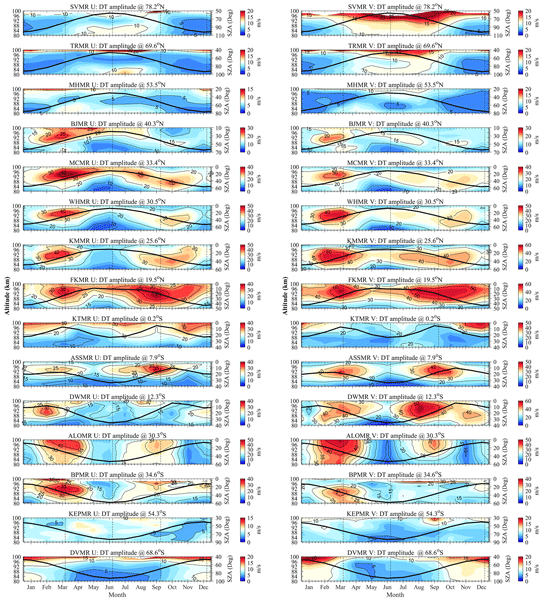
This study provides observational evidence that the solar zenith angle (SZA) influences the vertical structure of diurnal tides in the mesosphere and lower thermosphere (MLT) region. Diurnal tides are strongest at low and mid-latitudes (10–50° N/S) and weaker near the Equator and at polar latitudes. The results further suggest that background zonal winds influence tidal propagation and structure through filtering and momentum drag.
Ruichun Dong, Xin Fang, Chengyun Yang, and Tao Li
Atmos. Chem. Phys., 26, 13139–13156, https://doi.org/10.5194/acp-26-13139-2026, https://doi.org/10.5194/acp-26-13139-2026, 2026
Short summary
Short summary
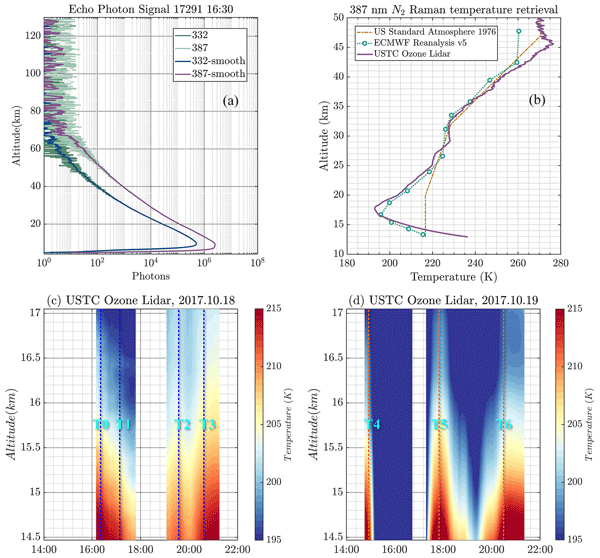
High-resolution USTC (University of Science and Technology of China) Ozone Lidar observations at Yangbajing, Tibet capture short-lived rapid STE (stratosphere-to-troposphere exchange)-related ozone descent for the first time. Lidar temperature profiles link these events to tropopause thermal variability unresolved by conventional models. Wei’s flux diagnostic and PV (potential vorticity)-threshold sensitivity identify 3 PVU (potential vorticity units) as optimal. ERA5 shows gravity-wave modulation during tropopause folding, and lidar ozone profiles are used to quantify instantaneous cross-tropopause ozone flux.
Liangyu Pu, Tingdi Chen, Yuli Han, Zhaowang Su, Yiming Song, Zhu Meng, Yuxin Wen, Chong Chen, Dongsong Sun, Xianghui Xue, and Xiankang Dou
EGUsphere, https://doi.org/10.5194/egusphere-2026-5254, https://doi.org/10.5194/egusphere-2026-5254, 2026
Short summary
Short summary
Atmospheric wind and temperature are essential for understanding weather and atmospheric dynamics. We developed a new lidar receiver that measures both quantities from the same atmospheric backscatter signal without frequency scanning. Field experiments demonstrated wind measurements from 2 to 20 km and simultaneous wind and temperature measurements from 5.3 to 20 km, with good agreement with radiosondes.
Simone Brunamonti, Yann Poltera, Gonzague Romanens, Alex Weitnauer, Philipp Scheidegger, Adrianos Filinis, Alistair Bell, Giovanni Martucci, Frank Gunther Wienhold, Thomas Peter, Peter Oelsner, Ruud Dirksen, Alexander Haefele, Lukas Emmenegger, Gunter Stober, and Béla Tuzson
EGUsphere, https://doi.org/10.5194/egusphere-2026-4762, https://doi.org/10.5194/egusphere-2026-4762, 2026
Short summary
Short summary
Accurate measurements of the concentration of water vapor in the upper atmosphere are essential for reliable climate predictions. We investigated the performance of a new lightweight (less than 4 kg) hygrometer, based on laser absorption spectroscopy, in a series of atmospheric test flights using weather balloons, reaching up to 35 km altitude. The results demonstrate the high accuracy and suitability of this technique for applications in long-term climate monitoring and atmospheric research.
Kexin Ming, Chong Wang, Wei Kong, Xianghui Xue, Genghua Huang, Ruikai Xue, Wenhao Li, Yudie Li, Chen Liang, Ruocan Zhao, Mingjiao Jia, and Xiang Shang
EGUsphere, https://doi.org/10.5194/egusphere-2026-4536, https://doi.org/10.5194/egusphere-2026-4536, 2026
This preprint is open for discussion and under review for Atmospheric Measurement Techniques (AMT).
Short summary
Short summary
Boundary layer height is important for weather forecasting and climate studies, but consistent global observations remain difficult. We designed a spaceborne lidar and validated its performance through theoretical simulations and experiments with a scaled airborne prototype. Nighttime results in Yulin agreed closely with ground-based observations, while daytime tests in Hainan showed detection potential under strong background illumination, supporting future global monitoring from space.
Yuxia Jia, Chao Ban, Tao Li, Xin Fang, Zhaopeng Wu, Jianfei Wu, Weilin Pan, and Chengyun Yang
Atmos. Chem. Phys., 26, 11409–11420, https://doi.org/10.5194/acp-26-11409-2026, https://doi.org/10.5194/acp-26-11409-2026, 2026
Short summary
Short summary
In this study, a sodium lidar at the University of Science and Technology of China (USTC) observed multiple sporadic sodium layers (SSLs) and enhanced sodium patterns (ESPs) during a single night. By combining observations from a meteor radar and an ionosonde in Wuhan, the results show that horizontal winds can not only directly transport sodium atoms through advection but also indirectly influence sodium density by modulating ion convergence and Es layers via atmospheric waves.
Louis Mirallie, Eliane Maillard Barras, Caroline Jonas, Corinne Vigouroux, Roeland Van Malderen, Irina Petropavlovskikh, Sophie Godin-Beekmann, Thierry Leblanc, Wolfgang Steinbrecht, Antoine Vadès, Rolf Ruefenacht, Alexander Haefele, Gunter Stober, Peter Effertz, Julian Gröbner, Gerard Ancellet, María Cazorla, Petra Duff, Matthias M. Frey, Michael Gill, James W. Hannigan, Nicholas Jones, Rigel Kivi, Raphael Köhler, Bogumil Kois, Debra E. Kollonige, Emmanuel Mahieu, Glen McConville, Johan Mellqvist, Gary Morris, Isao Murata, Tomoo Nagahama, Gerald E. Nedoluha, Shin-Ya Ogino, Richard Querel, Ryan M. Stauffer, Wolfgang Stremme, Kimberly Strong, Ralf Sussmann, Anne M. Thompson, and Yana Virolainen
Atmos. Chem. Phys., 26, 10303–10330, https://doi.org/10.5194/acp-26-10303-2026, https://doi.org/10.5194/acp-26-10303-2026, 2026
Short summary
Short summary
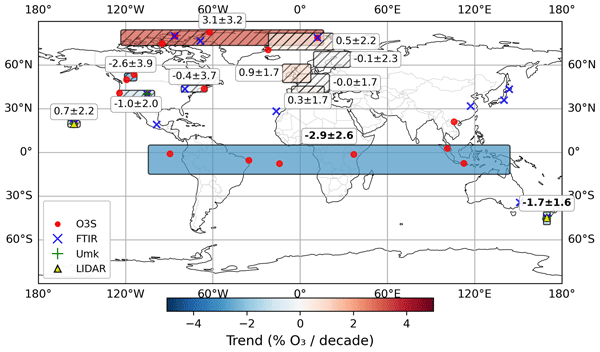
We present regional Bayesian composites of ground-based ozone partial column records. Defining coherent regions using a CAMS (Copernicus Atmosphere Monitoring Service) representativeness study, we merge five instrument types using the BASIC (Ball et al., 2017) algorithm, reducing trend uncertainties by 9.4 % compared to a weighted mean. Results confirm upper stratospheric recovery, predominantly negative middle stratospheric trends, while lower stratospheric trends remain mostly non-significant.
Yiran Pan, Jialin Zhang, Chengyun Yang, Tao Li, Xin Fang, Xinyue Wang, Xianghui Xue, and Xiankang Dou
EGUsphere, https://doi.org/10.5194/egusphere-2026-3774, https://doi.org/10.5194/egusphere-2026-3774, 2026
Short summary
Short summary
In 2024, the upper atmosphere above Antarctica experienced two sudden warming events and then repeated warming and recovery instead of returning steadily to normal. Large-scale atmospheric waves disturbed the circling polar winds, and the altered winds then shaped how later waves moved upward, allowing the disturbance to persist. This helps explain how rare Antarctic events can last longer and affect links between the upper and lower atmosphere.
Loretta Pearl Poku, Gunter Stober, Diego Janches, Brian Fuller, Daniel O’Connor, Leandro Maslov, Eric Marderwald, Jose Luis Hormaechea, and Marcelo Colazo
EGUsphere, https://doi.org/10.5194/egusphere-2026-2287, https://doi.org/10.5194/egusphere-2026-2287, 2026
This preprint is open for discussion and under review for Atmospheric Measurement Techniques (AMT).
Short summary
Short summary
SAAMER-NOVA is the first imaging meteor radar network at high southern latitudes, located in the southern tip of the Andes. We present 3D tomographic wind retrievals at the MLT, altitude-time wind plots, and keogram plots revealing large-scale dynamics and multiple atmospheric waves. Its strategic location, rectangular-triangle arrangement, and angular diversity provide robust, continuous measurements. Performance is demonstrated by capturing Q2DW spatial characteristics and GW residuals.
Gunter Stober, Hanli Liu, Zishun Qiao, Kaoru Sato, Loretta Pearl Poku, Witali Krochin, Alan Liu, Alexander Kozlovsky, Diego Janches, Jie Zeng, Wen Yi, Masaki Tsutsumi, Njål Gulbrandsen, Satonori Nozawa, Mark Lester, Johan Kero, and Nicholas Mitchell
EGUsphere, https://doi.org/10.5194/egusphere-2026-3156, https://doi.org/10.5194/egusphere-2026-3156, 2026
This preprint is open for discussion and under review for Atmospheric Measurement Techniques (AMT).
Short summary
Short summary
Vertical winds are a crucial atmospheric parameter in the mesosphere/lower thermosphere and are connected to adiabatic heating and cooling of the atmosphere. Mesospheric temperatures are affected by the vertical transport driven by a pole-to-pole circulation with upwelling in the summer hemisphere and downwelling in the winter hemisphere. We present results based on a new retrieval technique for the seasonal climatological vertical winds and an intercomparison to current state-of-the-art models.
Jiahui Hu, Alan Liu, Adriana Feener, Wenjun Dong, Jing Li, and Tao Li
EGUsphere, https://doi.org/10.48550/arXiv.2603.03669, https://doi.org/10.48550/arXiv.2603.03669, 2026
Short summary
Short summary
All-sky OH airglow imaging captures mesospheric gravity waves near ~87 km, but ripple-scale instabilities (5–15 km) are difficult to identify manually. We develop an automated SE-CNN framework trained on image patches to detect ripples in 512×512 images. Using MAD normalization and sliding-window detection with clustering, the model achieves 92% F1-score and recovers ~90% of manual events, enabling objective, scalable analysis of ripple occurrence and variability.
Witali Krochin, Axel Murk, and Gunter Stober
EGUsphere, https://doi.org/10.5194/egusphere-2026-2364, https://doi.org/10.5194/egusphere-2026-2364, 2026
This preprint is open for discussion and under review for Annales Geophysicae (ANGEO).
Short summary
Short summary
This manuscript presents measurements of the microwave emission spectra of oxygen. These spectra depend strongly on the geomagnetic field, since oxygen's magnetic dipole couples to it what produces measurable spectral shifts. The interaction is analyzed in detail, including observation geometry and polarization. Using the relation between magnetic field and spectral characteristics, a method is proposed for remote monitoring of geomagnetic variations.
Loretta Pearl Poku, Gunter Stober, Witali Krochin, Alan Liu, Alexander Kozlovsky, Diego Janches, Jie Zeng, Wen Yi, Masaki Tsutsumi, Njål Gulbrandsen, Satonori Nozawa, Mark Lester, Johan Kero, and Nicholas Mitchell
EGUsphere, https://doi.org/10.5194/egusphere-2025-6377, https://doi.org/10.5194/egusphere-2025-6377, 2026
Short summary
Short summary
This study presents 3D spatially resolved wind fields in the MLT using advanced retrieval techniques. Specifically, a novel SVVP method in spherical coordinates to enhance the physical consistency of wind retrievals compared to the conventional VVP method in plane geometry and the 3DVAR+DIV method. The SVVP provides a robust framework for future MLT dynamics studies, and the 3DVAR+DIV retrieval is beneficial for high-resolution case studies due to its ability to capture small-scale variability.
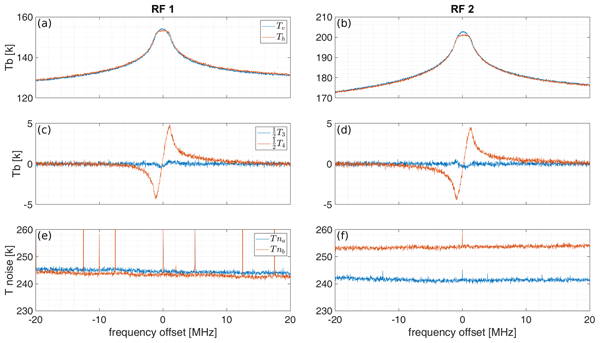
Witali Krochin, Axel Murk, Andres Luder, and Gunter Stober
Atmos. Meas. Tech., 19, 2103–2123, https://doi.org/10.5194/amt-19-2103-2026, https://doi.org/10.5194/amt-19-2103-2026, 2026
Short summary
Short summary
In this manuscript a new fully polarimetric radiometer for ground-based temperature sounding, TEMPERA-C (Campaign Temperature Radiometer), is presented. The advantages of the fully polarimetric approach are discussed, and a fully polarimetric calibration method is described in detail. The final measurements and the continuous series of temperature retrievals from the high altitude research station on the Jungfraujoch are also shown in this manuscript.
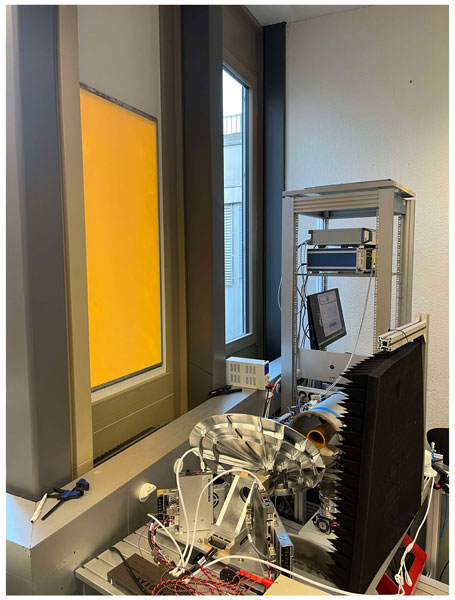
Adrianos Filinis, Alistair Bell, Axel Murk, and Gunter Stober
Atmos. Meas. Tech., 19, 1783–1799, https://doi.org/10.5194/amt-19-1783-2026, https://doi.org/10.5194/amt-19-1783-2026, 2026
Short summary
Short summary
Water vapor is an essential climate variable in the Earth's atmosphere and plays an important role in the radiative balance, serving as the most significant greenhouse gas in the upper troposphere. Hence, high-quality and continuous measurements are required. In this paper, we present the breadboard design of a newly developed radiometer, which will retrieve vertical profiles of middle atmospheric water vapor.

Xingjin Wang, Xin Fang, Wenhao Gao, Xianhang Chen, Tai Liu, Chengyun Yang, Tingdi Chen, Tao Li, and Xianghui Xue
Atmos. Meas. Tech., 19, 1629–1641, https://doi.org/10.5194/amt-19-1629-2026, https://doi.org/10.5194/amt-19-1629-2026, 2026
Short summary
Short summary
This paper reports the deployment of the first narrowband sodium lidar in the low-latitude region of China. The lidar observations are compared with satellite measurements and atmospheric models, confirming the scientific credibility of these results. Calculations of vertical gravity wave heat and sodium fluxes are used to investigate the influence of the space environment. This lidar system will provide a new ground-based detection device for studying atmospheric environment above the area.
Florian Günzkofer, Anders Tjulin, Gang Lu, Hanli Liu, and Gunter Stober
EGUsphere, https://doi.org/10.5194/egusphere-2026-823, https://doi.org/10.5194/egusphere-2026-823, 2026
Short summary
Short summary
Incoherent scatter radars (ISRs) are an important measurement tool for space weather research. However, ISR measurements require previous knowledge of the state of the ionosphere, especially the ratio of atomic oxygen ions (O+) to electrons. We present ISR measurements during the May 2024 "Mothers' Day Storm" and apply data assimilation-based O+ ratios, which should result in more accurate ISR measurements. The advantages and disadvantages of our method are compared to those of other approaches.
Ales Kuchar, Matthias Stocker, Alistair Bell, Bruno Lehner, Jessica Kult-Herdin, Gabriel Chiodo, Timofei Sukhodolov, Eugene Rozanov, Gunter Stober, and Harald E. Rieder
EGUsphere, https://doi.org/10.5194/egusphere-2026-406, https://doi.org/10.5194/egusphere-2026-406, 2026
Short summary
Short summary
We investigated why the Northern Hemisphere winter polar vortex became unusually strong in the winter of 2024/2025. Using satellite and reanalysis datasets, and model simulations, we found that extra water erupted high in the atmosphere by the 2022 Hunga Tonga eruption led to cooling of polar latitudes of the upper atmosphere, helping the winds aloft intensify. This link suggests such volcanic eruptions can shape winters in the upper atmosphere for several years.
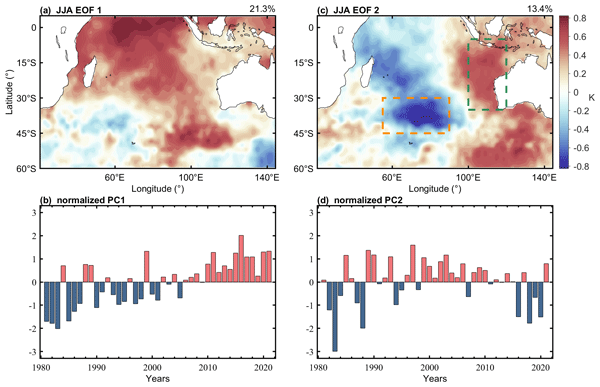
Chengyun Yang, Xiang Guo, Tao Li, Xinyue Wang, Jun Zhang, Xin Fang, and Xianghui Xue
Atmos. Chem. Phys., 26, 1021–1039, https://doi.org/10.5194/acp-26-1021-2026, https://doi.org/10.5194/acp-26-1021-2026, 2026
Short summary
Short summary
The Indian Ocean strongly influences weather and climate far beyond its region. We found that unusual sea surface warming patterns in the midlatitude Indian Ocean can disrupt winds and temperatures in the middle atmosphere, including the stratosphere and mesosphere, of the Southern Hemisphere. These disturbances alter ozone and air movement and may affect polar climate. Our results highlight the need to include Indian Ocean variability in climate models for better predictions.
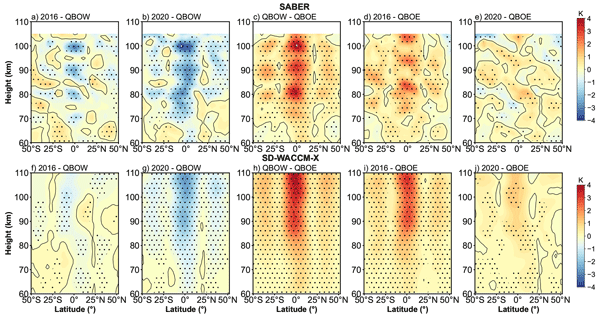
Shuai Liu, Guoying Jiang, Bingxian Luo, Xiao Liu, Jiyao Xu, Yajun Zhu, and Wen Yi
Atmos. Chem. Phys., 25, 17725–17746, https://doi.org/10.5194/acp-25-17725-2025, https://doi.org/10.5194/acp-25-17725-2025, 2025
Short summary
Short summary
Disruptions of the Quasi-Biennial Oscillation modulate the migrating diurnal tide in the mesosphere and lower thermosphere. During the events, wavelengths and phases of the tide remain unchanged, but its amplitude strengthens. The variation of heating sources, dissipation, zonal wind latitude shear and gravity wave drag may contribute to the amplification of the tide amplitude. These features provide insight into the dynamical coupling of troposphere, stratosphere, mesosphere and lower thermosphere.
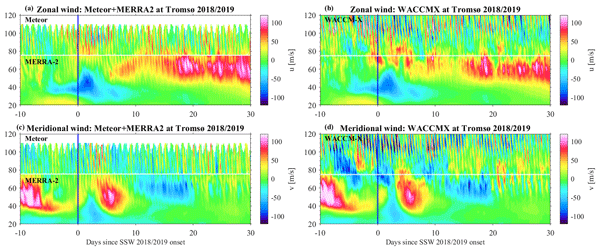
Guochun Shi, Hanli Liu, Masaki Tsutsumi, Njål Gulbrandsen, Alexander Kozlovsky, Dimitry Pokhotelov, Mark Lester, Christoph Jacobi, Kun Wu, and Gunter Stober
Atmos. Chem. Phys., 25, 9403–9430, https://doi.org/10.5194/acp-25-9403-2025, https://doi.org/10.5194/acp-25-9403-2025, 2025
Short summary
Short summary
Concerns about climate change are growing due to its widespread impacts, including rising temperatures, extreme weather events, and disruptions to ecosystems. To address these challenges, urgent global action is needed to monitor the distribution of trace gases and understand their effects on the atmosphere.
Ales Kuchar, Gunter Stober, Dimitry Pokhotelov, Huixin Liu, Han-Li Liu, Manfred Ern, Damian Murphy, Diego Janches, Tracy Moffat-Griffin, Nicholas Mitchell, and Christoph Jacobi
EGUsphere, https://doi.org/10.5194/egusphere-2025-2827, https://doi.org/10.5194/egusphere-2025-2827, 2025
Short summary
Short summary
We studied how the healing of the Antarctic ozone layer is affecting winds high above the South Pole. Using ground-based radar, satellite data, and computer models, we found that winds in the upper atmosphere have become stronger over the past two decades. These changes appear to be linked to shifts in the lower atmosphere caused by ozone recovery. Our results show that human efforts to repair the ozone layer are also influencing climate patterns far above Earth’s surface.
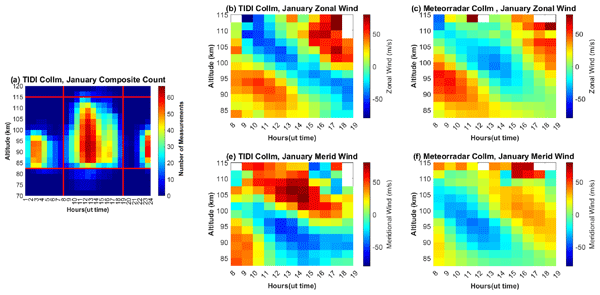
Arthur Gauthier, Claudia Borries, Alexander Kozlovsky, Diego Janches, Peter Brown, Denis Vida, Christoph Jacobi, Damian Murphy, Masaki Tsutsumi, Njål Gulbrandsen, Satonori Nozawa, Mark Lester, Johan Kero, Nicholas Mitchell, Tracy Moffat-Griffin, and Gunter Stober
Ann. Geophys., 43, 427–440, https://doi.org/10.5194/angeo-43-427-2025, https://doi.org/10.5194/angeo-43-427-2025, 2025
Short summary
Short summary
This study focuses on a TIMED Doppler Interferometer (TIDI)–meteor radar (MR) comparison of zonal and meridional winds and their dependence on local time and latitude. The correlation calculation between TIDI wind measurements and MR winds shows good agreement. A TIDI–MR seasonal comparison and analysis of the altitude–latitude dependence for winds are performed. TIDI reproduces the mean circulation well when compared with MRs and may be a useful lower boundary for general circulation models.
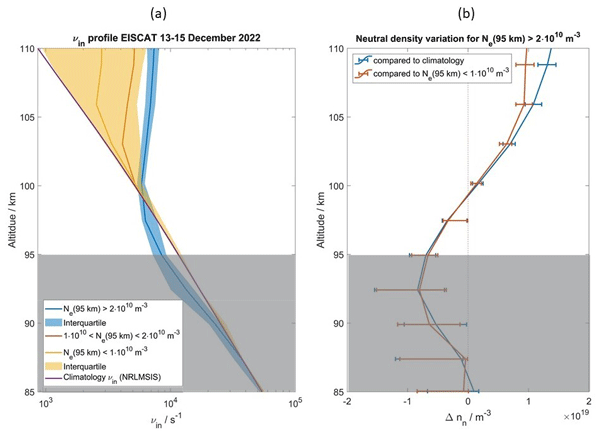
Florian Günzkofer, Gunter Stober, Johan Kero, David R. Themens, Anders Tjulin, Njål Gulbrandsen, Masaki Tsutsumi, and Claudia Borries
Ann. Geophys., 43, 331–348, https://doi.org/10.5194/angeo-43-331-2025, https://doi.org/10.5194/angeo-43-331-2025, 2025
Short summary
Short summary
The Earth’s magnetic field is not closed at high latitudes. Electrically charged particles can penetrate the Earth’s atmosphere, deposit their energy, and heat the local atmosphere–ionosphere. This presumably causes an upwelling of the neutral atmosphere, which affects the atmosphere–ionosphere coupling. We apply a new analysis technique to infer the atmospheric density from incoherent scatter radar measurements. We identify signs of particle precipitation impact on the neutral atmosphere.
Alistair Bell, Axel Murk, and Gunter Stober
EGUsphere, https://doi.org/10.5194/egusphere-2025-1396, https://doi.org/10.5194/egusphere-2025-1396, 2025
Short summary
Short summary
Increases in middle atmospheric water vapour from the 2022 Hunga eruption have been measured worldwide. This study uses remote sensing measurements at two latitudes and accurate radiative transfer modeling to show significant long-wave heating effects. Though minimal at the surface, the water vapour enhancement can alter middle-atmospheric dynamics, potentially affecting ozone chemistry and weather patterns.
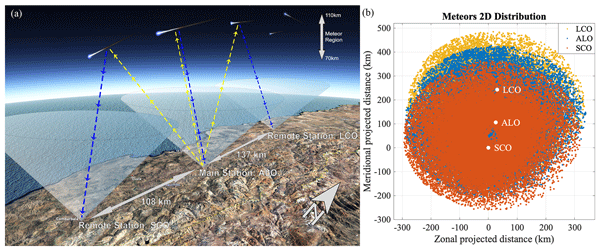
Zishun Qiao, Alan Z. Liu, Gunter Stober, Javier Fuentes, Fabio Vargas, Christian L. Adami, and Iain M. Reid
Atmos. Meas. Tech., 18, 1091–1104, https://doi.org/10.5194/amt-18-1091-2025, https://doi.org/10.5194/amt-18-1091-2025, 2025
Short summary
Short summary
This paper describes the installation of the Chilean Observation Network De Meteor Radars (CONDOR) and its initial results. The routine winds are point-to-point comparable to the co-located lidar winds. The retrievals of spatially resolved horizontal wind fields and vertical winds are also facilitated, benefiting from the extensive meteor detections. The successful deployment and maintenance of CONDOR provide 24/7 and state-of-the-art wind measurements to the research community.
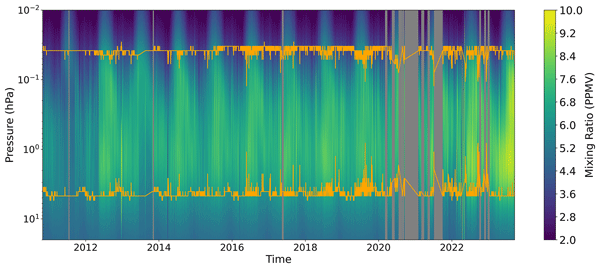
Alistair Bell, Eric Sauvageat, Gunter Stober, Klemens Hocke, and Axel Murk
Atmos. Meas. Tech., 18, 555–567, https://doi.org/10.5194/amt-18-555-2025, https://doi.org/10.5194/amt-18-555-2025, 2025
Short summary
Short summary
Hardware and software developments have been made on a 22 GHz microwave radiometer for the measurement of middle-atmospheric water vapour near Bern, Switzerland. Previous measurements dating back to 2010 have been re-calibrated and an improved optimal estimation retrieval performed on these measurements, giving a 13-year dataset. Measurements made with new and improved instrumental hardware are used to correct previous measurements, which show better agreement than the non-corrected dataset.
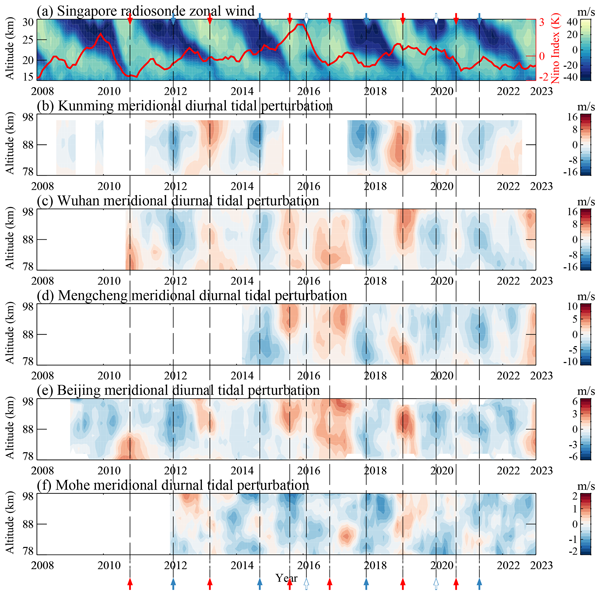
Jianyuan Wang, Na Li, Wen Yi, Xianghui Xue, Iain M. Reid, Jianfei Wu, Hailun Ye, Jian Li, Zonghua Ding, Jinsong Chen, Guozhu Li, Yaoyu Tian, Boyuan Chang, Jiajing Wu, and Lei Zhao
Atmos. Chem. Phys., 24, 13299–13315, https://doi.org/10.5194/acp-24-13299-2024, https://doi.org/10.5194/acp-24-13299-2024, 2024
Short summary
Short summary
We present the impact of quasi-biennial oscillation (QBO) disruption events on diurnal tides over the low- and mid-latitude MLT region observed by a meteor radar chain. By using a global atmospheric model and reanalysis data, it is found that the stratospheric QBO winds can affect the mesospheric diurnal tides by modulating the subtropical ozone variability in the upper stratosphere and the interaction between tides and gravity waves in the mesosphere.
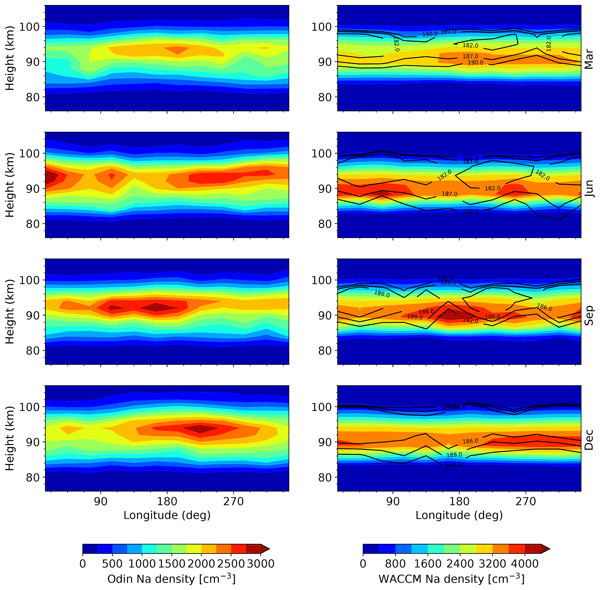
Jianfei Wu, Wuhu Feng, Xianghui Xue, Daniel Robert Marsh, and John Maurice Campbell Plane
Atmos. Chem. Phys., 24, 12133–12141, https://doi.org/10.5194/acp-24-12133-2024, https://doi.org/10.5194/acp-24-12133-2024, 2024
Short summary
Short summary
Metal layers occur in the mesosphere and lower thermosphere region 80–120 km from the ablation of cosmic dust. Nonmigrating diurnal tides are persistent global oscillations. We investigate nonmigrating diurnal tidal variations in metal layers using satellite observations and global climate model simulations; these have not been studied previously due to the limitations of measurements. The nonmigrating diurnal tides in temperature are strongly linked to the corresponding change in metal layers.
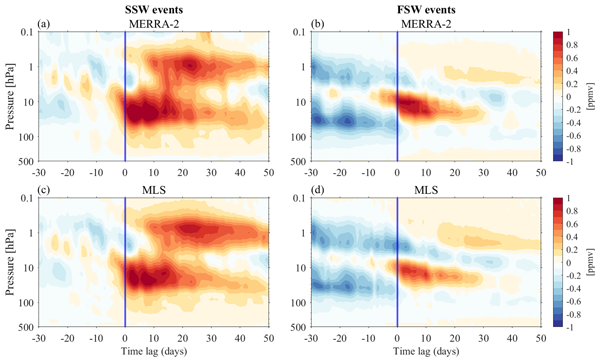
Guochun Shi, Witali Krochin, Eric Sauvageat, and Gunter Stober
Atmos. Chem. Phys., 24, 10187–10207, https://doi.org/10.5194/acp-24-10187-2024, https://doi.org/10.5194/acp-24-10187-2024, 2024
Short summary
Short summary
Here we investigated ozone anomalies over polar regions during sudden stratospheric and final stratospheric warming with ground-based microwave radiometers at polar latitudes compared with reanalysis and satellite data. The underlying dynamical and chemical mechanisms are responsible for the observed ozone anomalies in both events. Our research sheds light on these processes, emphasizing the need for a deeper understanding of these processes for more accurate climate modeling and forecasting.
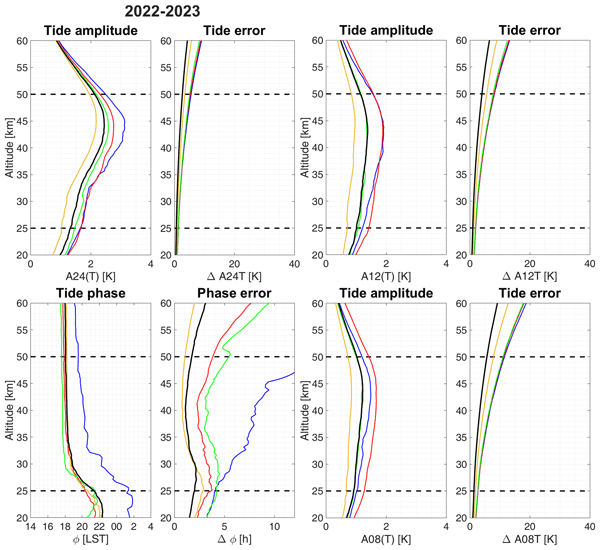
Witali Krochin, Axel Murk, and Gunter Stober
Atmos. Meas. Tech., 17, 5015–5028, https://doi.org/10.5194/amt-17-5015-2024, https://doi.org/10.5194/amt-17-5015-2024, 2024
Short summary
Short summary
Atmospheric tides are global-scale oscillations with periods of a fraction of a day. Their observation in the middle atmosphere is challenging and rare, as it requires continuous measurements with a high temporal resolution. In this paper, temperature time series of a ground-based microwave radiometer were analyzed with a spectral filter to derive thermal tide amplitudes and phases in an altitude range of 25–50 km at the geographical locations of Payerne and Bern (Switzerland).
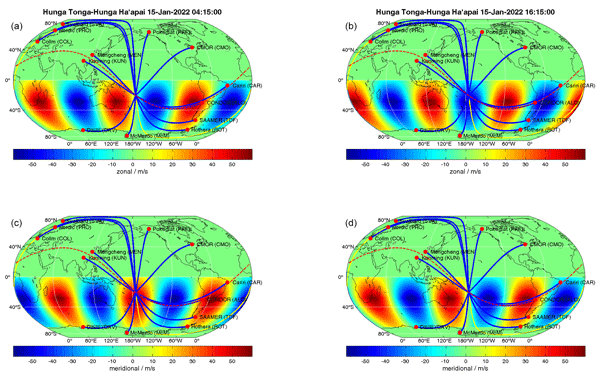
Gunter Stober, Sharon L. Vadas, Erich Becker, Alan Liu, Alexander Kozlovsky, Diego Janches, Zishun Qiao, Witali Krochin, Guochun Shi, Wen Yi, Jie Zeng, Peter Brown, Denis Vida, Neil Hindley, Christoph Jacobi, Damian Murphy, Ricardo Buriti, Vania Andrioli, Paulo Batista, John Marino, Scott Palo, Denise Thorsen, Masaki Tsutsumi, Njål Gulbrandsen, Satonori Nozawa, Mark Lester, Kathrin Baumgarten, Johan Kero, Evgenia Belova, Nicholas Mitchell, Tracy Moffat-Griffin, and Na Li
Atmos. Chem. Phys., 24, 4851–4873, https://doi.org/10.5194/acp-24-4851-2024, https://doi.org/10.5194/acp-24-4851-2024, 2024
Short summary
Short summary
On 15 January 2022, the Hunga Tonga-Hunga Ha‘apai volcano exploded in a vigorous eruption, causing many atmospheric phenomena reaching from the surface up to space. In this study, we investigate how the mesospheric winds were affected by the volcanogenic gravity waves and estimated their propagation direction and speed. The interplay between model and observations permits us to gain new insights into the vertical coupling through atmospheric gravity waves.
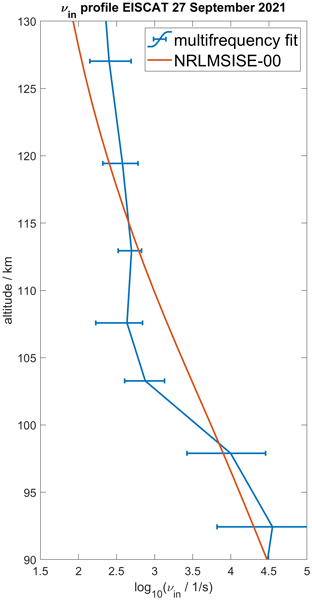
Florian Günzkofer, Gunter Stober, Dimitry Pokhotelov, Yasunobu Miyoshi, and Claudia Borries
Atmos. Meas. Tech., 16, 5897–5907, https://doi.org/10.5194/amt-16-5897-2023, https://doi.org/10.5194/amt-16-5897-2023, 2023
Short summary
Short summary
Electric currents in the ionosphere can impact both satellite and ground-based infrastructure. These currents depend strongly on the collisions of ions and neutral particles. Measuring ion–neutral collisions is often only possible via certain assumptions. The direct measurement of ion–neutral collision frequencies is possible with multifrequency incoherent scatter radar measurements. This paper presents one analysis method of such measurements and discusses its advantages and disadvantages.
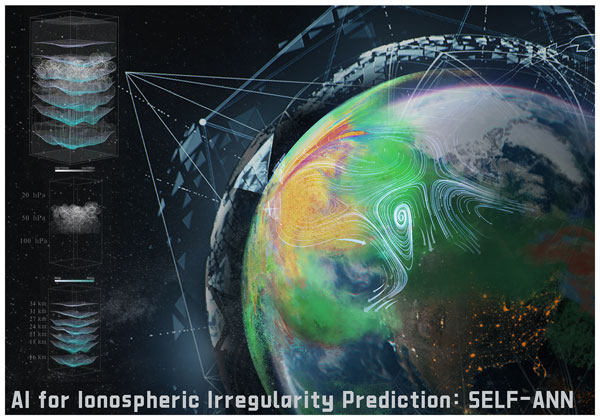
Penghao Tian, Bingkun Yu, Hailun Ye, Xianghui Xue, Jianfei Wu, and Tingdi Chen
Atmos. Chem. Phys., 23, 13413–13431, https://doi.org/10.5194/acp-23-13413-2023, https://doi.org/10.5194/acp-23-13413-2023, 2023
Short summary
Short summary
Modeling and prediction of ionospheric irregularities is an important topic in upper-atmospheric and upper-ionospheric physics. We proposed an artificial intelligence model to reconstruct the E-region ionospheric irregularities and first developed an open-source application for the community. The model reveals complex relationships between ionospheric irregularities and external driving factors. The findings suggest that spatiotemporal information plays an important role in the reconstruction.
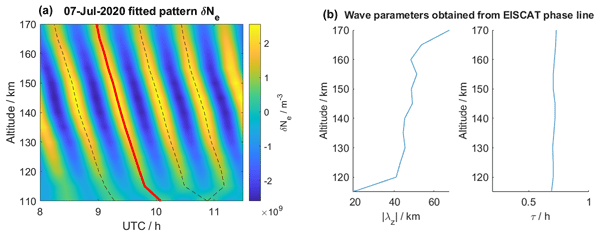
Florian Günzkofer, Dimitry Pokhotelov, Gunter Stober, Ingrid Mann, Sharon L. Vadas, Erich Becker, Anders Tjulin, Alexander Kozlovsky, Masaki Tsutsumi, Njål Gulbrandsen, Satonori Nozawa, Mark Lester, Evgenia Belova, Johan Kero, Nicholas J. Mitchell, and Claudia Borries
Ann. Geophys., 41, 409–428, https://doi.org/10.5194/angeo-41-409-2023, https://doi.org/10.5194/angeo-41-409-2023, 2023
Short summary
Short summary
Gravity waves (GWs) are waves in Earth's atmosphere and can be observed as cloud ripples. Under certain conditions, these waves can propagate up into the ionosphere. Here, they can cause ripples in the ionosphere plasma, observable as oscillations of the plasma density. Therefore, GWs contribute to the ionospheric variability, making them relevant for space weather prediction. Additionally, the behavior of these waves allows us to draw conclusions about the atmosphere at these altitudes.
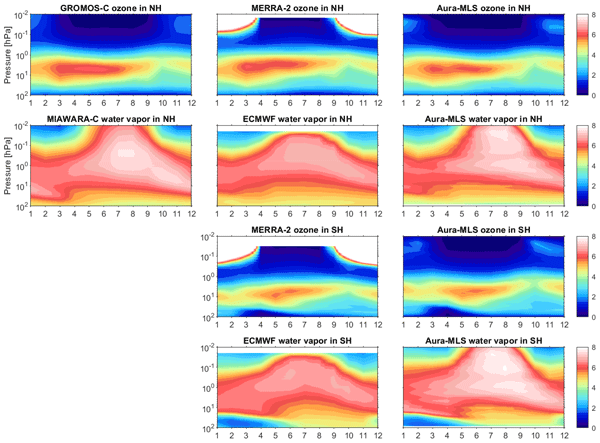
Guochun Shi, Witali Krochin, Eric Sauvageat, and Gunter Stober
Atmos. Chem. Phys., 23, 9137–9159, https://doi.org/10.5194/acp-23-9137-2023, https://doi.org/10.5194/acp-23-9137-2023, 2023
Short summary
Short summary
We present the interannual and climatological behavior of ozone and water vapor from microwave radiometers in the Arctic.
By defining a virtual conjugate latitude station in the Southern Hemisphere, we investigate altitude-dependent interhemispheric differences and estimate the ascent and descent rates of water vapor in both hemispheres. Ozone and water vapor measurements will create a deeper understanding of the evolution of middle atmospheric ozone and water vapor.
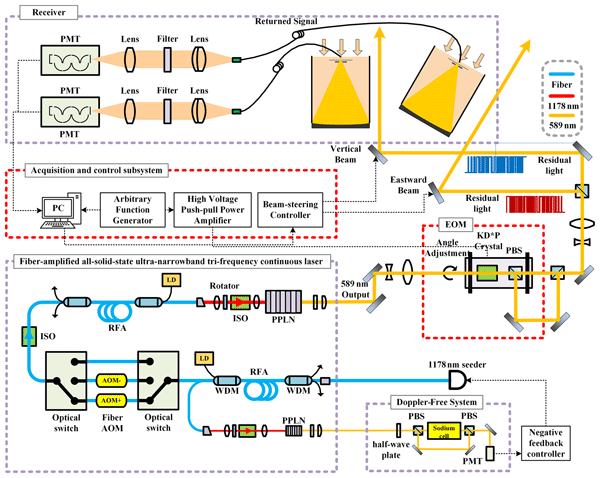
Xin Fang, Feng Li, Lei-lei Sun, and Tao Li
Atmos. Meas. Tech., 16, 2263–2272, https://doi.org/10.5194/amt-16-2263-2023, https://doi.org/10.5194/amt-16-2263-2023, 2023
Short summary
Short summary
We successfully developed the first pseudorandom modulation continuous-wave narrowband sodium lidar (PMCW-NSL) system for simultaneous measurements of the mesopause region's temperature and wind. Based on the innovative decoded technique and algorithm for CW lidar, both the main and residual lights modulated by M-code are used and directed to the atmosphere in the vertical and eastward directions, tilted 20° from the zenith. The PMCW-NSL system can applied to airborne and space-borne purposes.
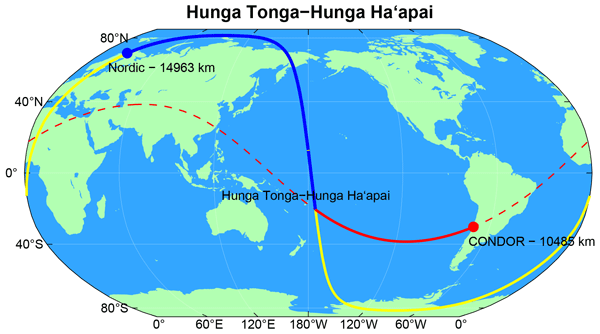
Gunter Stober, Alan Liu, Alexander Kozlovsky, Zishun Qiao, Witali Krochin, Guochun Shi, Johan Kero, Masaki Tsutsumi, Njål Gulbrandsen, Satonori Nozawa, Mark Lester, Kathrin Baumgarten, Evgenia Belova, and Nicholas Mitchell
Ann. Geophys., 41, 197–208, https://doi.org/10.5194/angeo-41-197-2023, https://doi.org/10.5194/angeo-41-197-2023, 2023
Short summary
Short summary
The Hunga Tonga–Hunga Ha‘apai volcanic eruption was one of the most vigorous volcanic explosions in the last centuries. The eruption launched many atmospheric waves traveling around the Earth. In this study, we identify these volcanic waves at the edge of space in the mesosphere/lower-thermosphere, leveraging wind observations conducted with multi-static meteor radars in northern Europe and with the Chilean Observation Network De Meteor Radars (CONDOR).
Wen Yi, Jie Zeng, Xianghui Xue, Iain Reid, Wei Zhong, Jianfei Wu, Tingdi Chen, and Xiankang Dou
Atmos. Meas. Tech. Discuss., https://doi.org/10.5194/amt-2022-254, https://doi.org/10.5194/amt-2022-254, 2022
Revised manuscript not accepted
Short summary
Short summary
In recent years, the concept of multistatic meteor radar systems has attracted the attention of the atmospheric radar community, focusing on the MLT region. In this study, we apply a multistatic meteor radar system consisting of a monostatic meteor radar in Mengcheng (33.36° N, 116.49° E) and a remote receiver in Changfeng (31.98° N, 117.22° E) to estimate the two-dimensional horizontal wind field, and the horizontal divergence and relative vorticity of the wind field.
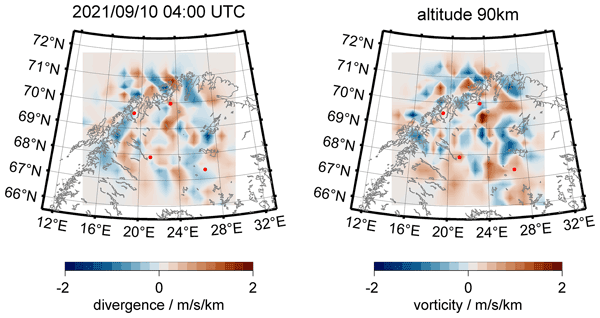
Gunter Stober, Alan Liu, Alexander Kozlovsky, Zishun Qiao, Ales Kuchar, Christoph Jacobi, Chris Meek, Diego Janches, Guiping Liu, Masaki Tsutsumi, Njål Gulbrandsen, Satonori Nozawa, Mark Lester, Evgenia Belova, Johan Kero, and Nicholas Mitchell
Atmos. Meas. Tech., 15, 5769–5792, https://doi.org/10.5194/amt-15-5769-2022, https://doi.org/10.5194/amt-15-5769-2022, 2022
Short summary
Short summary
Precise and accurate measurements of vertical winds at the mesosphere and lower thermosphere are rare. Although meteor radars have been used for decades to observe horizontal winds, their ability to derive reliable vertical wind measurements was always questioned. In this article, we provide mathematical concepts to retrieve mathematically and physically consistent solutions, which are compared to the state-of-the-art non-hydrostatic model UA-ICON.
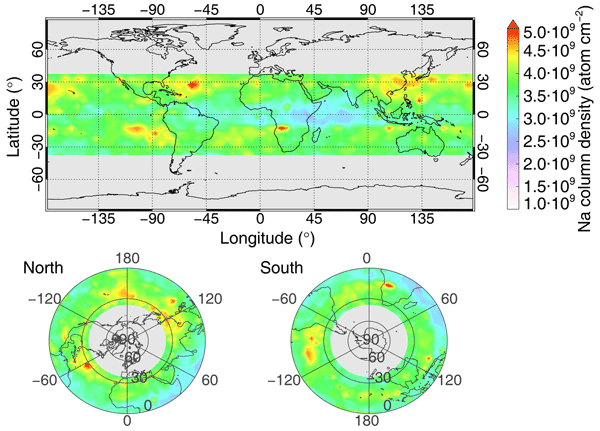
Bingkun Yu, Xianghui Xue, Christopher J. Scott, Mingjiao Jia, Wuhu Feng, John M. C. Plane, Daniel R. Marsh, Jonas Hedin, Jörg Gumbel, and Xiankang Dou
Atmos. Chem. Phys., 22, 11485–11504, https://doi.org/10.5194/acp-22-11485-2022, https://doi.org/10.5194/acp-22-11485-2022, 2022
Short summary
Short summary
We present a study on the climatology of the metal sodium layer in the upper atmosphere from the ground-based measurements obtained from a lidar network, the Odin satellite measurements, and a global model of meteoric sodium in the atmosphere. Comprehensively, comparisons show good agreement and some discrepancies between ground-based observations, satellite measurements, and global model simulations.
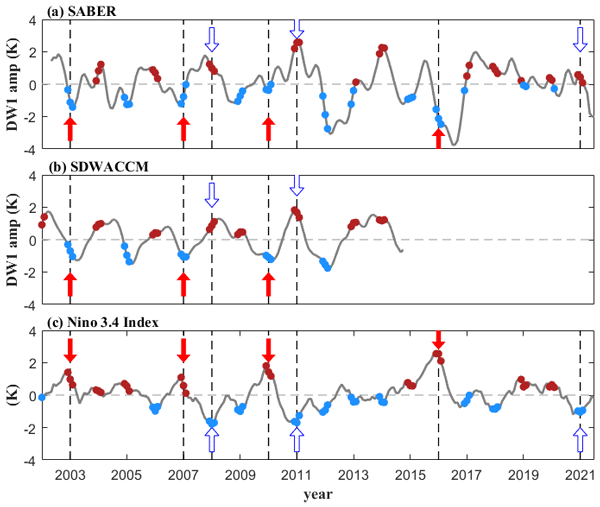
Yetao Cen, Chengyun Yang, Tao Li, James M. Russell III, and Xiankang Dou
Atmos. Chem. Phys., 22, 7861–7874, https://doi.org/10.5194/acp-22-7861-2022, https://doi.org/10.5194/acp-22-7861-2022, 2022
Short summary
Short summary
The MLT DW1 amplitude is suppressed during El Niño winters in both satellite observation and SD-WACCM simulations. The suppressed Hough mode (1, 1) in the tropopause region propagates vertically to the MLT region, leading to decreased DW1 amplitude. The latitudinal zonal wind shear anomalies during El Niño winters would narrow the waveguide and prevent the vertical propagation of DW1. The gravity wave drag excited by ENSO-induced anomalous convection could also modulate the MLT DW1 amplitude.
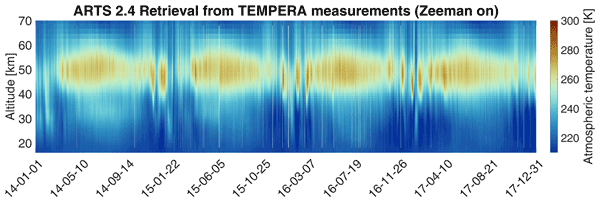
Witali Krochin, Francisco Navas-Guzmán, David Kuhl, Axel Murk, and Gunter Stober
Atmos. Meas. Tech., 15, 2231–2249, https://doi.org/10.5194/amt-15-2231-2022, https://doi.org/10.5194/amt-15-2231-2022, 2022
Short summary
Short summary
This study leverages atmospheric temperature measurements performed with a ground-based radiometer making use of data that was collected during a 4-year observational campaign applying a new retrieval algorithm that improves the maximal altitude range from 45 to 55 km. The measurements are validated against two independent data sets, MERRA2 reanalysis data and the meteorological analysis of NAVGEM-HA.
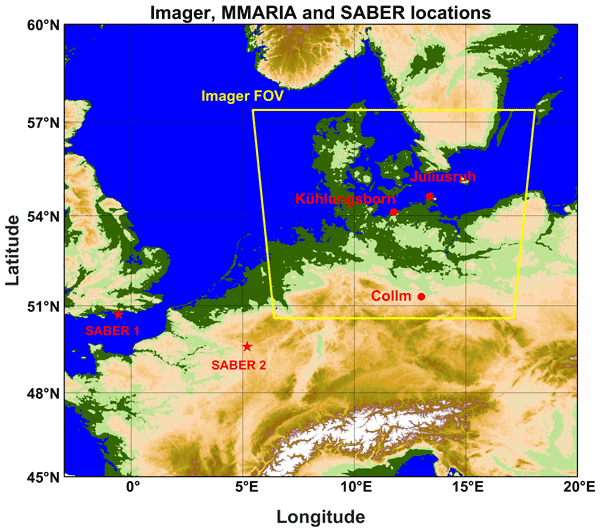
Sumanta Sarkhel, Gunter Stober, Jorge L. Chau, Steven M. Smith, Christoph Jacobi, Subarna Mondal, Martin G. Mlynczak, and James M. Russell III
Ann. Geophys., 40, 179–190, https://doi.org/10.5194/angeo-40-179-2022, https://doi.org/10.5194/angeo-40-179-2022, 2022
Short summary
Short summary
A rare gravity wave event was observed on the night of 25 April 2017 over northern Germany. An all-sky airglow imager recorded an upward-propagating wave at different altitudes in mesosphere with a prominent wave front above 91 km and faintly observed below. Based on wind and satellite-borne temperature profiles close to the event location, we have found the presence of a leaky thermal duct layer in 85–91 km. The appearance of this duct layer caused the wave amplitudes to diminish below 91 km.
Shican Qiu, Mengxi Shi, Willie Soon, Mingjiao Jia, Xianghui Xue, Tao Li, Peng Ju, and Xiankang Dou
Atmos. Chem. Phys. Discuss., https://doi.org/10.5194/acp-2021-1085, https://doi.org/10.5194/acp-2021-1085, 2022
Revised manuscript not accepted
Short summary
Short summary
The solitary wave theory is applied for the first time to study the sporadic sodium layers (NaS). We perform soliton fitting processes on the observed data from the Andes Lidar Observatory, and find out that 24/27 NaS events exhibit similar features to a soliton. Time series of the net anomaly reveal the same variation process to the solution of a five-order KdV equation. Our results suggest the NaS phenomenon would be an appropriate tracer for nonlinear wave studies in the atmosphere.

Christoph Jacobi, Friederike Lilienthal, Dmitry Korotyshkin, Evgeny Merzlyakov, and Gunter Stober
Adv. Radio Sci., 19, 185–193, https://doi.org/10.5194/ars-19-185-2021, https://doi.org/10.5194/ars-19-185-2021, 2021
Short summary
Short summary
We compare winds and tidal amplitudes in the upper mesosphere/lower thermosphere region for cases with disturbed and undisturbed geomagnetic conditions. The zonal winds in both the mesosphere and lower thermosphere tend to be weaker during disturbed conditions. The summer equatorward meridional wind jet is weaker for disturbed geomagnetic conditions. The effect of geomagnetic variability on tidal amplitudes, except for the semidiurnal tide, is relatively small.
Cited articles
Ban, C., Li, T., Fang, X., Dou, X., and Xiong, J.: Sodium lidar-observed gravity wave breaking followed by an upward propagation of sporadic sodium layer over Hefei, China, J. Geophys. Res.-Space, 120, 7958–7969, https://doi.org/10.1002/2015JA021460, 2015.
Ban, C., Fang, X., Yi, W., Zeng, J., Stober, G., Pan, W., Li, T., and Xue, X.: Data of “A Comparative Study of Mesospheric Zonal Wind Observations from Na Lidar and Multistatic Meteor Radars above Hefei, China”, V3, Science Data Bank [data set], https://doi.org/10.57760/sciencedb.15827, 2025.
Bishop, R. L., Larsen, M. F., Hecht, J. H., Liu, A. Z., and Gardner, C. S.: TOMEX: Mesospheric and lower thermospheric diffusivities and instability layers, J. Geophys. Res.-Atmos., 109, A07307, https://doi.org/10.1029/2002JD003079, 2004.
Cao, B., Heale, C. J., Guo, Y., Liu, A. Z., and Snively, J. B.: Observation and modeling of gravity waves propagation through reflection and critical layers above Andes Lidar Observatory at Cerro Pachón, Chile, J. Geophys. Res.-Atmos., 121, 12737–12750, https://doi.org/10.1002/2016JD025173, 2016.
Cervera, M. A. and Reid, I. M.: Comparison of simultaneous wind measurements using colocated VHF meteor radar and MF spaced antenna radar systems, Radio Sci., 30, 1245–1261, https://doi.org/10.1029/95RS00644, 1995.
Chau, J. L., Stober, G., Hall, C. M., Tsutsumi, M., Laskar, F. I., and Hoffmann, P.: Polar mesospheric horizontal divergence and relative vorticity measurements using multiple specular meteor radars, Radio Sci., 52, 811–828, https://doi.org/10.1002/2016RS006225, 2017.
Chu, X., Gardner, C. S., Li, X., and Lin, C. Y.-T.: Vertical transport of sensible heat and meteoric Na by the complete temporal spectrum of gravity waves in the MLT above McMurdo (77.84° S, 166.67° E), Antarctica, J. Geophys. Res.-Atmos., 127, e2021JD035728, https://doi.org/10.1029/2021JD035728, 2022.
Franke, S. J., Chu, X., Liu, A. Z., and Hocking, W. K.: Comparison of meteor radar and Na Doppler lidar measurements of winds in the mesopause region above Maui, Hawaii, J. Geophys. Res.-Atmos., 110, D09S02, https://doi.org/10.1029/2003JD004486, 2005.
Fritts, D. C. and Alexander, M. J.: Gravity wave dynamics and effects in the middle atmosphere, Rev. Geophys., 41, 1003, https://doi.org/10.1029/2001RG000106, 2003.
Gardner, C. S. and Liu, A. Z.: Seasonal variations of the vertical fluxes of heat and horizontal momentum in the mesopause region at Starfire Optical Range, New Mexico, J. Geophys. Res.-Atmos., 112, D09113, https://doi.org/10.1029/2005JD006179, 2007.
Gu, S., Hou, X., Li, N., Yi, W., Ding, Z., Chen, J., Hu, G., and Dou, X.: First comparative analysis of the simultaneous horizontal wind observations by collocated meteor radar and FPI at low latitude through 892.0-nm airglow emission, Remote Sens., 13, 4337, https://doi.org/10.3390/rs13214337, 2021.
Guo, Y., Liu, A. Z., and Gardner, C. S.: First Na lidar measurements of turbulence heat flux, thermal diffusivity, and energy dissipation rate in the mesopause region, Geophys. Res. Lett., 44, 5782–5790, https://doi.org/10.1002/2017GL073807, 2017.
Hindley, N. P., Mitchell, N. J., Cobbett, N., Smith, A. K., Fritts, D. C., Janches, D., Wright, C. J., and Moffat-Griffin, T.: Radar observations of winds, waves and tides in the mesosphere and lower thermosphere over South Georgia island (54° S, 36° W) and comparison with WACCM simulations, Atmos. Chem. Phys., 22, 9435–9459, https://doi.org/10.5194/acp-22-9435-2022, 2022.
Hocking, W. K., Fuller, B., and Vandepeer, B.: Real-time determination of meteor-related parameters utilizing modern digital technology, J. Atmos. Sol.-Terr. Phy., 63, 155–169, https://doi.org/10.1016/S1364-6826(00)00138-3, 2001.
Holdsworth, D. A., Reid, I. M., and Cervera, M. A.: Buckland Park all-sky interferometric meteor radar, Radio Sci., 39, RS5009, https://doi.org/10.1029/2003RS003014, 2004.
Hu, X., Liu, A. Z., Gardner, C. S., and Swenson, G. R.: Characteristics of quasi-monochromatic gravity waves observed with Na lidar in the mesopause region at Starfire Optical Range, NM, Geophys. Res. Lett., 29, 2169, https://doi.org/10.1029/2002GL014975, 2002.
Kishore Kumar, G. and Hocking, W. K.: Climatology of northern polar latitude MLT dynamics: mean winds and tides, Ann. Geophys., 28, 1859–1876, https://doi.org/10.5194/angeo-28-1859-2010, 2010.
Lee, C., Jee, G., Kam, H., Wu, Q., Ham, Y. B., Kim, Y. H., and Kim, J. H.: A comparison of Fabry–Perot Interferometer and meteor radar wind measurements near the polar mesopause region, J. Geophys. Res.-Space, 126, e2020JA028802, https://doi.org/10.1029/2020JA028802, 2021.
Li, T., Fang, X., Liu, W., Gu, S. Y., and Dou, X. K.: Narrowband sodium lidar for the measurements of mesopause region temperature and wind, Appl. Optics, 51, 5401–5411, https://doi.org/10.1364/AO.51.005401, 2012.
Li, T., Ban, C., Fang, X., Li, J., Wu, Z., Feng, W., Plane, J. M. C., Xiong, J., Marsh, D. R., Mills, M. J., and Dou, X.: Climatology of mesopause region nocturnal temperature, zonal wind and sodium density observed by sodium lidar over Hefei, China (32° N, 117° E), Atmos. Chem. Phys., 18, 11683–11695, https://doi.org/10.5194/acp-18-11683-2018, 2018.
Li, T., Ban, C., Fang, X., Li, F., Cen, Y., Lai, D., Sun, C., Sun, L., Zhang, J., and Xu, C.: Seasonal variation in gravity wave momentum and heat fluxes in the mesopause region observed by sodium lidar, J. Geophys. Res.-Atmos., 127, e2022JD037558, https://doi.org/10.1029/2022JD037558, 2022.
Liu, A. Z., Hocking, W. K., Franke, S. J., and Thayaparan, T.: Comparison of Na lidar and meteor radar wind measurements at Starfire Optical Range, NM, USA, J. Atmos. Sol.-Terr. Phy., 64, 31–40, https://doi.org/10.1016/S1364-6826(01)00095-5, 2002.
Liu, L., Liu, H., Chen, Y., Le, H., Sun, Y. Y., Ning, B., Hu, L., and Wan, W.: Variations of the meteor echo heights at Beijing and Mohe, China, J. Geophys. Res.-Space, 122, 1117–1127, https://doi.org/10.1002/2016JA023448, 2017.
Qiao, Z., Liu, A. Z., Stober, G., Fuentes, J., Vargas, F., Adami, C. L., and Reid, I. M.: Chilean Observation Network De Meteor Radars (CONDOR): multi-static system configuration and wind comparison with co-located lidar, Atmos. Meas. Tech., 18, 1091–1104, https://doi.org/10.5194/amt-18-1091-2025, 2025.
Reid, I. M., McIntosh, D. L., Murphy, D. J., and Vincent, R. A.: Mesospheric radar wind comparisons at high and middle southern latitudes, Earth Planet. Space, 70, 84, https://doi.org/10.1186/s40623-018-0861-1, 2018.
She, C. Y. and Yu, J. R.: Simultaneous three-frequency Na lidar measurements of radial wind and temperature in the mesopause region, Geophys. Res. Lett., 21, 1771–1774, https://doi.org/10.1029/94GL01417, 1994.
She, C.-Y., Krueger, D. A., and Yuan, T.: Long-term midlatitude mesopause region temperature trend deduced from quarter century (1990–2014) Na lidar observations, Ann. Geophys., 33, 363–369, https://doi.org/10.5194/angeo-33-363-2015, 2015.
She, C. Y., Li, T., Collins, R. L., Yuan, T., Williams, B. P., Kawahara, T. D., Vance, J. D., Acott, P., Krueger, D. A., Liu, H., and Hagan, M. E.: Tidal perturbations and variability in the mesopause region over Fort Collins, CO (41° N, 105° W): Continuous multi-day temperature and wind lidar observations, Geophys. Res. Lett., 31, L24111, https://doi.org/10.1029/2004GL021165, 2004.
Spargo, A. J., Reid, I. M., and MacKinnon, A. D.: Multistatic meteor radar observations of gravity-wave–tidal interaction over southern Australia, Atmos. Meas. Tech., 12, 4791–4812, https://doi.org/10.5194/amt-12-4791-2019, 2019.
Smith, A. K.: Interactions between the lower, middle and upper atmosphere, Space Sci. Rev., 168, 1–21, https://doi.org/10.1007/s11214-011-9791-y, 2012.
Stober, G. and Chau, J. L.: A multistatic and multifrequency novel approach for specular meteor radars to improve wind measurements in the MLT region: Forward Scatter Specular Meteor Radar, Radio Sci., 50, 431–442, https://doi.org/10.1002/2014RS005591, 2015.
Stober, G., Kozlovsky, A., Liu, A., Qiao, Z., Tsutsumi, M., Hall, C., Nozawa, S., Lester, M., Belova, E., Kero, J., Espy, P. J., Hibbins, R. E., and Mitchell, N.: Atmospheric tomography using the Nordic Meteor Radar Cluster and Chilean Observation Network De Meteor Radars: network details and 3D-Var retrieval, Atmos. Meas. Tech., 14, 6509–6532, https://doi.org/10.5194/amt-14-6509-2021, 2021.
Stober, G., Liu, A., Kozlovsky, A., Qiao, Z., Kuchar, A., Jacobi, C., Meek, C., Janches, D., Liu, G., Tsutsumi, M., Gulbrandsen, N., Nozawa, S., Lester, M., Belova, E., Kero, J., and Mitchell, N.: Meteor radar vertical wind observation biases and mathematical debiasing strategies including the 3DVAR+DIV algorithm, Atmos. Meas. Tech., 15, 5769–5792, https://doi.org/10.5194/amt-15-5769-2022, 2022.
Yang, C., Lai, D., Yi, W., Wu, J., Xue, X., Li, T., Chen, T., and Dou, X.: Observed quasi 16-day wave by meteor radar over 9 years at Mengcheng (33.4° N, 116.5° E) and comparison with the Whole Atmosphere Community Climate Model simulation, Remote Sens., 15, 830, https://doi.org/10.3390/rs15030830, 2023.
Yi, W., Xue, X., Reid, I. M., Murphy, D. J., Hall, C. M., Tsutsumi, M., Ning, B., Li, G., Vincent, R. A., Chen, J., Wu, J., Chen, T., and Dou, X.: Climatology of the mesopause relative density using a global distribution of meteor radars, Atmos. Chem. Phys., 19, 7567–7581, https://doi.org/10.5194/acp-19-7567-2019, 2019.
Yi, W., Xue, X. H., Zeng, J., Wang, J., Zhou, B., Ye, H., Chen, T., and Dou, X.: Observation of MLT region winds and tides by the USTC Mengcheng meteor radar, J. Univ. Sci. Technol. China, 53, 0501, https://doi.org/10.52396/JUSTC-2022-0158, 2023.
Yuan, T., She, C. Y., Hagan, M. E., Williams, B. P., Li, T., Arnold, K., Kawahara, T. D., Acott, P. E., Vance, J. D., Krueger, D., and Roble, R. G.: Seasonal variation of diurnal perturbations in mesopause region temperature, zonal, and meridional winds above Fort Collins, Colorado (40.6° N, 105° W), J. Geophys. Res.-Atmos., 111, D06103, https://doi.org/10.1029/2004JD005486, 2006.
Yuan, T., Heale, C. J., Snively, J. B., Cai, X., Pautet, P.-D., Fish, C., Zhao, Y., Taylor, M. J., Pendleton, W. R. Jr., Wickwar, V., and Mitchell, N. J.: Evidence of dispersion and refraction of a spectrally broad gravity wave packet in the mesopause region observed by the Na lidar and Mesospheric Temperature Mapper above Logan, Utah, J. Geophys. Res.-Atmos., 121, 579–594, https://doi.org/10.1002/2015JD023685, 2016.
Yue, J., She, C. Y., and Liu, H. L.: Large wind shears and stabilities in the mesopause region observed by Na wind-temperature lidar at midlatitude, J. Geophys. Res.-Space, 115, A10307, https://doi.org/10.1029/2009JA014864, 2010.
Zeng, J., Stober, G., Yi, W., Xue, X., Zhong, W., Reid, I., Adami, C., Ning, B., Li, G., and Dou, X.: Mesosphere/lower thermosphere 3-dimensional spatially resolved winds observed by Chinese multistatic meteor radar network using the newly developed VVP method, J. Geophys. Res.-Atmos., 129, e2023JD040642, https://doi.org/10.1029/2023JD040642, 2024.
Short summary
This paper presents an intercomparison of zonal winds observed by a sodium fluorescence lidar and three types of meteor radars – a multistatic meteor radar, a conventional monostatic radar, and a forward remote receiver – located near Hefei, China. The multistatic meteor radar shows the best agreement with the lidar measurements, confirming the reliability of its wind retrievals in the mesosphere and lower thermosphere and highlighting its potential for future atmospheric dynamics studies.
This paper presents an intercomparison of zonal winds observed by a sodium fluorescence lidar...


Altmetrics
Final-revised paper
Preprint