
Articles | Volume 19, issue 5
https://doi.org/10.5194/amt-19-1943-2026
© Author(s) 2026. This work is distributed under
the Creative Commons Attribution 4.0 License.
the Creative Commons Attribution 4.0 License.
https://doi.org/10.5194/amt-19-1943-2026
© Author(s) 2026. This work is distributed under
the Creative Commons Attribution 4.0 License.
the Creative Commons Attribution 4.0 License.
Research article
| 
18 Mar 2026
Research article |
| 18 Mar 2026
| 18 Mar 2026
Open Path Incoherent Broadband Cavity Enhanced Absorption Spectrometer for in situ measurement of nitrogen oxides, iodine oxide, and glyoxal in the atmosphere
Filip Pastierovič
Univ. Grenoble Alpes, CNRS, IRD, Grenoble INP*, IGE, 38000 Grenoble, France
Department of Experimental Physics, Faculty of Mathematics, Physics and Informatics, Comenius University, Mlynská Dolina, 842 48 Bratislava, Slovakia

Univ. Grenoble Alpes, CNRS, IRD, Grenoble INP*, IGE, 38000 Grenoble, France
Nicolas Caillon
Univ. Grenoble Alpes, CNRS, IRD, Grenoble INP*, IGE, 38000 Grenoble, France
Joel Savarino
Univ. Grenoble Alpes, CNRS, IRD, Grenoble INP*, IGE, 38000 Grenoble, France
Related authors
No articles found.
Alexis Lamothe, Pete Akers, Patrick Ginot, Wendell Walters, Sarah Albertin, Nicolas Caillon, Elsa Gautier, and Joel Savarino
EGUsphere, https://doi.org/10.5194/egusphere-2026-5825, https://doi.org/10.5194/egusphere-2026-5825, 2026
This preprint is open for discussion and under review for Atmospheric Chemistry and Physics (ACP).
Short summary
Short summary
Ammonia pollution has changed greatly during European industrialisation, but how emissions become deposited ammonium remains unclear. We measured nitrogen isotopes of ammonium in a 1,000-year Alpine ice core. The record shows that atmospheric processing changed over time and cannot be explained by emissions alone. Recent decades show a new relationship between emissions and deposition, highlighting major gaps in our understanding of ammonia transport and removal.
Adrien Ooms, Mathieu Casado, Sonja Wahl, Thomas Laepple, Alexandra Zuhr, Pete Akers, Ghislain Picard, Laurent Arnaud, Joel Savarino, Kira Rehfeld, Barbara Stenni, Giuliano Dreossi, Mauro Masiol, Amaelle Landais, and Valérie Masson-Delmotte
EGUsphere, https://doi.org/10.5194/egusphere-2026-4801, https://doi.org/10.5194/egusphere-2026-4801, 2026
This preprint is open for discussion and under review for Climate of the Past (CP).
Short summary
Short summary
This work presents new insights in the archival process of multi-annual climatic signal in the near surface firn at Concordia Station, East-Antarctica, from the new data set of high resolution stable water isotope profiles measured in a snow trench. The dated isotopic profiles covering 20 years are compared against overlapping precipitation and surface snow observations. This highlights the strong contribution of stratigraphic noise and post depositional effects to individual trench profiles.
Agnese Petteni, Mathieu Casado, Christophe Leroy-Dos Santos, Amaelle Landais, Niels Dutrievoz, Cécile Agosta, Pete D. Akers, Joel Savarino, Andrea Spolaor, Massimo Frezzotti, and Barbara Stenni
The Cryosphere, 20, 3581–3598, https://doi.org/10.5194/tc-20-3581-2026, https://doi.org/10.5194/tc-20-3581-2026, 2026
Short summary
Short summary
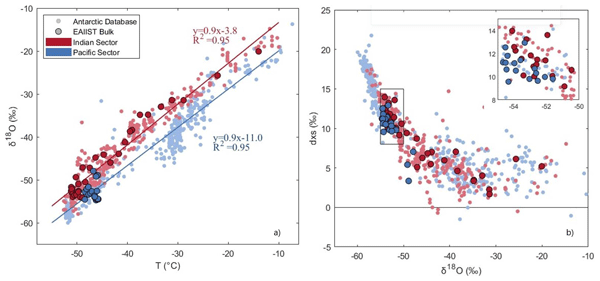
We investigated the isotopic composition of surface snow in a previously unexplored region of East Antarctica to understand how differences in air mass origin influence its variability. By comparing observations with model data, we validated the model and quantified the impact of post-depositional processes at the snow–atmosphere interface. Our results offer valuable insights for reconstructing past temperatures from ice cores.
Lison Soussaintjean, Jochen Schmitt, Joël Savarino, J. Andy Menking, Edward J. Brook, Barbara Seth, Vladimir Lipenkov, Thomas Röckmann, and Hubertus Fischer
Biogeosciences, 23, 3939–3963, https://doi.org/10.5194/bg-23-3939-2026, https://doi.org/10.5194/bg-23-3939-2026, 2026
Short summary
Short summary
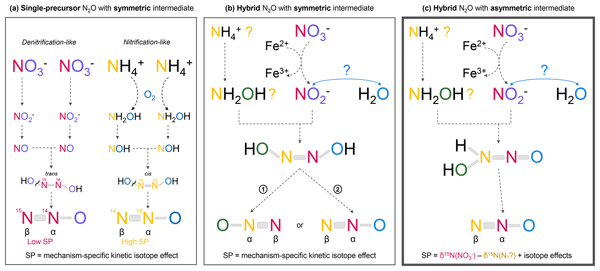
Nitrous oxide (N2O) produced in dust-rich Antarctic ice complicates the reconstruction of past atmospheric levels from ice core records. Using isotope analysis, we show that N2O forms from two nitrogen precursors, one being nitrate. For the first time, we demonstrate that the site preference (SP) of N2O reflects the isotopic difference between these precursors, not the production pathway, which challenges the common interpretation of SP.
Adrien Ooms, Mathieu Casado, Ghislain Picard, Laurent Arnaud, Maria Hörhold, Andrea Spolaor, Rita Traversi, Joel Savarino, Patrick Ginot, Pete Akers, Birthe Twarloh, and Valérie Masson-Delmotte
The Cryosphere, 20, 3235–3255, https://doi.org/10.5194/tc-20-3235-2026, https://doi.org/10.5194/tc-20-3235-2026, 2026
Short summary
Short summary
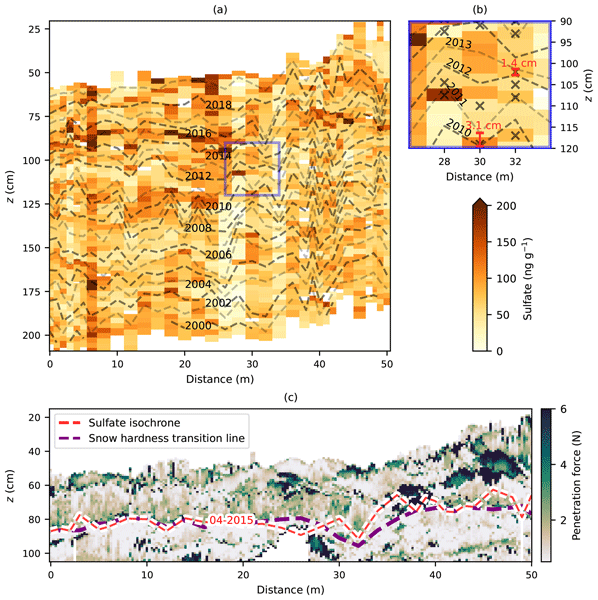
This work presents a new approach to the estimation of accumulation rates at Concordia Station, East-Antarctica, for the last 20 years, from a new data set of chemical tracers and snow micro-scale properties measured in a snow trench. Multi-annual and meter to decameter scale variability of accumulation rates are compared again in-situ measurements of surface laser scanner and stake farm, with very good agreement. This further constrains SMB estimation for Antarctica at high temporal resolution.
Agnese Petteni, Elise Fourré, Elsa Gautier, Azzurra Spagnesi, Roxanne Jacob, Pete D. Akers, Daniele Zannoni, Jacopo Gabrieli, Olivier Jossoud, Frédéric Prié, Amaëlle Landais, Titouan Tcheng, Barbara Stenni, Joel Savarino, Patrick Ginot, and Mathieu Casado
Atmos. Meas. Tech., 18, 5435–5455, https://doi.org/10.5194/amt-18-5435-2025, https://doi.org/10.5194/amt-18-5435-2025, 2025
Short summary
Short summary
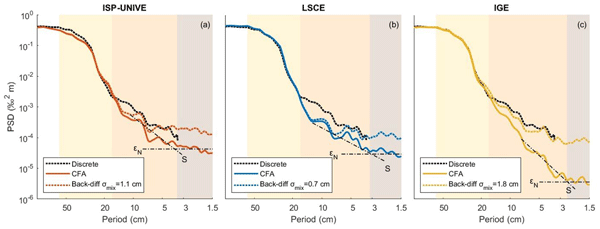
Our research compares three systems of continuous flow analysis coupled with cavity ring-down spectrometry (CFA-CRD) from Venice, Paris, and Grenoble laboratories for measuring water isotopes in ice cores, crucial for reconstructing past climate. We quantify each system’s mixing and measurement noise effects, which impact the achievable resolution of isotope continuous records. Our findings reveal specific configurations and procedures to enhance measurement accuracy, providing a framework to optimise water isotope analysis.
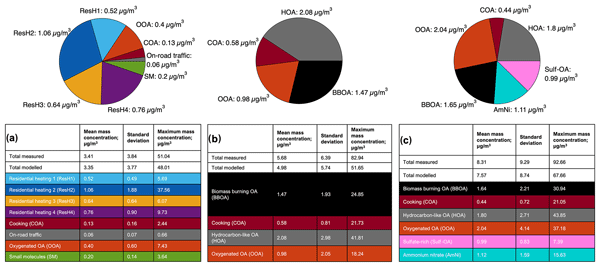
Amna Ijaz, Brice Temime-Roussel, Benjamin Chazeau, Sarah Albertin, Stephen R. Arnold, Brice Barret, Slimane Bekki, Natalie Brett, Meeta Cesler-Maloney, Elsa Dieudonne, Kayane K. Dingilian, Javier G. Fochesatto, Jingqiu Mao, Allison Moon, Joel Savarino, William Simpson, Rodney J. Weber, Kathy S. Law, and Barbara D'Anna
Atmos. Chem. Phys., 25, 11789–11811, https://doi.org/10.5194/acp-25-11789-2025, https://doi.org/10.5194/acp-25-11789-2025, 2025
Short summary
Short summary
Fairbanks is among the most polluted cities, with the highest particulate matter (PM) levels in the US during winters. Highly time-resolved measurements of the submicron PM found residential heating with wood and oil and hydrocarbon-like organics from traffic, as well as sulfur-containing aerosol, to be the key pollution sources. Remarkable differences existed between complementary instruments, warranting the deployment of multiple tools at sites, with wide-ranging influences.
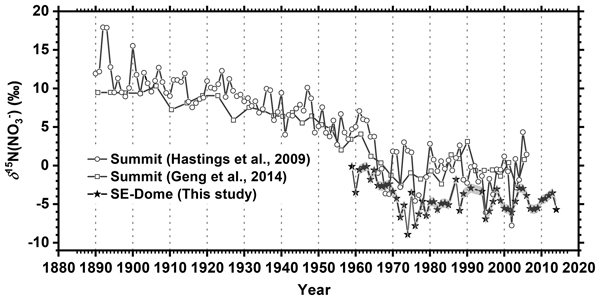
Zhao Wei, Shohei Hattori, Asuka Tsuruta, Zhuang Jiang, Sakiko Ishino, Koji Fujita, Sumito Matoba, Lei Geng, Alexis Lamothe, Ryu Uemura, Naohiro Yoshida, Joel Savarino, and Yoshinori Iizuka
Atmos. Chem. Phys., 25, 5727–5742, https://doi.org/10.5194/acp-25-5727-2025, https://doi.org/10.5194/acp-25-5727-2025, 2025
Short summary
Short summary
Nitrate isotope records in ice cores reveal changes in NOₓ emissions and atmospheric oxidation chemistry driven by human activity. However, UV-driven postdepositional processes can alter nitrate in snow, making snow accumulation rates critical for preserving these records. This study examines nitrate isotopes in a southeastern Greenland ice core, where high snow accumulation minimizes these effects, providing a reliable archive of atmospheric nitrogen cycling.
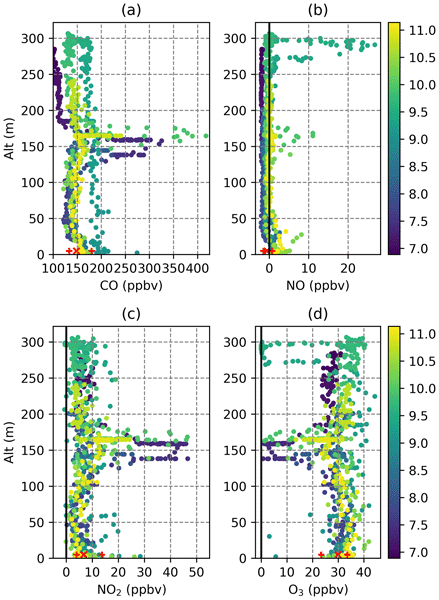
Brice Barret, Patrice Medina, Natalie Brett, Roman Pohorsky, Kathy S. Law, Slimane Bekki, Gilberto J. Fochesatto, Julia Schmale, Steve R. Arnold, Andrea Baccarini, Maurizio Busetto, Meeta Cesler-Maloney, Barbara D'Anna, Stefano Decesari, Jingqiu Mao, Gianluca Pappaccogli, Joel Savarino, Federico Scoto, and William R. Simpson
Atmos. Meas. Tech., 18, 1163–1184, https://doi.org/10.5194/amt-18-1163-2025, https://doi.org/10.5194/amt-18-1163-2025, 2025
Short summary
Short summary
The Fairbanks area experiences severe pollution episodes in winter because of enhanced emissions of pollutants trapped near the surface by strong temperature inversions. Low-cost sensors were deployed on board a car and a tethered balloon to measure the concentrations of gaseous pollutants (CO, O3, and NOx) in Fairbanks during winter 2022. Data calibration with reference measurements and machine learning methods enabled us to document pollution at the surface and power plant plumes aloft.
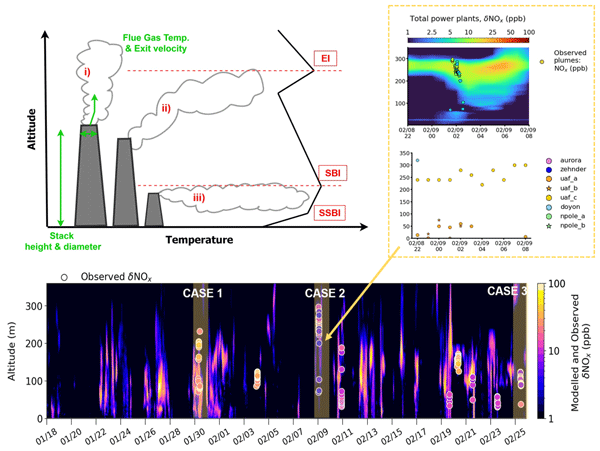
Natalie Brett, Kathy S. Law, Steve R. Arnold, Javier G. Fochesatto, Jean-Christophe Raut, Tatsuo Onishi, Robert Gilliam, Kathleen Fahey, Deanna Huff, George Pouliot, Brice Barret, Elsa Dieudonné, Roman Pohorsky, Julia Schmale, Andrea Baccarini, Slimane Bekki, Gianluca Pappaccogli, Federico Scoto, Stefano Decesari, Antonio Donateo, Meeta Cesler-Maloney, William Simpson, Patrice Medina, Barbara D'Anna, Brice Temime-Roussel, Joel Savarino, Sarah Albertin, Jingqiu Mao, Becky Alexander, Allison Moon, Peter F. DeCarlo, Vanessa Selimovic, Robert Yokelson, and Ellis S. Robinson
Atmos. Chem. Phys., 25, 1063–1104, https://doi.org/10.5194/acp-25-1063-2025, https://doi.org/10.5194/acp-25-1063-2025, 2025
Short summary
Short summary
Processes influencing dispersion of local anthropogenic pollution in Arctic wintertime are investigated with Lagrangian dispersion modelling. Simulated power plant plume rise that considers temperature inversion layers improves results compared to observations (interior Alaska). Modelled surface concentrations are improved by representation of vertical mixing and emission estimates. Large increases in diesel vehicle emissions at temperatures reaching −35°C are required to reproduce observed NOx.
V. Holly L. Winton, Robert Mulvaney, Joel Savarino, Kyle R. Clem, and Markus M. Frey
Clim. Past, 20, 1213–1232, https://doi.org/10.5194/cp-20-1213-2024, https://doi.org/10.5194/cp-20-1213-2024, 2024
Short summary
Short summary
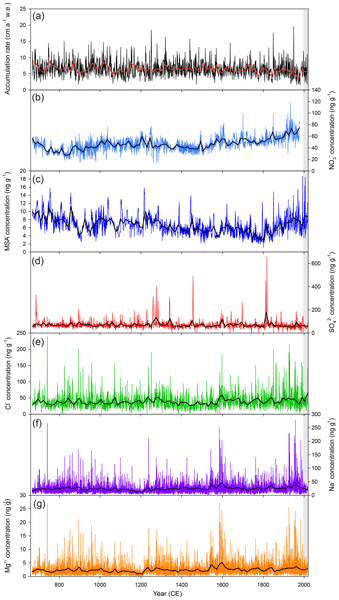
In 2018, a new 120 m ice core was drilled in a region located under the Antarctic ozone hole. We present the first results including a 1300-year record of snow accumulation and aerosol chemistry. We investigate the aerosol and moisture source regions and atmospheric processes related to the ice core record and discuss what this means for developing a record of past ultraviolet radiation and ozone depletion using the stable isotopic composition of nitrate measured in the same ice core.
Zhuang Jiang, Becky Alexander, Joel Savarino, and Lei Geng
Atmos. Chem. Phys., 24, 4895–4914, https://doi.org/10.5194/acp-24-4895-2024, https://doi.org/10.5194/acp-24-4895-2024, 2024
Short summary
Short summary
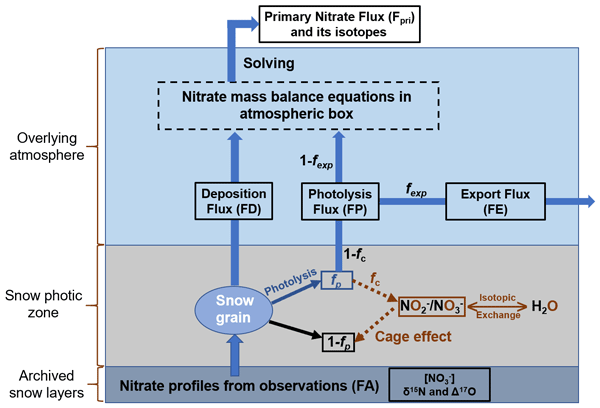
Ice-core nitrate could track the past atmospheric NOx and oxidant level, but its interpretation is hampered by the post-depositional processing. In this work, an inverse model was developed and tested against two polar sites and was shown to well reproduce the observed nitrate signals in snow and atmosphere, suggesting that the model can properly correct for the effect of post-depositional processing. This model offers a very useful tool for future studies on ice-core nitrate records.
Sarah Albertin, Joël Savarino, Slimane Bekki, Albane Barbero, Roberto Grilli, Quentin Fournier, Irène Ventrillard, Nicolas Caillon, and Kathy Law
Atmos. Chem. Phys., 24, 1361–1388, https://doi.org/10.5194/acp-24-1361-2024, https://doi.org/10.5194/acp-24-1361-2024, 2024
Short summary
Short summary
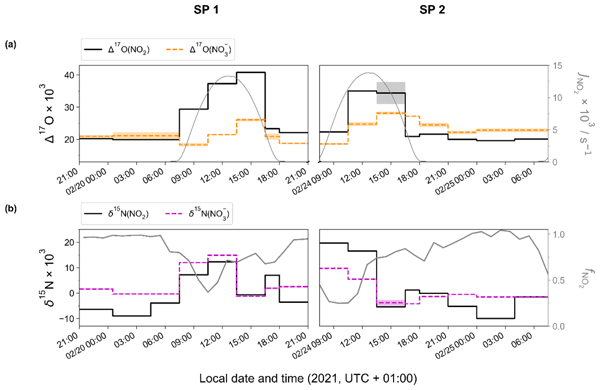
This study reports the first simultaneous records of oxygen (Δ17O) and nitrogen (δ15N) isotopes in nitrogen dioxide (NO2) and nitrate (NO3−). These data are combined with atmospheric observations to explore sub-daily N reactive chemistry and quantify N fractionation effects in an Alpine winter city. The results highlight the necessity of using Δ17O and δ15N in both NO2 and NO3− to avoid biased estimations of NOx sources and fates from NO3− isotopic records in urban winter environments.
Xavier Faïn, David M. Etheridge, Kévin Fourteau, Patricia Martinerie, Cathy M. Trudinger, Rachael H. Rhodes, Nathan J. Chellman, Ray L. Langenfelds, Joseph R. McConnell, Mark A. J. Curran, Edward J. Brook, Thomas Blunier, Grégory Teste, Roberto Grilli, Anthony Lemoine, William T. Sturges, Boris Vannière, Johannes Freitag, and Jérôme Chappellaz
Clim. Past, 19, 2287–2311, https://doi.org/10.5194/cp-19-2287-2023, https://doi.org/10.5194/cp-19-2287-2023, 2023
Short summary
Short summary
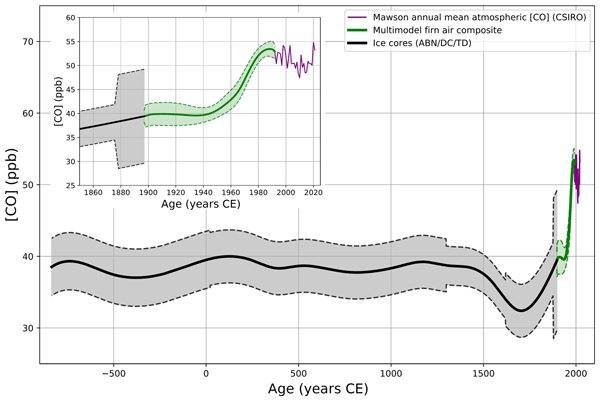
We report on a 3000-year record of carbon monoxide (CO) levels in the Southern Hemisphere's high latitudes by combining ice core and firn air measurements with modern direct atmospheric samples. Antarctica [CO] remained stable (–835 to 1500 CE), decreased during the Little Ice Age, and peaked around 1985 CE. Such evolution reflects stable biomass burning CO emissions before industrialization, followed by growth from CO anthropogenic sources, which decline after 1985 due to improved combustion.
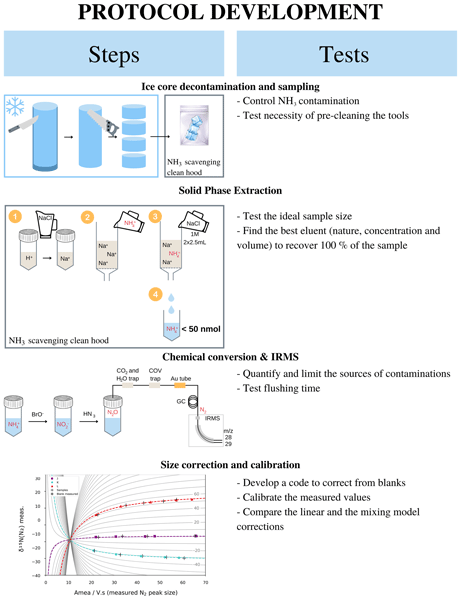
Alexis Lamothe, Joel Savarino, Patrick Ginot, Lison Soussaintjean, Elsa Gautier, Pete D. Akers, Nicolas Caillon, and Joseph Erbland
Atmos. Meas. Tech., 16, 4015–4030, https://doi.org/10.5194/amt-16-4015-2023, https://doi.org/10.5194/amt-16-4015-2023, 2023
Short summary
Short summary
Ammonia is a reactive gas in our atmosphere that is key in air quality issues. Assessing its emissions and how it reacts is a hot topic that can be addressed from the past. Stable isotopes (the mass of the molecule) measured in ice cores (glacial archives) can teach us a lot. However, the concentrations in ice cores are very small. We propose a protocol to limit the contamination and apply it to one ice core drilled in Mont Blanc, describing the opportunities our method brings.
Simone Ventisette, Samuele Baldini, Claudio Artoni, Silvia Becagli, Laura Caiazzo, Barbara Delmonte, Massimo Frezzotti, Raffaello Nardin, Joel Savarino, Mirko Severi, Andrea Spolaor, Barbara Stenni, and Rita Traversi
EGUsphere, https://doi.org/10.5194/egusphere-2023-393, https://doi.org/10.5194/egusphere-2023-393, 2023
Preprint archived
Short summary
Short summary
The paper reports the spatial variability of concentration and fluxes of chemical impurities in superficial snow over unexplored area of the East Antarctic ice sheet. Pinatubo and Puyehue-Cordón Caulle volcanic eruptions in non-sea salt sulfate and dust snow pits record were used to achieve the accumulation rates. Deposition (wet, dry and uptake from snow surface) and post deposition processes are constrained. These knowledges are fundamental in Antarctic ice cores stratigraphies interpretation.
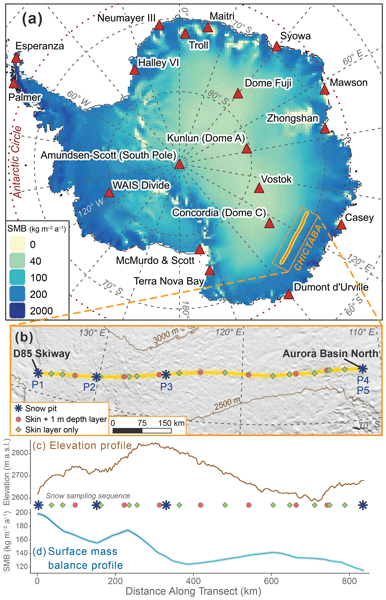
Pete D. Akers, Joël Savarino, Nicolas Caillon, Olivier Magand, and Emmanuel Le Meur
Atmos. Chem. Phys., 22, 15637–15657, https://doi.org/10.5194/acp-22-15637-2022, https://doi.org/10.5194/acp-22-15637-2022, 2022
Short summary
Short summary
Nitrate isotopes in Antarctic ice do not preserve the seasonal isotopic cycles of the atmosphere, which limits their use to study the past. We studied nitrate along an 850 km Antarctic transect to learn how these cycles are changed by sunlight-driven chemistry in the snow. Our findings suggest that the snow accumulation rate and other environmental signals can be extracted from nitrate with the right sampling and analytical approaches.
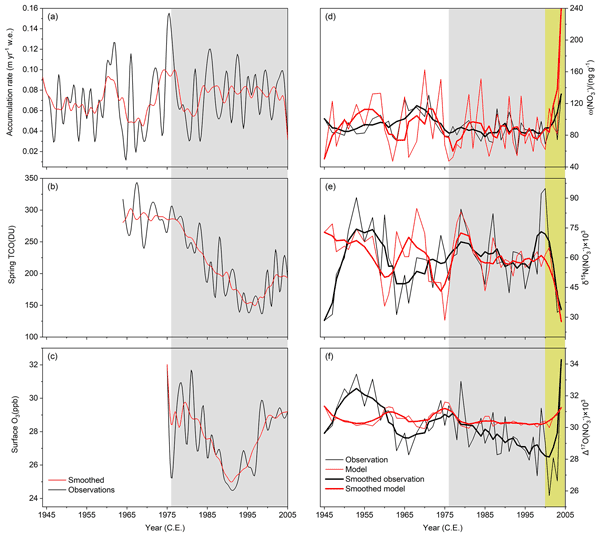
Yanzhi Cao, Zhuang Jiang, Becky Alexander, Jihong Cole-Dai, Joel Savarino, Joseph Erbland, and Lei Geng
Atmos. Chem. Phys., 22, 13407–13422, https://doi.org/10.5194/acp-22-13407-2022, https://doi.org/10.5194/acp-22-13407-2022, 2022
Short summary
Short summary
We investigate the potential of ice-core preserved nitrate isotopes as proxies of stratospheric ozone variability by measuring nitrate isotopes in a shallow ice core from the South Pole. The large variability in the snow accumulation rate and its slight increase after the 1970s masked any signals caused by the ozone hole. Moreover, the nitrate oxygen isotope decrease may reflect changes in the atmospheric oxidation environment in the Southern Ocean.
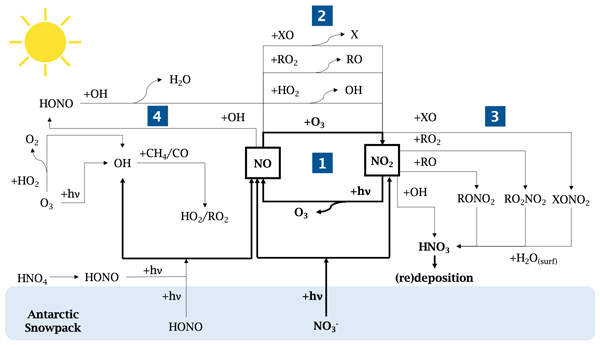
Albane Barbero, Roberto Grilli, Markus M. Frey, Camille Blouzon, Detlev Helmig, Nicolas Caillon, and Joël Savarino
Atmos. Chem. Phys., 22, 12025–12054, https://doi.org/10.5194/acp-22-12025-2022, https://doi.org/10.5194/acp-22-12025-2022, 2022
Short summary
Short summary
The high reactivity of the summer Antarctic boundary layer results in part from the emissions of nitrogen oxides produced during photo-denitrification of the snowpack, but its underlying mechanisms are not yet fully understood. The results of this study suggest that more NO2 is produced from the snowpack early in the photolytic season, possibly due to stronger UV irradiance caused by a smaller solar zenith angle near the solstice.
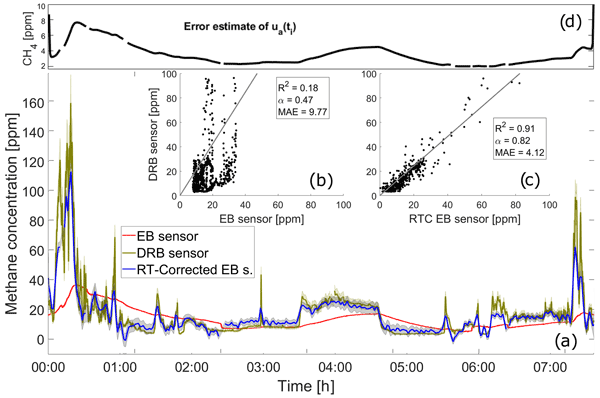
Knut Ola Dølven, Juha Vierinen, Roberto Grilli, Jack Triest, and Bénédicte Ferré
Geosci. Instrum. Method. Data Syst., 11, 293–306, https://doi.org/10.5194/gi-11-293-2022, https://doi.org/10.5194/gi-11-293-2022, 2022
Short summary
Short summary
Sensors capable of measuring rapid fluctuations are important to improve our understanding of environmental processes. Many sensors are unable to do this, due to their reliance on the transfer of the measured property, for instance a gas, across a semi-permeable barrier. We have developed a mathematical tool which enables the retrieval of fast-response signals from sensors with this type of sensor design.
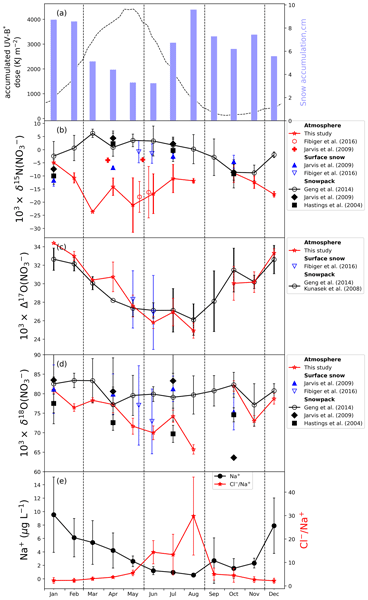
Zhuang Jiang, Joel Savarino, Becky Alexander, Joseph Erbland, Jean-Luc Jaffrezo, and Lei Geng
The Cryosphere, 16, 2709–2724, https://doi.org/10.5194/tc-16-2709-2022, https://doi.org/10.5194/tc-16-2709-2022, 2022
Short summary
Short summary
A record of year-round atmospheric nitrate isotopic composition along with snow nitrate isotopic data from Summit, Greenland, revealed apparent enrichments in nitrogen isotopes in snow nitrate compared to atmospheric nitrate, in addition to a relatively smaller degree of changes in oxygen isotopes. The results suggest that at this site post-depositional processing takes effect, which should be taken into account when interpreting ice-core nitrate isotope records.

Saehee Lim, Meehye Lee, Joel Savarino, and Paolo Laj
Atmos. Chem. Phys., 22, 5099–5115, https://doi.org/10.5194/acp-22-5099-2022, https://doi.org/10.5194/acp-22-5099-2022, 2022
Short summary
Short summary
We determined δ15N(NO3−) and Δ17O(NO3−) of PM2.5 in Seoul during 2018–2019 and estimated quantitatively the contribution of oxidation pathways to NO3− formation and NOx emission sources. The nighttime pathway played a significant role in NO3− formation during the winter, and its contribution further increased up to 70 % on haze days when PM2.5 was greater than 75 µg m−3. Vehicle emissions were confirmed as a main NO3− source with an increasing contribution from coal combustion in winter.
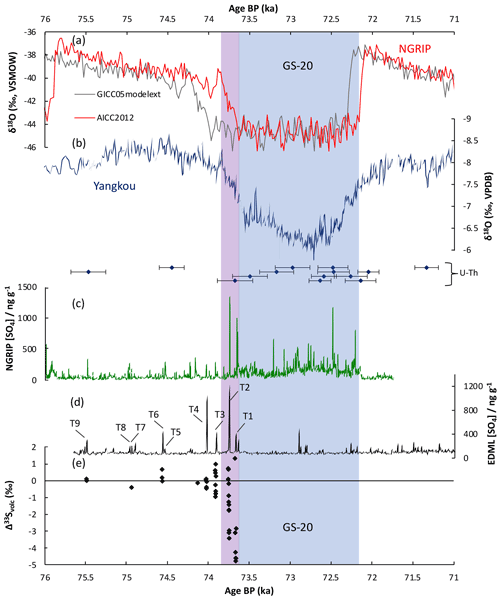
Laura Crick, Andrea Burke, William Hutchison, Mika Kohno, Kathryn A. Moore, Joel Savarino, Emily A. Doyle, Sue Mahony, Sepp Kipfstuhl, James W. B. Rae, Robert C. J. Steele, R. Stephen J. Sparks, and Eric W. Wolff
Clim. Past, 17, 2119–2137, https://doi.org/10.5194/cp-17-2119-2021, https://doi.org/10.5194/cp-17-2119-2021, 2021
Short summary
Short summary
The ~ 74 ka eruption of Toba was one of the largest eruptions of the last 100 ka. We have measured the sulfur isotopic composition for 11 Toba eruption candidates in two Antarctic ice cores. Sulfur isotopes allow us to distinguish between large eruptions that have erupted material into the stratosphere and smaller ones that reach lower altitudes. Using this we have identified the events most likely to be Toba and place the eruption on the transition into a cold period in the Northern Hemisphere.
Cited articles
Barbero, A., Blouzon, C., Savarino, J., Caillon, N., Dommergue, A., and Grilli, R.: A compact incoherent broadband cavity-enhanced absorption spectrometer for trace detection of nitrogen oxides, iodine oxide and glyoxal at levels below parts per billion for field applications, Atmos. Meas. Tech., 13, 4317–4331, https://doi.org/10.5194/amt-13-4317-2020, 2020. a, b, c, d, e, f, g
Beynon, W. and Williams, E.: The long term variation in the ionospheric winter absorption anomaly, Journal of Atmospheric and Terrestrial Physics, 38, 423–429, https://doi.org/10.1016/0021-9169(76)90069-6, 1976. a
Dixneuf, S., Ruth, A. A., Häseler, R., Brauers, T., Rohrer, F., and Dorn, H.-P.: Detection of nitrous acid in the atmospheric simulation chamber SAPHIR using open-path incoherent broadband cavity-enhanced absorption spectroscopy and extractive long-path absorption photometry, Atmos. Meas. Tech., 15, 945–964, https://doi.org/10.5194/amt-15-945-2022, 2022. a, b
Fanhao, M., Min, Q., Wu, F., Jun, D., Ke, T., Helu, Z., Dou, S., Zhitang, L., and Pinhua, X.: Measurements of atmospheric HONO and NO2 utilizing an open-path broadband cavity enhanced absorption spectroscopy based on an iterative algorithm, Acta Physica Sinica, https://doi.org/10.7498/aps.71.20220150, 2022. a
Gómez Martín, J. C., Lewis, T. R., Blitz, M. A., Plane, J. M., Kumar, M., Francisco, J. S., and Saiz-Lopez, A.: A gas-to-particle conversion mechanism helps to explain atmospheric particle formation through clustering of iodine oxides, Nature Communications, 11, 4521, https://doi.org/10.1038/s41467-020-18252-8, 2020. a
Grilli, R.: Methods for trace gas detection using difference frequency generation, PhD thesis, University of Bristol, https://shorturl.at/i02mv (last access: 9 October 2025), 2009. a
Grilli, R., Méjean, G., Kassi, S., Ventrillard, I., Abd-Alrahman, C., and Romanini, D.: Frequency comb based spectrometer for in situ and real time measurements of IO, BrO, NO2, and H2CO at pptv and ppqv levels, Environmental Science & Technology, 46, 10704–10710, https://doi.org/10.1021/es301785h, 2012. a
Hönninger, G., von Friedeburg, C., and Platt, U.: Multi axis differential optical absorption spectroscopy (MAX-DOAS), Atmos. Chem. Phys., 4, 231–254, https://doi.org/10.5194/acp-4-231-2004, 2004. a
Kukui, A., Ancellet, G., and Le Bras, G.: Chemical ionisation mass spectrometer for measurements of OH and Peroxy radical concentrations in moderately polluted atmospheres, Journal of Atmospheric Chemistry, 61, 133–154, https://doi.org/10.1007/s10874-009-9130-9, 2008. a
Nasse, J.-M., Eger, P. G., Pöhler, D., Schmitt, S., Frieß, U., and Platt, U.: Recent improvements of long-path DOAS measurements: impact on accuracy and stability of short-term and automated long-term observations, Atmos. Meas. Tech., 12, 4149–4169, https://doi.org/10.5194/amt-12-4149-2019, 2019. a
Romer Present, P. S., Zare, A., and Cohen, R. C.: The changing role of organic nitrates in the removal and transport of NOx, Atmos. Chem. Phys., 20, 267–279, https://doi.org/10.5194/acp-20-267-2020, 2020. a
Ryan, R. G., Rhodes, S., Tully, M., Wilson, S., Jones, N., Frieß, U., and Schofield, R.: Daytime HONO, NO2 and aerosol distributions from MAX-DOAS observations in Melbourne, Atmos. Chem. Phys., 18, 13969–13985, https://doi.org/10.5194/acp-18-13969-2018, 2018. a
Saiz-Lopez, A., Blaszczak-Boxe, C. S., and Carpenter, L. J.: A mechanism for biologically induced iodine emissions from sea ice, Atmos. Chem. Phys., 15, 9731–9746, https://doi.org/10.5194/acp-15-9731-2015, 2015. a
Simpson, W. R., Brown, S. S., Saiz-Lopez, A., Thornton, J. A., and von Glasow, R.: Tropospheric halogen chemistry: Sources, cycling, and impacts, Chemical Reviews, 115, 4035–4062, https://doi.org/10.1021/cr5006638, 2015. a
Suhail, K., Suhail, K., George, M., Chandran, S., Chandran, S., Varma, R., Venables, D., Wang, M., and Chen, J.: Open path incoherent broadband cavity-enhanced measurements of NO3 radical and aerosol extinction in the North China Plain, Spectrochimica Acta. Part A, Molecular and Biomolecular Spectroscopy, 208, 24–31, https://doi.org/10.1016/j.saa.2018.09.023, 2019. a
Varma, R. M., Venables, D. S., Ruth, A. A., Heitmann, U., Schlosser, E., and Dixneuf, S.: Long optical cavities for open-path monitoring of atmospheric trace gases and aerosol extinction, Applied Optics, 48, B159–B171, https://doi.org/10.1364/AO.48.00B159, 2009. a
Volkamer, R., San Martini, F., Molina, L. T., Salcedo, D., Jimenez, J. L., and Molina, M. J.: A missing sink for gas-phase glyoxal in Mexico City: Formation of secondary organic aerosol, Geophysical Research Letters, 34, https://doi.org/10.1029/2007GL030752, 2007. a
Wang, H. and Lu, K.: Monitoring Ambient Nitrate Radical by Open Path Cavity Enhanced Absorption Spectroscopy, Analytical Chemistry, https://doi.org/10.1021/acs.analchem.9b01971, 2019. a, b, c
Wang, M., Lou, S., Hu, W., Wang, H., Wang, X., Fan, F., Varma, R., Venables, D., and Chen, J.: Intercomparison of NO3 under Humid Conditions with Open-Path and Extractive IBBCEAS in an Atmospheric Reaction Chamber, Remote. Sens., 15, 739, https://doi.org/10.3390/rs15030739, 2023. a, b, c
Wu, T., Wu, T., Chen, W., Fertein, E., Cazier, F., Dewaele, D., and Gao, X.: Development of an open-path incoherent broadband cavity-enhanced spectroscopy based instrument for simultaneous measurement of HONO and NO2 in ambient air, Applied Physics B, 106, 501–509, https://doi.org/10.1007/S00340-011-4818-3, 2012. a, b, c
Short summary
The development of an open detector based on absorption spectroscopy, enhanced by high-reflectivity mirrors, for the simultaneous measurement of NO2, IO, and CHOCHO is reported. The instrument shows good correlation with a closed system during both indoor and outdoor measurements. An open system is able to measure NO2, IO, and CHOCHO with high precision.
The development of an open detector based on absorption spectroscopy, enhanced by...


