
Articles | Volume 19, issue 7
https://doi.org/10.5194/amt-19-2507-2026
© Author(s) 2026. This work is distributed under
the Creative Commons Attribution 4.0 License.
the Creative Commons Attribution 4.0 License.
https://doi.org/10.5194/amt-19-2507-2026
© Author(s) 2026. This work is distributed under
the Creative Commons Attribution 4.0 License.
the Creative Commons Attribution 4.0 License.
Research article
| 
16 Apr 2026
Research article |
| 16 Apr 2026
| 16 Apr 2026
An ensemble machine learning method to retrieve aerosol parameters from ground-based Sun-sky photometer measurements
Qiurui Li
Department of Atmospheric and Oceanic Sciences, Peking University, Beijing, 100871, China
Zhongxia Sun
Department of Atmospheric and Oceanic Sciences, Peking University, Beijing, 100871, China
Paul Scherrer Institut, Forschungsstrasse 111, 5232 Villigen PSI, Switzerland
Meijing Liu
Department of Atmospheric and Oceanic Sciences, Peking University, Beijing, 100871, China
Huizheng Che
Key Laboratory of Atmospheric Chemistry, Chinese Academy of Meteorological Sciences, Beijing, 100081, China
Yu Zheng
Key Laboratory of Atmospheric Chemistry, Chinese Academy of Meteorological Sciences, Beijing, 100081, China

Department of Atmospheric and Oceanic Sciences, Peking University, Beijing, 100871, China
Related authors
Heyang Ni, Jing Li, Liang Chang, Yueming Dong, Guanghao Du, Muqian Li, Qiurui Li, Guanyu Liu, Yuebo Sun, Angnuo Tian, Sheng Yue, Chongzhao Zhang, and Zhenyu Zhang
Atmos. Meas. Tech., 19, 5871–5887, https://doi.org/10.5194/amt-19-5871-2026, https://doi.org/10.5194/amt-19-5871-2026, 2026
Short summary
Short summary
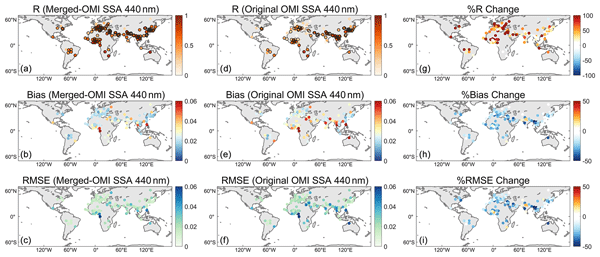
This study develops a new artificial intelligence method to retrieve daytime aerosol optical parameters using low-cost All-Sky Imagers. By training a model with high-precision data, we successfully estimated the aerosol optical depth and single scattering albedo simultaneously. Our results show high accuracy across different global regions. This approach is much faster than traditional complex calculations, making it easier to deploy dense observation networks to improve climate research.
Chongzhao Zhang, Qiurui Li, Jun Li, Wei Han, and Jing Li
EGUsphere, https://doi.org/10.5194/egusphere-2026-4627, https://doi.org/10.5194/egusphere-2026-4627, 2026
This preprint is open for discussion and under review for Geoscientific Model Development (GMD).
Short summary
Short summary
We present a version 1.0 latent-space aerosol–radiance data assimilation system that uses machine-learned compressions of aerosol and land-surface fields together with a fast neural radiative-transfer model to assimilate satellite shortwave reflectance directly. The approach jointly updates aerosol optical depth and surface albedo, improves agreement with ground and radiation observations, and reduces the online cost of radiance assimilation relative to a conventional physical-space method.
Yueming Dong, Jing Li, Zhenyu Zhang, Chongzhao Zhang, and Qiurui Li
Earth Syst. Sci. Data, 17, 3873–3892, https://doi.org/10.5194/essd-17-3873-2025, https://doi.org/10.5194/essd-17-3873-2025, 2025
Short summary
Short summary
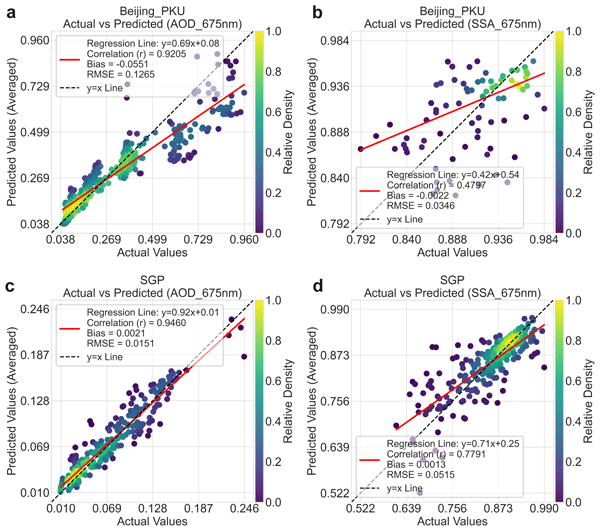
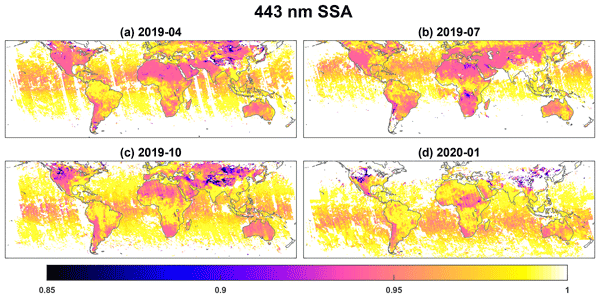
This study develops two merged global land aerosol single-scattering albedo (SSA) datasets by combining AERONET ground observations and two satellite datasets using an ensemble Kalman filter data synergy method. The merged datasets exhibit significantly improved accuracy compared to the original satellite data. These results can provide more reliable estimates of aerosol scattering and absorption properties, essential for improving climate modeling and assessing aerosol climate effects.
Heyang Ni, Jing Li, Liang Chang, Yueming Dong, Guanghao Du, Muqian Li, Qiurui Li, Guanyu Liu, Yuebo Sun, Angnuo Tian, Sheng Yue, Chongzhao Zhang, and Zhenyu Zhang
Atmos. Meas. Tech., 19, 5871–5887, https://doi.org/10.5194/amt-19-5871-2026, https://doi.org/10.5194/amt-19-5871-2026, 2026
Short summary
Short summary
This study develops a new artificial intelligence method to retrieve daytime aerosol optical parameters using low-cost All-Sky Imagers. By training a model with high-precision data, we successfully estimated the aerosol optical depth and single scattering albedo simultaneously. Our results show high accuracy across different global regions. This approach is much faster than traditional complex calculations, making it easier to deploy dense observation networks to improve climate research.
Chongzhao Zhang, Qiurui Li, Jun Li, Wei Han, and Jing Li
EGUsphere, https://doi.org/10.5194/egusphere-2026-4627, https://doi.org/10.5194/egusphere-2026-4627, 2026
This preprint is open for discussion and under review for Geoscientific Model Development (GMD).
Short summary
Short summary
We present a version 1.0 latent-space aerosol–radiance data assimilation system that uses machine-learned compressions of aerosol and land-surface fields together with a fast neural radiative-transfer model to assimilate satellite shortwave reflectance directly. The approach jointly updates aerosol optical depth and surface albedo, improves agreement with ground and radiation observations, and reduces the online cost of radiance assimilation relative to a conventional physical-space method.
Zhaolong Wu, Patric Seifert, Yun He, Holger Baars, Cristofer Jimenez, Chengcai Li, Jing Li, Albert Ansmann, and Chuanfeng Zhao
Atmos. Chem. Phys., 26, 11491–11523, https://doi.org/10.5194/acp-26-11491-2026, https://doi.org/10.5194/acp-26-11491-2026, 2026
Short summary
Short summary
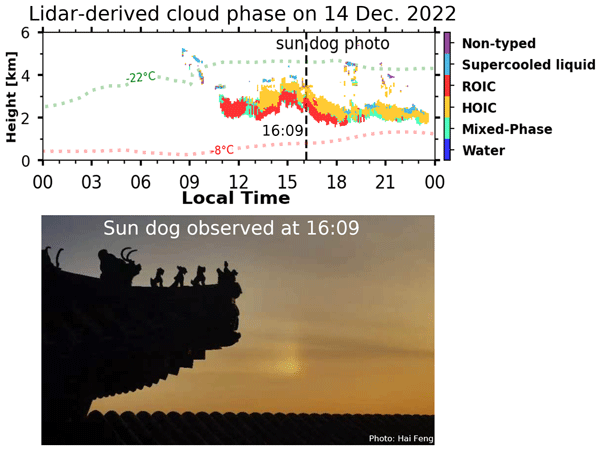
Using a full year of laser and radar observations in Beijing, this study shows when and where flat ice crystals tend to align horizontally instead of randomly, which suggests that flat ice crystals are most common in moderately cold, weakly turbulent clouds and often form below supercooled liquid water. This new finding can help weather and climate models better represent ice clouds.
Jun Zhu, Yingying Wang, Xu Yue, Huizheng Che, Xiangao Xia, Xiaofei Lu, Chenguang Tian, and Hong Liao
Atmos. Chem. Phys., 26, 5679–5696, https://doi.org/10.5194/acp-26-5679-2026, https://doi.org/10.5194/acp-26-5679-2026, 2026
Short summary
Short summary
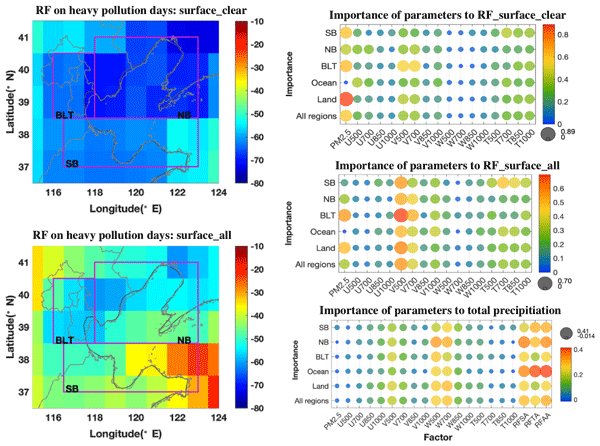
The radiative forcing (RF) of PM2.5 heavy pollution, its influencing factors and importance to precipitation in the Bohai Rim regions (China) during 2014–2023 is analyzed. The results show that the variations in PM2.5 and RF values under different temperature profiles are not consistent. Pollution RFs were as important as vertical winds to the total precipitation. The results may improve understanding of the radiative effect of pollution and provide some assistance in precipitation forecasting.
Zhenyu Zhang, Jing Li, Yueming Dong, Chongzhao Zhang, Qiurui Li, and Ling Gao
Atmos. Meas. Tech., 19, 2555–2574, https://doi.org/10.5194/amt-19-2555-2026, https://doi.org/10.5194/amt-19-2555-2026, 2026
Short summary
Short summary
This study developed a numerical algorithm to simultaneously retrieve aerosol and surface parameters from multi-angle polarimetric observations from space. Our research shows that accurate single scattering albedo retrieval requires degree of linear polarization observation uncertainties below 0.01. The retrieval results agrees with ground-based measurements well, and successfully characterize regional pollution events. We also generate global maps of retrieved aerosol and surface parameters.
Guanyu Liu, Jing Li, Sheng Yue, Lulu Zhang, and Chongzhao Zhang
Atmos. Meas. Tech., 18, 6705–6725, https://doi.org/10.5194/amt-18-6705-2025, https://doi.org/10.5194/amt-18-6705-2025, 2025
Short summary
Short summary
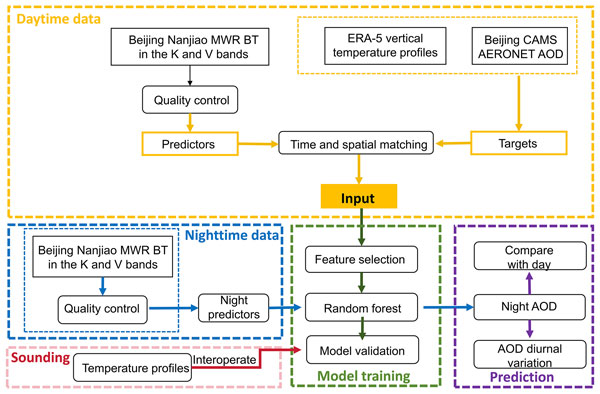
This study introduces a novel method to retrieve aerosol optical depth (AOD) at night using ground-based microwave radiometers, overcoming the limitation of traditional shortwave-based techniques that cannot operate in darkness. This result enables continuous aerosol monitoring and highlights microwave radiometry's under-utilized potential in atmospheric research.
Chong Li, Oleg Dubovik, Jing Li, David Fuertes, Anton Lopatin, Pavel Litvinov, Tatsiana Lapyonok, Lukas Bindreiter, Christian Matar, Yiqi Chu, and Wangshu Tan
Atmos. Meas. Tech., 18, 6609–6643, https://doi.org/10.5194/amt-18-6609-2025, https://doi.org/10.5194/amt-18-6609-2025, 2025
Short summary
Short summary
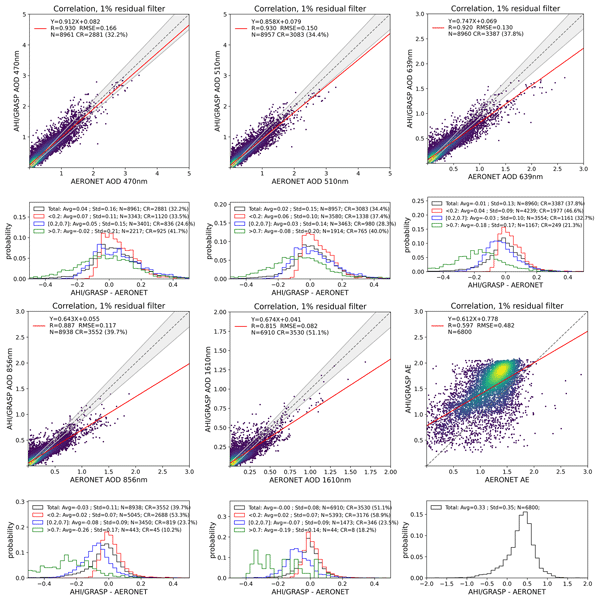
Using observational data from Japan's geostationary satellite – Himawari-8 , this study improved how we track air pollution (aerosols) across East Asia and the Western Pacific. By applying an advanced aerosol retrieval algorithm called GRASP, we were able to more accurately observe both atmospheric and ground conditions and their dynamics over time. The results closely matched ground-based measurements and showed potential for even better monitoring when combined with ground-based lidar data.
Xinyao Hu, Aoyuan Yu, Xiaojing Shen, Jiayuan Lu, Yangmei Zhang, Quan Liu, Lei Liu, Linlin Liang, Hongfei Tong, Qianli Ma, Shuxian Zhang, Bing Qi, Rongguang Du, Huizheng Che, Xiaoye Zhang, and Junying Sun
EGUsphere, https://doi.org/10.5194/egusphere-2025-3796, https://doi.org/10.5194/egusphere-2025-3796, 2025
Preprint archived
Short summary
Short summary
Simultaneous measurements of aerosol hygroscopicity and volatility were performed using Volatility-Hygroscopicity Tandem Differential Mobility Analyzer in Beijing. The results reveal that hygroscopicity and volatility of accumulated mode particles are significantly influenced by dust. The size dependences of hygroscopicity and volatility during dust period were different from that before dust period. During dust period, the particles at 300 nm were hydrophobic and less volatile.
Wenjie Zhang, Hong Wang, Xiaoye Zhang, Yue Peng, Zhaodong Liu, Deying Wang, Da Zhang, Chen Han, Yang Zhao, Junting Zhong, Wenxing Jia, Huiqiong Ning, and Huizheng Che
Atmos. Chem. Phys., 25, 9005–9030, https://doi.org/10.5194/acp-25-9005-2025, https://doi.org/10.5194/acp-25-9005-2025, 2025
Short summary
Short summary
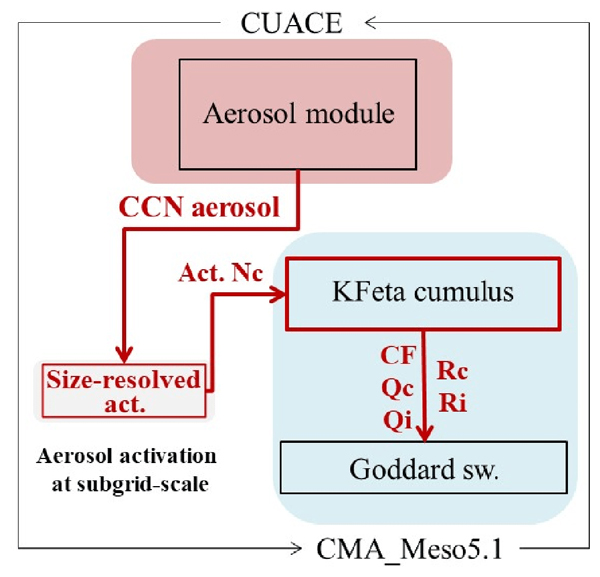
This study achieves quantifiable subgrid-scale aerosol–cloud interaction in an atmospheric chemistry system, with better performance in terms of meteorology prediction, and further finds that subgrid-scale actual aerosol can somewhat improve overestimated cumulative precipitation during a typical heavy rainfall event, which helps us better understand the impact of subgrid-scale aerosol–cloud interaction on weather forecasts.
Yueming Dong, Jing Li, Zhenyu Zhang, Chongzhao Zhang, and Qiurui Li
Earth Syst. Sci. Data, 17, 3873–3892, https://doi.org/10.5194/essd-17-3873-2025, https://doi.org/10.5194/essd-17-3873-2025, 2025
Short summary
Short summary
This study develops two merged global land aerosol single-scattering albedo (SSA) datasets by combining AERONET ground observations and two satellite datasets using an ensemble Kalman filter data synergy method. The merged datasets exhibit significantly improved accuracy compared to the original satellite data. These results can provide more reliable estimates of aerosol scattering and absorption properties, essential for improving climate modeling and assessing aerosol climate effects.
Xiaojing Shen, Quan Liu, Junying Sun, Wanlin Kong, Qianli Ma, Bing Qi, Lujie Han, Yangmei Zhang, Linlin Liang, Lei Liu, Shuo Liu, Xinyao Hu, Jiayuan Lu, Aoyuan Yu, Huizheng Che, and Xiaoye Zhang
Atmos. Chem. Phys., 25, 5711–5725, https://doi.org/10.5194/acp-25-5711-2025, https://doi.org/10.5194/acp-25-5711-2025, 2025
Short summary
Short summary
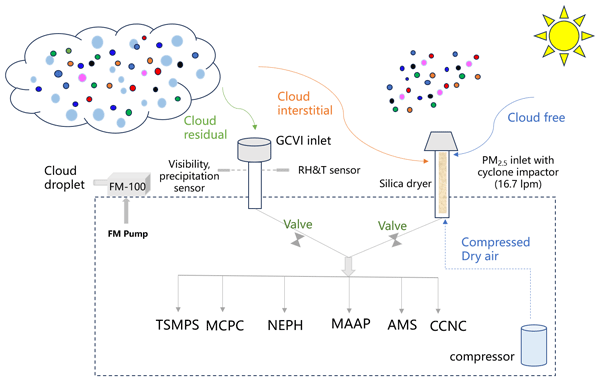
In this work, an automatic switched inlet system was developed and employed to investigate the aerosols and cloud droplets at a mountain site with frequent cloud processes. It showed different characteristics of cloud residual and interstitial particles. Stronger particle hygroscopicity reduced liquid water content and smaller cloud droplet diameters. This investigation contributes to understanding aerosol–cloud interactions by assessing the impact of aerosol particles on cloud microphysics.
Zhenyu Zhang, Jing Li, Huizheng Che, Yueming Dong, Oleg Dubovik, Thomas Eck, Pawan Gupta, Brent Holben, Jhoon Kim, Elena Lind, Trailokya Saud, Sachchida Nand Tripathi, and Tong Ying
Atmos. Chem. Phys., 25, 4617–4637, https://doi.org/10.5194/acp-25-4617-2025, https://doi.org/10.5194/acp-25-4617-2025, 2025
Short summary
Short summary
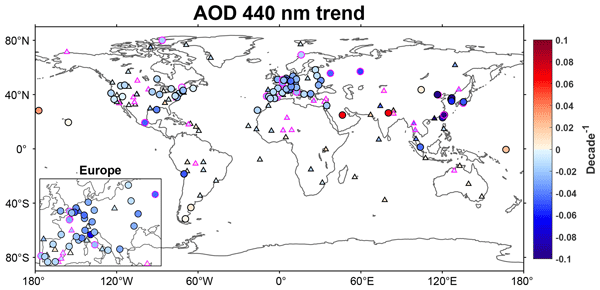
We used ground-based remote sensing data from the Aerosol Robotic Network to examine long-term trends in aerosol characteristics. We found aerosol loadings generally decreased globally, and aerosols became more scattering. These changes are closely related to variations in aerosol compositions, such as decreased anthropogenic emissions over East Asia, Europe, and North America; increased anthropogenic sources over northern India; and increased dust activity over the Arabian Peninsula.
Aoyuan Yu, Xiaojing Shen, Qianli Ma, Jiayuan Lu, Xinyao Hu, Yangmei Zhang, Quan Liu, Linlin Liang, Lei Liu, Shuo Liu, Hongfei Tong, Huizheng Che, Xiaoye Zhang, and Junying Sun
Atmos. Chem. Phys., 25, 3389–3412, https://doi.org/10.5194/acp-25-3389-2025, https://doi.org/10.5194/acp-25-3389-2025, 2025
Short summary
Short summary
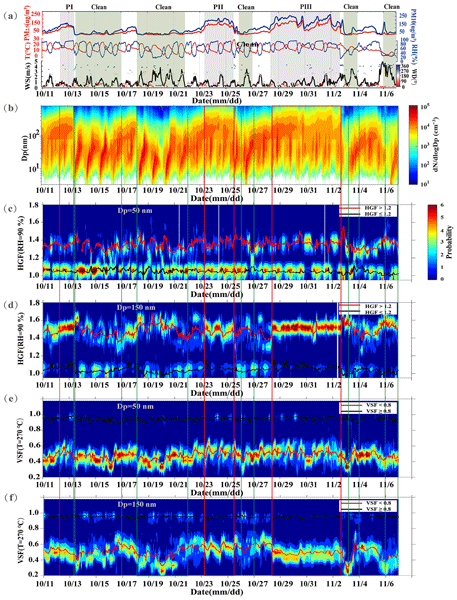
In this work, we utilized a volatility hygroscopicity tandem differential mobility analyzer (VH-TDMA) to investigate, for the first time, the hygroscopicity and volatility of submicron aerosols, as well as their hygroscopicity after heating, in urban Beijing during the autumn of 2023. We analyzed the size-resolved characteristics of hygroscopicity and volatility, the relationship between hygroscopic and volatile properties, and the hygroscopicity of heated submicron aerosols.
Quan Liu, Xiaojing Shen, Junying Sun, Yangmei Zhang, Bing Qi, Qianli Ma, Lujie Han, Honghui Xu, Xinyao Hu, Jiayuan Lu, Shuo Liu, Aoyuan Yu, Linlin Liang, Qian Gao, Hong Wang, Huizheng Che, and Xiaoye Zhang
Atmos. Chem. Phys., 25, 3253–3267, https://doi.org/10.5194/acp-25-3253-2025, https://doi.org/10.5194/acp-25-3253-2025, 2025
Short summary
Short summary
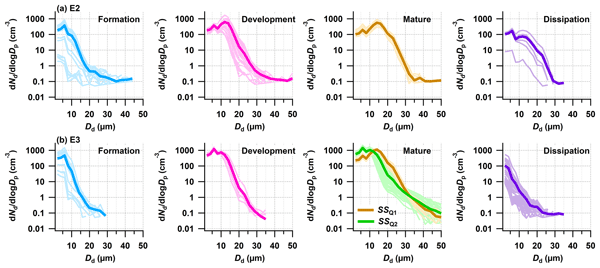
Through simultaneous measurements of aerosol particles and fog droplets, the evolution of droplets size distribution during the eight observed fog events was investigated. The results showed that the concentration and size distribution of pre-fog aerosol had significant impacts on fog microphysical characteristics. The extinction of fog interstitial particles played an important role in visibility degradation for light fogs, especially in polluted regions.
Lijing Chen, Lei Zhang, Yong She, Zhaoliang Zeng, Yu Zheng, Biao Tian, Wenqian Zhang, Zhaohui Liu, Huizheng Che, and Minghu Ding
Atmos. Chem. Phys., 25, 727–739, https://doi.org/10.5194/acp-25-727-2025, https://doi.org/10.5194/acp-25-727-2025, 2025
Short summary
Short summary
Aerosol optical depth (AOD) at Zhongshan Station varies seasonally, with lower values in summer and higher values in winter. Winter and spring AOD increases due to reduced fine-mode particles, while summer and autumn increases are linked to particle growth. Diurnal AOD variation correlates positively with temperature but negatively with wind speed and humidity. Backward trajectories show that aerosols on high-AOD (low-AOD) days primarily originate from the ocean (interior Antarctica).
Hongfei Hao, Kaicun Wang, Guocan Wu, Jianbao Liu, and Jing Li
Earth Syst. Sci. Data, 16, 4051–4076, https://doi.org/10.5194/essd-16-4051-2024, https://doi.org/10.5194/essd-16-4051-2024, 2024
Short summary
Short summary
In this study, daily PM2.5 concentrations are estimated from 1959 to 2022 using a machine learning method at more than 5000 terrestrial sites in the Northern Hemisphere based on hourly atmospheric visibility data, which are extracted from the Meteorological Terminal Aviation Routine Weather Report (METAR).
Hongfei Hao, Kaicun Wang, Chuanfeng Zhao, Guocan Wu, and Jing Li
Earth Syst. Sci. Data, 16, 3233–3260, https://doi.org/10.5194/essd-16-3233-2024, https://doi.org/10.5194/essd-16-3233-2024, 2024
Short summary
Short summary
In this study, we employed a machine learning technique to derive daily aerosol optical depth from hourly visibility observations collected at more than 5000 airports worldwide from 1959 to 2021 combined with reanalysis meteorological parameters.
Wenxin Zhao, Yu Zhao, Yu Zheng, Dong Chen, Jinyuan Xin, Kaitao Li, Huizheng Che, Zhengqiang Li, Mingrui Ma, and Yun Hang
Atmos. Chem. Phys., 24, 6593–6612, https://doi.org/10.5194/acp-24-6593-2024, https://doi.org/10.5194/acp-24-6593-2024, 2024
Short summary
Short summary
We evaluate the long-term (2000–2020) variabilities of aerosol absorption optical depth, black carbon emissions, and associated health risks in China with an integrated framework that combines multiple observations and modeling techniques. We demonstrate the remarkable emission abatement resulting from the implementation of national pollution controls and show how human activities affected the emissions with a spatiotemporal heterogeneity, thus supporting differentiated policy-making by region.
Liang Chang, Jing Li, Jingjing Ren, Changrui Xiong, and Lu Zhang
Atmos. Meas. Tech., 17, 2637–2648, https://doi.org/10.5194/amt-17-2637-2024, https://doi.org/10.5194/amt-17-2637-2024, 2024
Short summary
Short summary
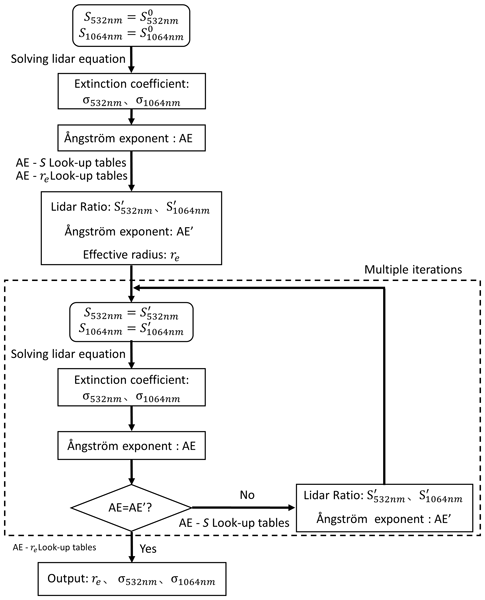
We described a modified lidar inversion algorithm to retrieve aerosol extinction and size distribution simultaneously from two-wavelength elastic lidar measurements. Its major advantage is that the lidar ratio of each layer is determined iteratively by a lidar ratio–Ångström exponent lookup table. The algorithm was applied to the Raman lidar and CALIOP measurements. The retrieved results by our method are in good agreement with those achieved by Raman method.
Guanyu Liu, Jing Li, and Tong Ying
Atmos. Chem. Phys., 23, 9217–9228, https://doi.org/10.5194/acp-23-9217-2023, https://doi.org/10.5194/acp-23-9217-2023, 2023
Short summary
Short summary
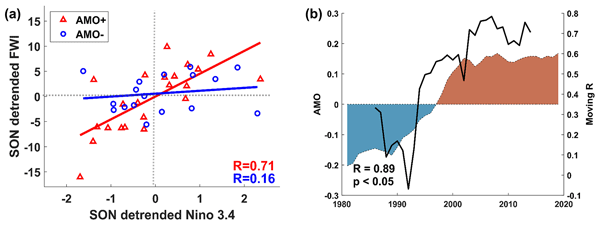
Fires in Australia are positively correlated with the El Niño–Southern Oscillation (ENSO). However, the correlation between ENSO and the Australian Fire Weather Index (FWI) increases from 0.17 to 0.70 when the Atlantic Multidecadal Oscillation (AMO) shifts from a negative to positive phase. This is explained by the teleconnection effect through which the warmer AMO generates Rossby wave trains and results in high pressures and a weather condition conducive to wildfires.
Xiaojing Shen, Junying Sun, Huizheng Che, Yangmei Zhang, Chunhong Zhou, Ke Gui, Wanyun Xu, Quan Liu, Junting Zhong, Can Xia, Xinyao Hu, Sinan Zhang, Jialing Wang, Shuo Liu, Jiayuan Lu, Aoyuan Yu, and Xiaoye Zhang
Atmos. Chem. Phys., 23, 8241–8257, https://doi.org/10.5194/acp-23-8241-2023, https://doi.org/10.5194/acp-23-8241-2023, 2023
Short summary
Short summary
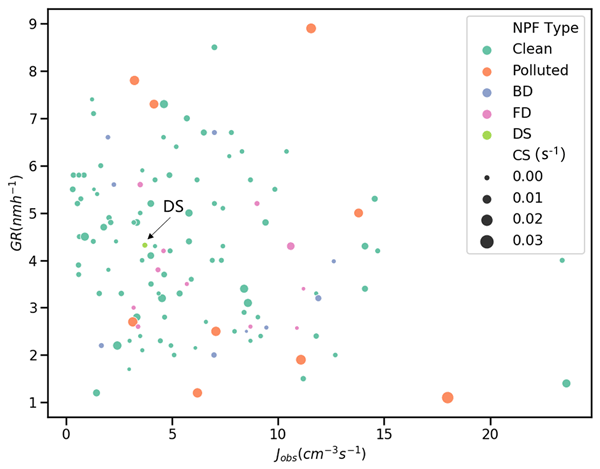
New particle formation (NPF) events occur when the dust episodes' fade is analysed based on long-term measurement of particle number size distribution. Analysis shows that the observed formation and growth rates are approximately 50 % of and 30 % lower than those of other NPF events. As a consequence of the uptake of precursor gases on mineral dust, the physical and chemical properties of submicron particles, as well as the ability to be cloud condensation nuclei, can be changed.
Siting Li, Ping Wang, Hong Wang, Yue Peng, Zhaodong Liu, Wenjie Zhang, Hongli Liu, Yaqiang Wang, Huizheng Che, and Xiaoye Zhang
Geosci. Model Dev., 16, 4171–4191, https://doi.org/10.5194/gmd-16-4171-2023, https://doi.org/10.5194/gmd-16-4171-2023, 2023
Short summary
Short summary
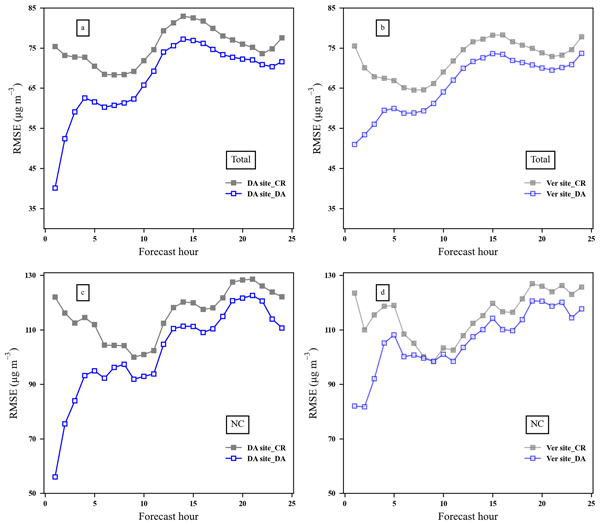
Optimizing the initial state of atmospheric chemistry model input is one of the most essential methods to improve forecast accuracy. Considering the large computational load of the model, we introduce an ensemble optimal interpolation scheme (EnOI) for operational use and efficient updating of the initial fields of chemical components. The results suggest that EnOI provides a practical and cost-effective technique for improving the accuracy of chemical weather numerical forecasts.
Yue Peng, Hong Wang, Xiaoye Zhang, Zhaodong Liu, Wenjie Zhang, Siting Li, Chen Han, and Huizheng Che
Atmos. Chem. Phys., 23, 8325–8339, https://doi.org/10.5194/acp-23-8325-2023, https://doi.org/10.5194/acp-23-8325-2023, 2023
Short summary
Short summary
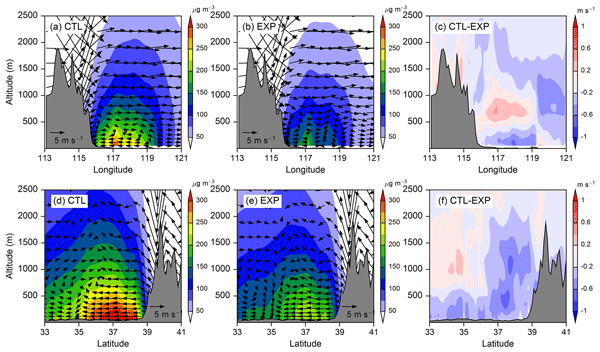
This study demonstrates a strong link between local circulation, aerosol–radiation interaction (ARI), and haze pollution. Under the weak weather-scale systems, the typical local circulation driven by mountainous topography is the main cause of pollutant distribution in the Beijing–Tianjin–Hebei region, and the ARI mechanism amplifies this influence of local circulation on pollutants, making haze pollution aggravated by the superposition of both.
Yingfang Li, Zhili Wang, Yadong Lei, Huizheng Che, and Xiaoye Zhang
Atmos. Chem. Phys., 23, 2499–2523, https://doi.org/10.5194/acp-23-2499-2023, https://doi.org/10.5194/acp-23-2499-2023, 2023
Short summary
Short summary
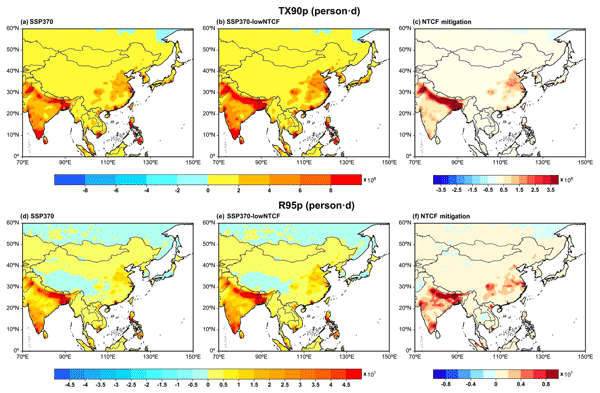
Since few studies have assessed the impacts of future combined reductions in aerosols, ozone, and their precursors on future climate change, we use models with an interactive representation of tropospheric aerosols and atmospheric chemistry schemes to quantify the impact of their reductions on the Asian climate. Our results suggest that their reductions will exacerbate the warming effect caused by greenhouse gases, increasing future climate extremes and associated population exposure risk.
Wenjie Zhang, Hong Wang, Xiaoye Zhang, Liping Huang, Yue Peng, Zhaodong Liu, Xiao Zhang, and Huizheng Che
Atmos. Chem. Phys., 22, 15207–15221, https://doi.org/10.5194/acp-22-15207-2022, https://doi.org/10.5194/acp-22-15207-2022, 2022
Short summary
Short summary
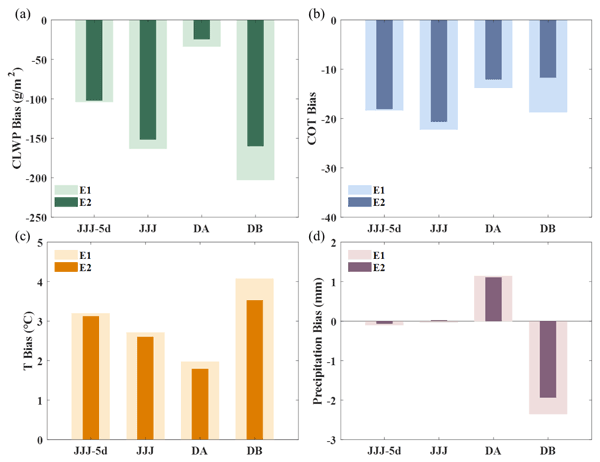
Aerosol–cloud interaction (ACI) is first implemented in the atmospheric chemistry system GRAPES_Meso5.1/CUACE. ACI can improve the simulated cloud, temperature, and precipitation under haze pollution conditions in Jing-Jin-Ji in China. This paper demonstrates the critical role of ACI in current numerical weather prediction over the severely polluted region.
Lei Li, Yevgeny Derimian, Cheng Chen, Xindan Zhang, Huizheng Che, Gregory L. Schuster, David Fuertes, Pavel Litvinov, Tatyana Lapyonok, Anton Lopatin, Christian Matar, Fabrice Ducos, Yana Karol, Benjamin Torres, Ke Gui, Yu Zheng, Yuanxin Liang, Yadong Lei, Jibiao Zhu, Lei Zhang, Junting Zhong, Xiaoye Zhang, and Oleg Dubovik
Earth Syst. Sci. Data, 14, 3439–3469, https://doi.org/10.5194/essd-14-3439-2022, https://doi.org/10.5194/essd-14-3439-2022, 2022
Short summary
Short summary
A climatology of aerosol composition concentration derived from POLDER-3 observations using GRASP/Component is presented. The conceptual specifics of the GRASP/Component approach are in the direct retrieval of aerosol speciation without intermediate retrievals of aerosol optical characteristics. The dataset of satellite-derived components represents scarce but imperative information for validation and potential adjustment of chemical transport models.
Junting Zhong, Xiaoye Zhang, Ke Gui, Jie Liao, Ye Fei, Lipeng Jiang, Lifeng Guo, Liangke Liu, Huizheng Che, Yaqiang Wang, Deying Wang, and Zijiang Zhou
Earth Syst. Sci. Data, 14, 3197–3211, https://doi.org/10.5194/essd-14-3197-2022, https://doi.org/10.5194/essd-14-3197-2022, 2022
Short summary
Short summary
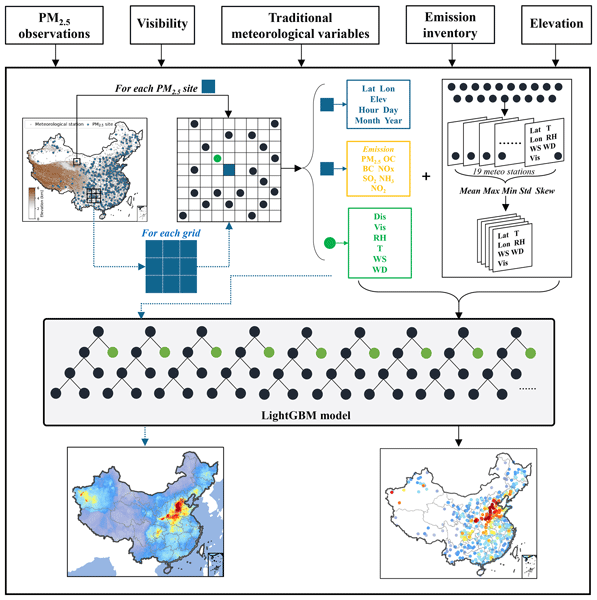
Historical long-term PM2.5 records with high temporal resolution are essential but lacking for research and environmental management. Here, we reconstruct site-based and gridded PM2.5 datasets at 6-hour intervals from 1960 to 2020 that combine visibility, meteorological data, and emissions based on a machine learning model with extracted spatial features. These two PM2.5 datasets will lay the foundation of research studies associated with air pollution, climate change, and aerosol reanalysis.
Ke Gui, Wenrui Yao, Huizheng Che, Linchang An, Yu Zheng, Lei Li, Hujia Zhao, Lei Zhang, Junting Zhong, Yaqiang Wang, and Xiaoye Zhang
Atmos. Chem. Phys., 22, 7905–7932, https://doi.org/10.5194/acp-22-7905-2022, https://doi.org/10.5194/acp-22-7905-2022, 2022
Short summary
Short summary
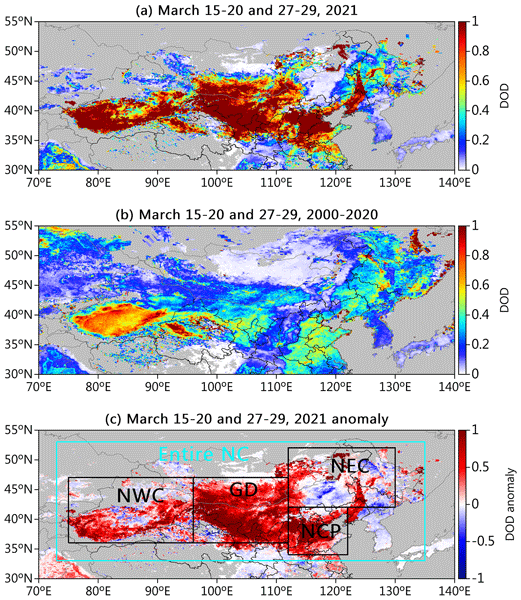
This study investigates the aerosol optical and radiative properties and meteorological drivers during two mega SDS events over Northern China in March 2021. The MODIS-retrieved DOD data registered these two events as the most intense episode in the same period in history over the past 20 years. These two extreme SDS events were associated with both atmospheric circulation extremes and local meteorological anomalies that favor enhanced dust emissions in the Gobi Desert.

Zhongjing Jiang and Jing Li
Atmos. Chem. Phys., 22, 7273–7285, https://doi.org/10.5194/acp-22-7273-2022, https://doi.org/10.5194/acp-22-7273-2022, 2022
Short summary
Short summary
This study investigates the changes of tropospheric ozone in China associated with EP and CP El Niño, using satellite observations and the GEOS-Chem model. We found that El Niño generally leads to lower tropospheric ozone (LTO) decrease over most parts of China; La Niña acts the opposite. The difference between LTO changes during EP and CP El Niño primarily lies in southern China. Regional transport and chemical processes play the leading and secondary roles in driving the LTO changes.
Yu Zheng, Huizheng Che, Yupeng Wang, Xiangao Xia, Xiuqing Hu, Xiaochun Zhang, Jun Zhu, Jibiao Zhu, Hujia Zhao, Lei Li, Ke Gui, and Xiaoye Zhang
Atmos. Meas. Tech., 15, 2139–2158, https://doi.org/10.5194/amt-15-2139-2022, https://doi.org/10.5194/amt-15-2139-2022, 2022
Short summary
Short summary
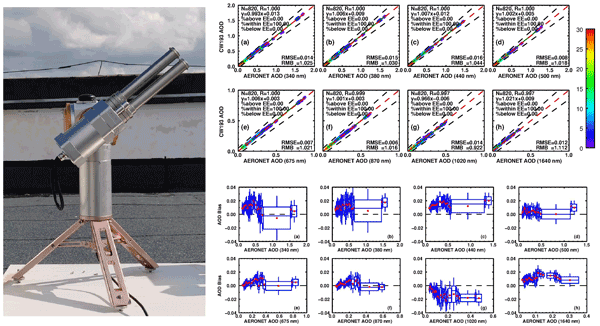
Ground-based observations of aerosols and aerosol data verification is important for satellite and climate model modification. Here we present an evaluation of aerosol microphysical, optical and radiative properties measured using a multiwavelength photometer with a highly integrated design and smart control performance. The validation of this product is discussed in detail using AERONET as a reference. This work contributes to reducing AOD uncertainties in China and combating climate change.
Ke Gui, Huizheng Che, Yu Zheng, Hujia Zhao, Wenrui Yao, Lei Li, Lei Zhang, Hong Wang, Yaqiang Wang, and Xiaoye Zhang
Atmos. Chem. Phys., 21, 15309–15336, https://doi.org/10.5194/acp-21-15309-2021, https://doi.org/10.5194/acp-21-15309-2021, 2021
Short summary
Short summary
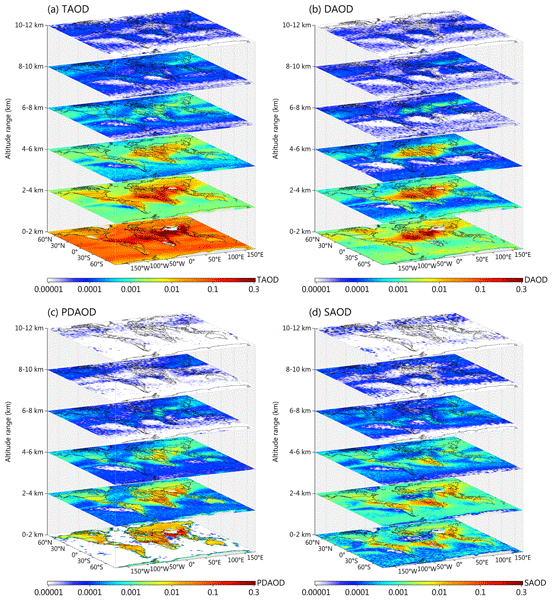
This study utilized the globally gridded aerosol extinction data from CALIOP during 2007–2019 to investigate the 3D climatology, trends, and meteorological drivers of tropospheric type-dependent aerosols. Results revealed that the planetary boundary layer (PBL) and the free troposphere contribute 62.08 % and 37.92 %, respectively, of the global tropospheric TAOD. Trends in
CALIOP-derived aerosol loading, in particular those partitioned in the PBL, can be explained to a large extent by meteorology.
Cited articles
Andrews, E., Ogren, J. A., Kinne, S., and Samset, B.: Comparison of AOD, AAOD and column single scattering albedo from AERONET retrievals and in situ profiling measurements, Atmos. Chem. Phys., 17, 6041–6072, https://doi.org/10.5194/acp-17-6041-2017, 2017.
Armstrong, B. H.: Spectrum line profiles: The Voigt function, J. Quant. Spectrosc. Ra., 7, 61–88, https://doi.org/10.1016/0022-4073(67)90057-X, 1967.
Bohren, C. F. and Singham, S. B.: Backscattering by nonspherical particles: a review of methods and suggested new approaches, J. Geophys. Res.-Atmos., 96, 5269–5277, https://doi.org/10.1029/90JD01138, 1991.
Bokoye, A. I., Royer, A., O'Neil, N. T., Cliche, P., Fedosejevs, G., Teillet, P. M., and McArthur, L. J. B.: Characterization of atmospheric aerosols across Canada from a ground-based sunphotometer network: AEROCAN, Atmos.-Ocean, 39, 429–456, https://doi.org/10.1080/07055900.2001.9649687, 2001.
Breiman, L.: Random forests, Mach. Learn., 45, 5–32, https://doi.org/10.1023/A:1010933404324, 2001.
Cao, M., Zhang, M., Su, X., and Wang, L.: A two-stage machine learning algorithm for retrieving multiple aerosol properties over land: Development and validation, IEEE T. Geosci. Remote, 61, 1–17, https://doi.org/10.1109/TGRS.2023.3307934, 2023.
Cazorla, A., Shields, J. E., Karr, M. E., Olmo, F. J., Burden, A., and Alados-Arboledas, L.: Technical Note: Determination of aerosol optical properties by a calibrated sky imager, Atmos. Chem. Phys., 9, 6417–6427, https://doi.org/10.5194/acp-9-6417-2009, 2009.
Che, H., Shi, G., Uchiyama, A., Yamazaki, A., Chen, H., Goloub, P., and Zhang, X.: Intercomparison between aerosol optical properties by a PREDE skyradiometer and CIMEL sunphotometer over Beijing, China, Atmos. Chem. Phys., 8, 3199–3214, https://doi.org/10.5194/acp-8-3199-2008, 2008.
Che, H., Zhang, X.-Y., Xia, X., Goloub, P., Holben, B., Zhao, H., Wang, Y., Zhang, X.-C., Wang, H., Blarel, L., Damiri, B., Zhang, R., Deng, X., Ma, Y., Wang, T., Geng, F., Qi, B., Zhu, J., Yu, J., Chen, Q., and Shi, G.: Ground-based aerosol climatology of China: aerosol optical depths from the China Aerosol Remote Sensing Network (CARSNET) 2002–2013, Atmos. Chem. Phys., 15, 7619–7652, https://doi.org/10.5194/acp-15-7619-2015, 2015.
Chen, X., Zhao, L., Zheng, F., Li, J., Li, L., Ding, H., Zhang, K., Liu, S., Li, D., and de Leeuw, G.: Neural Network AEROsol Retrieval for Geostationary Satellite (NNAeroG) based on temporal, spatial and spectral measurements, Remote Sens., 14, 980, https://doi.org/10.3390/rs14040980, 2022.
Chu, D. A., Kaufman, Y. J., Ichoku, C., Remer, L. A., Tanré, D., and Holben, B. N.: Validation of MODIS aerosol optical depth retrieval over land, Geophys. Res. Lett., 29, MOD2-1–MOD2-4, https://doi.org/10.1029/2001GL013205, 2002.
Coddington, O., Lean, J. L., Lindholm, C., and Pilewskie, P.: NOAA Climate Data Record (CDR) of NASA NOAA LASP Spectral Solar Irradiance (NNLSSI), Version 3, NOAA National Centers for Environmental Information [data set], https://doi.org/10.25921/esjz-1w61, 2024.
Davies, C. N.: Size distribution of atmospheric particles, J. Aerosol Sci., 5, 293–300, https://doi.org/10.1016/0021-8502(74)90063-9, 1974.
Deschamps, P. Y., Bréon, F.-M., Leroy, M., Podaire, A., Bricaud, A., Buriez, J.-C., and Sèze, G.: The POLDER mission: Instrument characteristics and scientific objectives, IEEE T. Geosci. Remot, 32, 598–615, https://doi.org/10.1109/36.297978, 1994.
Dong, Y., Li, J., Zhang, Z., Zheng, Y., Zhang, C., and Li, Z.: Machine learning-based retrieval of aerosol and surface properties over land from the Gaofen-5 Directional Polarimetric Camera measurements, IEEE T. Geosci. Remote, 62, 1–15, https://doi.org/10.1109/TGRS.2024.3419169, 2024.
Dubovik, O. and King, M. D.: A flexible inversion algorithm for retrieval of aerosol optical properties from sun and sky radiance measurements, J. Geophys. Res.-Atmos., 105, 20673–20696, https://doi.org/10.1029/2000JD900282, 2000
Dubovik, O., Smirnov, A., Holben, B. N., King, M. D., Kaufman, Y. J., Eck, T. F., and Slutsker, I.: Accuracy assessments of aerosol optical properties retrieved from AERONET sun and sky radiance measurements, J. Geophys. Res.-Atmos., 105, 9791–9806, https://doi.org/10.1029/2000JD900040, 2000.
Dubovik, O., Holben, B. N., Eck, T. F., Smirnov, A., Kaufman, Y. J., King, M. D., Tanré, D., and Slutsker, I.: Variability of absorption and optical properties of key aerosol types observed in worldwide locations, J. Atmos. Sci., 59, 590–608, https://doi.org/10.1175/1520-0469(2002)059<0590:VOAAOP>2.0.CO;2, 2002.
Dubovik, O., Sinyuk, A., Lapyonok, T., Holben, B. N., Mishchenko, M. I., Yang, P., Eck, T. F., Volten, H., Muñoz, O., Veihelmann, B., van der Zande, V. J., Leon, J.-F., Sorokin, M., and Slutsker, I.: The application of spheroid models to account for aerosol particle nonsphericity in remote sensing of desert dust, J. Geophys. Res.-Atmos., 111, D11208, https://doi.org/10.1029/2005JD006619, 2006.
Dubovik, O., Herman, M., Holdak, A., Lapyonok, T., Tanré, D., Deuzé, J. L., Ducos, F., Sinyuk, A., and Lopatin, A.: Statistically optimized inversion algorithm for enhanced retrieval of aerosol properties from spectral multi-angle polarimetric satellite observations, Atmos. Meas. Tech., 4, 975–1018, https://doi.org/10.5194/amt-4-975-2011, 2011.
Dutton, E. G., Reddy, P., Ryan, S., and DeLuisi, J. J.: Features and effects of aerosol optical depth observed at Mauna Loa, Hawaii: 1982–1992, J. Geophys. Res.-Atmos., 99, 8295–8306, https://doi.org/10.1029/93JD03520, 1994.
Eck, T. F., Holben, B. N., Reid, J. S., Dubovik, O., Kinne, S., Smirnov, A., O'Neill, N. T., and Slutsker, I.: The wavelength dependence of the optical depth of biomass burning, urban and desert dust aerosols, J. Geophys. Res.-Atmos., 104, 31333–31350, https://doi.org/10.1029/1999JD900923, 1999.
El-Nadry, M., Li, W., El-Askary, H., Awad, M. A., and Mostafa, A. R.: Urban health related air quality indicators over the Middle East and North Africa countries using multiple satellites and AERONET data, Remote Sens., 11, 2096, https://doi.org/10.3390/rs11182096, 2019.
Fan, R., Ma, Y., Jin, S., Gong, W., Liu, B., Wang, W., Li, H., and Zhang, Y.: Validation, analysis, and comparison of MISR V23 aerosol optical depth products with MODIS and AERONET observations, Sci. Total Environ., 856, 159117, https://doi.org/10.1016/j.scitotenv.2022.159117, 2023.
García, O. E., Díaz, J. P., Expósito, F. J., Díaz, A. M., Dubovik, O., Derimian, Y., Dubuisson, P., and Roger, J.-C.: Shortwave radiative forcing and efficiency of key aerosol types using AERONET data, Atmos. Chem. Phys., 12, 5129–5145, https://doi.org/10.5194/acp-12-5129-2012, 2012.
Giles, D. M., Sinyuk, A., Sorokin, M. G., Schafer, J. S., Smirnov, A., Slutsker, I., Eck, T. F., Holben, B. N., Lewis, J. R., Campbell, J. R., Welton, E. J., Korkin, S. V., and Lyapustin, A. I.: Advancements in the Aerosol Robotic Network (AERONET) Version 3 database – automated near-real-time quality control algorithm with improved cloud screening for Sun photometer aerosol optical depth (AOD) measurements, Atmos. Meas. Tech., 12, 169–209, https://doi.org/10.5194/amt-12-169-2019, 2019.
Hansen, J. E. and Travis, L. D.: Light scattering in planetary atmospheres, Space Sci. Rev., 16, 527–610, https://doi.org/10.1007/BF00168069, 1974.
Hasekamp, O. P. and Landgraf, J.: Linearization of vector radiative transfer with respect to aerosol properties and its use in satellite remote sensing, J. Geophys. Res.-Atmos., 110(D4), D04S12, https://doi.org/10.1029/2004JD005260, 2005.
Hersbach, H., Bell, B., Berrisford, P., Biavati, G., Horányi, A., Muñoz Sabater, J., Nicolas, J., Peubey, C., Radu, R., Rozum, I., Schepers, D., Simmons, A., Soci, C., Dee, D., and Thépaut, J.-N.: ERA5 monthly averaged data on pressure levels from 1940 to present, Copernicus Climate Change Service (C3S) Climate Data Store (CDS) [data set], https://doi.org/10.24381/cds.6860a573, 2023.
Holben, B. N., Eck, T. F., Slutsker, I., Tanré, D., Buis, J. P., Setzer, A., Vermote, E., Reagan, J. A., Kaufman, Y. J., Nakajima, T., Lavenu, F., Jankowiak, I., and Smirnov, A.: AERONET – A federated instrument network and data archive for aerosol characterization, Remote Sens. Environ., 66, 1–16, https://doi.org/10.1016/S0034-4257(98)00031-5, 1998.
Hornik, K., Stinchcombe, M., and White, H.: Multilayer feedforward networks are universal approximators, Neural Networks, 2, 359–366, https://doi.org/10.1016/0893-6080(89)90020-8, 1989.
Hou, L., Dai, Q., Song, C., Liu, B., Guo, F., Dai, T., Li, L., Liu, B., Bi, X., Zhang, Y., and Feng, Y.: Revealing drivers of haze pollution by explainable machine learning, Environ. Sci. Tech. Let., 9, 112–119, https://doi.org/10.1021/acs.estlett.1c00865, 2022.
Huttunen, J., Kokkola, H., Mielonen, T., Mononen, M. E. J., Lipponen, A., Reunanen, J., Lindfors, A. V., Mikkonen, S., Lehtinen, K. E. J., Kouremeti, N., Bais, A., Niska, H., and Arola, A.: Retrieval of aerosol optical depth from surface solar radiation measurements using machine learning algorithms, non-linear regression and a radiative transfer-based look-up table, Atmos. Chem. Phys., 16, 8181–8191, https://doi.org/10.5194/acp-16-8181-2016, 2016.
Hsu, N. C., Lee, J., Sayer, A. M., Kim, W., Bettenhausen, C., and Tsay, S. C.: VIIRS deep blue aerosol products over land: Extending the EOS long-term aerosol data records, J. Geophys. Res.-Atmos., 124, 4026–4053, https://doi.org/10.1029/2018JD029688, 2019.
Kahn, R. A., Gaitley, B. J., Martonchik, J. V., Diner, D. J., Crean, K. A., and Holben, B.: Multiangle Imaging Spectroradiometer (MISR) global aerosol optical depth validation based on 2 years of coincident Aerosol Robotic Network (AERONET) observations, J. Geophys. Res.-Atmos., 110, D10, https://doi.org/10.1029/2004JD004706, 2005.
Kalashnikova, O. V., Garay, M. J., Martonchik, J. V., and Diner, D. J.: MISR Dark Water aerosol retrievals: operational algorithm sensitivity to particle non-sphericity, Atmos. Meas. Tech., 6, 2131–2154, https://doi.org/10.5194/amt-6-2131-2013, 2013.
Kokhanovsky, A. A. (Ed.): Light Scattering Reviews 8: Radiative Transfer and Optical Properties of Atmosphere and Underlying Surface, Springer-Verlag, Berlin, Heidelberg, https://doi.org/10.1007/978-3-642-32106-1, 2013.
Levy, R. C., Remer, L. A., Kleidman, R. G., Mattoo, S., Ichoku, C., Kahn, R., and Eck, T. F.: Global evaluation of the Collection 5 MODIS dark-target aerosol products over land, Atmos. Chem. Phys., 10, 10399–10420, https://doi.org/10.5194/acp-10-10399-2010, 2010.
Levy, R. C., Mattoo, S., Munchak, L. A., Remer, L. A., Sayer, A. M., Patadia, F., and Hsu, N. C.: The Collection 6 MODIS aerosol products over land and ocean, Atmos. Meas. Tech., 6, 2989–3034, https://doi.org/10.5194/amt-6-2989-2013, 2013.
Li, Q.: An Ensemble Machine Learning Method to Retrieve Aerosol Parameters from Ground-based Sun-sky Photometer Measurements, Zenodo [code], https://doi.org/10.5281/zenodo.19398394, 2026.
Liang, T., Sun, L., and Li, H.: MODIS aerosol optical depth retrieval based on random forest approach, Remote Sens. Lett., 12, 179–189, https://doi.org/10.1080/2150704X.2020.1842540, 2020.
Logothetis, S.-A., Salamalikis, V., and Kazantzidis, A.: The impact of different aerosol properties and types on direct aerosol radiative forcing and efficiency using AERONET version 3, Atmos. Res., 250, 105343, https://doi.org/10.1016/j.atmosres.2020.105343, 2021.
Ma, X., Sha, J., Wang, D., Yu, Y., Yang, Q., and Niu, X.: Study on a prediction of P2P network loan default based on the machine learning LightGBM and XGBoost algorithms according to different high dimensional data cleaning, Electron. Commer. R. A., 31, 24–39, https://doi.org/10.1016/j.elerap.2018.08.002, 2018.
Mao, Q., Zhang, H., Chen, Q., Huang, C., and Yuan, Y.: Satellite-based assessment of direct aerosol radiative forcing using a look-up table established through AERONET observations, Infrared Phys. Technol., 102, 103017, https://doi.org/10.1016/j.infrared.2019.103017, 2019.
Mishchenko, M. I., Liu, L., Travis, L. D., and Lacis, A. A.: Scattering and radiative properties of semi-external versus external mixtures of different aerosol types, J. Quant. Spectrosc. Ra., 88, 139–147, https://doi.org/10.1016/j.jqsrt.2003.12.032, 2004.
Mishchenko, M. I. and Travis, L. D.: T-matrix computations of light scattering by large spheroidal particles, Opt. Commun., 109, 16–21, https://doi.org/10.1016/0030-4018(94)90731-5, 1994.
Mishchenko, M. I., Travis, L. D., and Mackowski, D. W.: T-Matrix Computations of Light Scattering by Non-spherical Particles: A Review, J. Quant. Spectrosc. Ra., 55, 535–575, https://doi.org/10.1016/0022-4073(96)00002-7, 1996.
Mishchenko, M. I., Travis, L. D., Kahn, R. A., and West, R. A.: Modeling phase functions for dustlike tropospheric aerosols using a shape mixture of randomly oriented polydisperse spheroids, J. Geophys. Res.-Atmos., 102, 16831–16847, https://doi.org/10.1029/96JD02110, 1997.
Mitchell, R. M. and Forgan, B. W.: Aerosol measurement in the Australian outback: Intercomparison of sun photometers, J. Atmos. Ocean. Technol., 20, 54–66, https://doi.org/10.1175/1520-0426(2003)020<0054:AMITAO>2.0.CO;2, 2003.
Moosmüller, H., Chakrabarty, R. K., and Arnott, W. P.: Aerosol light absorption and its measurement: A review, J. Quant. Spectrosc. Ra., 110, 844–878, https://doi.org/10.1016/j.jqsrt.2009.02.035, 2009.
Moosmüller, H. and Sorensen, C. M.: Small and large particle limits of single scattering albedo for homogeneous, spherical particles, J. Quant. Spectrosc. Ra., 204, 250–255, https://doi.org/10.1016/j.jqsrt.2017.09.029, 2018.
Mugnai, A. and Wiscombe, W. J.: Scattering from nonspherical Chebyshev particles I: cross sections, single-scattering albedo, asymmetry factor, and backscattered fraction, Appl. Opt., 25, 1235–1245, https://doi.org/10.1364/ao.25.001235, 1986.
Nakajima, T., Tonna, G., Rao, R., Kaufman, Y., and Holben, B.: Use of sky brightness measurements from ground for remote sensing of particulate polydispersions, Appl. Opt., 35, 2672–2686, https://doi.org/10.1364/AO.35.002672, 1996.
Nakajima, T., Campanelli, M., Che, H., Estellés, V., Irie, H., Kim, S.-W., Kim, J., Liu, D., Nishizawa, T., Pandithurai, G., Soni, V. K., Thana, B., Tugjsurn, N.-U., Aoki, K., Go, S., Hashimoto, M., Higurashi, A., Kazadzis, S., Khatri, P., Kouremeti, N., Kudo, R., Marenco, F., Momoi, M., Ningombam, S. S., Ryder, C. L., Uchiyama, A., and Yamazaki, A.: An overview of and issues with sky radiometer technology and SKYNET, Atmos. Meas. Tech., 13, 4195–4218, https://doi.org/10.5194/amt-13-4195-2020, 2020.
Omar, A. H., Winker, D. M., Tackett, J. L., Giles, D. M., Kar, J., Liu, Z., Vaughan, M. A., Powell, K. A., and Trepte, C. R.: CALIOP and AERONET aerosol optical depth comparisons: One size fits none, J. Geophys. Res.-Atmos., 118, 4748–4766, https://doi.org/10.1002/jgrd.50330, 2013.
Osborne, S. R., Johnson, B. T., Haywood, J. M., Baran, A. J., Harrison, M. A. J., and McConnell, C. L.: Physical and optical properties of mineral dust aerosol during the Dust and Biomass-burning Experiment, J. Geophys. Res.-Atmos., 113, D00C03, https://doi.org/10.1029/2007JD009551, 2008.
Ott, W. R.: A physical explanation of the lognormality of pollutant concentrations, J. Air Waste Manage., 40, 1378–1383, https://doi.org/10.1080/10473289.1990.10466789, 1990.
Qi, L., Liu, R., and Liu, Y.: Retrieval of aerosol single-scattering albedo from MODIS data using an artificial neural network, Remote Sens., 14, 6341, https://doi.org/10.3390/rs14246341, 2022.
She, L., Li, Z., de Leeuw, G., Wang, W., Wang, Y., Yang, L., Feng, Z., Yang, C., and Shi, Y.: Time series retrieval of multi-wavelength aerosol optical depth by adapting Transformer (TMAT) using Himawari-8 AHI data, Remote Sens. Environ., 305, 114115, https://doi.org/10.1016/j.rse.2024.114115, 2024.
Sinyuk, A., Holben, B. N., Eck, T. F., Giles, D. M., Slutsker, I., Korkin, S., Schafer, J. S., Smirnov, A., Sorokin, M., and Lyapustin, A.: The AERONET Version 3 aerosol retrieval algorithm, associated uncertainties and comparisons to Version 2, Atmos. Meas. Tech., 13, 3375–3411, https://doi.org/10.5194/amt-13-3375-2020, 2020.
Spurr, R. J. D.: VLIDORT, a linearized pseudo-spherical vector discrete ordinate radiative transfer code for forward modeling and retrieval studies in multilayer multiple scattering media, J. Quant. Spectrosc. Ra., 102, 316–342, https://doi.org/10.1016/j.jqsrt.2006.05.005, 2006.
Sun, J., Veefkind, J. P., van Velthoven, P., and Levelt, P. F.: Evaluating Modelled Aerosol Absorption by Simulating the UV Aerosol Index using Machine Learning, EGU General Assembly 2020, Online, 4–8 May 2020, EGU2020-8878, https://doi.org/10.5194/egusphere-egu2020-8878, 2020.
Takamura, T. and Nakajima, T.: Overview of SKYNET and its activities, Opt. Pura Apl., 37, 3303–3308, 2004.
Tao, M., Chen, J., Xu, X., Man, W., Xu, L., Wang, L., Wang, Y., Wang, J., Fan, M., Shahzad, M. I., and Chen, L.: A robust and flexible satellite aerosol retrieval algorithm for multi-angle polarimetric measurements with a physics-informed deep learning method, Remote Sens. Environ., 297, 113763, https://doi.org/10.1016/j.rse.2023.113763, 2023.
Taylor, M., Kazadzis, S., Tsekeri, A., Gkikas, A., and Amiridis, V.: Satellite retrieval of aerosol microphysical and optical parameters using neural networks: a new methodology applied to the Sahara desert dust peak, Atmos. Meas. Tech., 7, 3151–3175, https://doi.org/10.5194/amt-7-3151-2014, 2014.
Turner, D. D., Ferrare, R. A., and Brasseur, L. A.: Average aerosol extinction and water vapor profiles over the Southern Great Plains, Geophys. Res. Lett., 28, 4441–4444, https://doi.org/10.1029/2001GL013691, 2001.
Vucetic, S., Han, B., Mi, W., Li, Z., and Obradovic, Z.: A data-mining approach for the validation of aerosol retrievals, IEEE Geosci. Remote S., 5, 113–117, https://doi.org/10.1109/LGRS.2007.912725, 2008.
Wang, L., Zhao, Y., Shi, J., Ma, J., Liu, X., Han, D., Gao, H., and Huang, T.: Predicting ozone formation in petrochemical industrialized Lanzhou city by interpretable ensemble machine learning, Environ. Pollut., 318, 120798, https://doi.org/10.1016/j.envpol.2022.120798, 2023.
Whitby, K. T.: The physical characteristics of sulfur aerosols, Atmos. Environ., 12, 135–159, https://doi.org/10.1016/0004-6981(78)90196-8, 1978.
Zhao, Y., Wang, L., Luo, J., Huang, T., Tao, S., Liu, J., Yu, Y., Huang, Y., Liu, X., and Ma, J.: Deep learning prediction of polycyclic aromatic hydrocarbons in the High Arctic, Environ. Sci. Technol., 53, 13238–13245, https://doi.org/10.1021/acs.est.9b05000, 2019.
Zhang, L., Wang, L., Ji, D., Xia, Z., Nan, P., Zhang, J., Li, K., Qi, B., Du, R., Sun, Y., Wang, Y., and Hu, B.: Explainable ensemble machine learning revealing the effect of meteorology and sources on ozone formation in megacity Hangzhou, China, Sci. Total Environ., 927, 171295, https://doi.org/10.1016/j.scitotenv.2024.171295, 2024.
Short summary
We present a fast, interpretable machine learning method to retrieve key aerosol parameters from ground-based Sun-sky photometer measurements. Trained on simulated data covering diverse aerosol and atmospheric conditions, ensuring robustness and physical consistency. Applied to real observations, it agrees well with AERONET products and reduces computation time by orders of magnitude, offering a practical tool for monitoring aerosols and their effects on air quality and climate.
We present a fast, interpretable machine learning method to retrieve key aerosol parameters from...


