
Articles | Volume 19, issue 7
https://doi.org/10.5194/amt-19-2555-2026
© Author(s) 2026. This work is distributed under
the Creative Commons Attribution 4.0 License.
the Creative Commons Attribution 4.0 License.
https://doi.org/10.5194/amt-19-2555-2026
© Author(s) 2026. This work is distributed under
the Creative Commons Attribution 4.0 License.
the Creative Commons Attribution 4.0 License.
Research article
| 
16 Apr 2026
Research article |
| 16 Apr 2026
| 16 Apr 2026
Retrieval of global aerosol and surface properties from the Gaofen-5 Directional Polarimetric Camera measurements
Zhenyu Zhang
Department of Atmospheric and Oceanic Sciences, School of Physics, Peking University, 100871, Beijing, China

Department of Atmospheric and Oceanic Sciences, School of Physics, Peking University, 100871, Beijing, China
Yueming Dong
Department of Atmospheric and Oceanic Sciences, School of Physics, Peking University, 100871, Beijing, China
Chongzhao Zhang
Department of Atmospheric and Oceanic Sciences, School of Physics, Peking University, 100871, Beijing, China
Qiurui Li
Department of Atmospheric and Oceanic Sciences, School of Physics, Peking University, 100871, Beijing, China
National Satellite Meteorological Center, China Meteorological Administration, 100081, Beijing, China
Related authors
Heyang Ni, Jing Li, Liang Chang, Yueming Dong, Guanghao Du, Muqian Li, Qiurui Li, Guanyu Liu, Yuebo Sun, Angnuo Tian, Sheng Yue, Chongzhao Zhang, and Zhenyu Zhang
Atmos. Meas. Tech., 19, 5871–5887, https://doi.org/10.5194/amt-19-5871-2026, https://doi.org/10.5194/amt-19-5871-2026, 2026
Short summary
Short summary
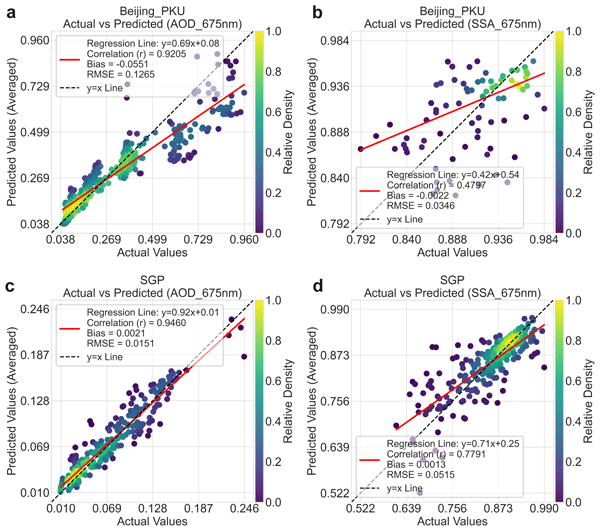
This study develops a new artificial intelligence method to retrieve daytime aerosol optical parameters using low-cost All-Sky Imagers. By training a model with high-precision data, we successfully estimated the aerosol optical depth and single scattering albedo simultaneously. Our results show high accuracy across different global regions. This approach is much faster than traditional complex calculations, making it easier to deploy dense observation networks to improve climate research.
Yueming Dong, Jing Li, Zhenyu Zhang, Chongzhao Zhang, and Qiurui Li
Earth Syst. Sci. Data, 17, 3873–3892, https://doi.org/10.5194/essd-17-3873-2025, https://doi.org/10.5194/essd-17-3873-2025, 2025
Short summary
Short summary
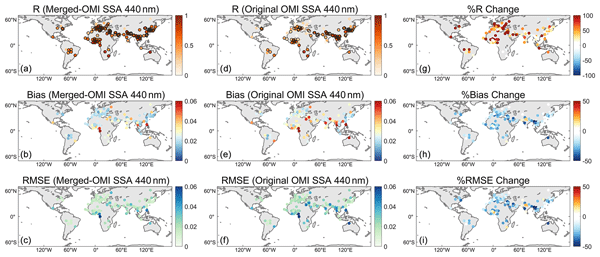
This study develops two merged global land aerosol single-scattering albedo (SSA) datasets by combining AERONET ground observations and two satellite datasets using an ensemble Kalman filter data synergy method. The merged datasets exhibit significantly improved accuracy compared to the original satellite data. These results can provide more reliable estimates of aerosol scattering and absorption properties, essential for improving climate modeling and assessing aerosol climate effects.
Zhenyu Zhang, Jing Li, Huizheng Che, Yueming Dong, Oleg Dubovik, Thomas Eck, Pawan Gupta, Brent Holben, Jhoon Kim, Elena Lind, Trailokya Saud, Sachchida Nand Tripathi, and Tong Ying
Atmos. Chem. Phys., 25, 4617–4637, https://doi.org/10.5194/acp-25-4617-2025, https://doi.org/10.5194/acp-25-4617-2025, 2025
Short summary
Short summary
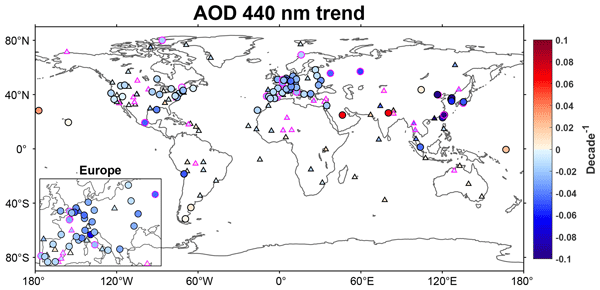
We used ground-based remote sensing data from the Aerosol Robotic Network to examine long-term trends in aerosol characteristics. We found aerosol loadings generally decreased globally, and aerosols became more scattering. These changes are closely related to variations in aerosol compositions, such as decreased anthropogenic emissions over East Asia, Europe, and North America; increased anthropogenic sources over northern India; and increased dust activity over the Arabian Peninsula.
Heyang Ni, Jing Li, Liang Chang, Yueming Dong, Guanghao Du, Muqian Li, Qiurui Li, Guanyu Liu, Yuebo Sun, Angnuo Tian, Sheng Yue, Chongzhao Zhang, and Zhenyu Zhang
Atmos. Meas. Tech., 19, 5871–5887, https://doi.org/10.5194/amt-19-5871-2026, https://doi.org/10.5194/amt-19-5871-2026, 2026
Short summary
Short summary
This study develops a new artificial intelligence method to retrieve daytime aerosol optical parameters using low-cost All-Sky Imagers. By training a model with high-precision data, we successfully estimated the aerosol optical depth and single scattering albedo simultaneously. Our results show high accuracy across different global regions. This approach is much faster than traditional complex calculations, making it easier to deploy dense observation networks to improve climate research.
Chongzhao Zhang, Qiurui Li, Jun Li, Wei Han, and Jing Li
EGUsphere, https://doi.org/10.5194/egusphere-2026-4627, https://doi.org/10.5194/egusphere-2026-4627, 2026
This preprint is open for discussion and under review for Geoscientific Model Development (GMD).
Short summary
Short summary
We present a version 1.0 latent-space aerosol–radiance data assimilation system that uses machine-learned compressions of aerosol and land-surface fields together with a fast neural radiative-transfer model to assimilate satellite shortwave reflectance directly. The approach jointly updates aerosol optical depth and surface albedo, improves agreement with ground and radiation observations, and reduces the online cost of radiance assimilation relative to a conventional physical-space method.
Zhaolong Wu, Patric Seifert, Yun He, Holger Baars, Cristofer Jimenez, Chengcai Li, Jing Li, Albert Ansmann, and Chuanfeng Zhao
Atmos. Chem. Phys., 26, 11491–11523, https://doi.org/10.5194/acp-26-11491-2026, https://doi.org/10.5194/acp-26-11491-2026, 2026
Short summary
Short summary
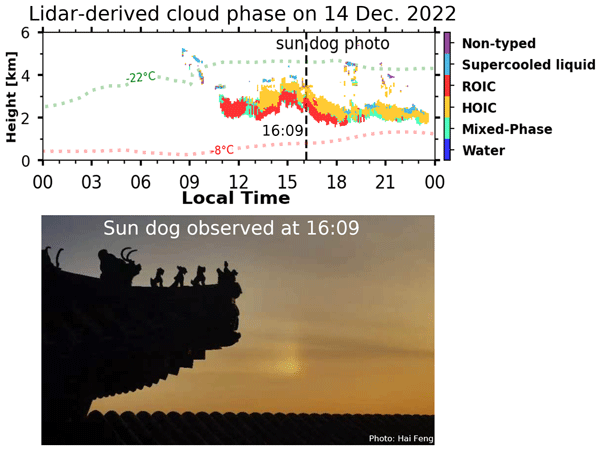
Using a full year of laser and radar observations in Beijing, this study shows when and where flat ice crystals tend to align horizontally instead of randomly, which suggests that flat ice crystals are most common in moderately cold, weakly turbulent clouds and often form below supercooled liquid water. This new finding can help weather and climate models better represent ice clouds.
Qiurui Li, Zhongxia Sun, Meijing Liu, Huizheng Che, Yu Zheng, and Jing Li
Atmos. Meas. Tech., 19, 2507–2528, https://doi.org/10.5194/amt-19-2507-2026, https://doi.org/10.5194/amt-19-2507-2026, 2026
Short summary
Short summary
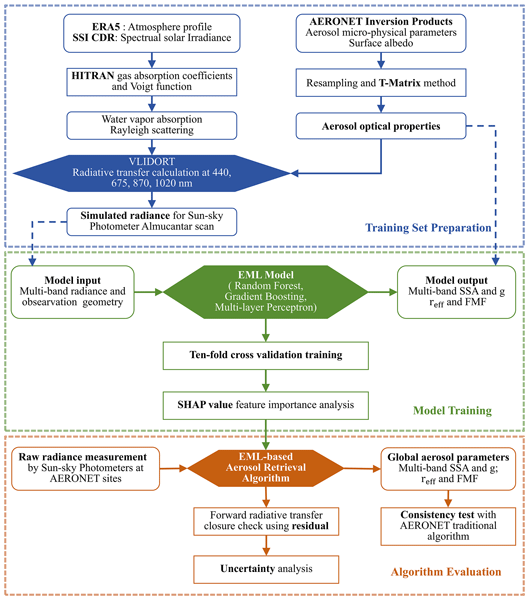
We present a fast, interpretable machine learning method to retrieve key aerosol parameters from ground-based Sun-sky photometer measurements. Trained on simulated data covering diverse aerosol and atmospheric conditions, ensuring robustness and physical consistency. Applied to real observations, it agrees well with AERONET products and reduces computation time by orders of magnitude, offering a practical tool for monitoring aerosols and their effects on air quality and climate.
Guanyu Liu, Jing Li, Sheng Yue, Lulu Zhang, and Chongzhao Zhang
Atmos. Meas. Tech., 18, 6705–6725, https://doi.org/10.5194/amt-18-6705-2025, https://doi.org/10.5194/amt-18-6705-2025, 2025
Short summary
Short summary
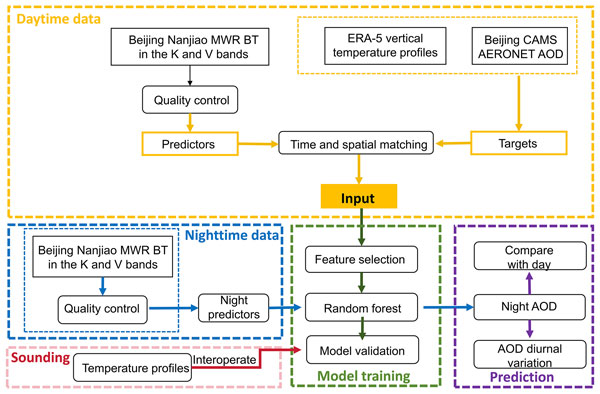
This study introduces a novel method to retrieve aerosol optical depth (AOD) at night using ground-based microwave radiometers, overcoming the limitation of traditional shortwave-based techniques that cannot operate in darkness. This result enables continuous aerosol monitoring and highlights microwave radiometry's under-utilized potential in atmospheric research.
Chong Li, Oleg Dubovik, Jing Li, David Fuertes, Anton Lopatin, Pavel Litvinov, Tatsiana Lapyonok, Lukas Bindreiter, Christian Matar, Yiqi Chu, and Wangshu Tan
Atmos. Meas. Tech., 18, 6609–6643, https://doi.org/10.5194/amt-18-6609-2025, https://doi.org/10.5194/amt-18-6609-2025, 2025
Short summary
Short summary
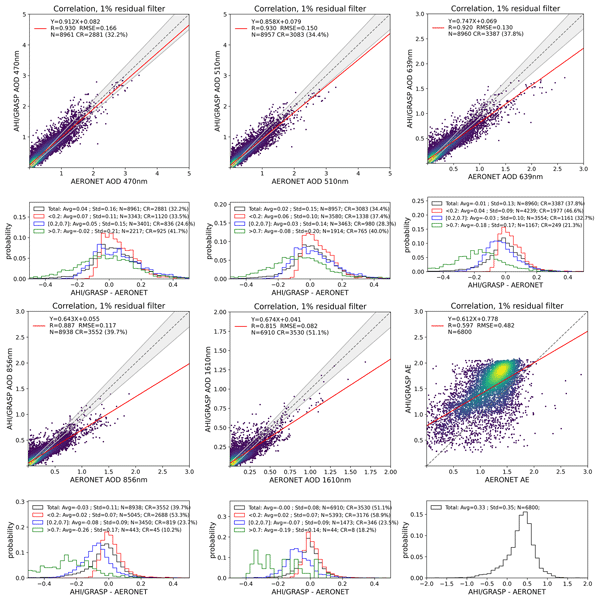
Using observational data from Japan's geostationary satellite – Himawari-8 , this study improved how we track air pollution (aerosols) across East Asia and the Western Pacific. By applying an advanced aerosol retrieval algorithm called GRASP, we were able to more accurately observe both atmospheric and ground conditions and their dynamics over time. The results closely matched ground-based measurements and showed potential for even better monitoring when combined with ground-based lidar data.
Yueming Dong, Jing Li, Zhenyu Zhang, Chongzhao Zhang, and Qiurui Li
Earth Syst. Sci. Data, 17, 3873–3892, https://doi.org/10.5194/essd-17-3873-2025, https://doi.org/10.5194/essd-17-3873-2025, 2025
Short summary
Short summary
This study develops two merged global land aerosol single-scattering albedo (SSA) datasets by combining AERONET ground observations and two satellite datasets using an ensemble Kalman filter data synergy method. The merged datasets exhibit significantly improved accuracy compared to the original satellite data. These results can provide more reliable estimates of aerosol scattering and absorption properties, essential for improving climate modeling and assessing aerosol climate effects.
Xinran Xia, Min Min, Jun Li, Yiming Zhao, Ling Gao, and Bo Li
EGUsphere, https://doi.org/10.5194/egusphere-2025-2928, https://doi.org/10.5194/egusphere-2025-2928, 2025
Preprint archived
Short summary
Short summary
New ML method fuses GEO hyperspectral & imager data to improve nighttime cloud retrievals. Achieves ~10 % better accuracy (CER:9.73μm, COT:6.09 errors), especially for thin clouds. Maintains day-night continuity, aids weather/climate monitoring.
Zhenyu Zhang, Jing Li, Huizheng Che, Yueming Dong, Oleg Dubovik, Thomas Eck, Pawan Gupta, Brent Holben, Jhoon Kim, Elena Lind, Trailokya Saud, Sachchida Nand Tripathi, and Tong Ying
Atmos. Chem. Phys., 25, 4617–4637, https://doi.org/10.5194/acp-25-4617-2025, https://doi.org/10.5194/acp-25-4617-2025, 2025
Short summary
Short summary
We used ground-based remote sensing data from the Aerosol Robotic Network to examine long-term trends in aerosol characteristics. We found aerosol loadings generally decreased globally, and aerosols became more scattering. These changes are closely related to variations in aerosol compositions, such as decreased anthropogenic emissions over East Asia, Europe, and North America; increased anthropogenic sources over northern India; and increased dust activity over the Arabian Peninsula.
Hongfei Hao, Kaicun Wang, Guocan Wu, Jianbao Liu, and Jing Li
Earth Syst. Sci. Data, 16, 4051–4076, https://doi.org/10.5194/essd-16-4051-2024, https://doi.org/10.5194/essd-16-4051-2024, 2024
Short summary
Short summary
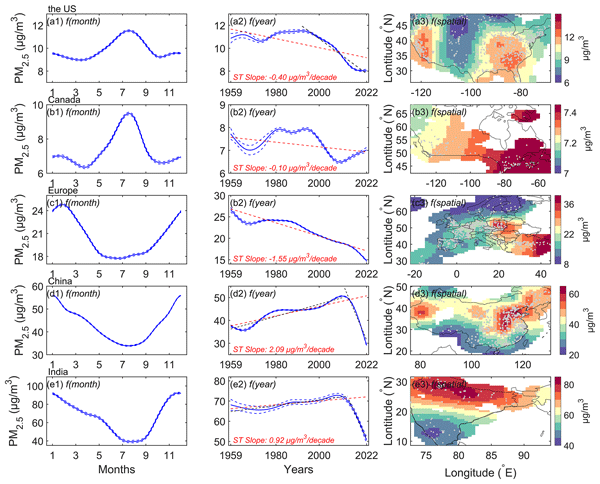
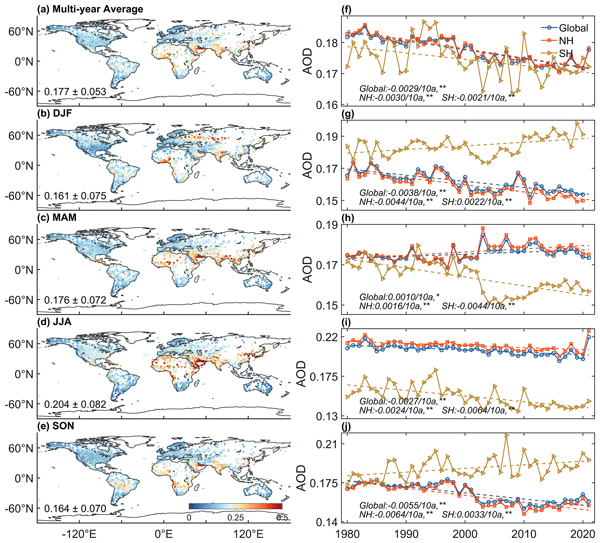
In this study, daily PM2.5 concentrations are estimated from 1959 to 2022 using a machine learning method at more than 5000 terrestrial sites in the Northern Hemisphere based on hourly atmospheric visibility data, which are extracted from the Meteorological Terminal Aviation Routine Weather Report (METAR).
Hongfei Hao, Kaicun Wang, Chuanfeng Zhao, Guocan Wu, and Jing Li
Earth Syst. Sci. Data, 16, 3233–3260, https://doi.org/10.5194/essd-16-3233-2024, https://doi.org/10.5194/essd-16-3233-2024, 2024
Short summary
Short summary
In this study, we employed a machine learning technique to derive daily aerosol optical depth from hourly visibility observations collected at more than 5000 airports worldwide from 1959 to 2021 combined with reanalysis meteorological parameters.
Zhonghua He, Ling Gao, Miao Liang, and Zhao-Cheng Zeng
Atmos. Meas. Tech., 17, 2937–2956, https://doi.org/10.5194/amt-17-2937-2024, https://doi.org/10.5194/amt-17-2937-2024, 2024
Short summary
Short summary
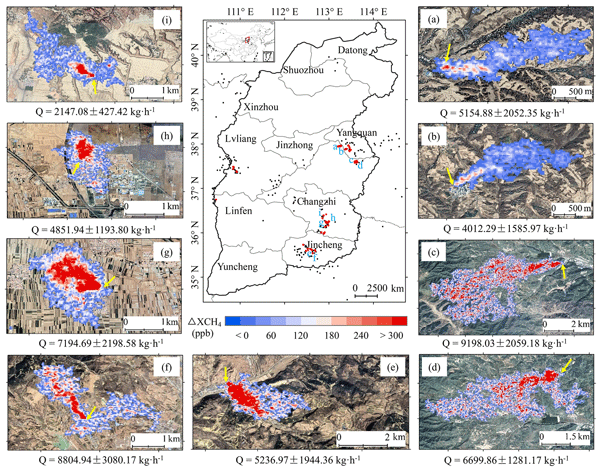
Using Gaofen-5B satellite data, this study detected 93 methane plume events from 32 coal mines in Shanxi, China, with emission rates spanning from 761.78 ± 185.00 to 12729.12 ± 4658.13 kg h-1, showing significant variability among sources. This study highlights Gaofen-5B’s capacity for monitoring large methane point sources, offering valuable support in reducing greenhouse gas emissions.
Liang Chang, Jing Li, Jingjing Ren, Changrui Xiong, and Lu Zhang
Atmos. Meas. Tech., 17, 2637–2648, https://doi.org/10.5194/amt-17-2637-2024, https://doi.org/10.5194/amt-17-2637-2024, 2024
Short summary
Short summary
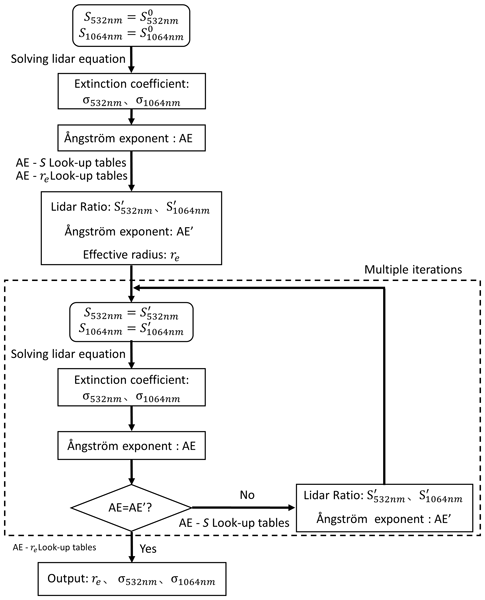
We described a modified lidar inversion algorithm to retrieve aerosol extinction and size distribution simultaneously from two-wavelength elastic lidar measurements. Its major advantage is that the lidar ratio of each layer is determined iteratively by a lidar ratio–Ångström exponent lookup table. The algorithm was applied to the Raman lidar and CALIOP measurements. The retrieved results by our method are in good agreement with those achieved by Raman method.
Guanyu Liu, Jing Li, and Tong Ying
Atmos. Chem. Phys., 23, 9217–9228, https://doi.org/10.5194/acp-23-9217-2023, https://doi.org/10.5194/acp-23-9217-2023, 2023
Short summary
Short summary
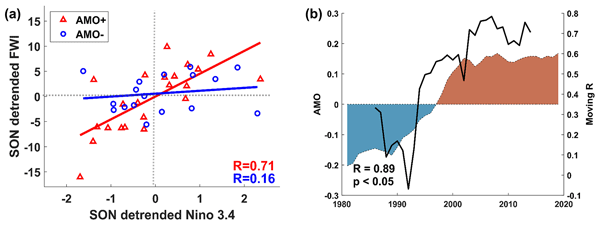
Fires in Australia are positively correlated with the El Niño–Southern Oscillation (ENSO). However, the correlation between ENSO and the Australian Fire Weather Index (FWI) increases from 0.17 to 0.70 when the Atlantic Multidecadal Oscillation (AMO) shifts from a negative to positive phase. This is explained by the teleconnection effect through which the warmer AMO generates Rossby wave trains and results in high pressures and a weather condition conducive to wildfires.

Zhongjing Jiang and Jing Li
Atmos. Chem. Phys., 22, 7273–7285, https://doi.org/10.5194/acp-22-7273-2022, https://doi.org/10.5194/acp-22-7273-2022, 2022
Short summary
Short summary
This study investigates the changes of tropospheric ozone in China associated with EP and CP El Niño, using satellite observations and the GEOS-Chem model. We found that El Niño generally leads to lower tropospheric ozone (LTO) decrease over most parts of China; La Niña acts the opposite. The difference between LTO changes during EP and CP El Niño primarily lies in southern China. Regional transport and chemical processes play the leading and secondary roles in driving the LTO changes.
Cited articles
Albrecht, B. A.: Aerosols, Cloud Microphysics, and Fractional Cloudiness, Science, 245, 1227–1230, https://doi.org/10.1126/science.245.4923.1227, 1989. a
Chen, C., Dubovik, O., Fuertes, D., Litvinov, P., Lapyonok, T., Lopatin, A., Ducos, F., Derimian, Y., Herman, M., Tanré, D., Remer, L. A., Lyapustin, A., Sayer, A. M., Levy, R. C., Hsu, N. C., Descloitres, J., Li, L., Torres, B., Karol, Y., Herrera, M., Herreras, M., Aspetsberger, M., Wanzenboeck, M., Bindreiter, L., Marth, D., Hangler, A., and Federspiel, C.: Validation of GRASP algorithm product from POLDER/PARASOL data and assessment of multi-angular polarimetry potential for aerosol monitoring, Earth Syst. Sci. Data, 12, 3573–3620, https://doi.org/10.5194/essd-12-3573-2020, 2020. a, b, c, d
Cummings, J. A. and Smedstad, O. M.: Variational Data Assimilation for the Global Ocean, Springer Berlin Heidelberg, 303–343, https://doi.org/10.1007/978-3-642-35088-7_13, ISBN 9783642350887, 2013. a
Dai, G., Wu, S., Long, W., Liu, J., Xie, Y., Sun, K., Meng, F., Song, X., Huang, Z., and Chen, W.: Aerosol and cloud data processing and optical property retrieval algorithms for the spaceborne ACDL/DQ-1, Atmos. Meas. Tech., 17, 1879–1890, https://doi.org/10.5194/amt-17-1879-2024, 2024. a
Diner, D. J., Beckert, J. C., Reilly, T. H., Bruegge, C. J., Conel, J. E., Kahn, R. A., Martonchik, J. V., Ackerman, T. P., Davies, R., and Gerstl, S. A.: Multi-angle Imaging SpectroRadiometer (MISR) instrument description and experiment overview, IEEE T. Geosci. Remote, 36, 1072–1087, 1998. a
Dong, Y., Li, J., Zhang, Z., Zheng, Y., Zhang, C., and Li, Z.: Machine Learning-Based Retrieval of Aerosol and Surface Properties Over Land From the Gaofen-5 Directional Polarimetric Camera Measurements, IEEE T. Geosci. Remote, 62, 1–15, https://doi.org/10.1109/tgrs.2024.3419169, 2024. a, b, c, d, e, f, g
Dubovik, O. and King, M. D.: A flexible inversion algorithm for retrieval of aerosol optical properties from Sun and sky radiance measurements, J. Geophys. Res.-Atmos., 105, 20673–20696, https://doi.org/10.1029/2000jd900282, 2000. a
Dubovik, O., Smirnov, A., Holben, B. N., King, M. D., Kaufman, Y. J., Eck, T. F., and Slutsker, I.: Accuracy assessments of aerosol optical properties retrieved from Aerosol Robotic Network (AERONET) Sun and sky radiance measurements, J. Geophys. Res.-Atmos., 105, 9791–9806, https://doi.org/10.1029/2000jd900040, 2000. a
Dubovik, O., Herman, M., Holdak, A., Lapyonok, T., Tanré, D., Deuzé, J. L., Ducos, F., Sinyuk, A., and Lopatin, A.: Statistically optimized inversion algorithm for enhanced retrieval of aerosol properties from spectral multi-angle polarimetric satellite observations, Atmos. Meas. Tech., 4, 975–1018, https://doi.org/10.5194/amt-4-975-2011, 2011. a, b
Dubovik, O., Li, Z., Mishchenko, M. I., Tanré, D., Karol, Y., Bojkov, B., Cairns, B., Diner, D. J., Espinosa, W. R., Goloub, P., Gu, X., Hasekamp, O., Hong, J., Hou, W., Knobelspiesse, K. D., Landgraf, J., Li, L., Litvinov, P., Liu, Y., Lopatin, A., Marbach, T., Maring, H., Martins, V., Meijer, Y., Milinevsky, G., Mukai, S., Parol, F., Qiao, Y., Remer, L., Rietjens, J., Sano, I., Stammes, P., Stamnes, S., Sun, X., Tabary, P., Travis, L. D., Waquet, F., Xu, F., Yan, C., and Yin, D.: Polarimetric remote sensing of atmospheric aerosols: Instruments, methodologies, results, and perspectives, J. Quant. Spectrosc. Ra., 224, 474–511, https://doi.org/10.1016/j.jqsrt.2018.11.024, 2019. a, b, c
Eck, T. F., Holben, B. N., Reid, J. S., Sinyuk, A., Giles, D. M., Arola, A., Slutsker, I., Schafer, J. S., Sorokin, M. G., Smirnov, A., LaRosa, A. D., Kraft, J., Reid, E. A., O’Neill, N. T., Welton, E., and Menendez, A. R.: The extreme forest fires in California/Oregon in 2020: Aerosol optical and physical properties and comparisons of aged versus fresh smoke, Atmos. Environ., 305, 119798, https://doi.org/10.1016/j.atmosenv.2023.119798, 2023. a
Engelstaedter, S., Tegen, I., and Washington, R.: North African dust emissions and transport, Earth-Sci. Rev., 79, 73–100, https://doi.org/10.1016/j.earscirev.2006.06.004, 2006. a
Fang, L., Hasekamp, O., Fu, G., Gong, W., Wang, S., Wang, W., Han, Q., and Tang, S.: Retrieval of Aerosol Optical Properties over Land Using an Optimized Retrieval Algorithm Based on the Directional Polarimetric Camera, Remote Sensing, 14, 4571, https://doi.org/10.3390/rs14184571, 2022. a, b, c
GCOS: The Global Observing System For Climate: Implementation Needs, GCOS-200 (GOOS-214), WMO, Geneva, 341 pp., https://library.wmo.int/records/item/55469 -the-global-observing-system-for-climate (last access: 13 April 2026), 2016. a
Ge, B., Li, Z., Chen, C., Hou, W., Xie, Y., Zhu, S., Qie, L., Zhang, Y., Li, K., and Xu, H.: An Improved Aerosol Optical Depth Retrieval Algorithm for Multiangle Directional Polarimetric Camera (DPC), Remote Sensing, 14, 4045, https://doi.org/10.3390/rs14164045, 2022. a, b
Giles, D. M., Sinyuk, A., Sorokin, M. G., Schafer, J. S., Smirnov, A., Slutsker, I., Eck, T. F., Holben, B. N., Lewis, J. R., Campbell, J. R., Welton, E. J., Korkin, S. V., and Lyapustin, A. I.: Advancements in the Aerosol Robotic Network (AERONET) Version 3 database – automated near-real-time quality control algorithm with improved cloud screening for Sun photometer aerosol optical depth (AOD) measurements, Atmos. Meas. Tech., 12, 169–209, https://doi.org/10.5194/amt-12-169-2019, 2019. a
Ginoux, P., Prospero, J. M., Gill, T. E., Hsu, N. C., and Zhao, M.: Global‐scale attribution of anthropogenic and natural dust sources and their emission rates based on MODIS Deep Blue aerosol products, Rev. Geophys., 50, https://doi.org/10.1029/2012rg000388, 2012. a
Habib, A., Chen, B., Khalid, B., Tan, S., Che, H., Mahmood, T., Shi, G., and Butt, M. T.: Estimation and inter-comparison of dust aerosols based on MODIS, MISR and AERONET retrievals over Asian desert regions, J. Environ. Sci., 76, 154–166, https://doi.org/10.1016/j.jes.2018.04.019, 2019. a
Hasekamp, O. P., Litvinov, P., and Butz, A.: Aerosol properties over the ocean from PARASOL multiangle photopolarimetric measurements, J. Geophys. Res.-Atmos., 116, D14204, https://doi.org/10.1029/2010JD015469, 2011. a
Hasekamp, O., Litvinov, P., Fu, G., Chen, C., and Dubovik, O.: Algorithm evaluation for polarimetric remote sensing of atmospheric aerosols, Atmos. Meas. Tech., 17, 1497–1525, https://doi.org/10.5194/amt-17-1497-2024, 2024. a
Heald, C. L., Ridley, D. A., Kroll, J. H., Barrett, S. R. H., Cady-Pereira, K. E., Alvarado, M. J., and Holmes, C. D.: Contrasting the direct radiative effect and direct radiative forcing of aerosols, Atmos. Chem. Phys., 14, 5513–5527, https://doi.org/10.5194/acp-14-5513-2014, 2014. a
Hersbach, H., Bell, B., Berrisford, P., Hirahara, S., Horányi, A., Muñoz‐Sabater, J., Nicolas, J., Peubey, C., Radu, R., Schepers, D., Simmons, A., Soci, C., Abdalla, S., Abellan, X., Balsamo, G., Bechtold, P., Biavati, G., Bidlot, J., Bonavita, M., De Chiara, G., Dahlgren, P., Dee, D., Diamantakis, M., Dragani, R., Flemming, J., Forbes, R., Fuentes, M., Geer, A., Haimberger, L., Healy, S., Hogan, R. J., Hólm, E., Janisková, M., Keeley, S., Laloyaux, P., Lopez, P., Lupu, C., Radnoti, G., de Rosnay, P., Rozum, I., Vamborg, F., Villaume, S., and Thépaut, J.: The ERA5 global reanalysis, Q. J. Roy. Meteor. Soc., 146, 1999–2049, https://doi.org/10.1002/qj.3803, 2020. a
Holben, B. N., Eck, T. F., Slutsker, I., Tanré, D., Buis, J. P., Setzer, A., Vermote, E., Reagan, J. A., Kaufman, Y. J., Nakajima, T., Lavenu, F., Jankowiak, I., and Smirnov, A.: AERONET – A Federated Instrument Network and Data Archive for Aerosol Characterization, Remote Sens. Environ., 66, 1–16, https://doi.org/10.1016/S0034-4257(98)00031-5, 1998. a
Iglesias, V., Balch, J. K., and Travis, W. R.: U.S. fires became larger, more frequent, and more widespread in the 2000s, Science Advances, 8, https://doi.org/10.1126/sciadv.abc0020, 2022. a
Ji, Z., Li, Z., Zhang, Z., Fu, G., Hasekamp, O., Fan, C., Liu, Q., and de Leeuw, G.: Retrieval of Aerosol Properties Over the Ocean Using Data From the Second‐Generation Directional Polarization Camera (DPC‐2) Onboard the GF‐5(02) Satellite, J. Geophys. Res.-Atmos., 130, https://doi.org/10.1029/2025jd043908, 2025. a
Jin, S., Ma, Y., Chen, C., Dubovik, O., Hong, J., Liu, B., and Gong, W.: Performance evaluation for retrieving aerosol optical depth from the Directional Polarimetric Camera (DPC) based on the GRASP algorithm, Atmos. Meas. Tech., 15, 4323–4337, https://doi.org/10.5194/amt-15-4323-2022, 2022. a, b
Jin, S., Ma, Y., Wang, Z., Hong, J., Chen, F., Ti, R., Chen, C., Liu, Z., Zhai, S., and Gong, W.: Retrievals and performance assessment of global marine aerosol optical properties from DPC/GRASP, Journal of Atmospheric and Environmental Optics, 19, 680–697, 2024. a
Kleinman, L. I., Sedlacek III, A. J., Adachi, K., Buseck, P. R., Collier, S., Dubey, M. K., Hodshire, A. L., Lewis, E., Onasch, T. B., Pierce, J. R., Shilling, J., Springston, S. R., Wang, J., Zhang, Q., Zhou, S., and Yokelson, R. J.: Rapid evolution of aerosol particles and their optical properties downwind of wildfires in the western US, Atmos. Chem. Phys., 20, 13319–13341, https://doi.org/10.5194/acp-20-13319-2020, 2020. a
Levy, R. C., Remer, L. A., and Dubovik, O.: Global aerosol optical properties and application to Moderate Resolution Imaging Spectroradiometer aerosol retrieval over land, J. Geophys. Res.-Atmos., 112, D13210, https://doi.org/10.1029/2006jd007815, 2007a. a, b
Levy, R. C., Remer, L. A., Mattoo, S., Vermote, E. F., and Kaufman, Y. J.: Second-generation operational algorithm: Retrieval of aerosol properties over land from inversion of Moderate Resolution Imaging Spectroradiometer spectral reflectance, J. Geophys. Res.-Atmos., 112, D13211, https://doi.org/10.1029/2006jd007811, 2007b. a
Levy, R. C., Remer, L. A., Kleidman, R. G., Mattoo, S., Ichoku, C., Kahn, R., and Eck, T. F.: Global evaluation of the Collection 5 MODIS dark-target aerosol products over land, Atmos. Chem. Phys., 10, 10399–10420, https://doi.org/10.5194/acp-10-10399-2010, 2010. a
Levy, R. C., Mattoo, S., Munchak, L. A., Remer, L. A., Sayer, A. M., Patadia, F., and Hsu, N. C.: The Collection 6 MODIS aerosol products over land and ocean, Atmos. Meas. Tech., 6, 2989–3034, https://doi.org/10.5194/amt-6-2989-2013, 2013. a, b
Li, J., Li, X., Carlson, B. E., Kahn, R. A., Lacis, A. A., Dubovik, O., and Nakajima, T.: Reducing multisensor satellite monthly mean aerosol optical depth uncertainty: 1. Objective assessment of current AERONET locations, J. Geophys. Res.-Atmos., 121, https://doi.org/10.1002/2016jd025469, 2016. a
Li, J., Carlson, B. E., Yung, Y. L., Lv, D., Hansen, J., Penner, J. E., Liao, H., Ramaswamy, V., Kahn, R. A., Zhang, P., Dubovik, O., Ding, A., Lacis, A. A., Zhang, L., and Dong, Y.: Scattering and absorbing aerosols in the climate system, Nature Reviews Earth & Environment, 3, 363–379, https://doi.org/10.1038/s43017-022-00296-7, 2022a. a
Li, L., Dubovik, O., Derimian, Y., Schuster, G. L., Lapyonok, T., Litvinov, P., Ducos, F., Fuertes, D., Chen, C., Li, Z., Lopatin, A., Torres, B., and Che, H.: Retrieval of aerosol components directly from satellite and ground-based measurements, Atmos. Chem. Phys., 19, 13409–13443, https://doi.org/10.5194/acp-19-13409-2019, 2019. a
Li, Z., Hou, W., Hong, J., Zheng, F., Luo, D., Wang, J., Gu, X., and Qiao, Y.: Directional Polarimetric Camera (DPC): Monitoring aerosol spectral optical properties over land from satellite observation, J. Quant. Spectrosc. Ra., 218, 21–37, https://doi.org/10.1016/j.jqsrt.2018.07.003, 2018. a, b, c, d, e
Li, Z., Hou, W., Hong, J., Fan, C., Wei, Y., Liu, Z., Lei, X., Qiao, Y., Hasekamp, O. P., Fu, G., Wang, J., Dubovik, O., Qie, L., Zhang, Y., Xu, H., Xie, Y., Song, M., Zou, P., Luo, D., Wang, Y., and Tu, B.: The polarization crossfire (PCF) sensor suite focusing on satellite remote sensing of fine particulate matter PM2.5 from space, J. Quant. Spectrosc. Ra., 286, 108217, https://doi.org/10.1016/j.jqsrt.2022.108217, 2022b. a
Litvinov, P., Hasekamp, O., and Cairns, B.: Models for surface reflection of radiance and polarized radiance: Comparison with airborne multi-angle photopolarimetric measurements and implications for modeling top-of-atmosphere measurements, Remote Sens. Environ., 115, 781–792, https://doi.org/10.1016/j.rse.2010.11.005, 2011. a, b, c
Liu, C., Gao, M., Hu, Q., Brasseur, G. P., and Carmichael, G. R.: Stereoscopic Monitoring: A Promising Strategy to Advance Diagnostic and Prediction of Air Pollution, B. Am. Meteorol. Soc., 102, E730–E737, https://doi.org/10.1175/bams-d-20-0217.1, 2021. a
Loeb, N. G. and Su, W.: Direct Aerosol Radiative Forcing Uncertainty Based on a Radiative Perturbation Analysis, J. Climate, 23, 5288–5293, https://doi.org/10.1175/2010jcli3543.1, 2010. a
Maignan, F., Bréon, F.-M., Fédèle, E., and Bouvier, M.: Polarized reflectances of natural surfaces: Spaceborne measurements and analytical modeling, Remote Sens. Environ., 113, 2642–2650, https://doi.org/10.1016/j.rse.2009.07.022, 2009. a
Mallet, M., Voldoire, A., Solmon, F., Nabat, P., Drugé, T., and Roehrig, R.: Impact of biomass burning aerosols (BBA) on the tropical African climate in an ocean–atmosphere–aerosol coupled climate model, Atmos. Chem. Phys., 24, 12509–12535, https://doi.org/10.5194/acp-24-12509-2024, 2024. a, b
Mishchenko, M., Cairns, B., Kopp, G., Maring, H., Fafaul, B., Knobelspiesse, K., and Chowdhary, J.: Accurate monitoring of terrestrial aerosols and total solar irradiance: The NASA Glory mission, in: 2010 IEEE International Geoscience and Remote Sensing Symposium, Honolulu, HI, USA, 25–30 July 2010, IEEE, 758–760, https://doi.org/10.1109/igarss.2010.5652996, 2010. a
Mishchenko, M. I. and Travis, L. D.: Light scattering by polydisperse, rotationally symmetric nonspherical particles: Linear polarization, J. Quant. Spectrosc. Ra., 51, 759–778, https://doi.org/10.1016/0022-4073(94)90130-9, 1994. a
Mishchenko, M. I., Cairns, B., Hansen, J. E., Travis, L. D., Burg, R., Kaufman, Y. J., Vanderlei Martins, J., and Shettle, E. P.: Monitoring of aerosol forcing of climate from space: analysis of measurement requirements, J. Quant. Spectrosc. Ra., 88, 149–161, https://doi.org/10.1016/j.jqsrt.2004.03.030, 2004. a
Mishchenko, M. I., Geogdzhayev, I. V., Rossow, W. B., Cairns, B., Carlson, B. E., Lacis, A. A., Liu, L., and Travis, L. D.: Long-Term Satellite Record Reveals Likely Recent Aerosol Trend, Science, 315, 1543–1543, https://doi.org/10.1126/science.1136709, 2007. a
O'Reilly, J. E. and Werdell, P. J.: Chlorophyll algorithms for ocean color sensors - OC4, OC5 & OC6, Remote Sens. Environ., 229, 32–47, https://doi.org/10.1016/j.rse.2019.04.021, 2019. a
Pan, X., Ichoku, C., Chin, M., Bian, H., Darmenov, A., Colarco, P., Ellison, L., Kucsera, T., da Silva, A., Wang, J., Oda, T., and Cui, G.: Six global biomass burning emission datasets: intercomparison and application in one global aerosol model, Atmos. Chem. Phys., 20, 969–994, https://doi.org/10.5194/acp-20-969-2020, 2020. a, b, c
Popp, T., De Leeuw, G., Bingen, C., Brühl, C., Capelle, V., Chedin, A., Clarisse, L., Dubovik, O., Grainger, R., Griesfeller, J., Heckel, A., Kinne, S., Klüser, L., Kosmale, M., Kolmonen, P., Lelli, L., Litvinov, P., Mei, L., North, P., Pinnock, S., Povey, A., Robert, C., Schulz, M., Sogacheva, L., Stebel, K., Stein Zweers, D., Thomas, G., Tilstra, L., Vandenbussche, S., Veefkind, P., Vountas, M., and Xue, Y.: Development, Production and Evaluation of Aerosol Climate Data Records from European Satellite Observations (Aerosol_cci), Remote Sensing, 8, 421, https://doi.org/10.3390/rs8050421, 2016. a
Qie, L., Li, Z., Zhu, S., Xu, H., Xie, Y., Qiao, R., Hong, J., and Tu, B.: In-flight radiometric and polarimetric calibration of the Directional Polarimetric Camera onboard the GaoFen-5 satellite over the ocean, Appl. Optics, 60, 7186, https://doi.org/10.1364/ao.422980, 2021. a, b, c, d
Ramanathan, V., Crutzen, P. J., Kiehl, J. T., and Rosenfeld, D.: Aerosols, Climate, and the Hydrological Cycle, Science, 294, 2119–2124, https://doi.org/10.1126/science.1064034, 2001. a, b
Satheesh, S. K. and Srinivasan, J.: Enhanced aerosol loading over Arabian Sea during the pre‐monsoon season: Natural or anthropogenic?, Geophys. Res. Lett., 29, https://doi.org/10.1029/2002gl015687, 2002. a
Sayer, A. M., Hsu, N. C., Bettenhausen, C., Lee, J., Redemann, J., Schmid, B., and Shinozuka, Y.: Extending “Deep Blue” aerosol retrieval coverage to cases of absorbing aerosols above clouds: Sensitivity analysis and first case studies, J. Geophys. Res.-Atmos., 121, 4830–4854, https://doi.org/10.1002/2015jd024729, 2016. a
Schaaf, C. B., Gao, F., Strahler, A. H., Lucht, W., Li, X., Tsang, T., Strugnell, N. C., Zhang, X., Jin, Y., Muller, J.-P., Lewis, P., Barnsley, M., Hobson, P., Disney, M., Roberts, G., Dunderdale, M., Doll, C., d'Entremont, R. P., Hu, B., Liang, S., Privette, J. L., and Roy, D.: First operational BRDF, albedo nadir reflectance products from MODIS, Remote Sens. Environ., 83, 135–148, https://doi.org/10.1016/s0034-4257(02)00091-3, 2002. a, b
Schutgens, N., Dubovik, O., Hasekamp, O., Torres, O., Jethva, H., Leonard, P. J. T., Litvinov, P., Redemann, J., Shinozuka, Y., de Leeuw, G., Kinne, S., Popp, T., Schulz, M., and Stier, P.: AEROCOM and AEROSAT AAOD and SSA study – Part 1: Evaluation and intercomparison of satellite measurements, Atmos. Chem. Phys., 21, 6895–6917, https://doi.org/10.5194/acp-21-6895-2021, 2021. a
Sinyuk, A., Dubovik, O., Holben, B., Eck, T. F., Breon, F.-M., Martonchik, J., Kahn, R., Diner, D. J., Vermote, E. F., Roger, J.-C., Lapyonok, T., and Slutsker, I.: Simultaneous retrieval of aerosol and surface properties from a combination of AERONET and satellite data, Remote Sens. Environ., 107, 90–108, https://doi.org/10.1016/j.rse.2006.07.022, 2007. a
Sinyuk, A., Holben, B. N., Eck, T. F., Giles, D. M., Slutsker, I., Korkin, S., Schafer, J. S., Smirnov, A., Sorokin, M., and Lyapustin, A.: The AERONET Version 3 aerosol retrieval algorithm, associated uncertainties and comparisons to Version 2, Atmos. Meas. Tech., 13, 3375–3411, https://doi.org/10.5194/amt-13-3375-2020, 2020. a, b
Spurr, R. J.: VLIDORT: A linearized pseudo-spherical vector discrete ordinate radiative transfer code for forward model and retrieval studies in multilayer multiple scattering media, J. Quant. Spectrosc. Ra., 102, 316–342, https://doi.org/10.1016/j.jqsrt.2006.05.005, 2006. a, b
Su, X., Wang, L., Zhang, M., Qin, W., and Bilal, M.: A High-Precision Aerosol Retrieval Algorithm (HiPARA) for Advanced Himawari Imager (AHI) data: Development and verification, Remote Sens. Environ., 253, 112221, https://doi.org/10.1016/j.rse.2020.112221, 2021. a, b
Torres, O., Tanskanen, A., Veihelmann, B., Ahn, C., Braak, R., Bhartia, P. K., Veefkind, P., and Levelt, P.: Aerosols and surface UV products from Ozone Monitoring Instrument observations: An overview, J. Geophys. Res.-Atmos., 112, https://doi.org/10.1029/2007jd008809, 2007. a
Wang, X., Cai, D., Chen, S., Lou, J., Liu, F., Jiao, L., Cheng, H., Zhang, C., Hua, T., and Che, H.: Spatio-temporal trends of dust emissions triggered by desertification in China, CATENA, 200, 105160, https://doi.org/10.1016/j.catena.2021.105160, 2021. a, b
Wei, X., Cui, Q., Ma, L., Zhang, F., Li, W., and Liu, P.: Global aerosol-type classification using a new hybrid algorithm and Aerosol Robotic Network data, Atmos. Chem. Phys., 24, 5025–5045, https://doi.org/10.5194/acp-24-5025-2024, 2024. a
Yang, B., Zhao, H., and Chen, W.: Semi-empirical models for polarized reflectance of land surfaces: Intercomparison using space-borne POLDER measurements, J. Quant. Spectrosc. Ra., 202, 13–20, https://doi.org/10.1016/j.jqsrt.2017.07.014, 2017. a
Yang, X., Zhao, C., Yang, Y., and Fan, H.: Long-term multi-source data analysis about the characteristics of aerosol optical properties and types over Australia, Atmos. Chem. Phys., 21, 3803–3825, https://doi.org/10.5194/acp-21-3803-2021, 2021. a
Zhang, L., Li, J., Jiang, Z., Dong, Y., Ying, T., and Zhang, Z.: Clear-Sky Direct Aerosol Radiative Forcing Uncertainty Associated with Aerosol Optical Properties Based on CMIP6 models, J. Climate, 35, 3007–3019, https://doi.org/10.1175/jcli-d-21-0479.1, 2022. a
Zhang, Z.: DPC/GaoFen-5 Global Aerosol and Surface Properties Dataset, V1, Peking University Open Research Data Platform [data set], https://doi.org/10.18170/DVN/YMRDFC, 2026. a
Zhang, Z., Li, J., Dong, Y., Zhang, C., Ying, T., and Li, Q.: Long-Term Trends in Aerosol Single Scattering Albedo Cause Bias in MODIS Aerosol Optical Depth Trends, IEEE T. Geosci. Remote, 62, 1–9, https://doi.org/10.1109/tgrs.2024.3424981, 2024. a
Zhang, Z., Li, J., Che, H., Dong, Y., Dubovik, O., Eck, T., Gupta, P., Holben, B., Kim, J., Lind, E., Saud, T., Tripathi, S. N., and Ying, T.: Long-term trends in aerosol properties derived from AERONET measurements, Atmos. Chem. Phys., 25, 4617–4637, https://doi.org/10.5194/acp-25-4617-2025, 2025a. a
Zhang, Z., Li, Z., Fu, G., Hasekamp, O., Fan, C., Qie, L., Xie, Y., Li, L., Ji, Z., and Liu, Q.: Global Aerosol Retrieval Over Land Using the Chinese Satellite Polarimeter DPC-2/GF-5(02), IEEE T. Geosci. Remote, 63, 1–14, https://doi.org/10.1109/tgrs.2025.3633391, 2025b. a
Zheng, F., Hou, W., and Li, Z.: Optimal estimation retrieval for directional polarimetric camera onboard Chinese Gaofen-5 satellite: an analysis on multi-angle dependence and a posteriori error, Acta Phys. Sin., 68, 040701, https://doi.org/10.7498/aps.68.20181682, 2019. a, b
Zhu, S., Li, Z., Qie, L., Xu, H., Ge, B., Xie, Y., Qiao, R., Xie, Y., Hong, J., Meng, B., Tu, B., and Chen, F.: In-Flight Relative Radiometric Calibration of a Wide Field of View Directional Polarimetric Camera Based on the Rayleigh Scattering over Ocean, Remote Sensing, 14, 1211, https://doi.org/10.3390/rs14051211, 2022. a, b, c, d, e, f
Short summary
This study developed a numerical algorithm to simultaneously retrieve aerosol and surface parameters from multi-angle polarimetric observations from space. Our research shows that accurate single scattering albedo retrieval requires degree of linear polarization observation uncertainties below 0.01. The retrieval results agrees with ground-based measurements well, and successfully characterize regional pollution events. We also generate global maps of retrieved aerosol and surface parameters.
This study developed a numerical algorithm to simultaneously retrieve aerosol and surface...


