
Articles | Volume 19, issue 8
https://doi.org/10.5194/amt-19-2763-2026
© Author(s) 2026. This work is distributed under
the Creative Commons Attribution 4.0 License.
the Creative Commons Attribution 4.0 License.
https://doi.org/10.5194/amt-19-2763-2026
© Author(s) 2026. This work is distributed under
the Creative Commons Attribution 4.0 License.
the Creative Commons Attribution 4.0 License.
Research article
| 
23 Apr 2026
Research article |
| 23 Apr 2026
| 23 Apr 2026
Studying anomalous propagation over marine areas using an experimental AIS receiver set-up

Finnish Meteorological Institute, Erik Palménin Aukio 1, Helsinki, Finland
Milla M. Johansson
Finnish Meteorological Institute, Erik Palménin Aukio 1, Helsinki, Finland
Mikko Lensu
Finnish Meteorological Institute, Erik Palménin Aukio 1, Helsinki, Finland
Jani Tyynelä
Finnish Meteorological Institute, Erik Palménin Aukio 1, Helsinki, Finland
Jukka-Pekka Jalkanen
Finnish Meteorological Institute, Erik Palménin Aukio 1, Helsinki, Finland
Mikael Hasu
Finnish Meteorological Institute, Erik Palménin Aukio 1, Helsinki, Finland
Ken Stenbäck
Finnish Meteorological Institute, Erik Palménin Aukio 1, Helsinki, Finland
Harry Lonka
Finnish Meteorological Institute, Erik Palménin Aukio 1, Helsinki, Finland
Lauri Laakso
Finnish Meteorological Institute, Erik Palménin Aukio 1, Helsinki, Finland
Atmospheric Chemistry Research Group, Chemical Resource Beneficiation, North-West University, Potchefstroom, South Africa
Related authors
Karoliina Hämäläinen, Laura Rautiainen, Jani Tyynelä, and Lauri Laakso
EGUsphere, https://doi.org/10.5194/egusphere-2026-1629, https://doi.org/10.5194/egusphere-2026-1629, 2026
This preprint is open for discussion and under review for Geoscientific Model Development (GMD).
Short summary
Short summary
This study investigated how well a weather model can predict anomalous signal propagation conditions over the sea. We tested different model settings and compared the results with mast observations from the summer of 2022. The model results are promising in identifying these conditions, especially at higher altitudes. Yet, model’s had difficulties near the surface due to simplified land and sea description.
Androniki Maragkidou, Tiia Grönholm, Laura Rautiainen, Juha Nikmo, Jukka-Pekka Jalkanen, Timo Mäkelä, Timo Anttila, Lauri Laakso, and Jaakko Kukkonen
Atmos. Chem. Phys., 25, 2443–2457, https://doi.org/10.5194/acp-25-2443-2025, https://doi.org/10.5194/acp-25-2443-2025, 2025
Short summary
Short summary
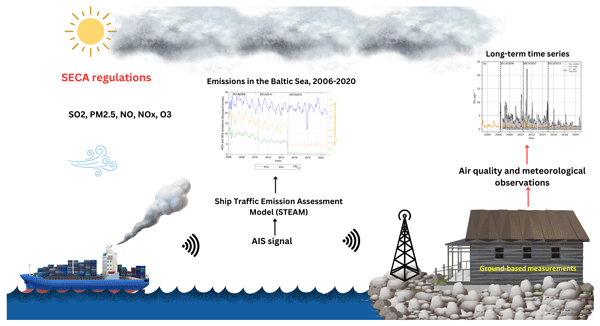
The Baltic Sea's designation as a sulfur emission control area in 2006, with subsequent regulations, significantly reduced sulfur emissions from shipping. Our study analysed air quality data from 2003 to 2020 on the island Utö and employed modelling, showing a continuous decrease in SO2 concentrations since 2003 and thus evidencing the effectiveness of such regulations in improving air quality. It also underscored the importance of long-term, high-resolution monitoring at remote marine sites.
Laura Tuomi, Milla M. Johansson, Andrew Twelves, Mika Rantanen, Priidik Lagemaa, Hedi Kanarik, Jani Särkkä, Urmas Raudsepp, and Antti Westerlund
State Planet, 7-osr10, 16, https://doi.org/10.5194/sp-7-osr10-16-2026, https://doi.org/10.5194/sp-7-osr10-16-2026, 2026
Short summary
Short summary
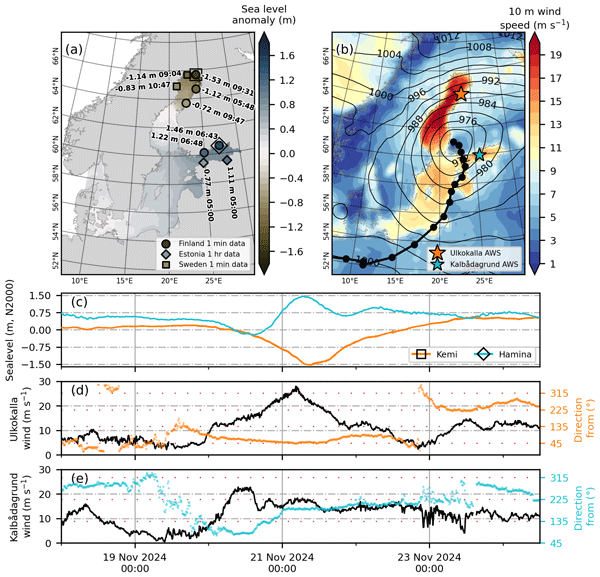
A record low sea level of −153 cm, 34 cm below the previous minimum, was measured in the Bothnian Bay on 21 November 2024. This extreme event was caused by a strong and long-lasting windstorm that followed an unusual track. The Copernicus Marine Service Baltic Sea forecast system accurately predicted the event 3–4 days in advance. However, forecasts with longer lead times failed to predict the record low sea level, although they did indicate a significant drop in sea levels during the storm.
Vertti Kettunen, Tuula Aalto, Henry C. Bittig, Jukka-Pekka Jalkanen, Lauri Laakso, Anteneh Mengistu, Gregor Rehder, Maria Tenkanen, and Martti Honkanen
EGUsphere, https://doi.org/10.5194/egusphere-2026-5442, https://doi.org/10.5194/egusphere-2026-5442, 2026
This preprint is open for discussion and under review for Ocean Science (OS).
Short summary
Short summary
The Baltic Sea carbon balance was estimated using two independent observation-based methods during a 3-year period. One method indicated that the Baltic Sea was a carbon dioxide sink, while the other indicated a source. Ship emissions increased the net carbon dioxide flux to the atmosphere. Despite differences in the overall balance, the methods showed similar patterns in several regions. The results show that both shipping and the method used strongly affect the estimated carbon balance.
Aino Ovaska, Daniel Holmberg, Elio Rauth, Mansour Alghamdi, Paulo Artaxo, Eija Asmi, John Backman, Benjamin Bergmans, Matthew Boyer, Liezl Bredenkamp, Maurizio Busetto, Delano Campos De Oliveira, Juan Andrés Casquero-Vera, Darius Ceburnis, Tak Chan, Tommy Chan, Sebastien Conil, Daniele Contini, Suzanne Crumeyrolle, Valentin Duflot, Kostas Eleftheriadis, Johan Esveld, Ekaterina Ezhova, Markus Fiebig, Shahzad Gani, Olga Garmash, Francisco Gómez-Moreno, Roy M. Harrison, Andras Hoffer, Rakesh Hooda, Antti Hyvärinen, Tareq Hussein, Jorma Joutsensaari, Nikos Kalivitis, Heinz Kaminski, Jutta Kesti, Radovan Krejci, Adam Kristensson, Chongai Kuang, Markku Kulmala, Lauri Laakso, Ari Leskinen, Heikki Lihavainen, Andreas Massling, Maik Merkel, Steffen Noe, Jakub Ondracek, Noemí Perez, Jean-Eudes Petit, Tuukka Petäjä, Michael Pikridas, Christopher Pöhlker, Mira Pöhlker, Jean-Philippe Putaud, Ximeng Qi, Cristina Reche, Sergio Rodríguez, Petr Roztocil, Jean Sciare, Karine Sellegri, Dongjie Shang, Ashish Singh, Mikko Sipilä, Henrik Skov, Mar Sorribas, Tamanna Subba, Junying Sun, Peter Tunved, Ville Vakkari, Pieter G. Van Zyl, Aki Virkkula, Jens Voigtländer, Kay Weinhold, Alfred Wiedensohler, Hee-Jung Yoo, Putian Zhou, Kai Puolamäki, Tuomo Nieminen, Veli-Matti Kerminen, Victoria A. Sinclair, and Pauli Paasonen
Earth Syst. Sci. Data Discuss., https://doi.org/10.5194/essd-2026-415, https://doi.org/10.5194/essd-2026-415, 2026
Preprint under review for ESSD
Short summary
Short summary
All clouds form around aerosol particles, and their abundance influences cloud properties. In turn, clouds affect climate by changing how energy moves through the atmosphere, making them important for climate change. To better understand these interactions, we need accurate information on how many aerosol particles are in the atmosphere. Therefore, we have developed a new 21-year global dataset of particle concentrations relevant for cloud formation.
Tamryn Hamilton, Kerneels Jaars, Pieter G. van Zyl, Mika Aurela, Marcellin Adon, Johan P. Beukes, Miroslav Josipovic, Gregor T. Feig, Markku Kulmala, Lauri Laakso, and Ville Vakkari
EGUsphere, https://doi.org/10.5194/egusphere-2026-3066, https://doi.org/10.5194/egusphere-2026-3066, 2026
Short summary
Short summary
South Africa is a global hotspot for nitrogen dioxide, yet direct surface exchange measurements are absent from Africa. Using a high-precision laser at a savanna grassland site from 2015 to 2020, we made the first landscape-scale nitrogen dioxide flux measurements on the continent. The site mainly released nitrogen dioxide, driven by summer rainfall and soil microbes. We estimated the ecosystem-scale balance point between uptake and release. Widely used models overestimate daytime deposition.
Haipeng Zhang, Tianle Yuan, Hua Song, J. Christine Chiu, and Jukka-Pekka Jalkanen
EGUsphere, https://doi.org/10.5194/egusphere-2026-2430, https://doi.org/10.5194/egusphere-2026-2430, 2026
Short summary
Short summary
Aerosol-cloud interactions remain a major uncertainty in climate science because meteorology can independently drive both aerosols and clouds, obscuring causality. We develop a framework that isolates ship-track-influenced cases in DOE ARM ground observations by detecting peaks in aerosol concentrations and tracing air masses back to nearby ship locations. Anchoring cloud changes to a well-defined pollution source offers cleaner constraints for aerosol-cloud interactions.
Mikael Hasu, Niilo Siljamo, Ekaterina Kurzeneva, and Laura Rontu
EGUsphere, https://doi.org/10.5194/egusphere-2026-1408, https://doi.org/10.5194/egusphere-2026-1408, 2026
Short summary
Short summary
We studied a new way to use satellite images to update snow fields in numerical weather models. The idea is to group many small pixels into simple “snow barrels,” which fit the model scale better. The method does not affect areas with solid snow, since satellites cannot see true snow depth and each barrel can only add a thin 10-centimetre layer of snow. The results show that barrels capture thin and changing snow better than using only in-situ observations, especially in springtime.
Karoliina Hämäläinen, Laura Rautiainen, Jani Tyynelä, and Lauri Laakso
EGUsphere, https://doi.org/10.5194/egusphere-2026-1629, https://doi.org/10.5194/egusphere-2026-1629, 2026
This preprint is open for discussion and under review for Geoscientific Model Development (GMD).
Short summary
Short summary
This study investigated how well a weather model can predict anomalous signal propagation conditions over the sea. We tested different model settings and compared the results with mast observations from the summer of 2022. The model results are promising in identifying these conditions, especially at higher altitudes. Yet, model’s had difficulties near the surface due to simplified land and sea description.
Matias Uusinoka, Jari Haapala, Jan Åström, Mikko Lensu, and Arttu Polojärvi
The Cryosphere, 19, 6493–6506, https://doi.org/10.5194/tc-19-6493-2025, https://doi.org/10.5194/tc-19-6493-2025, 2025
Short summary
Short summary
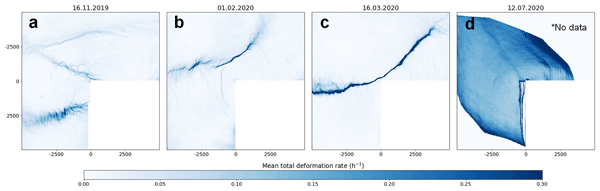
We tracked sea ice deformation over a nine-month period using high-resolution ship radar data and a state-of-the-art deep learning technique. We observe that the typically consistent scale-invariant pattern in sea ice deformation has a possible lower limit of about 102 meters in winter, but this behavior disappears during summer. Our findings provide important insights for considering current modeling assumptions and for connecting the scales of interest in sea ice dynamics.
Aino Ovaska, Elio Rauth, Daniel Holmberg, Paulo Artaxo, John Backman, Benjamin Bergmans, Don Collins, Marco Aurélio Franco, Shahzad Gani, Roy M. Harrison, Rakesh K. Hooda, Tareq Hussein, Antti-Pekka Hyvärinen, Kerneels Jaars, Adam Kristensson, Markku Kulmala, Lauri Laakso, Ari Laaksonen, Nikolaos Mihalopoulos, Colin O'Dowd, Jakub Ondracek, Tuukka Petäjä, Kristina Plauškaitė, Mira Pöhlker, Ximeng Qi, Peter Tunved, Ville Vakkari, Alfred Wiedensohler, Kai Puolamäki, Tuomo Nieminen, Veli-Matti Kerminen, Victoria A. Sinclair, and Pauli Paasonen
Aerosol Research, 3, 589–618, https://doi.org/10.5194/ar-3-589-2025, https://doi.org/10.5194/ar-3-589-2025, 2025
Short summary
Short summary
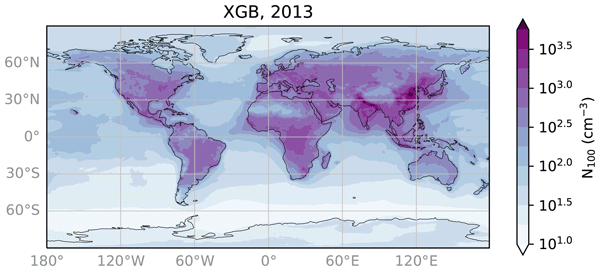
We trained machine learning models to estimate the number of aerosol particles large enough to form clouds and generated daily estimates for the entire globe. The models performed well in many continental regions but struggled in remote and marine areas. Still, this approach offers a way to quantify these particles in areas that lack direct measurements, helping us understand their influence on clouds and climate on a global scale.
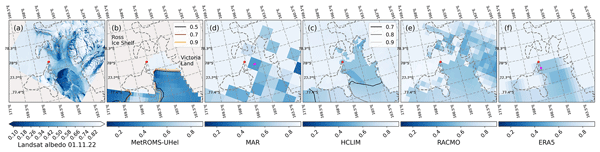
Kristiina Verro, Cecilia Äijälä, Roberta Pirazzini, Ruzica Dadic, Damien Maure, Willem Jan van de Berg, Giacomo Traversa, Christiaan T. van Dalum, Petteri Uotila, Xavier Fettweis, Biagio Di Mauro, and Milla Johansson
The Cryosphere, 19, 4409–4436, https://doi.org/10.5194/tc-19-4409-2025, https://doi.org/10.5194/tc-19-4409-2025, 2025
Short summary
Short summary
Accurately representing Antarctic sea ice is essential for reliable climate and ocean model predictions. We evaluated how different models simulate the sea ice's sunlight reflectivity (called albedo) using field and satellite data. Models with simple albedo schemes performed well in limited cases but missed key processes. The advanced scheme in the MetROMS-UHel ocean model provided the most accurate results, including observed day–night albedo changes observed during a field campaign.
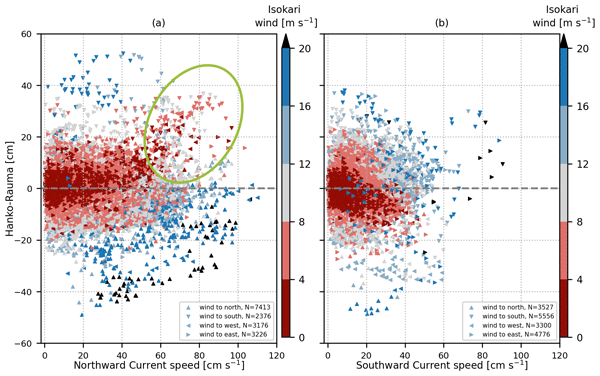
Hedi Kanarik, Laura Tuomi, Pekka Alenius, Elina Miettunen, Milla Johansson, Tuomo Roine, Antti Westerlund, and Kimmo K. Kahma
Ocean Sci., 21, 2125–2147, https://doi.org/10.5194/os-21-2125-2025, https://doi.org/10.5194/os-21-2125-2025, 2025
Short summary
Short summary
The Archipelago Sea (AS), part of the Baltic Sea off the northwest coast of Finland, is a fragmented area with intense human activity. This study presents an overview of the observed currents and their main drivers in the area. While local winds primarily drive the AS currents, simultaneous sea level variations in the Bay of Bothnia and Gulf of Finland also significantly impact the area's dynamics.
Androniki Maragkidou, Tiia Grönholm, Laura Rautiainen, Juha Nikmo, Jukka-Pekka Jalkanen, Timo Mäkelä, Timo Anttila, Lauri Laakso, and Jaakko Kukkonen
Atmos. Chem. Phys., 25, 2443–2457, https://doi.org/10.5194/acp-25-2443-2025, https://doi.org/10.5194/acp-25-2443-2025, 2025
Short summary
Short summary
The Baltic Sea's designation as a sulfur emission control area in 2006, with subsequent regulations, significantly reduced sulfur emissions from shipping. Our study analysed air quality data from 2003 to 2020 on the island Utö and employed modelling, showing a continuous decrease in SO2 concentrations since 2003 and thus evidencing the effectiveness of such regulations in improving air quality. It also underscored the importance of long-term, high-resolution monitoring at remote marine sites.
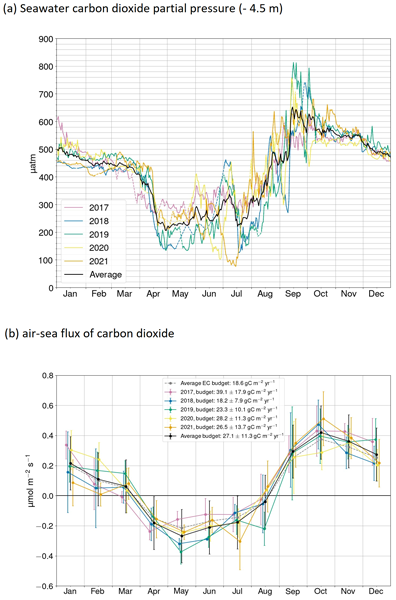
Martti Honkanen, Mika Aurela, Juha Hatakka, Lumi Haraguchi, Sami Kielosto, Timo Mäkelä, Jukka Seppälä, Simo-Matti Siiriä, Ken Stenbäck, Juha-Pekka Tuovinen, Pasi Ylöstalo, and Lauri Laakso
Biogeosciences, 21, 4341–4359, https://doi.org/10.5194/bg-21-4341-2024, https://doi.org/10.5194/bg-21-4341-2024, 2024
Short summary
Short summary
The exchange of CO2 between the sea and the atmosphere was studied in the Archipelago Sea, Baltic Sea, in 2017–2021, using an eddy covariance technique. The sea acted as a net source of CO2 with an average yearly emission of 27.1 gC m-2 yr-1, indicating that the marine ecosystem respired carbon that originated elsewhere. The yearly CO2 emission varied between 18.2–39.2 gC m-2 yr-1, mostly due to the yearly variation of ecosystem carbon uptake.
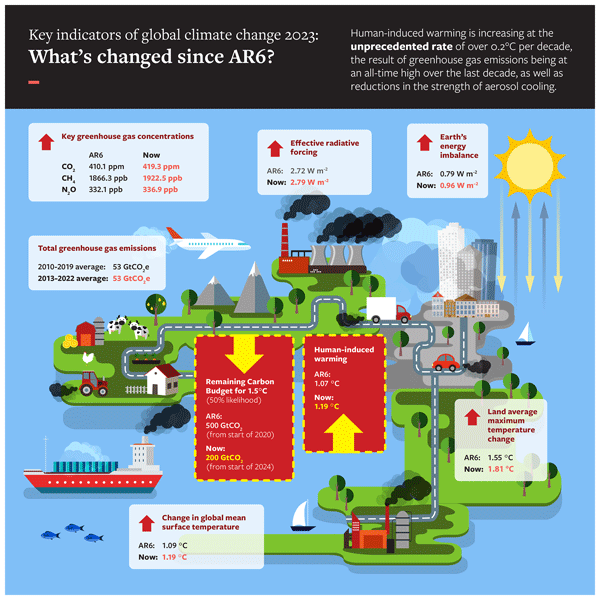
Piers M. Forster, Chris Smith, Tristram Walsh, William F. Lamb, Robin Lamboll, Bradley Hall, Mathias Hauser, Aurélien Ribes, Debbie Rosen, Nathan P. Gillett, Matthew D. Palmer, Joeri Rogelj, Karina von Schuckmann, Blair Trewin, Myles Allen, Robbie Andrew, Richard A. Betts, Alex Borger, Tim Boyer, Jiddu A. Broersma, Carlo Buontempo, Samantha Burgess, Chiara Cagnazzo, Lijing Cheng, Pierre Friedlingstein, Andrew Gettelman, Johannes Gütschow, Masayoshi Ishii, Stuart Jenkins, Xin Lan, Colin Morice, Jens Mühle, Christopher Kadow, John Kennedy, Rachel E. Killick, Paul B. Krummel, Jan C. Minx, Gunnar Myhre, Vaishali Naik, Glen P. Peters, Anna Pirani, Julia Pongratz, Carl-Friedrich Schleussner, Sonia I. Seneviratne, Sophie Szopa, Peter Thorne, Mahesh V. M. Kovilakam, Elisa Majamäki, Jukka-Pekka Jalkanen, Margreet van Marle, Rachel M. Hoesly, Robert Rohde, Dominik Schumacher, Guido van der Werf, Russell Vose, Kirsten Zickfeld, Xuebin Zhang, Valérie Masson-Delmotte, and Panmao Zhai
Earth Syst. Sci. Data, 16, 2625–2658, https://doi.org/10.5194/essd-16-2625-2024, https://doi.org/10.5194/essd-16-2625-2024, 2024
Short summary
Short summary
This paper tracks some key indicators of global warming through time, from 1850 through to the end of 2023. It is designed to give an authoritative estimate of global warming to date and its causes. We find that in 2023, global warming reached 1.3 °C and is increasing at over 0.2 °C per decade. This is caused by all-time-high greenhouse gas emissions.
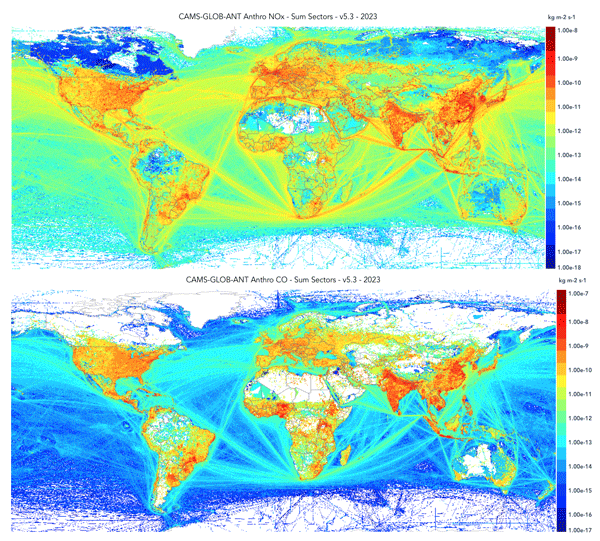
Antonin Soulie, Claire Granier, Sabine Darras, Nicolas Zilbermann, Thierno Doumbia, Marc Guevara, Jukka-Pekka Jalkanen, Sekou Keita, Cathy Liousse, Monica Crippa, Diego Guizzardi, Rachel Hoesly, and Steven J. Smith
Earth Syst. Sci. Data, 16, 2261–2279, https://doi.org/10.5194/essd-16-2261-2024, https://doi.org/10.5194/essd-16-2261-2024, 2024
Short summary
Short summary
Anthropogenic emissions are the result of transportation, power generation, industrial, residential and commercial activities as well as waste treatment and agriculture practices. This work describes the new CAMS-GLOB-ANT gridded inventory of 2000–2023 anthropogenic emissions of air pollutants and greenhouse gases. The methodology to generate the emissions is explained and the datasets are analysed and compared with publicly available global and regional inventories for selected world regions.
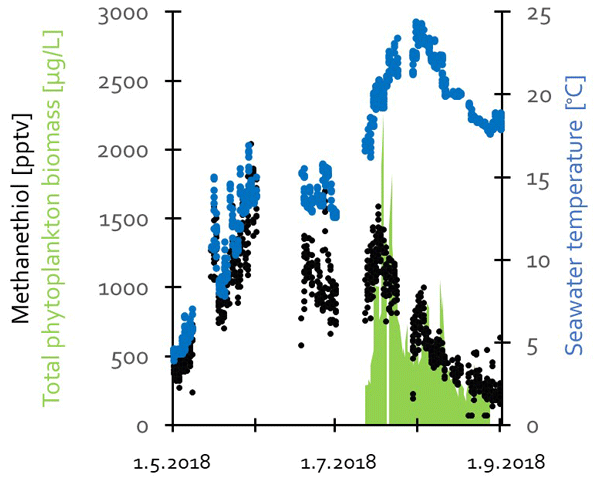
Heidi Hellén, Rostislav Kouznetsov, Kaisa Kraft, Jukka Seppälä, Mika Vestenius, Jukka-Pekka Jalkanen, Lauri Laakso, and Hannele Hakola
Atmos. Chem. Phys., 24, 4717–4731, https://doi.org/10.5194/acp-24-4717-2024, https://doi.org/10.5194/acp-24-4717-2024, 2024
Short summary
Short summary
Mixing ratios of C2-C5 NMHCs and methanethiol were measured on an island in the Baltic Sea using an in situ gas chromatograph. Shipping emissions were found to be an important source of ethene, ethyne, propene, and benzene. High summertime mixing ratios of methanethiol and dependence of mixing ratios on seawater temperature and height indicated the biogenic origin to possibly be phytoplankton or macroalgae. These emissions may have a strong impact on SO2 production and new particle formation.
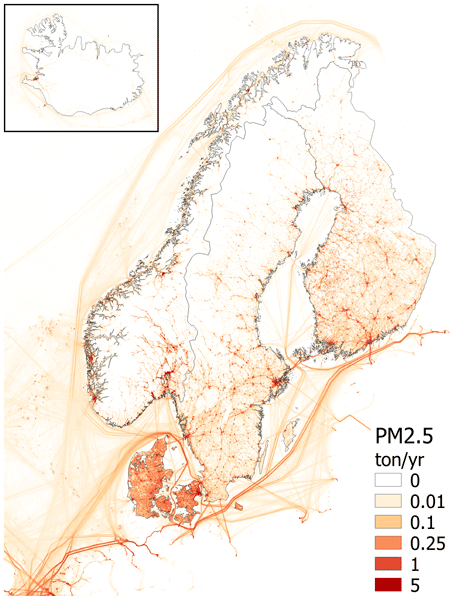
Ville-Veikko Paunu, Niko Karvosenoja, David Segersson, Susana López-Aparicio, Ole-Kenneth Nielsen, Marlene Schmidt Plejdrup, Throstur Thorsteinsson, Dam Thanh Vo, Jeroen Kuenen, Hugo Denier van der Gon, Jukka-Pekka Jalkanen, Jørgen Brandt, and Camilla Geels
Earth Syst. Sci. Data, 16, 1453–1474, https://doi.org/10.5194/essd-16-1453-2024, https://doi.org/10.5194/essd-16-1453-2024, 2024
Short summary
Short summary
Air pollution is an important cause of adverse health effects, even in Nordic countries. To assess their health impacts, emission inventories with high spatial resolution are needed. We studied how national data and methods for the spatial distribution of the emissions compare to a European level inventory. For road transport the methods are well established, but for machinery and off-road emissions the current recommendations for the spatial distribution of these emissions should be improved.
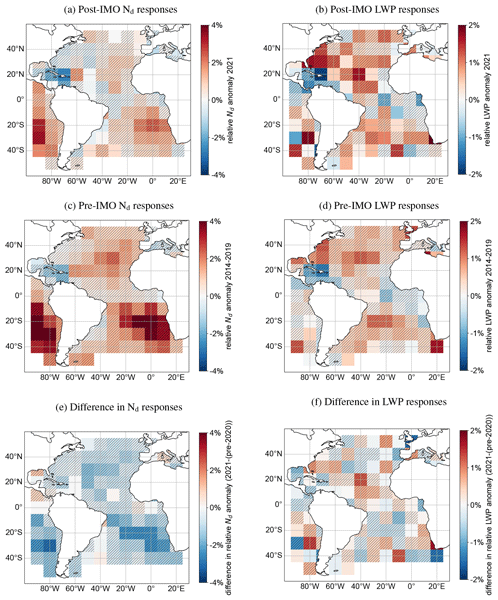
Peter Manshausen, Duncan Watson-Parris, Matthew W. Christensen, Jukka-Pekka Jalkanen, and Philip Stier
Atmos. Chem. Phys., 23, 12545–12555, https://doi.org/10.5194/acp-23-12545-2023, https://doi.org/10.5194/acp-23-12545-2023, 2023
Short summary
Short summary
Aerosol from burning fuel changes cloud properties, e.g., the number of droplets and the content of water. Here, we study how clouds respond to different amounts of shipping aerosol. Droplet numbers increase linearly with increasing aerosol over a broad range until they stop increasing, while the amount of liquid water always increases, independently of emission amount. These changes in cloud properties can make them reflect more or less sunlight, which is important for the earth's climate.
Lea Fink, Matthias Karl, Volker Matthias, Sonia Oppo, Richard Kranenburg, Jeroen Kuenen, Sara Jutterström, Jana Moldanova, Elisa Majamäki, and Jukka-Pekka Jalkanen
Atmos. Chem. Phys., 23, 10163–10189, https://doi.org/10.5194/acp-23-10163-2023, https://doi.org/10.5194/acp-23-10163-2023, 2023
Short summary
Short summary
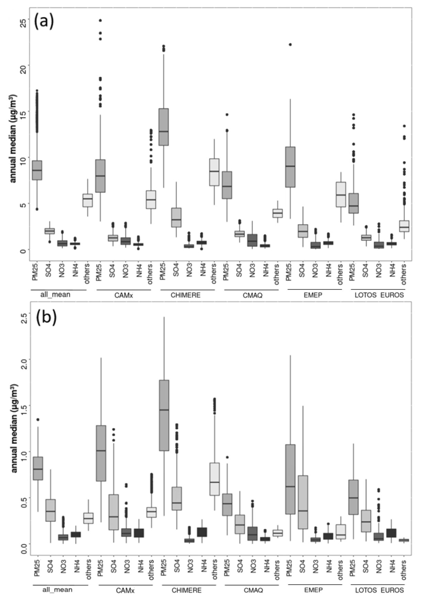
The Mediterranean Sea is a heavily trafficked shipping area, and air quality monitoring stations in numerous cities along the Mediterranean coast have detected high levels of air pollutants originating from shipping emissions. The current study investigates how existing restrictions on shipping-related emissions to the atmosphere ensure compliance with legislation. Focus was laid on fine particles and particle species, which were simulated with five different chemical transport models.
Olle Räty, Marko Laine, Ulpu Leijala, Jani Särkkä, and Milla M. Johansson
Nat. Hazards Earth Syst. Sci., 23, 2403–2418, https://doi.org/10.5194/nhess-23-2403-2023, https://doi.org/10.5194/nhess-23-2403-2023, 2023
Short summary
Short summary
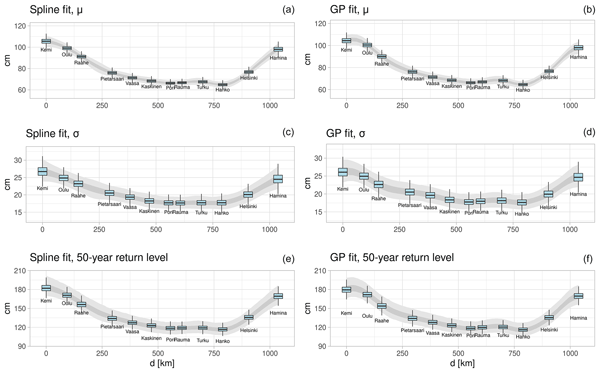
We studied annual maximum sea levels in the Finnish coastal region. Our aim was to better quantify the uncertainty in them compared to previous studies. Using four statistical models, we found out that hierarchical models, which shared information on sea-level extremes across Finnish tide gauges, had lower uncertainty in their results in comparison with tide-gauge-specific fits. These models also suggested that the shape of the distribution for extreme sea levels is similar on the Finnish coast.
Havu Pellikka, Milla M. Johansson, Maaria Nordman, and Kimmo Ruosteenoja
Nat. Hazards Earth Syst. Sci., 23, 1613–1630, https://doi.org/10.5194/nhess-23-1613-2023, https://doi.org/10.5194/nhess-23-1613-2023, 2023
Short summary
Short summary
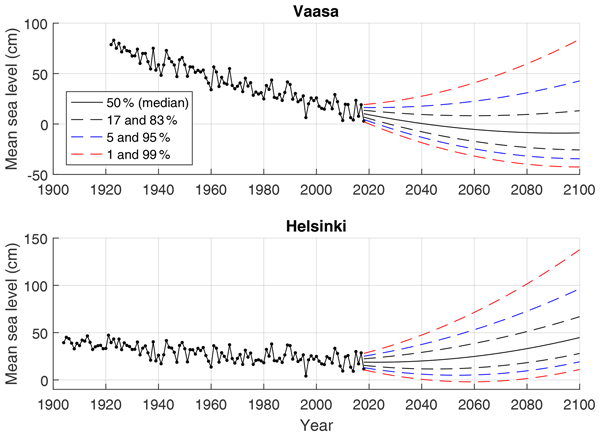
We explore the rate of past and future sea level rise at the Finnish coast, northeastern Baltic Sea, in 1901–2100. For this analysis, we use tide gauge observations, modelling results, and a probabilistic method to combine information from several sea level rise projections. We provide projections of local mean sea level by 2100 as probability distributions. The results can be used in adaptation planning in various sectors with different risk tolerance, e.g. land use planning or nuclear safety.
Lea Fink, Matthias Karl, Volker Matthias, Sonia Oppo, Richard Kranenburg, Jeroen Kuenen, Jana Moldanova, Sara Jutterström, Jukka-Pekka Jalkanen, and Elisa Majamäki
Atmos. Chem. Phys., 23, 1825–1862, https://doi.org/10.5194/acp-23-1825-2023, https://doi.org/10.5194/acp-23-1825-2023, 2023
Short summary
Short summary
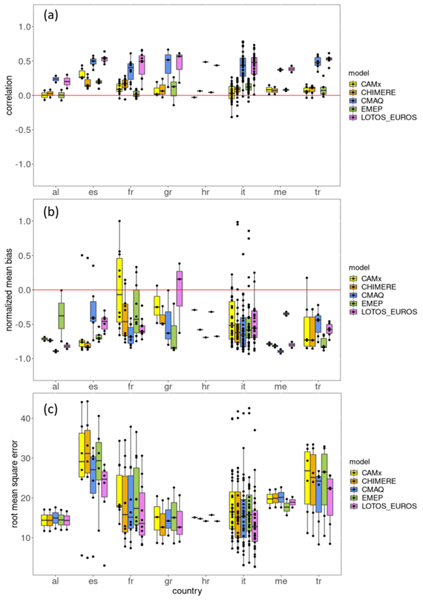
Potential ship impact on air pollution in the Mediterranean Sea was simulated with five chemistry transport models. An evaluation of the results for NO2 and O3 air concentrations and dry deposition is presented. Emission data, modeled year and domain were the same. Model run outputs were compared to measurements from background stations. We focused on comparing model outputs regarding the concentration of regulatory pollutants and the relative ship impact on total air pollution concentrations.
Matti Räsänen, Mika Aurela, Ville Vakkari, Johan P. Beukes, Juha-Pekka Tuovinen, Pieter G. Van Zyl, Miroslav Josipovic, Stefan J. Siebert, Tuomas Laurila, Markku Kulmala, Lauri Laakso, Janne Rinne, Ram Oren, and Gabriel Katul
Hydrol. Earth Syst. Sci., 26, 5773–5791, https://doi.org/10.5194/hess-26-5773-2022, https://doi.org/10.5194/hess-26-5773-2022, 2022
Short summary
Short summary
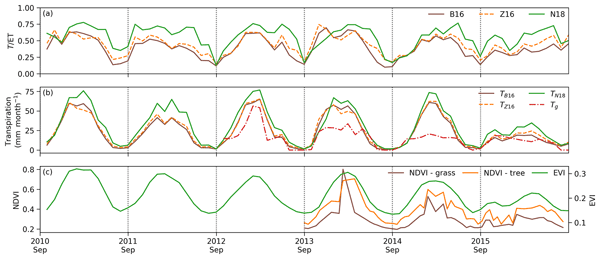
The productivity of semiarid grazed grasslands is linked to the variation in rainfall and transpiration. By combining carbon dioxide and water flux measurements, we show that the annual transpiration is nearly constant during wet years while grasses react quickly to dry spells and drought, which reduce transpiration. The planning of annual grazing strategies could consider the early-season rainfall frequency that was linked to the portion of annual transpiration.
Jenna Ritvanen, Ewan O'Connor, Dmitri Moisseev, Raisa Lehtinen, Jani Tyynelä, and Ludovic Thobois
Atmos. Meas. Tech., 15, 6507–6519, https://doi.org/10.5194/amt-15-6507-2022, https://doi.org/10.5194/amt-15-6507-2022, 2022
Short summary
Short summary
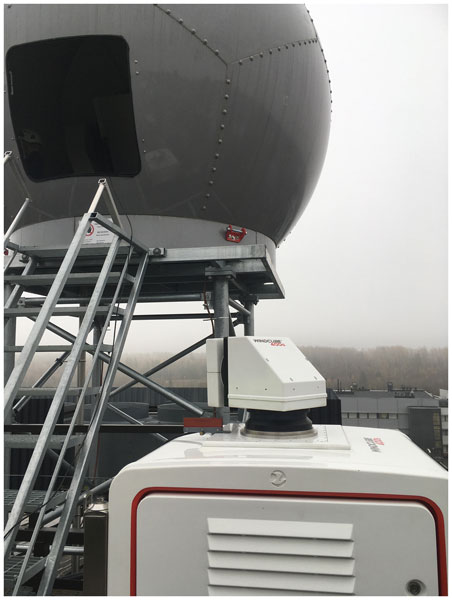
Doppler lidars and weather radars provide accurate wind measurements, with Doppler lidar usually performing better in dry weather conditions and weather radar performing better when there is precipitation. Operating both instruments together should therefore improve the overall performance. We investigate how well a co-located Doppler lidar and X-band radar perform with respect to various weather conditions, including changes in horizontal visibility, cloud altitude, and precipitation.
Mikko Lensu and Markku Similä
The Cryosphere, 16, 4363–4377, https://doi.org/10.5194/tc-16-4363-2022, https://doi.org/10.5194/tc-16-4363-2022, 2022
Short summary
Short summary
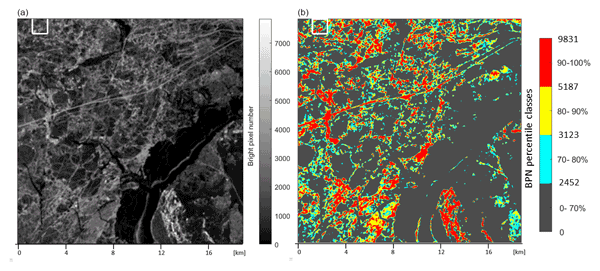
Ice ridges form a compressing ice cover. From above they appear as walls of up to few metres in height and extend even kilometres across the ice. Below they may reach tens of metres under the sea surface. Ridges need to be observed for the purposes of ice forecasting and ice information production. This relies mostly on ridging signatures discernible in radar satellite (SAR) images. New methods to quantify ridging from SAR have been developed and are shown to agree with field observations.
Marc Guevara, Hervé Petetin, Oriol Jorba, Hugo Denier van der Gon, Jeroen Kuenen, Ingrid Super, Jukka-Pekka Jalkanen, Elisa Majamäki, Lasse Johansson, Vincent-Henri Peuch, and Carlos Pérez García-Pando
Earth Syst. Sci. Data, 14, 2521–2552, https://doi.org/10.5194/essd-14-2521-2022, https://doi.org/10.5194/essd-14-2521-2022, 2022
Short summary
Short summary
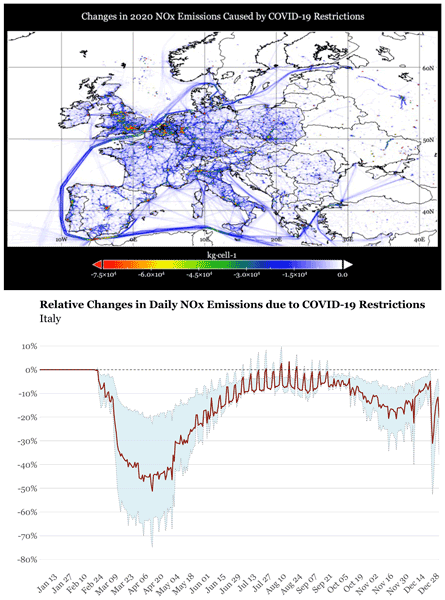
To control the spread of the COVID-19 disease, European governments implemented mobility restriction measures that resulted in an unprecedented drop in anthropogenic emissions. This work presents a dataset of emission adjustment factors that allows quantifying changes in 2020 European primary emissions per country and pollutant sector at the daily scale. The resulting dataset can be used as input in modelling studies aiming at quantifying the impact of COVID-19 on air quality levels.
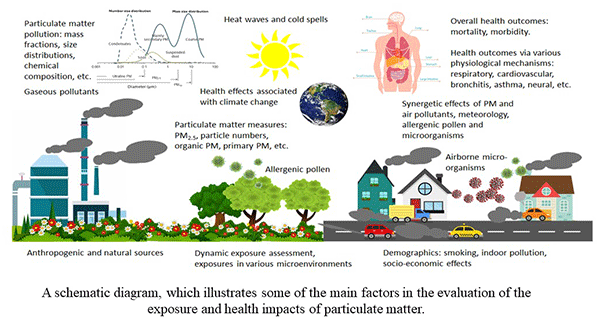
Ranjeet S. Sokhi, Nicolas Moussiopoulos, Alexander Baklanov, John Bartzis, Isabelle Coll, Sandro Finardi, Rainer Friedrich, Camilla Geels, Tiia Grönholm, Tomas Halenka, Matthias Ketzel, Androniki Maragkidou, Volker Matthias, Jana Moldanova, Leonidas Ntziachristos, Klaus Schäfer, Peter Suppan, George Tsegas, Greg Carmichael, Vicente Franco, Steve Hanna, Jukka-Pekka Jalkanen, Guus J. M. Velders, and Jaakko Kukkonen
Atmos. Chem. Phys., 22, 4615–4703, https://doi.org/10.5194/acp-22-4615-2022, https://doi.org/10.5194/acp-22-4615-2022, 2022
Short summary
Short summary
This review of air quality research focuses on developments over the past decade. The article considers current and future challenges that are important from air quality research and policy perspectives and highlights emerging prominent gaps of knowledge. The review also examines how air pollution management needs to adapt to new challenges and makes recommendations to guide the direction for future air quality research within the wider community and to provide support for policy.

Milla M. Johansson, Jan-Victor Björkqvist, Jani Särkkä, Ulpu Leijala, and Kimmo K. Kahma
Nat. Hazards Earth Syst. Sci., 22, 813–829, https://doi.org/10.5194/nhess-22-813-2022, https://doi.org/10.5194/nhess-22-813-2022, 2022
Short summary
Short summary
We analysed the correlation of sea level and wind waves at a coastal location in the Gulf of Finland using tide gauge data, wave measurements, and wave simulations. The correlation was positive for southwesterly winds and negative for northeasterly winds. Probabilities of high total water levels (sea level + wave crest) are underestimated if sea level and waves are considered independent. Suitably chosen copula functions can account for the dependence.
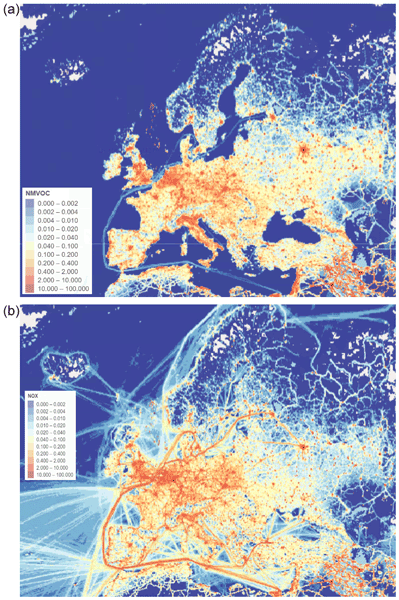
Jeroen Kuenen, Stijn Dellaert, Antoon Visschedijk, Jukka-Pekka Jalkanen, Ingrid Super, and Hugo Denier van der Gon
Earth Syst. Sci. Data, 14, 491–515, https://doi.org/10.5194/essd-14-491-2022, https://doi.org/10.5194/essd-14-491-2022, 2022
Short summary
Short summary
This paper presents an 18-year time series for anthropogenic emissions for the main air pollutants in Europe, distinguishing 15 main source categories. It provides a complete overview of emissions to air and is designed to support air quality modelling. The data build where possible on official country total emissions used in the policy processes, but where necessary alternative data were used. The emission data are spatially distributed at high resolution (~ 6 km x 6 km) in a consistent way.
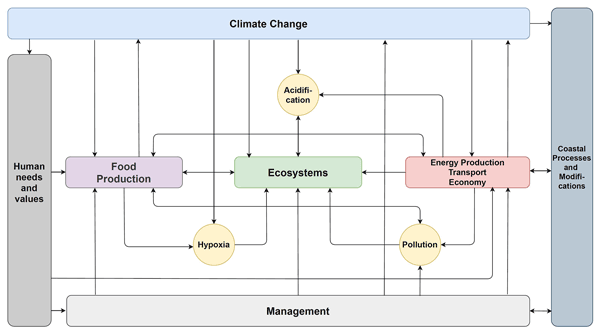
Marcus Reckermann, Anders Omstedt, Tarmo Soomere, Juris Aigars, Naveed Akhtar, Magdalena Bełdowska, Jacek Bełdowski, Tom Cronin, Michał Czub, Margit Eero, Kari Petri Hyytiäinen, Jukka-Pekka Jalkanen, Anders Kiessling, Erik Kjellström, Karol Kuliński, Xiaoli Guo Larsén, Michelle McCrackin, H. E. Markus Meier, Sonja Oberbeckmann, Kevin Parnell, Cristian Pons-Seres de Brauwer, Anneli Poska, Jarkko Saarinen, Beata Szymczycha, Emma Undeman, Anders Wörman, and Eduardo Zorita
Earth Syst. Dynam., 13, 1–80, https://doi.org/10.5194/esd-13-1-2022, https://doi.org/10.5194/esd-13-1-2022, 2022
Short summary
Short summary
As part of the Baltic Earth Assessment Reports (BEAR), we present an inventory and discussion of different human-induced factors and processes affecting the environment of the Baltic Sea region and their interrelations. Some are naturally occurring and modified by human activities, others are completely human-induced, and they are all interrelated to different degrees. The findings from this study can largely be transferred to other comparable marginal and coastal seas in the world.

Jari Walden, Liisa Pirjola, Tuomas Laurila, Juha Hatakka, Heidi Pettersson, Tuomas Walden, Jukka-Pekka Jalkanen, Harri Nordlund, Toivo Truuts, Miika Meretoja, and Kimmo K. Kahma
Atmos. Chem. Phys., 21, 18175–18194, https://doi.org/10.5194/acp-21-18175-2021, https://doi.org/10.5194/acp-21-18175-2021, 2021
Short summary
Short summary
Ship emissions play an important role in the deposition of gaseous compounds and nanoparticles (Ntot), affecting climate, human health (especially in coastal areas), and eutrophication. Micrometeorological methods showed that ship emissions were mainly responsible for the deposition of Ntot, whereas they only accounted for a minor proportion of CO2 deposition. An uncertainty analysis applied to the fluxes and fuel sulfur content results demonstrated the reliability of the results.
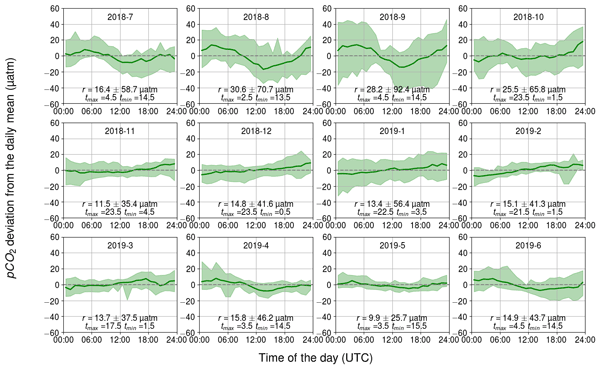
Martti Honkanen, Jens Daniel Müller, Jukka Seppälä, Gregor Rehder, Sami Kielosto, Pasi Ylöstalo, Timo Mäkelä, Juha Hatakka, and Lauri Laakso
Ocean Sci., 17, 1657–1675, https://doi.org/10.5194/os-17-1657-2021, https://doi.org/10.5194/os-17-1657-2021, 2021
Short summary
Short summary
The exchange of carbon dioxide (CO2) between the sea and the atmosphere is regulated by the gradient of CO2 partial pressure (pCO2) between the sea and the air. The daily variation of the seawater pCO2 recorded at the fixed station Utö in the Baltic Sea was found to be mainly biologically driven. Calculation of the annual net exchange of CO2 between the sea and atmosphere based on daily measurements of pCO2 carried out using the same sampling time every day could introduce a bias of up to 12 %.
Cited articles
Adediji, A., Ajewole, M., and Falodun, S.: Distribution of radio refractivity gradient and effective earth radius factor (k-factor) over Akure, South Western Nigeria, Journal of Atmospheric and Solar-Terrestrial Physics, 73, 2300–2304, https://doi.org/10.1016/j.jastp.2011.06.017, 2011. a
Ahlnäs, K.: Variations in Salinity at Utö 1911–1961, Geophysica, 8, 135–149, 1961. a
Ames, L. A., Newman, P., and Rogers, T. F.: VHF Tropospheric Overwater Measurements Far beyond the Radio Horizon, Proceedings of the IRE, 43, 1369–1373, https://doi.org/10.1109/JRPROC.1955.277950, 1955. a
Ao, C. O.: Effect of ducting on radio occultation measurements: An assessment based on high-resolution radiosonde soundings, Radio Science, 42, https://doi.org/10.1029/2006RS003485, 2007. a
Basha, G., Venkat Ratnam, M., Manjula, G., and Chandra Sekhar, A. V.: Anomalous propagation conditions observed over a tropical station using high-resolution GPS radiosonde observations, Radio Science, 48, 42–49, https://doi.org/10.1002/rds.20012, 2013. a
Bruin, E.: On propagation effects in Maritime Situation Awareness: Modelling the impact of North Sea weather conditions on the performance of AIS and coastal radar systems, Master's thesis, Utrecht University, https://studenttheses.uu.nl/handle/20.500.12932/21952 (last access: 25 February 2026), 2016. a, b, c
Chartier, A. T., Hanley, T. R., and Emmons, D. J.: Long-distance propagation of 162 MHz shipping information links associated with sporadic E, Atmos. Meas. Tech., 15, 6387–6393, https://doi.org/10.5194/amt-15-6387-2022, 2022. a, b
Constantinides, A., Najat, S., and Haralambous, H.: Atmospheric Ducting Interference on DAB, DAB+ Radio in Eastern Mediterranean, Electronics, 11, https://doi.org/10.3390/electronics11244183, 2022. a
Copernicus: EU-DEM, https://land.copernicus.eu/imagery-in-situ/eu-dem (last access: 12 May 2022), 2014. a
Crameri, F.: Scientific colour maps, Zenodo, https://doi.org/10.5281/zenodo.5501399, 2021. a
Crameri, F., Shephard, G., and Heron, P.: The misuse of colour in science communication, Nat. Commun., 11, https://doi.org/10.1038/s41467-020-19160-7, 2020. a
Falodun, S. and Ajewole, M.: Radio refractive index in the lowest 100-m layer of the troposphere in Akure, South Western Nigeria, Journal of Atmospheric and Solar-Terrestrial Physics, 68, 236–243, https://doi.org/10.1016/j.jastp.2005.10.002, 2006. a
Grabner, M. and Kvicera, V.: Refractive Index Measurement at TV Tower Prague, Radioengineering, 12, 2003. a
Green, D., Fowler, C., Power, D., and Tunaley, J.: VHF propagation study, in: Contractor report DRDC-ATLANTIC-CR-2011-152, Defence R&D Canada – Atlantic, https://www.london-research-and-development.com/VHF-Propagation-Study.pdf (last access: 25 February 2026), 2011. a
Gunashekar, S. D., Warrington, E. M., and Siddle, D. R.: Long-term statistics related to evaporation duct propagation of 2 GHz radio waves in the English Channel, Radio Science, 45, https://doi.org/10.1029/2009RS004339, 2010. a
Han, J., Wu, J., Zhang, L., Wang, H., Zhu, Q., Zhang, C., Zhao, H., and Zhang, S.: A Classifying-Inversion Method of Offshore Atmospheric Duct Parameters Using AIS Data Based on Artificial Intelligence, Remote Sensing, 14, https://doi.org/10.3390/rs14133197, 2022. a, b
Harati-Mokhtari, A., Wall, A., Brooks, P., and Wang, J.: Automatic Identification System (AIS): Data Reliability and Human Error Implications, Journal of Navigation, 60, 373–389, https://doi.org/10.1017/S0373463307004298, 2007. a
Hersbach, H., Bell, B., Berrisford, P., Hirahara, S., Horányi, A., Muñoz-Sabater, J., Nicolas, J., Peubey, C., Radu, R., Schepers, D., Simmons, A., Soci, C., Abdalla, S., Abellan, X., Balsamo, G., Bechtold, P., Biavati, G., Bidlot, J., Bonavita, M., De Chiara, G., Dahlgren, P., Dee, D., Diamantakis, M., Dragani, R., Flemming, J., Forbes, R., Fuentes, M., Geer, A., Haimberger, L., Healy, S., Hogan, R. J., Hólm, E., Janisková, M., Keeley, S., Laloyaux, P., Lopez, P., Lupu, C., Radnoti, G., de Rosnay, P., Rozum, I., Vamborg, F., Villaume, S., and Thépaut, J.-N.: The ERA5 global reanalysis, Quarterly Journal of the Royal Meteorological Society, 146, 1999–2049, https://doi.org/10.1002/qj.3803, 2020. a, b
Honkanen, M., Tuovinen, J.-P., Laurila, T., Mäkelä, T., Hatakka, J., Kielosto, S., and Laakso, L.: Measuring turbulent CO2 fluxes with a closed-path gas analyzer in a marine environment, Atmos. Meas. Tech., 11, 5335–5350, https://doi.org/10.5194/amt-11-5335-2018, 2018. a
Honkanen, M., Aurela, M., Hatakka, J., Haraguchi, L., Kielosto, S., Mäkelä, T., Seppälä, J., Siiriä, S.-M., Stenbäck, K., Tuovinen, J.-P., Ylöstalo, P., and Laakso, L.: Interannual and seasonal variability of the air–sea CO2 exchange at Utö in the coastal region of the Baltic Sea, Biogeosciences, 21, 4341–4359, https://doi.org/10.5194/bg-21-4341-2024, 2024. a
Huang, L., Zhao, X., and Liu, Y.: The Statistical Characteristics of Atmospheric Ducts Observed Over Stations in Different Regions of American Mainland Based on High-Resolution GPS Radiosonde Soundings, Frontiers in Environmental Science, 10, https://doi.org/10.3389/fenvs.2022.946226, 2022a. a
Huang, L.-F., Liu, C.-G., Wang, H.-G., Zhu, Q.-L., Zhang, L.-J., Han, J., Zhang, Y.-S., and Wang, Q.-N.: Experimental Analysis of Atmospheric Ducts and Navigation Radar Over-the-Horizon Detection, Remote Sensing, 14, https://doi.org/10.3390/rs14112588, 2022b. a
Huang, L.-F., Liu, C.-G., Wu, Z.-P., Zhang, L.-J., Wang, H.-G., Zhu, Q.-L., Han, J., and Sun, M.-C.: Comparative Analysis of Intelligent Optimization Algorithms for Atmospheric Duct Inversion Using Automatic Identification System Signals, Remote Sensing, 15, https://doi.org/10.3390/rs15143577, 2023. a, b, c
Hyvärinen, A.-P., Kolmonen, P., Kerminen, V.-M., Virkkula, A., Leskinen, A., Komppula, M., Hatakka, J., Burkhart, J., Stohl, A., Aalto, P., Kulmala, M., Lehtinen, K., Viisanen, Y., and Lihavainen, H.: Aerosol black carbon at five background measurement sites over Finland, a gateway to the Arctic, Atmos. Environ., 45, 4042–4050, https://doi.org/10.1016/j.atmosenv.2011.04.026, 2011. a
ITU: Long range detection of automatic identification system (AIS) messages under various tropospheric propagation conditions, REPORT ITU-R M.2123, Tech. rep., International Telecommunication Union, https://www.itu.int/pub/R-REP-M.2123-2007 (last access: 25 February 2026), 2007. a, b, c, d, e
ITU: Recommendation ITU-R P.526-15, Propagation by diffraction. P Series., Tech. rep., International Telecommunication Union, https://www.itu.int/rec/R-REC-P.526-15-201910-S/en (last access: 25 February 2026), 2019. a
Jaskólski, K., Marchel, L., Felski, A., Jaskólski, M., and Specht, M.: Automatic Identification System (AIS) Dynamic Data Integrity Monitoring and Trajectory Tracking Based on the Simultaneous Localization and Mapping (SLAM) Process Model, Sensors, 21, https://doi.org/10.3390/s21248430, 2021. a
Kerr, D.: Propagation of Short Radio Waves, p. 728, McGraw-Hill, 1951. a
Laakso, L., Mikkonen, S., Drebs, A., Karjalainen, A., Pirinen, P., and Alenius, P.: 100 years of atmospheric and marine observations at the Finnish Utö Island in the Baltic Sea, Ocean Sci., 14, 617–632, https://doi.org/10.5194/os-14-617-2018, 2018. a
Laapas, M. and Venäläinen, A.: Homogenization and trend analysis of monthly mean and maximum wind speed time series in Finland, 1959–2015, Int. J. Climatol., 37, 4803–4813, https://doi.org/10.1002/joc.5124, 2017. a
Laurila, T. and Hakola, H.: Seasonal Cycle of C2-C5 hydrocarbons over the Baltic Sea and Northern Finland, Atmos. Environ., 30, 1597-1607, https://doi.org/10.1016/1352-2310(95)00482-3, 1996. a
Lee, I.-S., Noh, J.-H., and Oh, S.-J.: A Survey and analysis on a troposcatter propagation model based on ITU-R recommendations, ICT Express, 9, 507–516, https://doi.org/10.1016/j.icte.2022.09.009, 2023. a
Li, J., Xu, C., Su, H., Gao, L., and Wang, T.: Deep Learning for SAR Ship Detection: Past, Present and Future, Remote Sensing, 14, https://doi.org/10.3390/rs14112712, 2022. a
Liang, Z., Ding, J., Fei, J., Cheng, X., and Huang, X.: Maintenance and Sudden Change of a Strong Elevated Ducting Event Associated with High Pressure and Marine Low-Level Jet, Journal of Meteorological Research, 34, 1287–1298, https://doi.org/10.1007/s13351-020-9192-9, 2020. a
Manjula, G., Roja Raman, M., Venkat Ratnam, M., Chandrasekhar, A. V., and Vijaya Bhaskara Rao, S.: Diurnal variation of ducts observed over a tropical station, Gadanki, using high-resolution GPS radiosonde observations, Radio Science, 51, 247–258, https://doi.org/10.1002/2015RS005814, 2016. a
Maragkidou, A., Grönholm, T., Rautiainen, L., Nikmo, J., Jalkanen, J.-P., Mäkelä, T., Anttila, T., Laakso, L., and Kukkonen, J.: Measurement report: The effects of SECA regulations on the atmospheric SO2 concentrations in the Baltic Sea, based on long-term observations on the Finnish island, Utö, Atmos. Chem. Phys., 25, 2443–2457, https://doi.org/10.5194/acp-25-2443-2025, 2025. a
Mazzarella, F., Vespe, M., Tarchi, D., Aulicino, G., and Vollero, A.: AIS reception characterisation for AIS on/off anomaly detection, in: 2016 19th International Conference on Information Fusion (FUSION), 1867–1873, https://ieeexplore.ieee.org/document/7528110 (last access: 25 February 2026), 2016. a
Mentes, S. and Kaymaz, Z.: Investigation of Surface Duct Conditions over Istanbul, Turkey, Journal of Applied Meteorology and Climatology, 46, 318–337, https://doi.org/10.1175/JAM2452.1, 2007. a
Nadarajah, S.: A generalized normal distribution, Journal of Applied Statistics, 32, 685–694, https://doi.org/10.1080/02664760500079464, 2005. a
Norin, L.: Observations of anomalous propagation over waters near Sweden, Atmos. Meas. Tech., 16, 1789–1801, https://doi.org/10.5194/amt-16-1789-2023, 2023. a, b, c, d
Norin, L., Wellander, N., and Devasthale, A.: Anomalous Propagation and the Sinking of the Russian Warship Moskva, Bulletin of the American Meteorological Society, 104, E2286–E2304, https://doi.org/10.1175/BAMS-D-23-0113.1, 2023. a
Palmer, A. J. and Baker, D. C.: A Novel Simple Semi-Empirical Model for the Effective Earth Radius Factor, IEEE Transactions on Broadcasting, 52, 557–565, https://doi.org/10.1109/TBC.2006.884737, 2006. a
Patterson, W.: The Propagation Factor Fp in the radar equation, Chapter 26: in: Radar Handbook, edited by: Skolnik, M. I., 1290–1315, McGraw-Hill, third edition edn., ISBN 0071485473, 9780071485470, 2008. a
Qin, T., Su, B., Chen, L., Yang, J., Sun, H., Ma, J., and Yu, W.: Arctic Atmospheric Ducting Characteristics and Their Connections with Arctic Oscillation and Sea Ice, Atmosphere, 13, https://doi.org/10.3390/atmos13122119, 2022. a
Rautiainen, L., Tyynelä, J., Lensu, M., Siiriä, S., Vakkari, V., O’Connor, E., Hämäläinen, K., Lonka, H., Stenbäck, K., Koistinen, J., and Laakso, L.: Utö Observatory for Analysing Atmospheric Ducting Events over Baltic Coastal and Marine Waters, Remote Sensing, 15, https://doi.org/10.3390/rs15122989, 2023. a, b, c, d
Rautiainen, L., Lensu, M., Vakkari, V., Tyynelä, J., Kanarik, H., and Laakso, L.: Marine Atmospheric Ducting Statistics Based on 2 Years of Coastal Surveillance Radar Observations, Journal of Applied Meteorology and Climatology, 64, 63–76, https://doi.org/10.1175/JAMC-D-24-0096.1, 2025. a, b, c, d, e, f, g, h, i, j
Rice, D. D., Sojka, J. J., Eccles, J. V., Raitt, J. W., Brady, J. J., and Hunsucker, R. D.: First results of mapping sporadic E with a passive observing network, Space Weather, 9, https://doi.org/10.1029/2011SW000678, 2011. a
Sirkova, I.: Revisiting Enhanced AIS Detection Range under Anomalous Propagation Conditions, Journal of Marine Science and Engineering, 11, 1838, https://doi.org/10.3390/jmse11091838, 2023. a, b, c
Tang, W. L., Cha, H., Wei, M., and Tian, B.: Estimation of surface-based duct parameters from automatic identification system using the Levy flight quantum-behaved particle swarm optimization algorithm, Journal of Electromagnetic Waves and Applications, 33, 827–837, https://doi.org/10.1080/09205071.2018.1560365, 2019. a
Turton, J., Bennetts, D., and Farmer, S.: An introduction to radio ducting, Meteorological Magazine, 117, 245–254, 1988. a
Valčić, S. and Brčić, D.: On Detection of Anomalous VHF Propagation over the Adriatic Sea Utilising a Software-Defined Automatic Identification System Receiver, Journal of Marine Science and Engineering, 11, https://doi.org/10.3390/jmse11061170, 2023. a
Wang, Q., Alappattu, D. P., Billingsley, S., Blomquist, B., Burkholder, R. J., Christman, A. J., Creegan, E. D., de Paolo, T., Eleuterio, D. P., Fernando, H. J. S., Franklin, K. B., Grachev, A. A., Haack, T., Hanley, T. R., Hocut, C. M., Holt, T. R., Horgan, K., Jonsson, H. H., Hale, R. A., Kalogiros, J. A., Khelif, D., Leo, L. S., Lind, R. J., Lozovatsky, I., Planella-Morato, J., Mukherjee, S., Nuss, W. A., Pozderac, J., Rogers, L. T., Savelyev, I., Savidge, D. K., Shearman, R. K., Shen, L., Terrill, E., Ulate, A. M., Wang, Q., Wendt, R. T., Wiss, R., Woods, R. K., Xu, L., Yamaguchi, R. T., and Yardim, C.: CASPER: Coupled Air-Sea Processes and Electromagnetic Ducting Research, Bulletin of the American Meteorological Society, 99, 1449–1471, https://doi.org/10.1175/BAMS-D-16-0046.1, 2018. a
Wang, X., Wang, Y., Fu, L., and Hu, Q.: An AIS Base Station Credibility Monitoring Method Based on Service Radius Detection Patterns in Complex Sea Surface Environments, Journal of Marine Science and Engineering, 12, https://doi.org/10.3390/jmse12081352, 2024. a
Short summary
We present an experimental Automatic Identification System (AIS) receiver set-up to study anomalous signal propagation over coastal and marine waters in the northern Baltic Sea. Anomalous atmospheric conditions can allow for the AIS messages to be received from farther distances than under normal conditions. The results show that under anomalous conditions, the messages can be received up to 600 km away and have both diurnal and seasonal cycles.
We present an experimental Automatic Identification System (AIS) receiver set-up to study...


