
Articles | Volume 19, issue 8
https://doi.org/10.5194/amt-19-2837-2026
© Author(s) 2026. This work is distributed under
the Creative Commons Attribution 4.0 License.
the Creative Commons Attribution 4.0 License.
Special issue:
https://doi.org/10.5194/amt-19-2837-2026
© Author(s) 2026. This work is distributed under
the Creative Commons Attribution 4.0 License.
the Creative Commons Attribution 4.0 License.
Research article
| 
28 Apr 2026
Research article |
| 28 Apr 2026
| 28 Apr 2026
Deployment and evaluation of a low-cost sensor system for atmospheric CO2 monitoring on a sea–air interface buoy
Jialu Liu
Department of Atmospheric and Oceanic Sciences and Institute of Atmospheric Sciences, Fudan University, Shanghai, 200438, China
Shanghai Frontiers Science Center of Atmosphere-Ocean Interaction, Key Laboratory of Polar Atmosphere-Ocean-Ice System for Weather and Climate of Ministry of Education, and Shanghai Key Laboratory of Ocean-Land-Atmosphere Boundary Dynamics, Fudan University, Shanghai, 200438, China

State Key Laboratory of Atmospheric Environment and Extreme Meteorology, Institute of Atmospheric Physics, Chinese Academy of Sciences, Beijing, 100029, China
Huiling Ouyang
Department of Atmospheric and Oceanic Sciences and Institute of Atmospheric Sciences, Fudan University, Shanghai, 200438, China
Observation and Research Station of Huaniaoshan East China Sea Ocean-Atmosphere Integrated Ecosystem, Ministry of Natural Resources, Shanghai, 200136, China
Ning Zeng
Department of Atmospheric and Oceanic Science, University of Maryland, College Park, Maryland, 20742, USA
Earth System Science Interdisciplinary Center, University of Maryland, College Park, Maryland, 20742, USA
Zhenfeng Wang
Department of Atmospheric and Oceanic Sciences and Institute of Atmospheric Sciences, Fudan University, Shanghai, 200438, China
Jian Wang
Department of Atmospheric and Oceanic Sciences and Institute of Atmospheric Sciences, Fudan University, Shanghai, 200438, China
Weiwei Fu
Department of Atmospheric and Oceanic Sciences and Institute of Atmospheric Sciences, Fudan University, Shanghai, 200438, China
Shanghai Frontiers Science Center of Atmosphere-Ocean Interaction, Key Laboratory of Polar Atmosphere-Ocean-Ice System for Weather and Climate of Ministry of Education, and Shanghai Key Laboratory of Ocean-Land-Atmosphere Boundary Dynamics, Fudan University, Shanghai, 200438, China
Honggang Lv
Key Laboratory of Marine Hazards Forecasting, National Marine Environmental Forecasting Center, Ministry of Natural Resources (MNR), Beijing, 100081, China; National Marine Environmental Forecasting Center, Beijing, 100081, China
Wenhao Lin
Zhejiang Environmental Monitoring Engineering, Co. Ltd., Hangzhou, 310013, China
Zheng Xia
Department of Atmospheric and Oceanic Sciences and Institute of Atmospheric Sciences, Fudan University, Shanghai, 200438, China
Zhejiang Ecological and Environmental Monitoring Center, Hangzhou, 310012, China
Zhejiang Key Laboratory of Ecological and Environmental Monitoring, Forewarning and Quality Control, Hangzhou, 310012, China
Bo Yao
CORRESPONDING AUTHOR
Department of Atmospheric and Oceanic Sciences and Institute of Atmospheric Sciences, Fudan University, Shanghai, 200438, China
Shanghai Frontiers Science Center of Atmosphere-Ocean Interaction, Key Laboratory of Polar Atmosphere-Ocean-Ice System for Weather and Climate of Ministry of Education, and Shanghai Key Laboratory of Ocean-Land-Atmosphere Boundary Dynamics, Fudan University, Shanghai, 200438, China
National Observation and Research Station for Wetland Ecosystems of the Yangtze Estuary, Shanghai, 201112, China
Related authors
No articles found.
Ye Liu and Weiwei Fu
EGUsphere, https://doi.org/10.5194/egusphere-2026-3657, https://doi.org/10.5194/egusphere-2026-3657, 2026
This preprint is open for discussion and under review for Biogeosciences (BG).
Short summary
Short summary
We evaluate a framework for the Baltic Sea that jointly assimilates sea surface temperature and chlorophyll from satellite and in situ observations into a model. Satellite chlorophyll improves surface phytoplankton, but profile data is needed to represent subsurface features. The improved representation of phytoplankton alters how light is absorbed in the water, modifying temperature structure and leading to improved oxygen distributions in well-oxygenated waters.
Zhenguo Wang and Weiwei Fu
Earth Syst. Sci. Data Discuss., https://doi.org/10.5194/essd-2026-375, https://doi.org/10.5194/essd-2026-375, 2026
Preprint under review for ESSD
Short summary
Short summary
We created a global monthly data set of surface ocean carbon dioxide pressure from 1982 to 2024 to help assess how much carbon the ocean takes up. The data set uses physical knowledge and machine learning to estimate changes from sparse observations. We found that gaps in where observations are collected reduce confidence about twice as much as gaps in when they are collected, highlighting where future measurements are most needed.
Zhenguo Wang, Weiwei Fu, Cunjin Xue, and Guihua Wang
Earth Syst. Sci. Data, 18, 3125–3146, https://doi.org/10.5194/essd-18-3125-2026, https://doi.org/10.5194/essd-18-3125-2026, 2026
Short summary
Short summary
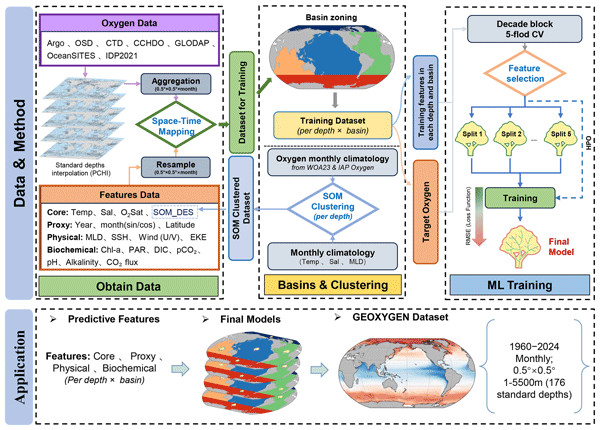
Ocean oxygen is vital for marine life and climate, but long records are uneven. We combine nearly one million ship and autonomous float measurements with careful quality control and machine learning to create GEOXYGEN, a monthly global map of dissolved oxygen from 1960–2024 with high spatial detail and full-depth coverage. It reveals broad long-term oxygen changes and offers a consistent basis for studies of ocean deoxygenation and climate impacts.
Ruiqi Nan, Biao Tian, Xinfeng Ling, Weijun Sun, Yixi Zhao, Dongqi Zhang, Chuanjin Li, Xin Wang, Jie Tang, Bo Yao, and Minghu Ding
Earth Syst. Sci. Data, 17, 6097–6111, https://doi.org/10.5194/essd-17-6097-2025, https://doi.org/10.5194/essd-17-6097-2025, 2025
Short summary
Short summary
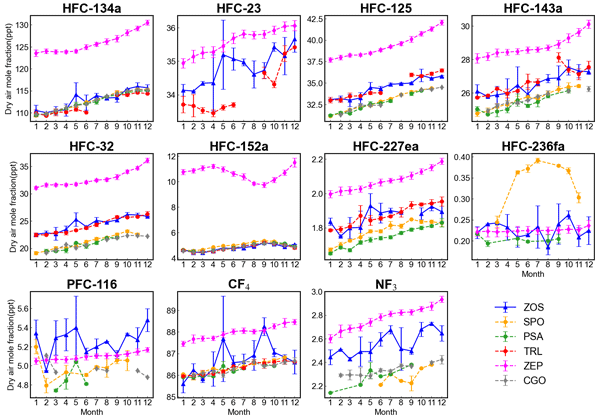
This study presents the first dataset of 11 fluorinated greenhouse gases observed in 2021 at Zhongshan Station, Antarctica. The concentrations of most gases increased and were higher than at two other Antarctic stations. Their sources were linked to industrial activities such as refrigeration and electronics. Although limited to one year, the data provide important background information for detecting future changes in the Antarctic atmosphere.
Qixiang Cai, Ning Zeng, Xiaoyu Yang, Chi Xu, Zhaojun Wang, and Pengfei Han
Atmos. Meas. Tech., 18, 4871–4884, https://doi.org/10.5194/amt-18-4871-2025, https://doi.org/10.5194/amt-18-4871-2025, 2025
Short summary
Short summary
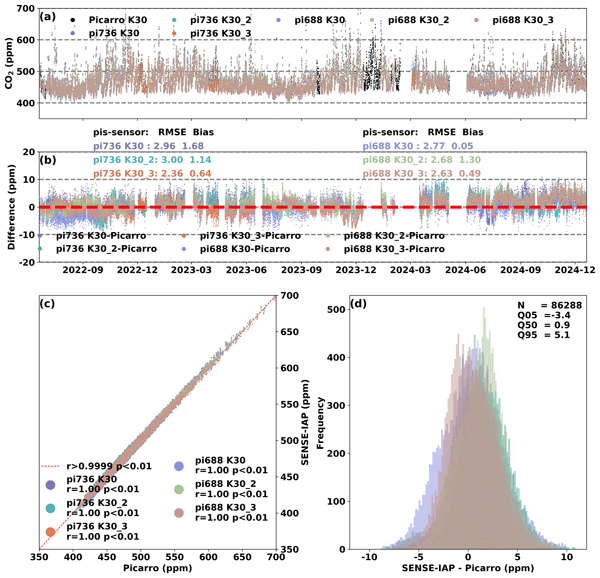
Mid- and low-cost CO2 sensors are attractive in carbon monitoring and atmospheric inversions. They are useful in both fixed stations and mobile monitoring. Yet the performance faces great challenges due to environmental impacts and long-term drifts. Here, we conducted 30 months of co-located observations using such sensors with a reference instrument. After corrections of environmental impacts and drifts, the accuracy reached 1–3 ppm. We recommend standard gas calibration within 3–6 months.
Pengfei Han, Ning Zeng, Bo Yao, Wen Zhang, Weijun Quan, Pucai Wang, Ting Wang, Minqiang Zhou, Qixiang Cai, Yuzhong Zhang, Ruosi Liang, Wanqi Sun, and Shengxiang Liu
Atmos. Chem. Phys., 25, 4965–4988, https://doi.org/10.5194/acp-25-4965-2025, https://doi.org/10.5194/acp-25-4965-2025, 2025
Short summary
Short summary
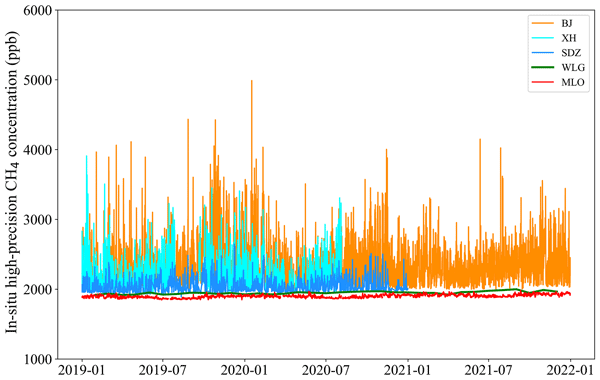
Methane (CH4) is a potent greenhouse gas. Northern China contributes a large proportion of CH4 emissions, yet large observation gaps exist. Here we compiled a comprehensive dataset, which is publicly available, that includes ground-based, satellite-based, inventory, and modeling results to show the CH4 concentrations, enhancements, and spatial–temporal variations. The data can benefit the research community and policy-makers for future observations, atmospheric inversions, and policy-making.
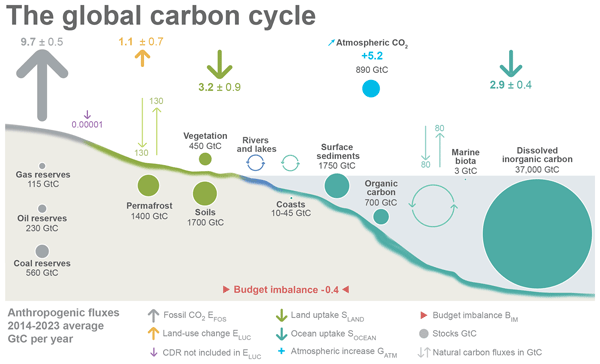
Pierre Friedlingstein, Michael O'Sullivan, Matthew W. Jones, Robbie M. Andrew, Judith Hauck, Peter Landschützer, Corinne Le Quéré, Hongmei Li, Ingrid T. Luijkx, Are Olsen, Glen P. Peters, Wouter Peters, Julia Pongratz, Clemens Schwingshackl, Stephen Sitch, Josep G. Canadell, Philippe Ciais, Robert B. Jackson, Simone R. Alin, Almut Arneth, Vivek Arora, Nicholas R. Bates, Meike Becker, Nicolas Bellouin, Carla F. Berghoff, Henry C. Bittig, Laurent Bopp, Patricia Cadule, Katie Campbell, Matthew A. Chamberlain, Naveen Chandra, Frédéric Chevallier, Louise P. Chini, Thomas Colligan, Jeanne Decayeux, Laique M. Djeutchouang, Xinyu Dou, Carolina Duran Rojas, Kazutaka Enyo, Wiley Evans, Amanda R. Fay, Richard A. Feely, Daniel J. Ford, Adrianna Foster, Thomas Gasser, Marion Gehlen, Thanos Gkritzalis, Giacomo Grassi, Luke Gregor, Nicolas Gruber, Özgür Gürses, Ian Harris, Matthew Hefner, Jens Heinke, George C. Hurtt, Yosuke Iida, Tatiana Ilyina, Andrew R. Jacobson, Atul K. Jain, Tereza Jarníková, Annika Jersild, Fei Jiang, Zhe Jin, Etsushi Kato, Ralph F. Keeling, Kees Klein Goldewijk, Jürgen Knauer, Jan Ivar Korsbakken, Xin Lan, Siv K. Lauvset, Nathalie Lefèvre, Zhu Liu, Junjie Liu, Lei Ma, Shamil Maksyutov, Gregg Marland, Nicolas Mayot, Patrick C. McGuire, Nicolas Metzl, Natalie M. Monacci, Eric J. Morgan, Shin-Ichiro Nakaoka, Craig Neill, Yosuke Niwa, Tobias Nützel, Lea Olivier, Tsuneo Ono, Paul I. Palmer, Denis Pierrot, Zhangcai Qin, Laure Resplandy, Alizée Roobaert, Thais M. Rosan, Christian Rödenbeck, Jörg Schwinger, T. Luke Smallman, Stephen M. Smith, Reinel Sospedra-Alfonso, Tobias Steinhoff, Qing Sun, Adrienne J. Sutton, Roland Séférian, Shintaro Takao, Hiroaki Tatebe, Hanqin Tian, Bronte Tilbrook, Olivier Torres, Etienne Tourigny, Hiroyuki Tsujino, Francesco Tubiello, Guido van der Werf, Rik Wanninkhof, Xuhui Wang, Dongxu Yang, Xiaojuan Yang, Zhen Yu, Wenping Yuan, Xu Yue, Sönke Zaehle, Ning Zeng, and Jiye Zeng
Earth Syst. Sci. Data, 17, 965–1039, https://doi.org/10.5194/essd-17-965-2025, https://doi.org/10.5194/essd-17-965-2025, 2025
Short summary
Short summary
The Global Carbon Budget 2024 describes the methodology, main results, and datasets used to quantify the anthropogenic emissions of carbon dioxide (CO2) and their partitioning among the atmosphere, land ecosystems, and the ocean over the historical period (1750–2024). These living datasets are updated every year to provide the highest transparency and traceability in the reporting of CO2, the key driver of climate change.
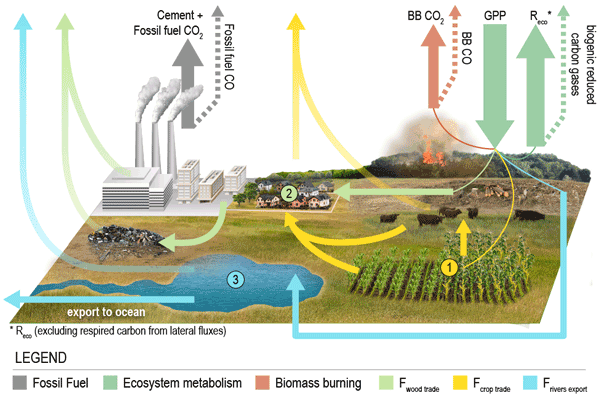
Brendan Byrne, David F. Baker, Sourish Basu, Michael Bertolacci, Kevin W. Bowman, Dustin Carroll, Abhishek Chatterjee, Frédéric Chevallier, Philippe Ciais, Noel Cressie, David Crisp, Sean Crowell, Feng Deng, Zhu Deng, Nicholas M. Deutscher, Manvendra K. Dubey, Sha Feng, Omaira E. García, David W. T. Griffith, Benedikt Herkommer, Lei Hu, Andrew R. Jacobson, Rajesh Janardanan, Sujong Jeong, Matthew S. Johnson, Dylan B. A. Jones, Rigel Kivi, Junjie Liu, Zhiqiang Liu, Shamil Maksyutov, John B. Miller, Scot M. Miller, Isamu Morino, Justus Notholt, Tomohiro Oda, Christopher W. O'Dell, Young-Suk Oh, Hirofumi Ohyama, Prabir K. Patra, Hélène Peiro, Christof Petri, Sajeev Philip, David F. Pollard, Benjamin Poulter, Marine Remaud, Andrew Schuh, Mahesh K. Sha, Kei Shiomi, Kimberly Strong, Colm Sweeney, Yao Té, Hanqin Tian, Voltaire A. Velazco, Mihalis Vrekoussis, Thorsten Warneke, John R. Worden, Debra Wunch, Yuanzhi Yao, Jeongmin Yun, Andrew Zammit-Mangion, and Ning Zeng
Earth Syst. Sci. Data, 15, 963–1004, https://doi.org/10.5194/essd-15-963-2023, https://doi.org/10.5194/essd-15-963-2023, 2023
Short summary
Short summary
Changes in the carbon stocks of terrestrial ecosystems result in emissions and removals of CO2. These can be driven by anthropogenic activities (e.g., deforestation), natural processes (e.g., fires) or in response to rising CO2 (e.g., CO2 fertilization). This paper describes a dataset of CO2 emissions and removals derived from atmospheric CO2 observations. This pilot dataset informs current capabilities and future developments towards top-down monitoring and verification systems.
Axel Kleidon, Gabriele Messori, Somnath Baidya Roy, Ira Didenkulova, and Ning Zeng
Earth Syst. Dynam., 14, 241–242, https://doi.org/10.5194/esd-14-241-2023, https://doi.org/10.5194/esd-14-241-2023, 2023
Zhiqiang Liu, Ning Zeng, Yun Liu, Eugenia Kalnay, Ghassem Asrar, Qixiang Cai, and Pengfei Han
Geosci. Model Dev. Discuss., https://doi.org/10.5194/gmd-2023-15, https://doi.org/10.5194/gmd-2023-15, 2023
Revised manuscript not accepted
Short summary
Short summary
We introduced a novel algorithm that assimilates a better a priori knowledge to improve the estimation of global surface carbon flux. The algorithm aims at separating the first-order systematic biases in the a priori "bottom-up" flux estimations out of the inversion framework from a comprehensive data assimilation perspective.

Zhiqiang Liu, Ning Zeng, Yun Liu, Eugenia Kalnay, Ghassem Asrar, Bo Wu, Qixiang Cai, Di Liu, and Pengfei Han
Geosci. Model Dev., 15, 5511–5528, https://doi.org/10.5194/gmd-15-5511-2022, https://doi.org/10.5194/gmd-15-5511-2022, 2022
Short summary
Short summary
We described the application of a constrained ensemble Kalman filter (CEnKF) in a joint CO2 and surface carbon fluxes estimation study. By assimilating the pseudo-surface and OCO-2 observations, the annual global flux estimation is significantly biased without mass conservation. With the additional CEnKF process, the CO2 mass is strictly constrained, and the estimation of annual fluxes is significantly improved.
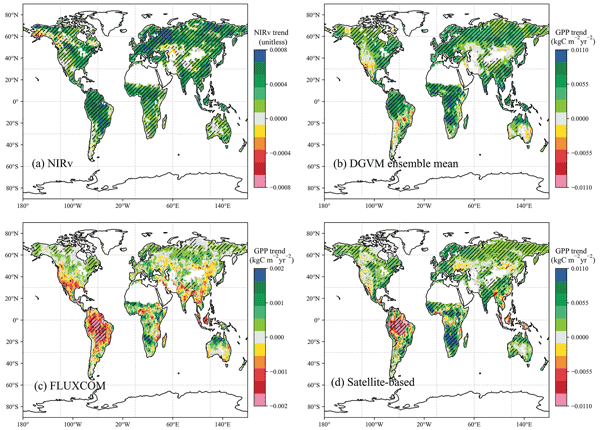
Ruqi Yang, Jun Wang, Ning Zeng, Stephen Sitch, Wenhan Tang, Matthew Joseph McGrath, Qixiang Cai, Di Liu, Danica Lombardozzi, Hanqin Tian, Atul K. Jain, and Pengfei Han
Earth Syst. Dynam., 13, 833–849, https://doi.org/10.5194/esd-13-833-2022, https://doi.org/10.5194/esd-13-833-2022, 2022
Short summary
Short summary
We comprehensively investigate historical GPP trends based on five kinds of GPP datasets and analyze the causes for any discrepancies among them. Results show contrasting behaviors between modeled and satellite-based GPP trends, and their inconsistencies are likely caused by the contrasting performance between satellite-derived and modeled leaf area index (LAI). Thus, the uncertainty in satellite-based GPP induced by LAI undermines its role in assessing the performance of DGVM simulations.
Cited articles
Arzoumanian, E., Vogel, F. R., Bastos, A., Gaynullin, B., Laurent, O., Ramonet, M., and Ciais, P.: Characterization of a commercial lower-cost medium-precision non-dispersive infrared sensor for atmospheric CO2 monitoring in urban areas, Atmos. Meas. Tech., 12, 2665–2677, https://doi.org/10.5194/amt-12-2665-2019, 2019.
Bakker, D. C. E., Alin, S. R., Bates, N. R., Becker, M., Gkritzalis, T., Jones, S. D., Kozyr, A., Lauvset, S. K., Metzl, N., Nakaoka, S.-i., O’Brien, K., Olsen, A., Pierrot, D., Steinhoff, T., Sutton, A., Takao, S., Tilbrook, B., Wada, C., and Wanninkhof, R.: SOCAT version 2024: Ocean CO2 observing effort down to levels of a decade ago, IOCCP, 2024, https://www.ioccp.org/images/04aSynthSur/SOCATv2024_poster.pdf (last access: 23 April 2026), 2024.
Bakwin, P. S., Davis, K. J., Yi, C., Wofsy, S. C., Munger, J. W., Haszpra, L., and Barcza, Z.: Regional carbon dioxide fluxes from mixing ratio data, Tellus B, 56, 301–311, https://doi.org/10.3402/tellusb.v56i4.16446, 2004.
Biagi, R., Ferrari, M., Venturi, S., Sacco, M., Montegrossi, G., and Tassi, F.: Development and machine learning-based calibration of low-cost multiparametric stations for the measurement of CO2 and CH4 in air, Heliyon, 10, e29772, https://doi.org/10.1016/j.heliyon.2024.e29772, 2024.
Cai, Q., Zeng, N., Yang, X., Xu, C., Wang, Z., and Han, P.: A 30-month field evaluation of low-cost CO2 sensors using a reference instrument, Atmos. Meas. Tech., 18, 4871–4884, https://doi.org/10.5194/amt-18-4871-2025, 2025.
Chen, H., Winderlich, J., Gerbig, C., Hoefer, A., Rella, C. W., Crosson, E. R., Van Pelt, A. D., Steinbach, J., Kolle, O., Beck, V., Daube, B. C., Gottlieb, E. W., Chow, V. Y., Santoni, G. W., and Wofsy, S. C.: High-accuracy continuous airborne measurements of greenhouse gases (CO2 and CH4) using the cavity ring-down spectroscopy (CRDS) technique, Atmos. Meas. Tech., 3, 375–386, https://doi.org/10.5194/amt-3-375-2010, 2010.
Chen, Y., Zhao, H., and Gao, H.: Spatiotemporal Evolution of Air–Sea CO2 Flux in the South China Sea and Its Response to Environmental Factors, Remote Sens., 16, https://doi.org/10.3390/rs16244724, 2024.
Cohen, M. D., Stunder, B. J. B., Rolph, G. D., Draxler, R. R., Stein, A. F., and Ngan, F.: NOAA's HYSPLIT Atmospheric Transport and Dispersion Modeling System, B. Am. Meteorol. Soc., 96, 2059–2077, https://doi.org/10.1175/bams-d-14-00110.1, 2015.
Costa, M. H., Cunha, L. C. d., Cox, P. M., Eliseev, A. V., Henson, S., Ishii, M., Jaccard, S., Koven, C., Lohila, A., Patra, P. K., Piao, S., Rogelj, J., Syampungani, S., Zaehle, S., and Zickfeld, K.: Global Carbon and Other Biogeochemical Cycles and Feedbacks, in: Climate Change 2021 – The Physical Science Basis, Cambridge University Press, 673–816, https://doi.org/10.1017/9781009157896.007, 2023.
Curcoll, R., Morguí, J.-A., Kamnang, A., Cañas, L., Vargas, A., and Grossi, C.: Metrology for low-cost CO2 sensors applications: the case of a steady-state through-flow (SS-TF) chamber for CO2 fluxes observations, Atmos. Meas. Tech., 15, 2807–2818, https://doi.org/10.5194/amt-15-2807-2022, 2022.
Delaria, E. R., Kim, J., Fitzmaurice, H. L., Newman, C., Wooldridge, P. J., Worthington, K., and Cohen, R. C.: The Berkeley Environmental Air-quality and CO2 Network: field calibrations of sensor temperature dependence and assessment of network scale CO2 accuracy, Atmos. Meas. Tech., 14, 5487–5500, https://doi.org/10.5194/amt-14-5487-2021, 2021.
Dubey, R., Telles, A., Nikkel, J., Cao, C., Gewirtzman, J., Raymond, P. A., and Lee, X.: Low-Cost CO2 NDIR Sensors: Performance Evaluation and Calibration Using Machine Learning Techniques, Sensors (Basel), 24, https://doi.org/10.3390/s24175675, 2024.
Fang, S. X., Zhou, L. X., Tans, P. P., Ciais, P., Steinbacher, M., Xu, L., and Luan, T.: In situ measurement of atmospheric CO2 at the four WMO/GAW stations in China, Atmos. Chem. Phys., 14, 2541–2554, https://doi.org/10.5194/acp-14-2541-2014, 2014.
Han, P., Yao, B., Cai, Q., Chen, H., Sun, W., Liang, M., Zhang, X., Zhao, M., Martin, C., Liu, Z., Ye, H., Wang, P., Li, Y., and Zeng, N.: Support Carbon Neutral Goal with a High-Resolution Carbon Monitoring System in Beijing, B. Am. Meteorol. Soc., 105, E2461–E2481, https://doi.org/10.1175/bams-d-23-0025.1, 2024.
Jacobson, A. R., Mikaloff Fletcher, S. E., Gruber, N., Sarmiento, J. L., and Gloor, M.: A joint atmosphere-ocean inversion for surface fluxes of carbon dioxide: 2. Regional results, Global Biogeochem. Cy., 21, https://doi.org/10.1029/2006gb002703, 2007.
Karion, A., Callahan, W., Stock, M., Prinzivalli, S., Verhulst, K. R., Kim, J., Salameh, P. K., Lopez-Coto, I., and Whetstone, J.: Greenhouse gas observations from the Northeast Corridor tower network, Earth Syst. Sci. Data, 12, 699–717, https://doi.org/10.5194/essd-12-699-2020, 2020.
Lan, X. and Keeling, R. F.: NOAA Global Monitoring Laboratory and Scripps CO2 trends data, Scripps Institution of Oceanography [data set], https://gml.noaa.gov/ccgg/trends/data.html (last access: 23 April 2026), 2025.
Langridge, J. M., Ball, S. M., Shillings, A. J., and Jones, R. L.: A broadband absorption spectrometer using light emitting diodes for ultrasensitive, in situ trace gas detection, Rev. Sci. Instrum., 79, 123110, https://doi.org/10.1063/1.3046282, 2008.
Landschützer, P., Gruber, N., Bakker, D. C. E., Schuster, U., Nakaoka, S., Payne, M. R., Sasse, T. P., and Zeng, J.: A neural network-based estimate of the seasonal to inter-annual variability of the Atlantic Ocean carbon sink, Biogeosciences, 10, 7793–7815, https://doi.org/10.5194/bg-10-7793-2013, 2013.
Li, D., Ni, X., Wang, K., Zeng, D., Wang, B., Jin, H., Li, H., Zhou, F., Huang, D., and Chen, J.: Biological CO2 Uptake and Upwelling Regulate the Air-Sea CO2 Flux in the Changjiang Plume Under South Winds in Summer, Frontiers in Marine Science, 8, https://doi.org/10.3389/fmars.2021.709783, 2021.
Li, Q., Guo, X., Zhai, W., Xu, Y., and Dai, M.: Partial pressure of CO2 and air–sea CO2 fluxes in the South China Sea: Synthesis of an 18-year dataset, Prog. Oceanogr., 182, https://doi.org/10.1016/j.pocean.2020.102272, 2020.
Lin, X., Ciais, P., Bousquet, P., Ramonet, M., Yin, Y., Balkanski, Y., Cozic, A., Delmotte, M., Evangeliou, N., Indira, N. K., Locatelli, R., Peng, S., Piao, S., Saunois, M., Swathi, P. S., Wang, R., Yver-Kwok, C., Tiwari, Y. K., and Zhou, L.: Simulating CH4 and CO2 over South and East Asia using the zoomed chemistry transport model LMDz-INCA, Atmos. Chem. Phys., 18, 9475–9497, https://doi.org/10.5194/acp-18-9475-2018, 2018.
Liu, J., Han, P., and Yao, B.: CO2 Observation Data, Zenodo [data set], https://doi.org/10.5281/zenodo.19631437, 2026.
Lv, H., Wang, H., Jiang, Y., Chen, H., Qiao, R., and Wang, Z.: Study on the concentration variation of CO2 in the background area of Xisha, Haiyang Xuebao, 37, 21–30, https://doi.org/10.3969/j.issn.0253-4193.2015.06.003, 2015.
Martin, C. R., Zeng, N., Karion, A., Dickerson, R. R., Ren, X., Turpie, B. N., and Weber, K. J.: Evaluation and environmental correction of ambient CO2 measurements from a low-cost NDIR sensor, Atmos. Meas. Tech., 10, 2383–2395, https://doi.org/10.5194/amt-10-2383-2017, 2017.
Nemoto, K., Midorikawa, T., Wada, A., Ogawa, K., Takatani, S., Kimoto, H., Ishii, M., and Inoue, H. Y.: Continuous observations of atmospheric and oceanic CO2 using a moored buoy in the East China Sea: Variations during the passage of typhoons, Deep-Sea Res. Pt. II, 56, 542–553, https://doi.org/10.1016/j.dsr2.2008.12.015, 2009.
NOAA GML: About CO2 measurements, National Oceanic and Atmospheric Administration, Global Monitoring Laboratory (GML), https://gml.noaa.gov/ccgg/about/co2_measurements.html (last access: 12 November 2025), 2024a.
NOAA GML: Trends in atmospheric carbon dioxide – Mauna Loa, National Oceanic and Atmospheric Administration, Global Monitoring Laboratory (GML), https://gml.noaa.gov/ccgg/trends/gr.html (last access: 12 November 2025), 2024b.
Palter, J. B., Nickford, S., and Mu, L.: Ocean Carbon Dioxide Uptake in the Tailpipe of Industrialized Continents, Geophys. Res. Lett., 50, https://doi.org/10.1029/2023gl104822, 2023.
Piao, S., He, Y., Wang, X., and Chen, F.: Estimation of China's terrestrial ecosystem carbon sink: Methods, progress and prospects, Science China Earth Sciences, 65, 641–651, https://doi.org/10.1007/s11430-021-9892-6, 2022.
Rhein, M., Rintoul, S. R., Aoki, S., Campos, E., Chambers, D., Feely, R. A., Gulev, S., Johnson, G. C., Josey, S. A., Kostianoy, A., Mauritzen, C., Roemmich, D., Talley, L. D., and Wang, F.: Observations: Ocean, in: Climate Change 2013: The Physical Science Basis. Contribution of Working Group I to the Fifth Assessment Report of the Intergovernmental Panel on Climate Change, edited by: Stocker, T. F., Qin, D., Plattner, G.-K., Tignor, M., Allen, S. K., Boschung, J., Nauels, A., Xia, Y., Bex, V., and Midgley, P. M., Cambridge University Press, Cambridge, United Kingdom and New York, NY, USA, 255–316, https://doi.org/10.1017/CBO9781107415324.010, 2013.
Rödenbeck, C., Conway, T. J., and Langenfelds, R. L.: The effect of systematic measurement errors on atmospheric CO2 inversions: a quantitative assessment, Atmos. Chem. Phys., 6, 149–161, https://doi.org/10.5194/acp-6-149-2006, 2006.
Rolph, G., Stein, A., and Stunder, B.: Real-time Environmental Applications and Display sYstem: READY, Environ. Modell. Softw., 95, 210–228, https://doi.org/10.1016/j.envsoft.2017.06.025, 2017.
Sabine, C. L., Feely, R. A., Gruber, N., Key, R. M., Lee, K., Bullister, J. L., Wanninkhof, R., Wong, C. S., Wallace, D. W. R., Tilbrook, B., Millero, F. J., Peng, T.-H., Kozyr, A., Ono, T., and Rios, A. F.: The Oceanic Sink for Anthropogenic CO2, Science, 305, 367–371, https://doi.org/10.1126/science.1097403, 2004.
Sarmiento, J. L., Johnson, K. S., Arteaga, L. A., Bushinsky, S. M., Cullen, H. M., Gray, A. R., Hotinski, R. M., Maurer, T. L., Mazloff, M. R., Riser, S. C., Russell, J. L., Schofield, O. M., and Talley, L. D.: The Southern Ocean carbon and climate observations and modeling (SOCCOM) project: A review, Prog. Oceanogr., 219, https://doi.org/10.1016/j.pocean.2023.103130, 2023.
Shusterman, A. A., Teige, V. E., Turner, A. J., Newman, C., Kim, J., and Cohen, R. C.: The BErkeley Atmospheric CO2 Observation Network: initial evaluation, Atmos. Chem. Phys., 16, 13449–13463, https://doi.org/10.5194/acp-16-13449-2016, 2016.
Song, J., Qu, B., Li, X., Yuan, H., and Duan, L.: Estimate of Ocean Carbon Sink: Current Status and Reflections, Advances in Marine Science, 41, 577–592, https://doi.org/10.12362/j.issn.1671-6647.20230210001, 2023.
Thoning, K. W., Crotwell, A. M., and Mund, J. W.: Atmospheric carbon dioxide dry air mole fractions from continuous measurements at Mauna Loa, Hawaii, Barrow, Alaska, American Samoa, and South Pole, 1973–present, NOAA Global Monitoring Laboratory [data set], Boulder, USA, https://doi.org/10.15138/yaf1-bk21, 2025.
Wanninkhof, R., Park, G.-H., Takahashi, T., Feely, R. A., Bullister, J. L., and Doney, S. C.: Changes in deep-water CO2 concentrations over the last several decades determined from discrete pCO2 measurements, Deep-Sea Res. Pt. I, 74, 48–63, https://doi.org/10.1016/j.dsr.2012.12.005, 2013.
Wanninkhof, R., Pickers, P. A., Omar, A. M., Sutton, A., Murata, A., Olsen, A., Stephens, B. B., Tilbrook, B., Munro, D., Pierrot, D., Rehder, G., Santana-Casiano, J. M., Müller, J. D., Trinanes, J., Tedesco, K., O'Brien, K., Currie, K., Barbero, L., Telszewski, M., Hoppema, M., Ishii, M., González-Dávila, M., Bates, N. R., Metzl, N., Suntharalingam, P., Feely, R. A., Nakaoka, S.-i., Lauvset, S. K., Takahashi, T., Steinhoff, T., and Schuster, U.: A Surface Ocean CO2 Reference Network, SOCONET and Associated Marine Boundary Layer CO2 Measurements, Frontiers in Marine Science, 6, https://doi.org/10.3389/fmars.2019.00400, 2019.
Xu, J., Cai, S., Xuan, L., Qiu, Y., and Zhu, D.: Study on coastal upwelling in eastern Hainan Island and western Guangdong in summer 2006, Acta Oceanol. Sin., 35, 11–18, 2013 (in Chinese).
Xu, S., Park, K., Wang, Y., Chen, L., Qi, D., and Li, B.: Variations in the summer oceanic pCO2 and carbon sink in Prydz Bay using the self-organizing map analysis approach, Biogeosciences, 16, 797–810, https://doi.org/10.5194/bg-16-797-2019, 2019.
Yasuda, T., Yonemura, S., and Tani, A.: Comparison of the characteristics of small commercial NDIR CO2 sensor models and development of a portable CO2 measurement device, Sensors (Basel), 12, 3641–3655, https://doi.org/10.3390/s120303641, 2012.
Yu, S., Song, Z., Bai, Y., Guo, X., He, X., Zhai, W., Zhao, H., and Dai, M.: Satellite-estimated air–sea CO2 fluxes in the Bohai Sea, Yellow Sea, and East China Sea: Patterns and variations during 2003–2019, Sci. Total Environ., 904, https://doi.org/10.1016/j.scitotenv.2023.166804, 2023.
Zhai, W.-D., Dai, M.-H., Chen, B.-S., Guo, X.-H., Li, Q., Shang, S.-L., Zhang, C.-Y., Cai, W.-J., and Wang, D.-X.: Seasonal variations of sea–air CO2 fluxes in the largest tropical marginal sea (South China Sea) based on multiple-year underway measurements, Biogeosciences, 10, 7775–7791, https://doi.org/10.5194/bg-10-7775-2013, 2013.
Zhang, G., Han, B., Yang, Q., Zhu, X., Wang, X., He, H., Li, H., Wang, X., Xie, W., and Chen, D.: Seamounts Enhance the Local Emission of CO2 in the Northern South China Sea, Geophys. Res. Lett., 51, https://doi.org/10.1029/2023gl107264, 2024.
Short summary
This study deployed a buoy equipped with three low-cost sensors in the northern South China Sea to continuously monitor atmospheric CO2 at the sea surface. After correcting for environmental factors and sensor drift, the measurement accuracy improved. CO2 levels were generally stable with small daily changes, while local fluctuations reflected air from land. This affordable approach enables reliable ocean CO2 monitoring and helps study the ocean’s role in the global carbon cycle.
This study deployed a buoy equipped with three low-cost sensors in the northern South China Sea...


Special issue