
Articles | Volume 19, issue 2
https://doi.org/10.5194/amt-19-371-2026
© Author(s) 2026. This work is distributed under
the Creative Commons Attribution 4.0 License.
the Creative Commons Attribution 4.0 License.
https://doi.org/10.5194/amt-19-371-2026
© Author(s) 2026. This work is distributed under
the Creative Commons Attribution 4.0 License.
the Creative Commons Attribution 4.0 License.
Research article
| 
19 Jan 2026
Research article |
| 19 Jan 2026
| 19 Jan 2026
Atmospheric deposition of microplastics: a sampling and analytical method including the associated measurement uncertainties
Narain M. Ashta
Empa – Swiss Federal Laboratories for Materials Science and Technology, Duebendorf, 8600, Switzerland
Guillaume Crosset-Perrotin
Eawag – Swiss Federal Institute of Aquatic Science and Technology, Duebendorf, 8600, Switzerland
Angélique Moraz
Agroscope, Zurich, 8046, Switzerland
Josua Stoffel
Empa – Swiss Federal Laboratories for Materials Science and Technology, Duebendorf, 8600, Switzerland
Ueli Schilt
Empa – Swiss Federal Laboratories for Materials Science and Technology, Duebendorf, 8600, Switzerland
Eric Ceglie
Empa – Swiss Federal Laboratories for Materials Science and Technology, Duebendorf, 8600, Switzerland
David Schoenenberger
Empa – Swiss Federal Laboratories for Materials Science and Technology, Duebendorf, 8600, Switzerland
Matthias Philipp
Eawag – Swiss Federal Institute of Aquatic Science and Technology, Duebendorf, 8600, Switzerland
Thomas D. Bucheli
Agroscope, Zurich, 8046, Switzerland
Ralf Kaegi
Eawag – Swiss Federal Institute of Aquatic Science and Technology, Duebendorf, 8600, Switzerland
Christoph Hueglin
CORRESPONDING AUTHOR

Empa – Swiss Federal Laboratories for Materials Science and Technology, Duebendorf, 8600, Switzerland
Related authors
Narain M. Ashta, Guillaume Crosset-Perrotin, Angélique Moraz, Matthias Philipp, Thomas D. Bucheli, Ralf Kaegi, and Christoph Hueglin
Atmos. Chem. Phys., 26, 11803–11815, https://doi.org/10.5194/acp-26-11803-2026, https://doi.org/10.5194/acp-26-11803-2026, 2026
Short summary
Short summary
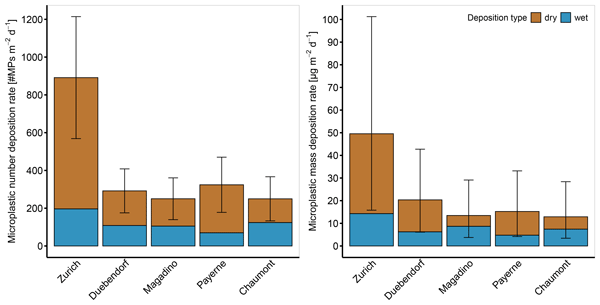
Microplastics are environmental contaminants of concern that are also present in air. Using an infrared-based device, we measured the amount of microplastics deposited from air to different parts of Switzerland over a one-year period. We found microplastics everywhere, with levels in the city being more than twice as high as those in suburban, rural and mountainous places. We also found that air is an important transporter of microplastics that contaminates agricultural land and water bodies.
Md Atiur Rahman, Ralf Kaegi, and Christoph Hueglin
EGUsphere, https://doi.org/10.5194/egusphere-2026-5039, https://doi.org/10.5194/egusphere-2026-5039, 2026
This preprint is open for discussion and under review for Atmospheric Measurement Techniques (AMT).
Short summary
Short summary
Tire wear particles (TWP) are environmental pollutants of growing concern. We developed an analytical method for TWP because no standardized reference method is currently available and there is a clear need for robust and reliable techniques to quantify tire wear particles in environmental samples. The proposed method is based on pyrolysis gas chromatography-mass spectrometry (Py-GC-MS) and uses multiple pyrolysis products that are characteristic of the main rubber polymers used in tires.
Narain M. Ashta, Guillaume Crosset-Perrotin, Angélique Moraz, Matthias Philipp, Thomas D. Bucheli, Ralf Kaegi, and Christoph Hueglin
Atmos. Chem. Phys., 26, 11803–11815, https://doi.org/10.5194/acp-26-11803-2026, https://doi.org/10.5194/acp-26-11803-2026, 2026
Short summary
Short summary
Microplastics are environmental contaminants of concern that are also present in air. Using an infrared-based device, we measured the amount of microplastics deposited from air to different parts of Switzerland over a one-year period. We found microplastics everywhere, with levels in the city being more than twice as high as those in suburban, rural and mountainous places. We also found that air is an important transporter of microplastics that contaminates agricultural land and water bodies.
Arlett Díaz-Zurita, Simone Brunamonti, Alexander Haefele, Martine Collaud Coen, Giovanni Martucci, Benjamin Tobias Brem, Martin Gysel-Beer, Hassan Lyamani, Gloria Titos, Daniel Pérez-Ramírez, Christoph Hüglin, Lucas Alados-Arboledas, Alejandro Keller, Frank Gunther Wienhold, Maxime Hervo, and Francisco Navas-Guzmán
EGUsphere, https://doi.org/10.5194/egusphere-2026-4361, https://doi.org/10.5194/egusphere-2026-4361, 2026
Short summary
Short summary
This study provides a unique framework for assessing aerosol hygroscopicity by combining Raman lidar observations with vertically resolved in situ measurements from the balloon-borne Compact Backscatter Aerosol Detector coupled with Vaisala RS41 radiosondes and ground-based tandem nephelometers. The three approaches showed good agreement. Raman lidar identified more than 200 hygroscopic aerosol layers, constituting one of the largest datasets available for statistical investigations.
Clara M. Nussbaumer, Colette L. Heald, Amanda M. Häne, and Christoph Hüglin
Atmos. Chem. Phys., 26, 5355–5373, https://doi.org/10.5194/acp-26-5355-2026, https://doi.org/10.5194/acp-26-5355-2026, 2026
Short summary
Short summary
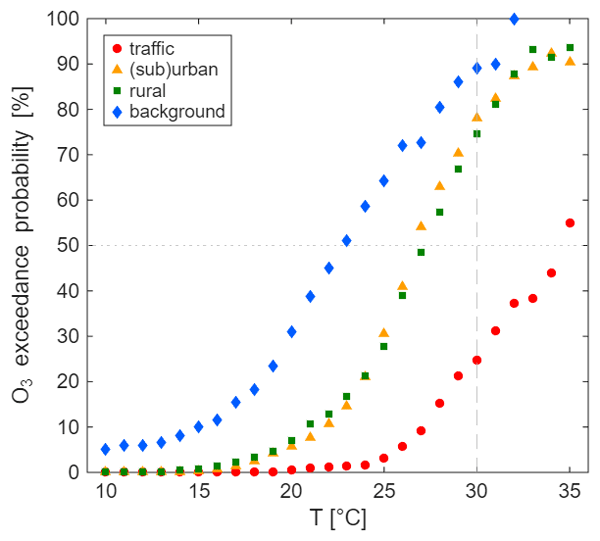
Ground-level ozone is harmful to human health. While precursors to ozone were strongly reduced over the past decades, unhealthy levels of ozone are still frequently reported in Switzerland. In this study, we investigate changes in ozone and its relationship with temperature over time. We find that precursor reductions have positively affected ozone in remote locations, while ozone is increasing close to busy roads. High ozone is often associated with hot summer days.
Luce Creman, Stuart K. Grange, Pascal Rubli, Andrea Fischer, Dominik Brunner, Christoph Hueglin, Lukas Emmenegger, and Leonie Bernet
Atmos. Meas. Tech., 19, 1441–1463, https://doi.org/10.5194/amt-19-1441-2026, https://doi.org/10.5194/amt-19-1441-2026, 2026
Short summary
Short summary
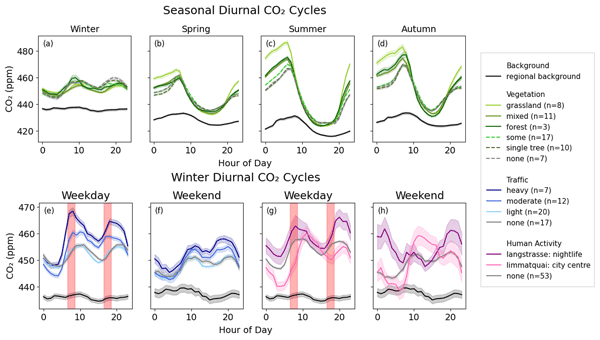
ZiCOS-L is a network of low-cost sensors in Zurich (Switzerland) to monitor carbon dioxide (CO2) concentrations. After correcting for drift and checking the sensor performance, we found that local factors like traffic, public events and vegetation affect CO2 levels. Even though the sensors have higher uncertainties than other sensors, the lower cost allows for a denser network with detailed insights into CO2 levels across the city, helping cities track emissions and support climate action plans.
Zoé Le Bras, Pascal Rubli, Christoph Hueglin, and Stefan Reimann
Atmos. Chem. Phys., 26, 869–878, https://doi.org/10.5194/acp-26-869-2026, https://doi.org/10.5194/acp-26-869-2026, 2026
Short summary
Short summary
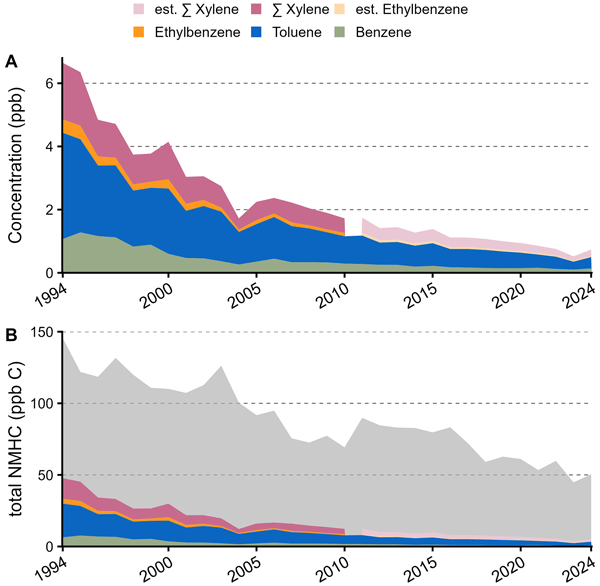
Since 1994, harmful air pollutants called BTEX (benzene, toluene, ethylbenzene and xylene) have declined by up to 89 % in the suburban area of Zurich thanks to the introduction of various air quality directives in Switzerland and in Europe. Although their contribution to ozone formation became less abundant, they still significantly contribute to the formation of airborne particles. While this study shows clear improvements in air quality, it also highlights the need for further efforts.
Pauline Bros, Sophie Darfeuil, Véronique Jacob, Rhabira Elazzouzi, Dielleza Tusha, Tristan Rousseau, Julian Weng, Patrik Winiger, Imad El Haddad, Christoph Hueglin, Gaëlle Uzu, and Jean-Luc Jaffrezo
Atmos. Meas. Tech., 18, 6315–6327, https://doi.org/10.5194/amt-18-6315-2025, https://doi.org/10.5194/amt-18-6315-2025, 2025
Short summary
Short summary
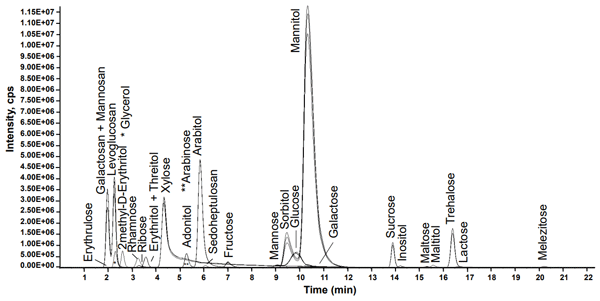
We present and validate an ultra-high-performance liquid chromatography tandem mass spectrometry method for the quantification of 21 sugars in atmospheric particulate matter. The method is fast, sensitive, and suitable for low-mass samples. Its application to a 6-year dataset from the Jungfraujoch site highlights its potential for source identification and understanding of biogenic and biomass burning tracers.
Lubna Dada, Benjamin T. Brem, Lidia-Marta Amarandi-Netedu, Martine Collaud Coen, Nikolaos Evangeliou, Christoph Hueglin, Nora Nowak, Robin Modini, Martin Steinbacher, and Martin Gysel-Beer
Aerosol Research, 3, 315–336, https://doi.org/10.5194/ar-3-315-2025, https://doi.org/10.5194/ar-3-315-2025, 2025
Short summary
Short summary
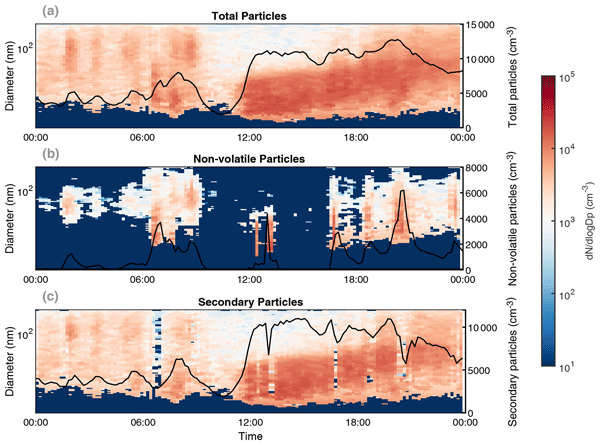
We investigated the sources of ultrafine particles (UFPs) in Payerne, Switzerland, highlighting the significant role of secondary processes in elevating UFP concentrations to levels comparable to urban areas. As the first study in rural midland Switzerland to analyze new particle formation events and secondary contributions, it offers key insights for air quality regulation and the role of agriculture in Switzerland and central Europe.
Natalie M. Mahowald, Longlei Li, Julius Vira, Marje Prank, Douglas S. Hamilton, Hitoshi Matsui, Ron L. Miller, P. Louis Lu, Ezgi Akyuz, Daphne Meidan, Peter Hess, Heikki Lihavainen, Christine Wiedinmyer, Jenny Hand, Maria Grazia Alaimo, Célia Alves, Andres Alastuey, Paulo Artaxo, Africa Barreto, Francisco Barraza, Silvia Becagli, Giulia Calzolai, Shankararaman Chellam, Ying Chen, Patrick Chuang, David D. Cohen, Cristina Colombi, Evangelia Diapouli, Gaetano Dongarra, Konstantinos Eleftheriadis, Johann Engelbrecht, Corinne Galy-Lacaux, Cassandra Gaston, Dario Gomez, Yenny González Ramos, Roy M. Harrison, Chris Heyes, Barak Herut, Philip Hopke, Christoph Hüglin, Maria Kanakidou, Zsofia Kertesz, Zbigniew Klimont, Katriina Kyllönen, Fabrice Lambert, Xiaohong Liu, Remi Losno, Franco Lucarelli, Willy Maenhaut, Beatrice Marticorena, Randall V. Martin, Nikolaos Mihalopoulos, Yasser Morera-Gómez, Adina Paytan, Joseph Prospero, Sergio Rodríguez, Patricia Smichowski, Daniela Varrica, Brenna Walsh, Crystal L. Weagle, and Xi Zhao
Atmos. Chem. Phys., 25, 4665–4702, https://doi.org/10.5194/acp-25-4665-2025, https://doi.org/10.5194/acp-25-4665-2025, 2025
Short summary
Short summary
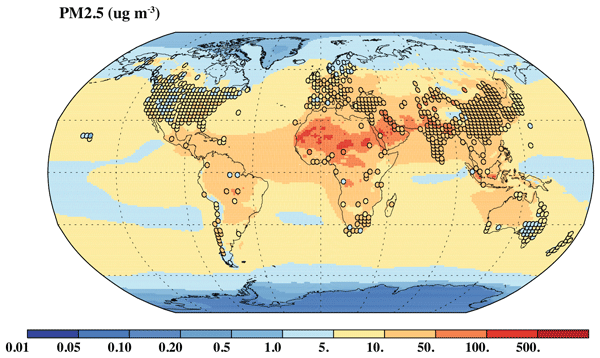
Aerosol particles are an important part of the Earth system, but their concentrations are spatially and temporally heterogeneous, as well as being variable in size and composition. Here, we present a new compilation of PM2.5 and PM10 aerosol observations, focusing on the spatial variability across different observational stations, including composition, and demonstrate a method for comparing the data sets to model output.
Stuart K. Grange, Pascal Rubli, Andrea Fischer, Dominik Brunner, Christoph Hueglin, and Lukas Emmenegger
Atmos. Chem. Phys., 25, 2781–2806, https://doi.org/10.5194/acp-25-2781-2025, https://doi.org/10.5194/acp-25-2781-2025, 2025
Short summary
Short summary
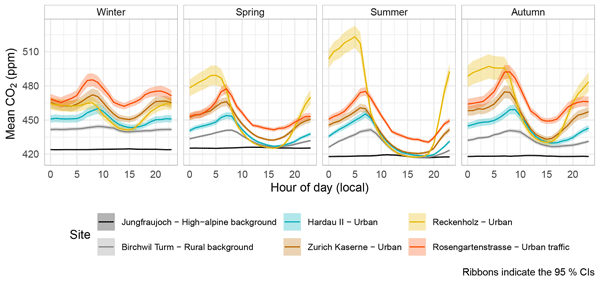
Carbon dioxide (CO2) is a very important atmospheric pollutant, and to better understand the gas's source and sink dynamics, a mid-cost sensor network hosting 26 sites was deployed in and around Zurich, Switzerland. The sensor measurement performance was quantified, and natural and anthropogenic CO2 emission sources were explored with a focus on what drives high CO2 levels. The observations will be used further by others to validate what is thought to be known about CO2 emissions in the region.
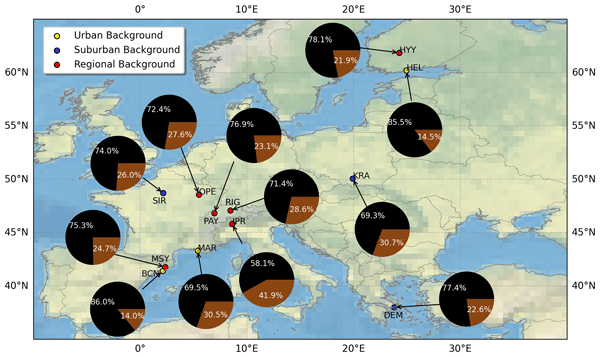
Hector Navarro-Barboza, Jordi Rovira, Vincenzo Obiso, Andrea Pozzer, Marta Via, Andres Alastuey, Xavier Querol, Noemi Perez, Marjan Savadkoohi, Gang Chen, Jesus Yus-Díez, Matic Ivancic, Martin Rigler, Konstantinos Eleftheriadis, Stergios Vratolis, Olga Zografou, Maria Gini, Benjamin Chazeau, Nicolas Marchand, Andre S. H. Prevot, Kaspar Dallenbach, Mikael Ehn, Krista Luoma, Tuukka Petäjä, Anna Tobler, Jaroslaw Necki, Minna Aurela, Hilkka Timonen, Jarkko Niemi, Olivier Favez, Jean-Eudes Petit, Jean-Philippe Putaud, Christoph Hueglin, Nicolas Pascal, Aurélien Chauvigné, Sébastien Conil, Marco Pandolfi, and Oriol Jorba
Atmos. Chem. Phys., 25, 2667–2694, https://doi.org/10.5194/acp-25-2667-2025, https://doi.org/10.5194/acp-25-2667-2025, 2025
Short summary
Short summary
Brown carbon (BrC) absorbs ultraviolet (UV) and visible light, influencing climate. This study explores BrC's imaginary refractive index (k) using data from 12 European sites. Residential emissions are a major organic aerosol (OA) source in winter, while secondary organic aerosol (SOA) dominates in summer. Source-specific k values were derived, improving model accuracy. The findings highlight BrC's climate impact and emphasize source-specific constraints in atmospheric models.
Natalie M. Mahowald, Longlei Li, Julius Vira, Marje Prank, Douglas S. Hamilton, Hitoshi Matsui, Ron L. Miller, Louis Lu, Ezgi Akyuz, Daphne Meidan, Peter Hess, Heikki Lihavainen, Christine Wiedinmyer, Jenny Hand, Maria Grazia Alaimo, Célia Alves, Andres Alastuey, Paulo Artaxo, Africa Barreto, Francisco Barraza, Silvia Becagli, Giulia Calzolai, Shankarararman Chellam, Ying Chen, Patrick Chuang, David D. Cohen, Cristina Colombi, Evangelia Diapouli, Gaetano Dongarra, Konstantinos Eleftheriadis, Corinne Galy-Lacaux, Cassandra Gaston, Dario Gomez, Yenny González Ramos, Hannele Hakola, Roy M. Harrison, Chris Heyes, Barak Herut, Philip Hopke, Christoph Hüglin, Maria Kanakidou, Zsofia Kertesz, Zbiginiw Klimont, Katriina Kyllönen, Fabrice Lambert, Xiaohong Liu, Remi Losno, Franco Lucarelli, Willy Maenhaut, Beatrice Marticorena, Randall V. Martin, Nikolaos Mihalopoulos, Yasser Morera-Gomez, Adina Paytan, Joseph Prospero, Sergio Rodríguez, Patricia Smichowski, Daniela Varrica, Brenna Walsh, Crystal Weagle, and Xi Zhao
Earth Syst. Sci. Data Discuss., https://doi.org/10.5194/essd-2024-1, https://doi.org/10.5194/essd-2024-1, 2024
Preprint withdrawn
Short summary
Short summary
Aerosol particles can interact with incoming solar radiation and outgoing long wave radiation, change cloud properties, affect photochemistry, impact surface air quality, and when deposited impact surface albedo of snow and ice, and modulate carbon dioxide uptake by the land and ocean. Here we present a new compilation of aerosol observations including composition, a methodology for comparing the datasets to model output, and show the implications of these results using one model.
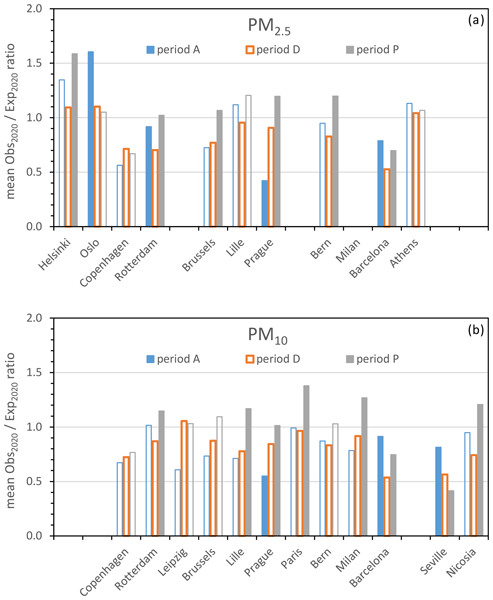
Jean-Philippe Putaud, Enrico Pisoni, Alexander Mangold, Christoph Hueglin, Jean Sciare, Michael Pikridas, Chrysanthos Savvides, Jakub Ondracek, Saliou Mbengue, Alfred Wiedensohler, Kay Weinhold, Maik Merkel, Laurent Poulain, Dominik van Pinxteren, Hartmut Herrmann, Andreas Massling, Claus Nordstroem, Andrés Alastuey, Cristina Reche, Noemí Pérez, Sonia Castillo, Mar Sorribas, Jose Antonio Adame, Tuukka Petaja, Katrianne Lehtipalo, Jarkko Niemi, Véronique Riffault, Joel F. de Brito, Augustin Colette, Olivier Favez, Jean-Eudes Petit, Valérie Gros, Maria I. Gini, Stergios Vratolis, Konstantinos Eleftheriadis, Evangelia Diapouli, Hugo Denier van der Gon, Karl Espen Yttri, and Wenche Aas
Atmos. Chem. Phys., 23, 10145–10161, https://doi.org/10.5194/acp-23-10145-2023, https://doi.org/10.5194/acp-23-10145-2023, 2023
Short summary
Short summary
Many European people are still exposed to levels of air pollution that can affect their health. COVID-19 lockdowns in 2020 were used to assess the impact of the reduction in human mobility on air pollution across Europe by comparing measurement data with values that would be expected if no lockdown had occurred. We show that lockdown measures did not lead to consistent decreases in the concentrations of fine particulate matter suspended in the air, and we investigate why.
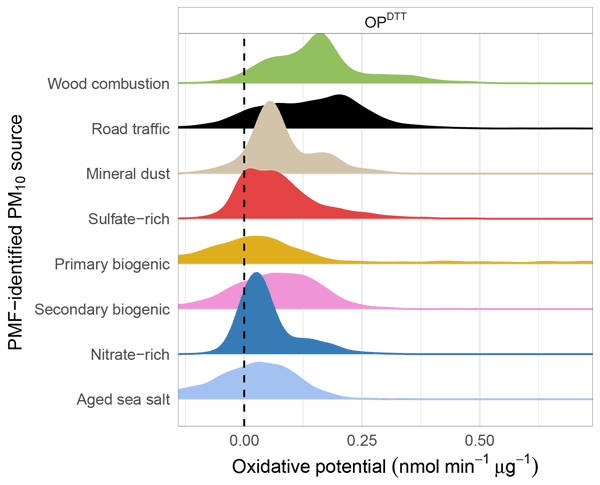
Stuart K. Grange, Gaëlle Uzu, Samuël Weber, Jean-Luc Jaffrezo, and Christoph Hueglin
Atmos. Chem. Phys., 22, 7029–7050, https://doi.org/10.5194/acp-22-7029-2022, https://doi.org/10.5194/acp-22-7029-2022, 2022
Short summary
Short summary
Oxidative potential (OP), a biologically relevant metric for particulate matter (PM), was linked to PM10 and PM2.5 sources and constituents across Switzerland between 2018 and 2019. Wood burning and non-exhaust traffic emissions were identified as key processes that led to enhanced OP. Therefore, the make-up of the PM mix was very important for OP. The results highlight the importance of the management of wood burning and non-exhaust emissions to reduce OP, and presumably biological harm.
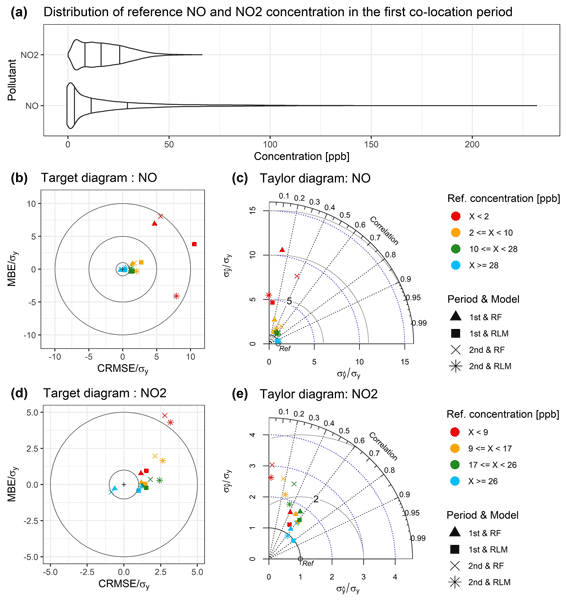
Horim Kim, Michael Müller, Stephan Henne, and Christoph Hüglin
Atmos. Meas. Tech., 15, 2979–2992, https://doi.org/10.5194/amt-15-2979-2022, https://doi.org/10.5194/amt-15-2979-2022, 2022
Short summary
Short summary
In this study, the performance of electrochemical sensors for NO and NO2 for measuring air quality was determined over a longer operating period. The performance of NO sensors remained reliable for more than 18 months. However, the NO2 sensors showed decreasing performance over time. During deployment, we found that the NO2 sensors can distinguish general pollution levels, but they proved unsuitable for accurate measurements due to significant biases.
Adam Brighty, Véronique Jacob, Gaëlle Uzu, Lucille Borlaza, Sébastien Conil, Christoph Hueglin, Stuart K. Grange, Olivier Favez, Cécile Trébuchon, and Jean-Luc Jaffrezo
Atmos. Chem. Phys., 22, 6021–6043, https://doi.org/10.5194/acp-22-6021-2022, https://doi.org/10.5194/acp-22-6021-2022, 2022
Short summary
Short summary
With an revised analytical method and long-term sampling strategy, we have been able to elucidate much more information about atmospheric plant debris, a poorly understood class of particulate matter. We found weaker seasonal patterns at urban locations compared to rural locations and significant interannual variability in concentrations between previous years and 2020, during the COVID-19 pandemic. This suggests a possible man-made influence on plant debris concentration and source strength.
Franz Conen, Annika Einbock, Claudia Mignani, and Christoph Hüglin
Atmos. Chem. Phys., 22, 3433–3444, https://doi.org/10.5194/acp-22-3433-2022, https://doi.org/10.5194/acp-22-3433-2022, 2022
Short summary
Short summary
Above western Europe, ice typically starts to form in clouds a few kilometres above the ground if suitable aerosol particles are present. In air masses typical for that altitude, we found that such particles most likely originate from bacteria and fungi living on plants. Occasional Saharan dust intrusions seem to contribute little to the number concentration of particles able to freeze cloud droplets between 0°C and −15°C.
Cited articles
Allen, S., Allen, D., Phoenix, V. R., Le Roux, G., Durántez Jiménez, P., Simonneau, A., Binet, S., and Galop, D.: Atmospheric transport and deposition of microplastics in a remote mountain catchment, Nat. Geosci., 12, 339–344, https://doi.org/10.1038/s41561-019-0335-5, 2019.
Allen, S., Allen, D., Baladima, F., Phoenix, V. R., Thomas, J. L., Le Roux, G., and Sonke, J. E.: Evidence of free tropospheric and long-range transport of microplastic at Pic du Midi Observatory, Nat. Commun., 12, 7242, https://doi.org/10.1038/s41467-021-27454-7, 2021.
Barchiesi, M., Kooi, M., and Koelmans, A. A.: Adding Depth to Microplastics, Environ. Sci. Technol., 57, 14015–14023, https://doi.org/10.1021/acs.est.3c03620, 2023.
Bellasi, A., Binda, G., Pozzi, A., Boldrocchi, G., and Bettinetti, R.: The extraction of microplastics from sediments: An overview of existing methods and the proposal of a new and green alternative, Chemosphere, 278, 130357, https://doi.org/10.1016/j.chemosphere.2021.130357, 2021.
Brahney, J., Hallerud, M., Heim, E., Hahnenberger, M., and Sukumaran, S.: Plastic rain in protected areas of the United States, Science, https://doi.org/10.1126/science.aaz5819, 2020.
Caldwell, J., Taladriz-Blanco, P., Lehner, R., Lubskyy, A., Ortuso, R. D., Rothen-Rutishauser, B., and Petri-Fink, A.: The micro-, submicron-, and nanoplastic hunt: A review of detection methods for plastic particles, Chemosphere, 293, 133514, https://doi.org/10.1016/j.chemosphere.2022.133514, 2022.
Chamas, A., Moon, H., Zheng, J., Qiu, Y., Tabassum, T., Jang, J. H., Abu-Omar, M., Scott, S. L., and Suh, S.: Degradation Rates of Plastics in the Environment, ACS Sustain. Chem. Eng., 8, 3494–3511, https://doi.org/10.1021/acssuschemeng.9b06635, 2020.
Ciornii, D., Hodoroaba, V.-D., Benismail, N., Maltseva, A., Ferrer, J. F., Wang, J., Parra, R., Jézéquel, R., Receveur, J., Gabriel, D., Scheitler, A., van Oversteeg, C., Roosma, J., van Renesse van Duivenbode, A., Bulters, T., Zanella, M., Perini, A., Benetti, F., Mehn, D., Dierkes, G., Soll, M., Ishimura, T., Bednarz, M., Peng, G., Hildebrandt, L., Peters, M., Kim, S.-K., Türk, J., Steinfeld, F., Jung, J., Hong, S., Kim, E.-J., Yu, H.-W., Klockmann, S., Krafft, C., Süssmann, J., Zou, S., ter Halle, A., Giovannozzi, A. M., Sacco, A., Fadda, M., Putzu, M., Im, D.-H., Nhlapo, N., Carrillo-Barragán, P., Schmidt, N., Herzke, D., Gomiero, A., Jaén-Gil, A., Cabanes, D. J. E., Doedt, M., Cardoso, V., Schmitz, A., Hawly, M., Mo, H., Jacquin, J., Mechlinski, A., Adediran, G. A., Andrade, J., Muniategui-Lorenzo, S., Ramsperger, A., Löder, M. G. J., Laforsch, C., Cirkovic Velickovic, T., Fabbri, D., Coralli, I., Federici, S., Scholz-Böttcher, B. M., la Nasa, J., Biale, G., Rauert, C., Okoffo, E. D., Undas, A., An, L., Wachtendorf, V., Fengler, P., and Altmann, K.: Interlaboratory Comparison Reveals State of the Art in Microplastic Detection and Quantification Methods, Anal. Chem., 97, 8719–8728, https://doi.org/10.1021/acs.analchem.4c05403, 2025.
Contreras, L., Edo, C., and Rosal, R.: Mass concentration of plastic particles from two-dimensional images, Sci. Total Environ., 946, 173849, https://doi.org/10.1016/j.scitotenv.2024.173849, 2024.
Costa-Gómez, I., Suarez-Suarez, M., Moreno, J. M., Moreno-Grau, S., Negral, L., Arroyo-Manzanares, N., López-García, I., and Peñalver, R.: A novel application of thermogravimetry-mass spectrometry for polystyrene quantification in the PM10 and PM2.5 fractions of airborne microplastics, Sci. Total Environ., 856, 159041, https://doi.org/10.1016/j.scitotenv.2022.159041, 2023.
Currie, L. A.: Limits for qualitative detection and quantitative determination. Application to radiochemistry, Anal. Chem., 40, 586–593, https://doi.org/10.1021/ac60259a007, 1968.
Dawson, A. L., Santana, M. F. M., Nelis, J. L. D., and Motti, C. A.: Taking control of microplastics data: A comparison of control and blank data correction methods, J. Hazard. Mater., 443, 130218, https://doi.org/10.1016/j.jhazmat.2022.130218, 2023.
Dris, R., Gasperi, J., Saad, M., Mirande, C., and Tassin, B.: Synthetic fibers in atmospheric fallout: A source of microplastics in the environment?, Mar. Pollut. Bull., 104, 290–293, https://doi.org/10.1016/j.marpolbul.2016.01.006, 2016.
Fan, W., Salmond, J. A., Dirks, K. N., Cabedo Sanz, P., Miskelly, G. M., and Rindelaub, J. D.: Evidence and Mass Quantification of Atmospheric Microplastics in a Coastal New Zealand City, Environ. Sci. Technol., 56, 17556–17568, https://doi.org/10.1021/acs.est.2c05850, 2022.
Gan, Y., Yang, X., Zhong, L., Chen, X., Lin, M., Qing, X., Chen, L., Wang, J., and Huang, Y.: Airborne Microplastic Pollution in a Highly Urbanized City: Occurrence, Characteristics, Human Exposure and Potential Risks, Water. Air. Soil Pollut., 236, 451, https://doi.org/10.1007/s11270-025-08102-y, 2025.
Hagelskjær, O., Crézé, A., Le Roux, G., and Sonke, J. E.: Investigating the correlation between morphological features of microplastics (5–500 μ m) and their analytical recovery, Microplastics Nanoplastics, 3, 22, https://doi.org/10.1186/s43591-023-00071-5, 2023.
Hartmann, N. B., Hüffer, T., Thompson, R. C., Hassellöv, M., Verschoor, A., Daugaard, A. E., Rist, S., Karlsson, T., Brennholt, N., Cole, M., Herrling, M. P., Hess, M. C., Ivleva, N. P., Lusher, A. L., and Wagner, M.: Are We Speaking the Same Language? Recommendations for a Definition and Categorization Framework for Plastic Debris, Environ. Sci. Technol., 53, 1039–1047, https://doi.org/10.1021/acs.est.8b05297, 2019.
Holstein, C. A., Griffin, M., Hong, J., and Sampson, P. D.: Statistical Method for Determining and Comparing Limits of Detection of Bioassays, Anal. Chem., 87, 9795–9801, https://doi.org/10.1021/acs.analchem.5b02082, 2015.
Horton, A. A., Walton, A., Spurgeon, D. J., Lahive, E., and Svendsen, C.: Microplastics in freshwater and terrestrial environments: Evaluating the current understanding to identify the knowledge gaps and future research priorities, Sci. Total Environ., 586, 127–141, https://doi.org/10.1016/j.scitotenv.2017.01.190, 2017.
Hufnagl, B., Steiner, D., Renner, E., Löder, M. G. J., Laforsch, C., and Lohninger, H.: A methodology for the fast identification and monitoring of microplastics in environmental samples using random decision forest classifiers, Anal. Methods, 11, 2277–2285, https://doi.org/10.1039/C9AY00252A, 2019.
Hufnagl, B., Stibi, M., Martirosyan, H., Wilczek, U., Möller, J. N., Löder, M. G. J., Laforsch, C., and Lohninger, H.: Computer-Assisted Analysis of Microplastics in Environmental Samples Based on μFTIR Imaging in Combination with Machine Learning, Environ. Sci. Technol. Lett., 9, 90–95, https://doi.org/10.1021/acs.estlett.1c00851, 2022.
Huo, Y., Dijkstra, F. A., Possell, M., and Singh, B.: Plastics in soil environments: All things considered, in: Advances in Agronomy, Elsevier, 1–132, https://doi.org/10.1016/bs.agron.2022.05.002, 2022.
International Organization for Standardization: Air quality – Guidelines for estimating measurement uncertainty (Standard No. 20988), https://www.iso.org/standard/35605.html (last access: 15 January 2026), 2007.
Isobe, A., Buenaventura, N. T., Chastain, S., Chavanich, S., Cózar, A., DeLorenzo, M., Hagmann, P., Hinata, H., Kozlovskii, N., Lusher, A. L., Martí, E., Michida, Y., Mu, J., Ohno, M., Potter, G., Ross, P. S., Sagawa, N., Shim, W. J., Song, Y. K., Takada, H., Tokai, T., Torii, T., Uchida, K., Vassillenko, K., Viyakarn, V., and Zhang, W.: An interlaboratory comparison exercise for the determination of microplastics in standard sample bottles, Mar. Pollut. Bull., 146, 831–837, https://doi.org/10.1016/j.marpolbul.2019.07.033, 2019.
Ivleva, N. P.: Chemical Analysis of Microplastics and Nanoplastics: Challenges, Advanced Methods, and Perspectives, Chem. Rev., 121, 11886–11936, https://doi.org/10.1021/acs.chemrev.1c00178, 2021.
Jacob, O., Ramírez-Piñero, A., Elsner, M., and Ivleva, N. P.: TUM-ParticleTyper 2: automated quantitative analysis of (microplastic) particles and fibers down to 1 μm by Raman microspectroscopy, Anal. Bioanal. Chem., 415, 2947–2961, https://doi.org/10.1007/s00216-023-04712-9, 2023.
Joint Committee for Guides in Metrology: Evaluation of measurement data – Guide to the expression of uncertainty in measurement, https://doi.org/10.59161/JCGM100-2008E, 2008.
Keith, L. H., Crummett, W., Deegan, J., Libby, R. A., Taylor, J. K., and Wentler, G.: Principles of environmental analysis, Anal. Chem., 55, 2210–2218, https://doi.org/10.1021/ac00264a003, 1983.
Kirchsteiger, B., Materić, D., Happenhofer, F., Holzinger, R., and Kasper-Giebl, A.: Fine micro- and nanoplastics particles (PM2.5) in urban air and their relation to polycyclic aromatic hydrocarbons, Atmos. Environ., 301, 119670, https://doi.org/10.1016/j.atmosenv.2023.119670, 2023.
Klein, M. and Fischer, E. K.: Microplastic abundance in atmospheric deposition within the Metropolitan area of Hamburg, Germany, Sci. Total Environ., 685, 96–103, https://doi.org/10.1016/j.scitotenv.2019.05.405, 2019.
Lao, W. and Wong, C. S.: How to establish detection limits for environmental microplastics analysis, Chemosphere, 327, 138456, https://doi.org/10.1016/j.chemosphere.2023.138456, 2023.
Liu, Z., Bai, Y., Ma, T., Liu, X., Wei, H., Meng, H., Fu, Y., Ma, Z., Zhang, L., and Zhao, J.: Distribution and possible sources of atmospheric microplastic deposition in a valley basin city (Lanzhou, China), Ecotoxicol. Environ. Saf., 233, 113353, https://doi.org/10.1016/j.ecoenv.2022.113353, 2022.
Lu, H. C., Ziajahromi, S., Neale, P. A., and Leusch, F. D. L.: A systematic review of freshwater microplastics in water and sediments: Recommendations for harmonisation to enhance future study comparisons, Sci. Total Environ., 781, 146693, https://doi.org/10.1016/j.scitotenv.2021.146693, 2021.
Lusher, A. L., Munno, K., Hermabessiere, L., and Carr, S.: Isolation and Extraction of Microplastics from Environmental Samples: An Evaluation of Practical Approaches and Recommendations for Further Harmonization, Appl. Spectrosc., 74, 1049–1065, https://doi.org/10.1177/0003702820938993, 2020.
Morgado, V., Palma, C., and Bettencourt da Silva, R. J. N.: Bottom-Up Evaluation of the Uncertainty of the Quantification of Microplastics Contamination in Sediment Samples, Environ. Sci. Technol., https://doi.org/10.1021/acs.est.2c01828, 2022.
Mutshekwa, T., Mulaudzi, F., Maiyana, V. P., Mofu, L., Munyai, L. F., and Murungweni, F. M.: Atmospheric deposition of microplastics in urban, rural, forest environments: A case study of Thulamela Local Municipality, PLOS ONE, 20, e0313840, https://doi.org/10.1371/journal.pone.0313840, 2025.
Obbard, R. W.: Microplastics in Polar Regions: The role of long range transport, Micro Nanoplastics Ed. Dr Teresa AP Rocha-St., 1, 24–29, https://doi.org/10.1016/j.coesh.2017.10.004, 2018.
Peñalver, R., Costa-Gómez, I., Arroyo-Manzanares, N., Moreno, J. M., López-García, I., Moreno-Grau, S., and Córdoba, M. H.: Assessing the level of airborne polystyrene microplastics using thermogravimetry-mass spectrometry: Results for an agricultural area, Sci. Total Environ., 787, 147656, https://doi.org/10.1016/j.scitotenv.2021.147656, 2021.
Philipp, M., Bucheli, T. D., and Kaegi, R.: The use of surrogate standards as a QA/QC tool for routine analysis of microplastics in sewage sludge, Sci. Total Environ., 835, 155485, https://doi.org/10.1016/j.scitotenv.2022.155485, 2022.
Rindelaub, J. D., Salmond, J. A., Fan, W., Miskelly, G. M., Dirks, K. N., Henning, S., Conrath, T., Stratmann, F., and Coulson, G.: Aerosol mass concentrations and dry/wet deposition of atmospheric microplastics at a remote coastal location in New Zealand, Environ. Pollut., 372, 126034, https://doi.org/10.1016/j.envpol.2025.126034, 2025.
Rochman, C. M., Regan, F., and Thompson, R. C.: On the harmonization of methods for measuring the occurrence, fate and effects of microplastics, Anal. Methods, 9, 1324–1325, https://doi.org/10.1039/C7AY90014G, 2017.
Rouillon, C., Bussiere, P.-O., Desnoux, E., Collin, S., Vial, C., Therias, S., and Gardette, J.-L.: Is carbonyl index a quantitative probe to monitor polypropylene photodegradation?, Polym. Degrad. Stab., 128, 200–208, https://doi.org/10.1016/j.polymdegradstab.2015.12.011, 2016.
Schwaferts, C., Schwaferts, P., Von Der Esch, E., Elsner, M., and Ivleva, N. P.: Which particles to select, and if yes, how many?: Subsampling methods for Raman microspectroscopic analysis of very small microplastic, Anal. Bioanal. Chem., 413, 3625–3641, https://doi.org/10.1007/s00216-021-03326-3, 2021.
Schymanski, D., Oßmann, B. E., Benismail, N., Boukerma, K., Dallmann, G., Von Der Esch, E., Fischer, D., Fischer, F., Gilliland, D., Glas, K., Hofmann, T., Käppler, A., Lacorte, S., Marco, J., Rakwe, M. E., Weisser, J., Witzig, C., Zumbülte, N., and Ivleva, N. P.: Analysis of microplastics in drinking water and other clean water samples with micro-Raman and micro-infrared spectroscopy: minimum requirements and best practice guidelines, Anal. Bioanal. Chem., 413, 5969–5994, https://doi.org/10.1007/s00216-021-03498-y, 2021.
She, J., Buhhalko, N., Lind, K., Mishra, A., Kikas, V., Costa, E., Gambardella, C., Montarsolo, A., Faimali, M., Garaventa, F., and Lips, I.: Uncertainty and Consistency Assessment in Multiple Microplastic Observation Datasets in the Baltic Sea, Front. Mar. Sci., 9, 886357, https://doi.org/10.3389/fmars.2022.886357, 2022.
Simon, M., Van Alst, N., and Vollertsen, J.: Quantification of microplastic mass and removal rates at wastewater treatment plants applying Focal Plane Array (FPA)-based Fourier Transform Infrared (FT-IR) imaging, Water Res., 142, 1–9, https://doi.org/10.1016/j.watres.2018.05.019, 2018.
Sun, J., Peng, Z., Zhu, Z.-R., Fu, W., Dai, X., and Ni, B.-J.: The atmospheric microplastics deposition contributes to microplastic pollution in urban waters, Water Res., 225, 119116, https://doi.org/10.1016/j.watres.2022.119116, 2022.
Szewc, K., Graca, B., and Dołęga, A.: Atmospheric deposition of microplastics in the coastal zone: Characteristics and relationship with meteorological factors, Sci. Total Environ., 761, 143272, https://doi.org/10.1016/j.scitotenv.2020.143272, 2021.
Thompson, R. C., Courtene-Jones, W., Boucher, J., Pahl, S., Raubenheimer, K., and Koelmans, A. A.: Twenty years of microplastic pollution research–what have we learned?, Science, 386, eadl2746, https://doi.org/10.1126/science.adl2746, 2024.
Wang, X., Wei, N., Liu, K., Zhu, L., Li, C., Zong, C., and Li, D.: Exponential decrease of airborne microplastics: From megacity to open ocean, Sci. Total Environ., 849, 157702, https://doi.org/10.1016/j.scitotenv.2022.157702, 2022a.
Wang, Z., Zhang, Y., Kang, S., Yang, L., Luo, X., Chen, P., Guo, J., Hu, Z., Yang, C., Yang, Z., and Gao, T.: Long-range transport of atmospheric microplastics deposited onto glacier in southeast Tibetan Plateau, Environ. Pollut., 306, 119415, https://doi.org/10.1016/j.envpol.2022.119415, 2022b.
Wright, S. L., Ulke, J., Font, A., Chan, K. L. A., and Kelly, F. J.: Atmospheric microplastic deposition in an urban environment and an evaluation of transport, Environ. Int., 136, 105411, https://doi.org/10.1016/j.envint.2019.105411, 2020.
Wu, C. H., Dang, T. T. M., Mutuku, J. K., Lin, L. M., Huang, B. W., and Chang-Chien, G.-P.: Evaluation of PM2.5 bound microplastics and plastic additives in several cities in Taiwan: Spatial distribution and human health risk, Sci. Total Environ., 959, 178213, https://doi.org/10.1016/j.scitotenv.2024.178213, 2025.
Yan, Y., Yu, Y., Sima, J., Geng, C., and Yang, J.: Aging behavior of microplastics accelerated by mechanical fragmentation: alteration of intrinsic and extrinsic properties, Environ. Sci. Pollut. Res., 30, 90993–91006, https://doi.org/10.1007/s11356-023-28736-x, 2023.
Yang, Z., Nagashima, H., and Arakawa, H.: Development of automated microplastic identification workflow for Raman micro-imaging and evaluation of the uncertainties during micro-imaging, Mar. Pollut. Bull., 193, 115200, https://doi.org/10.1016/j.marpolbul.2023.115200, 2023.
Short summary
Microplastics are environmental contaminants of global concern. In this study, we developed a method for measuring the amount of microplastics in atmospheric samples. In doing so, we introduced a new way to collect rain/snow samples and a custom software that helps with the analysis of microplastics. We then assessed the precision of our method and tested it on real samples. Our work may be useful for researchers seeking to measure microplastics in environmental samples.
Microplastics are environmental contaminants of global concern. In this study, we developed a...


