
Articles | Volume 19, issue 12
https://doi.org/10.5194/amt-19-3961-2026
© Author(s) 2026. This work is distributed under
the Creative Commons Attribution 4.0 License.
the Creative Commons Attribution 4.0 License.
https://doi.org/10.5194/amt-19-3961-2026
© Author(s) 2026. This work is distributed under
the Creative Commons Attribution 4.0 License.
the Creative Commons Attribution 4.0 License.
Research article
| 
17 Jun 2026
Research article |
| 17 Jun 2026
| 17 Jun 2026
Measuring molecular singlet oxygen (1O2*) from atmospheric photosensitizers: Intercomparison of techniques, irradiation setups, data analysis and protocol recommendations
Keighan J. Gemmell
Department of Chemistry, University of British Columbia, Vancouver, V6T 1Z1, Canada
Laura Marie Dahler Heinlein
Department of Land, Air and Water Resources, University of California, Davis, CA 95616, USA
Emma A. Petersen-Sonn
Universite Claude Bernard Lyon 1, CNRS, IRCELYON, UMR 5256, Villeurbanne, 69100, France
Claudia Sardena
Department of Chemistry, University of British Columbia, Vancouver, V6T 1Z1, Canada
Zhongyu Guo
Universite Claude Bernard Lyon 1, CNRS, IRCELYON, UMR 5256, Villeurbanne, 69100, France
Nory Mariño-Ocampo
Department of Chemistry, University of Calgary, 2500 University Drive NW, Calgary, AB T2N 1N4, Canada
Belinda Heyne
Department of Chemistry, University of Calgary, 2500 University Drive NW, Calgary, AB T2N 1N4, Canada
Christian George
Universite Claude Bernard Lyon 1, CNRS, IRCELYON, UMR 5256, Villeurbanne, 69100, France
Cort Anastasio
Department of Land, Air and Water Resources, University of California, Davis, CA 95616, USA
Nadine Borduas-Dedekind
CORRESPONDING AUTHOR

Department of Chemistry, University of British Columbia, Vancouver, V6T 1Z1, Canada
Related authors
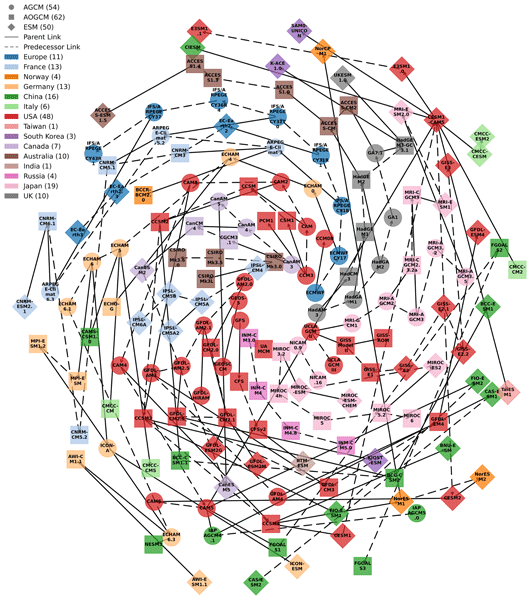
Anja Katzenberger, Jhayron S. Pérez-Carrasquilla, Keighan Gemmell, Evgenia Galytska, Christine Leclerc, Punya P, Indrani Roy, Arianna Varuolo-Clarke, Milica Tošić, and Nina Črnivec
Earth Syst. Dynam., 17, 495–532, https://doi.org/10.5194/esd-17-495-2026, https://doi.org/10.5194/esd-17-495-2026, 2026
Short summary
Short summary
Multi-model ensembles are a key approach in climate model analysis, but their use involves many complex considerations. In this work, we review relevant literature and synthesize existing studies to contribute to the development of guidelines for designing and conducting ensemble analyses. This is complemented by a collection of useful resources and a discussion of emerging trends, supported by statistics tracing the number of publications.
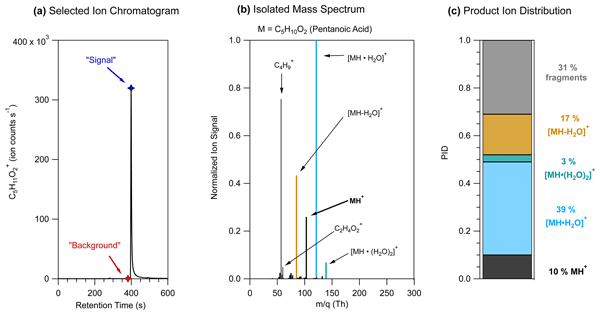
Michael F. Link, Megan S. Claflin, Christina E. Cecelski, Ayomide A. Akande, Delaney Kilgour, Paul A. Heine, Matthew Coggon, Chelsea E. Stockwell, Andrew Jensen, Jie Yu, Han N. Huynh, Jenna C. Ditto, Carsten Warneke, William Dresser, Keighan Gemmell, Spiro Jorga, Rileigh L. Robertson, Joost de Gouw, Timothy Bertram, Jonathan P. D. Abbatt, Nadine Borduas-Dedekind, and Dustin Poppendieck
Atmos. Meas. Tech., 18, 1013–1038, https://doi.org/10.5194/amt-18-1013-2025, https://doi.org/10.5194/amt-18-1013-2025, 2025
Short summary
Short summary
Proton-transfer-reaction mass spectrometry (PTR-MS) is widely used for the measurement of volatile organic compounds (VOCs) both indoors and outdoors. An analytical challenge for PTR-MS measurements is the formation of unintended measurement interferences, product ion distributions (PIDs), that may appear in the data as VOCs of interest. We developed a method for quantifying PID formation and use interlaboratory comparison data to put quantitative constraints on PID formation.
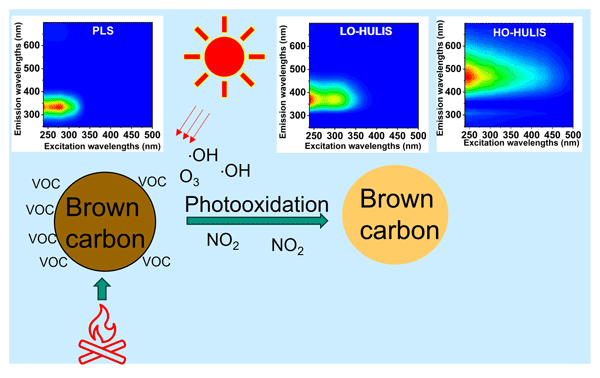
Feng Jiang, Jun Zhang, David M. Bell, Kun Li, Nadine Borduas-Dedekind, Andre S. H. Prevot, Hongbiao Cui, Harald Saathoff, and Thomas Leisner
Atmos. Chem. Phys., 26, 11733–11746, https://doi.org/10.5194/acp-26-11733-2026, https://doi.org/10.5194/acp-26-11733-2026, 2026
Short summary
Short summary
We studied chemical compositions and chromophores of brown carbon aerosol from combustion emission before and after photooxidation using an oxidative flow reactor. The chromophore and chemical composition of brown carbon were determined by excitation-emission spectroscopy and mass spectrometry. This work helps to get a better understanding of evolution process of the chromophores from primary combustion emissions during the real atmospheric transportation.
Anja Katzenberger, Jhayron S. Pérez-Carrasquilla, Keighan Gemmell, Evgenia Galytska, Christine Leclerc, Punya P, Indrani Roy, Arianna Varuolo-Clarke, Milica Tošić, and Nina Črnivec
Earth Syst. Dynam., 17, 495–532, https://doi.org/10.5194/esd-17-495-2026, https://doi.org/10.5194/esd-17-495-2026, 2026
Short summary
Short summary
Multi-model ensembles are a key approach in climate model analysis, but their use involves many complex considerations. In this work, we review relevant literature and synthesize existing studies to contribute to the development of guidelines for designing and conducting ensemble analyses. This is complemented by a collection of useful resources and a discussion of emerging trends, supported by statistics tracing the number of publications.
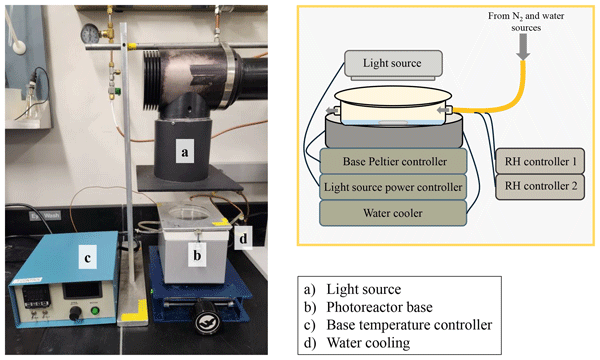
Christopher Niedek, Wenqing Jiang, Antai Zhang, Cort Anastasio, and Qi Zhang
Atmos. Meas. Tech., 19, 2009–2023, https://doi.org/10.5194/amt-19-2009-2026, https://doi.org/10.5194/amt-19-2009-2026, 2026
Short summary
Short summary
We developed a new photoreactor to study how organic compounds react in water under atmospheric-relevant conditions. Experiments were performed on smoke-related chemicals under controlled light, temperature, and humidity mimicking cloud and haze environments. Our results showed that saltier water speeds particle formation and changes their composition, providing new insights into atmospheric aerosol chemistry.

Jie Hu, Jianlong Li, Narcisse Tsona Tchinda, Christian George, Feng Xu, Min Hu, and Lin Du
Atmos. Chem. Phys., 26, 2191–2208, https://doi.org/10.5194/acp-26-2191-2026, https://doi.org/10.5194/acp-26-2191-2026, 2026
Short summary
Short summary
Phytoplankton blooms dynamically enrich dissolved organic carbon (DOC) in sea spray aerosol by 10–30 times, with proteins and saccharides transferring at different bloom stages. The sea-to-air transfer of DOC is driven by the synergy of biological and the interaction between DOC and bubble rupture. This synergistically-driven DOC flux affects aerosol properties and climate, highlighting the ocean–atmosphere link in organic carbon cycling.
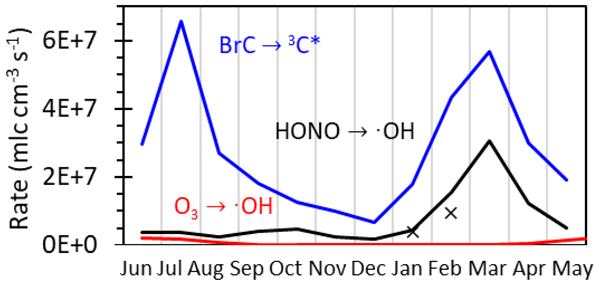
Laura M. D. Heinlein, Junwei He, Michael Oluwatoyin Sunday, Fangzhou Guo, James Campbell, Allison Moon, Sukriti Kapur, Ting Fang, Kasey Edwards, Meeta Cesler-Maloney, Alyssa J. Burns, Jack Dibb, William Simpson, Manabu Shiraiwa, Becky Alexander, Jingqiu Mao, James H. Flynn III, Jochen Stutz, and Cort Anastasio
Atmos. Chem. Phys., 25, 9561–9581, https://doi.org/10.5194/acp-25-9561-2025, https://doi.org/10.5194/acp-25-9561-2025, 2025
Short summary
Short summary
High-latitude cities like Fairbanks, Alaska, experience severe wintertime pollution episodes. While conventional wisdom holds that oxidation is slow under these conditions, field measurements find oxidized products in particles. To explore this, we measured oxidants in aqueous extracts of winter particles from Fairbanks. We find high concentrations of oxidants during illumination experiments, indicating that particle photochemistry can be significant even in high latitudes during winter.
Rickey J. M. Lee, Ayomide A. Akande, Saeid Kamal, Paul A. Heine, Pritesh Padhiar, David Tonkin, Wesley Rusinoff, Mohamad Rezaei, and Nadine Borduas-Dedekind
EGUsphere, https://doi.org/10.5194/egusphere-2025-3041, https://doi.org/10.5194/egusphere-2025-3041, 2025
Short summary
Short summary
The University of British Columbia (UBC)'s Advanced Techniques for Mechanisms of OXidation (ATMOX) chamber is a modular 8 m3 environmental chamber capable of operating under batch and continuous mode experiments with a unique setup of light-emitting diodes (LEDs) producing irradiance peaks at 275, 310, 325, 340, 365, 385 nm, as well as between 450 and 630 nm. This chamber enables wavelength-specific photochemical experiments without temperature increases while being energy efficient.
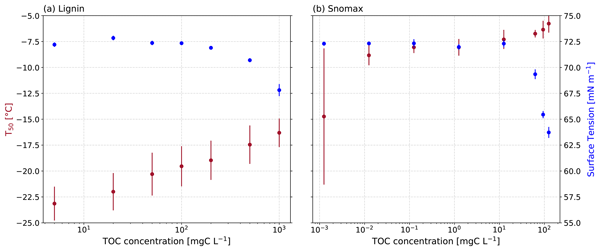
Kathleen A. Alden, Paul Bieber, Anna J. Miller, Nicole Link, Benjamin J. Murray, and Nadine Borduas-Dedekind
Atmos. Chem. Phys., 25, 6179–6195, https://doi.org/10.5194/acp-25-6179-2025, https://doi.org/10.5194/acp-25-6179-2025, 2025
Short summary
Short summary
Lignin and Snomax are surface-active macromolecules that show a relationship between increasing concentrations, decreasing surface tension, and increasing ice-nucleating ability. However, this relationship did not hold for agricultural soil extracts collected in the UK and Canada. To explain this difference, we propose that as the complexity of the sample increases, the hydrophobic interfaces in the bulk compete with the air–water interface.
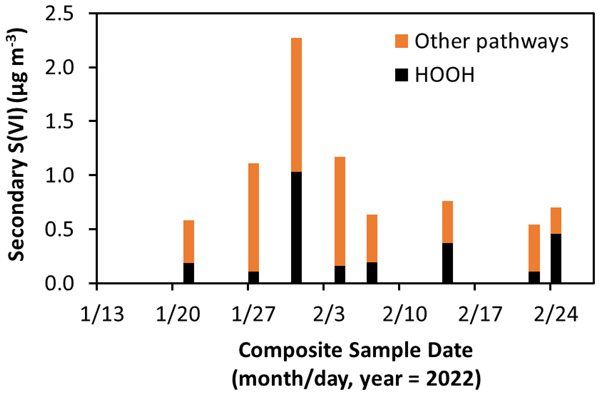
Michael Oluwatoyin Sunday, Laura Marie Dahler Heinlein, Junwei He, Allison Moon, Sukriti Kapur, Ting Fang, Kasey C. Edwards, Fangzhou Guo, Jack Dibb, James H. Flynn III, Becky Alexander, Manabu Shiraiwa, and Cort Anastasio
Atmos. Chem. Phys., 25, 5087–5100, https://doi.org/10.5194/acp-25-5087-2025, https://doi.org/10.5194/acp-25-5087-2025, 2025
Short summary
Short summary
Hydrogen peroxide (HOOH) is an important oxidant that forms atmospheric sulfate. We demonstrate that the illumination of brown carbon can rapidly form HOOH within particles, even under the low-sunlight conditions of Fairbanks, Alaska, during winter. This in-particle formation of HOOH is fast enough that it forms sulfate at significant rates. In contrast, the formation of HOOH in the gas phase during the campaign is expected to be negligible because of high NOx levels.
Michael F. Link, Megan S. Claflin, Christina E. Cecelski, Ayomide A. Akande, Delaney Kilgour, Paul A. Heine, Matthew Coggon, Chelsea E. Stockwell, Andrew Jensen, Jie Yu, Han N. Huynh, Jenna C. Ditto, Carsten Warneke, William Dresser, Keighan Gemmell, Spiro Jorga, Rileigh L. Robertson, Joost de Gouw, Timothy Bertram, Jonathan P. D. Abbatt, Nadine Borduas-Dedekind, and Dustin Poppendieck
Atmos. Meas. Tech., 18, 1013–1038, https://doi.org/10.5194/amt-18-1013-2025, https://doi.org/10.5194/amt-18-1013-2025, 2025
Short summary
Short summary
Proton-transfer-reaction mass spectrometry (PTR-MS) is widely used for the measurement of volatile organic compounds (VOCs) both indoors and outdoors. An analytical challenge for PTR-MS measurements is the formation of unintended measurement interferences, product ion distributions (PIDs), that may appear in the data as VOCs of interest. We developed a method for quantifying PID formation and use interlaboratory comparison data to put quantitative constraints on PID formation.
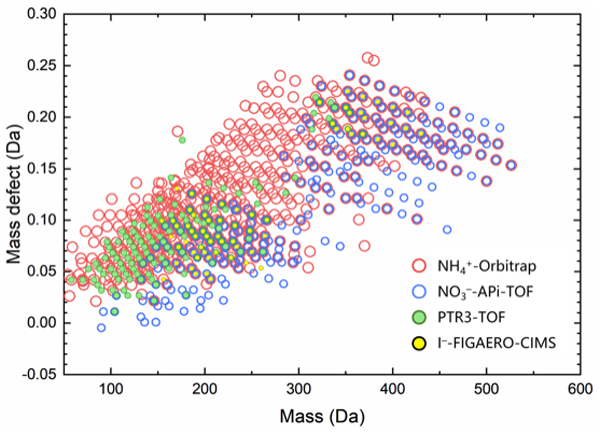
Dandan Li, Dongyu Wang, Lucia Caudillo, Wiebke Scholz, Mingyi Wang, Sophie Tomaz, Guillaume Marie, Mihnea Surdu, Elias Eccli, Xianda Gong, Loic Gonzalez-Carracedo, Manuel Granzin, Joschka Pfeifer, Birte Rörup, Benjamin Schulze, Pekka Rantala, Sébastien Perrier, Armin Hansel, Joachim Curtius, Jasper Kirkby, Neil M. Donahue, Christian George, Imad El-Haddad, and Matthieu Riva
Atmos. Meas. Tech., 17, 5413–5428, https://doi.org/10.5194/amt-17-5413-2024, https://doi.org/10.5194/amt-17-5413-2024, 2024
Short summary
Short summary
Due to the analytical challenges of measuring organic vapors, it remains challenging to identify and quantify organic molecules present in the atmosphere. Here, we explore the performance of the Orbitrap chemical ionization mass spectrometer (CI-Orbitrap) using ammonium ion chemistry. This study shows that ammonium-ion-based chemistry associated with the high mass resolution of the Orbitrap mass analyzer can measure almost all inclusive compounds.
Stephanie Arciva, Lan Ma, Camille Mavis, Chrystal Guzman, and Cort Anastasio
Atmos. Chem. Phys., 24, 4473–4485, https://doi.org/10.5194/acp-24-4473-2024, https://doi.org/10.5194/acp-24-4473-2024, 2024
Short summary
Short summary
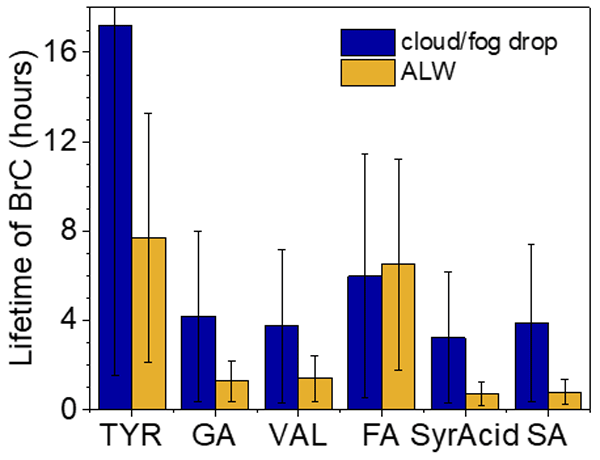
We measured changes in light absorption during the aqueous oxidation of six phenols with hydroxyl radical (●OH) or an organic triplet excited state (3C*). All the phenols formed light-absorbing secondary brown carbon (BrC), which then decayed with continued oxidation. Extrapolation to ambient conditions suggest ●OH is the dominant sink of secondary phenolic BrC in fog/cloud drops, while 3C* controls the lifetime of this light absorption in particle water.
Aaron Lieberman, Julietta Picco, Murat Onder, and Cort Anastasio
Atmos. Chem. Phys., 24, 4411–4419, https://doi.org/10.5194/acp-24-4411-2024, https://doi.org/10.5194/acp-24-4411-2024, 2024
Short summary
Short summary
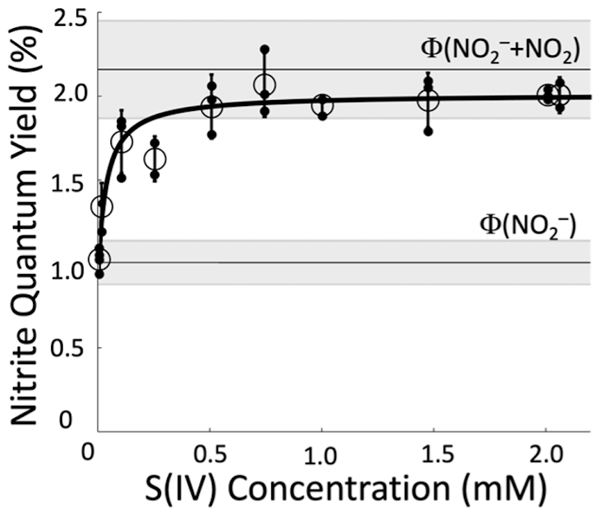
We developed a method that uses aqueous S(IV) to quantitatively convert NO2 to NO2−, which allows both species to be quantified using the Griess method. As an example of the utility of the method, we quantified both photolysis channels of nitrate, with and without a scavenger for hydroxyl radical (·OH). The results show that without a scavenger, ·OH reacts with nitrite to form nitrogen dioxide, suppressing the apparent quantum yield of NO2− and enhancing that of NO2.
Lan Ma, Reed Worland, Laura Heinlein, Chrystal Guzman, Wenqing Jiang, Christopher Niedek, Keith J. Bein, Qi Zhang, and Cort Anastasio
Atmos. Chem. Phys., 24, 1–21, https://doi.org/10.5194/acp-24-1-2024, https://doi.org/10.5194/acp-24-1-2024, 2024
Short summary
Short summary
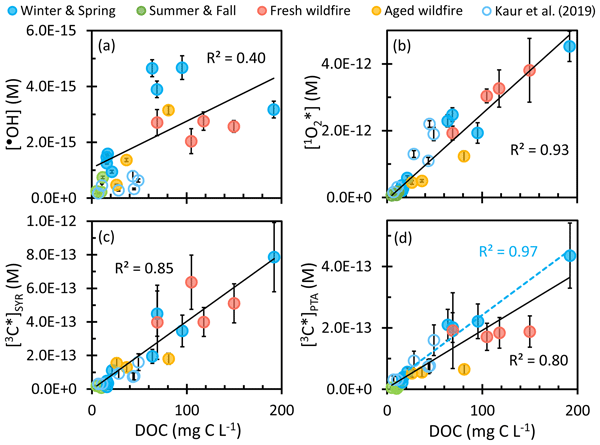
We measured concentrations of three photooxidants – the hydroxyl radical, triplet excited states of organic carbon, and singlet molecular oxygen – in fine particles collected over a year. Concentrations are highest in extracts of fresh biomass burning particles, largely because they have the highest particle concentrations and highest light absorption. When normalized by light absorption, rates of formation for each oxidant are generally similar for the four particle types we observed.
Yuting Lyu, Yin Hau Lam, Yitao Li, Nadine Borduas-Dedekind, and Theodora Nah
Atmos. Chem. Phys., 23, 9245–9263, https://doi.org/10.5194/acp-23-9245-2023, https://doi.org/10.5194/acp-23-9245-2023, 2023
Short summary
Short summary
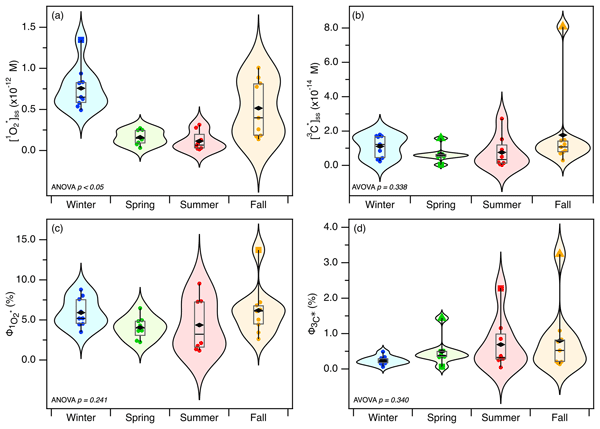
We measured singlet oxygen (1O2*) and triplet excited states of organic matter (3C*) in illuminated aqueous extracts of PM2.5 collected in different seasons at different sites in Hong Kong SAR, South China. In contrast to the locations, seasonality had significant effects on 3C* and 1O2* production due to seasonal variations in long-range air mass transport. The steady-state concentrations of 3C* and 1O2* correlated with the concentration and absorbance of water-soluble organic carbon.
Lan Ma, Reed Worland, Wenqing Jiang, Christopher Niedek, Chrystal Guzman, Keith J. Bein, Qi Zhang, and Cort Anastasio
Atmos. Chem. Phys., 23, 8805–8821, https://doi.org/10.5194/acp-23-8805-2023, https://doi.org/10.5194/acp-23-8805-2023, 2023
Short summary
Short summary
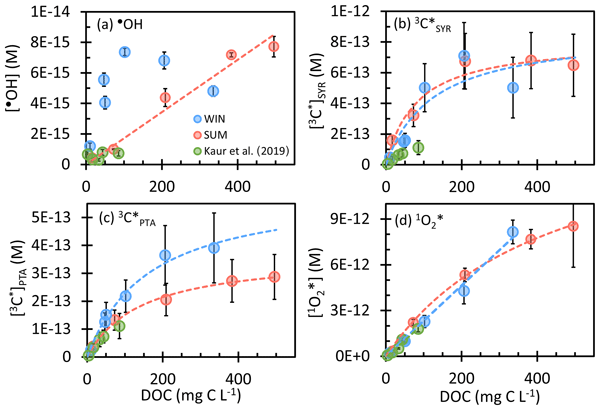
Although photooxidants are important in airborne particles, little is known of their concentrations. By measuring oxidants in a series of particle dilutions, we predict their concentrations in aerosol liquid water (ALW). We find •OH concentrations in ALW are on the order of 10−15 M, similar to their cloud/fog values, while oxidizing triplet excited states and singlet molecular oxygen have ALW values of ca. 10−13 M and 10−12 M, respectively, roughly 10–100 times higher than in cloud/fog drops.
Wenqing Jiang, Christopher Niedek, Cort Anastasio, and Qi Zhang
Atmos. Chem. Phys., 23, 7103–7120, https://doi.org/10.5194/acp-23-7103-2023, https://doi.org/10.5194/acp-23-7103-2023, 2023
Short summary
Short summary
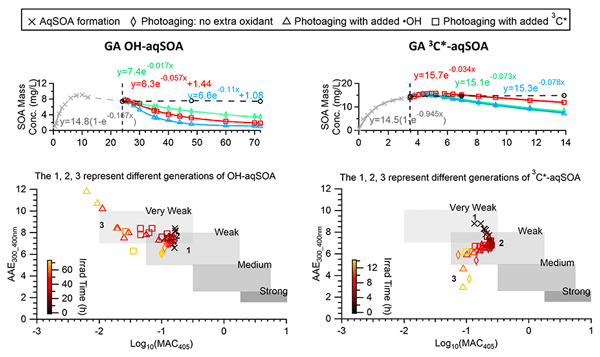
We studied how aqueous-phase secondary organic aerosol (aqSOA) form and evolve from a phenolic carbonyl commonly present in biomass burning smoke. The composition and optical properties of the aqSOA are significantly affected by photochemical reactions and are dependent on the oxidants' concentration and identity in water. During photoaging, the aqSOA initially becomes darker, but prolonged aging leads to the formation of volatile products, resulting in significant mass loss and photobleaching.

Nadine Borduas-Dedekind, Karen C. Short, and Samuel P. Carlson
Earth Syst. Sci. Data, 15, 1437–1440, https://doi.org/10.5194/essd-15-1437-2023, https://doi.org/10.5194/essd-15-1437-2023, 2023
Short summary
Short summary
This article describes the use of the open-discussion manuscript review process as an educational exercise for early career scientists.
Yiqun Lu, Yingge Ma, Dan Dan Huang, Shengrong Lou, Sheng'ao Jing, Yaqin Gao, Hongli Wang, Yanjun Zhang, Hui Chen, Yunhua Chang, Naiqiang Yan, Jianmin Chen, Christian George, Matthieu Riva, and Cheng Huang
Atmos. Chem. Phys., 23, 3233–3245, https://doi.org/10.5194/acp-23-3233-2023, https://doi.org/10.5194/acp-23-3233-2023, 2023
Short summary
Short summary
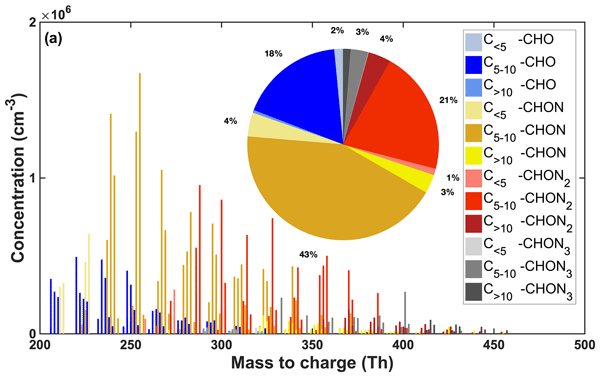
N-containing oxygenated organic molecules have been identified as important precursors of aerosol particles. We used an ultra-high-resolution mass spectrometer coupled with an online sample inlet to accurately measure their molecular composition, concentration level and variation patterns. We show their formation process and influencing factors in a Chinese megacity involving various volatile organic compound precursors and atmospheric oxidants, and we highlight the influence of PM2.5 episodes.
Yangyang Liu, Yue Deng, Jiarong Liu, Xiaozhong Fang, Tao Wang, Kejian Li, Kedong Gong, Aziz U. Bacha, Iqra Nabi, Qiuyue Ge, Xiuhui Zhang, Christian George, and Liwu Zhang
Atmos. Chem. Phys., 22, 9175–9197, https://doi.org/10.5194/acp-22-9175-2022, https://doi.org/10.5194/acp-22-9175-2022, 2022
Short summary
Short summary
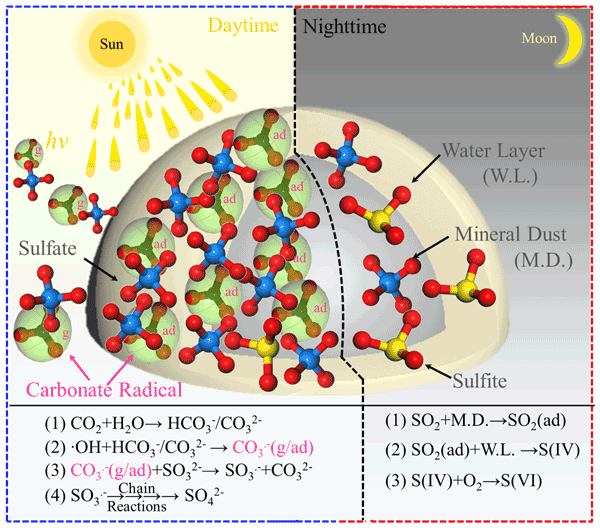
Both CO2 and carbonate salt work as the precursor of carbonate radicals, which largely promotes sulfate formation during the daytime. This study provides the first indication that the carbonate radical not only plays a role as an intermediate in tropospheric anion chemistry but also as a strong oxidant for the surface processing of trace gas in the atmosphere. CO2, carbponate radicals, and sulfate receive attention from those looking at the environment, atmosphere, aerosol, and photochemistry.
Ted Hullar, Theo Tran, Zekun Chen, Fernanda Bononi, Oliver Palmer, Davide Donadio, and Cort Anastasio
Atmos. Chem. Phys., 22, 5943–5959, https://doi.org/10.5194/acp-22-5943-2022, https://doi.org/10.5194/acp-22-5943-2022, 2022
Short summary
Short summary
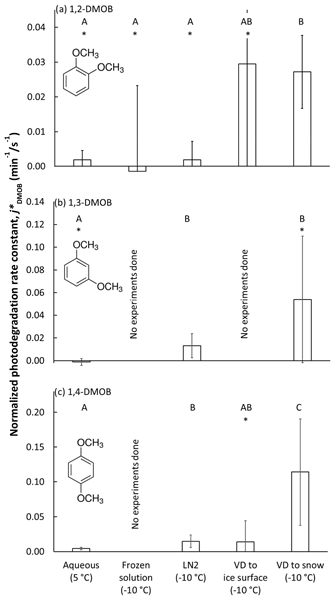
Chemicals are commonly found in snowpacks throughout the world and may be degraded by sunlight; some previous research has reported faster decay rates for chemicals on the surface of snow and ice compared to in water. We found photodegradation on snow can be as much as 30 times faster than in solution for the three dimethoxybenzene isomers. Our computational modeling found light absorbance by dimethoxybenzenes increases on the snow surface, but this only partially explains the decay rate.
Cited articles
Akherati, A., He, Y., Garofalo, L. A., Hodshire, A. L., Farmer, D. K., Kreidenweis, S. M., Permar, W., Hu, L., Fischer, E. V., Jen, C. N., Goldstein, A. H., Levin, E. J. T., DeMott, P. J., Campos, T. L., Flocke, F., Reeves, J. M., Toohey, D. W., Pierce, J. R., and Jathar, S. H.: Dilution and photooxidation driven processes explain the evolution of organic aerosol in wildfire plumes, Environ. Sci.: Atmos., 2, 1000–1022, https://doi.org/10.1039/D1EA00082A, 2022. a
Albinet, A., Minero, C., and Vione, D.: Photochemical generation of reactive species upon irradiation of rainwater: Negligible photoactivity of dissolved organic matter, Sci. Total Environ., 408, 3367–3373, https://doi.org/10.1016/j.scitotenv.2010.04.011, 2010. a
Anastasio, C. and McGregor, K. G.: Chemistry of fog waters in California's Central Valley: 1. In situ photoformation of hydroxyl radical and singlet molecular oxygen, Atmos. Environ., 35, 1079–1089, https://doi.org/10.1016/S1352-2310(00)00281-8, 2001. a
Arakaki, T., Anastasio, C., Kuroki, Y., Nakajima, H., Okada, K., Kotani, Y., Handa, D., Azechi, S., Kimura, T., Tsuhako, A., and Miyagi, Y.: A General Scavenging Rate Constant for Reaction of Hydroxyl Radical with Organic Carbon in Atmospheric Waters, Environ. Sci. Technol., 47, 8196, https://doi.org/10.1021/es401927b, 2013. a
Arciva, S., Zhou, Y., Jiang, W., Ross, A., Zhang, Q., and Anastasio, C.: Aqueous Oxidation of Biomass-Burning Furans by Singlet Molecular Oxygen (1O2*), Environ. Sci. Technol., 59, 10357–10367, https://doi.org/10.1021/acs.est.4c10778, 2025. a, b
Armarego, W. L. F. and Chai, C.: Chapter 4 – Purification of Organic Chemicals, in: Purification of Laboratory Chemicals (Seventh Edition), edited by: Armarego, W. L. F. and Chai, C., Butterworth-Heinemann, Boston, 103–554, ISBN 978-0-12-382161-4, https://doi.org/10.1016/B978-0-12-382161-4.00004-2, 2013. a, b
Bieber, P., Darwish, G. H., Algar, W. R., and Borduas-Dedekind, N.: The presence of nanoparticles in aqueous droplets containing plant-derived biopolymers plays a role in heterogeneous ice nucleation, J. Chem. Phys., 161, 094304, https://doi.org/10.1063/5.0213171, 2024. a
Bogler, S., Daellenbach, K. R., Bell, D. M., Prévôt, A. S. H., El Haddad, I., and Borduas-Dedekind, N.: Singlet Oxygen Seasonality in Aqueous PM10 is Driven by Biomass Burning and Anthropogenic Secondary Organic Aerosol, Environ. Sci. Technol., 56, 15389–15397, https://doi.org/10.1021/acs.est.2c04554, 2022. a, b, c, d, e, f, g, h, i
Borduas-Dedekind, N., Gemmell, K. J., Madri Jayakody, M., Lee, R. J. M., Sardena, C., and Zala, S.: Singlet oxygen is produced from brown carbon-containing cooking organic aerosols (BrCOA) under indoor lighting, Environ. Sci.: Atmos., 4, 611–619, https://doi.org/10.1039/D3EA00167A, 2024. a, b, c, d
Bregnhøj, M., Westberg, M., Jensen, F., and Ogilby, P. R.: Solvent-dependent singlet oxygen lifetimes: temperature effects implicate tunneling and charge-transfer interactions, Phys. Chem. Chem. Phys., 18, 22946–22961, https://doi.org/10.1039/C6CP01635A, 2016. a
Burnett, A. I., Wiseman, C. L. S., and Styler, S. A.: Photochemical Production of Singlet Oxygen by Toronto Road Dust, Environ. Sci. Technol., 59, 19377–19386, https://doi.org/10.1021/acs.est.4c09631, 2025. a
Chang, Y., Liang, Z., Qin, Y., Zhou, L., and Chan, C. K.: Profiling the Photosensitizing Properties of Atmospheric Brown Carbon, ACS ES&T Air, 2, 2081–2091, https://doi.org/10.1021/acsestair.5c00098, 2025. a, b
Cole, C. A., Carlsten, C., Koehle, M., and Brauer, M.: Particulate matter exposure and health impacts of urban cyclists: A randomized crossover study, Environ. Health, https://doi.org/10.1186/s12940-018-0424-8, 2018. a
Cote, C. D., Schneider, S. R., Lyu, M., Gao, S., Gan, L., Holod, A. J., Chou, T. H. H., and Styler, S. A.: Photochemical Production of Singlet Oxygen by Urban Road Dust, Environ. Sci. Technol. Lett., 5, 92–97, https://doi.org/10.1021/acs.estlett.7b00533, 2018. a, b
Davis, C. A., McNeill, K., and Janssen, E. M.-L.: Non-Singlet Oxygen Kinetic Solvent Isotope Effects in Aquatic Photochemistry, Environ. Sci. Technol., 52, 9908–9916, https://doi.org/10.1021/acs.est.8b01512, 2018. a
Dhaini, B., Wagner, L., Moinard, M., Daouk, J., Arnoux, P., Schohn, H., Schneller, P., Acherar, S., Hamieh, T., Frochot, C., Dhaini, B., Wagner, L., Moinard, M., Daouk, J., Arnoux, P., Schohn, H., Schneller, P., Acherar, S., Hamieh, T., and Frochot, C.: Importance of Rose Bengal Loaded with Nanoparticles for Anti-Cancer Photodynamic Therapy, Pharmaceuticals, 15, https://doi.org/10.3390/ph15091093, 2022. a
Drozd, G. T., Weltzin, T., Skiffington, S., Lee, D., Valiev, R., Kurtén, T., Madison, L. R., He, Y., and Gargano, L.: Wavelength-resolved quantum yields for vanillin photochemistry: self-reaction and ionic-strength implications for wildfire brown carbon lifetime, Environ. Sci.: Atmos., 4, 509–518, https://doi.org/10.1039/D4EA00002A, 2024. a
Du, Z., He, Y., Fan, J., Fu, H., Zheng, S., Xu, Z., Qu, X., Kong, A., and Zhu, D.: Predicting apparent singlet oxygen quantum yields of dissolved black carbon and humic substances using spectroscopic indices, Chemosphere, 194, 405–413, https://doi.org/10.1016/j.chemosphere.2017.11.172, 2018. a
Dulin, D. and Mill, T.: Development and evaluation of sunlight actinometers, Environ. Sci. Technol., 16, 815–820, https://doi.org/10.1021/es00105a017, 1982. a
Durantini, A. M. and Greer, A.: Interparticle Delivery and Detection of Volatile Singlet Oxygen at Air/Solid Interfaces, Environ. Sci. Technol., 55, 3559–3567, https://doi.org/10.1021/acs.est.0c07922, 2021. a
Durantini, A. M., Lapoot, L., Jabeen, S., Ghosh, G., Bipu, J., Essang, S., Singh, B. C., and Greer, A.: Tuning the 1O2 Oxidation of a Phenol at the Air/Solid Interface of a Nanoparticle: Hydrophobic Surface Increases Oxophilicity, Langmuir, 39, 11134–11144, https://doi.org/10.1021/acs.langmuir.3c01676, 2023. a
Erickson, P. R., Moor, K. J., Werner, J. J., Latch, D. E., Arnold, W. A., and McNeill, K.: Singlet Oxygen Phosphorescence as a Probe for Triplet-State Dissolved Organic Matter Reactivity, Environ. Sci. Technol., 52, 9170–9178, https://doi.org/10.1021/acs.est.8b02379, 2018. a
Faust, B. C. and Allen, J. M.: Aqueous-phase photochemical sources of peroxyl radicals and singlet molecular oxygen in clouds and fog, J. Geophys. Res.-Atmos., 97, 12913–12926, https://doi.org/10.1029/92JD00843, 1992. a
Fleming, L. T., Lin, P., Roberts, J. M., Selimovic, V., Yokelson, R., Laskin, J., Laskin, A., and Nizkorodov, S. A.: Molecular composition and photochemical lifetimes of brown carbon chromophores in biomass burning organic aerosol, Atmos. Chem. Phys., 20, 1105–1129, https://doi.org/10.5194/acp-20-1105-2020, 2020. a, b, c
Galbavy, E. S., Ram, K., and Anastasio, C.: 2-Nitrobenzaldehyde as a chemical actinometer for solution and ice photochemistry, J. Photoch. Photobio. A, 209, 186–192, https://doi.org/10.1016/j.jphotochem.2009.11.013, 2010. a, b, c, d
George, C., Ammann, M., D'Anna, B., Donaldson, D. J., and Nizkorodov, S. A.: Heterogeneous Photochemistry in the Atmosphere, Chem. Rev., 115, 4218–4258, https://doi.org/10.1021/cr500648z, 2015. a
Gianotti, E., Martins Estevão, B., Cucinotta, F., Hioka, N., Rizzi, M., Renò, F., and Marchese, L.: An Efficient Rose Bengal Based Nanoplatform for Photodynamic Therapy, Chemistry, 20, 10921–10925, https://doi.org/10.1002/chem.201404296, 2014. a
Go, B. R., Lyu, Y., Ji, Y., Li, Y. J., Huang, D. D., Li, X., Nah, T., Lam, C. H., and Chan, C. K.: Aqueous secondary organic aerosol formation from the direct photosensitized oxidation of vanillin in the absence and presence of ammonium nitrate, Atmos. Chem. Phys., 22, 273–293, https://doi.org/10.5194/acp-22-273-2022, 2022. a
Go, B. R., Li, Y. J., Huang, D. D., and Chan, C. K.: Aqueous-Phase Photoreactions of Mixed Aromatic Carbonyl Photosensitizers Yield More Oxygenated, Oxidized, and less Light-Absorbing Secondary Organic Aerosol (SOA) than Single Systems, Environ. Sci. Technol., 58, 7924–7936, https://doi.org/10.1021/acs.est.3c10199, 2024. a
Gollnick, K., Franken, T., Schade, G., and Dörhöfer, G.: Photosensitized Oxygenation as a Function of the Triplet Energy of Sensitizers, Ann. NY Acad. Sci., 171, 89–107, https://doi.org/10.1111/j.1749-6632.1970.tb39307.x, 1970. a
Gottschalk, P., Paczkowski, J., and Neckers, D. C.: Factors influencing the quantum yields for rose bengal formation of singlet oxygen, J. Photochem., 35, 277–281, https://doi.org/10.1016/0047-2670(86)87059-9, 1986. a
Haag, W. R., Hoigné, J., Gassman, E., and Braun, A.: Singlet oxygen in surface waters – Part I: Furfuryl alcohol as a trapping agent, Chemosphere, 13, 631–640, https://doi.org/10.1016/0045-6535(84)90199-1, 1984. a, b
Heinlein, L. M. D., He, J., Sunday, M. O., Guo, F., Campbell, J., Moon, A., Kapur, S., Fang, T., Edwards, K., Cesler-Maloney, M., Burns, A. J., Dibb, J., Simpson, W., Shiraiwa, M., Alexander, B., Mao, J., Flynn III, J. H., Stutz, J., and Anastasio, C.: Surprisingly robust photochemistry in subarctic particles during winter: evidence from photooxidants, Atmos. Chem. Phys., 25, 9561–9581, https://doi.org/10.5194/acp-25-9561-2025, 2025. a, b, c
Hems, R. F., Schnitzler, E. G., Liu-Kang, C., Cappa, C. D., and Abbatt, J. P.: Aging of Atmospheric Brown Carbon Aerosol, ACS Earth Space Chem., 5, 722–748, https://doi.org/10.1021/acsearthspacechem.0c00346, 2021. a
Kabanov, V., Ghosh, S., Lovell, J. F., and Heyne, B.: Singlet oxygen partition between the outer-, inner- and membrane-phases of photo/chemotherapeutic liposomes, Phys. Chem. Chem. Phys., 21, 25054–25064, https://doi.org/10.1039/C9CP05159G, 2019. a, b
Kaur, R. and Anastasio, C.: Light absorption and the photoformation of hydroxyl radical and singlet oxygen in fog waters, Atmos. Environ., 164, 387–397, https://doi.org/10.1016/j.atmosenv.2017.06.006, 2017. a, b
Kaur, R. and Anastasio, C.: First Measurements of Organic Triplet Excited States in Atmospheric Waters, Environ. Sci. Technol., 52, 5218, https://doi.org/10.1021/acs.est.7b06699, 2018. a
Kaur, R., Hudson, B. M., Draper, J., Tantillo, D. J., and Anastasio, C.: Aqueous reactions of organic triplet excited states with atmospheric alkenes, Atmos. Chem. Phys., 19, 5021–5032, https://doi.org/10.5194/acp-19-5021-2019, 2019a. a, b
Klein, G. W., Bhatia, K., Madhavan, V., and Schuler, R. H.: Reaction of hydroxyl radicals with benzoic acid. Isomer distribution in the radical intermediates, J. Phys. Chem., 79, 1767–1774, https://doi.org/10.1021/j100584a005, 1975. a
Laskin, A., Laskin, J., and Nizkorodov, S. A.: Chemistry of Atmospheric Brown Carbon, Chem. Rev., 115, 4335, https://doi.org/10.1021/cr5006167, 2015. a
Laszakovits, J. R., Berg, S. M., Anderson, B. G., O'Brien, J. E., Wammer, K. H., and Sharpless, C. M.: p-Nitroanisole/pyridine and p-nitroacetophenone/pyridine actinometers revisited: Quantum yield in comparison to ferrioxalate, Environ. Sci. Technol. Lett., 4, 11–14, https://doi.org/10.1021/acs.estlett.6b00422, 2017. a, b, c, d
Lee, H. J. J., Aiona, P. K., Laskin, A., Laskin, J., and Nizkorodov, S. A.: Effect of Solar Radiation on the Optical Properties and Molecular Composition of Laboratory Proxies of Atmospheric Brown Carbon, Environ. Sci. Technol., 48, 10217–10226, https://doi.org/10.1021/es502515r, 2014. a, b
Lee, R. J. M., Akande, A. A., Kamal, S., Heine, P. A., Padhiar, P., Tonkin, D., Rusinoff, W., Rezaei, M., and Borduas-Dedekind, N.: The UBC ATMOX chamber: An 8 m3 LED-powered modular environmental chamber for indoor and outdoor atmospheric chemistry, EGUsphere [preprint], https://doi.org/10.5194/egusphere-2025-3041, 2025. a
Leresche, F., Salazar, J. R., Pfotenhauer, D. J., Hannigan, M. P., Majestic, B. J., and Rosario-Ortiz, F. L.: Photochemical Aging of Atmospheric Particulate Matter in the Aqueous Phase, Environ. Sci. Technol., 55, 13152–13163, https://doi.org/10.1021/acs.est.1c00978, 2021. a, b, c, d
Li, F., Lv, J., He, A., Xu, J., Zhao, L., Wang, X., Mao, L., Li, S., Wang, H., Wang, Y., and Jiang, G.: Unexpected Generation of Singlet Oxygen at the Air–Water Interface of Aqueous Microdroplets, J. Am. Chem. Soc., 147, 30574–30581, https://doi.org/10.1021/jacs.5c02431, 2025a. a
Li, J., Chen, Q., and Guan, D.: Insights into the triplet photochemistry of atmospheric aerosol and subfractions isolated with different polarity, Atmos. Environ., 290, 119375, https://doi.org/10.1016/j.atmosenv.2022.119375, 2022. a
Li, Y., Fu, T.-M., Yu, J. Z., Zhang, A., Yu, X., Ye, J., Zhu, L., Shen, H., Wang, C., Yang, X., Tao, S., Chen, Q., Li, Y., Li, L., Che, H., and Heald, C. L.: Nitrogen dominates global atmospheric organic aerosol absorption, Science, 387, 989–995, https://doi.org/10.1126/science.adr4473, 2025b. a, b
Liu, Y., Li, Y., Chan, W. L., Bao, Y., Lee, P. K. H., and Nah, T.: Efficient Production of Reactive Oxidants by Atmospheric Bacterial-Derived Organic Matter in the Aqueous Phase, Environ. Sci. Technol., 59, 6757–6770, https://doi.org/10.1021/acs.est.5c01526, 2025. a
Lyu, Y., Lam, Y. H., Li, Y., Borduas-Dedekind, N., and Nah, T.: Seasonal variations in the production of singlet oxygen and organic triplet excited states in aqueous PM2.5 in Hong Kong SAR, South China, Atmos. Chem. Phys., 23, 9245–9263, https://doi.org/10.5194/acp-23-9245-2023, 2023. a, b, c, d, e, f, g
Ma, L., Guzman, C., Niedek, C., Tran, T., Zhang, Q., and Anastasio, C.: Kinetics and Mass Yields of Aqueous Secondary Organic Aerosol from Highly Substituted Phenols Reacting with a Triplet Excited State, Environ. Sci. Technol., 55, 5772–5781, https://doi.org/10.1021/acs.est.1c00575, 2021. a
Ma, L., Worland, R., Jiang, W., Niedek, C., Guzman, C., Bein, K. J., Zhang, Q., and Anastasio, C.: Predicting photooxidant concentrations in aerosol liquid water based on laboratory extracts of ambient particles, Atmos. Chem. Phys., 23, 8805–8821, https://doi.org/10.5194/acp-23-8805-2023, 2023a. a, b, c, d, e, f, g
Ma, L., Worland, R., Tran, T., and Anastasio, C.: Evaluation of Probes to Measure Oxidizing Organic Triplet Excited States in Aerosol Liquid Water, Environ. Sci. Technol., 57, 6052–6062, https://doi.org/10.1021/acs.est.2c09672, 2023b. a, b, c, d
Ma, L., Worland, R., Heinlein, L., Guzman, C., Jiang, W., Niedek, C., Bein, K. J., Zhang, Q., and Anastasio, C.: Seasonal variations in photooxidant formation and light absorption in aqueous extracts of ambient particles, Atmos. Chem. Phys., 24, 1–21, https://doi.org/10.5194/acp-24-1-2024, 2024. a, b, c
Madhiyan, M. and Moor, K. J.: Singlet Oxygen Quantum Yields: Comparing Chemical Probe and Time-Resolved Phosphorescence, Environ. Sci. Technol., 60, 8051–8061, https://doi.org/10.1021/acs.est.5c08242, 2026. a
Maizel, A. C., Li, J., and Remucal, C. K.: Relationships Between Dissolved Organic Matter Composition and Photochemistry in Lakes of Diverse Trophic Status, Environ. Sci. Technol., 51, 9624–9632, https://doi.org/10.1021/acs.est.7b01270, 2017. a
Manfrin, A., Nizkorodov, S. A., Malecha, K. T., Getzinger, G. J., McNeill, K., and Borduas-Dedekind, N.: Reactive Oxygen Species Production from Secondary Organic Aerosols: The Importance of Singlet Oxygen, Environ. Sci. Technol., 53, 8553–8562, https://doi.org/10.1021/acs.est.9b01609, 2019. a, b, c, d, e, f, g, h, i, j, k, l
Marchisio, A., Minella, M., Maurino, V., Minero, C., and Vione, D.: Photogeneration of reactive transient species upon irradiation of natural water samples: Formation quantum yields in different spectral intervals, and implications for the photochemistry of surface waters, Water Res., 73, 145–156, https://doi.org/10.1016/j.watres.2015.01.016, 2015. a
McNeill, K. and Canonica, S.: Triplet state dissolved organic matter in aquatic photochemistry: reaction mechanisms, substrate scope, and photophysical properties, Environ. Sci.-Proc. Imp., 18, 1381–1399, https://doi.org/10.1039/C6EM00408C, 2016. a, b
Mir, M., Jansen, L. M. G., Wilkinson, F., Bourdelande, J. L., and Marquet, J.: Efficiency of singlet oxygen generation from the triplet states of nitrophenyl ethers, J. Photoch. Photobio. A, 113, 113–117, https://doi.org/10.1016/S1010-6030(97)00325-0, 1998. a
Myers-Pigg, A. N., Griffin, R. J., Louchouarn, P., Norwood, M. J., Sterne, A., and Cevik, B. K.: Signatures of Biomass Burning Aerosols in the Plume of a Saltmarsh Wildfire in South Texas, Environ. Sci. Technol., 50, 9308–9314, https://doi.org/10.1021/acs.est.6b02132, 2016. a
Niedek, C., Jiang, W., Zhang, A., Anastasio, C., and Zhang, Q.: A novel short-pathlength photoreactor to study aqueous-phase photochemistry: application to biomass-burning phenols, Atmos. Meas. Tech., 19, 2009–2023, https://doi.org/10.5194/amt-19-2009-2026, 2026. a
Nonell, S. and Flors, C.: Steady-state and time-resolved singlet oxygen phosphorescence detection in the near-IR, Singlet Oxygen. Applications in Biosciences and Nanosciences, Vol. 2, Royal Society of Chemistry, 7–26, https://doi.org/10.1039/9781782626992-00007, 2016. a
Partanen, S. B., Erickson, P. R., Latch, D. E., Moor, K. J., and McNeill, K.: Dissolved Organic Matter Singlet Oxygen Quantum Yields: Evaluation Using Time-Resolved Singlet Oxygen Phosphorescence, Environ. Sci. Technol., 54, 3316–3324, https://doi.org/10.1021/acs.est.9b07246, 2020. a, b, c, d
Partanen, S. B., Apell, J. N., Lin, J., and McNeill, K.: Factors affecting the mixed-layer concentrations of singlet oxygen in sunlit lakes, Environ. Sci.-Proc. Imp., 23, 1130–1145, https://doi.org/10.1039/D1EM00062D, 2021. a
Petersen-Sonn, E. A., Brigante, M., Deguillaume, L., Jaffrezo, J.-L., Perrier, S., and George, C.: Evaluating the potential secondary contribution of photosensitized chemistry to OH production in aqueous aerosols, Environ. Sci.: Atmos., 4, 1170–1182, https://doi.org/10.1039/D4EA00103F, 2024. a
Petersen-Sonn, E. A., Brigante, M., Deguillaume, L., Jaffrezo, J.-L., and George, C.: Tropospheric Multiphase Chemistry: Excited Triplet States Compete with OH Radicals and Singlet Molecular Oxygen, ACS Earth Space Chem., 9, 533–544, https://doi.org/10.1021/acsearthspacechem.4c00295, 2025. a, b, c, d, e
Redmond, R. W. and Gamlin, J. N.: A Compilation of Singlet Oxygen Yields from Biologically Relevant Molecules, Photochem. Photobiol., 70, 391–475, https://doi.org/10.1111/j.1751-1097.1999.tb08240.x, 1999. a
Samburova, V., Connolly, J., Gyawali, M., Yatavelli, R. L. N., Watts, A. C., Chakrabarty, R. K., Zielinska, B., Moosmüller, H., and Khlystov, A.: Polycyclic aromatic hydrocarbons in biomass-burning emissions and their contribution to light absorption and aerosol toxicity, Sci. Total Environ., 568, 391–401, https://doi.org/10.1016/j.scitotenv.2016.06.026, 2016. a
Schweitzer, C. and Schmidt, R.: Physical Mechanisms of Generation and Deactivation of Singlet Oxygen, Chem. Rev., 103, 1685–1758, https://doi.org/10.1021/cr010371d, 2003. a, b, c
Schweitzer, C., Mehrdad, Z., Noll, A., Grabner, E.-W., and Schmidt, R.: Mechanism of Photosensitized Generation of Singlet Oxygen during Oxygen Quenching of Triplet States and the General Dependence of the Rate Constants and Efficiencies of O2(1Σg+), O2(1Δg), and O2(3Σg-) Formation on Sensitizer Triplet State Energy and Oxidation Potential, J. Phys. Chem. A, 107, 2192–2198, https://doi.org/10.1021/jp026189d, 2003. a
Shakya, K. M., Louchouarn, P., and Griffin, R. J.: Lignin-Derived Phenols in Houston Aerosols: Implications for Natural Background Sources, Environ. Sci. Technol., 45, 8268–8275, https://doi.org/10.1021/es201668y, 2011. a
Sharpless, C. M.: Lifetimes of Triplet Dissolved Natural Organic Matter (DOM) and the Effect of NaBH4 Reduction on Singlet Oxygen Quantum Yields: Implications for DOM Photophysics, Environ. Sci. Technol., 46, 4466–4473, https://doi.org/10.1021/es300217h, 2012. a
Siemens, K. S. A., Pagonis, D., Guo, H., Schueneman, M. K., Dibb, J. E., Campuzano-Jost, P., Jimenez, J. L., and Laskin, A.: Probing Atmospheric Aerosols by Multimodal Mass Spectrometry Techniques: Revealing Aging Characteristics of Its Individual Molecular Components, ACS Earth Space Chem., https://doi.org/10.1021/acsearthspacechem.3c00228, 2023. a
Smith, J. D., Sio, V., Yu, L., Zhang, Q., and Anastasio, C.: Secondary Organic Aerosol Production from Aqueous Reactions of Atmospheric Phenols with an Organic Triplet Excited State, Environ. Sci. Technol., 48, 1049–1057, https://doi.org/10.1021/es4045715, 2014. a
Smith, J. D., Kinney, H., and Anastasio, C.: Phenolic carbonyls undergo rapid aqueous photodegradation to form low-volatility, light-absorbing products, Atmos. Environ., 126, 36–44, https://doi.org/10.1016/j.atmosenv.2015.11.035, 2016. a
Tymstra, C., Stocks, B. J., Cai, X., and Flannigan, M. D.: Wildfire management in Canada: Review, challenges and opportunities, Progress in Disaster Science, 5, 100045, https://doi.org/10.1016/j.pdisas.2019.100045, 2020. a
Valiev, R. R., He, Y., Weltzin, T., Zhu, A., Lee, D., Moore, E., Gee, A., Drozd, G., and Kurten, T.: Wavelength-dependent intersystem crossing dynamics of phenolic carbonyls in wildfire emissions, Phys. Chem. Chem. Phys., 27, 998–1007, https://doi.org/10.1039/D4CP03501A, 2025. a
Vallon, M., Gao, L., Jiang, F., Krumm, B., Nadolny, J., Song, J., Leisner, T., and Saathoff, H.: LED-based solar simulator to study photochemistry over a wide temperature range in the large simulation chamber AIDA, Atmos. Meas. Tech., 15, 1795–1810, https://doi.org/10.5194/amt-15-1795-2022, 2022. a
Wilkinson, F., Helman, W. P., and Ross, A. B.: Quantum Yields for the Photosensitized Formation of the Lowest Electronically Excited Singlet State of Molecular Oxygen in Solution, J. Phys. Chem. Ref. Data, 22, 113–262, https://doi.org/10.1063/1.555934, 1993. a, b, c
Wu, B., Liu, T., Wang, Y., Zhao, G., Chen, B., and Chu, C.: High Sample Throughput LED Reactor for Facile Characterization of the Quantum Yield Spectrum of Photochemically Produced Reactive Intermediates, Environ. Sci. Technol., https://doi.org/10.1021/acs.est.1c04608, 2021. a, b
Xu, J., Cui, T., Fowler, B., Fankhauser, A., Yang, K., Surratt, J. D., and McNeill, V. F.: Aerosol Brown Carbon from Dark Reactions of Syringol in Aqueous Aerosol Mimics, ACS Earth Space Chem., 2, 608, https://doi.org/10.1021/acsearthspacechem.8b00010, 2018. a
Xu, J., Hettiyadura, A. P. S., Liu, Y., Zhang, X., Kang, S., and Laskin, A.: Atmospheric Brown Carbon on the Tibetan Plateau: Regional Differences in Chemical Composition and Light Absorption Properties, Environ. Sci. Technol. Lett., 9, 219–225, https://doi.org/10.1021/acs.estlett.2c00016, 2022. a, b
Zhang, J., Shrivastava, M., Ma, L., Jiang, W., Anastasio, C., Zhang, Q., and Zelenyuk, A.: Modeling Novel Aqueous Particle and Cloud Chemistry Processes of Biomass Burning Phenols and Their Potential to Form Secondary Organic Aerosols, Environ. Sci. Technol., 58, 3776–3786, https://doi.org/10.1021/acs.est.3c07762, 2024. a
Zheng, P., Chen, Y., Wang, Z., Liu, Y., Pu, W., Yu, C., Xia, M., Xu, Y., Guo, J., Guo, Y., Tian, L., Qiao, X., Huang, D. D., Yan, C., Nie, W., Worsnop, D. R., Lee, S., and Wang, T.: Molecular Characterization of Oxygenated Organic Molecules and Their Dominating Roles in Particle Growth in Hong Kong, Environ. Sci. Technol., 57, 7764–7776, https://doi.org/10.1021/acs.est.2c09252, 2023. a, b
Zhou, X., Davis, A. J., Kieber, D. J., Keene, W. C., Maben, J. R., Maring, H., Dahl, E. E., Izaguirre, M. A., Sander, R., and Smoydzyn, L.: Photochemical production of hydroxyl radical and hydroperoxides in water extracts of nascent marine aerosols produced by bursting bubbles from Sargasso seawater, Geophys. Res. Lett., 35, https://doi.org/10.1029/2008GL035418, 2008. a
Short summary
Molecular singlet oxygen (1O2*) is the first excited state of O2 and is produced when sunlight excites light-absorbing molecules in aerosols in the atmosphere. 1O2* can drive oxidation reactions and impact aerosol properties. This study is an inter-comparison of photoreactors, light sources and data analysis across 3 atmospheric chemistry laboratories, yielding a critical assessment of practices and recommendations for intercomparing 1O2* measurements and extrapolating to ambient particles.
Molecular singlet oxygen (1O2*) is the first excited state of O2 and is produced when sunlight...


