Articles | Volume 19, issue 15
https://doi.org/10.5194/amt-19-5337-2026
© Author(s) 2026. This work is distributed under
the Creative Commons Attribution 4.0 License.
https://doi.org/10.5194/amt-19-5337-2026
© Author(s) 2026. This work is distributed under
the Creative Commons Attribution 4.0 License.
Exploring the feasibility of an air sensor array for real-time detection and characterization of VOCs

Amanda Gao
CORRESPONDING AUTHOR
Department of Civil and Environmental Engineering, Massachusetts Institute of Technology, Cambridge, MA 02139, USA
current address: Food Safety and Inspection Service, US Department of Agriculture, Raleigh, NC 27609, USA
Matthew B. Goss
Department of Civil and Environmental Engineering, Massachusetts Institute of Technology, Cambridge, MA 02139, USA
current address: Cooperative Institute for Research in Environmental Sciences, University of Colorado-Boulder, Boulder, CO 80309, USA
current address: NOAA Chemical Sciences Laboratory, Boulder, CO 80305, USA
Erik Helstrom
Department of Civil and Environmental Engineering, Massachusetts Institute of Technology, Cambridge, MA 02139, USA
current address: Institute of Research on Catalysis and Environment, Claude Bernard University Lyon 1, Villeurbanne 69100, France
David H. Hagan
QuantAQ Inc., Somerville, MA 02143, USA
Department of Civil and Environmental Engineering, Massachusetts Institute of Technology, Cambridge, MA 02139, USA
Department of Chemical Engineering, Massachusetts Institute of Technology, Cambridge, MA 02139, USA
Related authors
No articles found.
Yang Shi, Colette L. Heald, and Jesse H. Kroll
EGUsphere, https://doi.org/10.5194/egusphere-2026-1570, https://doi.org/10.5194/egusphere-2026-1570, 2026
Short summary
Short summary
We implement secondary organic aerosol (SOA) formation pathways due to peroxy radical (RO2) isomerization and accretion reactions in the CESM2 model. The contribution of RO2 pathways to SOA formation varies from the past to the future; for monoterpenes RO2, isomerization remains important under all climate conditions. We also quantify changes in total biogenic SOA burden under different climates. Our study highlights the need to better represent RO2 chemistry in SOA modeling.
Matthew B. Goss and Jesse H. Kroll
Atmos. Chem. Phys., 24, 1299–1314, https://doi.org/10.5194/acp-24-1299-2024, https://doi.org/10.5194/acp-24-1299-2024, 2024
Short summary
Short summary
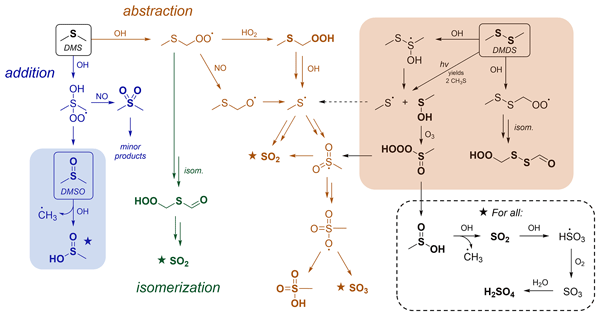
The chemistry driving dimethyl sulfide (DMS) oxidation and subsequent sulfate particle formation in the atmosphere is poorly constrained. We oxidized two related compounds (dimethyl sulfoxide and dimethyl disulfide) in the laboratory under varied NOx conditions and measured the gas- and particle-phase products. These results demonstrate that both the OH addition and OH abstraction pathways for DMS oxidation contribute to particle formation via mechanisms that do not involve the SO2 intermediate.
Kevin J. Nihill, Matthew M. Coggon, Christopher Y. Lim, Abigail R. Koss, Bin Yuan, Jordan E. Krechmer, Kanako Sekimoto, Jose L. Jimenez, Joost de Gouw, Christopher D. Cappa, Colette L. Heald, Carsten Warneke, and Jesse H. Kroll
Atmos. Chem. Phys., 23, 7887–7899, https://doi.org/10.5194/acp-23-7887-2023, https://doi.org/10.5194/acp-23-7887-2023, 2023
Short summary
Short summary
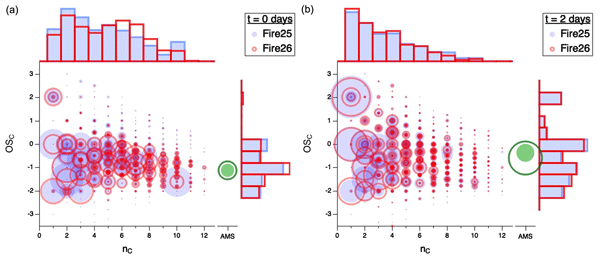
In this work, we collect emissions from controlled burns of biomass fuels that can be found in the western United States into an environmental chamber in order to simulate their oxidation as they pass through the atmosphere. These findings provide a detailed characterization of the composition of the atmosphere downwind of wildfires. In turn, this will help to explore the effects of these changing emissions on downwind populations and will also directly inform atmospheric and climate models.
Qing Ye, Matthew B. Goss, Jordan E. Krechmer, Francesca Majluf, Alexander Zaytsev, Yaowei Li, Joseph R. Roscioli, Manjula Canagaratna, Frank N. Keutsch, Colette L. Heald, and Jesse H. Kroll
Atmos. Chem. Phys., 22, 16003–16015, https://doi.org/10.5194/acp-22-16003-2022, https://doi.org/10.5194/acp-22-16003-2022, 2022
Short summary
Short summary
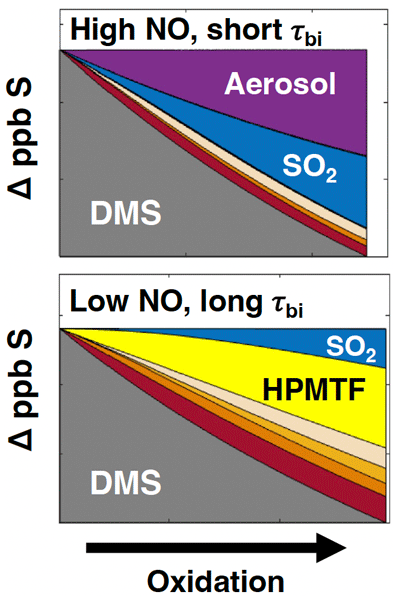
The atmospheric oxidation of dimethyl sulfide (DMS) is a major natural source of sulfate particles in the atmosphere. However, its mechanism is poorly constrained. In our work, laboratory measurements and mechanistic modeling were conducted to comprehensively investigate DMS oxidation products and key reaction rates. We find that the peroxy radical (RO2) has a controlling effect on product distribution and aerosol yield, with the isomerization of RO2 leading to the suppression of aerosol yield.
Therese S. Carter, Colette L. Heald, Jesse H. Kroll, Eric C. Apel, Donald Blake, Matthew Coggon, Achim Edtbauer, Georgios Gkatzelis, Rebecca S. Hornbrook, Jeff Peischl, Eva Y. Pfannerstill, Felix Piel, Nina G. Reijrink, Akima Ringsdorf, Carsten Warneke, Jonathan Williams, Armin Wisthaler, and Lu Xu
Atmos. Chem. Phys., 22, 12093–12111, https://doi.org/10.5194/acp-22-12093-2022, https://doi.org/10.5194/acp-22-12093-2022, 2022
Short summary
Short summary
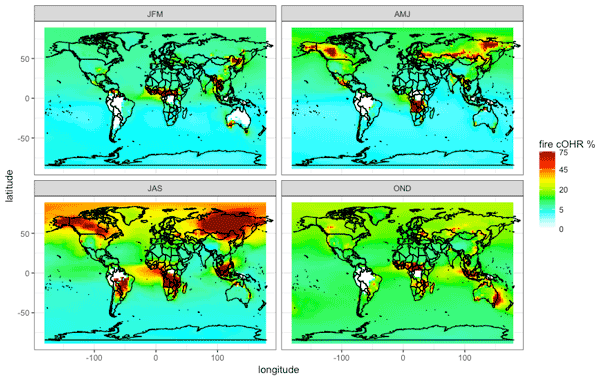
Fires emit many gases which can contribute to smog and air pollution. However, the amount and properties of these chemicals are not well understood, so this work updates and expands their representation in a global atmospheric model, including by adding new chemicals. We confirm that this updated representation generally matches measurements taken in several fire regions. We then show that fires provide ~15 % of atmospheric reactivity globally and more than 75 % over fire source regions.
Ashley S. Bittner, Eben S. Cross, David H. Hagan, Carl Malings, Eric Lipsky, and Andrew P. Grieshop
Atmos. Meas. Tech., 15, 3353–3376, https://doi.org/10.5194/amt-15-3353-2022, https://doi.org/10.5194/amt-15-3353-2022, 2022
Short summary
Short summary
We present findings from a 1-year pilot deployment of low-cost integrated air quality sensor packages in rural Malawi using calibration models developed during collocation with US regulatory monitors. We compare the results with data from remote sensing products and previous field studies. We conclude that while the remote calibration approach can help extract useful data, great care is needed when assessing low-cost sensor data collected in regions without reference instrumentation.
Ka Ming Fung, Colette L. Heald, Jesse H. Kroll, Siyuan Wang, Duseong S. Jo, Andrew Gettelman, Zheng Lu, Xiaohong Liu, Rahul A. Zaveri, Eric C. Apel, Donald R. Blake, Jose-Luis Jimenez, Pedro Campuzano-Jost, Patrick R. Veres, Timothy S. Bates, John E. Shilling, and Maria Zawadowicz
Atmos. Chem. Phys., 22, 1549–1573, https://doi.org/10.5194/acp-22-1549-2022, https://doi.org/10.5194/acp-22-1549-2022, 2022
Short summary
Short summary
Understanding the natural aerosol burden in the preindustrial era is crucial for us to assess how atmospheric aerosols affect the Earth's radiative budgets. Our study explores how a detailed description of dimethyl sulfide (DMS) oxidation (implemented in the Community Atmospheric Model version 6 with chemistry, CAM6-chem) could help us better estimate the present-day and preindustrial concentrations of sulfate and other relevant chemicals, as well as the resulting aerosol radiative impacts.
Eric A. Wendt, Casey Quinn, Christian L'Orange, Daniel D. Miller-Lionberg, Bonne Ford, Jeffrey R. Pierce, John Mehaffy, Michael Cheeseman, Shantanu H. Jathar, David H. Hagan, Zoey Rosen, Marilee Long, and John Volckens
Atmos. Meas. Tech., 14, 6023–6038, https://doi.org/10.5194/amt-14-6023-2021, https://doi.org/10.5194/amt-14-6023-2021, 2021
Short summary
Short summary
Fine particulate matter air pollution is one of the leading contributors to adverse health outcomes on the planet. Here, we describe the design and validation of a low-cost, compact, and autonomous instrument capable of measuring particulate matter levels directly, via mass sampling, and optically, via mass and sunlight extinction measurements. We demonstrate the instrument's accuracy relative to reference measurements and its potential for community-level sampling.
Cited articles
Adamia, T. V., Budovich, V. L., Nevjagskaya, I. A., Shlyakhov, A. F., and Jakovlev, S. A.: Effect of temperature on the sensitivity of the photoionization detector, J. Chromatogr. A, 540, 441–448, https://doi.org/10.1016/S0021-9673(01)88836-1, 1991.
Badura, M., Batog, P., Drzeniecka-Osiadacz, A., and Modzel, P.: Evaluation of Low-Cost Sensors for Ambient PM2.5 Monitoring, J. Sensors, 2018, e5096540, https://doi.org/10.1155/2018/5096540, 2018.
Baron, R. and Saffell, J.: Amperometric Gas Sensors as a Low Cost Emerging Technology Platform for Air Quality Monitoring Applications: A Review, ACS Sens., 2, 1553–1566, https://doi.org/10.1021/acssensors.7b00620, 2017.
Barsan, N. and Weimar, U.: Conduction Model of Metal Oxide Gas Sensors, J. Electroceram., 7, 143–167, https://doi.org/10.1023/A:1014405811371, 2001.
Bârsan, N. and Weimar, U.: Understanding the fundamental principles of metal oxide based gas sensors; the example of CO sensing with SnO2 sensors in the presence of humidity, J. Phys.-Condens. Mat., 15, R813, https://doi.org/10.1088/0953-8984/15/20/201, 2003.
Baur, T., Amann, J., Schultealbert, C., and Schütze, A.: Field Study of Metal Oxide Semiconductor Gas Sensors in Temperature Cycled Operation for Selective VOC Monitoring in Indoor Air, Atmosphere, 12, 647, https://doi.org/10.3390/atmos12050647, 2021.
Beghi, S. and Guillot, J.-M.: Sample water removal method in volatile organic compound analysis based on diffusion through poly(vinyl fluoride) film, J. Chromatogr. A, 1127, 1–5, https://doi.org/10.1016/j.chroma.2006.05.102, 2006.
Brown, S. K., Sim, M. R., Abramson, M. J., Gray, C. N.: Concentrations of Volatile Organic Compounds in Indoor Air – A Review, Indoor Air, 4, 123–134, https://doi.org/10.1111/j.1600-0668.1994.t01-2-00007.x, 1994.
Chabanis, G., Parkin, I. P., and Williams, D. E.: A simple equivalent circuit model to represent microstructure effects on the response of semiconducting oxide-based gas sensors, Meas. Sci. Technol., 14, 76–86, https://doi.org/10.1088/0957-0233/14/1/312, 2003.
Chen, X., Millet, D. B., Singh, H. B., Wisthaler, A., Apel, E. C., Atlas, E. L., Blake, D. R., Bourgeois, I., Brown, S. S., Crounse, J. D., de Gouw, J. A., Flocke, F. M., Fried, A., Heikes, B. G., Hornbrook, R. S., Mikoviny, T., Min, K.-E., Müller, M., Neuman, J. A., O'Sullivan, D. W., Peischl, J., Pfister, G. G., Richter, D., Roberts, J. M., Ryerson, T. B., Shertz, S. R., Thompson, C. R., Treadaway, V., Veres, P. R., Walega, J., Warneke, C., Washenfelder, R. A., Weibring, P., and Yuan, B.: On the sources and sinks of atmospheric VOCs: an integrated analysis of recent aircraft campaigns over North America, Atmos. Chem. Phys., 19, 9097–9123, https://doi.org/10.5194/acp-19-9097-2019, 2019.
Cheng, L., Meng, Q.-H., Lilienthal, A. J., and Qi, P.-F.: Development of compact electronic noses: a review, Meas. Sci. Technol., 32, 062002, https://doi.org/10.1088/1361-6501/abef3b, 2021.
Collier-Oxandale, A. M., Thorson, J., Halliday, H., Milford, J., and Hannigan, M.: Understanding the ability of low-cost MOx sensors to quantify ambient VOCs, Atmos. Meas. Tech., 12, 1441–1460, https://doi.org/10.5194/amt-12-1441-2019, 2019.
Crawford, B., Hagan, D. H., Grossman, I., Cole, E., Holland, L., Heald, C. L., and Kroll, J. H.: Mapping pollution exposure and chemistry during an extreme air quality event (the 2018 Kīlauea eruption) using a low-cost sensor network, P. Natl. Acad. Sci. USA, 118, e2025540118, https://doi.org/10.1073/pnas.2025540118, 2021.
De Vito, S., Massera, E., Piga, M., Martinotto, L., and Di Francia, G.: On field calibration of an electronic nose for benzene estimation in an urban pollution monitoring scenario, Sensor. Actuat. B-Chem., 129, 750–757, https://doi.org/10.1016/j.snb.2007.09.060, 2008.
Ding, X., Lu, H., Jiang, J., Tasoglou, A., Shah, A. D., and Jung, N.: Real-time indoor sensing of volatile organic compounds during building disinfection events via photoionization detection and proton transfer reaction mass spectrometry, Build. Environ., 246, 110953, https://doi.org/10.1016/j.buildenv.2023.110953, 2023.
Domènech-Gil, G., Duc, N. T., Wikner, J. J., Eriksson, J., Påledal, S. N., Puglisi, D., and Bastviken, D.: Electronic Nose for Improved Environmental Methane Monitoring, Environ. Sci. Technol., 58, 352–361, https://doi.org/10.1021/acs.est.3c06945, 2024.
Farmer, D. K., Vance, M. E., Poppendieck, D., Abbatt, J., Alves, M. R., Dannemiller, K. C., Deeleepojananan, C., Ditto, J., Dougherty, B., Farinas, O. R., Goldstein, A. H., Grassian, V. H., Huynh, H., Kim, D., King, J. C., Kroll, J., Li, J., Link, M. F., Mael, L., Mayer, K., Martin, A. B., Morrison, G., O'Brien, R., Pandit, S., Turpin, B. J., Webb, M., Yu, J., and Zimmerman, S. M.: The chemical assessment of surfaces and air (CASA) study: using chemical and physical perturbations in a test house to investigate indoor processes, Environ. Sci.-Proc. Imp., 27, 1551–1572, https://doi.org/10.1039/D4EM00209A, 2025.
Farquhar, A. K., Henshaw, G. S., and Williams, D. E.: Understanding and Correcting Unwanted Influences on the Signal from Electrochemical Gas Sensors, ACS Sens., 6, 1295–1304, https://doi.org/10.1021/acssensors.0c02589, 2021.
Figaro USA Inc.: TGS 2600 Product Information: https://www.figarosensor.com/product/docs/TGS2600B00%20%280913%29.pdf, last access: 1 March 2024a
Figaro USA Inc.: TGS 2602 Product Information: https://www.figarosensor.com/product/docs/TGS2602-B00%20%280615%29.pdf, last access: 1 March 2024b.
Fine, G. F., Cavanagh, L. M., Afonja, A., and Binions, R.: Metal Oxide Semi-Conductor Gas Sensors in Environmental Monitoring, Sensors, 10, 5469–5502, https://doi.org/10.3390/s100605469, 2010.
Freedman, A. N.: The photoionization detector: Theory, performance and application as a low-level monitor of oil vapour, J. Chromatogr. A, 190, 263–273, https://doi.org/10.1016/S0021-9673(00)88229-1, 1980.
Frischmon, C., Silberstein, J., Guth, A., Mattson, E., Porter, J., and Hannigan, M.: Improving the quantification of peak concentrations for air quality sensors via data weighting, Atmos. Meas. Tech., 18, 3147–3159, https://doi.org/10.5194/amt-18-3147-2025, 2025.
Furuta, D., Sayahi, T., Li, J., Wilson, B., Presto, A. A., and Li, J.: Characterization of inexpensive metal oxide sensor performance for trace methane detection, Atmos. Meas. Tech., 15, 5117–5128, https://doi.org/10.5194/amt-15-5117-2022, 2022.
Gardner, J. W. and Bartlett, P. N.: A brief history of electronic noses, Sensor. Actuat. B-Chem., 18, 210–211, https://doi.org/10.1016/0925-4005(94)87085-3, 1994.
GBD 2019 Risk Factors Collaborators: Global burden of 87 risk factors in 204 countries and territories, 1990–2019: a systematic analysis for the Global Burden of Disease Study 2019, Lancet, 396, 1223–1249, https://doi.org/10.1016/S0140-6736(20)30752-2, 2020.
Guenther, A., Hewitt, C. N., Erickson, D., Fall, R., Geron, C., Graedel, T., Harley, P., Klinger, L., Lerdau, M., Mckay, W. A., Pierce, T., Scholes, B., Steinbrecher, R., Tallamraju, R., Taylor, J., and Zimmerman, P.: A global model of natural volatile organic compound emissions, J. Geophys. Res.-Atmos., 100, 8873–8892, https://doi.org/10.1029/94JD02950, 1995.
Hagan, D. H., Isaacman-VanWertz, G., Franklin, J. P., Wallace, L. M. M., Kocar, B. D., Heald, C. L., and Kroll, J. H.: Calibration and assessment of electrochemical air quality sensors by co-location with regulatory-grade instruments, Atmos. Meas. Tech., 11, 315–328, https://doi.org/10.5194/amt-11-315-2018, 2018.
Hagan, D. H., Gani, S., Bhandari, S., Patel, K., Habib, G., Apte, J. S., Hildebrandt Ruiz, L., and Kroll, J. H.: Inferring Aerosol Sources from Low-Cost Air Quality Sensor Measurements: A Case Study in Delhi, India, Environ. Sci. Tech. Let., 6, 467–472, https://doi.org/10.1021/acs.estlett.9b00393, 2019.
Han, P., Mei, H., Liu, D., Zeng, N., Tang, X., Wang, Y., and Pan, Y.: Calibrations of Low-Cost Air Pollution Monitoring Sensors for CO, NO2, O3, and SO2, Sensors, 21, 256, https://doi.org/10.3390/s21010256, 2021.
He, J., Xu, J., He, M., Liu, J., and Ren, J.: Low-cost MOX sensor for indoor ppb-level VOC detection using pulsed temperature-voltage dual modulation, Sensor. Actuat. B-Chem., 443, 138289, https://doi.org/10.1016/j.snb.2025.138289, 2025.
Hitchman, M. L. and Saffell, J. R.: Considerations of Thermodynamics and Kinetics for the Effects of Relative Humidity on the Electrolyte in Electrochemical Toxic Gas Sensors, ACS Sens., 6, 3985–3993, https://doi.org/10.1021/acssensors.1c01339, 2021.
Hong, G.-H., Le, T.-C., Lin, G.-Y., Cheng, H.-W., Yu, J.-Y., Dejchanchaiwong, R., Tekasakul, P., and Tsai, C.-J.: Long-term field calibration of low-cost metal oxide VOC sensor: Meteorological and interference gas effects, Atmos. Environ., 310, 119955, https://doi.org/10.1016/j.atmosenv.2023.119955, 2023.
Hossain, S., Che, W., and Lau, A. K.-H.: Inter- and Intra-Individual Variability of Personal Health Risk of Combined Particle and Gaseous Pollutants across Selected Urban Microenvironments, Int. J. Env. Res. Pub. He., 19, https://doi.org/10.3390/ijerph19010565, 2022.
Korotcenkov, G., Blinov, I., Brinzari, V., and Stetter, J. R.: Effect of air humidity on gas response of SnO2 thin film ozone sensors, Sensor. Actuat. B-Chem., 122, 519–526, https://doi.org/10.1016/j.snb.2006.06.025, 2007.
Kroll Group: Chamber data and species concentrations, http://krollgroup.mit.edu/publications.html (last access: 1 August 2026), 2026.
Lee, J.-Y., Dinh, T.-V., Kim, D.-J., Choi, I.-Y., Ahn, J.-W., Park, S.-Y., Jung, Y.-J., and Kim, J.-C.: Comparison of Water Pretreatment Devices for the Measurement of Polar Odorous Compounds, Appl. Sci., 9, 4045, https://doi.org/10.3390/app9194045, 2019.
Lee, S.-W., Dinh, T.-V., Park, S.-Y., Choi, I.-Y., Kim, I.-Y., Park, B.-G., Baek, D.-H., Park, J.-H., Seo, Y.-B., and Kim, J.-C.: Development of a Moisture Pretreatment Device for the Accurate Quantitation of Water-Soluble Volatile Organic Compounds in Air, Chemosensors, 11, 188, https://doi.org/10.3390/chemosensors11030188, 2023.
Leidinger, M., Sauerwald, T., Reimringer, W., Ventura, G., and Schütze, A.: Selective detection of hazardous VOCs for indoor air quality applications using a virtual gas sensor array, J. Sens. Sens. Syst., 3, 253–263, https://doi.org/10.5194/jsss-3-253-2014, 2014.
Lerner, B. M., Gilman, J. B., Aikin, K. C., Atlas, E. L., Goldan, P. D., Graus, M., Hendershot, R., Isaacman-VanWertz, G. A., Koss, A., Kuster, W. C., Lueb, R. A., McLaughlin, R. J., Peischl, J., Sueper, D., Ryerson, T. B., Tokarek, T. W., Warneke, C., Yuan, B., and de Gouw, J. A.: An improved, automated whole air sampler and gas chromatography mass spectrometry analysis system for volatile organic compounds in the atmosphere, Atmos. Meas. Tech., 10, 291–313, https://doi.org/10.5194/amt-10-291-2017, 2017.
Levy Zamora, M., Buehler, C., Datta, A., Gentner, D. R., and Koehler, K.: Identifying optimal co-location calibration periods for low-cost sensors, Atmos. Meas. Tech., 16, 169–179, https://doi.org/10.5194/amt-16-169-2023, 2023.
Lewis, A. C., Lee, J. D., Edwards, P. M., Shaw, M. D., Evans, M. J., Moller, S. J., Smith, K. R., Buckley, J. W., Ellis, M., Gillot, S. R., and White, A.: Evaluating the performance of low cost chemical sensors for air pollution research, Faraday Discuss., 189, 85–103, https://doi.org/10.1039/C5FD00201J, 2016.
Liang, Y., Weber, R. J., Mistzal, P. K., Jen, C. N., and Goldstein, A. H.: Aging of Volatile Organic Compounds in October 2017 Northern California Wildfire Plumes, Environ. Sci. Technol., 56, 1557–1567, https://doi.org/10.1021/acs.est.1c05684, 2022.
Lieber, C. and Mahadevan-Jansen, A.: Automated Method for Subtraction of Fluorescence from Biological Raman Spectra, Appl. Spectrosc., 57, 1363–7, https://doi.org/10.1366/000370203322554518, 2003.
Liess, M. and Leonhardt, M.: New operation principle for ultra-stable photo-ionization detectors, Meas. Sci. Technol., 14, 427–432, https://doi.org/10.1088/0957-0233/14/4/304, 2003.
Llobet, E., Vilanova, X., Brezmes, J., Sueiras, J. E., Alcubilla, R., and Correig, X.: Steady-State and Transient Behavior of Thick-Film Tin Oxide Sensors in the Presence of Gas Mixtures, J. Electrochem. Soc., 145, 1772, https://doi.org/10.1149/1.1838556, 1998.
Lotesoriere, B. J., Bax, C., and Capelli, L.: Electronic nose for odor monitoring at a landfill fenceline: Training and validation of a model for real-time odor concentration measurement, Heliyon, 10, e31103, https://doi.org/10.1016/j.heliyon.2024.e31103, 2024.
Lovelock, J. E.: A Photoionization Detector for Gases and Vapours, Nature, 188, 401–401, https://doi.org/10.1038/188401a0, 1960.
Luo, S., Hao, Q., Xu, Z., Zhang, G., Liang, Z., Gou, Y., Wang, X., Chen, F., He, Y., and Jiang, C.: Composition Characteristics of VOCs in the Atmosphere of the Beibei Urban District of Chongqing: Insights from Long-Term Monitoring, Atmosphere, 14, 1452, https://doi.org/10.3390/atmos14091452, 2023.
Mao, F., Khamis, K., Krause, S., Clark, J., and Hannah, D. M.: Low-Cost Environmental Sensor Networks: Recent Advances and Future Directions, Front. Earth Sci., 7, https://doi.org/10.3389/feart.2019.00221, 2019.
Mayer, T., Goblirsch, T., Petrich, R., and Borsdorf, H.: Toward an Event-Based and Quality-Assured Air Sampling: A Portable System for Sensing and Sampling Volatile Organic Compounds, Anal. Chem., 97, 23765–23772, https://doi.org/10.1021/acs.analchem.5c03799, 2025.
Mead, M. I., Popoola, O. A. M., Stewart, G. B., Landshoff, P., Calleja, M., Hayes, M., Baldovi, J. J., McLeod, M. W., Hodgson, T. F., Dicks, J., Lewis, A., Cohen, J., Baron, R., Saffell, J. R., and Jones, R. L.: The use of electrochemical sensors for monitoring urban air quality in low-cost, high-density networks, Atmos. Environ., 70, 186–203, https://doi.org/10.1016/j.atmosenv.2012.11.060, 2013.
Okorn, K. and Hannigan, M.: Applications and Limitations of Quantifying Speciated and Source-Apportioned VOCs with Metal Oxide Sensors, Atmosphere, 12, 1383, https://doi.org/10.3390/atmos12111383, 2021.
Pellizzari, E. D., Bunch, J. E., Carpenter, B. H., and Sawicki, E.: Collection and analysis of trace organic vapor pollutants in ambient atmospheres. Technique for evaluating concentration of vapors by sorbent media, Environ. Sci. Technol., 9, 552–555, https://doi.org/10.1021/es60104a008, 1975.
Pinder, R. W., Klopp, J. M., Kleiman, G., Hagler, G. S. W., Awe, Y., and Terry, S.: Opportunities and Challenges for Filling the Air Quality Data Gap in Low- and Middle-Income Countries, Atmos. Environ., 215, https://doi.org/10.1016/j.atmosenv.2019.06.032, 2019.
Rath, R. J., Farajikhah, S., Oveissi, F., Dehghani, F., and Naficy, S.: Chemiresistive Sensor Arrays for Gas/Volatile Organic Compounds Monitoring: A Review, Adv. Eng. Mater., 25, 2200830, https://doi.org/10.1002/adem.202200830, 2023.
Scott, A.: The effects of high humidity on standard PID sensor can result in errors, Ion Science, https://ionscience.com/usa/news/effects-of-high-humidity-on-photoionisation-detectors-pids/ (last access: 1 March, 2024), 2020.
Silberstein, J., Wellbrook, M., and Hannigan, M.: Utilization of a Low-Cost Sensor Array for Mobile Methane Monitoring, Sensors, 24, 519, https://doi.org/10.3390/s24020519, 2024.
Snyder, E. G., Watkins, T. H., Solomon, P. A., Thoma, E. D., Williams, R. W., Hagler, G. S. W., Shelow, D., Hindin, D. A., Kilaru, V. J., and Preuss, P. W.: The Changing Paradigm of Air Pollution Monitoring, Environ. Sci. Technol., 47, 11369–11377, https://doi.org/10.1021/es4022602, 2013.
Spinelle, L., Gerboles, M., Kok, G., Persijn, S., and Sauerwald, T.: Review of Portable and Low-Cost Sensors for the Ambient Air Monitoring of Benzene and Other Volatile Organic Compounds, Sensors, 17, https://doi.org/10.3390/s17071520, 2017.
Srivastava, A. K. and Dravid, V. P.: On the performance evaluation of hybrid and mono-class sensor arrays in selective detection of VOCs: A comparative study, Sensor. Actuat. B-Chem., 117, 244–252, https://doi.org/10.1016/j.snb.2005.11.034, 2006.
Taguem, E. M., Mennicken, L., and Romain, A.-C.: Quantile regression with a metal oxide sensors array for methane prediction over a municipal solid waste treatment plant, Sensor. Actuat. B-Chem., 334, 129590, https://doi.org/10.1016/j.snb.2021.129590, 2021.
Vadera, N. and Dhanekar, S.: Classification and Prediction of VOCs Using an IoT-Enabled Electronic Nose System-Based Lab Prototype for Breath Sensing Applications, ACS Sens., 10, 439–447, https://doi.org/10.1021/acssensors.4c02731, 2025.
Wang, C., Yin, L., Zhang, L., Xiang, D., and Gao, R.: Metal Oxide Gas Sensors: Sensitivity and Influencing Factors, Sensors, 10, 2088–2106, https://doi.org/10.3390/s100302088, 2010.
Wei, P., Ning, Z., Ye, S., Sun, L., Yang, F., Wong, K. C., Westerdahl, D., and Louie, P. K. K.: Impact Analysis of Temperature and Humidity Conditions on Electrochemical Sensor Response in Ambient Air Quality Monitoring, Sensors, 18, 59, https://doi.org/10.3390/s18020059, 2018.
Woolfenden, E.: Monitoring VOCs in Air Using Sorbent Tubes Followed by Thermal Desorption-Capillary GC Analysis: Summary of Data and Practical Guidelines, J. Air Waste Manage, 47, 20–36, https://doi.org/10.1080/10473289.1997.10464411, 1997.
Xie, S., Meeker, J. R., Perez, L., Eriksen, W., Localio, A., Park, H., Jen, A., Goldstein, M., Temeng, A. F., Morales, S. M., Christie, C., Greenblatt, R. E., Barg, F. K., Apter, A. J., and Himes, B. E.: Feasibility and acceptability of monitoring personal air pollution exposure with sensors for asthma self-management, Asthma Research and Practice, 7, 13, https://doi.org/10.1186/s40733-021-00079-9, 2021.
Xu, L., Yao, L., Wang, Y., Wu, W., Lin, W., Zheng, C., Feng, Y., and Gao, X.: Hybrid Gas Sensor Array to Identify and Quantify Low-Concentration VOCs Mixtures Commonly Found in Chemical Industrial Parks, IEEE Sens. J., 22, 13434–13441, https://doi.org/10.1109/JSEN.2022.3176049, 2022.
Yang, H., Song, W., Wang, X., Cheng, J., Pei, C., Chen, D., Ren, Z., Li, X., Zhang, X., Pang, X., Yu, X., Zeng, J., Zhang, Y., and Wang, X.: Short-Term Machine-Learning Calibration of PID Sensors for Ambient VOC OH Reactivity, Sensors, 26, 1428, https://doi.org/10.3390/s26051428, 2026.
Yang, Y., Liu, B., Hua, J., Yang, T., Dai, Q., Wu, J., Feng, Y., and Hopke, P. K.: Global review of source apportionment of volatile organic compounds based on highly time-resolved data from 2015 to 2021, Environ. Int., 165, 107330, https://doi.org/10.1016/j.envint.2022.107330, 2022.
You, B., Zhou, W., Li, J., Li, Z., and Sun, Y.: A review of indoor Gaseous organic compounds and human chemical Exposure: Insights from Real-time measurements, Environ. Int., 170, 107611, https://doi.org/10.1016/j.envint.2022.107611, 2022.
Zhao, L., Wang, J., and Li, X.: Identification of Formaldehyde under Different Interfering Gas Conditions with Nanostructured Semiconductor Gas Sensors, Nanomater. Nanotechno., 5, 38, https://doi.org/10.5772/62115, 2015.
Zusman, M., Schumacher, C. S., Gassett, A. J., Spalt, E. W., Austin, E., Larson, T. V., Carvlin, G., Seto, E., Kaufman, J. D., and Sheppard, L.: Calibration of low-cost particulate matter sensors: model development for a multi-city epidemiological study, Environ. Int., 134, 105329, https://doi.org/10.1016/j.envint.2019.105329, 2020.
Short summary
Volatile organic compounds (VOCs) are an important class of compounds in both indoor and outdoor air; they can be directly harmful to human health, and can also react to form a range of harmful secondary pollutants. But because of the sheer number of different VOCs in air, they are not readily measurable using low-cost techniques. Here we show that an array of off-the-shelf low-cost sensors can provide useful information about the amount and composition of VOCs.
Volatile organic compounds (VOCs) are an important class of compounds in both indoor and outdoor...