
Articles | Volume 19, issue 16
https://doi.org/10.5194/amt-19-5373-2026
© Author(s) 2026. This work is distributed under
the Creative Commons Attribution 4.0 License.
the Creative Commons Attribution 4.0 License.
https://doi.org/10.5194/amt-19-5373-2026
© Author(s) 2026. This work is distributed under
the Creative Commons Attribution 4.0 License.
the Creative Commons Attribution 4.0 License.
Research article
| 
18 Aug 2026
Research article |
| 18 Aug 2026
| 18 Aug 2026
Curve fitting algorithm for multimodal particle size distributions – a theoretical basis
Christopher N. Rapp
CORRESPONDING AUTHOR

Department of Earth, Atmospheric, and Planetary Sciences, Purdue University, West Lafayette, Indiana, 47906-2051, USA
Gerardo Carrillo-Cardenas
Department of Atmospheric Sciences, University of Utah, Salt Lake City, Utah, 84112-0102, USA
Tareq Hussein
University of Helsinki, Faculty of Science, Institute for Atmospheric and Earth System Research (INAR/Physics), 00014 UHEL Helsinki, Finland
Department of Physics, Environmental and Atmospheric Research Laboratory (EARL), School of Science, University of Jordan, Amman, 11942 Jordan
Sining Niu
Department of Atmospheric Sciences, Texas A&M University, College Station, Texas, 77843-3150, USA
Yue Zhang
Department of Atmospheric Sciences, Texas A&M University, College Station, Texas, 77843-3150, USA
Fred J. Brechtel
Brechtel Manufacturing Incorporated, Hayward, California, 94544, USA
A. Gannet Hallar
Department of Atmospheric Sciences, University of Utah, Salt Lake City, Utah, 84112-0102, USA
Daniel J. Cziczo
Department of Earth, Atmospheric, and Planetary Sciences, Purdue University, West Lafayette, Indiana, 47906-2051, USA
Related authors
Christopher N. Rapp, Sining Niu, Jason D. Surratt, Yue Zhang, and Daniel J. Cziczo
EGUsphere, https://doi.org/10.5194/egusphere-2026-2458, https://doi.org/10.5194/egusphere-2026-2458, 2026
Short summary
Short summary
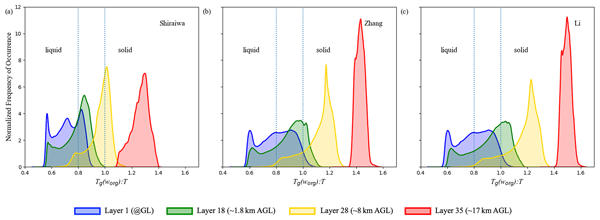
Ice formation in cirrus clouds is often triggered by microscopic particles. While many particle types are known to promote this process, the role of particles formed from gases emitted by plants and trees remains uncertain. This study shows that the ability of these biogenic particles to form ice within cirrus clouds depends strongly on the specific gas from which they originate and is not well predicted by commonly used particle properties.
Cuiqi Zhang, Xiaoli Shen, Justin Jacquot, Larissa Lacher, Selvakumar Vishnupriya, Benjamin T. Brem, Robin L. Modini, Nora Nowak, Michael Sprenger, Martin Steinbacher, Stephan Henne, Martine Collaud Coen, Franz Conen, Kristina Höhler, Ottmar Möhler, Martin Gysel-Beer, Daniel J. Cziczo, and Zamin A. Kanji
EGUsphere, https://doi.org/10.5194/egusphere-2026-5645, https://doi.org/10.5194/egusphere-2026-5645, 2026
This preprint is open for discussion and under review for Atmospheric Chemistry and Physics (ACP).
Short summary
Short summary
Clouds play a key role in weather and climate, but the particles that trigger cloud ice formation are difficult to identify directly. By simulating clouds in a cloud chamber and particle measurements at a mountain station, we found that mineral dust was the main trigger of cloud ice formation. Dust from local construction and transported from higher atmospheric layers both contributed. The study shows that both human activities and atmospheric processes can influence cloud formation.
Sara L. Farrell, Quazi Z. Rasool, Havala O. T. Pye, Yue Zhang, Ying Li, Yuzhi Chen, Chi-Tsan Wang, Haofei Zhang, Ryan Schmedding, Manabu Shiraiwa, Jaime Green, Sri H. Budisulistiorini, Jose L. Jimenez, Weiwei Hu, Jason D. Surratt, and William Vizuete
Atmos. Chem. Phys., 26, 13557–13579, https://doi.org/10.5194/acp-26-13557-2026, https://doi.org/10.5194/acp-26-13557-2026, 2026
Short summary
Short summary
Fine particulate matter (PM2.5) has become increasingly important to regulate and model. In this study, we parameterize non-ideal aerosol mixing and phase state into the Community Multiscale Air Quality (CMAQ) model and analyze its impact on the formation of a globally important source of PM2.5, isoprene epoxydiol (IEPOX)-derived PM2.5. Incorporating these features furthers model bias in IEPOX-derived PM2.5, however, this work provides potential phase state bounds for future PM2.5 modeling work.
James A. Christie, Theo Severud, Logan Forshee, Vanessa Selimovic, Siyuan Wang, Shatabdi Roy, Holly P. Lawson, Maria A. Garcia, A. Gannet Hallar, Haley Humble, John C. Lin, Paquita Zuidema, Kerri A. Pratt, and Cassandra J. Gaston
EGUsphere, https://doi.org/10.5194/egusphere-2026-5384, https://doi.org/10.5194/egusphere-2026-5384, 2026
This preprint is open for discussion and under review for Atmospheric Chemistry and Physics (ACP).
Short summary
Short summary
To understand winter particulate pollution in Salt Lake City (SLC), we directly measured N2O5 reactive uptake and aerosol composition. We find reactions are efficient under clean conditions, but suppressed during polluted periods by particulate nitrate. A 1D model demonstrates that this suppressed uptake limits further particulate accumulation during persistent pollution episodes. These direct measurements and modeling results show the importance of N2O5 reactions in pollutant production in SLC.
Ross J. Herbert, Larissa Lacher, Alexander Böhmländer, Mark D. Tarn, Antoine Canzi, Aidan Pantoya, Evelyn Freney, Kristina Höhler, Pia Bogert, Céline Planche, Ping Tian, Michael Adams, Sarah Barr, David Brus, Nicole Büttner, Martin Daily, Konstantinos Doulgeris, Konstantinos Eleftheriadis, Grant Forster, Romy Fösig, Dimitrios G. Georgakopoulos, Maria I. Gini, A. Gannet Hallar, Radovan Krejci, Elke Ludewig, Mauro Mazzola, Ian B. McCubbin, Athanasios Nenes, Tuukka Petäjä, Joseph Robinson, Franziska Vogel, Paul Zieger, Stephen Arnold, Kenneth S. Carslaw, Naruki Hiranuma, Ottmar Möhler, and Benjamin J. Murray
Earth Syst. Sci. Data, 18, 6465–6483, https://doi.org/10.5194/essd-18-6465-2026, https://doi.org/10.5194/essd-18-6465-2026, 2026
Short summary
Short summary
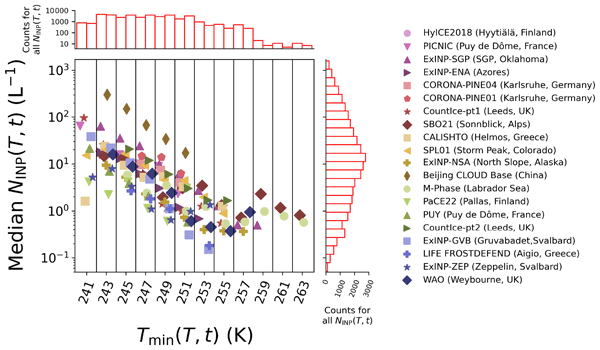
Ice formation in sub-zero clouds is influenced by airborne particles called ice-nucleating particles (INPs), whose concentrations vary substantially over short time and spatial scales. To assess the role of INPs in our climate, a comprehensive and consistent global dataset is essential. Our GloPINE model-ready dataset is a major step in this direction, comprising 36,000 measurements made using a single instrument design (PINE) over 70,000 hours of operation at 20 Northern Hemisphere sites.
Aino Ovaska, Daniel Holmberg, Elio Rauth, Mansour Alghamdi, Paulo Artaxo, Eija Asmi, John Backman, Benjamin Bergmans, Matthew Boyer, Liezl Bredenkamp, Maurizio Busetto, Delano Campos De Oliveira, Juan Andrés Casquero-Vera, Darius Ceburnis, Tak Chan, Tommy Chan, Sebastien Conil, Daniele Contini, Suzanne Crumeyrolle, Valentin Duflot, Kostas Eleftheriadis, Johan Esveld, Ekaterina Ezhova, Markus Fiebig, Shahzad Gani, Olga Garmash, Francisco Gómez-Moreno, Roy M. Harrison, Andras Hoffer, Rakesh Hooda, Antti Hyvärinen, Tareq Hussein, Jorma Joutsensaari, Nikos Kalivitis, Heinz Kaminski, Jutta Kesti, Radovan Krejci, Adam Kristensson, Chongai Kuang, Markku Kulmala, Lauri Laakso, Ari Leskinen, Heikki Lihavainen, Andreas Massling, Maik Merkel, Steffen Noe, Jakub Ondracek, Noemí Perez, Jean-Eudes Petit, Tuukka Petäjä, Michael Pikridas, Christopher Pöhlker, Mira Pöhlker, Jean-Philippe Putaud, Ximeng Qi, Cristina Reche, Sergio Rodríguez, Petr Roztocil, Jean Sciare, Karine Sellegri, Dongjie Shang, Ashish Singh, Mikko Sipilä, Henrik Skov, Mar Sorribas, Tamanna Subba, Junying Sun, Peter Tunved, Ville Vakkari, Pieter G. Van Zyl, Aki Virkkula, Jens Voigtländer, Kay Weinhold, Alfred Wiedensohler, Hee-Jung Yoo, Putian Zhou, Kai Puolamäki, Tuomo Nieminen, Veli-Matti Kerminen, Victoria A. Sinclair, and Pauli Paasonen
Earth Syst. Sci. Data Discuss., https://doi.org/10.5194/essd-2026-415, https://doi.org/10.5194/essd-2026-415, 2026
Preprint under review for ESSD
Short summary
Short summary
All clouds form around aerosol particles, and their abundance influences cloud properties. In turn, clouds affect climate by changing how energy moves through the atmosphere, making them important for climate change. To better understand these interactions, we need accurate information on how many aerosol particles are in the atmosphere. Therefore, we have developed a new 21-year global dataset of particle concentrations relevant for cloud formation.
David Wilmouth, Jennifer Hare, Laila Howar, Ross Salawitch, Eric Hintsa, Jessica Smith, David Sayres, James Anderson, Jason St. Clair, Erin Delaria, Reem Hannun, Thomas Hanisco, Daniel Czizco, Xiaoli Shen, Cameron Homeyer, Michelle Santee, T. Paul Bui, Paul Newman, Frank Keutsch, and Kenneth Bowman
EGUsphere, https://doi.org/10.5194/egusphere-2026-3480, https://doi.org/10.5194/egusphere-2026-3480, 2026
Short summary
Short summary
Inorganic chlorine chemistry in the stratosphere is extensively examined over two summers using high precision in situ aircraft data and satellite data. Measured values both agree and enable refinement to current understanding. Chlorine measurements obtained under perturbed stratospheric conditions of enhanced water vapor from convective storms or aged organic aerosol from wildfires do not appear significantly different from chlorine measurements obtained in the background stratosphere.
Martina Mazzini, Diego Aliaga, Janne Lamphilati, Martin Gysel-Beer, Benjamin Tobias Brem, Robin Lewis Modini, Dominic Heslin-Rees, Tareq Hussein, Marco Zanatta, Paolo Cristofanelli, Federico Bianchi, Markku Kulmala, and Angela Marinoni
Atmos. Chem. Phys., 26, 8893–8912, https://doi.org/10.5194/acp-26-8893-2026, https://doi.org/10.5194/acp-26-8893-2026, 2026
Short summary
Short summary
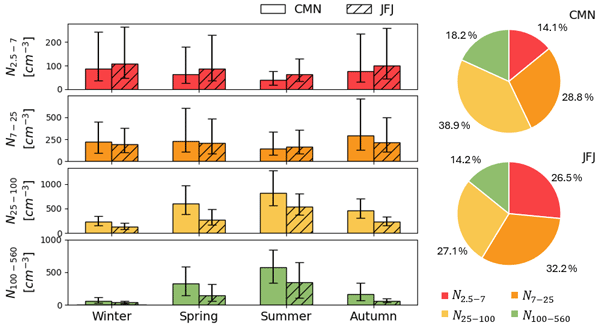
This study investigates particle number size distribution at two high-altitude European stations to better understand the mechanisms driving new particle formation (NPF) in the free troposphere. Interestingly, despite a consistently higher background of freshly nucleated particles at Jungfraujoch, NPF events were more frequent and intense at Monte Cimone, which also shows higher formation and growth rates, likely due to the proximity of the polluted planetary boundary layer from the Po Valley.
Erin K. Boedicker, Andre Bergeron, Gerardo Carrillo-Cardenas, Dominik Kulakowski, John Rogan, Elisabeth Andrews, and A. Gannet Hallar
Atmos. Chem. Phys., 26, 6593–6610, https://doi.org/10.5194/acp-26-6593-2026, https://doi.org/10.5194/acp-26-6593-2026, 2026
Short summary
Short summary
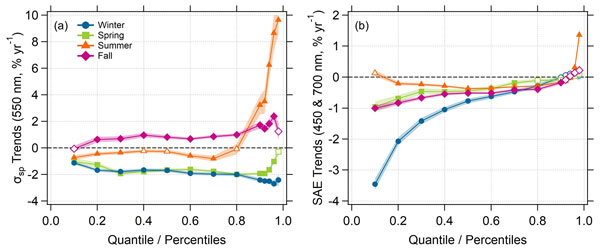
We present analysis of long-term aerosol measurements from two sites in Colorado. In this work, we characterize seasonal trends of aerosol optical properties for both sites and perform trend analysis to investigate changes in sources over time. We show that there is a significant increase in the influence of extreme events like smoke and dust, and explore the relationship between optical properties to identify aerosol types and temporal patterns at the two sites.
Larissa Lacher, A. Gannet Hallar, Ian B. McCubbin, Joey Bail, Karl D. Froyd, Justin Jacquot, Xiaoli Shen, Christopher Rapp, Ottmar Möhler, and Daniel Cziczo
Atmos. Chem. Phys., 26, 6703–6726, https://doi.org/10.5194/acp-26-6703-2026, https://doi.org/10.5194/acp-26-6703-2026, 2026
Short summary
Short summary
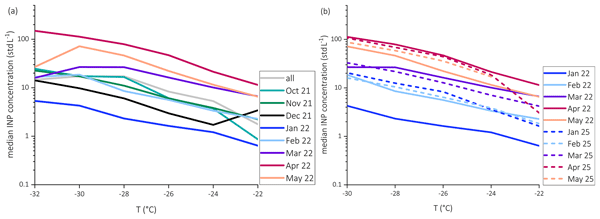
We observe a trend of increasing ice-nucleating particle (INP) concentration in spring in the Rocky Mountains, related to regional dust emissions that may intensify with climate change. Additionally, super-micrometer particles were found as the most important contributors to the INP population. This finding was partly enabled by a novel setup of the Portable Ice Nucleation Experiment (PINE), coupled with a pumped-counterflow virtual impactor allowing for direct analysis of INP properties.
Christopher N. Rapp, Sining Niu, Jason D. Surratt, Yue Zhang, and Daniel J. Cziczo
EGUsphere, https://doi.org/10.5194/egusphere-2026-2458, https://doi.org/10.5194/egusphere-2026-2458, 2026
Short summary
Short summary
Ice formation in cirrus clouds is often triggered by microscopic particles. While many particle types are known to promote this process, the role of particles formed from gases emitted by plants and trees remains uncertain. This study shows that the ability of these biogenic particles to form ice within cirrus clouds depends strongly on the specific gas from which they originate and is not well predicted by commonly used particle properties.
Inés Zabala, Juan Andrés Casquero-Vera, Elisabeth Andrews, Andrea Casans, Gerardo Carrillo-Cardenas, Anna Gannet Hallar, and Gloria Titos
Atmos. Chem. Phys., 26, 3697–3722, https://doi.org/10.5194/acp-26-3697-2026, https://doi.org/10.5194/acp-26-3697-2026, 2026
Short summary
Short summary
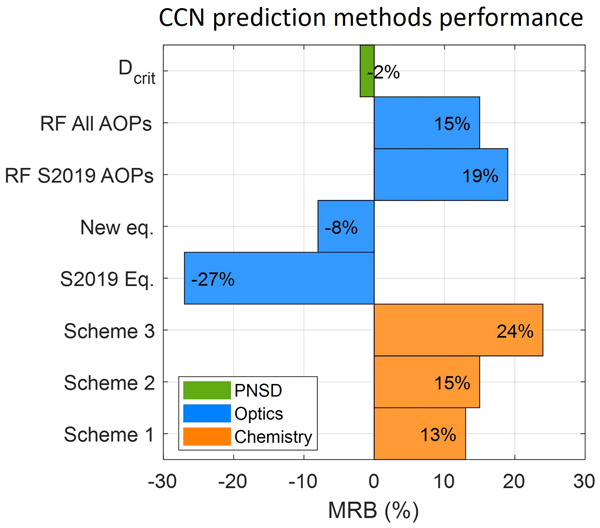
This study presents a comprehensive analysis of cloud condensation nuclei (CCN) phenomenology across nine observatories in diverse environments. We evaluate CCN prediction methods based on aerosol chemical composition and optical properties, including empirical and machine learning approaches. While simplified chemical schemes provide first-order estimates, incorporating optical data substantially improves CCN prediction accuracy in regions without direct measurements.
Alexander Garber, Zhaoxia Pu, and Anna Gannet Hallar
EGUsphere, https://doi.org/10.5194/egusphere-2025-6413, https://doi.org/10.5194/egusphere-2025-6413, 2026
Short summary
Short summary
This study examines how Saharan dust aerosols influenced the evolution of Tropical Storm Hermine (2022) using WRF-Chem simulations and NASA CPEX-CV observations. Results show that dust radiative effects weakened and disrupted storm organization, while reanalysis data underestimated dust concentrations. The findings highlight the importance of accurately representing aerosols to improve tropical cyclone simulations and hazard prediction.
Hannah Meyer, Konrad Kandler, Sylvain Dupont, Jerónimo Escribano, Jessica Girdwood, George Nikolich, Andrés Alastuey, Vicken Etyemezian, Cristina González-Flórez, Adolfo González-Romero, Tareq Hussein, Mark Irvine, Peter Knippertz, Ottmar Möhler, Xavier Querol, Chris Stopford, Franziska Vogel, Frederik Weis, Andreas Wieser, Carlos Pérez García-Pando, and Martina Klose
Atmos. Meas. Tech., 19, 21–61, https://doi.org/10.5194/amt-19-21-2026, https://doi.org/10.5194/amt-19-21-2026, 2026
Short summary
Short summary
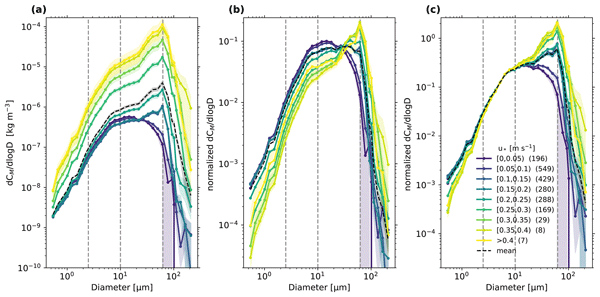
Mineral dust particles emitted from dry soils are of various sizes, yet the abundance of very large particles is not well understood. Here we measured the dust size distribution from fine to giant particles at an emission source during a field campaign in Jordan (J-WADI) using multiple instruments. Our findings show that large particles make up a significant part of the total dust mass. This knowledge is essential to improve climate models and to predict dust impacts on climate and environment.
Aino Ovaska, Elio Rauth, Daniel Holmberg, Paulo Artaxo, John Backman, Benjamin Bergmans, Don Collins, Marco Aurélio Franco, Shahzad Gani, Roy M. Harrison, Rakesh K. Hooda, Tareq Hussein, Antti-Pekka Hyvärinen, Kerneels Jaars, Adam Kristensson, Markku Kulmala, Lauri Laakso, Ari Laaksonen, Nikolaos Mihalopoulos, Colin O'Dowd, Jakub Ondracek, Tuukka Petäjä, Kristina Plauškaitė, Mira Pöhlker, Ximeng Qi, Peter Tunved, Ville Vakkari, Alfred Wiedensohler, Kai Puolamäki, Tuomo Nieminen, Veli-Matti Kerminen, Victoria A. Sinclair, and Pauli Paasonen
Aerosol Research, 3, 589–618, https://doi.org/10.5194/ar-3-589-2025, https://doi.org/10.5194/ar-3-589-2025, 2025
Short summary
Short summary
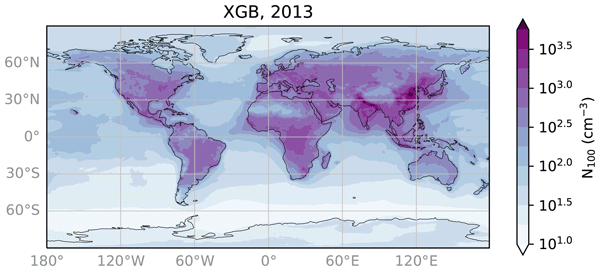
We trained machine learning models to estimate the number of aerosol particles large enough to form clouds and generated daily estimates for the entire globe. The models performed well in many continental regions but struggled in remote and marine areas. Still, this approach offers a way to quantify these particles in areas that lack direct measurements, helping us understand their influence on clouds and climate on a global scale.
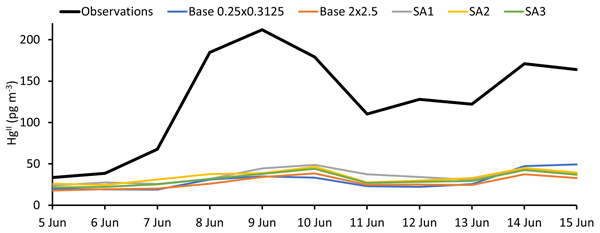
Tyler R. Elgiar, Loknath Dhar, Lynne Gratz, A. Gannet Hallar, Rainer Volkamer, and Seth N. Lyman
Atmos. Chem. Phys., 25, 16387–16399, https://doi.org/10.5194/acp-25-16387-2025, https://doi.org/10.5194/acp-25-16387-2025, 2025
Short summary
Short summary
We compare verified atmospheric mercury measurements against output from the GEOS-Chem photochemical transport model. We show the model is unable to reproduce measured atmospheric oxidized mercury concentrations, even in several cases where oxidation rates in the model are enhanced.
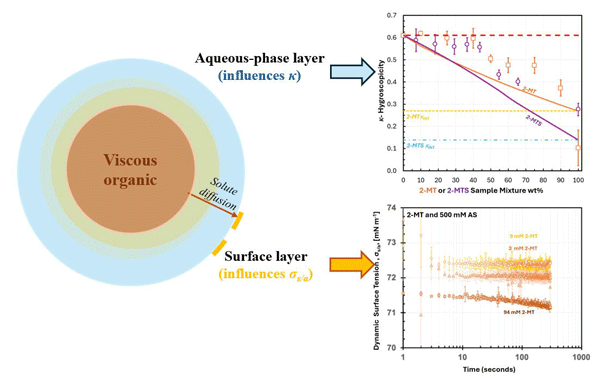
Nahin Ferdousi-Rokib, Stephanie Jacoby, N. Cazimir Armstrong, Alana J. Dodero, Martin Changman Ahn, Ergine Zephira Remy, Zhenfa Zhang, Avram Gold, Joseph L. Woo, Yue Zhang, Jason D. Surratt, and Akua A. Asa-Awuku
Atmos. Chem. Phys., 25, 15613–15630, https://doi.org/10.5194/acp-25-15613-2025, https://doi.org/10.5194/acp-25-15613-2025, 2025
Short summary
Short summary
This study looks at how natural compounds when mixed with salts in the air affect how clouds form. These compounds come from plants and are found all over the world. They are sticky, and this changes how water droplets and clouds form. Sometimes the compound spreads more easily when mixed with salt, while the other compound does not change. Depending on the condition, these mixtures can behave differently, which affects how we predict cloud formation.
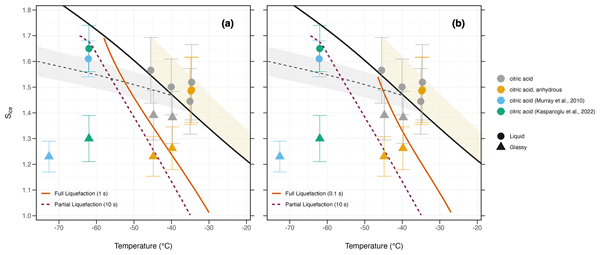
Christopher N. Rapp, Sining Niu, N. Cazimir Armstrong, Xiaoli Shen, Thomas Berkemeier, Jason D. Surratt, Yue Zhang, and Daniel J. Cziczo
Atmos. Chem. Phys., 25, 5519–5536, https://doi.org/10.5194/acp-25-5519-2025, https://doi.org/10.5194/acp-25-5519-2025, 2025
Short summary
Short summary
Atmospheric ice formation is initiated by particulate matter suspended in air and has profound impacts on Earth's climate. This study focuses on examining the effectiveness of ice formation by a subset of particles composed of organic matter and sulfate. We used experiments and computer modeling to obtain the result that these particles are not effective ice-nucleating particles, suggesting that molecular structure is important for ice formation on these types of particles.
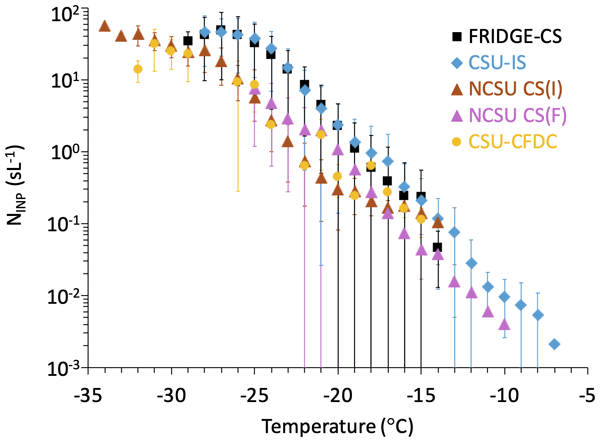
Paul J. DeMott, Jessica A. Mirrielees, Sarah Suda Petters, Daniel J. Cziczo, Markus D. Petters, Heinz G. Bingemer, Thomas C. J. Hill, Karl Froyd, Sarvesh Garimella, A. Gannet Hallar, Ezra J. T. Levin, Ian B. McCubbin, Anne E. Perring, Christopher N. Rapp, Thea Schiebel, Jann Schrod, Kaitlyn J. Suski, Daniel Weber, Martin J. Wolf, Maria Zawadowicz, Jake Zenker, Ottmar Möhler, and Sarah D. Brooks
Atmos. Meas. Tech., 18, 639–672, https://doi.org/10.5194/amt-18-639-2025, https://doi.org/10.5194/amt-18-639-2025, 2025
Short summary
Short summary
The Fifth International Ice Nucleation Workshop Phase 3 (FIN-03) compared the ambient atmospheric performance of ice-nucleating particle (INP) measuring systems and explored general methods for discerning atmospheric INP compositions. Mirroring laboratory results, INP concentrations agreed within 5–10 factors. Measurements of total aerosol properties and investigations of INP compositions supported a dominant role of soil and plant organic aerosol elements as INPs during the study.
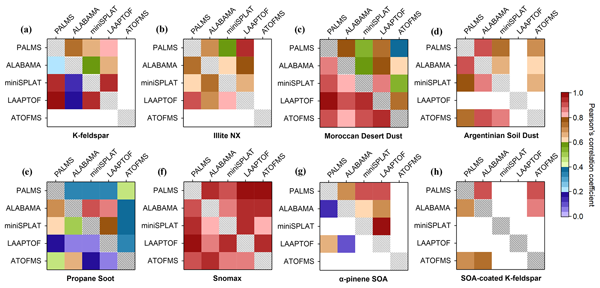
Xiaoli Shen, David M. Bell, Hugh Coe, Naruki Hiranuma, Fabian Mahrt, Nicholas A. Marsden, Claudia Mohr, Daniel M. Murphy, Harald Saathoff, Johannes Schneider, Jacqueline Wilson, Maria A. Zawadowicz, Alla Zelenyuk, Paul J. DeMott, Ottmar Möhler, and Daniel J. Cziczo
Atmos. Chem. Phys., 24, 10869–10891, https://doi.org/10.5194/acp-24-10869-2024, https://doi.org/10.5194/acp-24-10869-2024, 2024
Short summary
Short summary
Single-particle mass spectrometry (SPMS) is commonly used to measure the chemical composition and mixing state of aerosol particles. Intercomparison of SPMS instruments was conducted. All instruments reported similar size ranges and common spectral features. The instrument-specific detection efficiency was found to be more dependent on particle size than type. All differentiated secondary organic aerosol, soot, and soil dust but had difficulties differentiating among minerals and dusts.
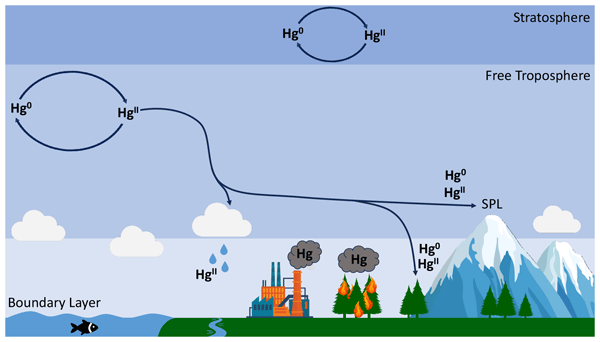
Eleanor J. Derry, Tyler R. Elgiar, Taylor Y. Wilmot, Nicholas W. Hoch, Noah S. Hirshorn, Peter Weiss-Penzias, Christopher F. Lee, John C. Lin, A. Gannet Hallar, Rainer Volkamer, Seth N. Lyman, and Lynne E. Gratz
Atmos. Chem. Phys., 24, 9615–9643, https://doi.org/10.5194/acp-24-9615-2024, https://doi.org/10.5194/acp-24-9615-2024, 2024
Short summary
Short summary
Mercury (Hg) is a globally distributed neurotoxic pollutant. Atmospheric deposition is the main source of Hg in ecosystems. However, measurement biases hinder understanding of the origins and abundance of the more bioavailable oxidized form. We used an improved, calibrated measurement system to study air mass composition and transport of atmospheric Hg at a remote mountaintop site in the central US. Oxidized Hg originated upwind in the low to middle free troposphere under clean, dry conditions.
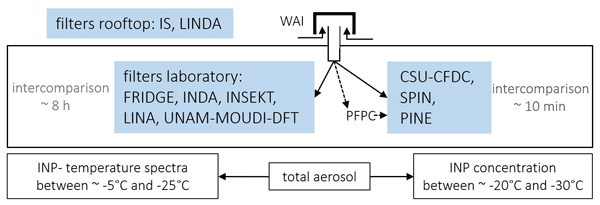
Larissa Lacher, Michael P. Adams, Kevin Barry, Barbara Bertozzi, Heinz Bingemer, Cristian Boffo, Yannick Bras, Nicole Büttner, Dimitri Castarede, Daniel J. Cziczo, Paul J. DeMott, Romy Fösig, Megan Goodell, Kristina Höhler, Thomas C. J. Hill, Conrad Jentzsch, Luis A. Ladino, Ezra J. T. Levin, Stephan Mertes, Ottmar Möhler, Kathryn A. Moore, Benjamin J. Murray, Jens Nadolny, Tatjana Pfeuffer, David Picard, Carolina Ramírez-Romero, Mickael Ribeiro, Sarah Richter, Jann Schrod, Karine Sellegri, Frank Stratmann, Benjamin E. Swanson, Erik S. Thomson, Heike Wex, Martin J. Wolf, and Evelyn Freney
Atmos. Chem. Phys., 24, 2651–2678, https://doi.org/10.5194/acp-24-2651-2024, https://doi.org/10.5194/acp-24-2651-2024, 2024
Short summary
Short summary
Aerosol particles that trigger ice formation in clouds are important for the climate system but are very rare in the atmosphere, challenging measurement techniques. Here we compare three cloud chambers and seven methods for collecting aerosol particles on filters for offline analysis at a mountaintop station. A general good agreement of the methods was found when sampling aerosol particles behind a whole air inlet, supporting their use for obtaining data that can be implemented in models.
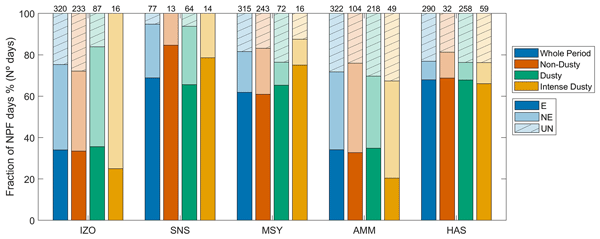
Juan Andrés Casquero-Vera, Daniel Pérez-Ramírez, Hassan Lyamani, Fernando Rejano, Andrea Casans, Gloria Titos, Francisco José Olmo, Lubna Dada, Simo Hakala, Tareq Hussein, Katrianne Lehtipalo, Pauli Paasonen, Antti Hyvärinen, Noemí Pérez, Xavier Querol, Sergio Rodríguez, Nikos Kalivitis, Yenny González, Mansour A. Alghamdi, Veli-Matti Kerminen, Andrés Alastuey, Tuukka Petäjä, and Lucas Alados-Arboledas
Atmos. Chem. Phys., 23, 15795–15814, https://doi.org/10.5194/acp-23-15795-2023, https://doi.org/10.5194/acp-23-15795-2023, 2023
Short summary
Short summary
Here we present the first study of the effect of mineral dust on the inhibition/promotion of new particle formation (NPF) events in different dust-influenced areas. Unexpectedly, we show that the occurrence of NPF events is highly frequent during mineral dust outbreaks, occurring even during extreme dust outbreaks. We also show that the occurrence of NPF events during mineral dust outbreaks significantly affects the potential cloud condensation nuclei budget.
Carynelisa Haspel, Cuiqi Zhang, Martin J. Wolf, Daniel J. Cziczo, and Maor Sela
Atmos. Chem. Phys., 23, 10091–10115, https://doi.org/10.5194/acp-23-10091-2023, https://doi.org/10.5194/acp-23-10091-2023, 2023
Short summary
Short summary
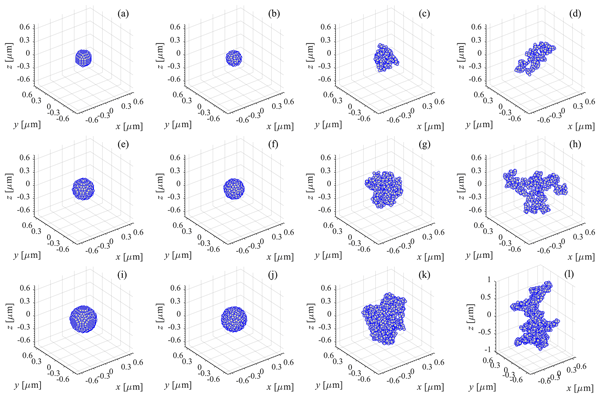
Small particles, commonly termed aerosols, can be found throughout the atmosphere and come from both natural and anthropogenic sources. One important type of aerosol is black carbon (BC). In this study, we conducted laboratory measurements of light scattering by particles meant to mimic atmospheric BC and compared them to calculations of scattering. We find that it is likely that calculations underpredict the scattering by BC particles of certain polarizations of light in certain directions.
Simo Hakala, Ville Vakkari, Heikki Lihavainen, Antti-Pekka Hyvärinen, Kimmo Neitola, Jenni Kontkanen, Veli-Matti Kerminen, Markku Kulmala, Tuukka Petäjä, Tareq Hussein, Mamdouh I. Khoder, Mansour A. Alghamdi, and Pauli Paasonen
Atmos. Chem. Phys., 23, 9287–9321, https://doi.org/10.5194/acp-23-9287-2023, https://doi.org/10.5194/acp-23-9287-2023, 2023
Short summary
Short summary
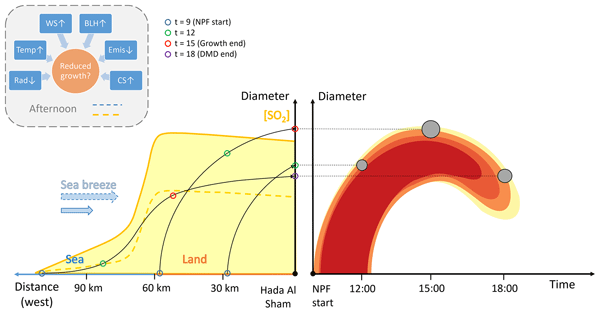
Things are not always as they first seem in ambient aerosol measurements. Observations of decreasing particle sizes are often interpreted as resulting from particle evaporation. We show that such observations can counterintuitively be explained by particles that are constantly growing in size. This requires one to account for the previous movements of the observed air. Our explanation implies a larger number of larger particles, meaning more significant effects of aerosols on climate and health.
Noah S. Hirshorn, Lauren M. Zuromski, Christopher Rapp, Ian McCubbin, Gerardo Carrillo-Cardenas, Fangqun Yu, and A. Gannet Hallar
Atmos. Chem. Phys., 22, 15909–15924, https://doi.org/10.5194/acp-22-15909-2022, https://doi.org/10.5194/acp-22-15909-2022, 2022
Short summary
Short summary
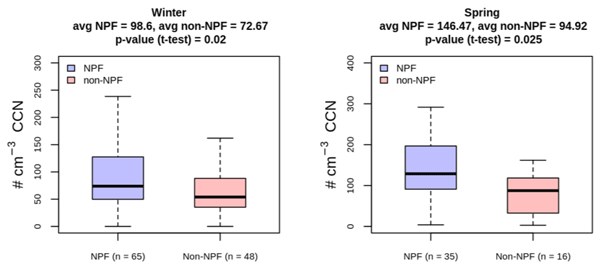
New particle formation (NPF) is a source of atmospheric aerosol number concentration that can impact climate by growing to larger sizes and under proper conditions form cloud condensation nuclei (CCN). Using novel methods, we find that at Storm Peak Laboratory, a remote, mountaintop site in Colorado, NPF is observed to enhance CCN concentrations in the spring by a factor of 1.54 and in the winter by a factor of 1.36 which can occur on a regional scale having important climate implications.
Ville Leinonen, Harri Kokkola, Taina Yli-Juuti, Tero Mielonen, Thomas Kühn, Tuomo Nieminen, Simo Heikkinen, Tuuli Miinalainen, Tommi Bergman, Ken Carslaw, Stefano Decesari, Markus Fiebig, Tareq Hussein, Niku Kivekäs, Radovan Krejci, Markku Kulmala, Ari Leskinen, Andreas Massling, Nikos Mihalopoulos, Jane P. Mulcahy, Steffen M. Noe, Twan van Noije, Fiona M. O'Connor, Colin O'Dowd, Dirk Olivie, Jakob B. Pernov, Tuukka Petäjä, Øyvind Seland, Michael Schulz, Catherine E. Scott, Henrik Skov, Erik Swietlicki, Thomas Tuch, Alfred Wiedensohler, Annele Virtanen, and Santtu Mikkonen
Atmos. Chem. Phys., 22, 12873–12905, https://doi.org/10.5194/acp-22-12873-2022, https://doi.org/10.5194/acp-22-12873-2022, 2022
Short summary
Short summary
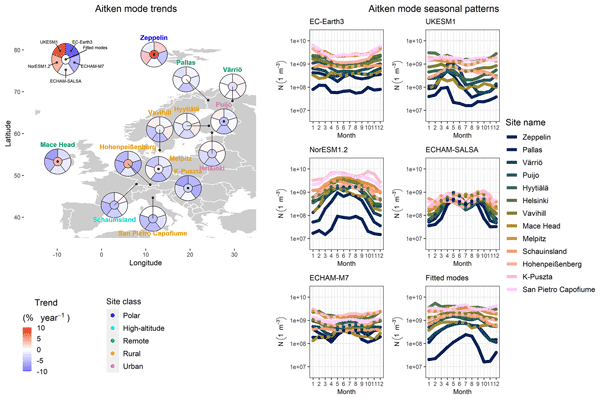
We provide the first extensive comparison of detailed aerosol size distribution trends between in situ observations from Europe and five different earth system models. We investigated aerosol modes (nucleation, Aitken, and accumulation) separately and were able to show the differences between measured and modeled trends and especially their seasonal patterns. The differences in model results are likely due to complex effects of several processes instead of certain specific model features.
Anna L. Hodshire, Ezra J. T. Levin, A. Gannet Hallar, Christopher N. Rapp, Dan R. Gilchrist, Ian McCubbin, and Gavin R. McMeeking
Atmos. Meas. Tech. Discuss., https://doi.org/10.5194/amt-2022-216, https://doi.org/10.5194/amt-2022-216, 2022
Publication in AMT not foreseen
Short summary
Short summary
The new Continuous Flow Diffusion Chamber-Ice Activation Spectrometer collected 4 months of ice nucleating particle (INP) measurements at a 5-minute resolution at the mountainside Storm Peak Laboratory. Most long-term INP measurements are at a time resolution of a day or longer: our instrument is a promising advance towards high-resolution long-term INP measurements. We observe higher peak INP concentrations than previous mountain studies, possibly due to the higher time resolution of our data.

Libby Koolik, Michael Roesch, Carmen Dameto de Espana, Christopher Nathan Rapp, Lesly J. Franco Deloya, Chuanyang Shen, A. Gannet Hallar, Ian B. McCubbin, and Daniel J. Cziczo
Atmos. Meas. Tech., 15, 3213–3222, https://doi.org/10.5194/amt-15-3213-2022, https://doi.org/10.5194/amt-15-3213-2022, 2022
Short summary
Short summary
A new inlet for studying the small particles, droplets, and ice crystals that constitute mixed-phase clouds has been constructed and is described here. This new inlet was tested in the laboratory. We present the performance of the new inlet to demonstrate its capability of separating ice, droplets, and small particles.
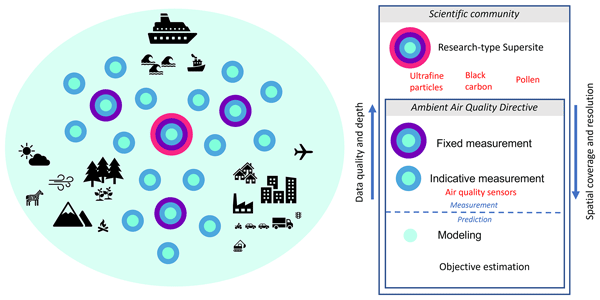
Joel Kuula, Hilkka Timonen, Jarkko V. Niemi, Hanna E. Manninen, Topi Rönkkö, Tareq Hussein, Pak Lun Fung, Sasu Tarkoma, Mikko Laakso, Erkka Saukko, Aino Ovaska, Markku Kulmala, Ari Karppinen, Lasse Johansson, and Tuukka Petäjä
Atmos. Chem. Phys., 22, 4801–4808, https://doi.org/10.5194/acp-22-4801-2022, https://doi.org/10.5194/acp-22-4801-2022, 2022
Short summary
Short summary
Modern and up-to-date policies and air quality management strategies are instrumental in tackling global air pollution. As the European Union is preparing to revise Ambient Air Quality Directive 2008/50/EC, this paper initiates discussion on selected features of the directive that we believe would benefit from a reassessment. The scientific community has the most recent and deepest understanding of air pollution; thus, its contribution is essential.
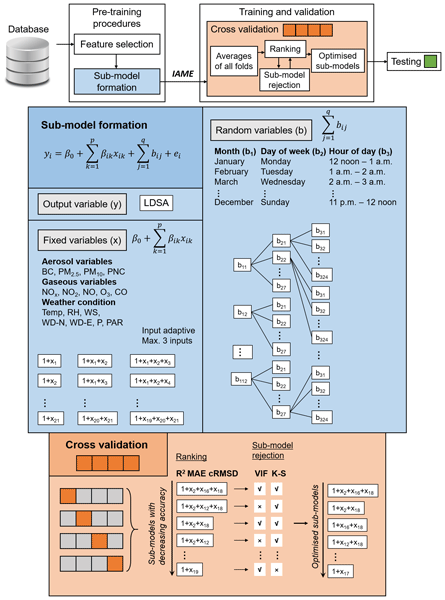
Pak Lun Fung, Martha A. Zaidan, Jarkko V. Niemi, Erkka Saukko, Hilkka Timonen, Anu Kousa, Joel Kuula, Topi Rönkkö, Ari Karppinen, Sasu Tarkoma, Markku Kulmala, Tuukka Petäjä, and Tareq Hussein
Atmos. Chem. Phys., 22, 1861–1882, https://doi.org/10.5194/acp-22-1861-2022, https://doi.org/10.5194/acp-22-1861-2022, 2022
Short summary
Short summary
We developed an input-adaptive mixed-effects model, which was automatised to select the best combination of input variables, including up to three fixed effect variables and three time indictors as random effect variables. We tested the model to estimate lung-deposited surface area (LDSA), which correlates well with human health. The results show the inclusion of time indicators improved the sensitivity and the accuracy of the model so that it could serve as a network of virtual sensors.
Anna L. Hodshire, Ezra J. T. Levin, A. Gannet Hallar, Christopher N. Rapp, Dan R. Gilchrist, Ian McCubbin, and Gavin R. McMeeking
Atmos. Chem. Phys. Discuss., https://doi.org/10.5194/acp-2022-29, https://doi.org/10.5194/acp-2022-29, 2022
Preprint withdrawn
Short summary
Short summary
The new Continuous Flow Diffusion Chamber-Ice Activation Spectrometer collected 4 months of ice nucleating particle (INP) measurements at a 5-minute resolution at the mountainside Storm Peak Laboratory. Most long-term INP measurements are at a time resolution of a day or longer: our instrument is a promising advance towards high-resolution long-term INP measurements. We observe higher peak INP concentrations than previous mountain studies, possibly due to the higher time resolution of our data.
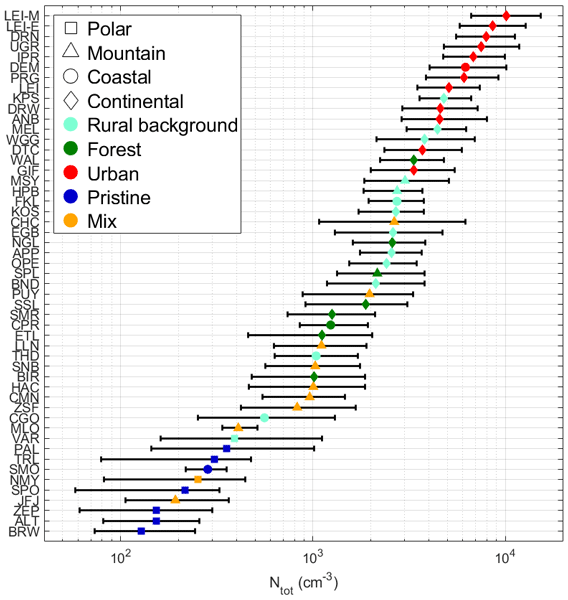
Clémence Rose, Martine Collaud Coen, Elisabeth Andrews, Yong Lin, Isaline Bossert, Cathrine Lund Myhre, Thomas Tuch, Alfred Wiedensohler, Markus Fiebig, Pasi Aalto, Andrés Alastuey, Elisabeth Alonso-Blanco, Marcos Andrade, Begoña Artíñano, Todor Arsov, Urs Baltensperger, Susanne Bastian, Olaf Bath, Johan Paul Beukes, Benjamin T. Brem, Nicolas Bukowiecki, Juan Andrés Casquero-Vera, Sébastien Conil, Konstantinos Eleftheriadis, Olivier Favez, Harald Flentje, Maria I. Gini, Francisco Javier Gómez-Moreno, Martin Gysel-Beer, Anna Gannet Hallar, Ivo Kalapov, Nikos Kalivitis, Anne Kasper-Giebl, Melita Keywood, Jeong Eun Kim, Sang-Woo Kim, Adam Kristensson, Markku Kulmala, Heikki Lihavainen, Neng-Huei Lin, Hassan Lyamani, Angela Marinoni, Sebastiao Martins Dos Santos, Olga L. Mayol-Bracero, Frank Meinhardt, Maik Merkel, Jean-Marc Metzger, Nikolaos Mihalopoulos, Jakub Ondracek, Marco Pandolfi, Noemi Pérez, Tuukka Petäjä, Jean-Eudes Petit, David Picard, Jean-Marc Pichon, Veronique Pont, Jean-Philippe Putaud, Fabienne Reisen, Karine Sellegri, Sangeeta Sharma, Gerhard Schauer, Patrick Sheridan, James Patrick Sherman, Andreas Schwerin, Ralf Sohmer, Mar Sorribas, Junying Sun, Pierre Tulet, Ville Vakkari, Pieter Gideon van Zyl, Fernando Velarde, Paolo Villani, Stergios Vratolis, Zdenek Wagner, Sheng-Hsiang Wang, Kay Weinhold, Rolf Weller, Margarita Yela, Vladimir Zdimal, and Paolo Laj
Atmos. Chem. Phys., 21, 17185–17223, https://doi.org/10.5194/acp-21-17185-2021, https://doi.org/10.5194/acp-21-17185-2021, 2021
Short summary
Short summary
Aerosol particles are a complex component of the atmospheric system the effects of which are among the most uncertain in climate change projections. Using data collected at 62 stations, this study provides the most up-to-date picture of the spatial distribution of particle number concentration and size distribution worldwide, with the aim of contributing to better representation of aerosols and their interactions with clouds in models and, therefore, better evaluation of their impact on climate.
Cited articles
Albrecht, B. A.: Aerosols, Cloud Microphysics, and Fractional Cloudiness, Science, 245, 1227–1230, https://doi.org/10.1126/science.245.4923.1227, 1989.
Borchers, H. W.: pracma: practical numerical math functions, CRAN, 2.4.4, https://doi.org/10.32614/CRAN.package.pracma, 2011.
Elzhov, T. V., Mullen, K. M., Spiess, A.-N., and Bolker, B.: minpack.lm: R interface to the levenberg-marquardt nonlinear least-squares algorithm found in MINPACK, plus support for bounds, CRAN, https://doi.org/10.32614/CRAN.package.minpack.lm, 2022.
Franco, M. A., Ditas, F., Kremper, L. A., Machado, L. A. T., Andreae, M. O., Araújo, A., Barbosa, H. M. J., de Brito, J. F., Carbone, S., Holanda, B. A., Morais, F. G., Nascimento, J. P., Pöhlker, M. L., Rizzo, L. V., Sá, M., Saturno, J., Walter, D., Wolff, S., Pöschl, U., Artaxo, P., and Pöhlker, C.: Occurrence and growth of sub-50 nm aerosol particles in the Amazonian boundary layer, Atmos. Chem. Phys., 22, 3469–3492, https://doi.org/10.5194/acp-22-3469-2022, 2022.
Fuzzi, S., Baltensperger, U., Carslaw, K., Decesari, S., Denier van der Gon, H., Facchini, M. C., Fowler, D., Koren, I., Langford, B., Lohmann, U., Nemitz, E., Pandis, S., Riipinen, I., Rudich, Y., Schaap, M., Slowik, J. G., Spracklen, D. V., Vignati, E., Wild, M., Williams, M., and Gilardoni, S.: Particulate matter, air quality and climate: lessons learned and future needs, Atmos. Chem. Phys., 15, 8217–8299, https://doi.org/10.5194/acp-15-8217-2015, 2015.
Gordon, H., Kirkby, J., Baltensperger, U., Bianchi, F., Breitenlechner, M., Curtius, J., Dias, A., Dommen, J., Donahue, N. M., Dunne, E. M., Duplissy, J., Ehrhart, S., Flagan, R. C., Frege, C., Fuchs, C., Hansel, A., Hoyle, C. R., Kulmala, M., Kürten, A., Lehtipalo, K., Makhmutov, V., Molteni, U., Rissanen, M. P., Stozkhov, Y., Tröstl, J., Tsagkogeorgas, G., Wagner, R., Williamson, C., Wimmer, D., Winkler, P. M., Yan, C., and Carslaw, K. S.: Causes and importance of new particle formation in the present-day and preindustrial atmospheres, J. Geophys. Res.-Atmos., 122, 8739–8760, https://doi.org/10.1002/2017JD026844, 2017.
Hallar, A. G., Lowenthal, D. H., Chirokova, G., Borys, R. D., and Wiedinmyer, C.: Persistent daily new particle formation at a mountain-top location, Atmos. Environ., 45, 4111–4115, https://doi.org/10.1016/j.atmosenv.2011.04.044, 2011.
Hallar, A. G., McCubbin, I. B., Borys, R., Lowenthal, D. H., Wetzel, M., Hindman, E., Brooks, S. D., Steenburgh, W. J., Gratz, L., Hoch, S., Stephens, B., Horel, J. D., Molotch, N. P., Mace, G. G., Bailey, A., Pettersen, C., Andrews, E., Cziczo, D. J., and Garcia, M.: Storm Peak Laboratory: A Research and Training Facility for the Atmospheric Sciences, B. Am. Meteorol. Soc., 106, E1130–E1148, https://doi.org/10.1175/BAMS-D-24-0043.1, 2025.
Herrmann, E., Weingartner, E., Henne, S., Vuilleumier, L., Bukowiecki, N., Steinbacher, M., Conen, F., Collaud Coen, M., Hammer, E., Jurányi, Z., Baltensperger, U., and Gysel, M.: Analysis of long-term aerosol size distribution data from jungfraujoch with emphasis on free tropospheric conditions, cloud influence, and air mass transport, J. Geophys. Res.-Atmos., 120, 9459–9480, https://doi.org/10.1002/2015JD023660, 2015.
Hinds, W. C. and Zhu, Y.: Aerosol technology: properties, behavior, and measurement of airborne particles, 3rd edn., Wiley, Hoboken, NJ, 1 pp., ISBN 978-1-119-49404-1, 2022.
Hirshorn, N. S., Zuromski, L. M., Rapp, C., McCubbin, I., Carrillo-Cardenas, G., Yu, F., and Hallar, A. G.: Seasonal significance of new particle formation impacts on cloud condensation nuclei at a mountaintop location, Atmos. Chem. Phys., 22, 15909–15924, https://doi.org/10.5194/acp-22-15909-2022, 2022.
Hussein, T., Dal Maso, M., Petäjä, T., Koponen, I. K., Paatero, P., Aalto, P. P., Hämeri, K., and Kulmala, M.: Evaluation of an automatic algorithm for fitting the particle number size distributions, Boreal Environ. Res., 10, 337, https://doi.org/10.60910/gkzd-jt7v, 2005.
Lohmann, U.: Aerosol Effects on Clouds and Climate, Space Sci. Rev., 125, 129–137, https://doi.org/10.1007/s11214-006-9051-8, 2007.
Lohmann, U. and Feichter, J.: Global indirect aerosol effects: a review, Atmos. Chem. Phys., 5, 715–737, https://doi.org/10.5194/acp-5-715-2005, 2005.
Mäkelä, J. M., Koponen, I. K., Aalto, P., and Kulmala, M.: One-year data of submicron size modes of tropospheric background aerosol in southern Finland, J. Aerosol Sci., 31, 595–611, https://doi.org/10.1016/S0021-8502(99)00545-5, 2000.
Moré, J. J.: The Levenberg–Marquardt algorithm: Implementation and theory, in: Numerical Analysis, vol. 630, edited by: Watson, G. A., Springer, Berlin, Heidelberg, 105–116, https://doi.org/10.1007/BFb0067700, 1978.
Myhre, G., Shindell, D., Bréon, F.-M., Collins, W., Fuglestvedt, J., Huang, J., Koch, D., Lamarque, J.-F., Lee, D., Mendoza, B., Nakajima, T., Robock, A., Stephens, G., Takemura, T., and Zhang, H.: Anthropogenic and natural radiative forcing, in: Climate Change 2013: The Physical Science Basis. Contribution of Working Group I to the Fifth Assessment Report of the Intergovernmental Panel on Climate Change, edited by: Stocker, T. F., Qin, D., Plattner, G.-K., Tignor, M., Allen, S. K., Doschung, J., Nauels, A., Xia, Y., Bex, V., and Midgley, P. M., Cambridge University Press, Cambridge, United Kingdom and New York, NY, USA, 659–740, https://doi.org/10.1017/CBO9781107415324.018, 2013.
Ondráček, J., Ždímal, V., Smolík, J., and Lazaridis, M.: A Merging Algorithm for Aerosol Size Distribution from Multiple Instruments, Water Air Soil Poll., 199, 219–233, https://doi.org/10.1007/s11270-008-9873-y, 2009.
Petersen, R. C., Hallar, A. G., McCubbin, I. B., Ogren, J. A., Andrews, E., Lowenthal, D., Gorder, R., Purcell, R., Sleeth, D., and Novosselov, I.: Numerical, wind-tunnel, and atmospheric evaluation of a turbulent ground-based inlet sampling system, Aerosol Sci. Tech., 53, 712–727, https://doi.org/10.1080/02786826.2019.1602718, 2019.
Pope, C. A. and Dockery, D. W.: Health Effects of Fine Particulate Air Pollution: Lines that Connect, J. Air Waste Manage., 56, 709–742, https://doi.org/10.1080/10473289.2006.10464485, 2006.
Rapp, C.: multimodal.R, Zenodo [code], https://doi.org/10.5281/zenodo.21536399, 2026.
Rapp, C., Carrillo-Cardenas, G., Hussein, T., Niu, S., Zhang, Y., Brechtel, F., Hallar, A. G., and Cziczo, D. J.: Repository for “curve fitting algorithm for multimodal particle size distributions – a theoretical basis” (V4), Zenodo [data set], https://doi.org/10.5281/zenodo.21266817, 2026.
Seinfeld, J. H. and Pandis, S. N.: Atmospheric chemistry and physics: from air pollution to climate change, 3rd edn., John Wiley & Sons, Inc, Hoboken, New Jersey, 1120 pp., ISBN 978-1-118-94740-1, 2016.
Taylor, M., Kazadzis, S., and Gerasopoulos, E.: Multi-modal analysis of aerosol robotic network size distributions for remote sensing applications: dominant aerosol type cases, Atmos. Meas. Tech., 7, 839–858, https://doi.org/10.5194/amt-7-839-2014, 2014.
Twomey, S.: Pollution and the planetary albedo, Atmos. Environ. (1967), 8, 1251–1256, https://doi.org/10.1016/0004-6981(74)90004-3, 1974.
Twomey, S. A., Piepgrass, M., and Wolfe, T. L.: An assessment of the impact of pollution on global cloud albedo, Tellus B, 36B, 356–366, https://doi.org/10.1111/j.1600-0889.1984.tb00254.x, 1984.
Venables, W. N., Ripley, B. D., and Venables, W. N.: Modern applied statistics with S, 4th edn., Springer, New York, 495 pp., ISBN 978-0-387-95457-8, 2002.
Weltje, G. J. and Prins, M. A.: Genetically meaningful decomposition of grain-size distributions, Sediment. Geol., 202, 409–424, https://doi.org/10.1016/j.sedgeo.2007.03.007, 2007.
Zhu, K. and Wang, L.: A comprehensive study on the validation and application of multi-lognormal distribution models for atmospheric particles, Atmos. Environ., 338, 120813, https://doi.org/10.1016/j.atmosenv.2024.120813, 2024.
Short summary
Particles in the atmosphere vary in size and concentration, forming what is known as a particle size distribution (PSD). These distributions rarely consist of a single group of similar particles, known as a mode. Instead, they are often made up multiple overlapping modes. This work introduces an open-source algorithm to separate complex PSDs into their individual modes, enabling characterization of each particle population to provide insight into properties relevant to human health and climate.
Particles in the atmosphere vary in size and concentration, forming what is known as a particle...


