
Articles | Volume 19, issue 20
https://doi.org/10.5194/amt-19-6503-2026
© Author(s) 2026. This work is distributed under
the Creative Commons Attribution 4.0 License.
the Creative Commons Attribution 4.0 License.
https://doi.org/10.5194/amt-19-6503-2026
© Author(s) 2026. This work is distributed under
the Creative Commons Attribution 4.0 License.
the Creative Commons Attribution 4.0 License.
Research article
| 
16 Oct 2026
Research article |
| 16 Oct 2026
| 16 Oct 2026
The MISR Research Product Algorithm – producing global, self-consistent, pixel-level aerosol retrievals for the Multi-angle Imaging SpectroRadiometer
Michael Anstett
Science Systems and Applications, Inc., Lanham MD 20706, USA
NASA Goddard Space Flight Center, Greenbelt MD 20771, USA
James A. Limbacher
Science and Technology Corporation (STC), Hampton, VA, USA
National Oceanic and Atmospheric Administration, College Park MD 20740, USA
Ralph A. Kahn
CORRESPONDING AUTHOR

Laboratory for Atmospheric & Space Physics, University of Colorado Boulder, Boulder CO 80303, USA
formerly at: NASA Goddard Space Flight Center, Greenbelt MD 20771, USA
retired
Related authors
No articles found.
Patrick C. Taylor, Armin Sorooshian, Rei Ueyama, Sebastian Schmidt, Ihab Abboud, Quincy Allison, Kevin Barry, Sebastian Becker, Holly A. Bender, Joseph R. Bennett, James B. Blair, Niklas Bohn, Linette Boisvert, Matthew D. Brown, Roelof Bruintjes, Anthony Bucholtz, Megan Buzanowicz, Brian Cairns, Filippo Calì Quaglia, Eduard Chemyakin, Bo Chen, Gao Chen, Hong Chen, Yu-Wen Chen, Zezhen Cheng, Swarup China, Dan Chirica, Yonghoon Choi, Peter Colarco, Brian Collister, Ewan Crosbie, Maurice J. Cross, Janet Daniels, Paul DeMott, Joshua P. DiGangi, Alcide Giorgio di Sarra, Glenn S. Diskin, Erica K. Dolinar, Eva-Lou Edwards, Samuel Ephraim, Nikolaos Evangeliou, Romanos Foskinis, Francesca Gallo, Lan Gao, José Luis Gómez-Amo, Daisy Gonzalez, Christine Groot Zwaaftink, Pawan Gupta, Ivan Heckman, Michael Hendrickson, Miguel Ricardo A. Hilario, Ken Hirata, Michelle Hofton, Andrew L. Holen, Ulas Im, Alia L. Khan, Ralph Kahn, Alexei V. Korolev, Sonia Kreidenweis, Thomas Krumpen, Nathan Kurtz, Leslie Lait, Bradley Lamkin, Jack Landy, Nurun Nahar Lata, Paul Lawson, Samuel LeBlanc, Sean Leavor, Jing Li, Thorsten Markus, Hal Maring, Andreas H. Massling, Camille Mavis, Flynn McGinnity, Kerry Meyer, Gabriel Mojica, Richard H. Moore, Parker Morris, Giovanni Muscari, Vikas Nataraja, Amin R. Nehrir, Athanasios Nenes, Edward P. Nowottnick, Matteo Ottaviani, Chelsea Parker, Ryan Patnaude, Michael Perez, Russell J. Perkins, Colten Peterson, Alek Petty, Stevie Phothisane, Chris Polashenski, Kerri A. Pratt, Kayla M. Preisler, John Prytherch, David Rabine, Jens Redemann, Ju-Mee Ryoo, Joseph S. Schlosser, Vanessa Selimovic, Michael A. Shook, Morgan Silverman, Henrik Skov, Alexander Smirnov, Cassidy Soloff, Amy Solomon, Snorre Stamnes, Azusa Takeishi, David R. Thompson, K. Lee Thornhill, Rachel Tilling, Michael Tjernström, Monica Tosco, Pedro C. Valdelomar, David Van Gilst, Jian Wang, Zhien Wang, Andrzej Wasilewski, Manfred Wendisch, Brent Wilder, Edward L. Winstead, Albert Wu, Peng Xian, Lauren M. Zamora, Jiaoshi Zhang, Lei Zhang, Lu Zhang, Luke Ziemba, and Paquita Zuidema
Earth Syst. Sci. Data Discuss., https://doi.org/10.5194/essd-2026-241, https://doi.org/10.5194/essd-2026-241, 2026
Preprint under review for ESSD
Short summary
Short summary
This article summarizes the data sets collected during the Arctic Radiation Cloud aerosol Sea ice Interaction eXperiment (ARCSIX), NASA's most comprehensive Arctic field campaign to date. The overarching goal was to quantify the contributions of surface, clouds, aerosol particles, and precipitation to summer sea ice melt. This paper describes the ARCSIX implementation including the flight strategy, instruments, complementary data sets, access, and usage details.
Xiaohua Pan, Mian Chin, Ralph A. Kahn, Hitoshi Matsui, Toshihiko Takemura, Meiyun Lin, Yuanyu Xie, Dongchul Kim, and Maria Val Martin
Atmos. Chem. Phys., 26, 171–196, https://doi.org/10.5194/acp-26-171-2026, https://doi.org/10.5194/acp-26-171-2026, 2026
Short summary
Short summary
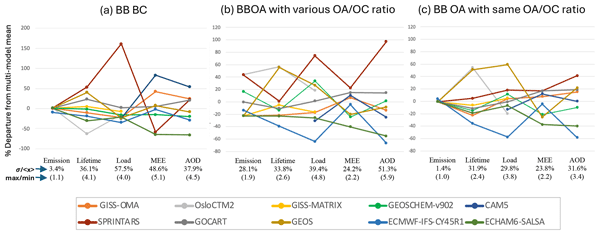
Wildfire smoke can travel far from its source, affecting air quality far from the fire itself. This study looks at how two key factors – how much smoke is emitted & how high it rises – affect how smoke spreads. Using data from a major 2008 Siberian wildfire, four models were tested. Results show that models often inject smoke too low & remove it too quickly, missing high-altitude smoke seen by satellites. Better estimates of smoke height and removal are crucial to improve air quality forecasts.
Katherine T. Junghenn Noyes and Ralph A. Kahn
Atmos. Chem. Phys., 25, 13879–13901, https://doi.org/10.5194/acp-25-13879-2025, https://doi.org/10.5194/acp-25-13879-2025, 2025
Short summary
Short summary
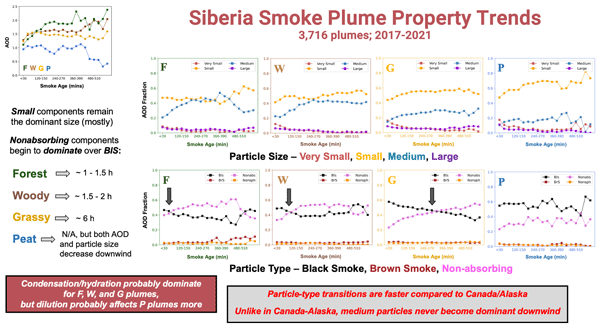
With observations from NASA's Multi-Angle Imaging Spectroradiometer (MISR) satellite instrument, we can constrain wildfire plume heights, smoke age, and particle size, shape, and light-absorption properties. We study over 3600 wildfire plumes across Siberia by statistically comparing the MISR results to observations of fire strength, land cover type, and meteorology. We then stratify plumes by land cover type and infer the dominant aerosol aging mechanisms among different plume types.
Xin Xi, Jun Wang, Zhendong Lu, Andrew M. Sayer, Jaehwa Lee, Robert C. Levy, Yujie Wang, Alexei Lyapustin, Hongqing Liu, Istvan Laszlo, Changwoo Ahn, Omar Torres, Sabur Abdullaev, James Limbacher, and Ralph A. Kahn
Atmos. Chem. Phys., 25, 7403–7429, https://doi.org/10.5194/acp-25-7403-2025, https://doi.org/10.5194/acp-25-7403-2025, 2025
Short summary
Short summary
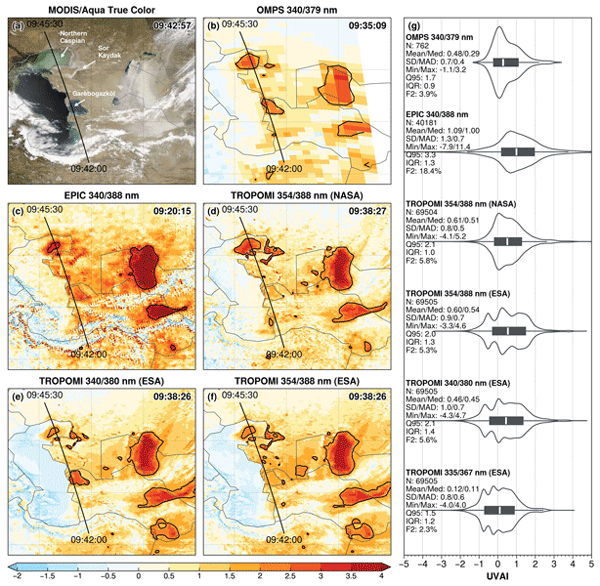
The Aralkum Desert is challenging for aerosol retrieval due to its bright, heterogeneous, and dynamic surfaces and the lack of in situ constraints on aerosol properties. The performance and consistency of satellite algorithms in observing Aralkum-generated saline dust remain unknown. This study compares multisensor UVAI (ultraviolet aerosol index), AOD (aerosol optical depth), and ALH (aerosol layer height) products and reveals inconsistencies and potential biases over the Aral Sea basin.
Mariya Petrenko, Ralph Kahn, Mian Chin, Susanne E. Bauer, Tommi Bergman, Huisheng Bian, Gabriele Curci, Ben Johnson, Johannes W. Kaiser, Zak Kipling, Harri Kokkola, Xiaohong Liu, Keren Mezuman, Tero Mielonen, Gunnar Myhre, Xiaohua Pan, Anna Protonotariou, Samuel Remy, Ragnhild Bieltvedt Skeie, Philip Stier, Toshihiko Takemura, Kostas Tsigaridis, Hailong Wang, Duncan Watson-Parris, and Kai Zhang
Atmos. Chem. Phys., 25, 1545–1567, https://doi.org/10.5194/acp-25-1545-2025, https://doi.org/10.5194/acp-25-1545-2025, 2025
Short summary
Short summary
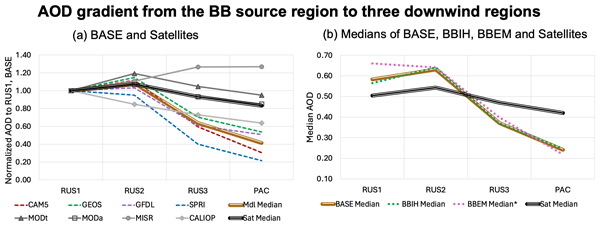
We compared smoke plume simulations from 11 global models to each other and to satellite smoke amount observations aimed at constraining smoke source strength. In regions where plumes are thick and background aerosol is low, models and satellites compare well. However, the input emission inventory tends to underestimate in many places, and particle property and loss rate assumptions vary enormously among models, causing uncertainties that require systematic in situ measurements to resolve.
Myungje Choi, Alexei Lyapustin, Gregory L. Schuster, Sujung Go, Yujie Wang, Sergey Korkin, Ralph Kahn, Jeffrey S. Reid, Edward J. Hyer, Thomas F. Eck, Mian Chin, David J. Diner, Olga Kalashnikova, Oleg Dubovik, Jhoon Kim, and Hans Moosmüller
Atmos. Chem. Phys., 24, 10543–10565, https://doi.org/10.5194/acp-24-10543-2024, https://doi.org/10.5194/acp-24-10543-2024, 2024
Short summary
Short summary
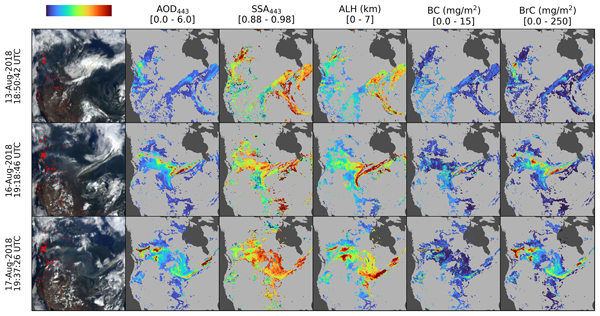
This paper introduces a retrieval algorithm to estimate two key absorbing components in smoke (black carbon and brown carbon) using DSCOVR EPIC measurements. Our analysis reveals distinct smoke properties, including spectral absorption, layer height, and black carbon and brown carbon, over North America and central Africa. The retrieved smoke properties offer valuable observational constraints for modeling radiative forcing and informing health-related studies.
James A. Limbacher, Ralph A. Kahn, Mariel D. Friberg, Jaehwa Lee, Tyler Summers, and Hai Zhang
Atmos. Meas. Tech., 17, 471–498, https://doi.org/10.5194/amt-17-471-2024, https://doi.org/10.5194/amt-17-471-2024, 2024
Short summary
Short summary
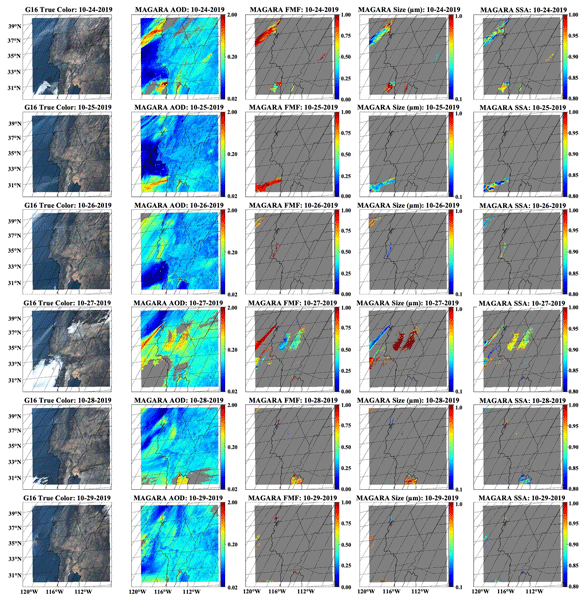
We present the new Multi-Angle Geostationary Aerosol Retrieval Algorithm (MAGARA) that fuses observations from GOES-16 and GOES-17 to retrieve information about aerosol loading (at 10–15 min cadence) and aerosol particle properties (daily), all at pixel-level resolution. We present MAGARA results for three case studies: the 2018 California Camp Fire, the 2019 Williams Flats Fire, and the 2019 Kincade Fire. We also compare MAGARA aerosol loading and particle properties with AERONET.
Robert R. Nelson, Marcin L. Witek, Michael J. Garay, Michael A. Bull, James A. Limbacher, Ralph A. Kahn, and David J. Diner
Atmos. Meas. Tech., 16, 4947–4960, https://doi.org/10.5194/amt-16-4947-2023, https://doi.org/10.5194/amt-16-4947-2023, 2023
Short summary
Short summary
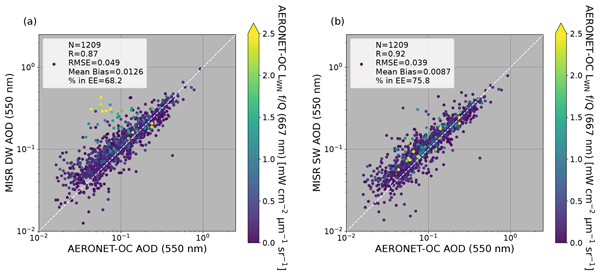
Shallow and coastal waters are nutrient-rich and turbid due to runoff. They are also located in areas where the atmosphere has more aerosols than open-ocean waters. NASA's Multi-angle Imaging SpectroRadiometer (MISR) has been monitoring aerosols for over 23 years but does not report results over shallow waters. We developed a new algorithm that uses all four of MISR’s bands and considers light leaving water surfaces. This algorithm performs well and increases over-water measurements by over 7 %.
Michail Mytilinaios, Sara Basart, Sergio Ciamprone, Juan Cuesta, Claudio Dema, Enza Di Tomaso, Paola Formenti, Antonis Gkikas, Oriol Jorba, Ralph Kahn, Carlos Pérez García-Pando, Serena Trippetta, and Lucia Mona
Atmos. Chem. Phys., 23, 5487–5516, https://doi.org/10.5194/acp-23-5487-2023, https://doi.org/10.5194/acp-23-5487-2023, 2023
Short summary
Short summary
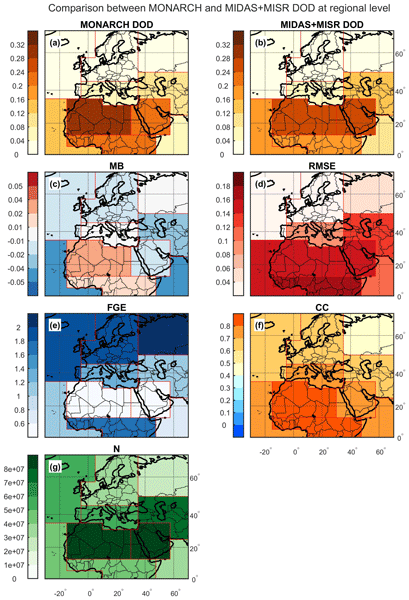
Multiscale Online Non-hydrostatic AtmospheRe CHemistry model (MONARCH) dust reanalysis provides a high-resolution 3D reconstruction of past dust conditions, allowing better quantification of climate and socioeconomic dust impacts. We assess the performance of the reanalysis needed to reproduce dust optical depth using dust-related products retrieved from satellite and ground-based observations and show that it reproduces the spatial distribution and seasonal variability of atmospheric dust well.
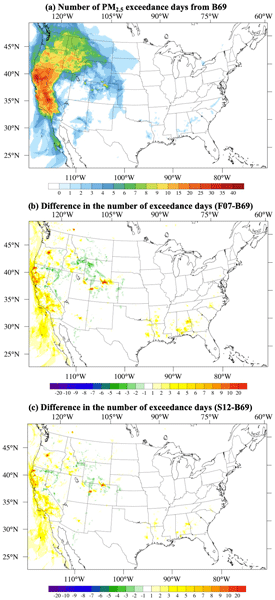
Yunyao Li, Daniel Tong, Siqi Ma, Saulo R. Freitas, Ravan Ahmadov, Mikhail Sofiev, Xiaoyang Zhang, Shobha Kondragunta, Ralph Kahn, Youhua Tang, Barry Baker, Patrick Campbell, Rick Saylor, Georg Grell, and Fangjun Li
Atmos. Chem. Phys., 23, 3083–3101, https://doi.org/10.5194/acp-23-3083-2023, https://doi.org/10.5194/acp-23-3083-2023, 2023
Short summary
Short summary
Plume height is important in wildfire smoke dispersion and affects air quality and human health. We assess the impact of plume height on wildfire smoke dispersion and the exceedances of the National Ambient Air Quality Standards. A higher plume height predicts lower pollution near the source region, but higher pollution in downwind regions, due to the faster spread of the smoke once ejected, affects pollution exceedance forecasts and the early warning of extreme air pollution events.
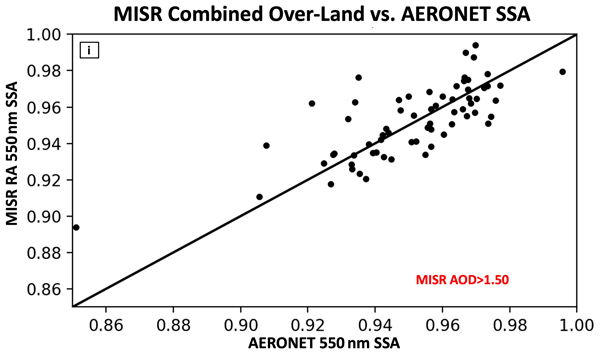
James A. Limbacher, Ralph A. Kahn, and Jaehwa Lee
Atmos. Meas. Tech., 15, 6865–6887, https://doi.org/10.5194/amt-15-6865-2022, https://doi.org/10.5194/amt-15-6865-2022, 2022
Short summary
Short summary
Launched in December 1999, NASA’s Multi-angle Imaging SpectroRadiometer (MISR) has given researchers qualitative constraints on aerosol particle properties for the past 22 years. Here, we present a new MISR research aerosol retrieval algorithm (RA) that utilizes over-land surface reflectance data from the Multi-Angle Implementation of Atmospheric Correction (MAIAC) to address limitations of the MISR operational aerosol retrieval algorithm and improve retrievals of aerosol particle properties.
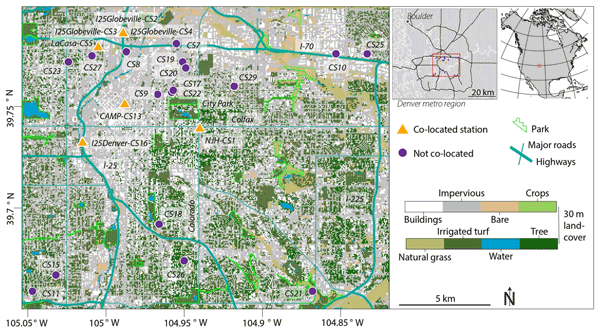
Priyanka deSouza, Ralph Kahn, Tehya Stockman, William Obermann, Ben Crawford, An Wang, James Crooks, Jing Li, and Patrick Kinney
Atmos. Meas. Tech., 15, 6309–6328, https://doi.org/10.5194/amt-15-6309-2022, https://doi.org/10.5194/amt-15-6309-2022, 2022
Short summary
Short summary
How sensitive are the spatial and temporal trends of PM2.5 derived from a network of low-cost sensors to the calibration adjustment used? How transferable are calibration equations developed at a few co-location sites to an entire network of low-cost sensors? This paper attempts to answer this question and offers a series of suggestions on how to develop the most robust calibration function for different end uses. It uses measurements from the Love My Air network in Denver as a test case.

Lauren M. Zamora, Ralph A. Kahn, Nikolaos Evangeliou, Christine D. Groot Zwaaftink, and Klaus B. Huebert
Atmos. Chem. Phys., 22, 12269–12285, https://doi.org/10.5194/acp-22-12269-2022, https://doi.org/10.5194/acp-22-12269-2022, 2022
Short summary
Short summary
Arctic dust, smoke, and pollution particles can affect clouds and Arctic warming. The distributions of these particles were estimated in three different satellite, reanalysis, and model products. These products showed good agreement overall but indicate that it is important to include local dust in models. We hypothesize that mineral dust effects on ice processes in the Arctic atmosphere might be highest over Siberia, where it is cold, moist, and subject to relatively high dust levels.
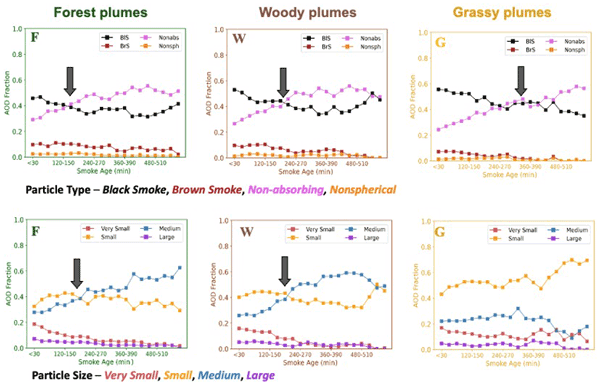
Katherine T. Junghenn Noyes, Ralph A. Kahn, James A. Limbacher, and Zhanqing Li
Atmos. Chem. Phys., 22, 10267–10290, https://doi.org/10.5194/acp-22-10267-2022, https://doi.org/10.5194/acp-22-10267-2022, 2022
Short summary
Short summary
We compare retrievals of wildfire smoke particle size, shape, and light absorption from the MISR satellite instrument to modeling and other satellite data on land cover type, drought conditions, meteorology, and estimates of fire intensity (fire radiative power – FRP). We find statistically significant differences in the particle properties based on burning conditions and land cover type, and we interpret how changes in these properties point to specific aerosol aging mechanisms.

Matthew W. Christensen, Andrew Gettelman, Jan Cermak, Guy Dagan, Michael Diamond, Alyson Douglas, Graham Feingold, Franziska Glassmeier, Tom Goren, Daniel P. Grosvenor, Edward Gryspeerdt, Ralph Kahn, Zhanqing Li, Po-Lun Ma, Florent Malavelle, Isabel L. McCoy, Daniel T. McCoy, Greg McFarquhar, Johannes Mülmenstädt, Sandip Pal, Anna Possner, Adam Povey, Johannes Quaas, Daniel Rosenfeld, Anja Schmidt, Roland Schrödner, Armin Sorooshian, Philip Stier, Velle Toll, Duncan Watson-Parris, Robert Wood, Mingxi Yang, and Tianle Yuan
Atmos. Chem. Phys., 22, 641–674, https://doi.org/10.5194/acp-22-641-2022, https://doi.org/10.5194/acp-22-641-2022, 2022
Short summary
Short summary
Trace gases and aerosols (tiny airborne particles) are released from a variety of point sources around the globe. Examples include volcanoes, industrial chimneys, forest fires, and ship stacks. These sources provide opportunistic experiments with which to quantify the role of aerosols in modifying cloud properties. We review the current state of understanding on the influence of aerosol on climate built from the wide range of natural and anthropogenic laboratories investigated in recent decades.
Cited articles
Anstett, M.: mranst/misr_research_product_algorithm: Initial (Version initial), Zenodo [computer software], https://doi.org/10.5281/zenodo.23269586, 2026.
Chen, W.-T., Kahn, R. A., Nelson, D., Yau, K., and Seinfeld, J.: Sensitivity of multi-angle imaging to optical and microphysical properties of biomass burning aerosols, J. Geophys. Res., 113, D10203, https://doi.org/10.1029/2007JD009414, 2008.
deSouza, P., Kahn, R. A., Limbacher, J. A., Marais, E. A., Duarte, F., and Ratti, C.: Combining low-cost, surface-based aerosol monitors with size-resolved satellite data for air quality applications, Atmos. Meas. Tech., 13, 5319–5334, https://doi.org/10.5194/amt-13-5319-2020, 2020.
Diner, D. J. and Martonchik, J. V.: Atmospheric Transfer of Radiation Above an Inhomogeneous Non-Lambertian Reflective Ground. I: Theory, J. Quant. Spectrosc. Ra., 31, 97–125, 1984a.
Diner, D. J. and Martonchik, J. V.: Atmospheric Transfer of Radiation Above an Inhomogeneous Non-Lambertian Reflective Ground. II: Computational Considerations and Results, J. Quant. Spectrosc. Ra., 32, 279–304, 1984b.
Diner, D. J., Beckert, J. C., Reilly, T. H., Bruegge, C. J., Conel, J. E., Kahn, R. A., Martonchik, J.V., Ackerman, T. P., Davies, R., Gerstl, S. A. W., Gordon, H. R., Muller, J. P., Myneni, R., Sellers, R. J., Pinty, B., and Verstraete, M. M.: Multiangle Imaging SpectroRadiometer (MISR) description and experiment overview, IEEE Trans. Geosci. Remt. Sensing, 36, 1072–1087, https://doi.org/10.1109/36.700992, 1998.
Diner, D. J., Martonchik, J. V., Kahn, R. A., Pinty, B., Gobron, N., Nelson, D. L., and Holben, D. L.: Using angular and spectral shape similarity constraints to improve MISR aerosol and surface retrievals over land, Rem. Sens. Environ., 94, 155–171, https://doi.org/10.1016/j.rse.2004.09.009, 2005.
Dubovik, O. and King, M. D.: A flexible inversion algorithm for retrieval of aerosol optical properties from Sun and sky radiance measurements, J. Geophys. Res., 105, 20673–20696, 2000.
Eck, T. F., Holben, B. N., Reid, J. S., Dubovik, O., Smirnov, A., O'Neill, N. T., Slutsker, I., and Kinne, S.: Wavelength dependence of the optical depth of biomass burning, urban, and desert dust aerosols, J. Geophys. Res., 104, 31333–31349, https://doi.org/10.1029/1999JD900923, 1999.
Flower, V. J. B. and Kahn, R. A.: The regional volcanology of Kamchatka, based on multi-sensor satellite observations, Remt. Sens. Environ., 237, https://doi.org/10.1016/j.rse.2019.111585, 2020a.
Flower, V. J. B. and Kahn, R. A.: The evolution of Iceland volcano emissions, as observed from space. J. Geophys. Res., 125, e2019JD031625, https://doi.org/10.1029/2019JD031625, 2020b.
Friberg, M. D., Kahn, R. A., Limbacher, J. A., Appel, K. W., and Mulholland, J. A.: Constraining chemical transport PM2.5 modeling outputs using surface monitor measurements and satellite retrievals: application over the San Joaquin Valley, Atmos. Chem. Phys., 18, 12891–12913, https://doi.org/10.5194/acp-18-12891-2018, 2018.
Garay, M. J., Witek, M. L., Kahn, R. A., Seidel, F. C., Limbacher, J. A., Bull, M. A., Diner, D. J., Hansen, E. G., Kalashnikova, O. V., Lee, H., Nastan, A. M., and Yu, Y.: Introducing the 4.4 km spatial resolution Multi-Angle Imaging SpectroRadiometer (MISR) aerosol product, Atmos. Meas. Tech., 13, 593–628, https://doi.org/10.5194/amt-13-593-2020, 2020.
Giles, D. M., Sinyuk, A., Sorokin, M. G., Schafer, J. S., Smirnov, A., Slutsker, I., Eck, T. F., Holben, B. N., Lewis, J. R., Campbell, J. R., Welton, E. J., Korkin, S. V., and Lyapustin, A. I.: Advancements in the Aerosol Robotic Network (AERONET) Version 3 database – automated near-real-time quality control algorithm with improved cloud screening for Sun photometer aerosol optical depth (AOD) measurements, Atmos. Meas. Tech., 12, 169–209, https://doi.org/10.5194/amt-12-169-2019, 2019.
GMAO (Global Modeling and Assimilation Office): MERRA-2 inst1_2d_asm_Nx: 2d,1-Hourly, Instantaneous, Single-Level, Assimilation, Single-Level Diagnostics V5.12.4, Greenbelt, MD, USA, Goddard Earth Sciences Data and Information Services Center (GES DISC) [data set], https://doi.org/10.5067/3Z173KIE2TPD, 2015a.
GMAO (Global Modeling and Assimilation Office): MERRA-2 tavg1_2d_ocn_Nx: 2d, 1-Hourly, Time-Averaged, Single-Level, Assimilation, Ocean Surface Diagnostics V5.12.4, Greenbelt, MD, USA, Goddard Earth Sciences Data and Information Services Center (GES DISC) [data set], https://doi.org/10.5067/Y67YQ1L3ZZ4R, 2015b.
Holben, B. N., Eck, T. F., Slutsker, I., Tanré, D., Buis, J. P., Setzer, A., Vermote, E., Reagan, J. A., Kaufman, Y. J., Nakajima, T., Lavenu, F., Jankowiak, I., and Smirnov, A.: AERONET – A federated instrument network and data archive for aerosol characterization, Remote Sens. Environ., 66, 1–16, 1998.
Junghenn Noyes, K. T. and Kahn, R. A.: Satellite Multi-angle Observations of Wildfire Smoke Plumes during the CalFiDE Field campaign: Aerosol Plume Heights, Particle Property Evolution, and Aging Timescales. J. Geophys. Res., 129, e2023JD039041, https://doi.org/10.1029/2023JD039041, 2024.
Junghenn Noyes, K. T. and Kahn, R. A.: Siberian wildfire smoke observations from space-based multi-angle imaging: a multi-year regional analysis of smoke particle properties, their evolution, and comparisons with North American boreal fire plumes, Atmos. Chem. Phys., 25, 13879–13901, https://doi.org/10.5194/acp-25-13879-2025, 2025.
Junghenn Noyes, K. T., Kahn, R. A., Limbacher, J. A., Sedlechek, A., Kleinman, L., and Li, L.: Wildfire Plume Particle Properties and Evolution, From Space-Based Multi-angle Imaging. Biomass Burning special issue, Remote Sens., 12, 769, https://doi.org/10.3390/rs12050769, 2020a.
Junghenn Noyes, K. T., Kahn, R. A., Limbacher, J. A., Li, Z., Fenn, M. A., Giles, D. A., Hair, J. W., Katich, J. M., Moore, R. H., Robinson, C. E., Sanchez, K. J., Shingler, T. J., Thornhill, K. L., Wiggins, E. B., and Winstead, E. L.: Wildfire Smoke Particle Properties and Evolution, From Space-Based Multi-Angle Imaging II: The Williams Flats Fire During the FIREX-AQ Campaign, Remote Sens., 12, 3823, https://doi.org/10.3390/rs12223823, 2020b.
Junghenn Noyes, K. T., Kahn, R. A., Limbacher, J. A., and Li, Z.: Canadian and Alaskan wildfire smoke particle properties, their evolution, and controlling factors, from satellite observations, Atmos. Chem. Phys., 22, 10267–10290, https://doi.org/10.5194/acp-22-10267-2022, 2022.
Kahn, R. A. and Gaitley, B. J.: An analysis of global aerosol type as retrieved by MISR. J. Geophys. Res.-Atmos., 120, 4248–4281, https://doi.org/10.1002/2015JD023322, 2015.
Kahn, R. A. and Limbacher, J. A.: Particle Microphysical-Property Evolution in a North African Dust Plume During Trans-Atlantic Transport, J. Geophys. Res., 130, e2025JD043779, https://doi.org/10.1029/2025JD043779, 2025.
Kahn, R. A., West, R., McDonald, D., Rheingans, B., and Mishchenko, M. I.: Sensitivity of Multi-angle remote sensing observations to aerosol sphericity, J. Geophys. Res., 102, 16861–16870, https://doi.org/10.1029/96JD01934, 1997.
Kahn, R. A., Banerjee, P., and McDonald, D.: The Sensitivity of Multiangle Imaging to Natural Mixtures of Aerosols Over Ocean, J. Geophys. Res., 106, 18219–18238, https://doi.org/10.1029/2000JD900497, 1998.
Kahn, R. A., Banerjee, P., McDonald, D., and Diner, D.: Sensitivity of Multiangle imaging to Aerosol Optical Depth, and to Pure-Particle Size Distribution and Composition Over Ocean, J. Geophys. Res., 103, 32195–32213, https://doi.org/10.1029/98JD01752, 2001.
Kahn, R. A., Gaitley, B. J., Garay, M. J., Diner, D. J., Eck, T., Smirnov, A., and Holben, B. N.: Multiangle Imaging SpectroRadiometer global aerosol product assessment by comparison with the Aerosol Robotic Network. J. Geophys. Res., 115, D23209, https://doi.org/10.1029/2010JD014601, 2010.
Kahn, R. A., Limbacher, J. A., Junghenn Noyes, K. T., Flower, V. J. B., Zamora, L. M., and McKee, K.: Evolving Particles in the 2022 Hunga-Tonga Hunga-Ha'apai Volcano Eruption Plume, J. Geophys. Res., 129, e2023JD039041, https://doi.org/10.1029/2023jd039963, 2024.
Limbacher, J. A. and Kahn, R. A.: MISR research-aerosol-algorithm refinements for dark water retrievals, Atmos. Meas. Tech., 7, 3989–4007, https://doi.org/10.5194/amt-7-3989-2014, 2014.
Limbacher, J. A. and Kahn, R. A.: MISR empirical stray light corrections in high-contrast scenes, Atmos. Meas. Tech., 8, 2927–2943, https://doi.org/10.5194/amt-8-2927-2015, 2015.
Limbacher, J. A. and Kahn, R. A.: Updated MISR dark water research aerosol retrieval algorithm – Part 1: Coupled 1.1 km ocean surface chlorophyll a retrievals with empirical calibration corrections, Atmos. Meas. Tech., 10, 1539–1555, https://doi.org/10.5194/amt-10-1539-2017, 2017.
Limbacher, J. A. and Kahn, R. A.: Updated MISR over-water research aerosol retrieval algorithm – Part 2: A multi-angle aerosol retrieval algorithm for shallow, turbid, oligotrophic, and eutrophic waters, Atmos. Meas. Tech., 12, 675–689, https://doi.org/10.5194/amt-12-675-2019, 2019.
Limbacher, J. A., Kahn, R. A., and Lee, J.: The new MISR research aerosol retrieval algorithm: a multi-angle, multi-spectral, bounded-variable least squares retrieval of aerosol particle properties over both land and water, Atmos. Meas. Tech., 15, 6865–6887, https://doi.org/10.5194/amt-15-6865-2022, 2022.
Lyapustin, A.: MODIS/Terra+Aqua AOD and Water Vapor from MAIAC, Daily L3 Global 0.05Deg CMG V061, NASA EOSDIS Land Processes DAAC, https://doi.org/10.5067/MODIS/MCD19A2CMG.061, 2023.
Lyapustin, A. and Wang, Y.: MCD19A3 MODIS/Terra+Aqua BRDF Model Parameters 8-Day L3 Global 1 km SIN Grid V006, NASA EOSDIS Land Processes DAAC, https://doi.org/10.5067/MODIS/MCD19A3.006, 2018.
Lyapustin, A., Wang, Y., Korkin, S., and Huang, D.: MODIS Collection 6 MAIAC algorithm, Atmos. Meas. Tech., 11, 5741–5765, https://doi.org/10.5194/amt-11-5741-2018, 2018.
Martonchik, J. V., Diner, D. J., Kahn, R. A., Verstraete, M. M., Pinty, B., Gordon, H. R., and Ackerman, T. P.: Techniques for the Retrieval of aerosol properties over land and ocean using multiangle data, IEEE Trans. Geosci. Remt. Sensing, 36, 1212–1227, https://doi.org/10.1109/36.701027, 1998.
Martonchik, J. V., Kahn, R. A., and Diner, D.J.: Retrieval of Aerosol Properties over Land Using MISR Observations, in: Satellite Aerosol Remote Sensing Over Land, edited by: Kokhanovsky, A. A. and de Leeuw, G., Springer, Berlin, 267–293, ISBN 978-3-540-69396-3, 2009.
Mears, C. A., Scott, J.,Wentz, F. J., Ricciardulli, L., Leidner, S. M., Hoffman, R., and Atlas, R.: A near-real-time version of the crosscalibrated multiplatform (CCMP) ocean surface wind velocity data set, J. Geophys. Res.-Oceans, 124, 6997–7010, 2019.
MODIS Science Team: MOD021KM MODIS/Terra Calibrated Radiances 5-Min L1B Swath 1km, NASA Level 1 and Atmosphere Archive and Distribution System Distributed Active Archive Center [data set], https://doi.org/10.5067/MODIS/MOD021KM.061, 2017.
Sinyuk, A., Holben, B. N., Smirnov, A., Eck, T. F., Slutsker, I., Schafer, J. S., Giles, D. M., and Sorokin, M.: Assessment of error in aerosol optical depth measured by AERONET due to aerosol forward scattering, Geophys. Res. Lett., 39, L23806, https://doi.org/10.1029/2012GL053894, 2012.
Wagner, F. and Silva, A. M.: Some considerations about Ångström exponent distributions, Atmos. Chem. Phys., 8, 481–489, https://doi.org/10.5194/acp-8-481-2008, 2008.
Yue, J., Miller, S. D., Straka, W., Noh, Y.-J., Chou, M.-Y., Kahn, R. A., and Flower, V. J. B.: La Soufriere volcanic eruptions launched gravity waves into space, Geophys. Res. Lett., 49, https://doi.org/10.1029/2022GL097952, 2022.
Short summary
This paper describes the Multi-angle Imaging SpectroRadiometer (MISR) Research Product Algorithm (MRPA) and analyzes its performance. The MRPA an aerosol retrieval algorithm based on the MISR aerosol Research Algorithm (RA), which explored and introduced innovations into MISR aerosol retrievals. Previously, the RA ran on a limited, case-by-case basis. The MRPA is an automated version optimized so users can create 1.1 km-resolution, quality aerosol-type results for most of the MISR data record.
This paper describes the Multi-angle Imaging SpectroRadiometer (MISR) Research Product Algorithm...


