Articles | Volume 19, issue 20
https://doi.org/10.5194/amt-19-6857-2026
© Author(s) 2026. This work is distributed under
the Creative Commons Attribution 4.0 License.
https://doi.org/10.5194/amt-19-6857-2026
© Author(s) 2026. This work is distributed under
the Creative Commons Attribution 4.0 License.
Global sampling characteristics and coverage complementarity of 12 GNSS radio occultation constellations

Wenqiang Lu
National Satellite Meteorological Center/National Center for Space Weather, Beijing 100081, China
Innovation Center for Fengyun Meteorological Satellite (FYSIC), Beijing 100081, China
Key Laboratory of Radiometric Calibration and Validation for Environmental Satellites, CMA, Beijing 100081, China
Ran Chen
National Space Science Center, Chinese Academy of Sciences, Beijing 100190, China
College of Earth and Planetary Sciences, University of Chinese Academy of Sciences, Beijing 100049, China
Na Xu
CORRESPONDING AUTHOR
National Satellite Meteorological Center/National Center for Space Weather, Beijing 100081, China
Innovation Center for Fengyun Meteorological Satellite (FYSIC), Beijing 100081, China
Key Laboratory of Radiometric Calibration and Validation for Environmental Satellites, CMA, Beijing 100081, China
Xiangguang Meng
CORRESPONDING AUTHOR
National Space Science Center, Chinese Academy of Sciences, Beijing 100190, China
College of Earth and Planetary Sciences, University of Chinese Academy of Sciences, Beijing 100049, China
Lei Xue
National Meteorological Information Center, China Meteorology Administration,Beijing 100081,China
Mi Liao
National Satellite Meteorological Center/National Center for Space Weather, Beijing 100081, China
Innovation Center for Fengyun Meteorological Satellite (FYSIC), Beijing 100081, China
Key Laboratory of Radiometric Calibration and Validation for Environmental Satellites, CMA, Beijing 100081, China
Yan Liu
Earth System Modeling and Prediction Center, China Meteorology Administration, Beijing 100081, China
Peng Guo
Shanghai Astronomical Observatory, Chinese Academy of Sciences, Shanghai 200030, China
Guanglin Yang
National Satellite Meteorological Center/National Center for Space Weather, Beijing 100081, China
Innovation Center for Fengyun Meteorological Satellite (FYSIC), Beijing 100081, China
Key Laboratory of Radiometric Calibration and Validation for Environmental Satellites, CMA, Beijing 100081, China
Xiuqing Hu
National Satellite Meteorological Center/National Center for Space Weather, Beijing 100081, China
Innovation Center for Fengyun Meteorological Satellite (FYSIC), Beijing 100081, China
Key Laboratory of Radiometric Calibration and Validation for Environmental Satellites, CMA, Beijing 100081, China
Xiangang Zhao
National Satellite Meteorological Center/National Center for Space Weather, Beijing 100081, China
Innovation Center for Fengyun Meteorological Satellite (FYSIC), Beijing 100081, China
Key Laboratory of Radiometric Calibration and Validation for Environmental Satellites, CMA, Beijing 100081, China
Yueqiang Sun
National Space Science Center, Chinese Academy of Sciences, Beijing 100190, China
College of Earth and Planetary Sciences, University of Chinese Academy of Sciences, Beijing 100049, China
Related authors
No articles found.
Zhuomin Li, Aida Alvera-Azcárate, Alexander Barth, Nathaniel Bensoussan, Lei Guan, and Na Xu
EGUsphere, https://doi.org/10.5194/egusphere-2026-5436, https://doi.org/10.5194/egusphere-2026-5436, 2026
This preprint is open for discussion and under review for Ocean Science (OS).
Short summary
Short summary
In the Gulf of Lion, summer–autumn northwest winds drive coastal upwelling cooling often masked in satellite/reanalysis SST by clouds and strict quality control. We reconstruct HY-1D COCTS SST and validate against three coastal stations. It captures most events but underestimates cooling. We add wind-informed cloud detection using wind speed/direction to recover cold upwelling pixels mislabeled as cloud. Results match in situ SST better, improving SST availability for upwelling studies.
Xinyu Zhang, Wenwu Ding, Xiangguang Meng, Ying Li, Yan Liu, and Yunbin Yuan
EGUsphere, https://doi.org/10.5194/egusphere-2026-5629, https://doi.org/10.5194/egusphere-2026-5629, 2026
This preprint is open for discussion and under review for Atmospheric Measurement Techniques (AMT).
Short summary
Short summary
This study retrieves RO observations from the FY‑3E satellite using 1‑s undifferenced LEO clock corrections. Results are compared against those from 30‑s undifferenced and single‑difference approaches. The 1‑s clock corrections outperform the other two schemes, yielding the greatest improvement in bending‑angle profiles within the 40–60 km altitude range. These findings support future operational processing and archive reprocessing of all Fengyun GNSS occultation datasets.
Pan Xia, Min Min, Jun Li, Na Xu, Di Di, Yan-An Liu, Gang Wang, Zijing Liu, and Yongqiang Chen
Earth Syst. Sci. Data Discuss., https://doi.org/10.5194/essd-2026-606, https://doi.org/10.5194/essd-2026-606, 2026
Preprint under review for ESSD
Short summary
Short summary
This study presents a validated FY-4B minute-scale mesoscale AMV dataset for 15 tropical cyclones (2022–2025), offering 3-km VIS and 24-km IRX vectors at 1/2/6/7 min intervals. It provides unprecedented observations of inner-core, rainband, and outflow structures. Evaluated against radiosondes and ERA5, VIS biases are 2.34 and 1.62 m/s, and IRX biases are 2.21 and 0.31 m/s, respectively. The dataset supports detailed monitoring of TC structural evolution and short-term intensity change.
Ying Li, Yan Liu, Wenwu Ding, Mi Liao, Xingliang Huo, and Jinying Ye
Atmos. Meas. Tech., 19, 659–678, https://doi.org/10.5194/amt-19-659-2026, https://doi.org/10.5194/amt-19-659-2026, 2026
Short summary
Short summary
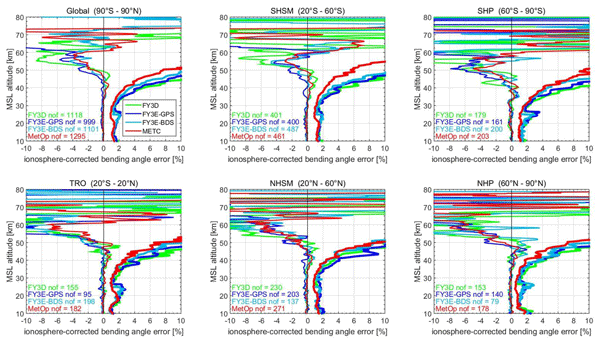
Fengyun radio occultation products are useful for numerical weather prediction (NWP). However, its accuracy required to be further improved from middle stratosphere above. We developed a quality control scheme and evaluate the Fengyun bending angles’ quality. The new quality control scheme are useful in rejecting outliers and products’ quality have been well understood. The results are promising in improving the performance of Fengyun data in NWP and climate applications.
Mengyuan Wang, Min Min, Jun Li, Han Lin, Yongen Liang, Binlong Chen, Zhigang Yao, Na Xu, and Miao Zhang
Atmos. Chem. Phys., 24, 14239–14256, https://doi.org/10.5194/acp-24-14239-2024, https://doi.org/10.5194/acp-24-14239-2024, 2024
Short summary
Short summary
Although machine learning technology is advanced in the field of satellite remote sensing, the physical inversion algorithm based on cloud base height can better capture the daily variation in the characteristics of the cloud base.
Mengyuan Wang, Min Min, Jun Li, Han Lin, Yongen Liang, Binlong Chen, Zhigang Yao, Na Xu, and Miao Zhang
EGUsphere, https://doi.org/10.5194/egusphere-2023-2843, https://doi.org/10.5194/egusphere-2023-2843, 2023
Preprint archived
Short summary
Short summary
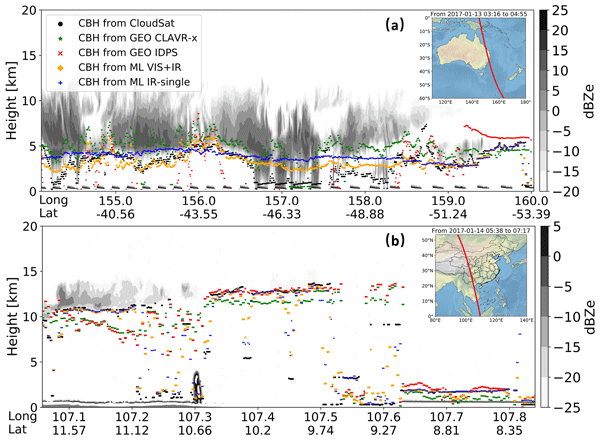
Our study primarily addresses the feasibility of employing advanced machine learning and physics-based algorithms to capture the diurnal variations in cloud base height parameters using geostationary meteorological satellite remote sensing. The results indicated that the caution is warranted when utilizing cloud base property products trained on satellite and laser radar data for climate research. Fixed training samples might obscure the pronounced diurnal variations in cloud base heights.
Yu Zheng, Huizheng Che, Yupeng Wang, Xiangao Xia, Xiuqing Hu, Xiaochun Zhang, Jun Zhu, Jibiao Zhu, Hujia Zhao, Lei Li, Ke Gui, and Xiaoye Zhang
Atmos. Meas. Tech., 15, 2139–2158, https://doi.org/10.5194/amt-15-2139-2022, https://doi.org/10.5194/amt-15-2139-2022, 2022
Short summary
Short summary
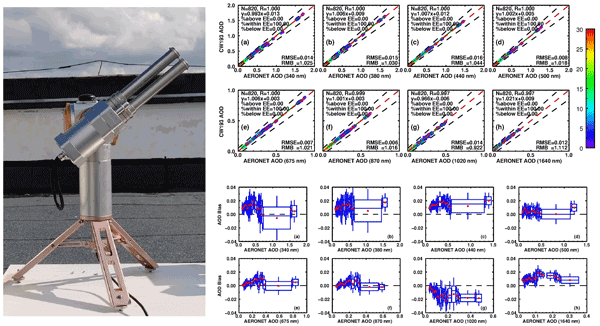
Ground-based observations of aerosols and aerosol data verification is important for satellite and climate model modification. Here we present an evaluation of aerosol microphysical, optical and radiative properties measured using a multiwavelength photometer with a highly integrated design and smart control performance. The validation of this product is discussed in detail using AERONET as a reference. This work contributes to reducing AOD uncertainties in China and combating climate change.
Yungang Wang, Liping Fu, Fang Jiang, Xiuqing Hu, Chengbao Liu, Xiaoxin Zhang, Jiawei Li, Zhipeng Ren, Fei He, Lingfeng Sun, Ling Sun, Zhongdong Yang, Peng Zhang, Jingsong Wang, and Tian Mao
Atmos. Meas. Tech., 15, 1577–1586, https://doi.org/10.5194/amt-15-1577-2022, https://doi.org/10.5194/amt-15-1577-2022, 2022
Short summary
Short summary
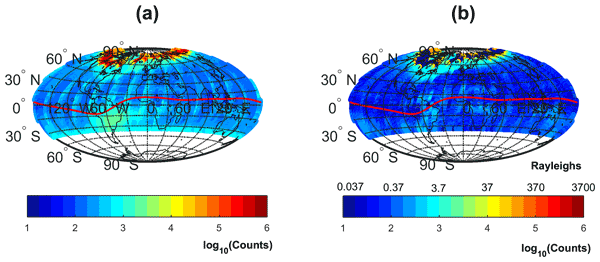
Far-ultraviolet (FUV) airglow radiation is particularly well suited for space-based remote sensing. The Ionospheric Photometer (IPM) instrument carried aboard the Feng Yun 3-D satellite measures the spectral radiance of the Earth FUV airglow. IPM is a tiny, highly sensitive, and robust remote sensing instrument. Initial results demonstrate that the performance of IPM meets the designed requirement and therefore can be used to study the thermosphere and ionosphere in the future.
Wengang Zhang, Ling Wang, Yang Yu, Guirong Xu, Xiuqing Hu, Zhikang Fu, and Chunguang Cui
Atmos. Meas. Tech., 14, 7821–7834, https://doi.org/10.5194/amt-14-7821-2021, https://doi.org/10.5194/amt-14-7821-2021, 2021
Short summary
Short summary
Global precipitable water vapor (PWV) derived from MERSI-II (Medium Resolution Spectral Imager) is compared with PWV from the Integrated Global Radiosonde Archive (IGRA). Our results show a good agreement between PWV from MERSI-II and IGRA and that MERSI-II PWV is slightly underestimated on the whole, especially in summer. The bias between MERSI-II and IGRA grows with a larger spatial distance between the footprint of the satellite and the IGRA station, as well as increasing PWV.
Cited articles
Anthes, R. A., Bernhardt, P. A., Chen, Y., Cucurull, L., Dymond, K. F., Ector, D., Healy, S. B., Ho, S.-P., Hunt, D. C., Kuo, Y.-H., Liu, H., Manning, K., McCormick, C., Meehan, T. K., Randel, W. J., Rocken, C., Schreiner, W. S., Sokolovskiy, S. V., Syndergaard, S., Thompson, D. C., Trenberth, K. E., Wee, T.-K., Yen, N. L., and Zeng, Z.: The COSMIC/FORMOSAT-3 Mission: Early Results, B. Am. Meteorol. Soc., 89, 313–334, https://doi.org/10.1175/BAMS-89-3-313, 2008.
Anthes, R. A., Marquardt, C., Ruston, B., and Shao, H.: Radio Occultation Modeling Experiment (ROMEX): Determining the Impact of Radio Occultation Observations on Numerical Weather Prediction, B. Am. Meteorol. Soc., 105, E1552–E1568, https://doi.org/10.1175/BAMS-D-23-0326.1, 2024.
Bai, W. H., Sun, Y. Q., Du, Q. F., Yang, G. L., Yang, Z. D., Zhang, P., Bi, Y. M., Wang, X. Y., Cheng, C., and Han, Y.: An introduction to the FY3 GNOS instrument and mountain-top tests, Atmos. Meas. Tech., 7, 1817–1823, https://doi.org/10.5194/amt-7-1817-2014, 2014.
Beyerle, G., Schmidt, T., Michalak, G., Heise, S., Wickert, J., and Reigber, C.: GPS radio occultation with GRACE: Atmospheric profiling utilizing the zero difference technique, Geophys. Res. Lett., 32, https://doi.org/10.1029/2005GL023109, 2005.
Bonnedal, M., Christensen, J., Carlström, A., and Berg, A.: Metop-GRAS in-orbit instrument performance, GPS Solut., 14, 109–120, https://doi.org/10.1007/s10291-009-0142-3, 2010.
Chang, H., Lee, J., Yoon, H., Morton, Y. J., and Saltman, A.: Performance assessment of radio occultation data from GeoOptics by comparing with COSMIC data, Earth Planets Space, 74, 108, https://doi.org/10.1186/s40623-022-01667-6, 2022.
Donlon, C. J., Cullen, R., Giulicchi, L., Vuilleumier, P., Francis, C. R., Kuschnerus, M., Simpson, W., Bouridah, A., Caleno, M., Bertoni, R., Rancaño, J., Pourier, E., Hyslop, A., Mulcahy, J., Knockaert, R., Hunter, C., Webb, A., Fornari, M., Vaze, P., Brown, S., Willis, J., Desai, S., Desjonqueres, J.-D., Scharroo, R., Martin-Puig, C., Leuliette, E., Egido, A., Smith, W. H. F., Bonnefond, P., Le Gac, S., Picot, N., and Tavernier, G.: The Copernicus Sentinel-6 mission: Enhanced continuity of satellite sea level measurements from space, Remote Sens. Environ., 258, 112395, https://doi.org/10.1016/j.rse.2021.112395, 2021.
Du, Q., Liu, C., Li, W., Liu, C., Li, F., Qiao, H., Sun, Y., Bai, W., Wang, X., Wang, D., Meng, X., Cai, Y., Xia, J., and Wu, C.: The On-Orbit Performance of FY-3D GNOS, in: IGARSS 2019 – 2019 IEEE International Geoscience and Remote Sensing Symposium, 7669–7671, https://doi.org/10.1109/IGARSS.2019.8898370, 2019.
Faller, N., Weber, M., and GmbH, I.: TerraSAR-X and TanDEM-X: Revolution in spaceborne radar, in: 2007 IEEE International Geoscience and Remote Sensing Symposium, 23–28 July 2007, 4924–4928, https://doi.org/10.1109/IGARSS.2007.4423966, 2007.
Fu, N. and Li, F.: An Introduction of GNSS Reflectometer Remote Sensing Mission From Yunyao Aerospace Technology Co., Ltd, in: 2021 IEEE Specialist Meeting on Reflectometry using GNSS and other Signals of Opportunity (GNSS + R), 14–17 September 2021, 77–81, https://doi.org/10.1109/GNSSR53802.2021.9617716, 2021.
Gleisner, H., Lauritsen, K. B., Nielsen, J. K., and Syndergaard, S.: Evaluation of the 15-year ROM SAF monthly mean GPS radio occultation climate data record, Atmos. Meas. Tech., 13, 3081–3098, https://doi.org/10.5194/amt-13-3081-2020, 2020.
Ho, S., Hunt, D., Steiner, A., Mannucci, A., Kirchengast, G., Gleisner, H., Heise, S., von Engeln, A., Marquardt, C., Sokolovskiy, S., Schreiner, W., Scherllin-Pirscher, B., Ao, C., Wickert, J., Syndergaard, S., Lauritsen, K., Leroy, S., Kursinski, E., Kuo, Y., Foelsche, U., Schmidt, T., and Gorbunov, M.: Reproducibility of GPS radio occultation data for climate monitoring: Profile-to-profile inter-comparison of CHAMP climate records 2002 to 2008 from six data centers, J. Geophys. Res.-Atmos., 117, https://doi.org/10.1029/2012jd017665, 2012.
Hocke, K., Igarashi, K., and Pavelyev, A.: Irregularities of the topside ionosphere observed by GPS/MET radio occultation, Radio Sci., 37, 13-1–13-11, https://doi.org/10.1029/2001RS002599, 2002.
Kornfeld, R., Arnold, B., Gross, M., Dahya, N., Klipstein, W., Gath, P., and Bettadpur, S.: GRACE-FO: The Gravity Recovery and Climate Experiment Follow-On Mission, J. Spacecraft Rockets, 56, 931–951, https://doi.org/10.2514/1.A34326, 2019.
Kursinski, E. R., Hajj, G. A., Schofield, J. T., Linfield, R. P., and Hardy, K. R.: Observing Earth's atmosphere with radio occultation measurements using the Global Positioning System, J. Geophys. Res.-Atmos., 102, 23429–23465, https://doi.org/10.1029/97JD01569, 1997.
Li, J., Lu, C., Zheng, Y., Ban, W., and Zhang, X.: Quality Assessment and Assimilation of Tianmu-1 GNSS Radio Occultation Refractivity Observations: A Preliminary Study, IEEE T. Geosci. Remote, 63, 1–17, https://doi.org/10.1109/TGRS.2025.3615559, 2025.
Lu, W. and Chen, R.: Plotting scripts for: Global Sampling Characteristics and Coverage Complementarity of 12 GNSS Radio Occultation Constellations (Version 1.0.0), Zenodo [software], https://doi.org/10.5281/zenodo.21866427, 2027.
Masters, D., Duly, T., Esterhuizen, S., Irisov, V. G., Jales, P., Nguyen, V., Nogués-Correig, O., Tan, L., Yuasa, T., and Angling, M.: Status and accomplishments of the Spire Earth observing nanosatellite constellation, SPIE Remote Sensing, SPIE, https://doi.org/10.1117/12.2574110, 2020.
Miao, S., Sun, K., Hu, X., Chen, Y., Lv, F., Wang, J., Li, W., Wang, L., Wei, J., and Li, W.: On-Orbit Radiometric Performance Assessment of FY-3F MERSI-III: A Cross-Platform Intercomparison Approach Based on Global Pseudo-Invariant Pixels, IEEE J. Sel. Top. Appl., 18, 21514–21531, https://doi.org/10.1109/jstars.2025.3597457, 2025.
Padullés, R., Cardellach, E., Paz, A., Oliveras, S., Hunt, D. C., Sokolovskiy, S., Weiss, J.-P., Wang, K.-N., Turk, F. J., Ao, C. O., and de la Torre Juárez, M.: The PAZ polarimetric radio occultation research dataset for scientific applications , Earth Syst. Sci. Data, 16, 5643–5663, https://doi.org/10.5194/essd-16-5643-2024, 2024.
Paolella, S., Von Engeln, A., Padovan, S., Notarpietro, R., Marquardt, C., Sancho, F., Rivas Boscan, V., Morew, N., and Martin Alemany, F.: Assessment of operational non-time-critical Sentinel-6A Michael Freilich radio occultation data: insights into tropospheric GNSS signal cut-off strategies and processor improvements, Atmos. Meas. Tech., 18, 2825–2846, https://doi.org/10.5194/amt-18-2825-2025, 2025.
Righetti, P. L., de Juana Gamo, J. M., and Sancho, F.: Metop-C deployment and start of three-satellite operations, Aeronaut. J., 124, 902–916, https://doi.org/10.1017/aer.2020.10, 2020.
Rocken, C., Anthes, R., Exner, M., Hunt, D., Sokolovskiy, S., Ware, R., Gorbunov, M., Schreiner, W., Feng, D., Herman, B., Kuo, Y.-H., and Zou, X.: Analysis and validation of GPS/MET data in the neutral atmosphere, J. Geophys. Res.-Atmos., 102, 29849–29866, https://doi.org/10.1029/97JD02400, 1997.
Roh, K.-M. and Hwang, Y.: Performance Comparison of KOMPSAT-5 Precision Orbit Determination with GRACE, Int. J. Aerospace Eng., 2020, 7358286, https://doi.org/10.1155/2020/7358286, 2020.
Schmidt, D., Schreiner, P., Iijima, B., and Ao, C.: GRACE-FO radio occultation data processing – First result, https://doi.org/10.5194/gstm2020-76, 2020.
Schmidt, T., Schreiner, P., Wickert, J., Iijima, B. A., Ao, C. O., Tien, J. Y., and Meehan, T. K.: GRACE-FO Radio Occultation Data Processing, GRACE/GRACE-FO Science Team Meeting 2022, Potsdam, Germany, 18–20 October 2022, https://doi.org/10.5194/gstm2022-101, 2022.
Schreiner, W. S., Weiss, J. P., Anthes, R. A., Braun, J., Chu, V., Fong, J., Hunt, D., Kuo, Y.-H., Meehan, T., Serafino, W., Sjoberg, J., Sokolovskiy, S., Talaat, E., Wee, T. K., and Zeng, Z.: COSMIC-2 Radio Occultation Constellation: First Results, Geophys. Res. Lett., 47, e2019GL086841, https://doi.org/10.1029/2019GL086841, 2020.
Wickert, J., Reigber, C., Beyerle, G., König, R., Marquardt, C., Schmidt, T., Grunwaldt, L., Galas, R., Meehan, T. K., Melbourne, W. G., and Hocke, K.: Atmosphere sounding by GPS radio occultation: First results from CHAMP, Geophys. Res. Lett., 28, 3263–3266, https://doi.org/10.1029/2001GL013117, 2001.
Wu, D. L.: GNSS Signal Jamming as Observed From Radio Occultation, IEEE J. Sel. Top. Appl., 17, 8642–8645, https://doi.org/10.1109/JSTARS.2024.3385738, 2024.
Xu, X., Han, W., Wang, J., Gao, Z., Li, F., Cheng, Y., and Fu, N.: Quality assessment of YUNYAO radio occultation data in the neutral atmosphere, Atmos. Meas. Tech., 18, 1339–1353, https://doi.org/10.5194/amt-18-1339-2025, 2025.
Zhang, P., Hu, X., Lu, Q., Zhu, A., Lin, M., Sun, L., Chen, L., and Xu, N.: FY-3E: The First Operational Meteorological Satellite Mission in an Early Morning Orbit, Adv. Atmos. Sci., 39, 1–8, https://doi.org/10.1007/s00376-021-1304-7, 2022.
Zhang, P., Gu, S., Chen, L., Shang, J., Lin, M., Zhu, A., Yin, H., Wu, Q., Shou, Y., Sun, F., Xu, H., Yang, G., Wang, H., Li, L., Zhang, H., Chen, S., and Lu, N.: FY-3G Satellite Instruments and Precipitation Products: First Report of China's Fengyun Rainfall Mission In-Orbit, J. Remote Sens., 3, 0097, https://doi.org/10.34133/remotesensing.0097, 2023.
Zhran, M., Mousa, A., Wang, Y., Hasher, F. F. B., and Jin, S.: Assessment of Commercial GNSS Radio Occultation Performance from PlanetiQ Mission, Remote Sens., 16, 3339, https://doi.org/10.3390/rs16173339, 2024.
Short summary
Global satellite navigation system occultation data is one of the important sources for weather forecasting. As more and more occultation missions are launched, it's becoming really important to understand how these constellations work together. This study found that combining data from 12 constellations greatly increases time and space coverage, but some missions are still essential for observing tropical regions. These findings provide guidance for future satellite planning.
Global satellite navigation system occultation data is one of the important sources for weather...
Altmetrics
Final-revised paper
Preprint