
Articles | Volume 19, issue 21
https://doi.org/10.5194/amt-19-7017-2026
© Author(s) 2026. This work is distributed under
the Creative Commons Attribution 4.0 License.
the Creative Commons Attribution 4.0 License.
https://doi.org/10.5194/amt-19-7017-2026
© Author(s) 2026. This work is distributed under
the Creative Commons Attribution 4.0 License.
the Creative Commons Attribution 4.0 License.
Research article
| 
05 Nov 2026
Research article |
| 05 Nov 2026
| 05 Nov 2026
UAV-based method for measuring CO2 emissions in forest ecosystems
Haijiong Sun
College of Environmental Sciences and Engineering, Peking University, Beijing 100871, China

College of Environmental Sciences and Engineering, Peking University, Beijing 100871, China
Yifei Wang
Inner Mongolia Institute of Metrology and Testing, Hohhot 010060, China
Yanrong Yang
Key Lab. for Restoration and Reconstruction of Degraded Ecosystems in Northwestern China of Ministry of Education, School of Ecology and Environment, Ningxia University, Yinchuan 750021, China
Tianran Han
China Electric Power Research Institute, Beijing 100192, China
Keyu Chen
College of Environmental Sciences and Engineering, Peking University, Beijing 100871, China
Chang Liu
College of Environmental Sciences and Engineering, Peking University, Beijing 100871, China
Jietao Zhou
College of Environmental Sciences and Engineering, Peking University, Beijing 100871, China
Zeqing Ma
Qianyanzhou Ecological Research Station, Key Laboratory of Ecosystem Network Observation and Modeling, Institute of Geographic Sciences and Natural Resources Research, Chinese Academy of Sciences, Beijing 100101, China
Fengting Yang
Qianyanzhou Ecological Research Station, Key Laboratory of Ecosystem Network Observation and Modeling, Institute of Geographic Sciences and Natural Resources Research, Chinese Academy of Sciences, Beijing 100101, China
Junfei Guo
Beijing Wisdominc Technology Co., Ltd, Beijing 100070
Xiangyu Gao
Beijing Wisdominc Technology Co., Ltd, Beijing 100070
Related authors
Keyu Chen, Yanrong Yang, Yufei Huang, Yuheng Zhang, Jietao Zhou, Haijiong Sun, Chang Liu, Ling Kang, Keding Lu, Zhijun Wu, and Shao-Meng Li
EGUsphere, https://doi.org/10.5194/egusphere-2026-2441, https://doi.org/10.5194/egusphere-2026-2441, 2026
Short summary
Short summary
Vehicle-mounted wind sensors are useful for mobile atmospheric measurements, but the vehicle itself disturbs the measured wind. We developed a correction method based on airflow simulations and vehicle motion data. Tests against ground observations showed that the method improves wind speed, wind direction, and vertical wind measurements, supporting more reliable mobile observations.
Yanrong Yang, Yuheng Zhang, Tianran Han, Conghui Xie, Yayong Liu, Yufei Huang, Jietao Zhou, Haijiong Sun, Delong Zhao, Kui Zhang, and Shao-Meng Li
Atmos. Meas. Tech., 18, 3035–3050, https://doi.org/10.5194/amt-18-3035-2025, https://doi.org/10.5194/amt-18-3035-2025, 2025
Short summary
Short summary
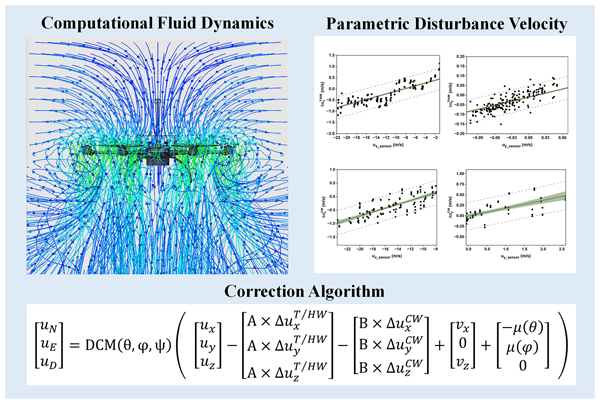
A wind speed correction algorithm for multirotor unoccupied aerial vehicles (UAVs) was developed using computational fluid dynamics (CFD). An integrated compensation algorithm was designed to account for the effects of UAV motion, attitude changes, and rotor-induced airflow on wind speed measurements. Comparative experimental results confirmed the effectiveness of the proposed compensation algorithm.
Yanrong Yang, Yuheng Zhang, Tianran Han, Conghui Xie, Yayong Liu, Yufei Huang, Jietao Zhou, Haijiong Sun, Delong Zhao, Kui Zhang, and Shao-Meng Li
Atmos. Meas. Tech. Discuss., https://doi.org/10.5194/amt-2023-248, https://doi.org/10.5194/amt-2023-248, 2024
Preprint withdrawn
Short summary
Short summary
The paper introduces a correction algorithm for accurate wind speed measurement in a multirotor unmanned aerial vehicle (UAV) with a sonic anemometer. Addressing propeller rotation, UAV movement, and attitude changes, it integrates computational fluid dynamics simulation and regression analysis. This comprehensive algorithm corrects rotor disturbances, motion, and attitude variations. Validation against meteorological tower data demonstrates its enhanced reliability in wind speed measurements.

Suding Yang, Xin Li, Limin Zeng, Xuena Yu, Ying Liu, Sihua Lu, Xiaofeng Huang, Dongmei Zhang, Haibin Xu, Shuchen Lin, Hefan Liu, Miao Feng, Danlin Song, Qinwen Tan, Jinhui Cui, Lifan Wang, Ying Chen, Wenjie Wang, Haijiong Sun, Mengdi Song, Liuwei Kong, Yi Liu, Linhui Wei, Xianwu Zhu, and Yuanhang Zhang
Atmos. Meas. Tech., 16, 501–512, https://doi.org/10.5194/amt-16-501-2023, https://doi.org/10.5194/amt-16-501-2023, 2023
Short summary
Short summary
Vertical observation of volatile organic compounds (VOCs) is essential to study the spatial distribution and evolution patterns of VOCs in the planetary boundary layer (PBL). This paper describes multi-channel whole-air sampling equipment onboard an unmanned aerial vehicle (UAV) for near-continuous VOC vertical observation. Vertical profiles of VOCs and trace gases during the evolution of the PBL in south-western China have been successfully obtained by deploying the newly developed UAV system.
Keyu Chen, Yanrong Yang, Yufei Huang, Yuheng Zhang, Jietao Zhou, Haijiong Sun, Chang Liu, Ling Kang, Keding Lu, Zhijun Wu, and Shao-Meng Li
EGUsphere, https://doi.org/10.5194/egusphere-2026-2441, https://doi.org/10.5194/egusphere-2026-2441, 2026
Short summary
Short summary
Vehicle-mounted wind sensors are useful for mobile atmospheric measurements, but the vehicle itself disturbs the measured wind. We developed a correction method based on airflow simulations and vehicle motion data. Tests against ground observations showed that the method improves wind speed, wind direction, and vertical wind measurements, supporting more reliable mobile observations.
Yanrong Yang, Yuheng Zhang, Tianran Han, Conghui Xie, Yayong Liu, Yufei Huang, Jietao Zhou, Haijiong Sun, Delong Zhao, Kui Zhang, and Shao-Meng Li
Atmos. Meas. Tech., 18, 3035–3050, https://doi.org/10.5194/amt-18-3035-2025, https://doi.org/10.5194/amt-18-3035-2025, 2025
Short summary
Short summary
A wind speed correction algorithm for multirotor unoccupied aerial vehicles (UAVs) was developed using computational fluid dynamics (CFD). An integrated compensation algorithm was designed to account for the effects of UAV motion, attitude changes, and rotor-induced airflow on wind speed measurements. Comparative experimental results confirmed the effectiveness of the proposed compensation algorithm.

Tianran Han, Conghui Xie, Yayong Liu, Yanrong Yang, Yuheng Zhang, Yufei Huang, Xiangyu Gao, Xiaohua Zhang, Fangmin Bao, and Shao-Meng Li
Atmos. Meas. Tech., 17, 677–691, https://doi.org/10.5194/amt-17-677-2024, https://doi.org/10.5194/amt-17-677-2024, 2024
Short summary
Short summary
This study reported an integrated UAV measurement platform for GHG monitoring and its application for emission quantification from a coking plant. The key element of this system is a newly designed air sampler, consisting of a 150 m long tube with remote-controlled time stamping. When comparing the top-down results to those derived from the bottom-up inventory method, the present findings indicate that the use of IPCC emission factors for emission calculations can lead to overestimation.
Yanrong Yang, Yuheng Zhang, Tianran Han, Conghui Xie, Yayong Liu, Yufei Huang, Jietao Zhou, Haijiong Sun, Delong Zhao, Kui Zhang, and Shao-Meng Li
Atmos. Meas. Tech. Discuss., https://doi.org/10.5194/amt-2023-248, https://doi.org/10.5194/amt-2023-248, 2024
Preprint withdrawn
Short summary
Short summary
The paper introduces a correction algorithm for accurate wind speed measurement in a multirotor unmanned aerial vehicle (UAV) with a sonic anemometer. Addressing propeller rotation, UAV movement, and attitude changes, it integrates computational fluid dynamics simulation and regression analysis. This comprehensive algorithm corrects rotor disturbances, motion, and attitude variations. Validation against meteorological tower data demonstrates its enhanced reliability in wind speed measurements.
Taomou Zong, Zhijun Wu, Junrui Wang, Kai Bi, Wenxu Fang, Yanrong Yang, Xuena Yu, Zhier Bao, Xiangxinyue Meng, Yuheng Zhang, Song Guo, Yang Chen, Chunshan Liu, Yue Zhang, Shao-Meng Li, and Min Hu
Atmos. Meas. Tech., 16, 3679–3692, https://doi.org/10.5194/amt-16-3679-2023, https://doi.org/10.5194/amt-16-3679-2023, 2023
Short summary
Short summary
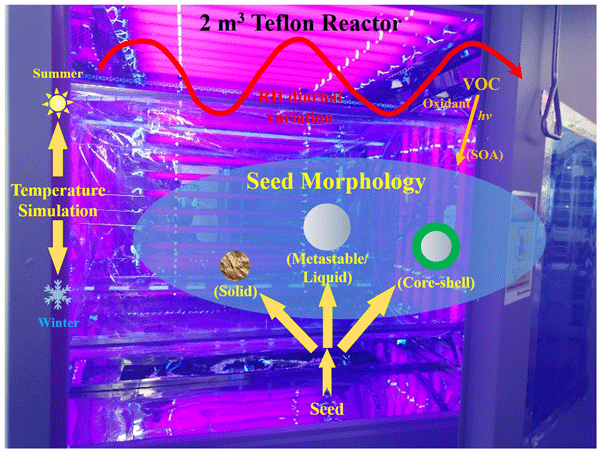
This study developed and characterized an indoor chamber system (AIR) to simulate atmospheric multiphase chemistry processes. The AIR chamber can accurately control temperature and relative humidity (RH) over a broad range and simulate diurnal variation of ambient atmospheric RH. The aerosol generation unit can generate organic-coating seed particles with different phase states. The AIR chamber demonstrates high-quality performance in simulating secondary aerosol formation.
Suding Yang, Xin Li, Limin Zeng, Xuena Yu, Ying Liu, Sihua Lu, Xiaofeng Huang, Dongmei Zhang, Haibin Xu, Shuchen Lin, Hefan Liu, Miao Feng, Danlin Song, Qinwen Tan, Jinhui Cui, Lifan Wang, Ying Chen, Wenjie Wang, Haijiong Sun, Mengdi Song, Liuwei Kong, Yi Liu, Linhui Wei, Xianwu Zhu, and Yuanhang Zhang
Atmos. Meas. Tech., 16, 501–512, https://doi.org/10.5194/amt-16-501-2023, https://doi.org/10.5194/amt-16-501-2023, 2023
Short summary
Short summary
Vertical observation of volatile organic compounds (VOCs) is essential to study the spatial distribution and evolution patterns of VOCs in the planetary boundary layer (PBL). This paper describes multi-channel whole-air sampling equipment onboard an unmanned aerial vehicle (UAV) for near-continuous VOC vertical observation. Vertical profiles of VOCs and trace gases during the evolution of the PBL in south-western China have been successfully obtained by deploying the newly developed UAV system.
Broghan M. Erland, Cristen Adams, Andrea Darlington, Mackenzie L. Smith, Andrew K. Thorpe, Gregory R. Wentworth, Steve Conley, John Liggio, Shao-Meng Li, Charles E. Miller, and John A. Gamon
Atmos. Meas. Tech., 15, 5841–5859, https://doi.org/10.5194/amt-15-5841-2022, https://doi.org/10.5194/amt-15-5841-2022, 2022
Short summary
Short summary
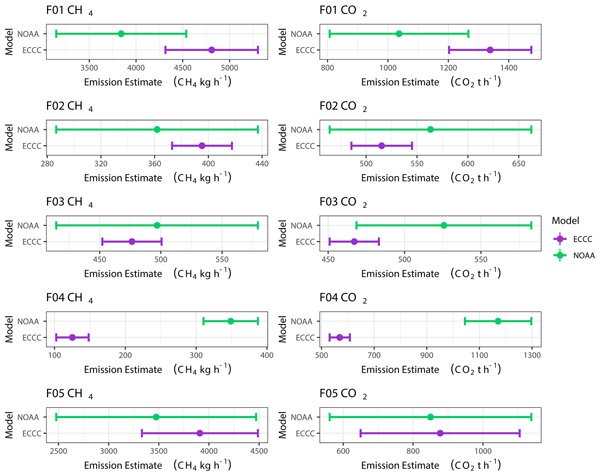
Accurately estimating greenhouse gas (GHG) emissions is essential to reaching net-zero goals to combat the climate crisis. Airborne box-flights are ideal for assessing regional GHG emissions, as they can attain small error. We compare two box-flight algorithms and found they produce similar results, but daily variability must be considered when deriving emissions inventories. Increasing the consistency and agreement between airborne methods moves us closer to achieving more accurate estimates.
Katherine L. Hayden, Shao-Meng Li, John Liggio, Michael J. Wheeler, Jeremy J. B. Wentzell, Amy Leithead, Peter Brickell, Richard L. Mittermeier, Zachary Oldham, Cristian M. Mihele, Ralf M. Staebler, Samar G. Moussa, Andrea Darlington, Mengistu Wolde, Daniel Thompson, Jack Chen, Debora Griffin, Ellen Eckert, Jenna C. Ditto, Megan He, and Drew R. Gentner
Atmos. Chem. Phys., 22, 12493–12523, https://doi.org/10.5194/acp-22-12493-2022, https://doi.org/10.5194/acp-22-12493-2022, 2022
Short summary
Short summary
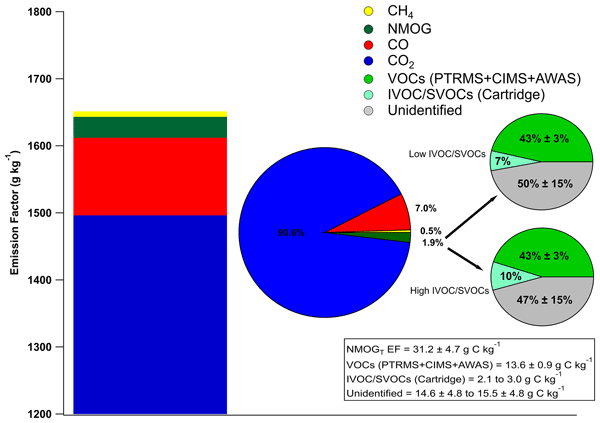
In this study, airborne measurements provided the most detailed characterization, to date, of boreal forest wildfire emissions. Measurements showed a large diversity of air pollutants expanding the volatility range typically reported. A large portion of organic species was unidentified, likely comprised of complex organic compounds. Aircraft-derived emissions improve wildfire chemical speciation and can support reliable model predictions of pollution from boreal forest wildfires.
Chong Han, Hongxing Yang, Kun Li, Patrick Lee, John Liggio, Amy Leithead, and Shao-Meng Li
Atmos. Chem. Phys., 22, 10827–10839, https://doi.org/10.5194/acp-22-10827-2022, https://doi.org/10.5194/acp-22-10827-2022, 2022
Short summary
Short summary
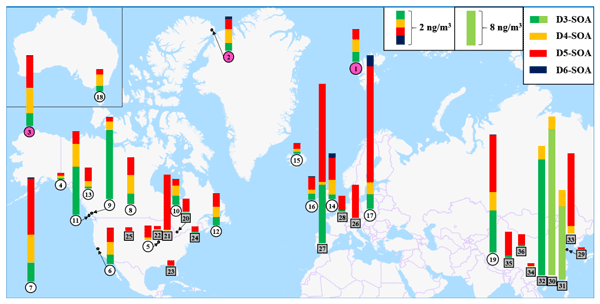
We presented yields and compositions of Si-containing SOAs generated from the reaction of cVMSs (D3–D6) with OH radicals. NOx played a negative role in cVMS SOA formation, while ammonium sulfate seeds enhanced D3–D5 SOA yields at short photochemical ages under high-NOx conditions. The aerosol mass spectra confirmed that the components of cVMS SOAs significantly relied on OH exposure. A global cVMS-derived SOA source strength was estimated in order to understand SOA formation potentials of cVMSs.
Cited articles
Aubinet, M., Heinesch, B., and Longdoz, B.: Estimation of the carbon sequestration by a heterogeneous forest: night flux corrections, heterogeneity of the site and inter-annual variability, Global Change Biol., 8, 1053–1071, https://doi.org/10.1046/j.1365-2486.2002.00529.x, 2002.
Aubinet, M., Vesala, T., and Papale, D. (Eds.): Eddy Covariance: A Practical Guide to Measurement and Data Analysis, Springer, Dordrecht, https://doi.org/10.1007/978-94-007-2351-1, 2012.
Baldocchi, D.: Breathing of the terrestrial biosphere: lessons learned from a global network of carbon dioxide flux measurement systems, Aus. J. Bot., 56, 1–26, https://doi.org/10.1071/bt07151, 2008.
Baldocchi, D., Falge, E., Gu, L. H., Olson, R., Hollinger, D., Running, S., Anthoni, P., Bernhofer, C., Davis, K., Evans, R., Fuentes, J., Goldstein, A., Katul, G., Law, B., Lee, X. H., Malhi, Y., Meyers, T., Munger, W., Oechel, W., U, K. T. P., Pilegaard, K., Schmid, H. P., Valentini, R., Verma, S., Vesala, T., Wilson, K., and Wofsy, S.: FLUXNET: A new tool to study the temporal and spatial variability of ecosystem-scale carbon dioxide, water vapor, and energy flux densities, B. Am. Meteorol. Soc., 82, 2415–2434, https://doi.org/10.1175/1520-0477(2001)082<2415:Fantts>2.3.Co;2, 2001.
Baldocchi, D. D.: Assessing the eddy covariance technique for evaluating carbon dioxide exchange rates of ecosystems: past, present and future, Global Change Biol., 9, 479–492, https://doi.org/10.1046/j.1365-2486.2003.00629.x, 2003.
Bolek, A., Heimann, M., and Göckede, M.: UAV-based in situ measurements of CO2 and CH4 fluxes over complex natural ecosystems, Atmos. Meas. Tech., 17, 5619–5636, https://doi.org/10.5194/amt-17-5619-2024, 2024.
Bonan, G. B.: Forests and climate change: Forcings, feedbacks, and the climate benefits of forests, Science, 320, 1444–1449, https://doi.org/10.1126/science.1155121, 2008.
Budyko, M. I., Yefimova, N. A., Aubenok, L. I., and Strokina, L. A.: The heat balance of the earth's surface, Sov. Geogr., 5, 3–16, https://doi.org/10.1080/00385417.1962.10769936, 1962.
Burba, G. G., Schmidt, A., Scott, R. L., Nakai, T., Kathilankal, J. C., Fratini, G., and Hanson, C.: Calculating CO2 and H2O eddy covariance fluxes from an enclosed gas analyzer using an instantaneous mixing ratio approach, Global Change Biol., 18, 385–399, https://doi.org/10.1111/j.1365-2486.2011.02536.x, 2012.
Burman, P. K. D., Bhat, G. S., Tiwari, Y. K., Morrison, R., Rodda, S. R., Mukherjee, S., Dadhwal, V. K., Turner, A. G., Das, P., Agarwal, G., Sarma, D., Mutyala, P., Gogoi, N., Gnanamoorthy, P., Paleri, S., and Desai, D.: Ecosystem-atmosphere exchanges of carbon dioxide, water vapour and energy in India: A synthesis of insights from eddy covariance measurements, Agr. Forest Meteorol., 372, 110730, https://doi.org/10.1016/j.agrformet.2025.110730, 2025.
Cambaliza, M. O. L., Shepson, P. B., Caulton, D. R., Stirm, B., Samarov, D., Gurney, K. R., Turnbull, J., Davis, K. J., Possolo, A., Karion, A., Sweeney, C., Moser, B., Hendricks, A., Lauvaux, T., Mays, K., Whetstone, J., Huang, J., Razlivanov, I., Miles, N. L., and Richardson, S. J.: Assessment of uncertainties of an aircraft-based mass balance approach for quantifying urban greenhouse gas emissions, Atmos. Chem. Phys., 14, 9029–9050, https://doi.org/10.5194/acp-14-9029-2014, 2014.
Chevallier, F., Palmer, P. I., Feng, L., Boesch, H., O'Dell, C. W., and Bousquet, P.: Toward robust and consistent regional CO2 flux estimates from in situ and spaceborne measurements of atmospheric CO2, Geophys. Res. Lett., 41, 1065–1070, https://doi.org/10.1002/2013gl058772, 2014.
Crisp, D., Pollock, H. R., Rosenberg, R., Chapsky, L., Lee, R. A. M., Oyafuso, F. A., Frankenberg, C., O'Dell, C. W., Bruegge, C. J., Doran, G. B., Eldering, A., Fisher, B. M., Fu, D., Gunson, M. R., Mandrake, L., Osterman, G. B., Schwandner, F. M., Sun, K., Taylor, T. E., Wennberg, P. O., and Wunch, D.: The on-orbit performance of the Orbiting Carbon Observatory-2 (OCO-2) instrument and its radiometrically calibrated products, Atmos. Meas. Tech., 10, 59–81, https://doi.org/10.5194/amt-10-59-2017, 2017.
Fang, J., Fang, J., Chen, B., Zhang, H., Dilawar, A., Guo, M., and Liu, S.: Assessing Spatial Representativeness of Global Flux Tower Eddy-Covariance Measurements Using Data from FLUXNET2015, Sci. Data, 11, 569, https://doi.org/10.1038/s41597-024-03291-3, 2024.
Feigenwinter, C., Bernhofer, C., and Vogt, R.: The influence of advection on the short term CO2-budget in and above a forest canopy, Bound.-Lay. Meteorol.y, 113, 201–224, https://doi.org/10.1023/B:BOUN.0000039372.86053.ff, 2004.
Finnigan, J. J., Clement, R., Malhi, Y., Leuning, R., and Cleugh, H. A.: A re-evaluation of long-term flux measurement techniques – Part I: Averaging and coordinate rotation, Bound.-Lay. Meteorol., 107, 1–48, https://doi.org/10.1023/a:1021554900225, 2003.
Foken, T.: The energy balance closure problem: An overview, Ecol. Appl., 18, 1351–1367, https://doi.org/10.1890/06-0922.1, 2008.
Gioli, B., Miglietta, F., De Martino, B., Hutjes, R. W. A., Dolman, H. A. J., Lindroth, A., Schumacher, M., Sanz, M. J., Manca, G., Peressotti, A., and Dumas, E. J.: Comparison between tower and aircraft-based eddy covariance fluxes in five European regions, Agr. Forest Meteorol., 127, 1–16, https://doi.org/10.1016/j.agrformet.2004.08.004, 2004.
Gordon, M., Li, S.-M., Staebler, R., Darlington, A., Hayden, K., O'Brien, J., and Wolde, M.: Determining air pollutant emission rates based on mass balance using airborne measurement data over the Alberta oil sands operations, Atmos. Meas. Tech., 8, 3745–3765, https://doi.org/10.5194/amt-8-3745-2015, 2015.
Goulden, M. L., Munger, J. W., Fan, S. M., Daube, B. C., and Wofsy, S. C.: Measurements of carbon sequestration by long-term eddy covariance: Methods and a critical evaluation of accuracy, Global Change Biol., 2, 169–182, https://doi.org/10.1111/j.1365-2486.1996.tb00070.x, 1996.
Han, T., Xie, C., Liu, Y., Yang, Y., Zhang, Y., Huang, Y., Gao, X., Zhang, X., Bao, F., and Li, S.-M.: Development of a continuous UAV-mounted air sampler and application to the quantification of CO2 and CH4 emissions from a major coking plant, Atmos. Meas. Tech., 17, 677–691, https://doi.org/10.5194/amt-17-677-2024, 2024.
Huang, M., Ji, J. J., Li, K. R., Liu, Y. F., Yang, F. T., and Tao, B.: The ecosystem carbon accumulation after conversion of grasslands to pine plantations in subtropical red soil of south China, Tellus B, 59, 439–448, https://doi.org/10.1111/j.1600-0889.2007.00280.x, 2007.
IPCC: Climate Change 2021: The Physical Science Basis., Contribution of Working Group I to the Sixth Assessment Report of the IPCC, Cambridge University Press, https://doi.org/10.1017/9781009157896, 2021.
Jacob, D. J., Turner, A. J., Maasakkers, J. D., Sheng, J., Sun, K., Liu, X., Chance, K., Aben, I., McKeever, J., and Frankenberg, C.: Satellite observations of atmospheric methane and their value for quantifying methane emissions, Atmos. Chem. Phys., 16, 14371–14396, https://doi.org/10.5194/acp-16-14371-2016, 2016.
Jung, M., Schwalm, C., Migliavacca, M., Walther, S., Camps-Valls, G., Koirala, S., Anthoni, P., Besnard, S., Bodesheim, P., Carvalhais, N., Chevallier, F., Gans, F., Goll, D. S., Haverd, V., Köhler, P., Ichii, K., Jain, A. K., Liu, J., Lombardozzi, D., Nabel, J. E. M. S., Nelson, J. A., O'Sullivan, M., Pallandt, M., Papale, D., Peters, W., Pongratz, J., Rödenbeck, C., Sitch, S., Tramontana, G., Walker, A., Weber, U., and Reichstein, M.: Scaling carbon fluxes from eddy covariance sites to globe: synthesis and evaluation of the FLUXCOM approach, Biogeosciences, 17, 1343–1365, https://doi.org/10.5194/bg-17-1343-2020, 2020.
Kaimal, J. C. and Finnigan, J. J.: Atmospheric Boundary Layer Flows: Their Structure and Measurement, Oxford University Press, Oxford, https://doi.org/10.1093/oso/9780195062397.001.0001, 1994.
Khan, A., Schaefer, D., Tao, L., Miller, D. J., Sun, K., Zondlo, M. A., Harrison, W. A., Roscoe, B., and Lary, D. J.: Low Power Greenhouse Gas Sensors for Unmanned Aerial Vehicles, Remote Sens., 4, 1355–1368, https://doi.org/10.3390/rs4051355, 2012.
Langelaan, J. W., Alley, N., and Neidhoefer, J.: Wind field estimation for small unmanned aerial vehicles, J. Guid. Control Dynam., 34, 1016–1030, https://doi.org/10.2514/1.52532, 2011.
Lee, Y. H. and Mahrt, L.: Effect of stability on mixing in open canopies, Agr. Forest Meteorol., 135, 169–179, https://doi.org/10.1016/j.agrformet.2005.11.013, 2005.
Leuning, R., Cleugh, H. A., Zegelin, S. J., and Hughes, D.: Carbon and water fluxes over a temperate Eucalyptus forest and a tropical wet/dry savanna in Australia: measurements and comparison with MODIS remote sensing estimates, Agr. Forest Meteorol., 129, 151–173, https://doi.org/10.1016/j.agrformet.2004.12.004, 2005.
Leuning, R., Zegelin, S. J., Jones, K., Keith, H., and Hughes, D.: Measurement of horizontal and vertical advection of CO2 within a forest canopy, Agr. Forest Meteorol., 148, 1777–1797, https://doi.org/10.1016/j.agrformet.2008.06.006, 2008.
Mahrt, L.: Flux sampling errors for aircraft and towers, J. Atmos. Ocean. Technol., 15, 416–429, https://doi.org/10.1175/1520-0426(1998)015<0416:Fsefaa>2.0.Co;2, 1998.
Mahrt, L.: Variability and Maintenance of Turbulence in the Very Stable Boundary Layer, Bound.-Lay. Meteorol., 135, 1–18, https://doi.org/10.1007/s10546-009-9463-6, 2010.
Meredith, L. K., Commane, R., Munger, J. W., Dunn, A., Tang, J., Wofsy, S. C., and Prinn, R. G.: Ecosystem fluxes of hydrogen: a comparison of flux-gradient methods, Atmos. Meas. Tech., 7, 2787–2805, https://doi.org/10.5194/amt-7-2787-2014, 2014.
Metzger, S., Burba, G., Burns, S. P., Blanken, P. D., Li, J., Luo, H., and Zulueta, R. C.: Optimization of an enclosed gas analyzer sampling system for measuring eddy covariance fluxes of H2O and CO2, Atmos. Meas. Tech., 9, 1341–1359, https://doi.org/10.5194/amt-9-1341-2016, 2016.
Monin, A. S. and Obukhov, A. M.: Basic laws of turbulent mixing in the surface layer of the atmosphere, Trudy Geophys. Inst. AN. SSSR, 24, 153–187, 1954.
Niedzielski, T., Skjoth, C., Werner, M., Spallek, W., Witek, M., Sawinski, T., Drzeniecka-Osiadacz, A., Korzystka-Muskala, M., Muskala, P., Modzel, P., Guzikowski, J., and Kryza, M.: Are estimates of wind characteristics based on measurements with Pitot tubes and GNSS receivers mounted on consumer-grade unmanned aerial vehicles applicable in meteorological studies?, Environ. Monit. Assess., 189, https://doi.org/10.1007/s10661-017-6141-x, 2017.
Nolan, P. J., Pinto, J., González-Rocha, J., Jensen, A., Vezzi, C. N., Bailey, S. C. C., de Boer, G., Diehl, C., Laurence, R., Powers, C. W., Foroutan, H., Ross, S. D., and Schmale, D. G.: Coordinated unmanned aircraft system (UAS) and ground-based weather measurements to predict lagrangian coherent structures (LCSs), Sensors, 18, https://doi.org/10.3390/s18124448, 2018.
Palomaki, R. T., Rose, N. T., van den Bossche, M., Sherman, T. J., and De Wekker, S. F. J.: Wind estimation in the lower atmosphere using multirotor aircraft, J. Atmos. Ocean. Technol., 34, 1183-1191, https://doi.org/10.1175/jtech-d-16-0177.1, 2017.
Pan, Y. D., Birdsey, R. A., Fang, J. Y., Houghton, R., Kauppi, P. E., Kurz, W. A., Phillips, O. L., Shvidenko, A., Lewis, S. L., Canadell, J. G., Ciais, P., Jackson, R. B., Pacala, S. W., McGuire, A. D., Piao, S. L., Rautiainen, A., Sitch, S., and Hayes, D.: A Large and Persistent Carbon Sink in the World's Forests, Science, 333, 988–993, https://doi.org/10.1126/science.1201609, 2011.
Pastorello, G., Trotta, C., Canfora, E., Chu, H. S., Christianson, D., Cheah, Y. W., Poindexter, C., Chen, J. Q., Elbashandy, A., and Humphrey, M.: The FLUXNET2015 dataset and the ONEFlux processing pipeline for eddy covariance data, Sci. Data, 7, 225, https://doi.org/10.1038/s41597-020-0534-3, 2020.
Raupach, M. R.: Simplified expressions for vegetation roughness length and zero-plane displacement as functions of canopy height and area index, Bound.-Lay. Meteorol., 71, 211–216, https://doi.org/10.1007/BF00709229, 1994.
Rogers, K. and Finn, A.: Three-dimensional UAV-based atmospheric tomography, J. Atmos. Ocean. Technol., 30, 336–344, https://doi.org/10.1175/jtech-d-12-00036.1, 2013.
Sahlée, E., Smedman, A.-S., Högström, U., and Rutgersson, A.: Reevaluation of the bulk exchange coefficient for humidity at sea during unstable and neutral conditions, J. Phys. Oceanogr., 38, 257–272, https://doi.org/10.1175/2007JPO3754.1, 2008.
Schimel, D., Pavlick, R., Fisher, J. B., Asner, G. P., Saatchi, S., Townsend, P., Miller, C., Frankenberg, C., Hibbard, K., and Cox, P.: Observing terrestrial ecosystems and the carbon cycle from space, Global Change Biol., 21, 1762–1776, https://doi.org/10.1111/gcb.12822, 2015.
Schmid, H. P.: Footprint modeling for vegetation atmosphere exchange studies: a review and perspective, Agr. Forest Meteorol., 113, 159–183, https://doi.org/10.1016/s0168-1923(02)00107-7, 2002.
Shimura, T., Inoue, M., Tsujimoto, H., Sasaki, K., and Iguchi, M.: Estimation of wind vector profile using a hexarotor unmanned aerial vehicle and its application to meteorological observation up to 1000 m above surface, J. Atmos. Ocean. Technol., 35, 1621–1631, https://doi.org/10.1175/jtech-d-17-0186.1, 2018.
Smith, R. J.: Use and Misuse of the Reduced Major Axis for Line-Fitting, Am. J. Phys. Anthro., 140, 476–486, https://doi.org/10.1002/ajpa.21090, 2009.
Soddell, J. R., McGuffie, K., and Holland, G. J.: Intercomparison of atmospheric soundings from the aerosonde and radiosonde, J. Appl. Meteorol., 43, 1260–1269, https://doi.org/10.1175/1520-0450(2004)043<1260:Ioasft>2.0.Co;2, 2004.
Soltaninezhad, M., Monsorno, R., and Tondini, S.: A Review of Methods and Challenges for Wind Measurement by Small Unmanned Aerial Vehicles, Meteorol. Appl., 32, https://doi.org/10.1002/met.70065, 2025.
Spiess, T., Bange, J., Buschmann, M., and Vörsmann, P.: First application of the meteorological Mini-UAV “M2AV”, Meteorol. Z., 16, 159–169, https://doi.org/10.1127/0941-2948/2007/0195, 2007.
Stull, R. B.: An Introduction to Boundary Layer Meteorology, Kluwer Academic Publishers, Dordrecht, https://doi.org/10.1007/978-94-009-3027-8, 1988.
Thielicke, W., Hübert, W., Müller, U., Eggert, M., and Wilhelm, P.: Towards accurate and practical drone-based wind measurements with an ultrasonic anemometer, Atmos. Meas. Tech., 14, 1303–1318, https://doi.org/10.5194/amt-14-1303-2021, 2021.
Vickers, D. and Mahrt, L.: Quality control and flux sampling problems for tower and aircraft data, J. Atmos. Ocean. Technol., 14, 512–526, https://doi.org/10.1175/1520-0426(1997)014<0512:QCAFSP>2.0.CO;2, 1997.
Villa, T. F., Salimi, F., Morton, K., Morawska, L., and Gonzalez, F.: Development and Validation of a UAV Based System for Air Pollution Measurements, Sensors, 16, https://doi.org/10.3390/s16122202, 2016.
Warton, D. I., Wright, I. J., Falster, D. S., and Westoby, M.: Bivariate line-fitting methods for allometry, Biol. Rev., 81, 259–291, https://doi.org/10.1017/s1464793106007007, 2006.
Webb, E. K., Pearman, G. I., and Leuning, R.: Correction of flux measurements for density effects due to heat and water vapour transfer, Q. J. Roy. Meteorol. Soc., 106, 85–100, https://doi.org/10.1002/qj.49710644707, 1980.
Wilson, K., Goldstein, A., Falge, E., Aubinet, M., Baldocchi, D., Berbigier, P., Bernhofer, C., Ceulemans, R., Dolman, H., Field, C., Grelle, A., Ibrom, A., Law, B. E., Kowalski, A., Meyers, T., Moncrieff, J., Monson, R., Oechel, W., Tenhunen, J., Valentini, R., and Verma, S.: Energy balance closure at FLUXNET sites, Agr. Forest Meteorol., 113, 223–243, https://doi.org/10.1016/s0168-1923(02)00109-0, 2002.
Witte, B. M., Singler, R. F., and Bailey, S. C. C.: Development of an Unmanned Aerial Vehicle for the Measurement of Turbulence in the Atmospheric Boundary Layer, Atmosphere, 8, https://doi.org/10.3390/atmos8100195, 2017.
WMO: Greenhouse Gas concentrations hit record high. Again, press release, 15 November 2023, https://wmo.int/news/media-centre/greenhouse-gas-concentrations-hit-record-high-again (last access: 28 January 2026), 2023.
Yang, Y., Zhang, Y., Han, T., Xie, C., Liu, Y., Huang, Y., Zhou, J., Sun, H., Zhao, D., Zhang, K., and Li, S.-M.: A correction algorithm for rotor-induced airflow and flight attitude changes during 3-D wind speed measurements made from a rotary unoccupied aerial vehicle, Atmos. Meas. Tech., 18, 3035–3050, https://doi.org/10.5194/amt-18-3035-2025, 2025.
Yu, G. R., Wen, X. F., Sun, X. M., Tanner, B. D., Lee, X. H., and Chen, J. Y.: Overview of ChinaFLUX and evaluation of its eddy covariance measurement, Agr. Forest Meteorol., 137, 125–137, https://doi.org/10.1016/j.agrformet.2006.02.011, 2006.
Yu, G. R., Zhang, L. M., Sun, X. M., Fu, Y. L., Wen, X. F., Wang, Q. F., Li, S. G., Ren, C. Y., Song, X., Liu, Y. F., Han, S. J., and Yan, J. H.: Environmental controls over carbon exchange of three forest ecosystems in eastern China, Global Change Biol., 14, 2555–2571, https://doi.org/10.1111/j.1365-2486.2008.01663.x, 2008.
Zhang, S. P., Yi, X., Zheng, X. G., Chen, Z. Q., Dan, B., and Zhang, X. Z.: Global carbon assimilation system using a local ensemble Kalman filter with multiple ecosystem models, J. Geophys. Res.-Biogeosci., 119, 2171–2187, https://doi.org/10.1002/2014jg002792, 2014.


Altmetrics
Final-revised paper
Preprint