
Articles | Volume 19, issue 21
https://doi.org/10.5194/amt-19-7231-2026
© Author(s) 2026. This work is distributed under
the Creative Commons Attribution 4.0 License.
the Creative Commons Attribution 4.0 License.
https://doi.org/10.5194/amt-19-7231-2026
© Author(s) 2026. This work is distributed under
the Creative Commons Attribution 4.0 License.
the Creative Commons Attribution 4.0 License.
Research article
| 
12 Nov 2026
Research article |
| 12 Nov 2026
| 12 Nov 2026
Two decades of kilometer-scale daily PM2.5 from satellite observations and machine learning reveal geographically diverging exposure in Ghana
Abhishek Anand
CORRESPONDING AUTHOR

Lamont-Doherty Earth Observatory, Columbia University, Palisades, NY, USA
Joe A. Amooli
Lamont-Doherty Earth Observatory, Columbia University, Palisades, NY, USA
Department of Earth and Environmental Sciences, Columbia University, New York, NY, USA
Selina Amoah
Ghana Environmental Protection Authority, Accra, Ghana
Esi Nerquaye Tetteh
Ghana Environmental Protection Authority, Accra, Ghana
Nana Ama Browne Klutse
Ghana Environmental Protection Authority, Accra, Ghana
Clement Mensah Ackaah
Ghana Environmental Protection Authority, Accra, Ghana
Benjamin Essien
Ghana Environmental Protection Authority, Accra, Ghana
Kingsley Mawuli Amegah
Ghana Environmental Protection Authority, Accra, Ghana
Daniel M. Westervelt
Lamont-Doherty Earth Observatory, Columbia University, Palisades, NY, USA
Department of Earth and Environmental Sciences, Columbia University, New York, NY, USA
Related authors
No articles found.
Bosi Sheng, Massimo A. Bollasina, Alexandre S. Gagnon, Laura J. Wilcox, Thomas P. S. Reynolds, Christopher T. S. Beckett, Haolin Wang, Qingxiang Li, Pierre Nabat, Robert J. Allen, Bjørn H. Samset, Joonas Merikanto, Geeta G. Persad, Toshihiko Takemura, Kostas Tsigaridis, Sharar Ahmadi, Maxwell T. Elling, Knut von Salzen, Daniel M. Westervelt, Naga Oshima, and Tsuyoshi Koshiro
EGUsphere, https://doi.org/10.5194/egusphere-2026-2198, https://doi.org/10.5194/egusphere-2026-2198, 2026
Short summary
Short summary
Observational records indicate that austral summer rainfall over southern Africa experienced substantial wetting during the late 20th century, followed by pronounced drying over the past two decades. We show that East Asian sulphate aerosol emissions played a key role in shaping these rainfall trends. These findings have important implications for reducing uncertainties in regional rainfall projections and for understanding their links to ecosystem changes.
Gopalakrishna Sreerekha Gopikrishnan, Daniel M. Westervelt, and Jayanarayanan Kuttippurath
Atmos. Chem. Phys., 26, 1907–1929, https://doi.org/10.5194/acp-26-1907-2026, https://doi.org/10.5194/acp-26-1907-2026, 2026
Short summary
Short summary
This study examines the inverse effect of aerosol surface area and particulate matter (PM) reduction on air quality and atmospheric chemistry, particularly on surface ozone levels. Aerosols act as surfaces for the uptake of hydroxyl radicals (HO2), which are essential for controlling ozone formation. Reducing aerosols and PM may enhance surface ozone formation, thus worsening air quality. However, further efforts to decrease NOx emissions could mitigate this rise in surface ozone levels.
Samuel Bartusek, Yutian Wu, Mingfang Ting, Arlene Fiore, and Daniel M. Westervelt
EGUsphere, https://doi.org/10.5194/egusphere-2025-4874, https://doi.org/10.5194/egusphere-2025-4874, 2025
Short summary
Short summary
Air pollution and extreme humid heat are both significant hazards, but their co-occurrence remains unstudied on a global scale. Using chemical and meteorological reanalyses, we find that in many areas, accounting for much of the global population, more humid heat tends to correspond with worse pollution than drier heat. We identify hotspots and study the mechanisms of this co-occurrence; our results imply it may be driven by more urban background chemistry and air stagnation during humid heat.
Joe Adabouk Amooli, Marianne T. Lund, Sourangsu Chowdhury, Gunnar Myhre, Ane N. Johansen, Bjørn H. Samset, and Daniel M. Westervelt
Atmos. Chem. Phys., 25, 11611–11632, https://doi.org/10.5194/acp-25-11611-2025, https://doi.org/10.5194/acp-25-11611-2025, 2025
Short summary
Short summary
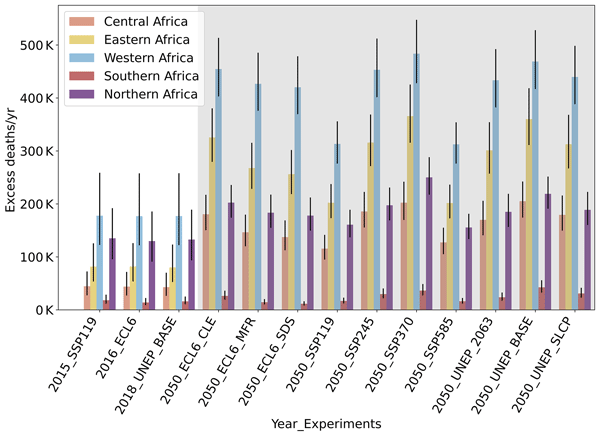
We analyze various projections of African aerosol emissions and their potential impacts on climate and public health. We find that future emissions vary widely across emission projections, with differences in sectoral emission distributions. Using the Oslo chemical transport model, we show that air pollution exposure in some regions of Africa could increase significantly by 2050, increasing pollution-related deaths, with most scenarios projecting aerosol-induced warming over sub-Saharan Africa.
Catherine A. Toolan, Joe Adabouk Amooli, Laura J. Wilcox, Bjørn H. Samset, Andrew G. Turner, and Daniel M. Westervelt
Atmos. Chem. Phys., 25, 10523–10557, https://doi.org/10.5194/acp-25-10523-2025, https://doi.org/10.5194/acp-25-10523-2025, 2025
Short summary
Short summary
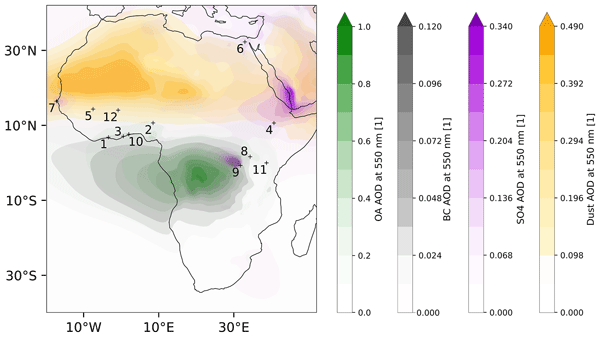
Our research explores how well air pollution and rainfall patterns in Africa are represented in current climate models by comparing model data to observations from 1981 to 2023. While most models capture seasonal air quality changes well, they struggle to replicate the distribution of non-dust pollutants and certain rainfall patterns, especially over east Africa. Improving these models is crucial for better climate predictions and preparing for future risks.
Duncan Watson-Parris, Laura J. Wilcox, Camilla W. Stjern, Robert J. Allen, Geeta Persad, Massimo A. Bollasina, Annica M. L. Ekman, Carley E. Iles, Manoj Joshi, Marianne T. Lund, Daniel McCoy, Daniel M. Westervelt, Andrew I. L. Williams, and Bjørn H. Samset
Atmos. Chem. Phys., 25, 4443–4454, https://doi.org/10.5194/acp-25-4443-2025, https://doi.org/10.5194/acp-25-4443-2025, 2025
Short summary
Short summary
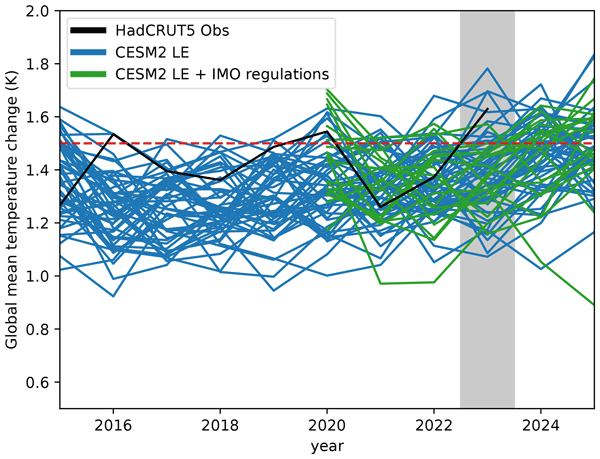
In 2020, regulations by the International Maritime Organization aimed to reduce aerosol emissions from ships. These aerosols previously had a cooling effect, which the regulations might reduce, revealing more greenhouse gas warming. Here we find that, while there is regional warming, the global 2020–2040 temperature rise is only +0.03 °C. This small change is difficult to distinguish from natural climate variability, indicating the regulations have had a limited effect on observed warming to date.
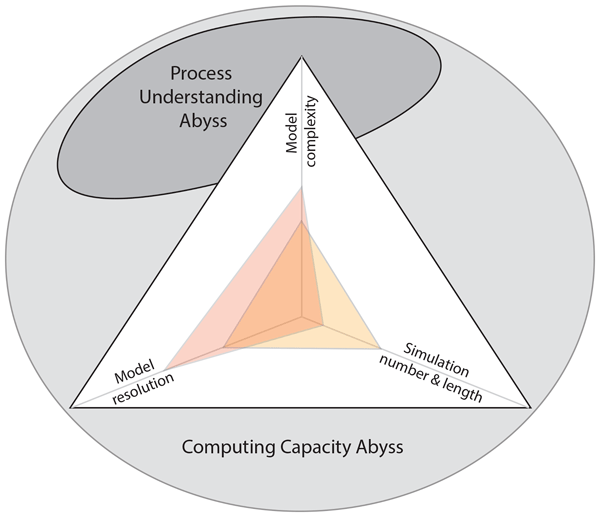
Stephanie Fiedler, Vaishali Naik, Fiona M. O'Connor, Christopher J. Smith, Paul Griffiths, Ryan J. Kramer, Toshihiko Takemura, Robert J. Allen, Ulas Im, Matthew Kasoar, Angshuman Modak, Steven Turnock, Apostolos Voulgarakis, Duncan Watson-Parris, Daniel M. Westervelt, Laura J. Wilcox, Alcide Zhao, William J. Collins, Michael Schulz, Gunnar Myhre, and Piers M. Forster
Geosci. Model Dev., 17, 2387–2417, https://doi.org/10.5194/gmd-17-2387-2024, https://doi.org/10.5194/gmd-17-2387-2024, 2024
Short summary
Short summary
Climate scientists want to better understand modern climate change. Thus, climate model experiments are performed and compared. The results of climate model experiments differ, as assessed in the latest Intergovernmental Panel on Climate Change (IPCC) assessment report. This article gives insights into the challenges and outlines opportunities for further improving the understanding of climate change. It is based on views of a group of experts in atmospheric composition–climate interactions.
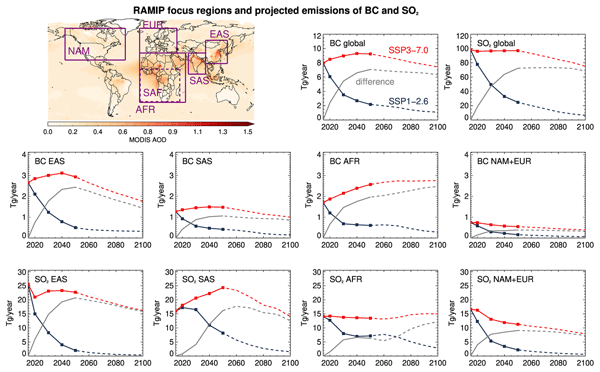
Laura J. Wilcox, Robert J. Allen, Bjørn H. Samset, Massimo A. Bollasina, Paul T. Griffiths, James Keeble, Marianne T. Lund, Risto Makkonen, Joonas Merikanto, Declan O'Donnell, David J. Paynter, Geeta G. Persad, Steven T. Rumbold, Toshihiko Takemura, Kostas Tsigaridis, Sabine Undorf, and Daniel M. Westervelt
Geosci. Model Dev., 16, 4451–4479, https://doi.org/10.5194/gmd-16-4451-2023, https://doi.org/10.5194/gmd-16-4451-2023, 2023
Short summary
Short summary
Changes in anthropogenic aerosol emissions have strongly contributed to global and regional climate change. However, the size of these regional impacts and the way they arise are still uncertain. With large changes in aerosol emissions a possibility over the next few decades, it is important to better quantify the potential role of aerosol in future regional climate change. The Regional Aerosol Model Intercomparison Project will deliver experiments designed to facilitate this.
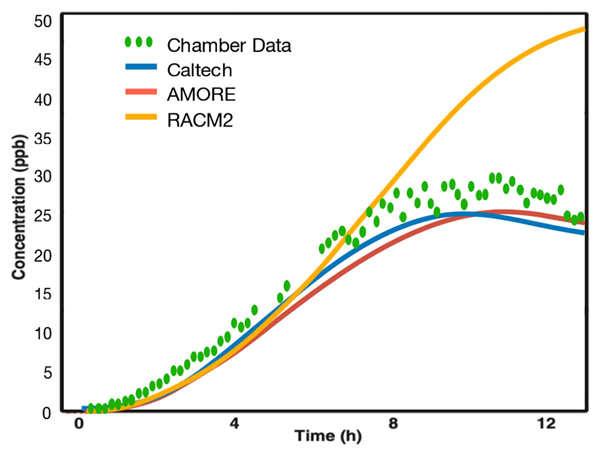
Forwood Wiser, Bryan K. Place, Siddhartha Sen, Havala O. T. Pye, Benjamin Yang, Daniel M. Westervelt, Daven K. Henze, Arlene M. Fiore, and V. Faye McNeill
Geosci. Model Dev., 16, 1801–1821, https://doi.org/10.5194/gmd-16-1801-2023, https://doi.org/10.5194/gmd-16-1801-2023, 2023
Short summary
Short summary
We developed a reduced model of atmospheric isoprene oxidation, AMORE-Isoprene 1.0. It was created using a new Automated Model Reduction (AMORE) method designed to simplify complex chemical mechanisms with minimal manual adjustments to the output. AMORE-Isoprene 1.0 has improved accuracy and similar size to other reduced isoprene mechanisms. When included in the CRACMM mechanism, it improved the accuracy of EPA’s CMAQ model predictions for the northeastern USA compared to observations.

Mathew Sebastian, Sobhan Kumar Kompalli, Vasudevan Anil Kumar, Sandhya Jose, S. Suresh Babu, Govindan Pandithurai, Sachchidanand Singh, Rakesh K. Hooda, Vijay K. Soni, Jeffrey R. Pierce, Ville Vakkari, Eija Asmi, Daniel M. Westervelt, Antti-Pekka Hyvärinen, and Vijay P. Kanawade
Atmos. Chem. Phys., 22, 4491–4508, https://doi.org/10.5194/acp-22-4491-2022, https://doi.org/10.5194/acp-22-4491-2022, 2022
Short summary
Short summary
Characteristics of particle number size distributions and new particle formation in six locations in India were analyzed. New particle formation occurred frequently during the pre-monsoon (spring) season and it significantly modulates the shape of the particle number size distributions. The contribution of newly formed particles to cloud condensation nuclei concentrations was ~3 times higher in urban locations than in mountain background locations.
Cited articles
Alli, A. S., Clark, S. N., Hughes, A., Nimo, J., Bedford-Moses, J., Baah, S., Wang, J., Vallarino, J., Agyemang, E., Barratt, B., Beddows, A., Kelly, F., Owusu, G., Baumgartner, J., Brauer, M., Ezzati, M., Agyei-Mensah, S., and Arku, R. E.: Spatial-temporal patterns of ambient fine particulate matter (PM2.5) and black carbon (BC) pollution in Accra, Environ. Res. Lett., 16, 074013, https://doi.org/10.1088/1748-9326/AC074A, 2021.
Amooli, J. A., Hackman, K. O., Nana, B., and Westervelt, D. M.: Fine particulate air pollution estimation in Ouagadougou using satellite aerosol optical depth and meteorological parameters, Environmental Science: Atmospheres, 4, 1012–1025, https://doi.org/10.1039/D4EA00057A, 2024.
Amooli, J. A., Lund, M. T., Chowdhury, S., Myhre, G., Johansen, A. N., Samset, B. H., and Westervelt, D. M.: An uncertain future for the climate and health impacts of anthropogenic aerosols in Africa, Atmos. Chem. Phys., 25, 11611–11632, https://doi.org/10.5194/acp-25-11611-2025, 2025.
Anand, A., Touré, N. E., Bahino, J., Gnamien, S., Hughes, A. F., Arku, R. E., Tawiah, V. O., Asfaw, A., Mamo, T., Hasheminassab, S., Bililign, S., Moschos, V., Westervelt, D. M., and Presto, A. A.: Low-Cost Hourly Ambient Black Carbon Measurements at Multiple Cities in Africa, Environ. Sci. Technol., 58, 12575–12584, https://doi.org/10.1021/ACS.EST.4C02297, 2024.
Anand, A., Amooli, J. A., and Westervelt, D.: Gridded Daily PM2.5 at 1 km × 1 km Resolution from 2005–2025: Ghana (Version v2.0), Zenodo [data set], https://doi.org/10.5281/zenodo.19636051, 2026.
Ayazpour, Z., González Abad, G., Nowlan, C. R., Sun, K., Kwon, H. A., Chan Miller, C., Chong, H., Wang, H., Liu, X., Chance, K., O'Sullivan, E., Zhu, L., Vigouroux, C., De Smedt, I., Stremme, W., Hannigan, J. W., Notholt, J., Sun, X., Palm, M., Petri, C., Strong, K., Röhling, A. N., Mahieu, E., Smale, D., Yao, T., Morino, I., Murata, I., Nagahama, T., Kivi, R., Makarova, M., Jones, N., Sussmann, R., and Zhou, M.: Aura Ozone Monitoring Instrument (OMI) Collection 4 Formaldehyde Products, Earth and Space Science, 12, e2024EA003792, https://doi.org/10.1029/2024EA003792, 2025.
Ayetor, G. K., Dugbenu, J., Duah, A. A., Adewe, C., Agyei, E. A., Affenyi, E., Peasah, G. M., and Nartey, T. T.: Assessing fuel economy and tailpipe emissions of road vehicles in Ghana, African Transport Studies, 3, 100040, https://doi.org/10.1016/J.AFTRAN.2025.100040, 2025.
Bachwenkizi, J., Liu, C., Meng, X., Zhang, L., Wang, W., van Donkelaar, A., Martin, R. V., Hammer, M. S., Chen, R., and Kan, H.: Fine particulate matter constituents and infant mortality in Africa: A multicountry study, Environ. Int., 156, 106739, https://doi.org/10.1016/J.ENVINT.2021.106739, 2021.
Benjamini, Y. and Hochberg, Y.: Controlling the False Discovery Rate: A Practical and Powerful Approach to Multiple Testing, J. Roy. Stat. Soc. B Met., 57, 289–300, https://doi.org/10.1111/J.2517-6161.1995.TB02031.X, 1995.
Chi, G., Fang, H., Chatterjee, S., and Blumenstock, J. E.: Microestimates of wealth for all low- and middle-income countries, P. Natl. Acad. Sci. USA, 119, https://doi.org/10.1073/PNAS.2113658119, 2022.
Dalaba, M., Alirigia, R., Mesenbring, E., Coffey, E., Brown, Z., Hannigan, M., Wiedinmyer, C., Oduro, A., and Dickinson, K. L.: Liquified Petroleum Gas (LPG) Supply and Demand for Cooking in Northern Ghana, Ecohealth, 15, 716–728, https://doi.org/10.1007/S10393-018-1351-4, 2018.
De Smedt, I., Müller, J.-F., Stavrakou, T., van der A, R., Eskes, H., and Van Roozendael, M.: Twelve years of global observations of formaldehyde in the troposphere using GOME and SCIAMACHY sensors, Atmos. Chem. Phys., 8, 4947–4963, https://doi.org/10.5194/acp-8-4947-2008, 2008.
Di, Q., Koutrakis, P., and Schwartz, J.: A hybrid prediction model for PM2.5 mass and components using a chemical transport model and land use regression, Atmos. Environ., 131, 390–399, https://doi.org/10.1016/J.ATMOSENV.2016.02.002, 2016.
Fisher, S., Bellinger, D. C., Cropper, M. L., Kumar, P., Binagwaho, A., Koudenoukpo, J. B., Park, Y., Taghian, G., and Landrigan, P. J.: Air pollution and development in Africa: impacts on health, the economy, and human capital, Lancet Planet. Health, 5, e681–e688, https://doi.org/10.1016/S2542-5196(21)00201-1, 2021.
Friedl, M. and Sulla-Menashe, D.: MODIS/Terra+Aqua Land Cover Type Yearly L3 Global 500m SIN Grid V061, NASA Land Processes Distributed Active Archive Center, https://doi.org/10.5067/MODIS/MCD12Q1.061, 2022.
Gelaro, R., McCarty, W., Suárez, M. J., Todling, R., Molod, A., Takacs, L., Randles, C. A., Darmenov, A., Bosilovich, M. G., Reichle, R., Wargan, K., Coy, L., Cullather, R., Draper, C., Akella, S., Buchard, V., Conaty, A., da Silva, A. M., Gu, W., Kim, G. K., Koster, R., Lucchesi, R., Merkova, D., Nielsen, J. E., Partyka, G., Pawson, S., Putman, W., Rienecker, M., Schubert, S. D., Sienkiewicz, M., and Zhao, B.: The Modern-Era Retrospective Analysis for Research and Applications, Version 2 (MERRA-2), J. Climate, 30, 5419–5454, https://doi.org/10.1175/JCLI-D-16-0758.1, 2017.
Ghana Standards Authority: Environment and Health Protection – Requirements for Ambient Air Quality and Point Source/Stack Emissions. GS 1236:2019, Accra, https://leap.unep.org/en/countries/gh/national-legislation/environment-and-health-protection-requirements-ambient-air (last access: 1 September 2026), 2019.
Giglio, L., Schroeder, W., and Justice, C. O.: The collection 6 MODIS active fire detection algorithm and fire products, Remote Sens. Environ., 178, 31–41, https://doi.org/10.1016/J.RSE.2016.02.054, 2016.
Global Modeling and Assimilation Office (GMAO): MERRA-2 tavg1_2d_aer_Nx: 2d, 1-Hourly, Time-averaged, Single-Level, Assimilation, Aerosol Diagnostics V5.12.4 (M2T1NXAER), Goddard Earth Sciences Data and Information Services Center (GES DISC), https://doi.org/10.5067/KLICLTZ8EM9D, 2015.
Griffin, D., Chen, J., Anderson, K., Makar, P., McLinden, C. A., Dammers, E., and Fogal, A.: Biomass burning CO emissions: exploring insights through TROPOMI-derived emissions and emission coefficients, Atmos. Chem. Phys., 24, 10159–10186, https://doi.org/10.5194/acp-24-10159-2024, 2024.
Gualtieri, G., Ahbil, K., Brilli, L., Carotenuto, F., Cavaliere, A., Gioli, B., Giordano, T., Katiellou, G. L., Mouhaimini, M., Tarchiani, V., Vagnoli, C., Zaldei, A., and Bacci, M.: Potential of low-cost PM monitoring sensors to fill monitoring gaps in areas of Sub-Saharan Africa, Atmos. Pollut. Res., 15, 102158, https://doi.org/10.1016/J.APR.2024.102158, 2024.
Hammer, M. S., Van Donkelaar, A., Li, C., Lyapustin, A., Sayer, A. M., Hsu, N. C., Levy, R. C., Garay, M. J., Kalashnikova, O. V., Kahn, R. A., Brauer, M., Apte, J. S., Henze, D. K., Zhang, L., Zhang, Q., Ford, B., Pierce, J. R., and Martin, R. V.: Global Estimates and Long-Term Trends of Fine Particulate Matter Concentrations (1998–2018), Environ. Sci. Technol., 54, 7879–7890, https://doi.org/10.1021/ACS.EST.0C01764, 2020.
Hayes, R. B., Lim, C., Zhang, Y., Cromar, K., Shao, Y., Reynolds, H. R., Silverman, D. T., Jones, R. R., Park, Y., Jerrett, M., Ahn, J., and Thurston, G. D.: PM2.5 air pollution and cause-specific cardiovascular disease mortality, Int. J. Epidemiol., 49, 25–35, https://doi.org/10.1093/IJE/DYZ114, 2020.
Health Effects Institute: State of Global Air Report 2024, https://www.stateofglobalair.org/resources/report/state-global-air-report-2024 (last access: 29 June 2025), 2024.
Hirsch, R. M. and Slack, J. R.: A Nonparametric Trend Test for Seasonal Data With Serial Dependence, Water Resour. Res., 20, 727–732, https://doi.org/10.1029/WR020I006P00727, 1984.
Institute for Health Metrics and Evaluation (IHME): GBD Results, https://vizhub.healthdata.org/gbd-results/ (last access: 18 February 2026), 2025.
Klutse, N. A. B., Owusu, K., and Boafo, Y. A.: Projected temperature increases over northern Ghana, SN Appl. Sci., 2, 1339, https://doi.org/10.1007/S42452-020-3095-3, 2020.
Kwarteng, L., Baiden, E. A., Fobil, J., Arko-Mensah, J., Robins, T., and Batterman, S.: Air Quality Impacts at an E-Waste Site in Ghana Using Flexible, Moderate-Cost and Quality-Assured Measurements, Geohealth, 4, e2020GH000247, https://doi.org/10.1029/2020GH000247, 2020.
Lebakula, V., Sims, K., Reith, A., Rose, A., McKee, J., Coleman, P., Kaufman, J., Urban, M., Jochem, C., Whitlock, C., Ogden, M., Pyle, J., Roddy, D., Epting, J., and Bright, E.: LandScan Global 30 Arcsecond Annual Global Gridded Population Datasets from 2000 to 2022, Sci. Data, 12, 495, https://doi.org/10.1038/s41597-025-04817-z, 2025.
Li, C., Joiner, J., Krotkov, N. A., and Bhartia, P. K.: A fast and sensitive new satellite SO2 retrieval algorithm based on principal component analysis: Application to the ozone monitoring instrument, Geophys. Res. Lett., 40, 6314–6318, https://doi.org/10.1002/2013GL058134, 2013.
Li, C., Wang, J., Zhang, H., Diner, D. J., Hasheminassab, S., and Janechek, N.: Improvement of Surface PM2.5 Diurnal Variation Simulations in East Africa for the MAIA Satellite Mission, ACS ES&T Air, 1, 223–233, https://doi.org/10.1021/ACSESTAIR.3C00008, 2024.
Liu, Y., Park, R. J., Jacob, D. J., Li, Q., Kilaru, V., and Sarnat, J. A.: Mapping annual mean ground-level PM2.5 concentrations using Multiangle Imaging Spectroradiometer aerosol optical thickness over the contiguous United States, J. Geophys. Res.-Atmos., 109, 1–10, https://doi.org/10.1029/2004JD005025, 2004.
Lyapustin, A., Wang, Y., Korkin, S., and Huang, D.: MODIS Collection 6 MAIAC algorithm, Atmos. Meas. Tech., 11, 5741–5765, https://doi.org/10.5194/amt-11-5741-2018, 2018.
Melchiorri, M., Mari, R. I., Florio, P., Schiavina, M., Krasnodebska, K., Politis, P., Uhl, J., Pesaresi, M., Maffenini, L., Sulis, P., Crippa, M., Guizzardi, D., Pisoni, E., Belis, C., Oom, D., Branco, A., Mwaniki, D., Githira, D., Kochulem, E., Tommasi, P., Carioli, A., Ehrlich, D., Kemper, T., and Dijkstra, L.: Stats in the City – the GHSL Urban Centre Database 2025, European Commission, Joint Research Centre (JRC), https://doi.org/10.2760/3046391, 2024.
Moran, P. A.: Notes on Continuous Stochastic Phenomena, Biometrika, 37, 17–23, https://doi.org/10.1093/BIOMET/37.1-2.17, 1950.
Muñoz Sabater, J.: ERA5-Land hourly data from 1950 to present, Copernicus Climate Change Service (C3S) Climate Data Store (CDS), https://doi.org/10.24381/cds.e2161bac, 2019.
Muñoz-Sabater, J., Dutra, E., Agustí-Panareda, A., Albergel, C., Arduini, G., Balsamo, G., Boussetta, S., Choulga, M., Harrigan, S., Hersbach, H., Martens, B., Miralles, D. G., Piles, M., Rodríguez-Fernández, N. J., Zsoter, E., Buontempo, C., and Thépaut, J.-N.: ERA5-Land: a state-of-the-art global reanalysis dataset for land applications, Earth Syst. Sci. Data, 13, 4349–4383, https://doi.org/10.5194/essd-13-4349-2021, 2021.
Nicholson, S. E.: The ITCZ and the Seasonal Cycle over Equatorial Africa, B. Am. Meteorol. Soc., 99, 337–348, https://doi.org/10.1175/BAMS-D-16-0287.1, 2018.
Ofosu, F. G., Hopke, P. K., Aboh, I. J. K., and Bamford, S. A.: Biomass burning contribution to ambient air particulate levels at Navrongo in the Savannah zone of Ghana, J. Air Waste Manage., 63, 1036–1045, https://doi.org/10.1080/10962247.2013.783888, 2013.
Owusu-Tawiah, V., Annor, T., Yamba, E. I., Nimo, J., Wemegah, C. S., Hodoli, C. G., Osei-Tutu, D., Amponsah, D., Hughes, A. F., and Westervelt, D. M.: Spatiotemporal Assessment of PM2.5 in Senior High Schools in Kumasi, Ghana using Low-Cost Sensors, Aerosol Air Qual. Res., 25, 66-, https://doi.org/10.1007/S44408-025-00066-2, 2025.
Philip, S., Martin, R. V., Van Donkelaar, A., Lo, J. W. H., Wang, Y., Chen, D., Zhang, L., Kasibhatla, P. S., Wang, S., Zhang, Q., Lu, Z., Streets, D. G., Bittman, S., and Macdonald, D. J.: Global chemical composition of ambient fine particulate matter for exposure assessment, Environ. Sci. Technol., 48, 13060–13068, https://doi.org/10.1021/ES502965B, 2014.
Pye, H. O. T., Appel, K. W., Seltzer, K. M., Ward-Caviness, C. K., and Murphy, B. N.: Human-Health Impacts of Controlling Secondary Air Pollution Precursors, Environ. Sci. Tech. Let., 9, 96–101, https://doi.org/10.1021/ACS.ESTLETT.1C00798, 2022.
Raheja, G., Sabi, K., Sonla, H., Gbedjangni, E. K., McFarlane, C. M., Hodoli, C. G., and Westervelt, D. M.: A Network of Field-Calibrated Low-Cost Sensor Measurements of PM2.5 in Lomé, Togo, Over One to Two Years, ACS Earth Space Chem., 6, 1011–1021, https://doi.org/10.1021/ACSEARTHSPACECHEM.1C00391, 2022.
Sayeed, A., Lin, P., Gupta, P., Tran, N. N. M., Buchard, V., and Christopher, S.: Hourly and Daily PM2.5 Estimations Using MERRA-2: A Machine Learning Approach, Earth and Space Science, 9, e2022EA002375, https://doi.org/10.1029/2022EA002375, 2022.
Sen, P. K.: Estimates of the Regression Coefficient Based on Kendall's Tau, J. Am. Stat. Assoc., 63, 1379–1389, https://doi.org/10.1080/01621459.1968.10480934, 1968.
Shen, S., Li, C., van Donkelaar, A., Jacobs, N., Wang, C., and Martin, R. V.: Enhancing Global Estimation of Fine Particulate Matter Concentrations by Including Geophysical a Priori Information in Deep Learning, ACS ES&T Air, 1, 332–345, https://doi.org/10.1021/ACSESTAIR.3C00054, 2024.
Shi, L., Wu, X., Danesh Yazdi, M., Braun, D., Abu Awad, Y., Wei, Y., Liu, P., Di, Q., Wang, Y., Schwartz, J., Dominici, F., Kioumourtzoglou, M. A., and Zanobetti, A.: Long-term effects of PM2.5 on neurological disorders in the American Medicare population: a longitudinal cohort study, Lancet Planet. Health, 4, e557–e565, https://doi.org/10.1016/S2542-5196(20)30227-8, 2020.
Torres, O., Bhartia, P. K., Jethva, H., and Ahn, C.: Impact of the ozone monitoring instrument row anomaly on the long-term record of aerosol products, Atmos. Meas. Tech., 11, 2701–2715, https://doi.org/10.5194/amt-11-2701-2018, 2018.
Torres, O., Jethva, H., Ahn, C., Jaross, G., and Loyola, D. G.: TROPOMI aerosol products: evaluation and observations of synoptic-scale carbonaceous aerosol plumes during 2018–2020, Atmos. Meas. Tech., 13, 6789–6806, https://doi.org/10.5194/amt-13-6789-2020, 2020.
van Donkelaar, A., Martin, R. V., and Park, R. J.: Estimating ground-level PM2.5 using aerosol optical depth determined from satellite remote sensing, J. Geophys. Res.-Atmos., 111, 21201, https://doi.org/10.1029/2005JD006996, 2006.
van Donkelaar, A., Martin, R. V, Brauer, M., Hsu, N. C., Kahn, R. A., Levy, R. C., Lyapustin, A., Sayer, A. M., and Winker, D. M.: Global Estimates of Fine Particulate Matter using a Combined Geophysical-Statistical Method with Information from Satellites, Models, and Monitors, Environ. Sci. Technol., https://doi.org/10.1021/acs.est.5b05833, 2016.
van Donkelaar, A., Hammer, M. S., Bindle, L., Brauer, M., Brook, J. R., Garay, M. J., Hsu, N. C., Kalashnikova, O. V., Kahn, R. A., Lee, C., Levy, R. C., Lyapustin, A., Sayer, A. M., and Martin, R. V.: Monthly Global Estimates of Fine Particulate Matter and Their Uncertainty, Environ. Sci. Technol., 55, 15287–15300, https://doi.org/10.1021/ACS.EST.1C05309, 2021.
van Geffen, J., Eskes, H., Compernolle, S., Pinardi, G., Verhoelst, T., Lambert, J.-C., Sneep, M., ter Linden, M., Ludewig, A., Boersma, K. F., and Veefkind, J. P.: Sentinel-5P TROPOMI NO2 retrieval: impact of version v2.2 improvements and comparisons with OMI and ground-based data, Atmos. Meas. Tech., 15, 2037–2060, https://doi.org/10.5194/amt-15-2037-2022, 2022.
Veefkind, J. P., Aben, I., McMullan, K., Förster, H., de Vries, J., Otter, G., Claas, J., Eskes, H. J., de Haan, J. F., Kleipool, Q., van Weele, M., Hasekamp, O., Hoogeveen, R., Landgraf, J., Snel, R., Tol, P., Ingmann, P., Voors, R., Kruizinga, B., Vink, R., Visser, H., and Levelt, P. F.: TROPOMI on the ESA Sentinel-5 Precursor: A GMES mission for global observations of the atmospheric composition for climate, air quality and ozone layer applications, Remote Sens. Environ., 120, 70–83, https://doi.org/10.1016/J.RSE.2011.09.027, 2012.
Vohra, K., Vodonos, A., Schwartz, J., Marais, E. A., Sulprizio, M. P., and Mickley, L. J.: Global mortality from outdoor fine particle pollution generated by fossil fuel combustion: Results from GEOS-Chem, Environ. Res., 195, 110754, https://doi.org/10.1016/J.ENVRES.2021.110754, 2021.
Weagle, C. L., Snider, G., Li, C., Van Donkelaar, A., Philip, S., Bissonnette, P., Burke, J., Jackson, J., Latimer, R., Stone, E., Abboud, I., Akoshile, C., Anh, N. X., Brook, J. R., Cohen, A., Dong, J., Gibson, M. D., Griffith, D., He, K. B., Holben, B. N., Kahn, R., Keller, C. A., Kim, J. S., Lagrosas, N., Lestari, P., Khian, Y. L., Liu, Y., Marais, E. A., Martins, J. V., Misra, A., Muliane, U., Pratiwi, R., Quel, E. J., Salam, A., Segev, L., Tripathi, S. N., Wang, C., Zhang, Q., Brauer, M., Rudich, Y., and Martin, R. V.: Global Sources of Fine Particulate Matter: Interpretation of PM2.5 Chemical Composition Observed by SPARTAN using a Global Chemical Transport Model, Environ. Sci. Technol., 52, 11670–11681, https://doi.org/10.1021/ACS.EST.8B01658, 2018.
Westervelt, D. M., Isevulambire, P. K., Phaka, R. Y., Yang, L. H., Raheja, G., Milly, G., Selenge, J.-L. B., Mulumba, J. P. M., Bousiotis, D., Djibi, B. L., McNeill, V. F., Ng, N. L., Pope, F., Mbela, G. K., and Konde, J. N.: Low-Cost Investigation into Sources of PM2.5 in Kinshasa, Democratic Republic of the Congo, ACS ES&T Air, 1, 43–51, https://doi.org/10.1021/ACSESTAIR.3C00024, 2023.
Westervelt, D. M., Amooli, J. A., and Anand, A.: Twenty Years of High Spatiotemporal Resolution Estimates of Daily PM2.5 in West Africa Using Satellite Data, Surface Monitors, and Machine Learning, ACS ES&T Air, 2, 1468–1477, https://doi.org/10.1021/ACSESTAIR.4C00366, 2025.
World Health Organization: WHO global air quality guidelines: particulate matter (PM2.5 and PM10), ozone, nitrogen dioxide, sulfur dioxide and carbon monoxide, https://www.who.int/publications/i/item/9789240034228 (last access: 21 July 2026), 2021.
World Meteorological Organization (WMO): Guide to Instruments and Methods of Observation (WMO-No. 8), https://community.wmo.int/site/knowledge-hub/programmes-and-initiatives/instruments-and-methods-of-observation-programme-imop/guide-instruments-and-methods-of-observation-wmo-no-8 (last access: 19 February 2026), 2008.
Zhang, D., Du, L., Wang, W., Zhu, Q., Bi, J., Scovronick, N., Naidoo, M., Garland, R. M., and Liu, Y.: A machine learning model to estimate ambient PM2.5 concentrations in industrialized highveld region of South Africa, Remote Sens. Environ., 266, 112713, https://doi.org/10.1016/J.RSE.2021.112713, 2021.
Zheng, Z., Fiore, A. M., Westervelt, D. M., Milly, G. P., Goldsmith, J., Karambelas, A., Curci, G., Randles, C. A., Paiva, A. R., Wang, C., Wu, Q., and Dey, S.: Automated Machine Learning to Evaluate the Information Content of Tropospheric Trace Gas Columns for Fine Particle Estimates Over India: A Modeling Testbed, J. Adv. Model. Earth Sy., 15, e2022MS003099, https://doi.org/10.1029/2022MS003099, 2023.
Zhou, Z., Dionisio, K. L., Verissimo, T. G., Kerr, A. S., Coull, B., Howie, S., Arku, R. E., Koutrakis, P., Spengler, J. D., Fornace, K., Hughes, A. F., Vallarino, J., Agyei-Mensah, S., and Ezzati, M.: Chemical Characterization and Source Apportionment of Household Fine Particulate Matter in Rural, Peri-urban, and Urban West Africa, Environ. Sci. Technol., 48, 1343–1351, https://doi.org/10.1021/ES404185M, 2014.
Short summary
Air pollution remains poorly characterized across sub-Saharan Africa due to sparse monitoring infrastructure. We developed a multi-model machine learning framework to generate a 21-year, high-resolution PM2.5 dataset for Ghana, revealing pronounced spatial and seasonal variability, persistent geographic exposure disparities, and contrasting long-term trends. These findings provide new evidence to support air-quality management, health assessments, and environmental policy in data-sparse regions.
Air pollution remains poorly characterized across sub-Saharan Africa due to sparse monitoring...


Altmetrics
Final-revised paper
Preprint