Articles | Volume 19, issue 22
https://doi.org/10.5194/amt-19-7667-2026
Research article
 | 
23 Nov 2026
Research article |  | 23 Nov 2026

Radiative Constraints on VIIRS Nighttime Detectability of Lower-Tropospheric Methane

Daja R. Elum, Nicholas R. Nalli, Johan Villanueva, Daniel Yeager, Adrian Flores, Monique Walker, Nakul Karle, Ricardo Sakai, and Joseph Wilkins

Related authors

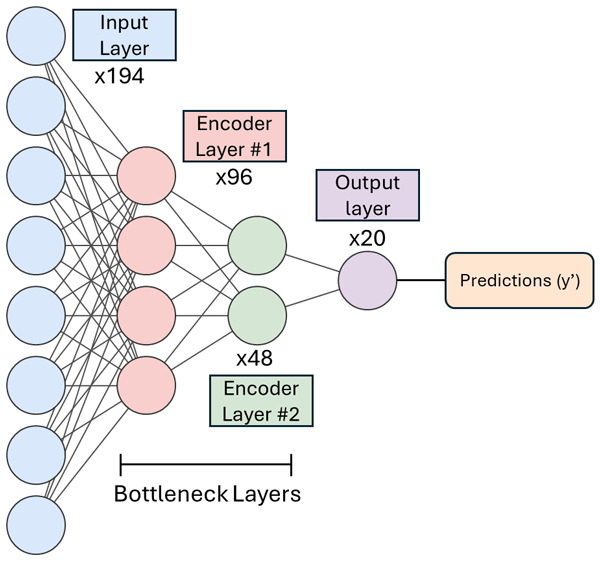
Leveraging machine learning to enhance aerosol classification using Single-Particle Mass Spectrometry
Jose A. Perez Chavez, Maria A. Zawadowicz, Joseph Wilkins, and Christopher Blaszczak-Boxe
Atmos. Meas. Tech., 19, 2575–2599, https://doi.org/10.5194/amt-19-2575-2026,https://doi.org/10.5194/amt-19-2575-2026, 2026
Short summary
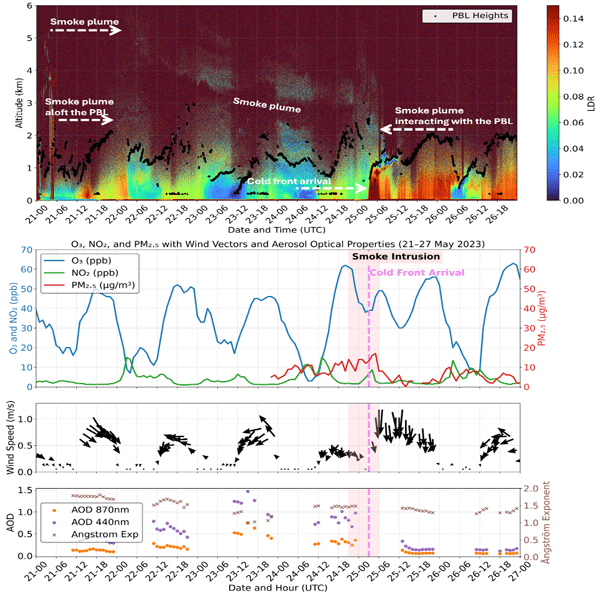
Vertical profiling of Canadian wildfire smoke in the Baltimore-Washington Corridor – interactions with the planetary boundary layer and impact on surface air quality
Nakul N. Karle, Ricardo K. Sakai, Rocio D. Rossi, Adrian Flores, and Sen Chiao
Atmos. Meas. Tech., 18, 6727–6746, https://doi.org/10.5194/amt-18-6727-2025,https://doi.org/10.5194/amt-18-6727-2025, 2025
Short summary
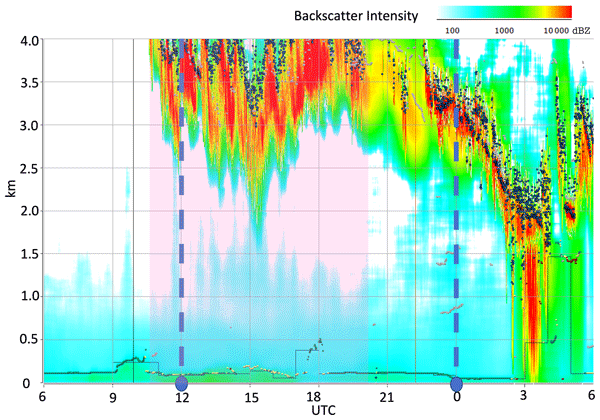
Systematic analysis of virga and its impact on surface particulate matter observations
Nakul N. Karle, Ricardo K. Sakai, Rosa M. Fitzgerald, Charles Ichoku, Fernando Mercado, and William R. Stockwell
Atmos. Meas. Tech., 16, 1073–1085, https://doi.org/10.5194/amt-16-1073-2023,https://doi.org/10.5194/amt-16-1073-2023, 2023
Short summary
Identifying Source Region Elemental Indicators in Aged Saharan Dust Plumes Over the Tropical Atlantic
Daniel E. Yeager and Vernon R. Morris
Atmos. Chem. Phys. Discuss., https://doi.org/10.5194/acp-2021-932,https://doi.org/10.5194/acp-2021-932, 2021
Preprint withdrawn
Short summary

Cited articles

Berk, A., Conforti, P., Kennett, R., Perkins, T., Hawes, F., and Van Den Bosch, J.: MODTRAN6: a major upgrade of the MODTRAN radiative transfer code, SPIE Defense + Security, 90880H, https://doi.org/10.1117/12.2050433, 2014. 
Bevington, P. R. and Robinson, D. K.: Data reduction and error analysis for the physical sciences, 3rd ed., McGraw-Hill, Boston, 320 pp., https://catalogue.library.cern/literature/y1nv4-yfv90 (last access: 8 October 2026), 2003. 
Botía, S., Gerbig, C., Marshall, J., Lavric, J. V., Walter, D., Pöhlker, C., Holanda, B., Fisch, G., de Araújo, A. C., Sá, M. O., Teixeira, P. R., Resende, A. F., Dias-Junior, C. Q., van Asperen, H., Oliveira, P. S., Stefanello, M., and Acevedo, O. C.: Understanding nighttime methane signals at the Amazon Tall Tower Observatory (ATTO), Atmos. Chem. Phys., 20, 6583–6606, https://doi.org/10.5194/acp-20-6583-2020, 2020. 
Caico, C., Fragu, L., and Gonzalez, L.: An evaluation of an optical gas imaging system for the quantification of fugitive hydrocarbon emissions, Concawe, Brussels, 1 p., https://www.concawe.eu/publication/ (last access: 18 March 2026), 2017. 
Cao, C., Deluccia, F., Qiu, S., and NOAA Joint Polar Satellite System Program Office: NOAA JPSS Visible Infrared Imaging Radiometer Suite (VIIRS) Sensor Data Record (SDR) from IDPS, NCEI [data set], https://doi.org/10.7289/V58G8HSZ, 2012. 
Download
Short summary
It is difficult to detect greenhouse gas concentrations from satellites near the surface, especially at night. We used radiative transfer simulations, guided by atmospheric measurements, to test whether the Visible Infrared Imaging Radiometer Suite (VIIRS) could detect nighttime methane buildup near an urban area. Results show only large “high enhancement” events were marginally detectable, and variation in ground surface heat radiation can push signals below the sensor’s detection limit.
Share
Altmetrics
Final-revised paper
Preprint