
Articles | Volume 19, issue 3
https://doi.org/10.5194/amt-19-793-2026
© Author(s) 2026. This work is distributed under
the Creative Commons Attribution 4.0 License.
the Creative Commons Attribution 4.0 License.
https://doi.org/10.5194/amt-19-793-2026
© Author(s) 2026. This work is distributed under
the Creative Commons Attribution 4.0 License.
the Creative Commons Attribution 4.0 License.
Research article
| 
03 Feb 2026
Research article |
| 03 Feb 2026
| 03 Feb 2026
Mapping stratospheric nitric acid (HNO3) patterns in the extratropics with nadir-viewing infrared sounders – a retrieval perspective

Science and Technology Corporation, Columbia, Maryland, USA
retired
Michelle L. Santee
Jet Propulsion Laboratory, California Institute of Technology, Pasadena, California, USA
Christopher D. Barnet
Science and Technology Corporation, Columbia, Maryland, USA
retired
Related authors
Nadia Smith and Christopher D. Barnet
Atmos. Meas. Tech., 18, 1823–1839, https://doi.org/10.5194/amt-18-1823-2025, https://doi.org/10.5194/amt-18-1823-2025, 2025
Short summary
Short summary
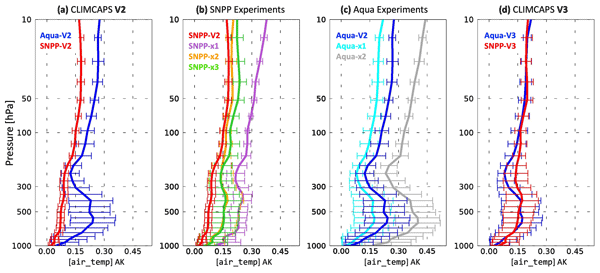
CLIMCAPS extends the Aqua AIRS+AMSU record with retrievals from CrIS+ATMS on Suomi National Polar-orbiting Partnership (SNPP) and Joint Polar Satellite System series (JPSS-1 to JPSS-4). With “continuous”, we mean a data record that is consistent in its characterization of natural variation despite changes in source instrumentation. Here we investigate how sounding continuity can improve across the full CLIMCAPS record (2002 to the present day), spanning multiple instruments and satellites.
Audrey Gaudel, Ilann Bourgeois, Meng Li, Kai-Lan Chang, Jerald Ziemke, Bastien Sauvage, Ryan M. Stauffer, Anne M. Thompson, Debra E. Kollonige, Nadia Smith, Daan Hubert, Arno Keppens, Juan Cuesta, Klaus-Peter Heue, Pepijn Veefkind, Kenneth Aikin, Jeff Peischl, Chelsea R. Thompson, Thomas B. Ryerson, Gregory J. Frost, Brian C. McDonald, and Owen R. Cooper
Atmos. Chem. Phys., 24, 9975–10000, https://doi.org/10.5194/acp-24-9975-2024, https://doi.org/10.5194/acp-24-9975-2024, 2024
Short summary
Short summary
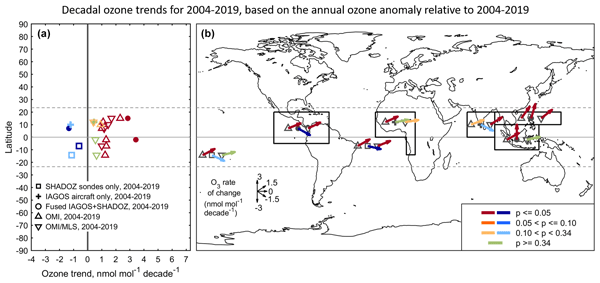
The study examines tropical tropospheric ozone changes. In situ data from 1994–2019 display increased ozone, notably over India, Southeast Asia, and Malaysia and Indonesia. Sparse in situ data limit trend detection for the 15-year period. In situ and satellite data, with limited sampling, struggle to consistently detect trends. Continuous observations are vital over the tropical Pacific Ocean, Indian Ocean, western Africa, and South Asia for accurate ozone trend estimation in these regions.

Nora Mettig, Mark Weber, Alexei Rozanov, John P. Burrows, Pepijn Veefkind, Anne M. Thompson, Ryan M. Stauffer, Thierry Leblanc, Gerard Ancellet, Michael J. Newchurch, Shi Kuang, Rigel Kivi, Matthew B. Tully, Roeland Van Malderen, Ankie Piters, Bogumil Kois, René Stübi, and Pavla Skrivankova
Atmos. Meas. Tech., 15, 2955–2978, https://doi.org/10.5194/amt-15-2955-2022, https://doi.org/10.5194/amt-15-2955-2022, 2022
Short summary
Short summary
Vertical ozone profiles from combined spectral measurements in the UV and IR spectral ranges were retrieved by using data from TROPOMI/S5P and CrIS/Suomi-NPP. The vertical resolution and accuracy of the ozone profiles are improved by combining both wavelength ranges compared to retrievals limited to UV or IR spectral data only. The advancement of our TOPAS algorithm for combined measurements is required because in the UV-only retrieval the vertical resolution in the troposphere is very limited.

Qing Yue, Eric J. Fetzer, Likun Wang, Brian H. Kahn, Nadia Smith, John M. Blaisdell, Kerry G. Meyer, Mathias Schreier, Bjorn Lambrigtsen, and Irina Tkatcheva
Atmos. Meas. Tech., 15, 2099–2123, https://doi.org/10.5194/amt-15-2099-2022, https://doi.org/10.5194/amt-15-2099-2022, 2022
Short summary
Short summary
The self-consistency and continuity of cloud retrievals from infrared sounders and imagers aboard Aqua and SNPP (Suomi National Polar-orbiting Partnership) are examined at the pixel scale. Cloud products are found to be consistent with each other. Differences between sounder products are mainly due to cloud clearing and the treatment of clouds in scenes with unsuccessful atmospheric retrievals. The impact of algorithm and instrument differences is clearly seen in the imager cloud retrievals.
Ewa M. Bednarz, Valentina Aquila, Amy H. Butler, Peter Colarco, Eric Fleming, Freja F. Østerstrøm, David Plummer, Ilaria Quaglia, William Randel, Michelle L. Santee, Takashi Sekiya, Simone Tilmes, Xinyue Wang, Shingo Watanabe, Wandi Yu, Jun Zhang, Yunqian Zhu, and Zhihong Zhuo
Atmos. Chem. Phys., 26, 11355–11370, https://doi.org/10.5194/acp-26-11355-2026, https://doi.org/10.5194/acp-26-11355-2026, 2026
Short summary
Short summary
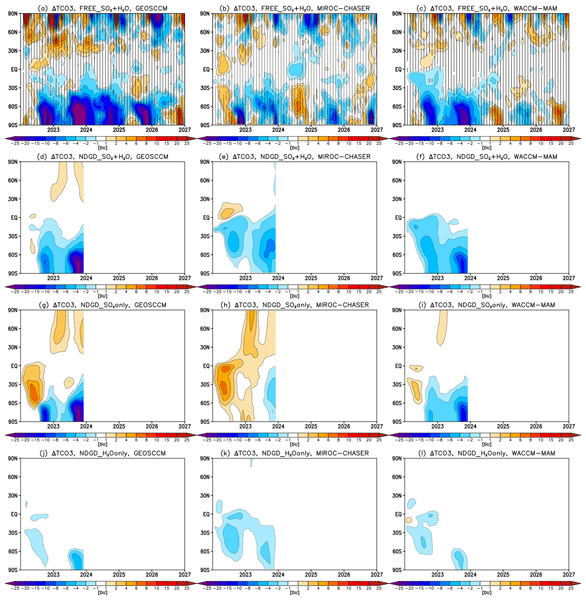
The 2022 Hunga eruption injected unprecedented quantities of water vapor into the stratosphere, alongside modest amounts of aerosol precursors. We assess its impacts on stratospheric ozone layer using a multi-model ensemble of chemistry-climate simulations. The results confirm the eruption's role in modulating SH (Southern Hemisphere) mid and high latitudes ozone abundances in the short term, and discuss the different chemical and dynamical processes driving those changes as well as the role of natural variability.
David Wilmouth, Jennifer Hare, Laila Howar, Ross Salawitch, Eric Hintsa, Jessica Smith, David Sayres, James Anderson, Jason St. Clair, Erin Delaria, Reem Hannun, Thomas Hanisco, Daniel Czizco, Xiaoli Shen, Cameron Homeyer, Michelle Santee, T. Paul Bui, Paul Newman, Frank Keutsch, and Kenneth Bowman
EGUsphere, https://doi.org/10.5194/egusphere-2026-3480, https://doi.org/10.5194/egusphere-2026-3480, 2026
Short summary
Short summary
Inorganic chlorine chemistry in the stratosphere is extensively examined over two summers using high precision in situ aircraft data and satellite data. Measured values both agree and enable refinement to current understanding. Chlorine measurements obtained under perturbed stratospheric conditions of enhanced water vapor from convective storms or aged organic aerosol from wildfires do not appear significantly different from chlorine measurements obtained in the background stratosphere.
Monika E. Szelag, Viktoria F. Sofieva, Edward Malina, Pekka T. Verronen, Michelle L. Santee, Manuel López-Puertas, Bernd Funke, Gabriele Stiller, Alexandra Laeng, Kaley A. Walker, Patrick E. Sheese, Mark E. Hervig, and Benjamin T. Marshall
Atmos. Chem. Phys., 26, 7503–7522, https://doi.org/10.5194/acp-26-7503-2026, https://doi.org/10.5194/acp-26-7503-2026, 2026
Short summary
Short summary
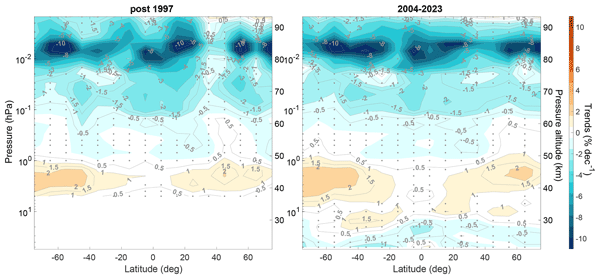
We present a new global dataset of ozone profiles in the mesosphere and lower thermosphere, created by combining several satellite measurements covering more than three decades. Our results show that ozone is recovering in the stratosphere but decreasing in the mesosphere, with the strongest declines near the mesopause. This dataset provides a valuable resource for investigating long-term changes, improving model performance, and addressing an observational gap in the upper atmosphere.
Lucien Froidevaux, Michael J. Schwartz, Douglas E. Kinnison, Nathaniel J. Livesey, Gloria L. Manney, Michelle L. Santee, William G. Read, and Ryan A. Fuller
EGUsphere, https://doi.org/10.5194/egusphere-2026-2273, https://doi.org/10.5194/egusphere-2026-2273, 2026
Short summary
Short summary
We examine 20 years (2004–2023) of vertical profiles of winter/spring lower stratospheric ozone inside the Antarctic vortex, based on satellite observations and a chemistry climate model. The observations show increases in the smallest ozone values, as well as trends consistent with a slow recovery from the long-term impact of ozone-depleting substances. The model also shows some reductions in lower stratospheric seasonal Antarctic ozone losses, in broad agreement with the observations.
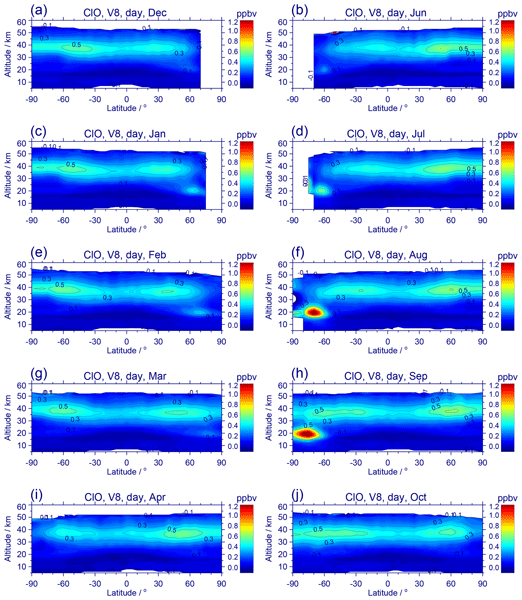
Norbert Glatthor, Thomas von Clarmann, Udo Grabowski, Sylvia Kellmann, Michael Kiefer, Alexandra Laeng, Andrea Linden, Gabriele P. Stiller, Bernd Funke, Maya García-Comas, Manuel López-Puertas, Oliver Kirner, and Michelle L. Santee
Atmos. Meas. Tech., 19, 629–657, https://doi.org/10.5194/amt-19-629-2026, https://doi.org/10.5194/amt-19-629-2026, 2026
Short summary
Short summary
We present a global climatology of Michelson Interferometer for Passive Atmospheric Sounding (MIPAS) version 8 chlorine monoxide (ClO), retrieved from spaceborne observations between 2002 and 2012. Due to an improved retrieval setup, the high bias and poor vertical resolution of upper stratospheric ClO, which had affected the previous V5 data set, has been removed. Comparisons with ClO observations of the Microwave Limb Sounder generally show good agreement. Differences can be explained by simulations with an atmospheric chemistry model.

Paul Konopka, Felix Ploeger, Francesco D'Amato, Teresa Campos, Marc von Hobe, Shawn B. Honomichl, Peter Hoor, Laura L. Pan, Michelle L. Santee, Silvia Viciani, Kaley A. Walker, and Michaela I. Hegglin
Atmos. Chem. Phys., 25, 17973–17996, https://doi.org/10.5194/acp-25-17973-2025, https://doi.org/10.5194/acp-25-17973-2025, 2025
Short summary
Short summary
We present an improved version of the Chemical Lagrangian Model of the Stratosphere (CLaMS-3.0), which better represents transport from the lower atmosphere to the upper troposphere and lower stratosphere. By refining grid resolution and improving convection representation, the model more accurately simulates carbon monoxide transport. Comparisons with satellite and in situ observations highlight its ability to capture seasonal variations and improve our understanding of atmospheric transport.
Nadia Smith and Christopher D. Barnet
Atmos. Meas. Tech., 18, 1823–1839, https://doi.org/10.5194/amt-18-1823-2025, https://doi.org/10.5194/amt-18-1823-2025, 2025
Short summary
Short summary
CLIMCAPS extends the Aqua AIRS+AMSU record with retrievals from CrIS+ATMS on Suomi National Polar-orbiting Partnership (SNPP) and Joint Polar Satellite System series (JPSS-1 to JPSS-4). With “continuous”, we mean a data record that is consistent in its characterization of natural variation despite changes in source instrumentation. Here we investigate how sounding continuity can improve across the full CLIMCAPS record (2002 to the present day), spanning multiple instruments and satellites.
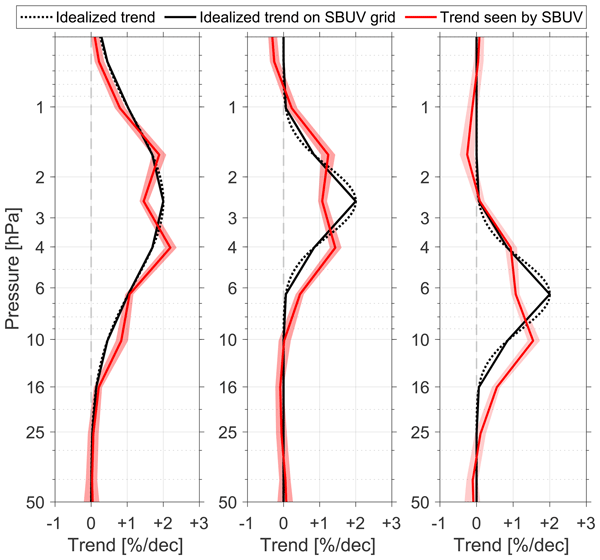
Louis Rivoire, Marianna Linz, Jessica L. Neu, Pu Lin, and Michelle L. Santee
Atmos. Chem. Phys., 25, 2269–2289, https://doi.org/10.5194/acp-25-2269-2025, https://doi.org/10.5194/acp-25-2269-2025, 2025
Short summary
Short summary
The recovery of the ozone hole since the 1987 Montreal Protocol has been observed in some regions but has yet to be seen globally. We ask how long it will take to witness a global recovery. Using a technique akin to flying a virtual satellite in a climate model, we find that the degree of confidence we place in the answer to this question is dramatically affected by errors in satellite observations.
Audrey Gaudel, Ilann Bourgeois, Meng Li, Kai-Lan Chang, Jerald Ziemke, Bastien Sauvage, Ryan M. Stauffer, Anne M. Thompson, Debra E. Kollonige, Nadia Smith, Daan Hubert, Arno Keppens, Juan Cuesta, Klaus-Peter Heue, Pepijn Veefkind, Kenneth Aikin, Jeff Peischl, Chelsea R. Thompson, Thomas B. Ryerson, Gregory J. Frost, Brian C. McDonald, and Owen R. Cooper
Atmos. Chem. Phys., 24, 9975–10000, https://doi.org/10.5194/acp-24-9975-2024, https://doi.org/10.5194/acp-24-9975-2024, 2024
Short summary
Short summary
The study examines tropical tropospheric ozone changes. In situ data from 1994–2019 display increased ozone, notably over India, Southeast Asia, and Malaysia and Indonesia. Sparse in situ data limit trend detection for the 15-year period. In situ and satellite data, with limited sampling, struggle to consistently detect trends. Continuous observations are vital over the tropical Pacific Ocean, Indian Ocean, western Africa, and South Asia for accurate ozone trend estimation in these regions.
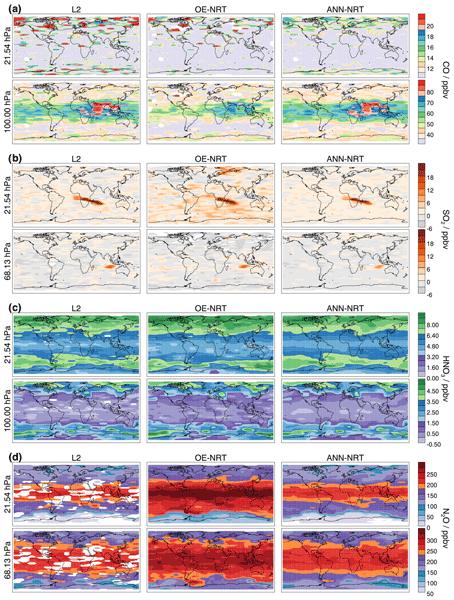
Frank Werner, Nathaniel J. Livesey, Luis F. Millán, William G. Read, Michael J. Schwartz, Paul A. Wagner, William H. Daffer, Alyn Lambert, Sasha N. Tolstoff, and Michelle L. Santee
Atmos. Meas. Tech., 16, 2733–2751, https://doi.org/10.5194/amt-16-2733-2023, https://doi.org/10.5194/amt-16-2733-2023, 2023
Short summary
Short summary
The algorithm that produces the near-real-time data products of the Aura Microwave Limb Sounder has been updated. The new algorithm is based on machine learning techniques and yields data products with much improved accuracy. It is shown that the new algorithm outperforms the previous versions, even when it is trained on only a few years of satellite observations. This confirms the potential of applying machine learning to the near-real-time efforts of other current and future mission concepts.
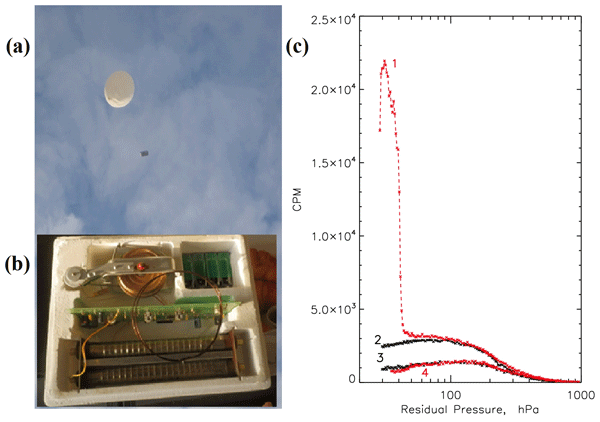
Irina Mironova, Miriam Sinnhuber, Galina Bazilevskaya, Mark Clilverd, Bernd Funke, Vladimir Makhmutov, Eugene Rozanov, Michelle L. Santee, Timofei Sukhodolov, and Thomas Ulich
Atmos. Chem. Phys., 22, 6703–6716, https://doi.org/10.5194/acp-22-6703-2022, https://doi.org/10.5194/acp-22-6703-2022, 2022
Short summary
Short summary
From balloon measurements, we detected unprecedented, extremely powerful, electron precipitation over the middle latitudes. The robustness of this event is confirmed by satellite observations of electron fluxes and chemical composition, as well as by ground-based observations of the radio signal propagation. The applied chemistry–climate model shows the almost complete destruction of ozone in the mesosphere over the region where high-energy electrons were observed.
Nora Mettig, Mark Weber, Alexei Rozanov, John P. Burrows, Pepijn Veefkind, Anne M. Thompson, Ryan M. Stauffer, Thierry Leblanc, Gerard Ancellet, Michael J. Newchurch, Shi Kuang, Rigel Kivi, Matthew B. Tully, Roeland Van Malderen, Ankie Piters, Bogumil Kois, René Stübi, and Pavla Skrivankova
Atmos. Meas. Tech., 15, 2955–2978, https://doi.org/10.5194/amt-15-2955-2022, https://doi.org/10.5194/amt-15-2955-2022, 2022
Short summary
Short summary
Vertical ozone profiles from combined spectral measurements in the UV and IR spectral ranges were retrieved by using data from TROPOMI/S5P and CrIS/Suomi-NPP. The vertical resolution and accuracy of the ozone profiles are improved by combining both wavelength ranges compared to retrievals limited to UV or IR spectral data only. The advancement of our TOPAS algorithm for combined measurements is required because in the UV-only retrieval the vertical resolution in the troposphere is very limited.
Lucien Froidevaux, Douglas E. Kinnison, Michelle L. Santee, Luis F. Millán, Nathaniel J. Livesey, William G. Read, Charles G. Bardeen, John J. Orlando, and Ryan A. Fuller
Atmos. Chem. Phys., 22, 4779–4799, https://doi.org/10.5194/acp-22-4779-2022, https://doi.org/10.5194/acp-22-4779-2022, 2022
Short summary
Short summary
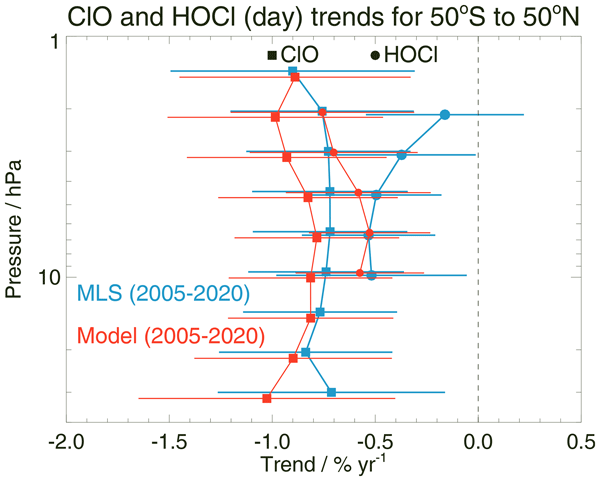
We analyze satellite-derived distributions of chlorine monoxide (ClO) and hypochlorous acid (HOCl) in the upper atmosphere. For 2005–2020, from 50°S to 50°N and over ~30 to 45 km, ClO and HOCl decreased by −0.7 % and −0.4 % per year, respectively. A detailed model of chemistry and dynamics agrees with the results. These decreases confirm the effectiveness of the 1987 Montreal Protocol, which limited emissions of chlorine- and bromine-containing source gases, in order to protect the ozone layer.
Qing Yue, Eric J. Fetzer, Likun Wang, Brian H. Kahn, Nadia Smith, John M. Blaisdell, Kerry G. Meyer, Mathias Schreier, Bjorn Lambrigtsen, and Irina Tkatcheva
Atmos. Meas. Tech., 15, 2099–2123, https://doi.org/10.5194/amt-15-2099-2022, https://doi.org/10.5194/amt-15-2099-2022, 2022
Short summary
Short summary
The self-consistency and continuity of cloud retrievals from infrared sounders and imagers aboard Aqua and SNPP (Suomi National Polar-orbiting Partnership) are examined at the pixel scale. Cloud products are found to be consistent with each other. Differences between sounder products are mainly due to cloud clearing and the treatment of clouds in scenes with unsuccessful atmospheric retrievals. The impact of algorithm and instrument differences is clearly seen in the imager cloud retrievals.
Sandip S. Dhomse, Martyn P. Chipperfield, Wuhu Feng, Ryan Hossaini, Graham W. Mann, Michelle L. Santee, and Mark Weber
Atmos. Chem. Phys., 22, 903–916, https://doi.org/10.5194/acp-22-903-2022, https://doi.org/10.5194/acp-22-903-2022, 2022
Short summary
Short summary
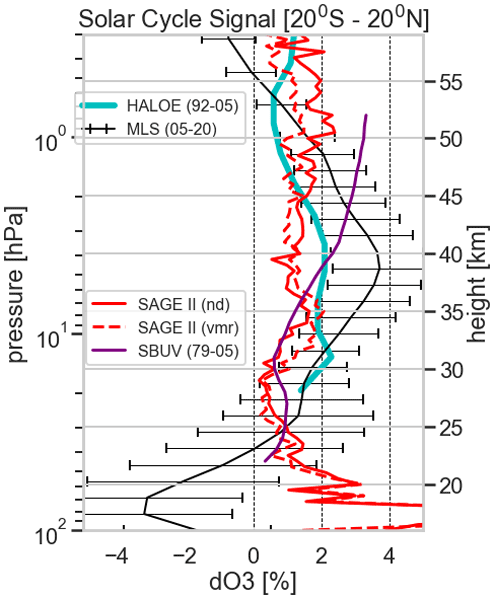
Solar flux variations associated with 11-year sunspot cycle is believed to exert important external climate forcing. As largest variations occur at shorter wavelengths such as ultra-violet part of the solar spectrum, associated changes in stratospheric ozone are thought to provide direct evidence for solar climate interaction. Until now, most of the studies reported double-peak structured solar cycle signal (SCS), but relatively new satellite data suggest only single-peak-structured SCS.
Frank Werner, Nathaniel J. Livesey, Michael J. Schwartz, William G. Read, Michelle L. Santee, and Galina Wind
Atmos. Meas. Tech., 14, 7749–7773, https://doi.org/10.5194/amt-14-7749-2021, https://doi.org/10.5194/amt-14-7749-2021, 2021
Short summary
Short summary
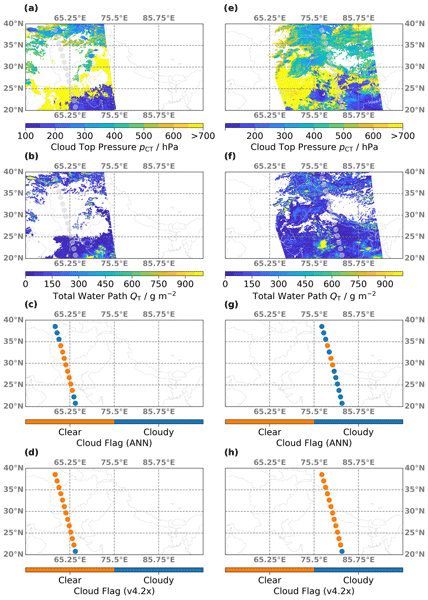
In this study we present an improved cloud detection scheme for the Microwave Limb Sounder, which is based on a feedforward artificial neural network. This new algorithm is shown not only to reliably detect high and mid-level convection containing even small amounts of cloud water but also to distinguish between high-reaching and mid-level to low convection.

Hugh C. Pumphrey, Michael J. Schwartz, Michelle L. Santee, George P. Kablick III, Michael D. Fromm, and Nathaniel J. Livesey
Atmos. Chem. Phys., 21, 16645–16659, https://doi.org/10.5194/acp-21-16645-2021, https://doi.org/10.5194/acp-21-16645-2021, 2021
Short summary
Short summary
Forest fires in British Columbia in August 2017 caused an unusual phenomonon: smoke and gases from the fires rose quickly to a height of 10 km. From there, the pollution continued to rise more slowly for many weeks, travelling around the world as it did so. In this paper, we describe how we used data from a satellite instrument to observe this polluted volume of air. The satellite has now been working for 16 years but has observed only three events of this type.

Nathaniel J. Livesey, William G. Read, Lucien Froidevaux, Alyn Lambert, Michelle L. Santee, Michael J. Schwartz, Luis F. Millán, Robert F. Jarnot, Paul A. Wagner, Dale F. Hurst, Kaley A. Walker, Patrick E. Sheese, and Gerald E. Nedoluha
Atmos. Chem. Phys., 21, 15409–15430, https://doi.org/10.5194/acp-21-15409-2021, https://doi.org/10.5194/acp-21-15409-2021, 2021
Short summary
Short summary
The Microwave Limb Sounder (MLS), an instrument on NASA's Aura mission launched in 2004, measures vertical profiles of the temperature and composition of Earth's "middle atmosphere" (the region from ~12 to ~100 km altitude). We describe how, among the 16 trace gases measured by MLS, the measurements of water vapor (H2O) and nitrous oxide (N2O) have started to drift since ~2010. The paper also discusses the origins of this drift and work to ameliorate it in a new version of the MLS dataset.
Cited articles
Anderson, G. P., Clough, S. A., Kneizys, F. X., Chetwynd, J. H., and Shettle, E. P.: Air Force Geophysical Laboratory (AFGL) atmospheric constituent profiles, U. S. Department of Commerce, 1986.
Aumann, H. H., Chahine, M. T., Gautier, C., Goldberg, M. D., Kalnay, E., McMillin, L. M., Revercomb, H., Rosenkranz, P. W., Smith, W. L., Staelin, D. H., Strow, L. L., and Susskind, J.: AIRS/AMSU/HSB on the aqua mission: design, science objectives, data products, and processing systems, IEEE Transactions on Geoscience and Remote Sensing, 41, 253–264, https://doi.org/10.1109/TGRS.2002.808356, 2003.
Barnet, C. D., Divakarla, M., Gambacorta, A., Iturbide-Sanchez, F., Tan, C., Wang, T., Warner, J., Zhang, K., and Zhu, T.: NOAA Unique Combined Atmospheric Processing System (NUCAPS) algorithm theoretical basis document, National Oceanic and Atmospheric Administration, Washington, DC, USA, 2021.
Berndt, E. B., Smith, N., Burks, J., White, K., Esmaili, R., Kuciauskas, A., Duran, E., Allen, R., LaFontaine, F., and Szkodzinski, J.: Gridded Satellite Sounding Retrievals in Operational Weather Forecasting: Product Description and Emerging Applications, Remote Sensing, 12, 3311, https://doi.org/10.3390/rs12203311, 2020.
Berndt, E. B., Smith, N., and Barnet, C. D.: Integrating NASA Aqua AIRS in a Real-Time NUCAPS Science-To-Applications System to Support Severe Weather Forecasting, Earth and Space Science, 10, e2022EA002725, https://doi.org/10.1029/2022EA002725, 2023.
Brakebusch, M., Randall, C. E., Kinnison, D. E., Tilmes, S., Santee, M. L., and Manney, G. L.: Evaluation of Whole Atmosphere Community Climate Model simulations of ozone during Arctic winter 2004–2005, J. Geophys. Res.-Atmospheres, 118, 2673–2688, https://doi.org/10.1002/jgrd.50226, 2013.
Chalon, G., Astruc, P., Hébert, Ph., Blumstein, D., Buil, C., Carlier, T., Clauss, A., Siméoni, D., and Tournier, B.: IASI instrument: technical description and measured performances, in: International Conference on Space Optics – ICSO 2004, International Conference on Space Optics 2004, Toulouse, France, 51, https://doi.org/10.1117/12.2308007, 2017.
Flynn, L. E., Seftor, C. J., Larsen, J. C., and Xu, P.: The Ozone Mapping and Profiler Suite, in: Earth Science Satellite Remote Sensing, edited by: Qu, J. J., Gao, W., Kafatos, M., Murphy, R. E., and Salomonson, V. V., Springer Berlin Heidelberg, Berlin, Heidelberg, 279–296, https://doi.org/10.1007/978-3-540-37293-6_15, 2006.
Frost, G. J., McKeen, S. A., Smith, N., Barnet, C. D., Ahmadov, R., Pierce, R. B., Ryerson, T. B., Holloway, J. S., Peischl, J., Pollack, I. B., McKain, K., Sweeney, C., Daube, B. C., Commane, R., Wofsy, S. C., Thompson, C. R., and Bourgeois, I.: Characterizing tropospheric trace gas retrievals from the Cross-track Infrared Sounder, in: AGU Fall Meeting Abstracts, IN44B-06, 2018.
Gambacorta, A. and Barnet, C. D.: Methodology and information content of the NOAA NESDIS operational channel selection for the Cross-Track Infrared Sounder (CrIS), IEEE Transactions on Geoscience and Remote Sensing, 51, https://doi.org/10.1109/TGRS.2012.2220369, 2013.
Gaudel, A., Bourgeois, I., Li, M., Chang, K.-L., Ziemke, J., Sauvage, B., Stauffer, R. M., Thompson, A. M., Kollonige, D. E., Smith, N., Hubert, D., Keppens, A., Cuesta, J., Heue, K.-P., Veefkind, P., Aikin, K., Peischl, J., Thompson, C. R., Ryerson, T. B., Frost, G. J., McDonald, B. C., and Cooper, O. R.: Tropical tropospheric ozone distribution and trends from in situ and satellite data, EGUsphere [preprint], https://doi.org/10.5194/egusphere-2023-3095, 2024.
Gelaro, R., McCarty, W., Suárez, M. J., Todling, R., Molod, A., Takacs, L., Randles, C. A., Darmenov, A., Bosilovich, M. G., Reichle, R., Wargan, K., Coy, L., Cullather, R., Draper, C., Akella, S., Buchard, V., Conaty, A., da Silva, A. M., Gu, W., Kim, G.-K., Koster, R., Lucchesi, R., Merkova, D., Nielsen, J. E., Partyka, G., Pawson, S., Putman, W., Rienecker, M., Schubert, S. D., Sienkiewicz, M., and Zhao, B.: The modern-era retrospective analysis for research and applications, Version 2 (MERRA-2), Journal of Climate, 30, 5419–5454, https://doi.org/10.1175/JCLI-D-16-0758.1, 2017.
Glumb, R. J., Jordan, D. C., and Mantica, P.: Development of the Crosstrack Infrared Sounder (CrIS) sensor design, International Symposium on Optical Science and Technology, San Diego, CA, 411–424, https://doi.org/10.1117/12.455124, 2002.
Hurtmans, D., Coheur, P.-F., Wespes, C., Clarisse, L., Scharf, O., Clerbaux, C., Hadji-Lazaro, J., George, M., and Turquety, S.: FORLI radiative transfer and retrieval code for IASI, Journal of Quantitative Spectroscopy and Radiative Transfer, 113, 1391–1408, https://doi.org/10.1016/j.jqsrt.2012.02.036, 2012.
Lambert, A., Santee, M. L., and Livesey, N. J.: Interannual variations of early winter Antarctic polar stratospheric cloud formation and nitric acid observed by CALIOP and MLS, Atmos. Chem. Phys., 16, 15219–15246, https://doi.org/10.5194/acp-16-15219-2016, 2016.
Maddy, E. S. and Barnet, C. D.: Vertical resolution estimates in Version 5 of AIRS operational retrievals, IEEE Transactions on Geoscience and Remote Sensing, 46, 2375–2384, https://doi.org/10.1109/TGRS.2008.917498, 2008.
Manney, G.: MLS/Aura Level 2 Nitric Acid (HNO3) Mixing Ratio V005, [data set], https://doi.org/10.5067/AURA/MLS/DATA2511, 2021.
McKeen, S. A., Angevine, W. M., Ahmadov, R., Frost, G. J., Kim, S. W., Cui, Y., McDonald, B., Trainer, M., Holloway, J. S., Ryerson, T. B., Peischl, J., Gambacorta, A., Barnet, C. D., Smith, N., and Pierce, R. B.: Mid-tropospheric Spectral Length-scale Analysis of Many Constituents from Aircraft, Satellite and Model Results During the 2013 SENEX Field Study, in: AGU Fall Meeting Abstracts, IN31A-1746, 2016.
Murphy, D. M. and Gary, B. L.: Mesoscale Temperature Fluctuations and Polar Stratospheric Clouds, Journal of the Atmospheric Sciences, 52, 1753–1760, https://doi.org/10.1175/1520-0469(1995)052<1753:MTFAPS>2.0.CO;2, 1995.
Oelhaf, H., Sinnhuber, B.-M., Woiwode, W., Bönisch, H., Bozem, H., Engel, A., Fix, A., Friedl-Vallon, F., Grooß, J.-U., Hoor, P., Johansson, S., Jurkat-Witschas, T., Kaufmann, S., Krämer, M., Krause, J., Kretschmer, E., Lörks, D., Marsing, A., Orphal, J., Pfeilsticker, K., Pitts, M., Poole, L., Preusse, P., Rapp, M., Riese, M., Rolf, C., Ungermann, J., Voigt, C., Volk, C. M., Wirth, M., Zahn, A., and Ziereis, H.: POLSTRACC: Airborne Experiment for Studying the Polar Stratosphere in a Changing Climate with the High Altitude and Long Range Research Aircraft (HALO), Bulletin of the American Meteorological Society, 100, 2634–2664, https://doi.org/10.1175/BAMS-D-18-0181.1, 2019.
Pagano, T. S., Aumann, H. H., Hagan, D. E., and Overoye, K.: Prelaunch and in-flight radiometric calibration of the atmospheric infrared sounder (AIRS), IEEE Trans. Geosci. Remote Sensing, 41, 265–273, https://doi.org/10.1109/TGRS.2002.808324, 2003.
Rodgers, C. D.: Inverse methods for atmospheric sounding: theory and practice, World Scientific, Singapore, Hackensack, N.J., ISBN 978-981-02-2740-1, 2000
Ronsmans, G., Langerock, B., Wespes, C., Hannigan, J. W., Hase, F., Kerzenmacher, T., Mahieu, E., Schneider, M., Smale, D., Hurtmans, D., De Mazière, M., Clerbaux, C., and Coheur, P.-F.: First characterization and validation of FORLI−HNO3 vertical profiles retrieved from IASI/Metop, Atmos. Meas. Tech., 9, 4783–4801, https://doi.org/10.5194/amt-9-4783-2016, 2016.
Ronsmans, G., Wespes, C., Hurtmans, D., Clerbaux, C., and Coheur, P.-F.: Spatio-temporal variations of nitric acid total columns from 9 years of IASI measurements – a driver study, Atmos. Chem. Phys., 18, 4403–4423, https://doi.org/10.5194/acp-18-4403-2018, 2018.
Santee, M. L., MacKenzie, I. A., Manney, G. L., Chipperfield, M. P., Bernath, P. F., Walker, K. A., Boone, C. D., Froidevaux, L., Livesey, N. J., and Waters, J. W.: A study of stratospheric chlorine partitioning based on new satellite measurements and modeling, J. Geophys. Res., 113, D12307, https://doi.org/10.1029/2007JD009057, 2008.
Smith, N: Sounder SIPS Aqua AIRS IR + MW Level 2 CLIMCAPS retrieved atmospheric state V2.1, NASA [data set], https://doi.org/10.5067/J7GVFM11OGIX, 2024a.
Smith, N: Sounder SIPS JPSS-1 CrIMSS Level 2 CLIMCAPS retrieved atmospheric state V2.1, NASA [data set], https://doi.org/10.5067/5GHJWKUXQSP6, 2024b.
Smith, N: Sounder SIPS Suomi NPP CrIMSS Level 2 CLIMCAPS Full Spectral Resolution retrieved atmospheric state V2.1, NASA [data set], https://doi.org/10.5067/SD6WORV4GX8P, 2024c.
Smith, N. and Barnet, C. D.: Uncertainty Characterization and Propagation in the Community Long-Term Infrared Microwave Combined Atmospheric Product System (CLIMCAPS), Remote Sensing, 11, 1227, https://doi.org/10.3390/rs11101227, 2019.
Smith, N. and Barnet, C. D.: CLIMCAPS observing capability for temperature, moisture, and trace gases from AIRS/AMSU and CrIS/ATMS, Atmos. Meas. Tech., 13, 4437–4459, https://doi.org/10.5194/amt-13-4437-2020, 2020.
Smith, N. and Barnet, C. D.: CLIMCAPS–A NASA Long-Term Product for Infrared + Microwave Atmospheric Soundings, Earth and Space Science, 10, e2022EA002701, https://doi.org/10.1029/2022EA002701, 2023a.
Smith, N. and Barnet, C. D.: Practical Implications of CLIMCAPS Cloud Clearing and Derived Quality Metrics, Earth and Space Science, 10, e2023EA002913, https://doi.org/10.1029/2023EA002913, 2023b.
Smith, N. and Barnet, C. D.: An information content approach to diagnosing and improving CLIMCAPS retrieval consistency across instruments and satellites, Atmos. Meas. Tech., 18, 1823–1839, https://doi.org/10.5194/amt-18-1823-2025, 2025.
Smith, N., Esmaili, R., and Barnet, C. D.: CLIMCAPS Science Application Guides, AIRS Project, Jet Propulsion Laboratory, NASA, 2021.
Solomon, S.: Stratospheric ozone depletion: a review of concepts and history, Reviews of Geophysics, 37, 275–316, https://doi.org/10.1029/1999RG900008, 1999
Strow, L. L., Hannon, S. E., De Souza-Machado, S., Motteler, H. E., and Tobin, D.: An overview of the AIRS radiative transfer model, IEEE Transactions on Geoscience and Remote Sensing, 41, 303–313, https://doi.org/10.1109/TGRS.2002.808244, 2003.
Strow, L. L., Motteler, H., Tobin, D., Revercomb, H., Hannon, S., Buijs, H., Predina, J., Suwinski, L., and Glumb, R.: Spectral calibration and validation of the Cross-track Infrared Sounder on the Suomi NPP satellite: CrIS spectral calibration, J. Geophys. Res.-Atmospheres, 118, 12486–12496, https://doi.org/10.1002/2013JD020480, 2013.
Susskind, J., Barnet, C. D., and Blaisdell, J. M.: Retrieval of atmospheric and surface parameters from AIRS/AMSU/HSB data in the presence of clouds, IEEE Trans. Geosci. Remote Sensing, 41, 90–409, 2003.
Toon, O. B., Hamill, P., Turco, R. P., and Pinto, J.: Condensation of HNO3 and HCl in the winter polar stratospheres, Geophys. Res. Lett., 13, 1284–1287, https://doi.org/10.1029/GL013i012p01284, 1986.
Tritscher, I., Pitts, M. C., Poole, L. R., Alexander, S. P., Cairo, F., Chipperfield, M. P., Grooß, J., Höpfner, M., Lambert, A., Luo, B., Molleker, S., Orr, A., Salawitch, R., Snels, M., Spang, R., Woiwode, W., and Peter, T.: Polar Stratospheric Clouds: Satellite Observations, Processes, and Role in Ozone Depletion, Reviews of Geophysics, 59, e2020RG000702, https://doi.org/10.1029/2020RG000702, 2021.
Wargan, K., Kramarova, N., Weir, B., Pawson, S., and Davis, S. M.: Toward a Reanalysis of Stratospheric Ozone for Trend Studies: Assimilation of the Aura Microwave Limb Sounder and Ozone Mapping and Profiler Suite Limb Profiler Data, J. Geophys. Res.-Atmospheres, 125, e2019JD031892, https://doi.org/10.1029/2019JD031892, 2020.
Waters, J. W., Froidevaux, L., Harwood, R. S., Jarnot, R. F., Pickett, H. M., Read, W. G., Siegel, P. H., Cofield, R. E., Filipiak, M. J., Flower, D. A., Holden, J. R., Lau, G. K., Livesey, N. J., Manney, G. L., Pumphrey, H. C., Santee, M. L., Wu, D. L., Cuddy, D. T., Lay, R. R., Loo, M. S., Perun, V. S., Schwartz, M. J., Stek, P. C., Thurstans, R. P., Boyles, M. A., Chandra, K. M., Chavez, M. C., Gun-Shing Chen, Chudasama, B. V., Dodge, R., Fuller, R. A., Girard, M. A., Jiang, J. H., Yibo Jiang, Knosp, B. W., LaBelle, R. C., Lam, J. C., Lee, K. A., Miller, D., Oswald, J. E., Patel, N. C., Pukala, D. M., Quintero, O., Scaff, D. M., Van Snyder, W., Tope, M. C., Wagner, P. A., and Walch, M. J.: The Earth observing system microwave limb sounder (EOS MLS) on the aura Satellite, IEEE Trans. Geosci. Remote Sensing, 44, 1075–1092, https://doi.org/10.1109/TGRS.2006.873771, 2006.
Weaver, G., Smith, N., Berndt, E. B., White, K. D., Dostalek, J. F., and Zavodsky, B. T.: Addressing the cold air aloft aviation challenge with satellite sounding observations, Journal of Operational Meteorology, 138–152, https://doi.org/10.15191/nwajom.2019.0710, 2019.
Wespes, C., Hurtmans, D., Herbin, H., Barret, B., Turquety, S., Hadji-Lazaro, J., Clerbaux, C., and Coheur, P.: First global distributions of nitric acid in the troposphere and the stratosphere derived from infrared satellite measurements, J. Geophys. Res., 112, 2006JD008202, https://doi.org/10.1029/2006JD008202, 2007.
Wespes, C., Ronsmans, G., Clarisse, L., Solomon, S., Hurtmans, D., Clerbaux, C., and Coheur, P.-F.: Polar stratospheric nitric acid depletion surveyed from a decadal dataset of IASI total columns, Atmos. Chem. Phys., 22, 10993–11007, https://doi.org/10.5194/acp-22-10993-2022, 2022.
Short summary
Once Aura is decommissioned, the multi-decadal microwave limb sounder (MLS) record of stratospheric HNO3 will end. This paper presents the retrieval of stratospheric HNO3 from nadir infrared sounders. We demonstrate the retrieval of stratospheric HNO3, independent of tropospheric signal and noise, that broadly reflects the variation captured by MLS. This novel retrieval approach improves upon the status quo and lays the foundation for validation studies and product roll-out in future.
Once Aura is decommissioned, the multi-decadal microwave limb sounder (MLS) record of...


