
Articles | Volume 18, issue 21
https://doi.org/10.5194/amt-18-6291-2025
© Author(s) 2025. This work is distributed under
the Creative Commons Attribution 4.0 License.
the Creative Commons Attribution 4.0 License.
https://doi.org/10.5194/amt-18-6291-2025
© Author(s) 2025. This work is distributed under
the Creative Commons Attribution 4.0 License.
the Creative Commons Attribution 4.0 License.
Research article
| 
06 Nov 2025
Research article |
| 06 Nov 2025
| 06 Nov 2025
In-line holographic droplet imaging: accelerated classification with convolutional neural networks and quantitative experimental validation
Birte Thiede
Max Planck Institute for Dynamics and Self-Organization (MPIDS), Am Faßberg 17, 37077 Göttingen, Germany
Faculty of Physics, University of Göttingen, Friedrich-Hund-Platz 1, 37077 Göttingen, Germany
Oliver Schlenczek
Max Planck Institute for Dynamics and Self-Organization (MPIDS), Am Faßberg 17, 37077 Göttingen, Germany
Katja Stieger
Max Planck Institute for Dynamics and Self-Organization (MPIDS), Am Faßberg 17, 37077 Göttingen, Germany
Faculty of Physics, University of Göttingen, Friedrich-Hund-Platz 1, 37077 Göttingen, Germany
Alexander Ecker
Max Planck Institute for Dynamics and Self-Organization (MPIDS), Am Faßberg 17, 37077 Göttingen, Germany
Institute of Computer Science and Campus Institute Data Science, University of Göttingen, Göttingen, Germany
Eberhard Bodenschatz
Max Planck Institute for Dynamics and Self-Organization (MPIDS), Am Faßberg 17, 37077 Göttingen, Germany
Faculty of Physics, University of Göttingen, Friedrich-Hund-Platz 1, 37077 Göttingen, Germany
Laboratory of Atomic and Solid State Physics, Cornell University, 523 Clark Hall, Ithaca, NY 14853, USA
Gholamhossein Bagheri
CORRESPONDING AUTHOR

Max Planck Institute for Dynamics and Self-Organization (MPIDS), Am Faßberg 17, 37077 Göttingen, Germany
Related authors
Oliver Schlenczek, Freja Nordsiek, Claudia E. Brunner, Venecia Chávez-Medina, Birte Thiede, Eberhard Bodenschatz, and Gholamhossein Bagheri
Earth Syst. Sci. Data, 18, 7557–7574, https://doi.org/10.5194/essd-18-7557-2026, https://doi.org/10.5194/essd-18-7557-2026, 2026
Short summary
Short summary
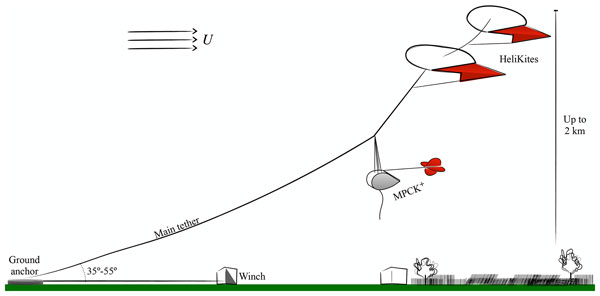
During the Pallas Cloud Experiment (PaCE) in Finland (19–26 September 2022), the Advanced Max Planck CloudKite instrument (MPCK+) gathered turbulence, atmospheric-state parameters and cloud-microphysics from 0–1200 m. Flights lasted 1.5–3 hours, capturing droplet concentrations and size distributions at high resolution (<10 m spacing). The dataset aids studies of Arctic boundary layer clouds above freezing temperatures. This paper details the data collection, structure, and user guidelines.
Gholamhossein Bagheri, Freja Nordsiek, Oliver Schlenczek, Yewon Kim, Birte Thiede, Venecia Chávez-Medina, Philipp Höhne, Torben Neumann, and Eberhard Bodenschatz
EGUsphere, https://doi.org/10.5194/egusphere-2026-3456, https://doi.org/10.5194/egusphere-2026-3456, 2026
Short summary
Short summary
Clouds remain a major source of uncertainty in weather and climate prediction because key processes occur at scales that are difficult to observe. We developed a new airborne measurement system carried by a tethered balloon that directly images individual cloud droplets and their motion. Our field tests demonstrated reliable operation and revealed cloud structure at unprecedented detail, providing a new tool for studying cloud development, rainfall formation, and climate.
Birte Thiede, Freja Nordsiek, Yewon Kim, Eberhard Bodenschatz, and Gholamhossein Bagheri
Atmos. Meas. Tech., 18, 5999–6019, https://doi.org/10.5194/amt-18-5999-2025, https://doi.org/10.5194/amt-18-5999-2025, 2025
Short summary
Short summary
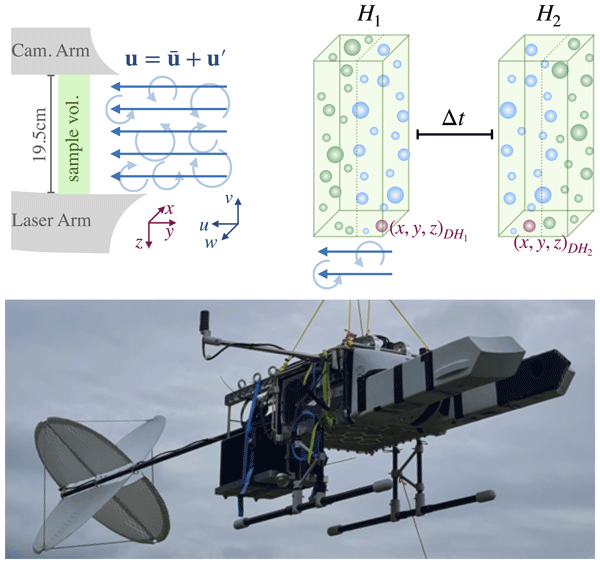
HoloTrack is a fully autonomous system designed to capture detailed data on cloud droplets. It combines holographic imaging with environmental sensors to measure droplet size, movement, and surrounding air conditions. The system records hologram pairs to track droplet motion. While it can be used in the lab, it is mainly designed for in-flight use to measure cloud droplets in-situ. This paper presents the instrument’s design and evaluates its performance through testing.
Oliver Schlenczek, Freja Nordsiek, Claudia E. Brunner, Venecia Chávez-Medina, Birte Thiede, Eberhard Bodenschatz, and Gholamhossein Bagheri
Earth Syst. Sci. Data, 18, 7557–7574, https://doi.org/10.5194/essd-18-7557-2026, https://doi.org/10.5194/essd-18-7557-2026, 2026
Short summary
Short summary
During the Pallas Cloud Experiment (PaCE) in Finland (19–26 September 2022), the Advanced Max Planck CloudKite instrument (MPCK+) gathered turbulence, atmospheric-state parameters and cloud-microphysics from 0–1200 m. Flights lasted 1.5–3 hours, capturing droplet concentrations and size distributions at high resolution (<10 m spacing). The dataset aids studies of Arctic boundary layer clouds above freezing temperatures. This paper details the data collection, structure, and user guidelines.
Gholamhossein Bagheri, Freja Nordsiek, Oliver Schlenczek, Yewon Kim, Birte Thiede, Venecia Chávez-Medina, Philipp Höhne, Torben Neumann, and Eberhard Bodenschatz
EGUsphere, https://doi.org/10.5194/egusphere-2026-3456, https://doi.org/10.5194/egusphere-2026-3456, 2026
Short summary
Short summary
Clouds remain a major source of uncertainty in weather and climate prediction because key processes occur at scales that are difficult to observe. We developed a new airborne measurement system carried by a tethered balloon that directly images individual cloud droplets and their motion. Our field tests demonstrated reliable operation and revealed cloud structure at unprecedented detail, providing a new tool for studying cloud development, rainfall formation, and climate.
Venecia Chávez-Medina, Hossein Khodamoradi, Oliver Schlenczek, Freja Nordsiek, Claudia E. Brunner, Eberhard Bodenschatz, and Gholamhossein Bagheri
Earth Syst. Sci. Data, 18, 4263–4278, https://doi.org/10.5194/essd-18-4263-2026, https://doi.org/10.5194/essd-18-4263-2026, 2026
Short summary
Short summary
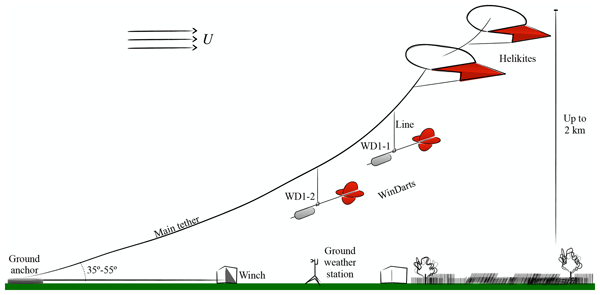
During the Pallas Cloud Experiment (PaCE) in northern Finland from September 15 to 28, 2022, detailed measurements of the atmospheric boundary layer, aerosols, and cloud droplets were collected using the Max Planck CloudKite platform, WinDarts, and a ground station. Observations covered altitudes from ground level up to 1.5 km above ground level. This paper presents the dataset, describes the data collection process and structure, and provides guidance for users.
Viet Le, Konstantinos Doulgeris, Mika Komppula, John Backman, Gholamhossein Bagheri, Eberhard Bodenschatz, and David Brus
Earth Syst. Sci. Data Discuss., https://doi.org/10.5194/essd-2026-135, https://doi.org/10.5194/essd-2026-135, 2026
Preprint under review for ESSD
Short summary
Short summary
Vertical profiles and time series of aerosol particles, cloud droplets, and weather conditions were measured by the Finnish Meteorological Institute airborne payload attached to tethered balloons during the Pallas Cloud Experiment 2022 in Finland. When combined with other datasets collected during the campaign, these measurements will enable integrated analyses and offer a comprehensive view of the atmospheric conditions during the experiment.
Birte Thiede, Freja Nordsiek, Yewon Kim, Eberhard Bodenschatz, and Gholamhossein Bagheri
Atmos. Meas. Tech., 18, 5999–6019, https://doi.org/10.5194/amt-18-5999-2025, https://doi.org/10.5194/amt-18-5999-2025, 2025
Short summary
Short summary
HoloTrack is a fully autonomous system designed to capture detailed data on cloud droplets. It combines holographic imaging with environmental sensors to measure droplet size, movement, and surrounding air conditions. The system records hologram pairs to track droplet motion. While it can be used in the lab, it is mainly designed for in-flight use to measure cloud droplets in-situ. This paper presents the instrument’s design and evaluates its performance through testing.
Alina Sylvia Waltraud Reininger, Daria Tatsii, Taraprasad Bhowmick, Gholamhossein Bagheri, and Andreas Stohl
Atmos. Chem. Phys., 25, 10691–10705, https://doi.org/10.5194/acp-25-10691-2025, https://doi.org/10.5194/acp-25-10691-2025, 2025
Short summary
Short summary
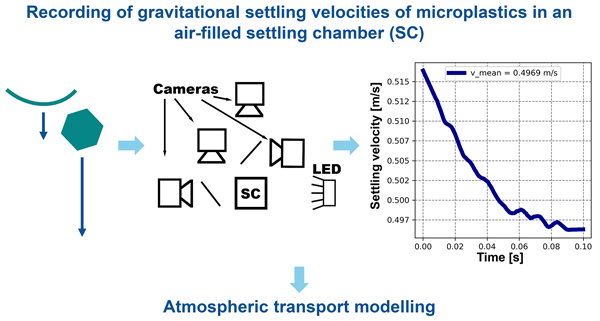
Microplastics are transported over large distances in the atmosphere, but the shape-dependence of their atmospheric transport lacks investigation. We conducted laboratory experiments and atmospheric transport simulations to study the settling of commercially sold microplastics. We found that films settle up to 74 % slower and travel up to ~ 4x further than volume-equivalent spheres. Our work emphasizes the role of the atmosphere as a transport medium for commercial microplastics such as glitter.
Simon Thivet, Gholamhossein Bagheri, Przemyslaw M. Kornatowski, Allan Fries, Jonathan Lemus, Riccardo Simionato, Carolina Díaz-Vecino, Eduardo Rossi, Taishi Yamada, Simona Scollo, and Costanza Bonadonna
Atmos. Meas. Tech., 18, 2803–2824, https://doi.org/10.5194/amt-18-2803-2025, https://doi.org/10.5194/amt-18-2803-2025, 2025
Short summary
Short summary
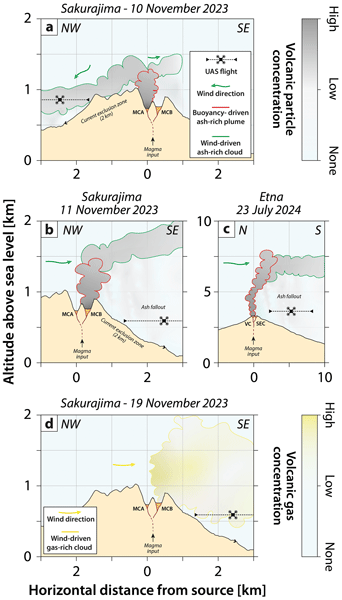
This work presents an innovative way of sampling and analyzing volcanic clouds using an unoccupied aircraft system (UAS). The UAS can reach hazardous environments to sample volcanic particles and measure in situ key parameters, such as the atmospheric concentration of volcanic aerosols and gases. Acquired data bridge the gap between the existing approaches of ground sampling and remote sensing, thereby contributing to the understanding of volcanic cloud dispersion and impact.
Viet Le, Konstantinos Matthaios Doulgeris, Mika Komppula, John Backman, Gholamhossein Bagheri, Eberhard Bodenschatz, and David Brus
Earth Syst. Sci. Data Discuss., https://doi.org/10.5194/essd-2025-148, https://doi.org/10.5194/essd-2025-148, 2025
Preprint withdrawn
Short summary
Short summary
This manuscript presents datasets collected during the Pallas Cloud Experiment in northern Finland during the autumn of 2022. We provide an overview of the payload that measured meteorological, cloud, and aerosol properties, and was deployed on tethered balloon systems across 21 flights. Additionally, we describe the datasets obtained, including details of the instruments on the payload.
Wolf Knöller, Gholamhossein Bagheri, Philipp von Olshausen, and Michael Wilczek
Atmos. Meas. Tech., 17, 6913–6931, https://doi.org/10.5194/amt-17-6913-2024, https://doi.org/10.5194/amt-17-6913-2024, 2024
Short summary
Short summary
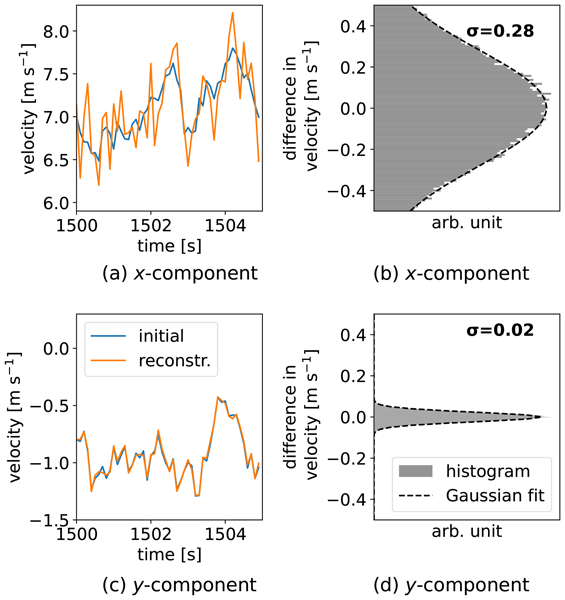
Three-dimensional (3D) wind velocity measurements are of major importance for the characterization of atmospheric turbulence. This paper presents a detailed study of the measurement uncertainty of a three-beam wind lidar designed for mounting on airborne platforms. Considering the geometrical constraints, the analysis provides quantitative estimates for the measurement uncertainty of all components of the 3D wind vector. As a result, we propose optimized post-processing for error reduction.
Marcel Schröder, Tobias Bätge, Eberhard Bodenschatz, Michael Wilczek, and Gholamhossein Bagheri
Atmos. Meas. Tech., 17, 627–657, https://doi.org/10.5194/amt-17-627-2024, https://doi.org/10.5194/amt-17-627-2024, 2024
Short summary
Short summary
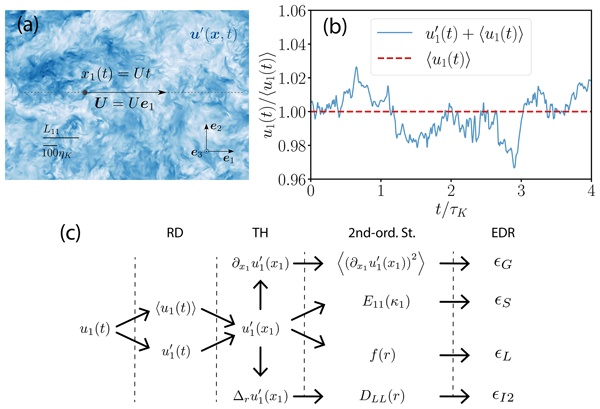
The rate at which energy is dissipated in a turbulent flow is an extremely important quantity. In the atmosphere, it is usually measured by recording a velocity time at a specific location. Our goal is to understand how best to estimate the dissipation rate from such data based on various available methods. Our reference for evaluating the performance of the different methods is data generated with direct numerical simulations and in highly controlled laboratory setups.
Cited articles
Allwayin, N., Larsen, M. L., Glienke, S., and Shaw, R. A.: Locally narrow droplet size distributions are ubiquitous in stratocumulus clouds, Science, 384, 528–532, 2024. a
Amsler, P.: Digital in-line holographic microscope for ice crystals, PhD thesis, ETH Zurich, https://doi.org/10.3929/ethz-a-005900340, 2009. a
Bagheri, G., Schlenczek, O., Turco, L., Thiede, B., Stieger, K., Kosub, J. M., Clauberg, S., Pöhlker, M. L., Pöhlker, C., Moláček, J., Scheithauer, S., and Bodenschatz, E: Size, concentration, and origin of human exhaled particles and their dependence on human factors with implications on infection transmission, Journal of Aerosol Science, 168, 106102, https://doi.org/10.1016/j.jaerosci.2022.106102, 2023. a
Beals, M. A., Fugal, J. P., Shaw, R. A., Lu, J., Spuler, S. M., and Stith, J. L.: Holographic measurements of inhomogeneous cloud mixing at the centimeter scale, Science, 350, 87–90, 2015. a
Beals, M. J.: Investigations of cloud microphysical response to mixing using digital holography, PhD thesis, Michigan Technological University, https://doi.org/10.37099/mtu.dc.etds/669, 2013. a
Beck, A., Henneberger, J., Schöpfer, S., Fugal, J., and Lohmann, U.: HoloGondel: in situ cloud observations on a cable car in the Swiss Alps using a holographic imager, Atmos. Meas. Tech., 10, 459–476, https://doi.org/10.5194/amt-10-459-2017, 2017. a
Berg, M. J.: Tutorial: Aerosol characterization with digital in-line holography, Journal of Aerosol Science, 165, 106023, https://doi.org/10.1016/j.jaerosci.2022.106023, 2022. a
Brown, P. R.: Use of holography for airborne cloud physics measurements, Journal of Atmospheric and Oceanic Technology, 6, 293–306, 1989. a
Chen, N., Wang, C., and Heidrich, W.: Holographic 3D particle imaging with model-based deep network, IEEE Transactions on Computational Imaging, 7, 288–296, 2021. a
Denis, L., Fournier, C., Fournel, T., Ducottet, C., and Jeulin, D.: Direct extraction of the mean particle size from a digital hologram, Applied Optics, 45, 944–952, 2006. a
Fugal, J. P.: In-situ measurement and characterization of cloud particles using digital in-line holography, PhD thesis, Michigan Technological University, https://doi.org/10.37099/mtu.dc.etds/104, 2007. a
Fugal, J. P. and Shaw, R. A.: Cloud particle size distributions measured with an airborne digital in-line holographic instrument, Atmos. Meas. Tech., 2, 259–271, https://doi.org/10.5194/amt-2-259-2009, 2009. a, b
Giri, R. and Berg, M. J.: The color of aerosol particles, Scientific Reports, 13, 1594, https://doi.org/10.1038/s41598-023-28823-6, 2023. a
Glienke, S., Kostinski, A. B., Shaw, R. A., Larsen, M. L., Fugal, J. P., Schlenczek, O., and Borrmann, S.: Holographic observations of centimeter-scale nonuniformities within marine stratocumulus clouds, Journal of the Atmospheric Sciences, 77, 499–512, 2020. a
Goodman, J. W.: Introduction to Fourier optics, Roberts and Company Publishers, ISBN 0-9747077-2-4, 2005. a
Guildenbecher, D. R., Gao, J., Reu, P. L., and Chen, J.: Digital holography simulations and experiments to quantify the accuracy of 3D particle location and 2D sizing using a proposed hybrid method, Applied Optics, 52, 3790–3801, 2013. a
Henneberger, J., Fugal, J. P., Stetzer, O., and Lohmann, U.: HOLIMO II: a digital holographic instrument for ground-based in situ observations of microphysical properties of mixed-phase clouds, Atmos. Meas. Tech., 6, 2975–2987, https://doi.org/10.5194/amt-6-2975-2013, 2013. a
Krizhevsky, A., Sutskever, I., and Hinton, G. E.: Imagenet classification with deep convolutional neural networks, in: Advances in neural information processing systems, Vol. 25, https://proceedings.neurips.cc/paper_files/paper/2012/file/c399862d3b9d6b76c8436e924a68c45b-Paper.pdf (last access: 24 October 2025), 2012. a
Larsen, M. L. and Shaw, R. A.: A method for computing the three-dimensional radial distribution function of cloud particles from holographic images, Atmos. Meas. Tech., 11, 4261–4272, https://doi.org/10.5194/amt-11-4261-2018, 2018. a
Lauber, A.: In-situ observations of ice multiplication in clouds using a holographic imager and a deep learning algorithm for the classification of cloud particles, PhD thesis, ETH Zurich, https://doi.org/10.3929/ethz-b-000474830, 2020. a, b
O'Shea, S., Choularton, T., Lloyd, G., Crosier, J., Bower, K., Gallagher, M., Abel, S., Cotton, R., Brown, P., Fugal, J., Schlenczek, O., Borrmann, S., and Pickering, J. C.: Airborne observations of the microphysical structure of two contrasting cirrus clouds, Journal of Geophysical Research: Atmospheres, 121, 13–510, 2016. a
Paliwal, A., Schlenczek, O., Thiede, B., Pereira, M. S., Stieger, K., Bodenschatz, E., Bagheri, G., and Ecker, A.: FLASHμ: Fast Localizing And Sizing of Holographic Microparticles, arXiv [preprint], https://doi.org/10.48550/arXiv.2503.11538, 14 March 2025. a
Pu, S., Allano, D., Patte-Rouland, B., Malek, M., Lebrun, D., and Cen, K.: Particle field characterization by digital in-line holography: 3D location and sizing, Experiments in Fluids, 39, 1–9, 2005. a
Raupach, S., Vössing, H., Curtius, J., and Borrmann, S.: Digital crossed-beam holography for in situ imaging of atmospheric ice particles, Journal of Optics A: Pure and Applied Optics, 8, 796, https://doi.org/10.1088/1464-4258/8/9/014, 2006. a
Ren, Z., Xu, Z., and Lam, E. Y.: End-to-end deep learning framework for digital holographic reconstruction, Advanced Photonics, 1, 016004–016004, 2019. a
Sauvageat, E., Zeder, Y., Auderset, K., Calpini, B., Clot, B., Crouzy, B., Konzelmann, T., Lieberherr, G., Tummon, F., and Vasilatou, K.: Real-time pollen monitoring using digital holography, Atmos. Meas. Tech., 13, 1539–1550, https://doi.org/10.5194/amt-13-1539-2020, 2020. a
Schreck, J. S., Hayman, M., Gantos, G., Bansemer, A., and Gagne, D. J.: Mimicking non-ideal instrument behavior for hologram processing using neural style translation, Optics Express, 31, 20049–20067, 2023. a
Shao, S., Mallery, K., and Hong, J.: Machine learning holography for measuring 3D particle distribution, Chemical Engineering Science, 225, 115830, https://doi.org/10.1016/j.ces.2020.115830, 2020. a
Shaw, R., Spuler, S., Beals, M., Black, N., Fugal, J., and Lu, J.: Final report on holodec 2 technology readiness level, Tech. rep., Technical report, DOE Office of Science Atmospheric Radiation Measurement, https://doi.org/10.2172/1043293, 2012. a
Shyam, K. M. and Hong, J.: A Review of 3D Particle Tracking and Flow Diagnostics Using Digital Holography, arXiv [preprint], https://doi.org/10.48550/arXiv.2412.18094, 24 December 2024. a
Spuler, S. M. and Fugal, J.: Design of an in-line, digital holographic imaging system for airborne measurement of clouds, Applied Optics, 50, 1405–1412, 2011. a
Stevens, B., Bony, S., Farrell, D., Ament, F., Blyth, A., Fairall, C., Karstensen, J., Quinn, P. K., Speich, S., Acquistapace, C., Aemisegger, F., Albright, A. L., Bellenger, H., Bodenschatz, E., Caesar, K.-A., Chewitt-Lucas, R., de Boer, G., Delanoë, J., Denby, L., Ewald, F., Fildier, B., Forde, M., George, G., Gross, S., Hagen, M., Hausold, A., Heywood, K. J., Hirsch, L., Jacob, M., Jansen, F., Kinne, S., Klocke, D., Kölling, T., Konow, H., Lothon, M., Mohr, W., Naumann, A. K., Nuijens, L., Olivier, L., Pincus, R., Pöhlker, M., Reverdin, G., Roberts, G., Schnitt, S., Schulz, H., Siebesma, A. P., Stephan, C. C., Sullivan, P., Touzé-Peiffer, L., Vial, J., Vogel, R., Zuidema, P., Alexander, N., Alves, L., Arixi, S., Asmath, H., Bagheri, G., Baier, K., Bailey, A., Baranowski, D., Baron, A., Barrau, S., Barrett, P. A., Batier, F., Behrendt, A., Bendinger, A., Beucher, F., Bigorre, S., Blades, E., Blossey, P., Bock, O., Böing, S., Bosser, P., Bourras, D., Bouruet-Aubertot, P., Bower, K., Branellec, P., Branger, H., Brennek, M., Brewer, A., Brilouet, P.-E., Brügmann, B., Buehler, S. A., Burke, E., Burton, R., Calmer, R., Canonici, J.-C., Carton, X., Cato Jr., G., Charles, J. A., Chazette, P., Chen, Y., Chilinski, M. T., Choularton, T., Chuang, P., Clarke, S., Coe, H., Cornet, C., Coutris, P., Couvreux, F., Crewell, S., Cronin, T., Cui, Z., Cuypers, Y., Daley, A., Damerell, G. M., Dauhut, T., Deneke, H., Desbios, J.-P., Dörner, S., Donner, S., Douet, V., Drushka, K., Dütsch, M., Ehrlich, A., Emanuel, K., Emmanouilidis, A., Etienne, J.-C., Etienne-Leblanc, S., Faure, G., Feingold, G., Ferrero, L., Fix, A., Flamant, C., Flatau, P. J., Foltz, G. R., Forster, L., Furtuna, I., Gadian, A., Galewsky, J., Gallagher, M., Gallimore, P., Gaston, C., Gentemann, C., Geyskens, N., Giez, A., Gollop, J., Gouirand, I., Gourbeyre, C., de Graaf, D., de Groot, G. E., Grosz, R., Güttler, J., Gutleben, M., Hall, K., Harris, G., Helfer, K. C., Henze, D., Herbert, C., Holanda, B., Ibanez-Landeta, A., Intrieri, J., Iyer, S., Julien, F., Kalesse, H., Kazil, J., Kellman, A., Kidane, A. T., Kirchner, U., Klingebiel, M., Körner, M., Kremper, L. A., Kretzschmar, J., Krüger, O., Kumala, W., Kurz, A., L'Hégaret, P., Labaste, M., Lachlan-Cope, T., Laing, A., Landschützer, P., Lang, T., Lange, D., Lange, I., Laplace, C., Lavik, G., Laxenaire, R., Le Bihan, C., Leandro, M., Lefevre, N., Lena, M., Lenschow, D., Li, Q., Lloyd, G., Los, S., Losi, N., Lovell, O., Luneau, C., Makuch, P., Malinowski, S., Manta, G., Marinou, E., Marsden, N., Masson, S., Maury, N., Mayer, B., Mayers-Als, M., Mazel, C., McGeary, W., McWilliams, J. C., Mech, M., Mehlmann, M., Meroni, A. N., Mieslinger, T., Minikin, A., Minnett, P., Möller, G., Morfa Avalos, Y., Muller, C., Musat, I., Napoli, A., Neuberger, A., Noisel, C., Noone, D., Nordsiek, F., Nowak, J. L., Oswald, L., Parker, D. J., Peck, C., Person, R., Philippi, M., Plueddemann, A., Pöhlker, C., Pörtge, V., Pöschl, U., Pologne, L., Posyniak, M., Prange, M., Quiñones Meléndez, E., Radtke, J., Ramage, K., Reimann, J., Renault, L., Reus, K., Reyes, A., Ribbe, J., Ringel, M., Ritschel, M., Rocha, C. B., Rochetin, N., Röttenbacher, J., Rollo, C., Royer, H., Sadoulet, P., Saffin, L., Sandiford, S., Sandu, I., Schäfer, M., Schemann, V., Schirmacher, I., Schlenczek, O., Schmidt, J., Schröder, M., Schwarzenboeck, A., Sealy, A., Senff, C. J., Serikov, I., Shohan, S., Siddle, E., Smirnov, A., Späth, F., Spooner, B., Stolla, M. K., Szkółka, W., de Szoeke, S. P., Tarot, S., Tetoni, E., Thompson, E., Thomson, J., Tomassini, L., Totems, J., Ubele, A. A., Villiger, L., von Arx, J., Wagner, T., Walther, A., Webber, B., Wendisch, M., Whitehall, S., Wiltshire, A., Wing, A. A., Wirth, M., Wiskandt, J., Wolf, K., Worbes, L., Wright, E., Wulfmeyer, V., Young, S., Zhang, C., Zhang, D., Ziemen, F., Zinner, T., and Zöger, M.: EUREC4A, Earth Syst. Sci. Data, 13, 4067–4119, https://doi.org/10.5194/essd-13-4067-2021, 2021. a, b, c, d, e, f, g
Thiede, B., Nordsiek, F., Kim, Y., Bodenschatz, E., and Bagheri, G.: HoloTrack: In-Situ Holographic Particle Tracking of Cloud Droplets, EGUsphere [preprint], https://doi.org/10.5194/egusphere-2025-1774, 2025. a
Touloupas, G., Lauber, A., Henneberger, J., Beck, A., and Lucchi, A.: A convolutional neural network for classifying cloud particles recorded by imaging probes, Atmos. Meas. Tech., 13, 2219–2239, https://doi.org/10.5194/amt-13-2219-2020, 2020. a, b
Wang, H., Lyu, M., and Situ, G.: eHoloNet: a learning-based end-to-end approach for in-line digital holographic reconstruction, Optics Express, 26, 22603–22614, 2018. a
Wu, Y., Wu, J., Jin, S., Cao, L., and Jin, G.: Dense-U-net: dense encoder–decoder network for holographic imaging of 3D particle fields, Optics Communications, 493, 126970, https://doi.org/10.1016/j.optcom.2021.126970, 2021. a
Wu, Y., Wang, J., Thoroddsen, S. T., and Chen, N.: Single-Shot High-Density Volumetric Particle Imaging Enabled by Differentiable Holography, IEEE Transactions on Industrial Informatics, 20, 13696–13706, https://doi.org/10.1109/TII.2024.3431072, 2024. a
Xu, W., Jericho, M., Meinertzhagen, I., and Kreuzer, H.: Digital in-line holography for biological applications, Proceedings of the National Academy of Sciences, 98, 11301–11305, 2001. a
Zhang, Y., Zhu, Y., and Lam, E. Y.: Holographic 3D particle reconstruction using a one-stage network, Applied Optics, 61, B111–B120, 2022. a
Short summary
Accurate measurement of cloud particles is crucial for cloud research. While holographic imaging enables detailed analysis of cloud droplet size, shape, and distribution, processing errors remain poorly quantified. To address this, we developed CloudTarget, a patterned photomask that can quantify the detection efficiency and uncertainties. Additionally, our AI-based classification enhances both accuracy and speed, achieving over 90 % precision while accelerating analysis 100-fold.
Accurate measurement of cloud particles is crucial for cloud research. While holographic imaging...


