Articles | Volume 18, issue 22
https://doi.org/10.5194/amt-18-7075-2025
© Author(s) 2025. This work is distributed under
the Creative Commons Attribution 4.0 License.
https://doi.org/10.5194/amt-18-7075-2025
© Author(s) 2025. This work is distributed under
the Creative Commons Attribution 4.0 License.
Characterization of a high detection-sensitivity atmospheric pressure interface time-of-flight mass spectrometer

Fabian Schmidt-Ott
CORRESPONDING AUTHOR
Climate and Atmosphere Research Centre, The Cyprus Institute, 2121 Nicosia, Cyprus
Institute for Atmospheric and Earth System Research, University of Helsinki, 00014, Helsinki, Finland
Somnath Bhowmick
Climate and Atmosphere Research Centre, The Cyprus Institute, 2121 Nicosia, Cyprus
Alexandros Lekkas
Fasmatech Science and Technology SA, TESPA Lefkippos, NCSR Demokritos, 15310 Athens, Greece
Dimitris Papanastasiou
Fasmatech Science and Technology SA, TESPA Lefkippos, NCSR Demokritos, 15310 Athens, Greece
Anne Maisser
Climate and Atmosphere Research Centre, The Cyprus Institute, 2121 Nicosia, Cyprus
George Biskos
CORRESPONDING AUTHOR
Climate and Atmosphere Research Centre, The Cyprus Institute, 2121 Nicosia, Cyprus
Faculty of Civil Engineering and Geosciences, Delft University of Technology, 2628 CN, Delft, the Netherlands
Related authors
No articles found.
Giannis Ioannidis, Vincent Langat, Roubina Papaconstantinou, Spyros Bezantakos, Prashant Kumar, and George Biskos
EGUsphere, https://doi.org/10.5194/egusphere-2026-897, https://doi.org/10.5194/egusphere-2026-897, 2026
This preprint is open for discussion and under review for Atmospheric Measurement Techniques (AMT).
Short summary
Short summary
Low-cost air pollution sensors could greatly expand monitoring, but their readings are often affected by environmental conditions. We studied how to improve their accuracy by comparing them with high-quality instruments and using machine learning methods to correct the data. We found that reliable results can be achieved while reducing the time needed for calibration from about 70 % to 80 % of measurements to about 22 % percent, lowering costs while maintaining data quality.
Vijay P. Kanawade, Neha Deot, Mihai Ciobanu, Aliki Christodoulou, Marije van den Born, Chengfeng Liu, Alkistis Papetta, Rima Baalbaki, Michael Pikridas, Spyros Bezantakos, Anchal Garg, Chrysanthos Savvides, Efstratios Bourtsoukidis, George Biskos, Franco Marenco, Jean Sciare, and Tuija Jokinen
EGUsphere, https://doi.org/10.5194/egusphere-2026-1076, https://doi.org/10.5194/egusphere-2026-1076, 2026
This preprint is open for discussion and under review for Atmospheric Chemistry and Physics (ACP).
Short summary
Short summary
A small fraction of aerosols acts as cloud nuclei and influences climate, yet their transformation remains unclear. Field measurements in Cyprus show that nanometer-sized particles rapidly shrink without prior new particle formation. The shrinkage was linked to changing air masses and possibly evaporation of organic vapours. This newly identified nanoparticle sink improves understanding of particle survival and may affect climate predictions.
Roubina Papaconstantinou, Spyros Bezantakos, Michael Pikridas, Moreno Parolin, Melina Stylianou, Chrysanthos Savvides, Jean Sciare, and George Biskos
Atmos. Meas. Tech., 19, 63–78, https://doi.org/10.5194/amt-19-63-2026, https://doi.org/10.5194/amt-19-63-2026, 2026
Short summary
Short summary
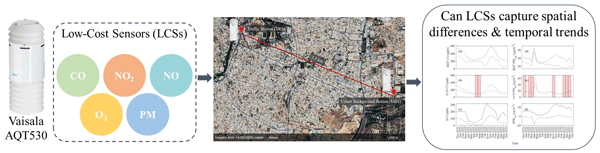
We evaluate the ability of the Vaisala AQT530 (Air Quality Transmitter) monitors, comprising of low-cost sensors, to detect spatial and temporal differences. Collocated with reference instruments over 19 months in Nicosia, results showed that CO and PM (particulate matter) sensors captured daily, hourly, and monthly spatial trends. NO2, NO, and O3 sensors were less reliable due to environmental effects. Still, all sensors tracked monthly temporal variations at the same location, with PM2.5 showing the strongest agreement with reference data.
Olga Zografou, Christos Kaltsonoudis, Maria Gini, Angeliki Matrali, Elias Panagiotopoulos, Alexandros Lekkas, Dimitris Papanastasiou, Spyros N. Pandis, and Konstantinos Eleftheriadis
EGUsphere, https://doi.org/10.5194/egusphere-2024-2126, https://doi.org/10.5194/egusphere-2024-2126, 2024
Preprint archived
Short summary
Short summary
A novel charge transfer ionization orthogonal Time-of-Flight Mass Spectrometer (oToF-MS) was field evaluated for the first time during a field campaign at the suburban DEM station in Athens, Greece from May to August 2023 focusing on key ambient Volatile Organic Compounds (VOCs). The results demonstrate the strengths of the new instrument in performing online, real time measurements of ambient VOCs.
Roubina Papaconstantinou, Marios Demosthenous, Spyros Bezantakos, Neoclis Hadjigeorgiou, Marinos Costi, Melina Stylianou, Elli Symeou, Chrysanthos Savvides, and George Biskos
Atmos. Meas. Tech., 16, 3313–3329, https://doi.org/10.5194/amt-16-3313-2023, https://doi.org/10.5194/amt-16-3313-2023, 2023
Short summary
Short summary
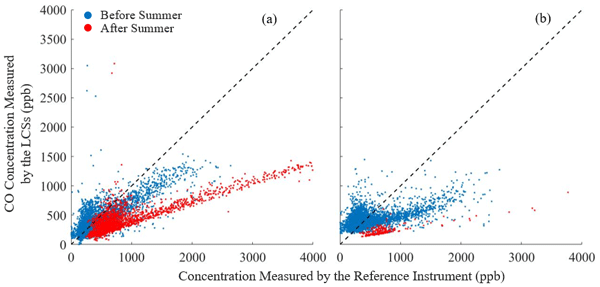
In this paper, we investigate the performance of low-cost electrochemical gas sensors. We carried out yearlong measurements at a traffic air quality monitoring station, where the low-cost sensors were collocated with reference instruments and exposed to highly variable environmental conditions with extremely high temperatures and low relative humidity (RH). Sensors provide measurements that exhibit increasing errors and decreasing correlations as temperature increases and RH decreases.
Rima Baalbaki, Michael Pikridas, Tuija Jokinen, Tiia Laurila, Lubna Dada, Spyros Bezantakos, Lauri Ahonen, Kimmo Neitola, Anne Maisser, Elie Bimenyimana, Aliki Christodoulou, Florin Unga, Chrysanthos Savvides, Katrianne Lehtipalo, Juha Kangasluoma, George Biskos, Tuukka Petäjä, Veli-Matti Kerminen, Jean Sciare, and Markku Kulmala
Atmos. Chem. Phys., 21, 9223–9251, https://doi.org/10.5194/acp-21-9223-2021, https://doi.org/10.5194/acp-21-9223-2021, 2021
Short summary
Short summary
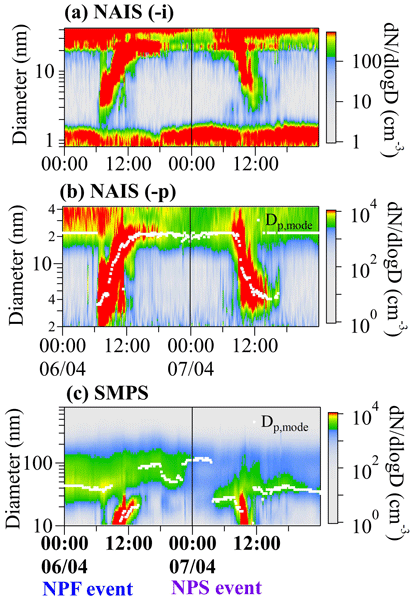
This study investigates new particle formation (NPF) in the less represented region of the Mediterranean basin using 1-year measurements of aerosol particles down to ~ 1 nm in diameter. We report a high frequency of NPF and give examples of interesting NPF features. We quantify the strength of NPF events by calculating formation rates and growth rates. We further unveil the atmospheric conditions and variables considered important for the intra-monthly and inter-monthly occurrence of NPF.
Cited articles
Amo-González, M. and Pérez, S.: Planar differential mobility analyzer with a resolving power of 110, Anal. Chem., 90, 6735–6741, https://doi.org/10.1021/acs.analchem.8b00579, 2018.
Beck, L. J., Schobesberger, S., Sipilä, M., Kerminen, V.-M., and Kulmala, M.: Estimation of sulfuric acid concentration using ambient ion composition and concentration data obtained with atmospheric pressure interface time-of-flight ion mass spectrometer, Atmos. Meas. Tech., 15, 1957–1965, https://doi.org/10.5194/amt-15-1957-2022, 2022.
Brophy, P. and Farmer, D. K.: Clustering, methodology, and mechanistic insights into acetate chemical ionization using high-resolution time-of-flight mass spectrometry, Atmos. Meas. Tech., 9, 3969–3986, https://doi.org/10.5194/amt-9-3969-2016, 2016.
Chen, H., Venter, A., and Cooks, R. G.: Extractive electrospray ionization for direct analysis of undiluted urine, milk and other complex mixtures without sample preparation, Chem. Commun., 19, 2042, https://doi.org/10.1039/b602614a, 2006.
Hansel, A., Jordan, A., Holzinger, R., Prazeller, P., Vogel, W., and Lindinger, W.: Proton transfer reaction mass spectrometry: on-line trace gas analysis at the ppb level, Int. J. Mass Spectrom. Ion Process., 149–150, 609–619, https://doi.org/10.1016/0168-1176(95)04294-U, 1995.
Heinritzi, M., Simon, M., Steiner, G., Wagner, A. C., Kürten, A., Hansel, A., and Curtius, J.: Characterization of the mass-dependent transmission efficiency of a CIMS, Atmos. Meas. Tech., 9, 1449–1460, https://doi.org/10.5194/amt-9-1449-2016, 2016.
Hogan Jr., C. J. and de la Mora, J. F.: Ion mobility measurements of nondenatured 12–150 kDa proteins and protein multimers by tandem differential mobility analysis–mass spectrometry (DMA-MS), J. Am. Soc. Mass Spectrom., 22, 158–172, https://doi.org/10.1007/s13361-010-0014-7, 2011.
Hyttinen, N., Kupiainen-Määttä, O., Rissanen, M. P., Muuronen, M., Ehn, M., and Kurtén, T.: Modeling the charging of highly oxidized cyclohexene ozonolysis products using nitrate-based chemical ionization, J. Phys. Chem. A, 119, 6339–6345, https://doi.org/10.1021/acs.jpca.5b01818, 2015.
Hyttinen, N., Otkjær, R. V., Iyer, S., Kjaergaard, H. G., Rissanen, M. P., Wennberg, P. O., and Kurtén, T.: Computational comparison of different reagent ions in the chemical ionization of oxidized multifunctional compounds, J. Phys. Chem. A, 122, 269–279, https://doi.org/10.1021/acs.jpca.7b10015, 2018.
Junninen, H., Ehn, M., Petäjä, T., Luosujärvi, L., Kotiaho, T., Kostiainen, R., Rohner, U., Gonin, M., Fuhrer, K., Kulmala, M., and Worsnop, D. R.: A high-resolution mass spectrometer to measure atmospheric ion composition, Atmos. Meas. Tech., 3, 1039–1053, https://doi.org/10.5194/amt-3-1039-2010, 2010.
Kaltsonoudis, C., Zografou, O., Matrali, A., Panagiotopoulos, E., Lekkas, A., Kosmopoulou, M., Papanastasiou, D., Eleftheriadis, K., and Pandis, S. N.: Measurement of atmospheric volatile and intermediate volatility organic compounds: development of a new time-of-flight mass spectrometer, Atmosphere, 14, 336, https://doi.org/10.3390/atmos14020336, 2023.
Karas, M., Bachmann, D., Bahr, U., and Hillenkamp, F.: Matrix-assisted ultraviolet laser desorption of non-volatile compounds, Int. J. Mass Spectrom. Ion Process., 78, 53–68, https://doi.org/10.1016/0168-1176(87)87041-6, 1987.
Kulmala, M., Vehkamäki, H., Petäjä, T., Dal Maso, M., Lauri, A., Kerminen, V.-M., Birmili, W., and McMurry, P. H.: Formation and growth rates of ultrafine atmospheric particles: a review of observations, J. Aerosol Sci., 35, 143–176, https://doi.org/10.1016/j.jaerosci.2003.10.003, 2004.
Kulmala, M., Kontkanen, J., Junninen, H., et al.: Direct observations of atmospheric aerosol nucleation, Science, 339, 943–946, https://doi.org/10.1126/science.1227385, 2013.
Kürten, A., Rondo, L., Ehrhart, S., and Curtius, J.: Performance of a corona ion source for measurement of sulfuric acid by chemical ionization mass spectrometry, Atmos. Meas. Tech., 4, 437–443, https://doi.org/10.5194/amt-4-437-2011, 2011.
Leiminger, M., Feil, S., Mutschlechner, P., Ylisirniö, A., Gunsch, D., Fischer, L., Jordan, A., Schobesberger, S., Hansel, A., and Steiner, G.: Characterisation of the transfer of cluster ions through an atmospheric pressure interface time-of-flight mass spectrometer with hexapole ion guides, Atmos. Meas. Tech., 12, 5231–5246, https://doi.org/10.5194/amt-12-5231-2019, 2019.
Lopez-Hilfiker, F. D., Iyer, S., Mohr, C., Lee, B. H., D'Ambro, E. L., Kurtén, T., and Thornton, J. A.: Constraining the sensitivity of iodide adduct chemical ionization mass spectrometry to multifunctional organic molecules using the collision limit and thermodynamic stability of iodide ion adducts, Atmos. Meas. Tech., 9, 1505–1512, https://doi.org/10.5194/amt-9-1505-2016, 2016.
Majima, T., Santambrogio, G., Bartels, C., Terasaki, A., Kondow, T., Meinen, J., and Leisner, T.: Spatial distribution of ions in a linear octopole radio-frequency ion trap in the space-charge limit, Phys. Rev. A, 85, 053414, https://doi.org/10.1103/PhysRevA.85.053414, 2012.
Papanastasiou, D., Kounadis, D., Orfanopoulos, I., Lekkas, A., Zacharos, A., Raptakis, E., Gini, M. I., Eleftheriadis, K., and Nikolos, I. N.: Experimental and numerical investigations of under-expanded gas flows for optimal operation of a novel multipole differential ion mobility filter in the first vacuum stage of a mass spectrometer, Int. J. Mass Spectrom., 465, 116605, https://doi.org/10.1016/j.ijms.2021.116605, 2021.
Pedersen, H. B., Strasser, D., Heber, O., Rappaport, M. L., and Zajfman, D.: Stability and loss in an ion-trap resonator, Phys. Rev. A, 65, 042703, https://doi.org/10.1103/PhysRevA.65.042703, 2002.
Schmidt-Ott, F.: Characterization of a High Detection-Sensitivity Atmospheric Pressure Interface Time-of-Flight Mass Spectrometer, Version v1, Zenodo [data set], https://doi.org/10.5281/zenodo.15854115, 2025.
Sleno, L. and Volmer, D. A.: Ion activation methods for tandem mass spectrometry, J. Mass Spectrom., 39, 1091–1112, https://doi.org/10.1002/jms.703, 2004.
Stephens, W. E.: A pulsed mass spectrometer with time dispersion, Phys. Rev., 69, 691 pp., 1946.
Ude, S. and de la Mora, J. F.: Molecular monodisperse mobility and mass standards from electrosprays of tetra-alkyl ammonium halides, J. Aerosol Sci., 36, 1224–1237, https://doi.org/10.1016/j.jaerosci.2005.02.009, 2005.
Waller, S. E., Yang, Y., Castracane, E., Kreinbihl, J. J., Nickson, K. A., and Johnson, C. J.: Electrospray ionization–based synthesis and validation of amine–sulfuric acid clusters of relevance to atmospheric new particle formation, J. Am. Soc. Mass Spectrom., 30, 2267–2277, https://doi.org/10.1007/s13361-019-02322-3, 2019.
Xu, L., Toscano, J., and Willitsch, S.: Trapping and sympathetic cooling of conformationally selected molecular ions, Phys. Rev. Lett., 132, 083001, https://doi.org/10.1103/PhysRevLett.132.083001, 2024.
Zapadinsky, E., Passananti, M., Myllys, N., Kurtén, T., and Vehkamäki, H.: Modeling on fragmentation of clusters inside a mass spectrometer, J. Phys. Chem. A, 123, 611–624, https://doi.org/10.1021/acs.jpca.8b10744, 2019.
Short summary
We characterized a novel Atmospheric-Pressure-Interface Time-of-Flight (TOF) Mass Spectrometer. By accumulating ions in a trap prior the TOF mass analyzer, we achieve a limit of detection in the 10-3 to 10-6 ppq range with temporal resolutions in the order of 1 s to 10 min, respectively. This makes it highly relevant for atmospheric measurements, as it enables probing short-lived, low-concentration species of high importance in atmospheric chemistry and new particle formation.
We characterized a novel Atmospheric-Pressure-Interface Time-of-Flight (TOF) Mass Spectrometer....