
Articles | Volume 19, issue 4
https://doi.org/10.5194/amt-19-1441-2026
© Author(s) 2026. This work is distributed under
the Creative Commons Attribution 4.0 License.
the Creative Commons Attribution 4.0 License.
https://doi.org/10.5194/amt-19-1441-2026
© Author(s) 2026. This work is distributed under
the Creative Commons Attribution 4.0 License.
the Creative Commons Attribution 4.0 License.
Research article
| 
25 Feb 2026
Research article |
| 25 Feb 2026
| 25 Feb 2026
The Zurich Low-cost CO2 sensor network (ZiCOS-L): data processing, performance assessment and analysis of spatial and temporal CO2 dynamics
Luce Creman
Empa, Swiss Federal Laboratories for Materials Science and Technology, Laboratory for Air Pollution/Environmental Technology, Überlandstrasse 129, 8600 Dübendorf, Switzerland
Stuart K. Grange
Empa, Swiss Federal Laboratories for Materials Science and Technology, Laboratory for Air Pollution/Environmental Technology, Überlandstrasse 129, 8600 Dübendorf, Switzerland
now at: Climate and Environmental Physics, Physics Institute, University of Bern, Sidlerstrasse 5, 3012 Bern, Switzerland
Pascal Rubli
Empa, Swiss Federal Laboratories for Materials Science and Technology, Laboratory for Air Pollution/Environmental Technology, Überlandstrasse 129, 8600 Dübendorf, Switzerland
Andrea Fischer
Empa, Swiss Federal Laboratories for Materials Science and Technology, Laboratory for Air Pollution/Environmental Technology, Überlandstrasse 129, 8600 Dübendorf, Switzerland
Dominik Brunner
Empa, Swiss Federal Laboratories for Materials Science and Technology, Laboratory for Air Pollution/Environmental Technology, Überlandstrasse 129, 8600 Dübendorf, Switzerland
Christoph Hueglin
Empa, Swiss Federal Laboratories for Materials Science and Technology, Laboratory for Air Pollution/Environmental Technology, Überlandstrasse 129, 8600 Dübendorf, Switzerland
Lukas Emmenegger
CORRESPONDING AUTHOR

Empa, Swiss Federal Laboratories for Materials Science and Technology, Laboratory for Air Pollution/Environmental Technology, Überlandstrasse 129, 8600 Dübendorf, Switzerland
Empa, Swiss Federal Laboratories for Materials Science and Technology, Laboratory for Air Pollution/Environmental Technology, Überlandstrasse 129, 8600 Dübendorf, Switzerland
Related authors
No articles found.
Arash Hamzehloo, Erik F. M. Koene, Nikolai Ponomarev, Michael Steiner, Sven Werchner, Xavier Lapillonne, William B. Sawyer, Michael Jähn, Lukas Emmenegger, and Dominik Brunner
EGUsphere, https://doi.org/10.5194/egusphere-2026-2531, https://doi.org/10.5194/egusphere-2026-2531, 2026
This preprint is open for discussion and under review for Geoscientific Model Development (GMD).
Short summary
Short summary
Tracking where greenhouse gases and air pollutants come from, and where plants absorb carbon dioxide, requires demanding computer simulations of the atmosphere. We rewrote key parts of a widely used atmospheric model so that they run efficiently on graphics processors. The new code runs six times faster than before and uses energy more efficiently. This supports air-quality monitoring, climate research, and combining satellite data with high-resolution simulations of cities and ecosystems.
Simone Brunamonti, Yann Poltera, Gonzague Romanens, Alex Weitnauer, Philipp Scheidegger, Adrianos Filinis, Alistair Bell, Giovanni Martucci, Frank Gunther Wienhold, Thomas Peter, Peter Oelsner, Ruud Dirksen, Alexander Haefele, Lukas Emmenegger, Gunter Stober, and Béla Tuzson
EGUsphere, https://doi.org/10.5194/egusphere-2026-4762, https://doi.org/10.5194/egusphere-2026-4762, 2026
This preprint is open for discussion and under review for Atmospheric Measurement Techniques (AMT).
Short summary
Short summary
Accurate measurements of the concentration of water vapor in the upper atmosphere are essential for reliable climate predictions. We investigated the performance of a new lightweight (less than 4 kg) hygrometer, based on laser absorption spectroscopy, in a series of atmospheric test flights using weather balloons, reaching up to 35 km altitude. The results demonstrate the high accuracy and suitability of this technique for applications in long-term climate monitoring and atmospheric research.
Jesse Juhani Soininen, Kukka-Maaria Kohonen, Stavros Stagakis, Ara Cho, Betty Molinier, Pascal Rubli, Rainer Hilland, Natascha Kljun, and Leena Järvi
EGUsphere, https://doi.org/10.5194/egusphere-2026-4603, https://doi.org/10.5194/egusphere-2026-4603, 2026
This preprint is open for discussion and under review for Atmospheric Chemistry and Physics (ACP).
Short summary
Short summary
Carbonyl sulfide is increasingly used to estimate how much carbon dioxide plants absorb from the atmosphere, but this is difficult in cities because human activities also emit this gas. We measured its exchange between the atmosphere and the urban area of Zurich and found that vegetation remained the main sink, while emissions from human activities reduced this uptake in densely built areas. These results improve the interpretation of urban carbon exchange.
Thomas Laemmel, Dylan Geissbühler, Stephan Henne, Ryo Fujita, Heather Graven, Christophe Espic, Matthias Bantle, Negar Haghipour, Franz Conen, Dominik Brunner, Martin Steinbacher, Giulia Zazzeri, Samuel Hammer, Markus Leuenberger, and Sönke Szidat
Atmos. Chem. Phys., 26, 12019–12036, https://doi.org/10.5194/acp-26-12019-2026, https://doi.org/10.5194/acp-26-12019-2026, 2026
Short summary
Short summary
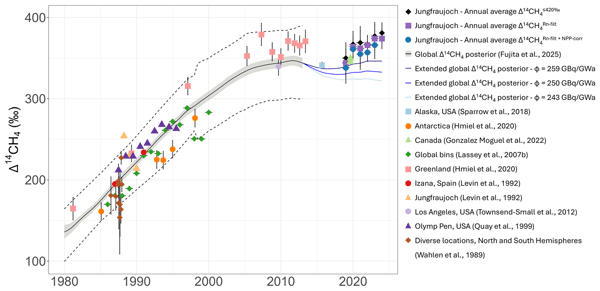
Carbon dioxide and methane are the two main anthropogenic greenhouse gases responsible for current climate change. Beside the measurement of their atmospheric concentration, the analysis of the abundance of their isotope carbon-14 (14C) gives hints about their origin, either biogenic or fossil. Here we present six years of atmospheric 14CH4 and 14CO2 measurements at a high-elevation alpine site in Switzerland (Jungfraujoch) and discuss the observed trends in both local and global views.
Narain M. Ashta, Guillaume Crosset-Perrotin, Angélique Moraz, Matthias Philipp, Thomas D. Bucheli, Ralf Kaegi, and Christoph Hueglin
Atmos. Chem. Phys., 26, 11803–11815, https://doi.org/10.5194/acp-26-11803-2026, https://doi.org/10.5194/acp-26-11803-2026, 2026
Short summary
Short summary
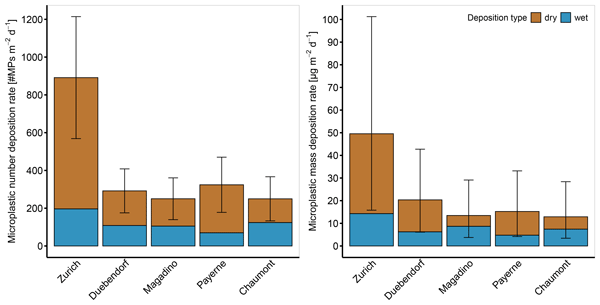
Microplastics are environmental contaminants of concern that are also present in air. Using an infrared-based device, we measured the amount of microplastics deposited from air to different parts of Switzerland over a one-year period. We found microplastics everywhere, with levels in the city being more than twice as high as those in suburban, rural and mountainous places. We also found that air is an important transporter of microplastics that contaminates agricultural land and water bodies.
Paul M. Magyar, Nico Kueter, Simone Brunamonti, Naizhong Zhang, Ivan Prokhorov, Noémy Chénier, Lukas Emmenegger, Béla Tuzson, and Joachim Mohn
Atmos. Meas. Tech., 19, 5267–5280, https://doi.org/10.5194/amt-19-5267-2026, https://doi.org/10.5194/amt-19-5267-2026, 2026
Short summary
Short summary
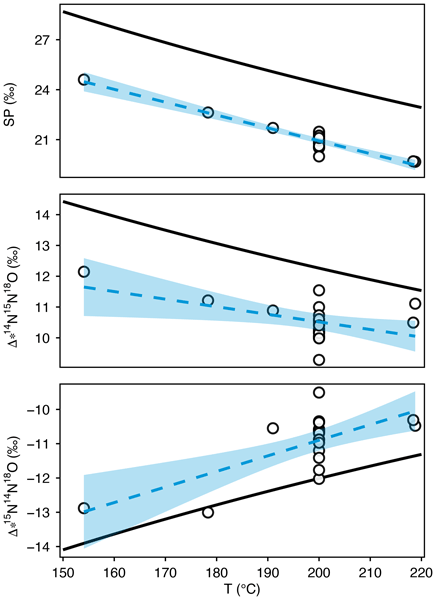
Human activity drives increases in atmospheric nitrous oxide. Stable isotopes help trace the pathways involved. We developed a reliable way to calibrate measurements of rare isotopic variants of nitrous oxide so results from different labs can be compared. By heating nitrous oxide with a catalyst, the molecules reach well-defined equilibrium patterns suitable as a reference. To measure these isotopic variants quickly and precisely, we improved a laser-based measurement approach.
Arlett Díaz-Zurita, Simone Brunamonti, Alexander Haefele, Martine Collaud Coen, Giovanni Martucci, Benjamin Tobias Brem, Martin Gysel-Beer, Hassan Lyamani, Gloria Titos, Daniel Pérez-Ramírez, Christoph Hüglin, Lucas Alados-Arboledas, Alejandro Keller, Frank Gunther Wienhold, Maxime Hervo, and Francisco Navas-Guzmán
EGUsphere, https://doi.org/10.5194/egusphere-2026-4361, https://doi.org/10.5194/egusphere-2026-4361, 2026
This preprint is open for discussion and under review for Atmospheric Chemistry and Physics (ACP).
Short summary
Short summary
This study provides a unique framework for assessing aerosol hygroscopicity by combining Raman lidar observations with vertically resolved in situ measurements from the balloon-borne Compact Backscatter Aerosol Detector coupled with Vaisala RS41 radiosondes and ground-based tandem nephelometers. The three approaches showed good agreement. Raman lidar identified more than 200 hygroscopic aerosol layers, constituting one of the largest datasets available for statistical investigations.
Joël Thanwerdas, Paolo Cristofanelli, Angela Fiore, Rianne Dröge, Sophie Van Mil, Yohanna Villalobos, Zhendong Wu, and Dominik Brunner
Atmos. Chem. Phys., 26, 10477–10507, https://doi.org/10.5194/acp-26-10477-2026, https://doi.org/10.5194/acp-26-10477-2026, 2026
Short summary
Short summary
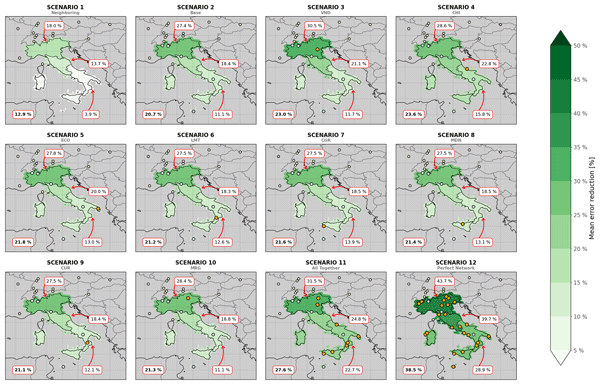
We assess how expanding Italy’s sparse ICOS (Integrated Carbon Observation System) methane network could improve methane emission estimates. Using transport modelling, data assimilation methods and synthetic observations, we test eight candidate sites. Chieti, in Central Italy and Mount Venda, in Northern Italy, provide the strongest added constraints, respectively. The framework developed here can be applied to other countries to optimize their atmospheric measurement networks and to improve constraints on greenhouse gas emissions.
Audrey McManemin, Catherine Juéry, Vincent Blandin, Matthew Baker, Stéphane Bauguitte, Dominik Brunner, Philippine Burdeau, James Lawrence France, Anders M. Fredenslund, Andreas Hueni, Gerrit Kuhlmann, Patryk Łakomiec, Sando Meier, Roberto Paglini, Roubina Papaconstantinou, Jean-Daniel Paris, Pierre-Yves Quehe, Thomas Röckmann, Charlotte Scheutz, Martina Schmidt, Marius Vögtli, Julia B. Wietzel, and Adam R. Brandt
EGUsphere, https://doi.org/10.5194/egusphere-2026-1744, https://doi.org/10.5194/egusphere-2026-1744, 2026
Short summary
Short summary
Researchers tested five university-led systems to measure methane leaks at a facility in France. By releasing known amounts of gas, researchers checked if mobile tools on vehicles and planes could accurately detect and quantify emissions. Most sensors were excellent at finding leaks, but their accuracy in measuring the exact emission rate varied. Weather, especially low wind, significantly impacted results. These findings help improve how we track greenhouse gases to meet climate goals.
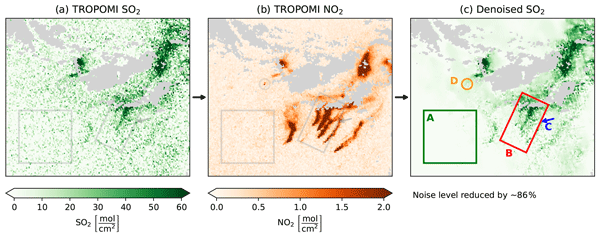
Erik Franciscus Maria Koene, Gerrit Kuhlmann, and Dominik Brunner
Atmos. Meas. Tech., 19, 3999–4012, https://doi.org/10.5194/amt-19-3999-2026, https://doi.org/10.5194/amt-19-3999-2026, 2026
Short summary
Short summary
We developed methods to reduce noise in satellite images that track air pollution. By using clearer measurements of a related gas, our techniques improve image quality by up to 80 percent, allowing more accurate identification of pollution sources. Tested with simulated and real satellite data, this approach could enhance monitoring of emissions and support better environmental decisions.
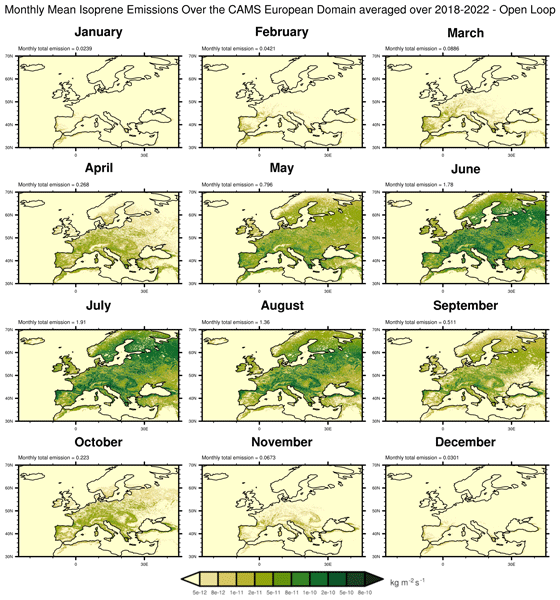
Paul D. Hamer, Miha Markelj, Oscar Rojas-Munoz, Bertrand Bonan, Jean-Christophe Calvet, Virginie Marécal, Alex Guenther, Heidi Trimmel, Islen Vallejo, Sabine Eckhardt, Gabriela Sousa Santos, Katerina Sindelarova, David Simpson, Norbert Schmidbauer, Heidi Hellén, Pascal Rubli, Stefan Reimann, Anja Claude, Dagmar Kubistin, Julie Cozic, James Dernie, and Leonor Tarrasón
Earth Syst. Sci. Data, 18, 3635–3669, https://doi.org/10.5194/essd-18-3635-2026, https://doi.org/10.5194/essd-18-3635-2026, 2026
Short summary
Short summary
Plants release gases like isoprene that can form ozone and affect air quality. Using models and satellite data, we mapped the emissions of isoprene from plants across Europe and found that droughts can reduce leaf growth, leading to lower emissions. This shows that to understand and predict air quality, we must also understand how drought impacts vegetation. Our findings highlight the value of linking extreme weather, plant health, and pollution in models of the Earth system as a whole.
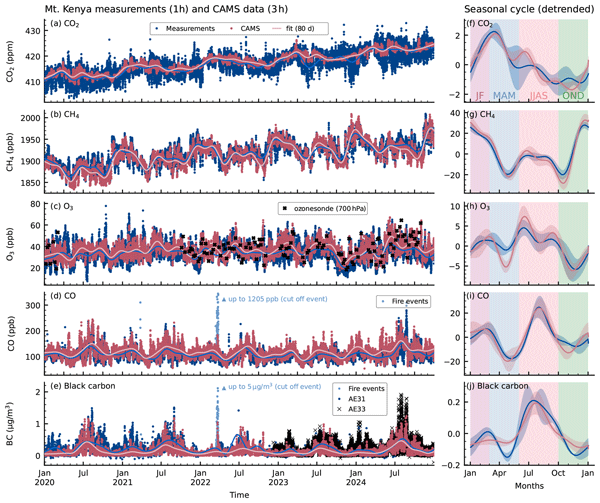
Leonie Bernet, Benjamin T. Brem, Nicolas Bukowiecki, Stephan Henne, Jörg Klausen, Mathew Mutuku, David Njiru, Patricia Nying'uro, Christoph Zellweger, and Martin Steinbacher
Atmos. Chem. Phys., 26, 6741–6762, https://doi.org/10.5194/acp-26-6741-2026, https://doi.org/10.5194/acp-26-6741-2026, 2026
Short summary
Short summary
Long-term atmospheric measurements are crucial to understanding climate change but remain scarce across Africa. We monitored atmospheric species at Mt. Kenya from 2020 to 2024. Our data reveal equatorial seasonal and daily variability and show that models miss local patterns. Emissions at Mt. Kenya mainly come from households, industry, and agriculture, though with large uncertainties. These findings stress the need for more ground stations to improve climate models and emission estimates.
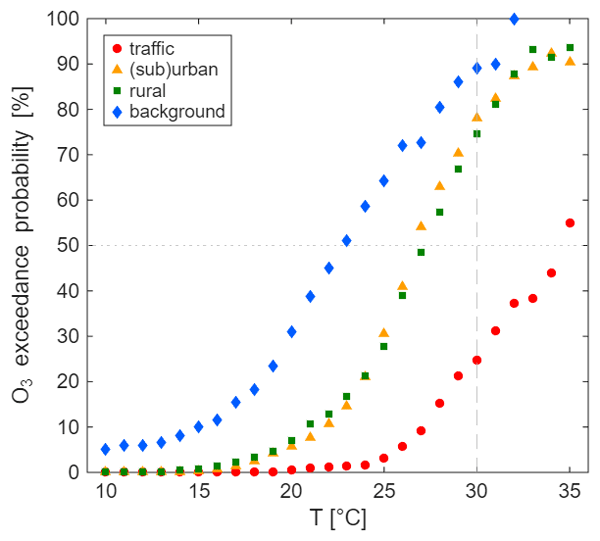
Clara M. Nussbaumer, Colette L. Heald, Amanda M. Häne, and Christoph Hüglin
Atmos. Chem. Phys., 26, 5355–5373, https://doi.org/10.5194/acp-26-5355-2026, https://doi.org/10.5194/acp-26-5355-2026, 2026
Short summary
Short summary
Ground-level ozone is harmful to human health. While precursors to ozone were strongly reduced over the past decades, unhealthy levels of ozone are still frequently reported in Switzerland. In this study, we investigate changes in ozone and its relationship with temperature over time. We find that precursor reductions have positively affected ozone in remote locations, while ozone is increasing close to busy roads. High ozone is often associated with hot summer days.
Ann-Kristin Kunz, Samuel Hammer, Patrick Aigner, Laura Bignotti, Lars Borchardt, Jia Chen, Julian Della Coletta, Lukas Emmenegger, Markus Eritt, Xochilt Gutiérrez, Josh Hashemi, Rainer Hilland, Christopher Holst, Armin Jordan, Natascha Kljun, Richard Kneißl, Changxing Lan, Virgile Legendre, Ingeborg Levin, Benjamin Loubet, Matthias Mauder, Betty Molinier, Susanne Preunkert, Michel Ramonet, Stavros Stagakis, and Andreas Christen
Atmos. Chem. Phys., 26, 4967–5003, https://doi.org/10.5194/acp-26-4967-2026, https://doi.org/10.5194/acp-26-4967-2026, 2026
Short summary
Short summary
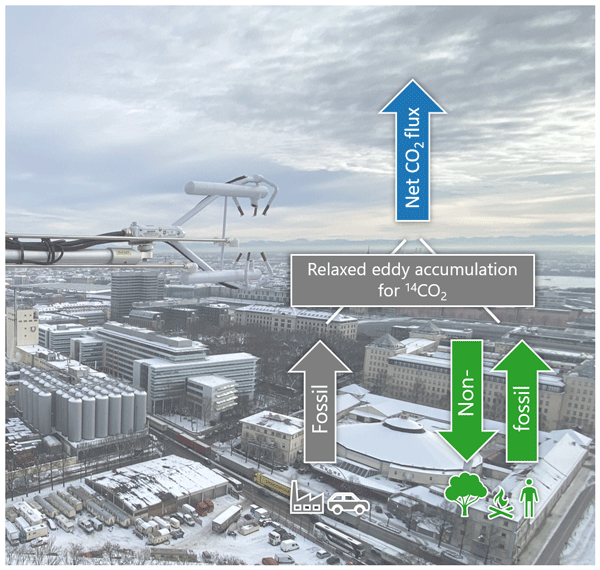
We present radiocarbon (14C)-based fossil fuel CO2 fluxes from relaxed eddy accumulation measurements on tall towers in the cities of Zurich, Paris, and Munich. By separating net CO2 fluxes into fossil and non-fossil components, these data reveal significant and variable contributions from human, plant, and soil respiration, as well as point-source emissions. These unique insights into CO2 flux composition offer crucial information for observation-based validation of urban emission estimates.
Marta Via, Jure Demšar, Yufang Hao, Manousos Manousakas, Anton Rusanen, Jianhui Jiang, Stuart K. Grange, Jean-Luc Jaffrezo, Vy Ngoc Thuy Dinh, Gaëlle Uzu, Griša Močnik, and Kaspar R. Daellenbach
Atmos. Meas. Tech., 19, 2175–2195, https://doi.org/10.5194/amt-19-2175-2026, https://doi.org/10.5194/amt-19-2175-2026, 2026
Short summary
Short summary
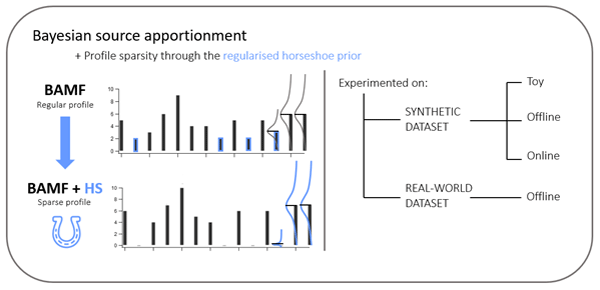
We introduce BAMF+HS (Bayesian Autocorrelated Matrix Factorisation+Horseshoe), an enhanced Bayesian receptor model for particulate matter (PM) source apportionment. By applying a regularised horseshoe prior to the chemical composition matrix, BAMF+HS enforces sparsity, filtering out irrelevant species and improving source separation. Tests on synthetic and real datasets show BAMF+HS consistently outperforms previous models in accuracy and clarity.
Klemens Hocke, Wenyue Wang, Leonie Bernet, Alistair Bell, and Christian Mätzler
EGUsphere, https://doi.org/10.5194/egusphere-2026-989, https://doi.org/10.5194/egusphere-2026-989, 2026
Preprint archived
Short summary
Short summary
We analyse observations of the tropospheric water radiometer (TROWARA) which monitored integrated water vapour (IWV) above Bern from 1995 to 2025. The relative IWV increase is 5.1 %/decade. Evaluation of coincident IWV data from ERA5 (reanalysis of European Centre for Medium-Range Weather Forecasts) gives a trend of 3.7 %/decade. The positive IWV trends are possibly due to the warming climate in Switzerland over the past decades.
Gholam Ali Hoshyaripour, Andreas Baer, Sascha Bierbauer, Julia Bruckert, Dominik Brunner, Jochen Förstner, Arash Hamzehloo, Valentin Hanft, Corina Keller, Martina Klose, Pankaj Kumar, Patrick Ludwig, Enrico Metzner, Lisa Muth, Andreas Pauling, Nikolas Porz, Maryam Ramezani Ziarani, Thomas Reddmann, Luca Reißig, Roland Ruhnke, Khompat Satitkovitchai, Axel Seifert, Miriam Sinnhuber, Michael Steiner, Stefan Versick, Heike Vogel, Michael Weimer, Sven Werchner, and Corinna Hoose
Geosci. Model Dev., 19, 1645–1681, https://doi.org/10.5194/gmd-19-1645-2026, https://doi.org/10.5194/gmd-19-1645-2026, 2026
Short summary
Short summary
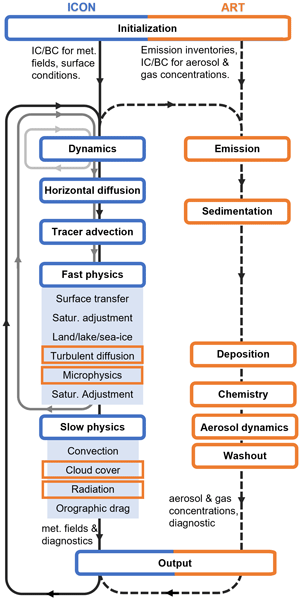
This paper presents recent advances in ICON-ART, a modeling system that simulates atmospheric composition – such as gases and particles – and their interactions with weather and climate. By integrating updated chemistry, emissions, and aerosol processes, ICON-ART enables detailed, scale-spanning simulations. It supports both scientific research and operational forecasts, contributing to improved air quality, weather and climate predictions.
Patrick Aigner, Jia Chen, Felix Böhm, Mali Chariot, Lukas Emmenegger, Lars Frölich, Stuart Grange, Daniel Kühbacher, Klaus Kürzinger, Olivier Laurent, Moritz Makowski, Pascal Rubli, Adrian Schmitt, and Adrian Wenzel
Atmos. Meas. Tech., 19, 745–773, https://doi.org/10.5194/amt-19-745-2026, https://doi.org/10.5194/amt-19-745-2026, 2026
Short summary
Short summary
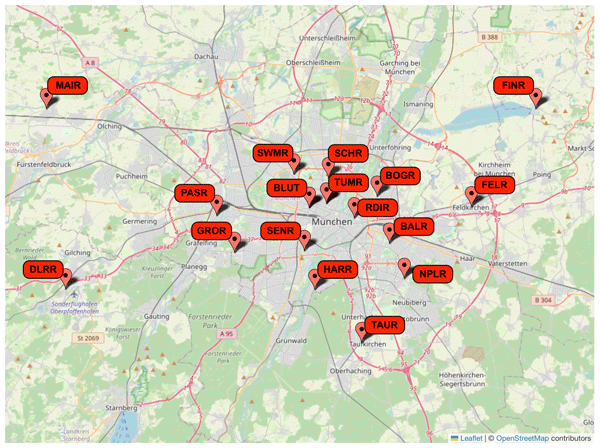
Dense urban CO2 monitoring is challenging due to cost and operational constraints. We developed a mid-cost sensor network for Munich, deployed on 17 rooftops. Temperature-stabilized enclosures and automated 2-point calibration ensured reliable performance, assessed by side-by-side comparison with a Picarro reference. In 1.5 years, the network collected 90 million measurements and resolved urban-rural gradients and seasonal diurnal patterns, capturing spatial CO2 variability at city scale.
Zoé Le Bras, Pascal Rubli, Christoph Hueglin, and Stefan Reimann
Atmos. Chem. Phys., 26, 869–878, https://doi.org/10.5194/acp-26-869-2026, https://doi.org/10.5194/acp-26-869-2026, 2026
Short summary
Short summary
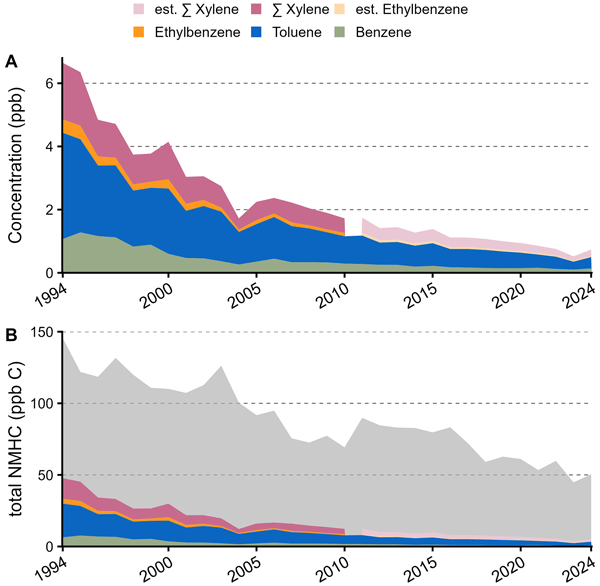
Since 1994, harmful air pollutants called BTEX (benzene, toluene, ethylbenzene and xylene) have declined by up to 89 % in the suburban area of Zurich thanks to the introduction of various air quality directives in Switzerland and in Europe. Although their contribution to ozone formation became less abundant, they still significantly contribute to the formation of airborne particles. While this study shows clear improvements in air quality, it also highlights the need for further efforts.
Narain M. Ashta, Guillaume Crosset-Perrotin, Angélique Moraz, Josua Stoffel, Ueli Schilt, Eric Ceglie, David Schoenenberger, Matthias Philipp, Thomas D. Bucheli, Ralf Kaegi, and Christoph Hueglin
Atmos. Meas. Tech., 19, 371–388, https://doi.org/10.5194/amt-19-371-2026, https://doi.org/10.5194/amt-19-371-2026, 2026
Short summary
Short summary
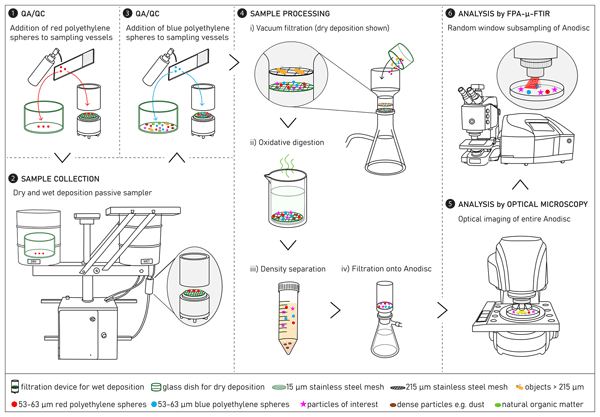
Microplastics are environmental contaminants of global concern. In this study, we developed a method for measuring the amount of microplastics in atmospheric samples. In doing so, we introduced a new way to collect rain/snow samples and a custom software that helps with the analysis of microplastics. We then assessed the precision of our method and tested it on real samples. Our work may be useful for researchers seeking to measure microplastics in environmental samples.
Sandro Meier, Marius Vögtli, Andreas Hueni, Audrey McManemin, Adam R. Brandt, Catherine Juéry, Vincent Blandin, Dominik Brunner, and Gerrit Kuhlmann
Atmos. Meas. Tech., 19, 333–358, https://doi.org/10.5194/amt-19-333-2026, https://doi.org/10.5194/amt-19-333-2026, 2026
Short summary
Short summary
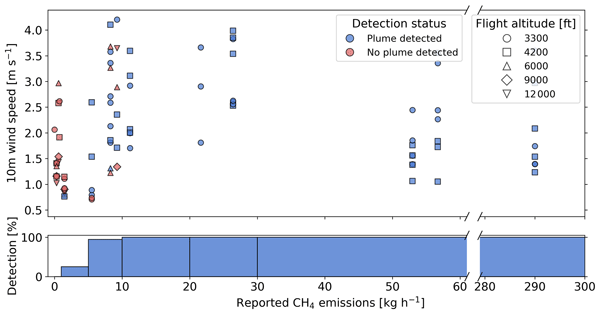
We tested a new airborne imaging instrument to detect and measure methane emissions. Flying over controlled test releases in France, we compared our measurements with known release rates. The instrument detected emissions as low as 5.5 kilograms per hour in good weather and 1.45 kilograms per hour in ideal conditions. Our results show that better wind information is crucial for accurate totals. Our new instrument is important for helping target methane leaks in energy and waste systems.
Nikolai Ponomarev, Michael Steiner, Erik Koene, Pascal Rubli, Stuart Grange, Lionel Constantin, Michel Ramonet, Leslie David, Arash Hamzehloo, Lukas Emmenegger, and Dominik Brunner
Atmos. Chem. Phys., 26, 547–570, https://doi.org/10.5194/acp-26-547-2026, https://doi.org/10.5194/acp-26-547-2026, 2026
Short summary
Short summary
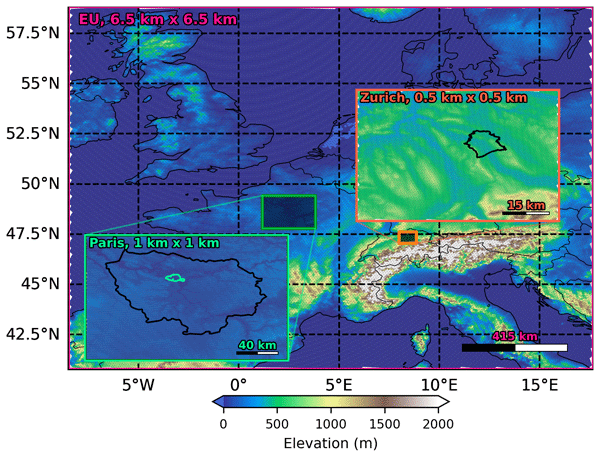
Urban inversions are gaining increasing attention, as cities are major contributors to anthropogenic emissions, making accurate emission estimates at this scale essential for supporting climate action plans and verifying reported emission reductions. We estimated carbon dioxide emissions in Zurich and Paris over one year by combining atmospheric observations with mesoscale model simulations. Our study shows how factors like city size, terrain, and measurement methods affect emission estimates.
Eleftherios Ioannidis, Antoon Meesters, Michael Steiner, Dominik Brunner, Friedemann Reum, Isabelle Pison, Antoine Berchet, Rona Thompson, Espen Sollum, Frank-Thomas Koch, Christoph Gerbig, Fenjuan Wang, Shamil Maksyutov, Aki Tsuruta, Maria Tenkanen, Tuula Aalto, Guillaume Monteil, Hong Lin, Ge Ren, Marko Scholze, and Sander Houweling
Earth Syst. Sci. Data, 18, 167–198, https://doi.org/10.5194/essd-18-167-2026, https://doi.org/10.5194/essd-18-167-2026, 2026
Short summary
Short summary
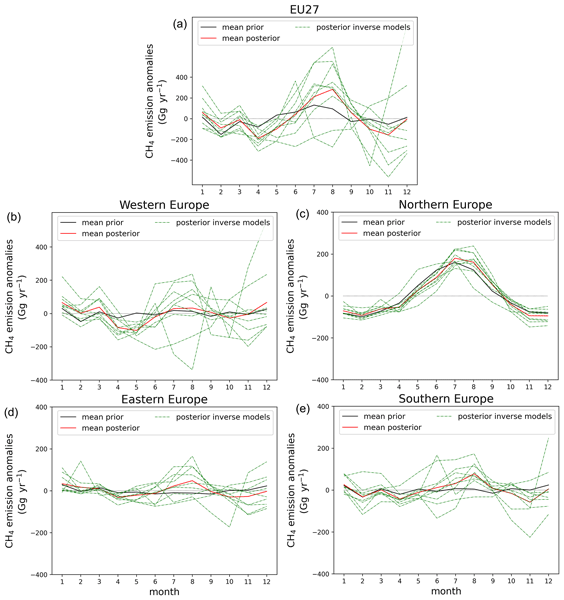
This paper describes a detailed study on CH4 European emissions, using different methodologies (9 total inverse models). The study spans over 15 years and provides detailed information on European CH4 emission trends and seasonality, using in-situ data, including Integrated Carbon Observation System (ICOS) network. Our results highlight the importance of improving details in the inversion setup, such as the treatment of lateral boundary conditions to narrow the uncertainty ranges further.
Pauline Bros, Sophie Darfeuil, Véronique Jacob, Rhabira Elazzouzi, Dielleza Tusha, Tristan Rousseau, Julian Weng, Patrik Winiger, Imad El Haddad, Christoph Hueglin, Gaëlle Uzu, and Jean-Luc Jaffrezo
Atmos. Meas. Tech., 18, 6315–6327, https://doi.org/10.5194/amt-18-6315-2025, https://doi.org/10.5194/amt-18-6315-2025, 2025
Short summary
Short summary
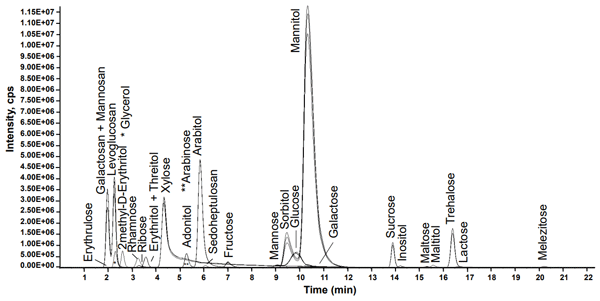
We present and validate an ultra-high-performance liquid chromatography tandem mass spectrometry method for the quantification of 21 sugars in atmospheric particulate matter. The method is fast, sensitive, and suitable for low-mass samples. Its application to a 6-year dataset from the Jungfraujoch site highlights its potential for source identification and understanding of biogenic and biomass burning tracers.
Dominik Brunner, Ivo Suter, Leonie Bernet, Lionel Constantin, Stuart K. Grange, Pascal Rubli, Junwei Li, Jia Chen, Alessandro Bigi, and Lukas Emmenegger
Atmos. Chem. Phys., 25, 14387–14410, https://doi.org/10.5194/acp-25-14387-2025, https://doi.org/10.5194/acp-25-14387-2025, 2025
Short summary
Short summary
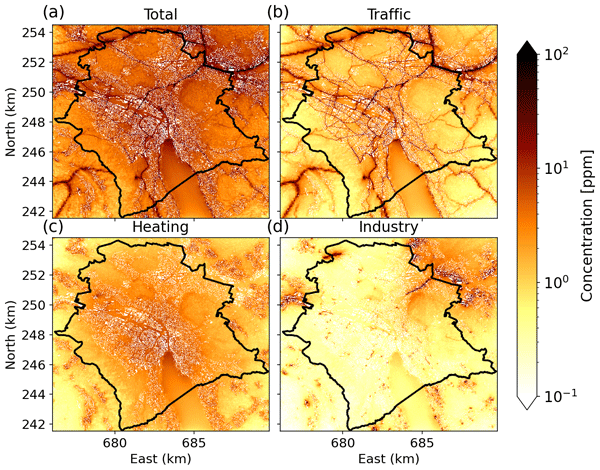
To support the city of Zurich in tracking its path to net-zero greenhouse gas emissions planned to be reached by 2040, a CO2 emission monitoring system was established. The system combines a dense network of CO2 sensors with a high-resolution atmospheric transport model GRAMM/GRAL. This study presents the setup of the model together with its numerous inputs and evaluates its performance in comparison with observations from the CO2 sensor network.
Rainer Hilland, Josh Hashemi, Stavros Stagakis, Dominik Brunner, Lionel Constantin, Natascha Kljun, Ann-Kristin Kunz, Betty Molinier, Samuel Hammer, Lukas Emmenegger, and Andreas Christen
Atmos. Chem. Phys., 25, 14279–14299, https://doi.org/10.5194/acp-25-14279-2025, https://doi.org/10.5194/acp-25-14279-2025, 2025
Short summary
Short summary
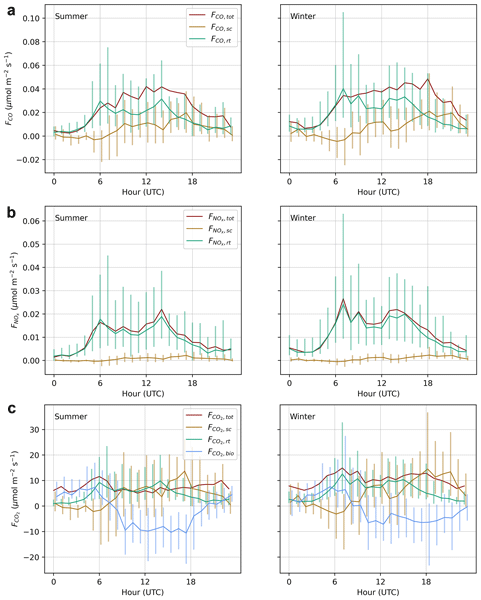
We present a study of simultaneously measured fluxes of carbon dioxide (CO2) and co-emitted species in the city of Zurich. Flux measurements of CO2 alone cannot be attributed to specific emission sectors, such as road transport or residential heating. We present a model which uses the measured ratios of CO2 to carbon monoxide (CO) and nitrogen oxides (NOx) as well as sector-specific reference ratios, to attribute measured fluxes to their emission sectors.
Yuri Brugnara, Martin Steinbacher, Simone Baffelli, and Lukas Emmenegger
Atmos. Chem. Phys., 25, 14221–14236, https://doi.org/10.5194/acp-25-14221-2025, https://doi.org/10.5194/acp-25-14221-2025, 2025
Short summary
Short summary
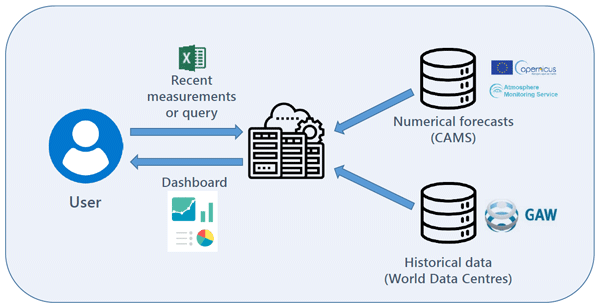
GAW-QC (Global Atmosphere Watch-Quality Control) is an interactive dashboard for the quality control of in-situ atmospheric composition measurements made at stations taking part in the Global Atmosphere Watch network. Even though it is mainly targeted at station operators who want to analyze recent, not yet published measurements, it allows anybody to verify the quality of already published measurements using various anomaly detection algorithms as well as visual comparisons.
Simone Brunamonti, Harald Saathoff, Albert Hertzog, Glenn Diskin, Masatomo Fujiwara, Karen Rosenlof, Ottmar Möhler, Béla Tuzson, Lukas Emmenegger, Nadir Amarouche, Georges Durry, Fabien Frérot, Jean-Christophe Samake, Claire Cenac, Julio Lopez, Paul Monnier, and Mélanie Ghysels
Atmos. Meas. Tech., 18, 5321–5348, https://doi.org/10.5194/amt-18-5321-2025, https://doi.org/10.5194/amt-18-5321-2025, 2025
Short summary
Short summary
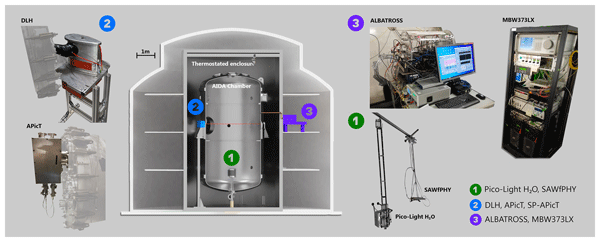
Water vapor is a strong greenhouse gas, and accurate measurements of its concentration in the upper atmosphere (~8–25 km altitude) are crucial for reliable climate predictions. We investigated the performance of four airborne hygrometers, deployed on aircraft or stratospheric balloon platforms and based on different techniques, in a climate simulation chamber. The results demonstrate the high accuracy and reliability of the involved sensors for atmospheric monitoring and research applications.
Ann-Kristin Kunz, Lars Borchardt, Andreas Christen, Julian Della Coletta, Markus Eritt, Xochilt Gutiérrez, Josh Hashemi, Rainer Hilland, Armin Jordan, Richard Kneißl, Virgile Legendre, Ingeborg Levin, Susanne Preunkert, Pascal Rubli, Stavros Stagakis, and Samuel Hammer
Atmos. Meas. Tech., 18, 5349–5373, https://doi.org/10.5194/amt-18-5349-2025, https://doi.org/10.5194/amt-18-5349-2025, 2025
Short summary
Short summary
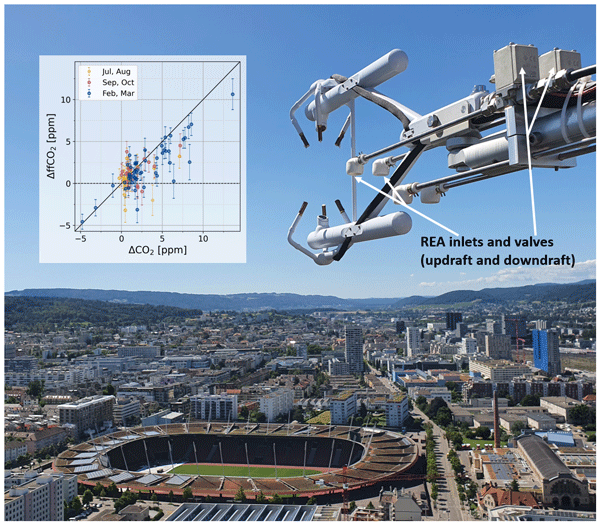
We present, to our knowledge, the first relaxed eddy accumulation system explicitly tailored to a radiocarbon (14C)-based partitioning of fossil and non-fossil urban CO2 fluxes. Laboratory tests and in-depth quality and performance checks prove that the system meets the technical requirements. A pilot application on a tall tower in the city of Zurich, Switzerland, demonstrates the ability to separate fossil and non-fossil CO2 components within the typical precision of 14C measurements.
Lubna Dada, Benjamin T. Brem, Lidia-Marta Amarandi-Netedu, Martine Collaud Coen, Nikolaos Evangeliou, Christoph Hueglin, Nora Nowak, Robin Modini, Martin Steinbacher, and Martin Gysel-Beer
Aerosol Research, 3, 315–336, https://doi.org/10.5194/ar-3-315-2025, https://doi.org/10.5194/ar-3-315-2025, 2025
Short summary
Short summary
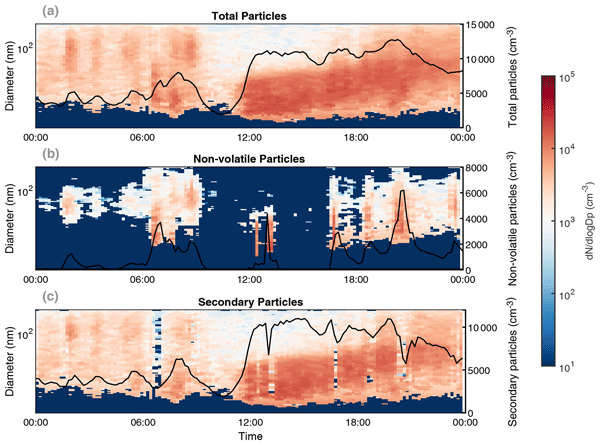
We investigated the sources of ultrafine particles (UFPs) in Payerne, Switzerland, highlighting the significant role of secondary processes in elevating UFP concentrations to levels comparable to urban areas. As the first study in rural midland Switzerland to analyze new particle formation events and secondary contributions, it offers key insights for air quality regulation and the role of agriculture in Switzerland and central Europe.
Gerrit Kuhlmann, Foteini Stavropoulou, Stefan Schwietzke, Daniel Zavala-Araiza, Andrew Thorpe, Andreas Hueni, Lukas Emmenegger, Andreea Calcan, Thomas Röckmann, and Dominik Brunner
Atmos. Chem. Phys., 25, 5371–5385, https://doi.org/10.5194/acp-25-5371-2025, https://doi.org/10.5194/acp-25-5371-2025, 2025
Short summary
Short summary
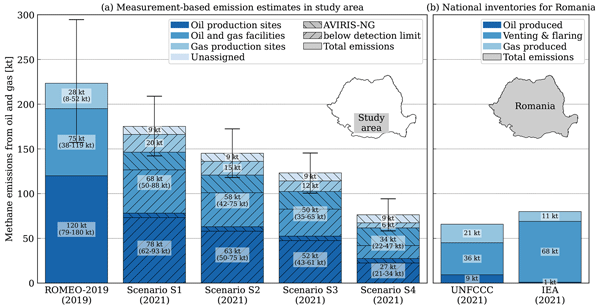
A measurement campaign in 2019 found that methane emissions from oil and gas in Romania were significantly higher than reported. In 2021, our follow-up campaign using airborne remote sensing showed a marked decreases in emissions by 20 %–60 % due to improved infrastructure. The study highlights the importance of measurement-based emission monitoring and illustrates the value of a multi-scale assessment integrating ground-based observations with large-scale airborne remote sensing campaigns.
Natalie M. Mahowald, Longlei Li, Julius Vira, Marje Prank, Douglas S. Hamilton, Hitoshi Matsui, Ron L. Miller, P. Louis Lu, Ezgi Akyuz, Daphne Meidan, Peter Hess, Heikki Lihavainen, Christine Wiedinmyer, Jenny Hand, Maria Grazia Alaimo, Célia Alves, Andres Alastuey, Paulo Artaxo, Africa Barreto, Francisco Barraza, Silvia Becagli, Giulia Calzolai, Shankararaman Chellam, Ying Chen, Patrick Chuang, David D. Cohen, Cristina Colombi, Evangelia Diapouli, Gaetano Dongarra, Konstantinos Eleftheriadis, Johann Engelbrecht, Corinne Galy-Lacaux, Cassandra Gaston, Dario Gomez, Yenny González Ramos, Roy M. Harrison, Chris Heyes, Barak Herut, Philip Hopke, Christoph Hüglin, Maria Kanakidou, Zsofia Kertesz, Zbigniew Klimont, Katriina Kyllönen, Fabrice Lambert, Xiaohong Liu, Remi Losno, Franco Lucarelli, Willy Maenhaut, Beatrice Marticorena, Randall V. Martin, Nikolaos Mihalopoulos, Yasser Morera-Gómez, Adina Paytan, Joseph Prospero, Sergio Rodríguez, Patricia Smichowski, Daniela Varrica, Brenna Walsh, Crystal L. Weagle, and Xi Zhao
Atmos. Chem. Phys., 25, 4665–4702, https://doi.org/10.5194/acp-25-4665-2025, https://doi.org/10.5194/acp-25-4665-2025, 2025
Short summary
Short summary
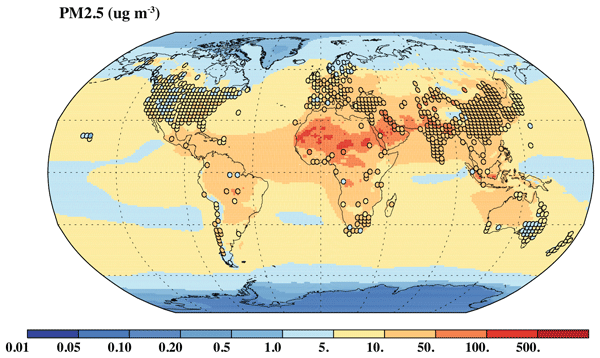
Aerosol particles are an important part of the Earth system, but their concentrations are spatially and temporally heterogeneous, as well as being variable in size and composition. Here, we present a new compilation of PM2.5 and PM10 aerosol observations, focusing on the spatial variability across different observational stations, including composition, and demonstrate a method for comparing the data sets to model output.
Stavros Stagakis, Dominik Brunner, Junwei Li, Leif Backman, Anni Karvonen, Lionel Constantin, Leena Järvi, Minttu Havu, Jia Chen, Sophie Emberger, and Liisa Kulmala
Biogeosciences, 22, 2133–2161, https://doi.org/10.5194/bg-22-2133-2025, https://doi.org/10.5194/bg-22-2133-2025, 2025
Short summary
Short summary
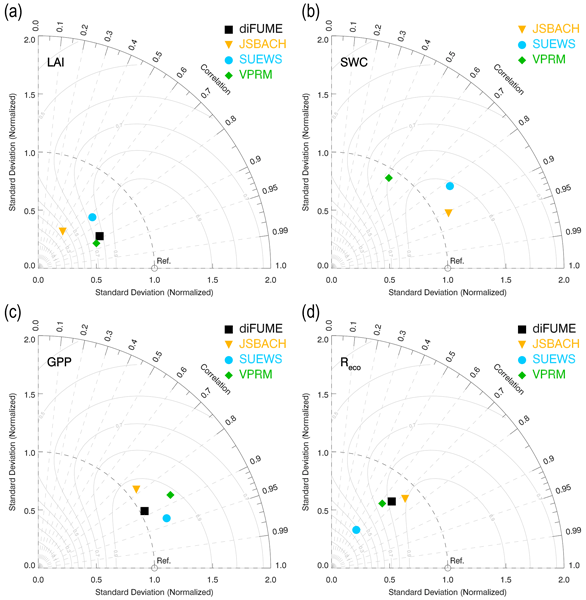
The balance between CO2 uptake and emissions from urban green areas is still not well understood. This study evaluated for the first time the urban park CO2 exchange simulations with four different types of biosphere model by comparing them with observations. Even though some advantages and disadvantages of the different model types were identified, there was no strong evidence that more complex models performed better than simple ones.
Joël Thanwerdas, Antoine Berchet, Lionel Constantin, Aki Tsuruta, Michael Steiner, Friedemann Reum, Stephan Henne, and Dominik Brunner
Geosci. Model Dev., 18, 1505–1544, https://doi.org/10.5194/gmd-18-1505-2025, https://doi.org/10.5194/gmd-18-1505-2025, 2025
Short summary
Short summary
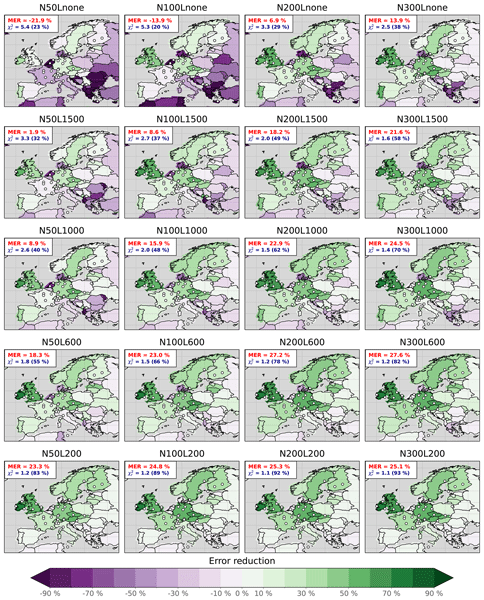
The Community Inversion Framework (CIF) brings together methods for estimating greenhouse gas fluxes from atmospheric observations. The initial ensemble method implemented in CIF was found to be incomplete and could hardly be compared to other ensemble methods employed in the inversion community. In this paper, we present and evaluate a new implementation of the ensemble mode, building upon the initial developments.
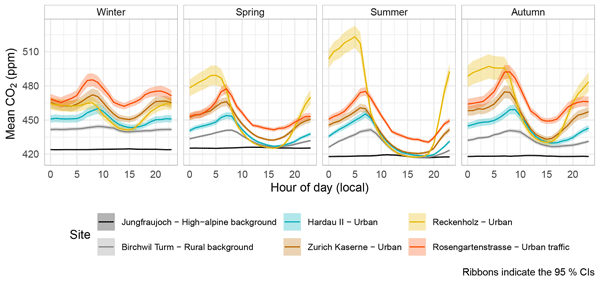
Stuart K. Grange, Pascal Rubli, Andrea Fischer, Dominik Brunner, Christoph Hueglin, and Lukas Emmenegger
Atmos. Chem. Phys., 25, 2781–2806, https://doi.org/10.5194/acp-25-2781-2025, https://doi.org/10.5194/acp-25-2781-2025, 2025
Short summary
Short summary
Carbon dioxide (CO2) is a very important atmospheric pollutant, and to better understand the gas's source and sink dynamics, a mid-cost sensor network hosting 26 sites was deployed in and around Zurich, Switzerland. The sensor measurement performance was quantified, and natural and anthropogenic CO2 emission sources were explored with a focus on what drives high CO2 levels. The observations will be used further by others to validate what is thought to be known about CO2 emissions in the region.
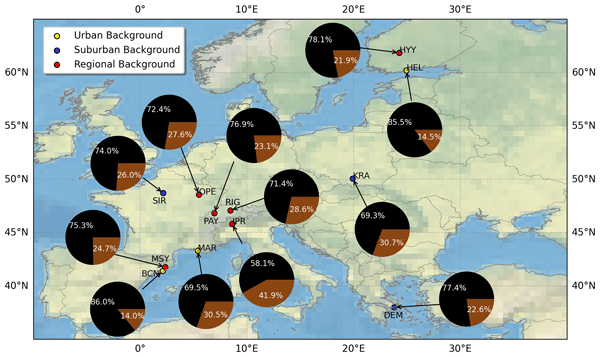
Hector Navarro-Barboza, Jordi Rovira, Vincenzo Obiso, Andrea Pozzer, Marta Via, Andres Alastuey, Xavier Querol, Noemi Perez, Marjan Savadkoohi, Gang Chen, Jesus Yus-Díez, Matic Ivancic, Martin Rigler, Konstantinos Eleftheriadis, Stergios Vratolis, Olga Zografou, Maria Gini, Benjamin Chazeau, Nicolas Marchand, Andre S. H. Prevot, Kaspar Dallenbach, Mikael Ehn, Krista Luoma, Tuukka Petäjä, Anna Tobler, Jaroslaw Necki, Minna Aurela, Hilkka Timonen, Jarkko Niemi, Olivier Favez, Jean-Eudes Petit, Jean-Philippe Putaud, Christoph Hueglin, Nicolas Pascal, Aurélien Chauvigné, Sébastien Conil, Marco Pandolfi, and Oriol Jorba
Atmos. Chem. Phys., 25, 2667–2694, https://doi.org/10.5194/acp-25-2667-2025, https://doi.org/10.5194/acp-25-2667-2025, 2025
Short summary
Short summary
Brown carbon (BrC) absorbs ultraviolet (UV) and visible light, influencing climate. This study explores BrC's imaginary refractive index (k) using data from 12 European sites. Residential emissions are a major organic aerosol (OA) source in winter, while secondary organic aerosol (SOA) dominates in summer. Source-specific k values were derived, improving model accuracy. The findings highlight BrC's climate impact and emphasize source-specific constraints in atmospheric models.
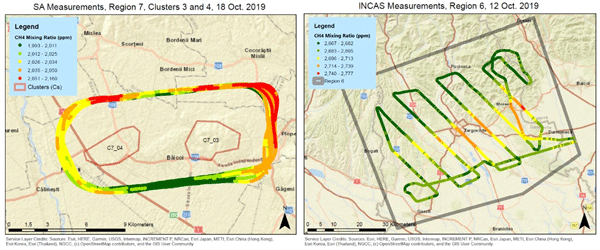
Hossein Maazallahi, Foteini Stavropoulou, Samuel Jonson Sutanto, Michael Steiner, Dominik Brunner, Mariano Mertens, Patrick Jöckel, Antoon Visschedijk, Hugo Denier van der Gon, Stijn Dellaert, Nataly Velandia Salinas, Stefan Schwietzke, Daniel Zavala-Araiza, Sorin Ghemulet, Alexandru Pana, Magdalena Ardelean, Marius Corbu, Andreea Calcan, Stephen A. Conley, Mackenzie L. Smith, and Thomas Röckmann
Atmos. Chem. Phys., 25, 1497–1511, https://doi.org/10.5194/acp-25-1497-2025, https://doi.org/10.5194/acp-25-1497-2025, 2025
Short summary
Short summary
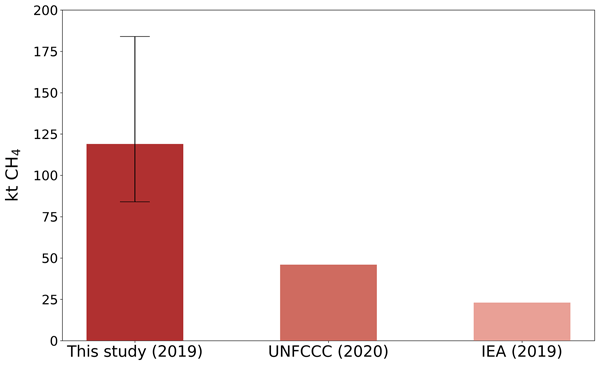
This article presents insights from airborne in situ measurements collected during the ROmanian Methane Emissions from Oil and gas (ROMEO) campaign supported by two models. Results reveal Romania's oil and gas methane emissions were significantly under-reported to the United Nations Framework Convention on Climate Change (UNFCCC) in 2019. A large underestimation was also found in the Emissions Database for Global Atmospheric Research (EDGAR) v7.0 for the study domain in the same year.
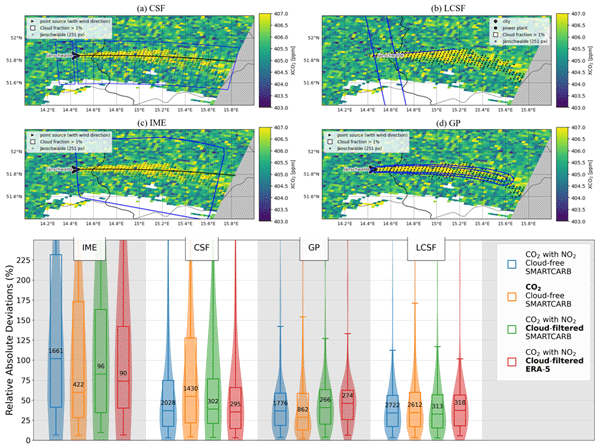
Diego Santaren, Janne Hakkarainen, Gerrit Kuhlmann, Erik Koene, Frédéric Chevallier, Iolanda Ialongo, Hannakaisa Lindqvist, Janne Nurmela, Johanna Tamminen, Laia Amorós, Dominik Brunner, and Grégoire Broquet
Atmos. Meas. Tech., 18, 211–239, https://doi.org/10.5194/amt-18-211-2025, https://doi.org/10.5194/amt-18-211-2025, 2025
Short summary
Short summary
This study evaluates data-driven inversion methods for estimating CO2 emissions from local sources, such as power plants and cities, using meteorological data and XCO2 and NO2 satellite images rather than atmospheric transport modeling. We assess and compare the performance of five different methods using simulations of 1 year of satellite images, taken from the upcoming Copernicus CO2 Monitoring Mission, covering 15 power plants and the city of Berlin, Germany.
Michael Steiner, Luca Cantarello, Stephan Henne, and Dominik Brunner
Atmos. Chem. Phys., 24, 12447–12463, https://doi.org/10.5194/acp-24-12447-2024, https://doi.org/10.5194/acp-24-12447-2024, 2024
Short summary
Short summary
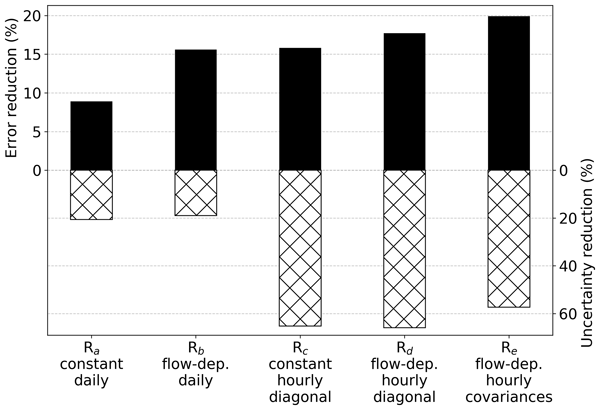
Atmospheric greenhouse gas inversions have great potential to independently check reported bottom-up emissions; however they are subject to large uncertainties. It is paramount to address and reduce the largest source of uncertainty, which stems from the representation of atmospheric transport in the models. In this study, we show that the use of a temporally varying flow-dependent atmospheric transport uncertainty can enhance the accuracy of emission estimation in an idealized experiment.
Ana Maria Roxana Petrescu, Glen P. Peters, Richard Engelen, Sander Houweling, Dominik Brunner, Aki Tsuruta, Bradley Matthews, Prabir K. Patra, Dmitry Belikov, Rona L. Thompson, Lena Höglund-Isaksson, Wenxin Zhang, Arjo J. Segers, Giuseppe Etiope, Giancarlo Ciotoli, Philippe Peylin, Frédéric Chevallier, Tuula Aalto, Robbie M. Andrew, David Bastviken, Antoine Berchet, Grégoire Broquet, Giulia Conchedda, Stijn N. C. Dellaert, Hugo Denier van der Gon, Johannes Gütschow, Jean-Matthieu Haussaire, Ronny Lauerwald, Tiina Markkanen, Jacob C. A. van Peet, Isabelle Pison, Pierre Regnier, Espen Solum, Marko Scholze, Maria Tenkanen, Francesco N. Tubiello, Guido R. van der Werf, and John R. Worden
Earth Syst. Sci. Data, 16, 4325–4350, https://doi.org/10.5194/essd-16-4325-2024, https://doi.org/10.5194/essd-16-4325-2024, 2024
Short summary
Short summary
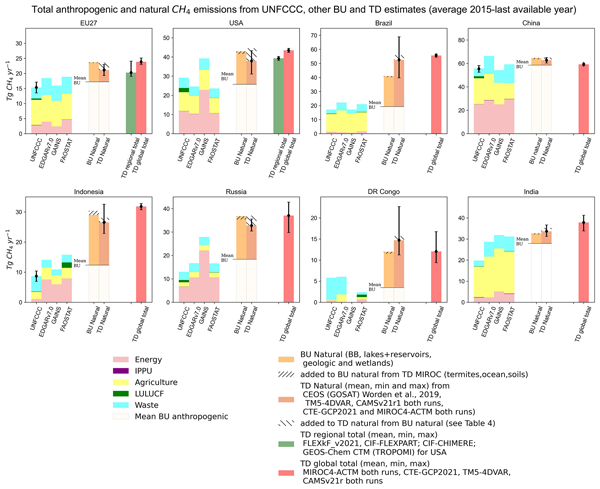
This study provides an overview of data availability from observation- and inventory-based CH4 emission estimates. It systematically compares them and provides recommendations for robust comparisons, aiming to steadily engage more parties in using observational methods to complement their UNFCCC submissions. Anticipating improvements in atmospheric modelling and observations, future developments need to resolve knowledge gaps in both approaches and to better quantify remaining uncertainty.
Sandro Meier, Erik F. M. Koene, Maarten Krol, Dominik Brunner, Alexander Damm, and Gerrit Kuhlmann
Atmos. Chem. Phys., 24, 7667–7686, https://doi.org/10.5194/acp-24-7667-2024, https://doi.org/10.5194/acp-24-7667-2024, 2024
Short summary
Short summary
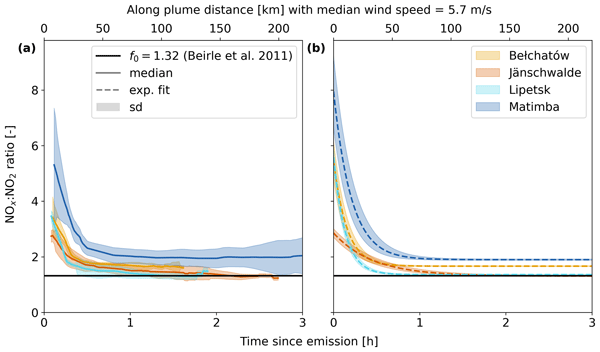
Nitrogen oxides (NOx = NO + NO2) are important air pollutants. This study addresses the challenge of accurately estimating NOx emissions from NO2 satellite observations. We develop a realistic model to convert NO2 to NOx by using simulated plumes from various power plants. We apply the model to satellite NO2 observations, significantly reducing biases in estimated NOx emissions. The study highlights the potential for a consistent, high-resolution estimation of NOx emissions using satellite data.
Gerrit Kuhlmann, Erik Koene, Sandro Meier, Diego Santaren, Grégoire Broquet, Frédéric Chevallier, Janne Hakkarainen, Janne Nurmela, Laia Amorós, Johanna Tamminen, and Dominik Brunner
Geosci. Model Dev., 17, 4773–4789, https://doi.org/10.5194/gmd-17-4773-2024, https://doi.org/10.5194/gmd-17-4773-2024, 2024
Short summary
Short summary
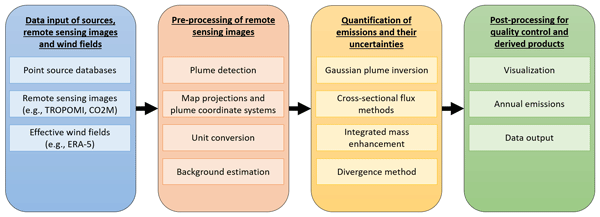
We present a Python software library for data-driven emission quantification (ddeq). It can be used to determine the emissions of hot spots (cities, power plants and industry) from remote sensing images using different methods. ddeq can be extended for new datasets and methods, providing a powerful community tool for users and developers. The application of the methods is shown using Jupyter notebooks included in the library.
Michael Steiner, Wouter Peters, Ingrid Luijkx, Stephan Henne, Huilin Chen, Samuel Hammer, and Dominik Brunner
Atmos. Chem. Phys., 24, 2759–2782, https://doi.org/10.5194/acp-24-2759-2024, https://doi.org/10.5194/acp-24-2759-2024, 2024
Short summary
Short summary
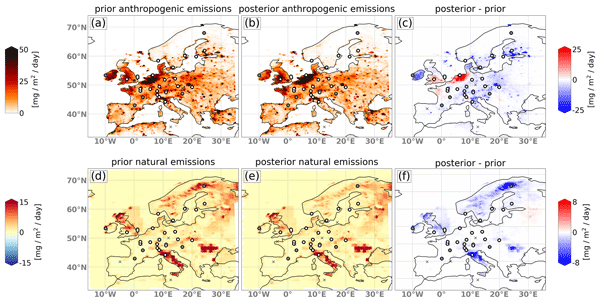
The Paris Agreement increased interest in estimating greenhouse gas (GHG) emissions of individual countries, but top-down emission estimation is not yet considered policy-relevant. It is therefore paramount to reduce large errors and to build systems that are based on the newest atmospheric transport models. In this study, we present the first application of ICON-ART in the inverse modeling of GHG fluxes with an ensemble Kalman filter and present our results for European CH4 emissions.
Robert Hanfland, Dominik Brunner, Christiane Voigt, Alina Fiehn, Anke Roiger, and Margit Pattantyús-Ábrahám
Atmos. Chem. Phys., 24, 2511–2534, https://doi.org/10.5194/acp-24-2511-2024, https://doi.org/10.5194/acp-24-2511-2024, 2024
Short summary
Short summary
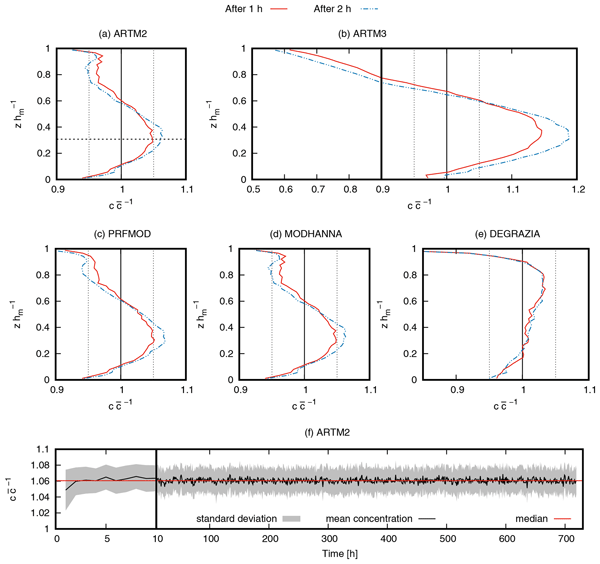
To show that the three-dimensional dispersion of plumes simulated by the Atmospheric Radionuclide Transport Model within the planetary boundary layer agrees with real plumes, we identify the most important input parameters and analyse the turbulence properties of five different turbulence models in very unstable stratification conditions using their deviation from the well-mixed state. Simulations show that one model agrees slightly better in unstable stratification conditions.
Natalie M. Mahowald, Longlei Li, Julius Vira, Marje Prank, Douglas S. Hamilton, Hitoshi Matsui, Ron L. Miller, Louis Lu, Ezgi Akyuz, Daphne Meidan, Peter Hess, Heikki Lihavainen, Christine Wiedinmyer, Jenny Hand, Maria Grazia Alaimo, Célia Alves, Andres Alastuey, Paulo Artaxo, Africa Barreto, Francisco Barraza, Silvia Becagli, Giulia Calzolai, Shankarararman Chellam, Ying Chen, Patrick Chuang, David D. Cohen, Cristina Colombi, Evangelia Diapouli, Gaetano Dongarra, Konstantinos Eleftheriadis, Corinne Galy-Lacaux, Cassandra Gaston, Dario Gomez, Yenny González Ramos, Hannele Hakola, Roy M. Harrison, Chris Heyes, Barak Herut, Philip Hopke, Christoph Hüglin, Maria Kanakidou, Zsofia Kertesz, Zbiginiw Klimont, Katriina Kyllönen, Fabrice Lambert, Xiaohong Liu, Remi Losno, Franco Lucarelli, Willy Maenhaut, Beatrice Marticorena, Randall V. Martin, Nikolaos Mihalopoulos, Yasser Morera-Gomez, Adina Paytan, Joseph Prospero, Sergio Rodríguez, Patricia Smichowski, Daniela Varrica, Brenna Walsh, Crystal Weagle, and Xi Zhao
Earth Syst. Sci. Data Discuss., https://doi.org/10.5194/essd-2024-1, https://doi.org/10.5194/essd-2024-1, 2024
Preprint withdrawn
Short summary
Short summary
Aerosol particles can interact with incoming solar radiation and outgoing long wave radiation, change cloud properties, affect photochemistry, impact surface air quality, and when deposited impact surface albedo of snow and ice, and modulate carbon dioxide uptake by the land and ocean. Here we present a new compilation of aerosol observations including composition, a methodology for comparing the datasets to model output, and show the implications of these results using one model.
Ioannis Katharopoulos, Dominique Rust, Martin K. Vollmer, Dominik Brunner, Stefan Reimann, Simon J. O'Doherty, Dickon Young, Kieran M. Stanley, Tanja Schuck, Jgor Arduini, Lukas Emmenegger, and Stephan Henne
Atmos. Chem. Phys., 23, 14159–14186, https://doi.org/10.5194/acp-23-14159-2023, https://doi.org/10.5194/acp-23-14159-2023, 2023
Short summary
Short summary
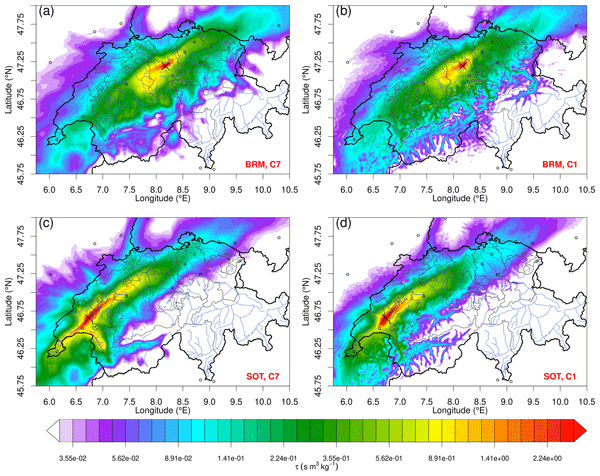
The effectiveness of climate change mitigation needs to be scrutinized by monitoring greenhouse gas (GHG) emissions. Countries report their emissions to the UN in a bottom-up manner. By combining atmospheric observations and transport models someone can independently validate emission estimates in a top-down fashion. We report Swiss emissions of synthetic GHGs based on kilometer-scale transport and inverse modeling, highlighting the role of appropriate resolution in complex terrain.
Simone Brunamonti, Manuel Graf, Tobias Bühlmann, Céline Pascale, Ivan Ilak, Lukas Emmenegger, and Béla Tuzson
Atmos. Meas. Tech., 16, 4391–4407, https://doi.org/10.5194/amt-16-4391-2023, https://doi.org/10.5194/amt-16-4391-2023, 2023
Short summary
Short summary
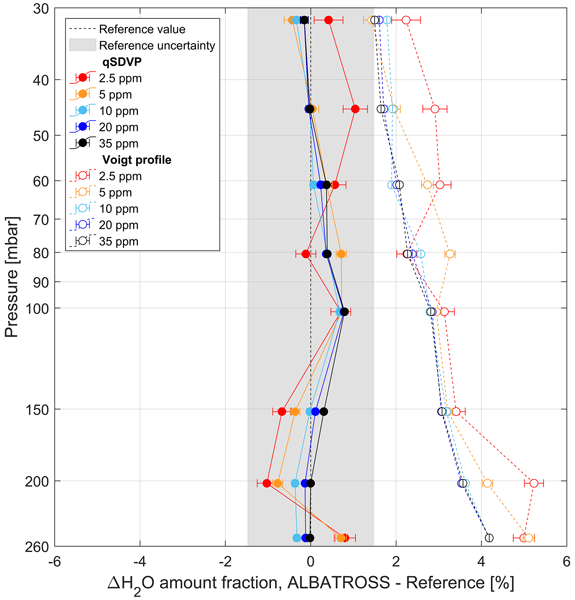
The abundance of water vapor (H2O) in the upper atmosphere has a significant impact on the rate of global warming. We developed a new lightweight spectrometer (ALBATROSS) for H2O measurements aboard meteorological balloons. Here, we assess the accuracy and precision of ALBATROSS using metrology-grade reference gases. The results demonstrate the exceptional potential of mid-infrared laser absorption spectroscopy as a new reference method for in situ measurements of H2O in the upper atmosphere.
Foteini Stavropoulou, Katarina Vinković, Bert Kers, Marcel de Vries, Steven van Heuven, Piotr Korbeń, Martina Schmidt, Julia Wietzel, Pawel Jagoda, Jaroslav M. Necki, Jakub Bartyzel, Hossein Maazallahi, Malika Menoud, Carina van der Veen, Sylvia Walter, Béla Tuzson, Jonas Ravelid, Randulph Paulo Morales, Lukas Emmenegger, Dominik Brunner, Michael Steiner, Arjan Hensen, Ilona Velzeboer, Pim van den Bulk, Hugo Denier van der Gon, Antonio Delre, Maklawe Essonanawe Edjabou, Charlotte Scheutz, Marius Corbu, Sebastian Iancu, Denisa Moaca, Alin Scarlat, Alexandru Tudor, Ioana Vizireanu, Andreea Calcan, Magdalena Ardelean, Sorin Ghemulet, Alexandru Pana, Aurel Constantinescu, Lucian Cusa, Alexandru Nica, Calin Baciu, Cristian Pop, Andrei Radovici, Alexandru Mereuta, Horatiu Stefanie, Alexandru Dandocsi, Bas Hermans, Stefan Schwietzke, Daniel Zavala-Araiza, Huilin Chen, and Thomas Röckmann
Atmos. Chem. Phys., 23, 10399–10412, https://doi.org/10.5194/acp-23-10399-2023, https://doi.org/10.5194/acp-23-10399-2023, 2023
Short summary
Short summary
In this study, we quantify CH4 emissions from onshore oil production sites in Romania at source and facility level using a combination of ground- and drone-based measurement techniques. We show that the total CH4 emissions in our studied areas are much higher than the emissions reported to UNFCCC, and up to three-quarters of the detected emissions are related to operational venting. Our results suggest that oil and gas production infrastructure in Romania holds a massive mitigation potential.
Jean-Philippe Putaud, Enrico Pisoni, Alexander Mangold, Christoph Hueglin, Jean Sciare, Michael Pikridas, Chrysanthos Savvides, Jakub Ondracek, Saliou Mbengue, Alfred Wiedensohler, Kay Weinhold, Maik Merkel, Laurent Poulain, Dominik van Pinxteren, Hartmut Herrmann, Andreas Massling, Claus Nordstroem, Andrés Alastuey, Cristina Reche, Noemí Pérez, Sonia Castillo, Mar Sorribas, Jose Antonio Adame, Tuukka Petaja, Katrianne Lehtipalo, Jarkko Niemi, Véronique Riffault, Joel F. de Brito, Augustin Colette, Olivier Favez, Jean-Eudes Petit, Valérie Gros, Maria I. Gini, Stergios Vratolis, Konstantinos Eleftheriadis, Evangelia Diapouli, Hugo Denier van der Gon, Karl Espen Yttri, and Wenche Aas
Atmos. Chem. Phys., 23, 10145–10161, https://doi.org/10.5194/acp-23-10145-2023, https://doi.org/10.5194/acp-23-10145-2023, 2023
Short summary
Short summary
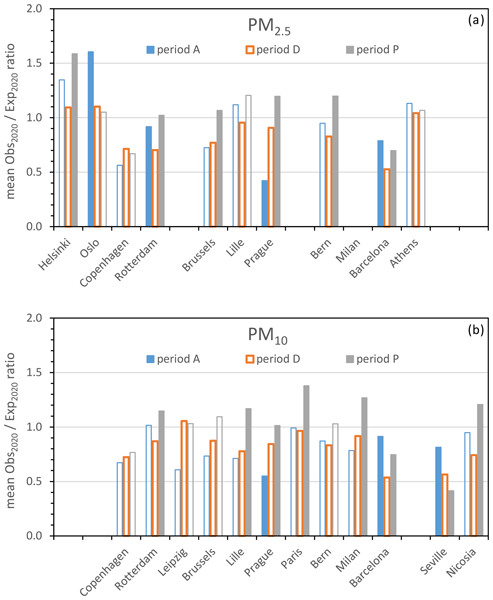
Many European people are still exposed to levels of air pollution that can affect their health. COVID-19 lockdowns in 2020 were used to assess the impact of the reduction in human mobility on air pollution across Europe by comparing measurement data with values that would be expected if no lockdown had occurred. We show that lockdown measures did not lead to consistent decreases in the concentrations of fine particulate matter suspended in the air, and we investigate why.
Leonie Bernet, Tove Svendby, Georg Hansen, Yvan Orsolini, Arne Dahlback, Florence Goutail, Andrea Pazmiño, Boyan Petkov, and Arve Kylling
Atmos. Chem. Phys., 23, 4165–4184, https://doi.org/10.5194/acp-23-4165-2023, https://doi.org/10.5194/acp-23-4165-2023, 2023
Short summary
Short summary
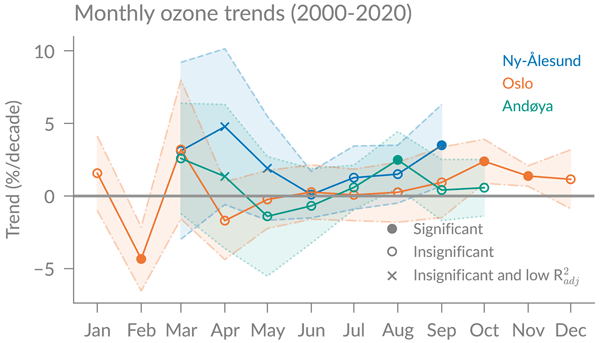
After the severe destruction of the ozone layer, the amount of ozone in the stratosphere is expected to increase again. At northern high latitudes, however, such a recovery has not been detected yet. To assess ozone changes in that region, we analyse the amount of ozone above specific locations (total ozone) measured at three stations in Norway. We found that total ozone increases significantly at two Arctic stations, which may be an indication of ozone recovery at northern high latitudes.
Nadia K. Colombi, Daniel J. Jacob, Laura Hyesung Yang, Shixian Zhai, Viral Shah, Stuart K. Grange, Robert M. Yantosca, Soontae Kim, and Hong Liao
Atmos. Chem. Phys., 23, 4031–4044, https://doi.org/10.5194/acp-23-4031-2023, https://doi.org/10.5194/acp-23-4031-2023, 2023
Short summary
Short summary
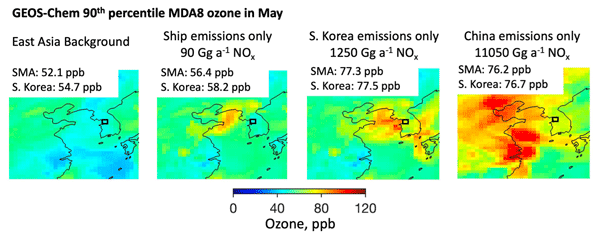
Surface ozone, detrimental to human and ecosystem health, is very high and increasing in South Korea. Using a global model of the atmosphere, we found that emissions from South Korea and China contribute equally to the high ozone observed. We found that in the absence of all anthropogenic emissions over East Asia, ozone is still very high, implying that the air quality standard in South Korea is not practically achievable unless this background external to East Asia can be decreased.
Ana Maria Roxana Petrescu, Chunjing Qiu, Matthew J. McGrath, Philippe Peylin, Glen P. Peters, Philippe Ciais, Rona L. Thompson, Aki Tsuruta, Dominik Brunner, Matthias Kuhnert, Bradley Matthews, Paul I. Palmer, Oksana Tarasova, Pierre Regnier, Ronny Lauerwald, David Bastviken, Lena Höglund-Isaksson, Wilfried Winiwarter, Giuseppe Etiope, Tuula Aalto, Gianpaolo Balsamo, Vladislav Bastrikov, Antoine Berchet, Patrick Brockmann, Giancarlo Ciotoli, Giulia Conchedda, Monica Crippa, Frank Dentener, Christine D. Groot Zwaaftink, Diego Guizzardi, Dirk Günther, Jean-Matthieu Haussaire, Sander Houweling, Greet Janssens-Maenhout, Massaer Kouyate, Adrian Leip, Antti Leppänen, Emanuele Lugato, Manon Maisonnier, Alistair J. Manning, Tiina Markkanen, Joe McNorton, Marilena Muntean, Gabriel D. Oreggioni, Prabir K. Patra, Lucia Perugini, Isabelle Pison, Maarit T. Raivonen, Marielle Saunois, Arjo J. Segers, Pete Smith, Efisio Solazzo, Hanqin Tian, Francesco N. Tubiello, Timo Vesala, Guido R. van der Werf, Chris Wilson, and Sönke Zaehle
Earth Syst. Sci. Data, 15, 1197–1268, https://doi.org/10.5194/essd-15-1197-2023, https://doi.org/10.5194/essd-15-1197-2023, 2023
Short summary
Short summary
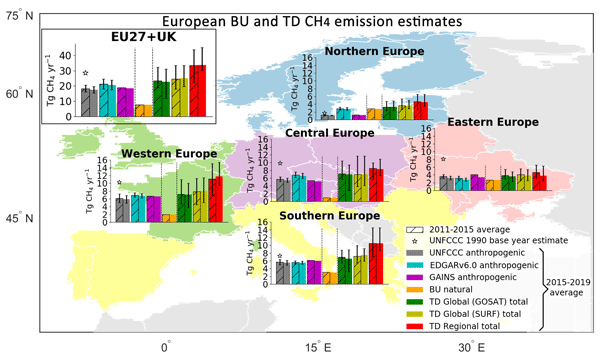
This study updates the state-of-the-art scientific overview of CH4 and N2O emissions in the EU27 and UK in Petrescu et al. (2021a). Yearly updates are needed to improve the different respective approaches and to inform on the development of formal verification systems. It integrates the most recent emission inventories, process-based model and regional/global inversions, comparing them with UNFCCC national GHG inventories, in support to policy to facilitate real-time verification procedures.
Dominik Brunner, Gerrit Kuhlmann, Stephan Henne, Erik Koene, Bastian Kern, Sebastian Wolff, Christiane Voigt, Patrick Jöckel, Christoph Kiemle, Anke Roiger, Alina Fiehn, Sven Krautwurst, Konstantin Gerilowski, Heinrich Bovensmann, Jakob Borchardt, Michal Galkowski, Christoph Gerbig, Julia Marshall, Andrzej Klonecki, Pascal Prunet, Robert Hanfland, Margit Pattantyús-Ábrahám, Andrzej Wyszogrodzki, and Andreas Fix
Atmos. Chem. Phys., 23, 2699–2728, https://doi.org/10.5194/acp-23-2699-2023, https://doi.org/10.5194/acp-23-2699-2023, 2023
Short summary
Short summary
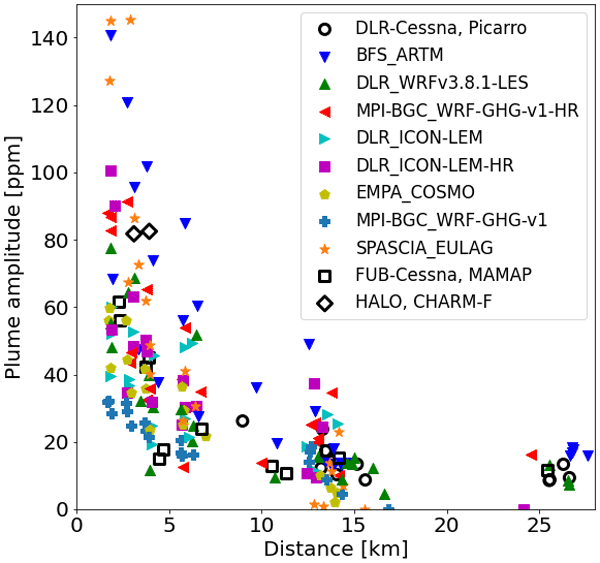
We evaluated six atmospheric transport models for their capability to simulate the CO2 plumes from two of the largest power plants in Europe by comparing the models against aircraft observations collected during the CoMet (Carbon Dioxide and Methane Mission) campaign in 2018. The study analyzed how realistically such plumes can be simulated at different model resolutions and how well the planned European satellite mission CO2M will be able to quantify emissions from power plants.
Lars Mächler, Daniel Baggenstos, Florian Krauss, Jochen Schmitt, Bernhard Bereiter, Remo Walther, Christoph Reinhard, Béla Tuzson, Lukas Emmenegger, and Hubertus Fischer
Atmos. Meas. Tech., 16, 355–372, https://doi.org/10.5194/amt-16-355-2023, https://doi.org/10.5194/amt-16-355-2023, 2023
Short summary
Short summary
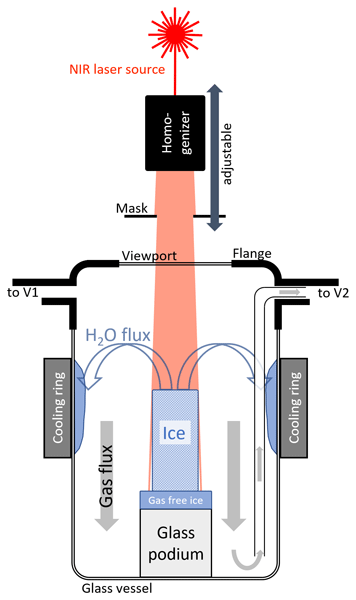
We present a new method to extract the gases from ice cores and measure their greenhouse gas composition. The ice is sublimated continuously with a near-infrared laser, releasing the gases, which are then analyzed on a laser absorption spectrometer. The main advantage over previous efforts is a low effective resolution of 1–2 cm. This capability is crucial for the analysis of highly thinned ice, as expected from ongoing drilling efforts to extend ice core history further back in time.
Prabhakar Shrestha, Jana Mendrok, and Dominik Brunner
Atmos. Chem. Phys., 22, 14095–14117, https://doi.org/10.5194/acp-22-14095-2022, https://doi.org/10.5194/acp-22-14095-2022, 2022
Short summary
Short summary
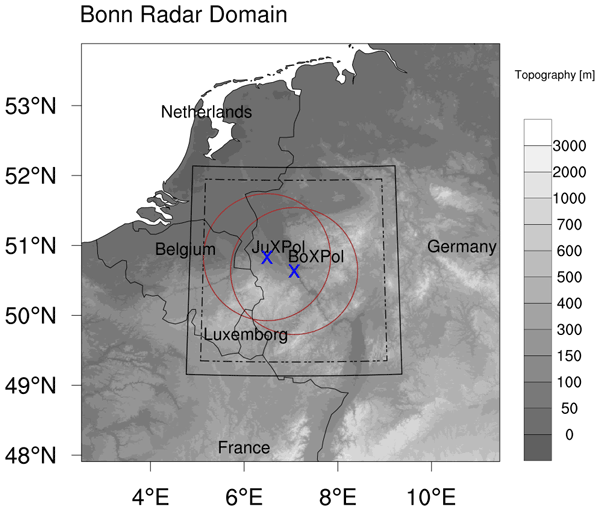
The study extends the Terrestrial Systems Modeling Platform with gas-phase chemistry aerosol dynamics and a radar forward operator to enable detailed studies of aerosol–cloud–precipitation interactions. This is demonstrated using a case study of a deep convective storm, which showed that the strong updraft in the convective core of the storm produced aerosol-tower-like features, which affected the size of the hydrometeors and the simulated polarimetric features (e.g., ZDR and KDP columns).
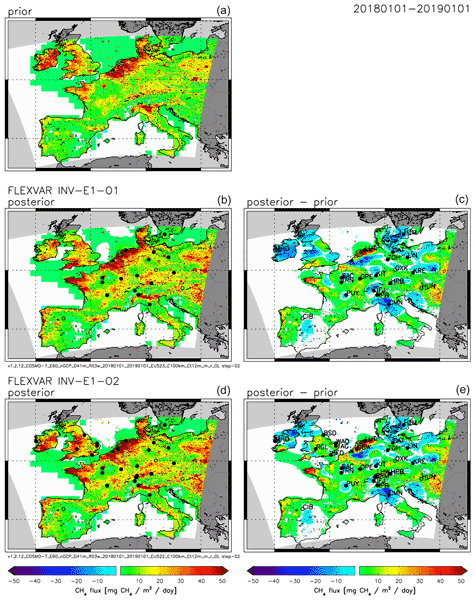
Peter Bergamaschi, Arjo Segers, Dominik Brunner, Jean-Matthieu Haussaire, Stephan Henne, Michel Ramonet, Tim Arnold, Tobias Biermann, Huilin Chen, Sebastien Conil, Marc Delmotte, Grant Forster, Arnoud Frumau, Dagmar Kubistin, Xin Lan, Markus Leuenberger, Matthias Lindauer, Morgan Lopez, Giovanni Manca, Jennifer Müller-Williams, Simon O'Doherty, Bert Scheeren, Martin Steinbacher, Pamela Trisolino, Gabriela Vítková, and Camille Yver Kwok
Atmos. Chem. Phys., 22, 13243–13268, https://doi.org/10.5194/acp-22-13243-2022, https://doi.org/10.5194/acp-22-13243-2022, 2022
Short summary
Short summary
We present a novel high-resolution inverse modelling system, "FLEXVAR", and its application for the inverse modelling of European CH4 emissions in 2018. The new system combines a high spatial resolution of 7 km x 7 km with a variational data assimilation technique, which allows CH4 emissions to be optimized from individual model grid cells. The high resolution allows the observations to be better reproduced, while the derived emissions show overall good consistency with two existing models.
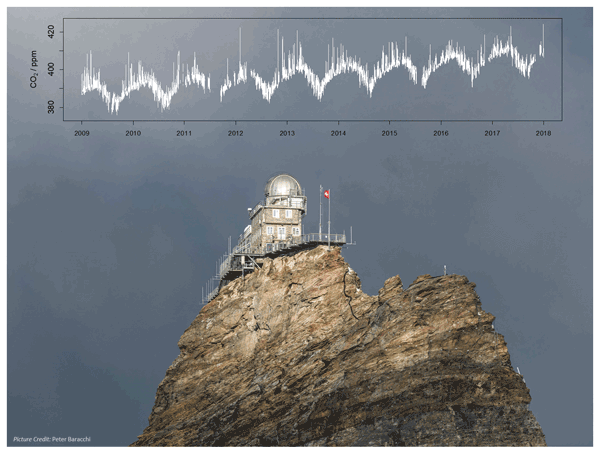
Simone M. Pieber, Béla Tuzson, Stephan Henne, Ute Karstens, Christoph Gerbig, Frank-Thomas Koch, Dominik Brunner, Martin Steinbacher, and Lukas Emmenegger
Atmos. Chem. Phys., 22, 10721–10749, https://doi.org/10.5194/acp-22-10721-2022, https://doi.org/10.5194/acp-22-10721-2022, 2022
Short summary
Short summary
Understanding regional greenhouse gas emissions into the atmosphere is a prerequisite to mitigate climate change. In this study, we investigated the regional contributions of carbon dioxide (CO2) at the location of the high Alpine observatory Jungfraujoch (JFJ, Switzerland, 3580 m a.s.l.). To this purpose, we combined receptor-oriented atmospheric transport simulations for CO2 concentration in the period 2009–2017 with stable carbon isotope (δ13C–CO2) information.
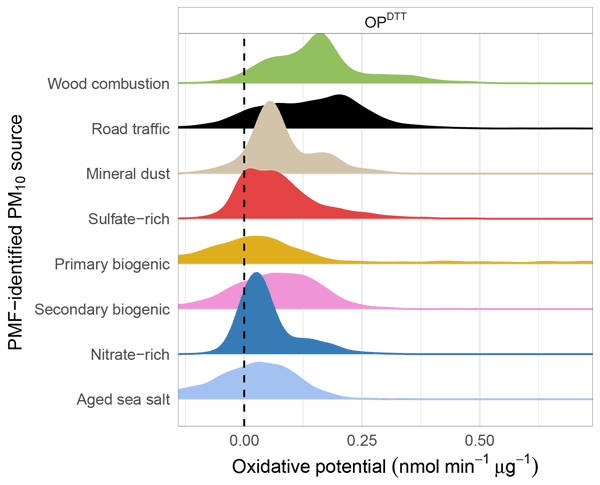
Stuart K. Grange, Gaëlle Uzu, Samuël Weber, Jean-Luc Jaffrezo, and Christoph Hueglin
Atmos. Chem. Phys., 22, 7029–7050, https://doi.org/10.5194/acp-22-7029-2022, https://doi.org/10.5194/acp-22-7029-2022, 2022
Short summary
Short summary
Oxidative potential (OP), a biologically relevant metric for particulate matter (PM), was linked to PM10 and PM2.5 sources and constituents across Switzerland between 2018 and 2019. Wood burning and non-exhaust traffic emissions were identified as key processes that led to enhanced OP. Therefore, the make-up of the PM mix was very important for OP. The results highlight the importance of the management of wood burning and non-exhaust emissions to reduce OP, and presumably biological harm.
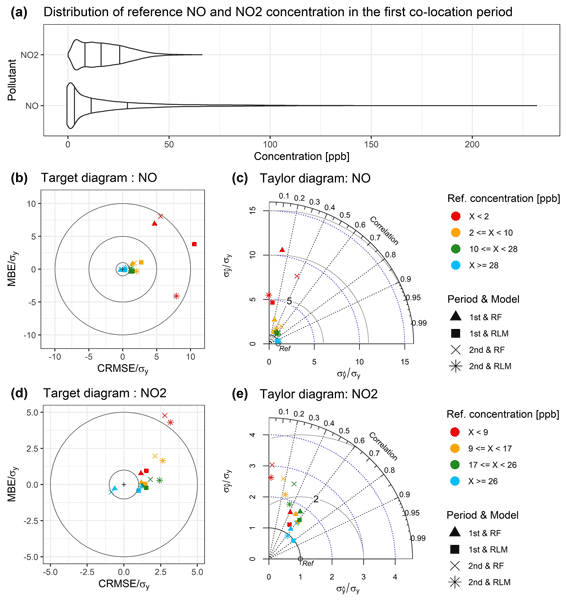
Horim Kim, Michael Müller, Stephan Henne, and Christoph Hüglin
Atmos. Meas. Tech., 15, 2979–2992, https://doi.org/10.5194/amt-15-2979-2022, https://doi.org/10.5194/amt-15-2979-2022, 2022
Short summary
Short summary
In this study, the performance of electrochemical sensors for NO and NO2 for measuring air quality was determined over a longer operating period. The performance of NO sensors remained reliable for more than 18 months. However, the NO2 sensors showed decreasing performance over time. During deployment, we found that the NO2 sensors can distinguish general pollution levels, but they proved unsuitable for accurate measurements due to significant biases.
Adam Brighty, Véronique Jacob, Gaëlle Uzu, Lucille Borlaza, Sébastien Conil, Christoph Hueglin, Stuart K. Grange, Olivier Favez, Cécile Trébuchon, and Jean-Luc Jaffrezo
Atmos. Chem. Phys., 22, 6021–6043, https://doi.org/10.5194/acp-22-6021-2022, https://doi.org/10.5194/acp-22-6021-2022, 2022
Short summary
Short summary
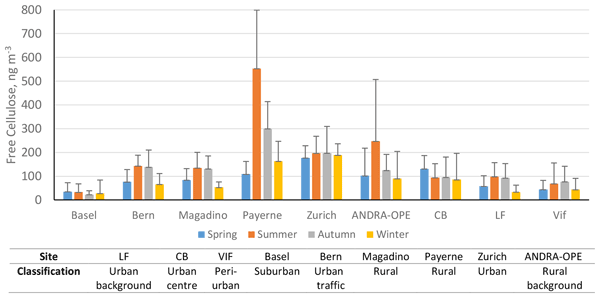
With an revised analytical method and long-term sampling strategy, we have been able to elucidate much more information about atmospheric plant debris, a poorly understood class of particulate matter. We found weaker seasonal patterns at urban locations compared to rural locations and significant interannual variability in concentrations between previous years and 2020, during the COVID-19 pandemic. This suggests a possible man-made influence on plant debris concentration and source strength.
Randulph Morales, Jonas Ravelid, Katarina Vinkovic, Piotr Korbeń, Béla Tuzson, Lukas Emmenegger, Huilin Chen, Martina Schmidt, Sebastian Humbel, and Dominik Brunner
Atmos. Meas. Tech., 15, 2177–2198, https://doi.org/10.5194/amt-15-2177-2022, https://doi.org/10.5194/amt-15-2177-2022, 2022
Short summary
Short summary
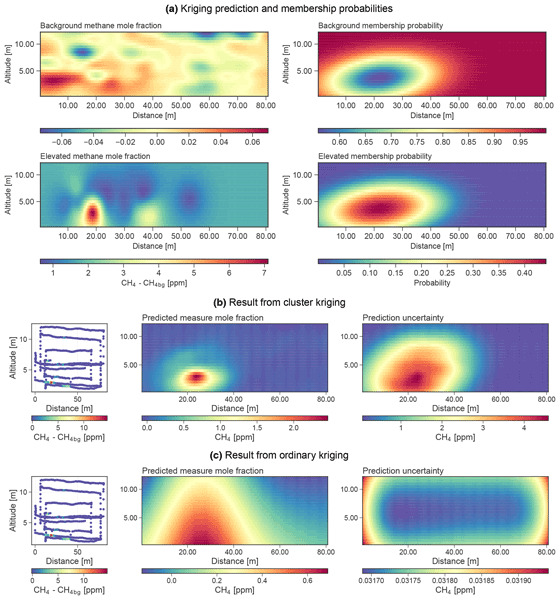
Mapping trace gas emission plumes using in situ measurements from unmanned aerial vehicles (UAVs) is an emerging and attractive possibility to quantify emissions from localized sources. We performed an extensive controlled-release experiment to develop an optimal quantification method and to determine the related uncertainties under various environmental and sampling conditions. Our approach was successful in quantifying local methane sources from drone-based measurements.
Gerrit Kuhlmann, Ka Lok Chan, Sebastian Donner, Ying Zhu, Marc Schwaerzel, Steffen Dörner, Jia Chen, Andreas Hueni, Duc Hai Nguyen, Alexander Damm, Annette Schütt, Florian Dietrich, Dominik Brunner, Cheng Liu, Brigitte Buchmann, Thomas Wagner, and Mark Wenig
Atmos. Meas. Tech., 15, 1609–1629, https://doi.org/10.5194/amt-15-1609-2022, https://doi.org/10.5194/amt-15-1609-2022, 2022
Short summary
Short summary
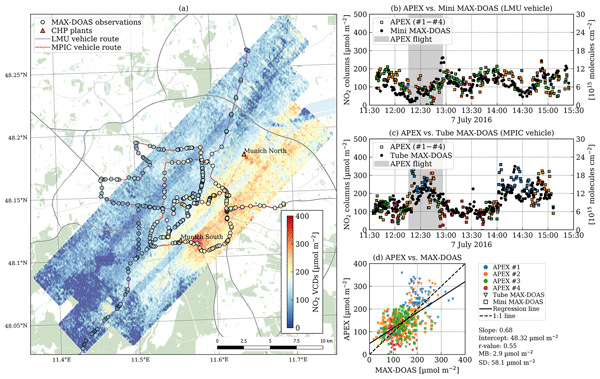
Nitrogen dioxide (NO2) is an air pollutant whose concentration often exceeds air quality guideline values, especially in urban areas. To map the spatial distribution of NO2 in Munich, we conducted the Munich NO2 Imaging Campaign (MuNIC), where NO2 was measured with stationary, mobile, and airborne in situ and remote sensing instruments. The campaign provides a unique dataset that has been used to compare the different instruments and to study the spatial variability of NO2 and its sources.
Franz Conen, Annika Einbock, Claudia Mignani, and Christoph Hüglin
Atmos. Chem. Phys., 22, 3433–3444, https://doi.org/10.5194/acp-22-3433-2022, https://doi.org/10.5194/acp-22-3433-2022, 2022
Short summary
Short summary
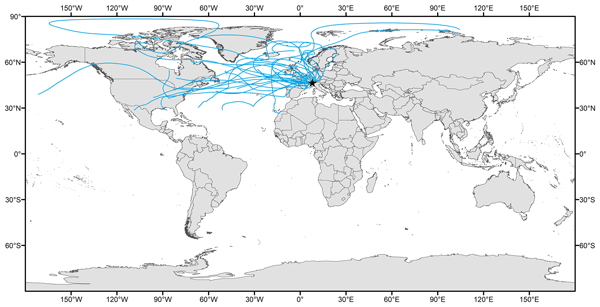
Above western Europe, ice typically starts to form in clouds a few kilometres above the ground if suitable aerosol particles are present. In air masses typical for that altitude, we found that such particles most likely originate from bacteria and fungi living on plants. Occasional Saharan dust intrusions seem to contribute little to the number concentration of particles able to freeze cloud droplets between 0°C and −15°C.
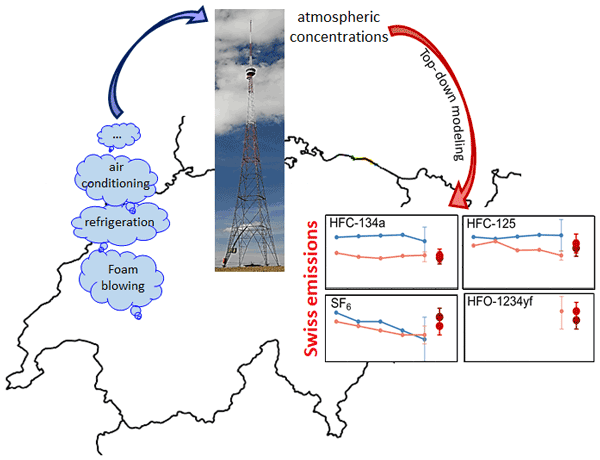
Dominique Rust, Ioannis Katharopoulos, Martin K. Vollmer, Stephan Henne, Simon O'Doherty, Daniel Say, Lukas Emmenegger, Renato Zenobi, and Stefan Reimann
Atmos. Chem. Phys., 22, 2447–2466, https://doi.org/10.5194/acp-22-2447-2022, https://doi.org/10.5194/acp-22-2447-2022, 2022
Short summary
Short summary
Artificial halocarbons contribute to ozone layer depletion and to global warming. We measured the atmospheric concentrations of halocarbons at the Beromünster tower, modelled the Swiss emissions, and compared the results to the internationally reported Swiss emissions inventory. For most of the halocarbons, we found good agreement, whereas one refrigerant might be overestimated in the inventory. In addition, we present first emission estimates of the newest types of halocarbons.
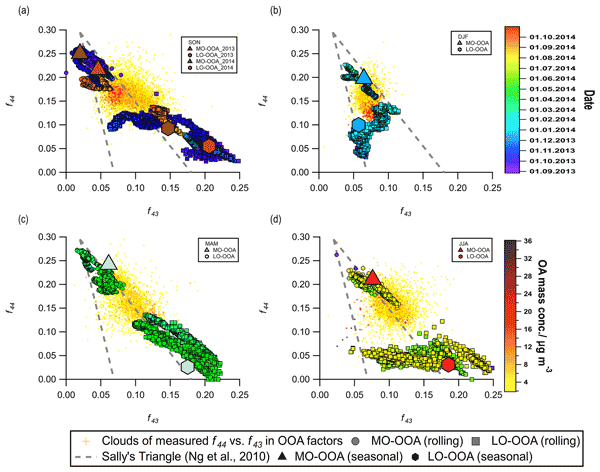
Gang Chen, Yulia Sosedova, Francesco Canonaco, Roman Fröhlich, Anna Tobler, Athanasia Vlachou, Kaspar R. Daellenbach, Carlo Bozzetti, Christoph Hueglin, Peter Graf, Urs Baltensperger, Jay G. Slowik, Imad El Haddad, and André S. H. Prévôt
Atmos. Chem. Phys., 21, 15081–15101, https://doi.org/10.5194/acp-21-15081-2021, https://doi.org/10.5194/acp-21-15081-2021, 2021
Short summary
Short summary
A novel, advanced source apportionment technique was applied to a dataset measured in Magadino. Rolling positive matrix factorisation (PMF) allows for retrieving more realistic, time-dependent, and detailed information on organic aerosol sources. The strength of the rolling PMF mechanism is highlighted by comparing it with results derived from conventional seasonal PMF. Overall, this comprehensive interpretation of aerosol chemical speciation monitor data could be a role model for similar work.
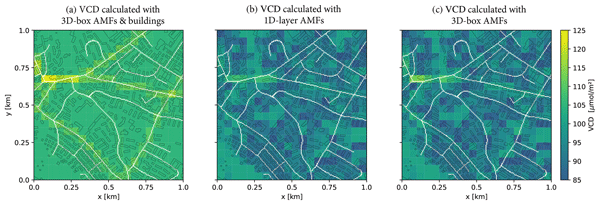
Marc Schwaerzel, Dominik Brunner, Fabian Jakub, Claudia Emde, Brigitte Buchmann, Alexis Berne, and Gerrit Kuhlmann
Atmos. Meas. Tech., 14, 6469–6482, https://doi.org/10.5194/amt-14-6469-2021, https://doi.org/10.5194/amt-14-6469-2021, 2021
Short summary
Short summary
NO2 maps from airborne imaging remote sensing often appear much smoother than one would expect from high-resolution model simulations of NO2 over cities, despite the small ground-pixel size of the sensors. Our case study over Zurich, using the newly implemented building module of the MYSTIC radiative transfer solver, shows that the 3D effect can explain part of the smearing and that building shadows cause a noticeable underestimation and noise in the measured NO2 columns.
Cited articles
Aigner, P., Chen, J., and Kürzinger, K.: ICOS Cities 2024-12 release mid-cost CO2 data from the Munich network ACROPOLIS, ICOS ERIC – Carbon Portal [data set], https://doi.org/10.18160/B09J-YS2G, 2024. a
Alduchov, O. A. and Eskridge, R. E.: Improved Magnus Form Approximation of Saturation Vapor Pressure, J. Appl. Meteorol., 35, 601–609, https://doi.org/10.1175/1520-0450(1996)035<0601:IMFAOS>2.0.CO;2, 1996. a
Bigi, A., Mueller, M., Grange, S. K., Ghermandi, G., and Hueglin, C.: Performance of NO, NO2 low cost sensors and three calibration approaches within a real world application, Atmos. Meas. Tech., 11, 3717–3735, https://doi.org/10.5194/amt-11-3717-2018, 2018. a
Brunner, D., Suter, I., Bernet, L., Constantin, L., Grange, S. K., Rubli, P., Li, J., Chen, J., Bigi, A., and Emmenegger, L.: Building-resolving simulations of anthropogenic and biospheric CO2 in the city of Zurich with GRAMM/GRAL, Atmos. Chem. Phys., 25, 14387–14410, https://doi.org/10.5194/acp-25-14387-2025, 2025. a
C40 Cities: Cities Race to Zero, https://www.c40.org/what-we-do/building-a-movement/cities-race-to-zero/ (last access: 13 June 2025), 2025. a
Cai, Q., Zeng, N., Yang, X., Xu, C., Wang, Z., and Han, P.: A 30-month field evaluation of low-cost CO2 sensors using a reference instrument, Atmos. Meas. Tech., 18, 4871–4884, https://doi.org/10.5194/amt-18-4871-2025, 2025. a, b
Castell, N., Dauge, F. R., Schneider, P., Vogt, M., Lerner, U., Fishbain, B., Broday, D., and Bartonova, A.: Can commercial low-cost sensor platforms contribute to air quality monitoring and exposure estimates?, Environ. Int., 99, 293–302, https://doi.org/10.1016/j.envint.2016.12.007, 2017. a, b
Crawford, B., Christen, A., and McKendry, I.: Diurnal Course of Carbon Dioxide Mixing Ratios in the Urban Boundary Layer in Response to Surface Emissions, J. Appl. Meteorol. Clim., 55, 507–529, https://doi.org/10.1175/JAMC-D-15-0060.1, 2016. a
Creman, L.: ZiCOS-L data update, Version v1, Zenodo [data set], https://doi.org/10.5281/zenodo.15878605, 2025. a
Cui, H., Zhang, L., Li, W., Yuan, Z., Wu, M., Wang, C., Ma, J., and Li, Y.: A new calibration system for low-cost Sensor Network in air pollution monitoring, Atmos. Pollut. Res., 12, 101049, https://doi.org/10.1016/j.apr.2021.03.012, 2021. a
Decentlab: DL-LP8P: CO2, Temperature, Humidity and Barometric Pressure Sensor for LoRaWAN®, https://www.decentlab.com/products/co2-temperature-humidity -and-barometric-pressure-sensor-for-lorawan (last access: 25 April 2025), 2025. a
Delaria, E. R., Kim, J., Fitzmaurice, H. L., Newman, C., Wooldridge, P. J., Worthington, K., and Cohen, R. C.: The Berkeley Environmental Air-quality and CO2 Network: field calibrations of sensor temperature dependence and assessment of network scale CO2 accuracy, Atmos. Meas. Tech., 14, 5487–5500, https://doi.org/10.5194/amt-14-5487-2021, 2021. a, b, c, d
Denning, A. S., Takahashi, T., and Friedlingstein, P.: Can a strong atmospheric CO2 rectifier effect be reconciled with a reasonable carbon budget?, Tellus B, 51, 249, https://doi.org/10.3402/tellusb.v51i2.16277, 1999. a
Duren, R. M. and Miller, C. E.: Measuring the carbon emissions of megacities, Nat. Clim. Change, 2, 560–562, https://doi.org/10.1038/nclimate1629, 2012. a
Grafana Labs: Grafana: The open and composable observability platform, https://grafana.com/ (last access: 25 April 2025), 2025. a
Hernández-Paniagua, I. Y., Lowry, D., Clemitshaw, K. C., Fisher, R. E., France, J. L., Lanoisellé, M., Ramonet, M., and Nisbet, E. G.: Diurnal, seasonal, and annual trends in atmospheric CO2 at southwest London during 2000–2012: Wind sector analysis and comparison with Mace Head, Ireland, Atmos. Environ., 105, 138–147, https://doi.org/10.1016/j.atmosenv.2015.01.021, 2015. a
IPCC: Climate Change 2023: Synthesis Report, Contribution of Working Groups I, II and III to the Sixth Assessment Report of the Intergovernmental Panel on Climate Change, edited by: Core Writing Team, Lee, H., and Romero, J., Intergovernmental Panel on Climate Change (IPCC), Geneva, Switzerland., Tech. rep., https://www.ipcc.ch/report/ar6/syr/ (last access: 25 July 2025), 2023a. a
IPCC: Urban Systems and Other Settlements, in: Climate Change 2022 – Mitigation of Climate Change: Working Group III Contribution to the Sixth Assessment Report of the Intergovernmental Panel on Climate Change, Cambridge University Press, Cambridge, https://www.cambridge.org/core/books/climate-change-2022-mitigation-of-climate-change/urban-systems-and-other-settlements/F8AEF956B904563A76D7330DCB1D0D1C (last access: 17 August 2025), 2023b. a
Kim, J., Berelson, W. M., Rollins, N. E., Asimow, N. G., Newman, C., Cohen, R. C., Miller, J. B., McDonald, B. C., Peischl, J., and Lehman, S. J.: Observing Anthropogenic and Biogenic CO2 Emissions in Los Angeles Using a Dense Sensor Network, Environ. Sci. Technol., 59, 3508–3517, https://doi.org/10.1021/acs.est.4c11392, 2025. a
Kühbacher, D. and Chen, J.: ICOS Cities 2024-12 release of low-cost CO2 data from the Munich network SCOUT, ICOS ERIC – Carbon Portal [data set], https://doi.org/10.18160/ZN4R-9A91, 2024. a
Lian, J., Laurent, O., Chariot, M., Lienhardt, L., Ramonet, M., Utard, H., Lauvaux, T., Bréon, F.-M., Broquet, G., Cucchi, K., Millair, L., and Ciais, P.: Development and deployment of a mid-cost CO2 sensor monitoring network to support atmospheric inverse modeling for quantifying urban CO2 emissions in Paris, Atmos. Meas. Tech., 17, 5821–5839, https://doi.org/10.5194/amt-17-5821-2024, 2024. a
LoRaWAN® Aliance: LoRaWAN™ – What is it?, a technical overview of LoRa® and LoRaWAN™, https://www.academia.edu/31617677/A_technical_overview_of_LoRa_and_LoRaWAN_What_is_it (last access: 10 July 2025), 2015. a
Malings, C., Tanzer, R., Hauryliuk, A., Kumar, S. P. N., Zimmerman, N., Kara, L. B., Presto, A. A., and R. Subramanian: Development of a general calibration model and long-term performance evaluation of low-cost sensors for air pollutant gas monitoring, Atmos. Meas. Tech., 12, 903–920, https://doi.org/10.5194/amt-12-903-2019, 2019. a
Miskell, G., Salmond, J., Alavi-Shoshtari, M., Bart, M., Ainslie, B., Grange, S., McKendry, I. G., Henshaw, G. S., and Williams, D. E.: Data Verification Tools for Minimizing Management Costs of Dense Air-Quality Monitoring Networks, Environ. Sci. Technol., 50, 835–846, https://doi.org/10.1021/acs.est.5b04421, 2016. a
Miskell, G., Salmond, J. A., and Williams, D. E.: Solution to the Problem of Calibration of Low-Cost Air Quality Measurement Sensors in Networks, ACS Sensors, 3, 832–843, https://doi.org/10.1021/acssensors.8b00074, 2018. a
Müller, M., Graf, P., Meyer, J., Pentina, A., Brunner, D., Perez-Cruz, F., Hüglin, C., and Emmenegger, L.: Integration and calibration of non-dispersive infrared (NDIR) CO2 low-cost sensors and their operation in a sensor network covering Switzerland, Atmos. Meas. Tech., 13, 3815–3834, https://doi.org/10.5194/amt-13-3815-2020, 2020. a, b, c, d, e, f, g, h, i, j, k, l, m, n, o
Pearson, R. K., Neuvo, Y., Astola, J., and Gabbouj, M.: Generalized Hampel Filters, EURASIP J. Adv. Sig. Pr., 2016, 87, https://doi.org/10.1186/s13634-016-0383-6, 2016. a
Shusterman, A. A., Teige, V. E., Turner, A. J., Newman, C., Kim, J., and Cohen, R. C.: The BErkeley Atmospheric CO2 Observation Network: initial evaluation, Atmos. Chem. Phys., 16, 13449–13463, https://doi.org/10.5194/acp-16-13449-2016, 2016. a, b, c, d
Shusterman, A. A., Kim, J., Lieschke, K. J., Newman, C., Wooldridge, P. J., and Cohen, R. C.: Observing local CO2 sources using low-cost, near-surface urban monitors, Atmos. Chem. Phys., 18, 13773–13785, https://doi.org/10.5194/acp-18-13773-2018, 2018. a, b
Stagakis, S., Brunner, D., Li, J., Backman, L., Karvonen, A., Constantin, L., Järvi, L., Havu, M., Chen, J., Emberger, S., and Kulmala, L.: Intercomparison of biogenic CO2 flux models in four urban parks in the city of Zurich, Biogeosciences, 22, 2133–2161, https://doi.org/10.5194/bg-22-2133-2025, 2025. a
Tages-Anzeiger: Was findet wann und wo statt? Der grosse Fest-Guide, https://www.tagesanzeiger.ch/das-muessen-sie-zum- groessten-fest-der-schweiz-wissen-728686242202 (last access: 23 June 2025), 2023a. a
Tages-Anzeiger: Die wichtigsten Infos zur riesigen Zürcher Techno-Party, https://www.tagesanzeiger.ch/die-wichtigsten- infos-zur-riesigen-zuercher-techno-party-366064056171 (last access: 23 June 2025), 2023b. a
Topalović, D. B., Davidović, M. D., Jovanović, M., Bartonova, A., Ristovski, Z., and Jovašević-Stojanović, M.: In search of an optimal in-field calibration method of low-cost gas sensors for ambient air pollutants: Comparison of linear, multilinear and artificial neural network approaches, Atmos. Environ., 213, 640–658, https://doi.org/10.1016/j.atmosenv.2019.06.028, 2019. a
UN-Habitat: United Nations Human Settlements Programme: Hot cities: Battle ground for climate change, https://unhabitat.org/sites/default/files/2012/06/P1HotCities.pdf (last access: 10 July 2025), 2011. a
Velasco, E. and Roth, M.: Cities as Net Sources of CO2: Review of Atmospheric CO2 Exchange in Urban Environments Measured by Eddy Covariance Technique, Geography Compass, 4, 1238–1259, https://doi.org/10.1111/j.1749-8198.2010.00384.x, 2010. a
Ward, H., Kotthaus, S., Grimmond, C., Bjorkegren, A., Wilkinson, M., Morrison, W., Evans, J., Morison, J., and Iamarino, M.: Effects of urban density on carbon dioxide exchanges: Observations of dense urban, suburban and woodland areas of southern England, Environ. Pollut., 198, 186–200, https://doi.org/10.1016/j.envpol.2014.12.031, 2015. a
Weissert, L., Alberti, K., Miskell, G., Pattinson, W., Salmond, J., Henshaw, G., and Williams, D. E.: Low-cost sensors and microscale land use regression: Data fusion to resolve air quality variations with high spatial and temporal resolution, Atmos. Environ., 213, 285–295, https://doi.org/10.1016/j.atmosenv.2019.06.019, 2019. a
Weissert, L., Miles, E., Miskell, G., Alberti, K., Feenstra, B., Henshaw, G. S., Papapostolou, V., Patel, H., Polidori, A., Salmond, J. A., and Williams, D. E.: Hierarchical network design for nitrogen dioxide measurement in urban environments, Atmos. Environ., 228, 117428, https://doi.org/10.1016/j.atmosenv.2020.117428, 2020. a
World Meteorological Organization: Integrating Low-cost Sensor Systems and Networks to Enhance Air Quality Applications, Tech. Rep. GAW Report No. 293, https://library.wmo.int/records/item/68924-integrating-low-cost -sensor-systems-and-networks-to-enhance-air-quality-applications (last access: 6 February 2025), 2024. a, b, c
Short summary
ZiCOS-L is a network of low-cost sensors in Zurich (Switzerland) to monitor carbon dioxide (CO2) concentrations. After correcting for drift and checking the sensor performance, we found that local factors like traffic, public events and vegetation affect CO2 levels. Even though the sensors have higher uncertainties than other sensors, the lower cost allows for a denser network with detailed insights into CO2 levels across the city, helping cities track emissions and support climate action plans.
ZiCOS-L is a network of low-cost sensors in Zurich (Switzerland) to monitor carbon dioxide (CO2)...


