
Articles | Volume 19, issue 5
https://doi.org/10.5194/amt-19-1729-2026
© Author(s) 2026. This work is distributed under
the Creative Commons Attribution 4.0 License.
the Creative Commons Attribution 4.0 License.
https://doi.org/10.5194/amt-19-1729-2026
© Author(s) 2026. This work is distributed under
the Creative Commons Attribution 4.0 License.
the Creative Commons Attribution 4.0 License.
Research article
| 
10 Mar 2026
Research article |
| 10 Mar 2026
| 10 Mar 2026
Five years of Aeolus wind profiling: global coverage and data quality

Deutsches Zentrum für Luft- und Raumfahrt, Institut für Physik der Atmosphäre, Oberpfaffenhofen, Germany
Michael Rennie
European Centre for Medium-Range Weather Forecasts, Research Department, Shinfield Park, Reading RG2 9AX, United Kingdom
Jos de Kloe
Royal Netherlands Meteorological Institute (KNMI), R&D Satellite Observations, Utrechtseweg 297, De Bilt 3731 GA, the Netherlands
Oliver Reitebuch
Deutsches Zentrum für Luft- und Raumfahrt, Institut für Physik der Atmosphäre, Oberpfaffenhofen, Germany
Related authors
Michael Vaughan, Kevin Ridley, Benjamin Witschas, Oliver Lux, Ines Nikolaus, and Oliver Reitebuch
Atmos. Meas. Tech., 18, 2149–2181, https://doi.org/10.5194/amt-18-2149-2025, https://doi.org/10.5194/amt-18-2149-2025, 2025
Short summary
Short summary
ESA's Aeolus mission, launched in 2018, has exceeded expectations, providing valuable global wind lidar data for nearly 5 years. Its data have improved weather forecasting, with Mie-cloudy winds proving to be especially precise. Challenges have emerged, such as unexpected misalignments in signal angles and reduced signal levels due to beam clipping and laser issues. Lessons from Aeolus highlight the need for better optical alignment and active control systems for future lidar missions.

Benjamin Witschas, Christian Lemmerz, Alexander Geiß, Oliver Lux, Uwe Marksteiner, Stephan Rahm, Oliver Reitebuch, Andreas Schäfler, and Fabian Weiler
Atmos. Meas. Tech., 15, 7049–7070, https://doi.org/10.5194/amt-15-7049-2022, https://doi.org/10.5194/amt-15-7049-2022, 2022
Short summary
Short summary
In August 2018, the first wind lidar Aeolus was launched into space and has since then been providing data of the global wind field. The primary goal of Aeolus was the improvement of numerical weather prediction. To verify the quality of Aeolus wind data, DLR performed four airborne validation campaigns with two wind lidar systems. In this paper, we report on results from the two later campaigns, performed in Iceland and the tropics.
Oliver Lux, Benjamin Witschas, Alexander Geiß, Christian Lemmerz, Fabian Weiler, Uwe Marksteiner, Stephan Rahm, Andreas Schäfler, and Oliver Reitebuch
Atmos. Meas. Tech., 15, 6467–6488, https://doi.org/10.5194/amt-15-6467-2022, https://doi.org/10.5194/amt-15-6467-2022, 2022
Short summary
Short summary
We discuss the influence of different quality control schemes on the results of Aeolus wind product validation and present statistical tools for ensuring consistency and comparability among diverse validation studies with regard to the specific error characteristics of the Rayleigh-clear and Mie-cloudy winds. The developed methods are applied for the validation of Aeolus winds against an ECMWF model background and airborne wind lidar data from the Joint Aeolus Tropical Atlantic Campaign.
Benjamin Witschas, Christian Lemmerz, Oliver Lux, Uwe Marksteiner, Oliver Reitebuch, Fabian Weiler, Frederic Fabre, Alain Dabas, Thomas Flament, Dorit Huber, and Michael Vaughan
Atmos. Meas. Tech., 15, 1465–1489, https://doi.org/10.5194/amt-15-1465-2022, https://doi.org/10.5194/amt-15-1465-2022, 2022
Short summary
Short summary
In August 2018, the ESA launched the first Doppler wind lidar into space. In order to calibrate the instrument and to monitor the overall instrument conditions, instrument spectral registration measurements have been performed with Aeolus on a weekly basis. Based on these measurements, the alignment drift of the Aeolus satellite instrument is estimated by applying tools and mathematical model functions to analyze the spectrometer transmission curves.
Oliver Lux, Christian Lemmerz, Fabian Weiler, Uwe Marksteiner, Benjamin Witschas, Stephan Rahm, Alexander Geiß, Andreas Schäfler, and Oliver Reitebuch
Atmos. Meas. Tech., 15, 1303–1331, https://doi.org/10.5194/amt-15-1303-2022, https://doi.org/10.5194/amt-15-1303-2022, 2022
Short summary
Short summary
The article discusses modifications in the wind retrieval of the ALADIN Airborne Demonstrator (A2D) – one of the key instruments for the validation of Aeolus. Thanks to the retrieval refinements, which are demonstrated in the context of two airborne campaigns in 2019, the systematic and random wind errors of the A2D were significantly reduced, thereby enhancing its validation capabilities. Finally, wind comparisons between A2D and Aeolus for the validation of the satellite data are presented.
Oliver Lux, Christian Lemmerz, Fabian Weiler, Thomas Kanitz, Denny Wernham, Gonçalo Rodrigues, Andrew Hyslop, Olivier Lecrenier, Phil McGoldrick, Frédéric Fabre, Paolo Bravetti, Tommaso Parrinello, and Oliver Reitebuch
Atmos. Meas. Tech., 14, 6305–6333, https://doi.org/10.5194/amt-14-6305-2021, https://doi.org/10.5194/amt-14-6305-2021, 2021
Short summary
Short summary
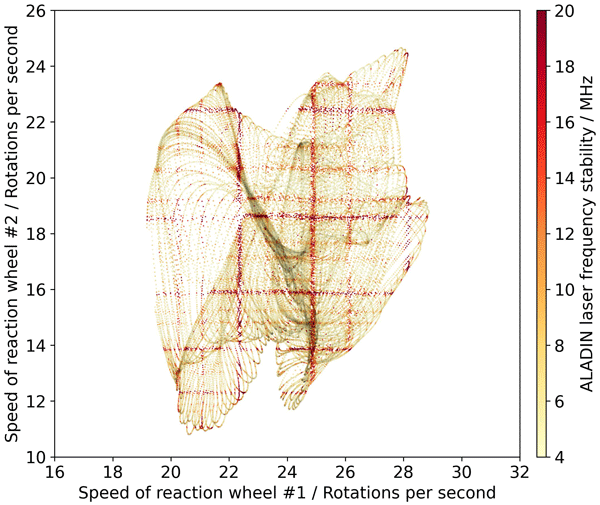
The work assesses the frequency stability of the laser transmitters on board Aeolus and discusses its influence on the quality of the global wind data. Excellent frequency stability of the space lasers is evident, although enhanced frequency noise occurs at certain locations along the orbit due to micro-vibrations that are introduced by the satellite’s reaction wheels. The study elaborates on this finding and investigates the extent to which the enhanced frequency noise increases the wind error.
Dimitri Trapon, Holger Baars, Sebastian Bley, Albert Ansmann, Michael Rennie, Sergey Khaykin, and Michael Sicard
EGUsphere, https://doi.org/10.5194/egusphere-2026-2575, https://doi.org/10.5194/egusphere-2026-2575, 2026
Short summary
Short summary
The study presents observations of the 2022 Hunga volcanic aerosol in the stratosphere made by the European Space Agency’s Aeolus satellite. Aeolus tracks the long-range transported plumes that circumnavigate the Earth at distinct latitudes and altitudes up to 30 km. Vertical gradient of optical properties measured with the ultraviolet lidar signal are shown, such as decreasing trends over time. This helps to understand the stratospheric residence time of aerosols in the Southern Hemisphere.

Maurus Borne, Peter Knippertz, Michael Rennie, and Martin Weissmann
Weather Clim. Dynam., 7, 489–505, https://doi.org/10.5194/wcd-7-489-2026, https://doi.org/10.5194/wcd-7-489-2026, 2026
Short summary
Short summary
This study shows that Aeolus satellite wind lidar observations significantly improve wind forecasts and that these improvements lead to more accurate rainfall predictions, particularly at longer lead times and during winter seasons in the extratropics. The benefits are likely due to better representation of large-scale atmospheric features such as jet streams and Rossby waves, highlighting Aeolus's value for numerical weather prediction.
Anna Kampouri, Vassilis Amiridis, Thanasis Georgiou, Stavros Solomos, Anna Gialitaki, Maria Tsichla, Michael Rennie, Simona Scollo, and Prodromos Zanis
Atmos. Chem. Phys., 25, 7343–7368, https://doi.org/10.5194/acp-25-7343-2025, https://doi.org/10.5194/acp-25-7343-2025, 2025
Short summary
Short summary
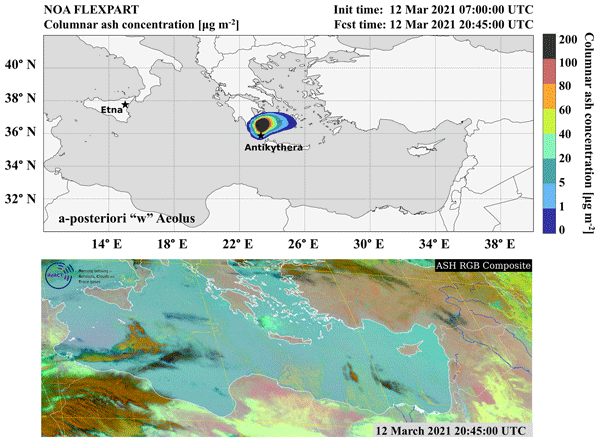
This study proposes a novel inverse modeling framework coupled with remote sensing data for improving volcanic ash dispersion forecasts, essential for aviation safety. By integrating FLEXPART dispersion model outputs with ground-based ACTRIS lidar observations, the approach estimates Etna's volcanic particle emissions and highlights a significant enhancement in the forecast accuracy.
Michael Vaughan, Kevin Ridley, Benjamin Witschas, Oliver Lux, Ines Nikolaus, and Oliver Reitebuch
Atmos. Meas. Tech., 18, 2149–2181, https://doi.org/10.5194/amt-18-2149-2025, https://doi.org/10.5194/amt-18-2149-2025, 2025
Short summary
Short summary
ESA's Aeolus mission, launched in 2018, has exceeded expectations, providing valuable global wind lidar data for nearly 5 years. Its data have improved weather forecasting, with Mie-cloudy winds proving to be especially precise. Challenges have emerged, such as unexpected misalignments in signal angles and reduced signal levels due to beam clipping and laser issues. Lessons from Aeolus highlight the need for better optical alignment and active control systems for future lidar missions.
Lev D. Labzovskii, Gerd-Jan van Zadelhoff, David P. Donovan, Jos de Kloe, L. Gijsbert Tilstra, Ad Stoffelen, Damien Josset, and Piet Stammes
Atmos. Meas. Tech., 17, 7183–7208, https://doi.org/10.5194/amt-17-7183-2024, https://doi.org/10.5194/amt-17-7183-2024, 2024
Short summary
Short summary
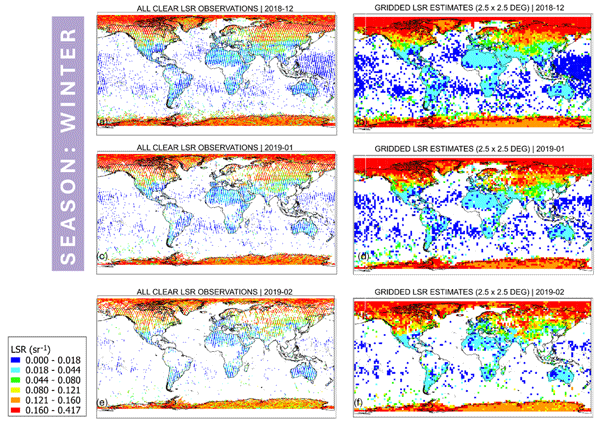
The Atmospheric Laser Doppler Instrument (ALADIN) on the Aeolus satellite was the first of its kind to measure high-resolution vertical profiles of aerosols and cloud properties from space. We present an algorithm that produces Aeolus lidar surface returns (LSRs), containing useful information for measuring UV reflectivity. Aeolus LSRs matched well with existing UV reflectivity data from other satellites, like GOME-2 and TROPOMI, and demonstrated excellent sensitivity to modeled snow cover.
Kangwen Sun, Guangyao Dai, Songhua Wu, Oliver Reitebuch, Holger Baars, Jiqiao Liu, and Suping Zhang
Atmos. Chem. Phys., 24, 4389–4409, https://doi.org/10.5194/acp-24-4389-2024, https://doi.org/10.5194/acp-24-4389-2024, 2024
Short summary
Short summary
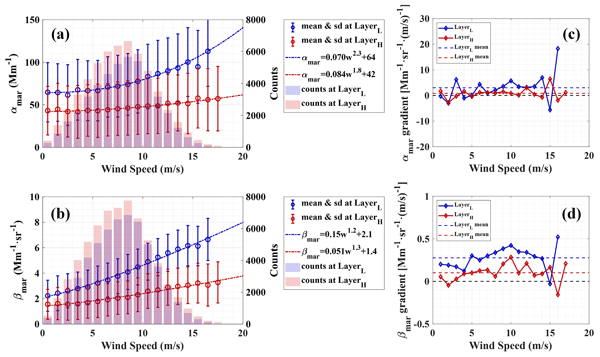
This paper investigates the correlation between marine aerosol optical properties and wind speeds over remote oceans using the spaceborne lidars ALADIN and CALIOP. Three remote ocean areas are selected. Pure marine aerosol optical properties at 355 nm are derived from ALADIN. The relationships between marine aerosol optical properties and wind speeds are analyzed within and above the marine atmospheric boundary layer, revealing the effect of wind speed on marine aerosols over remote oceans.
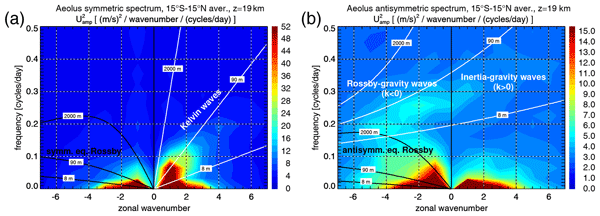
Manfred Ern, Mohamadou A. Diallo, Dina Khordakova, Isabell Krisch, Peter Preusse, Oliver Reitebuch, Jörn Ungermann, and Martin Riese
Atmos. Chem. Phys., 23, 9549–9583, https://doi.org/10.5194/acp-23-9549-2023, https://doi.org/10.5194/acp-23-9549-2023, 2023
Short summary
Short summary
Quasi-biennial oscillation (QBO) of the stratospheric tropical winds is an important mode of climate variability but is not well reproduced in free-running climate models. We use the novel global wind observations by the Aeolus satellite and radiosondes to show that the QBO is captured well in three modern reanalyses (ERA-5, JRA-55, and MERRA-2). Good agreement is also found also between Aeolus and reanalyses for large-scale tropical wave modes in the upper troposphere and lower stratosphere.
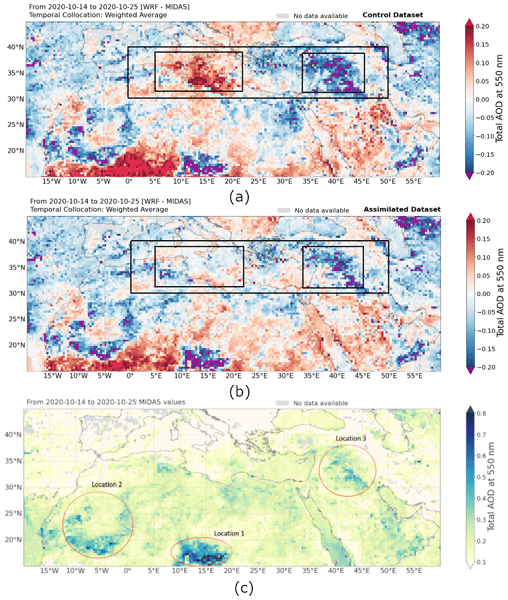
Pantelis Kiriakidis, Antonis Gkikas, Georgios Papangelis, Theodoros Christoudias, Jonilda Kushta, Emmanouil Proestakis, Anna Kampouri, Eleni Marinou, Eleni Drakaki, Angela Benedetti, Michael Rennie, Christian Retscher, Anne Grete Straume, Alexandru Dandocsi, Jean Sciare, and Vasilis Amiridis
Atmos. Chem. Phys., 23, 4391–4417, https://doi.org/10.5194/acp-23-4391-2023, https://doi.org/10.5194/acp-23-4391-2023, 2023
Short summary
Short summary
With the launch of the Aeolus satellite, higher-accuracy wind products became available. This research was carried out to validate the assimilated wind products by testing their effect on the WRF-Chem model predictive ability of dust processes. This was carried out for the eastern Mediterranean and Middle East region for two 2-month periods in autumn and spring 2020. The use of the assimilated products improved the dust forecasts of the autumn season (both quantitatively and qualitatively).
Benjamin Witschas, Christian Lemmerz, Alexander Geiß, Oliver Lux, Uwe Marksteiner, Stephan Rahm, Oliver Reitebuch, Andreas Schäfler, and Fabian Weiler
Atmos. Meas. Tech., 15, 7049–7070, https://doi.org/10.5194/amt-15-7049-2022, https://doi.org/10.5194/amt-15-7049-2022, 2022
Short summary
Short summary
In August 2018, the first wind lidar Aeolus was launched into space and has since then been providing data of the global wind field. The primary goal of Aeolus was the improvement of numerical weather prediction. To verify the quality of Aeolus wind data, DLR performed four airborne validation campaigns with two wind lidar systems. In this paper, we report on results from the two later campaigns, performed in Iceland and the tropics.
Oliver Lux, Benjamin Witschas, Alexander Geiß, Christian Lemmerz, Fabian Weiler, Uwe Marksteiner, Stephan Rahm, Andreas Schäfler, and Oliver Reitebuch
Atmos. Meas. Tech., 15, 6467–6488, https://doi.org/10.5194/amt-15-6467-2022, https://doi.org/10.5194/amt-15-6467-2022, 2022
Short summary
Short summary
We discuss the influence of different quality control schemes on the results of Aeolus wind product validation and present statistical tools for ensuring consistency and comparability among diverse validation studies with regard to the specific error characteristics of the Rayleigh-clear and Mie-cloudy winds. The developed methods are applied for the validation of Aeolus winds against an ECMWF model background and airborne wind lidar data from the Joint Aeolus Tropical Atlantic Campaign.
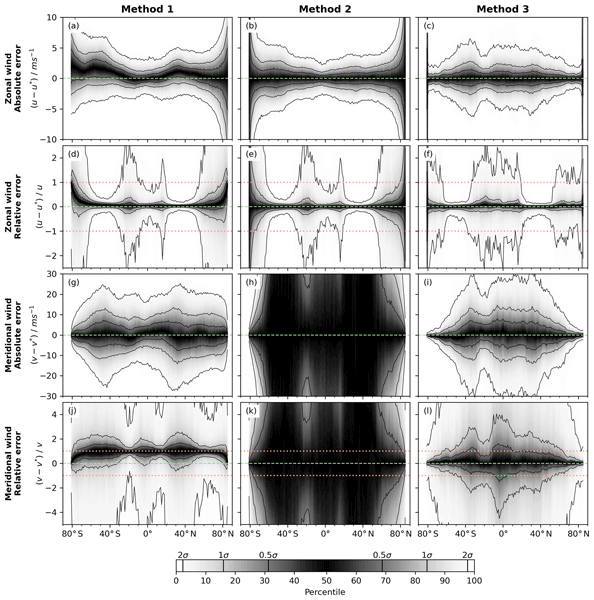
Isabell Krisch, Neil P. Hindley, Oliver Reitebuch, and Corwin J. Wright
Atmos. Meas. Tech., 15, 3465–3479, https://doi.org/10.5194/amt-15-3465-2022, https://doi.org/10.5194/amt-15-3465-2022, 2022
Short summary
Short summary
The Aeolus satellite measures global height resolved profiles of wind along a certain line-of-sight. However, for atmospheric dynamics research, wind measurements along the three cardinal axes are most useful. This paper presents methods to convert the measurements into zonal and meridional wind components. By combining the measurements during ascending and descending orbits, we achieve good derivation of zonal wind (equatorward of 80° latitude) and meridional wind (poleward of 70° latitude).
Benjamin Witschas, Christian Lemmerz, Oliver Lux, Uwe Marksteiner, Oliver Reitebuch, Fabian Weiler, Frederic Fabre, Alain Dabas, Thomas Flament, Dorit Huber, and Michael Vaughan
Atmos. Meas. Tech., 15, 1465–1489, https://doi.org/10.5194/amt-15-1465-2022, https://doi.org/10.5194/amt-15-1465-2022, 2022
Short summary
Short summary
In August 2018, the ESA launched the first Doppler wind lidar into space. In order to calibrate the instrument and to monitor the overall instrument conditions, instrument spectral registration measurements have been performed with Aeolus on a weekly basis. Based on these measurements, the alignment drift of the Aeolus satellite instrument is estimated by applying tools and mathematical model functions to analyze the spectrometer transmission curves.
Oliver Lux, Christian Lemmerz, Fabian Weiler, Uwe Marksteiner, Benjamin Witschas, Stephan Rahm, Alexander Geiß, Andreas Schäfler, and Oliver Reitebuch
Atmos. Meas. Tech., 15, 1303–1331, https://doi.org/10.5194/amt-15-1303-2022, https://doi.org/10.5194/amt-15-1303-2022, 2022
Short summary
Short summary
The article discusses modifications in the wind retrieval of the ALADIN Airborne Demonstrator (A2D) – one of the key instruments for the validation of Aeolus. Thanks to the retrieval refinements, which are demonstrated in the context of two airborne campaigns in 2019, the systematic and random wind errors of the A2D were significantly reduced, thereby enhancing its validation capabilities. Finally, wind comparisons between A2D and Aeolus for the validation of the satellite data are presented.
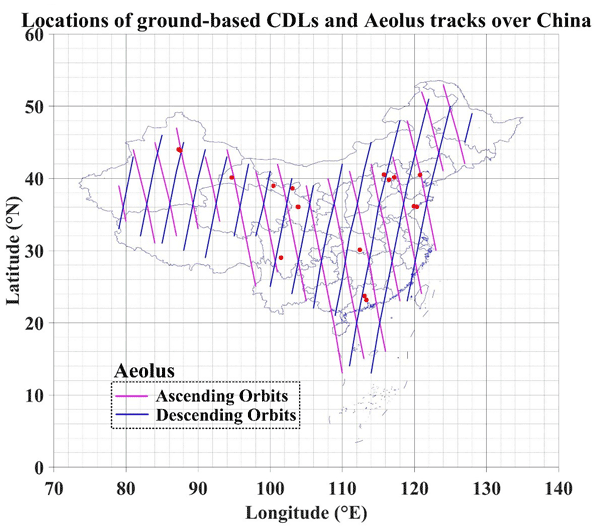
Songhua Wu, Kangwen Sun, Guangyao Dai, Xiaoye Wang, Xiaoying Liu, Bingyi Liu, Xiaoquan Song, Oliver Reitebuch, Rongzhong Li, Jiaping Yin, and Xitao Wang
Atmos. Meas. Tech., 15, 131–148, https://doi.org/10.5194/amt-15-131-2022, https://doi.org/10.5194/amt-15-131-2022, 2022
Short summary
Short summary
During the VAL-OUC campaign, we established a coherent Doppler lidar (CDL) network over China to verify the Level 2B (L2B) products from Aeolus. By the simultaneous wind measurements with CDLs at 17 stations, the L2B products from Aeolus are compared with those from CDLs. To our knowledge, the VAL-OUC campaign is the most extensive so far between CDLs and Aeolus in the lower troposphere for different atmospheric scenes. The vertical velocity impact on the HLOS retrieval from Aeolus is evaluated.

Fabian Weiler, Michael Rennie, Thomas Kanitz, Lars Isaksen, Elena Checa, Jos de Kloe, Ngozi Okunde, and Oliver Reitebuch
Atmos. Meas. Tech., 14, 7167–7185, https://doi.org/10.5194/amt-14-7167-2021, https://doi.org/10.5194/amt-14-7167-2021, 2021
Short summary
Short summary
This paper summarizes the identification and correction of one of the most important systematic error sources for the wind measurements of the ESA satellite Aeolus. It depicts the effects of small temperature variations in the primary telescope mirror on the quality of the wind products and describes the approach to correct for it in the near-real-time processing. Moreover, the performance of the correction approach is assessed, and alternative approaches are discussed.
Oliver Lux, Christian Lemmerz, Fabian Weiler, Thomas Kanitz, Denny Wernham, Gonçalo Rodrigues, Andrew Hyslop, Olivier Lecrenier, Phil McGoldrick, Frédéric Fabre, Paolo Bravetti, Tommaso Parrinello, and Oliver Reitebuch
Atmos. Meas. Tech., 14, 6305–6333, https://doi.org/10.5194/amt-14-6305-2021, https://doi.org/10.5194/amt-14-6305-2021, 2021
Short summary
Short summary
The work assesses the frequency stability of the laser transmitters on board Aeolus and discusses its influence on the quality of the global wind data. Excellent frequency stability of the space lasers is evident, although enhanced frequency noise occurs at certain locations along the orbit due to micro-vibrations that are introduced by the satellite’s reaction wheels. The study elaborates on this finding and investigates the extent to which the enhanced frequency noise increases the wind error.
Cited articles
Berceau, P., Albano, C., Ballester, M., Belhadj, T., Bellouard, R., Bon, D., Boyes, B., Brouard, L., Krisna, T. C., Chaumeil, F., Ciapponi, A., Corselle, B., Debonne, C., Villèle, G. D., Heliere, A., Marchais, D., Olivier, M., Parzianello, G., Porciani, M., Vétel, C., Wernham, D., and Zimmermann, S.: Aeolus-2 instrument: the new Doppler wind LIDAR, Proc. SPIE, 13699, 136990W, https://doi.org/10.1117/12.3072768, 2025. a
Chalex, R., Fiedler, L., Flament, T., Borde, R., Munro, R., and Tahtadjiev, M.: EUMETSAT EPS-Aeolus: Status and Outlook, 31st International Laser Radar Conference, Landshut, Germany, 23–28 June 2024, 2024. a
Ciapponi, A., Porciani, M., Wernham, D., Letty, R. L., Liu, N., Parzianello, G., Nelms, N., Krisna, T. C., Helière, A., and Boyes, B.: Aeolus-2: Status of pre-development activities, 31st International Laser Radar Conference, Landshut, Germany, 23–28 June 2024, 2024. a
Dabas, A., Denneulin, M. L., Flamant, P., Loth, C., Garnier, A., and Dolfi-Bouteyre, A.: Correcting winds measured with a Rayleigh Doppler lidar from pressure and temperature effects, Tellus A: Dyn. Meteorol. Oceanogr., 60, 206–215, https://doi.org/10.1111/j.1600-0870.2007.00284.x, 2008. a, b
de Kloe, J., Rennie, M., Stoffelen, A., Tan, D., Andersson, E., Rennie, M., Dabas, A., Poli, P., and Huber, D.: ADM-Aeolus Level-2B/2C Processor Input/Output Data Definitions Interface Control Document, AED-SD-ECMWF-L2B-037, v.3.90, 134 pp., https://earth.esa.int/eogateway/documents/20142/37627/Aeolus-L2B-2C-Input-Output-DD-ICD.pdf (last access: 16 September 2025), 2023. a
Desroziers, G., Berre, L., Chapnik, B., and Poli, P.: Diagnosis of observation, background and analysis-error statistics in observation space, Q. J. R. Meteorol. Soc., 131, 3385–3396, https://doi.org/10.1256/qj.05.108, 2005. a
Duchamp, C., Wrana, F., Legras, B., Sellitto, P., Belhadji, R., and von Savigny, C.: Observation of the Aerosol Plume From the 2022 Hunga Tonga – Hunga Ha'apai Eruption With SAGE III/ISS, Geophys. Res. Lett., 50, e2023GL105076, https://doi.org/10.1029/2023GL105076, 2023. a
EUMETSAT: Towards EPS-Aeolus: Facts and Figures, EUMETSAT Brochure, 09/2023, https://www.eumetsat.int/media/51304 (last access: 1 September 2025), 2023. a
European Centre for Medium-Range Weather Forecasts: EarthCARE instruments working together to evaluate atmospheric models, https://www.ecmwf.int/en/about/media-centre/news/2025/earthcare-instruments-working-together-evaluate-atmospheric-models (last access: 1 September 2025), 2025. a
European Space Agency (ESA): Earth Explorer Ground Segment File Format Standard, European Space Agency, https://earth.esa.int/eogateway/documents/20142/37627/earth-explorer-ground-segment-file-format-standard.pdf (last access: 31 March 2025), 2003. a
European Space Agency (ESA): L2B scientific wind products B16, European Space Agency, https://aeolus-ds.eo.esa.int/oads/access/collection/L2B_Wind_Products_Reprocessed (last access: 26 January 2025), 2025. a
Feofilov, A. G., Chepfer, H., Noël, V., Guzman, R., Gindre, C., Ma, P.-L., and Chiriaco, M.: Comparison of scattering ratio profiles retrieved from ALADIN/Aeolus and CALIOP/CALIPSO observations and preliminary estimates of cloud fraction profiles, Atmos. Meas. Tech., 15, 1055–1074, https://doi.org/10.5194/amt-15-1055-2022, 2022. a, b
Flament, T., Trapon, D., Lacour, A., Dabas, A., Ehlers, F., and Huber, D.: Aeolus L2A aerosol optical properties product: standard correct algorithm and Mie correct algorithm, Atmos. Meas. Tech., 14, 7851–7871, https://doi.org/10.5194/amt-14-7851-2021, 2021. a
Flament, T., Borde, R., Joro, S., Bojkov, B., and Chalex, R.: Scientific activities at EUMETSAT for the proposed EPS-Aeolus programme, 31st International Laser Radar Conference, Landshut, Germany, 23–28 June 2024, 2024. a
Flesia, C. and Korb, C. L.: Theory of the double-edge molecular technique for Doppler lidar wind measurement, Appl. Opt., 38, 432–440, https://doi.org/10.1364/AO.38.000432, 1999. a
Halloran, G. and Forsythe, M.: Assessment for operational assimilation of horizontal line of sight winds from the European Space Agency's Aeolus at the Met Office, Q. J. R. Meteorol. Soc., 150, 2869–2887, https://doi.org/10.1002/qj.4739, 2024. a
Heliere, A., Wernham, D., Mason, G., Villele, G. D., Corselle, B., Lecrenier, O., Belhadj, T., Bravetti, P., Arnaud, S., Bon, D., Lingot, P., Foulon, R., Marchais, D., Olivier, M., D'Ottavi, A., Verzegnassi, F., Mondello, A., Coppola, F., Landi, G., Hoffmann, H.-D., Esser, D., Prieto, L. P., Wührer, C., Rivers, C., and Bell, R.: Status of Aeolus-2 mission pre-development activities, Proc. SPIE, 12777, 1277709, https://doi.org/10.1117/12.2688794, 2023. a
Illingworth, A. J., Battaglia, A., Bradford, J., Forsythe, M., Joe, P., Kollias, P., Lean, K., Lori, M., Mahfouf, J.-F., Melo, S., Midthassel, R., Munro, Y., Nicol, J., Potthast, R., Rennie, M., Stein, T. H. M., Tanelli, S., Tridon, F., Walden, C. J., and Wolde, M.: WIVERN: A New Satellite Concept to Provide Global In-Cloud Winds, Precipitation, and Cloud Properties, Bull. Am. Meteor. Soc., 99, 1669–1687, https://doi.org/10.1175/BAMS-D-16-0047.1, 2018. a
Jumelet, J., Bekki, S., David, C., Keckhut, P., and Baumgarten, G.: Size distribution time series of a polar stratospheric cloud observed above Arctic Lidar Observatory for Middle Atmosphere Research (ALOMAR) (69° N) and analyzed from multiwavelength lidar measurements during winter 2005, J. Geophys. Res.-Atmos., 114, https://doi.org/10.1029/2008JD010119, 2009. a
Knobloch, S., Marksteiner, U., Reitebuch, O., Meringer, M., and Huber, D.: Investigation of the EPS-Aeolus performance with end-to-end simulations, EUMETSAT Meteorological Satellite Conference, Lyon, France, 15–19 September 2025, https://elib.dlr.de/219091/ (last access: 6 March 2026), 2025. a
Legras, B., Duchamp, C., Sellitto, P., Podglajen, A., Carboni, E., Siddans, R., Grooß, J.-U., Khaykin, S., and Ploeger, F.: The evolution and dynamics of the Hunga Tonga–Hunga Ha'apai sulfate aerosol plume in the stratosphere, Atmos. Chem. Phys., 22, 14957–14970, https://doi.org/10.5194/acp-22-14957-2022, 2022. a, b
Lukens, K. E., Ide, K., Garrett, K., Liu, H., Santek, D., Hoover, B., and Hoffman, R. N.: Exploiting Aeolus level-2b winds to better characterize atmospheric motion vector bias and uncertainty, Atmos. Meas. Tech., 15, 2719–2743, https://doi.org/10.5194/amt-15-2719-2022, 2022. a
Lux, O., Wernham, D., Bravetti, P., McGoldrick, P., Lecrenier, O., Riede, W., D'Ottavi, A., Sanctis, V. D., Schillinger, M., Lochard, J., Marshall, J., Lemmerz, C., Weiler, F., Mondin, L., Ciapponi, A., Kanitz, T., Elfving, A., Parrinello, T., and Reitebuch, O.: High-power and frequency-stable ultraviolet laser performance in space for the wind lidar on Aeolus, Opt. Lett., 45, 1443–1446, https://doi.org/10.1364/OL.387728, 2020. a, b
Lux, O., Witschas, B., Geiß, A., Lemmerz, C., Weiler, F., Marksteiner, U., Rahm, S., Schäfler, A., and Reitebuch, O.: Quality control and error assessment of the Aeolus L2B wind results from the Joint Aeolus Tropical Atlantic Campaign, Atmos. Meas. Tech., 15, 6467–6488, https://doi.org/10.5194/amt-15-6467-2022, 2022. a, b
Lux, O., Lemmerz, C., Sanctis, V. D., Bravetti, P., Wernham, D., Krisna, T. C., Parrinello, T., and Reitebuch, O.: Performance of the ultraviolet laser transmitter during ESA's Doppler wind lidar mission Aeolus, Appl. Opt., 63, 9315–9336, https://doi.org/10.1364/AO.544577, 2024a. a, b, c
Lux, O., Reichert, R., Lemmerz, C., Masoumzadeh, N., Wernham, D., Krisna, T. C., Marchais, D., Bell, R., Parrinello, T., and Reitebuch, O.: CCD detector performance of the space-borne Doppler wind lidar ALADIN during the Aeolus mission, Appl. Opt., 63, 6754–6775, https://doi.org/10.1364/AO.532217, 2024b. a, b, c, d, e, f
Lux, O., Reichert, R., Lemmerz, C., Masoumzadeh, N., Wernham, D., Krisna, T. C., Marchais, D., Bell, R., Parrinello, T., and Reitebuch, O.: Detector performance of the spaceborne Doppler wind LiDAR aboard the Aeolus satellite, Proc. SPIE, 13699, 136994V, https://doi.org/10.1117/12.3072756, 2025. a, b
Marksteiner, U., Knobloch, S., Witschas, B., Reitebuch, O., Meringer, M., Huber, D., and Reissig, K.: Upgrading an end-to-end simulator for Aeolus to EPS-Aeolus, EUMETSAT Meteorological Satellite Conference, Lyon, France, 15–19 September 2025, https://elib.dlr.de/216766/ (last access: 6 March 2026), 2025. a
Marseille, G. J. and Stoffelen, A.: Simulation of wind profiles from a space-borne Doppler wind lidar, Q. J. R. Meteorol. Soc., 129, 3079–3098, https://doi.org/10.1256/qj.02.96, 2003. a
Marseille, G.-J., Stoffelen, A., Bouttier, F., de Haan, S., and Vasiljevic, D.: Impact assessment of a Doppler wind lidar in space on atmospheric analyses and numerical weather prediction, WR-2001-03, KNMI Scientific Report, https://cdn.knmi.nl/knmi/pdf/bibliotheek/knmipubWR/WR2001-03.pdf (last access: 28 February 2025), 2001. a, b
Marseille, G.-J., de Kloe, J., Dabas, A., Flament, T., and Rennie, M.: Aeolus Rayleigh-channel winds in cloudy conditions, Q. J. R. Meteorol. Soc., 149, 3270–3289, https://doi.org/10.1002/qj.4555, 2023. a, b, c
Martin, A., Weissmann, M., and Cress, A.: Investigation of links between dynamical scenarios and particularly high impact of Aeolus on numerical weather prediction (NWP) forecasts, Weather Clim. Dynam., 4, 249–264, https://doi.org/10.5194/wcd-4-249-2023, 2023. a
Mason, S. L., Barker, H. W., Cole, J. N. S., Docter, N., Donovan, D. P., Hogan, R. J., Hünerbein, A., Kollias, P., Puigdomènech Treserras, B., Qu, Z., Wandinger, U., and van Zadelhoff, G.-J.: An intercomparison of EarthCARE cloud, aerosol, and precipitation retrieval products, Atmos. Meas. Tech., 17, 875–898, https://doi.org/10.5194/amt-17-875-2024, 2024. a
McKay, J. A.: Assessment of a multibeam Fizeau wedge interferometer for Doppler wind lidar, Appl. Opt., 41, 1760–1767, https://doi.org/10.1364/AO.41.001760, 2002. a
MPI: Expert Committee Recommends the Selection of the WIVERN Satellite Mission as the 11th Earth Explorer, https://mpimet.mpg.de/en/communication/news/expert-committee-recommends-the-selection-of-the-wivern-satellite-mission-as-the-11th-earth-explorer (last access: 18 September 2025), 2025. a
Porciani, M.: Aeolus-2: From Aeolus to the first wind lidar operational Satellite, Living Planet Symposium, Vienna, Austria, 23–27 June 2025, https://lps25.esa.int/lps25-presentations/presentations/2895/_2895.pdf (last access: 6 March 2026), 2025. a
Pourret, V., Šavli, M., Mahfouf, J.-F., Raspaud, D., Doerenbecher, A., Bénichou, H., and Payan, C.: Operational assimilation of Aeolus winds in the Météo-France global NWP model ARPEGE, Q. J. R. Meteorol. Soc., 148, 2652–2671, https://doi.org/10.1002/qj.4329, 2022. a
Reitebuch, O.: The Spaceborne Wind Lidar Mission ADM-Aeolus, in: Atmospheric Physics: Background – Methods – Trends, edited by: Schumann, U., Springer, Berlin, Heidelberg, 815–827, ISBN 978-3-642-30183-4, https://doi.org/10.1007/978-3-642-30183-4_49, 2012. a, b
Reitebuch, O.: Challenges and achievements of ESA's Aeolus mission, Proc. SPIE, 13699, 136990T, https://doi.org/10.1117/12.3072760, 2025. a
Reitebuch, O., Lemmerz, C., Lux, O., Marksteiner, U., Rahm, S., Weiler, F., Witschas, B., Meringer, M., Schmidt, K., Huber, D., Nikolaus, I., Geiß, A., Vaughan, M., Dabas, A., Flament, T., Stieglitz, H., Isaksen, L., Rennie, M., de Kloe, J., Marseille, G.-J., Stoffelen, A., Wernham, D., Kanitz, T., Straume, A.-G., Fehr, T., von Bismarck, J., Floberghagen, R., and Parrinello, T.: Initial Assessment of the Performance of the First Wind Lidar in Space on Aeolus, EPJ Web Conf., 237, 01010, https://doi.org/10.1051/epjconf/202023701010, 2020. a, b
Rennie, M., Tan, D., Andersson, E., Poli, P., Dabas, A., De Kloe, J., Marseille, G.-J., and Stoffelen, A.: Algorithm Theoretical Basis Document (Mathematical Description of the Aeolus Level-2B Processor), AED-SD-ECMWF-L2B-038, ECMWF, https://earth.esa.int/eogateway/documents/20142/37627/Aeolus-L2B-Algorithm-ATBD.pdf (last access: 31 March 2025), 2020. a, b
Sasso, N., Borderies, M., Chambon, P., Berre, L., Girardot, N., Moll, P., Payan, C., Pourret, V., Battaglia, A., Illingworth, A., Rennie, M., and Pourshamsi, M.: Impact of WIVERN Wind Observations on ARPEGE Numerical Weather Prediction Model Forecasts Using an Ensemble of Data Assimilation Method, Q. J. R. Meteorol. Soc., e4991, https://doi.org/10.1002/qj.4991, 2025. a
Šavli, M., de Kloe, J., Marseille, G.-J., Rennie, M., Žagar, N., and Wedi, N.: The prospects for increasing the horizontal resolution of the Aeolus horizontal line-of-sight wind profiles, Q. J. R. Meteorol. Soc., 145, 3499–3515, https://doi.org/10.1002/qj.3634, 2019. a
Šavli, M., Pourret, V., Payan, C., and Mahfouf, J.-F.: Sensitivity of Aeolus HLOS winds to temperature and pressure specification in the L2B processor, Atmos. Meas. Tech., 14, 4721–4736, https://doi.org/10.5194/amt-14-4721-2021, 2021. a
Schäfler, A., Harvey, B., Methven, J., Doyle, J. D., Rahm, S., Reitebuch, O., Weiler, F., and Witschas, B.: Observation of Jet Stream Winds during NAWDEX and Characterization of Systematic Meteorological Analysis Errors, Mon. Weather Rev., 148, 2889–2907, https://doi.org/10.1175/MWR-D-19-0229.1, 2020. a
Shang, X., Lipponen, A., Filioglou, M., Sundström, A.-M., Parrington, M., Buchard, V., Darmenov, A. S., Welton, E. J., Marinou, E., Amiridis, V., Sicard, M., Rodríguez-Gómez, A., Komppula, M., and Mielonen, T.: Monitoring biomass burning aerosol transport using CALIOP observations and reanalysis models: a Canadian wildfire event in 2019, Atmos. Chem. Phys., 24, 1329–1344, https://doi.org/10.5194/acp-24-1329-2024, 2024. a
Shenolikar, J., Ruti, P. M., Lee, D., Thonipparambil, S., Tervo, R., Fierli, F., Obligis, E., Cacciari, A., Raspaud, M., Bouchet, V., Abellan, X., McNally, T., Bessho, K., Boukabara, S., Brocca, L., Puca, S., Pinardi, N., Schulz, J., Saalmueller, J., and Bojkov, B.: The State of Earth Observing System Today: Updates Compiled from Recent EUMETSAT Meteorological Satellite Conferences, Bull. Amer. Meteor. Soc., 106, E217–E241, https://doi.org/10.1175/BAMS-D-23-0261.1, 2025. a
Straume, A., Rennie, M., Isaksen, L., de Kloe, J., Marseille, G.-J., Stoffelen, A., Flament, T., Stieglitz, H., Dabas, A., Huber, D., Reitebuch, O., Lemmerz, C., Lux, O., Marksteiner, U., Weiler, F., Witschas, B., Meringer, M., Schmidt, K., Nikolaus, I., Geiss, A., Flamant, P., Kanitz, T., Wernham, D., von Bismarck, J., Bley, S., Fehr, T., Floberghagen, R., and Parinello, T.: ESA's Space-Based Doppler Wind Lidar Mission Aeolus – First Wind and Aerosol Product Assessment Results, EPJ Web Conf., 237, 01007, https://doi.org/10.1051/epjconf/202023701007, 2020. a
Sun, K., Dai, G., Wu, S., Reitebuch, O., Baars, H., Liu, J., and Zhang, S.: Effect of wind speed on marine aerosol optical properties over remote oceans with use of spaceborne lidar observations, Atmos. Chem. Phys., 24, 4389–4409, https://doi.org/10.5194/acp-24-4389-2024, 2024. a
The Aeolus Data Innovation and Science Cluster (DISC): The Earth Explorer Mission Aeolus for atmospheric wind observations – Final Report from the Aeolus Data Innovation and Science Cluster DISC of Phase E, DLR Forschungsbericht 2024-20, https://elib.dlr.de/209970/1/DLR-FB-2024-20--AED-PR-DLR-GEN-013__DISC--Final_Report_E2--V3.0--2024_10_28.pdf (last access: 31 March 2025), 2024. a, b, c
The Pierre Auger Collaboration, Lux, O., Krisch, I., Reitebuch, O., Huber, D., Wernham, D., and Parrinello, T.: Ground observations of a space laser for the assessment of its in-orbit performance, Optica, 2, 263–272, https://doi.org/10.1364/OPTICA.507619, 2024. a, b
Trapon, D. and Baars, H.: Tracking the aerosol plume from the Hunga Tonga eruption over months using Aeolus, Living Planet Symposium, Vienna, Austria, 23–27 June 2025, https://lps25.esa.int/lps25-presentations/presentations/1506/_1506.pdf (last access: 6 March 2026), 2025. a
Trapon, D., Baars, H., Floutsi, A. A., Bley, S., Haarig, M., Lacour, A., Flament, T., Dabas, A., Nehrir, A. R., Ehlers, F., and Huber, D.: Cross-validations of the Aeolus aerosol products and new developments with airborne high-spectral-resolution lidar measurements above the tropical Atlantic during JATAC, Atmos. Meas. Tech., 18, 3873–3896, https://doi.org/10.5194/amt-18-3873-2025, 2025. a
Vaughan, M., Ridley, K., Witschas, B., Lux, O., Nikolaus, I., and Reitebuch, O.: Spectral performance analysis of the Fizeau interferometer on board ESA's Aeolus wind lidar satellite, Atmos. Meas. Tech., 18, 2149–2181, https://doi.org/10.5194/amt-18-2149-2025, 2025. a, b, c
Voronova, O. S., Zima, A. L., Kladov, V. L., and Cherepanova, E. V.: Anomalous Wildfires in Siberia in Summer 2019, Izv. Atmos. Ocean. Phy.+, 56, 1042–1052, https://doi.org/10.1134/S000143382009025X, 2020. a
Wang, P., Donovan, D. P., van Zadelhoff, G.-J., de Kloe, J., Huber, D., and Reissig, K.: Evaluation of Aeolus feature mask and particle extinction coefficient profile products using CALIPSO data, Atmos. Meas. Tech., 17, 5935–5955, https://doi.org/10.5194/amt-17-5935-2024, 2024. a
Wehr, T., Kubota, T., Tzeremes, G., Wallace, K., Nakatsuka, H., Ohno, Y., Koopman, R., Rusli, S., Kikuchi, M., Eisinger, M., Tanaka, T., Taga, M., Deghaye, P., Tomita, E., and Bernaerts, D.: The EarthCARE mission – science and system overview, Atmos. Meas. Tech., 16, 3581–3608, https://doi.org/10.5194/amt-16-3581-2023, 2023. a
Weiler, F., Kanitz, T., Wernham, D., Rennie, M., Huber, D., Schillinger, M., Saint-Pe, O., Bell, R., Parrinello, T., and Reitebuch, O.: Characterization of dark current signal measurements of the ACCDs used on board the Aeolus satellite, Atmos. Meas. Tech., 14, 5153–5177, https://doi.org/10.5194/amt-14-5153-2021, 2021a. a, b
Weiler, F., Rennie, M., Kanitz, T., Isaksen, L., Checa, E., de Kloe, J., Okunde, N., and Reitebuch, O.: Correction of wind bias for the lidar on board Aeolus using telescope temperatures, Atmos. Meas. Tech., 14, 7167–7185, https://doi.org/10.5194/amt-14-7167-2021, 2021b. a, b, c, d
Witschas, B., Lemmerz, C., Lux, O., Marksteiner, U., Reitebuch, O., Weiler, F., Fabre, F., Dabas, A., Flament, T., Huber, D., and Vaughan, M.: Spectral performance analysis of the Aeolus Fabry–Pérot and Fizeau interferometers during the first years of operation, Atmos. Meas. Tech., 15, 1465–1489, https://doi.org/10.5194/amt-15-1465-2022, 2022. a, b
WMO: Observing Systems Capability Analysis and Review Tool, https://space.oscar.wmo.int/variables/view/wind_horizontal (last access: 27 August 2025), 2025. a
Wright, C. J., Hall, R. J., Banyard, T. P., Hindley, N. P., Krisch, I., Mitchell, D. M., and Seviour, W. J. M.: Dynamical and surface impacts of the January 2021 sudden stratospheric warming in novel Aeolus wind observations, MLS and ERA5, Weather Clim. Dynam., 2, 1283–1301, https://doi.org/10.5194/wcd-2-1283-2021, 2021. a
Žagar, N., Pilch Kedzierski, R., De Chiara, G., Healy, S., Rennie, M., and Sielmann, F.: ESA's Aeolus Mission Reveals Uncertainties in Tropical Wind and Wave-Driven Circulations, Geophys. Res. Lett., 52, e2025GL114832, https://doi.org/10.1029/2025GL114832, 2025. a
Short summary
The European Space Agency's Aeolus satellite (2018–2023) was the first mission to measure global wind profiles from space. We analysed its performance over five years to understand data quality and coverage under different conditions. By linking instrument behaviour to wind observations, we identified strengths and limitations. These results provide essential guidance for the design and operation of the operational follow-on mission Aeolus-2.
The European Space Agency's Aeolus satellite (2018–2023) was the first mission to measure global...


