
Articles | Volume 19, issue 6
https://doi.org/10.5194/amt-19-2197-2026
© Author(s) 2026. This work is distributed under
the Creative Commons Attribution 4.0 License.
the Creative Commons Attribution 4.0 License.
Special issue:
https://doi.org/10.5194/amt-19-2197-2026
© Author(s) 2026. This work is distributed under
the Creative Commons Attribution 4.0 License.
the Creative Commons Attribution 4.0 License.
Research article
| 
01 Apr 2026
Research article |
| 01 Apr 2026
| 01 Apr 2026
Cloud liquid water path detectability and retrieval accuracy from airborne passive microwave observations over Arctic sea ice

Institute for Geophysics and Meteorology, University of Cologne, Cologne, Germany
Mario Mech
Institute for Geophysics and Meteorology, University of Cologne, Cologne, Germany
Catherine Prigent
Laboratoire d’Instrumentation et de Recherche en Astrophysique, Observatoire de Paris, CNRS, Paris, France
Joshua J. Müller
Leipzig Institute for Meteorology, University of Leipzig, Leipzig, Germany
Susanne Crewell
Institute for Geophysics and Meteorology, University of Cologne, Cologne, Germany
Related authors
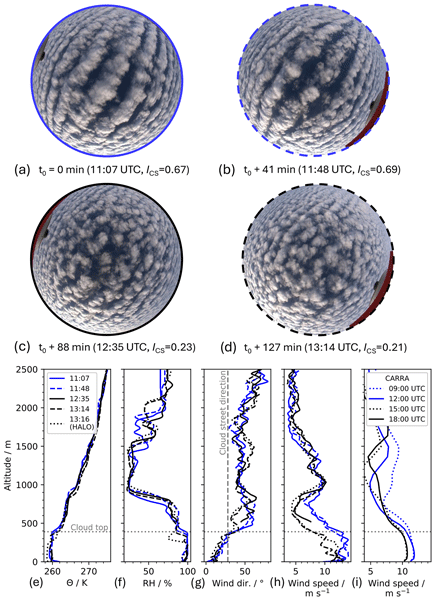
Marcus Klingebiel, André Ehrlich, Micha Gryschka, Nils Risse, Nina Maherndl, Imke Schirmacher, Sophie Rosenburg, Sabine Hörnig, Manuel Moser, Evelyn Jäkel, Michael Schäfer, Hartwig Deneke, Mario Mech, Christiane Voigt, and Manfred Wendisch
Atmos. Chem. Phys., 25, 9787–9801, https://doi.org/10.5194/acp-25-9787-2025, https://doi.org/10.5194/acp-25-9787-2025, 2025
Short summary
Short summary
Our study is using aircraft measurements from the HALO-(𝒜𝒞)³ campaign to investigate the transition from organized Arctic cloud street structures to more scattered clouds, which we call isotropic cloud patterns. We show that lower wind speeds cause this transition. In addition, we look at the changes in the cloud coverage, the height of the clouds, the cloud particles, and the radiative properties.

André Ehrlich, Susanne Crewell, Andreas Herber, Marcus Klingebiel, Christof Lüpkes, Mario Mech, Sebastian Becker, Stephan Borrmann, Heiko Bozem, Matthias Buschmann, Hans-Christian Clemen, Elena De La Torre Castro, Henning Dorff, Regis Dupuy, Oliver Eppers, Florian Ewald, Geet George, Andreas Giez, Sarah Grawe, Christophe Gourbeyre, Jörg Hartmann, Evelyn Jäkel, Philipp Joppe, Olivier Jourdan, Zsófia Jurányi, Benjamin Kirbus, Johannes Lucke, Anna E. Luebke, Maximilian Maahn, Nina Maherndl, Christian Mallaun, Johanna Mayer, Stephan Mertes, Guillaume Mioche, Manuel Moser, Hanno Müller, Veronika Pörtge, Nils Risse, Greg Roberts, Sophie Rosenburg, Johannes Röttenbacher, Michael Schäfer, Jonas Schaefer, Andreas Schäfler, Imke Schirmacher, Johannes Schneider, Sabrina Schnitt, Frank Stratmann, Christian Tatzelt, Christiane Voigt, Andreas Walbröl, Anna Weber, Bruno Wetzel, Martin Wirth, and Manfred Wendisch
Earth Syst. Sci. Data, 17, 1295–1328, https://doi.org/10.5194/essd-17-1295-2025, https://doi.org/10.5194/essd-17-1295-2025, 2025
Short summary
Short summary
This paper provides an overview of the HALO–(AC)3 aircraft campaign data sets, the campaign-specific instrument operation, data processing, and data quality. The data set comprises in situ and remote sensing observations from three research aircraft: HALO, Polar 5, and Polar 6. All data are published in the PANGAEA database by instrument-separated data subsets. It is highlighted how the scientific analysis of the HALO–(AC)3 data benefits from the coordinated operation of three aircraft.
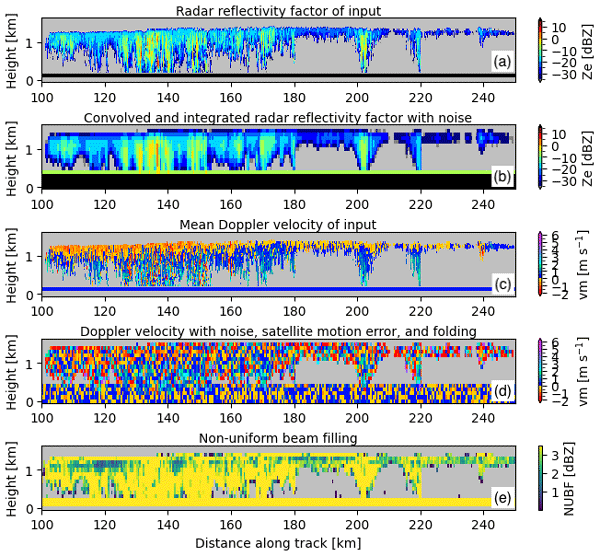
Lukas Pfitzenmaier, Pavlos Kollias, Nils Risse, Imke Schirmacher, Bernat Puigdomenech Treserras, and Katia Lamer
Geosci. Model Dev., 18, 101–115, https://doi.org/10.5194/gmd-18-101-2025, https://doi.org/10.5194/gmd-18-101-2025, 2025
Short summary
Short summary
The Python tool Orbital-Radar transfers suborbital radar data (ground-based, airborne, and forward-simulated numerical weather prediction model) into synthetic spaceborne cloud profiling radar data, mimicking platform-specific instrument characteristics, e.g. EarthCARE or CloudSat. The tool's novelty lies in simulating characteristic errors and instrument noise. Thus, existing data sets are transferred into synthetic observations and can be used for satellite calibration–validation studies.
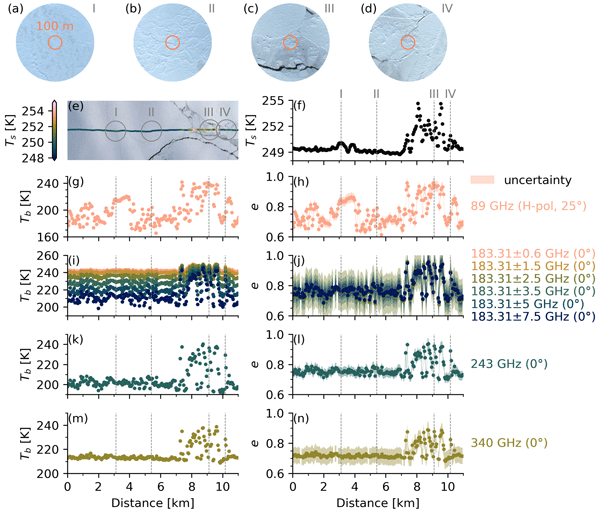
Nils Risse, Mario Mech, Catherine Prigent, Gunnar Spreen, and Susanne Crewell
The Cryosphere, 18, 4137–4163, https://doi.org/10.5194/tc-18-4137-2024, https://doi.org/10.5194/tc-18-4137-2024, 2024
Short summary
Short summary
Passive microwave observations from satellites are crucial for monitoring Arctic sea ice and atmosphere. To do this effectively, it is important to understand how sea ice emits microwaves. Through unique Arctic sea ice observations, we improved our understanding, identified four distinct emission types, and expanded current knowledge to include higher frequencies. These findings will enhance our ability to monitor the Arctic climate and provide valuable information for new satellite missions.
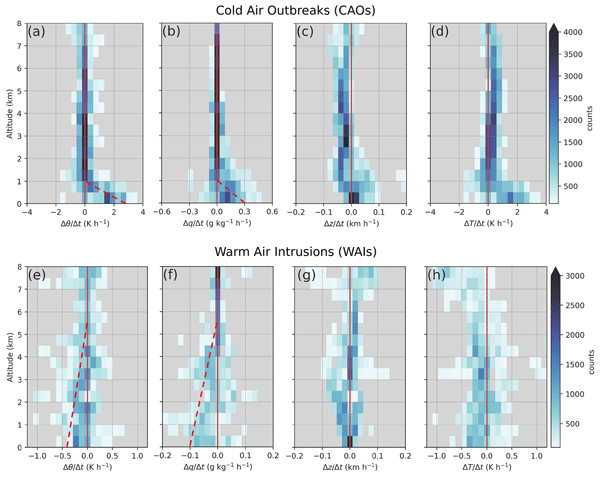
Manfred Wendisch, Susanne Crewell, André Ehrlich, Andreas Herber, Benjamin Kirbus, Christof Lüpkes, Mario Mech, Steven J. Abel, Elisa F. Akansu, Felix Ament, Clémantyne Aubry, Sebastian Becker, Stephan Borrmann, Heiko Bozem, Marlen Brückner, Hans-Christian Clemen, Sandro Dahlke, Georgios Dekoutsidis, Julien Delanoë, Elena De La Torre Castro, Henning Dorff, Regis Dupuy, Oliver Eppers, Florian Ewald, Geet George, Irina V. Gorodetskaya, Sarah Grawe, Silke Groß, Jörg Hartmann, Silvia Henning, Lutz Hirsch, Evelyn Jäkel, Philipp Joppe, Olivier Jourdan, Zsofia Jurányi, Michail Karalis, Mona Kellermann, Marcus Klingebiel, Michael Lonardi, Johannes Lucke, Anna E. Luebke, Maximilian Maahn, Nina Maherndl, Marion Maturilli, Bernhard Mayer, Johanna Mayer, Stephan Mertes, Janosch Michaelis, Michel Michalkov, Guillaume Mioche, Manuel Moser, Hanno Müller, Roel Neggers, Davide Ori, Daria Paul, Fiona M. Paulus, Christian Pilz, Felix Pithan, Mira Pöhlker, Veronika Pörtge, Maximilian Ringel, Nils Risse, Gregory C. Roberts, Sophie Rosenburg, Johannes Röttenbacher, Janna Rückert, Michael Schäfer, Jonas Schaefer, Vera Schemann, Imke Schirmacher, Jörg Schmidt, Sebastian Schmidt, Johannes Schneider, Sabrina Schnitt, Anja Schwarz, Holger Siebert, Harald Sodemann, Tim Sperzel, Gunnar Spreen, Bjorn Stevens, Frank Stratmann, Gunilla Svensson, Christian Tatzelt, Thomas Tuch, Timo Vihma, Christiane Voigt, Lea Volkmer, Andreas Walbröl, Anna Weber, Birgit Wehner, Bruno Wetzel, Martin Wirth, and Tobias Zinner
Atmos. Chem. Phys., 24, 8865–8892, https://doi.org/10.5194/acp-24-8865-2024, https://doi.org/10.5194/acp-24-8865-2024, 2024
Short summary
Short summary
The Arctic is warming faster than the rest of the globe. Warm-air intrusions (WAIs) into the Arctic may play an important role in explaining this phenomenon. Cold-air outbreaks (CAOs) out of the Arctic may link the Arctic climate changes to mid-latitude weather. In our article, we describe how to observe air mass transformations during CAOs and WAIs using three research aircraft instrumented with state-of-the-art remote-sensing and in situ measurement devices.
Nina Maherndl, Manuel Moser, Johannes Lucke, Mario Mech, Nils Risse, Imke Schirmacher, and Maximilian Maahn
Atmos. Meas. Tech., 17, 1475–1495, https://doi.org/10.5194/amt-17-1475-2024, https://doi.org/10.5194/amt-17-1475-2024, 2024
Short summary
Short summary
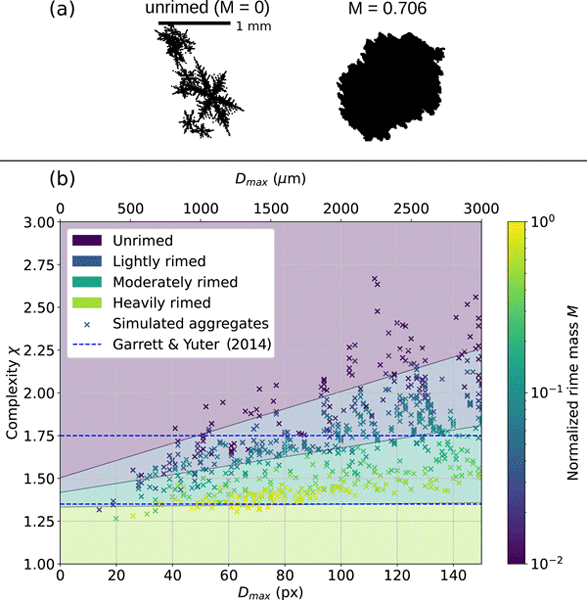
In some clouds, liquid water droplets can freeze onto ice crystals (riming). Riming leads to the formation of snowflakes. We show two ways to quantify riming using aircraft data collected in the Arctic. One aircraft had a cloud radar, while the other aircraft was measuring directly in cloud. The first method compares radar and direct observations. The second looks at snowflake shape. Both methods agree, except when there were gaps in the cloud. This improves our ability to understand riming.
Marcus Klingebiel, André Ehrlich, Elena Ruiz-Donoso, Nils Risse, Imke Schirmacher, Evelyn Jäkel, Michael Schäfer, Kevin Wolf, Mario Mech, Manuel Moser, Christiane Voigt, and Manfred Wendisch
Atmos. Chem. Phys., 23, 15289–15304, https://doi.org/10.5194/acp-23-15289-2023, https://doi.org/10.5194/acp-23-15289-2023, 2023
Short summary
Short summary
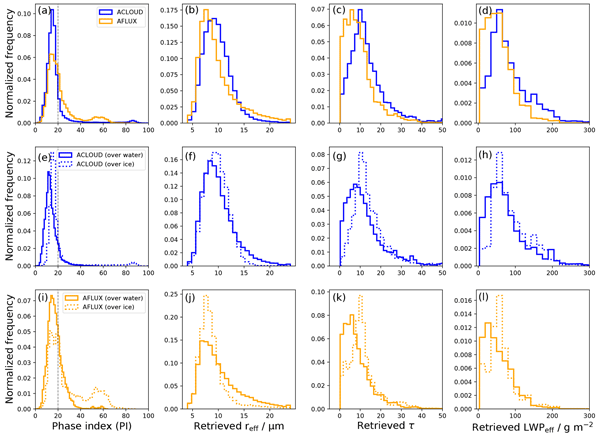
In this study we explain how we use aircraft measurements from two Arctic research campaigns to identify cloud properties (like droplet size) over sea-ice and ice-free ocean. To make sure that our measurements make sense, we compare them with other observations. Our results show, e.g., larger cloud droplets in early summer than in spring. Moreover, the cloud droplets are also larger over ice-free ocean than compared to sea ice. In the future, our data can be used to improve climate models.
Claudia Acquistapace, Richard Coulter, Susanne Crewell, Albert Garcia-Benadi, Rosa Gierens, Giacomo Labbri, Alexander Myagkov, Nils Risse, and Jan H. Schween
Earth Syst. Sci. Data, 14, 33–55, https://doi.org/10.5194/essd-14-33-2022, https://doi.org/10.5194/essd-14-33-2022, 2022
Short summary
Short summary
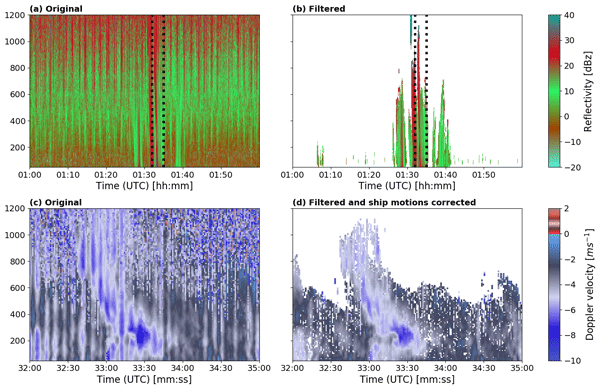
This publication describes the unprecedented high-resolution cloud and precipitation dataset collected by two radars deployed on the Maria S. Merian research vessel. The ship operated in the west Atlantic Ocean during the measurement campaign called EUREC4A, between 19 January and 19 February 2020. The data collected are crucial to investigate clouds and precipitation and understand how they form and change over the ocean, where it is so difficult to measure them.
Malte Schuchard, Konrad Bärfuss, Lutz Bretschneider, Thomas Conrath, Andreas Held, Ralf Käthner, Mona Kellermann, Astrid Lampert, Theresa Mathes, Joshua Müller, Christian Pilz, Andreas Schlerf, Holger Siebert, Birgit Wehner, and Barbara Harm-Altstädter
Earth Syst. Sci. Data Discuss., https://doi.org/10.5194/essd-2026-411, https://doi.org/10.5194/essd-2026-411, 2026
Preprint under review for ESSD
Short summary
Short summary
This article combines measurements from an uncrewed aerial system, a tethered balloon system and a surface flux gradient system to study aerosol particles and meteorological parameters at the Arctic site Ny-Ålesund, Svalbard, in spring 2024. The vertical and horizontal observations from the ground to 1.3 kilometres above sea level show strong aerosol variability in correlation with specific meteorological conditions, providing a valuable basis for understanding Arctic aerosol processes.
Aymeric Dziduch, Antoine Baudoux, Guillaume Mioche, Antoine Canzi, Benjamin Doiteau, Manuel Moser, Emma Järvinen, Étienne Vignon, Jean-Christophe Raut, Régis Dupuy, Christophe Gourbeyre, Jean-Luc Baray, Marie Monier, Frédéric Szczap, Guillaume Penide, Julien Delanoë, Odran Sourdeval, Alfons Schwarzenboeck, Stephan Mertes, Franz Martin Schnaiter, Christiane Voigt, Mario Mech, Susanne Crewell, Andreas Herber, Christof Lüpkes, André Ehrlich, Manfred Wendisch, and Olivier Jourdan
EGUsphere, https://doi.org/10.5194/egusphere-2026-3265, https://doi.org/10.5194/egusphere-2026-3265, 2026
This preprint is open for discussion and under review for Atmospheric Chemistry and Physics (ACP).
Short summary
Short summary
This study examines the microphysical properties and ice crystal habits of low-level Arctic mixed-phase clouds around Svalbard. Using airborne in situ observations from four campaigns, we show that cloud microphysical structure and ice crystal habits are influenced by weather conditions and surface type. These results provide quantitative observations to better understand low-level Arctic clouds, their ice formation processes, and their influence on the Arctic atmosphere and climate system.
David J. Simon, Jonas Schaefer, Jörg Hartmann, Benjamin Kirbus, Joshua Müller, Markus Hartmann, Bruno Wetzel, Laura Köhler, Anna-Marie Jörss, Kay Weinhold, Andreas Herber, Zsófia Jurányi, Silvia Henning, Gregory C. Roberts, Manfred Wendisch, Mira L. Pöhlker, and Frank Stratmann
EGUsphere, https://doi.org/10.5194/egusphere-2026-2215, https://doi.org/10.5194/egusphere-2026-2215, 2026
Short summary
Short summary
We investigate the occurrence of newly formed aerosol particles in the Arctic atmosphere by analyzing aerosol particle measurements conducted aboard a research aircraft in April 2024. We frequently detected newly formed particles at altitudes of up to 4 km, while many previous studies had predominantly found such particles close to the surface. Newly formed particles were associated with air mass transport from lower latitudes, the occurrence of clouds, as well as the presence of sea ice.
Henning Dorff, Holger Siebert, Komal Navale, André Ehrlich, Joshua Müller, Michael Schäfer, Fan Wu, and Manfred Wendisch
Earth Syst. Sci. Data, 18, 2799–2817, https://doi.org/10.5194/essd-18-2799-2026, https://doi.org/10.5194/essd-18-2799-2026, 2026
Short summary
Short summary
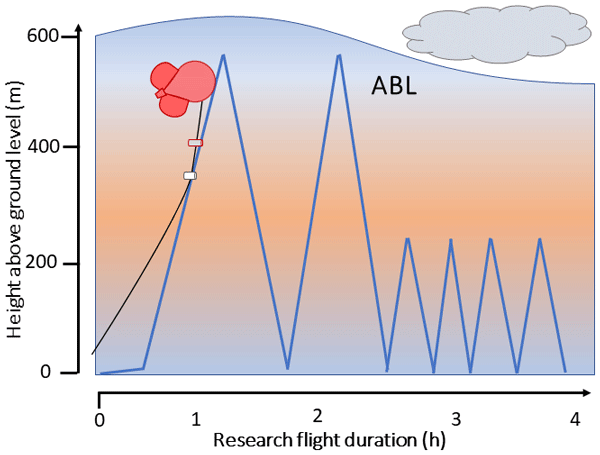
We present tethered-balloon measurements from BELUGA (Balloon-bornE moduLar Utility for profilinG the lower Atmosphere) at Villum Research Station (spring 2024), detailing instrumentation, data processing, and environmental conditions. The data stored in the PANGAEA database include instrument-separated subsets with frequent in situ profiling of thermodynamic, turbulence conditions, and thermal-infrared irradiances across the Arctic atmospheric boundary layer (ABL), supplemented by radiosondes. The data help examine transition events between Arctic ABL states.
Léa Elise Bonnefoy, Catherine Prigent, Ghislain Picard, Clément Soriot, Alice Le Gall, Lise Kilic, and Carlos Jimenez
The Cryosphere, 20, 1297–1314, https://doi.org/10.5194/tc-20-1297-2026, https://doi.org/10.5194/tc-20-1297-2026, 2026
Short summary
Short summary
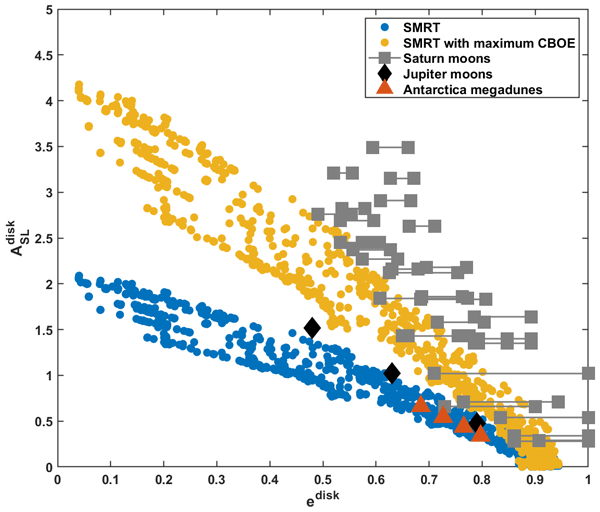
Microwave radiometry senses the thermal emission from a target, whereas its active counterpart, radar, sends a signal to the target and measures the reflected signal. We simultaneously model radar and radiometry over the East Antarctic ice sheet, which we propose as an analog for icy moons: we can reproduce most data with a unique model. The radar response of Saturn's moons cannot be reproduced and is likely caused by processes unaccounted for in the model and less efficient in the Antarctic.
Fiona M. Paulus, Joshua J. Müller, Benjamin Kirbus, Harald Sodemann, Lars van Gelder, Andreas Walbröl, Manfred Wendisch, and Roel A. J. Neggers
EGUsphere, https://doi.org/10.5194/egusphere-2026-554, https://doi.org/10.5194/egusphere-2026-554, 2026
Short summary
Short summary
Cold Arctic air flowing from sea ice onto the warmer ocean waters rapidly warms, moistens, and forms clouds and precipitation. These events shape the Arctic climate but are difficult to observe and model. Particularly the role of large-scale sinking motion during these events is not fully understood. Using rare aircraft data and simulations to track an air mass for two days, we show that strong downward motion suppresses cloud growth, limits and delays precipitation, and reduces cloud lifetimes.
Manuel Moser, Christiane Voigt, Oliver Eppers, Johannes Lucke, Elena De La Torre Castro, Johanna Mayer, Regis Dupuy, Guillaume Mioche, Olivier Jourdan, Hans-Christian Clemen, Johannes Schneider, Philipp Joppe, Stephan Mertes, Bruno Wetzel, Stephan Borrmann, Marcus Klingebiel, Mario Mech, Christof Lüpkes, Susanne Crewell, André Ehrlich, Andreas Herber, and Manfred Wendisch
Atmos. Chem. Phys., 26, 1867–1887, https://doi.org/10.5194/acp-26-1867-2026, https://doi.org/10.5194/acp-26-1867-2026, 2026
Short summary
Short summary
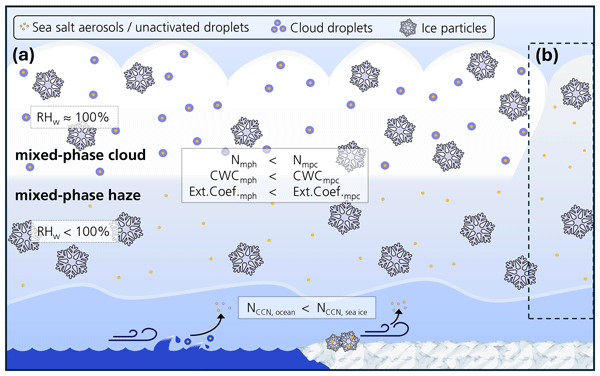
In this study we analyzed Arctic mixed-phase clouds using airborne in-situ measurements in spring 2022. Based on microphysical properties, we show that within these clouds a distinction must be made between classic mixed-phase clouds and a mixed-phase haze regime. Instead of supercooled droplets, the haze regime contains large wet sea salt aerosols. These findings improve our understanding of Arctic low-level cloud processes.
Sabrina Schnitt, Mario Mech, Jens Goliasch, Thomas Rose, and Susanne Crewell
EGUsphere, https://doi.org/10.5194/egusphere-2025-5563, https://doi.org/10.5194/egusphere-2025-5563, 2025
Short summary
Short summary
Water vapor and clouds are driving components of the Arctic water cycle. Cloud radars deliver central insights on cloud micro-physical parameters. We here present the novel G-band Radar for Water vapor and Arctic Clouds (GRaWAC) which enables the retrieval of in-cloud water vapor profiles and cloud micro-physical parameters. First ground-based and air-borne measurements in the Arctic confirm that GRaWAC can bridge the gap of observing water vapor profiles and cloud micro-physics with one system.
Manfred Wendisch, Benjamin Kirbus, Davide Ori, Matthew D. Shupe, Susanne Crewell, Harald Sodemann, and Vera Schemann
Atmos. Chem. Phys., 25, 15047–15076, https://doi.org/10.5194/acp-25-15047-2025, https://doi.org/10.5194/acp-25-15047-2025, 2025
Short summary
Short summary
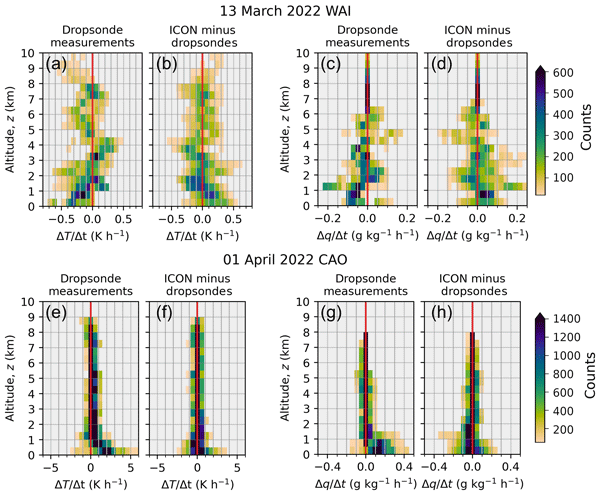
Aircraft observations of air parcels moving into and out of the Arctic are reported. From the data, heating and cooling as well as drying and moistening of the air masses along their way into and out of the Arctic could be measured for the first time. These data are used to evaluate if weather prediction models are able to accurately represent these air mass transformations. This work helps to model the future Arctic climate changes, which may have an impact for mid-latitude weather as well.
Joshua J. Müller, Michael Schäfer, Sophie Rosenburg, André Ehrlich, and Manfred Wendisch
Atmos. Meas. Tech., 18, 4695–4708, https://doi.org/10.5194/amt-18-4695-2025, https://doi.org/10.5194/amt-18-4695-2025, 2025
Short summary
Short summary
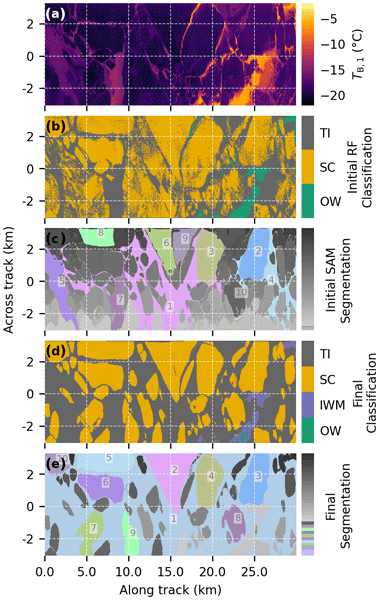
We retrieved high-resolution maps of Arctic surface temperature and type using an airborne thermal infrared imager during an Arctic aircraft campaign. Our study highlights small-scale surface variability, complementing satellite observations. Surface temperature was retrieved via radiative transfer simulations, while surface type was classified using machine learning. Additionally, we analysed segment sizes of each surface type, presenting results based on their distance from the sea-ice edge.
Marcus Klingebiel, André Ehrlich, Micha Gryschka, Nils Risse, Nina Maherndl, Imke Schirmacher, Sophie Rosenburg, Sabine Hörnig, Manuel Moser, Evelyn Jäkel, Michael Schäfer, Hartwig Deneke, Mario Mech, Christiane Voigt, and Manfred Wendisch
Atmos. Chem. Phys., 25, 9787–9801, https://doi.org/10.5194/acp-25-9787-2025, https://doi.org/10.5194/acp-25-9787-2025, 2025
Short summary
Short summary
Our study is using aircraft measurements from the HALO-(𝒜𝒞)³ campaign to investigate the transition from organized Arctic cloud street structures to more scattered clouds, which we call isotropic cloud patterns. We show that lower wind speeds cause this transition. In addition, we look at the changes in the cloud coverage, the height of the clouds, the cloud particles, and the radiative properties.
Henning Dorff, Florian Ewald, Heike Konow, Mario Mech, Davide Ori, Vera Schemann, Andreas Walbröl, Manfred Wendisch, and Felix Ament
Atmos. Chem. Phys., 25, 8329–8354, https://doi.org/10.5194/acp-25-8329-2025, https://doi.org/10.5194/acp-25-8329-2025, 2025
Short summary
Short summary
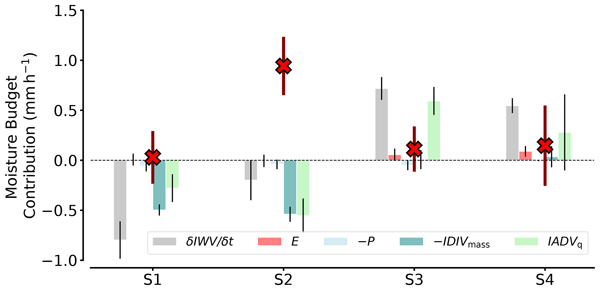
Using observations of an Arctic atmospheric river (AR) from a long-range research aircraft, we analyse how moisture transported into the Arctic by the AR is transformed and how it interacts with the Arctic environment. The moisture transport divergence is the main driver of local moisture change over time. Surface precipitation and evaporation are rather weak when averaged over extended AR sectors, although considerable heterogeneity of precipitation within the AR is observed.
Kerstin Ebell, Christian Buhren, Rosa Gierens, Giovanni Chellini, Melanie Lauer, Andreas Walbröl, Sandro Dahlke, Pavel Krobot, and Mario Mech
Atmos. Chem. Phys., 25, 7315–7342, https://doi.org/10.5194/acp-25-7315-2025, https://doi.org/10.5194/acp-25-7315-2025, 2025
Short summary
Short summary
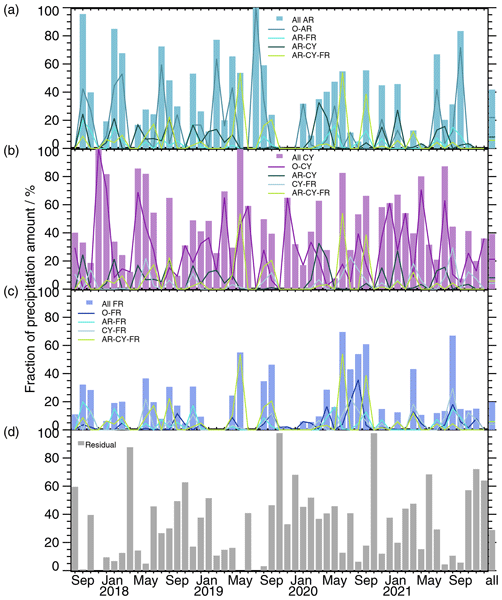
Ground-based observations of precipitation are rare in the Arctic. Since 2017, additional temporally highly resolved precipitation measurements have been carried out by a precipitation gauge and an optical precipitation sensor at Ny-Ålesund, Svalbard. These new data facilitate the distinction between liquid and solid precipitation. Using reanalysis data, we also find that water vapor transport contributes strongly to precipitation and especially to extreme precipitation events.
Juliette Bernard, Catherine Prigent, Carlos Jimenez, Etienne Fluet-Chouinard, Bernhard Lehner, Elodie Salmon, Philippe Ciais, Zhen Zhang, Shushi Peng, and Marielle Saunois
Earth Syst. Sci. Data, 17, 2985–3008, https://doi.org/10.5194/essd-17-2985-2025, https://doi.org/10.5194/essd-17-2985-2025, 2025
Short summary
Short summary
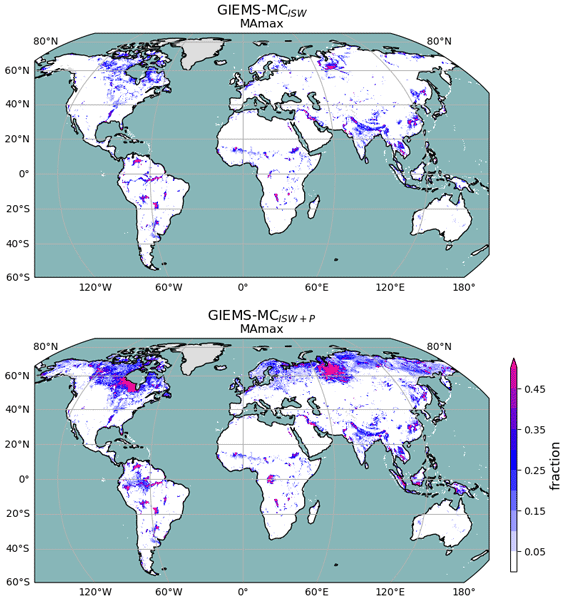
Wetlands are responsible for about a third of global emissions of methane, a potent greenhouse gas. We have developed the Global Inundation Extent from Multi-Satellites-MethaneCentric (GIEMS-MC) dataset to represent the dynamics of wetland extent on a global scale (0.25° × 0.25° resolution, monthly time step). This updated resource combines satellite data and existing wetland databases, covering 1992 to 2020. Consistent maps of other methane-emitting surface waters (lakes, rivers, reservoirs, rice paddies) are also provided.
Bernhard Lehner, Mira Anand, Etienne Fluet-Chouinard, Florence Tan, Filipe Aires, George H. Allen, Philippe Bousquet, Josep G. Canadell, Nick Davidson, Meng Ding, C. Max Finlayson, Thomas Gumbricht, Lammert Hilarides, Gustaf Hugelius, Robert B. Jackson, Maartje C. Korver, Liangyun Liu, Peter B. McIntyre, Szabolcs Nagy, David Olefeldt, Tamlin M. Pavelsky, Jean-Francois Pekel, Benjamin Poulter, Catherine Prigent, Jida Wang, Thomas A. Worthington, Dai Yamazaki, Xiao Zhang, and Michele Thieme
Earth Syst. Sci. Data, 17, 2277–2329, https://doi.org/10.5194/essd-17-2277-2025, https://doi.org/10.5194/essd-17-2277-2025, 2025
Short summary
Short summary
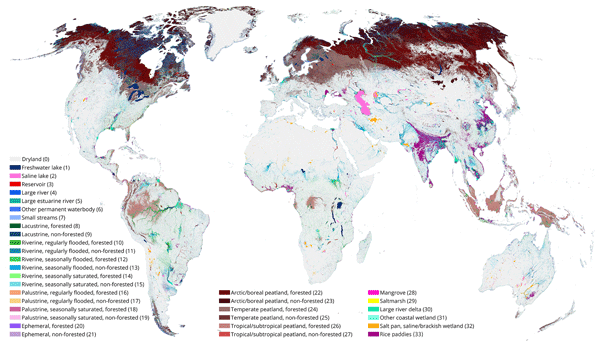
The Global Lakes and Wetlands Database (GLWD) version 2 distinguishes a total of 33 non-overlapping wetland classes, providing a static map of the world’s inland surface waters. It contains cell fractions of wetland extents per class at a grid cell resolution of ~500 m. The total combined extent of all classes including all inland and coastal waterbodies and wetlands of all inundation frequencies – that is, the maximum extent – covers 18.2 × 10⁶ km2, equivalent to 13.4 % of total global land area.
André Ehrlich, Susanne Crewell, Andreas Herber, Marcus Klingebiel, Christof Lüpkes, Mario Mech, Sebastian Becker, Stephan Borrmann, Heiko Bozem, Matthias Buschmann, Hans-Christian Clemen, Elena De La Torre Castro, Henning Dorff, Regis Dupuy, Oliver Eppers, Florian Ewald, Geet George, Andreas Giez, Sarah Grawe, Christophe Gourbeyre, Jörg Hartmann, Evelyn Jäkel, Philipp Joppe, Olivier Jourdan, Zsófia Jurányi, Benjamin Kirbus, Johannes Lucke, Anna E. Luebke, Maximilian Maahn, Nina Maherndl, Christian Mallaun, Johanna Mayer, Stephan Mertes, Guillaume Mioche, Manuel Moser, Hanno Müller, Veronika Pörtge, Nils Risse, Greg Roberts, Sophie Rosenburg, Johannes Röttenbacher, Michael Schäfer, Jonas Schaefer, Andreas Schäfler, Imke Schirmacher, Johannes Schneider, Sabrina Schnitt, Frank Stratmann, Christian Tatzelt, Christiane Voigt, Andreas Walbröl, Anna Weber, Bruno Wetzel, Martin Wirth, and Manfred Wendisch
Earth Syst. Sci. Data, 17, 1295–1328, https://doi.org/10.5194/essd-17-1295-2025, https://doi.org/10.5194/essd-17-1295-2025, 2025
Short summary
Short summary
This paper provides an overview of the HALO–(AC)3 aircraft campaign data sets, the campaign-specific instrument operation, data processing, and data quality. The data set comprises in situ and remote sensing observations from three research aircraft: HALO, Polar 5, and Polar 6. All data are published in the PANGAEA database by instrument-separated data subsets. It is highlighted how the scientific analysis of the HALO–(AC)3 data benefits from the coordinated operation of three aircraft.
Lukas Pfitzenmaier, Pavlos Kollias, Nils Risse, Imke Schirmacher, Bernat Puigdomenech Treserras, and Katia Lamer
Geosci. Model Dev., 18, 101–115, https://doi.org/10.5194/gmd-18-101-2025, https://doi.org/10.5194/gmd-18-101-2025, 2025
Short summary
Short summary
The Python tool Orbital-Radar transfers suborbital radar data (ground-based, airborne, and forward-simulated numerical weather prediction model) into synthetic spaceborne cloud profiling radar data, mimicking platform-specific instrument characteristics, e.g. EarthCARE or CloudSat. The tool's novelty lies in simulating characteristic errors and instrument noise. Thus, existing data sets are transferred into synthetic observations and can be used for satellite calibration–validation studies.
Imke Schirmacher, Sabrina Schnitt, Marcus Klingebiel, Nina Maherndl, Benjamin Kirbus, André Ehrlich, Mario Mech, and Susanne Crewell
Atmos. Chem. Phys., 24, 12823–12842, https://doi.org/10.5194/acp-24-12823-2024, https://doi.org/10.5194/acp-24-12823-2024, 2024
Short summary
Short summary
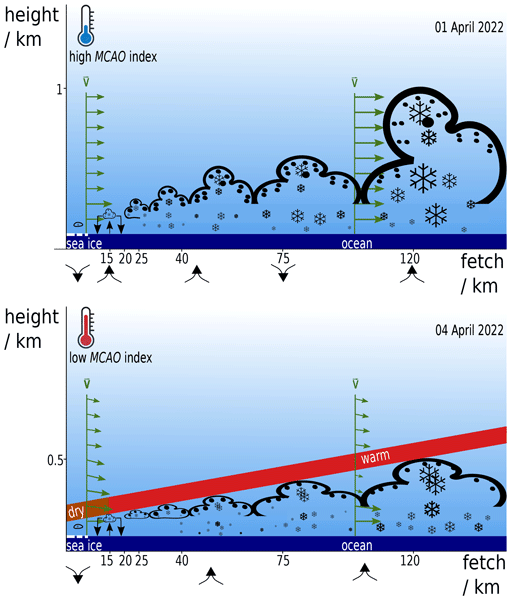
During Arctic marine cold-air outbreaks, cold air flows from sea ice over open water. Roll circulations evolve, forming cloud streets. We investigate the initial circulation and cloud development using high-resolution airborne measurements. We compute the distance an air mass traveled over water (fetch) from back trajectories. Cloud streets form at 15 km fetch, cloud cover strongly increases at around 20 km, and precipitation forms at around 30 km.
Andreas Walbröl, Hannes J. Griesche, Mario Mech, Susanne Crewell, and Kerstin Ebell
Atmos. Meas. Tech., 17, 6223–6245, https://doi.org/10.5194/amt-17-6223-2024, https://doi.org/10.5194/amt-17-6223-2024, 2024
Short summary
Short summary
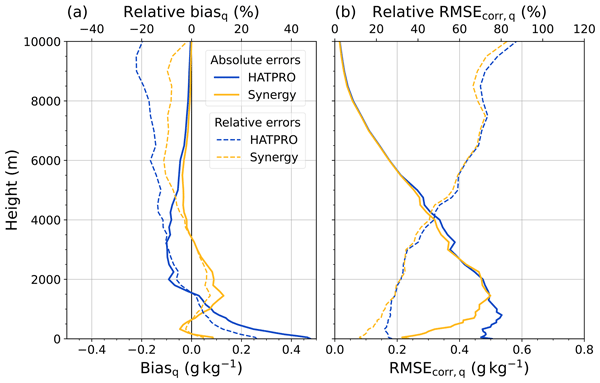
We developed retrievals of integrated water vapour (IWV), temperature profiles, and humidity profiles from ground-based passive microwave remote sensing measurements gathered during the MOSAiC expedition. We demonstrate and quantify the benefit of combining low- and high-frequency microwave radiometers to improve humidity profiling and IWV estimates by comparing the retrieved quantities to single-instrument retrievals and reference datasets (radiosondes).
Nils Risse, Mario Mech, Catherine Prigent, Gunnar Spreen, and Susanne Crewell
The Cryosphere, 18, 4137–4163, https://doi.org/10.5194/tc-18-4137-2024, https://doi.org/10.5194/tc-18-4137-2024, 2024
Short summary
Short summary
Passive microwave observations from satellites are crucial for monitoring Arctic sea ice and atmosphere. To do this effectively, it is important to understand how sea ice emits microwaves. Through unique Arctic sea ice observations, we improved our understanding, identified four distinct emission types, and expanded current knowledge to include higher frequencies. These findings will enhance our ability to monitor the Arctic climate and provide valuable information for new satellite missions.
Manfred Wendisch, Susanne Crewell, André Ehrlich, Andreas Herber, Benjamin Kirbus, Christof Lüpkes, Mario Mech, Steven J. Abel, Elisa F. Akansu, Felix Ament, Clémantyne Aubry, Sebastian Becker, Stephan Borrmann, Heiko Bozem, Marlen Brückner, Hans-Christian Clemen, Sandro Dahlke, Georgios Dekoutsidis, Julien Delanoë, Elena De La Torre Castro, Henning Dorff, Regis Dupuy, Oliver Eppers, Florian Ewald, Geet George, Irina V. Gorodetskaya, Sarah Grawe, Silke Groß, Jörg Hartmann, Silvia Henning, Lutz Hirsch, Evelyn Jäkel, Philipp Joppe, Olivier Jourdan, Zsofia Jurányi, Michail Karalis, Mona Kellermann, Marcus Klingebiel, Michael Lonardi, Johannes Lucke, Anna E. Luebke, Maximilian Maahn, Nina Maherndl, Marion Maturilli, Bernhard Mayer, Johanna Mayer, Stephan Mertes, Janosch Michaelis, Michel Michalkov, Guillaume Mioche, Manuel Moser, Hanno Müller, Roel Neggers, Davide Ori, Daria Paul, Fiona M. Paulus, Christian Pilz, Felix Pithan, Mira Pöhlker, Veronika Pörtge, Maximilian Ringel, Nils Risse, Gregory C. Roberts, Sophie Rosenburg, Johannes Röttenbacher, Janna Rückert, Michael Schäfer, Jonas Schaefer, Vera Schemann, Imke Schirmacher, Jörg Schmidt, Sebastian Schmidt, Johannes Schneider, Sabrina Schnitt, Anja Schwarz, Holger Siebert, Harald Sodemann, Tim Sperzel, Gunnar Spreen, Bjorn Stevens, Frank Stratmann, Gunilla Svensson, Christian Tatzelt, Thomas Tuch, Timo Vihma, Christiane Voigt, Lea Volkmer, Andreas Walbröl, Anna Weber, Birgit Wehner, Bruno Wetzel, Martin Wirth, and Tobias Zinner
Atmos. Chem. Phys., 24, 8865–8892, https://doi.org/10.5194/acp-24-8865-2024, https://doi.org/10.5194/acp-24-8865-2024, 2024
Short summary
Short summary
The Arctic is warming faster than the rest of the globe. Warm-air intrusions (WAIs) into the Arctic may play an important role in explaining this phenomenon. Cold-air outbreaks (CAOs) out of the Arctic may link the Arctic climate changes to mid-latitude weather. In our article, we describe how to observe air mass transformations during CAOs and WAIs using three research aircraft instrumented with state-of-the-art remote-sensing and in situ measurement devices.
Andreas Walbröl, Janosch Michaelis, Sebastian Becker, Henning Dorff, Kerstin Ebell, Irina Gorodetskaya, Bernd Heinold, Benjamin Kirbus, Melanie Lauer, Nina Maherndl, Marion Maturilli, Johanna Mayer, Hanno Müller, Roel A. J. Neggers, Fiona M. Paulus, Johannes Röttenbacher, Janna E. Rückert, Imke Schirmacher, Nils Slättberg, André Ehrlich, Manfred Wendisch, and Susanne Crewell
Atmos. Chem. Phys., 24, 8007–8029, https://doi.org/10.5194/acp-24-8007-2024, https://doi.org/10.5194/acp-24-8007-2024, 2024
Short summary
Short summary
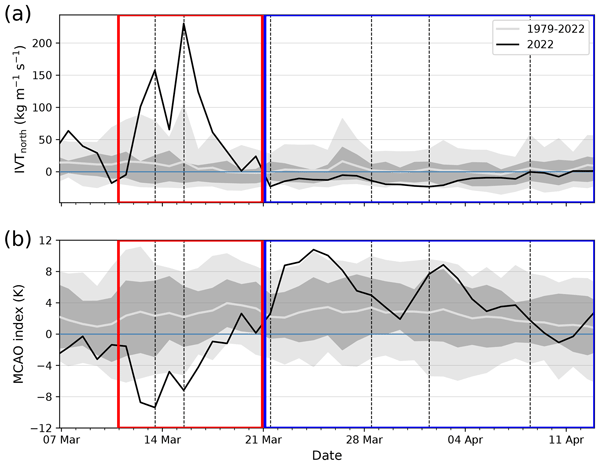
To support the interpretation of the data collected during the HALO-(AC)3 campaign, which took place in the North Atlantic sector of the Arctic from 7 March to 12 April 2022, we analyze how unusual the weather and sea ice conditions were with respect to the long-term climatology. From observations and ERA5 reanalysis, we found record-breaking warm air intrusions and a large variety of marine cold air outbreaks. Sea ice concentration was mostly within the climatological interquartile range.
Bjorn Stevens, Stefan Adami, Tariq Ali, Hartwig Anzt, Zafer Aslan, Sabine Attinger, Jaana Bäck, Johanna Baehr, Peter Bauer, Natacha Bernier, Bob Bishop, Hendryk Bockelmann, Sandrine Bony, Guy Brasseur, David N. Bresch, Sean Breyer, Gilbert Brunet, Pier Luigi Buttigieg, Junji Cao, Christelle Castet, Yafang Cheng, Ayantika Dey Choudhury, Deborah Coen, Susanne Crewell, Atish Dabholkar, Qing Dai, Francisco Doblas-Reyes, Dale Durran, Ayoub El Gaidi, Charlie Ewen, Eleftheria Exarchou, Veronika Eyring, Florencia Falkinhoff, David Farrell, Piers M. Forster, Ariane Frassoni, Claudia Frauen, Oliver Fuhrer, Shahzad Gani, Edwin Gerber, Debra Goldfarb, Jens Grieger, Nicolas Gruber, Wilco Hazeleger, Rolf Herken, Chris Hewitt, Torsten Hoefler, Huang-Hsiung Hsu, Daniela Jacob, Alexandra Jahn, Christian Jakob, Thomas Jung, Christopher Kadow, In-Sik Kang, Sarah Kang, Karthik Kashinath, Katharina Kleinen-von Königslöw, Daniel Klocke, Uta Kloenne, Milan Klöwer, Chihiro Kodama, Stefan Kollet, Tobias Kölling, Jenni Kontkanen, Steve Kopp, Michal Koran, Markku Kulmala, Hanna Lappalainen, Fakhria Latifi, Bryan Lawrence, June Yi Lee, Quentin Lejeun, Christian Lessig, Chao Li, Thomas Lippert, Jürg Luterbacher, Pekka Manninen, Jochem Marotzke, Satoshi Matsouoka, Charlotte Merchant, Peter Messmer, Gero Michel, Kristel Michielsen, Tomoki Miyakawa, Jens Müller, Ramsha Munir, Sandeep Narayanasetti, Ousmane Ndiaye, Carlos Nobre, Achim Oberg, Riko Oki, Tuba Özkan-Haller, Tim Palmer, Stan Posey, Andreas Prein, Odessa Primus, Mike Pritchard, Julie Pullen, Dian Putrasahan, Johannes Quaas, Krishnan Raghavan, Venkatachalam Ramaswamy, Markus Rapp, Florian Rauser, Markus Reichstein, Aromar Revi, Sonakshi Saluja, Masaki Satoh, Vera Schemann, Sebastian Schemm, Christina Schnadt Poberaj, Thomas Schulthess, Cath Senior, Jagadish Shukla, Manmeet Singh, Julia Slingo, Adam Sobel, Silvina Solman, Jenna Spitzer, Philip Stier, Thomas Stocker, Sarah Strock, Hang Su, Petteri Taalas, John Taylor, Susann Tegtmeier, Georg Teutsch, Adrian Tompkins, Uwe Ulbrich, Pier-Luigi Vidale, Chien-Ming Wu, Hao Xu, Najibullah Zaki, Laure Zanna, Tianjun Zhou, and Florian Ziemen
Earth Syst. Sci. Data, 16, 2113–2122, https://doi.org/10.5194/essd-16-2113-2024, https://doi.org/10.5194/essd-16-2113-2024, 2024
Short summary
Short summary
To manage Earth in the Anthropocene, new tools, new institutions, and new forms of international cooperation will be required. Earth Virtualization Engines is proposed as an international federation of centers of excellence to empower all people to respond to the immense and urgent challenges posed by climate change.
Nina Maherndl, Manuel Moser, Johannes Lucke, Mario Mech, Nils Risse, Imke Schirmacher, and Maximilian Maahn
Atmos. Meas. Tech., 17, 1475–1495, https://doi.org/10.5194/amt-17-1475-2024, https://doi.org/10.5194/amt-17-1475-2024, 2024
Short summary
Short summary
In some clouds, liquid water droplets can freeze onto ice crystals (riming). Riming leads to the formation of snowflakes. We show two ways to quantify riming using aircraft data collected in the Arctic. One aircraft had a cloud radar, while the other aircraft was measuring directly in cloud. The first method compares radar and direct observations. The second looks at snowflake shape. Both methods agree, except when there were gaps in the cloud. This improves our ability to understand riming.
Sabrina Schnitt, Andreas Foth, Heike Kalesse-Los, Mario Mech, Claudia Acquistapace, Friedhelm Jansen, Ulrich Löhnert, Bernhard Pospichal, Johannes Röttenbacher, Susanne Crewell, and Bjorn Stevens
Earth Syst. Sci. Data, 16, 681–700, https://doi.org/10.5194/essd-16-681-2024, https://doi.org/10.5194/essd-16-681-2024, 2024
Short summary
Short summary
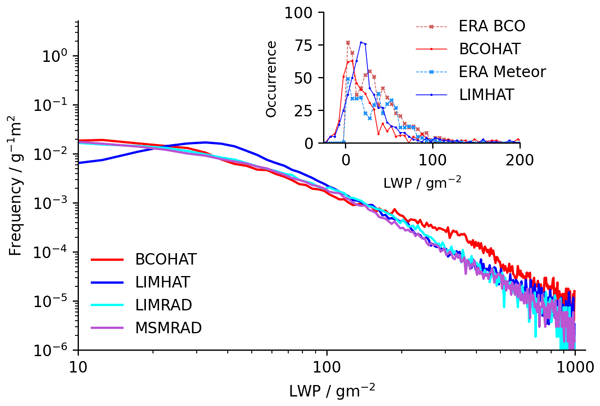
This publication describes the microwave radiometric measurements performed during the EUREC4A campaign at Barbados Cloud Observatory (BCO) and aboard RV Meteor and RV Maria S Merian. We present retrieved integrated water vapor (IWV), liquid water path (LWP), and temperature and humidity profiles as a unified, quality-controlled, multi-site data set on a 3 s temporal resolution for a core period between 19 January 2020 and 14 February 2020.
Marcus Klingebiel, André Ehrlich, Elena Ruiz-Donoso, Nils Risse, Imke Schirmacher, Evelyn Jäkel, Michael Schäfer, Kevin Wolf, Mario Mech, Manuel Moser, Christiane Voigt, and Manfred Wendisch
Atmos. Chem. Phys., 23, 15289–15304, https://doi.org/10.5194/acp-23-15289-2023, https://doi.org/10.5194/acp-23-15289-2023, 2023
Short summary
Short summary
In this study we explain how we use aircraft measurements from two Arctic research campaigns to identify cloud properties (like droplet size) over sea-ice and ice-free ocean. To make sure that our measurements make sense, we compare them with other observations. Our results show, e.g., larger cloud droplets in early summer than in spring. Moreover, the cloud droplets are also larger over ice-free ocean than compared to sea ice. In the future, our data can be used to improve climate models.
Imke Schirmacher, Pavlos Kollias, Katia Lamer, Mario Mech, Lukas Pfitzenmaier, Manfred Wendisch, and Susanne Crewell
Atmos. Meas. Tech., 16, 4081–4100, https://doi.org/10.5194/amt-16-4081-2023, https://doi.org/10.5194/amt-16-4081-2023, 2023
Short summary
Short summary
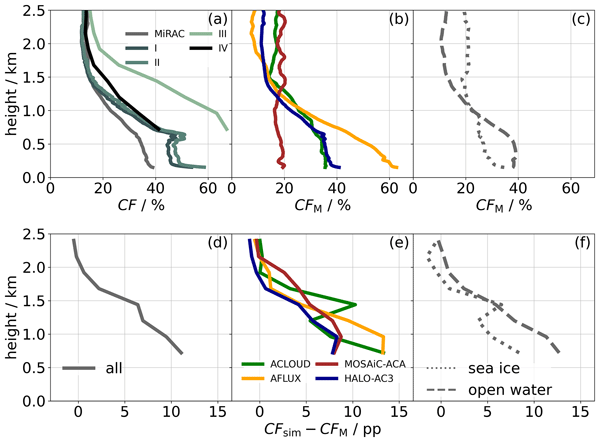
CloudSat’s relatively coarse spatial resolution, low sensitivity, and blind zone limit its assessment of Arctic low-level clouds, which affect the surface energy balance. We compare cloud fractions from CloudSat and finely resolved airborne radar observations to determine CloudSat’s limitations. Cloudsat overestimates cloud fractions above its blind zone, especially during cold-air outbreaks over open water, and misses a cloud fraction of 32 % and half of the precipitation inside its blind zone.
Melanie Lauer, Annette Rinke, Irina Gorodetskaya, Michael Sprenger, Mario Mech, and Susanne Crewell
Atmos. Chem. Phys., 23, 8705–8726, https://doi.org/10.5194/acp-23-8705-2023, https://doi.org/10.5194/acp-23-8705-2023, 2023
Short summary
Short summary
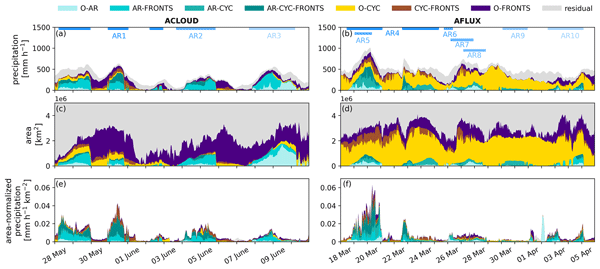
We present a new method to analyse the influence of atmospheric rivers (ARs), cyclones, and fronts on the precipitation in the Arctic, based on two campaigns: ACLOUD (early summer 2017) and AFLUX (early spring 2019). There are differences between both campaign periods: in early summer, the precipitation is mostly related to ARs and fronts, especially when they are co-located, while in early spring, cyclones isolated from ARs and fronts contributed most to the precipitation.
Manuel Moser, Christiane Voigt, Tina Jurkat-Witschas, Valerian Hahn, Guillaume Mioche, Olivier Jourdan, Régis Dupuy, Christophe Gourbeyre, Alfons Schwarzenboeck, Johannes Lucke, Yvonne Boose, Mario Mech, Stephan Borrmann, André Ehrlich, Andreas Herber, Christof Lüpkes, and Manfred Wendisch
Atmos. Chem. Phys., 23, 7257–7280, https://doi.org/10.5194/acp-23-7257-2023, https://doi.org/10.5194/acp-23-7257-2023, 2023
Short summary
Short summary
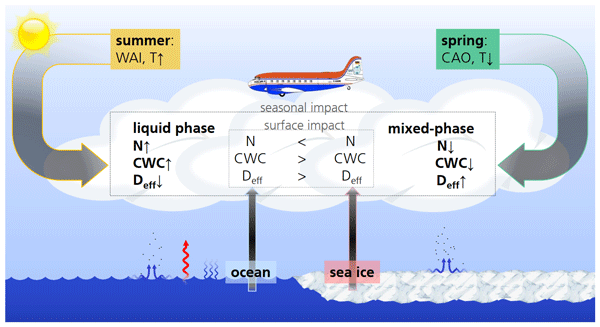
This study provides a comprehensive microphysical and thermodynamic phase analysis of low-level clouds in the northern Fram Strait, above the sea ice and the open ocean, during spring and summer. Using airborne in situ cloud data, we show that the properties of Arctic low-level clouds vary significantly with seasonal meteorological situations and surface conditions. The observations presented in this study can help one to assess the role of clouds in the Arctic climate system.
Danny M. Leung, Jasper F. Kok, Longlei Li, Gregory S. Okin, Catherine Prigent, Martina Klose, Carlos Pérez García-Pando, Laurent Menut, Natalie M. Mahowald, David M. Lawrence, and Marcelo Chamecki
Atmos. Chem. Phys., 23, 6487–6523, https://doi.org/10.5194/acp-23-6487-2023, https://doi.org/10.5194/acp-23-6487-2023, 2023
Short summary
Short summary
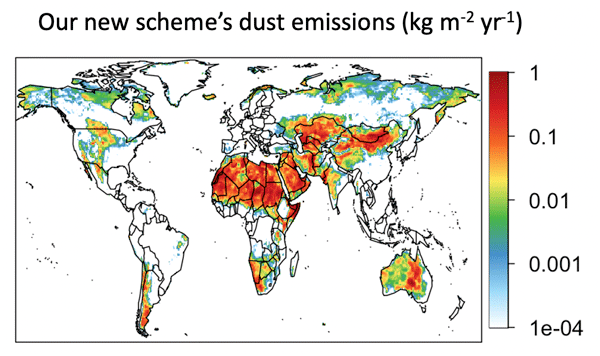
Desert dust modeling is important for understanding climate change, as dust regulates the atmosphere's greenhouse effect and radiation. This study formulates and proposes a more physical and realistic desert dust emission scheme for global and regional climate models. By considering more aeolian processes in our emission scheme, our simulations match better against dust observations than existing schemes. We believe this work is vital in improving dust representation in climate models.
Jan Chylik, Dmitry Chechin, Regis Dupuy, Birte S. Kulla, Christof Lüpkes, Stephan Mertes, Mario Mech, and Roel A. J. Neggers
Atmos. Chem. Phys., 23, 4903–4929, https://doi.org/10.5194/acp-23-4903-2023, https://doi.org/10.5194/acp-23-4903-2023, 2023
Short summary
Short summary
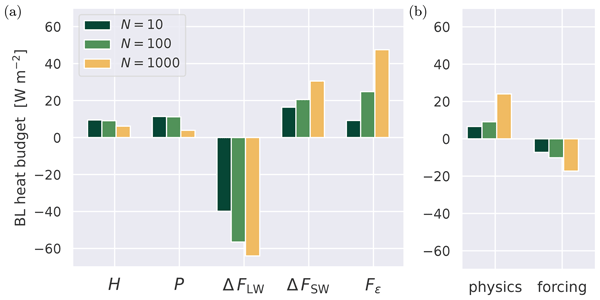
Arctic low-level clouds play an important role in the ongoing warming of the Arctic. Unfortunately, these clouds are not properly represented in weather forecast and climate models. This study tries to cover this gap by focusing on clouds over open water during the spring, observed by research aircraft near Svalbard. The study combines the high-resolution model with sets of observational data. The results show the importance of processes that involve both ice and the liquid water in the clouds.
Toby R. Marthews, Simon J. Dadson, Douglas B. Clark, Eleanor M. Blyth, Garry D. Hayman, Dai Yamazaki, Olivia R. E. Becher, Alberto Martínez-de la Torre, Catherine Prigent, and Carlos Jiménez
Hydrol. Earth Syst. Sci., 26, 3151–3175, https://doi.org/10.5194/hess-26-3151-2022, https://doi.org/10.5194/hess-26-3151-2022, 2022
Short summary
Short summary
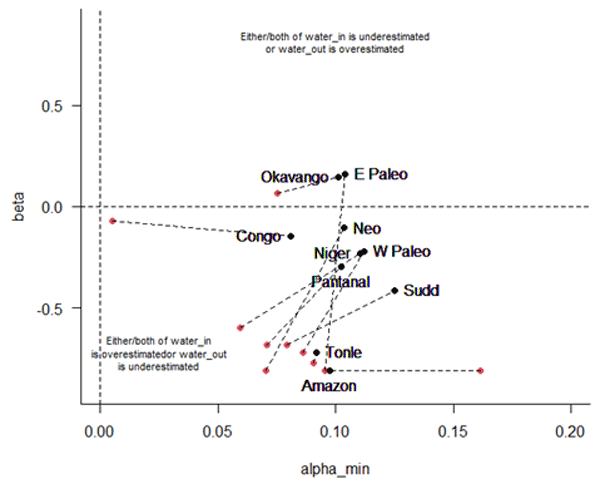
Reliable data on global inundated areas remain uncertain. By matching a leading global data product on inundation extents (GIEMS) against predictions from a global hydrodynamic model (CaMa-Flood), we found small but consistent and non-random biases in well-known tropical wetlands (Sudd, Pantanal, Amazon and Congo). These result from known limitations in the data and the models used, which shows us how to improve our ability to make critical predictions of inundation events in the future.
Annakaisa von Lerber, Mario Mech, Annette Rinke, Damao Zhang, Melanie Lauer, Ana Radovan, Irina Gorodetskaya, and Susanne Crewell
Atmos. Chem. Phys., 22, 7287–7317, https://doi.org/10.5194/acp-22-7287-2022, https://doi.org/10.5194/acp-22-7287-2022, 2022
Short summary
Short summary
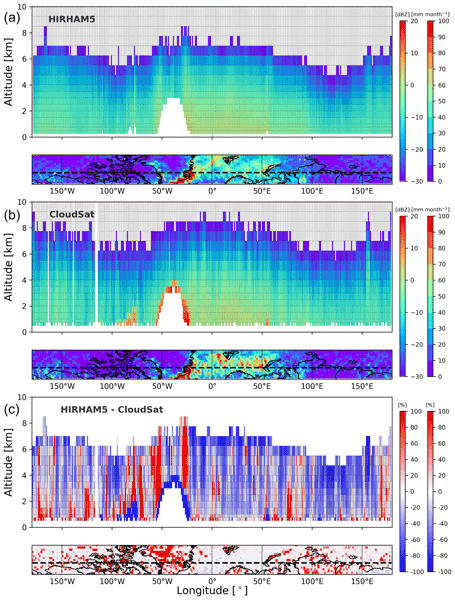
Snowfall is an important climate indicator. However, microphysical snowfall processes are challenging for atmospheric models. In this study, the performance of a regional climate model is evaluated in modeling the spatial and temporal distribution of Arctic snowfall when compared to CloudSat satellite observations. Excellent agreement in averaged annual snowfall rates is found, and the shown methodology offers a promising diagnostic tool to investigate the shown differences further.
Benjamin Kitambo, Fabrice Papa, Adrien Paris, Raphael M. Tshimanga, Stephane Calmant, Ayan Santos Fleischmann, Frederic Frappart, Melanie Becker, Mohammad J. Tourian, Catherine Prigent, and Johary Andriambeloson
Hydrol. Earth Syst. Sci., 26, 1857–1882, https://doi.org/10.5194/hess-26-1857-2022, https://doi.org/10.5194/hess-26-1857-2022, 2022
Short summary
Short summary
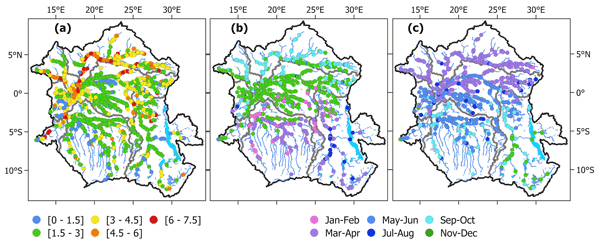
This study presents a better characterization of surface hydrology variability in the Congo River basin, the second largest river system in the world. We jointly use a large record of in situ and satellite-derived observations to monitor the spatial distribution and different timings of the Congo River basin's annual flood dynamic, including its peculiar bimodal pattern.
Ronny Meier, Edouard L. Davin, Gordon B. Bonan, David M. Lawrence, Xiaolong Hu, Gregory Duveiller, Catherine Prigent, and Sonia I. Seneviratne
Geosci. Model Dev., 15, 2365–2393, https://doi.org/10.5194/gmd-15-2365-2022, https://doi.org/10.5194/gmd-15-2365-2022, 2022
Short summary
Short summary
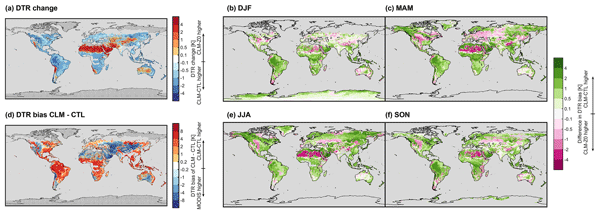
We revise the roughness of the land surface in the CESM climate model. Guided by observational data, we increase the surface roughness of forests and decrease that of bare soil, snow, ice, and crops. These modifications alter simulated temperatures and wind speeds at and above the land surface considerably, in particular over desert regions. The revised model represents the diurnal variability of the land surface temperature better compared to satellite observations over most regions.
Carolina Viceto, Irina V. Gorodetskaya, Annette Rinke, Marion Maturilli, Alfredo Rocha, and Susanne Crewell
Atmos. Chem. Phys., 22, 441–463, https://doi.org/10.5194/acp-22-441-2022, https://doi.org/10.5194/acp-22-441-2022, 2022
Short summary
Short summary
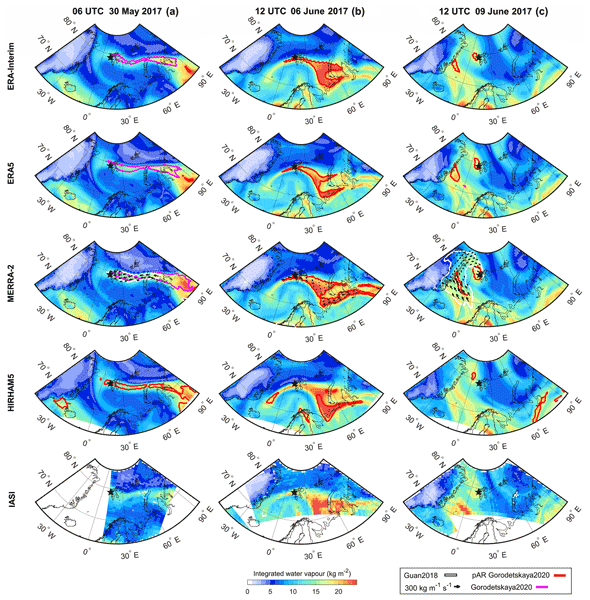
We focus on anomalous moisture transport events known as atmospheric rivers (ARs). During ACLOUD and PASCAL, three AR events were identified: 30 May, 6 June, and 9 June 2017. We explore their spatio-temporal evolution and precipitation patterns using measurements, reanalyses, and a model. We show the importance of the following: Atlantic and Siberian pathways during spring–summer in the Arctic, AR-associated heat/moisture increase, precipitation phase transition, and high-resolution datasets.
Claudia Acquistapace, Richard Coulter, Susanne Crewell, Albert Garcia-Benadi, Rosa Gierens, Giacomo Labbri, Alexander Myagkov, Nils Risse, and Jan H. Schween
Earth Syst. Sci. Data, 14, 33–55, https://doi.org/10.5194/essd-14-33-2022, https://doi.org/10.5194/essd-14-33-2022, 2022
Short summary
Short summary
This publication describes the unprecedented high-resolution cloud and precipitation dataset collected by two radars deployed on the Maria S. Merian research vessel. The ship operated in the west Atlantic Ocean during the measurement campaign called EUREC4A, between 19 January and 19 February 2020. The data collected are crucial to investigate clouds and precipitation and understand how they form and change over the ocean, where it is so difficult to measure them.
Hélène Bresson, Annette Rinke, Mario Mech, Daniel Reinert, Vera Schemann, Kerstin Ebell, Marion Maturilli, Carolina Viceto, Irina Gorodetskaya, and Susanne Crewell
Atmos. Chem. Phys., 22, 173–196, https://doi.org/10.5194/acp-22-173-2022, https://doi.org/10.5194/acp-22-173-2022, 2022
Short summary
Short summary
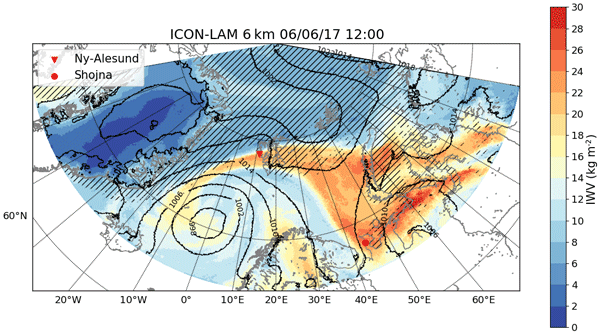
Arctic warming is pronounced, and one factor in this is the poleward atmospheric transport of heat and moisture. This study assesses the 4D structure of an Arctic moisture intrusion event which occurred in June 2017. For the first time, high-resolution pan-Arctic ICON simulations are performed and compared with global models, reanalysis, and observations. Results show the added value of high resolution in the event representation and the impact of the intrusion on the surface energy fluxes.
Heike Konow, Florian Ewald, Geet George, Marek Jacob, Marcus Klingebiel, Tobias Kölling, Anna E. Luebke, Theresa Mieslinger, Veronika Pörtge, Jule Radtke, Michael Schäfer, Hauke Schulz, Raphaela Vogel, Martin Wirth, Sandrine Bony, Susanne Crewell, André Ehrlich, Linda Forster, Andreas Giez, Felix Gödde, Silke Groß, Manuel Gutleben, Martin Hagen, Lutz Hirsch, Friedhelm Jansen, Theresa Lang, Bernhard Mayer, Mario Mech, Marc Prange, Sabrina Schnitt, Jessica Vial, Andreas Walbröl, Manfred Wendisch, Kevin Wolf, Tobias Zinner, Martin Zöger, Felix Ament, and Bjorn Stevens
Earth Syst. Sci. Data, 13, 5545–5563, https://doi.org/10.5194/essd-13-5545-2021, https://doi.org/10.5194/essd-13-5545-2021, 2021
Short summary
Short summary
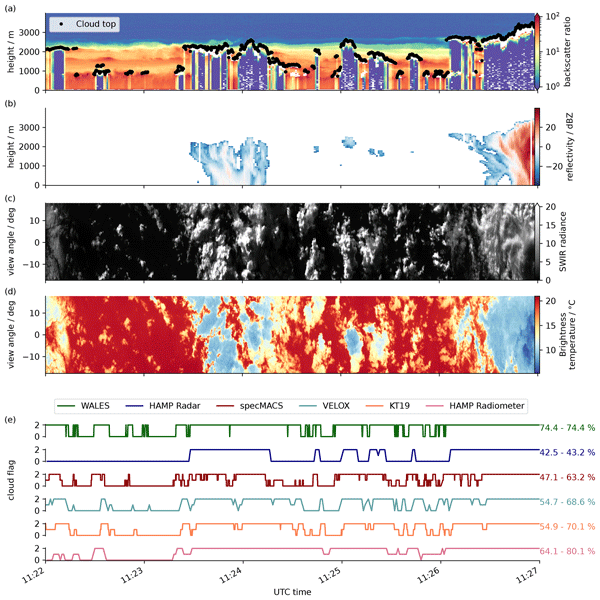
The German research aircraft HALO took part in the research campaign EUREC4A in January and February 2020. The focus area was the tropical Atlantic east of the island of Barbados. We describe the characteristics of the 15 research flights, provide auxiliary information, derive combined cloud mask products from all instruments that observe clouds on board the aircraft, and provide code examples that help new users of the data to get started.
Martina Klose, Oriol Jorba, María Gonçalves Ageitos, Jeronimo Escribano, Matthew L. Dawson, Vincenzo Obiso, Enza Di Tomaso, Sara Basart, Gilbert Montané Pinto, Francesca Macchia, Paul Ginoux, Juan Guerschman, Catherine Prigent, Yue Huang, Jasper F. Kok, Ron L. Miller, and Carlos Pérez García-Pando
Geosci. Model Dev., 14, 6403–6444, https://doi.org/10.5194/gmd-14-6403-2021, https://doi.org/10.5194/gmd-14-6403-2021, 2021
Short summary
Short summary
Mineral soil dust is a major atmospheric airborne particle type. We present and evaluate MONARCH, a model used for regional and global dust-weather prediction. An important feature of the model is that it allows different approximations to represent dust, ranging from more simplified to more complex treatments. Using these different treatments, MONARCH can help us better understand impacts of dust in the Earth system, such as its interactions with radiation.
Cited articles
Bauer, P. and Mugnai, A.: Precipitation profile retrievals using temperature-sounding microwave observations, J. Geophys. Res.-Atmos., 108, 2003JD003572, https://doi.org/10.1029/2003JD003572, 2003. a
Bauer, P., Moreau, E., and Di Michele, S.: Hydrometeor Retrieval Accuracy Using Microwave Window and Sounding Channel Observations, J. Appl. Meteorol., 44, 1016–1032, https://doi.org/10.1175/JAM2257.1, 2005. a
Bennartz, R. and Bauer, P.: Sensitivity of microwave radiances at 85–183 GHz to precipitating ice particles, Radio Sci., 38, 2002RS002626, https://doi.org/10.1029/2002RS002626, 2003. a
Berg, W.: GPM SSMIS on F16 Common Calibrated Brightness Temperatures L1C 1.5 hours 12 km V07, Greenbelt, MD, USA, Goddard Earth Sciences Data and Information Services Center (GES DISC) [data set], https://doi.org/10.5067/GPM/SSMIS/F16/1C/07, 2021. a
Boukabara, S.-A., Garrett, K., Chen, W., Iturbide-Sanchez, F., Grassotti, C., Kongoli, C., Chen, R., Liu, Q., Yan, B., Weng, F., Ferraro, R., Kleespies, T. J., and Meng, H.: MiRS: An All-Weather 1DVAR Satellite Data Assimilation and Retrieval System, IEEE T. Geosci. Remote, 49, 3249–3272, https://doi.org/10.1109/TGRS.2011.2158438, 2011. a, b
Brodzik, M. J., Billingsley, B., Haran, T., Raup, B., and Savoie, M. H.: EASE-Grid 2.0: Incremental but Significant Improvements for Earth-Gridded Data Sets, ISPRS Int. Geo-Inf., 1, 32–45, https://doi.org/10.3390/ijgi1010032, 2012. a
Buehler, S. A., Jiménez, C., Evans, K. F., Eriksson, P., Rydberg, B., Heymsfield, A. J., Stubenrauch, C. J., Lohmann, U., Emde, C., John, V. O., Sreerekha, T. R., and Davis, C. P.: A concept for a satellite mission to measure cloud ice water path, ice particle size, and cloud altitude, Q. J. Roy. Meteor. Soc., 133, 109–128, https://doi.org/10.1002/qj.143, 2007. a
Cox, G. F. N. and Weeks, W. F.: Salinity Variations in Sea Ice, J. Glaciol., 13, 109–120, https://doi.org/10.3189/S0022143000023418, 1974. a
Crameri, F.: Scientific colour maps, https://doi.org/10.5281/zenodo.1243862, 2018. a
Crewell, S. and Löhnert, U.: Accuracy of cloud liquid water path from ground-based microwave radiometry 2. Sensor accuracy and synergy, Radio Sci., 38, 8042, https://doi.org/10.1029/2002RS002634, 2003. a
Crewell, S., Ebell, K., Löhnert, U., and Turner, D. D.: Can liquid water profiles be retrieved from passive microwave zenith observations?, Geophys. Res. Lett., 36, 2008GL036934, https://doi.org/10.1029/2008GL036934, 2009. a
De Boer, G., Eloranta, E. W., and Shupe, M. D.: Arctic Mixed-Phase Stratiform Cloud Properties from Multiple Years of Surface-Based Measurements at Two High-Latitude Locations, J. Atmos. Sci., 66, 2874–2887, https://doi.org/10.1175/2009JAS3029.1, 2009. a
Di Tomaso, E., Bormann, N., and English, S.: Assimilation of ATOVS radiances at ECMWF: third year EUMETSAT fellowship report, European Centre for Medium-Range Weather Forecasts, Research Report No. 29, 2013. a
Domine, F., Taillandier, A., and Simpson, W. R.: A parameterization of the specific surface area of seasonal snow for field use and for models of snowpack evolution, J. Geophys. Res.-Earth, 112, 2006JF000512, https://doi.org/10.1029/2006JF000512, 2007. a
Dorff, H., Aubry, C., Ewald, F., Hirsch, L., Jansen, F., Konow, H., Mech, M., Ori, D., Ringel, M., Walbröl, A., Crewell, S., Ehrlich, A., Wendisch, M., and Ament, F.: Unified Airborne Active and Passive Microwave Measurements over Arctic Sea Ice and Ocean during the HALO-(AC)3 Campaign in Spring 2022 (v2.7), PANGAEA [data set], https://doi.org/10.1594/PANGAEA.974108, 2024. a, b, c
Ebell, K., Löhnert, U., Päschke, E., Orlandi, E., Schween, J. H., and Crewell, S.: A 1-D variational retrieval of temperature, humidity, and liquid cloud properties: Performance under idealized and real conditions, J. Geophys. Res.-Atmos., 122, 1746–1766, https://doi.org/10.1002/2016JD025945, 2017. a
Ebell, K., Nomokonova, T., Maturilli, M., and Ritter, C.: Radiative Effect of Clouds at Ny-Ålesund, Svalbard, as Inferred from Ground-Based Remote Sensing Observations, J. Appl. Meteorol. Clim., 59, 3–22, https://doi.org/10.1175/JAMC-D-19-0080.1, 2020. a
Ehrlich, A., Crewell, S., Herber, A., Klingebiel, M., Lüpkes, C., Mech, M., Becker, S., Borrmann, S., Bozem, H., Buschmann, M., Clemen, H.-C., De La Torre Castro, E., Dorff, H., Dupuy, R., Eppers, O., Ewald, F., George, G., Giez, A., Grawe, S., Gourbeyre, C., Hartmann, J., Jäkel, E., Joppe, P., Jourdan, O., Jurányi, Z., Kirbus, B., Lucke, J., Luebke, A. E., Maahn, M., Maherndl, N., Mallaun, C., Mayer, J., Mertes, S., Mioche, G., Moser, M., Müller, H., Pörtge, V., Risse, N., Roberts, G., Rosenburg, S., Röttenbacher, J., Schäfer, M., Schaefer, J., Schäfler, A., Schirmacher, I., Schneider, J., Schnitt, S., Stratmann, F., Tatzelt, C., Voigt, C., Walbröl, A., Weber, A., Wetzel, B., Wirth, M., and Wendisch, M.: A comprehensive in situ and remote sensing data set collected during the HALO–(𝒜𝒞)3 aircraft campaign, Earth Syst. Sci. Data, 17, 1295–1328, https://doi.org/10.5194/essd-17-1295-2025, 2025. a, b
Elsaesser, G. S., O’Dell, C. W., Lebsock, M. D., Bennartz, R., Greenwald, T. J., and Wentz, F. J.: The Multisensor Advanced Climatology of Liquid Water Path (MAC-LWP), J. Climate, 30, 10193–10210, https://doi.org/10.1175/JCLI-D-16-0902.1, 2017. a
Ewald, F., Kölling, T., Baumgartner, A., Zinner, T., and Mayer, B.: Design and characterization of specMACS, a multipurpose hyperspectral cloud and sky imager, Atmos. Meas. Tech., 9, 2015–2042, https://doi.org/10.5194/amt-9-2015-2016, 2016. a
Ewald, F., Groß, S., Hagen, M., Hirsch, L., Delanoë, J., and Bauer-Pfundstein, M.: Calibration of a 35 GHz airborne cloud radar: lessons learned and intercomparisons with 94 GHz cloud radars, Atmos. Meas. Tech., 12, 1815–1839, https://doi.org/10.5194/amt-12-1815-2019, 2019. a
Geer, A. J.: Joint estimation of sea ice and atmospheric state from microwave imagers in operational weather forecasting, Q. J. Roy. Meteor. Soc., 150, 3796–3826, https://doi.org/10.1002/qj.4797, 2024. a
George, G., Luebke, A. E., Klingebiel, M., Mech, M., and Ehrlich, A.: Dropsonde measurements from HALO and POLAR 5 during HALO-(AC)3 in 2022, PANGAEA [data set], https://doi.org/10.1594/PANGAEA.968891, 2024. a, b
Greenwald, T. J., Stephens, G. L., Vonder Haar, T. H., and Jackson, D. L.: A physical retrieval of cloud liquid water over the global oceans using special sensor microwave/imager (SSM/I) observations, J. Geophys. Res.-Atmos., 98, 18471–18488, https://doi.org/10.1029/93JD00339, 1993. a
Guedj, S., Karbou, F., Rabier, F., and Bouchard, A.: Toward a Better Modeling of Surface Emissivity to Improve AMSU Data Assimilation Over Antarctica, IEEE T. Geosci. Remote, 48, 1976–1985, https://doi.org/10.1109/TGRS.2009.2036254, 2010. a, b
Haggerty, J. A., Curry, J. A., and Liu, G.: Potential for estimating cloud liquid water path over sea ice from airborne passive microwave measurements, J. Geophys. Res.-Atmos., 107, https://doi.org/10.1029/2001JD000585, 2002. a
Harlow, R. C. and Essery, R.: Tundra Snow Emissivities at MHS Frequencies: MEMLS Validation Using Airborne Microwave Data Measured During CLPX-II, IEEE T. Geosci. Remote, 50, 4262–4278, https://doi.org/10.1109/TGRS.2012.2193132, 2012. a
Harris, C. R., Millman, K. J., Van Der Walt, S. J., Gommers, R., Virtanen, P., Cournapeau, D., Wieser, E., Taylor, J., Berg, S., Smith, N. J., Kern, R., Picus, M., Hoyer, S., Van Kerkwijk, M. H., Brett, M., Haldane, A., Del Río, J. F., Wiebe, M., Peterson, P., Gérard-Marchant, P., Sheppard, K., Reddy, T., Weckesser, W., Abbasi, H., Gohlke, C., and Oliphant, T. E.: Array programming with NumPy, Nature, 585, 357–362, https://doi.org/10.1038/s41586-020-2649-2, 2020. a
Hersbach, H., Bell, B., Berrisford, P., Hirahara, S., Horányi, A., Muñoz-Sabater, J., Nicolas, J., Peubey, C., Radu, R., Schepers, D., Simmons, A., Soci, C., Abdalla, S., Abellan, X., Balsamo, G., Bechtold, P., Biavati, G., Bidlot, J., Bonavita, M., De Chiara, G., Dahlgren, P., Dee, D., Diamantakis, M., Dragani, R., Flemming, J., Forbes, R., Fuentes, M., Geer, A., Haimberger, L., Healy, S., Hogan, R. J., Hólm, E., Janisková, M., Keeley, S., Laloyaux, P., Lopez, P., Lupu, C., Radnoti, G., de Rosnay, P., Rozum, I., Vamborg, F., Villaume, S., and Thépaut, J.-N.: Complete ERA5 from 1940: Fifth generation of ECMWF atmospheric reanalyses of the global climate, Copernicus Climate Change Service (C3S) Data Store (CDS) [data set], https://doi.org/10.24381/cds.143582cf, 2017. a
Hersbach, H., Bell, B., Berrisford, P., Hirahara, S., Horányi, A., Muñoz-Sabater, J., Nicolas, J., Peubey, C., Radu, R., Schepers, D., Simmons, A., Soci, C., Abdalla, S., Abellan, X., Balsamo, G., Bechtold, P., Biavati, G., Bidlot, J., Bonavita, M., Chiara, G., Dahlgren, P., Dee, D., Diamantakis, M., Dragani, R., Flemming, J., Forbes, R., Fuentes, M., Geer, A., Haimberger, L., Healy, S., Hogan, R. J., Hólm, E., Janisková, M., Keeley, S., Laloyaux, P., Lopez, P., Lupu, C., Radnoti, G., Rosnay, P., Rozum, I., Vamborg, F., Villaume, S., and Thépaut, J.: The ERA5 global reanalysis, Q. J. Roy. Meteor. Soc., 146, 1999–2049, https://doi.org/10.1002/qj.3803, 2020. a, b, c, d, e
Hersbach, H., Bell, B., Berrisford, P., Biavati, G., Horányi, A., Muñoz Sabater, J., Nicolas, J., Peubey, C., Radu, R., Rozum, I., Schepers, D., Simmons, A., Soci, C., Dee, D., and Thépaut, J.-N.: ERA5 hourly data on pressure levels from 1940 to present, Copernicus Climate Change Service (C3S) Climate Data Store (CDS) [data set], https://doi.org/10.24381/cds.adbb2d47, 2023. a
Hewison, T. and English, S.: Airborne retrievals of snow and ice surface emissivity at millimeter wavelengths, IEEE T. Geosci. Remote, 37, 1871–1879, https://doi.org/10.1109/36.774700, 1999. a, b
Hirahara, Y., de Rosnay, P., and Arduini, G.: Evaluation of a Microwave Emissivity Module for Snow Covered Area with CMEM in the ECMWF Integrated Forecasting System, Remote Sens.-Basel, 12, 2946, https://doi.org/10.3390/rs12182946, 2020. a
Høyer, J. L., Lang, A. M., Eastwood, S., Wimmer, W., and Dybkj, G.: Report from Field Inter-Comparison Experiment (FICE) for ice surface temperature, Tech. rep., Danish Meteorological Institute, 2017. a
Hoyer, S. and Hamman, J.: xarray: N-D labeled Arrays and Datasets in Python, Journal of Open Research Software, 5, 10, https://doi.org/10.5334/jors.148, 2017. a
Hunter, J. D.: Matplotlib: A 2D Graphics Environment, Comput. Sci. Eng., 9, 90–95, https://doi.org/10.1109/MCSE.2007.55, 2007. a
Jacob, M., Ament, F., Gutleben, M., Konow, H., Mech, M., Wirth, M., and Crewell, S.: Investigating the liquid water path over the tropical Atlantic with synergistic airborne measurements, Atmos. Meas. Tech., 12, 3237–3254, https://doi.org/10.5194/amt-12-3237-2019, 2019. a
Kalesse-Los, H., Schimmel, W., Luke, E., and Seifert, P.: Evaluating cloud liquid detection against Cloudnet using cloud radar Doppler spectra in a pre-trained artificial neural network, Atmos. Meas. Tech., 15, 279–295, https://doi.org/10.5194/amt-15-279-2022, 2022. a
Kang, E., Sohn, B., Tonboe, R. T., Noh, Y., Kwon, I., Kim, S., Maturilli, M., Kim, H., and Liu, C.: Explicitly determined sea ice emissivity and emission temperature over the Arctic for surface-sensitive microwave channels, Q. J. Roy. Meteor. Soc., 149, 2011–2030, https://doi.org/10.1002/qj.4492, 2023. a, b, c
King, J., Howell, S., Brady, M., Toose, P., Derksen, C., Haas, C., and Beckers, J.: Local-scale variability of snow density on Arctic sea ice, The Cryosphere, 14, 4323–4339, https://doi.org/10.5194/tc-14-4323-2020, 2020. a, b, c
Kneifel, S., Maahn, M., Peters, G., and Simmer, C.: Observation of snowfall with a low-power FM-CW K-band radar (Micro Rain Radar), Meteorol. Atmos. Phys., 113, 75–87, https://doi.org/10.1007/s00703-011-0142-z, 2011. a
Kneifel, S., Redl, S., Orlandi, E., Löhnert, U., Cadeddu, M. P., Turner, D. D., and Chen, M.-T.: Absorption Properties of Supercooled Liquid Water between 31 and 225 GHz: Evaluation of Absorption Models Using Ground-Based Observations, J. Appl. Meteorol. Clim., 53, 1028–1045, https://doi.org/10.1175/JAMC-D-13-0214.1, 2014. a
Konow, H., Jacob, M., Ament, F., Crewell, S., Ewald, F., Hagen, M., Hirsch, L., Jansen, F., Mech, M., and Stevens, B.: A unified data set of airborne cloud remote sensing using the HALO Microwave Package (HAMP), Earth Syst. Sci. Data, 11, 921–934, https://doi.org/10.5194/essd-11-921-2019, 2019. a
Kunkee, D. B., Poe, G. A., Boucher, D. J., Swadley, S. D., Hong, Y., Wessel, J. E., and Uliana, E. A.: Design and Evaluation of the First Special Sensor Microwave Imager/Sounder, IEEE T. Geosci. Remote, 46, 863–883, https://doi.org/10.1109/TGRS.2008.917980, 2008. a
Lawrence, H., Bormann, N., Sandu, I., Day, J., Farnan, J., and Bauer, P.: Use and impact of Arctic observations in the ECMWF Numerical Weather Prediction system, Q. J. Roy. Meteor. Soc., 145, 3432–3454, https://doi.org/10.1002/qj.3628, 2019. a
Luke, E. P., Kollias, P., and Shupe, M. D.: Detection of supercooled liquid in mixed-phase clouds using radar Doppler spectra, J. Geophys. Res.-Atmos., 115, 2009JD012884, https://doi.org/10.1029/2009JD012884, 2010. a
Maahn, M., Turner, D. D., Löhnert, U., Posselt, D. J., Ebell, K., Mace, G. G., and Comstock, J. M.: Optimal Estimation Retrievals and Their Uncertainties: What Every Atmospheric Scientist Should Know, B. Am. Meteorol. Soc., 101, E1512–E1523, https://doi.org/10.1175/BAMS-D-19-0027.1, 2020. a
Maherndl, N., Moser, M., Lucke, J., Mech, M., Risse, N., Schirmacher, I., and Maahn, M.: Quantifying riming from airborne data during the HALO-(AC)3 campaign, Atmos. Meas. Tech., 17, 1475–1495, https://doi.org/10.5194/amt-17-1475-2024, 2024. a
Mätzler, C.: Relation between grain-size and correlation length of snow, J. Glaciol., 48, 461–466, https://doi.org/10.3189/172756502781831287, 2002. a
McKinney, W.: Data Structures for Statistical Computing in Python, in: Proceedings of the 9th Python in Science Conference, Austin, Texas, 56–61, https://doi.org/10.25080/Majora-92bf1922-00a, 2010. a
Mech, M., Orlandi, E., Crewell, S., Ament, F., Hirsch, L., Hagen, M., Peters, G., and Stevens, B.: HAMP – the microwave package on the High Altitude and LOng range research aircraft (HALO), Atmos. Meas. Tech., 7, 4539–4553, https://doi.org/10.5194/amt-7-4539-2014, 2014. a, b, c
Mech, M., Maahn, M., Kneifel, S., Ori, D., Orlandi, E., Kollias, P., Schemann, V., and Crewell, S.: PAMTRA 1.0: the Passive and Active Microwave radiative TRAnsfer tool for simulating radiometer and radar measurements of the cloudy atmosphere, Geosci. Model Dev., 13, 4229–4251, https://doi.org/10.5194/gmd-13-4229-2020, 2020. a, b, c, d, e
Mech, M., Risse, N., Marrollo, G., and Paul, D.: ac3airborne, https://doi.org/10.5281/zenodo.7305586, 2022. a
Merkouriadi, I., Gallet, J., Graham, R. M., Liston, G. E., Polashenski, C., Rösel, A., and Gerland, S.: Winter snow conditions on Arctic sea ice north of Svalbard during the Norwegian young sea ICE (N-ICE2015) expedition, J. Geophys. Res.-Atmos., 122, https://doi.org/10.1002/2017JD026753, 2017. a
Müller, J., Schäfer, M., Rosenburg, S., Ehrlich, A., and Wendisch, M.: Aerial maps of Arctic surface skin temperature and surface type during the HALO-(AC)3 campaign in March/April 2022, PANGAEA [data set], https://doi.org/10.1594/PANGAEA.974454, 2025a. a
Müller, J. J., Schäfer, M., Rosenburg, S., Ehrlich, A., and Wendisch, M.: High-resolution maps of Arctic surface skin temperature and type retrieved from airborne thermal infrared imagery collected during the HALO–(𝒜𝒞)3 campaign, Atmos. Meas. Tech., 18, 4695–4708, https://doi.org/10.5194/amt-18-4695-2025, 2025b. a, b, c
NASA Goddard Space Flight Center and GPM Intercalibration Working Group: NASA Global Precipitation Measurement (GPM) Level 1C Algorithms, Tech. Rep. GPM L1C ATBD (Version 1.9), Goddard Space Flight Center, Greenbelt, Maryland, USA, https://arthurhou.pps.eosdis.nasa.gov/Documents/L1C_ATBD_v1.9_GPMV07.pdf (last access: 26 March 2026), 2022. a
O’Dell, C. W., Wentz, F. J., and Bennartz, R.: Cloud Liquid Water Path from Satellite-Based Passive Microwave Observations: A New Climatology over the Global Oceans, J. Climate, 21, 1721–1739, https://doi.org/10.1175/2007JCLI1958.1, 2008. a
Perro, C., Duck, T. J., Lesins, G., Strong, K., and Drummond, J. R.: Arctic Surface Properties and Their Impact on Microwave Satellite Water Vapor Column Retrievals, IEEE T. Geosci. Remote, 58, 8332–8344, https://doi.org/10.1109/TGRS.2020.2986302, 2020. a
Picard, G., Brucker, L., Roy, A., Dupont, F., Fily, M., Royer, A., and Harlow, C.: Simulation of the microwave emission of multi-layered snowpacks using the Dense Media Radiative transfer theory: the DMRT-ML model, Geosci. Model Dev., 6, 1061–1078, https://doi.org/10.5194/gmd-6-1061-2013, 2013. a
Prigent, C., Rossow, W. B., and Matthews, E.: Microwave land surface emissivities estimated from SSM/I observations, J. Geophys. Res., 102, 21867–21890, https://doi.org/10.1029/97JD01360, 1997. a
Prigent, C., Aires, F., and Rossow, W. B.: Retrieval of Surface and Atmospheric Geophysical Variables over Snow-Covered Land from Combined Microwave and Infrared Satellite Observations, J. Appl. Meteorol., 42, 368–380, https://doi.org/10.1175/1520-0450(2003)042<0368:ROSAAG>2.0.CO;2, 2003. a, b
Rabe, B. and Geibert, W.: The Expedition PS144 of the Research Vessel POLARSTERN to the Arctic Ocean in 2024, https://doi.org/10.57738/BzPM_0794_2025, 2025. a
Rantanen, M., Karpechko, A. Y., Lipponen, A., Nordling, K., Hyvärinen, O., Ruosteenoja, K., Vihma, T., and Laaksonen, A.: The Arctic has warmed nearly four times faster than the globe since 1979, Communications Earth & Environment, 3, 168, https://doi.org/10.1038/s43247-022-00498-3, 2022. a
Risse, N.: Data related to: Cloud liquid water path detectability and retrieval accuracy from airborne passive microwave observations over Arctic sea ice, Zenodo [data set], https://doi.org/10.5281/zenodo.15848709, 2025. a
Risse, N.: nrisse/si-clouds: Code related to: Cloud liquid water path detectability and retrieval accuracy from airborne passive microwave observations over Arctic sea ice, Zenodo [code], https://doi.org/10.5281/zenodo.18237101, 2026. a
Risse, N., Mech, M., Prigent, C., Spreen, G., and Crewell, S.: Assessing sea ice microwave emissivity up to submillimeter waves from airborne and satellite observations, The Cryosphere, 18, 4137–4163, https://doi.org/10.5194/tc-18-4137-2024, 2024. a
Rodgers, C. D.: Inverse Methods for Atmospheric Sounding: Theory and Practice, Series on Atmospheric, Oceanic and Planetary Physics, vol. 2, World Scientific, Singapore, River Edge, NJ, https://doi.org/10.1142/3171, 2000. a, b
Rosenkranz, P. W.: Water vapor microwave continuum absorption: A comparison of measurements and models, Radio Sci., 33, 919–928, https://doi.org/10.1029/98RS01182, 1998. a
Rostosky, P., Spreen, G., Gerland, S., Huntemann, M., and Mech, M.: Modeling the Microwave Emission of Snow on Arctic Sea Ice for Estimating the Uncertainty of Satellite Retrievals, J. Geophys. Res.-Oceans, 125, https://doi.org/10.1029/2019JC015465, 2020. a, b
Rückert, J. E., Rostosky, P., Huntemann, M., Clemens-Sewall, D., Ebell, K., Kaleschke, L., Lemmetyinen, J., Macfarlane, A. R., Naderpour, R., Stroeve, J., Walbröl, A., and Spreen, G.: Sea ice concentration satellite retrievals influenced by surface changes due to warm air intrusions: A case study from the MOSAiC expedition, Elementa: Science of the Anthropocene, 11, 00039, https://doi.org/10.1525/elementa.2023.00039, 2023a. a
Rückert, J. E., Huntemann, M., Tonboe, R. T., and Spreen, G.: Modeling Snow and Ice Microwave Emissions in the Arctic for a Multi-Parameter Retrieval of Surface and Atmospheric Variables From Microwave Radiometer Satellite Data, Earth and Space Science, 10, e2023EA003177, https://doi.org/10.1029/2023EA003177, 2023b. a, b, c, d
Rückert, J. E., Walbröl, A., Risse, N., Krobot, P., Haseneder-Lind, R., Mech, M., Ebell, K., and Spreen, G.: Microwave sea ice and ocean brightness temperature and emissivity between 22 and 243 GHz from ship-based radiometers, Ann. Glaciol., 66, e8, https://doi.org/10.1017/aog.2025.1, 2025. a
Sandells, M., Lowe, H., Picard, G., Dumont, M., Essery, R., Floury, N., Kontu, A., Lemmetyinen, J., Maslanka, W., Morin, S., Wiesmann, A., and Matzler, C.: X-Ray Tomography-Based Microstructure Representation in the Snow Microwave Radiative Transfer Model, IEEE T. Geosci. Remote, 60, 1–15, https://doi.org/10.1109/TGRS.2021.3086412, 2022. a
Sandells, M., Rutter, N., Wivell, K., Essery, R., Fox, S., Harlow, C., Picard, G., Roy, A., Royer, A., and Toose, P.: Simulation of Arctic snow microwave emission in surface-sensitive atmosphere channels, The Cryosphere, 18, 3971–3990, https://doi.org/10.5194/tc-18-3971-2024, 2024. a, b, c
Schäfer, M., Wolf, K., Ehrlich, A., Hallbauer, C., Jäkel, E., Jansen, F., Luebke, A. E., Müller, J., Thoböll, J., Röschenthaler, T., Stevens, B., and Wendisch, M.: VELOX – a new thermal infrared imager for airborne remote sensing of cloud and surface properties, Atmos. Meas. Tech., 15, 1491–1509, https://doi.org/10.5194/amt-15-1491-2022, 2022. a, b
Schäfer, M., Rosenburg, S., Ehrlich, A., Röttenbacher, J., and Wendisch, M.: Two-dimensional cloud-top and surface brightness temperature at spectral band BT3 (10.74 +/- 0.39 μm) with 1 Hz temporal resolution derived at flight altitude from VELOX during the HALO-(AC)3 field campaign, PANGAEA [data set], https://doi.org/10.1594/PANGAEA.963382, 2023a. a
Schäfer, M., Rosenburg, S., Ehrlich, A., Röttenbacher, J., and Wendisch, M.: Two-dimensional cloud-top and surface brightness temperature with 1 Hz temporal resolution derived at flight altitude from VELOX during the HALO-(AC)³ field campaign, https://doi.org/10.1594/PANGAEA.963401, 2023b. a
Schäfer, M., Rosenburg, S., Ehrlich, A., Röttenbacher, J., and Wendisch, M.: One-dimensional cloud-top or surface brightness temperature with 20 Hz temporal resolution derived at flight altitude from VELOX-KT19 during the HALO-(AC)3 field campaign, PANGAEA [data set], https://doi.org/10.1594/PANGAEA.967378, 2024. a, b, c
Shupe, M. D.: A ground-based multisensor cloud phase classifier, Geophys. Res. Lett., 34, 2007GL031008, https://doi.org/10.1029/2007GL031008, 2007. a
Shupe, M. D. and Intrieri, J. M.: Cloud Radiative Forcing of the Arctic Surface: The Influence of Cloud Properties, Surface Albedo, and Solar Zenith Angle, J. Climate, 17, 616–628, https://doi.org/10.1175/1520-0442(2004)017<0616:CRFOTA>2.0.CO;2, 2004. a
Sledd, A., Shupe, M. D., Solomon, A., and Cox, C. J.: Surface Energy Balance Responses to Radiative Forcing in the Central Arctic From MOSAiC and Models, J. Geophys. Res.-Atmos., 130, e2024JD042578, https://doi.org/10.1029/2024JD042578, 2025. a
Soriot, C., Picard, G., Prigent, C., Frappart, F., and Domine, F.: Year-round sea ice and snow characterization from combined passive and active microwave observations and radiative transfer modeling, Remote Sens. Environ., 278, 113061, https://doi.org/10.1016/j.rse.2022.113061, 2022. a, b
Spreen, G., Kaleschke, L., and Heygster, G.: Sea ice remote sensing using AMSR-E 89-GHz channels, J. Geophys. Res., 113, C02S03, https://doi.org/10.1029/2005JC003384, 2008. a, b, c, d
Stevens, B., Ament, F., Bony, S., Crewell, S., Ewald, F., Gross, S., Hansen, A., Hirsch, L., Jacob, M., Kölling, T., Konow, H., Mayer, B., Wendisch, M., Wirth, M., Wolf, K., Bakan, S., Bauer-Pfundstein, M., Brueck, M., Delanoë, J., Ehrlich, A., Farrell, D., Forde, M., Gödde, F., Grob, H., Hagen, M., Jäkel, E., Jansen, F., Klepp, C., Klingebiel, M., Mech, M., Peters, G., Rapp, M., Wing, A. A., and Zinner, T.: A High-Altitude Long-Range Aircraft Configured as a Cloud Observatory: The NARVAL Expeditions, B. Am. Meteorol. Soc., 100, 1061–1077, https://doi.org/10.1175/BAMS-D-18-0198.1, 2019. a
Stroeve, J., Nandan, V., Willatt, R., Dadic, R., Rostosky, P., Gallagher, M., Mallett, R., Barrett, A., Hendricks, S., Tonboe, R., McCrystall, M., Serreze, M., Thielke, L., Spreen, G., Newman, T., Yackel, J., Ricker, R., Tsamados, M., Macfarlane, A., Hannula, H.-R., and Schneebeli, M.: Rain on snow (ROS) understudied in sea ice remote sensing: a multi-sensor analysis of ROS during MOSAiC (Multidisciplinary drifting Observatory for the Study of Arctic Climate), The Cryosphere, 16, 4223–4250, https://doi.org/10.5194/tc-16-4223-2022, 2022. a
Tan, I., Sotiropoulou, G., Taylor, P. C., Zamora, L., and Wendisch, M.: A Review of the Factors Influencing Arctic Mixed-Phase Clouds: Progress and Outlook, https://doi.org/10.1002/essoar.10508308.1, 2021. a
Thielke, L., Huntemann, M., Hendricks, S., Jutila, A., Ricker, R., and Spreen, G.: Sea ice surface temperatures from helicopter-borne thermal infrared imaging during the MOSAiC expedition, Scientific Data, 9, 364, https://doi.org/10.1038/s41597-022-01461-9, 2022. a
Timco, G. and Frederking, R.: A review of sea ice density, Cold Reg. Sci. Technol., 24, 1–6, https://doi.org/10.1016/0165-232X(95)00007-X, 1996. a, b
Turner, D., Cadeddu, M., Lohnert, U., Crewell, S., and Vogelmann, A.: Modifications to the Water Vapor Continuum in the Microwave Suggested by Ground-Based 150-GHz Observations, IEEE T. Geosci. Remote, 47, 3326–3337, https://doi.org/10.1109/TGRS.2009.2022262, 2009. a
Turner, D. D., Vogelmann, A. M., Austin, R. T., Barnard, J. C., Cady-Pereira, K., Chiu, J. C., Clough, S. A., Flynn, C., Khaiyer, M. M., Liljegren, J., Johnson, K., Lin, B., Long, C., Marshak, A., Matrosov, S. Y., McFarlane, S. A., Miller, M., Min, Q., Minimis, P., O'Hirok, W., Wang, Z., and Wiscombe, W.: Thin Liquid Water Clouds: Their Importance and Our Challenge, B. Am. Meteorol. Soc., 88, 177–190, https://doi.org/10.1175/BAMS-88-2-177, 2007. a
Turner, D. D., Kneifel, S., and Cadeddu, M. P.: An Improved Liquid Water Absorption Model at Microwave Frequencies for Supercooled Liquid Water Clouds, J. Atmos. Ocean. Tech., 33, 33–44, https://doi.org/10.1175/JTECH-D-15-0074.1, 2016. a, b
UK Met Office: Cartopy: A cartographic python library with Matplotlib support, http://scitools.org.uk/cartopy/docs/latest/ (last access: 26 March 2026), 2023. a
Vargel, C., Royer, A., St-Jean-Rondeau, O., Picard, G., Roy, A., Sasseville, V., and Langlois, A.: Arctic and subarctic snow microstructure analysis for microwave brightness temperature simulations, Remote Sens. Environ., 242, 111754, https://doi.org/10.1016/j.rse.2020.111754, 2020. a
Virtanen, P., Gommers, R., Oliphant, T. E., Haberland, M., Reddy, T., Cournapeau, D., Burovski, E., Peterson, P., Weckesser, W., Bright, J., Van Der Walt, S. J., Brett, M., Wilson, J., Millman, K. J., Mayorov, N., Nelson, A. R. J., Jones, E., Kern, R., Larson, E., Carey, C. J., Polat, I., Feng, Y., Moore, E. W., VanderPlas, J., Laxalde, D., Perktold, J., Cimrman, R., Henriksen, I., Quintero, E. A., Harris, C. R., Archibald, A. M., Ribeiro, A. H., Pedregosa, F., Van Mulbregt, P., SciPy 1.0 Contributors, Vijaykumar, A., Bardelli, A. P., Rothberg, A., Hilboll, A., Kloeckner, A., Scopatz, A., Lee, A., Rokem, A., Woods, C. N., Fulton, C., Masson, C., Häggström, C., Fitzgerald, C., Nicholson, D. A., Hagen, D. R., Pasechnik, D. V., Olivetti, E., Martin, E., Wieser, E., Silva, F., Lenders, F., Wilhelm, F., Young, G., Price, G. A., Ingold, G.-L., Allen, G. E., Lee, G. R., Audren, H., Probst, I., Dietrich, J. P., Silterra, J., Webber, J. T., Slavič, J., Nothman, J., Buchner, J., Kulick, J., Schönberger, J. L., De Miranda Cardoso, J. V., Reimer, J., Harrington, J., Rodríguez, J. L. C., Nunez-Iglesias, J., Kuczynski, J., Tritz, K., Thoma, M., Newville, M., Kümmerer, M., Bolingbroke, M., Tartre, M., Pak, M., Smith, N. J., Nowaczyk, N., Shebanov, N., Pavlyk, O., Brodtkorb, P. A., Lee, P., McGibbon, R. T., Feldbauer, R., Lewis, S., Tygier, S., Sievert, S., Vigna, S., Peterson, S., More, S., Pudlik, T., Oshima, T., Pingel, T. J., Robitaille, T. P., Spura, T., Jones, T. R., Cera, T., Leslie, T., Zito, T., Krauss, T., Upadhyay, U., Halchenko, Y. O., and Vázquez-Baeza, Y.: SciPy 1.0: fundamental algorithms for scientific computing in Python, Nat. Methods, 17, 261–272, https://doi.org/10.1038/s41592-019-0686-2, 2020. a
Voss, S., Heygster, G., and Ezraty, R.: Improving sea ice type discrimination by the simultaneous use of SSM/I and scatterometer data, Polar Res., 22, 35–42, 2003. a
Vuyovich, C. M., Jacobs, J. M., Hiemstra, C. A., and Deeb, E. J.: Effect of spatial variability of wet snow on modeled and observed microwave emissions, Remote Sens. Environ., 198, 310–320, https://doi.org/10.1016/j.rse.2017.06.016, 2017. a
Walbröl, A., Crewell, S., Engelmann, R., Orlandi, E., Griesche, H., Radenz, M., Hofer, J., Althausen, D., Maturilli, M., and Ebell, K.: Atmospheric temperature, water vapour and liquid water path from two microwave radiometers during MOSAiC, Scientific Data, 9, 534, https://doi.org/10.1038/s41597-022-01504-1, 2022. a, b
Walbröl, A., Michaelis, J., Becker, S., Dorff, H., Ebell, K., Gorodetskaya, I., Heinold, B., Kirbus, B., Lauer, M., Maherndl, N., Maturilli, M., Mayer, J., Müller, H., Neggers, R. A. J., Paulus, F. M., Röttenbacher, J., Rückert, J. E., Schirmacher, I., Slättberg, N., Ehrlich, A., Wendisch, M., and Crewell, S.: Contrasting extremely warm and long-lasting cold air anomalies in the North Atlantic sector of the Arctic during the HALO-(𝒜𝒞)3 campaign, Atmos. Chem. Phys., 24, 8007–8029, https://doi.org/10.5194/acp-24-8007-2024, 2024. a, b, c
Wang, D., Prigent, C., Kilic, L., Fox, S., Harlow, C., Jimenez, C., Aires, F., Grassotti, C., and Karbou, F.: Surface Emissivity at Microwaves to Millimeter Waves over Polar Regions: Parameterization and Evaluation with Aircraft Experiments, J. Atmos. Ocean. Tech., 34, 1039–1059, https://doi.org/10.1175/JTECH-D-16-0188.1, 2017. a
Warren, S. G., Rigor, I. G., Untersteiner, N., Radionov, V. F., Bryazgin, N. N., Aleksandrov, Y. I., and Colony, R.: Snow Depth on Arctic Sea Ice, J. Climate, 12, 1814–1829, https://doi.org/10.1175/1520-0442(1999)012<1814:SDOASI>2.0.CO;2, 1999. a
Waskom, M.: seaborn: statistical data visualization, https://doi.org/10.5281/zenodo.4645478, 2021. a
Weber, A., Kölling, T., Pörtge, V., Baumgartner, A., Rammeloo, C., Zinner, T., and Mayer, B.: Polarization upgrade of specMACS: calibration and characterization of the 2D RGB polarization-resolving cameras, Atmos. Meas. Tech., 17, 1419–1439, https://doi.org/10.5194/amt-17-1419-2024, 2024a. a
Weber, A., Pörtge, V., Zinner, T., and Mayer, B.: Spectral radiance measurements with the hyperspectral and polarized imaging system specMACS during the HALO-(AC)³ field campaign, PANGAEA [data set], https://doi.org/10.1594/PANGAEA.966992, 2024b. a
Wendisch, M., Crewell, S., Ehrlich, A., Herber, A., Kirbus, B., Lüpkes, C., Mech, M., Abel, S. J., Akansu, E. F., Ament, F., Aubry, C., Becker, S., Borrmann, S., Bozem, H., Brückner, M., Clemen, H.-C., Dahlke, S., Dekoutsidis, G., Delanoë, J., De La Torre Castro, E., Dorff, H., Dupuy, R., Eppers, O., Ewald, F., George, G., Gorodetskaya, I. V., Grawe, S., Groß, S., Hartmann, J., Henning, S., Hirsch, L., Jäkel, E., Joppe, P., Jourdan, O., Jurányi, Z., Karalis, M., Kellermann, M., Klingebiel, M., Lonardi, M., Lucke, J., Luebke, A. E., Maahn, M., Maherndl, N., Maturilli, M., Mayer, B., Mayer, J., Mertes, S., Michaelis, J., Michalkov, M., Mioche, G., Moser, M., Müller, H., Neggers, R., Ori, D., Paul, D., Paulus, F. M., Pilz, C., Pithan, F., Pöhlker, M., Pörtge, V., Ringel, M., Risse, N., Roberts, G. C., Rosenburg, S., Röttenbacher, J., Rückert, J., Schäfer, M., Schaefer, J., Schemann, V., Schirmacher, I., Schmidt, J., Schmidt, S., Schneider, J., Schnitt, S., Schwarz, A., Siebert, H., Sodemann, H., Sperzel, T., Spreen, G., Stevens, B., Stratmann, F., Svensson, G., Tatzelt, C., Tuch, T., Vihma, T., Voigt, C., Volkmer, L., Walbröl, A., Weber, A., Wehner, B., Wetzel, B., Wirth, M., and Zinner, T.: Overview: quasi-Lagrangian observations of Arctic air mass transformations – introduction and initial results of the HALO–(𝒜𝒞)3 aircraft campaign, Atmos. Chem. Phys., 24, 8865–8892, https://doi.org/10.5194/acp-24-8865-2024, 2024. a, b
Westwater, E. R., Han, Y., Shupe, M. D., and Matrosov, S. Y.: Analysis of integrated cloud liquid and precipitable water vapor retrievals from microwave radiometers during the Surface Heat Budget of the Arctic Ocean project, J. Geophys. Res.-Atmos., 106, 32019–32030, https://doi.org/10.1029/2000JD000055, 2001. a
Wiesmann, A. and Mätzler, C.: Microwave Emission Model of Layered Snowpacks, Remote Sens. Environ., 70, 307–316, https://doi.org/10.1016/S0034-4257(99)00046-2, 1999. a
Wiesmann, A., Mätzler, C., and Weise, T.: Radiometric and structural measurements of snow samples, Radio Sci., 33, 273–289, https://doi.org/10.1029/97RS02746, 1998. a
Wirth, M. and Groß, S.: Aircraft measurements of backscatter ratio, particle depolarization and water vapour molecular density profiles over Arctic sea ice and ocean during the HALO-(AC)³ campaign in spring 2022, PANGAEA [data set], https://doi.org/10.1594/PANGAEA.967086, 2024. a, b
Wirth, M., Fix, A., Mahnke, P., Schwarzer, H., Schrandt, F., and Ehret, G.: The airborne multi-wavelength water vapor differential absorption lidar WALES: system design and performance, Appl. Phys. B-Lasers O., 96, 201–213, https://doi.org/10.1007/s00340-009-3365-7, 2009. a
Wivell, K., Fox, S., Sandells, M., Harlow, C., Essery, R., and Rutter, N.: Evaluating Snow Microwave Radiative Transfer (SMRT) model emissivities with 89 to 243 GHz observations of Arctic tundra snow, The Cryosphere, 17, 4325–4341, https://doi.org/10.5194/tc-17-4325-2023, 2023. a, b
Short summary
Clouds play a crucial role in the Arctic climate system, particularly cloud liquid water droplets. However, there is currently a measurement gap for cloud liquid water over sea ice. We present a method to estimate cloud liquid water over Arctic sea ice using airborne passive microwave observations from the HALO-(𝒜𝒞)3 campaign. Evaluation with other airborne sensors highlights both the limitations and potential of the retrieval. This approach is promising for future applications to satellites.
Clouds play a crucial role in the Arctic climate system, particularly cloud liquid water...


Special issue