
Articles | Volume 19, issue 1
https://doi.org/10.5194/amt-19-231-2026
© Author(s) 2026. This work is distributed under
the Creative Commons Attribution 4.0 License.
the Creative Commons Attribution 4.0 License.
Special issue:
https://doi.org/10.5194/amt-19-231-2026
© Author(s) 2026. This work is distributed under
the Creative Commons Attribution 4.0 License.
the Creative Commons Attribution 4.0 License.
Research article
| 
13 Jan 2026
Research article |
| 13 Jan 2026
| 13 Jan 2026
Exploring the capability of surface-observed spectral irradiance for remote sensing of precipitable water vapor amount under all-sky conditions

Department of Science and Engineering for Sustainable Innovation, Faculty of Science and Engineering, Soka University, Hachioji-shi, Tokyo, Japan
Tamio Takamura
Center for Environmental Remote Sensing, Chiba University, Chiba, Japan
Hitoshi Irie
Center for Environmental Remote Sensing, Chiba University, Chiba, Japan
Related authors
Pradeep Khatri, Hitoshi Irie, Hiroshi Kobayashi, Isamu Morino, Yoshitaka Jin, Tadahiro Hayasaka, Hironobu Iwabuchi, Tamio Takamura, and Yoshiki Takayama
Atmos. Meas. Tech., 19, 6447–6467, https://doi.org/10.5194/amt-19-6447-2026, https://doi.org/10.5194/amt-19-6447-2026, 2026
Short summary
Short summary
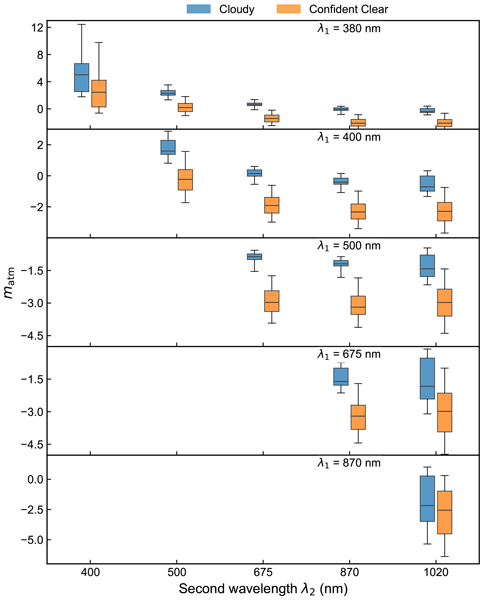
This study investigates the spectral characteristics of zenith sky radiances under clear- and cloudy-sky conditions using SKYNET sky radiometer observations. It proposes a simple, physically interpretable method for distinguishing sky states and demonstrates that wavelength-dependent radiance information can support reliable sky-state detection across diverse atmospheric environments.
Pradeep Khatri, Tadahiro Hayasaka, Hitoshi Irie, Husi Letu, Takashi Y. Nakajima, Hiroshi Ishimoto, and Tamio Takamura
Atmos. Meas. Tech., 15, 1967–1982, https://doi.org/10.5194/amt-15-1967-2022, https://doi.org/10.5194/amt-15-1967-2022, 2022
Short summary
Short summary
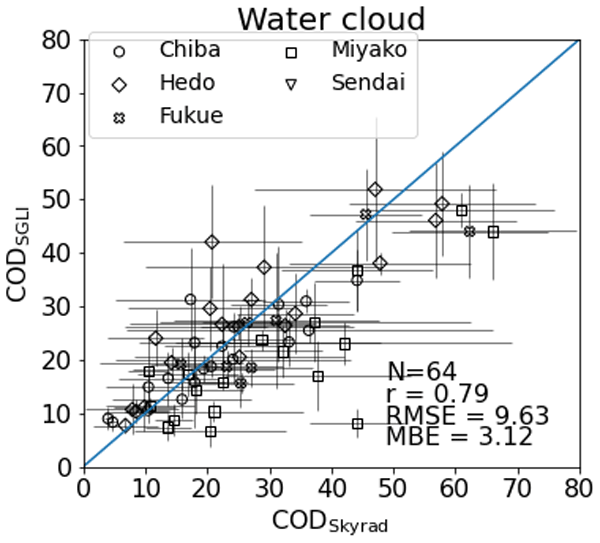
Cloud properties observed by the Second-generation Global Imager (SGLI) onboard the Global Change Observation Mission – Climate (GCOM-C) satellite are evaluated using surface observation data. The study finds that SGLI-observed cloud properties are qualitative enough, although water cloud properties are suggested to be more qualitative, and both water and ice cloud properties can reproduce surface irradiance quite satisfactorily. Thus, SGLI cloud products are very useful for different studies.
Pradeep Khatri, Hitoshi Irie, Hiroshi Kobayashi, Isamu Morino, Yoshitaka Jin, Tadahiro Hayasaka, Hironobu Iwabuchi, Tamio Takamura, and Yoshiki Takayama
Atmos. Meas. Tech., 19, 6447–6467, https://doi.org/10.5194/amt-19-6447-2026, https://doi.org/10.5194/amt-19-6447-2026, 2026
Short summary
Short summary
This study investigates the spectral characteristics of zenith sky radiances under clear- and cloudy-sky conditions using SKYNET sky radiometer observations. It proposes a simple, physically interpretable method for distinguishing sky states and demonstrates that wavelength-dependent radiance information can support reliable sky-state detection across diverse atmospheric environments.
Hitoshi Irie, Masataka Nomoto, Yoshikazu Kamiya, and Yukio Terao
Atmos. Meas. Tech., 19, 2369–2378, https://doi.org/10.5194/amt-19-2369-2026, https://doi.org/10.5194/amt-19-2369-2026, 2026
Short summary
Short summary
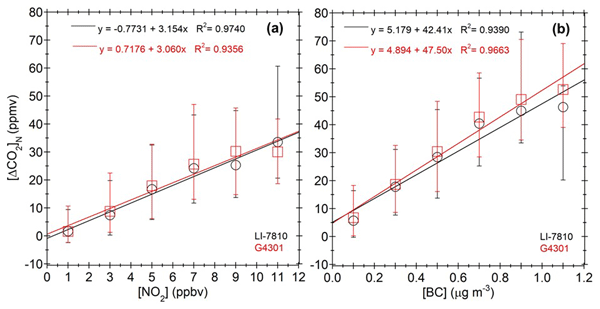
Continuous year-round measurements in Chiba, Japan, combining in‑situ CO2 observations with MAX‑DOAS (Multi-Axis Differential Optical Absorption Spectroscopy) NO2, showed that CO2 levels decrease on days with low near-surface NO2. CO2 enhancements quantified using these low-NO2 days correlated strongly with NO₂ and black carbon, indicating that this metric effectively tracks fossil-fuel-derived CO₂. The approach offers a simple, accurate method for monitoring urban CO2 emissions in megacities.
Yuhang Zhang, Huan Yu, Isabelle De Smedt, Jintai Lin, Nicolas Theys, Michel Van Roozendael, Gaia Pinardi, Steven Compernolle, Ruijing Ni, Fangxuan Ren, Sijie Wang, Lulu Chen, Jos Van Geffen, Mengyao Liu, Alexander M. Cede, Martin Tiefengraber, Alexis Merlaud, Martina M. Friedrich, Andreas Richter, Ankie Piters, Vinod Kumar, Vinayak Sinha, Thomas Wagner, Yongjoo Choi, Hisahiro Takashima, Yugo Kanaya, Hitoshi Irie, Robert Spurr, Wenfu Sun, and Lorenzo Fabris
Atmos. Meas. Tech., 18, 1561–1589, https://doi.org/10.5194/amt-18-1561-2025, https://doi.org/10.5194/amt-18-1561-2025, 2025
Short summary
Short summary
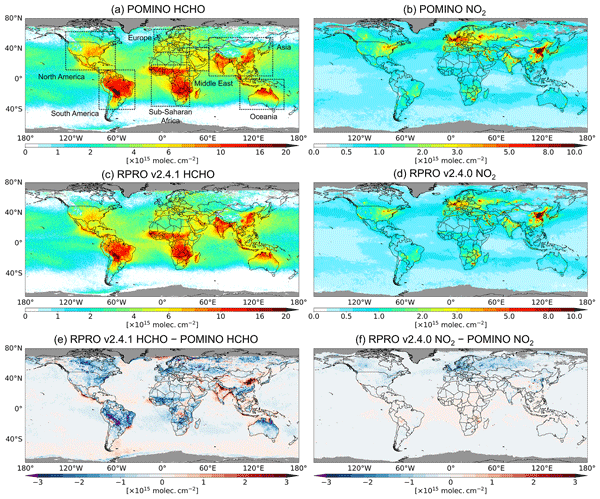
We developed an advanced algorithm for global retrieval of TROPOspheric Monitoring Instrument (TROPOMI) HCHO and NO2 vertical column densities with much improved consistency. Sensitivity tests demonstrate the complexity and nonlinear interactions of auxiliary parameters in the air mass factor calculation. An improved agreement is found with measurements from a global ground-based instrument network. The scientific retrieval provides a useful source of information for studies combining HCHO and NO2.
Eunjo S. Ha, Rokjin J. Park, Hyeong-Ahn Kwon, Gitaek T. Lee, Sieun D. Lee, Seunga Shin, Dong-Won Lee, Hyunkee Hong, Christophe Lerot, Isabelle De Smedt, Thomas Danckaert, Francois Hendrick, and Hitoshi Irie
Atmos. Meas. Tech., 17, 6369–6384, https://doi.org/10.5194/amt-17-6369-2024, https://doi.org/10.5194/amt-17-6369-2024, 2024
Short summary
Short summary
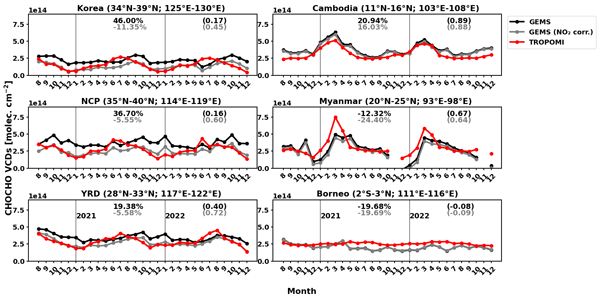
In this study, we evaluated the GEMS glyoxal products by comparing them with TROPOMI and MAX-DOAS measurements. GEMS and TROPOMI VCDs present similar spatial distributions. Monthly variations in GEMS VCDs and TROPOMI and MAX-DOAS VCDs differ in northeastern Asia, which we attributed to a polluted reference spectrum and high NO2 concentrations. GEMS glyoxal products with unparalleled temporal resolution would enrich our understanding of VOC emissions and diurnal variation.
Hossain Mohammed Syedul Hoque, Kengo Sudo, Hitoshi Irie, Yanfeng He, and Md Firoz Khan
Geosci. Model Dev., 17, 5545–5571, https://doi.org/10.5194/gmd-17-5545-2024, https://doi.org/10.5194/gmd-17-5545-2024, 2024
Short summary
Short summary
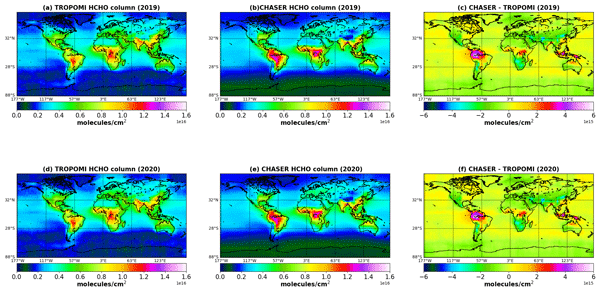
Using multi-platform observations, we validated global formaldehyde (HCHO) simulations from a chemistry transport model. HCHO is a crucial intermediate in the chemical catalytic cycle that governs the ozone formation in the troposphere. The model was capable of replicating the observed spatiotemporal variability in HCHO. In a few cases, the model's capability was limited. This is attributed to the uncertainties in the observations and the model parameters.
Drew C. Pendergrass, Daniel J. Jacob, Yujin J. Oak, Jeewoo Lee, Minseok Kim, Jhoon Kim, Seoyoung Lee, Shixian Zhai, Hitoshi Irie, and Hong Liao
Earth Syst. Sci. Data Discuss., https://doi.org/10.5194/essd-2024-172, https://doi.org/10.5194/essd-2024-172, 2024
Preprint withdrawn
Short summary
Short summary
Fine particles suspended in the atmosphere are a major form of air pollution and an important public health burden. However, measurements of particulate matter are sparse in space and in places like East Asia monitors are established after regulatory policies to improve pollution have changed. In this paper, we use machine learning to fill in the gaps. We train an algorithm to predict pollution at the surface from the atmosphere’s opacity, then produce high resolution maps of data without gaps.
Nofel Lagrosas, Kosuke Okubo, Hitoshi Irie, Yutaka Matsumi, Tomoki Nakayama, Yutaka Sugita, Takashi Okada, and Tatsuo Shiina
Atmos. Meas. Tech., 16, 5937–5951, https://doi.org/10.5194/amt-16-5937-2023, https://doi.org/10.5194/amt-16-5937-2023, 2023
Short summary
Short summary
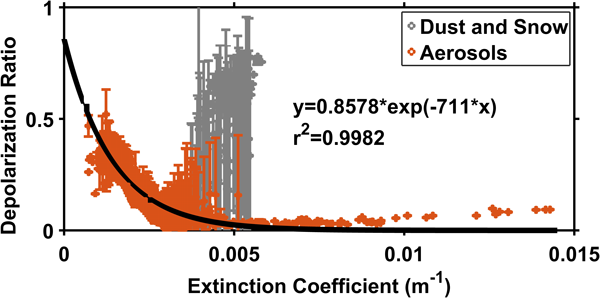
This work examines the near-ground aerosol–weather relationship from 7-month continuous lidar and weather observations in Chiba, Japan. Optical parameters from lidar data are compared with weather parameters to understand and quantify the aerosol–weather relationship and how these optical parameters are affected by the weather and season. The results provide insights into analyzing optical properties of radioactive aerosols when the lidar system is continuously operated in a radioactive area.
Ka Lok Chan, Pieter Valks, Klaus-Peter Heue, Ronny Lutz, Pascal Hedelt, Diego Loyola, Gaia Pinardi, Michel Van Roozendael, François Hendrick, Thomas Wagner, Vinod Kumar, Alkis Bais, Ankie Piters, Hitoshi Irie, Hisahiro Takashima, Yugo Kanaya, Yongjoo Choi, Kihong Park, Jihyo Chong, Alexander Cede, Udo Frieß, Andreas Richter, Jianzhong Ma, Nuria Benavent, Robert Holla, Oleg Postylyakov, Claudia Rivera Cárdenas, and Mark Wenig
Earth Syst. Sci. Data, 15, 1831–1870, https://doi.org/10.5194/essd-15-1831-2023, https://doi.org/10.5194/essd-15-1831-2023, 2023
Short summary
Short summary
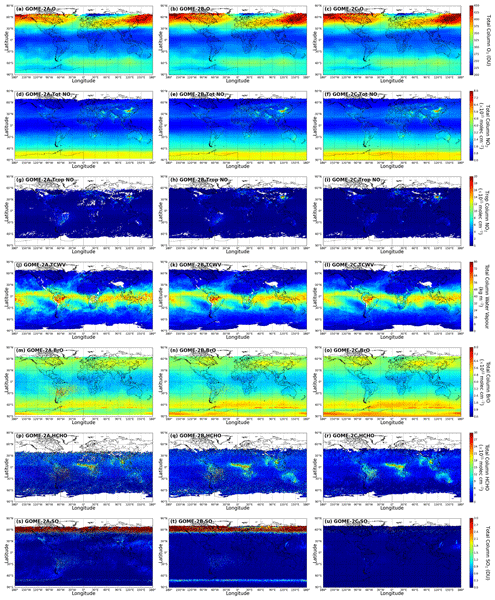
This paper presents the theoretical basis as well as verification and validation of the Global Ozone Monitoring Experiment-2 (GOME-2) daily and monthly level-3 products.
Alessandro Damiani, Hitoshi Irie, Dmitry A. Belikov, Shuei Kaizuka, Hossain Mohammed Syedul Hoque, and Raul R. Cordero
Atmos. Chem. Phys., 22, 12705–12726, https://doi.org/10.5194/acp-22-12705-2022, https://doi.org/10.5194/acp-22-12705-2022, 2022
Short summary
Short summary
We analyzed the variabilities in tropospheric gases and aerosols within the Greater Tokyo Area, Japan. Beyond highlighting air quality changes caused by the pandemic during the lockdown, we found that the degree of weekly cycling of most gases and aerosols was enhanced during the whole of 2020. The changes were unprecedented in recent years and potentially related to coincident reduced mobility in Japan, which, in contrast to other countries, was anomalously low on weekends in 2020.

Hossain Mohammed Syedul Hoque, Kengo Sudo, Hitoshi Irie, Alessandro Damiani, Manish Naja, and Al Mashroor Fatmi
Atmos. Chem. Phys., 22, 12559–12589, https://doi.org/10.5194/acp-22-12559-2022, https://doi.org/10.5194/acp-22-12559-2022, 2022
Short summary
Short summary
Nitrogen dioxide (NO2) and formaldehyde (HCHO) are essential trace graces regulating tropospheric ozone chemistry. These trace constituents are measured using an optical passive remote sensing technique. In addition, NO2 and HCHO are simulated with a computer model and evaluated against the observations. Such evaluations are essential to assess model uncertainties and improve their predictability. The results yielded good agreement between the two datasets with some discrepancies.
Pradeep Khatri, Tadahiro Hayasaka, Hitoshi Irie, Husi Letu, Takashi Y. Nakajima, Hiroshi Ishimoto, and Tamio Takamura
Atmos. Meas. Tech., 15, 1967–1982, https://doi.org/10.5194/amt-15-1967-2022, https://doi.org/10.5194/amt-15-1967-2022, 2022
Short summary
Short summary
Cloud properties observed by the Second-generation Global Imager (SGLI) onboard the Global Change Observation Mission – Climate (GCOM-C) satellite are evaluated using surface observation data. The study finds that SGLI-observed cloud properties are qualitative enough, although water cloud properties are suggested to be more qualitative, and both water and ice cloud properties can reproduce surface irradiance quite satisfactorily. Thus, SGLI cloud products are very useful for different studies.
Christophe Lerot, François Hendrick, Michel Van Roozendael, Leonardo M. A. Alvarado, Andreas Richter, Isabelle De Smedt, Nicolas Theys, Jonas Vlietinck, Huan Yu, Jeroen Van Gent, Trissevgeni Stavrakou, Jean-François Müller, Pieter Valks, Diego Loyola, Hitoshi Irie, Vinod Kumar, Thomas Wagner, Stefan F. Schreier, Vinayak Sinha, Ting Wang, Pucai Wang, and Christian Retscher
Atmos. Meas. Tech., 14, 7775–7807, https://doi.org/10.5194/amt-14-7775-2021, https://doi.org/10.5194/amt-14-7775-2021, 2021
Short summary
Short summary
Global measurements of glyoxal tropospheric columns from the satellite instrument TROPOMI are presented. Such measurements can contribute to the estimation of atmospheric emissions of volatile organic compounds. This new glyoxal product has been fully characterized with a comprehensive error budget, with comparison with other satellite data sets as well as with validation based on independent ground-based remote sensing glyoxal observations.
Hossain M. S. Hoque, Kengo Sudo, Hitoshi Irie, Alessandro Damiani, and Al Mashroor Fatmi
Atmos. Chem. Phys. Discuss., https://doi.org/10.5194/acp-2021-815, https://doi.org/10.5194/acp-2021-815, 2021
Revised manuscript not accepted
Short summary
Short summary
Nitrogen dioxide (NO2) and formaldehyde (HCHO) profiles, retrieved from remote sensing observations, are used to evaluate the global chemistry transport model CHASER. Overall, CHASER has demonstrated good skills in reproducing the seasonal climatology of NO2 and HCHO on a local scale at sites in South and East Asia. Around mountainous terrains, the model performs better on a regional scale. The improved spatial resolution of CHASER can likely reduce the observed discrepancies in the datasets.
Cited articles
Alexandrov, M. D., Schmid, B., Turner, D. D., Cairns, B., Oinas, V., Lacis, A. A., Gutman, S. I., Westwater, E. R., Smirnov, A., and Eilers, J.: Columnar water vapor retrievals from multifilter rotating shadowband radiometer data, Journal of Geophysical Research Atmospheres, 114, https://doi.org/10.1029/2008JD010543, 2009.
Allan, R. P., Liu, C., Zahn, M., Lavers, D. A., Koukouvagias, E., and Bodas-Salcedo, A.: Physically Consistent Responses of the Global Atmospheric Hydrological Cycle in Models and Observations, Surv. Geophys., 35, 533–552, https://doi.org/10.1007/s10712-012-9213-z, 2014.
Anthes, R. A., Bernhardt, P. A., Chen, Y., Cucurull, L., Dymond, K. F., Ector, D., Healy, S. B., Ho, S.-P., Hunt, D. C., Kuo, Y.-H., Liu, H., Manning, K., Mccormick, C., Meehan, T. K., Randel, W. J., Rocken, C., Schreiner, W. S., Sokolovskiy, S. V, Syndergaard, S., Thompson, D. C., Trenberth, K. E., Wee, T.-K., Yen, N. L., and Zeng, Z.: THE COSMIC/FORMOSAT-3 MISSION Early Results, Bull. Am. Meteorol. Soc., 89, 313–334, https://doi.org/10.1175/BAMS-89-3-313, 2008.
Araki, K., Murakami, M., Ishimoto, H., and Tajiri, T.: Ground-based microwave radiometer variational analysis during no-rain and rain conditions, Scientific Online Letters on the Atmosphere, 11, 108–112, https://doi.org/10.2151/sola.2015-026, 2015.
Bartsevich, M., Rahman, K., Addasi, O., and Ramamurthy, P.: On the Applicability of Ground-Based Microwave Radiometers for Urban Boundary Layer Research, Sensors, 24, https://doi.org/10.3390/s24072101, 2024.
Belgiu, M. and Drăguţ, L.: Random forest in remote sensing: A review of applications and future directions, ISPRS Journal of Photogrammetry and Remote Sensing, 114, 24–31, https://doi.org/10.1016/j.isprsjprs.2016.01.011, 2016.
Böck, T., Löffler, M., Marke, T., Pospichal, B., Knist, C., and Löhnert, U.: Instrument uncertainties of network-suitable ground-based microwave radiometers: overview, quantification, and mitigation strategies, Atmos. Meas. Tech., 18, 6251–6270, https://doi.org/10.5194/amt-18-6251-2025, 2025.
Bottou, L.: Large-Scale Machine Learning with Stochastic Gradient Descent, in: Proceedings of COMPSTAT 2010, 177–186, https://doi.org/10.1007/978-3-7908-2604-3_16, 2010.
Campanelli, M., Nakajima, T., Khatri, P., Takamura, T., Uchiyama, A., Estelles, V., Liberti, G. L., and Malvestuto, V.: Retrieval of characteristic parameters for water vapour transmittance in the development of ground-based sun–sky radiometric measurements of columnar water vapour, Atmos. Meas. Tech., 7, 1075–1087, https://doi.org/10.5194/amt-7-1075-2014, 2014.
Chen, D., Guo, H., Gu, X., Wang, J., Liu, Y., Li, Y., and Wu, Y.: Physical-Guided Transfer Deep Neural Network for High-Resolution AOD Retrieval, Remote Sens., 17, https://doi.org/10.3390/rs17213606, 2025.
Chollet, F.: Keras, GitHub, https://github.com/fchollet/keras (last access: 7 January 2026), 2015.
De Mazière, M., Thompson, A. M., Kurylo, M. J., Wild, J. D., Bernhard, G., Blumenstock, T., Braathen, G. O., Hannigan, J. W., Lambert, J.-C., Leblanc, T., McGee, T. J., Nedoluha, G., Petropavlovskikh, I., Seckmeyer, G., Simon, P. C., Steinbrecht, W., and Strahan, S. E.: The Network for the Detection of Atmospheric Composition Change (NDACC): history, status and perspectives, Atmos. Chem. Phys., 18, 4935–4964, https://doi.org/10.5194/acp-18-4935-2018, 2018.
Dessler, A. E.: Observations of Climate Feedbacks over 2000–10 and Comparisons to Climate Models, J. Clim., 1, 333–342, https://doi.org/10.1175/JCLI-D-11-00640.1, 2013.
Dirksen, R. J., Sommer, M., Immler, F. J., Hurst, D. F., Kivi, R., and Vömel, H.: Reference quality upper-air measurements: GRUAN data processing for the Vaisala RS92 radiosonde, Atmos. Meas. Tech., 7, 4463–4490, https://doi.org/10.5194/amt-7-4463-2014, 2014.
Dong, S., Li, Y., Zhang, Z., Gou, T., and Xie, M.: A transfer-learning-based windspeed estimation on the ocean surface: implication for the requirements on the spatial-spectral resolution of remote sensors, Applied Intelligence, 54, 7603–7620, https://doi.org/10.1007/s10489-024-05523-w, 2024.
Elgered, G. and Jarlemark, P. O. J.: Ground-based microwave radiometry and long-term observations of atmospheric water vapor, Radio Sci., 33, 707–717, https://doi.org/10.1029/98RS00488, 1998.
Gueymard, C.: SMARTS2, A Simple Model of the Atmospheric Radiative Transfer of Sunshine: Algorithms and performance assessment Simple Model for the Atmospheric Radiative Transfer of Sunshine (SMARTS2) Algorithms and performance assessment, Report Number: FSEC-PF-270-95, https://publications.energyresearch.ucf.edu/wp-content/uploads/2018/06/FSEC-PF-270-95.pdf (last access: 7 January 2026), 1995.
Gupta, S., Park, Y., Bi, J., Gupta, S., Züfle, A., Wildani, A., and Liu, Y.: Spatial Transfer Learning for Estimating PM2.5 in Data-poor Regions, arXiv [preprint], https://doi.org/10.48550/arXiv.2404.07308, 2024.
Harrison, L., Michalsky, J., and Berndt, J.: Automated multifilter rotating shadow-band radiometer: an instrument for optical depth and radiation measurements, Appl. Opt., 33, 5118–5125, https://doi.org/10.1364/AO.33.005118, 1994.
Hashimoto, M., Nakajima, T., Dubovik, O., Campanelli, M., Che, H., Khatri, P., Takamura, T., and Pandithurai, G.: Development of a new data-processing method for SKYNET sky radiometer observations, Atmos. Meas. Tech., 5, 2723–2737, https://doi.org/10.5194/amt-5-2723-2012, 2012.
Held, I. M. and Soden, B. J.: Water vapor feedback and global warming, Annual Review of Energy and the Environment, 25, 441–475, https://doi.org/10.1146/annurev.energy.25.1.441, 2000.
Holben, B. N., Eck, T. F., Slutsker, I., Tanré, D., Buis, J. P., Setzer, A., Vermote, E., Reagan, J. A., Kaufman, Y. J., Nakajima, T., Lavenu, F., Jankowiak, I., and Smirnov, A.: AERONET – A Federated Instrument Network and Data Archive for Aerosol Characterization, Remote Sens. Environ., 66, 1–16, https://doi.org/10.1016/S0034-4257(98)00031-5, 1998.
Irie, H., Takashima, H., Kanaya, Y., Boersma, K. F., Gast, L., Wittrock, F., Brunner, D., Zhou, Y., and Van Roozendael, M.: Eight-component retrievals from ground-based MAX-DOAS observations, Atmos. Meas. Tech., 4, 1027–1044, https://doi.org/10.5194/amt-4-1027-2011, 2011.
Khatri, P. and Takamura, T.: An algorithm to screen cloud-affected data for sky radiometer data analysis, Journal of the Meteorological Society of Japan, 87, 189–204, https://doi.org/10.2151/jmsj.87.189, 2009.
Khatri, P., Takamura, T., Yamazaki, A., and Kondo, Y.: Retrieval of key aerosol optical parameters from spectral direct and diffuse: Irradiances observed by a radiometer with nonideal cosine response characteristic, J. Atmos. Ocean Technol., 29, 683–696, https://doi.org/10.1175/JTECH-D-11-00111.1, 2012.
Khatri, P., Takamura, T., Shimizu, A., and Sugimoto, N.: Observation of low single scattering albedo of aerosols in the downwind of the East Asian desert and urban areas during the inflow of dust aerosols, J. Geophys. Res., 119, 787–802, https://doi.org/10.1002/2013JD019961, 2014.
Khatri, P., Irie, H., Takamura, T., and Letu, H.: Optical characteristics of aerosols and clouds studied by using ground-based SKYNET and satellite remote sensing data, IEEE International Geoscience and Remote Sensing, 377–380, https://doi.org/10.1109/IGARSS.2016.7729092, 2016.
Khatri, P., Iwabuchi, H., Hayasaka, T., Irie, H., Takamura, T., Yamazaki, A., Damiani, A., Letu, H., and Kai, Q.: Retrieval of cloud properties from spectral zenith radiances observed by sky radiometers, Atmos. Meas. Tech., 12, 6037–6047, https://doi.org/10.5194/amt-12-6037-2019, 2019.
Kiehl, J. T. and Trenberth, K. E.: Earth's Annual Global Mean Energy Budget, Bull. Am. Meteorol. Soc., 78, 197–208, https://doi.org/10.1175/1520-0477(1997)078<0197:EAGMEB>2.0.CO;2, 1997.
Kingma, D. P. and Ba, J.: Adam: A Method for Stochastic Optimization, in: Proceedings of the 3rd International Conference on Learning Representations (ICLR 2015), arXiv [preprint], https://doi.org/10.48550/arXiv.1412.6980, 2015.
Krizhevsky, A., Sutskever, I., and Hinton, G. E.: ImageNet classification with deep convolutional neural networks, Commun. ACM, 60, 84–90, https://doi.org/10.1145/3065386, 2017.
Lecun, Y., Bengio, Y., and Hinton, G.: Deep learning, Nature, 521, 436–444, https://doi.org/10.1038/nature14539, 2015.
Li, H., Wang, X., Wu, S., Zhang, K., Chen, X., Qiu, C., Zhang, S., Zhang, J., Xie, M., and Li, L.: Development of an Improved Model for Prediction of Short-Term Heavy Precipitation Based on GNSS-Derived PWV, Remote Sens., 12, 1–22, https://doi.org/10.3390/rs12244101, 2020.
Löhnert, U. and Maier, O.: Operational profiling of temperature using ground-based microwave radiometry at Payerne: prospects and challenges, Atmos. Meas. Tech., 5, 1121–1134, https://doi.org/10.5194/amt-5-1121-2012, 2012.
Lundberg, S. M. and Lee, S.-I.: A unified approach to interpreting model predictions, arXiv [preprint], https://doi.org/10.48550/arXiv.1705.07874, 2017.
Lundberg, S. M., Erion, G., Chen, H., DeGrave, A., Prutkin, J. M., Nair, B., Katz, R., Himmelfarb, J., Bansal, N., and Lee, S. I.: From local explanations to global understanding with explainable AI for trees, Nat. Mach. Intell., 2, 56–67, https://doi.org/10.1038/s42256-019-0138-9, 2020.
Minowa, M., Araki, K., and Takashima, Y.: Compact Microwave Radiometer for Water Vapor Estimation with Machine Learning Method, Scientific Online Letters on the Atmosphere, 20, 339–346, https://doi.org/10.2151/sola.2024-045, 2024.
Mizobuchi, S., Irie, H., and Shimizu, S.: Long-term continuous observations of the horizontal inhomogeneity in lower-atmospheric water vapor concentration using A-SKY/MAX-DOAS, Prog. Earth Planet Sci., 12, https://doi.org/10.1186/s40645-025-00724-4, 2025.
Mountrakis, G., Im, J., and Ogole, C.: Support vector machines in remote sensing: A review, ISPRS Journal of Photogrammetry and Remote Sensing, 66, 247–259, https://doi.org/10.1016/j.isprsjprs.2010.11.001, 2011.
Muller, C. J., Back, L. E., O'Gorman, P. A., and Emanuel, K. A.: A model for the relationship between tropical precipitation and column water vapor, Geophys Res Lett, 36, https://doi.org/10.1029/2009GL039667, 2009.
Nakajima, T., Campanelli, M., Che, H., Estellés, V., Irie, H., Kim, S.-W., Kim, J., Liu, D., Nishizawa, T., Pandithurai, G., Soni, V. K., Thana, B., Tugjsurn, N.-U., Aoki, K., Go, S., Hashimoto, M., Higurashi, A., Kazadzis, S., Khatri, P., Kouremeti, N., Kudo, R., Marenco, F., Momoi, M., Ningombam, S. S., Ryder, C. L., Uchiyama, A., and Yamazaki, A.: An overview of and issues with sky radiometer technology and SKYNET, Atmos. Meas. Tech., 13, 4195–4218, https://doi.org/10.5194/amt-13-4195-2020, 2020.
Padmanabhan, S., Reising, S. C., Vivekanandan, J., and Iturbide-Sanchez, F.: Retrieval of atmospheric water vapor density with fine spatial resolution using three-dimensional tomographic inversion of microwave brightness temperatures measured by a network of scanning compact radiometers, IEEE Transactions on Geoscience and Remote Sensing, 47, 3708–3721, https://doi.org/10.1109/TGRS.2009.2031107, 2009.
Pan, S. J. and Yang, Q.: A survey on transfer learning, IEEE Trans. Knowl. Data Eng., 22, 1345–1359, https://doi.org/10.1109/TKDE.2009.191, 2010.
Pérez-Ramírez, D., Whiteman, D. N., Smirnov, A., Lyamani, H., Holben, B. N., Pinker, R., Andrade, M., and Alados-Arboledas, L.: Evaluation of AERONET precipitable water vapor versus microwave radiometry, GPS, and radiosondes at ARM sites, J. Geophys. Res., 119, 9596–9613, https://doi.org/10.1002/2014JD021730, 2014.
Qiao, C., Liu, S., Huo, J., Mu, X., Wang, P., Jia, S., Fan, X., and Duan, M.: Retrievals of precipitable water vapor and aerosol optical depth from direct sun measurements with EKO MS711 and MS712 spectroradiometers, Atmos. Meas. Tech., 16, 1539–1549, https://doi.org/10.5194/amt-16-1539-2023, 2023.
Schmidt, G. A., Ruedy, R. A., Miller, R. L., and Lacis, A. A.: Attribution of the present-day total greenhouse effect, Journal of Geophysical Research Atmospheres, 115, https://doi.org/10.1029/2010JD014287, 2010.
Schröder, M., Lockhoff, M., Shi, L., August, T., Bennartz, R., Brogniez, H., Calbet, X., Fell, F., Forsythe, J., Gambacorta, A., Ho, S.-P., Kursinski, E. R., Reale, A., Trent, T., and Yang, Q.: The GEWEX Water vapor assessment: Overview and introduction to results and recommendations, Remote Sens., 11, https://doi.org/10.3390/rs11030251, 2019.
Seidel, D. J., Berger, F. H., Diamond, H. J., Dykema, J., Goodrich, D., Immler, F., Murray, W., Peterson, T., Sisterson, D., Sommer, M., Thorne, P., Vömel, H., and Wang, J.: Reference upper-air observations for climate: Rationale, progress, and plans, Bull. Am. Meteorol. Soc., 90, 361–369, https://doi.org/10.1175/2008BAMS2540.1, 2009.
Sengupta, M., Clothiaux, E. E., and Ackerman, T. P.: Climatology of Warm Boundary Layer Clouds at the ARM SGP Site and Their Comparison to Models, J. Clim., 17, 4760–4782, https://doi.org/10.1175/JCLI-3231.1, 2004.
Takamura, T. and Khatri, P.: Uncertainties in Radiation Measurement Using a Rotating Shadow-Band Spectroradiometer, Journal of the Meteorological Society of Japan. Ser. II, 99, 1547–1561, https://doi.org/10.2151/jmsj.2021-075, 2021.
Trenberth, K. E., Dai, A., Rasmussen, R. M., and Parsons, D. B.: The changing character of precipitation, 1205–1218, https://doi.org/10.1175/BAMS-84-9-1205, 2003.
Trenberth, K. E., Fasullo, J. T., and Kiehl, J.: Earth's Global Energy Budget, Bull. Am. Meteorol. Soc., 90, 311–324, https://doi.org/10.1175/2008BAMS2634.1, 2009.
Van Baelen, J., Reverdy, M., Tridon, F., Labbouz, L., Dick, G., Bender, M., and Hagen, M.: On the relationship between water vapour field evolution and the life cycle of precipitation systems, Quarterly Journal of the Royal Meteorological Society, 137, 204–223, https://doi.org/10.1002/qj.785, 2011.
Weiss, K., Khoshgoftaar, T. M., and Wang, D. D.: A survey of transfer learning, J. Big Data, 3, https://doi.org/10.1186/s40537-016-0043-6, 2016.
Xu, G.: A Review of Remote Sensing of Atmospheric Profiles and Cloud Properties by Ground-Based Microwave Radiometers in Central China, Remote Sens., 16, https://doi.org/10.3390/rs16060966, 2024.
Zhang, H., Yuan, Y., Li, W., and Zhang, B.: A real-time precipitable water vapor monitoring system using the national GNSS network of China: Method and preliminary results, IEEE J. Sel. Top. Appl. Earth Obs. Remote Sens., 12, 1587–1598, https://doi.org/10.1109/JSTARS.2019.2906950, 2019.
Zhao, X., Frech, J., Foster, M. J., and Heidinger, A. K.: Studying the Aerosol Effect on Deep Convective Clouds over the Global Oceans by Applying Machine Learning Techniques on Long-Term Satellite Observation, Remote Sens., 16, https://doi.org/10.3390/rs16132487, 2024.
Zheng, L., Lin, R., Wang, X., and Chen, W.: The development and application of machine learning in atmospheric environment studies, Remote Sens., 13, https://doi.org/10.3390/rs13234839, 2021.
Short summary
Precipitable water vapor (PWV) is important for various climate and weather studies, but difficult to monitor under various weather conditions. This study shows that surface-based spectral irradiance combined with deep neural network models can accurately estimate PWV under various atmospheric conditions. Models using global, direct, and diffuse irradiances performed best, while even global-only data gave reliable results.
Precipitable water vapor (PWV) is important for various climate and weather studies, but...


