
Articles | Volume 19, issue 8
https://doi.org/10.5194/amt-19-2751-2026
© Author(s) 2026. This work is distributed under
the Creative Commons Attribution 4.0 License.
the Creative Commons Attribution 4.0 License.
https://doi.org/10.5194/amt-19-2751-2026
© Author(s) 2026. This work is distributed under
the Creative Commons Attribution 4.0 License.
the Creative Commons Attribution 4.0 License.
Research article
| 
23 Apr 2026
Research article |
| 23 Apr 2026
| 23 Apr 2026
The sensitivity of the Far-infrared Outgoing Radiation Understanding and Monitoring (FORUM) mission to dust aerosols: a pseudo-observations analysis
Pasquale Sellitto
CORRESPONDING AUTHOR

Univ. Paris-Est Créteil and Université de Paris Cité, CNRS, Laboratoire Interuniversitaire des Systèmes Atmosphériques, Institut Pierre Simon Laplace, Créteil, France
Istituto Nazionale di Geofisica e Vulcanologia, Osservatorio Etneo, Catania, Italy
Maxim Eremenko
Univ. Paris-Est Créteil and Université de Paris Cité, CNRS, Laboratoire Interuniversitaire des Systèmes Atmosphériques, Institut Pierre Simon Laplace, Créteil, France
Paola Formenti
Université Paris Cité and Université Paris Est Creteil, CNRS, LISA, 75013 Paris, France
Perla Alalam
Univ. Paris-Est Créteil and Université de Paris Cité, CNRS, Laboratoire Interuniversitaire des Systèmes Atmosphériques, Institut Pierre Simon Laplace, Créteil, France
Centre National d'Etudes Spatiales, CNES, 75001 Paris, France
Michael Höpfner
Institute of Meteorology and Climate Research, Karlsruhe Institute of Technology, Karlsruhe, Germany
Claudia Di Biagio
Université Paris Cité and Université Paris Est Creteil, CNRS, LISA, 75013 Paris, France
Related authors
Mona Kosary, Pasquale Sellitto, Michael Höpfner, Bernd Funke, Alex Hoffmann, Jörn Ungermann, Quentin Errera, Simone Tilmes, and Björn-Martin Sinnhuber
EGUsphere, https://doi.org/10.5194/egusphere-2026-4654, https://doi.org/10.5194/egusphere-2026-4654, 2026
Short summary
Short summary
We investigated whether future satellites could track changes in the ozone layer if reflective particles were deliberately added high in the atmosphere to cool the planet. Using climate model simulations, we created virtual satellite measurements and compared them with the original data. The method captured the key changes, especially stronger ozone loss and delayed recovery over Antarctica, while showing low artificial distortion. This suggests such satellites could provide important oversight.
Corinna Kloss, Gwenaël Berthet, Pasquale Sellitto, Irene Bartolome Garcia, Emmanuel Briaud, Rubel Chandra Das, Stéphane Chevrier, Nicolas Dumelié, Lilian Joly, Thomas Lecas, Pauline Marbach, Felix Ploeger, Jean-Baptiste Renard, Jean-Paul Vernier, Frank G. Wienhold, and Michaela I. Hegglin
Atmos. Chem. Phys., 26, 8981–8997, https://doi.org/10.5194/acp-26-8981-2026, https://doi.org/10.5194/acp-26-8981-2026, 2026
Short summary
Short summary
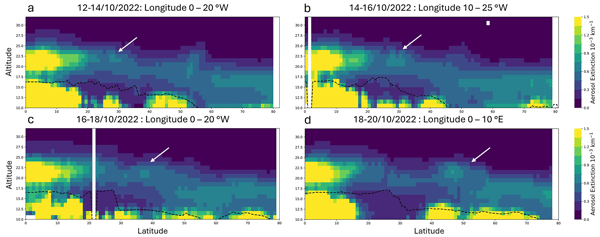
In October 2022, we detected volcanic particles in the stratosphere over France, linked to the January 2022 Hunga eruption in the South Pacific. Found between 17 and 23 km altitude, they were traced back to the tropics using trajectory simulations and satellite data. Their optical properties matched those in the Southern Hemisphere. The particles spread across the Northern Hemisphere, reflecting sunlight and slightly cooling the surface – a small but non-negligible effect.
Pasquale Sellitto, Mona Kosary, Michael Höpfner, Bernd Funke, Alex Hoffmann, Jörn Ungermann, Quentin Errera, Simone Tilmes, and Björn-Martin Sinnhuber
EGUsphere, https://doi.org/10.5194/egusphere-2026-919, https://doi.org/10.5194/egusphere-2026-919, 2026
Short summary
Short summary
To counterbalance human-caused global warming, highly controversial geoengineering techniques, based on stratospheric aerosol injection (SAI), have been proposed as a complement to climate change mitigation. Unilateral or illegal SAI deployments or tests are a risk. We show that existing satellite instruments do not have the capability to detect possible illegal SAI experiments and we propose a future satellite technique, infrared limb emission sounding, that can provide this missing capability.

Clair Duchamp, Bernard Legras, Aurélien Podglajen, Pasquale Sellitto, Adam E. Bourassa, Alexei Rozanov, Ghassan Taha, and Daniel J. Zawada
Atmos. Meas. Tech., 19, 1675–1696, https://doi.org/10.5194/amt-19-1675-2026, https://doi.org/10.5194/amt-19-1675-2026, 2026
Short summary
Short summary
We analyzed the stratospheric aerosol plume from the 2022 Hunga eruption using satellite lidar data. We implemented a method to retrieve some aerosol properties, as standard products failed in this case. We found very high optical depth values in the days following the eruption, which decreased rapidly but remained elevated for months. Our results are broadly validated, though some satellite products underestimate the values due, in part, to the unusual aerosol size distribution in the plume.
Claudia Di Biagio, Elisa Bru, Avila Orta, Servanne Chevaillier, Clarissa Baldo, Antonin Bergé, Mathieu Cazaunau, Sandra Lafon, Sophie Nowak, Edouard Pangui, Meinrat O. Andreae, Pavla Dagsson-Waldhauserova, Kebonyethata Dintwe, Konrad Kandler, James S. King, Amelie Chaput, Gregory S. Okin, Stuart Piketh, Thuraya Saeed, David Seibert, Zongbo Shi, Earle Williams, Pasquale Sellitto, and Paola Formenti
Atmos. Chem. Phys., 26, 1079–1091, https://doi.org/10.5194/acp-26-1079-2026, https://doi.org/10.5194/acp-26-1079-2026, 2026
Short summary
Short summary
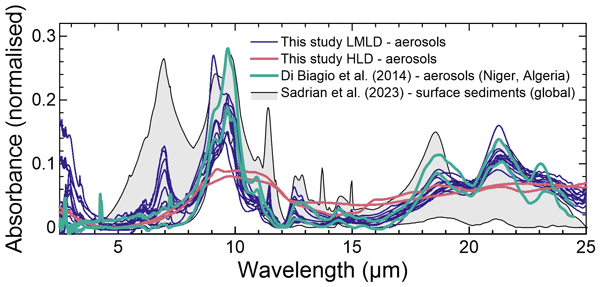
Spectroscopy measurements show that the absorbance of dust in the far-infrared up to 25 µm is comparable in intensity to that in the mid-infrared (3–15 µm) suggesting possible relevance for its direct radiative effect. Absorption signatures differ between Icelandic and low/mid-latitude dust due to differences in mineralogical composition. Spectral differences could be used to characterise the mineralogy and trace the origin of airborne dust based on infrared remote sensing observations.
Redha Belhadji, Pasquale Sellitto, Maxim Eremenko, Silvia Bucci, Tran M. Nguyet, Martin Schwell, and Bernard Legras
Atmos. Meas. Tech., 18, 7465–7476, https://doi.org/10.5194/amt-18-7465-2025, https://doi.org/10.5194/amt-18-7465-2025, 2025
Short summary
Short summary
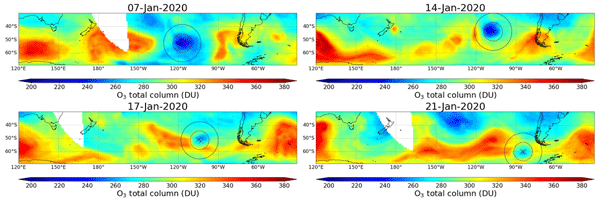
The 2019–2020 Australian wildfires triggered massive Pyro-cumulonimbus clouds, injecting smoke aerosols into the stratosphere and forming a self-sustaining vortex that reached 35 km altitude. This vortex created a transient ozone mini-hole. Using satellite and ground-based observations, we tracked a 30–40 % initial ozone depletion, which decayed to ~7 % within a month. These findings highlight the impact of extreme wildfires on stratospheric dynamics and ozone composition.
Pasquale Sellitto, Audrey Gaudel, and Bastien Sauvage
Atmos. Chem. Phys., 25, 13299–13309, https://doi.org/10.5194/acp-25-13299-2025, https://doi.org/10.5194/acp-25-13299-2025, 2025
Short summary
Short summary
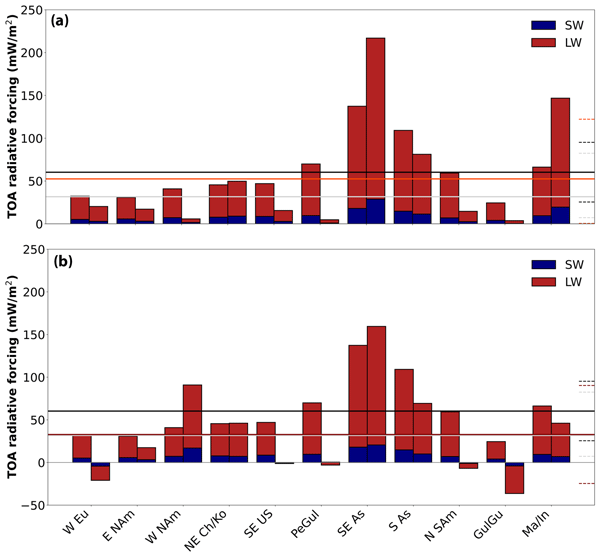
Tropospheric ozone is a potent greenhouse gas: its anthropogenic levels rise contributes to climate change. We evaluate tropospheric ozone trends and climate impacts with aircraft data and a radiative model, comparing a baseline period (1994–2004) to different recent time periods (2011–2016 to 2020-2023). Tropospheric ozone levels increasing trends progressively stopped and even decreased in the upper troposphere. Correspondingly, the decadal ozone radiative forcing is progressively decreasing.
Pasquale Sellitto, Redha Belhadji, Bernard Legras, Aurélien Podglajen, and Clair Duchamp
Atmos. Chem. Phys., 25, 6353–6364, https://doi.org/10.5194/acp-25-6353-2025, https://doi.org/10.5194/acp-25-6353-2025, 2025
Short summary
Short summary
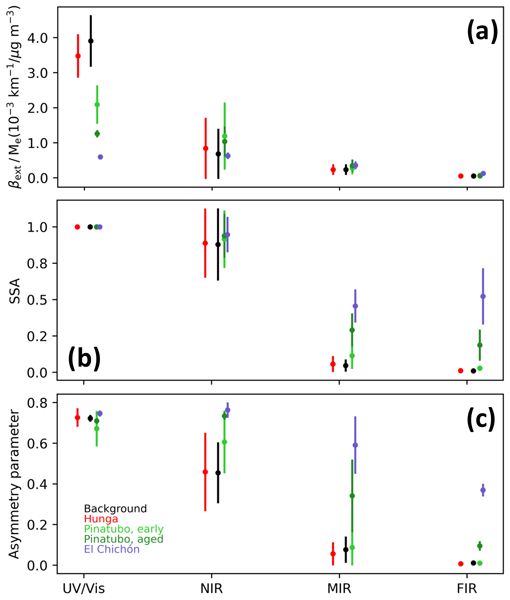
The Hunga Tonga–Hunga Ha’apai volcano erupted on 15 January 2022, producing the largest stratospheric aerosol perturbation of the last 30 years. Stratospheric volcanic aerosols usually produce a transient climate cooling; these impacts depend on volcanic aerosol composition/size, due to size-dependent interactions with solar/terrestrial radiation. We demonstrate that the Hunga Tonga–Hunga Ha’apai stratospheric aerosols have a larger cooling potential per unit mass than the past climate-relevant El Chichón (1984) and Pinatubo (1991) eruptions.
Michaël Sicard, Alexandre Baron, Marion Ranaivombola, Dominique Gantois, Tristan Millet, Pasquale Sellitto, Nelson Bègue, Hassan Bencherif, Guillaume Payen, Nicolas Marquestaut, and Valentin Duflot
Atmos. Chem. Phys., 25, 367–381, https://doi.org/10.5194/acp-25-367-2025, https://doi.org/10.5194/acp-25-367-2025, 2025
Short summary
Short summary
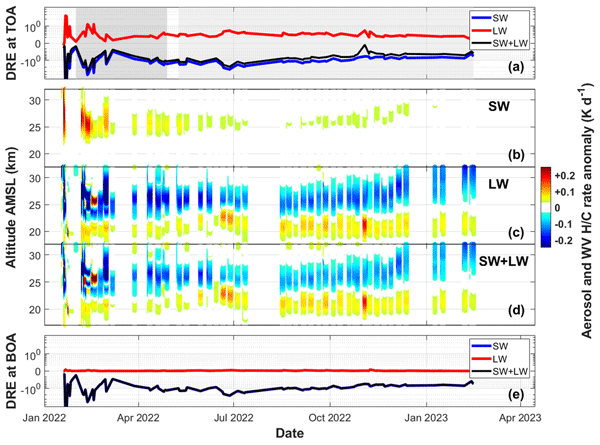
This study quantifies the radiative impact over Réunion Island (21° S, 55° E) of the aerosols and water vapor injected into the stratosphere by the Hunga volcano in the South Pacific. The overall aerosol and water vapor impact on the Earth’s radiation budget for the whole period is negative (cooling, -0.82 ± 0.35 W m-2) and dominated by the aerosols. At the Earth’s surface, aerosols are the main drivers and produce a negative (cooling, -1.04 ± 0.36 W m-2) radiative impact.
Pasquale Sellitto, Redha Belhadji, Juan Cuesta, Aurélien Podglajen, and Bernard Legras
Atmos. Chem. Phys., 23, 15523–15535, https://doi.org/10.5194/acp-23-15523-2023, https://doi.org/10.5194/acp-23-15523-2023, 2023
Short summary
Short summary
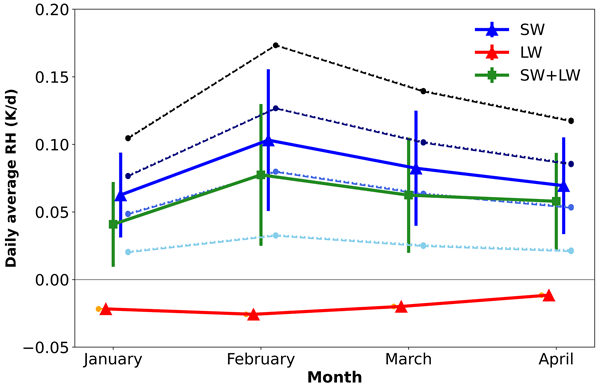
Record-breaking wildfires ravaged south-eastern Australia during the fire season 2019–2020. These fires injected a smoke plume in the stratosphere, which dispersed over the whole Southern Hemisphere and interacted with solar and terrestrial radiation. A number of detached smoke bubbles were also observed emanating from this plume and ascending quickly to over 35 km altitude. Here we study how absorption of radiation generated ascending motion of both the the hemispheric plume and the vortices.
Bernard Legras, Clair Duchamp, Pasquale Sellitto, Aurélien Podglajen, Elisa Carboni, Richard Siddans, Jens-Uwe Grooß, Sergey Khaykin, and Felix Ploeger
Atmos. Chem. Phys., 22, 14957–14970, https://doi.org/10.5194/acp-22-14957-2022, https://doi.org/10.5194/acp-22-14957-2022, 2022
Short summary
Short summary
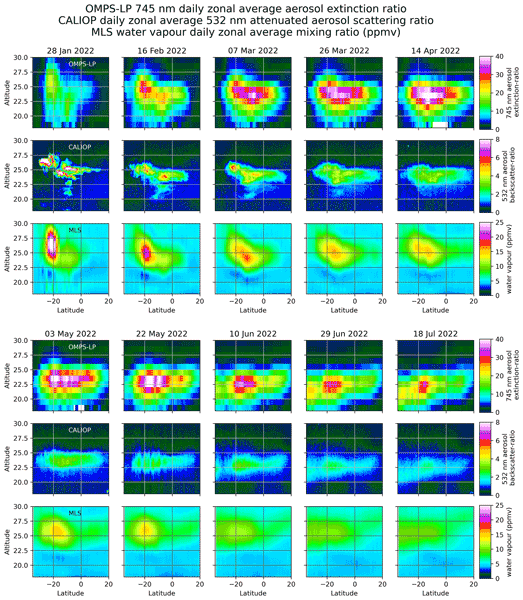
The long-duration atmospheric impact of the Tonga eruption in January 2022 is a plume of water and sulfate aerosols in the stratosphere that persisted for more than 6 months. We study this evolution using several satellite instruments and analyse the unusual behaviour of this plume as sulfates and water first moved down rapidly and then separated into two layers. We also report the self-organization in compact and long-lived patches.

Mathieu Lachatre, Sylvain Mailler, Laurent Menut, Arineh Cholakian, Pasquale Sellitto, Guillaume Siour, Henda Guermazi, Giuseppe Salerno, and Salvatore Giammanco
Atmos. Chem. Phys., 22, 13861–13879, https://doi.org/10.5194/acp-22-13861-2022, https://doi.org/10.5194/acp-22-13861-2022, 2022
Short summary
Short summary
In this study, we have evaluated the predominance of various pathways of volcanic SO2 conversion to sulfates in the upper troposphere. We show that the main conversion pathway was gaseous oxidation by OH, although the liquid pathways were expected to be predominant. These results are interesting with respect to a better understanding of sulfate formation in the middle and upper troposphere and are an important component to help evaluate particulate matter radiative forcing.
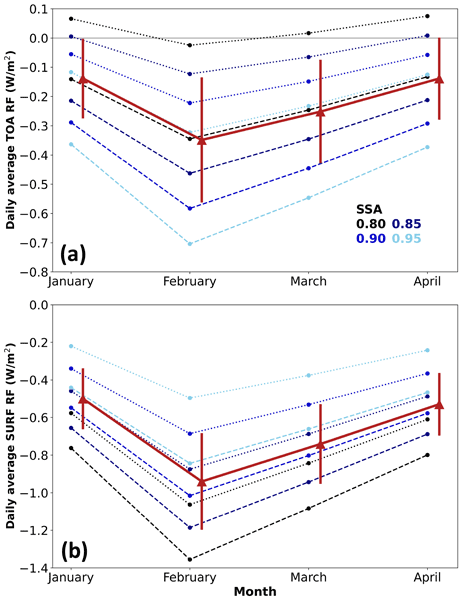
Pasquale Sellitto, Redha Belhadji, Corinna Kloss, and Bernard Legras
Atmos. Chem. Phys., 22, 9299–9311, https://doi.org/10.5194/acp-22-9299-2022, https://doi.org/10.5194/acp-22-9299-2022, 2022
Short summary
Short summary
As a consequence of extreme heat and drought, record-breaking wildfires ravaged south-eastern Australia during the fire season in 2019–2020. Fires injected a smoke plume very high up to the stratosphere, which dispersed quite quickly to the whole Southern Hemisphere and interacted with solar radiation, reflecting and absorbing part of it – thus producing impacts on the climate system. Here we estimate this impact on radiation and we study how it depends on the properties and ageing of the plume.
Bernd Funke, Michael Höpfner, Stefan Bender, Quentin Errera, Udo Grabowski, Alex Hoffmann, Han-Li Liu, Nick M. Pedatella, Piera Raspollini, Jörn Ungermann, and Björn-Martin Sinnhuber
EGUsphere, https://doi.org/10.5194/egusphere-2026-3881, https://doi.org/10.5194/egusphere-2026-3881, 2026
This preprint is open for discussion and under review for Atmospheric Measurement Techniques (AMT).
Short summary
Short summary
We introduce two performance modeling tools, the Linear Performance Estimator (LPE) and the Fast L2 Simulator (FL2S), developed for CAIRT, a proposed ESA Earth Explorer mission. CAIRT aims to observe the middle atmosphere using an Imaging Fourier Transform Spectrometer. LPE quantifies spatial resolution and tomographic retrieval uncertainties, while FL2S generates synthetic data products that mimic the retrieval chain. Together, they demonstrate CAIRT's ability to meet scientific requirements.
Jenine McCutcheon, James B. McQuaid, Helen Freeman, Jeffrey Paulo H. Perez, Jon Hawkings, Stefanie Lutz, Lou-Anne Chevrollier, Paola Formenti, Servanne Chevaillier, Martyn Tranter, and Liane G. Benning
EGUsphere, https://doi.org/10.5194/egusphere-2026-5031, https://doi.org/10.5194/egusphere-2026-5031, 2026
This preprint is open for discussion and under review for The Cryosphere (TC).
Short summary
Short summary
Soot can travel long distances and settle on snow and ice, where it absorbs light and promotes melting. We examined the size and shape of soot particles deposited on the Greenland Ice Sheet. By combining aerosol and geochemical methods, we show that the soot particles accumulate on the ice sheet surface, especially alongside dense glacier ice algal blooms. Soot accounts for ~15% of the combined darkening effect of algae and soot, highlighting the role of soot in ice albedo reduction and melting.
Johannes Heuser, Claudia Di Biagio, Jérôme Yon, Mathieu Cazaunau, Antonin Bergé, Edouard Pangui, Marco Zanatta, Laura Renzi, Angela Marinoni, Chenjie Yu, Servanne Chevaillier, Daniel Ferry, Michel Maillé, Paola Formenti, Benedicte Picquet-Varrault, and Jean-François Doussin
Aerosol Research Discuss., https://doi.org/10.5194/ar-2026-31, https://doi.org/10.5194/ar-2026-31, 2026
Preprint under review for AR
Short summary
Short summary
We retrieve refractive indices of laboratory-generated soot from measured particle properties using Mie and RDG-FA optical calculations, and quantify uncertainties via Monte Carlo simulations. The inferred refractive indices strongly depend on the theory employed, highlighting the need for consistency between optical theory and refractive index. Mie retrievals are sensitive to coagulation and size growth, while RDG-FA retrievals depend strongly on the uncertainty of assumed particle morphology.
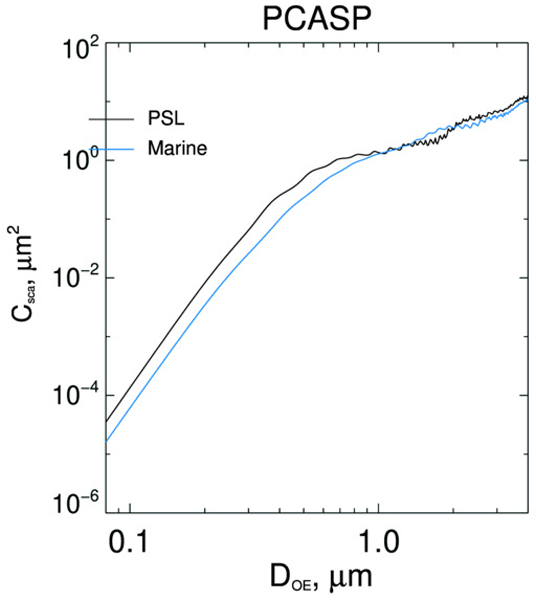
Paola Formenti and Claudia Di Biagio
Aerosol Research, 4, 429–440, https://doi.org/10.5194/ar-4-429-2026, https://doi.org/10.5194/ar-4-429-2026, 2026
Short summary
Short summary
This study improves the accuracy of optical particle counters (OPCs), instruments used to measure airborne particles important for air quality and climate research. Because OPC measurements depend not only on particle size but also on composition and shape, results can be uncertain. The paper provides a standardized database of correction factors for five commercial OPCs, helping researchers produce more reliable and consistent aerosol measurements across a wide range of atmospheric conditions.
Mona Kosary, Pasquale Sellitto, Michael Höpfner, Bernd Funke, Alex Hoffmann, Jörn Ungermann, Quentin Errera, Simone Tilmes, and Björn-Martin Sinnhuber
EGUsphere, https://doi.org/10.5194/egusphere-2026-4654, https://doi.org/10.5194/egusphere-2026-4654, 2026
Short summary
Short summary
We investigated whether future satellites could track changes in the ozone layer if reflective particles were deliberately added high in the atmosphere to cool the planet. Using climate model simulations, we created virtual satellite measurements and compared them with the original data. The method captured the key changes, especially stronger ozone loss and delayed recovery over Antarctica, while showing low artificial distortion. This suggests such satellites could provide important oversight.
Wolfgang Woiwode, Bärbel Vogel, Valentin Lauther, Jens-Uwe Grooß, Jeremy Harrison, Sören Johansson, Jörn Ungermann, Peter Braesicke, Markus Dick, Andreas Engel, Felix Friedl-Vallon, Norbert Glatthor, Thomas Gulde, Michael Höpfner, Markus Jesswein, Jan Kaumanns, Timo Keber, Anne Kleinert, Erik Kretschmer, Guido Maucher, Tom Neubert, Hans Nordmeyer, Christof Piesch, Felix Plöger, Peter Preusse, Markus Retzlaff, Sebastian Rhode, Heinz Rongen, Georg Schardt, Tanja Schuck, Björn-Martin Sinnhuber, Johannes Strobel, Franziska Trinkl, Ronja Van Luijt, Stefan Versick, C. Michael Volk, Gerald Wetzel, Peter Hoor, and Martin Riese
EGUsphere, https://doi.org/10.5194/egusphere-2026-3271, https://doi.org/10.5194/egusphere-2026-3271, 2026
This preprint is open for discussion and under review for Atmospheric Chemistry and Physics (ACP).
Short summary
Short summary
Filaments of CH2Cl2-rich air are revealed by airborne infrared limb-imaging observations in late summer 2023 above the North Pacific, Canada and Alaska and traced back to the Asian Summer Monsoon region. Involving new spectroscopic data, high CH2Cl2 levels were retrieved in the troposphere and moderate enhancements also in air masses with characteristics of the lowermost stratosphere. Mesoscale filaments are shown to transport substantial amounts of CH2Cl2 across the North Pacific.
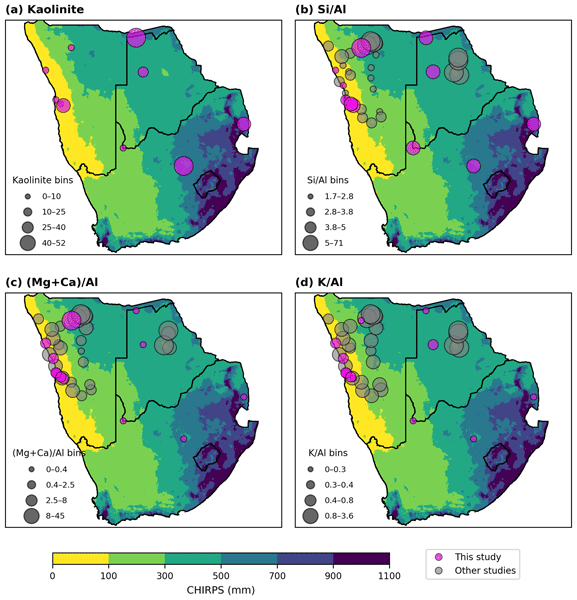
Clarissa Baldo, Servanne Chevaillier, Sophie Nowak, Gael Noyalet, Sandra Lafon, Claudia Di Biagio, Amelie Chaput, James King, Mathieu Cazaunau, Edouard Pangui, Jean-Francois Doussin, Remi Stanus, Nadine Mattielli, Heleen C. Vos, Gregory S. Okin, Brigitte Language, Tjaart Van Der Walt, Stuart Piketh, Karine Desboeufs, Akinori Ito, Silvia Becagli, Eugene Marais, Laurie Barrier, Stéphane Jacquemoud, and Paola Formenti
Atmos. Chem. Phys., 26, 10727–10749, https://doi.org/10.5194/acp-26-10727-2026, https://doi.org/10.5194/acp-26-10727-2026, 2026
Short summary
Short summary
Our results show that crustal element ratios and clay contents distinguish dust aerosols from arid western coastal areas and humid eastern inland regions in Southern Africa. This dust contains key micronutrients that can become bioaccessible during atmospheric transport to nearby and remote marine ecosystems. It is also enriched in carbonates and K-feldspar, serving as a source of cloud condensation and ice nuclei, with potential implications ranging from regional to sub-hemispheric scales.
Alejandra Velazquez-Garcia, Chenjie Yu, Sarah Tinorua, Hichem Bouzidi, Eleonora Aruffo, Piero Di Carlo, Peter DeCarlo, Benjamin A. Nault, Thierry Bourrianne, Kevin Tu, Edouard Pangui, Diana L. Pereira, Mathieu Cazaunau, Ludovico Di Antonio, Guillaume Siour, Matthias Beekmann, Astrid Bauville, Christopher Cantrell, Paola Formenti, Vincent Michoud, and Cyrielle Denjean
EGUsphere, https://doi.org/10.5194/egusphere-2026-4423, https://doi.org/10.5194/egusphere-2026-4423, 2026
Short summary
Short summary
As city air pollution travels downwind, its climate impact evolves. Using a research aircraft, we tracked the Paris pollution plume and found that sunlight rapidly transforms urban emissions, forming secondary organic particles that absorb more sunlight within six hours. These findings show that urban pollution changes chemically during transport, providing key constraints to improve future climate models.
Corinna Kloss, Gwenaël Berthet, Pasquale Sellitto, Irene Bartolome Garcia, Emmanuel Briaud, Rubel Chandra Das, Stéphane Chevrier, Nicolas Dumelié, Lilian Joly, Thomas Lecas, Pauline Marbach, Felix Ploeger, Jean-Baptiste Renard, Jean-Paul Vernier, Frank G. Wienhold, and Michaela I. Hegglin
Atmos. Chem. Phys., 26, 8981–8997, https://doi.org/10.5194/acp-26-8981-2026, https://doi.org/10.5194/acp-26-8981-2026, 2026
Short summary
Short summary
In October 2022, we detected volcanic particles in the stratosphere over France, linked to the January 2022 Hunga eruption in the South Pacific. Found between 17 and 23 km altitude, they were traced back to the tropics using trajectory simulations and satellite data. Their optical properties matched those in the Southern Hemisphere. The particles spread across the Northern Hemisphere, reflecting sunlight and slightly cooling the surface – a small but non-negligible effect.
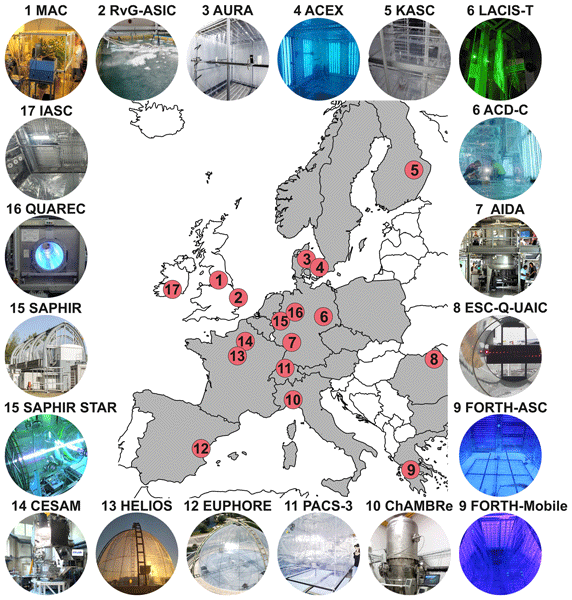
Hendrik Fuchs, Niklas Illmann, Amalia Muñoz, Mila Ródenas, Bénédicte Picquet-Varrault, M. Rami Alfarra, Cecilia Arsene, Iustinian G. Bejan, David M. Bell, Merete Bilde, Alexander Böhmländer, Mixtli Campos-Pineda, Mathieu Cazaunau, Patrice Coll, Véronique Daële, Claudia Di Biagio, Michael Flynn, Paola Formenti, Hartmut Herrmann, Kristina Höhler, Thorsten Hohaus, Matthew S. Johnson, Eija Juurola, Niku Kivekäs, Jan Kaiser, Christos Kaltsonoudis, Paolo Laj, Dario Massabò, Federico Mazzei, Gordon McFiggans, Max R. McGillen, Abdelwahid Mellouki, Peter Mettke, Ottmar Möhler, Falk Mothes, Dennis Niedermeier, Anna Novelli, Romeo I. Olariu, Spyros N. Pandis, Iulia Patroescu-Klotz, Rosa Maria Petracca Altieri, Paolo Prati, Claudiu Roman, Albert A. Ruth, Harald Saathoff, Silvio Schmalfuß, Frank Stratmann, Virginia Vernocchi, Aristeidis Voliotis, Jens Voigtländer, Annele Virtanen, Andreas Wahner, Robert Wagner, John Wenger, Sören Zorn, Peter Wiesen, and Jean-Francois Doussin
Atmos. Meas. Tech., 19, 4165–4199, https://doi.org/10.5194/amt-19-4165-2026, https://doi.org/10.5194/amt-19-4165-2026, 2026
Short summary
Short summary
Atmospheric simulation chambers enable experiments to be conducted under controlled conditions, improving our understanding of, and ability to predict, changes in the composition of the atmosphere. This is important for assessing air quality and its effects on human health, climate, the environment, and the economy. This paper describes the chambers of the European ACTRIS research infrastructure and discusses topics and directions that can be addressed in future chamber experiments.
Chenjie Yu, Ludovico Di Antonio, Peter F. DeCarlo, Benjamin A. Nault, Alejandra Velazquez-Garcia, Eleonora Aruffo, Piero Di Carlo, Cyrielle Denjean, Sarah Tinorua, Thierry Bourrianne, Diana L. Pereira, Kevin Tu, Edouard Pangui, Mathieu Cazaunau, Astrid Bauville, Noël Grand, Antonin Bergé, Claudia Di Biagio, Aline Gratien, Matthias Beekmann, Guillaume Siour, Gilles Foret, Barbara D'Anna, Julien Kammer, Huihui Wu, Christopher Cantrell, Paola Formenti, and Vincent Michoud
EGUsphere, https://doi.org/10.5194/egusphere-2026-3147, https://doi.org/10.5194/egusphere-2026-3147, 2026
Short summary
Short summary
This study used coordinated airborne and ground-based measurements in Paris and its downwind regions to quantify the effects of 2–6 h of urban plume aging on aerosol properties. Aging enhanced secondary organic aerosol production and PM1 mass and shifted optical properties toward higher SSA, higher real and lower imaginary refractive indices, and stronger brown carbon absorption. These results highlight the need to account for aerosol aging in atmospheric models and remote-sensing retrievals.
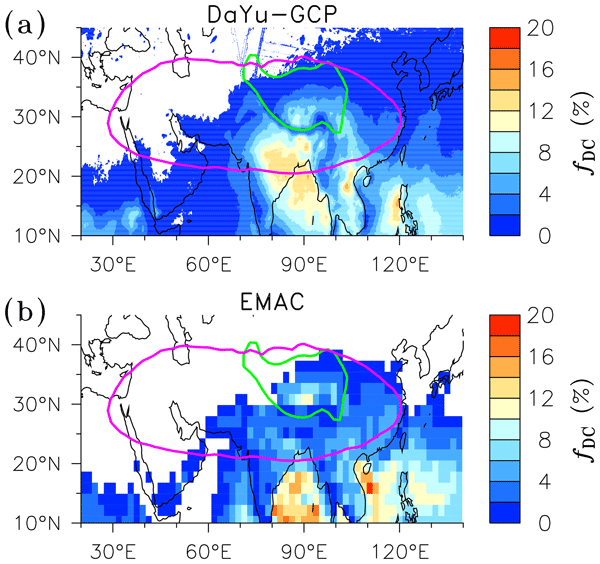
Jianzhong Ma, Bin Chen, Qianshan He, Xiaolu Yan, Gaili Wang, Siyang Cheng, Benedikt Steil, Christoph Brühl, Holger Tost, Michael Höpfner, Andrea Pozzer, and Jos Lelieveld
Atmos. Chem. Phys., 26, 8125–8144, https://doi.org/10.5194/acp-26-8125-2026, https://doi.org/10.5194/acp-26-8125-2026, 2026
Short summary
Short summary
We use a global atmospheric chemistry and climate model to study the efficiency and effectiveness of the deep convective transport of CO, NH3 and SO2 from the planetary boundary layer into the Asian summer monsoon anticyclone. We find that in contrast to CO and NH3, the SO2 enhancements within the anticyclone are very weak. The wet scavenging over South Asia is more effective for SO2 than NH3 at reducing their amounts reaching the Tibetan Plateau and the Asian summer monsoon anticyclone.
Paola Formenti, Danitza Klopper, Anais Feron, Mathieu Cazaunau, Servanne Chevaillier, Karine Desboeufs, Claudia Di Biagio, Clarissa Baldo, Cécile Gaimoz, Vincent Michoud, Cécile Mirande-Bret, Sylvain Triquet, François Hemeret, Richard Valorso, Stephen Broccardo, Andreas Namwoonde, Mattheus Hanghome, Chiara Giorio, and Stuart J. Piketh
Earth Syst. Sci. Data Discuss., https://doi.org/10.5194/essd-2026-95, https://doi.org/10.5194/essd-2026-95, 2026
Revised manuscript under review for ESSD
Short summary
Short summary
The southern African west coast is highly impacted by climate change and aerosols from natural and human sources, yet observations are scarce. We present measurements (2014–2019) from the Henties Bay Aerosol Observatory in Namibia, including aerosol properties, ozone and meteorology. This unique dataset will support process studies and improve regional climate modelling.
Johannes Heuser, Claudia Di Biagio, Jérôme Yon, Mathieu Cazaunau, Antonin Bergé, Edouard Pangui, Marco Zanatta, Laura Renzi, Angela Marinoni, Chenjie Yu, Servanne Chevaillier, Daniel Ferry, Paolo Laj, Michel Maillé, Paola Formenti, Benedicte Picquet-Varrault, and Jean-Francois Doussin
EGUsphere, https://doi.org/10.5194/egusphere-2026-1867, https://doi.org/10.5194/egusphere-2026-1867, 2026
Short summary
Short summary
Large simulation chamber experiments were performed to investigate the impact of non-absorbing coating on the absorption of fractal BC-containing soot. Results show the strong and combined effect of morphological modifications and mixing state heterogeneity on BC absorption, both depending on the reaction dynamics of coating formation and ageing of the coated soot. The range of measured absorption cannot be captured by common model approximations, highlighting the need for new formalisms.
Pasquale Sellitto, Mona Kosary, Michael Höpfner, Bernd Funke, Alex Hoffmann, Jörn Ungermann, Quentin Errera, Simone Tilmes, and Björn-Martin Sinnhuber
EGUsphere, https://doi.org/10.5194/egusphere-2026-919, https://doi.org/10.5194/egusphere-2026-919, 2026
Short summary
Short summary
To counterbalance human-caused global warming, highly controversial geoengineering techniques, based on stratospheric aerosol injection (SAI), have been proposed as a complement to climate change mitigation. Unilateral or illegal SAI deployments or tests are a risk. We show that existing satellite instruments do not have the capability to detect possible illegal SAI experiments and we propose a future satellite technique, infrared limb emission sounding, that can provide this missing capability.
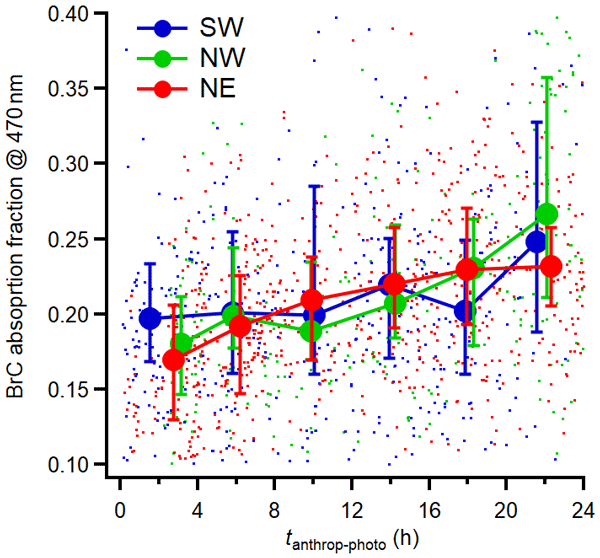
Chenjie Yu, Paola Formenti, Joel F. de Brito, Astrid Bauville, Antonin Bergé, Hichem Bouzidi, Mathieu Cazaunau, Manuela Cirtog, Claudia Di Biagio, Ludovico Di Antonio, Cécile Gaimoz, Franck Maisonneuve, Pascal Zapf, Tobias Seubert, Simone T. Andersen, Patrick Dewald, Gunther N. T. E. Türk, John N. Crowley, Alexandre Kukui, Chaoyang Xue, Cyrielle Denjean, Olivier Garrouste, Jean-Claude Etienne, Huihui Wu, James D. Allan, Dantong Liu, Yangzhou Wu, Christopher Cantrell, and Vincent Michoud
Atmos. Chem. Phys., 26, 5313–5332, https://doi.org/10.5194/acp-26-5313-2026, https://doi.org/10.5194/acp-26-5313-2026, 2026
Short summary
Short summary
We presented a field measurement in a Paris suburban forest region to characterise the impacts of photochemical aging process on aerosol physical chemical properties. Photochemical production of organic aerosols increased forest fine particle mass and significantly enhanced absorption of short-wavelength sunlight. This study highlights the critical need to incorporate light absorbing carbonaceous particles formation mechanisms into models to accurately simulate their direct radiative impacts.
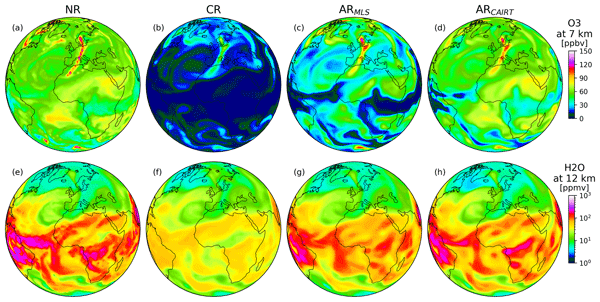
Quentin Errera, Marc Op de beeck, Stefan Bender, Johannes Flemming, Bernd Funke, Alex Hoffmann, Michael Höpfner, Nathaniel Livesey, Gabriele Poli, Didier Pieroux, Piera Raspollini, and Björn-Martin Sinnhuber
Atmos. Meas. Tech., 19, 2601–2620, https://doi.org/10.5194/amt-19-2601-2026, https://doi.org/10.5194/amt-19-2601-2026, 2026
Short summary
Short summary
The Changing Atmosphere Infra-Red Tomography Explorer (CAIRT) is a satellite mission concept developed to observe, among other, the gradient of ozone and water vapour in the upper troposphere and lower stratosphere where these species have their largest radiative impact. By simulating CAIRT observations and measuring their constrain on an atmospheric model using data assimilation, this study shows that CAIRT specifications are adequate to fulfil this objective.
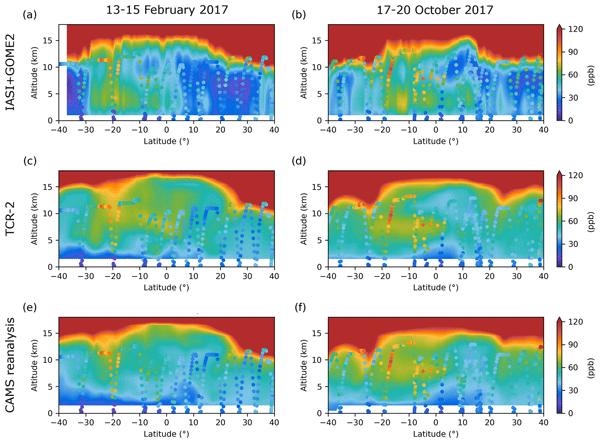
Sachiko Okamoto, Juan Cuesta, Gaëlle Dufour, Maxim Eremenko, Kazuyuki Miyazaki, Cathy Boonne, Hiroshi Tanimoto, Jeff Peischl, and Chelsea Thompson
Atmos. Chem. Phys., 26, 4685–4709, https://doi.org/10.5194/acp-26-4685-2026, https://doi.org/10.5194/acp-26-4685-2026, 2026
Short summary
Short summary
We analyse the distribution of tropospheric ozone over the Atlantic during February and October 2017 using a multispectral satellite synergism called IASI+GOME2, two chemistry reanalysis products and in situ airborne measurements. It reveals that a significant overestimation of two chemistry reanalysis products of lowermost troposphere ozone over the Atlantic in the Northern Hemisphere due to the overestimations of ozone precursors from anthropogenic sources from North America.
Clair Duchamp, Bernard Legras, Aurélien Podglajen, Pasquale Sellitto, Adam E. Bourassa, Alexei Rozanov, Ghassan Taha, and Daniel J. Zawada
Atmos. Meas. Tech., 19, 1675–1696, https://doi.org/10.5194/amt-19-1675-2026, https://doi.org/10.5194/amt-19-1675-2026, 2026
Short summary
Short summary
We analyzed the stratospheric aerosol plume from the 2022 Hunga eruption using satellite lidar data. We implemented a method to retrieve some aerosol properties, as standard products failed in this case. We found very high optical depth values in the days following the eruption, which decreased rapidly but remained elevated for months. Our results are broadly validated, though some satellite products underestimate the values due, in part, to the unusual aerosol size distribution in the plume.
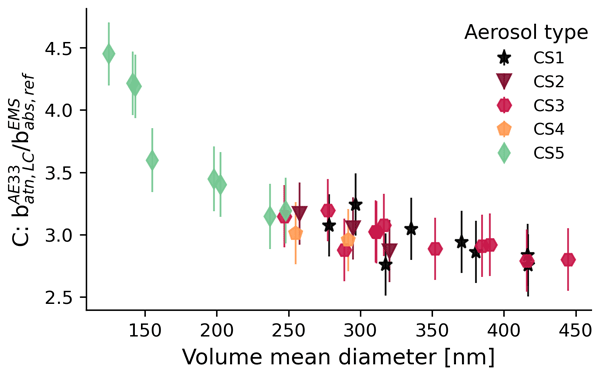
Laura Renzi, Claudia Di Biagio, Johannes Heuser, Marco Zanatta, Mathieu Cazaunau, Antonin Bergé, Edouard Pangui, Jérôme Yon, Tommaso Isolabella, Dario Massabò, Virginia Vernocchi, Martina Mazzini, Franziska Vogel, Chenjie Yu, Paola Formenti, Benedicte Picquet-Varrault, Jean-Francois Doussin, and Angela Marinoni
Atmos. Meas. Tech., 19, 1365–1383, https://doi.org/10.5194/amt-19-1365-2026, https://doi.org/10.5194/amt-19-1365-2026, 2026
Short summary
Short summary
This study investigates how particle properties affect the accuracy of a common air pollution instrument, the dual-spot aethalometer. By combining lab experiments with real-world data from a mountain site in Italy, we found that the correction factor for this instrument varies mainly due to particle size and measurement conditions. Understanding these influences helps improve air quality monitoring, which is important for assessing pollution impacts on health and climate.
Claudia Di Biagio, Elisa Bru, Avila Orta, Servanne Chevaillier, Clarissa Baldo, Antonin Bergé, Mathieu Cazaunau, Sandra Lafon, Sophie Nowak, Edouard Pangui, Meinrat O. Andreae, Pavla Dagsson-Waldhauserova, Kebonyethata Dintwe, Konrad Kandler, James S. King, Amelie Chaput, Gregory S. Okin, Stuart Piketh, Thuraya Saeed, David Seibert, Zongbo Shi, Earle Williams, Pasquale Sellitto, and Paola Formenti
Atmos. Chem. Phys., 26, 1079–1091, https://doi.org/10.5194/acp-26-1079-2026, https://doi.org/10.5194/acp-26-1079-2026, 2026
Short summary
Short summary
Spectroscopy measurements show that the absorbance of dust in the far-infrared up to 25 µm is comparable in intensity to that in the mid-infrared (3–15 µm) suggesting possible relevance for its direct radiative effect. Absorption signatures differ between Icelandic and low/mid-latitude dust due to differences in mineralogical composition. Spectral differences could be used to characterise the mineralogy and trace the origin of airborne dust based on infrared remote sensing observations.
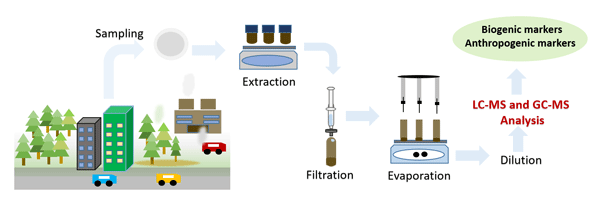
Diana L. Pereira, Aline Gratien, Chiara Giorio, Emmanuelle Mebold, Thomas Bertin, Cécile Gaimoz, Jean-François Doussin, and Paola Formenti
Atmos. Meas. Tech., 19, 1–19, https://doi.org/10.5194/amt-19-1-2026, https://doi.org/10.5194/amt-19-1-2026, 2026
Short summary
Short summary
This study provides two methods for the quantification of molecular markers to improve the description of secondary organic aerosols using chromatographic techniques coupled with mass spectrometry. Compounds from various chemical functionalities (alcohols, acids, aldehydes), from biogenic and anthropogenic origin, were identified. Improved method performance was observed for nitro compounds, which have been associated with anthropogenic activities.
Redha Belhadji, Pasquale Sellitto, Maxim Eremenko, Silvia Bucci, Tran M. Nguyet, Martin Schwell, and Bernard Legras
Atmos. Meas. Tech., 18, 7465–7476, https://doi.org/10.5194/amt-18-7465-2025, https://doi.org/10.5194/amt-18-7465-2025, 2025
Short summary
Short summary
The 2019–2020 Australian wildfires triggered massive Pyro-cumulonimbus clouds, injecting smoke aerosols into the stratosphere and forming a self-sustaining vortex that reached 35 km altitude. This vortex created a transient ozone mini-hole. Using satellite and ground-based observations, we tracked a 30–40 % initial ozone depletion, which decayed to ~7 % within a month. These findings highlight the impact of extreme wildfires on stratospheric dynamics and ozone composition.
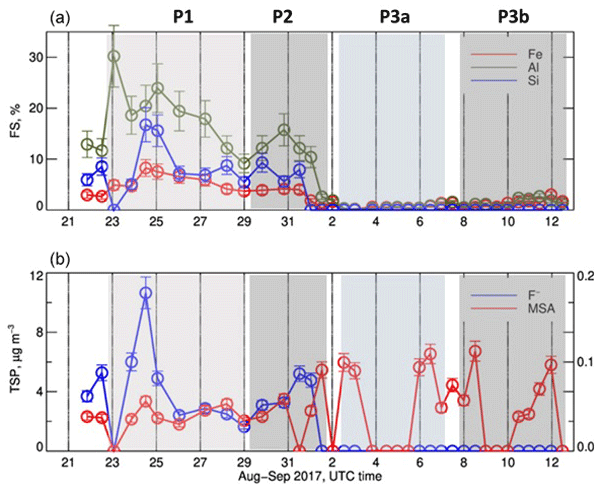
Paola Formenti, Chiara Giorio, Karine Desboeufs, Alexander Zherebker, Marco Gaetani, Clarissa Baldo, Gautier Landrot, Simona Montebello, Servanne Chevaillier, Sylvain Triquet, Guillaume Siour, Claudia Di Biagio, Francesco Battaglia, Jean-François Doussin, Anais Feron, Andreas Namwoonde, and Stuart John Piketh
Atmos. Chem. Phys., 25, 16127–16145, https://doi.org/10.5194/acp-25-16127-2025, https://doi.org/10.5194/acp-25-16127-2025, 2025
Short summary
Short summary
The elemental composition and solubility of several metals, including iron, at a coastal site in Namibia in August–September 2017, indicate that natural and anthropogenic dust had different solubility depending on mineralogy but mostly on the processing by fluoride ions from marine emissions, pointing to the complexity of atmospheric--oceanic interactions in this region of the world influenced by the Benguela current and significant aerosol load.
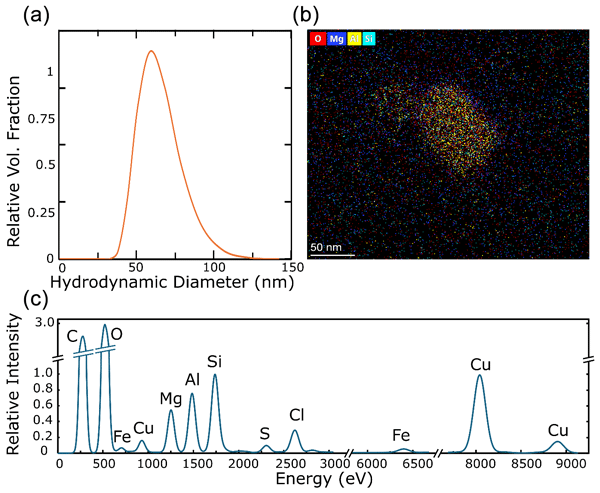
Chiara Giorio, Anne Monod, Valerio Di Marco, Pierre Herckes, Denise Napolitano, Amy Sullivan, Gautier Landrot, Daniel Warnes, Marika Nasti, Sara D'Aronco, Agathe Gérardin, Nicolas Brun, Karine Desboeufs, Sylvain Triquet, Servanne Chevaillier, Claudia Di Biagio, Francesco Battaglia, Frédéric Burnet, Stuart J. Piketh, Andreas Namwoonde, Jean-François Doussin, and Paola Formenti
Atmos. Chem. Phys., 25, 16107–16125, https://doi.org/10.5194/acp-25-16107-2025, https://doi.org/10.5194/acp-25-16107-2025, 2025
Short summary
Short summary
We present a comparison between concentrations of dissolved trace metals in pairs of total suspended particulate (TSP) and fog samples collected in Henties Bay, Namibia, during the AErosols, Radiation and CLOuds in southern Africa (AEROCLO-sA) field campaign. We found enhanced concentrations of dissolved metals in fog samples, which we attributed to metal–ligand complex formation in the early stages of particle activation into droplets that can then remain in a kinetically stable form in fog or lead to the formation of colloidal nanoparticles.
Gerald Wetzel, Anne Kleinert, Sören Johansson, Felix Friedl-Vallon, Michael Höpfner, Jörn Ungermann, Tom Neubert, Valéry Catoire, Cyril Crevoisier, Andreas Engel, Thomas Gulde, Patrick Jacquet, Oliver Kirner, Erik Kretschmer, Thomas Kulessa, Johannes C. Laube, Guido Maucher, Hans Nordmeyer, Christof Piesch, Peter Preusse, Markus Retzlaff, Georg Schardt, Johan Schillings, Herbert Schneider, Axel Schönfeld, Tanja Schuck, Wolfgang Woiwode, Martin Riese, and Peter Braesicke
Atmos. Meas. Tech., 18, 5873–5894, https://doi.org/10.5194/amt-18-5873-2025, https://doi.org/10.5194/amt-18-5873-2025, 2025
Short summary
Short summary
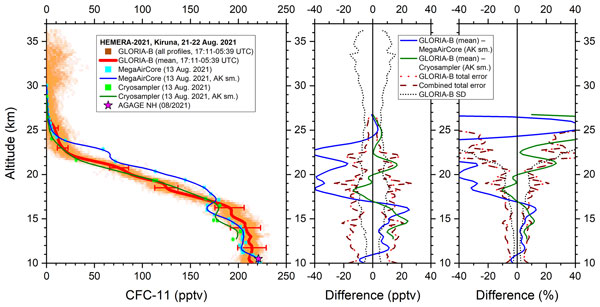
We present vertical trace gas profiles from the first balloon flight of the newly developed GLORIA-B limb-imaging Fourier-Transform spectrometer. Longer-lived gases are compared to external measurements to assess the quality of the GLORIA-B observations. Diurnal changes of photochemically active species are compared to model simulations. GLORIA-B demonstrates the capability of balloon-borne limb imaging to provide high-resolution vertical profiles of trace gases up to the middle stratosphere.
Pasquale Sellitto, Audrey Gaudel, and Bastien Sauvage
Atmos. Chem. Phys., 25, 13299–13309, https://doi.org/10.5194/acp-25-13299-2025, https://doi.org/10.5194/acp-25-13299-2025, 2025
Short summary
Short summary
Tropospheric ozone is a potent greenhouse gas: its anthropogenic levels rise contributes to climate change. We evaluate tropospheric ozone trends and climate impacts with aircraft data and a radiative model, comparing a baseline period (1994–2004) to different recent time periods (2011–2016 to 2020-2023). Tropospheric ozone levels increasing trends progressively stopped and even decreased in the upper troposphere. Correspondingly, the decadal ozone radiative forcing is progressively decreasing.
Cecilia Tirelli, Simone Ceccherini, Samuele Del Bianco, Bernd Funke, Michael Höpfner, Ugo Cortesi, and Piera Raspollini
Atmos. Meas. Tech., 18, 5619–5636, https://doi.org/10.5194/amt-18-5619-2025, https://doi.org/10.5194/amt-18-5619-2025, 2025
Short summary
Short summary
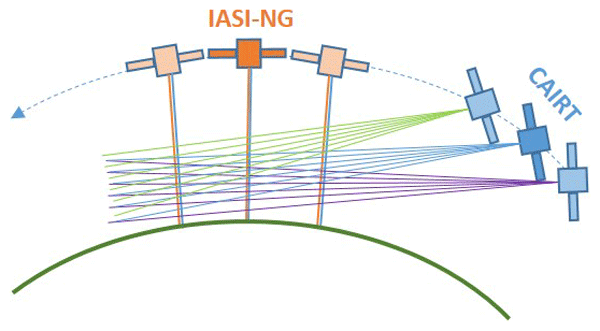
The Complete Data Fusion is an a posteriori method used to combine remote sensing products from independent observations of the same or proximate air masses. In this study, we extend the algorithm’s applicability to two-dimensional products, testing it with simulated ozone datasets from nadir and limb measurements. Our results show that the exploitation of the tomographic capabilities of future atmospheric sensors maximizes the information extracted from complementary datasets.
Francesco Battaglia, Paola Formenti, Chiara Giorio, Mathieu Cazaunau, Edouard Pangui, Antonin Bergé, Aline Gratien, Diana L. Pereira, Thomas Bertin, Joel F. de Brito, Manolis N. Romanias, Vincent Michoud, Clarissa Baldo, Servanne Chevaillier, Gael Noyalet, Philippe Decorse, Bénédicte Picquet-Varrault, and Jean-François Doussin
Atmos. Chem. Phys., 25, 12409–12431, https://doi.org/10.5194/acp-25-12409-2025, https://doi.org/10.5194/acp-25-12409-2025, 2025
Short summary
Short summary
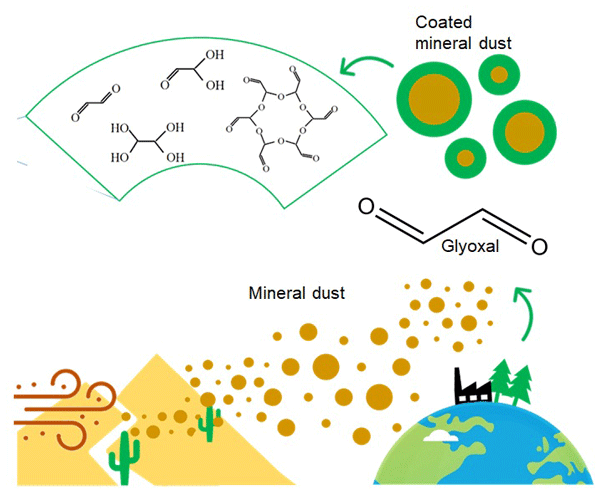
This paper presents an experimental investigation of the interactions between glyoxal, an important volatile organic compound, and mineral dust particles of size and composition typical of natural conditions. We show that their interactions modify, in a definitive way, the concentrations of the gas phase and the surface properties of the dust, which could have important implications for the atmospheric composition and the Earth's climate.
Gaëlle Dufour, Maxim Eremenko, Juan Cuesta, Gérard Ancellet, Michael Gill, Eliane Maillard Barras, and Roeland Van Malderen
Atmos. Meas. Tech., 18, 5049–5070, https://doi.org/10.5194/amt-18-5049-2025, https://doi.org/10.5194/amt-18-5049-2025, 2025
Short summary
Short summary
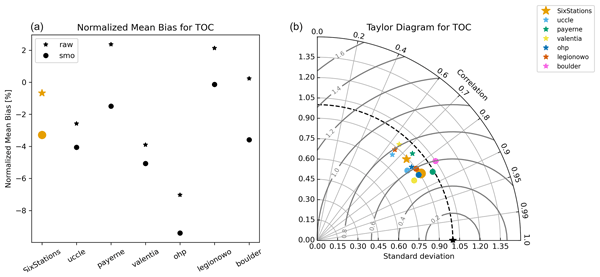
Tropospheric ozone from the three Infrared Atmospheric Sounding Interferometer (IASI) instruments is very consistent (<1 %). The validation against homogenized ozone sondes reveals an overall good agreement with slight biases (3 %–6 %) in tropospheric ozone and a possible temporal drift, but this is difficult to assess due to the limited number of sites. No specific trends are estimated for the tropospheric ozone column for the period 2008–2022, but persistent negative trends are observed in the lower troposphere.
Mégane Ventura, Fabien Waquet, Isabelle Chiapello, Gérard Brogniez, Frédéric Parol, Frédérique Auriol, Rodrigue Loisil, Cyril Delegove, Luc Blarel, Oleg Dubovik, Marc Mallet, Cyrille Flamant, and Paola Formenti
Atmos. Meas. Tech., 18, 4005–4024, https://doi.org/10.5194/amt-18-4005-2025, https://doi.org/10.5194/amt-18-4005-2025, 2025
Short summary
Short summary
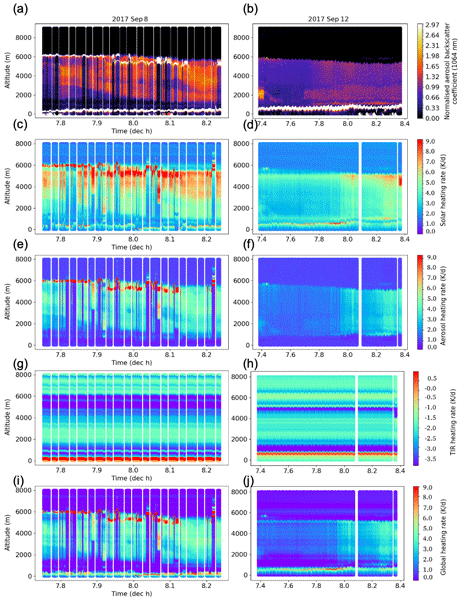
Biomass-burning aerosols (BBAs) from Central Africa are transported above stratocumulus clouds. The absorption of solar energy by aerosols induces warming, altering the cloud dynamics. We developed an approach that combines polarimeter and lidar to quantify this. This methodology is assessed during the AEROCLO-sA (AErosol RadiatiOn and CLOud in Southern Africa) campaign. To validate it, we used irradiance measurements acquired during aircraft spiral descents. A major perspective is the generalization of this method to the global level.
Abdulaziz T. Yakubu, Danitza Klopper, Henno Havenga, Roelof Burger, Paola Formenti, and Stuart J. Piketh
EGUsphere, https://doi.org/10.5194/egusphere-2025-1827, https://doi.org/10.5194/egusphere-2025-1827, 2025
Preprint archived
Short summary
Short summary
Low-level inversions experienced along the Namibia coast and adjacent ocean have implications for air pollutant dispersion and low clouds. These affect air quality, human health, radiative forcing and climate change. We used reanalysis and satellite datasets to understand inversion properties over the region. The result shows inversion prominence at night and in winter, seasonally influences pollutant trapping and initiates stratocumulus clouds formation, but is not liable for their extent.
Matthias Kohl, Christoph Brühl, Jennifer Schallock, Holger Tost, Patrick Jöckel, Adrian Jost, Steffen Beirle, Michael Höpfner, and Andrea Pozzer
Geosci. Model Dev., 18, 3985–4007, https://doi.org/10.5194/gmd-18-3985-2025, https://doi.org/10.5194/gmd-18-3985-2025, 2025
Short summary
Short summary
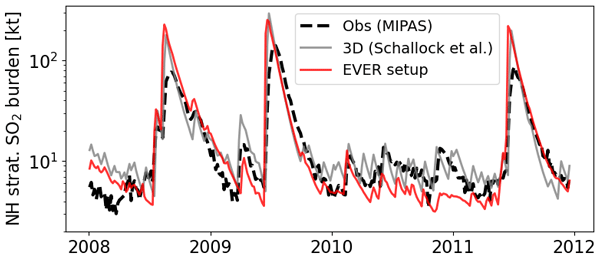
SO2 from explosive volcanic eruptions reaching the stratosphere can oxidize and form sulfur aerosols, potentially persisting for several years. We developed a new submodel, Explosive Volcanic ERuptions (EVER), that seamlessly includes stratospheric volcanic SO2 emissions in global numerical simulations based on a novel standard historical model setup, successfully evaluated with satellite observations. Sensitivity studies on the Nabro eruption in 2011 evaluate different emission methods.
Johannes Heuser, Claudia Di Biagio, Jérôme Yon, Mathieu Cazaunau, Antonin Bergé, Edouard Pangui, Marco Zanatta, Laura Renzi, Angela Marinoni, Satoshi Inomata, Chenjie Yu, Vera Bernardoni, Servanne Chevaillier, Daniel Ferry, Paolo Laj, Michel Maillé, Dario Massabò, Federico Mazzei, Gael Noyalet, Hiroshi Tanimoto, Brice Temime-Roussel, Roberta Vecchi, Virginia Vernocchi, Paola Formenti, Bénédicte Picquet-Varrault, and Jean-François Doussin
Atmos. Chem. Phys., 25, 6407–6428, https://doi.org/10.5194/acp-25-6407-2025, https://doi.org/10.5194/acp-25-6407-2025, 2025
Short summary
Short summary
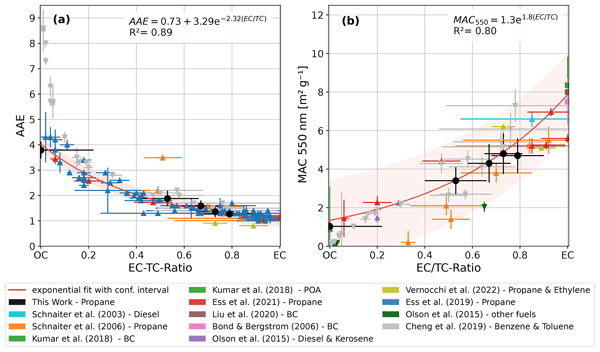
The spectral optical properties of combustion soot aerosols with varying black (BC) and brown carbon (BrC) content were studied in an atmospheric simulation chamber. Measurements of the mass spectral absorption cross section (MAC), supplemented by literature data, allowed us to establish a generalised exponential relationship between the spectral absorption and the elemental-to-total-carbon ratio (EC / TC) in soot. This relationship can provide a useful tool for modelling the properties of soot.
Pasquale Sellitto, Redha Belhadji, Bernard Legras, Aurélien Podglajen, and Clair Duchamp
Atmos. Chem. Phys., 25, 6353–6364, https://doi.org/10.5194/acp-25-6353-2025, https://doi.org/10.5194/acp-25-6353-2025, 2025
Short summary
Short summary
The Hunga Tonga–Hunga Ha’apai volcano erupted on 15 January 2022, producing the largest stratospheric aerosol perturbation of the last 30 years. Stratospheric volcanic aerosols usually produce a transient climate cooling; these impacts depend on volcanic aerosol composition/size, due to size-dependent interactions with solar/terrestrial radiation. We demonstrate that the Hunga Tonga–Hunga Ha’apai stratospheric aerosols have a larger cooling potential per unit mass than the past climate-relevant El Chichón (1984) and Pinatubo (1991) eruptions.
Simone T. Andersen, Rolf Sander, Patrick Dewald, Laura Wüst, Tobias Seubert, Gunther N. T. E. Türk, Jan Schuladen, Max R. McGillen, Chaoyang Xue, Abdelwahid Mellouki, Alexandre Kukui, Vincent Michoud, Manuela Cirtog, Mathieu Cazaunau, Astrid Bauville, Hichem Bouzidi, Paola Formenti, Cyrielle Denjean, Jean-Claude Etienne, Olivier Garrouste, Christopher Cantrell, Jos Lelieveld, and John N. Crowley
Atmos. Chem. Phys., 25, 5893–5909, https://doi.org/10.5194/acp-25-5893-2025, https://doi.org/10.5194/acp-25-5893-2025, 2025
Short summary
Short summary
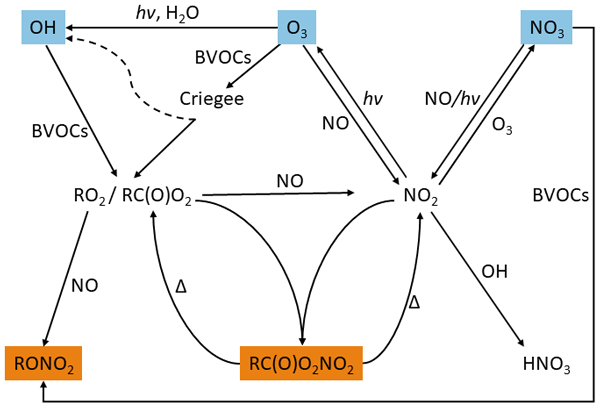
Measurements and modelling of reactive nitrogen gases observed in a suburban temperate forest in Rambouillet, France, circa 50 km southwest of Paris in 2022 indicate that the biosphere rapidly scavenges organic nitrates of mixed biogenic and anthropogenic origin, resulting in short lifetimes for, for example, alkyl nitrates and peroxy nitrates.
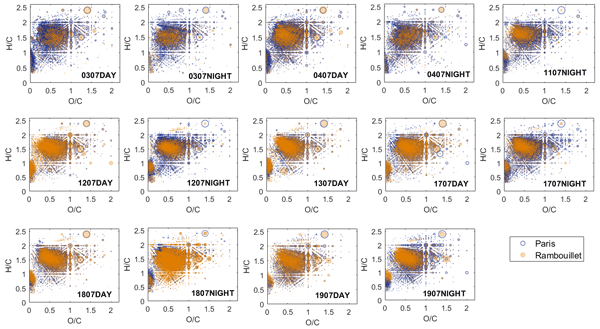
Diana L. Pereira, Chiara Giorio, Aline Gratien, Alexander Zherebker, Gael Noyalet, Servanne Chevaillier, Stéphanie Alage, Elie Almarj, Antonin Bergé, Thomas Bertin, Mathieu Cazaunau, Patrice Coll, Ludovico Di Antonio, Sergio Harb, Johannes Heuser, Cécile Gaimoz, Oscar Guillemant, Brigitte Language, Olivier Lauret, Camilo Macias, Franck Maisonneuve, Bénédicte Picquet-Varrault, Raquel Torres, Sylvain Triquet, Pascal Zapf, Lelia Hawkins, Drew Pronovost, Sydney Riley, Pierre-Marie Flaud, Emilie Perraudin, Pauline Pouyes, Eric Villenave, Alexandre Albinet, Olivier Favez, Robin Aujay-Plouzeau, Vincent Michoud, Christopher Cantrell, Manuela Cirtog, Claudia Di Biagio, Jean-François Doussin, and Paola Formenti
Atmos. Chem. Phys., 25, 4885–4905, https://doi.org/10.5194/acp-25-4885-2025, https://doi.org/10.5194/acp-25-4885-2025, 2025
Short summary
Short summary
In order to study aerosols in environments influenced by anthropogenic and biogenic emissions, we performed analyses of samples collected during the ACROSS (Atmospheric Chemistry Of the Suburban Forest) campaign in summer 2022 in the greater Paris area. After analysis of the chemical composition by means of total carbon determination and high-resolution mass spectrometry, this work highlights the influence of anthropogenic inputs on the chemical composition of both urban and forested areas.
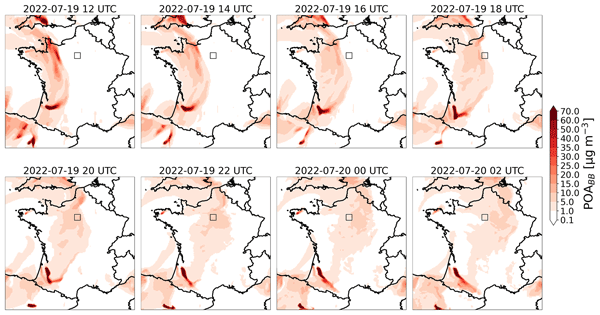
Ludovico Di Antonio, Matthias Beekmann, Guillaume Siour, Vincent Michoud, Christopher Cantrell, Astrid Bauville, Antonin Bergé, Mathieu Cazaunau, Servanne Chevaillier, Manuela Cirtog, Joel F. de Brito, Paola Formenti, Cecile Gaimoz, Olivier Garret, Aline Gratien, Valérie Gros, Martial Haeffelin, Lelia N. Hawkins, Simone Kotthaus, Gael Noyalet, Diana L. Pereira, Jean-Eudes Petit, Eva Drew Pronovost, Véronique Riffault, Chenjie Yu, Gilles Foret, Jean-François Doussin, and Claudia Di Biagio
Atmos. Chem. Phys., 25, 4803–4831, https://doi.org/10.5194/acp-25-4803-2025, https://doi.org/10.5194/acp-25-4803-2025, 2025
Short summary
Short summary
The summer of 2022 has been considered a proxy for future climate scenarios due to its hot and dry conditions. In this paper, we use the measurements from the Atmospheric Chemistry of the Suburban Forest (ACROSS) campaign, conducted in the Paris area in June–July 2022, along with observations from existing networks, to evaluate a 3D chemistry transport model (WRF–CHIMERE) simulation. Results are shown to be satisfactory, allowing us to explain the gas and aerosol variability at the campaign sites.
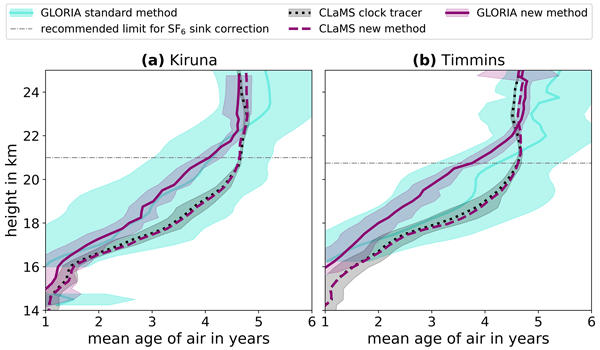
Florian Voet, Felix Ploeger, Johannes Laube, Peter Preusse, Paul Konopka, Jens-Uwe Grooß, Jörn Ungermann, Björn-Martin Sinnhuber, Michael Höpfner, Bernd Funke, Gerald Wetzel, Sören Johansson, Gabriele Stiller, Eric Ray, and Michaela I. Hegglin
Atmos. Chem. Phys., 25, 3541–3565, https://doi.org/10.5194/acp-25-3541-2025, https://doi.org/10.5194/acp-25-3541-2025, 2025
Short summary
Short summary
This study refines estimates of the stratospheric “age of air”, a measure of how long air circulates in the stratosphere. By analyzing correlations between trace gases measurable by satellites, the research introduces a method that reduces uncertainties and detects small-scale atmospheric features. This improved understanding of stratospheric circulation is crucial for better climate models and predictions, enhancing our ability to assess the impacts of climate change on the atmosphere.
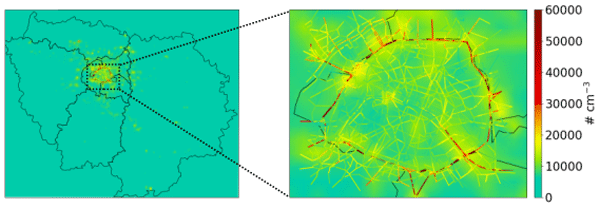
Soo-Jin Park, Lya Lugon, Oscar Jacquot, Youngseob Kim, Alexia Baudic, Barbara D'Anna, Ludovico Di Antonio, Claudia Di Biagio, Fabrice Dugay, Olivier Favez, Véronique Ghersi, Aline Gratien, Julien Kammer, Jean-Eudes Petit, Olivier Sanchez, Myrto Valari, Jérémy Vigneron, and Karine Sartelet
Atmos. Chem. Phys., 25, 3363–3387, https://doi.org/10.5194/acp-25-3363-2025, https://doi.org/10.5194/acp-25-3363-2025, 2025
Short summary
Short summary
To accurately represent the population exposure to outdoor concentrations of pollutants of interest to health (NO2, PM2.5, black carbon, and ultrafine particles), multi-scale modelling down to the street scale is set up and evaluated using measurements from field campaigns. An exposure scaling factor is defined, allowing regional-scale simulations to be corrected to evaluate population exposure. Urban heterogeneities strongly influence NO2, black carbon, and ultrafine particles but less strongly PM2.5.
Ludovico Di Antonio, Claudia Di Biagio, Paola Formenti, Aline Gratien, Vincent Michoud, Christopher Cantrell, Astrid Bauville, Antonin Bergé, Mathieu Cazaunau, Servanne Chevaillier, Manuela Cirtog, Patrice Coll, Barbara D'Anna, Joel F. de Brito, David O. De Haan, Juliette R. Dignum, Shravan Deshmukh, Olivier Favez, Pierre-Marie Flaud, Cecile Gaimoz, Lelia N. Hawkins, Julien Kammer, Brigitte Language, Franck Maisonneuve, Griša Močnik, Emilie Perraudin, Jean-Eudes Petit, Prodip Acharja, Laurent Poulain, Pauline Pouyes, Eva Drew Pronovost, Véronique Riffault, Kanuri I. Roundtree, Marwa Shahin, Guillaume Siour, Eric Villenave, Pascal Zapf, Gilles Foret, Jean-François Doussin, and Matthias Beekmann
Atmos. Chem. Phys., 25, 3161–3189, https://doi.org/10.5194/acp-25-3161-2025, https://doi.org/10.5194/acp-25-3161-2025, 2025
Short summary
Short summary
The spectral complex refractive index (CRI) and single scattering albedo were retrieved from submicron aerosol measurements at three sites within the greater Paris area during the ACROSS field campaign (June–July 2022). Measurements revealed urban emission impact on surrounding areas. CRI full period averages at 520 nm were 1.41 – 0.037i (urban), 1.52 – 0.038i (peri-urban), and 1.50 – 0.025i (rural). Organic aerosols dominated the aerosol mass and contributed up to 22 % of absorption at 370 nm.
Alexandre Mass, Hendrik Andersen, Jan Cermak, Paola Formenti, Eva Pauli, and Julian Quinting
Atmos. Chem. Phys., 25, 491–510, https://doi.org/10.5194/acp-25-491-2025, https://doi.org/10.5194/acp-25-491-2025, 2025
Short summary
Short summary
This study investigates the interaction between smoke aerosols and fog and low clouds (FLCs) in the Namib Desert between June and October. Here, a satellite-based dataset of FLCs, reanalysis data and machine learning are used to systematically analyze FLC persistence under different aerosol loadings. Aerosol plumes are shown to modify local thermodynamics, which increase FLC persistence. But fully disentangling aerosol effects from meteorological ones remains a challenge.
Michaël Sicard, Alexandre Baron, Marion Ranaivombola, Dominique Gantois, Tristan Millet, Pasquale Sellitto, Nelson Bègue, Hassan Bencherif, Guillaume Payen, Nicolas Marquestaut, and Valentin Duflot
Atmos. Chem. Phys., 25, 367–381, https://doi.org/10.5194/acp-25-367-2025, https://doi.org/10.5194/acp-25-367-2025, 2025
Short summary
Short summary
This study quantifies the radiative impact over Réunion Island (21° S, 55° E) of the aerosols and water vapor injected into the stratosphere by the Hunga volcano in the South Pacific. The overall aerosol and water vapor impact on the Earth’s radiation budget for the whole period is negative (cooling, -0.82 ± 0.35 W m-2) and dominated by the aerosols. At the Earth’s surface, aerosols are the main drivers and produce a negative (cooling, -1.04 ± 0.36 W m-2) radiative impact.
Lu Zhang, Michal Segal-Rozenhaimer, Haochi Che, Caroline Dang, Junying Sun, Ye Kuang, Paola Formenti, and Steven G. Howell
Atmos. Chem. Phys., 24, 13849–13864, https://doi.org/10.5194/acp-24-13849-2024, https://doi.org/10.5194/acp-24-13849-2024, 2024
Short summary
Short summary
Using airborne measurements over the southeast Atlantic Ocean, we examined how much moisture aerosols take up during Africa’s biomass burning season. Our study revealed the important role of organic aerosols and introduced a predictive model for moisture uptake, accounting for organics, sulfate, and black carbon, summarizing results from various campaigns. These findings improve our understanding of aerosol–moisture interactions and their radiative effects in this climatically critical region.
Perla Alalam, Fabrice Ducos, and Hervé Herbin
Atmos. Chem. Phys., 24, 12277–12294, https://doi.org/10.5194/acp-24-12277-2024, https://doi.org/10.5194/acp-24-12277-2024, 2024
Short summary
Short summary
This study dives into the impact of mineral dust laboratory complex refractive indices (CRIs) on quantifying the dust microphysical properties using satellite infrared remote sensing. Results show that using CRIs obtained by advanced realistic techniques can improve the accuracy of these measurements, emphasizing the importance of choosing the suitable CRI in atmospheric models. This improvement is crucial for better predicting the dust radiative effect and impact on the climate.
Paola Formenti and Claudia Di Biagio
Earth Syst. Sci. Data, 16, 4995–5007, https://doi.org/10.5194/essd-16-4995-2024, https://doi.org/10.5194/essd-16-4995-2024, 2024
Short summary
Short summary
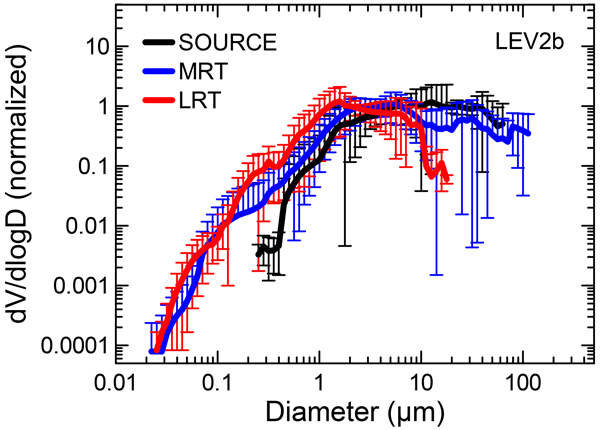
Particles from deserts and semi-vegetated areas (mineral dust) are important for Earth's climate and human health, notably depending on their size. In this paper we collect and make a synthesis of a body of these observations since 1972 in order to provide researchers modeling Earth's climate and developing satellite observations from space with a simple way of confronting their results and understanding their validity.
Karolin Voss, Philip Holzbeck, Klaus Pfeilsticker, Ralph Kleinschek, Gerald Wetzel, Blanca Fuentes Andrade, Michael Höpfner, Jörn Ungermann, Björn-Martin Sinnhuber, and André Butz
Atmos. Meas. Tech., 17, 4507–4528, https://doi.org/10.5194/amt-17-4507-2024, https://doi.org/10.5194/amt-17-4507-2024, 2024
Short summary
Short summary
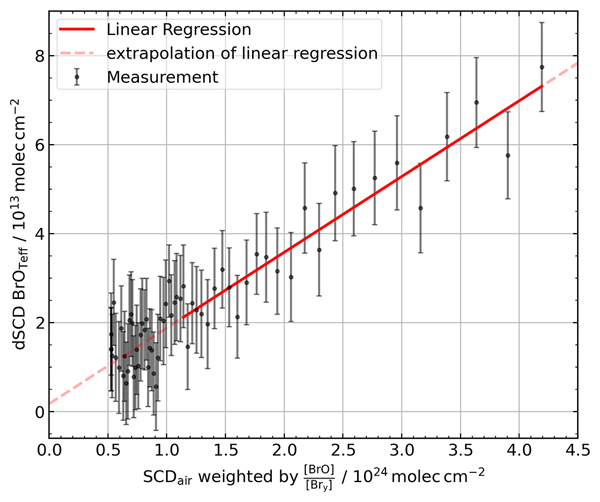
A novel balloon-borne instrument for direct sun and solar occultation measurements of several UV–Vis absorbing gases (e.g. O3, NO2, BrO, IO, and HONO) is described. Its major design features and performance during two stratospheric deployments are discussed. From the measured overhead BrO concentration and a suitable photochemical correction, total stratospheric bromine is inferred to (17.5 ± 2.2) ppt in air masses which entered the stratosphere around early 2017 ± 1 year.
Sören Johansson, Michael Höpfner, Felix Friedl-Vallon, Norbert Glatthor, Thomas Gulde, Vincent Huijnen, Anne Kleinert, Erik Kretschmer, Guido Maucher, Tom Neubert, Hans Nordmeyer, Christof Piesch, Peter Preusse, Martin Riese, Björn-Martin Sinnhuber, Jörn Ungermann, Gerald Wetzel, and Wolfgang Woiwode
Atmos. Chem. Phys., 24, 8125–8138, https://doi.org/10.5194/acp-24-8125-2024, https://doi.org/10.5194/acp-24-8125-2024, 2024
Short summary
Short summary
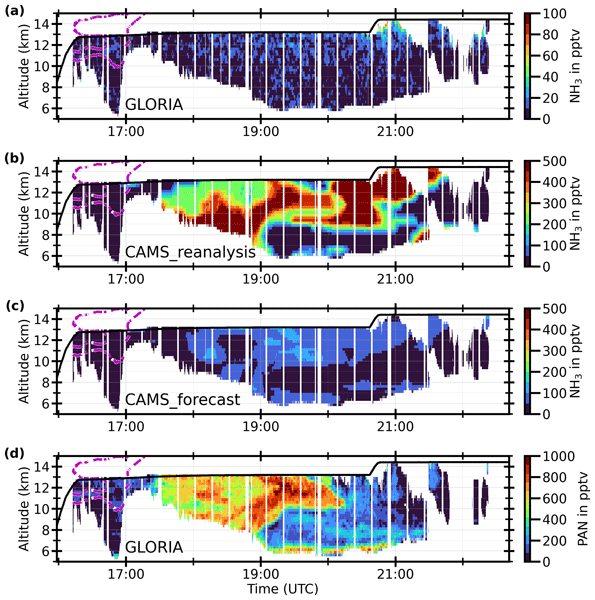
We present airborne infrared limb sounding GLORIA measurements of ammonia (NH3) in the upper troposphere of air masses within the Asian monsoon and of those connected with biomass burning. Comparing CAMS (Copernicus Atmosphere Monitoring Service) model data, we find that the model reproduces the measured enhanced NH3 within the Asian monsoon well but not that within biomass burning plumes, where no enhanced NH3 is measured in the upper troposphere but considerable amounts are simulated by CAMS.
Chenjie Yu, Edouard Pangui, Kevin Tu, Mathieu Cazaunau, Maxime Feingesicht, Landsheere Xavier, Thierry Bourrianne, Vincent Michoud, Christopher Cantrell, Timothy B. Onasch, Andrew Freedman, and Paola Formenti
Atmos. Meas. Tech., 17, 3419–3437, https://doi.org/10.5194/amt-17-3419-2024, https://doi.org/10.5194/amt-17-3419-2024, 2024
Short summary
Short summary
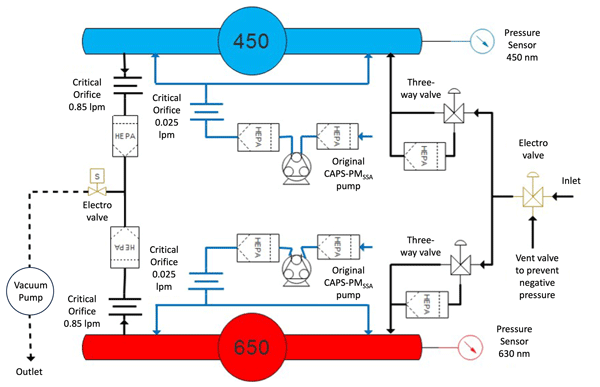
To meet the requirements for measuring aerosol optical properties on airborne platforms and conducting dual-wavelength measurements, we introduced A2S2, an airborne dual-wavelength cavity-attenuated phase-shift single monitor. This study reports the results in the laboratory and an aircraft campaign over Paris and its surrounding regions. The results demonstrate A2S2's reliability in measuring aerosol optical properties at both wavelengths and its suitability for future aircraft campaigns.
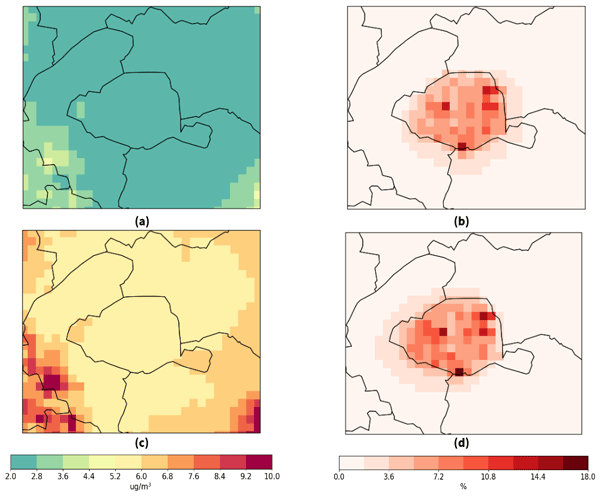
Alice Maison, Lya Lugon, Soo-Jin Park, Alexia Baudic, Christopher Cantrell, Florian Couvidat, Barbara D'Anna, Claudia Di Biagio, Aline Gratien, Valérie Gros, Carmen Kalalian, Julien Kammer, Vincent Michoud, Jean-Eudes Petit, Marwa Shahin, Leila Simon, Myrto Valari, Jérémy Vigneron, Andrée Tuzet, and Karine Sartelet
Atmos. Chem. Phys., 24, 6011–6046, https://doi.org/10.5194/acp-24-6011-2024, https://doi.org/10.5194/acp-24-6011-2024, 2024
Short summary
Short summary
This study presents the development of a bottom-up inventory of urban tree biogenic emissions. Emissions are computed for each tree based on their location and characteristics and are integrated in the regional air quality model WRF-CHIMERE. The impact of these biogenic emissions on air quality is quantified for June–July 2022. Over Paris city, urban trees increase the concentrations of particulate organic matter by 4.6 %, of PM2.5 by 0.6 %, and of ozone by 1.0 % on average over 2 months.

Christina V. Brodowsky, Timofei Sukhodolov, Gabriel Chiodo, Valentina Aquila, Slimane Bekki, Sandip S. Dhomse, Michael Höpfner, Anton Laakso, Graham W. Mann, Ulrike Niemeier, Giovanni Pitari, Ilaria Quaglia, Eugene Rozanov, Anja Schmidt, Takashi Sekiya, Simone Tilmes, Claudia Timmreck, Sandro Vattioni, Daniele Visioni, Pengfei Yu, Yunqian Zhu, and Thomas Peter
Atmos. Chem. Phys., 24, 5513–5548, https://doi.org/10.5194/acp-24-5513-2024, https://doi.org/10.5194/acp-24-5513-2024, 2024
Short summary
Short summary
The aerosol layer is an essential part of the climate system. We characterize the sulfur budget in a volcanically quiescent (background) setting, with a special focus on the sulfate aerosol layer using, for the first time, a multi-model approach. The aim is to identify weak points in the representation of the atmospheric sulfur budget in an intercomparison of nine state-of-the-art coupled global circulation models.

Norbert Glatthor, Thomas von Clarmann, Bernd Funke, Maya García-Comas, Udo Grabowski, Michael Höpfner, Sylvia Kellmann, Michael Kiefer, Alexandra Laeng, Andrea Linden, Manuel López-Puertas, and Gabriele P. Stiller
Atmos. Meas. Tech., 17, 2849–2871, https://doi.org/10.5194/amt-17-2849-2024, https://doi.org/10.5194/amt-17-2849-2024, 2024
Short summary
Short summary
We present global atmospheric methane (CH4) and nitrous oxide (N2O) distributions retrieved from measurements of the MIPAS instrument on board the Environmental Satellite (Envisat) during 2002 to 2012. Monitoring of these gases is of scientific interest because both of them are strong greenhouse gases. We analyze the latest, improved version of calibrated MIPAS measurements. Further, we apply a new retrieval scheme leading to an improved CH4 and N2O data product .
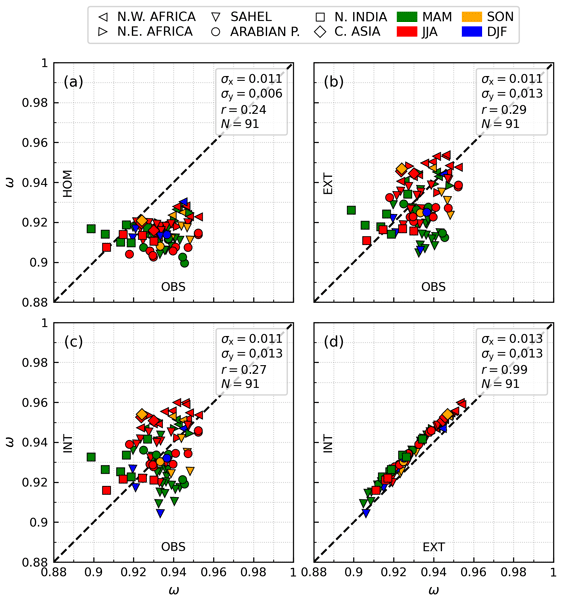
Vincenzo Obiso, María Gonçalves Ageitos, Carlos Pérez García-Pando, Jan P. Perlwitz, Gregory L. Schuster, Susanne E. Bauer, Claudia Di Biagio, Paola Formenti, Kostas Tsigaridis, and Ron L. Miller
Atmos. Chem. Phys., 24, 5337–5367, https://doi.org/10.5194/acp-24-5337-2024, https://doi.org/10.5194/acp-24-5337-2024, 2024
Short summary
Short summary
We calculate the dust direct radiative effect (DRE) in an Earth system model accounting for regionally varying soil mineralogy through a new observationally constrained method. Linking dust absorption at solar wavelengths to the varying amount of specific minerals (i.e., iron oxides) improves the modeled range of dust single scattering albedo compared to observations and increases the global cooling by dust. Our results may contribute to improved estimates of the dust DRE and its climate impact.
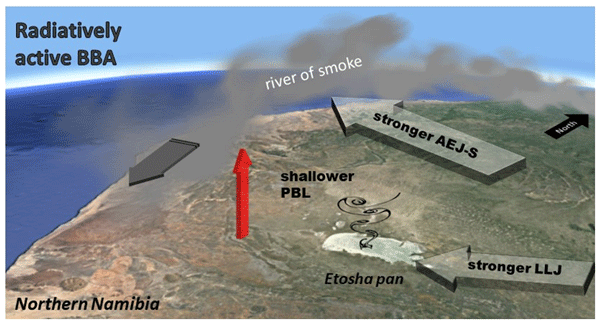
Cyrille Flamant, Jean-Pierre Chaboureau, Marco Gaetani, Kerstin Schepanski, and Paola Formenti
Atmos. Chem. Phys., 24, 4265–4288, https://doi.org/10.5194/acp-24-4265-2024, https://doi.org/10.5194/acp-24-4265-2024, 2024
Short summary
Short summary
In the austral dry season, the atmospheric composition over southern Africa is dominated by biomass burning aerosols and terrigenous aerosols (so-called mineral dust). This study suggests that the radiative effect of biomass burning aerosols needs to be taken into account to properly forecast dust emissions in Namibia.
Anil Kumar Mandariya, Junteng Wu, Anne Monod, Paola Formenti, Bénédicte Picquet-Varrault, Mathieu Cazaunau, Stephan Mertes, Laurent Poulain, Antonin Berge, Edouard Pangui, Andreas Tilgner, Thomas Schaefer, Liang Wen, Hartmut Herrmann, and Jean-François Doussin
Atmos. Meas. Tech. Discuss., https://doi.org/10.5194/amt-2023-206, https://doi.org/10.5194/amt-2023-206, 2024
Publication in AMT not foreseen
Short summary
Short summary
An optimized and controlled protocol for generating quasi-adiabatic expansion clouds under simulated dark and light conditions was presented. The irradiated clouds clearly showed a gradual activation of seed particles into droplets. In contrast, non-irradiated clouds faced a flash activation. This paper will lay the foundation for multiphase photochemical studies implying water-soluble volatile organic compounds and particulate matter formation during cloud formation-evaporation cycles.
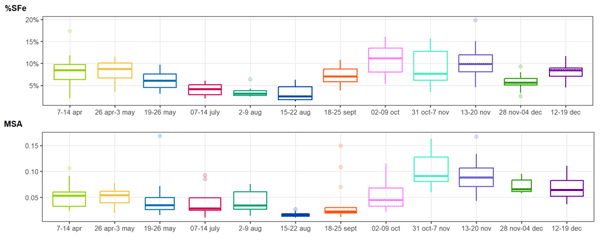
Karine Desboeufs, Paola Formenti, Raquel Torres-Sánchez, Kerstin Schepanski, Jean-Pierre Chaboureau, Hendrik Andersen, Jan Cermak, Stefanie Feuerstein, Benoit Laurent, Danitza Klopper, Andreas Namwoonde, Mathieu Cazaunau, Servanne Chevaillier, Anaïs Feron, Cécile Mirande-Bret, Sylvain Triquet, and Stuart J. Piketh
Atmos. Chem. Phys., 24, 1525–1541, https://doi.org/10.5194/acp-24-1525-2024, https://doi.org/10.5194/acp-24-1525-2024, 2024
Short summary
Short summary
This study investigates the fractional solubility of iron (Fe) in dust particles along the coast of Namibia, a critical region for the atmospheric Fe supply of the South Atlantic Ocean. Our results suggest a possible two-way interplay whereby marine biogenic emissions from the coastal marine ecosystems into the atmosphere would increase the solubility of Fe-bearing dust by photo-reduction processes. The subsequent deposition of soluble Fe could act to further enhance marine biogenic emissions.
Pasquale Sellitto, Redha Belhadji, Juan Cuesta, Aurélien Podglajen, and Bernard Legras
Atmos. Chem. Phys., 23, 15523–15535, https://doi.org/10.5194/acp-23-15523-2023, https://doi.org/10.5194/acp-23-15523-2023, 2023
Short summary
Short summary
Record-breaking wildfires ravaged south-eastern Australia during the fire season 2019–2020. These fires injected a smoke plume in the stratosphere, which dispersed over the whole Southern Hemisphere and interacted with solar and terrestrial radiation. A number of detached smoke bubbles were also observed emanating from this plume and ascending quickly to over 35 km altitude. Here we study how absorption of radiation generated ascending motion of both the the hemispheric plume and the vortices.
Lu Zhang, Michal Segal-Rozenhaimer, Haochi Che, Caroline Dang, Junying Sun, Ye Kuang, and Paola Formenti
EGUsphere, https://doi.org/10.5194/egusphere-2023-2319, https://doi.org/10.5194/egusphere-2023-2319, 2023
Preprint archived
Short summary
Short summary
Our study examined the interaction between atmospheric particles and moisture over the south-eastern Atlantic Ocean during the biomass burning seasons in Africa. We found that organic components of these particles play a more important role in aerosol-moisture interactions than previously expected. This discovery is important as such interactions impact radiation and climate. Current climate models might need better representations of the moisture-absorbing properties of organic aerosols.
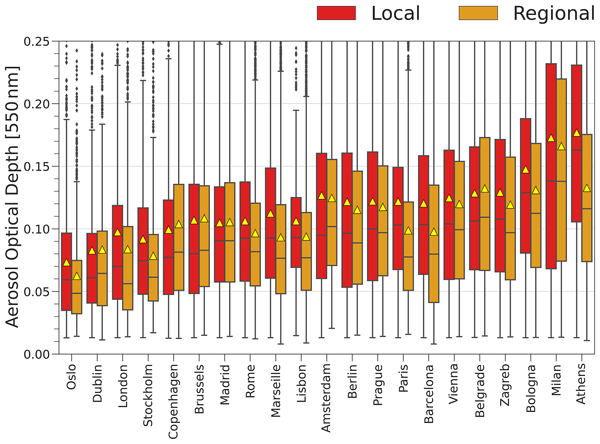
Ludovico Di Antonio, Claudia Di Biagio, Gilles Foret, Paola Formenti, Guillaume Siour, Jean-François Doussin, and Matthias Beekmann
Atmos. Chem. Phys., 23, 12455–12475, https://doi.org/10.5194/acp-23-12455-2023, https://doi.org/10.5194/acp-23-12455-2023, 2023
Short summary
Short summary
Long-term (2000–2021) 1 km resolution satellite data have been used to investigate the climatological aerosol optical depth (AOD) variability and trends at different scales in Europe. Average enhancements of the local-to-regional AOD ratio at 550 nm of 57 %, 55 %, 39 % and 32 % are found for large metropolitan areas such as Barcelona, Lisbon, Paris and Athens, respectively, suggesting a non-negligible enhancement of the aerosol burden through local emissions.
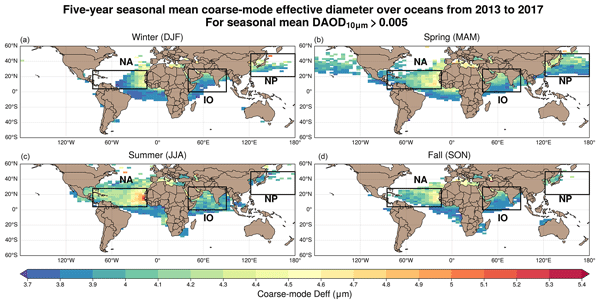
Jianyu Zheng, Zhibo Zhang, Hongbin Yu, Anne Garnier, Qianqian Song, Chenxi Wang, Claudia Di Biagio, Jasper F. Kok, Yevgeny Derimian, and Claire Ryder
Atmos. Chem. Phys., 23, 8271–8304, https://doi.org/10.5194/acp-23-8271-2023, https://doi.org/10.5194/acp-23-8271-2023, 2023
Short summary
Short summary
We developed a multi-year satellite-based retrieval of dust optical depth at 10 µm and the coarse-mode dust effective diameter over global oceans. It reveals climatological coarse-mode dust transport patterns and regional differences over the North Atlantic, the Indian Ocean and the North Pacific.
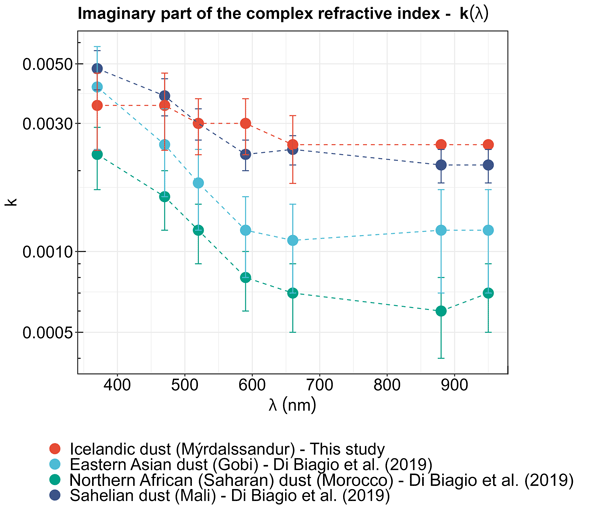
Clarissa Baldo, Paola Formenti, Claudia Di Biagio, Gongda Lu, Congbo Song, Mathieu Cazaunau, Edouard Pangui, Jean-Francois Doussin, Pavla Dagsson-Waldhauserova, Olafur Arnalds, David Beddows, A. Robert MacKenzie, and Zongbo Shi
Atmos. Chem. Phys., 23, 7975–8000, https://doi.org/10.5194/acp-23-7975-2023, https://doi.org/10.5194/acp-23-7975-2023, 2023
Short summary
Short summary
This paper presents new shortwave spectral complex refractive index and single scattering albedo data for Icelandic dust. Our results show that the imaginary part of the complex refractive index of Icelandic dust is at the upper end of the range of low-latitude dust. Furthermore, we observed that Icelandic dust is more absorbing towards the near-infrared, which we attribute to its high magnetite content. These findings are important for modeling dust aerosol radiative effects in the Arctic.
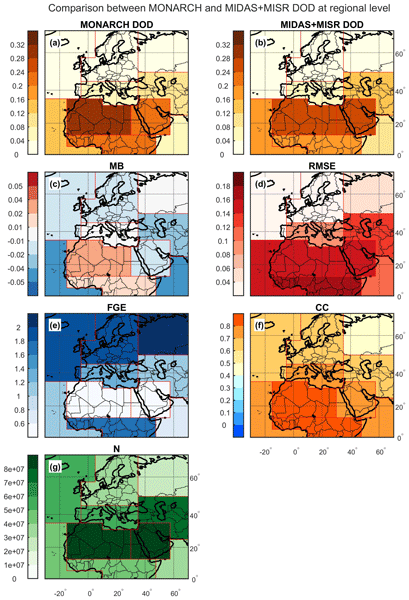
Michail Mytilinaios, Sara Basart, Sergio Ciamprone, Juan Cuesta, Claudio Dema, Enza Di Tomaso, Paola Formenti, Antonis Gkikas, Oriol Jorba, Ralph Kahn, Carlos Pérez García-Pando, Serena Trippetta, and Lucia Mona
Atmos. Chem. Phys., 23, 5487–5516, https://doi.org/10.5194/acp-23-5487-2023, https://doi.org/10.5194/acp-23-5487-2023, 2023
Short summary
Short summary
Multiscale Online Non-hydrostatic AtmospheRe CHemistry model (MONARCH) dust reanalysis provides a high-resolution 3D reconstruction of past dust conditions, allowing better quantification of climate and socioeconomic dust impacts. We assess the performance of the reanalysis needed to reproduce dust optical depth using dust-related products retrieved from satellite and ground-based observations and show that it reproduces the spatial distribution and seasonal variability of atmospheric dust well.
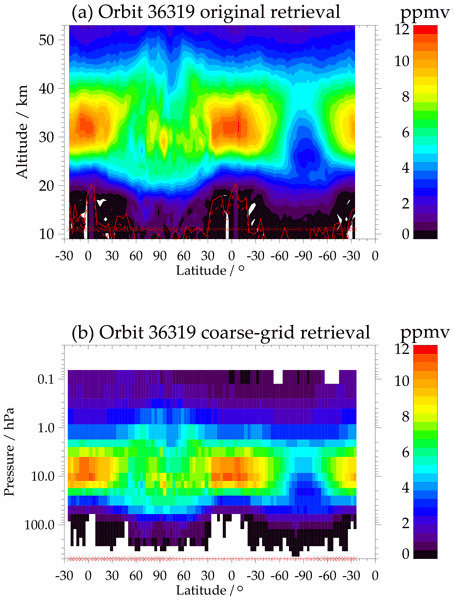
Michael Kiefer, Thomas von Clarmann, Bernd Funke, Maya García-Comas, Norbert Glatthor, Udo Grabowski, Michael Höpfner, Sylvia Kellmann, Alexandra Laeng, Andrea Linden, Manuel López-Puertas, and Gabriele P. Stiller
Atmos. Meas. Tech., 16, 1443–1460, https://doi.org/10.5194/amt-16-1443-2023, https://doi.org/10.5194/amt-16-1443-2023, 2023
Short summary
Short summary
A new ozone data set, derived from radiation measurements of the space-borne instrument MIPAS, is presented. It consists of more than 2 million single ozone profiles from 2002–2012, covering virtually all latitudes and altitudes between 5 and 70 km. Progress in data calibration and processing methods allowed for significant improvement of the data quality, compared to previous data versions. Hence, the data set will help to better understand e.g. the time evolution of ozone in the stratosphere.
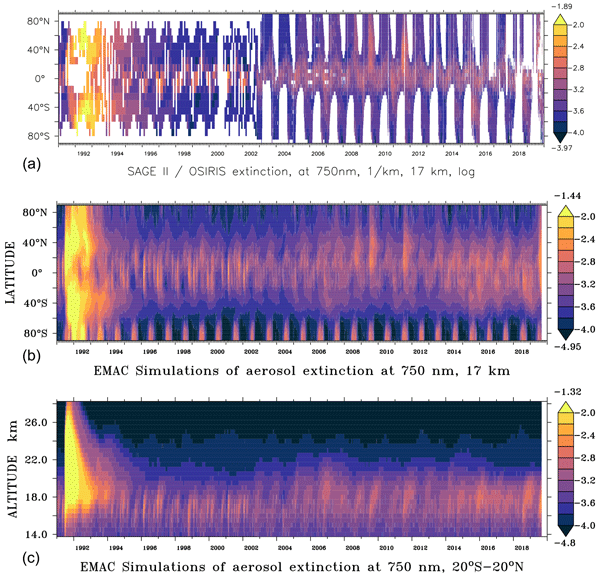
Jennifer Schallock, Christoph Brühl, Christine Bingen, Michael Höpfner, Landon Rieger, and Jos Lelieveld
Atmos. Chem. Phys., 23, 1169–1207, https://doi.org/10.5194/acp-23-1169-2023, https://doi.org/10.5194/acp-23-1169-2023, 2023
Short summary
Short summary
We characterized the influence of volcanic aerosols for the period 1990–2019 and established a volcanic SO2 emission inventory that includes more than 500 eruptions. From limb-based satellite observations of SO2 and extinction, we derive 3D plumes of SO2 perturbations and injected mass by a novel method. We calculate instantaneous radiative forcing with a comprehensive chemisty climate model. Our results show that smaller eruptions can also contribute to the stratospheric aerosol forcing.
Bernard Legras, Clair Duchamp, Pasquale Sellitto, Aurélien Podglajen, Elisa Carboni, Richard Siddans, Jens-Uwe Grooß, Sergey Khaykin, and Felix Ploeger
Atmos. Chem. Phys., 22, 14957–14970, https://doi.org/10.5194/acp-22-14957-2022, https://doi.org/10.5194/acp-22-14957-2022, 2022
Short summary
Short summary
The long-duration atmospheric impact of the Tonga eruption in January 2022 is a plume of water and sulfate aerosols in the stratosphere that persisted for more than 6 months. We study this evolution using several satellite instruments and analyse the unusual behaviour of this plume as sulfates and water first moved down rapidly and then separated into two layers. We also report the self-organization in compact and long-lived patches.
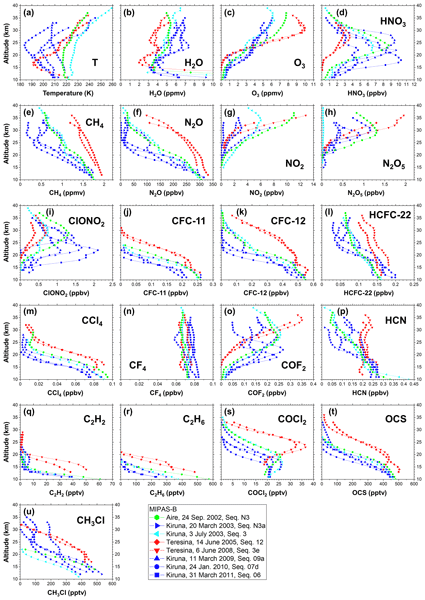
Gerald Wetzel, Michael Höpfner, Hermann Oelhaf, Felix Friedl-Vallon, Anne Kleinert, Guido Maucher, Miriam Sinnhuber, Janna Abalichin, Angelika Dehn, and Piera Raspollini
Atmos. Meas. Tech., 15, 6669–6704, https://doi.org/10.5194/amt-15-6669-2022, https://doi.org/10.5194/amt-15-6669-2022, 2022
Short summary
Short summary
Satellite measurements of stratospheric trace gases are essential for monitoring distributions and trends of these species on a global scale. Here, we compare the final MIPAS ESA Level 2 version 8 data (temperature and trace gases) with measurements obtained with the balloon version of MIPAS in terms of data agreement of both sensors, including combined errors. For most gases, we find a 5 % to 20 % agreement of the retrieved vertical profiles of both MIPAS instruments in the lower stratosphere.
Mathieu Lachatre, Sylvain Mailler, Laurent Menut, Arineh Cholakian, Pasquale Sellitto, Guillaume Siour, Henda Guermazi, Giuseppe Salerno, and Salvatore Giammanco
Atmos. Chem. Phys., 22, 13861–13879, https://doi.org/10.5194/acp-22-13861-2022, https://doi.org/10.5194/acp-22-13861-2022, 2022
Short summary
Short summary
In this study, we have evaluated the predominance of various pathways of volcanic SO2 conversion to sulfates in the upper troposphere. We show that the main conversion pathway was gaseous oxidation by OH, although the liquid pathways were expected to be predominant. These results are interesting with respect to a better understanding of sulfate formation in the middle and upper troposphere and are an important component to help evaluate particulate matter radiative forcing.
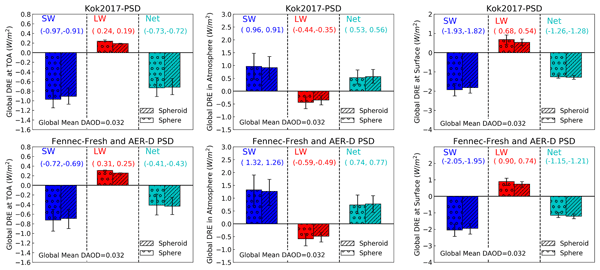
Qianqian Song, Zhibo Zhang, Hongbin Yu, Jasper F. Kok, Claudia Di Biagio, Samuel Albani, Jianyu Zheng, and Jiachen Ding
Atmos. Chem. Phys., 22, 13115–13135, https://doi.org/10.5194/acp-22-13115-2022, https://doi.org/10.5194/acp-22-13115-2022, 2022
Short summary
Short summary
This study developed a dataset that enables us to efficiently calculate dust direct radiative effect (DRE, i.e., cooling or warming our planet) for any given dust size distribution in addition to three sets of dust mineral components and two dust shapes. We demonstrate and validate the method of using this dataset to calculate dust DRE. Moreover, using this dataset we found that dust mineral composition is a more important factor in determining dust DRE than dust size and shape.
Michael John Weston, Stuart John Piketh, Frédéric Burnet, Stephen Broccardo, Cyrielle Denjean, Thierry Bourrianne, and Paola Formenti
Atmos. Chem. Phys., 22, 10221–10245, https://doi.org/10.5194/acp-22-10221-2022, https://doi.org/10.5194/acp-22-10221-2022, 2022
Short summary
Short summary
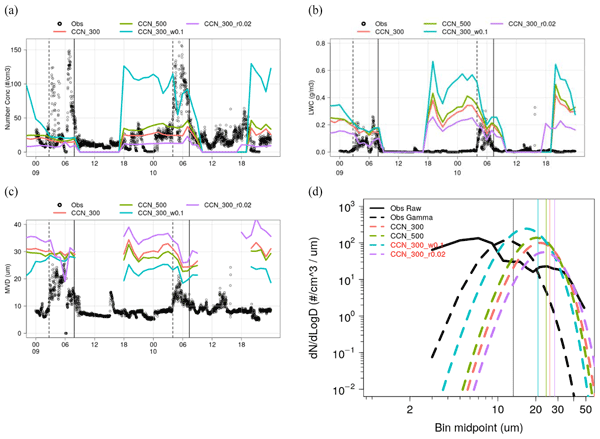
An aerosol-aware microphysics scheme is evaluated for fog cases in Namibia. AEROCLO-sA campaign observations are used to access and parameterise the model. The model cloud condensation nuclei activation is lower than the observations. The scheme is designed for clouds with updrafts, while fog typically forms in stable conditions. A pseudo updraft speed assigned to the lowest model levels helps achieve more realistic cloud droplet number concentration and size distribution in the model.
Caroline Dang, Michal Segal-Rozenhaimer, Haochi Che, Lu Zhang, Paola Formenti, Jonathan Taylor, Amie Dobracki, Sara Purdue, Pui-Shan Wong, Athanasios Nenes, Arthur Sedlacek III, Hugh Coe, Jens Redemann, Paquita Zuidema, Steven Howell, and James Haywood
Atmos. Chem. Phys., 22, 9389–9412, https://doi.org/10.5194/acp-22-9389-2022, https://doi.org/10.5194/acp-22-9389-2022, 2022
Short summary
Short summary
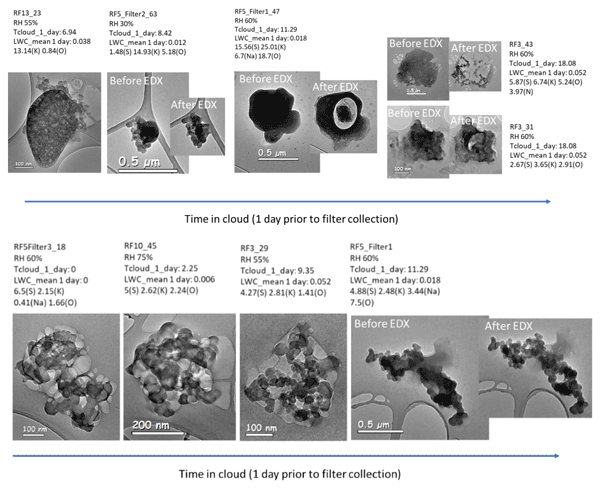
Transmission electron microscopy was used to analyze aged African smoke particles and how the smoke interacts with the marine atmosphere. We found that the volatility of organic aerosol increases with biomass burning plume age, that black carbon is often mixed with potassium salts and that the marine atmosphere can incorporate Na and Cl into smoke particles. Marine salts are more processed when mixed with smoke plumes, and there are interesting Cl-rich yet Na-absent marine particles.
Pasquale Sellitto, Redha Belhadji, Corinna Kloss, and Bernard Legras
Atmos. Chem. Phys., 22, 9299–9311, https://doi.org/10.5194/acp-22-9299-2022, https://doi.org/10.5194/acp-22-9299-2022, 2022
Short summary
Short summary
As a consequence of extreme heat and drought, record-breaking wildfires ravaged south-eastern Australia during the fire season in 2019–2020. Fires injected a smoke plume very high up to the stratosphere, which dispersed quite quickly to the whole Southern Hemisphere and interacted with solar radiation, reflecting and absorbing part of it – thus producing impacts on the climate system. Here we estimate this impact on radiation and we study how it depends on the properties and ageing of the plume.
Lu Zhang, Michal Segal-Rozenhaimer, Haochi Che, Caroline Dang, Arthur J. Sedlacek III, Ernie R. Lewis, Amie Dobracki, Jenny P. S. Wong, Paola Formenti, Steven G. Howell, and Athanasios Nenes
Atmos. Chem. Phys., 22, 9199–9213, https://doi.org/10.5194/acp-22-9199-2022, https://doi.org/10.5194/acp-22-9199-2022, 2022
Short summary
Short summary
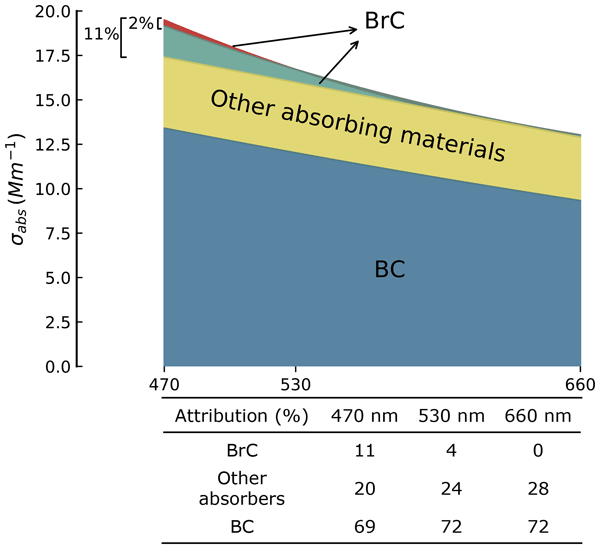
Widespread biomass burning (BB) events occur annually in Africa and contribute ~ 1 / 3 of global BB emissions, which contain a large family of light-absorbing organics, known as brown carbon (BrC), whose absorption of incident radiation is difficult to estimate, leading to large uncertainties in the global radiative forcing estimation. This study quantifies the BrC absorption of aged BB particles and highlights the potential presence of absorbing iron oxides in this climatically important region.
Enza Di Tomaso, Jerónimo Escribano, Sara Basart, Paul Ginoux, Francesca Macchia, Francesca Barnaba, Francesco Benincasa, Pierre-Antoine Bretonnière, Arnau Buñuel, Miguel Castrillo, Emilio Cuevas, Paola Formenti, María Gonçalves, Oriol Jorba, Martina Klose, Lucia Mona, Gilbert Montané Pinto, Michail Mytilinaios, Vincenzo Obiso, Miriam Olid, Nick Schutgens, Athanasios Votsis, Ernest Werner, and Carlos Pérez García-Pando
Earth Syst. Sci. Data, 14, 2785–2816, https://doi.org/10.5194/essd-14-2785-2022, https://doi.org/10.5194/essd-14-2785-2022, 2022
Short summary
Short summary
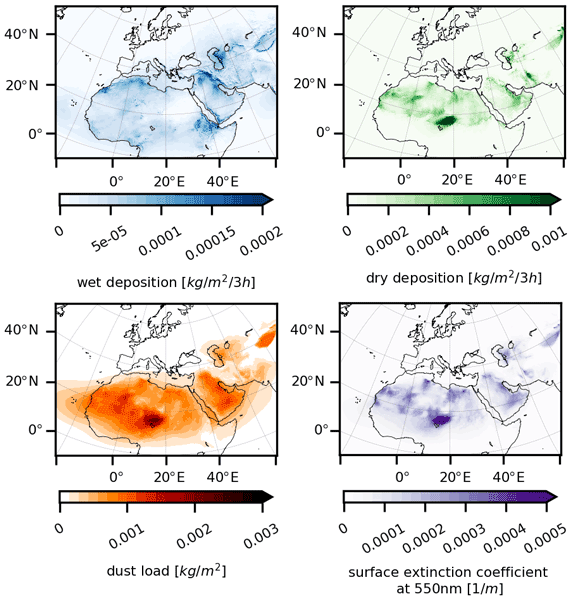
MONARCH reanalysis of desert dust aerosols extends the existing observation-based information for mineral dust monitoring by providing 3-hourly upper-air, surface and total column key geophysical variables of the dust cycle over Northern Africa, the Middle East and Europe, at a 0.1° horizontal resolution in a rotated grid, from 2007 to 2016. This work provides evidence of the high accuracy of this data set and its suitability for air quality and health and climate service applications.
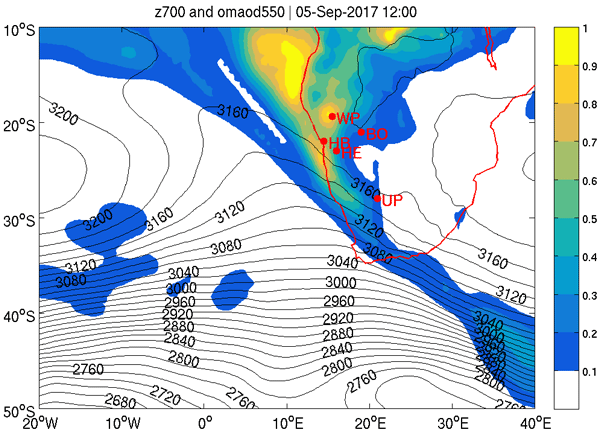
Cyrille Flamant, Marco Gaetani, Jean-Pierre Chaboureau, Patrick Chazette, Juan Cuesta, Stuart John Piketh, and Paola Formenti
Atmos. Chem. Phys., 22, 5701–5724, https://doi.org/10.5194/acp-22-5701-2022, https://doi.org/10.5194/acp-22-5701-2022, 2022
Short summary
Short summary
Rivers of smoke extend from tropical southern Africa towards the Indian Ocean during the winter fire season, controlled by the interaction of tropical easterly waves, and westerly waves at mid latitudes. During the AEROCLO-sA field campaign in 2017, a river of smoke was directly observed over Namibia. In this paper, the evolution and atmospheric drivers of the river of smoke are described, and the role of a mid-latitude cut-off low in lifting the smoke to the upper troposphere is highlighted.
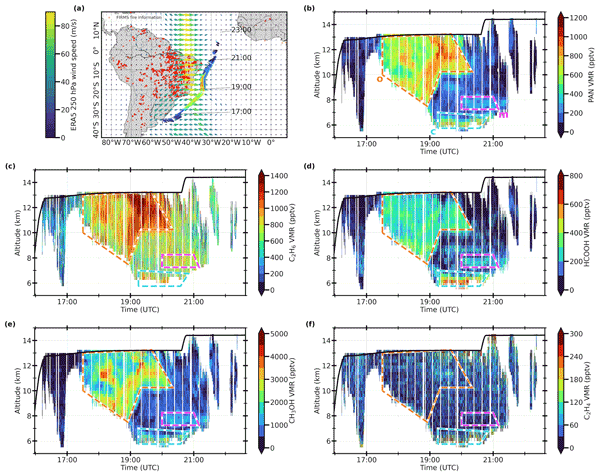
Sören Johansson, Gerald Wetzel, Felix Friedl-Vallon, Norbert Glatthor, Michael Höpfner, Anne Kleinert, Tom Neubert, Björn-Martin Sinnhuber, and Jörn Ungermann
Atmos. Chem. Phys., 22, 3675–3691, https://doi.org/10.5194/acp-22-3675-2022, https://doi.org/10.5194/acp-22-3675-2022, 2022
Short summary
Short summary
We present GLORIA airborne cross sections of PAN, C2H6, HCOOH, CH3OH, and C2H4 in the South Atlantic UTLS in September/October 2019. Filamentary structures and a large plume were observed. Backward trajectories indicate that measured pollutants come from South America and central Africa. Comparisons to CAMS show structural agreement of the measured distributions. PAN absolute VMRs agree with the GLORIA measurements, C2H6 and HCOOH are simulated too low, and CH3OH and C2H4 are too high.
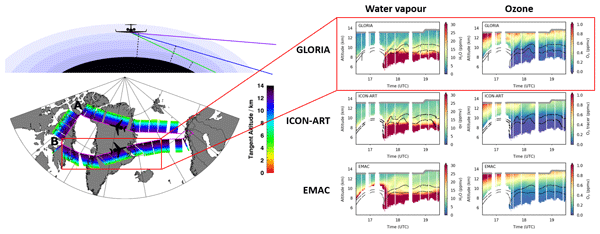
Florian Haenel, Wolfgang Woiwode, Jennifer Buchmüller, Felix Friedl-Vallon, Michael Höpfner, Sören Johansson, Farahnaz Khosrawi, Oliver Kirner, Anne Kleinert, Hermann Oelhaf, Johannes Orphal, Roland Ruhnke, Björn-Martin Sinnhuber, Jörn Ungermann, Michael Weimer, and Peter Braesicke
Atmos. Chem. Phys., 22, 2843–2870, https://doi.org/10.5194/acp-22-2843-2022, https://doi.org/10.5194/acp-22-2843-2022, 2022
Short summary
Short summary
We compare remote sensing observations of H2O, O3, HNO3 and clouds in the upper troposphere–lowermost stratosphere during an Arctic winter long-range research flight with simulations by two different state-of-the-art model systems. We find good agreement for dynamical structures, trace gas distributions and clouds. We investigate model biases and sensitivities, with the goal of aiding model development and improving our understanding of processes in the upper troposphere–lowermost stratosphere.
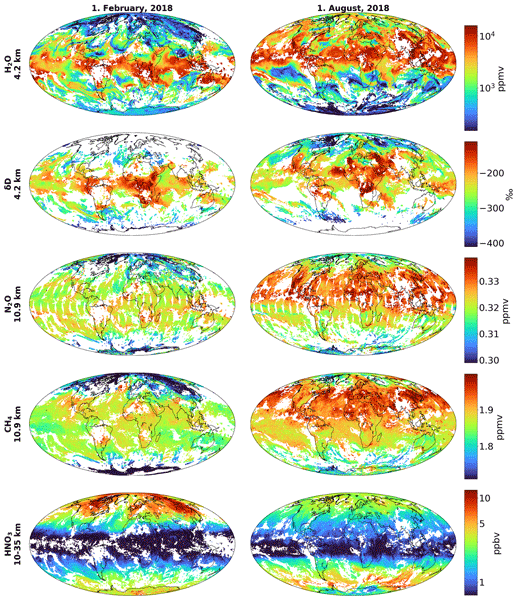
Matthias Schneider, Benjamin Ertl, Christopher J. Diekmann, Farahnaz Khosrawi, Andreas Weber, Frank Hase, Michael Höpfner, Omaira E. García, Eliezer Sepúlveda, and Douglas Kinnison
Earth Syst. Sci. Data, 14, 709–742, https://doi.org/10.5194/essd-14-709-2022, https://doi.org/10.5194/essd-14-709-2022, 2022
Short summary
Short summary
We present atmospheric H2O, HDO / H2O ratio, N2O, CH4, and HNO3 data generated by the MUSICA IASI processor using thermal nadir spectra measured by the IASI satellite instrument. The data have global daily coverage and are available for the period between October 2014 and June 2021. Multiple possibilities of data reuse are offered by providing each individual data product together with information about retrieval settings and the products' uncertainty and vertical representativeness.
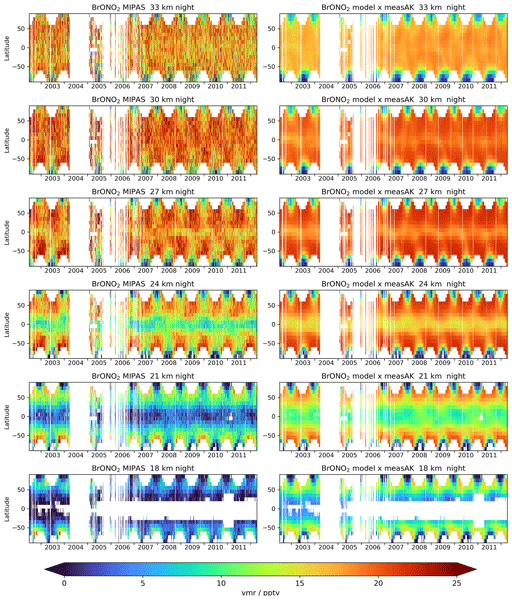
Michael Höpfner, Oliver Kirner, Gerald Wetzel, Björn-Martin Sinnhuber, Florian Haenel, Sören Johansson, Johannes Orphal, Roland Ruhnke, Gabriele Stiller, and Thomas von Clarmann
Atmos. Chem. Phys., 21, 18433–18464, https://doi.org/10.5194/acp-21-18433-2021, https://doi.org/10.5194/acp-21-18433-2021, 2021
Short summary
Short summary
BrONO2 is an important reservoir gas for inorganic stratospheric bromine linked to the chemical cycles of stratospheric ozone depletion. Presently infrared limb sounding is the only way to measure BrONO2 in the atmosphere. We provide global distributions of BrONO2 derived from MIPAS observations 2002–2012. Comparisons with EMAC atmospheric modelling show an overall agreement and enable us to derive an independent estimate of stratospheric bromine of 21.2±1.4pptv based on the BrONO2 measurements.
Paola Formenti, Claudia Di Biagio, Yue Huang, Jasper Kok, Marc Daniel Mallet, Damien Boulanger, and Mathieu Cazaunau
Atmos. Meas. Tech. Discuss., https://doi.org/10.5194/amt-2021-403, https://doi.org/10.5194/amt-2021-403, 2021
Publication in AMT not foreseen
Short summary
Short summary
This paper provides with standardized correction factors for the measurements of the most common instruments used in the atmosphere to measure the concentration per size of aerosol particles. These correction factors are provided to users with supplementary information for their use.

Marco Gaetani, Benjamin Pohl, Maria del Carmen Alvarez Castro, Cyrille Flamant, and Paola Formenti
Atmos. Chem. Phys., 21, 16575–16591, https://doi.org/10.5194/acp-21-16575-2021, https://doi.org/10.5194/acp-21-16575-2021, 2021
Short summary
Short summary
During the dry austral winter, biomass fires in tropical Africa emit large amounts of smoke in the atmosphere, with large impacts on climate and air quality. The study of the relationship between atmospheric circulation and smoke transport shows that midlatitude atmospheric disturbances may deflect the smoke from tropical Africa towards southern Africa. Understanding the distribution of the smoke in the region is crucial for climate modelling and air quality monitoring.
Lilian Loyer, Jean-Christophe Raut, Claudia Di Biagio, Julia Maillard, Vincent Mariage, and Jacques Pelon
Atmos. Meas. Tech. Discuss., https://doi.org/10.5194/amt-2021-326, https://doi.org/10.5194/amt-2021-326, 2021
Revised manuscript not accepted
Short summary
Short summary
The Arctic is facing drastic climate changes, and more observations are needed to better understand what is happening. Unfortunately observations are limited in the High Arctic. To obtain more observations, multiples buoys equipped with lidar, have been deployed in this region. This paper presents an approach to estimate the optical properties of clouds, and solar plus terrestrial energies from lidar measurements in the Arctic.

Gaëlle Dufour, Didier Hauglustaine, Yunjiang Zhang, Maxim Eremenko, Yann Cohen, Audrey Gaudel, Guillaume Siour, Mathieu Lachatre, Axel Bense, Bertrand Bessagnet, Juan Cuesta, Jerry Ziemke, Valérie Thouret, and Bo Zheng
Atmos. Chem. Phys., 21, 16001–16025, https://doi.org/10.5194/acp-21-16001-2021, https://doi.org/10.5194/acp-21-16001-2021, 2021
Short summary
Short summary
The IASI observations and the LMDZ-OR-INCA model simulations show negative ozone trends in the Central East China region in the lower free (3–6 km column) and the upper free (6–9 km column) troposphere. Sensitivity studies from the model show that the Chinese anthropogenic emissions contribute to more than 50 % in the trend. The reduction in NOx emissions that has occurred since 2013 in China seems to lead to a decrease in ozone in the free troposphere, contrary to the increase at the surface.
Cited articles
Alalam, P., Ducos, F., and Herbin, H.: The role of refractive indices in measuring mineral dust with high-spectral-resolution infrared satellite sounders: application to the Gobi Desert, Atmos. Chem. Phys., 24, 12277–12294, https://doi.org/10.5194/acp-24-12277-2024, 2024.
Anderson, G. P., Clough, S. A., Kneizys, F. X., Chetwynd, J. H., and Shettle, E. P.: AFGL atmospheric constituent profiles (0–120 km), DTIC, https://apps.dtic.mil/sti/pdfs/ADA175173.pdf (last access: 14 May 2025), 1986.
Baldo, C., Formenti, P., Nowak, S., Chevaillier, S., Cazaunau, M., Pangui, E., Di Biagio, C., Doussin, J.-F., Ignatyev, K., Dagsson-Waldhauserova, P., Arnalds, O., MacKenzie, A. R., and Shi, Z.: Distinct chemical and mineralogical composition of Icelandic dust compared to northern African and Asian dust, Atmos. Chem. Phys., 20, 13521–13539, https://doi.org/10.5194/acp-20-13521-2020, 2020.
Banks, J. R. and Brindley, H. E.: Evaluation of MSG-SEVIRI mineral dust retrieval products over North Africa and the Middle East,. Remote Sens. Environ., 128, 58–73, https://doi.org/10.1016/j.rse.2012.07.017, 2013.
Bohren, C. F. and Huffman, D. R.: Absorption and scattering of light by small particles, A Wiley-Interscience Publication, John Wiley & Sons, Inc., New York, ISBN 9780471293408, 1983.
Capelle, V., Chédin, A., Pondrom, M., Crevoisier, C., Armante, R., Crepeau, L., and Scott, N.: Infrared dust aerosol optical depth retrieved daily from IASI and comparison with AERONET over the period 2007–2016, Remote Sens. Environ., 206, 15–32, https://doi.org/10.1016/j.rse.2017.12.008, 2018.
Clarisse, L., Clerbaux, C., Franco, B., Hadji-Lazaro, J., Whitburn, S., Kopp, A. K., Hurtmans, D., and Coheur, P.-F.: A decadal data set of global atmospheric dust retrieved from IASI satellite measurements, J. Geophys. Res.-Atmos., 124, 1618–1647, https://doi.org/10.1029/2018JD029701, 2019.
Clerbaux, C., Boynard, A., Clarisse, L., George, M., Hadji-Lazaro, J., Herbin, H., Hurtmans, D., Pommier, M., Razavi, A., Turquety, S., Wespes, C., and Coheur, P.-F.: Monitoring of atmospheric composition using the thermal infrared IASI/MetOp sounder, Atmos. Chem. Phys., 9, 6041–6054, https://doi.org/10.5194/acp-9-6041-2009, 2009.
Colarco, P. R., Nowottnick, E. P., Randles, C. A., Yi, B., Yang, P., Kim, K.-M., Smith, J. A., and Bardeen, C. G.: Impact of radiatively interactive dust aerosols in the NASA GEOS-5 climate model: Sensitivity to dust particle shape and refractive index, J. Geophys. Res.-Atmos., 119, 753–786, https://doi.org/10.1002/2013JD020046, 2014.
Connelly, D. S., Thompson, D. R., Mahowald, N. H., Li, L., Carmon, N., Okin, G. S., and Green, R. O.: The EMIT mission information yield for mineral dust radiative forcing, Remote Sens. Environ., 258, 112380, https://doi.org/10.1016/j.rse.2021.112380, 2021.
Crevoisier, C., Clerbaux, C., Guidard, V., Phulpin, T., Armante, R., Barret, B., Camy-Peyret, C., Chaboureau, J.-P., Coheur, P.-F., Crépeau, L., Dufour, G., Labonnote, L., Lavanant, L., Hadji-Lazaro, J., Herbin, H., Jacquinet-Husson, N., Payan, S., Péquignot, E., Pierangelo, C., Sellitto, P., and Stubenrauch, C.: Towards IASI-New Generation (IASI-NG): impact of improved spectral resolution and radiometric noise on the retrieval of thermodynamic, chemistry and climate variables, Atmos. Meas. Tech., 7, 4367–4385, https://doi.org/10.5194/amt-7-4367-2014, 2014.
Cuesta, J., Eremenko, M., Flamant, C., Dufour, G., Laurent, B., Bergametti, G., Höpfner, M., Orphal, J., and Zhou, D.: Three-dimensional distribution of a major desert dust outbreak over East Asia in March 2008 derived from IASI satellite observations, J. Geophys. Res.-Atmos., 120, 7099–7127, https://doi.org/10.1002/2014JD022406, 2015.
Cuesta, J., Flamant, C., Gaetani, M., Knippertz, P., Fink, A. H., Chazette, P., Eremenko, M., Dufour, G., Di Biagio, C., and Formenti, P.: Three-dimensional pathways of dust over the Sahara during summer 2011 as revealed by new Infrared Atmospheric Sounding Interferometer observations, Q. J. R. Meteorol. Soc., 146, 2731–2755, https://doi.org/10.1002/qj.3814, 2020.
Di Biagio, C., Boucher, H., Caquineau, S., Chevaillier, S., Cuesta, J., and Formenti, P.: Variability of the infrared complex refractive index of African mineral dust: experimental estimation and implications for radiative transfer and satellite remote sensing, Atmos. Chem. Phys., 14, 11093–11116, https://doi.org/10.5194/acp-14-11093-2014, 2014.
Di Biagio, C., Formenti, P., Balkanski, Y., Caponi, L., Cazaunau, M., Pangui, E., Journet, E., Nowak, S., Caquineau, S., Andreae, M. O., Kandler, K., Saeed, T., Piketh, S., Seibert, D., Williams, E., and Doussin, J.-F.: Global scale variability of the mineral dust long-wave refractive index: a new dataset of in situ measurements for climate modeling and remote sensing, Atmos. Chem. Phys., 17, 1901–1929, https://doi.org/10.5194/acp-17-1901-2017, 2017.
Di Biagio, C., Formenti, P., Balkanski, Y., Caponi, L., Cazaunau, M., Pangui, E., Journet, E., Nowak, S., Andreae, M. O., Kandler, K., Saeed, T., Piketh, S., Seibert, D., Williams, E., and Doussin, J.-F.: Complex refractive indices and single-scattering albedo of global dust aerosols in the shortwave spectrum and relationship to size and iron content, Atmos. Chem. Phys., 19, 15503–15531, https://doi.org/10.5194/acp-19-15503-2019, 2019.
Di Biagio, C., Banks, J. R., and Gaetani, M.: Dust Atmospheric Transport Over Long Distances, Reference Module in Earth Systems and Environmental Sciences, Elsevier, 2021, ISBN 9780124095489, https://doi.org/10.1016/B978-0-12-818234-5.00033-X, 2021.
Di Biagio, C., Doussin, J.-F., Cazaunau, M., Pangui, E., Cuesta, J., Sellitto, P., Ródenas, M., and Formenti, P.: Infrared optical signature reveals the source–dependency and along–transport evolution of dust mineralogy as shown by laboratory study, Sci. Rep., 13, 13252, https://doi.org/10.1038/s41598-023-39336-7, 2023.
Di Biagio, C., Bru, E., Orta, A., Chevaillier, S., Baldo, C., Bergé, A., Cazaunau, M., Lafon, S., Nowak, S., Pangui, E., Andreae, M. O., Dagsson-Waldhauserova, P., Dintwe, K., Kandler, K., King, J. S., Chaput, A., Okin, G. S., Piketh, S., Saeed, T., Seibert, D., Shi, Z., Williams, E., Sellitto, P., and Formenti, P.: Mid- and far-infrared spectral signatures of mineral dust from low- to high-latitude regions: significance and implications, Atmos. Chem. Phys., 26, 1079–1091, https://doi.org/10.5194/acp-26-1079-2026, 2026.
Di Iorio, T., di Sarra, A., Sferlazzo, D. M., Cacciani, M., Meloni, D., Monteleone, F., Fuà, D., and Fiocco, G.: Seasonal evolution of the tropospheric aerosol vertical profile in the central Mediterranean and role of desert dust, J. Geophys. Res., 114, D02201, https://doi.org/10.1029/2008JD010593, 2009.
Eremenko, M., Dufour, G., Foret, G., Keim, C., Orphal, J., Beekmann, M., Bergametti, G., and Flaud, J.-M.: Tropospheric ozone distributions over Europe during the heat wave in July 2007 observed from infrared nadir spectra recorded by IASI, Geophys. Res. Lett., 35, L18805, https://doi.org/10.1029/2008GL034803, 2008.
Formenti, P. and Di Biagio, C.: Large synthesis of in situ field measurements of the size distribution of mineral dust aerosols across their life cycles, Earth Syst. Sci. Data, 16, 4995–5007, https://doi.org/10.5194/essd-16-4995-2024, 2024.
Go, S., Lyapustin, A., Schuster, G. L., Choi, M., Ginoux, P., Chin, M., Kalashnikova, O., Dubovik, O., Kim, J., da Silva, A., Holben, B., and Reid, J. S.: Inferring iron-oxide species content in atmospheric mineral dust from DSCOVR EPIC observations, Atmos. Chem. Phys., 22, 1395–1423, https://doi.org/10.5194/acp-22-1395-2022, 2022.
Green, R. O., Mahowald, N., Ung, C., et al.: The earth surface mineral dust source investigation: an earth science imaging spectroscopy mission. in: 2020 IEEE Aerospace Conference, 1–15, https://doi.org/10.1109/AERO47225.2020.9172731, 2020.
Huneeus, N., Schulz, M., Balkanski, Y., Griesfeller, J., Prospero, J., Kinne, S., Bauer, S., Boucher, O., Chin, M., Dentener, F., Diehl, T., Easter, R., Fillmore, D., Ghan, S., Ginoux, P., Grini, A., Horowitz, L., Koch, D., Krol, M. C., Landing, W., Liu, X., Mahowald, N., Miller, R., Morcrette, J.-J., Myhre, G., Penner, J., Perlwitz, J., Stier, P., Takemura, T., and Zender, C. S.: Global dust model intercomparison in AeroCom phase I, Atmos. Chem. Phys., 11, 7781–7816, https://doi.org/10.5194/acp-11-7781-2011, 2011.
Husar, R. B., Prospero, J. M., and Stowe, L. L.: Characterization of tropospheric aerosols over the oceans with the NOAA AVHRR optical thickness product, J. Geophys. Res., 102, 16889–16909, 1997.
Knippertz, P. and Stuut, J.-B. W. (Eds.): Mineral Dust: A Key Player in the Earth System, Springer Netherlands, https://doi.org/10.1007/978-94-017-8978-3, 2014.
Kok, J. F., Storelvmo, T., Karydis, V. A., Adebiyi, A. A., Mahowald, N. M., Evan, A. T., He, C., and Leung, D. M.: Mineral dust aerosol impacts on global climate and climate change, Nat. Rev. Earth Environ., 4, 71–86, https://doi.org/10.1038/s43017-022-00379-5, 2023.
Liao, H. and Seinfeld, J. H.: Radiative forcing by mineral dust aerosols: Sensitivity to key variables, J. Geophys. Res., 103, 31637–31645, https://doi.org/10.1029/1998JD200036, 1998.
Meinander, O., Dagsson-Waldhauserova, P., Amosov, P., Aseyeva, E., Atkins, C., Baklanov, A., Baldo, C., Barr, S. L., Barzycka, B., Benning, L. G., Cvetkovic, B., Enchilik, P., Frolov, D., Gassó, S., Kandler, K., Kasimov, N., Kavan, J., King, J., Koroleva, T., Krupskaya, V., Kulmala, M., Kusiak, M., Lappalainen, H. K., Laska, M., Lasne, J., Lewandowski, M., Luks, B., McQuaid, J. B., Moroni, B., Murray, B., Möhler, O., Nawrot, A., Nickovic, S., O’Neill, N. T., Pejanovic, G., Popovicheva, O., Ranjbar, K., Romanias, M., Samonova, O., Sanchez-Marroquin, A., Schepanski, K., Semenkov, I., Sharapova, A., Shevnina, E., Shi, Z., Sofiev, M., Thevenet, F., Thorsteinsson, T., Timofeev, M., Umo, N. S., Uppstu, A., Urupina, D., Varga, G., Werner, T., Arnalds, O., and Vukovic Vimic, A.: Newly identified climatically and environmentally significant high-latitude dust sources, Atmos. Chem. Phys., 22, 11889–11930, https://doi.org/10.5194/acp-22-11889-2022, 2022.
Merdji, A. B., Lu, C., Xu, X., and Mhawish, A.: Long-term three-dimensional distribution and transport of Saharan dust: Observation from CALIPSO, MODIS, and reanalysis data, Atmos. Res., 286, https://doi.org/10.1016/j.atmosres.2023.106658, 2023.
Miller, R. L., Knippertz, P., Pérez García-Pando, C., Perlwitz, J.P., and Tegen I.: Impact of dust radiative forcing upon climate, in: Mineral Dust: A Key Player in the Earth System, edited by: Knippertz, P. and Stuut, J.-B. W., Springer, 327–357, https://doi.org/10.1007/978-94-017-8978-3_13, 2014.
Moosmüller, H., Skiba, M., Frey, G., Chakrabarty, R. K., Arnott, W. P., and Engelbrecht, J. P.: Single Scattering Albedo of Fine Mineral Dust Aerosols Controlled by Iron Concentration, J. Geophys. Res., 117, D11210, https://doi.org/10.1029/2011JD016909, 2012.
Palchetti, L., Brindley, H., Bantges, R., Buehler, S. A., Camy-Peyret, C., Carli, B., Cortesi, U., Del Bianco, S., Di Natale, G., Dinelli, B. M., Feldman, D., Huang, X. L., C.-Labonnote, L., Libois, Q., Maestri, T., Mlynczak, M. G., Murray, J. E., Oetjen, H., Ridolfi, M., Riese, M., Russell, J., Saunders, R., and Serio, C.: FORUM: Unique Far-Infrared Satellite Observations to Better Understand How Earth Radiates Energy to Space, B. Am. Meteorol. Soc., 101, E2030–E2046, https://doi.org/10.1175/BAMS-D-19-0322.1, 2020.
Pierangelo, C., Chédin, A., Heilliette, S., Jacquinet-Husson, N., and Armante, R.: Dust altitude and infrared optical depth from AIRS, Atmos. Chem. Phys., 4, 1813–1822, https://doi.org/10.5194/acp-4-1813-2004, 2004.
Pierangelo, C., Mishchenko, M., Balkanski, Y., and Chédin, A.: Retrieving the effective radius of Saharan dust coarse mode from AIRS, Geophys. Res. Lett., 32, L20813, https://doi.org/10.1029/2005GL023425, 2005.
Prospero, J. M.: Long-range transport of mineral dust in the global atmosphere: Impact of African dust on the environment of the southeastern United States, P. Natl. Acad. Sci. USA, 96, 3396–3403, 1999.
Ratcliffe, N. G., Ryder, C. L., Bellouin, N., Woodward, S., Jones, A., Johnson, B., Wieland, L.-M., Dollner, M., Gasteiger, J., and Weinzierl, B.: Long-range transport of coarse mineral dust: an evaluation of the Met Office Unified Model against aircraft observations, Atmos. Chem. Phys., 24, 12161–12181, https://doi.org/10.5194/acp-24-12161-2024, 2024.
Sadrian, M. R., Calvin, W. M., Engelbrecht, J. P., and Moosmüller, H.: Spectral characterization of parent soils from globally important dust aerosol entrainment regions, J. Geophys. Res.-Atmos., 128, e2022JD037666, https://doi.org/10.1029/2022JD037666, 2023.
Sanwlani, N. and Das, R.: Understanding haze: Modeling size-resolved mineral aerosol from satellite remote sensing, Remote Sens., 14, 761, https://doi.org/10.3390/rs14030761, 2022.
Sellitto, P.: FORUM and IASI-NG pseudo-observations, Easydata [data set], https://doi.org/10.57932/c54d9d54-3b6e-4e81-a65a-f154796369e1, 2026.
Sellitto, P., Dufour, G., Eremenko, M., Cuesta, J., Dauphin, P., Forêt, G., Gaubert, B., Beekmann, M., Peuch, V.-H., and Flaud, J.-M.: Analysis of the potential of one possible instrumental configuration of the next generation of IASI instruments to monitor lower tropospheric ozone, Atmos. Meas. Tech., 6, 621–635, https://doi.org/10.5194/amt-6-621-2013, 2013.
Sokolik, I. N.: The spectral radiative signature of wind-blown mineral dust: Implications for remote sensing in the thermal IR region, Geophys. Res. Lett., 29, 2154, https://doi.org/10.1029/2002GL015910, 2002.
Sokolik, I. N. and Toon, O. B.: Incorporation of mineralogical composition into models of the radiative properties of mineral aerosol from UV to IR wavelengths, J. Geophys. Res.-Atmos., 104, 9423–9444, 1999.
Stiller, G. P., von Clarmann, T., Funke, B., Glatthor, N., Hase, F., Höpfner, M., and Linden, A.: Sensitivity of trace gas abundances retrievals from infrared limb emission spectra to simplifying approximations in radiative transfer modelling, J. Quant. Spectrosc. Ra., 72, 249–280, https://doi.org/10.1016/S0022-4073(01)00123-6, 2002.
Vandenbussche, S., Kochenova, S., Vandaele, A. C., Kumps, N., and De Mazière, M.: Retrieval of desert dust aerosol vertical profiles from IASI measurements in the TIR atmospheric window, Atmos. Meas. Tech., 6, 2577–2591, https://doi.org/10.5194/amt-6-2577-2013, 2013.
Zhao, T. L., Gong, S. L., Zhang, X. Y., Blanchet, J. P., McKendry, I. G., and Zhou, Z. J.: A simulated climatology of Asian dust aerosol and its trans-Pacific transport, Part I: Mean climate and validation, J. Climate, 19, 88–103, 2006.
Zhao, X., Huang, K., Fu, J. S., and Abdullaev, S. F.: Long-range transport of Asian dust to the Arctic: identification of transport pathways, evolution of aerosol optical properties, and impact assessment on surface albedo changes, Atmos. Chem. Phys., 22, 10389–10407, https://doi.org/10.5194/acp-22-10389-2022, 2022.
Zheng, J., Zhang, Z., Garnier, A., Yu, H., Song, Q., Wang, C., Dubuisson, P., and Di Biagio, C.: The thermal infrared optical depth of mineral dust retrieved from integrated CALIOP and IIR observations, Rem. Sens. Environ., 270, 112841, https://doi.org/10.1016/j.rse.2021.112841, 2022.
Zheng, J., Zhang, Z., Yu, H., Garnier, A., Song, Q., Wang, C., Di Biagio, C., Kok, J. F., Derimian, Y., and Ryder, C.: Thermal infrared dust optical depth and coarse-mode effective diameter over oceans retrieved from collocated MODIS and CALIOP observations, Atmos. Chem. Phys., 23, 8271–8304, https://doi.org/10.5194/acp-23-8271-2023, 2023.
Short summary
The Far-infrared Outgoing Radiation Understanding and Monitoring (FORUM) mission will bring the first satellite instrument capable of observing the Earth's far infrared (FIR) spectra with a high spectral resolution. FORUM will crucially contribute to water vapour, clouds and surface observations. We found that FORUM will provide also a significant sensitivity to dust aerosol, especially in cases of large burdens of mid-to-long-range transported plumes of dust in the free and upper troposphere.
The Far-infrared Outgoing Radiation Understanding and Monitoring (FORUM) mission will bring the...


