
Articles | Volume 19, issue 8
https://doi.org/10.5194/amt-19-2855-2026
© Author(s) 2026. This work is distributed under
the Creative Commons Attribution 4.0 License.
the Creative Commons Attribution 4.0 License.
https://doi.org/10.5194/amt-19-2855-2026
© Author(s) 2026. This work is distributed under
the Creative Commons Attribution 4.0 License.
the Creative Commons Attribution 4.0 License.
Research article
| 
29 Apr 2026
Research article |
| 29 Apr 2026
| 29 Apr 2026
Quality assessment of the AC SAF GOME-2 gridded ozone profile data records
Olaf N. E. Tuinder
CORRESPONDING AUTHOR

Royal Netherlands Meteorological Institute, Utrechtseweg 297, 3731GA, De Bilt, the Netherlands
Andy W. Delcloo
Royal Meteorological Institute of Belgium, Observations Department, ACM-team, Ringlaan 3, 1180, Ukkel, Belgium
Ghent University, Department of Physics and Astronomy, Krijgslaan 281/S9, 9000, Ghent, Belgium
Peggy Achtert
Deutscher Wetterdienst, 82383 Hohenpeissenberg, Germany
Leipzig Institute for Meteorology, Leipzig University, Stephanstraße 3, 04103 Leipzig, Germany
Related authors
Juliëtte C. S. Anema, K. Folkert Boersma, Lieuwe G. Tilstra, Ruben van 't Loo, and Olaf N. E. Tuinder
Earth Syst. Sci. Data, 18, 5643–5661, https://doi.org/10.5194/essd-18-5643-2026, https://doi.org/10.5194/essd-18-5643-2026, 2026
Short summary
Short summary
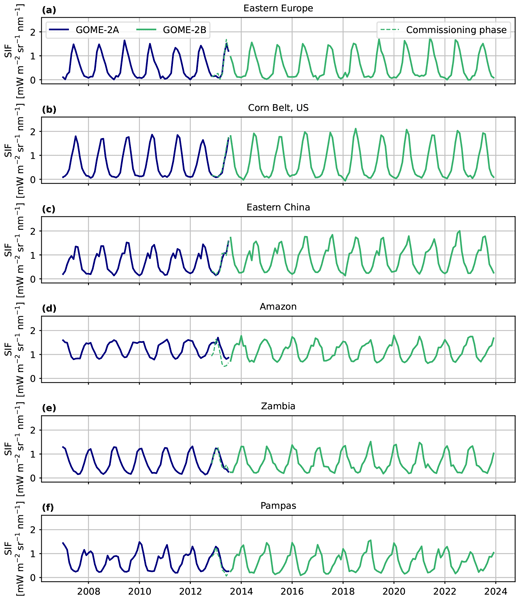
The GOME-2 series offers a long solar-induced fluorescence (SIF) record, but sensor-specific instrumental artefacts diverge intersensor observations. We developed a combined GOME-2 SIF record (2007–2023) from GOME-2A and GOME-2B SIF using the SIFTER v3 algorithm, which corrects these artefacts. Both records show strong spatial and temporal coherence. A framework is provided to detect and, if needed, correct intersensor offsets, supporting consistent long-term monitoring of vegetation dynamics.
Tao Xie, Xiaoyun Zhang, Wenmei Li, Yixiang Chen, Ping Wang, Piet Stammes, Gijsbert Tilstra, Olaf Tuinder, Maarten Sneep, and Feng Lu
Int. Arch. Photogramm. Remote Sens. Spatial Inf. Sci., XLIX-B3-2026, 1487–1492, https://doi.org/10.5194/isprs-archives-XLIX-B3-2026-1487-2026, https://doi.org/10.5194/isprs-archives-XLIX-B3-2026-1487-2026, 2026
Juliëtte C. S. Anema, K. Folkert Boersma, Lieuwe G. Tilstra, Olaf N. E. Tuinder, and Willem W. Verstraeten
Atmos. Meas. Tech., 18, 1961–1979, https://doi.org/10.5194/amt-18-1961-2025, https://doi.org/10.5194/amt-18-1961-2025, 2025
Short summary
Short summary
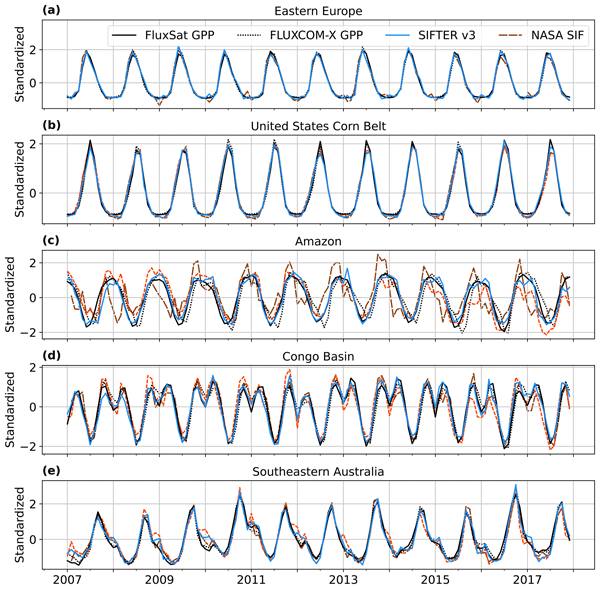
Long-term records of plant fluorescence offer vital insights into changing vegetation activity. The GOME-2A sensor provides extensive global observations but suffers from calibration and instrument degradation, which affects data consistency. This study presents the SIFTER v3 algorithm, which effectively resolves these issues and includes other improvements, resulting in robust, accurate, and consistent GOME-2A fluorescence measurements from 2007 to 2017.
Laura Köhler, Julia Windmiller, Dariusz Baranowski, Michał Brennek, Michał Ciuryło, Lennéa Hayo, Daniel Kȩpski, Stefan Kinne, Beata Latos, Bertrand Lobo, Tobias Marke, Timo Nischik, Daria Paul, Piet Stammes, Artur Szkop, and Olaf Tuinder
Earth Syst. Sci. Data, 17, 633–659, https://doi.org/10.5194/essd-17-633-2025, https://doi.org/10.5194/essd-17-633-2025, 2025
Short summary
Short summary
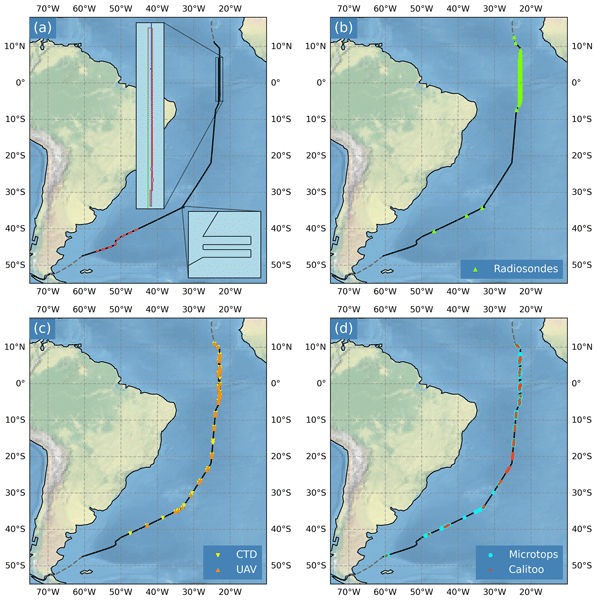
We present atmospheric and oceanic data from the Atlantic References and Convection ship campaign with the Maria S. Merian from Mindelo to Punta Arenas observed with the integrated ship sensors; humidity and temperature profiler; ceilometer; aerosol instruments (Calitoo, Microtops, and DustTrak); radiosondes; uncrewed aircraft vehicles; and conductivity, temperature, and depth scans. The data include three complete profiles of the Intertropical Convergence Zone and a storm in the South Atlantic.
Quentin Laffineur, Alexander Mangold, and Andy W. Delcloo
Atmos. Meas. Tech., 19, 6415–6446, https://doi.org/10.5194/amt-19-6415-2026, https://doi.org/10.5194/amt-19-6415-2026, 2026
Short summary
Short summary
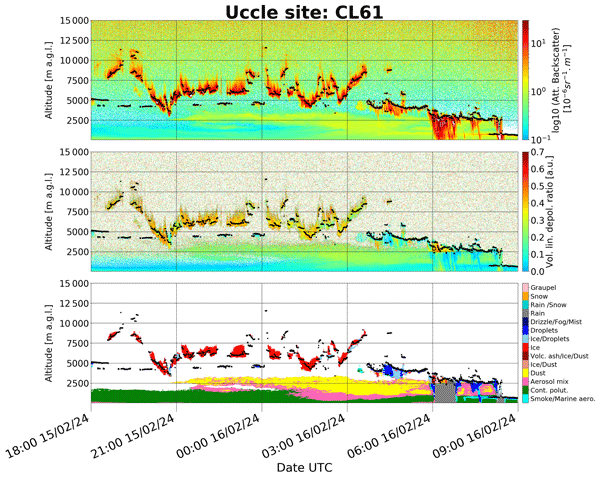
CONIOPOL (CONIOlogy + POLarization) is a new algorithm for continuous, real-time classification of aerosols and hydrometeors using a single-wavelength polarization-enabled automatic lidar. Applied to one year of CL61 observations in Belgium, it provides physically consistent aerosol typing and seasonal patterns. Comparisons with CAMS (Copernicus Atmosphere Monitoring Service) and sensitivity tests support its potential for operational monitoring and long-term aerosol climatology.
Juliëtte C. S. Anema, K. Folkert Boersma, Lieuwe G. Tilstra, Ruben van 't Loo, and Olaf N. E. Tuinder
Earth Syst. Sci. Data, 18, 5643–5661, https://doi.org/10.5194/essd-18-5643-2026, https://doi.org/10.5194/essd-18-5643-2026, 2026
Short summary
Short summary
The GOME-2 series offers a long solar-induced fluorescence (SIF) record, but sensor-specific instrumental artefacts diverge intersensor observations. We developed a combined GOME-2 SIF record (2007–2023) from GOME-2A and GOME-2B SIF using the SIFTER v3 algorithm, which corrects these artefacts. Both records show strong spatial and temporal coherence. A framework is provided to detect and, if needed, correct intersensor offsets, supporting consistent long-term monitoring of vegetation dynamics.
Tao Xie, Xiaoyun Zhang, Wenmei Li, Yixiang Chen, Ping Wang, Piet Stammes, Gijsbert Tilstra, Olaf Tuinder, Maarten Sneep, and Feng Lu
Int. Arch. Photogramm. Remote Sens. Spatial Inf. Sci., XLIX-B3-2026, 1487–1492, https://doi.org/10.5194/isprs-archives-XLIX-B3-2026-1487-2026, https://doi.org/10.5194/isprs-archives-XLIX-B3-2026-1487-2026, 2026
Pascal van der Bij, Alexander Mangold, Karen De Causmaecker, Preben Van Overmeiren, Christophe Walgraeve, and Andy W. Delcloo
EGUsphere, https://doi.org/10.5194/egusphere-2026-4110, https://doi.org/10.5194/egusphere-2026-4110, 2026
Short summary
Short summary
Antarctica is the most remote region on Earth, yet traces of harmful chemicals can still be found in its environment. We studied where the air reaching the Belgian Princess Elisabeth Station in East Antarctica came from and compared this with measurements of these chemicals. We found that differences in air transport alone could not explain the observed levels, suggesting that other processes, such as their seasonal release from snow, may also play a role.
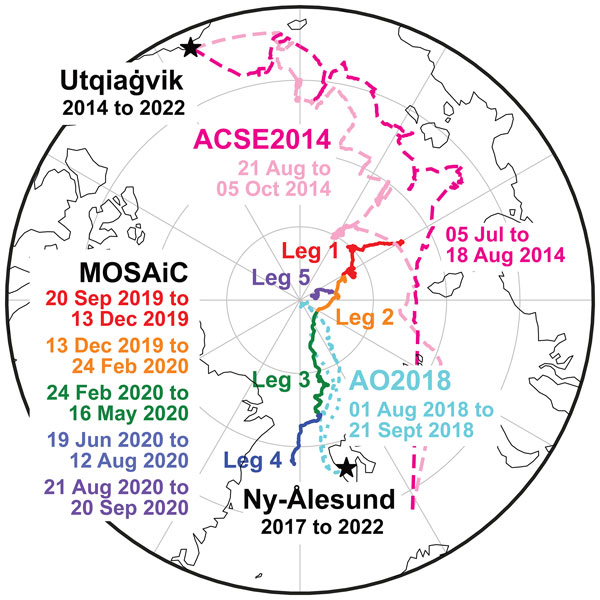
Peggy Achtert, Torsten Seelig, Gabriella Wallentin, Luisa Ickes, Matthew D. Shupe, Corinna Hoose, and Matthias Tesche
Atmos. Chem. Phys., 26, 3049–3068, https://doi.org/10.5194/acp-26-3049-2026, https://doi.org/10.5194/acp-26-3049-2026, 2026
Short summary
Short summary
We quantify the occurrence of single- and multi-layer clouds in the Arctic based on combining soundings with cloud-radar observations. We also assess the rate of ice-crystal seeding in multi-layer cloud systems as this is an important initiator of glaciation in super-cooled liquid cloud layers. We find an abundance of multi-layer clouds in the Arctic with seeding in about half to two thirds of cases in which the gap between upper and lower layers ranges between 100 and 1000 m.
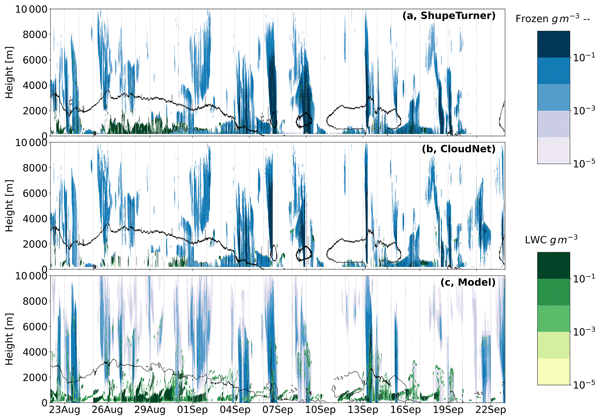
Gabriella Wallentin, Luisa Ickes, Peggy Achtert, Matthias Tesche, and Corinna Hoose
Atmos. Chem. Phys., 26, 3069–3089, https://doi.org/10.5194/acp-26-3069-2026, https://doi.org/10.5194/acp-26-3069-2026, 2026
Short summary
Short summary
Multilayer clouds are cloud systems with two or more vertically stacked cloud layers. Using a weather prediction model, we simulate clouds in the Arctic during a month. The model is evaluated against observations collected during the ship campaign MOSAiC (Multidisciplinary Drifting Observatory for the Study of Arctic Climate). We find that multilayer clouds frequently occur in the region, in fact, they dominate the cloud occurrence. The study highlights the importance of representing these clouds in simulations over the Arctic.
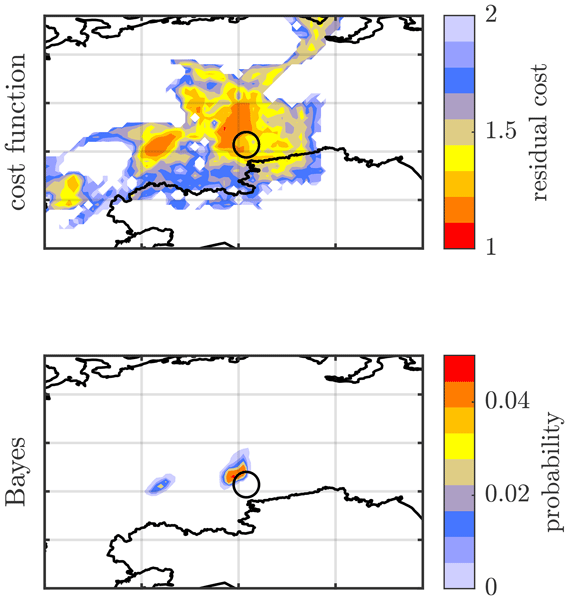
Stijn Van Leuven, Pieter De Meutter, Johan Camps, Piet Termonia, and Andy Delcloo
Atmos. Chem. Phys., 25, 9199–9218, https://doi.org/10.5194/acp-25-9199-2025, https://doi.org/10.5194/acp-25-9199-2025, 2025
Short summary
Short summary
We use deposition measurements to trace the source of the radioactive isotope 106Ru released into the atmosphere in 2017, which led to detections in Europe and other parts of the Northern Hemisphere. Most frequently, measurements of air concentration are used for such purposes. Our research shows that, while air concentration data can provide more precise results, deposition measurements can still effectively pinpoint the release location, offering a less costly and more versatile alternative.
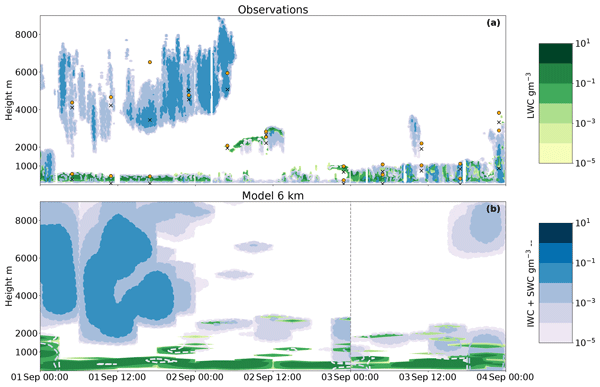
Gabriella Wallentin, Annika Oertel, Luisa Ickes, Peggy Achtert, Matthias Tesche, and Corinna Hoose
Atmos. Chem. Phys., 25, 6607–6631, https://doi.org/10.5194/acp-25-6607-2025, https://doi.org/10.5194/acp-25-6607-2025, 2025
Short summary
Short summary
Multilayer clouds are common in the Arctic but remain underrepresented. We use an atmospheric model to simulate multilayer cloud cases from the Arctic expedition MOSAiC 2019/2020. We find that it is complex to accurately model these cloud layers due to the lack of correct temperature profiles. The model also struggles to capture the observed cloud phase and the relative concentration of cloud droplets and cloud ice. We constrain our model to measured aerosols to mitigate this issue.
Juliëtte C. S. Anema, K. Folkert Boersma, Lieuwe G. Tilstra, Olaf N. E. Tuinder, and Willem W. Verstraeten
Atmos. Meas. Tech., 18, 1961–1979, https://doi.org/10.5194/amt-18-1961-2025, https://doi.org/10.5194/amt-18-1961-2025, 2025
Short summary
Short summary
Long-term records of plant fluorescence offer vital insights into changing vegetation activity. The GOME-2A sensor provides extensive global observations but suffers from calibration and instrument degradation, which affects data consistency. This study presents the SIFTER v3 algorithm, which effectively resolves these issues and includes other improvements, resulting in robust, accurate, and consistent GOME-2A fluorescence measurements from 2007 to 2017.
Laura Köhler, Julia Windmiller, Dariusz Baranowski, Michał Brennek, Michał Ciuryło, Lennéa Hayo, Daniel Kȩpski, Stefan Kinne, Beata Latos, Bertrand Lobo, Tobias Marke, Timo Nischik, Daria Paul, Piet Stammes, Artur Szkop, and Olaf Tuinder
Earth Syst. Sci. Data, 17, 633–659, https://doi.org/10.5194/essd-17-633-2025, https://doi.org/10.5194/essd-17-633-2025, 2025
Short summary
Short summary
We present atmospheric and oceanic data from the Atlantic References and Convection ship campaign with the Maria S. Merian from Mindelo to Punta Arenas observed with the integrated ship sensors; humidity and temperature profiler; ceilometer; aerosol instruments (Calitoo, Microtops, and DustTrak); radiosondes; uncrewed aircraft vehicles; and conductivity, temperature, and depth scans. The data include three complete profiles of the Intertropical Convergence Zone and a storm in the South Atlantic.
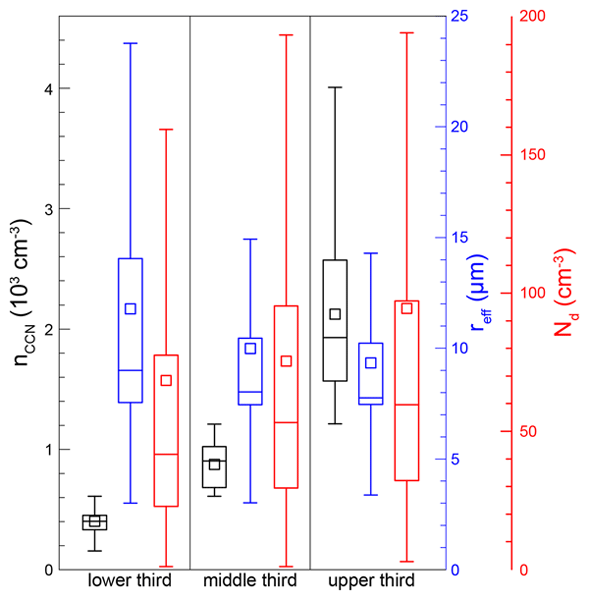
Fani Alexandri, Felix Müller, Goutam Choudhury, Peggy Achtert, Torsten Seelig, and Matthias Tesche
Atmos. Meas. Tech., 17, 1739–1757, https://doi.org/10.5194/amt-17-1739-2024, https://doi.org/10.5194/amt-17-1739-2024, 2024
Short summary
Short summary
We present a novel method for studying aerosol–cloud interactions. It combines cloud-relevant aerosol concentrations from polar-orbiting lidar observations with the development of individual clouds from geostationary observations. Application to 1 year of data gives first results on the impact of aerosols on the concentration and size of cloud droplets and on cloud phase in the regime of heterogeneous ice formation. The method could enable the systematic investigation of warm and cold clouds.
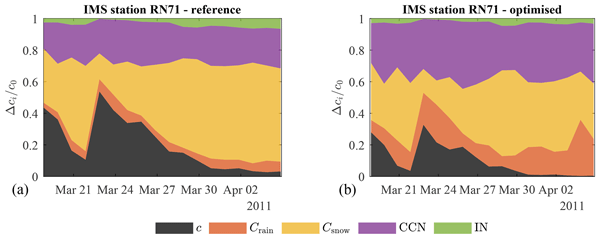
Stijn Van Leuven, Pieter De Meutter, Johan Camps, Piet Termonia, and Andy Delcloo
Geosci. Model Dev., 16, 5323–5338, https://doi.org/10.5194/gmd-16-5323-2023, https://doi.org/10.5194/gmd-16-5323-2023, 2023
Short summary
Short summary
Precipitation collects airborne particles and deposits these on the ground. This process is called wet deposition and greatly determines how airborne radioactive particles (released routinely or accidentally) contaminate the surface. In this work we present a new method to improve the calculation of wet deposition in computer models. We apply this method to the existing model FLEXPART by simulating the Fukushima nuclear accident (2011) and show that it improves the simulation of wet deposition.
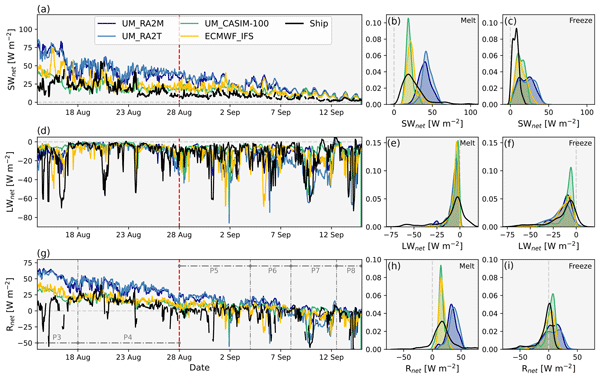
Gillian Young McCusker, Jutta Vüllers, Peggy Achtert, Paul Field, Jonathan J. Day, Richard Forbes, Ruth Price, Ewan O'Connor, Michael Tjernström, John Prytherch, Ryan Neely III, and Ian M. Brooks
Atmos. Chem. Phys., 23, 4819–4847, https://doi.org/10.5194/acp-23-4819-2023, https://doi.org/10.5194/acp-23-4819-2023, 2023
Short summary
Short summary
In this study, we show that recent versions of two atmospheric models – the Unified Model and Integrated Forecasting System – overestimate Arctic cloud fraction within the lower troposphere by comparison with recent remote-sensing measurements made during the Arctic Ocean 2018 expedition. The overabundance of cloud is interlinked with the modelled thermodynamic structure, with strong negative temperature biases coincident with these overestimated cloud layers.
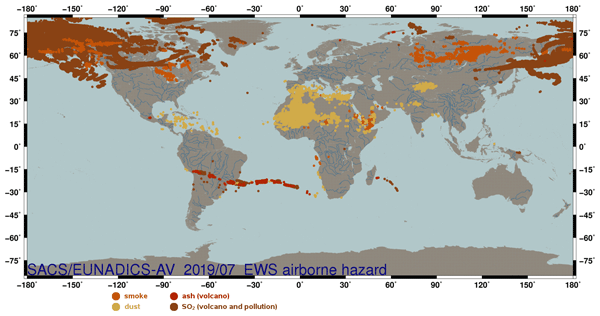
Hugues Brenot, Nicolas Theys, Lieven Clarisse, Jeroen van Gent, Daniel R. Hurtmans, Sophie Vandenbussche, Nikolaos Papagiannopoulos, Lucia Mona, Timo Virtanen, Andreas Uppstu, Mikhail Sofiev, Luca Bugliaro, Margarita Vázquez-Navarro, Pascal Hedelt, Michelle Maree Parks, Sara Barsotti, Mauro Coltelli, William Moreland, Simona Scollo, Giuseppe Salerno, Delia Arnold-Arias, Marcus Hirtl, Tuomas Peltonen, Juhani Lahtinen, Klaus Sievers, Florian Lipok, Rolf Rüfenacht, Alexander Haefele, Maxime Hervo, Saskia Wagenaar, Wim Som de Cerff, Jos de Laat, Arnoud Apituley, Piet Stammes, Quentin Laffineur, Andy Delcloo, Robertson Lennart, Carl-Herbert Rokitansky, Arturo Vargas, Markus Kerschbaum, Christian Resch, Raimund Zopp, Matthieu Plu, Vincent-Henri Peuch, Michel Van Roozendael, and Gerhard Wotawa
Nat. Hazards Earth Syst. Sci., 21, 3367–3405, https://doi.org/10.5194/nhess-21-3367-2021, https://doi.org/10.5194/nhess-21-3367-2021, 2021
Short summary
Short summary
The purpose of the EUNADICS-AV (European Natural Airborne Disaster Information and Coordination System for Aviation) prototype early warning system (EWS) is to develop the combined use of harmonised data products from satellite, ground-based and in situ instruments to produce alerts of airborne hazards (volcanic, dust, smoke and radionuclide clouds), satisfying the requirement of aviation air traffic management (ATM) stakeholders (https://cordis.europa.eu/project/id/723986).
Cited articles
Arosio, C., Sofieva, V., Orfanoz-Cheuquelaf, A., Rozanov, A., Heue, K.-P., Loyola, D., Malina, E., Stauffer, R. M., Tarasick, D., Van Malderen, R., Ziemke, J. R., and Weber, M.: Intercomparison of tropospheric ozone column datasets from combined nadir and limb satellite observations, Atmos. Meas. Tech., 18, 3247–3265, https://doi.org/10.5194/amt-18-3247-2025, 2025. a
Bognar, K., Tegtmeier, S., Bourassa, A., Roth, C., Warnock, T., Zawada, D., and Degenstein, D.: Stratospheric ozone trends for 1984–2021 in the SAGE II–OSIRIS–SAGE III/ISS composite dataset, Atmos. Chem. Phys., 22, 9553–9569, https://doi.org/10.5194/acp-22-9553-2022, 2022. a
Boyd, I. S., Parrish, A. D., Froidevaux, L., von Clarmann, T., Kyrölä, E., Russell III, J. M., and Zawodny, J. M.: Ground-based microwave ozone radiometer measurements compared with Aura-MLS v2.2 and other instruments at two Network for Detection of Atmospheric Composition Change sites, J. Geophys. Res., 112, D24S33, https://doi.org/10.1029/2007JD008720, 2007. a
Boynard, A., Hurtmans, D., Garane, K., Goutail, F., Hadji-Lazaro, J., Koukouli, M. E., Wespes, C., Vigouroux, C., Keppens, A., Pommereau, J.-P., Pazmino, A., Balis, D., Loyola, D., Valks, P., Sussmann, R., Smale, D., Coheur, P.-F., and Clerbaux, C.: Validation of the IASI FORLI/EUMETSAT ozone products using satellite (GOME-2), ground-based (Brewer–Dobson, SAOZ, FTIR) and ozonesonde measurements, Atmos. Meas. Tech., 11, 5125–5152, https://doi.org/10.5194/amt-11-5125-2018, 2018. a
Burrows, J. P., Weber, M., Buchwitz, M., Rozanov, V., Ladstätter-Weißenmayer, A., Richter, A., DeBeek, R., Hoogen, R., Bramstedt, K., Eichmann, K.-U., Eisinger, M., and Perner, D.: The global ozone monitoring experiment (GOME): Mission concept and first scientific results, J. Atmos. Sci., 56, 151–175, https://doi.org/10.1175/1520-0469(1999)056<0151:TGOMEG>2.0.CO;2, 1999.
Burrows, M. T., Schoeman, D. S., Buckley, L. B., Moore, P., Poloczanska, E. S., Brander, K. M., Brown, C., Bruno, J. F., Duarte, C. M., Halpern, B. S., Holding, J., Kappel, C. V., Kiessling, W., O'Connor, M., Pandolfi, J. M., Parmesan, C., Schwing, F. B., Sydeman, W. J., and Richardson, A. J.: The pace of shifting climate in marine and terrestrial ecosystems, Science, 334, 652–655, https://doi.org/10.1126/science.1210288, 2011. a, b
Calisesi, Y., Soebijanta, V. T., and van Oss, R.: Regridding of remote soundings: Formulation and application to ozone profile comparison, J. Geophys. Res., 110, D23306, https://doi.org/10.1029/2005JD006122, 2005. a
Callies, J., Corpaccioli, E., Eisinger, M., Hahne, A., and Lefebvre, A.: GOME-2-Metop's second-generation sensor for operational ozone monitoring. ESA bulletin, 102, 28–36, https://www.esa.int/esapub/bulletin/bullet102/Callies102.pdf (last access: 20 March 2026), 2000. a
Chipperfield, M. P. and Bekki, S.: Opinion: Stratospheric ozone – depletion, recovery and new challenges, Atmos. Chem. Phys., 24, 2783–2802, https://doi.org/10.5194/acp-24-2783-2024, 2024. a
Coldewey-Egbers, M., Loyola R., D. G., Latter, B., Siddans, R., Kerridge, B., Hubert, D., van Roozendael, M., and Eisinger, M.: The novel GOME-type Ozone Profile Essential Climate Variable (GOP-ECV) data record covering the past 26 years, Atmos. Meas. Tech., 18, 5485–5505, https://doi.org/10.5194/amt-18-5485-2025, 2025. a
Delcloo A.: AC SAF Validation report on GOME-2C near real-time and offline global tropospheric ozone, Atmospheric Composition Satellite Application Facility, EUMETSAT, https://acsaf.org/docs/vr/Validation_Report_TrO3-C_Jun_2020.pdf (last access: 20 March 2026), 2020.
Delcloo A.: AC SAF Validation report on GOME-2 reprocessed global tropospheric ozone, Atmospheric Composition Satellite Application Facility, EUMETSAT, https://acsaf.org/docs/vr/Validation_Report_TrO3_DR_Jan_2024.pdf (last access: 20 March 2026), 2024.
Delcloo, A., Garane, K., and Achtert, P.: AC SAF Validation report on GOME-2 near real-time ozone profiles for GOME-2C, Atmospheric Composition Satellite Application Facility, EUMETSAT, https://acsaf.org/docs/vr/Validation_Report_NHP-C_OHP-C_Jun_2020.pdf (last access: 20 March 2026), 2020.
Delcloo, A., Garane, K., and Achtert, P.: AC SAF Validation report on GOME-2 near real-time and reprocessed ozone profiles, Atmospheric Composition Satellite Application Facility, EUMETSAT, https://acsaf.org/docs/vr/Validation_Report_O3_prof_DR_Jan_2024.pdf (last access: 20 March 2026), 2024. a
Donzelli, G. and Suarez-Varela, M. M.: Tropospheric Ozone: A Critical Review of the Literature on Emissions, Exposure, and Health Effects, Atmosphere, 15, 779, https://doi.org/10.3390/atmos15070779, 2024. a
Eskes, H. J., Velthoven, P. F. J. V., Valks, P. J. M., and Kelder, H. M.: Assimilation of GOME total-ozone satellite observations in a three-dimensional tracer-transport model, Q. J. Roy. Meteor. Soc., 129, 1663–1681, https://doi.org/10.1256/qj.02.14, 2003. a
EUMETSAT: GOME-2 Metop-A and -B FDR Product Validation Report Reprocessing R3, (EUM/OPS/DOC/21/1237264), EUMETSAT, 4e, https://user.eumetsat.int/ (last access: 20 March 2026), 2022. a
EUMETSAT AC SAF: GOME-2 Level 3 Monthly Gridded Ozone Profile Climate Data Record Release 1 – Metop, EUMETSAT SAF on Atmospheric Composition Monitoring [data set], https://doi.org/10.15770/EUM_SAF_AC_0052, 2026. a
García, O. E., Sanromá, E., Schneider, M., Hase, F., León-Luis, S. F., Blumenstock, T., Sepúlveda, E., Redondas, A., Carreño, V., Torres, C., and Prats, N.: Improved ozone monitoring by ground-based FTIR spectrometry, Atmos. Meas. Tech., 15, 2557–2577, https://doi.org/10.5194/amt-15-2557-2022, 2022. a
Gaudel, A., Bourgeois, I., Li, M., Chang, K.-L., Ziemke, J., Sauvage, B., Stauffer, R. M., Thompson, A. M., Kollonige, D. E., Smith, N., Hubert, D., Keppens, A., Cuesta, J., Heue, K.-P., Veefkind, P., Aikin, K., Peischl, J., Thompson, C. R., Ryerson, T. B., Frost, G. J., McDonald, B. C., and Cooper, O. R.: Tropical tropospheric ozone distribution and trends from in situ and satellite data, Atmos. Chem. Phys., 24, 9975–10000, https://doi.org/10.5194/acp-24-9975-2024, 2024. 2024. a
Godin, S., Megie, G., and Pelon, J.: Systematic lidar measurements of the stratospheric ozone vertical distribution, Geophys. Res. Lett., 16, https://doi.org/10.1029/GL016i006p00547, 1998. a
Godin-Beekmann, S., Azouz, N., Sofieva, V. F., Hubert, D., Petropavlovskikh, I., Effertz, P., Ancellet, G., Degenstein, D. A., Zawada, D., Froidevaux, L., Frith, S., Wild, J., Davis, S., Steinbrecht, W., Leblanc, T., Querel, R., Tourpali, K., Damadeo, R., Maillard Barras, E., Stübi, R., Vigouroux, C., Arosio, C., Nedoluha, G., Boyd, I., Van Malderen, R., Mahieu, E., Smale, D., and Sussmann, R.: Updated trends of the stratospheric ozone vertical distribution in the 60° S–60° N latitude range based on the LOTUS regression model , Atmos. Chem. Phys., 22, 11657–11673, https://doi.org/10.5194/acp-22-11657-2022, 2022. a
Hocke, K., Kämpfer, N., Ruffieux, D., Froidevaux, L., Parrish, A., Boyd, I., von Clarmann, T., Steck, T., Timofeyev, Y. M., Polyakov, A. V., and Kyrölä, E.: Comparison and synergy of stratospheric ozone measurements by satellite limb sounders and the ground-based microwave radiometer SOMORA, Atmos. Chem. Phys., 7, 4117–4131, https://doi.org/10.5194/acp-7-4117-2007, 2007. a
Intergovernmental Panel on Climate Change (IPCC): Climate Change 2021 – The Physical Science Basis: Working Group I Contribution to the Sixth Assessment Report of the Intergovernmental Panel on Climate Change, Cambridge University Press, United Kingdom, https://doi.org/10.1017/9781009157896, 2023. a, b
Johnson, M. S., Liu, X., Zoogman, P., Sullivan, J., Newchurch, M. J., Kuang, S., Leblanc, T., and McGee, T.: Evaluation of potential sources of a priori ozone profiles for TEMPO tropospheric ozone retrievals, Atmos. Meas. Tech., 11, 3457–3477, https://doi.org/10.5194/amt-11-3457-2018, 2018. a
Keckhut, P., McDermid, S., Swart, D., McGee, T., Godin-Beekmann, S., Adriani, A., Barnes, J., Baray, J.-L., Bencherif, H., Claude, H., di Sarra, A.G., Fiocco, G., Hansen, G., Hauchecorne, A., Leblanc, T., Lee, C. H., Pal, S., Megie, G., Nakane, H., Neuber, R., Steinbrecht, W., and Thayero, J.: Review of ozone and temperature lidar validations performed within the framework of the Network for the Detection of Stratospheric Change, J. Environ. Monitor., 6.9, 721–733, https://doi.org/10.1039/b404256e, 2004. a
Keppens, A., Lambert, J.-C., Granville, J., Miles, G., Siddans, R., van Peet, J. C. A., van der A, R. J., Hubert, D., Verhoelst, T., Delcloo, A., Godin-Beekmann, S., Kivi, R., Stübi, R., and Zehner, C.: Round-robin evaluation of nadir ozone profile retrievals: methodology and application to MetOp-A GOME-2, Atmos. Meas. Tech., 8, 2093–2120, https://doi.org/10.5194/amt-8-2093-2015, 2015. a
Keppens, A., Di Pede, S., Hubert, D., Lambert, J.-C., Veefkind, P., Sneep, M., De Haan, J., ter Linden, M., Leblanc, T., Compernolle, S., Verhoelst, T., Granville, J., Nath, O., Fjæraa, A. M., Boyd, I., Niemeijer, S., Van Malderen, R., Smit, H. G. J., Duflot, V., Godin-Beekmann, S., Johnson, B. J., Steinbrecht, W., Tarasick, D. W., Kollonige, D. E., Stauffer, R. M., Thompson, A. M., Dehn, A., and Zehner, C.: 5 years of Sentinel-5P TROPOMI operational ozone profiling and geophysical validation using ozonesonde and lidar ground-based networks, Atmos. Meas. Tech., 17, 3969–3993, https://doi.org/10.5194/amt-17-3969-2024, 2024. a
Keppens, A., Hubert, D., Granville, J., Nath, O., Lambert, J.-C., Wespes, C., Coheur, P.-F., Clerbaux, C., Boynard, A., Siddans, R., Latter, B., Kerridge, B., Di Pede, S., Veefkind, P., Cuesta, J., Dufour, G., Heue, K.-P., Coldewey-Egbers, M., Loyola, D., Orfanoz-Cheuquelaf, A., Maratt Satheesan, S., Eichmann, K.-U., Rozanov, A., Sofieva, V. F., Ziemke, J. R., Inness, A., Van Malderen, R., and Hoffmann, L.: Harmonisation of sixteen tropospheric ozone satellite data records, Atmos. Meas. Tech., 18, 6893–6916, https://doi.org/10.5194/amt-18-6893-2025, 2025. a
Leblanc, T. and McDermid, I. S.: Stratospheric Ozone Climatology From Lidar Measurements at Table Mountain (34.4°N, 117.7°W) and Mauna Loa (19.5°N, 155.6°W), J. Geophys. Res., 105, 14613–14623, 2000. a
Liu, X., Bhartia, P. K., Chance, K., Froidevaux, L., Spurr, R. J. D., and Kurosu, T. P.: Validation of Ozone Monitoring Instrument (OMI) ozone profiles and stratospheric ozone columns with Microwave Limb Sounder (MLS) measurements, Atmos. Chem. Phys., 10, 2539–2549, https://doi.org/10.5194/acp-10-2539-2010, 2010. a
Lobsiger E., Künzi K. F., and Dütsch, H.U.: Comparison of stratospheric ozone profiles retreived from microwave-radiometer and Dobson-spectrometer data, J. Atmos. Terr. Phys., 46, 799-806, 1984. a
McPeters, R. D. and Labow, G. J.: Climatology 2011: An MLS and sonde derived ozone climatology for satellite retrieval algorithms, J. Geophys. Res.-Atmos., 117, D10, 2156–2202, https://doi.org/10.1029/2011JD017006, 2012. a
Monks, P. S., Archibald, A. T., Colette, A., Cooper, O., Coyle, M., Derwent, R., Fowler, D., Granier, C., Law, K. S., Mills, G. E., Stevenson, D. S., Tarasova, O., Thouret, V., von Schneidemesser, E., Sommariva, R., Wild, O., and Williams, M. L.: Tropospheric ozone and its precursors from the urban to the global scale from air quality to short-lived climate forcer, Atmos. Chem. Phys., 15, 8889–8973, https://doi.org/10.5194/acp-15-8889-2015, 2015. a, b
Munro, R., Lang, R., Klaes, D., Poli, G., Retscher, C., Lindstrot, R., Huckle, R., Lacan, A., Grzegorski, M., Holdak, A., Kokhanovsky, A., Livschitz, J., and Eisinger, M.: The GOME-2 instrument on the Metop series of satellites: instrument design, calibration, and level 1 data processing – an overview, Atmos. Meas. Tech., 9, 1279–1301, https://doi.org/10.5194/amt-9-1279-2016, 2016. a
Okamoto, S., Cuesta, J., Dufour, G., Eremenko, M., Miyazaki, K., Boonne, C., Tanimoto, H., Peischl, J., and Thompson, C.: Natural and anthropogenic influence on tropospheric ozone variability over the Tropical Atlantic unveiled by satellite and in situ observations, EGUsphere [preprint], https://doi.org/10.5194/egusphere-2024-3758, 2024. a
Ozone CCI: Ozone ECV project, https://climate.esa.int/en/projects/ozone/ (last access: 19 January 2025), 2010. a
Parrish, A., de Zafra, R. L., Solomon, P. M., and Barrett, J. W.: A ground-based technique for millimeter wave spectroscopic observations of stratospheric trace constituents, Radio Sci., 23, 106–118, 1988. a
Pope, R. J., Kerridge, B. J., Siddans, R., Latter, B. G., Chipperfield, M. P., Feng, W., Pimlott, M. A., Dhomse, S. S., Retscher, C., and Rigby, R.: Investigation of spatial and temporal variability in lower tropospheric ozone from RAL Space UV–Vis satellite products, Atmos. Chem. Phys., 23, 14933–14947, https://doi.org/10.5194/acp-23-14933-2023, 2023. a
Rivoire, L., Linz, M., Neu, J. L., Lin, P., and Santee, M. L.: Satellite nadir-viewing geometry affects the magnitude and detectability of long-term trends in stratospheric ozone, Atmos. Chem. Phys., 25, 2269–2289, https://doi.org/10.5194/acp-25-2269-2025, 2025. a
Rodgers, C. D.: Inverse Methods for Atmospheric Sounding: Theory and Practice, World Scientific Publishing, Singapore, https://doi.org/10.1142/3171, 2000. a, b
Rodgers, C. D. and Connor, B. J.: Intercomparison of remote sounding instruments, J. Geophys. Res., 108, https://doi.org/10.1029/2002JD002299, 2003. a
Smit, H. G. J., Straeter, W., Johnson, B. J., Oltmans, S. J., Davies, J., Tarasick, D. W., Hoegger, B., Stübi, R., Schmidlin, F. J., Northam, T., Thompson, A. M., Witte, J. C., Boyd, I., and Posny, F.: Assessment of the performance of ECC-ozonesondes under quasi-flight conditions in the environmental simulation chamber: Insights from the Jülich Ozone Sonde Intercomparison Experiment (JOSIE), J. Geophys. Res., 112, D19306, https://doi.org/10.1029/2006JD007308, 2007. a, b
Smit, H. G. J., Poyraz, D., Van Malderen, R., Thompson, A. M., Tarasick, D. W., Stauffer, R. M., Johnson, B. J., and Kollonige, D. E.: New insights from the Jülich Ozone Sonde Intercomparison Experiment: calibration functions traceable to one ozone reference instrument, Atmos. Meas. Tech., 17, 73–112, https://doi.org/10.5194/amt-17-73-2024, 2024. a
Sofieva, V. F., Szelag, M., Tamminen, J., Arosio, C., Rozanov, A., Weber, M., Degenstein, D., Bourassa, A., Zawada, D., Kiefer, M., Laeng, A., Walker, K. A., Sheese, P., Hubert, D., van Roozendael, M., Retscher, C., Damadeo, R., and Lumpe, J. D.: Updated merged SAGE-CCI-OMPS+ dataset for the evaluation of ozone trends in the stratosphere, Atmos. Meas. Tech., 16, 1881–1899, https://doi.org/10.5194/amt-16-1881-2023, 2023. a
Spurr, R., de Haan, J., and van Oss, R., and Vasilkov, A.: Discrete-ordinate radiative transfer in a stratified medium with first-order rotational Raman scattering, J. Quant. Spectrosc. Ra., 109, 404–425, https://doi.org/10.1016/j.jqsrt.2007.08.011, 2008. a
Stauffer, R. M., Thompson, A. M., Kollonige, D. E., Tarasick, D. W., Van Malderen, R., Smit, H. G. J., Vömel, H., Morris, G. A., Johnson, B. J., Cullis, P. D., Stübi, R., Davies, J., and Yan, M. M.: An examination of the recent stability of ozonesonde global network data, Earth Space Sci., 9, https://doi.org/10.1029/2022EA002459, 2022. a
Steinbrecht, W., Claude, H., Schönenborn, F., Mcdermid, I. S., Leblanc, T., Godin, S., Song, T., Swart, D. P. J., Meijer, Y.J., Bodeker, G. E., Connor, B. J., Kämpfer, N., Hocke, K., Calisesi, Y., Schneider, N., de la Noë, J., Parrish, A. D., Boyd, I. S., Brühl, C., Steil, B., Giorgetta, M. A., Manzini, E., Thomason, L. W., Zawodny, J. M., McCormick, M. P., Russell III, J. M., Bhartia, P. K., Stolarski, R. S., and Hollandsworth-Frith, S. M.: Long-term evolution of upper stratospheric ozone at selected stations of the Network for the Detection of Stratospheric Change (NDSC), J. Geophys. Res., 111, D10, https://doi.org/10.1029/2005JD006454, 2006. a, b
Steinbrecht, W., Froidevaux, L., Fuller, R., Wang, R., Anderson, J., Roth, C., Bourassa, A., Degenstein, D., Damadeo, R., Zawodny, J., Frith, S., McPeters, R., Bhartia, P., Wild, J., Long, C., Davis, S., Rosenlof, K., Sofieva, V., Walker, K., Rahpoe, N., Rozanov, A., Weber, M., Laeng, A., von Clarmann, T., Stiller, G., Kramarova, N., Godin-Beekmann, S., Leblanc, T., Querel, R., Swart, D., Boyd, I., Hocke, K., Kämpfer, N., Maillard Barras, E., Moreira, L., Nedoluha, G., Vigouroux, C., Blumenstock, T., Schneider, M., García, O., Jones, N., Mahieu, E., Smale, D., Kotkamp, M., Robinson, J., Petropavlovskikh, I., Harris, N., Hassler, B., Hubert, D., and Tummon, F.: An update on ozone profile trends for the period 2000 to 2016, Atmos. Chem. Phys., 17, 10675–10690, https://doi.org/10.5194/acp-17-10675-2017, 2017. a
Steinbrecht, W., Velazco, V. A., Dirksen, R., Doppler, L., Oelsner, P., Van Malderen, R., De Backer, H., Barras, E. M., Stübi, R., Godin-Beekmann, S., and Hauchecorne, A.: Ground-based monitoring of stratospheric ozone and temperature over Germany since the 1960s, Earth Space Sci., 12, https://doi.org/10.1029/2024EA003821, 2025. a
Stübi, R., Levrat, G., Hoegger, B., Viatte, P., Staehelin, J., and Schmidlin, F. J.: In-flight comparison of Brewer–Mast and electrochemical concentration cell ozonesondes, J. Geophys. Res., 113, D13302, https://doi.org/10.1029/2007JD009091, 2008. a, b
Solomon, S., Ivy, D. J., Kinnison, D., Mills, M. J., Neely III, R. R., and Schmidt, A.: Emergence of healing in the Antarctic ozone layer, Science, 353, 269–274, 2016. a
Tilstra, L. G., Tuinder, O. N. E., Wang, P., and Stammes, P.: Surface reflectivity climatologies from UV to NIR determined from Earth observations by GOME-2 and SCIAMACHY, J. Geophys. Res.-Atmos. 122, 4084–4111, https://doi.org/10.1002/2016JD025940, 2017. a
Tilstra, L. G., Tuinder, O. N. E., Wang, P., and Stammes, P.: Directionally dependent Lambertian-equivalent reflectivity (DLER) of the Earth's surface measured by the GOME-2 satellite instruments, Atmos. Meas. Tech., 14, 4219–4238, https://doi.org/10.5194/amt-14-4219-2021, 2021. a
Vigouroux, C., Blumenstock, T., Coffey, M., Errera, Q., García, O., Jones, N. B., Hannigan, J. W., Hase, F., Liley, B., Mahieu, E., Mellqvist, J., Notholt, J., Palm, M., Persson, G., Schneider, M., Servais, C., Smale, D., Thölix, L., and De Mazière, M.: Trends of ozone total columns and vertical distribution from FTIR observations at eight NDACC stations around the globe, Atmos. Chem. Phys., 15, 2915–2933, https://doi.org/10.5194/acp-15-2915-2015, 2015. a, b
World Meteorological Organization (WMO): National Oceanic and Atmospheric Administration (NOAA), United Nations Environment Programme (UNEP); National Aeronautics and Space Administration (NASA), European Commission: Scientific assessment of ozone depletion: 2018, Global Ozone Research and Monitoring Project Report no. 58, World Meteorological Organization, Geneva, Switzerland, 1180 pp., ISBN 978-1-7329317-1-8, 2018. a, b, c, d
World Meteorological Organization (WMO): National Oceanic and Atmospheric Administration (NOAA), United Nations Environment Programme (UNEP), National Aeronautics and Space Administration (NASA), European Commission: Scientific assessment of ozone depletion: Global Ozone Research and Monitoring Project – GAW Report no. 278, World Meteorological Organization, Geneva, Switzerland, 520 pp., ISBN 978-9914-733-97-6, 2022. a
Xu, J., Zhang, Z., Rao, L., Wang, Y., Letu, H., Shi, C., Tana, G., Wang, W., Zhu, S., Liu, S., and Shi, J.: Remote sensing of tropospheric ozone from space: Progress and challenges, Journal of Remote Sensing, 4, 0178, https://doi.org/10.34133/remotesensing.0178, 2024. a
Short summary
This paper presents the AC SAF (Atmospheric Composition Satellite Application Facility) gridded global GOME-2 (Global Ozone Monitoring Experiment) ozone profile data record. It covers the period 2007–2024 and consists of ozone partial columns on a 0.25 × 0.25 degree grid with 40 layers, with the associated averaging kernels and a priori. The ozone data record is validated against balloon sounding, lidar, FTIR (Fourier transform infrared) and microwave radiometers. The results demonstrate a high level of consistency across the GOME-2 instruments, underscoring their reliability for long-term ozone monitoring.
This paper presents the AC SAF (Atmospheric Composition Satellite Application Facility) gridded...


