
Articles | Volume 19, issue 9
https://doi.org/10.5194/amt-19-2941-2026
© Author(s) 2026. This work is distributed under
the Creative Commons Attribution 4.0 License.
the Creative Commons Attribution 4.0 License.
https://doi.org/10.5194/amt-19-2941-2026
© Author(s) 2026. This work is distributed under
the Creative Commons Attribution 4.0 License.
the Creative Commons Attribution 4.0 License.
Research article
| 
04 May 2026
Research article |
| 04 May 2026
| 04 May 2026
Characterizing thermodynamic observations from unshielded multirotor drone sensors
Department of Atmospheric and Earth Science, The University of Alabama in Huntsville, Huntsville, AL 35899, USA
Earth System Science Center, The University of Alabama in Huntsville, Huntsville, AL 35899, USA
Department of Atmospheric Science, Colorado State University, Fort Collins, CO 80523, USA
Jennie Bukowski
Department of Atmospheric Science, Colorado State University, Fort Collins, CO 80523, USA
Leah D. Grant
Department of Atmospheric Science, Colorado State University, Fort Collins, CO 80523, USA
Peter J. Marinescu
Department of Atmospheric Science, Colorado State University, Fort Collins, CO 80523, USA
J. Minnie Park
Department of Atmospheric Science, Colorado State University, Fort Collins, CO 80523, USA
ERT, Inc., Greenbelt, MD 20770, USA
Stacey M. Hitchcock
Department of Atmospheric Science, Colorado State University, Fort Collins, CO 80523, USA
School of Meteorology, University of Oklahoma, Norman, OK 73072, USA
Christine A. Neumaier
Department of Atmospheric Science, Colorado State University, Fort Collins, CO 80523, USA
Susan C. van den Heever
Department of Atmospheric Science, Colorado State University, Fort Collins, CO 80523, USA
Related authors
Zachary Watson, Can Li, Fei Liu, Sean W. Freeman, Huanxin Zhang, Jun Wang, and Shan-Hu Lee
Atmos. Chem. Phys., 25, 13527–13545, https://doi.org/10.5194/acp-25-13527-2025, https://doi.org/10.5194/acp-25-13527-2025, 2025
Short summary
Short summary
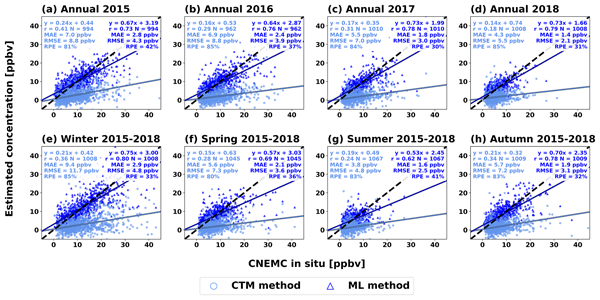
Air pollutants like sulfur dioxide impact human health and the environment. Our work estimated surface sulfur dioxide concentrations from satellite data over eastern China. One method used atmospheric models, and another method used machine learning. We found that compared to measurements from an air quality monitoring network, both methods accurately captured the locations of sulfur dioxide, but the machine learning method was generally much more accurate in the estimated concentrations.
Corey G. Amiot, Timothy J. Lang, Susan C. van den Heever, Richard A. Ferrare, Ousmane O. Sy, Lawrence D. Carey, Sundar A. Christopher, John R. Mecikalski, Sean W. Freeman, George Alexander Sokolowsky, Chris A. Hostetler, and Simone Tanelli
Atmos. Chem. Phys., 25, 12335–12355, https://doi.org/10.5194/acp-25-12335-2025, https://doi.org/10.5194/acp-25-12335-2025, 2025
Short summary
Short summary
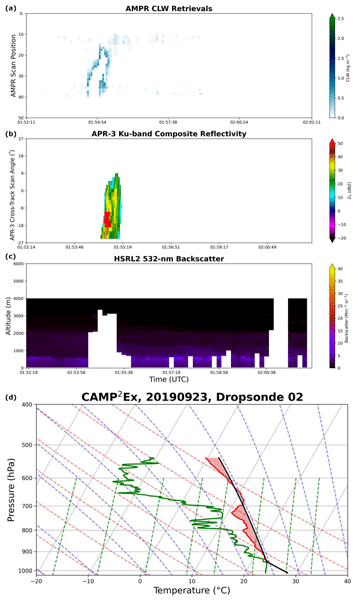
Decoupling aerosol and environmental impacts on convection is challenging. Using airborne data, we correlated convective metrics with aerosol concentrations in several different environments. Results were mixed, but some comparisons suggest that medium-to-high aerosol concentrations were occasionally strongly correlated with convective intensity and prevalence, especially when the atmosphere was relatively unstable. It is important to consider storm environment when evaluating aerosol effects.
G. Alexander Sokolowsky, Sean W. Freeman, William K. Jones, Julia Kukulies, Fabian Senf, Peter J. Marinescu, Max Heikenfeld, Kelcy N. Brunner, Eric C. Bruning, Scott M. Collis, Robert C. Jackson, Gabrielle R. Leung, Nils Pfeifer, Bhupendra A. Raut, Stephen M. Saleeby, Philip Stier, and Susan C. van den Heever
Geosci. Model Dev., 17, 5309–5330, https://doi.org/10.5194/gmd-17-5309-2024, https://doi.org/10.5194/gmd-17-5309-2024, 2024
Short summary
Short summary
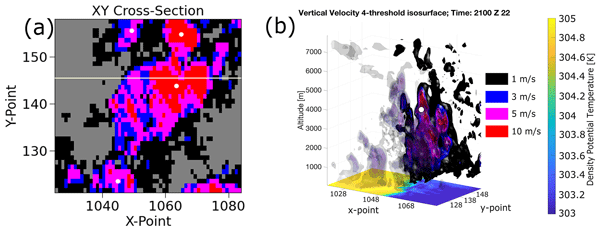
Building on previous analysis tools developed for atmospheric science, the original release of the Tracking and Object-Based Analysis (tobac) Python package, v1.2, was open-source, modular, and insensitive to the type of gridded input data. Here, we present the latest version of tobac, v1.5, which substantially improves scientific capabilities and computational efficiency from the previous version. These enhancements permit new uses for tobac in atmospheric science and potentially other fields.
Jeffrey S. Reid, Robert E. Holz, Chris A. Hostetler, Richard A. Ferrare, Juli I. Rubin, Elizabeth J. Thompson, Susan C. van den Heever, Corey G. Amiot, Sharon P. Burton, Joshua P. DiGangi, Glenn S. Diskin, Joshua H. Cossuth, Daniel P. Eleuterio, Edwin W. Eloranta, Ralph Kuehn, Willem J. Marais, Hal B. Maring, Armin Sorooshian, Kenneth L. Thornhill, Charles R. Trepte, Jian Wang, Peng Xian, and Luke D. Ziemba
Atmos. Chem. Phys., 25, 18639–18673, https://doi.org/10.5194/acp-25-18639-2025, https://doi.org/10.5194/acp-25-18639-2025, 2025
Short summary
Short summary
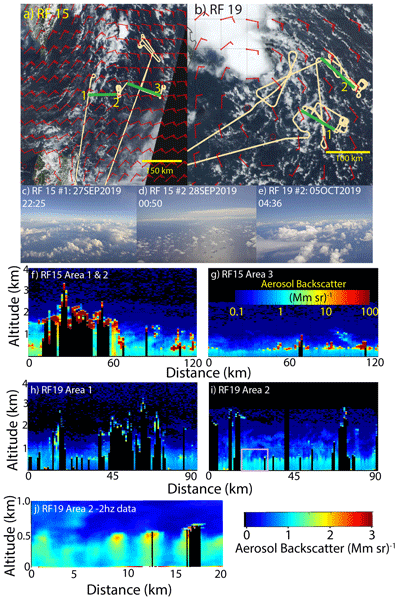
We document air and ship born measurements of the vertical distribution of pollution and biomass burning aerosol particles transported within the Maritime Continent's monsoonal flows for 1000s of kilometers, and yet still exhibit intricate patterns around clouds near the ocean's surface. Findings demonstrate that, while aerosol transport occurs near the surface, there is heterogeneity in particle extinction that must be considered for both in situ observations and satellite retrievals.
Zachary Watson, Can Li, Fei Liu, Sean W. Freeman, Huanxin Zhang, Jun Wang, and Shan-Hu Lee
Atmos. Chem. Phys., 25, 13527–13545, https://doi.org/10.5194/acp-25-13527-2025, https://doi.org/10.5194/acp-25-13527-2025, 2025
Short summary
Short summary
Air pollutants like sulfur dioxide impact human health and the environment. Our work estimated surface sulfur dioxide concentrations from satellite data over eastern China. One method used atmospheric models, and another method used machine learning. We found that compared to measurements from an air quality monitoring network, both methods accurately captured the locations of sulfur dioxide, but the machine learning method was generally much more accurate in the estimated concentrations.
Corey G. Amiot, Timothy J. Lang, Susan C. van den Heever, Richard A. Ferrare, Ousmane O. Sy, Lawrence D. Carey, Sundar A. Christopher, John R. Mecikalski, Sean W. Freeman, George Alexander Sokolowsky, Chris A. Hostetler, and Simone Tanelli
Atmos. Chem. Phys., 25, 12335–12355, https://doi.org/10.5194/acp-25-12335-2025, https://doi.org/10.5194/acp-25-12335-2025, 2025
Short summary
Short summary
Decoupling aerosol and environmental impacts on convection is challenging. Using airborne data, we correlated convective metrics with aerosol concentrations in several different environments. Results were mixed, but some comparisons suggest that medium-to-high aerosol concentrations were occasionally strongly correlated with convective intensity and prevalence, especially when the atmosphere was relatively unstable. It is important to consider storm environment when evaluating aerosol effects.
Dié Wang, Roni Kobrosly, Tao Zhang, Tamanna Subba, Susan van den Heever, Siddhant Gupta, and Michael Jensen
Atmos. Chem. Phys., 25, 9295–9314, https://doi.org/10.5194/acp-25-9295-2025, https://doi.org/10.5194/acp-25-9295-2025, 2025
Short summary
Short summary
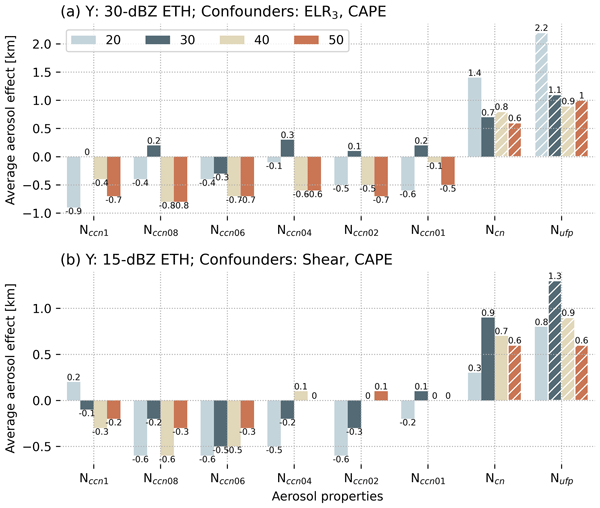
We aim to understand how tiny particles in the air, called aerosols, affect rain clouds in the Houston–Galveston area. More aerosols generally do not make these clouds grow much taller, with an average height increase of about 1 km. However, their effects on rainfall strength and cloud expansion are less certain. Clouds influenced by sea breezes show a stronger aerosol impact, possibly due to factors that are unaccounted for like vertical winds in near-surface layers.
Charles M. Davis, Susan C. van den Heever, Leah D. Grant, Sonia M. Kreidenweis, Claudia Mignani, Russell J. Perkins, and Elizabeth A. Stone
EGUsphere, https://doi.org/10.5194/egusphere-2025-2968, https://doi.org/10.5194/egusphere-2025-2968, 2025
Short summary
Short summary
Plant- and other biological matter is released into the air from the earth’s surface when it rains. When present in clouds, these particles promote ice formation. We simulate three kinds of storms to see whether they pick up surface air from rainy regions where these particles would be. We find that all the storms ingest similar amounts of air from regions of light rain, but the types of storms that are typically longer-lived and more severe ingest more air from regions of heavy rain.
G. Alexander Sokolowsky, Sean W. Freeman, William K. Jones, Julia Kukulies, Fabian Senf, Peter J. Marinescu, Max Heikenfeld, Kelcy N. Brunner, Eric C. Bruning, Scott M. Collis, Robert C. Jackson, Gabrielle R. Leung, Nils Pfeifer, Bhupendra A. Raut, Stephen M. Saleeby, Philip Stier, and Susan C. van den Heever
Geosci. Model Dev., 17, 5309–5330, https://doi.org/10.5194/gmd-17-5309-2024, https://doi.org/10.5194/gmd-17-5309-2024, 2024
Short summary
Short summary
Building on previous analysis tools developed for atmospheric science, the original release of the Tracking and Object-Based Analysis (tobac) Python package, v1.2, was open-source, modular, and insensitive to the type of gridded input data. Here, we present the latest version of tobac, v1.5, which substantially improves scientific capabilities and computational efficiency from the previous version. These enhancements permit new uses for tobac in atmospheric science and potentially other fields.

Gabrielle R. Leung, Stephen M. Saleeby, G. Alexander Sokolowsky, Sean W. Freeman, and Susan C. van den Heever
Atmos. Chem. Phys., 23, 5263–5278, https://doi.org/10.5194/acp-23-5263-2023, https://doi.org/10.5194/acp-23-5263-2023, 2023
Short summary
Short summary
This study uses a suite of high-resolution simulations to explore how the concentration and type of aerosol particles impact shallow tropical clouds and the overall aerosol budget. Under more-polluted conditions, there are more aerosol particles present, but we also find that clouds are less able to remove those aerosol particles via rainout. Instead, those aerosol particles are more likely to be detrained aloft and remain in the atmosphere for further aerosol–cloud interactions.
Ewan Crosbie, Luke D. Ziemba, Michael A. Shook, Claire E. Robinson, Edward L. Winstead, K. Lee Thornhill, Rachel A. Braun, Alexander B. MacDonald, Connor Stahl, Armin Sorooshian, Susan C. van den Heever, Joshua P. DiGangi, Glenn S. Diskin, Sarah Woods, Paola Bañaga, Matthew D. Brown, Francesca Gallo, Miguel Ricardo A. Hilario, Carolyn E. Jordan, Gabrielle R. Leung, Richard H. Moore, Kevin J. Sanchez, Taylor J. Shingler, and Elizabeth B. Wiggins
Atmos. Chem. Phys., 22, 13269–13302, https://doi.org/10.5194/acp-22-13269-2022, https://doi.org/10.5194/acp-22-13269-2022, 2022
Short summary
Short summary
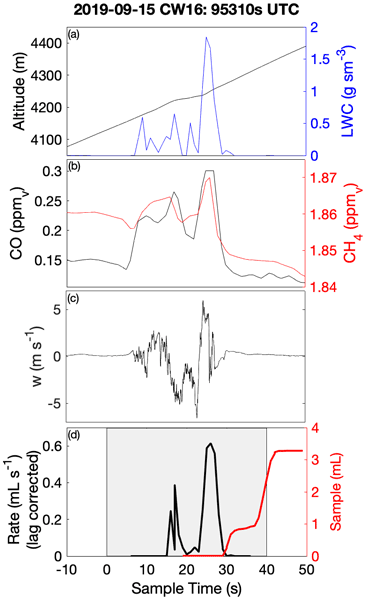
The linkage between cloud droplet and aerosol particle chemical composition was analyzed using samples collected in a polluted tropical marine environment. Variations in the droplet composition were related to physical and dynamical processes in clouds to assess their relative significance across three cases that spanned a range of rainfall amounts. In spite of the pollution, sea salt still remained a major contributor to the droplet composition and was preferentially enhanced in rainwater.

Eva-Lou Edwards, Jeffrey S. Reid, Peng Xian, Sharon P. Burton, Anthony L. Cook, Ewan C. Crosbie, Marta A. Fenn, Richard A. Ferrare, Sean W. Freeman, John W. Hair, David B. Harper, Chris A. Hostetler, Claire E. Robinson, Amy Jo Scarino, Michael A. Shook, G. Alexander Sokolowsky, Susan C. van den Heever, Edward L. Winstead, Sarah Woods, Luke D. Ziemba, and Armin Sorooshian
Atmos. Chem. Phys., 22, 12961–12983, https://doi.org/10.5194/acp-22-12961-2022, https://doi.org/10.5194/acp-22-12961-2022, 2022
Short summary
Short summary
This study compares NAAPS-RA model simulations of aerosol optical thickness (AOT) and extinction to those retrieved with a high spectral resolution lidar near the Philippines. Agreement for AOT was good, and extinction agreement was strongest below 1500 m. Substituting dropsonde relative humidities into NAAPS-RA did not drastically improve agreement, and we discuss potential reasons why. Accurately modeling future conditions in this region is crucial due to its susceptibility to climate change.
Mariko Oue, Stephen M. Saleeby, Peter J. Marinescu, Pavlos Kollias, and Susan C. van den Heever
Atmos. Meas. Tech., 15, 4931–4950, https://doi.org/10.5194/amt-15-4931-2022, https://doi.org/10.5194/amt-15-4931-2022, 2022
Short summary
Short summary
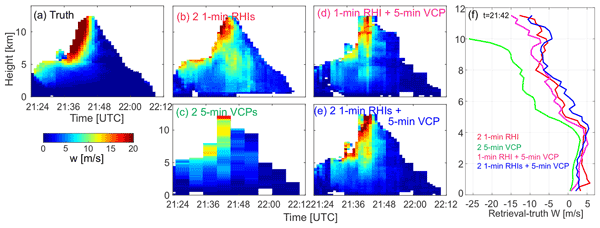
This study provides an optimization of radar observation strategies to better capture convective cell evolution in clean and polluted environments as well as a technique for the optimization. The suggested optimized radar observation strategy is to better capture updrafts at middle and upper altitudes and precipitation particle evolution of isolated deep convective clouds. This study sheds light on the challenge of designing remote sensing observation strategies in pre-field campaign periods.
J. Minnie Park and Susan C. van den Heever
Atmos. Chem. Phys., 22, 10527–10549, https://doi.org/10.5194/acp-22-10527-2022, https://doi.org/10.5194/acp-22-10527-2022, 2022
Short summary
Short summary
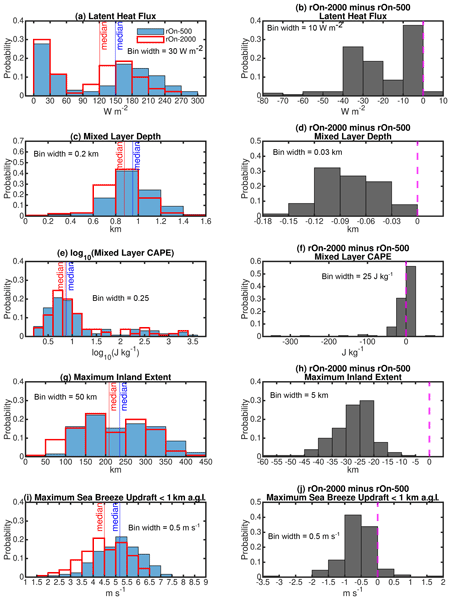
This study explores how increased aerosol particles impact tropical sea breeze cloud systems under different environments and how a range of environments modulate these cloud responses. Overall, sea breeze flows and clouds that develop therein become weaker due to interactions between aerosols, sunlight, and land surface. In addition, surface rainfall also decreases with more aerosol particles. Weakening of cloud and rain with more aerosols is found irrespective of 130 different environments.
Russell J. Perkins, Peter J. Marinescu, Ezra J. T. Levin, Don R. Collins, and Sonia M. Kreidenweis
Atmos. Chem. Phys., 22, 6197–6215, https://doi.org/10.5194/acp-22-6197-2022, https://doi.org/10.5194/acp-22-6197-2022, 2022
Short summary
Short summary
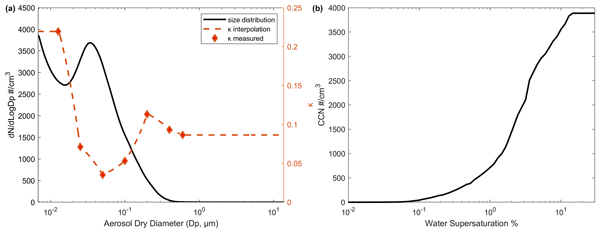
We used 5 years (2009–2013) of aerosol and cloud condensation nuclei (CCN) data from a total of seven instruments housed at the Southern Great Plains site, which were merged into a quality-controlled, continuous dataset of CCN spectra at ~45 min resolution. The data cover all seasons, are representative of a rural, agricultural mid-continental site, and are useful for model initialization and validation. Our analysis of this dataset focuses on seasonal and hourly variability.
Cited articles
Arya, S. P.: Introduction to micrometeorology, 2nd edn., Academic Press, San Diego, 420 pp., ISBN 9780120593545, 2001.
Bailey, S. C. C., Sama, M. P., Canter, C. A., Pampolini, L. F., Lippay, Z. S., Schuyler, T. J., Hamilton, J. D., MacPhee, S. B., Rowe, I. S., Sanders, C. D., Smith, V. G., Vezzi, C. N., Wight, H. M., Hoagg, J. B., Guzman, M. I., and Smith, S. W.: University of Kentucky measurements of wind, temperature, pressure and humidity in support of LAPSE-RATE using multisite fixed-wing and rotorcraft unmanned aerial systems, Earth Syst. Sci. Data, 12, 1759–1773, https://doi.org/10.5194/essd-12-1759-2020, 2020.
Barbieri, L., Kral, S. T., Bailey, S. C. C., Frazier, A. E., Jacob, J. D., Reuder, J., Brus, D., Chilson, P. B., Crick, C., Detweiler, C., Doddi, A., Elston, J., Foroutan, H., González-Rocha, J., Greene, B. R., Guzman, M. I., Islam, A. L. H. A., Kemppinen, O., Lawrence, D., Pillar-Little, E. A., Ross, S. D., Sama, M., Iii, D. G. S., Schuyler, T. J., Shankar, A., Smith, S. W., Waugh, S., Dixon, C., Borenstein, S., and de Boer, G.: Intercomparison of Small Unmanned Aircraft System (sUAS) Measurements for Atmospheric Science during the LAPSE-RATE Campaign, Sensors, 19, 2179, https://doi.org/10.3390/s19092179, 2019.
Bell, T. M., Greene, B. R., Klein, P. M., Carney, M., and Chilson, P. B.: Confronting the boundary layer data gap: evaluating new and existing methodologies of probing the lower atmosphere, Atmos. Meas. Tech., 13, 3855–3872, https://doi.org/10.5194/amt-13-3855-2020, 2020.
Brady, J. M., Stokes, M. D., Bonnardel, J., and Bertram, T. H.: Characterization of a Quadrotor Unmanned Aircraft System for Aerosol-Particle-Concentration Measurements, Environ. Sci. Technol., 50, 1376–1383, https://doi.org/10.1021/acs.est.5b05320, 2016.
de Boer, G., Butterworth, B. J., Elston, J. S., Houston, A., Pillar-Little, E., Argrow, B., Bell, T. M., Chilson, P., Choate, C., Greene, B. R., Islam, A., Martz, R., Rhodes, M., Rico, D., Stachura, M., Lappin, F. M., Segales, A. R., Whyte, S., and Wilson, M.: Evaluation and Intercomparison of Small Uncrewed Aircraft Systems Used for Atmospheric Research, J. Atmos. Ocean. Tech., 41, 127–145, https://doi.org/10.1175/JTECH-D-23-0067.1, 2024.
Dexheimer, D., Apple, M., Bendure, A., Callow, D., Longbottom, C., Novick, D., and Wilson, C.: Joint UAS-Balloon Activities (JUBA) Field Campaign Report, ARM Climate Research Facility, Pacific Northwest National Laboratory, Richland, WA, https://www.osti.gov/biblio/1422521 (last access: 23 February 2026), 2018.
Elston, J., Argrow, B., Stachura, M., Weibel, D., Lawrence, D., and Pope, D.: Overview of Small Fixed-Wing Unmanned Aircraft for Meteorological Sampling, J. Atmos. Ocean. Tech., 32, 97–115, https://doi.org/10.1175/JTECH-D-13-00236.1, 2014.
Engerer, N. A., Stensrud, D. J., and Coniglio, M. C.: Surface Characteristics of Observed Cold Pools, Mon. Weather Rev., 136, 4839–4849, https://doi.org/10.1175/2008MWR2528.1, 2008.
Freeman, S., Bukowski, J., Grant, L., Marinescu, P., Park, J., Hitchcock, S., Neumaier, C., and van den Heever, S. C.: Unshielded Drone Sensor Data from Tethersondes and NEON Flux Towers, Version v1, Zenodo [data set], https://doi.org/10.5281/zenodo.17497401, 2025.
Geerts, B., Raymond, D., Barth, M., Detwiler, A., Klein, P., Lee, W.-C., Markowski, P., Mullendore, G., and Geerts, B.: Community Workshop on Developing Requirements for In Situ and Remote Sensing Capabilities in Convective and Turbulent Environments (C-RITE), UCAR/NCAR Earth Observing Laboratory, https://doi.org/10.5065/d6db80kr, 2017.
Geerts, B., Raymond, D. J., Grubišić, V., Davis, C. A., Barth, M. C., Detwiler, A., Klein, P. M., Lee, W.-C., Markowski, P. M., Mullendore, G. L., and Moore, J. A.: Recommendations for In Situ and Remote Sensing Capabilities in Atmospheric Convection and Turbulence, B. Am. Meteorol. Soc., 99, 2463–2470, https://doi.org/10.1175/BAMS-D-17-0310.1, 2018.
Greene, B. R., Segales, A. R., Waugh, S., Duthoit, S., and Chilson, P. B.: Considerations for temperature sensor placement on rotary-wing unmanned aircraft systems, Atmos. Meas. Tech., 11, 5519–5530, https://doi.org/10.5194/amt-11-5519-2018, 2018.
Greene, B. R., Segales, A. R., Bell, T. M., Pillar-Little, E. A., and Chilson, P. B.: Environmental and Sensor Integration Influences on Temperature Measurements by Rotary-Wing Unmanned Aircraft Systems, Sensors, 19, 1470, https://doi.org/10.3390/s19061470, 2019.
Hemingway, B. L., Frazier, A. E., Elbing, B. R., and Jacob, J. D.: Vertical Sampling Scales for Atmospheric Boundary Layer Measurements from Small Unmanned Aircraft Systems (sUAS), Atmosphere, 8, 176, https://doi.org/10.3390/atmos8090176, 2017.
Hervo, M., Romanens, G., Martucci, G., Weusthoff, T., and Haefele, A.: Evaluation of an Automatic Meteorological Drone Based on a 6-Month Measurement Campaign, Atmosphere, 14, 1382, https://doi.org/10.3390/atmos14091382, 2023.
Houston, A. L., Argrow, B., Elston, J., Lahowetz, J., Frew, E. W., and Kennedy, P. C.: The Collaborative Colorado–Nebraska Unmanned Aircraft System Experiment, B. Am. Meteorol. Soc., 93, 39–54, https://doi.org/10.1175/2011BAMS3073.1, 2011.
Houston, A. L., Laurence, R. J., Nichols, T. W., Waugh, S., Argrow, B., and Ziegler, C. L.: Intercomparison of Unmanned Aircraftborne and Mobile Mesonet Atmospheric Sensors, J. Atmos. Ocean. Tech., 33, 1569–1582, https://doi.org/10.1175/JTECH-D-15-0178.1, 2016.
Humphrey, P. A.: An Evaluation of the Aerometric Probe, J. Air Pollut. Control Assoc., 11, 362–383, https://doi.org/10.1080/00022470.1961.10468009, 1961.
Inoue, J. and Sato, K.: Toward sustainable meteorological profiling in polar regions: Case studies using an inexpensive UAS on measuring lower boundary layers with quality of radiosondes, Environ. Res., 205, 112468, https://doi.org/10.1016/j.envres.2021.112468, 2022.
Islam, A., Houston, A. L., Shankar, A., and Detweiler, C.: Design and Evaluation of Sensor Housing for Boundary Layer Profiling Using Multirotors, Sensors, 19, 2481, https://doi.org/10.3390/s19112481, 2019.
Kimball, S. K., Montalvo, C. J., and Mulekar, M. S.: Assessing iMET-XQ Performance and Optimal Placement on a Small Off-the-Shelf, Rotary-Wing UAV, as a Function of Atmospheric Conditions, Atmosphere, 11, 660, https://doi.org/10.3390/atmos11060660, 2020a.
Kimball, S. K., Montalvo, C. J., and Mulekar, M. S.: Evaluating Temperature Measurements of the iMET-XQ, in the Field, under Varying Atmospheric Conditions, Atmosphere, 11, 335, https://doi.org/10.3390/atmos11040335, 2020b.
Lee, T. R., Buban, M., Dumas, E., and Baker, C. B.: A New Technique to Estimate Sensible Heat Fluxes around Micrometeorological Towers Using Small Unmanned Aircraft Systems, J. Atmos. Ocean. Tech., 34, 2103–2112, https://doi.org/10.1175/JTECH-D-17-0065.1, 2017.
Lee, T. R., Buban, M., Dumas, E., and Baker, C. B.: On the Use of Rotary-Wing Aircraft to Sample Near-Surface Thermodynamic Fields: Results from Recent Field Campaigns, Sensors, 19, 10, https://doi.org/10.3390/s19010010, 2019.
Leung, G. R., Ascher, B. D., Barbero, T. W., Davis, C. M., Escobedo, J. A., Falk, N. M., Freeman, S. W., Heffernan, B., Mazurek, A. C., Neumaier, C., Nieto-Caballero, M., Sherman, E. A., Veloso-Aguila, D., van den Heever, S. C., Grant, L., Stone, E. A., DeMott, P. J., Kreidenweis, S., and Perkins, R. J.: BACS: Drone Stack Meteorological Data, Version 1.0, NSF NCAR Earth Observing Laboratory [data set], https://doi.org/10.26023/XXPF-333X-R105, 2025.
May, R. M., Goebbert, K. H., Thielen, J. E., Leeman, J. R., Camron, M. D., Bruick, Z., Bruning, E. C., Manser, R. P., Arms, S. C., and Marsh, P. T.: MetPy: A Meteorological Python Library for Data Analysis and Visualization, B. Am. Meteorol. Soc., 103, E2273–E2284, https://doi.org/10.1175/BAMS-D-21-0125.1, 2022.
Meier, K., Hann, R., Skaloud, J., and Garreau, A.: Wind estimation with multirotor UAVs, Atmosphere-Basel, 13, 551, https://doi.org/10.3390/atmos13040551, 2022.
Metzger, S., Ayres, E., Durden, D., Florian, C., Lee, R., Lunch, C., Luo, H., Pingintha-Durden, N., Roberti, J. A., SanClements, M., Sturtevant, C., Xu, K., and Zulueta, R. C.: From NEON Field Sites to Data Portal: A Community Resource for Surface–Atmosphere Research Comes Online, B. Am. Meteorol. Soc., 100, 2305–2325, https://doi.org/10.1175/BAMS-D-17-0307.1, 2019.
NEON (National Ecological Observatory Network): 2D wind speed and direction (DP1.00001.001), NEON [data set], https://doi.org/10.48443/yex7-7z81, 2024a.
NEON (National Ecological Observatory Network): Barometric pressure (DP1.00004.001), NEON [data set], https://doi.org/10.48443/rt4v-kz04, 2024b.
NEON (National Ecological Observatory Network): Relative humidity (DP1.00098.001), NEON [data set], https://doi.org/10.48443/k9vk-5k27, 2024c.
NEON (National Ecological Observatory Network): Shortwave and longwave radiation (net radiometer) (DP1.00023.001), NEON [data set], https://doi.org/10.48443/9qpc-5v70, 2024d.
NEON (National Ecological Observatory Network): Triple aspirated air temperature (DP1.00003.001), NEON [data set], https://doi.org/10.48443/pde7-k607, 2024e.
Quesada-Moreno, J. A., Martínez-Ibarra, E., and Ortiz, J. L.: Use of a drone equipped with microthermal sensors to estimate the quality of the atmosphere for astronomical observation, Weather, 79, 331–337, https://doi.org/10.1002/wea.4551, 2024.
Riganti, C. J. and Houston, A. L.: Rear-Flank Outflow Dynamics and Thermodynamics in the 10 June 2010 Last Chance, Colorado, Supercell, Mon. Weather Rev., 145, 2487–2504, https://doi.org/10.1175/MWR-D-16-0128.1, 2017.
Schafer, R., May, P. T., Keenan, T. D., McGuffie, K., Ecklund, W. L., Johnston, P. E., and Gage, K. S.: Boundary Layer Development over a Tropical Island during the Maritime Continent Thunderstorm Experiment, J. Atmos. Sci., 58, 2163–2179, https://doi.org/10.1175/1520-0469(2001)058<2163:BLDOAT>2.0.CO;2, 2001.
Segales, A. R., Greene, B. R., Bell, T. M., Doyle, W., Martin, J. J., Pillar-Little, E. A., and Chilson, P. B.: The CopterSonde: an insight into the development of a smart unmanned aircraft system for atmospheric boundary layer research, Atmos. Meas. Tech., 13, 2833–2848, https://doi.org/10.5194/amt-13-2833-2020, 2020.
Spiess, T., Bange, J., Buschmann, M., and Vörsmann, P.: First application of the meteorological Mini-UAV “M2AV”, Meteorol. Z., 16, 159–169, https://doi.org/10.1127/0941-2948/2007/0195, 2007.
Themistocleous, K.: The use of UAVs for monitoring land degradation, in: Earth Resources and Environmental Remote Sensing/GIS Applications VIII, 104280E, https://doi.org/10.1117/12.2279512, 2017.
Tikhomirov, A. B., Lesins, G., and Drummond, J. R.: Drone measurements of surface-based winter temperature inversions in the High Arctic at Eureka, Atmos. Meas. Tech., 14, 7123–7145, https://doi.org/10.5194/amt-14-7123-2021, 2021.
van den Heever, S. C., Grant, L. D., Freeman, S. W., Marinescu, P. J., Barnum, J., Bukowski, J., Casas, E., Drager, A. J., Fuchs, B., Herman, G. R., Hitchcock, S. M., Kennedy, P. C., Nielsen, E. R., Minnie Park, J., Rasmussen, K., Razin, M. N., Riesenberg, R., Dellaripa, E. R., Slocum, C. J., Toms, B. A., and van den Heever, A.: The Colorado State University Convective CLoud Outflows and UpDrafts Experiment (C3LOUD-Ex), B. Am. Meteorol. Soc., 102, E1283–E1305, https://doi.org/10.1175/BAMS-D-19-0013.1, 2021.
Vömel, H., Argrow, B. M., Axisa, D., Chilson, P. B., Ellis, S., Fladeland, M., Frew, E. W., Jacob, J., Lord, M., Moore, J., Oncley, S., Roberts, G., Schoenung, S., and Wolff, C.: The NCAR/EOL Community Workshop on Unmanned Aircraft Systems for Atmospheric Research, Final Report, University Corporation For Atmospheric Research (UCAR), National Center For Atmospheric Research (NCAR) Earth Observing Laboratory (EOL), https://doi.org/10.5065/d6x9292s, 2018.
Vorontsov, P. A., Mikhel, V. M., and Erler, A. A.: Ispolzovanie radioupravlyaemykh aviamodeley samolyotov dlya aerologicheskikh issledovaniy nizhnikh sloev atmosfery [Use of radio-controlled model aircraft for aerological investigations of the lower layers of the atmosphere], Trudy Glavnoi Geofizicheskoi Observatorii, 73, 107–115, 1958 (in Russian).
Wulfmeyer, V., Turner, D. D., Baker, B., Banta, R., Behrendt, A., Bonin, T., Brewer, W. A., Buban, M., Choukulkar, A., Dumas, E., Hardesty, R. M., Heus, T., Ingwersen, J., Lange, D., Lee, T. R., Metzendorf, S., Muppa, S. K., Meyers, T., Newsom, R., Osman, M., Raasch, S., Santanello, J., Senff, C., Späth, F., Wagner, T., and Weckwerth, T.: A New Research Approach for Observing and Characterizing Land–Atmosphere Feedback, B. Am. Meteorol. Soc., 99, 1639–1667, https://doi.org/10.1175/BAMS-D-17-0009.1, 2018.
Short summary
In this work, we tested different placements of a temperature and humidity sensor onboard a drone to understand what the relative errors are. Understanding these errors is critical as we want to collect more meteorological data from non-specialized platforms, such as drone swarms and drone package delivery.
In this work, we tested different placements of a temperature and humidity sensor onboard a...


