
Articles | Volume 19, issue 9
https://doi.org/10.5194/amt-19-3123-2026
© Author(s) 2026. This work is distributed under
the Creative Commons Attribution 4.0 License.
the Creative Commons Attribution 4.0 License.
https://doi.org/10.5194/amt-19-3123-2026
© Author(s) 2026. This work is distributed under
the Creative Commons Attribution 4.0 License.
the Creative Commons Attribution 4.0 License.
Research article
| 
12 May 2026
Research article |
| 12 May 2026
| 12 May 2026
Quantitative uncertainty and post-processing for micro-aethalometers measuring black carbon
Timothy A. Sipkens
CORRESPONDING AUTHOR

Metrology Research Centre, National Research Council Canada, Ottawa ON, Canada
Joel C. Corbin
Metrology Research Centre, National Research Council Canada, Ottawa ON, Canada
Kerry Chen
Department of Mechanical Engineering, University of Alberta, Edmonton AB, Canada
Laura-Helena Rivellini
Department of Chemistry, University of Toronto, Toronto ON M5S 3H6, Canada
Jonathan Abbatt
Department of Chemistry, University of Toronto, Toronto ON M5S 3H6, Canada
Jason S. Olfert
Department of Mechanical Engineering, University of Alberta, Edmonton AB, Canada
Related authors
Timothy A. Sipkens, Joel C. Corbin, Brett Smith, Stéphanie Gagné, Prem Lobo, Benjamin T. Brem, Mark P. Johnson, and Gregory J. Smallwood
Atmos. Meas. Tech., 17, 4291–4302, https://doi.org/10.5194/amt-17-4291-2024, https://doi.org/10.5194/amt-17-4291-2024, 2024
Short summary
Short summary
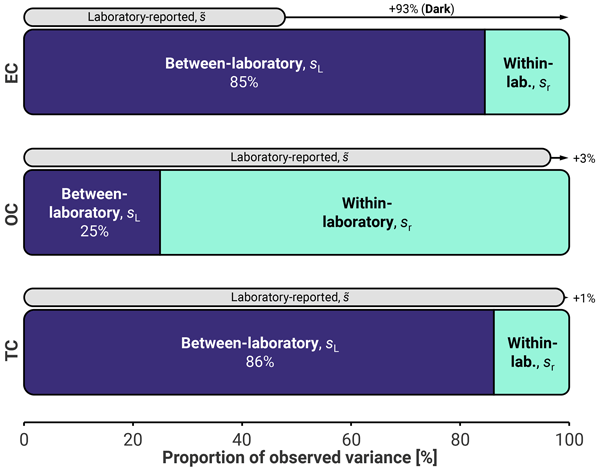
Carbonaceous particles, such as soot, contribute to climate forcing, air pollution, and human health impacts. Thermal–optical analysis is a calibration standard used to measure these particles, but significant differences have been observed in the measurements across identical instruments. We report on the reproducibility of these measurements for aircraft emissions, which range from 8.0 % of the nominal value for organic carbon to 17 % for elemental carbon.
Fabian Schmidt-Ott, Robert Nishida, Sebastian Schmitt, Jason Olfert, George Biskos, and Juha Kangasluoma
Aerosol Research Discuss., https://doi.org/10.5194/ar-2026-29, https://doi.org/10.5194/ar-2026-29, 2026
Preprint under review for AR
Short summary
Short summary
Typical MPSS measurements rely on bipolar diffusion charging, where the steady-state particle charge distribution depends on charger ion properties. By simultaneously measuring ion properties and particle charge fractions, we show that Hoppel&Frick theory accurately describes charging of sub-20 nm particles. By introducing siloxanes via outgassing from conductive silicone tubing, we further show that ion properties, and thus particle charge distributions, are sensitive to trace-gas composition.
Rowshon Afroz, Hongru Shen, Bradley H. Isenor, Samar G. Moussa, Amanda Hanashiro Moraes, Shakiba Talebian, Carolyn Liu-Kang, Jeremy J. B. Wentzell, Oscar Olfert, Amy Leithead, Ginny Marshall, Ralf M. Staebler, Cris Mihele, Arthur W. H. Chan, Jason Olfert, John Liggio, Jonathan Abbatt, Ran Zhao, and Sumi N. Wren
EGUsphere, https://doi.org/10.5194/egusphere-2026-2661, https://doi.org/10.5194/egusphere-2026-2661, 2026
Short summary
Short summary
Wildfires represent a dominant source of gaseous pollutants that affect air quality, climate, and health, but emissions from Canadian boreal fuels are not well characterized. We conducted controlled laboratory burns of representative fuels and measured gas emissions in detail. Emissions varied strongly with fuel type, moisture, and burning conditions, with peat producing especially high levels. These results improve emission estimates and help predict wildfire smoke impacts.
Meghan N. Beattie, Chase Sun, Roger MacLeod, Nicaulas Sabourin, Peter D. Morse, Gregory J. Smallwood, Joel C. Corbin, and Jalal Norooz Oliaee
EGUsphere, https://doi.org/10.5194/egusphere-2026-137, https://doi.org/10.5194/egusphere-2026-137, 2026
Short summary
Short summary
Detecting and quantifying airborne pollutants near the ground surface and over inaccessible terrain, such as wetlands or unpaved roads, poses a challenge for ground-based measurements, such as trucks. Small drones equipped with precise and rapid-response laser-based sensors can conveniently fly over such areas and collect data. Here we report a sensor for natural gas detection and show that it can accurately quantify leak rates that are not detectable by many other aerial techniques.
Michael F. Link, Megan S. Claflin, Christina E. Cecelski, Ayomide A. Akande, Delaney Kilgour, Paul A. Heine, Matthew Coggon, Chelsea E. Stockwell, Andrew Jensen, Jie Yu, Han N. Huynh, Jenna C. Ditto, Carsten Warneke, William Dresser, Keighan Gemmell, Spiro Jorga, Rileigh L. Robertson, Joost de Gouw, Timothy Bertram, Jonathan P. D. Abbatt, Nadine Borduas-Dedekind, and Dustin Poppendieck
Atmos. Meas. Tech., 18, 1013–1038, https://doi.org/10.5194/amt-18-1013-2025, https://doi.org/10.5194/amt-18-1013-2025, 2025
Short summary
Short summary
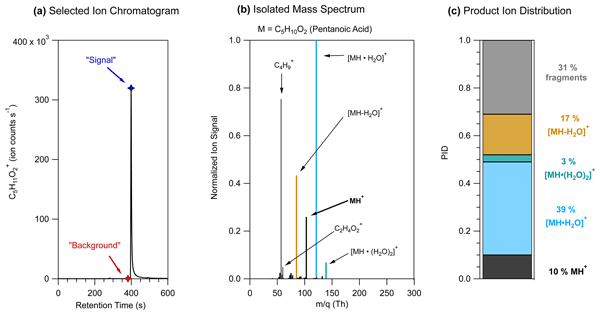
Proton-transfer-reaction mass spectrometry (PTR-MS) is widely used for the measurement of volatile organic compounds (VOCs) both indoors and outdoors. An analytical challenge for PTR-MS measurements is the formation of unintended measurement interferences, product ion distributions (PIDs), that may appear in the data as VOCs of interest. We developed a method for quantifying PID formation and use interlaboratory comparison data to put quantitative constraints on PID formation.
Timothy A. Sipkens, Joel C. Corbin, Brett Smith, Stéphanie Gagné, Prem Lobo, Benjamin T. Brem, Mark P. Johnson, and Gregory J. Smallwood
Atmos. Meas. Tech., 17, 4291–4302, https://doi.org/10.5194/amt-17-4291-2024, https://doi.org/10.5194/amt-17-4291-2024, 2024
Short summary
Short summary
Carbonaceous particles, such as soot, contribute to climate forcing, air pollution, and human health impacts. Thermal–optical analysis is a calibration standard used to measure these particles, but significant differences have been observed in the measurements across identical instruments. We report on the reproducibility of these measurements for aircraft emissions, which range from 8.0 % of the nominal value for organic carbon to 17 % for elemental carbon.
Arash Naseri, Joel C. Corbin, and Jason S. Olfert
Atmos. Meas. Tech., 17, 3719–3738, https://doi.org/10.5194/amt-17-3719-2024, https://doi.org/10.5194/amt-17-3719-2024, 2024
Short summary
Short summary
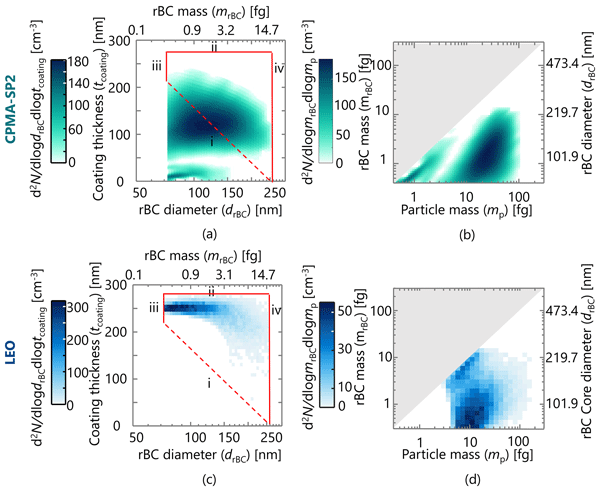
It is crucial to accurately measure the mixing states of light-absorbing carbon particles from emission sources like wildfires and biomass combustion to decrease climate forcing uncertainties. This study compares methods that measure light-absorbing carbon in the atmosphere. The CPMA-SP2 method offers more accurate results than traditional light-scattering methods, such as the leading-edge-only (LEO) method, thereby enhancing the accuracy of measuring the mixing states of light-absorbing carbon.
Ryan N. Farley, James E. Lee, Laura-Hélèna Rivellini, Alex K. Y. Lee, Rachael Dal Porto, Christopher D. Cappa, Kyle Gorkowski, Abu Sayeed Md Shawon, Katherine B. Benedict, Allison C. Aiken, Manvendra K. Dubey, and Qi Zhang
Atmos. Chem. Phys., 24, 3953–3971, https://doi.org/10.5194/acp-24-3953-2024, https://doi.org/10.5194/acp-24-3953-2024, 2024
Short summary
Short summary
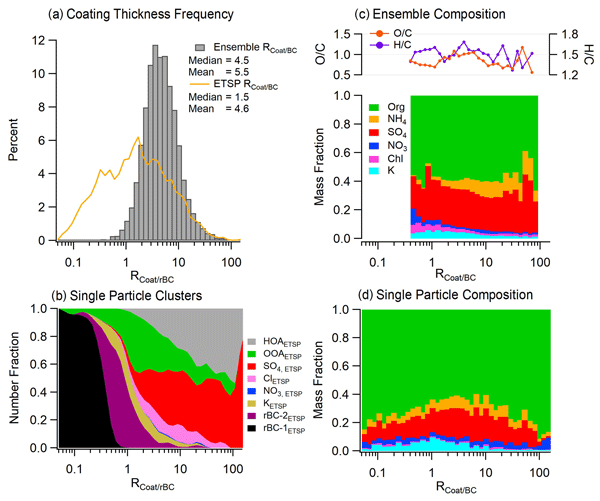
The black carbon aerosol composition and mixing state were characterized using a soot particle aerosol mass spectrometer. Single-particle measurements revealed the major role of atmospheric processing in modulating the black carbon mixing state. A significant fraction of soot particles were internally mixed with oxidized organic aerosol and sulfate, with implications for activation as cloud nuclei.
Yuening Li, Faqiang Zhan, Yushan Su, Ying Duan Lei, Chubashini Shunthirasingham, Zilin Zhou, Jonathan P. D. Abbatt, Hayley Hung, and Frank Wania
Atmos. Meas. Tech., 17, 715–729, https://doi.org/10.5194/amt-17-715-2024, https://doi.org/10.5194/amt-17-715-2024, 2024
Short summary
Short summary
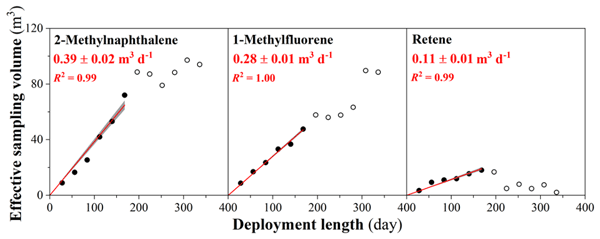
A simple device for sampling gases from the atmosphere without the help of pumps was calibrated for an important group of hazardous air pollutants called polycyclic aromatic compounds (PACs). While the sampler appeared to perform well when used for relatively short periods of up to several months, some PACs were lost from the sampler during longer deployments. Sampling rates that can be used to quantitatively interpret the quantities of PACs taken up in the device have been derived.
Jonathan P. D. Abbatt and A. R. Ravishankara
Atmos. Chem. Phys., 23, 9765–9785, https://doi.org/10.5194/acp-23-9765-2023, https://doi.org/10.5194/acp-23-9765-2023, 2023
Short summary
Short summary
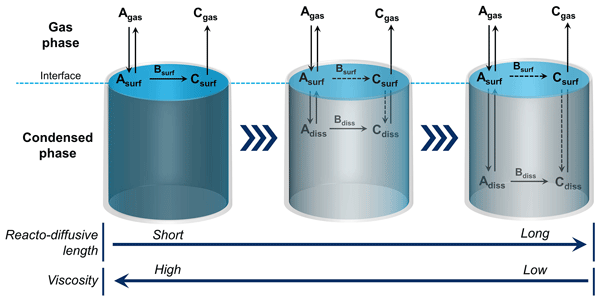
With important climate and air quality impacts, atmospheric multiphase chemistry involves gas interactions with aerosol particles and cloud droplets. We summarize the status of the field and discuss potential directions for future growth. We highlight the importance of a molecular-level understanding of the chemistry, along with atmospheric field studies and modeling, and emphasize the necessity for atmospheric multiphase chemists to interact widely with scientists from neighboring disciplines.
Rachel Y.-W. Chang, Jonathan P. D. Abbatt, Matthew C. Boyer, Jai Prakash Chaubey, and Douglas B. Collins
Atmos. Chem. Phys., 22, 8059–8071, https://doi.org/10.5194/acp-22-8059-2022, https://doi.org/10.5194/acp-22-8059-2022, 2022
Short summary
Short summary
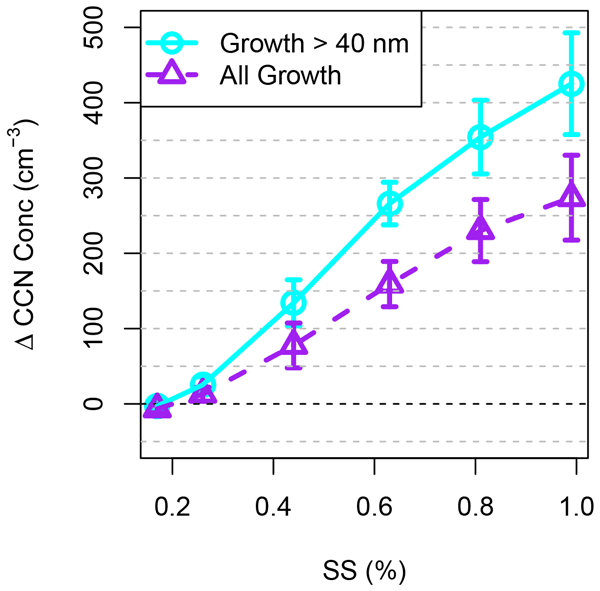
During summer 2016, the ability of newly formed particles to turn into droplets was measured in the Canadian Arctic. Our observations suggest that these small particles were growing by the condensation of organic vapours likely coming from the surrounding open waters. These particles grew large enough that they could form cloud droplets and therefore affect the earth’s radiation budget. These results are relevant as the Arctic summer rapidly warms with climate change.
Joel C. Corbin, Tobias Schripp, Bruce E. Anderson, Greg J. Smallwood, Patrick LeClercq, Ewan C. Crosbie, Steven Achterberg, Philip D. Whitefield, Richard C. Miake-Lye, Zhenhong Yu, Andrew Freedman, Max Trueblood, David Satterfield, Wenyan Liu, Patrick Oßwald, Claire Robinson, Michael A. Shook, Richard H. Moore, and Prem Lobo
Atmos. Meas. Tech., 15, 3223–3242, https://doi.org/10.5194/amt-15-3223-2022, https://doi.org/10.5194/amt-15-3223-2022, 2022
Short summary
Short summary
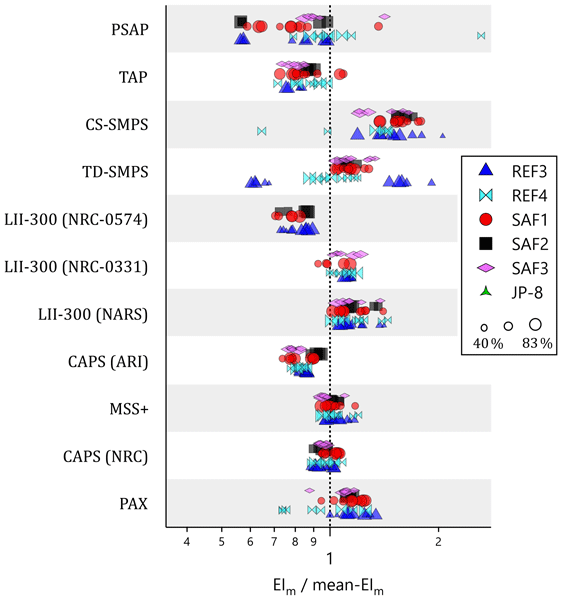
The combustion of sustainable aviation fuels in aircraft engines produces particulate matter (PM) emissions with different properties than conventional fuels due to changes in fuel composition. Consequently, the response of various diagnostic instruments to PM emissions may be impacted. We found no significant instrument biases in terms of particle mass, number, and size measurements for conventional and sustainable aviation fuel blends despite large differences in the magnitude of emissions.
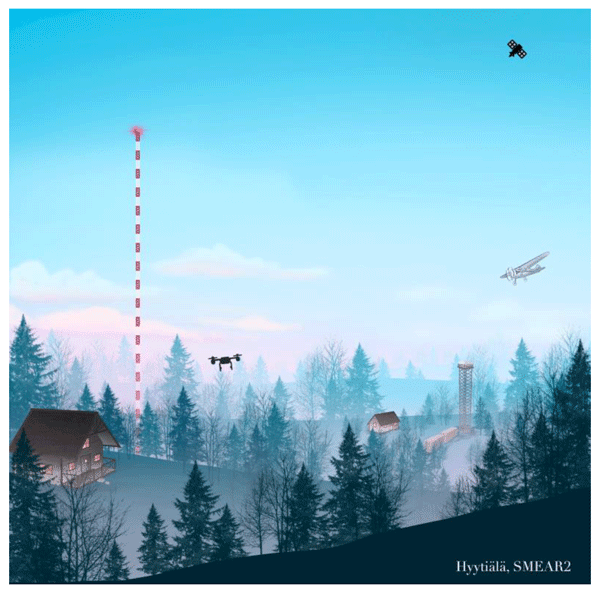
Zoé Brasseur, Dimitri Castarède, Erik S. Thomson, Michael P. Adams, Saskia Drossaart van Dusseldorp, Paavo Heikkilä, Kimmo Korhonen, Janne Lampilahti, Mikhail Paramonov, Julia Schneider, Franziska Vogel, Yusheng Wu, Jonathan P. D. Abbatt, Nina S. Atanasova, Dennis H. Bamford, Barbara Bertozzi, Matthew Boyer, David Brus, Martin I. Daily, Romy Fösig, Ellen Gute, Alexander D. Harrison, Paula Hietala, Kristina Höhler, Zamin A. Kanji, Jorma Keskinen, Larissa Lacher, Markus Lampimäki, Janne Levula, Antti Manninen, Jens Nadolny, Maija Peltola, Grace C. E. Porter, Pyry Poutanen, Ulrike Proske, Tobias Schorr, Nsikanabasi Silas Umo, János Stenszky, Annele Virtanen, Dmitri Moisseev, Markku Kulmala, Benjamin J. Murray, Tuukka Petäjä, Ottmar Möhler, and Jonathan Duplissy
Atmos. Chem. Phys., 22, 5117–5145, https://doi.org/10.5194/acp-22-5117-2022, https://doi.org/10.5194/acp-22-5117-2022, 2022
Short summary
Short summary
The present measurement report introduces the ice nucleation campaign organized in Hyytiälä, Finland, in 2018 (HyICE-2018). We provide an overview of the campaign settings, and we describe the measurement infrastructure and operating procedures used. In addition, we use results from ice nucleation instrument inter-comparison to show that the suite of these instruments deployed during the campaign reports consistent results.
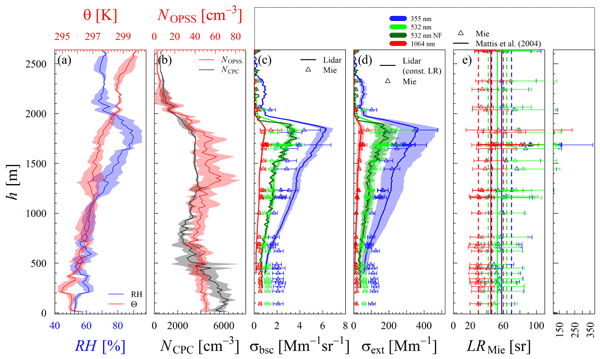
Sebastian Düsing, Albert Ansmann, Holger Baars, Joel C. Corbin, Cyrielle Denjean, Martin Gysel-Beer, Thomas Müller, Laurent Poulain, Holger Siebert, Gerald Spindler, Thomas Tuch, Birgit Wehner, and Alfred Wiedensohler
Atmos. Chem. Phys., 21, 16745–16773, https://doi.org/10.5194/acp-21-16745-2021, https://doi.org/10.5194/acp-21-16745-2021, 2021
Short summary
Short summary
The work deals with optical properties of aerosol particles in dried and atmospheric states. Based on two measurement campaigns in the rural background of central Europe, different measurement approaches were compared with each other, such as modeling based on Mie theory and direct in situ or remote sensing measurements. Among others, it was shown that the aerosol extinction-to-backscatter ratio is relative humidity dependent, and refinement with respect to the model input parameters is needed.
Cited articles
Arnott, W. P., Moosmüller, H., Sheridan, P. J., Ogren, J. A., Raspet, R., Slaton, W. V., Hand, J. L., Kreidenweis, S. M., and Collett, J. L.: Photoacoustic and filter-based ambient aerosol light absorption measurements: Instrument comparisons and the role of relative humidity, J. Geophys. Res.-Atmos., 108, 1–11, 10.1029/2002jd002165, 2003.
Cai, J., Yan, B., Ross, J., Zhang, D., Kinney, P. L., Perzanowski, M. S., Jung, K., Miller, R., and Chillrud, S. N.: Validation of MicroAeth®as a Black Carbon Monitor for Fixed-Site Measurement and Optimization for Personal Exposure Characterization, Aerosol Air Qual. Res., 14, 1–9, https://doi.org/10.4209/aaqr.2013.03.0088, 2014.
Cappa, C. D., Zhang, X., Russell, L. M., Collier, S., Lee, A. K. Y., Chen, C.-L., Betha, R., Chen, S., Liu, J., Price, D. J., Sanchez, K. J., McMeeking, G. R., Williams, L. R., Onasch, T. B., Worsnop, D. R., Abbatt, J., and Zhang, Q.: Light Absorption by Ambient Black and Brown Carbon and its Dependence on Black Carbon Coating State for Two California, USA, Cities in Winter and Summer, J. Geophys. Res.-Atmos., 124, 1550–1577, 2019.
Caubel, J. J., Cados, T. E., and Kirchstetter, T. W.: A New Black Carbon Sensor for Dense Air Quality Monitoring Networks, Sensors, 18, 738, https://doi.org/10.3390/s18030738, 2018.
Chakraborty, M., Giang, A., and Zimmerman, N.: Performance evaluation of portable dual-spot micro-aethalometers for source identification of black carbon aerosols: application to wildfire smoke and traffic emissions in the Pacific Northwest, Atmos. Meas. Tech., 16, 2333–2352, https://doi.org/10.5194/amt-16-2333-2023, 2023.
Chakrabarty, R. K., Shetty, N. J., Thind, A. S., Beeler, P., Sumlin, B. J., Zhang, C., Liu, P., Idrobo, J. C., Adachi, K., Wagner, N. L., Schwarz, J. P., Ahern, A., Sedlacek, A. J., Lambe, A., Daube, C., Lyu, M., Liu, C., Herndon, S., Onasch, T. B., and Mishra, R.: Shortwave absorption by wildfire smoke dominated by dark brown carbon, Nat. Geosci., 16, 683–688, https://doi.org/10.1038/s41561-023-01237-9, 2023.
Cheng, Z., Shrivastava, M., Ijaz, A., Veghte, D., Vandergrift, G. W., Tseng, K.-P., Lata, N. N., Kew, W., Suski, K., Weis, J., Kulkarni, G., Berg, L. K., Fast, J. D., Kovarik, L., Mazzoleni, L. R., Zelenyuk, A., and China, S.: Enhanced light absorption for solid-state brown carbon from wildfires due to organic and water coatings, Nat. Commun., 15, 1–10, https://doi.org/10.1038/s41467-024-54506-5, 2024.
Collaud Coen, M., Weingartner, E., Apituley, A., Ceburnis, D., Fierz-Schmidhauser, R., Flentje, H., Henzing, J. S., Jennings, S. G., Moerman, M., Petzold, A., Schmid, O., and Baltensperger, U.: Minimizing light absorption measurement artifacts of the Aethalometer: evaluation of five correction algorithms, Atmos. Meas. Tech., 3, 457–474, https://doi.org/10.5194/amt-3-457-2010, 2010.
Corbin, J. C., Czech, H., Massabò, D., de Mongeot, F. B., Jakobi, G., Liu, F., Lobo, P., Mennucci, C., Mensah, A. A., Orasche, J., Pieber, S. M., Prévôt, A. S. H., Stengel, B., Tay, L. L., Zanatta, M., Zimmermann, R., El Haddad, I., and Gysel, M.: Infrared-absorbing carbonaceous tar can dominate light absorption by marine-engine exhaust, npj Climate and Atmospheric Science, 2, https://doi.org/10.1038/s41612-019-0069-5, 2019.
Corbin, J. C., Moallemi, A., Liu, F., Gagné, S., Olfert, J. S., Smallwood, G. J., and Lobo, P.: Closure between particulate matter concentrations measured ex situ by thermal–optical analysis and in situ by the CPMA–electrometer reference mass system, Aerosol Sci. Technol., 54, 1293–1309, 2020.
Cuesta-Mosquera, A., Močnik, G., Drinovec, L., Müller, T., Pfeifer, S., Minguillón, M. C., Briel, B., Buckley, P., Dudoitis, V., Fernández-García, J., Fernández-Amado, M., Ferreira De Brito, J., Riffault, V., Flentje, H., Heffernan, E., Kalivitis, N., Kalogridis, A.-C., Keernik, H., Marmureanu, L., Luoma, K., Marinoni, A., Pikridas, M., Schauer, G., Serfozo, N., Servomaa, H., Titos, G., Yus-Díez, J., Zioła, N., and Wiedensohler, A.: Intercomparison and characterization of 23 Aethalometers under laboratory and ambient air conditions: procedures and unit-to-unit variabilities, Atmospheric Measurement Techniques, 14, 3195-3216, 10.5194/amt-14-3195-2021, 2021.
Drinovec, L., Močnik, G., Zotter, P., Prévôt, A. S. H., Ruckstuhl, C., Coz, E., Rupakheti, M., Sciare, J., Müller, T., Wiedensohler, A., and Hansen, A. D. A.: The ”dual-spot” Aethalometer: an improved measurement of aerosol black carbon with real-time loading compensation, Atmos. Meas. Tech., 8, 1965–1979, https://doi.org/10.5194/amt-8-1965-2015, 2015.
Drinovec, L., Jagodič, U., Pirker, L., Škarabot, M., Kurtjak, M., Vidović, K., Ferrero, L., Visser, B., Röhrbein, J., Weingartner, E., Kalbermatter, D. M., Vasilatou, K., Bühlmann, T., Pascale, C., Müller, T., Wiedensohler, A., and Močnik, G.: A dual-wavelength photothermal aerosol absorption monitor: design, calibration and performance, Atmos. Meas. Tech., 15, 3805–3825, https://doi.org/10.5194/amt-15-3805-2022, 2022.
Düsing, S., Wehner, B., Müller, T., Stöcker, A., and Wiedensohler, A.: The effect of rapid relative humidity changes on fast filter-based aerosol-particle light-absorption measurements: uncertainties and correction schemes, Atmos. Meas. Tech., 12, 5879–5895, https://doi.org/10.5194/amt-12-5879-2019, 2019.
Fierce, L., Onasch, T. B., Cappa, C. D., Mazzoleni, C., China, S., Bhandari, J., Davidovits, P., Fischer, D. A., Helgestad, T., Lambe, A. T., Sedlacek, A. J., Smith, G. D., and Wolff, L.: Radiative absorption enhancements by black carbon controlled by particle-to-particle heterogeneity in composition, P. Natl. Acad. Sci. USA, 117, 5196–5203, https://doi.org/10.1073/pnas.1919723117, 2020.
Gundel, L., Dod, R., Rosen, H., and Novakov, T.: The relationship between optical attenuation and black carbon concentration for ambient and source particles, Sci. Total Environ., 36, 197–202, 1984.
Hagler, G. S. W., Yelverton, T. L. B., Vedantham, R., Hansen, A. D. A., and Turner, J. R.: Post-processing Method to Reduce Noise while Preserving High Time Resolution in Aethalometer Real-time Black Carbon Data, Aerosol Air Qual. Res., 11, 539–546, https://doi.org/10.4209/aaqr.2011.05.0055, 2011.
ISO: ISO 5725-2:2019: Accuracy (trueness and precision) of measurement methods and results – Part 2: Basic method for the determination of repeatability and reproducibility of a standard measurement method, International Standards Organization, 2019.
Kazemimanesh, M., Moallemi, A., Thomson, K., Smallwood, G., Lobo, P., and Olfert, J. S.: A novel miniature inverted-flame burner for the generation of soot nanoparticles, Aerosol Sci. Technol., 53, 184–195, 2019.
Lack, D. A., Moosmüller, H., McMeeking, G. R., Chakrabarty, R. K., and Baumgardner, D.: Characterizing elemental, equivalent black, and refractory black carbon aerosol particles: a review of techniques, their limitations and uncertainties, Anal. Bioanal. Chem., 406, 99–122, 2014.
Liu, F., Yon, J., Fuentes, A., Lobo, P., Smallwood, G. J., and Corbin, J. C.: Review of recent literature on the light absorption properties of black carbon: Refractive index, mass absorption cross section, and absorption function, Aerosol Sci. Technol., 54, https://doi.org/10.1080/02786826.2019.1676878, 2020.
McMeeking, G. R., Fortner, E., Onasch, T. B., Taylor, J., Flynn, M., Coe, H., and Kreidenweis, S. M.: Impacts of non-refractory material on light absorption by aerosols emitted from biomass burning, J. Geophys. Res.-Atmos., https://doi.org/10.1002/2014JD021750, 2014.
McNaught, A. D., Wilkinson, A., and Jenkins, A.: IUPAC Compendium of Chemical Terminology, 5th ed. International Union of Pure and Applied Chemistry; 2025. Online version 5.0.0, https://doi.org/10.1351/goldbook, 2025.
Moosmüller, H., Chakrabarty, R. K., and Arnott, W. P.: Aerosol light absorption and its measurement: A review, J. Quant. Spectrosc. Ra., 110, 844–878, https://doi.org/10.1016/j.jqsrt.2009.02.035, 2009.
Nakayama, T., Kondo, Y., Moteki, N., Sahu, L. K., Kinase, T., Kita, K., and Matsumi, Y.: Size-dependent correction factors for absorption measurements using filter-based photometers: PSAP and COSMOS, Journal of Aerosol Science, 41, 333–343, https://doi.org/10.1016/j.jaerosci.2010.01.004, 2010.
Olfert, J. S. and Collings, N.: New method for particle mass classification – the Couette centrifugal particle mass analyzer, J. Aerosol Sci., 36, 1338–1352, 2005.
Olfert, J. S. and Rogak, S. N.: Universal relations between soot effective density and primary particle size for common combustion sources, Aerosol Sci. Technol., 53, 485–492, 2019.
Petzold, A., Ogren, J. A., Fiebig, M., Laj, P., Li, S.-M., Baltensperger, U., Holzer-Popp, T., Kinne, S., Pappalardo, G., Sugimoto, N., Wehrli, C., Wiedensohler, A., and Zhang, X.-Y.: Recommendations for reporting ”black carbon” measurements, Atmos. Chem. Phys., 13, 8365–8379, https://doi.org/10.5194/acp-13-8365-2013, 2013.
Pikridas, M., Bezantakos, S., Močnik, G., Keleshis, C., Brechtel, F., Stavroulas, I., Demetriades, G., Antoniou, P., Vouterakos, P., Argyrides, M., Liakakou, E., Drinovec, L., Marinou, E., Amiridis, V., Vrekoussis, M., Mihalopoulos, N., and Sciare, J.: On-flight intercomparison of three miniature aerosol absorption sensors using unmanned aerial systems (UASs), Atmos. Meas. Tech., 12, 6425–6447, https://doi.org/10.5194/amt-12-6425-2019, 2019.
Romshoo, B., Pöhlker, M., Wiedensohler, A., Pfeifer, S., Saturno, J., Nowak, A., Ciupek, K., Quincey, P., Vasilatou, K., Ess, M. N., Gini, M., Eleftheriadis, K., Robins, C., Gaie-Levrel, F., and Müller, T.: Importance of size representation and morphology in modelling optical properties of black carbon: comparison between laboratory measurements and model simulations, Atmos. Meas. Tech., 15, 6965–6989, https://doi.org/10.5194/amt-15-6965-2022, 2022.
Sipkens, T.: tsipkens/aethalo-lab: v1.0 (v1.0), Zenodo [code], https://doi.org/10.5281/zenodo.19338357, 2026.
Sipkens, T. A., Hadwin, P. J., Grauer, S. J., and Daun, K. J.: General error model for analysis of laser-induced incandescence signals, Appl. Opt., 56, 8436–8445, 2017.
Sipkens, T. A., Johnson, T., Nishida, R., Smallwood, G. J., and Corbin, J. C.: Simplified approaches to estimate the output of particle mass analyzers paired with unipolar chargers, J. Aerosol Sci., 173, 106195, https://doi.org/10.1016/j.jaerosci.2023.106195, 2023.
Virkkula, A., Mäkelä, T., Hillamo, R., Yli-Tuomi, T., Hirsikko, A., Hämeri, K., and Ismo: A Simple Procedure for Correcting Loading Effects of Aethalometer Data, J. Air Waste Manage. Assoc., 57, 1214–1222, https://doi.org/10.3155/1047-3289.57.10.1214, 2007.
Weichenthal, S., Van Ryswyk, K., Kulka, R., Sun, L., Wallace, L., and Joseph, L.: In-vehicle exposures to particulate air pollution in Canadian metropolitan areas: the urban transportation exposure study, Environ. Sci. Technol., 49, 597–605, 2015.
Weingartner, E., Saathoff, H., Schnaiter, M., Streit, N., Bitnar, B., and Baltensperger, U.: Absorption of light by soot particles: Determination of the absorption coefficient by means of aethalometers, J. Aerosol Sci., 34, 1445–1463, https://doi.org/10.1016/S0021-8502(03)00359-8, 2003.
Yus-Díez, J., Drinovec, L., Alados-Arboledas, L., Titos, G., Bazo, E., Casans, A., Patrón, D., Querol, X., Gonzalez-Romero, A., Perez García-Pando, C., and Močnik, G.: Characterization of filter photometer artifacts in soot and dust measurements – laboratory and ambient experiments using a traceably calibrated aerosol absorption reference, Atmos. Meas. Tech., 18, 3073–3093, https://doi.org/10.5194/amt-18-3073-2025, 2025.
Short summary
Aethalometers measure black carbon mass concentrations using light attenuation through a filter capturing particles. This work compares five micro-aethalometers using known mass concentrations of laboratory-generated soot. Uncertainties were found to scale with mass concentration, and an expression is given for the uncertainty as a function of mass concentration, sampling interval, and flow rate. An open-source algorithm is provided for the reanalysis of aethalometer data.
Aethalometers measure black carbon mass concentrations using light attenuation through a filter...


