Articles | Volume 19, issue 1
https://doi.org/10.5194/amt-19-323-2026
© Author(s) 2026. This work is distributed under
the Creative Commons Attribution 4.0 License.
https://doi.org/10.5194/amt-19-323-2026
© Author(s) 2026. This work is distributed under
the Creative Commons Attribution 4.0 License.
A universal aerosol composition analysis method for optical tweezers measurement and its application to determine hygroscopic growth factor of single-particle aerosol
Chengyi Fan
Department of Atmospheric and Oceanic Sciences, School of Physics, Peking University, Beijing 100871, China
Chunsheng Zhao
CORRESPONDING AUTHOR
Department of Atmospheric and Oceanic Sciences, School of Physics, Peking University, Beijing 100871, China
Related authors
Chengyi Fan, Bishuo He, Shuqi Guo, Jie Qiu, and Chunsheng Zhao
Atmos. Chem. Phys., 25, 5761–5771, https://doi.org/10.5194/acp-25-5761-2025, https://doi.org/10.5194/acp-25-5761-2025, 2025
Short summary
Short summary
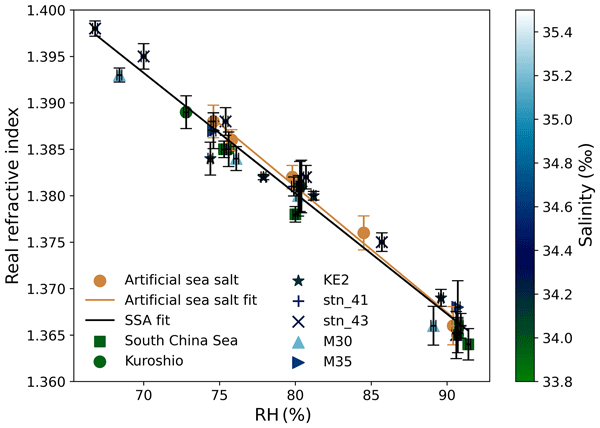
Marine aerosols play a critical role in weather and climate, and their real part of the refractive index (RRI) is a key factor in their radiative effects. We present a study of RRI measurements using optical tweezer technology and find that the calculated results of RRI using the traditional method disagree with the measurements. A parameterization of the RRI and relative humidity relationship is proposed, and it will improve the radiation calculation in numerical models.
Bishuo He and Chunsheng Zhao
Atmos. Chem. Phys., 25, 7765–7776, https://doi.org/10.5194/acp-25-7765-2025, https://doi.org/10.5194/acp-25-7765-2025, 2025
Short summary
Short summary
Factor uncertainty analysis helps us understand the impacts of factors on complex systems. Traditional methods have many limitations. This study introduces a new method to measure how each factor contributes to uncertainty. It gains insights into the role of each variable and works for all multi-factor systems. As an application, we analyzed how aerosols affect solar radiation and identified the key factors. These analyses can improve our understanding of the role of aerosols in climate change.
Chengyi Fan, Bishuo He, Shuqi Guo, Jie Qiu, and Chunsheng Zhao
Atmos. Chem. Phys., 25, 5761–5771, https://doi.org/10.5194/acp-25-5761-2025, https://doi.org/10.5194/acp-25-5761-2025, 2025
Short summary
Short summary
Marine aerosols play a critical role in weather and climate, and their real part of the refractive index (RRI) is a key factor in their radiative effects. We present a study of RRI measurements using optical tweezer technology and find that the calculated results of RRI using the traditional method disagree with the measurements. A parameterization of the RRI and relative humidity relationship is proposed, and it will improve the radiation calculation in numerical models.
Ye Kuang, Jiangchuan Tao, Hanbing Xu, Li Liu, Pengfei Liu, Wanyun Xu, Weiqi Xu, Yele Sun, and Chunsheng Zhao
Atmos. Chem. Phys., 25, 1163–1174, https://doi.org/10.5194/acp-25-1163-2025, https://doi.org/10.5194/acp-25-1163-2025, 2025
Short summary
Short summary
This study presents a novel optical framework to measure supersaturation, a fundamental parameter in cloud physics, by observing the scattering properties of particles that have or have not grown into cloud droplets. The technique offers high-resolution measurements, capturing essential fluctuations in supersaturation necessary for understanding cloud physics.
Weilun Zhao, Ying Li, Gang Zhao, Song Guo, Nan Ma, Shuya Hu, and Chunsheng Zhao
Atmos. Chem. Phys., 23, 14889–14902, https://doi.org/10.5194/acp-23-14889-2023, https://doi.org/10.5194/acp-23-14889-2023, 2023
Short summary
Short summary
Studies have concentrated on particles containing black carbon (BC) smaller than 700 nm because of technical limitations. In this study, BC-containing particles larger than 700 nm (BC>700) were measured, highlighting their importance to total BC mass and absorption. The contribution of BC>700 to the BC direct radiative effect was estimated, highlighting the necessity to consider the whole size range of BC-containing particles in the model estimation of BC radiative effects.
Liang Yuan and Chunsheng Zhao
Atmos. Chem. Phys., 23, 3195–3205, https://doi.org/10.5194/acp-23-3195-2023, https://doi.org/10.5194/acp-23-3195-2023, 2023
Short summary
Short summary
Chemical compositions vary between and within particles due to the complex sources and aging processes, causing particle-to-particle heterogeneity in aerosol hygroscopicity, which is of great importance to aerosol climatic and environmental effects. This study proposes an algorithm to quantify the heterogeneity from in situ measurements, sheds light on the reanalysis of the existing H-TDMA datasets, and could have a large impact on how we use and think about these datasets.
Weilun Zhao, Gang Zhao, Ying Li, Song Guo, Nan Ma, Lizi Tang, Zirui Zhang, and Chunsheng Zhao
Atmos. Meas. Tech., 15, 6807–6817, https://doi.org/10.5194/amt-15-6807-2022, https://doi.org/10.5194/amt-15-6807-2022, 2022
Short summary
Short summary
A new method to determine black carbon mass size distribution (BCMSD) was proposed using the size-resolved absorption coefficient measured by an aerodynamic aerosol classifier in tandem with an aethalometer. This new method fills the gap in the high-time-resolution measurement of BCMSD ranging from upper submicron particle sizes to larger than 1 µm. This method can be applied to field measurement of BCMSD extensively for better understanding BC aging and better estimating the BC climate effect.
Gang Zhao, Tianyi Tan, Yishu Zhu, Min Hu, and Chunsheng Zhao
Atmos. Chem. Phys., 21, 18055–18063, https://doi.org/10.5194/acp-21-18055-2021, https://doi.org/10.5194/acp-21-18055-2021, 2021
Short summary
Short summary
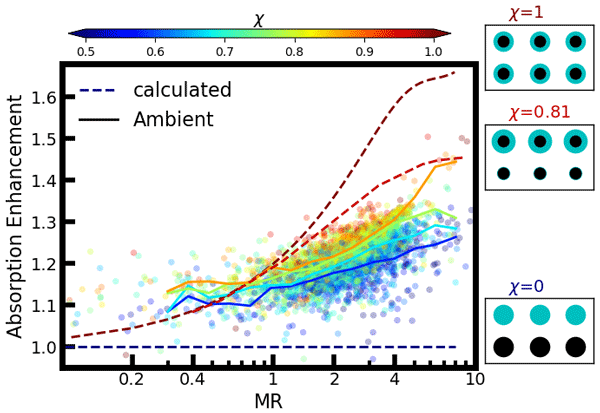
In this study, the black carbon (BC) mixing state index (χ) is developed to quantify the dispersion of ambient black carbon aerosol mixing states based on binary systems of BC and other non-black carbon components. We demonstrate that the BC light absorption enhancement increases with χ for the same MR, which indicates that χ can be employed as a factor to constrain the light absorption enhancement of ambient BC.
Jie Qiu, Wangshu Tan, Gang Zhao, Yingli Yu, and Chunsheng Zhao
Atmos. Meas. Tech., 14, 4879–4891, https://doi.org/10.5194/amt-14-4879-2021, https://doi.org/10.5194/amt-14-4879-2021, 2021
Short summary
Short summary
Considering nephelometers' major problems of a nonideal Lambertian light source and angle truncation, a new correction method based on a machine learning model is proposed. Our method has the advantage of obtaining data with high accuracy while achieving self-correction, which means that researchers can get more accurate scattering coefficients without the need for additional observation data. This method provides a more precise estimation of the aerosol’s direct radiative forcing.
Gang Zhao, Yishu Zhu, Zhijun Wu, Taomou Zong, Jingchuan Chen, Tianyi Tan, Haichao Wang, Xin Fang, Keding Lu, Chunsheng Zhao, and Min Hu
Atmos. Chem. Phys., 21, 9995–10004, https://doi.org/10.5194/acp-21-9995-2021, https://doi.org/10.5194/acp-21-9995-2021, 2021
Short summary
Short summary
New particle formation is thought to contribute half of the global cloud condensation nuclei. We find that the new particle formation is more likely to happen in the upper boundary layer than that at the ground, which can be partially explained by the aerosol–radiation interaction. Our study emphasizes the influence of aerosol–radiation interaction on the NPF.
Weilun Zhao, Wangshu Tan, Gang Zhao, Chuanyang Shen, Yingli Yu, and Chunsheng Zhao
Atmos. Meas. Tech., 14, 1319–1331, https://doi.org/10.5194/amt-14-1319-2021, https://doi.org/10.5194/amt-14-1319-2021, 2021
Chuanyang Shen, Gang Zhao, and Chunsheng Zhao
Atmos. Meas. Tech., 14, 1293–1301, https://doi.org/10.5194/amt-14-1293-2021, https://doi.org/10.5194/amt-14-1293-2021, 2021
Short summary
Short summary
Aerosol hygroscopicity measured by the humidified tandem differential mobility analyzer (HTDMA) is affected by multiply charged particles from two aspects: (1) number contribution and (2) the weakening effect. An algorithm is proposed to do the multi-charge correction and applied to a field measurement. Results show that the difference between corrected and measured size-resolved κ can reach 0.05, highlighting that special attention needs to be paid to the multi-charge effect when using HTDMA.
Chuanyang Shen, Gang Zhao, Weilun Zhao, Ping Tian, and Chunsheng Zhao
Atmos. Chem. Phys., 21, 1375–1388, https://doi.org/10.5194/acp-21-1375-2021, https://doi.org/10.5194/acp-21-1375-2021, 2021
Short summary
Short summary
Submicron particles larger than 300 nm dominate the aerosol light extinction and mass concentration in the urban environment. Aerosol hygroscopic properties extended to 600 nm were investigated at an urban site. Our results find that there exists a large fraction of a less hygroscopic group above 300 nm, and the hygroscopicity in this size range is enhanced significantly with the development of pollution levels. The hygroscopicity variation contributes greatly to the low visibility.
Cited articles
Ashkin, A., Dziedzic, J. M., Bjorkholm, J. E., and Chu, S.: Observation of a single-beam gradient force optical trap for dielectric particles, Opt. Lett., 11, 288–290, https://doi.org/10.1364/OL.11.000288, 1986.
Benner, R. E., Barber, P. W., Owen, J. F., and Chang, R. K.: Observation of Structure Resonances in the Fluorescence Spectra from Microspheres, Phys. Rev. Lett., 44, 475–478, https://doi.org/10.1103/PhysRevLett.44.475, 1980.
Boucher, O., Randall, D., Artaxo, P., Bretherton, C., Feingold, G., Forster, P., Kerminen, V.-M., Kondo, Y., Liao, H., Lohmann, U., Rasch, P., Satheesh, S. K., Sherwood, S., Stevens, B., and Zhang, X. Y.: Clouds and Aerosols, in: Climate Change 2013: The Physical Science Basis. Contribution of Working Group I to the Fifth Assessment Report of the Intergovernmental Panel on Climate Change, edited by: Stocker, T. F., Qin, D., Plattner, G.-K., Tignor, M., Allen, S. K., Boschung, J., Nauels, A., Xia, Y., Bex, V., and Midgley, P. M., Cambridge University Press, Cambridge, United Kingdom and New York, NY, USA, https://doi.org/10.1017/CBO9781107415324.016, 2013.
Cai, C., Miles, R. E. H., Cotterell, M. I., Marsh, A., Rovelli, G., Rickards, A. M. J., Zhang, Y., and Reid, J. P.: Comparison of Methods for Predicting the Compositional Dependence of the Density and Refractive Index of Organic–Aqueous Aerosols, J. Phys. Chem. A, 120, 6604–6617, https://doi.org/10.1021/acs.jpca.6b05986, 2016.
Che, Y.-Y., Shen, J., Zhou, J.-C., and He, C.-H.: Thermal Conductivity and Density of (NH4)2SO4+ H2O, NH4NO3+ H2O, and (NH4)2SO4+ NH4NO3+ H2O Solutions at T = (278.15 to 333.15) K, J. Chem. Eng. Data, 57, 1486–1491, https://doi.org/10.1021/je201390r, 2012.
Clegg, S. L. and Wexler, A. S.: Densities and Apparent Molar Volumes of Atmospherically Important Electrolyte Solutions. 1. The Solutes H2SO4, HNO3, HCl, Na2SO4, NaNO3, NaCl, (NH4)2SO4, NH4NO3, and NH4Cl from 0 to 50 °C, Including Extrapolations to Very Low Temperature and to the Pure Liquid State, and NaHSO4, NaOH, and NH3 at 25 °C, J. Phys. Chem. A, 115, 3393–3460, https://doi.org/10.1021/jp108992a, 2011.
Estillore, A. D., Morris, H. S., Or, V. W., Lee, H. D., Alves, M. R., Marciano, M. A., Laskina, O., Qin Z., Tivanski, A. V., and Grassian, V. H.: Linking hygroscopicity and surface microstructure of model inorganic salts, simple and complex carbohydrates, and authentic sea spray aerosol particles, Phys. Chem. Chem. Phys., 19, 21101–21111, https://doi.org/10.1039/C7CP04051B, 2017.
Fan, C., He, B., Guo, S., Qiu, J., and Zhao, C.: Insights into the real part of natural sea spray aerosol refractive index in the Pacific Ocean, Atmos. Chem. Phys., 25, 5761–5771, https://doi.org/10.5194/acp-25-5761-2025, 2025.
Hargreaves, G., Kwamena, N.-O. A., Zhang, Y. H., Butler, J. R., Rushworth, S., Clegg, S. L., and Reid, J. P.: Measurements of the Equilibrium Size of Supersaturated Aqueous Sodium Chloride Droplets at Low Relative Humidity Using Aerosol Optical Tweezers and an Electrodynamic Balance, J. Phys. Chem. A, 114, 1806–1815, https://doi.org/10.1021/jp9095985, 2010.
Hervello, M. F. and Sánchez, A.: Densities of Univalent Cation Sulfates in Ethanol + Water Solutions, J. Chem. Eng. Data, 52, 752–756, https://doi.org/10.1021/je060335h, 2007.
Kreidenweis, S. M. and Asa-Awuku, A.: Aerosol Hygroscopicity: Particle Water Content and Its Role in Atmospheric Processes, in: Treatise on Geochemistry, Elsevier, 331–361, https://doi.org/10.1016/B978-0-08-095975-7.00418-6, 2014.
Lee, J. W. L., Carrascón, V., Gallimore, P. J., Fuller, S. J., Björkegren, A., Spring, D. R., Pope, F. D., and Kalberer, M.: The effect of humidity on the ozonolysis of unsaturated compounds in aerosol particles, Phys. Chem. Chem. Phys., 14, 8023, https://doi.org/10.1039/c2cp24094g, 2012.
Li, L., Li, M., Fan, X., Chen, Y., Lin, Z., Hou, A., Zhang, S., Zheng, R., and Chen, J.: Measurement report: The variation properties of aerosol hygroscopic growth related to chemical composition during new particle formation days in a coastal city of Southeast China, Atmos. Chem. Phys., 25, 3669–3685, https://doi.org/10.5194/acp-25-3669-2025, 2025.
Liu, Y. and Daum, P. H.: Relationship of refractive index to mass density and self-consistency of mixing rules for multicomponent mixtures like ambient aerosols, J. Aerosol Sci., 39, 974–986, https://doi.org/10.1016/j.jaerosci.2008.06.006, 2008.
Pariyothon, J., Bualert, S., Choomanee, P., Rungratanaubon, T., Thongyen, T., Fakkaew, N., Phuetfoo, C., Phupijit, J., and Szymanski, W. W.: Hygroscopic Growth Factors of Sub-micrometer Atmospheric Aerosols at Four Selected Sites in Thailand, Aerosol Air Qual. Res., 23, 220374, https://doi.org/10.4209/aaqr.220374, 2023.
Petters, M. D. and Kreidenweis, S. M.: A single parameter representation of hygroscopic growth and cloud condensation nucleus activity, Atmos. Chem. Phys., 7, 1961–1971, https://doi.org/10.5194/acp-7-1961-2007, 2007.
Pöhlker, M. L., Pöhlker, C., Quaas, J., Mülmenstädt, J., Pozzer, A., Andreae, M. O., Artaxo, P., Block, K., Coe, H., Ervens, B., Gallimore, P., Gaston, C. J., Gunthe, S. S., Henning, S., Herrmann, H., Krüger, O. O., McFiggans, G., Poulain, L., Raj, S. S., Reyes-Villegas, E., Royer, H. M., Walter, D., Wang, Y., and Pöschl, U.: Global organic and inorganic aerosol hygroscopicity and its effect on radiative forcing, Nat. Commun., 14, 6139, https://doi.org/10.1038/s41467-023-41695-8, 2023.
Preston, T. C. and Reid, J. P.: Accurate and efficient determination of the radius, refractive index, and dispersion of weakly absorbing spherical particle using whispering gallery modes, J. Opt. Soc. Am. B, 30, 2113–2122, https://doi.org/10.1364/JOSAB.30.002113, 2013.
Qiu, J., He, B., Zhang, L., Cheng, M., Guo, S., Fan, C., and Zhao, C.: Hygroscopic behavior of sea spray aerosols in offshore waters and open sea areas investigated with aerosol optical tweezers, Atmos. Environ., 321, 120360, https://doi.org/10.1016/j.atmosenv.2024.120360, 2024.
Shingler, T., Sorooshian, A., Ortega, A., Crosbie, E., Wonaschütz, A., Perring, A. E., Beyersdorf, A., Ziemba, L., Jimenez, J. L., Campuzano-Jost, P., Mikoviny, T., Wisthaler, A., and Russell, L. M.: Ambient observations of hygroscopic growth factor and f (RH) below 1: Case studies from surface and airborne measurements, JGR Atmospheres, 121, 13661–13677, https://doi.org/10.1002/2016JD025471, 2016.
Tan, C.-Y. and Huang, Y.-X.: Dependence of Refractive Index on Concentration and Temperature in Electrolyte Solution, Polar Solution, Nonpolar Solution, and Protein Solution, J. Chem. Eng. Data, 60, 2827–2833, https://doi.org/10.1021/acs.jced.5b00018, 2015.
Tang, I. N. and Munkelwitz, H. R.: Water activities, densities, and refractive indices of aqueous sulfates and sodium nitrate droplets of atmospheric importance, J. Geophys. Res., 99, 18801–18808, https://doi.org/10.1029/94JD01345, 1994.
Tang, M., Chan, C. K., Li, Y. J., Su, H., Ma, Q., Wu, Z., Zhang, G., Wang, Z., Ge, M., Hu, M., He, H., and Wang, X.: A review of experimental techniques for aerosol hygroscopicity studies, Atmos. Chem. Phys., 19, 12631–12686, https://doi.org/10.5194/acp-19-12631-2019, 2019.
Urréjola, S., Sánchez, A., and Hervello, M. F.: Refractive Indices of Sodium, Potassium, and Ammonium Sulfates in Ethanol–Water Solutions, J. Chem. Eng. Data, 55, 2924–2929, https://doi.org/10.1021/je9010129, 2010.
U.S. Department of Agriculture: Agricultural Marketing Service, Specialty Crops Inspection Division.: Appendix XV – Sucrose Conversion Table, Technical Procedures Manual, https://www.ams.usda.gov/sites/default/files/media/SucroseConversionTableXV.pdf (last access: 11 September 2025), 2025.
Vennes, B. and Preston, T. C.: Calculating and fitting morphology-dependent resonances of a spherical particle with a concentric spherical shell, J. Opt. Soc. Am. A, 36, 2089, https://doi.org/10.1364/JOSAA.36.002089, 2019.
Vu, T. V., Delgado-Saborit, J. M., and Harrison, R. M.: A review of hygroscopic growth factors of submicron aerosols from different sources and its implication for calculation of lung deposition efficiency of ambient aerosols, Air Qual Atmos Health, 8, 429–440, https://doi.org/10.1007/s11869-015-0365-0, 2015.
Wall, C. J., Norris, J. R., Possner, A., McCoy, D. T., McCoy, I. L., and Lutsko, N. J.: Assessing effective radiative forcing from aerosol–cloud interactions over the global ocean, Proc. Natl. Acad. Sci. U.S.A., 119, e2210481119, https://doi.org/10.1073/pnas.2210481119, 2022.
Wexler, A. S. and Clegg, S. L.: Atmospheric aerosol models for systems including the ions H+, NH , Na+, SO , NO , Cl−, Br−, and H2O, J. Geophys. Res., 107, https://doi.org/10.1029/2001JD000451, 2002.
Yao, Y., Curtis, J. H., Ching, J., Zheng, Z., and Riemer, N.: Quantifying the effects of mixing state on aerosol optical properties, Atmos. Chem. Phys., 22, 9265–9282, https://doi.org/10.5194/acp-22-9265-2022, 2022.
Young, T. F. and Smith, M. B.: Thermodynamic properties of mixtures of electrolytes in aqueous solutions, J. of Phys., 58, 716–724, https://doi.org/10.1021/j150519a009, 1954.
Zardini, A. A., Sjogren, S., Marcolli, C., Krieger, U. K., Gysel, M., Weingartner, E., Baltensperger, U., and Peter, T.: A combined particle trap/HTDMA hygroscopicity study of mixed inorganic/organic aerosol particles, Atmos. Chem. Phys., 8, 5589–5601, https://doi.org/10.5194/acp-8-5589-2008, 2008.
Zhao, W., Cai, C., Zhao, G., and Zhao, C.: Design of Bessel Beam Optical Tweezers for Single Particle Study, Acta Scientiarum Naturalium Universitatis Pekinensis, 56, 1031–1037, https://doi.org/10.13209/j.0479-8023.2020.090, 2020.

Short summary
Aerosols change their size and optical properties with humidity, influencing clouds and climate. Traditional instruments only capture the average behavior of many particles, missing how individual ones grow. We developed a precise optical method that traps and measures single particles as humidity varies, accurately determining their dry size and water uptake. This versatile approach applies to diverse particle types and enhances understanding of their roles in air quality and climate systems.
Aerosols change their size and optical properties with humidity, influencing clouds and climate....