
Articles | Volume 19, issue 12
https://doi.org/10.5194/amt-19-4035-2026
© Author(s) 2026. This work is distributed under
the Creative Commons Attribution 4.0 License.
the Creative Commons Attribution 4.0 License.
https://doi.org/10.5194/amt-19-4035-2026
© Author(s) 2026. This work is distributed under
the Creative Commons Attribution 4.0 License.
the Creative Commons Attribution 4.0 License.
Research article
| 
22 Jun 2026
Research article |
| 22 Jun 2026
| 22 Jun 2026
Sodium thiosulfate-coated ceramic denuders for ozone removal in ultrafine particle sampling
Elisabeth Eckenberger
CORRESPONDING AUTHOR

Bayreuth Center of Ecology and Environmental Research (BayCEER), University of Bayreuth, Bayreuth, Germany
Andreas Mittereder
Department of Engineering Thermodynamics and Transport Processes, University of Bayreuth, Bayreuth, Germany
Nadine Gawlitta
Joint Mass Spectrometry Centre (JMSC) at Comprehensive Molecular Analytics, Helmholtz Zentrum München, Neuherberg, Germany
JMSC at Chair of Analytical Chemistry, Institute of Chemistry, University of Rostock, Rostock, Germany
Martin Sklorz
Joint Mass Spectrometry Centre (JMSC) at Comprehensive Molecular Analytics, Helmholtz Zentrum München, Neuherberg, Germany
JMSC at Chair of Analytical Chemistry, Institute of Chemistry, University of Rostock, Rostock, Germany
Dieter Brüggemann
Department of Engineering Thermodynamics and Transport Processes, University of Bayreuth, Bayreuth, Germany
Ralf Zimmermann
Joint Mass Spectrometry Centre (JMSC) at Comprehensive Molecular Analytics, Helmholtz Zentrum München, Neuherberg, Germany
JMSC at Chair of Analytical Chemistry, Institute of Chemistry, University of Rostock, Rostock, Germany
Anke Christine Nölscher
CORRESPONDING AUTHOR
Bayreuth Center of Ecology and Environmental Research (BayCEER), University of Bayreuth, Bayreuth, Germany
now at: Institute of Climate and Energy Systems – Troposphere (ICE-3), Forschungszentrum Jülich GmbH, Jülich, Germany
now at: Institute of Geophysics and Meteorology, University of Cologne, Cologne, Germany
Related authors
Elisabeth Eckenberger, Andreas Mittereder, Nadine Gawlitta, Jürgen Schnelle-Kreis, Martin Sklorz, Dieter Brüggemann, Ralf Zimmermann, and Anke C. Nölscher
Aerosol Research, 3, 45–64, https://doi.org/10.5194/ar-3-45-2025, https://doi.org/10.5194/ar-3-45-2025, 2025
Short summary
Short summary
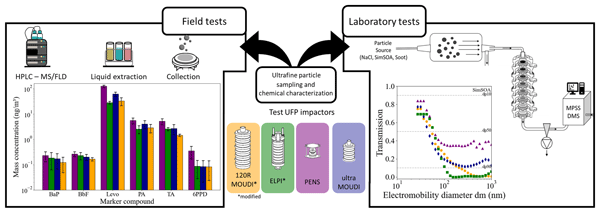
We assessed the performance of four cascade impactors for collecting and analyzing organic markers in airborne ultrafine particles (UFPs) under lab and field conditions. The cutoff was influenced by the impactor design and aerosol mixture. Two key factors caused variations in mass concentrations: the evaporation of semi-volatile compounds and the "bounce-off" of larger particles and fragments. Our findings reveal the challenges of analyzing organic marker mass concentrations in airborne UFPs.
Deeksha Shukla, Lejish Vettikkat, Mika Ihalainen, Markus Somero, Hendryk Czech, Siegfried Schobesberger, Angela Buchholz, Iida Pullinen, Kerneels Jaars, Kajar Köster, Viet Le, Pasi Yli-Pirilä, Stefan J. Siebert, Pieter G. van Zyl, Annele Virtanen, Ville Vakkari, Olli Sippula, and Ralf Zimmermann
Atmos. Chem. Phys., 26, 12977–13000, https://doi.org/10.5194/acp-26-12977-2026, https://doi.org/10.5194/acp-26-12977-2026, 2026
Short summary
Short summary
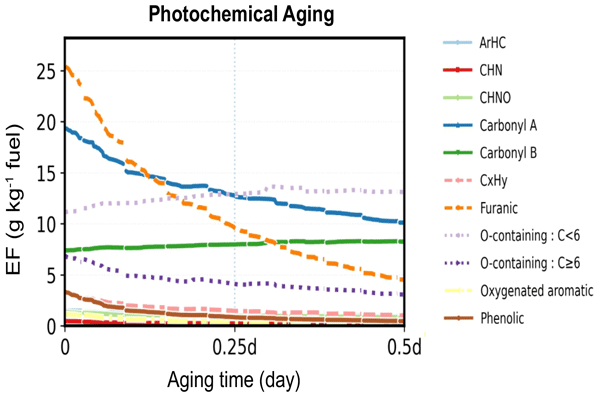
Biomass burning emits large amounts of pollutants that undergo atmospheric transformation. This study examined organic vapor emissions from three biomass fuels and their transformation under different oxidation regimes in a smog chamber by real-time mass spectrometry. OH-driven oxidation rapidly altered organic vapor composition than dark oxidation, eliminating differences in chemical vapor composition arising from fuel types or combustion conditions.
Duong H. Do, Astrid Kerkweg, Yarê Baker, Birger Bohn, Hendrik Fuchs, Quanfu He, Thorsten Hohaus, Sungah Kang, Timo Kirfel, Finja Löher, Niklas Diepenthal, Anke C. Nölscher, Anna Novelli, Alexander Pschera, Felix Wieser, Sören R. Zorn, Andreas Wahner, and Domenico Taraborrelli
EGUsphere, https://doi.org/10.5194/egusphere-2026-4522, https://doi.org/10.5194/egusphere-2026-4522, 2026
Short summary
Short summary
This work builds a chamber simulation tool that mimics how air chemistry changes inside laboratory reactors, including injected gases, changing light, gas and liquid reactions, wall effects, and dilution. Tests in several chambers reproduced measured changes in reactive species, nitrogen compounds, and ozone, and helped capture how organic particles form. The same chemistry can be reused in larger, global air simulations to assess real-world impact.
Bashir Olasunkanmi Ayinde, Wolfgang Babel, Johannes Olesch, Daniel Wagner, Seema Agarwal, Christian Laforsch, Julian Brehm, Anke Nölscher, and Christoph Karl Thomas
Aerosol Research, 4, 345–372, https://doi.org/10.5194/ar-4-345-2026, https://doi.org/10.5194/ar-4-345-2026, 2026
Short summary
Short summary
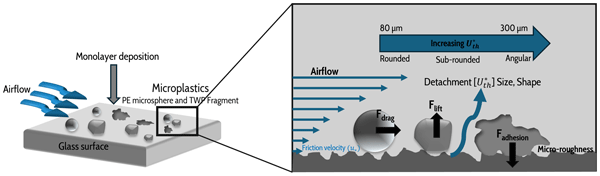
The dynamics of how tyre wear particles behave prior to their entrainment are still poorly understood. In wind tunnel experiments, the particle detachment from an idealized glass substrate was monitored. For particle sizes above 80 μm, smaller and more rounded particles were mobilized by wind shear first, whereas larger and more angular particles require stronger wind shear, highlighting strong surface adhesion and particle morphology as the major factors influencing microplastic detachment.
Anni Hartikainen, Mika Ihalainen, Deeksha Shukla, Marius Rohkamp, Arya Mukherjee, Quanfu He, Sandra Piel, Aki Virkkula, Delun Li, Tuukka Kokkola, Seongho Jeong, Hanna Koponen, Uwe Etzien, Anusmita Das, Krista Luoma, Lukas Schwalb, Thomas Gröger, Alexandre Barth, Martin Sklorz, Thorsten Streibel, Hendryk Czech, Benedikt Gündling, Markus Kalberer, Bert Buchholz, Andreas Hupfer, Thomas Adam, Thorsten Hohaus, Johan Øvrevik, Ralf Zimmermann, and Olli Sippula
Atmos. Chem. Phys., 25, 9275–9294, https://doi.org/10.5194/acp-25-9275-2025, https://doi.org/10.5194/acp-25-9275-2025, 2025
Short summary
Short summary
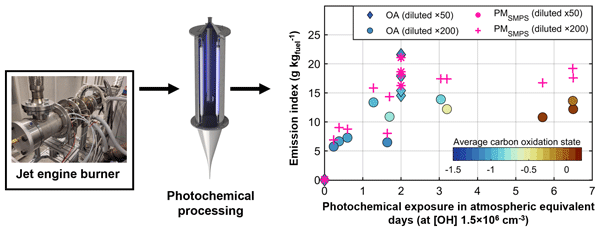
Photochemical reactions altered the properties of kerosene-operated jet engine burner exhaust emissions, which were studied in a laboratory using an oxidation flow reactor. Particle mass increased 300-fold as particles and gases became more oxidized. Light absorption increased, but the total direct radiative forcing efficiency was estimated to have shifted from positive to negative. The results highlight the importance of considering secondary aerosol formation when assessing the impacts of aviation.
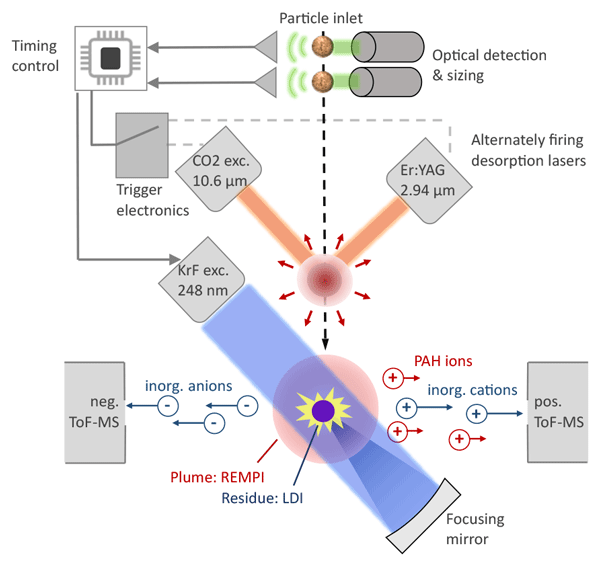
Marco Schmidt, Haseeb Hakkim, Lukas Anders, Aleksandrs Kalamašņikovs, Thomas Kröger-Badge, Robert Irsig, Norbert Graf, Reinhard Kelnberger, Johannes Passig, and Ralf Zimmermann
Atmos. Meas. Tech., 18, 2425–2437, https://doi.org/10.5194/amt-18-2425-2025, https://doi.org/10.5194/amt-18-2425-2025, 2025
Short summary
Short summary
Laser desorption of individual particles prior to ionization is the key to reveal their organic composition. The CO2 lasers required are bulky and maintenance-intensive, limiting their use in the field. We have developed a compact solid-state IR laser that is easily aligned with the particle beam. Mass spectra and hit rates are similar to those of the CO2 laser. For combined characterization of organic and inorganic particle compositions, both lasers are superior to conventional single UV pulses.
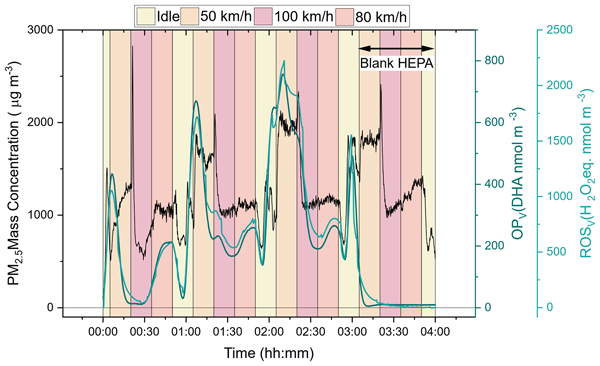
Battist Utinger, Alexandre Barth, Andreas Paul, Arya Mukherjee, Steven John Campbell, Christa-Maria Müller, Mika Ihalainen, Pasi Yli-Pirilä, Miika Kortelainen, Zheng Fang, Patrick Martens, Markus Somero, Juho Louhisalmi, Thorsten Hohaus, Hendryk Czech, Olli Sippula, Yinon Rudich, Ralf Zimmermann, and Markus Kalberer
Aerosol Research, 3, 205–218, https://doi.org/10.5194/ar-3-205-2025, https://doi.org/10.5194/ar-3-205-2025, 2025
Short summary
Short summary
The oxidative potential (OP) of air pollution particles might be a metric explaining particle toxicity. This study quantifies the OP of fresh and aged car and wood burning emission particles and explores how the OP changes over time, using novel high-temporal-resolution instruments. We show that emissions from wood burning are more toxic than car exhaust per unit particle mass, especially as they age in the atmosphere. We also calculate emission factors for the OP, which could help to improve air pollution policies.
Elisabeth Eckenberger, Andreas Mittereder, Nadine Gawlitta, Jürgen Schnelle-Kreis, Martin Sklorz, Dieter Brüggemann, Ralf Zimmermann, and Anke C. Nölscher
Aerosol Research, 3, 45–64, https://doi.org/10.5194/ar-3-45-2025, https://doi.org/10.5194/ar-3-45-2025, 2025
Short summary
Short summary
We assessed the performance of four cascade impactors for collecting and analyzing organic markers in airborne ultrafine particles (UFPs) under lab and field conditions. The cutoff was influenced by the impactor design and aerosol mixture. Two key factors caused variations in mass concentrations: the evaporation of semi-volatile compounds and the "bounce-off" of larger particles and fragments. Our findings reveal the challenges of analyzing organic marker mass concentrations in airborne UFPs.
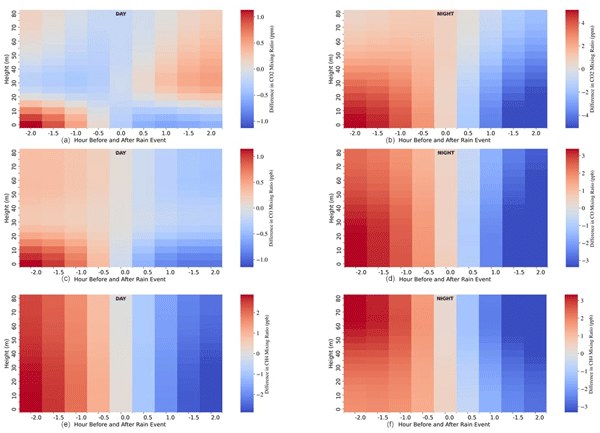
Luiz A. T. Machado, Jürgen Kesselmeier, Santiago Botía, Hella van Asperen, Meinrat O. Andreae, Alessandro C. de Araújo, Paulo Artaxo, Achim Edtbauer, Rosaria R. Ferreira, Marco A. Franco, Hartwig Harder, Sam P. Jones, Cléo Q. Dias-Júnior, Guido G. Haytzmann, Carlos A. Quesada, Shujiro Komiya, Jost Lavric, Jos Lelieveld, Ingeborg Levin, Anke Nölscher, Eva Pfannerstill, Mira L. Pöhlker, Ulrich Pöschl, Akima Ringsdorf, Luciana Rizzo, Ana M. Yáñez-Serrano, Susan Trumbore, Wanda I. D. Valenti, Jordi Vila-Guerau de Arellano, David Walter, Jonathan Williams, Stefan Wolff, and Christopher Pöhlker
Atmos. Chem. Phys., 24, 8893–8910, https://doi.org/10.5194/acp-24-8893-2024, https://doi.org/10.5194/acp-24-8893-2024, 2024
Short summary
Short summary
Composite analysis of gas concentration before and after rainfall, during the day and night, gives insight into the complex relationship between trace gas variability and precipitation. The analysis helps us to understand the sources and sinks of trace gases within a forest ecosystem. It elucidates processes that are not discernible under undisturbed conditions and contributes to a deeper understanding of the trace gas life cycle and its intricate interactions with cloud dynamics in the Amazon.
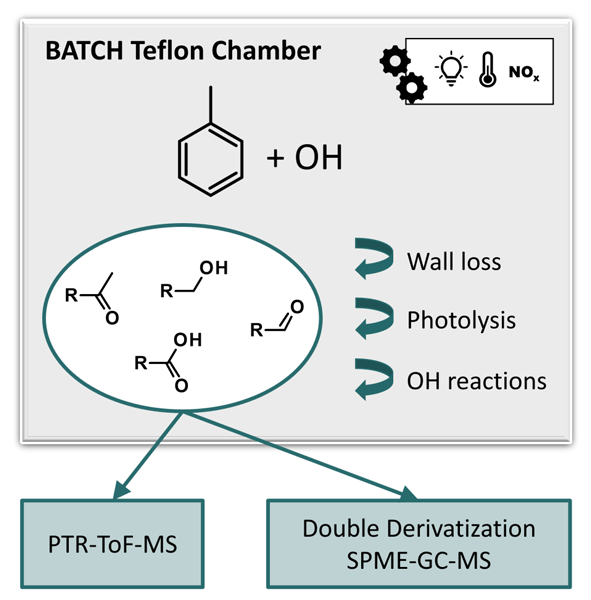
Finja Löher, Esther Borrás, Amalia Muñoz, and Anke Christine Nölscher
Atmos. Meas. Tech., 17, 4553–4579, https://doi.org/10.5194/amt-17-4553-2024, https://doi.org/10.5194/amt-17-4553-2024, 2024
Short summary
Short summary
We constructed and characterized a new indoor Teflon atmospheric simulation chamber. We evaluated wall losses, photolysis rates, and secondary reactions of multifunctional photooxidation products in the chamber. To measure these products on-line, we combined chromatographic and mass spectrometric analyses to obtain both isomeric information and a high temporal resolution. For method validation, we studied the formation yields of the main ring-retaining products of toluene.
Eric Schneider, Hendryk Czech, Olga Popovicheva, Marina Chichaeva, Vasily Kobelev, Nikolay Kasimov, Tatiana Minkina, Christopher Paul Rüger, and Ralf Zimmermann
Atmos. Chem. Phys., 24, 553–576, https://doi.org/10.5194/acp-24-553-2024, https://doi.org/10.5194/acp-24-553-2024, 2024
Short summary
Short summary
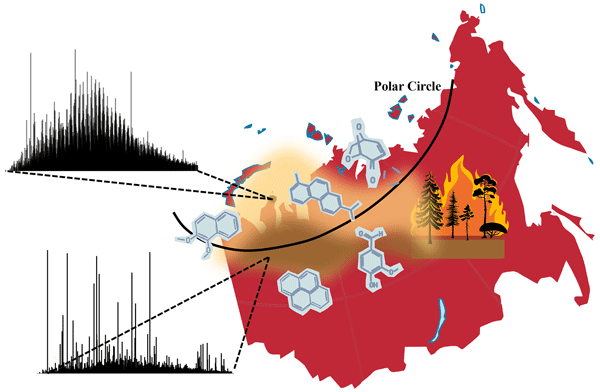
This study provides insights into the complex chemical composition of long-range-transported wildfire plumes from Yakutia, which underwent different levels of atmospheric processing. With complementary mass spectrometric techniques, we improve our understanding of the chemical processes and atmospheric fate of wildfire plumes. Unprecedented high levels of carbonaceous aerosols crossed the polar circle with implications for the Arctic ecosystem and consequently climate.
Julius Seidler, Markus N. Friedrich, Christoph K. Thomas, and Anke C. Nölscher
Atmos. Chem. Phys., 24, 137–153, https://doi.org/10.5194/acp-24-137-2024, https://doi.org/10.5194/acp-24-137-2024, 2024
Short summary
Short summary
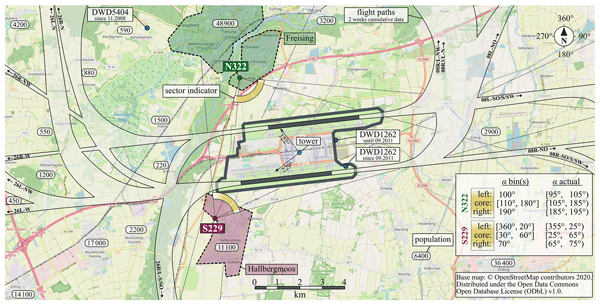
Here, we study the transport of ultrafine particles (UFPs) from an airport to two new adjacent measuring sites for 1 year. The number of UFPs in the air and the diurnal variation are typical urban. Winds from the airport show increased number concentrations. Additionally, considering wind frequencies, we estimate that, from all UFPs measured at the two sites, 10 %–14 % originate from the airport and/or other UFP sources from between the airport and site.
Johannes Passig, Julian Schade, Robert Irsig, Thomas Kröger-Badge, Hendryk Czech, Thomas Adam, Henrik Fallgren, Jana Moldanova, Martin Sklorz, Thorsten Streibel, and Ralf Zimmermann
Atmos. Chem. Phys., 22, 1495–1514, https://doi.org/10.5194/acp-22-1495-2022, https://doi.org/10.5194/acp-22-1495-2022, 2022
Short summary
Short summary
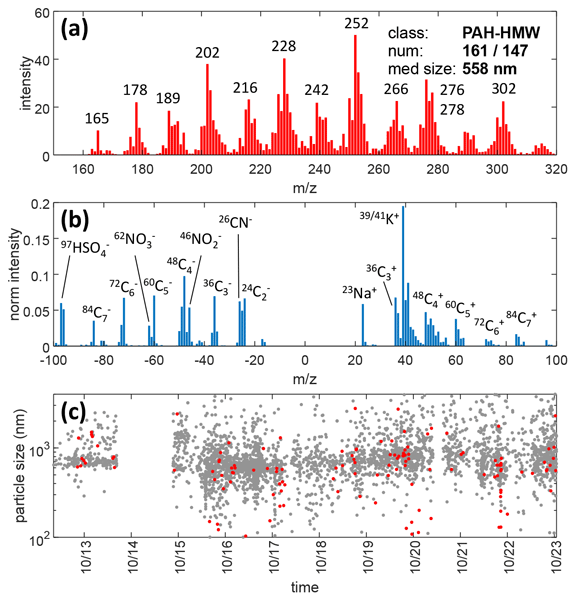
The single-particle distribution of health-relevant polycyclic aromatic hydrocarbons (PAHs) was studied at the Swedish coast in autumn. We found PAHs bound to long-range transported particles from eastern and central Europe and also from ship emissions and local sources. This is the first field study using a new technology revealing single-particle data from both inorganic components and PAHs. We discuss PAH profiles that are indicative of several sources and atmospheric aging processes.
Cited articles
Abdel-Shafy, H. I. and Mansour, M. S. M.: A review on polycyclic aromatic hydrocarbons: Source, environmental impact, effect on human health and remediation, Egyptian Journal of Petroleum, 25, 107–123, https://doi.org/10.1016/j.ejpe.2015.03.011, 2016.
Balducci, C., Cecinato, A., Paolini, V., Guerriero, E., Perilli, M., Romagnoli, P., Tortorella, C., Iacobellis, S., Giove, A., and Febo, A.: Volatilization and oxidative artifacts of PM bound PAHs collected at low volume sampling (1): Laboratory and field evaluation, Chemosphere, 200, 106–115, https://doi.org/10.1016/j.chemosphere.2018.02.090, 2018.
Balmes, J. R. and Hansel, N. N.: Tiny Particles, Big Health Impacts, Am. J. Respir. Crit. Care Med., 210, 1291–1292, https://doi.org/10.1164/rccm.202407-1476ED, 2024.
Bayerisches Landesamt für Umwelt (LfU): LÜB – Messwertarchiv: O3, hourly data, station Augsburg/LfU, 8 August until 13 September 2023, https://www.lfu.bayern.de/luft/immissionsmessungen/messwertarchiv/index.htm, last access: 8 June 2025.
Bedjanian, Y. and Nguyen, M. L.: Kinetics of the reactions of soot surface-bound polycyclic aromatic hydrocarbons with O3, Chemosphere, 79, 387–393, https://doi.org/10.1016/j.chemosphere.2010.02.009, 2010.
Bell, M. L., Goldberg, R., Hogrefe, C., Kinney, P. L., Knowlton, K., Lynn, B., Rosenthal, J., Rosenzweig, C., and Patz, J. A.: Climate change, ambient ozone, and health in 50 US cities, Clim. Change, 82, 61–76, https://doi.org/10.1007/s10584-006-9166-7, 2007.
Cataldo, F.: Protection Mechanism of Rubbers from Ozone Attack, Ozone Sci. Eng., 41, 358–368, https://doi.org/10.1080/01919512.2018.1542518, 2019.
Christoffersen, T. S., Hjorth, J., Horie, O., Jensen, N. R., Kotzias, D., Molander, L. L., Neeb, P., Ruppert, L., Winterhalter, R., Virkkula, A., Wirtz, K., and Larsen, B. R.: cis-pinic acid, a possible precursor for organic aerosol formation from ozonolysis of α-pinene, Atmos. Environ., 32, 1657–1661, https://doi.org/10.1016/S1352-2310(97)00448-2, 1998.
Cooper, O. R., Parrish, D. D., Ziemke, J., Balashov, N. V., Cupeiro, M., Galbally, I. E., Gilge, S., Horowitz, L., Jensen, N. R., Lamarque, J.-F., Naik, V., Oltmans, S. J., Schwab, J., Shindell, D. T., Thompson, A. M., Thouret, V., Wang, Y., and Zbinden, R. M.: Global distribution and trends of tropospheric ozone: An observation-based review, Elem. Sci. Anth., 2, https://doi.org/10.12952/journal.elementa.000029, 2014.
Das, A., Pantzke, J., Jeong, S., Hartner, E., Zimmermann, E. J., Gawlitta, N., Offer, S., Shukla, D., Huber, A., Rastak, N., Meščeriakovas, A., Ivleva, N. P., Kuhn, E., Binder, S., Gröger, T., Oeder, S., Delaval, M., Czech, H., Sippula, O., Schnelle-Kreis, J., Di Bucchianico, S., Sklorz, M., and Zimmermann, R.: Generation, characterization, and toxicological assessment of reference ultrafine soot particles with different organic content for inhalation toxicological studies, Sci. Total Environ., 951, 175727, https://doi.org/10.1016/j.scitotenv.2024.175727, 2024.
Denjean, C., Formenti, P., Picquet-Varrault, B., Camredon, M., Pangui, E., Zapf, P., Katrib, Y., Giorio, C., Tapparo, A., Temime-Roussel, B., Monod, A., Aumont, B., and Doussin, J. F.: Aging of secondary organic aerosol generated from the ozonolysis of α-pinene: effects of ozone, light and temperature, Atmos. Chem. Phys., 15, 883–897, https://doi.org/10.5194/acp-15-883-2015, 2015.
Eckenberger, E., Mittereder, A., Gawlitta, N., Schnelle-Kreis, J., Sklorz, M., Brüggemann, D., Zimmermann, R., and Nölscher, A. C.: Performance evaluation of four cascade impactors for airborne ultrafine-particle (UFP) collection: the influence of particle type, concentration, mass, and chemical nature, Aerosol Research, 3, 45–64, https://doi.org/10.5194/ar-3-45-2025, 2025.
Eckenberger, E., Mittereder, A., Gawlitta, N., Sklorz, M., Brüggemann, D., Zimmermann, R., and Nölscher, A. C.: Data files for Sodium Thiosulfate-Coated Ceramic Denuders for Ozone Removal in Ultrafine Particle Sampling, Zenodo [data set], https://doi.org/10.5281/zenodo.20325619, 2026.
Emberson, L.: Effects of ozone on agriculture, forests and grasslands, Philos. T. Roy. Soc. A, 378, 20190327, https://doi.org/10.1098/rsta.2019.0327, 2020.
Ernle, L., Ringsdorf, M. A., and Williams, J.: Influence of ozone and humidity on PTR-MS and GC-MS VOC measurements with and without a Na2S2O3 ozone scrubber, Atmos. Meas. Tech., 16, 1179–1194, https://doi.org/10.5194/amt-16-1179-2023, 2023.
European Committee for Standardization (CEN): EN 15549:2008 – Air quality — Standard method for the measurement of the concentration of benzo[a]pyrene and other polycyclic aromatic hydrocarbons in ambient air, Brussels, 1–22 pp., 2008.
Fick, J., Pommer, L., Andersson, B., and Nilsson, C.: Ozone Removal in the Sampling of Parts per Billion Levels of Terpenoid Compounds: An Evaluation of Different Scrubber Materials, Environ. Sci. Technol., 35, 1458–1462, https://doi.org/10.1021/es0001456, 2001.
Gaudel, A., Cooper, O. R., Ancellet, G., Barret, B., Boynard, A., Burrows, J. P., Clerbaux, C., Coheur, P.-F., Cuesta, J., Cuevas, E., Doniki, S., Dufour, G., Ebojie, F., Foret, G., Garcia, O., Granados-Muñoz, M. J., Hannigan, J. W., Hase, F., Hassler, B., Huang, G., Hurtmans, D., Jaffe, D., Jones, N., Kalabokas, P., Kerridge, B., Kulawik, S., Latter, B., Leblanc, T., Le Flochmoën, E., Lin, W., Liu, J., Liu, X., Mahieu, E., McClure-Begley, A., Neu, J. L., Osman, M., Palm, M., Petetin, H., Petropavlovskikh, I., Querel, R., Rahpoe, N., Rozanov, A., Schultz, M. G., Schwab, J., Siddans, R., Smale, D., Steinbacher, M., Tanimoto, H., Tarasick, D. W., Thouret, V., Thompson, A. M., Trickl, T., Weatherhead, E., Wespes, C., Worden, H. M., Vigouroux, C., Xu, X., Zeng, G., and Ziemke, J.: Tropospheric Ozone Assessment Report: Present-day distribution and trends of tropospheric ozone relevant to climate and global atmospheric chemistry model evaluation, Elem. Sci. Anth., 6, https://doi.org/10.1525/elementa.291, 2018.
Grosjean, D.: In situ organic aerosol formation during a smog episode: Estimated production and chemical functionality, Atmos. Environ. A-Gen., 26, 953–963, https://doi.org/10.1016/0960-1686(92)90027-I, 1992.
Haddad, P., Jeong, H., Kappeler, R., Altug, H., Andersen, Z. J., Bergmann, M., Boogaard, H., Kutlar, M. J., Lim, Y. H., Loft, S., Pohl, T., and Hoffmann, B.: Systematic review on health effects of long-term exposure to UFP, ISEE Conference Abstracts, 2024, https://doi.org/10.1289/isee.2024.0574, 2024.
Helmig, D. and Greenberg, J.: Artifact formation from the use of potassium-iodide-based ozone traps during atmospheric sampling of trace organic gases, J. High Res. Chromatog., 18, 15–18, https://doi.org/10.1002/jhrc.1240180105, 1995.
Ho, S. S. H., Ip, H. S. S., Ho, K. F., Dai, W.-T., Cao, J., and Ng, L. P. T.: Technical Note: Concerns on the Use of Ozone Scrubbers for Gaseous Carbonyl Measurement by DNPH-Coated Silica Gel Cartridge, Aerosol Air Qual. Res., 13, 1151–1160, https://doi.org/10.4209/aaqr.2012.11.0313, 2013.
Hu, X., Zhao, H. N., Tian, Z., Peter, K. T., Dodd, M. C., and Kolodziej, E. P.: Transformation Product Formation upon Heterogeneous Ozonation of the Tire Rubber Antioxidant 6PPD (N-(1,3-dimethylbutyl)-N′-phenyl-p-phenylenediamine), Environ. Sci. Technol. Lett., 9, 413–419, https://doi.org/10.1021/acs.estlett.2c00187, 2022.
Ji, Z., Zhang, N., Huang, C., Duan, X., Ren, D., and Huo, Z.: The Degradation of Polycyclic Aromatic Hydrocarbons (PAHs) by Ozone-Based Advanced Oxidation Processes: A Review, Ozone Sci. Eng., 46, 26–42, https://doi.org/10.1080/01919512.2023.2192751, 2024.
Kristensen, K., Bilde, M., Aalto, P. P., Petäjä, T., and Glasius, M.: Denuder/filter sampling of organic acids and organosulfates at urban and boreal forest sites: Gas/particle distribution and possible sampling artifacts, Atmos. Environ., 130, 36–53, https://doi.org/10.1016/j.atmosenv.2015.10.046, 2016a.
Kristensen, K., Watne, Å. K., Hammes, J., Lutz, A., Petäjä, T., Hallquist, M., Bilde, M., and Glasius, M.: High-Molecular Weight Dimer Esters Are Major Products in Aerosols from α-Pinene Ozonolysis and the Boreal Forest, Environ. Sci. Technol. Lett., 3, 280–285, https://doi.org/10.1021/acs.estlett.6b00152, 2016b.
Kuwabara, H., Sekiguchi, K., Sankoda, K., Sakurai, K., Yamaguchi, R., Furuuchi, M., and Hata, M.: Evaluation of Artifacts Generated during Collection of Ultrafine Particles Using an Inertial Filter Sampler, Aerosol Air Qual. Res., 16, 3063–3074, https://doi.org/10.4209/aaqr.2015.12.0679, 2016.
Kwamena, N.-O. A., Clarke, J. P., Kahan, T. F., Diamond, M. L., and Donaldson, D. J.: Assessing the importance of heterogeneous reactions of polycyclic aromatic hydrocarbons in the urban atmosphere using the Multimedia Urban Model, Atmos. Environ., 41, 37–50, https://doi.org/10.1016/j.atmosenv.2006.08.016, 2007.
Kwon, H.-S., Ryu, M. H., and Carlsten, C.: Ultrafine particles: unique physicochemical properties relevant to health and disease, Exp. Mol. Med., 52, 318–328, https://doi.org/10.1038/s12276-020-0405-1, 2020.
Li, Q.-Q., Guo, Y.-T., Yang, J.-Y., and Liang, C.-S.: Review on main sources and impacts of urban ultrafine particles: Traffic emissions, nucleation, and climate modulation, Atmos. Environ. X, 19, 100221, https://doi.org/10.1016/j.aeaoa.2023.100221, 2023.
Liffick, G. L.: An Investigation of the Removal of Ozone by Activated Charcoal, master's thesis, Oregon State University, Oregon, 1–73 pp., Open Library: OL17639717M, 1970.
Liu, K., Duan, F., He, K., Ma, Y., and Cheng, Y.: Investigation on sampling artifacts of particle associated PAHs using ozone denuder systems, Front. Environ. Sci. Eng., 8, 284–292, https://doi.org/10.1007/s11783-013-0555-7, 2014.
Liu, Y., Sklorz, M., Schnelle-Kreis, J., Orasche, J., Ferge, T., Kettrup, A., and Zimmermann, R.: Oxidant denuder sampling for analysis of polycyclic aromatic hydrocarbons and their oxygenated derivates in ambient aerosol: Evaluation of sampling artefact, Chemosphere, 62, 1889–1898, https://doi.org/10.1016/j.chemosphere.2005.07.049, 2006.
Marval, J. and Tronville, P.: Ultrafine particles: A review about their health effects, presence, generation, and measurement in indoor environments, Build. Environ., 216, 108992, https://doi.org/10.1016/j.buildenv.2022.108992, 2022.
Monks, P. S., Archibald, A. T., Colette, A., Cooper, O., Coyle, M., Derwent, R., Fowler, D., Granier, C., Law, K. S., Mills, G. E., Stevenson, D. S., Tarasova, O., Thouret, V., von Schneidemesser, E., Sommariva, R., Wild, O., and Williams, M. L.: Tropospheric ozone and its precursors from the urban to the global scale from air quality to short-lived climate forcer, Atmos. Chem. Phys., 15, 8889–8973, https://doi.org/10.5194/acp-15-8889-2015, 2015.
Mutzel, A., Rodigast, M., Iinuma, Y., Böge, O., and Herrmann, H.: Monoterpene SOA – Contribution of first-generation oxidation products to formation and chemical composition, Atmos. Environ., 130, 136–144, https://doi.org/10.1016/j.atmosenv.2015.10.080, 2016.
Oberdörster, G., Ferin, J., Gelein, R., Soderholm, S. C., and Finkelstein, J.: Role of the alveolar macrophage in lung injury: studies with ultrafine particles., Environ. Health Perspect., 97, 193–199, https://doi.org/10.1289/ehp.97-1519541, 1992.
Ofner, J., Krüger, H.-U., Grothe, H., Schmitt-Kopplin, P., Whitmore, K., and Zetzsch, C.: Physico-chemical characterization of SOA derived from catechol and guaiacol – a model substance for the aromatic fraction of atmospheric HULIS, Atmos. Chem. Phys., 11, 1–15, https://doi.org/10.5194/acp-11-1-2011, 2011.
Pantzke, J., Das, A., Zimmermann, E. J., Offer, S., Jeong, S., Delaval, M. N., Schnelle-Kreis, J., Sklorz, M., Di Bucchianico, S., and Zimmermann, R.: 68 On the Role of Chemical Identity over the size of Model Ultrafine Particles Driven (geno)-Toxicity, Ann. Work Expo. Health, 67, i93–i93, https://doi.org/10.1093/annweh/wxac087.227, 2023.
Pöschl, U., Letzel, T., Schauer, C., and Niessner, R.: Interaction of Ozone and Water Vapor with Spark Discharge Soot Aerosol Particles Coated with Benzo[a]pyrene: O 3 and H 2 O Adsorption, Benzo[a]pyrene Degradation, and Atmospheric Implications, J. Phys. Chem. A, 105, 4029–4041, https://doi.org/10.1021/jp004137n, 2001.
Prather, M. J. and Zhu, X.: Lifetimes and timescales of tropospheric ozone, Elem. Sci. Anth., 12, https://doi.org/10.1525/elementa.2023.00112, 2024.
Ravindra, K., Sokhi, R., and Vangrieken, R.: Atmospheric polycyclic aromatic hydrocarbons: Source attribution, emission factors and regulation, Atmos. Environ., 42, 2895–2921, https://doi.org/10.1016/j.atmosenv.2007.12.010, 2008.
Rossomme, E., Hart-Cooper, W. M., Orts, W. J., McMahan, C. M., and Head-Gordon, M.: Computational Studies of Rubber Ozonation Explain the Effectiveness of 6PPD as an Antidegradant and the Mechanism of Its Quinone Formation, Environ. Sci. Technol., 57, 5216–5230, https://doi.org/10.1021/acs.est.2c08717, 2023.
Rynek, R., Mayer, T., and Borsdorf, H.: Enhancing forest air sampling using a novel reusable ozone filter design, Atmos. Meas. Tech., 18, 4103–4117, https://doi.org/10.5194/amt-18-4103-2025, 2025.
Schraufnagel, D. E.: The health effects of ultrafine particles, Exp. Mol. Med., 52, 311–317, https://doi.org/10.1038/s12276-020-0403-3, 2020.
Shiraiwa, M., Ammann, M., Koop, T., and Pöschl, U.: Gas uptake and chemical aging of semisolid organic aerosol particles, P. Natl. Acad. Sci. USA, 108, 11003–11008, https://doi.org/10.1073/pnas.1103045108, 2011.
Subramanian, R., Khlystov, A. Y., Cabada, J. C., and Robinson, A. L.: Positive and Negative Artifacts in Particulate Organic Carbon Measurements with Denuded and Undenuded Sampler Configurations, Special Issue of Aerosol Science and Technology on Findings from the Fine Particulate Matter Supersites Program, Aerosol Sci. Tech., 38, 27–48, https://doi.org/10.1080/02786820390229354, 2004.
Takizawa, M., Okuwaki, A., and Okabe, T.: The Chemical Behavior of Low Valence Sulfur Compounds. VIII. The Oxidation of Sodium Thiosulfate with Ozone, Bull. Chem. Soc. Jpn., 46, 3785–3789, https://doi.org/10.1246/bcsj.46.3785, 1973.
Van Vaeck, L. and Van Cauwenberghe, K.: Conversion of polycyclic aromatic hydrocarbons on diesel particulate matter upon exposure to ppm levels of ozone, Atmos. Environ., 18, 323–328, https://doi.org/10.1016/0004-6981(84)90106-9, 1984.
Williams, E. L. and Grosjean, D.: Removal of atmospheric oxidants with annular denuders, Environ. Sci. Technol., 24, 811–814, https://doi.org/10.1021/es00076a002, 1990.
World Health Organization: WHO global air quality guidelines: particulate matter (PM2.5 and PM10), ozone, nitrogen dioxide, sulfur dioxide and carbon monoxide, Geneva, ISBN 9789240034228, 2021.
World Meteorological Organization (WMO): GAW Report No. 281: Guidelines for Measurements of Non-Methane Hydrocarbons in the Troposphere, Geneva, 2023.
Yatavelli, R. L. N., Lopez-Hilfiker, F., Wargo, J. D., Kimmel, J. R., Cubison, M. J., Bertram, T. H., Jimenez, J. L., Gonin, M., Worsnop, D. R., and Thornton, J. A.: A Chemical Ionization High-Resolution Time-of-Flight Mass Spectrometer Coupled to a Micro Orifice Volatilization Impactor (MOVI-HRToF-CIMS) for Analysis of Gas and Particle-Phase Organic Species, Aerosol Sci. Tech., 46, 1313–1327, https://doi.org/10.1080/02786826.2012.712236, 2012.
Yatavelli, R. L. N., Stark, H., Thompson, S. L., Kimmel, J. R., Cubison, M. J., Day, D. A., Campuzano-Jost, P., Palm, B. B., Hodzic, A., Thornton, J. A., Jayne, J. T., Worsnop, D. R., and Jimenez, J. L.: Semicontinuous measurements of gas–particle partitioning of organic acids in a ponderosa pine forest using a MOVI-HRToF-CIMS, Atmos. Chem. Phys., 14, 1527–1546, https://doi.org/10.5194/acp-14-1527-2014, 2014.
Young, P. J., Archibald, A. T., Bowman, K. W., Lamarque, J.-F., Naik, V., Stevenson, D. S., Tilmes, S., Voulgarakis, A., Wild, O., Bergmann, D., Cameron-Smith, P., Cionni, I., Collins, W. J., Dalsøren, S. B., Doherty, R. M., Eyring, V., Faluvegi, G., Horowitz, L. W., Josse, B., Lee, Y. H., MacKenzie, I. A., Nagashima, T., Plummer, D. A., Righi, M., Rumbold, S. T., Skeie, R. B., Shindell, D. T., Strode, S. A., Sudo, K., Szopa, S., and Zeng, G.: Pre-industrial to end 21st century projections of tropospheric ozone from the Atmospheric Chemistry and Climate Model Intercomparison Project (ACCMIP), Atmos. Chem. Phys., 13, 2063–2090, https://doi.org/10.5194/acp-13-2063-2013, 2013.
Yu, J., Griffin, R. J., Cocker, D. R., Flagan, R. C., Seinfeld, J. H., and Blanchard, P.: Observation of gaseous and particulate products of monoterpene oxidation in forest atmospheres, Geophys. Res. Lett., 26, 1145–1148, https://doi.org/10.1029/1999GL900169, 1999.
Zhang, J., Wei, Y., and Fang, Z.: Ozone Pollution: A Major Health Hazard Worldwide, Front. Immunol., 10, https://doi.org/10.3389/fimmu.2019.02518, 2019.
Zhao, H. N., Hu, X., Tian, Z., Gonzalez, M., Rideout, C. A., Peter, K. T., Dodd, M. C., and Kolodziej, E. P.: Transformation Products of Tire Rubber Antioxidant 6PPD in Heterogeneous Gas-Phase Ozonation: Identification and Environmental Occurrence, Environ. Sci. Technol., 57, 5621–5632, https://doi.org/10.1021/acs.est.2c08690, 2023.
Zhao, Z., Hao, J., Li, J., and Wu, S.: Second organic aerosol formation from the ozonolysis of α-pinene in the presence of dry submicron ammonium sulfate aerosol, J. Environ. Sci., 20, 1183–1188, https://doi.org/10.1016/S1001-0742(08)62207-X, 2008.
Zhou, S., Hwang, B. C. H., Lakey, P. S. J., Zuend, A., Abbatt, J. P. D., and Shiraiwa, M.: Multiphase reactivity of polycyclic aromatic hydrocarbons is driven by phase separation and diffusion limitations, P. Natl. Acad. Sci. USA, 116, 11658–11663, https://doi.org/10.1073/pnas.1902517116, 2019.
Short summary
Ozone in sampling air can alter the chemical composition of collected ultrafine particles, leading to an inaccurate air quality assessment. We addressed this by developing a ceramic device coated with sodium thiosulfate that eliminates ozone before it reaches the filter. Our results show this tool effectively preserves ozone-sensitive components, such as polycyclic aromatic hydrocarbons, without particle losses. This contributes to more reliable data for air quality research.
Ozone in sampling air can alter the chemical composition of collected ultrafine particles,...


