
the Creative Commons Attribution 4.0 License.
the Creative Commons Attribution 4.0 License.
 | 25 Jun 2026
Atmospheric Simulation Chambers in the ACTRIS Research Infrastructure

Niklas Illmann
Amalia Muñoz
Mila Ródenas
Bénédicte Picquet-Varrault
M. Rami Alfarra
Cecilia Arsene
Iustinian G. Bejan
David M. Bell
Merete Bilde
Alexander Böhmländer
Mixtli Campos-Pineda
Mathieu Cazaunau
Patrice Coll
Véronique Daële
Claudia Di Biagio
Michael Flynn
Paola Formenti
Hartmut Herrmann
Kristina Höhler
Thorsten Hohaus
Matthew S. Johnson
Eija Juurola
Niku Kivekäs
Jan Kaiser
Christos Kaltsonoudis
Paolo Laj
Dario Massabò
Federico Mazzei
Gordon McFiggans
Max R. McGillen
Abdelwahid Mellouki
Peter Mettke
Ottmar Möhler
Falk Mothes
Dennis Niedermeier
Anna Novelli
Romeo I. Olariu
Spyros N. Pandis
Iulia Patroescu-Klotz
Rosa Maria Petracca Altieri
Paolo Prati
Claudiu Roman
Albert A. Ruth
Harald Saathoff
Silvio Schmalfuß
Frank Stratmann
Virginia Vernocchi
Aristeidis Voliotis
Jens Voigtländer
Annele Virtanen
Andreas Wahner
Robert Wagner
John Wenger
Sören Zorn
Peter Wiesen
Jean-Francois Doussin
Atmospheric simulation chambers are one of the best available tools to study atmospheric processes, as they enable experiments under conditions that are both reproducible and well-controlled. 16 unique simulation chamber facilities are part of the distributed pan-European Aerosol, Clouds and Trace Gases Research Infrastructure (ACTRIS). Their research focuses on fundamental gas-phase reaction kinetics, complex reaction mechanisms, aerosol formation and cloud chemistry, as well as other aspects of atmospheric processes. They use both simplified and complex air mixtures in their research. Results of chamber experiments enable the discovery of unknown chemical mechanisms and the determination of physicochemical parameters of atmospheric constituents. Simulation chambers are ideal for testing instruments and quality assurance of their data. The variability of their research capability is reflected in differences in the size (ranging from approximately 1–270 m3), the wall material, and the type of instrumentation used to measure physical parameters, gas-phase species, physicochemical properties of aerosol particles as well as cloud droplets and ice crystals. Most chambers in ACTRIS are indoors and use artificial light sources to initiate photochemical reactions while some chambers are located outside so that natural sunlight can be used. During experiments, steady state conditions may be achieved, the evolution of initial conditions may be observed, or expansion and mixing techniques may induce cloud formation. In this paper, the ACTRIS simulation chambers are described along with the quality control measures for carrying out experiments and reporting data. An overview of how users from the research community and industry can gain access to the ACTRIS simulation chambers and associated data centre is presented. Recent developments in the application of ACTRIS simulation chambers for answering current and future atmospheric research questions are discussed.
- Article
(5368 KB) - Full-text XML
- BibTeX
- EndNote


Understanding and predicting the changing composition of the atmosphere is crucial for assessing air quality and its effects on human health, climate, the environment and economy. Our understanding is founded on the detailed knowledge of atmospheric processes, which can be studied through long-term atmospheric observations, chemical transport models, and laboratory and field experiments. The atmosphere is a complex system whose composition is affected by many different processes, including the emission and deposition of trace gases and aerosol particles, their in situ formation and transformation, and their loss during chemical processes. Transport and complex feedback mechanisms also play a role. As a consequence, the identification and mechanistic understanding of phenomena observed in field experiments is often difficult. Atmospheric simulation chambers are key research facilities for investigating atmospheric processes. They enable specific process studies to be conducted using a controlled initial composition of air, which can then be exposed to selected oxidants, for example. Additionally, temperature, humidity, and the type and concentration of reactive gases and particles can be systematically varied, allowing the complexity and atmospheric representativeness of the experimental conditions to be controlled.
The construction and first use of simulation chambers dates back to work of Findeisen who investigated cloud droplet size distributions in the early 1930s. The occurrence of photochemical smog in Los Angeles in the 1940s and 1950s (Haagen-Smit, 1952) initiated research activities in chambers on the formation of hazardous secondary pollutants such as ozone, reactive nitrogen oxide species (NOx: the sum of nitrogen dioxide, NO2, and nitric oxide, NO) and aerosol particles, which gave rise to the term smog or environmental chambers. Since then, numerous studies have determined rate coefficients and product yields of gas-phase chemical reactions leading to the development of detailed oxidation mechanisms. Such data have been vital in building and extending atmospheric chemical databases (e.g., Keller-Rudek et al., 2013; Burkholder et al., 2020; McGillen et al., 2020; Mellouki et al., 2021). The development and use of another type of chamber for simulating clouds was linked to the discovery of the ice nucleation activity of plant-derived particles at high temperatures (Schnell and Vali, 1972) and the need to investigate cloud ice formation processes under laboratory conditions similar to those in natural clouds (DeMott and Rogers, 1990).
Chamber experiments today enable a very broad spectrum of phenomena and processes to be investigated in order to address research questions related to the effects of pollutants on health, the climate and the environment. Data from such experiments has been used to construct reaction kinetics predictions based on structure-activity relationships (e.g., Kwok and Atkinson, 1995; Kerdouci et al., 2010, 2014; Tokuhashi et al., 2018; Vereecken et al., 2018; Michelat et al., 2022; McGillen et al., 2024) and to develop and validate chemical models such as the Master Chemical Mechanism (e.g., Saunders et al., 2003; Bloss et al., 2005; Jenkin et al., 2018a, b), and the Generator for Explicit Chemistry and Kinetics of Organics in the Atmosphere (GECKO-A) (e.g., Camredon et al., 2007). Furthermore, research in chambers includes the study of particle nucleation and the physicochemical properties of particles, such as mineral dust. It also includes the formation of secondary organic aerosol and multi-phase chemistry, as well as the chemical transformation of complex emission mixtures, such as those found in biomass-burning plumes or vehicle engine emissions. Other areas of research include the role of aerosols in ice cloud formation, the properties of bioaerosols and the toxicology of complex particle mixtures. Research also covers the investigation of processes at air–sea or air–ice interfaces and the impact of air pollution on materials (Doussin et al., 2023).
Chamber studies significantly increase our understanding of the atmosphere and its processes. The simulation of the atmosphere led to the discovery of new processes and quantitative information about reaction kinetics and other physical and chemical processes used in chemical transport models.
Examples of important findings in the last 25 years include (i) identification of the efficient regeneration of hydroxyl radicals (OH) in the daytime oxidation of isoprene (Fuchs et al., 2013, 2014; Novelli et al., 2020), which helped to resolve discrepancies between measured and modelled OH radical concentrations observed in rainforest regions (Lelieveld et al., 2008; Whalley et al., 2011), (ii) the discovery that a substantial fraction of organic aerosol mass is composed of polymers (Kalberer et al., 2004), (iii) the discovery that highly oxygenated organic molecules (HOMs) are formed from various organic precursors and significantly contribute to secondary organic aerosol (SOA) formation (Ehn et al., 2014; Garmash et al., 2020; Zhao et al., 2021; Shen et al., 2022; Guo et al., 2022), (iv) the development of new parametrisations for predicting primary ice formation in cloud and climate models (Hoose and Möhler, 2012; Ullrich et al., 2017), (v) the role of gas-particle phase partitioning for the formation of SOA (Odum et al., 1996) leading to the development of the Volatility Basis Set (VBS, Donahue et al., 2006) and recognition of the importance of temperature for their formation and chemical composition (Kristensen et al., 2017, 2020), and (vi) the systematic investigation of the spectral optical properties of mineral dust aerosols and the parametrisation of their global variability (Di Biagio et al., 2017, 2019), which alleviated a long-standing knowledge gap, improved their representation in climate models (Li et al., 2025), and enabled the development of innovative remote sensing products (Zheng et al., 2026). It would have been a very significant challenge to accomplish all these results at the required detailed without chamber experiments.
In Europe, three EC-funded EUROCHAMP (Integration of EUROpean Simulation CHAMbers for Investigating Atmospheric Processes) projects between 2004 and 2021 aimed at developing a unique distributed research infrastructure of atmospheric simulation chambers. These projects enhanced intra- and interdisciplinary collaborations, made the facilities accessible to the scientific community and industrial partners through trans-national access (TNA) programmes and resulted in an open-access data repository (Gómez Alvarez et al., 2008) for data from chamber experiments and advanced data products.
The European atmospheric simulation chamber infrastructure developed within the framework of the EUROCHAMP projects is now being integrated into the overarching research infrastructure ACTRIS (The Aerosol, Clouds and Trace Gases Research Infrastructure, Laj et al., 2024), which includes facilities for long-term atmospheric observations and laboratory investigations. ACTRIS is organized as an ERIC (European Research Infrastructure Consortium) and became a landmark of the European Strategy Forum on Research Infrastructure (ESFRI) roadmap in 2023. Currently, 18 European countries are members of ACTRIS ERIC. ACTRIS aims at understanding the role of short-lived atmospheric constituents for air quality and climate. This is achieved by providing high-quality, long-term atmospheric observations and by process studies using laboratory-based platforms and atmospheric simulation chambers including mobile laboratories and chambers deployed in the field.
The present paper builds on a recent overview of the ACTRIS research infrastructure by Laj et al. (2024) and provides a detailed description of the atmospheric simulation chambers including technical aspects of the chamber facilities, quality assurance procedures and the research, training and innovation opportunities offered to users.
16 chamber facilities are designated as ACTRIS National Facilities (NF). These facilities were selected by the member countries of ACTRIS (Table 1, Fig. 1), which are also responsible for their operation. Seven of these chamber facilities (ILMARI, CESAM, QUAREC, SAPHIR, ACD-C, ACEX and HELIOS) include two chambers each and 2 (AIDA, UAIC) comprise three chambers. In the future, the QUAREC facility will also include 3 chambers, as a Teflon chamber is currently under construction in addition to the existing glass chambers. Three other European chamber facilities were involved in developing the infrastructure in the EUROCHAMP projects, but the countries, in which they are located (Ireland, and the UK) are not (yet) members of ACTRIS ERIC. As these chambers aim at following the requirements defined by ACTRIS, they are included in the chamber descriptions below. Statements and discussions in this work apply to all chambers in the same way regardless of whether they are in an ACTRIS member country or not. This aspect is not of relevance for the remainder of this publication. The chambers in ACTRIS are currently in the process of being labelled as ACTRIS simulation chambers (Sect. 4).
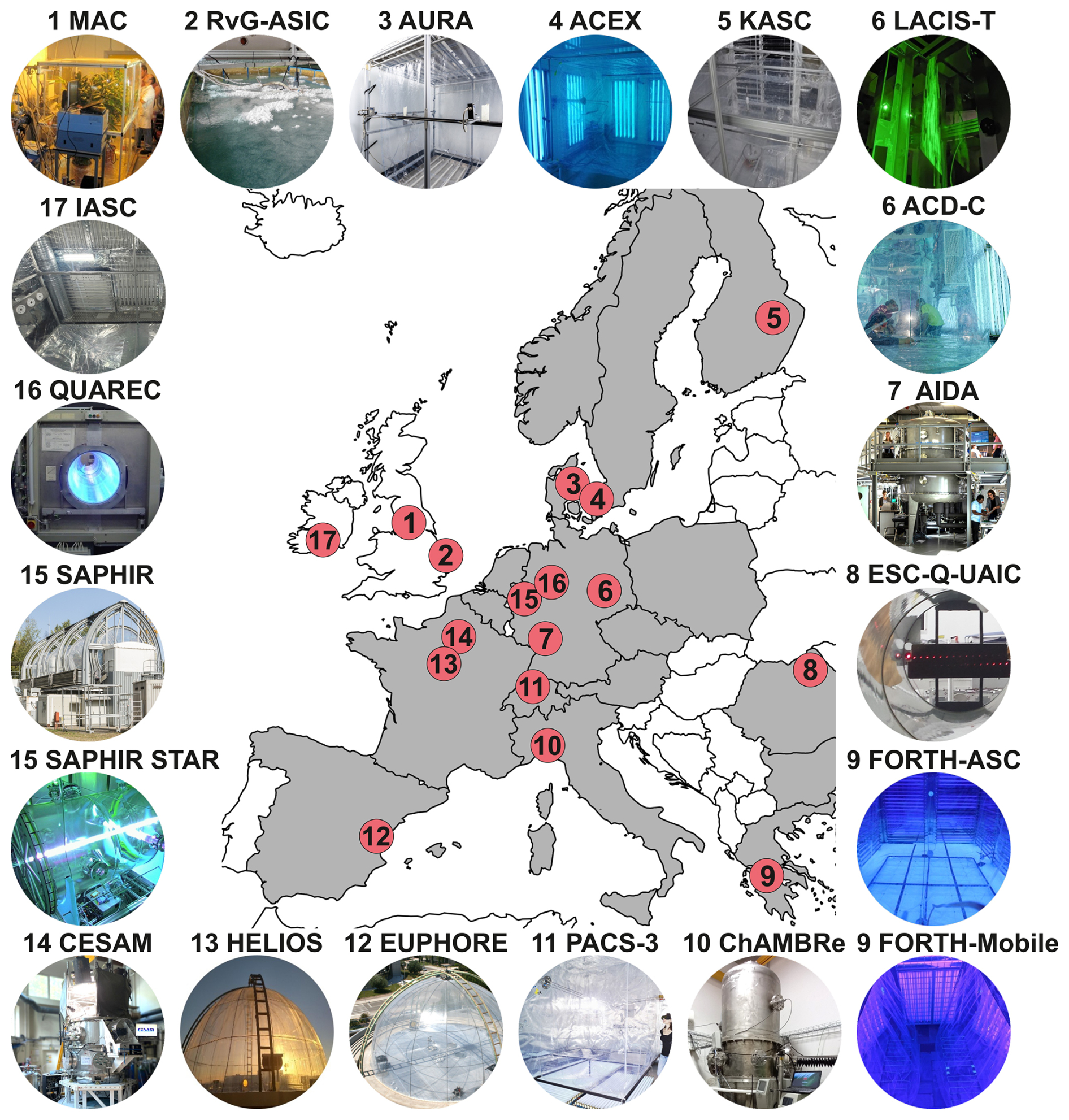
Figure 1European atmospheric simulation chambers, which are part of ACTRIS or closely connected with ACTRIS through previous projects but are in countries, which are not members of ACTRIS. ACTRIS member countries are coloured in grey.
Table 1Overview of atmospheric simulation chambers, which are ACTRIS National Facilities (NF) or closely associated with ACTRIS. Chambers using lamps or no radiation are indoor chamber and chambers using sunlight are outdoor chambers.
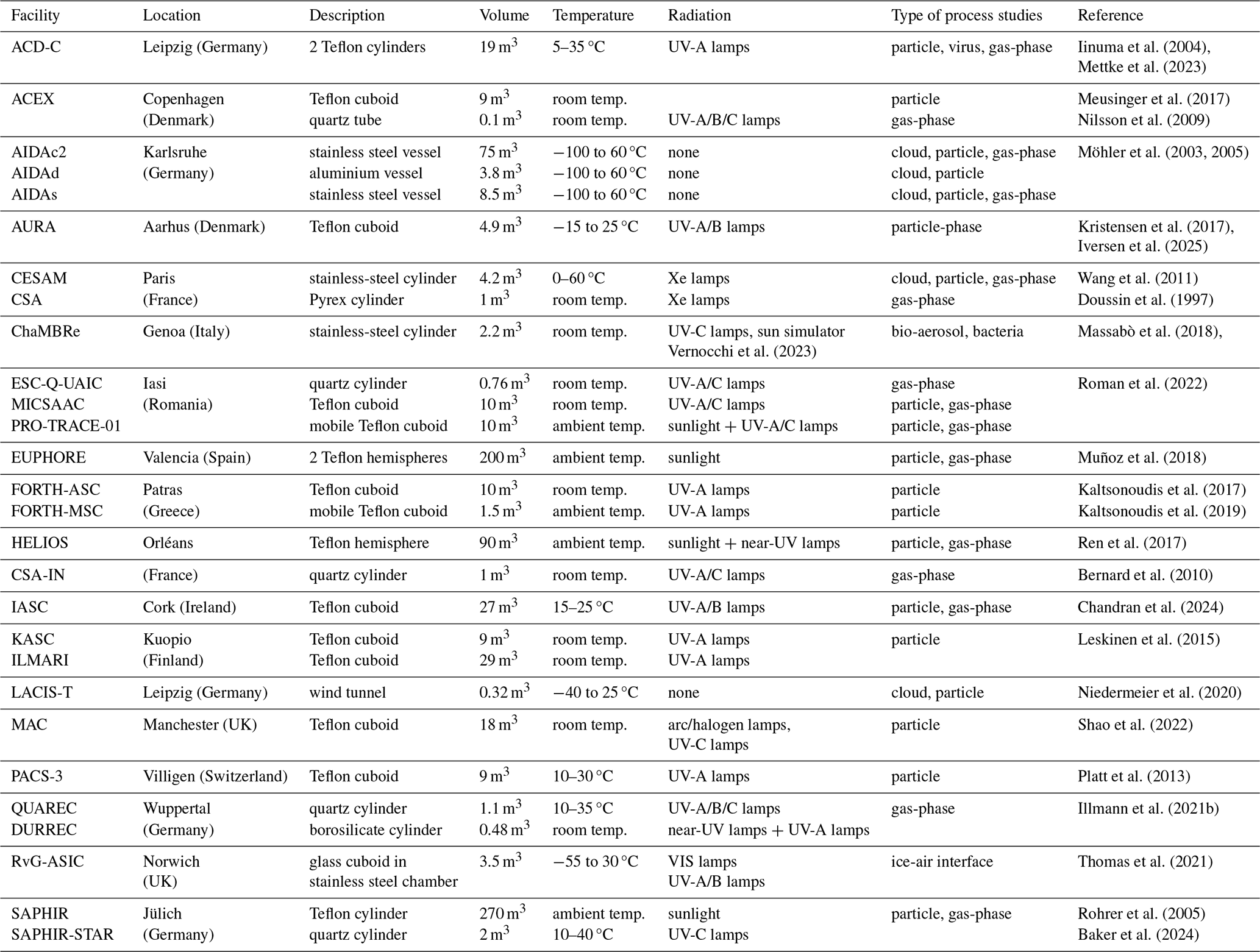
There are three outdoor chambers (EUPHORE, HELIOS, SAPHIR) which make use of natural sunlight. They are equipped with a shutter system or movable shelter to protect the chambers against bad weather but also allow experiments to be carried out in the dark even during daytime. The indoor chambers are equipped with lamps that mimic the solar spectrum or provide the required light to initiate photolysis reactions. All outdoor chambers and many indoor chambers are made of Teflon (FEP film) that is highly transparent for the entire solar spectrum. The other chambers are either made of metal or glass, so that they can be evacuated, which allows for a fast exchange of the air and removal of volatile compounds. Indoor chambers are also often housed in temperature-controlled enclosures to carry out experiments at specific and variable temperatures.
Most chambers use an air purification system for ambient air consisting of a compressor, drier, aerosol filter, and charcoal filters to produce clean air, which is free from reactive inorganic and organic species. Some chambers also use bottled zero air or produce air from high-purity liquid nitrogen and oxygen. Nearly all chambers are equipped with a stirring system to ensure homogeneous mixing of the air. Typical mixing times are in the range of a few minutes.
2.1 Instrumentation at the chambers
The interpretation of simulation chamber experiments requires precise characterisation of the physical state of the chamber. This includes temperature, relative humidity and water vapour mixing ratio as well as pressure and radiation intensity. Radiation must be continuously monitored in outdoor chambers, whereas parametrisations derived from regular characterisation experiments are often sufficient when lamps are used (Sect. 4). A large number of different instruments are used to measures the constituents in the air during chamber experiments. In most chambers, gas-phase inorganic species including ozone (O3), nitrogen oxides (NO and NO2), total reactive nitrogen oxides (NOy), and carbon monoxide (CO) are monitored as they are fundamental for understanding atmospheric chemical processes. Sulfur dioxide (SO2) is also frequently measured, and in some cases nitrous acid (HONO) (Gherman et al., 2008; Dixneuf et al., 2022), which is an important precursor for OH radicals and is released from Teflon film (Rohrer et al., 2005). For the detection of volatile organic compounds (VOCs), Proton-Transfer-Reaction Time-of-Flight Mass-Spectrometry (PTR-ToF-MS) is commonly employed. Many chambers are additionally equipped with advanced mass spectrometers using various chemical ionisation schemes. Some facilities have Fourier-transform infrared (FTIR) and tunable diode laser (TDL) spectrometers installed, which provide measurements of a wide range of inorganic and organic species. Measurements of radical species, such as hydroxyl radicals (OH) (Fuchs et al., 2011) and nitrate radicals (NO3) (Varma et al., 2009), which are two major atmospheric oxidants, are also available in some chambers.
Condensation particle counters (CPCs) and scanning mobility particle sizers (SMPS) are standard instruments used to determine number concentration and size distribution of aerosol particles. Aerosol chemical composition is most often analysed using an Aerosol Mass Spectrometer (AMS) or Chemical Ionisation Mass Spectrometers (CIMS) with specialised aerosol inlets, such as FIGAERO (Filter Inlet for Gas and Aerosols, Aerodyne) or CHARON (CHemical Analysis of aeRosol ON-line, Ionicon). The range of detectable species can be further expanded by employing different ionization methods. Filter sampling and offline analysis using various advanced methods is also often conducted to derive the chemical composition of particles. Other chambers, such as the CESAM and FORTH chambers, are equipped with instruments to measure the optical and hygroscopic properties of aerosols to retrieve their direct and indirect radiative forcing effects. Some chambers are equipped with instruments to measure ice-nucleating particles, cloud droplets, and ice crystals.
The instrumentation available at the AIDA, LACIS-T and RvG chambers differs from that at other facilities due to their specific research objectives. For cloud simulation experiments, the AIDAd and AIDAc2 chambers are equipped with special instruments to measure droplet and ice crystal number concentrations and size distributions, as well as the habit and polar scattering phase functions of ice crystals. Furthermore, specialised sampling lines and instruments are used for measuring total aerosol, interstitial aerosol, as well as droplet and ice crystal residuals. LACIS-T is specialised in experiments on the interaction between aerosols, clouds and turbulence. It is therefore equipped with instruments for the detailed characterisation of microphysical properties, as well as thermodynamic and flow conditions with high spatial and temporal resolution. The RvG-ASIC chamber focuses on experiments addressing interactions at the ice–water–atmosphere interface and, in addition to standard gas-phase instrumentation, includes instruments for characterising ice and water properties, such as water conductivity and liquid–ice volume fraction.
All chambers offer the opportunity to attach specialised additional instruments depending on the needs of the research topic. This particularly also allows users to bring their own instruments to the chambers. Some of the additional key instruments are listed in the chamber descriptions below.
2.2 ACD-C ACTRIS chamber
ACD-C (Atmospheric Chemistry Department Chamber) is a twin-chamber at the Leibniz Institute for Tropospheric Research (TROPOS) in Leipzig, Germany (Iinuma et al., 2004; Mutzel et al., 2015; Mettke et al., 2023). Studies in the ACD-C chamber focus on VOC degradation, SOA formation, particulate product identification, multiphase chemistry, and chemical processing in deliquescent particles. The cylindrical chambers are made of Teflon FEP (fluorinated ethylene propylene) film (volume: 19 m3). The top of the chamber is fixed to a movable frame that enables the chamber to collapse while air is sampled by instruments during an experiment. This enables the pressure to be kept constant and the chamber can be operated in batch mode even for high sampling rates of instruments. The chamber is enclosed in a temperature-controlled housing.
Between experiments, the chamber is constantly flushed with clean air (flow rate: 200 L min−1). To humidify the air, Milli-Q water is sprayed and evaporated in a heated part of the central inlet tube (300 °C). The Leipzig Biomass Burning Facility (LBBF) is part of ACD-C facility allowing biomass burning emissions to be transferred into the chamber. Furthermore, the laboratory security level has been recently certified (German S2 standard) to enable chamber experiments with biological agents.
Key instruments include the measurement of gas-phase organic species by mass spectrometry using different ionisation methods and by gas-chromatography. Physical and chemical properties of aerosol particles are analysed by online and offline instruments including mass spectrometers with specialised aerosol inlets (EESI, FIGAERO) and an Orbitrap detector.
2.3 ACEX chambers
The ACEX (Atmospheric Chemistry Experimental Chamber) facility was built in Copenhagen, Denmark, based on a steady-state design (King et al., 2009; Meusinger et al., 2017). It consists of a 4.5 m3 Teflon bag mounted inside a temperature-controlled, insulated room of walk-in size (Viessmann A/S). The chamber is operated in a constant flow mode using mass flow controllers for gases and a syringe pump (NE-300, New Era Pump Systems Inc.) for continuous injection and evaporation of reactants in a warmed glass bulb. The ACEX photochemical reactor is a 125 L quartz tube with multipass mirrors for FTIR spectroscopy (Nilsson et al., 2009). Other key instruments include the measurement of gas-phase species by various mass spectrometer instruments, gas-chromatography and cavity ring-down spectroscopy. Aerosol physical properties are analysed by various instruments including a cloud condensation nucleation (CCN) counter and a neutral cluster and air ion spectrometer (NAIS).
2.4 AIDA chambers
The AIDA (Aerosol Interactions and Dynamics in the Atmosphere) facility at the Karlsruhe Institute of Technology (KIT), Germany, consists of several chambers and laboratories for the study of trace gas, aerosol and cloud processes at a wide range of temperatures, pressures (from atmospheric pressure to below 1 hPa) and relative humidities (0 %–100 % with respect to liquid water above 0 °C or with respect to ice below 0 °C). The AIDA chambers can also be operated as expansion-type cloud simulation chambers to investigate cloud microphysical processes in mixed-phase and cirrus clouds (Möhler et al., 2003, 2005; Ullrich et al., 2017). Increasing relative humidities and supersaturations are achieved by controlled pumping and pressure reduction, thereby simulating the conditions for cloud formation in rising air parcels of convective or lee wave clouds.
The classic cloud simulation chamber AIDAc was in operation from 1997–2024 with a comprehensive set of trace gas, aerosol, droplet and ice crystal instruments for a variety of studies on heterogeneous chemistry (Kamm et al., 1999), aerosol optical properties (Schnaiter et al., 2005), secondary organic aerosol formation (Saathoff et al., 2009), polar stratospheric clouds (Stetzer et al., 2006), and primary ice formation processes (Möhler et al., 2005). The AIDAc chamber was made of aluminium and constructed as a vacuum vessel, which could be evacuated to below 1 hPa for both experimental and cleaning purposes. It is currently replaced by the new AIDAc2 chamber (cold and clean) which is a unique user facility for aerosol-cloud-climate research including photochemical processes and new particle formation at temperatures down to −100 °C. The AIDAc2 chamber is made of high-quality stainless steel with electro-polished inner surfaces, metal-sealed flanges and components enabling experiments to be conducted under ultra-clean conditions, low pressures, and low temperatures.
The new dynamic cloud simulation chamber AIDAd came into operation in 2020 for warm and mixed-phase cloud experiments. Its unique active wall temperature control allows for adiabatic expansion runs with well-controlled constant cooling rates between 0.1 and 10 K min−1. AIDAd can simulate convective cloud or storm conditions with updraft velocities of up to 15 m s−1.
A third chamber called AIDAs (for “service”) came into operation in 2026 as part of the ACTRIS Centre for Cloud In Situ Measurements (CIS). This facility will mainly be used for instrument calibration, training, and innovative method developments for in situ measurements of ice-nucleating particles, cloud droplets and ice crystals, as well as cloud water chemistry. These activities are key responsibilities of CIS as part of the pan-European Aerosol, Clouds and Trace Gases Research Infrastructure ACTRIS.
2.5 AURA chamber
AURA (Aarhus University Research on Aerosols) is a cuboid FEP Teflon chamber () at Aarhus University, Denmark (Kristensen et al., 2017; Iversen et al., 2025). AURA is used for simulations of aerosol formation and ageing. The chamber bag is inside a temperature controlled room, allowing also for temperature ramps during an experiment (Jensen et al., 2021). Five sensors around the chamber monitor the temperature. The cold room is inside an air-conditioned laboratory providing stable conditions for the instrumentation coupled to AURA. The relative humidity of the air can be controlled. The AURA chamber can be either operated with and without a replenishment flow to compensate for the air consumption of instruments. Seed particles can be introduced into AURA from using standard atomizers, custom made sea spray simulation tanks for aerosol generation mediated by bubbles (King et al., 2012; Christiansen et al., 2019), and a combustion chamber designed for candles (Rasmussen et al., 2021).
Organic gas-phase species can be measured by gas-chromatography and a PTR-ToF-MS instrument, which is also equipped with an CHARON inlet for the analysis of aerosol chemical composition. Different types of filter samples can be acquired, e.g., for off-line chemical analysis or electron microscopy. In addition, aerosol physical properties are analysed including their hygroscopicity.
2.6 CESAM chamber
The CESAM facility at the Laboratoire Interuniversitaire des Systèmes Atmosphériques (LISA) consists of two chambers (CESAM and CSA). They are used for gas-phase photochemistry and multiphase chemistry studies involving gaseous trace species, organic particles, water droplets, mineral dust, soot, and salts. In addition, living organism can be exposed to pollution for determining health impacts. Cloud events can also be simulated in CESAM.
The CESAM chamber (Chambre de Simulation Atmosphèrique Multiphasique) is a stainless-steel reactor with a volume of 4.2 m3, which can be evacuated to a few 10−4 hPa and can be temperature controlled (Wang et al., 2011). Due to the very low level of electrostatic charges on its walls, the aerosol lifetime in CESAM is very long (up to 4 d for 200 nm diameter particles, Lamkaddam et al., 2017) enabling the study of aerosol ageing processes and their impact on aerosol properties, such as their chemical composition, optical absorption, and scattering and hygroscopic properties (e.g., Denjean et al., 2015; Di Biagio et al., 2019; De Haan et al., 2019; Battaglia et al., 2025).
The second chamber, CSA, is dedicated to atmospheric gas-phase process studies and spectroscopic studies (Doussin et al., 1997; Fouqueau et al., 2020). It is a 1 m3 Pyrex reactor complementing the steel chamber. It can be evacuated to a few 10−3 hPa and is currently being updated to be equipped with high-pressure Xenon lamps. The CSA chamber is well suited to investigate kinetics and chemical mechanisms governing the day- and nighttime degradation of organic pollutants (e.g., Picquet-Varrault et al., 2022; Harb et al., 2025).
Various instruments at these chambers measure gas-phase species including nighttime oxidants (NO3) and its reservoir species dinitrogen pentoxide (N2O5). VOCs are measured using FT-IR/UV-VIS spectroscopy, cavity-based absorption spectroscopy and various mass spectrometer instruments. A focus of the analysis of particles is on their optical properties, hygroscopicity and their chemical composition, which are measured using online and offline instruments.
2.7 ChAMBRe chamber
ChAMBRe (Chamber for Aerosol Modelling and Bio-aerosol Research) at the National Institute of Nuclear Physics in Genoa (Italy) is managed in collaboration with the Environmental Physics Laboratory at the Physics Department of the University of Genoa. The main focus is on bioaerosol research (Massabò et al., 2018), but it can also be used for various other purposes (Danelli et al., 2021; Abd El et al., 2023; Vernocchi et al., 2023; Gatta et al., 2025), such as the investigation of carbonaceous aerosols (Vernocchi et al., 2022; Isolabella et al., 2023, 2025; Danelli et al., 2025), and studies on vegetable applications (Bosio et al., 2025) and aged aerosol for determining their oxidative potential and toxicity (Vernocchi et al., 2025). Key instruments include aerosol particle sizer (APS), aerosol mass spectrometer (ACMS) and instruments for the measurement of aerosol optical properties.
ChAMBRe is a stainless steel cylinder (volume: 2.2 m3, diameter: 2.9 m, maximum height: 2.9 m). On the side, a smaller horizontal cylinder is connected to the main volume through a pneumatic valve. This volume contains a semi-automatic, movable shelf that allows the insertion of samples into the chamber. The particle lifetime ranges from a few hours to about 1 d depending on the particle size.
2.8 ESC-Q-UAIC chambers
The ESC-Q-UAIC (Environmental Simulation Chamber-made by Quartz from the University Alexandru Ioan Cuza in Iasi) chamber is part of the Integrated Centre of Environmental Science Studies in the North-Eastern Development Region (CERNESIM) located in Iasi, Romania (Roman et al., 2022). Research at this facility focuses on gas-phase reaction kinetics and studies of gas-phase reaction oxidation products. The chamber consists of three quartz glass tubes with a total length of 4.2 m and an inner diameter of 0.48 m. The tubes are sealed with Teflon-coated aluminium flanges at both ends and are supported by a metal frame. The chamber can be evacuated to a pressure of . The ESC-Q-UAIC chamber operates in a temperature-controlled environment.
The facility also includes two complementary Teflon chambers, each with a volume of approximately 10 m3. They are part of the Laboratory of Applied Chemistry in Atmospheric Aerosol Science (RA-01) at the RECENT AIR Centre. The MICSAAC chamber (Medium Isobaric Chamber for Atmospheric Chemistry Simulation and Analysis) is designed for controlled laboratory studies of aerosol formation, multiphase chemical reactions, reaction kinetics, and the evolution of aerosol properties from diverse sources (e.g., engine combustion and industrial emissions). Its versatility also enables the testing of photocatalytic depolluting materials and the study of the photodegradation of agricultural products such as pesticides. The second Teflon chamber, PRO-TRACE-01, is Romania's first mobile atmospheric simulation chamber dedicated to in situ investigations of secondary organic aerosol formation. This 10 m3 chamber is mounted on a mobile platform, enabling real-time measurements directly in the field.
2.9 EUPHORE chamber
EUPHORE (European Photoreactor) at the CEAM Foundation in Valencia, Spain, consists of two outdoor half-spherical chambers each having a volume of 200 m3 (Becker, 1986; Muñoz et al., 2011) The large size and the use of natural light enable atmospheric studies of chemical processes under near-real conditions. The chambers are made of FEP Teflon film. The chambers have retractable covers that protect them and allow for experiments to be carried out in darkness and with ambient light exposure. To prevent significant heating of the air from solar radiation, the bottom of the chamber is cooled by refrigeration systems. The pressure is kept approximately at 100 Pa above ambient pressure.
In addition to single-compound experiments, the facility allows the introduction of complex emission mixtures (e.g., biomass burning or car exhaust) as well as VOCs with relatively low vapour pressures (e.g., pesticides), using dedicated injection and conditioning procedures. The high volume of EUPHORE allows the installation and test of depolluting or reactive materials.
EUPHORE is equipped with a wide range of analytical instruments for the chemical characterization of gases and aerosols, including the measurement of radicals (OH, HO2). These include different monitors, optical systems, chromatographic techniques, mass spectrometers, particulate matter instruments and systems to monitor physical parameters and optical aerosol properties. Both well-established and state-of-the-art techniques are used, notably PTR-ToF-MS, API-ToF-CIMS, ToF-ACSM-X, aethalometer, and a total carbon analyser.
2.10 FORTH chambers
The FORTH facility includes an indoor chamber (FORTH-ASC) and a mobile chamber (FORTH-MSC). FORTH-ASC is a Teflon chamber at the Foundation for Research and Technology Hellas, Institute of Chemical Engineering Sciences (FORTH/ICE-HT) in Patras, Greece (Kaltsonoudis et al., 2017). It is a 10 m3 () reactor located in a temperature-controlled room with walls covered with UV lights. One of the characteristic features of FORTH-ASC is its direct connection to a variety of emission sources (wood stove, pellet stove, diesel generator, gasoline engine, barbecue, etc.) located in a laboratory underneath the facility. The corresponding emissions can be diluted, cooled, and can be injected into the chamber.
The FORTH-MSC is a mobile chamber facility designed to study atmospheric processes using ambient air from the location, where the chamber is placed (Kaltsonoudis et al., 2019; Jorga et al., 2021). Its default configuration includes 2 PTFE (polytetrafluoroethylene) chambers (volume: 1.5 m3) surrounded in a hemispherical arrangement by 60 UV light lamps. One chamber is used for the experiment and the second acts as reference. The chambers and the UV light structure is protected from weather by a custom-built tent. When weather conditions allow it, the top of the tent can be removed in order to use natural sunlight for experiments. Static charge elimination for the chambers is performed periodically using specialised fans (ionising air blower, model SL-001) minimizing particle wall losses. Sampling is performed alternatively between the 2 chambers prolonging the duration of an experiment of up to 4 h.
VOCs are measured by mass spectrometry as well as off-line gas chromatography (GC). An VOC mass spectrometry instrument is also equipped with an aerosol inlet to analyse their chemical composition. In addition, particles are analysed using various instruments including an AMS and instruments, measuring their optical properties.
2.11 HELIOS chambers
HELIOS (cHambrE de simuLation atmosphérique à Irradiation naturel d'OrléanS) is a highly instrumented outdoor atmospheric simulation chamber in Orléans, France (Ren et al., 2017, 2020). The HELIOS chamber is a 90 m3 single-walled hemispheric volume constructed of FEP Teflon foil. Almost all wetted surfaces are of FEP foil, Teflon coated, or made of PTFE. Two hatches located at the chamber base allow access of personnel. The chamber is covered by a moveable shelter that is retracted when sunlight is required. The interior of this shelter is lined with 49 near-UV lamps, providing actinic-like radiation. Two compressors provide a constant zero air gas supply. A second indoor chamber facility (FEP Teflon, 7.3 m3) is part of the HELIOS facility, and can be interfaced with the same set of instruments.
Various mass spectrometer instruments analyse organic compounds in the gas-phase and in particles at the HELIOS facility. In addition, FT-IR and cavity-based absorption instruments are available which also measure the nighttime oxidant NO3 and its reservoir species N2O5.
2.12 IASC chamber
The Irish Atmospheric Simulation Chamber (IASC) at University College Cork in Ireland is used to investigate atmospheric oxidation reactions and kinetic studies and also serves as a testbed for development and evaluation of new atmospheric measurement techniques (Chandran et al., 2024). The chamber is a 27 m3 cuboid () made of FEP Teflon foil attached to an aluminium frame. The chamber and frame are situated inside an air-conditioned enclosure. Under the frame there are two inflatable platforms that, when inflated act as a floor for the chamber, when deflated enable thermalised air to circulate all around the cuboid. The two longer side walls of the housing are fitted with UV-A and UV-B broadband lamps. The internal surface of the enclosure is covered in a highly reflective foil (Mylar C3 ADF) to maximise the UV photon flux in the chamber. The chamber is typically operated at a pressure of 10 Pa over ambient. Between experiments, the chamber is generally flushed permanently at 1000 L min−1.
Apart from commercial instruments for trace gas and aerosol detection, the chamber is equipped with 10 optical ports which enable custom-made open path cavity enhanced absorption measurements of several relevant atmospheric species.
2.13 KASC chambers
The KASCs (Kuopio Atmospheric Simulation Chambers) facility at Kuopio, Finland, consists of the ILMARI infrastructure and the KASC1 chamber. ILMARI offers possibilities for studies on emissions and aerosol particles, their atmospheric effects and toxicological properties. It is a collapsible FEP Teflon chamber (volume 29 m3), which is attached to a moving top frame (Leskinen et al., 2015). The pressure inside the chamber can be controlled by adding or removing extra weights on the moving top frame. The overpressure inside the full chamber is around 10 Pa. Two arrays of blacklight lamps can be switched on in different combinations. The chamber is situated in a temperature-controlled room.
The laboratory is equipped with various biomass combustion appliances and reactors, chassis dynamometer for light duty vehicles, and nanoparticle reactors. The biomass combustion appliances include an open burning setup mimicking wildfires, stoves, pellet burners and a grate combustion reactor. The emissions can be diluted before being injected into the chamber. In addition, the laboratory is equipped with a high-volume photochemical oxidation flow reactor (PEAR). Living cells (air–liquid interface cell exposure system) and animals (exposure chamber) can be exposed to both fresh and aged emissions from different source, in order to study health-related toxicological responses.
The KASC1 chamber is similar to the ILMARI chamber but smaller (9 m3) and is also located in a temperature-controlled room. There are two arrays of blacklight lamps. The KASC1 chamber is mainly used for process studies on biogenic emissions and is often used for experiments using VOC emissions from real plants.
Various mass spectrometers partly equipped with aerosol inlets measure organic compounds. In addition, key aerosol instruments analyse their optical properties.
2.14 LACIS-T chamber
LACIS-T (turbulent Leipzig Aerosol Cloud Interaction Simulator, Niedermeier et al., 2020) is a turbulent moist-air, closed-loop wind tunnel at the Leibniz Institute for Tropospheric Research (TROPOS) in Leipzig, Germany. Experiments in LACIS-T are ideal to study the interactions between turbulence and cloud microphysical processes. In LACIS-T, three conditioned air flows (2 particle-free, 1 containing aerosol) are turbulently mixed (using an active turbulence grid) in the measurement section, which is a stainless-steel cuboid (). The flow rate (mean velocity between 0.5 and 2 m s−1), temperature (−40 to 25 °C) and humidity (dew point between −40 and 25 °C) of the two particle-free flows can be separately controlled. The aerosol flow, which contains size-selected, quasi monodisperse aerosol particles of known chemical composition, is fed into the mixing zone of the two particle-free air flows. Due to this procedure, microphysical processes such as particle deliquescence (Niedermeier et al., 2025), droplet formation and growth (Niedermeier et al., 2020) and ice crystal formation can be studied in a turbulent environment with defined temperature and saturation fluctuations. In addition, experiments studying cloud entrainment and mixing can be conducted (Frey et al., 2025). After having passed the measurement section, the entire flow is dried and heated via an adsorption dehumidifying system, cleared from particles via two particle filters and eventually re-used.
LACIS-T is specialised in aerosol and cloud experiments in a turbulent environment and is therefore equipped with instruments for detailed characterisation of cloud microphysics.
2.15 MAC chamber
The Manchester Aerosol Chamber (MAC, Shao et al., 2022) at University of Manchester, UK, has been designed to investigate atmospheric processes and the climate and toxicological impacts of air pollutants. The chamber is an 18 m3 collapsible FEP Teflon cuboid (), supported by a central fixed frame and counter-weighted upper and lower frames and surrounded by an air-conditioned housing. A suite of lamps provides simulated solar irradiation that mimics closely the ambient actinic flux spectrum.
The facility has a wide range of ancillary components for injection of pollutants, including electro pneumatically valve-controlled large-bore inlets for automated injection from real pollutant sources (wood-burning stove, dynamometer with a range of engines, compressors and generators, cooking chamber, etc.). MAC can be connected to a variety of devices for investigation of health impacts, including cell exposures (using a Vitrocell continuous-flow air–liquid interface system) and human exposures under clinical trial conditions.
Specialised mass spectrometers using various ionisation methods analyse organic compounds in the gas- and particle phase. In addition, aerosol properties are analysed in detail including their size distribution and hygroscopicity.
2.16 PACS-3 chamber
PACS-3 (PSI Atmospheric Chemistry Simulation chamber) is a 9 m3 collapsable chamber made of FEP Teflon at the Paul-Scherrer Insitute in Villigen, Switzerland. The chamber is located in a temperature-controlled shipping container (Platt et al., 2013). Blacklights are present to simulate sunlight and are either used to investigate photolysis reactions in the aerosol phase or to photolyse HONO to produce OH radicals. The facility specializes in investigating complex emissions from various sources and is equipped with a burning platform that can be used to study various complex emission sources including emissions from residential wood stoves and open burning processes, cooking emissions, and idling emissions from vehicles. The burning platform can direct the emissions into the chamber via an injection diluter providing either a 10 or 100-fold dilution. The burning emissions can also be stripped of either a majority (>90 %) of the gaseous emissions via charcoal denuders or removing the primary aerosol emissions via HEPA (High-Efficiency Particulate Air) filters.
Organic compounds in the gas- and particle phase are measured using mass spectrometer instruments with different ionisation methods and aerosol inlets (e.g., EESI inlet).
2.17 QUAREC chambers
The QUAREC facility at University of Wuppertal, Germany, consists of two glass chambers (QUAREC ASC and DURREC) originally constructed to study gas-phase oxidation reactions (Barnes et al., 1994; Illmann et al., 2021b). A large-volume indoor Teflon chamber (WUTASC) is currently under construction to complement the experimental capabilities.
The QUAREC (QUArtz REaCtor) chamber comprises two joint cylindrical quartz glass tubes (total length: 6.2 m, inner diameter: 0.47 m, volume: 1.080 m3). At both ends, it is sealed by metal flanges coated with vitreous enamel. The glass tube is surrounded by eight boxes, whose inner surface is coated with reflective steel sheets. These boxes contain up to 64 lamps, which can be switched on in pairs. The glass tube is part of a temperature-controlled enclosure. Experiments can be carried out at pressures between 100 and 1000 hPa. The glass tube is kept at a pressure of 10−4 hPa when no experiment is performed.
DURREC is a borosilicate glass tube with a volume of 480 L surrounded by 32 fluorescent lamps. The pumping system consists of a rotary vane pump and a root pump for evacuating the chamber to a pressure of about 10−3 hPa.
Measurements at QUAREC focus on the detection of gas-phase species using absorption spectrometers (e.g., FT-IR), mass spectrometry and GC-GC mass spectrometry instruments.
2.18 Roland von Glasow Air–Sea–Ice chamber (RvG-ASIC)
The Roland von Glasow Air–Sea–Ice Chamber (RvG-ASIC) is a coupled atmosphere–ocean–sea–ice simulation chamber at the University of East Anglia (UEA), UK, designed to investigate the role of first-year sea–ice in tropospheric chemistry. The temperature of the chamber can be controlled between −55 and +30 °C, with a stability of ±0.3 °C (Thomas et al., 2021). The chamber can also be run in ocean–atmosphere mode, snow-atmosphere mode (no liquid water) or in dry mode for purely atmospheric investigations. It thus provides a platform for multi-disciplinary experiments on physical, chemical and biological interactions between atmosphere, ocean, ice, and snow. The chamber comprises a glass water tank (, volume: 3.5 m3) with a removable FEP film-enclosed volume above ( (0.1–1 m), volume: 0.3–3.3 m3). The water tank is equipped with a heating system and a circulation pump. Controlled illumination is provided by sun-simulating LED bands.
Instruments focus on characterizing ice and water properties, such as water conductivity and liquid–ice volume fraction, but also standard instruments for the measurement of gas-phase species are available.
2.19 SAPHIR chambers
The SAPHIR facility at Forschungszentrum Jülich, Germany, includes 2 chambers: The large outdoor SAPHIR chamber and the smaller indoor SAPHIR-STAR chamber. The scientific focus of experiments is on understanding the chemical transformation of gas-phase and aerosol species. SAPHIR is a double-wall cylindrical chamber made of FEP Teflon film (length: 18 m, diameter: 5 m, volume: 270 m3), which is equipped with a shutter system that allows experiments to be carried out under natural sunlight conditions or in the dark (Bohn and Zilken, 2005; Fuchs et al., 2013). To prevent contamination of the air inside the chamber with ambient air through microleaks or diffusion, the pressure in SAPHIR is slightly higher than ambient pressure (25 Pa) and the volume between the 2 chamber films is permanently flushed with ultra-pure nitrogen. The high cleanliness and minimum wall effects allow to perform experiments at ambient concentrations of trace gases and chemical reactions times that are typical for the real atmosphere.
The SAPHIR facility includes a plant chamber (SAPHIR-PLUS), which enables emissions from up to six trees to be transferred into the outdoor chamber (Hohaus et al., 2016). The trees are housed in a Teflon bag inside a temperature-controlled ship container with an illumination system that mimics natural sunlight. In addition to experiments with tree emissions, experiments can be conducted with ambient air in SAPHIR by sampling it through an inlet line that this mounted on a 50 m-high tower.
The second chamber, SAPHIR-STAR, is a constantly stirred tank glass reactor of cylindrical shape (length: 2.5 m, inner diameter: 1 m, volume: 2 m3) with a typically residence time of air of 1 h (Baker et al., 2024). It is housed in a temperature-controlled room. UV-C lamps mounted in a quartz glass tube along the central axis of the glass reactor.
Instruments at the SAPHIR chamber include several mass spectrometer instruments using various ionisation methods and inlets, for example to separate gas-phase species by gas-chromatography and to analyse the chemical composition of particles (EESI, CHARON inlets). In addition, gas-chromatography detects gas-phase species. Radicals including OH, HO2, and RO2 are measured by laser-induced fluorescence. Measurement of OH reactivity, the inverse lifetime of the OH radical (Fuchs et al., 2017), complements the measurement of reactive species.
A comprehensive suite of activities can be carried out in chambers to advance the understanding of atmospheric processes. Studies aim at supporting cutting-edge research, fostering technological innovation, and enhancing professional skills in atmospheric science (Laj et al., 2024). They include (i) experimental campaigns to conduct curiosity driven research, (ii) innovation services to support the development, testing and validation of new atmospheric monitoring technologies and analytical methodologies, and (iii) training activities to build human capacity of researchers, students, and professionals through workshops, courses, and hands-on sessions.
Table 2Links between chamber characteristics and types of experiments that can be carried out in the chambers.
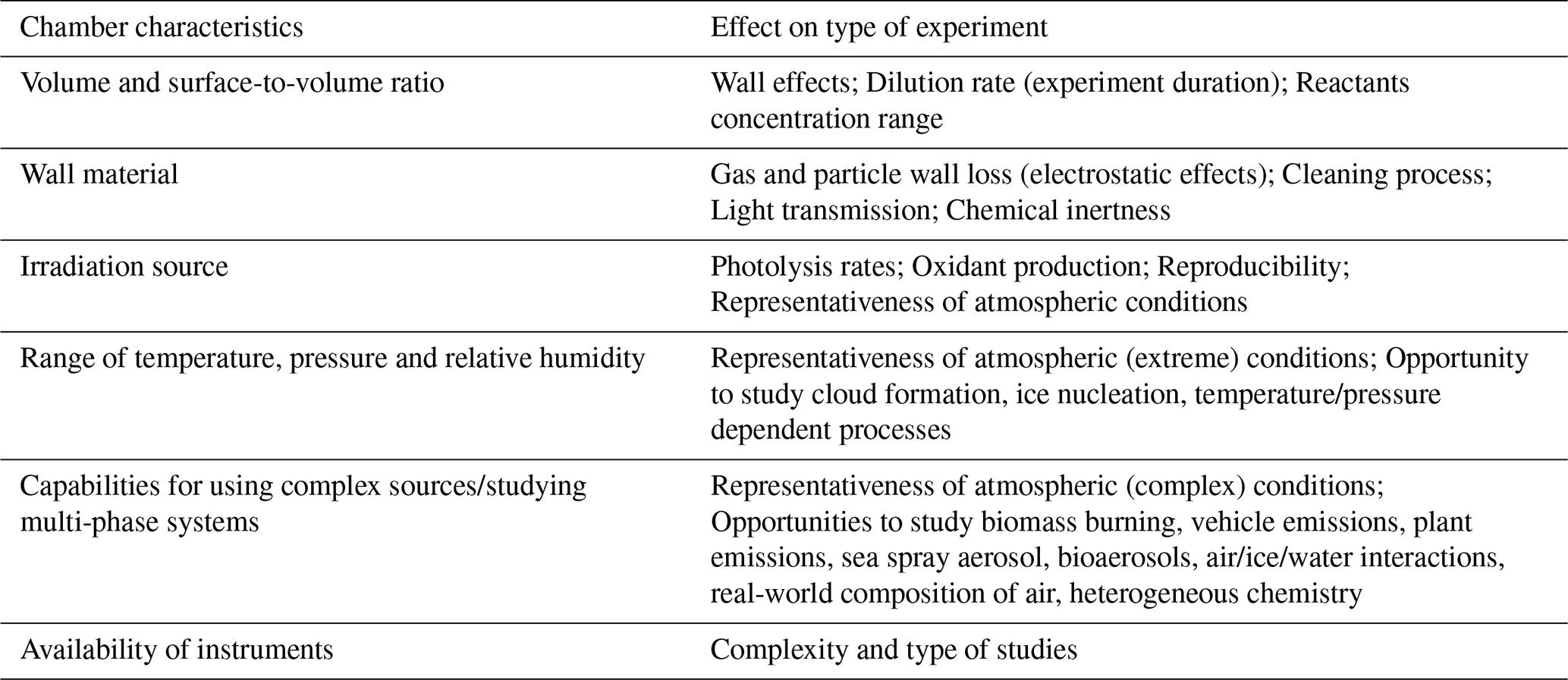
Research to understand atmospheric processes is the main focus of most chambers as they allow for studies under controlled and well-defined conditions. A wide range of research questions can be addressed making partly use of specific properties of the chamber (Table 2): the chemical transformation of gas-phase species (Fuchs et al., 2013; Muñoz et al., 2014; Picquet-Varrault et al., 2022; Illmann et al., 2023; Wang et al., 2025), the formation or chemical ageing of particles (Mutzel et al., 2015; Ye et al., 2021; Rosati et al., 2021; Poulain et al., 2022; Harb et al., 2025; Battaglia et al., 2025), the role of aerosol particles as cloud condensation nuclei (Frosch et al., 2011; Zhao et al., 2016; Bouzidi et al., 2022; Wang et al., 2022), ice-nucleating particles (Wagner et al., 2020; Schneider et al., 2021), and the influence of particles on the Earth's radiative balance (Di Biagio et al., 2017; Baldo et al., 2023) and on human health (Guilloteau et al., 2022; Faherty et al., 2024). In addition, chambers can be employed for bioaerosol research (Kappelt et al., 2021; Crawford et al., 2023; Vernocchi et al., 2023; Agarwal et al., 2024; Gatta et al., 2025; Mohamadi Nasrabadi et al., 2025).
These types of research can be conducted in most ACTRIS chambers as they require mainly a reaction volume. The level of reactants used in the different chambers may differ as effects on observables from the atmospheric processes should be larger than effects from the chamber itself (for example dilution, wall interactions). The type of chamber wall affects the loss rates for different atmospheric constituents. Whereas Teflon is often preferred to minimise gas-phase loss of species, the loss rate of particles is smaller on metal surface than on Teflon.
Smaller chambers with volumes of a few m3 and dilution rates of several percent per hour often require higher-than-ambient levels of reactants to build up sufficiently high concentrations of products in the gas and/or aerosol phase. This is either because the process timescale mainly covers the formation of first-generation products, or because higher-than-ambient oxidant and/or reactant concentrations accelerate the process rate. In contrast, larger chambers with volumes of up to several 100 m3 can often work with low, ambient-like reactant concentrations, enabling studies at process timescales of up to several days. Many chambers have extended their capabilities to work with realistic mixtures of emissions (Sect. 6.4).
The emission spectrum of lamps or use of sunlight clearly affects the strength and type of photolytic processes that can be observed. Reactive nitrogen species as well as small oxygenated organic compounds can be emitted, and low-volatile product species and particles can be lost on the chamber walls. This can be a challenge for studying atmospheric conditions as it can alter the distribution of products and the chemical composition of particles. Chambers are often custom-designed for specific research due to the availability of suitable instrumentation and/or the expertise required to conduct specific types of experiments.
While the range of conditions and scientific questions that can be studied in a specific chamber is limited, the specialisation and expertise associated with these limitations can also be considered a strength. Integrating European chambers with a diverse scientific focus into ACTRIS ensures that users are guided towards the chamber best suited to answering their scientific question.
Research in some chambers has a specific focus on other atmospheric aspects, e.g. aerosol and cloud processes in turbulent and non-turbulent environments such as aerosol particle deliquescence (Niedermeier et al., 2025), droplet formation and growth (Svensson et al., 2009; Niedermeier et al., 2020), as well as of ice crystal formation, formation of polar stratospheric clouds (Wagner et al., 2023), the in-cloud transformation of organic matter (Brégonzio-Rozier et al., 2016; Giorio et al., 2017), processes at the air–sea interface (Ickes et al., 2020) as well as the cryosphere–atmosphere interface (Garnett et al., 2021; Thomas et al., 2021). The study of these research questions requires specific designs of the chambers. More details of research in simulation chambers are discussed in Sect. 6.
Training activities at the chambers include training how to use chambers, how to calibrate instruments, and how to interpret data. These activities also help to build capacity for future atmospheric research. For instance, the ACTRIS OrGanic Tracers and Aerosol Constituents – Calibration Centre (OGTAC-CC), which is part of the ACTRIS Center for Aerosol In Situ – European Center for Aerosol Calibration and Characterization (CAIS-ECAC) provides insights into chamber experiments in the ACD-C chamber during their hands-on training workshops held as part of the calibration centre's activities. Additionally, the ACTRIS Centre for Trace Gases in situ measurements (CiGAS) has a laboratory underneath the SAPHIR chamber to make use of the chamber for quality assurance of instruments and training on their use. The new AIDAs chamber as well as a cold room underneath the AIDAc2 will enable innovative developments, and the comparison and calibration of instruments for cloud droplets and ice crystals, in close collaboration with the ACTRIS Centre for Cloud In Situ Measurements (CIS).
4.1 Quality assurance workflow and ACTRIS label
The ACTRIS research infrastructure aims to provide harmonised quality standards for measurements and data of short-lived atmospheric constituents. For monitoring stations (ACTRIS Observational Platforms), this means a pre-defined set of minimum instrumentation, standard operation and data processing procedures as well as regular instrument calibrations provided by the calibration centres (ACTRIS Topical Centres). In addition, scheduled or continuous provision of measurement data to the ACTRIS Data Centre is required (Laj et al., 2024). For simulation chambers, however, a major part of the quality assurance focuses on the ways in which experiments are performed, whereas requirements on the instruments depend on the research topic and the conditions during the experiment. Where feasible, the same guidelines and calibration procedures apply for those types of instruments covered by the service portfolio of the ACTRIS Topical Centres. However, chamber experiments typically require many additional instruments, for which quality assurance needs to be ensured at the chamber facility.
There are also several quality assurance aspects related to the chambers and their characterisation. These include: (1) knowledge and characterisation of potential chamber effects and of physical properties, both of which are needed for the interpretation of the experiments, (2) appropriate preparation of the chamber before the experiment is performed, (3) accurate execution and documentation of the experiment, (4) quality assurance and control of instruments not serviced by the ACTRIS Topical Centres. Evaluations are repeated at regular intervals. The quality assurance framework is presented in Fig. 2.
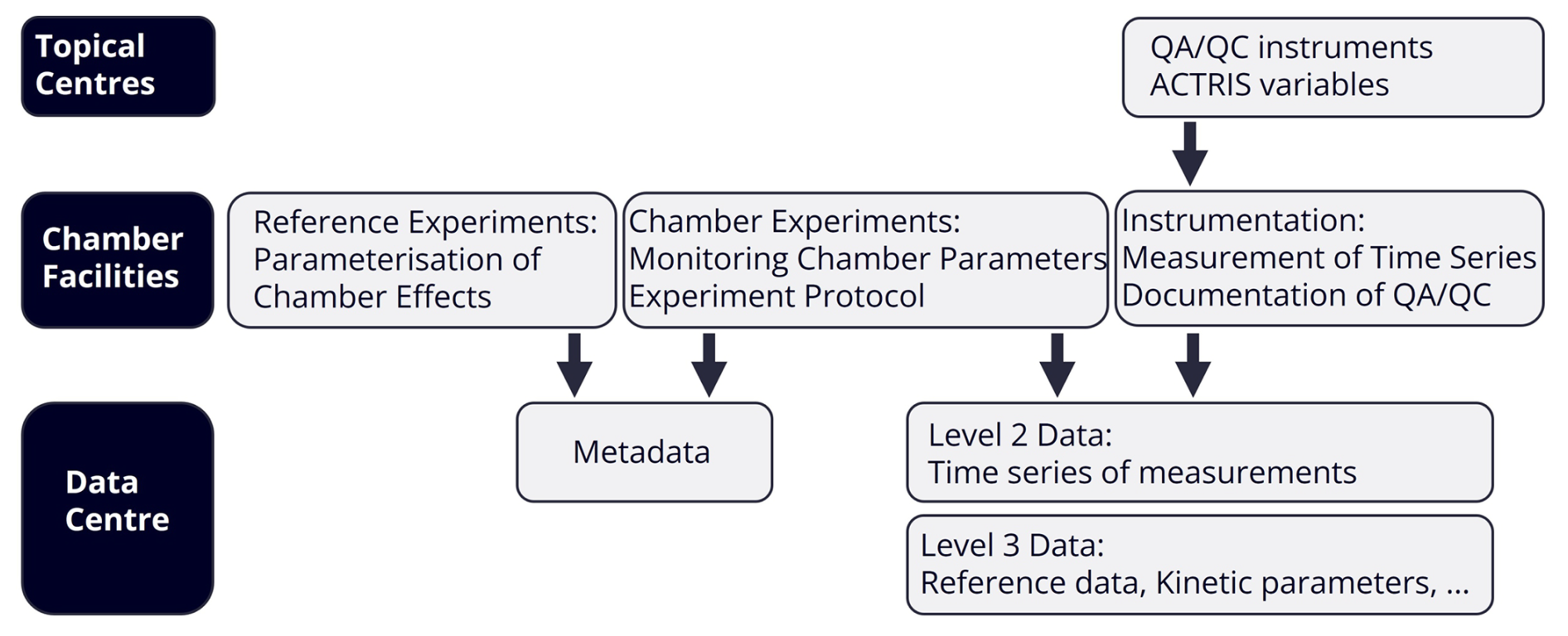
Figure 2Workflow of quality assurance of experiments in the ACTRIS simulation chambers. The ACTRIS Topical Centres are responsible for the quality assurance of measurements that are serviced by them. The chamber facilities are responsible for all other measurements and the quality assurance of experiments. Documentation of the experiments (metadata) and time series of quality-assured data is available from the Data Centre.
The requirements for the ACTRIS National Facility label for simulation chambers are:
-
Carrying out chamber experiments according to the quality standards described below.
-
Fulfilling the quality standards for instruments serviced by the ACTRIS Topical Centres.
-
Providing documentation for the quality control of instruments that are not serviced by ACTRIS Topical Centres.
-
Providing data to the ACTRIS Data Centre for simulation chambers and fulfilling the FAIRness data standards required by the Data Centre.
-
Providing users with access to the chamber and the data generated from the chamber experiments.
The ACTRIS Atmospheric Simulation Chamber Committee (ASCC) evaluates whether a chamber fulfils all the necessary requirements. The ACTRIS Topical Centres decides whether the quality assurance of the instruments they service is sufficient, and the ACTRIS Service Access Management Unit (SAMU) evaluates the chamber's access capacity (Sect. 5). The overall result is a report on the level of compliance with the standards set out for the ACTRIS National Facility label, containing recommendations for any required improvements (Laj et al., 2024).
4.2 Chamber effects and physical properties
ACTRIS simulation chambers require regular characterisation of the physical properties and chamber effects (Fig. 3). The results should be made available alongside data from experiments in the ACTRIS Data Centre so that chamber effects can be accurately considered, when data are re-used. The monitored physical properties typically include temperature, pressure, dilution rates and intensity and spectrum of the radiation from sunlight or lamps (e.g, photolysis frequencies). The range of temperature and pressure varies between the chambers, as does the accuracy and precision required. Standard sensors such as Pt100 sensors for temperature measurements and capacitance manometers for pressure measurements are most commonly used. They need to be placed at representative locations in the chamber.
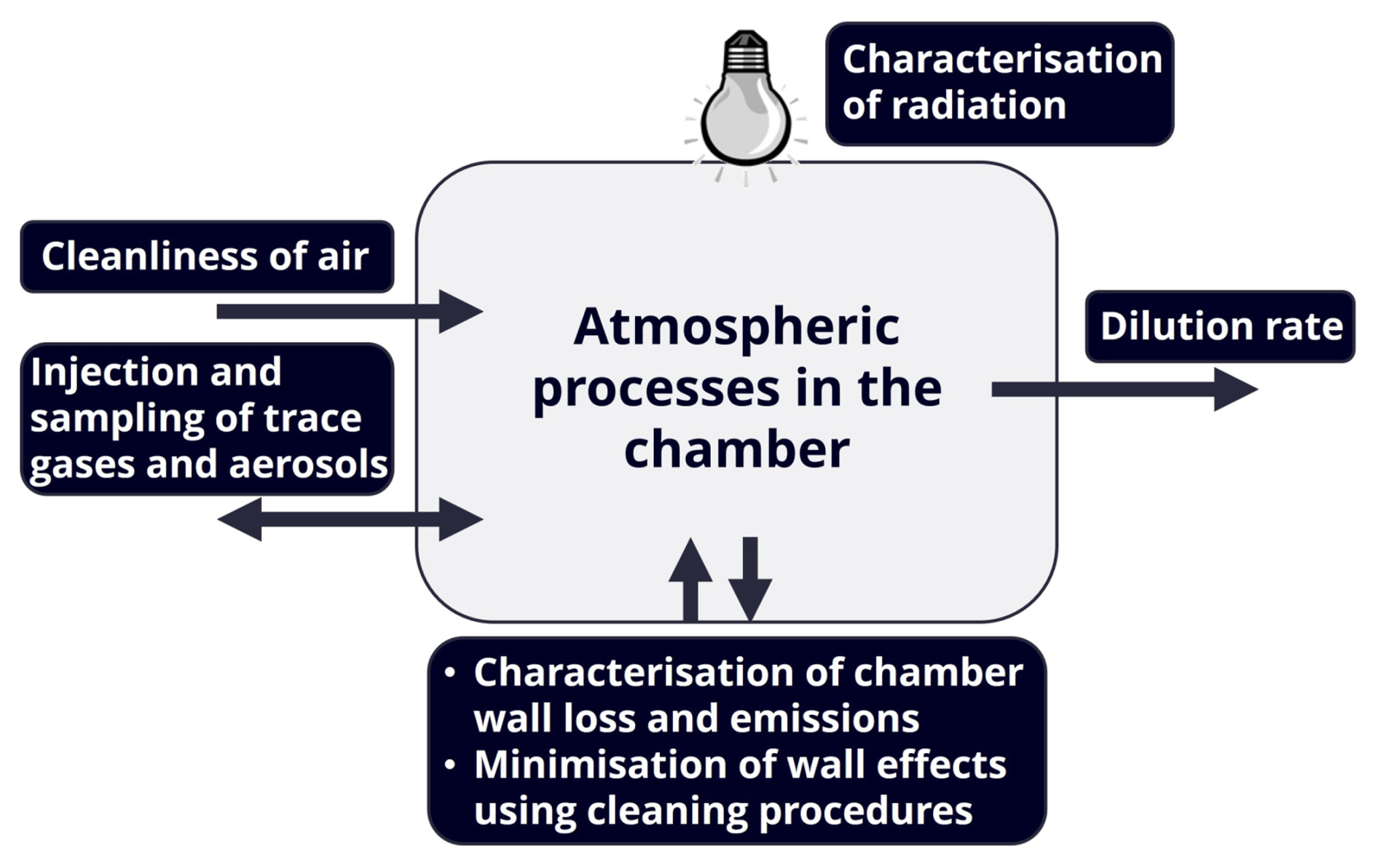
Figure 3Potential chamber effects that need to be characterised and considered in the interpretation of results.
If the chamber is built or operated in such a way that its volume remains constant, a replenishment flow can be used to counteract the drop in pressure caused by air loss from small leaks and instruments sampling the air. This is particularly important for Teflon chambers, which are usually operated at slightly higher than ambient pressure in order to maintain their integrity. The replenishment of air results in the dilution of gases, vapours and particles in the chamber, which must be monitored. This is achieved either by monitoring the replenishment flow rate using mass flow meters or by calculating the dilution rate from the measured loss of a chemically inert tracer molecule such as sulfur hexafluoride (SF6), water vapour, or CO2. Chambers made of glass or steel may not use a replenishment flow so that the pressure drops during the experiment.
The spectrum and intensity of the radiation are needed to calculate photolysis frequencies. If lamps are used, they can be assumed to be relatively stable over the time of an experiment. However, they may change with temperature (depending on the type of lamp) and over years of use. If natural sunlight is used, the actinic flux must be monitored during the experiment. Special care must be taken with respect to the location of the sensor, as shading can change with solar zenith angle and thus affect the measurements. For example, in the SAPHIR chamber at Forschungszentrum Jülich, the actinic flux is measured outside of the chamber on the roof of a nearby building and the photolysis frequencies are calculated using a model that includes shading effects and the transmission of the chamber's Teflon film (Bohn and Zilken, 2005).
As the lamp characteristics and the transmission of radiation can change over time, the validity of photolysis frequencies (j) must be checked regularly (at least once a year) in dedicated reference experiments. Chemical actinometry (Bohn and Zilken, 2005) is commonly used to determine the most versatile photolysis parameter, j(NO2), and involves photolysis of a high mixing ratio of NO2.
The quality of the NO2 and NO measurements in the ACTRIS simulation chambers is ensured by the services of the ACTRIS Centre for in situ gas-phase measurements (CiGAS). Ozone is typically measured using calibrated UV-photometers with accuracy in the low ppbv range.
The inner surfaces of chambers can alter the concentration and composition of gases and particles within, mainly through deposition of species on the chamber walls (e.g., Bertrand et al., 2018; Wang et al., 2018). The exact values can vary with time as properties of the chamber wall can depend on the history of previous experiments. In addition, the loss rate of particles on the chamber walls depends not only on the material of the walls and electrostatic charges, but also on the sizes of the particles (Doussin et al., 2023).
Emission of trace gases can also affect the chamber experiments (e.g., Rohrer et al., 2005; Dixneuf et al., 2022). The chemical conversion of species on chamber surfaces can also play a role (Wang et al., 2014). In chambers made of Teflon, nitrogen oxides and nitrous acid (HONO) can be formed in the presence of light and humidity (Rohrer et al., 2005). In addition, small, oxygenated molecules, such as formaldehyde (HCHO) and acetaldehyde (CH3CHO), are typically emitted from the chamber walls (e.g. Kaminski et al., 2017). The exact source strength depends on the volume-to-surface ratio of the chamber, humidity, physical parameters, the history of experiments and cleaning procedures, as the mechanism behind these sources is likely to be the adsorption and desorption of molecules. These species can also act as precursors for the photolytic production of hydroxyl radicals. It is therefore recommended to regularly determine the radical formation rate by observing the decay of a volatile organic compound that does not photolyse.
Reference experiments are regularly used to derive parametrisations of chamber effects, which allow these effects to be quantified and used to correct measurements or to be implemented in the modelling of experiments. These parametrisations can be referred to as an auxiliary mechanism, which is available for many chambers on the EUROCHAMP website (https://www.eurochamp.org/, last access: 15 February 2026) and will be provided on the ACTRIS Data Centre website (https://www.data.actris.eu, last access: 15 February 2026) in the future.
As the relevance depends strongly on the type and objective of the research, the exact frequency of carrying out the characterisation experiments varies. It is recommended to perform at least one characterisation experiment in a series of experiments or after properties are expected to have changed (e.g., exchange of lamps, specific cleaning procedures). The minimum frequency for ACTRIS chambers is once a year. Quantification of chamber sources can also be achieved as part of an experiment, for example by observing the increase in the concentration of a compound in the clean chamber before other reactants are injected (e.g., Fuchs et al., 2013) or to observe the loss rate of species before chemical processes are started or after they have been stopped.
4.3 Performing chamber experiments
A prerequisite for a meaningful experiment is that the air in the chamber is free from particles and reactive gas-phase species at the start of the experiment (Fig. 3). As the level of cleanliness needed for an experiment depends largely on its type and purpose, there is no general rule except that experiments must not be affected by previous residues.
The method of cleaning vary with the chamber design and depend on the history of experiments. Measures to remove gas-phase impurities and reduce chamber wall effects include, for example, flushing the chamber with dry or humidified clean air, evacuating the chamber followed by flushing and re-filling with clean air, or exposing it to oxidants (e.g., ozone, oxygen atoms, hydroxyl radicals). Cleaning using these procedures can be achieved as adsorption of water molecules on the chamber wall material compete with the adsorption of impurities and the oxidation of impurities can lead to more volatile compounds than the impurities themselves. Evacuation, increasing the chamber temperature while flushing the chamber with clean air and manual cleaning are also efficient cleaning procedures, but they are not applicable to all chambers. The cleanliness of the chamber should be documented at the start of the experiment by, for example, including measurements of potential impurities in the dataset submitted to the ACTRIS Data Centre.
Seed aerosols and various gas-phase species, which serve as reactants or precursors for oxidants during an experiment, are added to the chamber via standardized procedures. Guidelines how to use the different injection systems and methods are outlined in Doussin et al. (2023). Gas and vapours can either be added using mass flow controllers, or evaporated from liquids and solids in heated vessels, which allow the vapour to be transported into the chamber using a clean air flow. The lower the volatility of the compound, the more consideration must be given to potential losses and adsorption and desorption in the inlet system. Short, potentially heatable inlet lines are advantageous.
Seed aerosols can be generated by an electrospray or collision atomiser, by condensation of heated gases, or by producing secondary organic aerosol from the oxidation of injected precursors. Various more specialised methods exist for the injection of particles such as of mineral dust, soot particles, bioaerosol, sea spray aerosol and particles in real-world emissions (e.g., Di Biagio et al., 2017; Battaglia et al., 2025; Mohamadi Nasrabadi et al., 2025).
If complex emissions from realistic sources are used, special consideration must be given to transmission efficiency from the emission source to the chamber. This is because losses can differ for various gas-phase compounds and particles, which may alter the air composition in an unaccounted way. Therefore, more complex inlet systems may be required than for the injection of individual compounds.
4.4 Comparability of chamber experiments
The diversity of chambers makes it often challenging to perform experiments in exactly the same way. One difference is, for example, the dilution rate, which leads to different process time scale while affecting the formation of products. This makes it more difficult to directly compare results. However, as the underlying atmospheric processes are the same, the findings (e.g. kinetic information) obtained after all chamber specific effects are adequately considered Sect. 4.2), are expected to be the same. One key requirement is an appropriate experimental design ensuring that branching ratios of processes are similar, for example, that the fate of peroxy radicals in oxidation experiments is comparable (Sect. 6.2, Kenagy et al., 2024). One task for the further development of the ACTRIS chambers will be to demonstrate the comparability of results (Uruci et al., 2025).
Recently a comparison of chamber performance was conducted between IASC and SAPHIR based on set of typical day- and night-time standard oxidation experiments using the same key instrumentation on both chambers (Fuchs et al., 2026). Exercises like this help to develop standards in the characterization of the most critical chamber parameters to be able to generalize chamber results and to harmonize the comparability of chamber data.
However, the diversity of the type of studies that can be performed in the different chambers and the specialization and availability of different instrumental approaches is also important to be recognized and fostered, because different aspects of the same atmospheric processes can then be studied in different chambers. A good degree of complementarity is an advantage to obtain a more comprehensive picture of the atmospheric chemistry involved in the processes.
4.5 Quality assurance of measurements
Experiments carried out in the simulation chambers typically include many measurements required to derive meaningful results. Some of the instruments are serviced by the 3 ACTRIS Topical Centres for in situ observations (Laj et al., 2024). The centre for gas-phase species (Centre for Trace Gases in situ Measurements, CiGAS) is responsible for the measurements of selected volatile organic compounds (VOCs) using Proton-Transfer-Reaction Mass Spectrometry (PTR-MS), Chemical Ionisation Mass Spectrometry (CIMS) and Gas Chromatography (GC), as well as for instruments measuring nitrogen oxides (NO and NO2). The centre for aerosol in situ properties (Center for Aerosol In Situ - European Center for Aerosol Calibration and Characterization, CAIS-ECAC) ensures the data quality of particle number concentrations and size distributions, their chemical composition and optical properties and the number concentration of cloud condensation nuclei. Only few chambers are equipped to carry out cloud experiments. Instruments for this type of experiment are serviced by the centre for cloud properties (Centre for Cloud In Situ, CIS). All measurements that fully comply with the requirements of the calibration centres are marked in the data sets of the experiments.
The operators of the chamber facility are responsible for maintaining and documenting the quality assurance and control protocols and for providing the respective documentation for all other measurements. This includes calibration procedures that are performed regularly using certified calibration standards, calibration devices or other approaches developed by the experts at the chamber facility, for example for short-lived radicals.
The facility experts are responsible for processing of data to provide quality assured results (level 2 data, Fig. 2) that are made available through the data centre. The reproducibility of the results must be documented to ensure that data is compliant with the FAIR principles. Results of chamber experiments may also include advanced data products (level 3 data, Sect. 5).
Quality assurance for ACTRIS chamber experiments also includes the documentation of the exact timing of all actions during the experiment. This metadata is submitted to the ACTRIS data centre along with the experimental data. In the future, ACTRIS chambers will require an electronic form of documentation for a harmonised, machine-readable protocol.
5.1 Access to chambers for conducting experiments
ACTRIS simulation chambers provide access for the atmospheric research community, other transdisciplinary research communities, and users from industry. Access to the chambers is managed centrally by the ACTRIS Service Access Management Unit (SAMU) of the ACTRIS Head Office via an online application management system (Fig. 4). Calls for applications related to specific topics may be issued from time to time, with funding provided to support travel to the facilities.
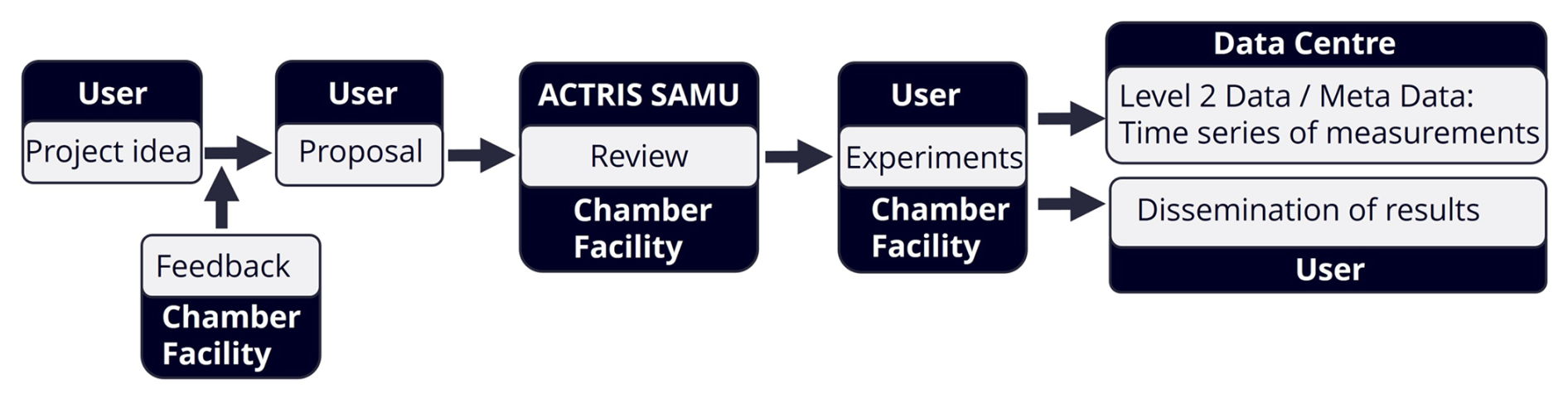
Figure 4Workflow of access provision to ACTRIS simulation chambers. SAMU is the Service Access Management Unit of the ACTRIS Head Office.
The application for access includes information about the users, a description of the experimental work programme and plans for the dissemination of the results. The feasibility of the work programme is checked by the experts at the chamber facilities, who may recommend adapting the plan or even suggest using a different chamber, which is better suited to the purpose of the experiments. Only after feasibility has been confirmed, access proposals that receive funding through competitive calls are reviewed by experts. In addition to scientific excellence, technical innovation and training are important evaluation criteria.
Access to a chamber facility allows the user(s) to define their own experiments and objectives with an individual experimental schedule. It is also possible to use several chambers to take advantage of the complementary nature of the different types of chambers as demonstrated in the study by Donahue et al. (2012). Data from the experiments can be used exclusively by the user(s) until the data is submitted to the data centre no later than 12 months after the access. Confidential agreements are only acceptable in cases where public access to the data is restricted, for example, if required by industry (Sect. 6).
Physical presence at the chamber during the access period facilitates adjustments of the experiment plan based on the preliminary results. It moreover enables effective communication and collaboration between the users and the chamber providers. Interactions between users and chamber experts can also be fully or partly realised via remote involvement of the users. Remote access has the advantage of eliminating travel costs and reducing the carbon footprint of the access. In addition, there is generally more flexibility in the planning and timing of the experiments.
The purpose of the access may also focus on or include training, particularly for young researchers. This may be hands-on training in carrying out chamber experiments, and/or the operation of instruments or getting to know a certain type of detection technology. In addition, workshops and seminars provide user training in atmospheric chemistry, data evaluation, or modelling of chamber experiments.
5.2 Access to chamber data
The ACTRIS Data Centre provides free and open access to data from all ACTRIS National Facilities including atmospheric simulation chambers. The ACTRIS Data Centre implements FAIR (findability, accessibility, interoperability, and reusability) principles, which for example adds a digital object identifier (doi) to each dataset. The atmospheric simulation chamber data centre (https://data.eurochamp.org/, last access: 15 February 2026) was established in 2005 during the first EUROCHAMP project and has recently become the Atmospheric Simulation Chamber (ASC) unit of the ACTRIS Data Centre (https://data.actris.eu/, last access: 15 February 2026), from which all data can be accessed. This website provides an interface for specific search queries and data from simulation chambers is made available via three databases, offering access to the different types of data described below.
-
The Database of Atmospheric Simulation Chamber Studies (DASCS) this provides access to experimental and modelled time series from the experiments (defined as level 2 (L2) data). It is indicated whether the measurements are fully compliant with the regulations of one of the ACTRIS Topical Centres (Sect. 4). The dataset includes metadata about the experiment (Sect. 4).
-
The Library of Analytical Resources (LAR) provides access to infrared and mass spectra of key atmospheric species, as well as mass spectra of derivatives at mid- to high resolution (defined as level 3 (L3) data). Typically, the spectra are calibrated to enable species to be quantified. The focus of this library is on atmospheric species and provides spectra of complex molecules which cannot be found elsewhere. The data are not specific to chamber experiment but can instead be used for the evaluation of measurements in general.
-
The Library of Advanced Data Products (LADP) provides access to different types of high-level products from chamber experiments (also defined as level 3 (L3) data). They are not only useful for the interpretation of atmospheric observations, but also for the development and validation of atmospheric models. These advanced data products include rate coefficients of gas-phase reaction, yields of secondary organic aerosol, photolysis frequencies and quantum yields of photolysis reactions, aerosol optical properties (e.g., complex refractive index, mass absorption coefficient) and hygroscopic properties (e.g., hygroscopic growth factor).
The database also includes modelling tools for interpreting field measurements and laboratory studies. This library not only provides some key physicochemical parameters useful for modelling and evaluating data from atmospheric monitoring but it links them with the data from the experiments that have led to their determination allowing an unprecedented capability for any users to carefully evaluate the relevance and the reliability of the parameter they are using. This high level of traceability has been designed not only to fully comply with the FAIR principle but also to ease future re-evaluation of reviewed parameters.
Since its creation, the Atmospheric Simulation Chamber unit of the ACTRIS Data Centre has provided access to over 2000 chamber experiment datasets, over 500 infrared and mass spectra datasets, and over 330 advanced product datasets via the three databases (DASCS, LAR and LADP).
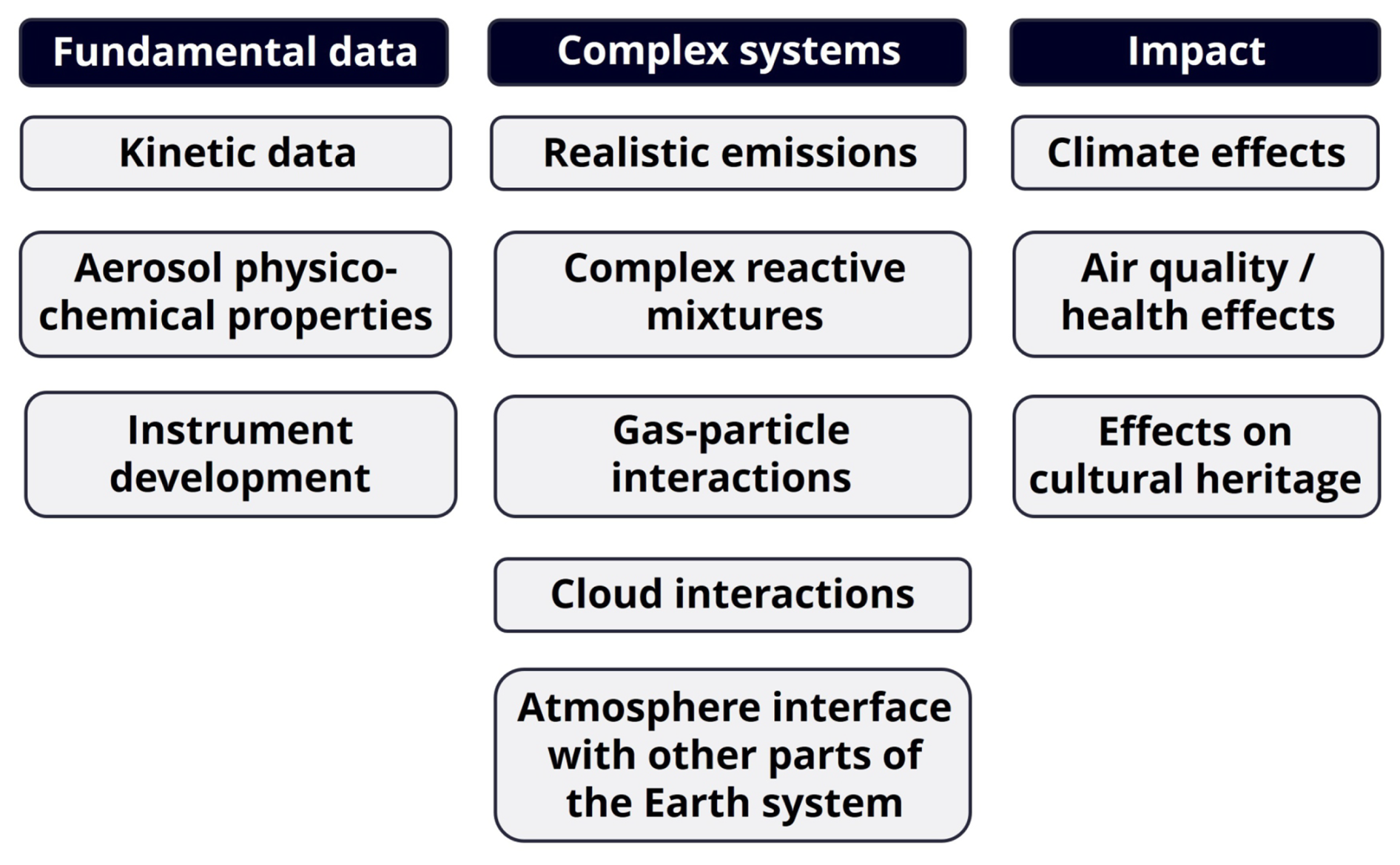
The overarching objective of carrying out experiments in simulation chambers is to advance the knowledge of the interactions between sources, sinks and the physical and chemical transformation of short-lived atmospheric constituents that largely affect air quality and climate. ACTRIS chambers contribute to these goals in various ways Fig. 5 summarizes research topics addressed by atmospheric simulation chambers, ranging from fundamental kinetic to complex atmospheric systems and impact-related studies. The categories are not mutually exclusive, and many chambers can address several topics simultaneously. Examples of current and future research are given in the following.
6.1 Testing of new instruments and methods under realistic conditions
Chamber experiments are ideal for testing the performance of instruments under controlled realistic but also extreme conditions (Fuchs et al., 2017; Roudini et al., 2020; Nowak et al., 2022; Yu et al., 2024; Brunamonti et al., 2025; Renzi et al., 2025). One method is to generate standard samples for offline instruments (Isolabella et al., 2025). Chambers which can be operated at low pressure can help testing the performances of aircraft instrumentation at mid-to-high tropospheric conditions (Yu et al., 2024). Large chambers such as AIDA, EUPHORE, SAPHIR and HELIOS allow many instruments to be involved in comparison exercises (e.g., Fuchs et al., 2010; Dorn et al., 2013; Fahey et al., 2014; Thalman et al., 2015; Shen et al., 2024). Instrument comparisons in chambers are preferable to those conducted in the field, because the chambers ensure that all instruments sample the same air and the conditions can be systematically varied. This allows to identify potential dependencies of the instrument sensitivity and cross-sensitivities, and calibration or correction factors can be determined and verified. Instrument comparisons are part of the quality control procedures of instruments from observational facilities, which are serviced by the ACTRIS Topical Centres, or from other air quality monitoring stations (Alam et al., 2020). Instruments tests can also include future scenarios of atmospheric composition that may differ from current conditions as for example ammonia concentrations may increase due to its future use in energy production in a hydrogen-based economy (Kumar et al., 2024).
One example of a successful collaboration between small to medium enterprises (SMEs), ACTRIS Topical Centres and chambers was the testing of a new generation of instruments for the measurement of NO2 using the ICAD (Iterative Cavity-Enhanced Differential Optical Absorption Spectroscopy, Airyx, Horbanski et al., 2019) method, which is based on incoherent broadband cavity enhanced absorption spectroscopy (IBBCEAS) (Fiedler et al., 2003; Ruth et al., 2014). These instruments could replace today's standard chemiluminescence instruments. The ICAD instrument was tested in many experiments in the SAPHIR chamber during 2022 including a comparison with ACTRIS standard instruments. Dedicated tests were carried out in 2023, when the ACTRIS Topical Centre CiGAS brought together NO2 instruments from 9 ACTRIS observational facilities. The comparison showed that measurements produced by the ICAD instrument had a high precision and accuracy and were less affected by interferences than chemiluminescence instruments using a molybdenum converter for NO2 detection.
Another example of a successful collaboration between small companies, simulation chambers, and observational sites was the validation of a newly developed aethalometer with an extended wavelength range and a total carbon analyser. The validation included tests at the EUPHORE chamber in 2022, followed by subsequent campaigns at several ACTRIS observational sites in 2023/2024.
Another example of a successful collaboration with SMEs is the development of the Portable Ice Nucleation Experiment PINE (Möhler et al., 2021). This development was based on the experience of operating the AIDA chamber as expansion-type cloud simulation chamber and was conducted in close collaboration with the Bilfinger Nuclear & Energy Transition GmbH and the University of Leeds. The PINE chamber is the first mobile and commercially available instrument for the long-term 24/7 monitoring of ice-nucleating particle (INP) concentrations. It is also selected as a standard and reference instrument for INP measurements within the ACTRIS-CIS Topical Centre.
Low-cost sensors have the potential to complement sensor networks of standard reference instruments as the density of measurements can be significantly increased by deploying many sensors (e.g., Ródenas García et al., 2022; Bogaert et al., 2024). They are playing an increasing role in air quality monitoring, especially in urban areas, as they can supplement regional air quality monitoring networks (Kuula et al., 2022). In addition, these sensors can be easily deployed on small unmanned aerial vehicles (drones) enabling horizontal and vertical exploration of trace gas concentrations at rather low costs. However, the stability of the calibration, the limit of detection, and the selectivity of especially electrochemical sensors are still challenging. Chamber experiments can support the calibration (Bulot et al., 2020, 2023) and characterization of these sensors to develop data evaluation strategies and standard operational procedures (Russell et al., 2022).
Nitrate () CIMS instruments are widely used to measure condensable vapours with various instrumental specifics such as inlet designs and ionization methods. To ensure comparability of measurements, a unified inlet system was designed together with the ACTRIS CiGAS Topical Centre. In a set of chamber experiments at the ACD-C facility, the detection of sulfuric acid by several instruments was compared using commonly applied calibration setups. Furthermore, the instrument responses to oxidized organic compounds from α-pinene oxidation and organic standards were investigated under different experimental conditions. First results show that observed mixing ratios as well as the response of the instruments to the changes of the chamber conditions differed, which underlines the importance of instrument comparison efforts and standardised measurement procedures.
Another example for validating an offline instrument in chamber experiments was the development and test of a broadband light analyser of complex aerosol (BLAnCA), which provides measurements of the aerosol absorption coefficient with high spectral resolution (Isolabella et al., 2025). The spectrometer and light source have an unprecedented broad spectral range, enabling measurements to be taken with 5 nm resolution in the spectral range from 375–1000 nm. This resolution allows to distinguish spectral absorption features for a wide variety of aerosols sampled on filters, such those of black and brown carbon, mineral dust aerosols (Isolabella et al., 2025).
6.2 Studies of reaction kinetics and tests of gas-phase chemical mechanisms
Parameters that determine chemical mechanisms and reaction kinetics data are key for air quality models. Consequently, the validity and completeness of these parameters largely control the accuracy of air quality predictions. Well designed and conducted chamber experiments can provide these data with high accuracy. For example, the temperature dependence of rate coefficient for VOC reactions with different oxidants can be studied over a wide range in chambers in which the temperature can be controlled (e.g., Bejan et al., 2015; Gong et al., 2024).
Depending on the chemical complexity of the experiment, specific reaction pathways can be studied (Illmann et al., 2021a, b, c; Picquet-Varrault et al., 2022; Roman et al., 2022; Baker et al., 2024; Illmann and Rösgen, 2024). Often entire reaction systems consisting of competing reaction pathways are studied under atmospheric conditions. The results are often interpreted using chemical box models, whose development is an integral part of research using chambers (e.g., Wollesen de Jonge et al., 2021). These models allow access to a deeper level of insight regarding the roles and concentrations of intermediate species that often cannot be accessed directly by measurements. This can also be combined with theoretical studies (e.g., Carlsson et al., 2023). Chamber experiments can involve either a single precursor reactive organic species (Mutzel et al., 2021; Harb et al., 2025), or a mixture of them (e.g., Kourtchev et al., 2016; Voliotis et al., 2021, 2022b, a; Thomsen et al., 2022; Muñoz et al., 2023; Ródenas et al., 2025).
One focus of chamber studies is on the fate of peroxy radicals (RO2) formed in the oxidation of VOCs, which strongly depends on the availability of nitric oxide (NO). Specifically in environments with high concentrations of VOC and O3, chemical mechanisms often fail to reproduce observations in the field (Rohrer et al., 2014). Chamber experiments can be used to simulate these conditions, but careful planning of experiments is required to ensure that the fate of RO2 radicals is realistic. If high VOC and oxidant concentrations are used, as is commonly the case in experiments on SOA, the fate of RO2 radicals can be dominated by RO2 + RO2 radical reactions, which are typically less important in the atmosphere than other RO2 reactions (Kenagy et al., 2024).
Conditions, where loss rates of RO2 radicals in the reaction with NO become small, can give rise to other reaction pathways such as unimolecular RO2 reactions, and lead to other product species (Peeters et al., 2009; Ehn et al., 2014). Consecutive RO2 isomerisation reactions are also the central step in the formation of highly oxygenated organic molecules (HOM), which have been recognised to drive rapid SOA formation (e.g., Bianchi et al., 2019; Quéléver et al., 2019; Luo et al., 2024). Another important type of RO2 reactions are reactions with other radicals such as RO2, HO2 and OH. Recent advances in mass spectrometry enables the detection of ester products from the self- and cross-reaction of peroxy radicals and the formation of dimer species (Berndt et al., 2018; Bates et al., 2022; Peräkylä et al., 2023; Bell et al., 2023; Nozière, 2025). Such accretion products are believed to play a major role in SOA formation, but the set of experimental data to support this hypothesis is still sparse. A recent review also highlights significant knowledge gaps in RO2 + HO2 reactions (Illmann, 2025).
Examples of studies providing refined kinetic data are experiments on the oxidation of isoprene by the OH radical, where evidence for an enhanced OH regeneration from RO2 isomerisation reactions was found (Novelli et al., 2020). Other examples are the discovery of previously unrecognised reaction pathways in the oxidation of isoprene by the NO3 radical, leading to the formation of nitrate epoxide products (Carlsson et al., 2023) and the elucidation of the role of aromatic photo-oxidation in affecting atmospheric acidity (Wang et al., 2020). Criegee intermediates, formed in ozonolysis reactions, have also been studied experimentally as well as by theory (e.g., Newland et al., 2015, 2020; Vereecken et al., 2017; Chhantyal-Pun et al., 2026). Their chemistry remains an important area of research in chambers owing to the complex product distributions observed recently in ozonolysis reactions (e.g., Illmann et al., 2023) affecting also particle formation. Wang et al. (2025) have established a new relative rate technique that can be used to determine the reaction kinetics of Criegee intermediates. This method enables studies under atmospheric conditions, and measurements of co-reactants with much lower volatility than was previously possible. Ren et al. (2020) have performed extensive gas- and condensed-phase studies on a key plant hormone, methyl salicylate. This study highlights the many different interactions that need to be considered when studying the atmospheric interactions of semi-volatile biospheric emissions within ecosystems.
6.3 Studies of aerosol properties, formation and ageing
Simulation chambers enhance our understanding of aerosol particles, which are an elusive yet significant component of the Earth's atmosphere that has a strong impact on health, climate, atmospheric chemistry and the environment. Experiments provide insights into the mechanisms of their formation and transformation during ageing, as well as on their physicochemical, optical and hygroscopic properties. This allows to develop predictive relationships that improve the representation of aerosols in climate models and satellite retrieval algorithms. Various types of aerosols have been studied in ACTRIS chambers. Some examples are discussed below.
Experiments on SOA examine the interactions of various VOC precursors from both biogenic sources (e.g. Kiendler-Scharr et al., 2009; McFiggans et al., 2019) and anthropogenic sources (e.g. Voliotis et al., 2022a), as well as their mixtures (e.g. Kari et al., 2019). For example, studies have demonstrated that aerosol yields can be significantly reduced by increasing the relative importance of the oxidation of VOCs with low aerosol yields (OH scavenging, Kiendler-Scharr et al., 2009), and by shifting the reaction of short-lived intermediate peroxy radicals to pathways with low aerosol yields (product scavenging, McFiggans et al., 2019). Other studies have shown the importance of considering both relative humidity (Carstens et al., 2025; Top et al., 2025) and temperature for SOA formation and aerosol properties (Kristensen et al., 2017; Jensen et al., 2021; Piedehierro et al., 2021).
Controlled chamber experiments under various plume-like conditions are well suited to making robust predictions about the air quality associated with wildfire events, many of which are expected to increase in number and intensity in the future, resulting in substantial particle emissions and SOA formation (Cunningham et al., 2024). However, as the chemistry within wildfire plumes is highly dynamic and occurs under extreme conditions, current chemical mechanisms often cannot reliably predict the formation of secondary pollutants (Sekimoto et al., 2023; Pye et al., 2024).
Simulation chambers have also been increasingly used to determine the precise physicochemical properties of aerosols, such as viscosity, optical and hygroscopic properties. For instance, Denjean et al. (2015) showed that the viscosity of SOA from the ozonolysis of α-pinene changes from a predominantly glassy state to a predominantly liquid state and Jensen et al. (2025) reported changes in the viscosity of α-pinene ozonolysis SOA induced by temperature changes. Di Biagio et al. (2017, 2019) measured the spectral complex refractive index of mineral dust in the visible and infrared spectrum. Baldo et al. (2023) illustrated, for the first time, that Icelandic dust is mineralogically distinct and exhibits greater light absorption than mid-latitude dust. Battaglia et al. (2025) demonstrated that mineral dust can act as a sink for gas-phase glyoxal at high relative humidity, forming oligomers. This suggests that dust aerosols could play a significant role in the formation of organic aerosol.
The hygroscopic and ice-nucleating properties of soot and mineral dust have also been studied. They contribute to the formation of contrails, which also has an impact on the climate (Möhler et al., 2008; Connolly et al., 2009; Tobo et al., 2012). Other studies investigated the physical and chemical modification of aerosol properties during simulated long-range transport (Zanatta et al., 2025) or by cloud and ice formation processes (Wagner et al., 2024).
Significant efforts have been made to develop well-characterised, versatile methodologies and tools for chamber studies on aerosols, allowing the diversity of natural aerosol particles to be reproduced. For instance, Heuser et al. (2025) demonstrated how to produce soot from a propane flame generator for studying its optical properties in the CESAM chamber. For studying optical properties of brown carbon, SOA can be generated from the oxidation of biomass burning products (e.g., catechol and guaiacol oxidation) or multiphase chemistry involving fog chemistry (De Haan et al., 2020, 2023, 2024a, b). Recently, a generator has been developed and characterised that produces poly-dispersed airborne aerosol particles from native soils collected across global deserts (Di Biagio et al., 2017, 2019, 2023; Baldo et al., 2023). Methods to produce sea spray particles using bubble-mediated aerosol have also been developed.
6.4 Determination of emission factors and the effects of atmospheric processes on air quality and health
Another focus of atmospheric chemistry studies in simulation chambers is the quantification and characterisation of emissions. Chambers are used to study realistic emissions from anthropogenic sources, such as exhaust from combustion engines (Pereira et al., 2018; Vernocchi et al., 2022; Paul et al., 2024; Danelli et al., 2025), biomass burning (Georgopoulou et al., 2024; Evans et al., 2025; Mukherjee et al., 2025; Ródenas et al., 2025), candle burning (Wang et al., 2024), emissions from biogenic sources such as trees (Hohaus et al., 2016) and their chemical transformations during ageing. These emissions can be transferred into the chamber for further oxidation to study their chemical transformation. Some chambers study the interaction between gas-phase species and various types of surfaces (Danelli et al., 2021), including ice surfaces (Thomas et al., 2021). For example, the study of heterogeneous reactions on particles and the exchange of substances between the gas and particle phases are examined (Voliotis et al., 2021; Battaglia et al., 2025).
In addition to the monitoring of trace gases and measurements of the physical and chemical properties of particles, the identification of the sources is also an important part of the remit of many ACTRIS observational facilities. This is often achieved by positive matrix factorization, in which the time series of fingerprint patterns can be attributed to specific sources like traffic, industry or oxidation processes (e.g., Daellenbach et al., 2017; van Pinxteren et al., 2024; Deabji et al., 2025). Chamber experiments can be used to identify specific patterns of various aerosol sources by injecting different types of aerosols or gas mixtures for secondary aerosol formation and applying similar methods (Rosati et al., 2019; Jensen et al., 2021; Liu et al., 2024). One additional benefit of chamber experiments is the controlled initial conditions, and the availability of cutting-edge instruments such as high-resolution mass spectrometers which are typically not employed during routine measurements at observational facilities. Chamber experiments with ambient air also contributed to the identification of emission sources (Liu et al., 2024).
Chamber experiments can also help connecting observations of gas-phase species and particles to their health effects. Some chambers (EUPHORE, CESAM, PACS, KASC) have established systems to expose cells or even animals (Georgopoulou et al., 2024) to well-defined mixtures of pollutants that are directly taken from sources or are chemically aged in the chamber. In addition, selected chambers such as MAC have the capability to conduct controlled human exposure studies under clinical trial conditions, allowing direct assessment of human responses to realistic, well-characterised pollutant mixtures (Faherty et al., 2024). In this context, the oxidative potential of particles, used as a proxy for aerosol-induced oxidative stress and recommended for enhanced monitoring under the EU Ambient Air Quality Directive (EU) 2024/2881, can be evaluated in simulation chambers and related to the particle composition, their source and ageing state. By systematic cell exposure studies, a parametrisation can be developed that will help predicting the health effect using parameters observable at the ACTRIS facilities. Similarly, the ChAMBRe chamber was used to simulate real-world summer and winter aerosol pollution scenarios, in which aerosol on filters were assessed for their oxidative potential and toxicological properties (Vernocchi et al., 2025). Another application of simulation chambers is the investigation of transmission pathways of pathogens. Representative aerosol mixtures can be created to determine the transmission efficiency of pathogens under realistic conditions as well as to characterize possible pathogen abatement strategies (Mohamadi Nasrabadi et al., 2025).
The effect of potential air pollution strategies can be evaluated in chambers. Experiments in the ChAMBRe chamber, for example, were used to assess the ability of different plants to remove NO2, black carbon, and dust (Bosio et al., 2025) and the effect of the removal on the viability of airborne bacteria (Vernocchi et al., 2023; Gatta et al., 2025). Emission control strategies, structural changes in the energy production and socio-economic trends are all expected to alter future anthropogenic emissions. The changing climate will also affect emissions from the biosphere. These will dynamically change future atmospheric chemical conditions, and while some changes are expected to improve air quality, there may also be unexpected effects from the emission of new species. Such future scenarios can be simulated in chamber experiments to assess emerging and future air quality impacts. Examples are:
-
The increasingly strict legislation for vehicular emissions (e.g., Euro standards) has led to continuously decreasing NOx concentrations in cities. As a result, the changing fate of peroxy radicals induces significant changes in the composition of urban air, including the formation of secondary pollutants. In a wider context, new air quality regulations and mitigation policies might change pollution scenarios, with new emerging contaminants and VOCNOx ratios that can be assessed in chambers.
-
The hydrogen economy could lead to elevated atmospheric ammonia levels, if ammonia becomes a significant carrier. Likewise, it will also be necessary to assess the effects of fugitive hydrogen emissions on the oxidizing capacity of the atmosphere.
-
CO2 capture and sequestration often use amine species which may therefore be emitted in larger amounts than in the past (Karl et al., 2012; Mikoviny et al., 2024). Their atmospheric degradation pathways remain uncertain.
-
Emissions of hydrocarbons from trees and plants vary strongly with temperature and other stress factors, both of which are to change in a warming climate (Boy et al., 2022; Weber et al., 2022; Furnell et al., 2025).
6.5 Interpretation of ACTRIS observations by providing reference data from chamber experiments
Data from chamber experiments include various high-level data (Sect. 4) that can be used as reference for the data evaluation of ACTRIS observations as well as for satellite algorithm initiation and data interpretation. Optical properties of particles are one example. ACTRIS observations include monitoring of particles in the atmosphere by in situ and remote sensing. Chamber experiments can provide information of absorption and scattering properties of chemically and physically well-characterised particles using cutting-edge instruments. Particle mixtures that are representative for the atmosphere can be produced in chamber experiments in oxidation experiments and/or they are transferred into the chamber using realistic sources (Sect. 4.3).
Similarly, reference optical absorption spectra and mass spectra of atmospheric constituents, from single species to complex mixtures can be determined in chamber experiments. This helps the interpretation of field measurements at observational sites, where the complexity of ambient air makes the unambiguous species identification often challenging. For example, Meloni et al. (2018) show that the use of infrared optical properties derived from experiments in the CESAM chamber for mineral dust from different source regions were efficient in reconciling downward surface irradiance over the Lampedusa ACTRIS site with longwave irradiance measured on board an overpassing aircraft (Di Biagio et al., 2017). In contrast, more generic parametrisations from the OPAC database (Hess et al., 1998) performed less well.
The ACTRIS research infrastructure comprises 14 chamber facilities in ACTRIS member states and 4 facilities in other European countries, not (yet) member of ACTRIS ERIC, are closely connected through previous network projects. The scientific focus of the chambers is diverse and includes gas-phase reaction kinetics, particle formation and properties, particle-phase chemistry and physics, cloud formation processes and the interaction of these various processes. Simulation chambers allow atmospheric processes to be studied under controlled conditions, reducing the complexity compared to atmospheric observations, and allowing key processes to be studied in isolation. Nevertheless, experiments are typically carried out under conditions that are relevant to the atmosphere. Experiments conducted in ACTRIS chambers therefore contribute to interpreting atmospheric observations and enable the development and validation of chemical mechanisms used in air quality models. Standard operational procedures for both instrument operation and carrying out experiments ensure harmonised quality of chamber experiments (Doussin et al., 2023).
The chambers provide access not only to data from experiments, but also to the chambers themselves, enabling users from academia, industry and multidisciplinary areas to conduct experiments to address their specific scientific questions (Laj et al., 2024). ACTRIS provides users with a single entry point to access the chambers via the ACTRIS Service Access Management Unit, SAMU. The feasibility of the suggested experiments is checked by the chamber providers. Proposals can be submitted via an online form and will be reviewed by external experts if funding is available, for example from EC-funded transnational access programmes. Experiment data must be made public via the ACTRIS data centre.
Over the last 10–15 years, transnational access (TNA) programmes in projects funded by the European Commission have proven to be very successful in providing access to chambers for a wide variety of users. For example, the TNA programme of the Eurochamp-2020 project enabled 95 different access activities over 4 years. Despite the success fo these access programmes, securing funding to enable the experimental work and cover travel costs for users is an ongoing challenge. Continuous efforts of the chamber community will be required to successfully attract the resources from European and national sources for the provision of user access to chamber facilities in the future. Finally, users may include access costs in their research proposals.
One priority of the further development of chambers as part of the ACTRIS research infrastructure will be quality assurance of chamber experiments by demonstrating the interoperability of chambers in cross-facility comparisons (Uruci et al., 2025). In addition, the use of chambers for quality assurance of observational methods and development of emerging analytical tools will be an important task that will strengthen the ties of the chamber facilities and the ACTRIS Topical Centres.
In recent years, chambers have expanded their capabilities to enable studies with realistic sources, such as emissions from plants, seawater and combustion processes, and to assess human health effects through exposure studies. This work will continue to ensure that experiments can simulate a given scenario as realistically as possible. Additionally, new measurement methods for quantifying oxidised organic compounds using mass spectrometry have advanced, enabling studies of chemical mechanisms to hitherto unseen levels of detail. To enable new opportunities for atmospheric process studies, ACTRIS simulation chambers strive to ensure that their instruments remain state-of-the-art. For testing, validating, benchmarking and deployment of the most advanced instrumentation in the area of atmospheric science and beyond chambers remain the ideal platform. They will foster the development of new measurement strategies for future ACTRIS missions, ensuring that ACTRIS remains at the forefront of atmospheric science and observation.
No code or data specifically produced for this work is used. No data sets were used in this article.
HF, NI, AM, MR and BPV were responsible for writing significant sections of the manuscript. CA, IB, DB, MB, AB, MCP, MC, PC, VD, CDB, PF, HH, KH, TH, MJ, EJ, NK, JK, CK, PL, DM FM, GF, MG, PM, OM, FM, DN, AN, RO, SP, IPK, RMPA, PP, CR, AAR, HS, SS, FS, VV, AVo, JV, AVi, RW, JW, SZ, PW, JFD, all contributed to the text and commented on the manuscript.
At least one of the (co-)authors is a member of the editorial board of Atmospheric Measurement Techniques. The peer-review process was guided by an independent editor, and the authors also have no other competing interests to declare.
Publisher's note: Copernicus Publications remains neutral with regard to jurisdictional claims made in the text, published maps, institutional affiliations, or any other geographical representation in this paper. The authors bear the ultimate responsibility for providing appropriate place names. Views expressed in the text are those of the authors and do not necessarily reflect the views of the publisher.
The authors thank AERIS (https://www.aeris-data.fr/, last access: 22 June 2026) for curing and distributing the data through the EUROCHAMP Data Center (https://data.eurochamp.org/, last access: 22 June 2026) and the ACTRIS data portal (https://data.actris.eu/, last access: 22 June 2026).
BPV, MC, PC, PF, CDB and JFD thank the French National Research Agency, the National programs LEFE/INSU and PNTS/INSU, the CNES (Centre National des Etudes Spatiales), the Region Ile de France, the ADEME and the LABEX-IPSL for supporting research, doctoral and post-doctoral projects on the CESAM platform.
VD, AM, MRM, AW thank the French National Research Agency, the National programs LEFE/Terre et Univers, the Region Centre Val de Loire and the FEDER, the ADEME and the LABEX-Voltaire (ANR-10LABX-100-01) for regularly supporting research, doctoral and post-doctoral projects on the HELIOS platform.
GF, AV and RA acknowledge the National Centre for Atmospheric Science for its contribution to chamber management support of the MAC chamber.
This research has been supported by the European Union’s Horizon 2020 projects EUROCHAMP-2020 (grant no. 730997), ACTRIS-IMP (grant no. 871115), IRISCC (grant no. 101131261), ACTRIS NEXT (grant no. 101270574), ATMO-ACCESS (grant no. 101291878), ATMO-SERV (grant no. 101291878), and REMEDIA (grant no. 874753). This research has been further support by the German Federal Ministry of Research, Technology and Space (BMFTR) under the FONA Strategy “Research for Sustainability” (grant ACTRIS-D), the German Federal Ministry of Research, Technology and Space (grant nos. 01LK2001B, 01LK2002B), the Danish National Research Foundation (grant no. DNRF172) through the Center of Excellence for Chemistry of Clouds, the Carlsberg Foundation (grant nos. CF17-0601, CF21-0631, CF24-2217), the Danish Agency for Higher Education and Science through ACTRIS-DK (grant no. 5072-00032B), the Swiss State Secretariat for Education, Research and Innovation (SERI), the Swiss National Foundation (SNF) (grant no. 200021-236711), Research Ireland (grant nos. 21/FFP-A/8973, 15/RI/3209), CNRS-INSU (Centre national de la recherche scientifique - Institut National des sciences de l'Univers), the OSU-EFLUVE (Observatoire des Sciences de l'Univers-Enveloppes Fluides de la Ville à l'Exobiologie), and CNRS-Ingénierie CNRS-Terre&Univers.
The article processing charges for this open-access publication were covered by the Forschungszentrum Jülich.
This paper was edited by Mingjin Tang and reviewed by three anonymous referees.
Abd El, E., Brunoldi, M., Gatta, E., Irfan, M., Isolabella, T., Massabò, D., Mazzei, F., Vernocchi, V., Parodi, F., and Prati, P.: Bacterial viability and air quality: Experimental approach and results at the atmospheric simulation chamber ChAMBRe, Nuovo Cimento C, 139, 1–4, https://doi.org/10.1393/ncc/i2024-24319-1, 2023. a
Agarwal, V., Abd El, E., Danelli, S. G., Gatta, E., Massabò, D., Mazzei, F., Meier, B., Prati, P., Vernocchi, V., and Wang, J.: Influence of CO2 and dust on the survival of non-resistant and multi-resistant airborne E. coli strains, Antibiotics, 13, 558, https://doi.org/10.3390/antibiotics13060558, 2024. a
Alam, M. S., Crilley, L. R., Lee, J. D., Kramer, L. J., Pfrang, C., Vázquez-Moreno, M., Ródenas, M., Muñoz, A., and Bloss, W. J.: Interference from alkenes in chemiluminescent NOx measurements, Atmos. Meas. Tech., 13, 5977–5991, https://doi.org/10.5194/amt-13-5977-2020, 2020. a
Baker, Y., Kang, S., Wang, H., Wu, R., Xu, J., Zanders, A., He, Q., Hohaus, T., Ziehm, T., Geretti, V., Bannan, T. J., O'Meara, S. P., Voliotis, A., Hallquist, M., McFiggans, G., Zorn, S. R., Wahner, A., and Mentel, T. F.: Impact of ratio on highly oxygenated α-pinene photooxidation products and secondary organic aerosol formation potential, Atmos. Chem. Phys., 24, 4789–4807, https://doi.org/10.5194/acp-24-4789-2024, 2024. a, b, c
Baldo, C., Formenti, P., Di Biagio, C., Lu, G., Song, C., Cazaunau, M., Pangui, E., Doussin, J.-F., Dagsson-Waldhauserova, P., Arnalds, O., Beddows, D., MacKenzie, A. R., and Shi, Z.: Complex refractive index and single scattering albedo of Icelandic dust in the shortwave part of the spectrum, Atmos. Chem. Phys., 23, 7975–8000, https://doi.org/10.5194/acp-23-7975-2023, 2023. a, b, c
Barnes, I., Becker, K. H., and Mihalopoulos, N.: An FTIR product study of the photooxidation of dimethyl disulfide, J. Atmos. Chem., 18, 267–289, https://doi.org/10.1007/BF00696783, 1994. a
Bates, K. H., Burke, G. J. P., Cope, J. D., and Nguyen, T. B.: Secondary organic aerosol and organic nitrogen yields from the nitrate radical (NO3) oxidation of alpha-pinene from various RO2 fates, Atmos. Chem. Phys., 22, 1467–1482, https://doi.org/10.5194/acp-22-1467-2022, 2022. a
Battaglia, F., Formenti, P., Giorio, C., Cazaunau, M., Pangui, E., Bergé, A., Gratien, A., Pereira, D. L., Bertin, T., de Brito, J. F., Romanias, M. N., Michoud, V., Baldo, C., Chevaillier, S., Noyalet, G., Decorse, P., Picquet-Varrault, B., and Doussin, J.-F.: Formation and composition of organic aerosols from the uptake of glyoxal on natural mineral dust aerosols: a laboratory study, Atmos. Chem. Phys., 25, 12409–12431, https://doi.org/10.5194/acp-25-12409-2025, 2025. a, b, c, d, e
Becker, K. H.: EUPHORE, The European Photoreactor. The construction and operation of an outdoor smog chamber in Valencia for studying mechanisms of photochemical processes and their modelling in the polluted air of different European regions. Design and technical development of the European photoreactor and first experimental results, Report, European Community, 1986. a
Bejan, I., Barnes, I., Wiesen, P., and Wenger, J. C.: Temperature dependent rate coefficients for the reaction of OH radicals with dimethylbenzoquinones, Chem. Phys. Lett., 639, 145–150, https://doi.org/10.1016/j.cplett.2015.09.010, 2015. a
Bell, D. M., Pospisilova, V., Lopez-Hilfiker, F., Bertrand, A., Xiao, M., Zhou, X., Huang, W., Wang, D. S., Lee, C. P., Dommen, J., Baltensperger, U., Prevot, A. S. H., El Haddad, I., and Slowik, J. G.: Effect of OH scavengers on the chemical composition of α-pinene secondary organic aerosol, Environ. Sci. Atmos., 3, 115–123, https://doi.org/10.1039/D2EA00105E, 2023. a
Bernard, F., Eyglunent, G., Daële, V., and Mellouki, A.: Kinetics and products of gas-phase reactions of ozone with methyl methacrylate, methyl acrylate, and ethyl acrylate, J. Phys. Chem. A, 114, 8376–8383, https://doi.org/10.1021/jp104451v, 2010. a
Berndt, T., Mentler, B., Scholz, W., Fischer, L., Herrmann, H., Kulmala, M., and Hansel, A.: Accretion product formation from ozonolysis and OH radical reaction of α-pinene: Mechanistic insight and the influence of isoprene and ethylene, Environ. Sci. Technol., 52, 11069–11077, https://doi.org/10.1021/acs.est.8b02210, 2018. a
Bertrand, A., Stefenelli, G., Pieber, S. M., Bruns, E. A., Temime-Roussel, B., Slowik, J. G., Wortham, H., Prévôt, A. S. H., El Haddad, I., and Marchand, N.: Influence of the vapor wall loss on the degradation rate constants in chamber experiments of levoglucosan and other biomass burning markers, Atmos. Chem. Phys., 18, 10915–10930, https://doi.org/10.5194/acp-18-10915-2018, 2018. a
Bianchi, F., Kurten, T., Riva, M., Mohr, C., Rissanen, M. P., Roldin, P., Berndt, T., Crounse, J. D., Wennberg, P. O., Mentel, T. F., Wildt, J., Junninen, H., Jokinen, T., Kulmala, M., Worsnop, D. R., Thornton, J. A., Donahue, N., Kjaergaard, H. G., and Ehn, M.: Highly oxygenated organic molecules (HOM) from gas-phase autoxidation involving peroxy radicals: A key contributor to atmospheric aerosol, Chem. Rev., 119, 3472–3509, https://doi.org/10.1021/acs.chemrev.8b00395, 2019. a
Bloss, C., Wagner, V., Jenkin, M. E., Volkamer, R., Bloss, W. J., Lee, J. D., Heard, D. E., Wirtz, K., Martin-Reviejo, M., Rea, G., Wenger, J. C., and Pilling, M. J.: Development of a detailed chemical mechanism (MCMv3.1) for the atmospheric oxidation of aromatic hydrocarbons, Atmos. Chem. Phys., 5, 641–664, https://doi.org/10.5194/acp-5-641-2005, 2005. a
Bogaert, M., Mouritzen, C., Johnson, M. S., and van Reeuwijk, M.: RPCA-based techniques for pattern extraction, hotspot identification and signal correction using data from a dense network of low-cost NO2 sensors in London, Sci. Total Environ., 925, 171522, https://doi.org/10.1016/j.scitotenv.2024.171522, 2024. a
Bohn, B. and Zilken, H.: Model-aided radiometric determination of photolysis frequencies in a sunlit atmosphere simulation chamber, Atmos. Chem. Phys., 5, 191–206, https://doi.org/10.5194/acp-5-191-2005, 2005. a, b, c
Bosio, M., Mazzei, F., Brunoldi, M., Massabò, D., Vernocchi, V., Parodi, F., Prati, P., and Roccotiello, E.: Experimental investigation of plants interactions with airborne pollutants in an atmospheric simulation chamber, Atmos. Environ. X, 27, 100355, https://doi.org/10.1016/j.aeaoa.2025.100355, 2025. a, b
Bouzidi, H., Fayad, L., Coeur, C., Houzel, N., Petitprez, D., Faccinetto, A., Wu, J., Tomas, A., Ondráček, J., Schwarz, J., Ždímal, V., and Zuend, A.: Hygroscopic growth and CCN activity of secondary organic aerosol produced from dark ozonolysis of γ-terpinene, Sci. Total Environ., 817, 153010, https://doi.org/10.1016/j.scitotenv.2022.153010, 2022. a
Boy, M., Zhou, P., Kurtén, T., Chen, D., Xavier, C., Clusius, P., Roldin, P., Baykara, M., Pichelstorfer, L., Foreback, B., Bäck, J., Petäjä, T., Makkonen, R., Kerminen, V.-M., Pihlatie, M., Aalto, J., and Kulmala, M.: Positive feedback mechanism between biogenic volatile organic compounds and the methane lifetime in future climates, NPJ Clim. Atmos. Sci., 5, 72, https://doi.org/10.1038/s41612-022-00292-0, 2022. a
Brégonzio-Rozier, L., Giorio, C., Siekmann, F., Pangui, E., Morales, S. B., Temime-Roussel, B., Gratien, A., Michoud, V., Cazaunau, M., DeWitt, H. L., Tapparo, A., Monod, A., and Doussin, J.-F.: Secondary organic aerosol formation from isoprene photooxidation during cloud condensation–evaporation cycles, Atmos. Chem. Phys., 16, 1747–1760, https://doi.org/10.5194/acp-16-1747-2016, 2016. a
Brunamonti, S., Saathoff, H., Hertzog, A., Diskin, G., Fujiwara, M., Rosenlof, K., Möhler, O., Tuzson, B., Emmenegger, L., Amarouche, N., Durry, G., Frérot, F., Samake, J.-C., Cenac, C., Lopez, J., Monnier, P., and Ghysels, M.: The AquaVIT-4 intercomparison of atmospheric hygrometers, Atmos. Meas. Tech., 18, 5321–5348, https://doi.org/10.5194/amt-18-5321-2025, 2025. a
Bulot, F. M. J., Russell, H. S., Rezaei, M., Johnson, M. S., Ossont, S. J. J., Morris, A. K. R., Basford, P. J., Easton, N. H. C., Foster, G. L., Loxham, M., and Cox, S. J.: Laboratory comparison of low-cost particulate matter sensors to measure transient events of pollution, Sensors, 20, 2219, https://doi.org/10.3390/s20082219, 2020. a
Bulot, F. M. J., Russell, H. S., Rezaei, M., Johnson, M. S., Ossont, S. J., Morris, A. K. R., Basford, P. J., Easton, N. H. C., Mitchell, H. L., Foster, G. L., Loxham, M., and Cox, S. J.: Laboratory comparison of low-cost particulate matter sensors to measure transient events of pollution – Part B – Particle number concentrations, Sensors, 23, 7657, https://doi.org/10.3390/s23177657, 2023. a
Burkholder, J. B., Sander, S. P., Abbatt, J. P. D., Barker, J. R., Huie, R. E., Kolb, C. E., Kurylo, M. J., Orkin, V. L., Wilmouth, D. M., and Wine, P. H.: Chemical kinetics and photochemical data for use in atmospheric studies–evaluation number 19, NASA panel for data evaluation technical report, 19-5, 1–1610, https://science.jpl.nasa.gov/documents/1487/NASA-JPL_Evaluation_19-5.pdf (last access: 22 June 2026), 2020. a
Camredon, M., Aumont, B., Lee-Taylor, J., and Madronich, S.: The system: an explicit model of secondary organic aerosol formation, Atmos. Chem. Phys., 7, 5599–5610, https://doi.org/10.5194/acp-7-5599-2007, 2007. a
Carlsson, P. T. M., Vereecken, L., Novelli, A., Bernard, F., Brown, S. S., Brownwood, B., Cho, C., Crowley, J. N., Dewald, P., Edwards, P. M., Friedrich, N., Fry, J. L., Hallquist, M., Hantschke, L., Hohaus, T., Kang, S., Liebmann, J., Mayhew, A. W., Mentel, T., Reimer, D., Rohrer, F., Shenolikar, J., Tillmann, R., Tsiligiannis, E., Wu, R., Wahner, A., Kiendler-Scharr, A., and Fuchs, H.: Comparison of isoprene chemical mechanisms under atmospheric night-time conditions in chamber experiments: evidence of hydroperoxy aldehydes and epoxy products from NO3 oxidation, Atmos. Chem. Phys., 23, 3147–3180, https://doi.org/10.5194/acp-23-3147-2023, 2023. a, b
Carstens, C., Bell, D. M., Sari Doré, F., Top, J., Dubois, C., Zhang, Y., Perrier, S., El Haddad, I., and Riva, M.: Effects of relative humidity on time-resolved molecular characterization of secondary organic aerosols from the OH-initiated oxidation of cresol in the presence of NOx, Environ. Sci. Technol., https://doi.org/10.1021/acs.est.4c08215, 2025. a
Chandran, S., Campos-Pineda, M., Ben Brik, A., Wenger, J., and Ruth, A. A.: The Irish Atmospheric Simulation Chamber: A national facility for atmospheric sciences, EGU General Assembly 2024, Vienna, Austria, 14–19 April 2024, EGU24-19774, https://doi.org/10.5194/egusphere-egu24-19774, 2024. a, b
Chhantyal-Pun, R., Wang, P., Baweja, S., Bainbridge, J., Xue, C., Daële, V., Mellouki, A., and McGillen, M. R.: Yield of the four-carbon stabilized Criegee intermediates from isoprene ozonolysis, ACS Earth Space Chem., 10, 328–337, https://doi.org/10.1021/acsearthspacechem.5c00226, 2026. a
Christiansen, S., Salter, M. E., Gorokhova, E., Nguyen, Q. T., and Bilde, M.: Sea spray aerosol formation: Laboratory results on the role of air entrainment, water temperature, and phytoplankton biomass, Environ. Sci. Technol., 53, 13107–13116, https://doi.org/10.1021/acs.est.9b04078, 2019. a
Connolly, P. J., Möhler, O., Field, P. R., Saathoff, H., Burgess, R., Choularton, T., and Gallagher, M.: Studies of heterogeneous freezing by three different desert dust samples, Atmos. Chem. Phys., 9, 2805–2824, https://doi.org/10.5194/acp-9-2805-2009, 2009. a
Crawford, I., Bower, K., Topping, D., Di Piazza, S., Massabò, D., Vernocchi, V., and Gallagher, M.: Towards a UK airborne bioaerosol climatology: real-time monitoring strategies for high rime resolution bioaerosol classification and quantification, Atmosphere, 14, 1214, https://doi.org/10.3390/atmos14081214, 2023. a
Cunningham, C. X., Williamson, G. J., and Bowman, D. M. J. S.: Increasing frequency and intensity of the most extreme wildfires on Earth, Nat. Ecol. Evol., 8, 1420–1425, https://doi.org/10.1038/s41559-024-02452-2, 2024. a
Daellenbach, K. R., Stefenelli, G., Bozzetti, C., Vlachou, A., Fermo, P., Gonzalez, R., Piazzalunga, A., Colombi, C., Canonaco, F., Hueglin, C., Kasper-Giebl, A., Jaffrezo, J.-L., Bianchi, F., Slowik, J. G., Baltensperger, U., El-Haddad, I., and Prévôt, A. S. H.: Long-term chemical analysis and organic aerosol source apportionment at nine sites in central Europe: source identification and uncertainty assessment, Atmos. Chem. Phys., 17, 13265–13282, https://doi.org/10.5194/acp-17-13265-2017, 2017. a
Danelli, S. G., Brunoldi, M., Massabò, D., Parodi, F., Vernocchi, V., and Prati, P.: Comparative characterization of the performance of bio-aerosol nebulizers in connection with atmospheric simulation chambers, Atmos. Meas. Tech., 14, 4461–4470, https://doi.org/10.5194/amt-14-4461-2021, 2021. a, b
Danelli, S. G., Caponi, L., Brunoldi, M., De Camillis, M., Massabò, D., Mazzei, F., Isolabella, T., Pascarella, A., Prati, P., Santostefano, M., Tarchino, F., Vernocchi, V., and Brotto, P.: Measurement report: Investigation of optical properties of carbonaceous aerosols from the combustion of different fuels by an atmospheric simulation chamber, Atmos. Chem. Phys., 25, 9387–9401, https://doi.org/10.5194/acp-25-9387-2025, 2025. a, b
De Haan, D. O., Pajunoja, A., Hawkins, L. N., Welsh, H. G., Jimenez, N. G., De Loera, A., Zauscher, M., Andretta, A. D., Joyce, B. W., De Haan, A. C., Riva, M., Cui, T., Surratt, J. D., Cazaunau, M., Formenti, P., Gratien, A., Pangui, E., and Doussin, J.-F.: Methylamine’s effects on methylglyoxal-containing aerosol: chemical, physical, and optical changes, ACS Earth Space Chem., 3, 1706–1716, https://doi.org/10.1021/acsearthspacechem.9b00103, 2019. a
De Haan, D. O., Hawkins, L. N., Jansen, K., Welsh, H. G., Pednekar, R., de Loera, A., Jimenez, N. G., Tolbert, M. A., Cazaunau, M., Gratien, A., Bergé, A., Pangui, E., Formenti, P., and Doussin, J.-F.: Glyoxal's impact on dry ammonium salts: fast and reversible surface aerosol browning, Atmos. Chem. Phys., 20, 9581–9590, https://doi.org/10.5194/acp-20-9581-2020, 2020. a
De Haan, D. O., Hawkins, L. N., Wickremasinghe, P. D., Andretta, A. D., Dignum, J. R., De Haan, A. C., Welsh, H. G., Pennington, E. A., Cui, T., Surratt, J. D., Cazaunau, M., Pangui, E., and Doussin, J.-F.: Brown carbon from photo-oxidation of glyoxal and SO2 in aqueous aerosol, ACS Earth Space Chem., 7, 1131–1140, https://doi.org/10.1021/acsearthspacechem.3c00035, 2023. a
De Haan, D. O., Hawkins, L. N., Weber, J. A., Moul, B. T., Hui, S., Cox, S. A., Esse, J. U., Skochdopole, N. R., Lynch, C. P., De Haan, A. C., Le, C., Cazaunau, M., Bergé, A., Pangui, E., Heuser, J., Doussin, J.-F., and Picquet-Varrault, B.: Brown carbon aerosol formation by multiphase catechol photooxidation in the presence of soluble iron, ACS ES&T Air, 1, 909–917, https://doi.org/10.1021/acsestair.4c00045, 2024a. a
De Haan, D. O., Hawkins, L. N., Weber, J. A., Moul, B. T., Hui, S., Cox, S. A., Esse, J. U., Skochdopole, N. R., Lynch, C. P., Le, C., Cazaunau, M., Bergé, A., Pangui, E., Heuser, J., Doussin, J.-F., and Picquet-Varrault, B.: Multiphase guaiacol photooxidation: Fenton reactions, brown carbon, and secondary organic aerosol formation in suspended aerosol particles, ACS ES&T Air, 1, 346–356, https://doi.org/10.1021/acsestair.3c00057, 2024b. a
Deabji, N., Fomba, K. W., Poulain, L., Xue, C., Mellouki, A., and Herrmann, H.: A twin site study of size-resolved composition, source apportionment and health impacts of aerosol particles in Morocco, Atmos. Environ., 355, 121273, https://doi.org/10.1016/j.atmosenv.2025.121273, 2025. a
DeMott, P. J. and Rogers, D. C.: Freezing nucleation rates of dilute solution droplets measured between −30 and −40 °C in laboratory Simulations of natural clouds, J. Atmos. Sci., 47, 1056–1064, https://doi.org/10.1175/1520-0469(1990)047<1056:FNRODS>2.0.CO;2, 1990. a
Denjean, C., Formenti, P., Picquet-Varrault, B., Pangui, E., Zapf, P., Katrib, Y., Giorio, C., Tapparo, A., Monod, A., Temime-Roussel, B., Decorse, P., Mangeney, C., and Doussin, J. F.: Relating hygroscopicity and optical properties to chemical composition and structure of secondary organic aerosol particles generated from the ozonolysis of α-pinene, Atmos. Chem. Phys., 15, 3339–3358, https://doi.org/10.5194/acp-15-3339-2015, 2015. a, b
Di Biagio, C., Formenti, P., Balkanski, Y., Caponi, L., Cazaunau, M., Pangui, E., Journet, E., Nowak, S., Caquineau, S., Andreae, M. O., Kandler, K., Saeed, T., Piketh, S., Seibert, D., Williams, E., and Doussin, J.-F.: Global scale variability of the mineral dust long-wave refractive index: a new dataset of in situ measurements for climate modeling and remote sensing, Atmos. Chem. Phys., 17, 1901–1929, https://doi.org/10.5194/acp-17-1901-2017, 2017. a, b, c, d, e, f
Di Biagio, C., Formenti, P., Balkanski, Y., Caponi, L., Cazaunau, M., Pangui, E., Journet, E., Nowak, S., Andreae, M. O., Kandler, K., Saeed, T., Piketh, S., Seibert, D., Williams, E., and Doussin, J.-F.: Complex refractive indices and single-scattering albedo of global dust aerosols in the shortwave spectrum and relationship to size and iron content, Atmos. Chem. Phys., 19, 15503–15531, https://doi.org/10.5194/acp-19-15503-2019, 2019. a, b, c, d
Di Biagio, C., Doussin, J.-F., Cazaunau, M., Pangui, E., Cuesta, J., Sellitto, P., Ródenas, M., and Formenti, P.: Infrared optical signature reveals the source–dependency and along–transport evolution of dust mineralogy as shown by laboratory study, Sci. Rep., 13, 13252, https://doi.org/10.1038/s41598-023-39336-7, 2023. a
Dixneuf, S., Ruth, A. A., Häseler, R., Brauers, T., Rohrer, F., and Dorn, H.-P.: Detection of nitrous acid in the atmospheric simulation chamber SAPHIR using open-path incoherent broadband cavity-enhanced absorption spectroscopy and extractive long-path absorption photometry, Atmos. Meas. Tech., 15, 945–964, https://doi.org/10.5194/amt-15-945-2022, 2022. a, b
Donahue, N. M., Robinson, A. L., Stanier, C. O., and Pandis, S. N.: Coupled partitioning, dilution, and chemical aging of semivolatile organics, Environ. Sci. Technol., 40, 2635–2643, https://doi.org/10.1021/es052297c, 2006. a
Donahue, N. M., Henry, K. M., Mentel, T. F., Kiendler-Scharr, A., Spindler, C., Bohn, B., Brauers, T., Dorn, H. P., Fuchs, H., Tillmann, R., Wahner, A., Saathoff, H., Naumann, K.-H., Möhler, O., Leisner, T., Müller, L., Reinnig, M.-C., Hoffmann, T., Salo, K., Hallquist, M., Frosch, M., Bilde, M., Tritscher, T., Barmet, P., Praplan, A. P., De Carlo, P. F., Dommen, J., Prevot, A. S., and Baltensperger, U.: Aging of biogenic secondary organic aerosol via gas-phase OH radical reactions, P. Natl. Acad. Sci. USA, 109, 13503–13508, https://doi.org/10.1073/pnas.1115186109, 2012. a
Dorn, H.-P., Apodaca, R. L., Ball, S. M., Brauers, T., Brown, S. S., Crowley, J. N., Dubé, W. P., Fuchs, H., Häseler, R., Heitmann, U., Jones, R. L., Kiendler-Scharr, A., Labazan, I., Langridge, J. M., Meinen, J., Mentel, T. F., Platt, U., Pöhler, D., Rohrer, F., Ruth, A. A., Schlosser, E., Schuster, G., Shillings, A. J. L., Simpson, W. R., Thieser, J., Tillmann, R., Varma, R., Venables, D. S., and Wahner, A.: Intercomparison of NO3 radical detection instruments in the atmosphere simulation chamber SAPHIR, Atmos. Meas. Tech., 6, 1111–1140, https://doi.org/10.5194/amt-6-1111-2013, 2013. a
Doussin, J. F., Ritz, D., Durand-Jolibois, R., Monod, A., and Carlier, P.: Design of an environmental chamber for the study of atmospheric chemistry: New developments in the analytical device, Analusis, 25, 236–242, https://doi.org/10.1016/S0365-4877(97)86083-4, 1997. a, b
Doussin, J.-F., Fuchs, H., Kiendler-Scharr, A., Seakins, P., and Wenger, J.: A practical guide to atmospheric simulation chambers, Springer International Publishing, ISBN 978-3-031-22276-4, https://doi.org/10.1007/978-3-031-22277-1, 2023. a, b, c, d
Ehn, M., Thornton, J. A., Kleist, E., Sipila, M., Junninen, H., Pullinen, I., Springer, M., Rubach, F., Tillmann, R., Lee, B., Lopez-Hilfiker, F., Andres, S., Acir, I.-H., Rissanen, M., Jokinen, T., Schobesberger, S., Kangasluoma, J., Kontkanen, J., Nieminen, T., Kurten, T., Nielsen, L. B., Jorgensen, S., Kjaergaard, H. G., Canagaratna, M., Maso, M. D., Berndt, T., Petaja, T., Wahner, A., Kerminen, V.-M., Kulmala, M., Worsnop, D. R., Wildt, J., and Mentel, T. F.: A large source of low-volatility secondary organic aerosol, Nature, 506, 476–479, https://doi.org/10.1038/nature13032, 2014. a, b
Evans, R. L., Bryant, D. J., Voliotis, A., Hu, D., Wu, H., Syafira, S. A., Oghama, O. E., McFiggans, G., Hamilton, J. F., and Rickard, A. R.: The importance of burning conditions on the composition of domestic biomass-burning organic aerosol and the impact of atmospheric ageing, Atmos. Chem. Phys., 25, 4367–4389, https://doi.org/10.5194/acp-25-4367-2025, 2025. a
Faherty, T., Badri, H., Hu, D., Voliotis, A., Pope, F. D., Mudway, I., Smith, J., and McFiggans, G.: HIPTox – Hazard identification platform to assess the health impacts from indoor and outdoor air pollutant exposures, through mechanistic toxicology: A single-centre double-blind human exposure trial protocol, Int. J. Environ. Res. Pu., 21, 284, https://doi.org/10.3390/ijerph21030284, 2024. a, b
Fahey, D. W., Gao, R.-S., Möhler, O., Saathoff, H., Schiller, C., Ebert, V., Krämer, M., Peter, T., Amarouche, N., Avallone, L. M., Bauer, R., Bozóki, Z., Christensen, L. E., Davis, S. M., Durry, G., Dyroff, C., Herman, R. L., Hunsmann, S., Khaykin, S. M., Mackrodt, P., Meyer, J., Smith, J. B., Spelten, N., Troy, R. F., Vömel, H., Wagner, S., and Wienhold, F. G.: The AquaVIT-1 intercomparison of atmospheric water vapor measurement techniques, Atmos. Meas. Tech., 7, 3177–3213, https://doi.org/10.5194/amt-7-3177-2014, 2014. a
Fiedler, S. E., Hese, A., and Ruth, A. A.: Incoherent broad-band cavity-enhanced absorption spectroscopy, Chem. Phys. Lett., 371, 284–294, https://doi.org/10.1016/S0009-2614(03)00263-X, 2003. a
Fouqueau, A., Cirtog, M., Cazaunau, M., Pangui, E., Doussin, J.-F., and Picquet-Varrault, B.: A comparative and experimental study of the reactivity with nitrate radical of two terpenes: α-terpinene and γ-terpinene, Atmos. Chem. Phys., 20, 15167–15189, https://doi.org/10.5194/acp-20-15167-2020, 2020. a
Frey, W., Schmalfuß, S., Stratmann, F., and Niedermeier, D.: Measurements of water droplets in a turbulent wind tunnel, Earth Syst. Sci. Data Discuss., 2025, 1–16, https://doi.org/10.5194/essd-2025-658, 2025. a
Frosch, M., Bilde, M., DeCarlo, P. F., Jurányi, Z., Tritscher, T., Dommen, J., Donahue, N. M., Gysel, M., Weingartner, E., and Baltensperger, U.: Relating cloud condensation nuclei activity and oxidation level of α-pinene secondary organic aerosols, J. Geophys. Res., 116, https://doi.org/10.1029/2011JD016401, 2011. a
Fuchs, H., Ball, S. M., Bohn, B., Brauers, T., Cohen, R. C., Dorn, H.-P., Dubé, W. P., Fry, J. L., Häseler, R., Heitmann, U., Jones, R. L., Kleffmann, J., Mentel, T. F., Müsgen, P., Rohrer, F., Rollins, A. W., Ruth, A. A., Kiendler-Scharr, A., Schlosser, E., Shillings, A. J. L., Tillmann, R., Varma, R. M., Venables, D. S., Villena Tapia, G., Wahner, A., Wegener, R., Wooldridge, P. J., and Brown, S. S.: Intercomparison of measurements of NO2 concentrations in the atmosphere simulation chamber SAPHIR during the NO3Comp campaign, Atmos. Meas. Tech., 3, 21–37, https://doi.org/10.5194/amt-3-21-2010, 2010. a
Fuchs, H., Bohn, B., Hofzumahaus, A., Holland, F., Lu, K. D., Nehr, S., Rohrer, F., and Wahner, A.: Detection of HO2 by laser-induced fluorescence: calibration and interferences from RO2 radicals, Atmos. Meas. Tech., 4, 1209–1225, https://doi.org/10.5194/amt-4-1209-2011, 2011. a
Fuchs, H., Hofzumahaus, A., Rohrer, F., Bohn, B., Brauers, T., Dorn, H.-P., Häseler, R., Holland, F., Kaminski, M., Li, X., Lu, K., Nehr, S., Tillmann, R., Wegener, R., and Wahner, A.: Experimental evidence for efficient hydroxyl radical regeneration in isoprene oxidation, Nat. Geosci., 6, 1023–1026, https://doi.org/10.1038/NGEO1964, 2013. a, b, c, d
Fuchs, H., Acir, I.-H., Bohn, B., Brauers, T., Dorn, H.-P., Häseler, R., Hofzumahaus, A., Holland, F., Kaminski, M., Li, X., Lu, K., Lutz, A., Nehr, S., Rohrer, F., Tillmann, R., Wegener, R., and Wahner, A.: OH regeneration from methacrolein oxidation investigated in the atmosphere simulation chamber SAPHIR, Atmos. Chem. Phys., 14, 7895–7908, https://doi.org/10.5194/acp-14-7895-2014, 2014. a
Fuchs, H., Novelli, A., Rolletter, M., Hofzumahaus, A., Pfannerstill, E. Y., Kessel, S., Edtbauer, A., Williams, J., Michoud, V., Dusanter, S., Locoge, N., Zannoni, N., Gros, V., Truong, F., Sarda-Esteve, R., Cryer, D. R., Brumby, C. A., Whalley, L. K., Stone, D., Seakins, P. W., Heard, D. E., Schoemaecker, C., Blocquet, M., Coudert, S., Batut, S., Fittschen, C., Thames, A. B., Brune, W. H., Ernest, C., Harder, H., Muller, J. B. A., Elste, T., Kubistin, D., Andres, S., Bohn, B., Hohaus, T., Holland, F., Li, X., Rohrer, F., Kiendler-Scharr, A., Tillmann, R., Wegener, R., Yu, Z., Zou, Q., and Wahner, A.: Comparison of OH reactivity measurements in the atmospheric simulation chamber SAPHIR, Atmos. Meas. Tech., 10, 4023–4053, https://doi.org/10.5194/amt-10-4023-2017, 2017. a, b
Fuchs, H., Wills, P., Campos-Pineda, M., Saito, S., Brik, A. B., Roman, C., Chandran, S., Wenger, J., Novelli, A., Färber, M., Gu, Y., Kharee, P., Tillmann, R., Wilson, D., Wegener, R., Adam, M. G., Bohn, B., and Ruth, A. A.: Comparison of the results of hydrocarbon oxidation experiments in an indoor and an outdoor atmospheric simulation chamber, EGU General Assembly 2026, Vienna, Austria, 3–8 May 2026, EGU26-5980, https://doi.org/10.5194/egusphere-egu26-5980, 2026. a
Furnell, H., Wenger, J., Wingler, A., Kilcawley, K. N., Mannion, D. T., Skibinska, I., and Kammer, J.: Highly diverse emission of volatile organic compounds by Sitka spruce and determination of their emission pathways, Environ. Sci., 5, 242–260, https://doi.org/10.1039/D4EA00138A, 2025. a
Garmash, O., Rissanen, M. P., Pullinen, I., Schmitt, S., Kausiala, O., Tillmann, R., Zhao, D., Percival, C., Bannan, T. J., Priestley, M., Hallquist, Å. M., Kleist, E., Kiendler-Scharr, A., Hallquist, M., Berndt, T., McFiggans, G., Wildt, J., Mentel, T. F., and Ehn, M.: Multi-generation OH oxidation as a source for highly oxygenated organic molecules from aromatics, Atmos. Chem. Phys., 20, 515–537, https://doi.org/10.5194/acp-20-515-2020, 2020. a
Garnett, J., Halsall, C., Thomas, M., Crabeck, O., France, J., Joerss, H., Ebinghaus, R., Kaiser, J., Leeson, A., and Wynn, P. M.: Investigating the uptake and fate of poly- and perfluoroalkylated substances (PFAS) in sea ice using an experimental sea ice chamber, Environ. Sci. Technol., 55, 9601–9608, https://doi.org/10.1021/acs.est.1c01645, 2021. a
Gatta, E., Abd El, E., Brunoldi, M., Irfan, M., Isolabella, T., Massabò, D., Parodi, F., Prati, P., Vernocchi, V., and Mazzei, F.: Viability studies of bacterial strains exposed to nitrogen oxides and light in controlled atmospheric conditions, Sci. Rep., 15, 10320, https://doi.org/10.1038/s41598-025-94898-y, 2025. a, b, c
Georgopoulou, M. P., Macias Rodriguez, J. C., Yegen, C.-H., Kaltsonoudis, C., Cazaunau, M., Vasilakopoulou, C. N., Matrali, A., Seitanidi, K., Aktypis, A., Nenes, A., Buissot, C., Gratien, A., Berge, A., Pangui, E., Al Marj, E., Gerard, L., Varrault, B. P., Lanone, S., Coll, P., and Pandis, S. N.: A coupled atmospheric simulation chamber system for the production of realistic aerosols and preclinical model exposure, Air Qual. Atmos. Hlth., 17, 2909–2930, https://doi.org/10.1007/s11869-024-01611-5, 2024. a, b
Gherman, T., Venables, D. S., Vaughan, S., Orphal, J., and Ruth, A. A.: Incoherent broadband cavity-enhanced absorption spectroscopy in the near-ultraviolet: Application to HONO and NO2, Environ. Sci. Technol., 42, 890–895, https://doi.org/10.1021/es0716913, 2008. a
Giorio, C., Monod, A., Brégonzio-Rozier, L., DeWitt, H. L., Cazaunau, M., Temime-Roussel, B., Gratien, A., Michoud, V., Pangui, E., Ravier, S., Zielinski, A. T., Tapparo, A., Vermeylen, R., Claeys, M., Voisin, D., Kalberer, M., and Doussin, J.-F.: Cloud processing of secondary organic aerosol from isoprene and methacrolein photooxidation, J. Phys. Chem. A, 121, 7641–7654, https://doi.org/10.1021/acs.jpca.7b05933, 2017. a
Gómez Alvarez, E., Vazquez, M., Munoz, A., Hjorth, J., Pilling, M., Saathoff, H., and Brauers, T.: The Eurochamp chamber experiment database: Goals and uses. Present and future potential benefits, in: Simulation and assessment of chemical processes in a multiphase environment, edited by: Barnes, I., Kharytonov, M. M., NATO Science for Peace and Security Series C: Environmental Security, Springer, Dordrecht, 71–82, https://doi.org/10.1007/978-1-4020-8846-9_6, 2008. a
Gong, Y., Jiang, F., Li, Y., Leisner, T., and Saathoff, H.: Impact of temperature on the role of Criegee intermediates and peroxy radicals in dimer formation from β-pinene ozonolysis, Atmos. Chem. Phys., 24, 167–184, https://doi.org/10.5194/acp-24-167-2024, 2024. a
Guilloteau, E., Coll, P., Lu, Z., Djouina, M., Cazaunau, M., Waxin, C., Bergé, A., Caboche, S., Gratien, A., Al Marj, E., Hot, D., Dubuquoy, L., Launay, D., Vignal, C., Lanone, S., and Body-Malapel, M.: Murine in utero exposure to simulated complex urban air pollution disturbs offspring gut maturation and microbiota during intestinal suckling-to-weaning transition in a sex-dependent manner, Part. Fibre Toxicol., 19, 41, https://doi.org/10.1186/s12989-022-00481-y, 2022. a
Guo, Y., Shen, H., Pullinen, I., Luo, H., Kang, S., Vereecken, L., Fuchs, H., Hallquist, M., Acir, I.-H., Tillmann, R., Rohrer, F., Wildt, J., Kiendler-Scharr, A., Wahner, A., Zhao, D., and Mentel, T. F.: Identification of highly oxygenated organic molecules and their role in aerosol formation in the reaction of limonene with nitrate radical, Atmos. Chem. Phys., 22, 11323–11346, https://doi.org/10.5194/acp-22-11323-2022, 2022. a
Haagen-Smit, A. J.: Chemistry and physiology of Los Angeles smog, Ind. Eng. Chem., 44, 1342–1346, https://doi.org/10.1021/ie50510a045, 1952. a
Harb, S., Cirtog, M., Alage, S., Cantrell, C., Cazaunau, M., Michoud, V., Pangui, E., Bergé, A., Giorio, C., Battaglia, F., and Picquet-Varrault, B.: Highly oxygenated molecules (HOMs) and secondary organic aerosol (SOA) formation from the oxidation of α- and β-phellandrenes by NO3 radicals, Atmos. Chem. Phys., 25, 11003–11024, https://doi.org/10.5194/acp-25-11003-2025, 2025. a, b, c
Hess, M., Koepke, P., and Schult, I.: Optical properties of aerosols and clouds: The software package OPAC, B. Am. Meteorol. Soc., 79, 831–844, https://doi.org/10.1175/1520-0477(1998)079<0831:OPOAAC>2.0.CO;2, 1998. a
Heuser, J., Di Biagio, C., Yon, J., Cazaunau, M., Bergé, A., Pangui, E., Zanatta, M., Renzi, L., Marinoni, A., Inomata, S., Yu, C., Bernardoni, V., Chevaillier, S., Ferry, D., Laj, P., Maillé, M., Massabò, D., Mazzei, F., Noyalet, G., Tanimoto, H., Temime-Roussel, B., Vecchi, R., Vernocchi, V., Formenti, P., Picquet-Varrault, B., and Doussin, J.-F.: Spectral optical properties of soot: laboratory investigation of propane flame particles and their link to composition, Atmos. Chem. Phys., 25, 6407–6428, https://doi.org/10.5194/acp-25-6407-2025, 2025. a
Hohaus, T., Kuhn, U., Andres, S., Kaminski, M., Rohrer, F., Tillmann, R., Wahner, A., Wegener, R., Yu, Z., and Kiendler-Scharr, A.: A new plant chamber facility, PLUS, coupled to the atmosphere simulation chamber SAPHIR, Atmos. Meas. Tech., 9, 1247–1259, https://doi.org/10.5194/amt-9-1247-2016, 2016. a, b
Hoose, C. and Möhler, O.: Heterogeneous ice nucleation on atmospheric aerosols: a review of results from laboratory experiments, Atmos. Chem. Phys., 12, 9817–9854, https://doi.org/10.5194/acp-12-9817-2012, 2012. a
Horbanski, M., Pöhler, D., Lampel, J., and Platt, U.: The ICAD (iterative cavity-enhanced DOAS) method, Atmos. Meas. Tech., 12, 3365–3381, https://doi.org/10.5194/amt-12-3365-2019, 2019. a
Ickes, L., Porter, G. C. E., Wagner, R., Adams, M. P., Bierbauer, S., Bertram, A. K., Bilde, M., Christiansen, S., Ekman, A. M. L., Gorokhova, E., Höhler, K., Kiselev, A. A., Leck, C., Möhler, O., Murray, B. J., Schiebel, T., Ullrich, R., and Salter, M. E.: The ice-nucleating activity of Arctic sea surface microlayer samples and marine algal cultures, Atmos. Chem. Phys., 20, 11089–11117, https://doi.org/10.5194/acp-20-11089-2020, 2020. a
Iinuma, Y., Böge, O., Gnauk, T., and Herrmann, H.: Aerosol-chamber study of the α-pinene/O3 reaction: influence of particle acidity on aerosol yields and products, Atmos. Environ., 38, 761–773, https://doi.org/10.1016/j.atmosenv.2003.10.015, 2004. a, b
Illmann, N.: A perspective on the reactions of organic peroxy radicals with HO2, Environ. Sci. Atmos., https://doi.org/10.1039/D5EA00023H, 2025. a
Illmann, N. and Rösgen, V.: O3 chemistry of 2,5-dimethylfuran: mechanism development, Environ. Sci. Atmos., 4, 1000–1011, https://doi.org/10.1039/D4EA00045E, 2024. a
Illmann, J. N., Patroescu-Klotz, I., and Wiesen, P.: Gas-phase reactivity of acyclic α,β-unsaturated carbonyls towards ozone, Phys. Chem. Chem. Phys., 23, 3455–3466, https://doi.org/10.1039/D0CP05881E, 2021a. a
Illmann, N., Gibilisco, R. G., Bejan, I. G., Patroescu-Klotz, I., and Wiesen, P.: Atmospheric oxidation of α,β-unsaturated ketones: kinetics and mechanism of the OH radical reaction, Atmos. Chem. Phys., 21, 13667–13686, https://doi.org/10.5194/acp-21-13667-2021, 2021b. a, b, c
Illmann, N., Patroescu-Klotz, I., and Wiesen, P.: Biomass burning plume chemistry: OH-radical-initiated oxidation of 3-penten-2-one and its main oxidation product 2-hydroxypropanal, Atmos. Chem. Phys., 21, 18557–18572, https://doi.org/10.5194/acp-21-18557-2021, 2021. a
Illmann, N., Patroescu-Klotz, I., and Wiesen, P.: Organic acid formation in the gas-phase ozonolysis of α,β-unsaturated ketones, Phys. Chem. Chem. Phys., 25, 106–116, https://doi.org/10.1039/D2CP03210D, 2023. a, b
Isolabella, T., Brunoldi, M., Prati, P., Massabò, D., Bernardoni, V., Vernocchi, V., and Parodi, F.: A new instrument prototype for aerosol light absorption measurements, Nuovo Cimento C, 46, 145, https://doi.org/10.1393/ncc/i2023-23145-3, 2023. a
Isolabella, T., Brunoldi, M., Mazzei, F., Parodi, F., Prati, P., Vernocchi, V., Bernardoni, V., Valli, G., Vecchi, R., Formenti, P., Baldo, C., Cazaunau, M., Moschos, V., Bililign, S., Fiddler, M. N., and Massabò, D.: The broadband light analyzer of complex aerosol: characterization and first applications, Atmos. Environ., 358, 121341, https://doi.org/10.1016/j.atmosenv.2025.121341, 2025. a, b, c, d
Iversen, E. M., Merete, B., and Pedersen, H. B.: Developments at the AURA atmospheric simulation chamber to characterize chamber volume, air mixing, and charging, Aerosol Sci. Tech., 59, 521–543, https://doi.org/10.1080/02786826.2024.2429658, 2025. a, b
Jenkin, M. E., Valorso, R., Aumont, B., Rickard, A. R., and Wallington, T. J.: Estimation of rate coefficients and branching ratios for gas-phase reactions of OH with aromatic organic compounds for use in automated mechanism construction, Atmos. Chem. Phys., 18, 9329–9349, https://doi.org/10.5194/acp-18-9329-2018, 2018a. a
Jenkin, M. E., Valorso, R., Aumont, B., Rickard, A. R., and Wallington, T. J.: Estimation of rate coefficients and branching ratios for gas-phase reactions of OH with aliphatic organic compounds for use in automated mechanism construction, Atmos. Chem. Phys., 18, 9297–9328, https://doi.org/10.5194/acp-18-9297-2018, 2018b. a
Jensen, L. N., Canagaratna, M. R., Kristensen, K., Quéléver, L. L. J., Rosati, B., Teiwes, R., Glasius, M., Pedersen, H. B., Ehn, M., and Bilde, M.: Temperature and volatile organic compound concentrations as controlling factors for chemical composition of α-pinene-derived secondary organic aerosol, Atmos. Chem. Phys., 21, 11545–11562, https://doi.org/10.5194/acp-21-11545-2021, 2021. a, b, c
Jensen, L. N., Kristensen, K., Iversen, E. M., Canagaratna, M. R., Roldin, P., and Bilde, M.: Nature of temperature-induced phase transitions in secondary organic aerosol particles, Environ. Sci. Technol., 59, 24359–24367, https://doi.org/10.1021/acs.est.5c08582, 2025. a
Jorga, S. D., Florou, K., Kaltsonoudis, C., Kodros, J. K., Vasilakopoulou, C., Cirtog, M., Fouqueau, A., Picquet-Varrault, B., Nenes, A., and Pandis, S. N.: Nighttime chemistry of biomass burning emissions in urban areas: A dual mobile chamber study, Atmos. Chem. Phys., 21, 15337–15349, https://doi.org/10.5194/acp-21-15337-2021, 2021. a
Kalberer, M., Paulsen, D., Sax, M., Steinbacher, M., Dommen, J., Prevot, A. S. H., Fisseha, R., Weingartner, E., Frankevich, V., Zenobi, R., and Baltensperger, U.: Identification of polymers as major components of atmospheric organic aerosols, Science, 303, 1659–1662, https://doi.org/10.1126/science.1092185, 2004. a
Kaltsonoudis, C., Kostenidou, E., Louvaris, E., Psichoudaki, M., Tsiligiannis, E., Florou, K., Liangou, A., and Pandis, S. N.: Characterization of fresh and aged organic aerosol emissions from meat charbroiling, Atmos. Chem. Phys., 17, 7143–7155, https://doi.org/10.5194/acp-17-7143-2017, 2017. a, b
Kaltsonoudis, C., Jorga, S. D., Louvaris, E., Florou, K., and Pandis, S. N.: A portable dual-smog-chamber system for atmospheric aerosol field studies, Atmos. Meas. Tech., 12, 2733–2743, https://doi.org/10.5194/amt-12-2733-2019, 2019. a, b
Kaminski, M., Fuchs, H., Acir, I.-H., Bohn, B., Brauers, T., Dorn, H.-P., Häseler, R., Hofzumahaus, A., Li, X., Lutz, A., Nehr, S., Rohrer, F., Tillmann, R., Vereecken, L., Wegener, R., and Wahner, A.: Investigation of the β-pinene photooxidation by OH in the atmosphere simulation chamber SAPHIR, Atmos. Chem. Phys., 17, 6631–6650, https://doi.org/10.5194/acp-17-6631-2017, 2017. a
Kamm, S., Möhler, O., Naumann, K. H., Saathoff, H., and Schurath, U.: The heterogeneous reaction of ozone with soot aerosol, Atmos. Environ., 33, 4651–4661, https://doi.org/10.1016/S1352-2310(99)00235-6, 1999. a
Kappelt, N., Russell, H. S., Kwiatkowski, S., Afshari, A., and Johnson, M. S.: Correlation of respiratory aerosols and metabolic carbon dioxide, Sustainability, 13, 12203, https://doi.org/10.3390/su132112203, 2021. a
Kari, E., Hao, L., Ylisirniö, A., Buchholz, A., Leskinen, A., Yli-Pirilä, P., Nuutinen, I., Kuuspalo, K., Jokiniemi, J., Faiola, C. L., Schobesberger, S., and Virtanen, A.: Potential dual effect of anthropogenic emissions on the formation of biogenic secondary organic aerosol (BSOA), Atmos. Chem. Phys., 19, 15651–15671, https://doi.org/10.5194/acp-19-15651-2019, 2019. a
Karl, M., Dye, C., Schmidbauer, N., Wisthaler, A., Mikoviny, T., D'Anna, B., Müller, M., Borrás, E., Clemente, E., Muñoz, A., Porras, R., Ródenas, M., Vázquez, M., and Brauers, T.: Study of OH-initiated degradation of 2-aminoethanol, Atmos. Chem. Phys., 12, 1881–1901, https://doi.org/10.5194/acp-12-1881-2012, 2012. a
Keller-Rudek, H., Moortgat, G. K., Sander, R., and Sörensen, R.: The MPI-Mainz UV/VIS Spectral Atlas of Gaseous Molecules of Atmospheric Interest, Earth Syst. Sci. Data, 5, 365–373, https://doi.org/10.5194/essd-5-365-2013, 2013. a
Kenagy, H. S., Heald, C. L., Tahsini, N., Goss, M. B., and Kroll, J. H.: Can we achieve atmospheric chemical environments in the laboratory? An integrated model-measurement approach to chamber SOA studies, Sci. Adv., 10, eado1482, https://doi.org/10.1126/sciadv.ado1482, 2024. a
Kerdouci, J., Picquet-Varrault, B., and Doussin, J.-F.: Prediction of rate constants for gas-phase reactions of nitrate radical with organic compounds: A new structure–activity relationship, Chem. Phys. Chem., 11, 3909–3920, https://doi.org/10.1002/cphc.201000673, 2010. a
Kerdouci, J., Picquet-Varrault, B., and Doussin, J.-F.: Structure-activity relationship for the gas-phase reactions of NO3 radical with organic compounds: Update and extension to aldehydes, Atmos. Environ., 84, 363–372, https://doi.org/10.1016/j.atmosenv.2013.11.024, 2014. a
Kiendler-Scharr, A., Wildt, J., Maso, M. D., Hohaus, T., Kleist, E., Mentel, T. F., Tillmann, R., Uerlings, R., Schurr, U., and Wahner, A.: New particle formation in forests inhibited by isoprene emissions, Nature, 461, 381–384, https://doi.org/10.1038/nature08292, 2009. a, b
King, S. M., Rosenoern, T., Shilling, J. E., Chen, Q., and Martin, S. T.: Increased cloud activation potential of secondary organic aerosol for atmospheric mass loadings, Atmos. Chem. Phys., 9, 2959–2971, https://doi.org/10.5194/acp-9-2959-2009, 2009. a
King, S. M., Butcher, A. C., Rosenoern, T., Coz, E., Lieke, K. I., de Leeuw, G., Nilsson, E. D., and Bilde, M.: Investigating primary marine aerosol properties: CCN activity of sea salt and mixed inorganic–organic particles, Environ. Sci. Technol., 46, 10405–10412, https://doi.org/10.1021/es300574u, 2012. a
Kourtchev, I., Giorio, C., Manninen, A., Wilson, E., Mahon, B., Aalto, J., Kajos, M., Venables, D., Ruuskanen, T., Levula, J., Loponen, M., Connors, S., Harris, N., Zhao, D., Kiendler-Scharr, A., Mentel, T., Rudich, Y., Hallquist, M., Doussin, J.-F., Maenhaut, W., Bäck, J., Petäjä, T., Wenger, J., Kulmala, M., and Kalberer, M.: Enhanced volatile organic compounds emissions and organic aerosol mass increase the oligomer content of atmospheric aerosols, Sci. Rep., 6, 35038, https://doi.org/10.1038/srep35038, 2016. a
Kristensen, K., Jensen, L. N., Glasius, M., and Bilde, M.: The effect of sub-zero temperature on the formation and composition of secondary organic aerosol from ozonolysis of α-pinene, Environ. Sci. Processes Impacts, 19, 1220–1234, https://doi.org/10.1039/C7EM00231A, 2017. a, b, c, d
Kristensen, K., Jensen, L. N., Quéléver, L. L. J., Christiansen, S., Rosati, B., Elm, J., Teiwes, R., Pedersen, H. B., Glasius, M., Ehn, M., and Bilde, M.: The Aarhus Chamber Campaign on Highly Oxygenated Organic Molecules and Aerosols (ACCHA): particle formation, organic acids, and dimer esters from α-pinene ozonolysis at different temperatures, Atmos. Chem. Phys., 20, 12549–12567, https://doi.org/10.5194/acp-20-12549-2020, 2020. a
Kumar, A., Vibhu, V., Bassat, J.-M., Nohl, L., de Haart, L. G. J., Bouvet, M., and Eichel, R.-A.: Ammonia as a potential energy vector in the burgeoning hydrogen economy, ChemElectroChem, 11, e202300845, https://doi.org/10.1002/celc.202300845, 2024. a
Kuula, J., Timonen, H., Niemi, J. V., Manninen, H. E., Rönkkö, T., Hussein, T., Fung, P. L., Tarkoma, S., Laakso, M., Saukko, E., Ovaska, A., Kulmala, M., Karppinen, A., Johansson, L., and Petäjä, T.: Opinion: Insights into updating Ambient Air Quality Directive 2008/50/EC, Atmos. Chem. Phys., 22, 4801–4808, https://doi.org/10.5194/acp-22-4801-2022, 2022. a
Kwok, E. S. C. and Atkinson, R.: Estimation of hydroxyl radical reaction rate constants for gas-phase organic compounds using a structure-reactivity relationship: An update, Atmos. Environ., 29, 1685–1695, https://doi.org/10.1016/1352-2310(95)00069-B, 1995. a
Laj, P., Lund Myhre, C., Riffault, V., Amiridis, V., Fuchs, H., Eleftheriadis, K., Petäjä, T., Salameh, T., Kivekäs, N., Juurola, E., Saponaro, G., Philippin, S., Cornacchia, C., Arboledas, L. A., Baars, H., Claude, A., De Mazière, M., Dils, B., Dufresne, M., Evangeliou, N., Favez, O., Fiebig, M., Haeffelin, M., Herrmann, H., Höhler, K., Illmann, N., Kreuter, A., Ludewig, E., Marinou, E., Möhler, O., Mona, L., Murberg, L. E., Nicolae, D., Novelli, A., O'Connor, E., Ohneiser, K., Petracca Altieri, R. M., Picquet-Varrault, B., van Pinxteren, D., Pospichal, B., Putaud, J.-P., Reimann, S., Siomos, N., Stachlewska, I., Tillmann, R., Voudouri, K. A., Wandinger, U., Wiedensohler, A., Apituley, A., Comerón, A., Gysel-Beer, M., Mihalopoulos, N., Nikolova, N., Pietruczuk, A., Sauvage, S., Sciare, J., Skov, H., Svendby, T., Swietlicki, E., Tonev, D., Vaughan, G., Zdimal, V., Baltensperger, U., Doussin, J.-F., Kulmala, M., Pappalardo, G., Sundet, S. S., and Vana, M.: Aerosol, Clouds and Trace Gases Research Infrastructure – ACTRIS, the European research infrastructure supporting atmospheric science, B. Am. Meteorol. Soc., 105, E1098–E1136, https://doi.org/10.1175/BAMS-D-23-0064.1, 2024. a, b, c, d, e, f, g
Lamkaddam, H., Gratien, A., Pangui, E., Cazaunau, M., Picquet-Varrault, B., and Doussin, J.-F.: High-NOx photooxidation of n-dodecane: Temperature dependence of SOA formation, Environ. Sci. Technol., 51, 192–201, https://doi.org/10.1021/acs.est.6b03821, 2017. a
Lelieveld, J., Butler, T. M., Crowley, J. N., Dillon, T. J., Fischer, H., Ganzeveld, L., Harder, H., Lawrence, M. G., Martinez, M., Taraborrelli, D., and Williams, J.: Atmospheric oxidation capacity sustained by a tropical forest, Nature, 452, 737–740, https://doi.org/10.1038/nature06870, 2008. a
Leskinen, A., Yli-Pirilä, P., Kuuspalo, K., Sippula, O., Jalava, P., Hirvonen, M.-R., Jokiniemi, J., Virtanen, A., Komppula, M., and Lehtinen, K. E. J.: Characterization and testing of a new environmental chamber, Atmos. Meas. Tech., 8, 2267–2278, https://doi.org/10.5194/amt-8-2267-2015, 2015. a, b
Li, L., Mahowald, N. M., Obiso, V., Kok, J. F., Miller, R. L., Liu, X., Gonçalves Ageitos, M., Pérez Garcíá-Pando, C., Leung, D. M., Ke, Z., Brodrick, P. G., Clark, R. N., Formenti, P., Di Biagio, C., Ginoux, P., Okin, G. S., Zhou, B., Thompson, D. R., and Green, R. O.: Dust direct radiative effect including large particles and component minerals, Geophys. Res. Lett., 52, e2025GL119383, https://doi.org/10.1029/2025GL119383, 2025. a
Liu, L., Hohaus, T., Franke, P., Lange, A. C., Tillmann, R., Fuchs, H., Tan, Z., Rohrer, F., Karydis, V., He, Q., Vardhan, V., Andres, S., Bohn, B., Holland, F., Winter, B., Wedel, S., Novelli, A., Hofzumahaus, A., Wahner, A., and Kiendler-Scharr, A.: Observational evidence reveals the significance of nocturnal chemistry in seasonal secondary organic aerosol formation, NPJ Clim. Atmos. Sci., 7, 207, https://doi.org/10.1038/s41612-024-00747-6, 2024. a, b
Luo, Y., Thomsen, D., Iversen, E. M., Roldin, P., Skønager, J. T., Li, L., Priestley, M., Pedersen, H. B., Hallquist, M., Bilde, M., Glasius, M., and Ehn, M.: Formation and temperature dependence of highly oxygenated organic molecules (HOMs) from Δ3-carene ozonolysis, Atmos. Chem. Phys., 24, 9459–9473, https://doi.org/10.5194/acp-24-9459-2024, 2024. a
Massabò, D., Danelli, S. G., Brotto, P., Comite, A., Costa, C., Di Cesare, A., Doussin, J. F., Ferraro, F., Formenti, P., Gatta, E., Negretti, L., Oliva, M., Parodi, F., Vezzulli, L., and Prati, P.: ChAMBRe: a new atmospheric simulation chamber for aerosol modelling and bio-aerosol research, Atmos. Meas. Tech., 11, 5885–5900, https://doi.org/10.5194/amt-11-5885-2018, 2018. a, b
McFiggans, G., Mentel, T. F., Wildt, J., Pullinen, I., Kang, S., Kleist, E., Schmitt, S., Springer, M., Tillmann, R., Wu, C., Zhao, D., Hallquist, M., Faxon, C., Le Breton, M., Hallquist, A. M., Simpson, D., Bergström, R., Jenkin, M. E., Ehn, M., Thornton, J. A., Alfarra, M. R., Bannan, T. J., Percival, C. J., Priestley, M., Topping, D., and Kiendler-Scharr, A.: Secondary organic aerosol reduced by mixture of atmospheric vapours, Nature, 565, 587–593, https://doi.org/10.1038/s41586-018-0871-y, 2019. a, b
McGillen, M. R., Carter, W. P. L., Mellouki, A., Orlando, J. J., Picquet-Varrault, B., and Wallington, T. J.: Database for the kinetics of the gas-phase atmospheric reactions of organic compounds, Earth Syst. Sci. Data, 12, 1203–1216, https://doi.org/10.5194/essd-12-1203-2020, 2020. a
McGillen, M. R., Michelat, L., Orlando, J. J., and Carter, W. P. L.: The use of the electrotopological state as a basis for predicting hydrogen abstraction rate coefficients: A proof of principle for the reactions of alkanes and haloalkanes with OH, Environ. Sci. Atmos., 4, 18–34, https://doi.org/10.1039/D3EA00147D, 2024. a
Mellouki, A., Ammann, M., Cox, R. A., Crowley, J. N., Herrmann, H., Jenkin, M. E., McNeill, V. F., Troe, J., and Wallington, T. J.: Evaluated kinetic and photochemical data for atmospheric chemistry: volume VIII – gas-phase reactions of organic species with four, or more, carbon atoms (≧C4), Atmos. Chem. Phys., 21, 4797–4808, https://doi.org/10.5194/acp-21-4797-2021, 2021. a
Meloni, D., di Sarra, A., Brogniez, G., Denjean, C., De Silvestri, L., Di Iorio, T., Formenti, P., Gómez-Amo, J. L., Gröbner, J., Kouremeti, N., Liuzzi, G., Mallet, M., Pace, G., and Sferlazzo, D. M.: Determining the infrared radiative effects of Saharan dust: a radiative transfer modelling study based on vertically resolved measurements at Lampedusa, Atmos. Chem. Phys., 18, 4377–4401, https://doi.org/10.5194/acp-18-4377-2018, 2018. a
Mettke, P., Brüggemann, M., Mutzel, A., Gräfe, R., and Herrmann, H.: Secondary organic aerosol (SOA) through uptake of isoprene hydroxy hydroperoxides (ISOPOOH) and its oxidation products, ACS Earth Space Chem., 7, 1025–1037, https://doi.org/10.1021/acsearthspacechem.2c00385, 2023. a, b
Meusinger, C., Dusek, U., King, S. M., Holzinger, R., Rosenørn, T., Sperlich, P., Julien, M., Remaud, G. S., Bilde, M., Röckmann, T., and Johnson, M. S.: Chemical and isotopic composition of secondary organic aerosol generated by α-pinene ozonolysis, Atmos. Chem. Phys., 17, 6373–6391, https://doi.org/10.5194/acp-17-6373-2017, 2017. a, b
Michelat, L., Mellouki, A., Ravishankara, A. R., El Othmani, H., Papadimitriou, V. C., Daële, V., and McGillen, M. R.: Temperature-dependent structure–activity relationship of OH + haloalkene rate Coefficients under atmospheric conditions and supporting measurements, ACS Earth Space Chem., 6, 3101–3114, https://doi.org/10.1021/acsearthspacechem.2c00296, 2022. a
Mikoviny, T., Nielsen, C. J., Wisthaler, A., and Zhu, L.: Experimental and theoretical study of the OH-initiated degradation of ethylenediamine (NH2CH2CH2NH2) under simulated atmospheric conditions. Part 1: Kinetics of the ethylenediamine + OH gas phase reaction, ACS Earth Space Chem., 8, 2633–2643, https://doi.org/10.1021/acsearthspacechem.4c00271, 2024. a
Mohamadi Nasrabadi, A., Eckstein, D., Mettke, P., Ghanem, N., Kallies, R., Schmidt, M., Mothes, F., Schaefer, T., Graefe, R., Bandara, C. D., Maier, M., Liebert, U. G., Richnow, H., and Herrmann, H.: A virus aerosol chamber study: the impact of UVA, UVC, and H2O2 on airborne viral transmission, J. Environ. Health, 3, 648–658, https://doi.org/10.1021/envhealth.4c00215, 2025. a, b, c
Möhler, O., Stetzer, O., Schaefers, S., Linke, C., Schnaiter, M., Tiede, R., Saathoff, H., Krämer, M., Mangold, A., Budz, P., Zink, P., Schreiner, J., Mauersberger, K., Haag, W., Kärcher, B., and Schurath, U.: Experimental investigation of homogeneous freezing of sulphuric acid particles in the aerosol chamber AIDA, Atmos. Chem. Phys., 3, 211–223, https://doi.org/10.5194/acp-3-211-2003, 2003. a, b
Möhler, O., Büttner, S., Linke, C., Schnaiter, M., Saathoff, H., Stetzer, O., Wagner, R., Krämer, M., Mangold, A., Ebert, V., and Schurath, U.: Effect of sulfuric acid coating on heterogeneous ice nucleation by soot aerosol particles, J. Geophys. Res., 110, https://doi.org/10.1029/2004JD005169, 2005. a, b, c
Möhler, O., Benz, S., Saathoff, H., Schnaiter, M., Wagner, R., Schneider, J., Walter, S., Ebert, V., and Wagner, S.: The effect of organic coating on the heterogeneous ice nucleation efficiency of mineral dust aerosols, Environ. Res. Lett., 3, 025007, https://doi.org/10.1088/1748-9326/3/2/025007, 2008. a
Möhler, O., Adams, M., Lacher, L., Vogel, F., Nadolny, J., Ullrich, R., Boffo, C., Pfeuffer, T., Hobl, A., Weiß, M., Vepuri, H. S. K., Hiranuma, N., and Murray, B. J.: The Portable Ice Nucleation Experiment (PINE): a new online instrument for laboratory studies and automated long-term field observations of ice-nucleating particles, Atmos. Meas. Tech., 14, 1143–1166, https://doi.org/10.5194/amt-14-1143-2021, 2021. a
Muñoz, A., Vera, T., Sidebottom, H., Mellouki, A., Borrás, E., Ródenas, M., Clemente, E., and Vázquez, M.: Studies on the atmospheric degradation of chlorpyrifos-methyl, Environ Sci. Technol., 45, 1880–1886, https://doi.org/10.1021/es103572j, 2011. a
Muñoz, A., Ródenas, M., Borrás, E., Vázquez, M., and Vera, T.: The gas-phase degradation of chlorpyrifos and chlorpyrifos-oxon towards OH radical under atmospheric conditions, Chemosphere, 111, 522–528, https://doi.org/10.1016/j.chemosphere.2014.04.087, 2014. a
Muñoz, A., Borrás, E., Ródenas, M., Vera, T., and Pedersen, H. A.: Atmospheric oxidation of a thiocarbamate herbicide used in winter cereals, Environ. Sci. Technol., 52, 9136–9144, https://doi.org/10.1021/acs.est.8b02157, 2018. a
Muñoz, A., Borrás, E., Vera, T., Colmenar, I., Ródenas, M., Gimeno, C., Fuentes, E., Coscollá, C., and Calvete-Sogo, H.: Atmospheric degradation of two pesticides mixed with volatile organic compounds emitted by citrus trees. Ozone and secondary organic aerosol production, Atmos. Environ., 295, 119541, https://doi.org/10.1016/j.atmosenv.2022.119541, 2023. a
Mukherjee, A., Hartikainen, A., Somero, M., Luostari, V., Ihalainen, M., Rüger, C. P., Kekäläinen, T., Nissinen, V. H., Barreira, L. M. F., Koponen, H., Kokkola, T., Li, D., Vettikkat, L., Yli-Pirilä, P., Shahzaib, M., Ruppel, M. M., Vakkari, V., Jaars, K., Siebert, S. J., Buchholz, A., Köster, K., van Zyl, P. G., Timonen, H., Kinnunen, N., Jänis, J., Virtanen, A., Virkkula, A., and Sippula, O.: Brown carbon emissions from laboratory combustion of Eurasian arctic-boreal and South African savanna biomass, Atmos. Chem. Phys., 25, 16747–16774, https://doi.org/10.5194/acp-25-16747-2025, 2025. a
Mutzel, A., Poulain, L., Berndt, T., Iinuma, Y., Rodigast, M., Böge, O., Richters, S., Spindler, G., Sipilä, M., Jokinen, T., Kulmala, M., and Herrmann, H.: Highly oxidized multifunctional organic compounds observed in tropospheric particles: A field and laboratory study, Environ. Sci. Technol., 49, 7754–7761, https://doi.org/10.1021/acs.est.5b00885, 2015. a, b
Mutzel, A., Zhang, Y., Böge, O., Rodigast, M., Kolodziejczyk, A., Wang, X., and Herrmann, H.: Importance of secondary organic aerosol formation of α-pinene, limonene, and m-cresol comparing day- and nighttime radical chemistry, Atmos. Chem. Phys., 21, 8479–8498, https://doi.org/10.5194/acp-21-8479-2021, 2021. a
Newland, M. J., Rickard, A. R., Vereecken, L., Muñoz, A., Ródenas, M., and Bloss, W. J.: Atmospheric isoprene ozonolysis: impacts of stabilised Criegee intermediate reactions with SO2, H2O and dimethyl sulfide, Atmos. Chem. Phys., 15, 9521–9536, https://doi.org/10.5194/acp-15-9521-2015, 2015. a
Newland, M. J., Nelson, B. S., Muñoz, A., Ródenas, M., Vera, T., Tárrega, J., and Rickard, A. R.: Trends in stabilisation of Criegee intermediates from alkene ozonolysis, Phys. Chem. Chem. Phys., 22, 13698–13706, https://doi.org/10.1039/D0CP00897D, 2020. a
Niedermeier, D., Voigtländer, J., Schmalfuß, S., Busch, D., Schumacher, J., Shaw, R. A., and Stratmann, F.: Characterization and first results from LACIS-T: a moist-air wind tunnel to study aerosol–cloud–turbulence interactions, Atmos. Meas. Tech., 13, 2015–2033, https://doi.org/10.5194/amt-13-2015-2020, 2020. a, b, c, d
Niedermeier, D., Hoffmann, R., Schmalfuss, S., Frey, W., Senf, F., Hellmuth, O., Pöhlker, M., and Stratmann, F.: Particle deliquescence in a turbulent humidity field, Aerosol Research, 3, 219–230, https://doi.org/10.5194/ar-3-219-2025, 2025. a, b
Nilsson, E. J. K., Eskebjerg, C., and Johnson, M. S.: A photochemical reactor for studies of atmospheric chemistry, Atmos. Environ., 43, 3029–3033, https://doi.org/10.1016/j.atmosenv.2009.02.034, 2009. a, b
Novelli, A., Vereecken, L., Bohn, B., Dorn, H.-P., Gkatzelis, G. I., Hofzumahaus, A., Holland, F., Reimer, D., Rohrer, F., Rosanka, S., Taraborrelli, D., Tillmann, R., Wegener, R., Yu, Z., Kiendler-Scharr, A., Wahner, A., and Fuchs, H.: Importance of isomerization reactions for OH radical regeneration from the photo-oxidation of isoprene investigated in the atmospheric simulation chamber SAPHIR, Atmos. Chem. Phys., 20, 3333–3355, https://doi.org/10.5194/acp-20-3333-2020, 2020. a, b
Nowak, J. L., Grosz, R., Frey, W., Niedermeier, D., Mijas, J., Malinowski, S. P., Ort, L., Schmalfuß, S., Stratmann, F., Voigtländer, J., and Stacewicz, T.: Contactless optical hygrometry in LACIS-T, Atmos. Meas. Tech., 15, 4075–4089, https://doi.org/10.5194/amt-15-4075-2022, 2022. a
Nozière, B.: Trends in organic peroxide (ROOR) formation in the reactions of C1−C4 alkyl peroxy radicals (RO2) in gas, Chem. Sci., 16, 16590–16596, https://doi.org/10.1039/D5SC03559G, 2025. a
Odum, J. R., Hoffmann, T., Bowman, F., Collins, D., Flagan, R. C., and Seinfeld, J. H.: Gas/particle partitioning and secondary organic aerosol yields, Environ. Sci. Technol., 30, 2580–2585, https://doi.org/10.1021/es950943+, 1996. a
Paul, A., Fang, Z., Martens, P., Mukherjee, A., Jakobi, G., Ihalainen, M., Kortelainen, M., Somero, M., Yli-Pirilä, P., Hohaus, T., Czech, H., Kalberer, M., Sippula, O., Rudich, Y., Zimmermann, R., and Kiendler-Scharr, A.: Formation of secondary aerosol from emissions of a Euro 6d-compliant gasoline vehicle with a particle filter, Environ. Sci. Atmos., 4, 802–812, https://doi.org/10.1039/D3EA00165B, 2024. a
Peeters, J., Nguyen, T. L., and Vereecken, L.: HOX radical regeneration in the oxidation of isoprene, Phys. Chem. Chem. Phys., 11, 5935–5939, https://doi.org/10.1039/b908511d, 2009. a
Peräkylä, O., Berndt, T., Franzon, L., Hasan, G., Meder, M., Valiev, R. R., Daub, C. D., Varelas, J. G., Geiger, F. M., Thomson, R. J., Rissanen, M., Kurtén, T., and Ehn, M.: Large gas-phase source of esters and other accretion products in the atmosphere, J. Am. Chem. Soc., 145, 7780–7790, https://doi.org/10.1021/jacs.2c10398, 2023. a
Pereira, K. L., Dunmore, R., Whitehead, J., Alfarra, M. R., Allan, J. D., Alam, M. S., Harrison, R. M., McFiggans, G., and Hamilton, J. F.: Technical note: Use of an atmospheric simulation chamber to investigate the effect of different engine conditions on unregulated VOC-IVOC diesel exhaust emissions, Atmos. Chem. Phys., 18, 11073–11096, https://doi.org/10.5194/acp-18-11073-2018, 2018. a
Picquet-Varrault, B., Cirtog, M., Duncianu, M., Pangui, E., David, M., Rayez, M.-T., and Rayez, J.-C.: Kinetic and mechanistic study of the reactions of NO3 radicals with unsaturated aldehydes: 2-butenal, 2-methyl-2-butenal, and 3-methyl-2-butenal, J. Phys. Chem. A, 126, 8682–8694, https://doi.org/10.1021/acs.jpca.2c04216, 2022. a, b, c
Piedehierro, A. A., Welti, A., Buchholz, A., Korhonen, K., Pullinen, I., Summanen, I., Virtanen, A., and Laaksonen, A.: Ice nucleation on surrogates of boreal forest SOA particles: effect of water content and oxidative age, Atmos. Chem. Phys., 21, 11069–11078, https://doi.org/10.5194/acp-21-11069-2021, 2021. a
Platt, S. M., El Haddad, I., Zardini, A. A., Clairotte, M., Astorga, C., Wolf, R., Slowik, J. G., Temime-Roussel, B., Marchand, N., Ježek, I., Drinovec, L., Močnik, G., Möhler, O., Richter, R., Barmet, P., Bianchi, F., Baltensperger, U., and Prévôt, A. S. H.: Secondary organic aerosol formation from gasoline vehicle emissions in a new mobile environmental reaction chamber, Atmos. Chem. Phys., 13, 9141–9158, https://doi.org/10.5194/acp-13-9141-2013, 2013. a, b
Poulain, L., Tilgner, A., Brüggemann, M., Mettke, P., He, L., Anders, J., Böge, O., Mutzel, A., and Herrmann, H.: Particle-phase uptake and chemistry of highly oxygenated organic molecules (HOMs) from α-pinene OH oxidation, J. Geophys. Res., 127, e2021JD036414, https://doi.org/10.1029/2021JD036414, 2022. a
Pye, H. O. T., Xu, L., Henderson, B. H., Pagonis, D., Campuzano-Jost, P., Guo, H., Jimenez, J. L., Allen, C., Skipper, T. N., Halliday, H. S., Murphy, B. N., D’Ambro, E. L., Wennberg, P. O., Place, B. K., Wiser, F. C., McNeill, V. F., Apel, E. C., Blake, D. R., Coggon, M. M., Crounse, J. D., Gilman, J. B., Gkatzelis, G. I., Hanisco, T. F., Huey, L. G., Katich, J. M., Lamplugh, A., Lindaas, J., Peischl, J., St Clair, J. M., Warneke, C., Wolfe, G. M., and Womack, C.: Evolution of reactive organic compounds and their potential health risk in wildfire smoke, Environ. Sci. Technol., https://doi.org/10.1021/acs.est.4c06187, 2024. a
Quéléver, L. L. J., Kristensen, K., Normann Jensen, L., Rosati, B., Teiwes, R., Daellenbach, K. R., Peräkylä, O., Roldin, P., Bossi, R., Pedersen, H. B., Glasius, M., Bilde, M., and Ehn, M.: Effect of temperature on the formation of highly oxygenated organic molecules (HOMs) from alpha-pinene ozonolysis, Atmos. Chem. Phys., 19, 7609–7625, https://doi.org/10.5194/acp-19-7609-2019, 2019. a
Rasmussen, B. B., Wang, K., Karstoft, J. G., Skov, S. N., Kocks, M., Andersen, C., Wierzbicka, A., Pagels, J., Pedersen, P. B., Glasius, M., and Bilde, M.: Emissions of ultrafine particles from five types of candles during steady burn conditions, Indoor Air, 31, 1084–1094, https://doi.org/10.1111/ina.12800, 2021. a
Ren, Y., Grosselin, B., Daële, V., and Mellouki, A.: Investigation of the reaction of ozone with isoprene, methacrolein and methyl vinyl ketone using the HELIOS chamber, Faraday Discuss., 200, 289–311, https://doi.org/10.1039/C7FD00014F, 2017. a, b
Ren, Y., McGillen, M. R., Daële, V., Casas, J., and Mellouki, A.: The fate of methyl salicylate in the environment and its role as signal in multitrophic interactions, Sci. Total Environ., 749, 141406, https://doi.org/10.1016/j.scitotenv.2020.141406, 2020. a, b
Renzi, L., Di Biagio, C., Heuser, J., Zanatta, M., Cazaunau, M., Bergé, A., Pangui, E., Yon, J., Isolabella, T., Massabò, D., Vernocchi, V., Mazzini, M., Yu, C., Formenti, P., Picquet-Varrault, B., Doussin, J.-F., and Marinoni, A.: The role of size in the multiple scattering correction C for dual-spot aethalometer: a field and laboratory investigation, EGUsphere [preprint], https://doi.org/10.5194/egusphere-2025-2823, 2025. a
Ródenas, M., Alföldy, B., Gregorič, A., Soler, R., Rigler, M., Yubero, E., Vera, T., Borrás, E., Crespo, J., and Muñoz, A.: Chemical and optical properties of biomass burning and diesel emissions and their atmospheric aging: A comprehensive chamber study, Atmos. Environ., 363, 121592, https://doi.org/10.1016/j.atmosenv.2025.121592, 2025. a, b
Ródenas García, M., Spinazzé, A., Branco, P. T. B. S., Borghi, F., Villena, G., Cattaneo, A., Di Gilio, A., Mihucz, V. G., Gómez Álvarez, E., Lopes, S. I., Bergmans, B., Orłowski, C., Karatzas, K., Marques, G., Saffell, J., and Sousa, S. I. V.: Review of low-cost sensors for indoor air quality: Features and applications, Appl. Spectrosc. Rev., 57, 747–779, https://doi.org/10.1080/05704928.2022.2085734, 2022. a
Rohrer, F., Bohn, B., Brauers, T., Brüning, D., Johnen, F.-J., Wahner, A., and Kleffmann, J.: Characterisation of the photolytic HONO-source in the atmosphere simulation chamber SAPHIR, Atmos. Chem. Phys., 5, 2189–2201, https://doi.org/10.5194/acp-5-2189-2005, 2005. a, b, c, d
Rohrer, F., Lu, K., Hofzumahaus, A., Bohn, B., Brauers, T., Chang, C.-C., Fuchs, H., Haseler, R., Holland, F., Hu, M., Kita, K., Kondo, Y., Li, X., Lou, S., Oebel, A., Shao, M., Zeng, L., Zhu, T., Zhang, Y., and Wahner, A.: Maximum efficiency in the hydroxyl-radical-based self-cleansing of the troposphere, Nat. Geosci., 7, 559–563, https://doi.org/10.1038/ngeo2199, 2014. a
Roman, C., Arsene, C., Bejan, I. G., and Olariu, R. I.: Investigations into the gas-phase photolysis and OH radical kinetics of nitrocatechols: implications of intramolecular interactions on their atmospheric behaviour, Atmos. Chem. Phys., 22, 2203–2219, https://doi.org/10.5194/acp-22-2203-2022, 2022. a, b, c
Rosati, B., Teiwes, R., Kristensen, K., Bossi, R., Skov, H., Glasius, M., Pedersen, H. B., and Bilde, M.: Factor analysis of chemical ionization experiments: Numerical simulations and an experimental case study of the ozonolysis of α-pinene using a PTR-ToF-MS, Atmos. Environ., 199, 15–31, https://doi.org/10.1016/j.atmosenv.2018.11.012, 2019. a
Rosati, B., Christiansen, S., Dinesen, A., Roldin, P., Massling, A., Nilsson, E. D., and Bilde, M.: The impact of atmospheric oxidation on hygroscopicity and cloud droplet activation of inorganic sea spray aerosol, Sci. Rep., 11, 10008, https://doi.org/10.1038/s41598-021-89346-6, 2021. a
Roudini, M., Niedermeier, D., Stratmann, F., and Winkler, A.: Droplet generation in standing-surface-acoustic-wave nebulization at controlled air humidity, Phys. Rev. Appl., 14, 014071, https://doi.org/10.1103/PhysRevApplied.14.014071, 2020. a
Russell, H. S., Frederickson, L. B., Kwiatkowski, S., Emygdio, A. P. M., Kumar, P., Schmidt, J. A., Hertel, O., and Johnson, M. S.: Enhanced ambient sensing environment – a new method for calibrating low-cost gas sensors, Sensors, 22, 7238, https://doi.org/10.3390/s22197238, 2022. a
Ruth, A. A., Dixneuf, S., and Raghunandan, R.: Raghunandan, R.: Broadband cavity-enhanced absorption Spectroscopy with incoherent light, in: Cavity enhanced spectroscopy and sensing, edited by: Gagliardi, G. and Loock, H. P., Springer Series in Optical Sciences, Springer, 179, 485–517, https://doi.org/10.1007/978-3-642-40003-2, 2014. a
Saathoff, H., Naumann, K.-H., Möhler, O., Jonsson, Å. M., Hallquist, M., Kiendler-Scharr, A., Mentel, Th. F., Tillmann, R., and Schurath, U.: Temperature dependence of yields of secondary organic aerosols from the ozonolysis of α-pinene and limonene, Atmos. Chem. Phys., 9, 1551–1577, https://doi.org/10.5194/acp-9-1551-2009, 2009. a
Saunders, S. M., Jenkin, M. E., Derwent, R. G., and Pilling, M. J.: Protocol for the development of the Master Chemical Mechanism, MCM v3 (Part A): tropospheric degradation of non-aromatic volatile organic compounds, Atmos. Chem. Phys., 3, 161–180, https://doi.org/10.5194/acp-3-161-2003, 2003. a
Schnaiter, M., Linke, C., Möhler, O., Naumann, K.-H., Saathoff, H., Wagner, R., Schurath, U., and Wehner, B.: Absorption amplification of black carbon internally mixed with secondary organic aerosol, J. Geophys. Res., 110, D19204, https://doi.org/10.1029/2005JD006046, 2005. a
Schneider, J., Höhler, K., Wagner, R., Saathoff, H., Schnaiter, M., Schorr, T., Steinke, I., Benz, S., Baumgartner, M., Rolf, C., Krämer, M., Leisner, T., and Möhler, O.: High homogeneous freezing onsets of sulfuric acid aerosol at cirrus temperatures, Atmos. Chem. Phys., 21, 14403–14425, https://doi.org/10.5194/acp-21-14403-2021, 2021. a
Schnell, R. C. and Vali, G.: Atmospheric ice nuclei from decomposing vegetation, Nature, 236, 163–165, https://doi.org/10.1038/236163a0, 1972. a
Sekimoto, K., Coggon, M. M., Gkatzelis, G. I., Stockwell, C. E., Peischl, J., Soja, A. J., and Warneke, C.: Fuel-type independent parameterization of volatile organic compound emissions from western US wildfires, Environ. Sci. Technol., 57, 13193–13204, https://doi.org/10.1021/acs.est.3c00537, 2023. a
Shao, Y., Wang, Y., Du, M., Voliotis, A., Alfarra, M. R., O'Meara, S. P., Turner, S. F., and McFiggans, G.: Characterisation of the Manchester Aerosol Chamber facility, Atmos. Meas. Tech., 15, 539–559, https://doi.org/10.5194/amt-15-539-2022, 2022. a, b
Shen, H., Vereecken, L., Kang, S., Pullinen, I., Fuchs, H., Zhao, D., and Mentel, T. F.: Unexpected significance of a minor reaction pathway in daytime formation of biogenic highly oxygenated organic compounds, Sci. Adv., 8, eabp8702, https://doi.org/10.1126/sciadv.abp8702, 2022. a
Shen, X., Bell, D. M., Coe, H., Hiranuma, N., Mahrt, F., Marsden, N. A., Mohr, C., Murphy, D. M., Saathoff, H., Schneider, J., Wilson, J., Zawadowicz, M. A., Zelenyuk, A., DeMott, P. J., Möhler, O., and Cziczo, D. J.: Measurement report: The Fifth International Workshop on Ice Nucleation phase 1 (FIN-01): intercomparison of single-particle mass spectrometers, Atmos. Chem. Phys., 24, 10869–10891, https://doi.org/10.5194/acp-24-10869-2024, 2024. a
Stetzer, O., Möhler, O., Wagner, R., Benz, S., Saathoff, H., Bunz, H., and Indris, O.: Homogeneous nucleation rates of nitric acid dihydrate (NAD) at simulated stratospheric conditions – Part I: Experimental results, Atmos. Chem. Phys., 6, 3023–3033, https://doi.org/10.5194/acp-6-3023-2006, 2006. a
Svensson, E. A., Delval, C., von Hessberg, P., Johnson, M. S., and Pettersson, J. B. C.: Freezing of water droplets colliding with kaolinite particles, Atmos. Chem. Phys., 9, 4295–4300, https://doi.org/10.5194/acp-9-4295-2009, 2009. a
Thalman, R., Baeza-Romero, M. T., Ball, S. M., Borrás, E., Daniels, M. J. S., Goodall, I. C. A., Henry, S. B., Karl, T., Keutsch, F. N., Kim, S., Mak, J., Monks, P. S., Muñoz, A., Orlando, J., Peppe, S., Rickard, A. R., Ródenas, M., Sánchez, P., Seco, R., Su, L., Tyndall, G., Vázquez, M., Vera, T., Waxman, E., and Volkamer, R.: Instrument intercomparison of glyoxal, methyl glyoxal and NO2 under simulated atmospheric conditions, Atmos. Meas. Tech., 8, 1835–1862, https://doi.org/10.5194/amt-8-1835-2015, 2015. a
Thomas, M., France, J., Crabeck, O., Hall, B., Hof, V., Notz, D., Rampai, T., Riemenschneider, L., Tooth, O. J., Tranter, M., and Kaiser, J.: The Roland von Glasow Air-Sea-Ice Chamber (RvG-ASIC): an experimental facility for studying ocean–sea-ice–atmosphere interactions, Atmos. Meas. Tech., 14, 1833–1849, https://doi.org/10.5194/amt-14-1833-2021, 2021. a, b, c, d
Thomsen, D., Thomsen, L. D., Iversen, E. M., Björgvinsdóttir, T. N., Vinther, S. F., Skonager, J. T., Hoffmann, T., Elm, J., Bilde, M., and Glasius, M.: Ozonolysis of α-pinene and Δ3-carene mixtures: Formation of dimers with two precursors, Environ. Sci. Technol., 56, 16643–16651, https://doi.org/10.1021/acs.est.2c04786, 2022. a
Tobo, Y., DeMott, P. J., Raddatz, M., Niedermeier, D., Hartmann, S., Kreidenweis, S. M., Stratmann, F., and Wex, H.: Impacts of chemical reactivity on ice nucleation of kaolinite particles: A case study of levoglucosan and sulfuric acid, Geophys. Res. Lett., 39, https://doi.org/10.1029/2012GL053007, 2012. a
Tokuhashi, K., Takizawa, K., and Kondo, S.: Rate constants for the reactions of OH radicals with fluorinated ethenes: Kinetic measurements and correlation between structure and reactivity, J. Phys. Chem. A, 122, 4593–4600, https://doi.org/10.1021/acs.jpca.7b11653, 2018. a
Top, J., Garner, N. M., Sari Doré, F., Zhang, Y., Carstens, C., Dubois, C., Mahrt, F., Ammann, M., Prévôt, A. S. H., Riva, M., El Haddad, I., and Bell, D. M.: Influence of relative humidity and seed particles on molecular composition of α-pinene secondary organic aerosol, ACS ES&T Air, 2, 1565–1574, https://doi.org/10.1021/acsestair.5c00064, 2025. a
Ullrich, R., Hoose, C., Möhler, O., Niemand, M., Wagner, R., Höhler, K., Hiranuma, N., Saathoff, H., and Leisner, T.: A new ice nucleation active site parameterization for desert dust and soot, J. Atmos. Sci., 74, 699–717, https://doi.org/10.1175/JAS-D-16-0074.1, 2017. a, b
Uruci, P., Florou, K., Paglione, M., Kaltsonoudis, C., Picquet-Varrault, B., Doussin, J.-F., Cazaunau, M., Leskinen, A., Hao, L., Virtanen, A., Bell, D. M., Mutzel, A., Mothes, F., Herrmann, H., Ródenas, M., Muñoz, A., Fuchs, H., Bohn, B., Nehr, S., Alfarra, M. R., Voliotis, A., McFiggans, G., Patroescu-Klotz, I. V., Illmann, N., and Pandis, S. N.: Toluene photo-oxidation and secondary organic aerosol formation: EUROCHAMP-2020 multi-chamber experiments, J. Atmos. Chem., 82, 20, https://doi.org/10.1007/s10874-025-09485-2, 2025. a, b
van Pinxteren, D., Engelhardt, V., Mothes, F., Poulain, L., Fomba, K. W., Spindler, G., Cuesta-Mosquera, A., Tuch, T., Müller, T., Wiedensohler, A., Löschau, G., Bastian, S., and Herrmann, H.: Residential wood combustion in Germany: A twin-site study of local village contributions to particulate pollutants and their potential health effects, ACS Environ. Au, 4, 12–30, https://doi.org/10.1021/acsenvironau.3c00035, 2024. a
Varma, R. M., Venables, D. S., Ruth, A. A., Heitmann, U., Schlosser, E., and Dixneuf, S.: Long optical cavities for open-path monitoring of atmospheric trace gases and aerosol extinction, Appl. Optics, 48, B159–B171, https://doi.org/10.1364/AO.48.00B159, 2009. a
Vereecken, L., Novelli, A., and Taraborrelli, D.: Unimolecular decay strongly limits the atmospheric impact of Criegee intermediates, Phys. Chem. Chem. Phys., 19, 31599–31612, https://doi.org/10.1039/C7CP05541B, 2017. a
Vereecken, L., Aumont, B., Barnes, I., Bozzelli, J. W., Goldman, M. J., Green, W., Madronich, S., Mcgillen, M., Mellouki, A., Orlando, J. J., Picquet-Varrault, B., Rickard, A. R., Stockwell, W. R., Wallington, T. J., and Carter, W. P. L.: Perspective on mechanism development and structure-activity relationships for gas-phase atmospheric chemistry, Int. J. Chem. Kinet., 50, 435–469, https://doi.org/10.1002/kin.21172, 2018. a
Vernocchi, V., Brunoldi, M., Danelli, S. G., Parodi, F., Prati, P., and Massabò, D.: Characterization of soot produced by the mini inverted soot generator with an atmospheric simulation chamber, Atmos. Meas. Tech., 15, 2159–2175, https://doi.org/10.5194/amt-15-2159-2022, 2022. a, b
Vernocchi, V., Abd El, E., Brunoldi, M., Danelli, S. G., Gatta, E., Isolabella, T., Mazzei, F., Parodi, F., Prati, P., and Massabò, D.: Airborne bacteria viability and air quality: a protocol to quantitatively investigate the possible correlation by an atmospheric simulation chamber, Atmos. Meas. Tech., 16, 5479–5493, https://doi.org/10.5194/amt-16-5479-2023, 2023. a, b, c, d
Vernocchi, V., Brunoldi, M., Canepari, S., Corsini, E., Isolabella, T., Massimi, L., Mazzei, F., Melzi, G., Paglione, M., Pantaleoni, S., Prati, P., Rapuano, M., Rinaldi, M., Tiraboschi, C., and Massabò, D.: Oxidative potential and cellular toxicity of carbonaceous aerosols undergoing aging in an atmospheric simulation chamber, TAAP, 505, 117573, https://doi.org/10.1016/j.taap.2025.117573, 2025. a, b
Voliotis, A., Wang, Y., Shao, Y., Du, M., Bannan, T. J., Percival, C. J., Pandis, S. N., Alfarra, M. R., and McFiggans, G.: Exploring the composition and volatility of secondary organic aerosols in mixed anthropogenic and biogenic precursor systems, Atmos. Chem. Phys., 21, 14251–14273, https://doi.org/10.5194/acp-21-14251-2021, 2021. a, b
Voliotis, A., Du, M., Wang, Y., Shao, Y., Alfarra, M. R., Bannan, T. J., Hu, D., Pereira, K. L., Hamilton, J. F., Hallquist, M., Mentel, T. F., and McFiggans, G.: Chamber investigation of the formation and transformation of secondary organic aerosol in mixtures of biogenic and anthropogenic volatile organic compounds, Atmos. Chem. Phys., 22, 14147–14175, https://doi.org/10.5194/acp-22-14147-2022, 2022a. a, b
Voliotis, A., Du, M., Wang, Y., Shao, Y., Bannan, T. J., Flynn, M., Pandis, S. N., Percival, C. J., Alfarra, M. R., and McFiggans, G.: The influence of the addition of isoprene on the volatility of particles formed from the photo-oxidation of anthropogenic–biogenic mixtures, Atmos. Chem. Phys., 22, 13677–13693, https://doi.org/10.5194/acp-22-13677-2022, 2022b. a
Wagner, R., Bertozzi, B., Höpfner, M., Höhler, K., Möhler, O., Saathoff, H., and Leisner, T.: Solid ammonium nitrate aerosols as efficient ice nucleating particles at cirrus temperatures, J. Geophys. Res., 125, e2019JD032248, https://doi.org/10.1029/2019JD032248, 2020. a
Wagner, R., James, A. D., Frankland, V. L., Möhler, O., Murray, B. J., Plane, J. M. C., Saathoff, H., Weigel, R., and Schnaiter, M.: Particle shapes and infrared extinction spectra of nitric acid dihydrate (NAD) crystals: optical constants of the β-NAD modification, Atmos. Chem. Phys., 23, 6789–6811, https://doi.org/10.5194/acp-23-6789-2023, 2023. a
Wagner, R., Hu, Y., Bogert, P., Höhler, K., Kiselev, A., Möhler, O., Saathoff, H., Umo, N., and Zanatta, M.: How porosity influences the heterogeneous ice nucleation ability of secondary organic aerosol particles, J. Geophys. Res., 129, e2024JD041576, https://doi.org/10.1029/2024JD041576, 2024. a
Wang, J., Doussin, J. F., Perrier, S., Perraudin, E., Katrib, Y., Pangui, E., and Picquet-Varrault, B.: Design of a new multi-phase experimental simulation chamber for atmospheric photosmog, aerosol and cloud chemistry research, Atmos. Meas. Tech., 4, 2465–2494, https://doi.org/10.5194/amt-4-2465-2011, 2011. a, b
Wang, K., Rasmussen, B. B., Thomsen, D., Zhang, Y., Jensen, M. M., Kristensen, K., Hoffmann, T., Glasius, M., and Bilde, M.: Influence of candle emissions on monoterpene oxidation chemistry and secondary organic aerosol, Environ. Sci. Technol., 58, 21265–21274, https://doi.org/10.1021/acs.est.4c04075, 2024. a
Wang, N., Jorga, S. D., Pierce, J. R., Donahue, N. M., and Pandis, S. N.: Particle wall-loss correction methods in smog chamber experiments, Atmos. Meas. Tech., 11, 6577–6588, https://doi.org/10.5194/amt-11-6577-2018, 2018. a
Wang, P., Wang, Y., Wang, J., Mellouki, A., Daële, V., Ren, Y., and McGillen, M. R.: Development of a relative rate technique to measure Criegee intermediate reactivity, Environ. Sci. Tech. Let., 12, 842–847, https://doi.org/10.1021/acs.estlett.5c00372, 2025. a, b
Wang, S., Newland, M. J., Deng, W., Rickard, A. R., Hamilton, J. F., Muñoz, A., Ródenas, M., Vázquez, M. M., Wang, L., and Wang, X.: Aromatic photo-oxidation, a new source of atmospheric acidity, Environ. Sci. Technol., 54, 7798–7806, https://doi.org/10.1021/acs.est.0c00526, 2020. a
Wang, X., Liu, T., Bernard, F., Ding, X., Wen, S., Zhang, Y., Zhang, Z., He, Q., Lü, S., Chen, J., Saunders, S., and Yu, J.: Design and characterization of a smog chamber for studying gas-phase chemical mechanisms and aerosol formation, Atmos. Meas. Tech., 7, 301–313, https://doi.org/10.5194/amt-7-301-2014, 2014. a
Wang, Y., Voliotis, A., Hu, D., Shao, Y., Du, M., Chen, Y., Kleinheins, J., Marcolli, C., Alfarra, M. R., and McFiggans, G.: On the evolution of sub- and super-saturated water uptake of secondary organic aerosol in chamber experiments from mixed precursors, Atmos. Chem. Phys., 22, 4149–4166, https://doi.org/10.5194/acp-22-4149-2022, 2022. a
Weber, J., Archer-Nicholls, S., Abraham, N. L., Shin, Y. M., Griffiths, P., Grosvenor, D. P., Scott, C. E., and Archibald, A. T.: Chemistry-driven changes strongly influence climate forcing from vegetation emissions, Nat. Commun., 13, 7202, https://doi.org/10.1038/s41467-022-34944-9, 2022. a
Whalley, L. K., Edwards, P. M., Furneaux, K. L., Goddard, A., Ingham, T., Evans, M. J., Stone, D., Hopkins, J. R., Jones, C. E., Karunaharan, A., Lee, J. D., Lewis, A. C., Monks, P. S., Moller, S. J., and Heard, D. E.: Quantifying the magnitude of a missing hydroxyl radical source in a tropical rainforest, Atmos. Chem. Phys., 11, 7223–7233, https://doi.org/10.5194/acp-11-7223-2011, 2011. a
Wollesen de Jonge, R., Elm, J., Rosati, B., Christiansen, S., Hyttinen, N., Lüdemann, D., Bilde, M., and Roldin, P.: Secondary aerosol formation from dimethyl sulfide – improved mechanistic understanding based on smog chamber experiments and modelling, Atmos. Chem. Phys., 21, 9955–9976, https://doi.org/10.5194/acp-21-9955-2021, 2021. a
Ye, C., Chen, H., Hoffmann, E. H., Mettke, P., Tilgner, A., He, L., Mutzel, A., Brüggemann, M., Poulain, L., Schaefer, T., Heinold, B., Ma, Z., Liu, P., Xue, C., Zhao, X., Zhang, C., Zhang, F., Sun, H., Li, Q., Wang, L., Yang, X., Wang, J., Liu, C., Xing, C., Mu, Y., Chen, J., and Herrmann, H.: Particle-phase photoreactions of HULIS and TMIs establish a strong source of H2O2 and particulate sulfate in the winter North China Plain, Environ. Sci. Technol., 55, 7818–7830, https://doi.org/10.1021/acs.est.1c00561, 2021. a
Yu, C., Pangui, E., Tu, K., Cazaunau, M., Feingesicht, M., Xavier, L., Bourrianne, T., Michoud, V., Cantrell, C., Onasch, T. B., Freedman, A., and Formenti, P.: Characterisation of particle single-scattering albedo with a modified airborne dual-wavelength CAPS monitor, Atmos. Meas. Tech., 17, 3419–3437, https://doi.org/10.5194/amt-17-3419-2024, 2024. a, b
Zanatta, M., Bogert, P., Ginot, P., Gong, Y., Hoshyaripour, G. A., Hu, Y., Jiang, F., Laj, P., Li, Y., Linke, C., Möhler, O., Saathoff, H., Schnaiter, M., Umo, N. S., Vogel, F., and Wagner, R.: AIDA Arctic transport experiment – Part 1: Simulation of northward transport and aging effect on fundamental black carbon properties, Aerosol Research, 3, 477–502, https://doi.org/10.5194/ar-3-477-2025, 2025. a
Zhao, D., Pullinen, I., Fuchs, H., Schrade, S., Wu, R., Acir, I.-H., Tillmann, R., Rohrer, F., Wildt, J., Guo, Y., Kiendler-Scharr, A., Wahner, A., Kang, S., Vereecken, L., and Mentel, T. F.: Highly oxygenated organic molecule (HOM) formation in the isoprene oxidation by NO3 radical, Atmos. Chem. Phys., 21, 9681–9704, https://doi.org/10.5194/acp-21-9681-2021, 2021. a
Zhao, D. F., Buchholz, A., Kortner, B., Schlag, P., Rubach, F., Fuchs, H., Kiendler-Scharr, A., Tillmann, R., Wahner, A., Watne, Å. K., Hallquist, M., Flores, J. M., Rudich, Y., Kristensen, K., Hansen, A. M. K., Glasius, M., Kourtchev, I., Kalberer, M., and Mentel, Th. F.: Cloud condensation nuclei activity, droplet growth kinetics, and hygroscopicity of biogenic and anthropogenic secondary organic aerosol (SOA), Atmos. Chem. Phys., 16, 1105–1121, https://doi.org/10.5194/acp-16-1105-2016, 2016. a
Zheng, J., Yu, H., Zhou, Y., Shi, Y., Zhang, Z., Di Biagio, C., Formenti, P., and Smirnov, A.: A novel retrieval of global dust optical depth and effective diameter based on MODIS thermal infrared observations, Remote Sens. Environ., 332, 115083, https://doi.org/10.1016/j.rse.2025.115083, 2026. a
- Abstract
- Introduction
- ACTRIS atmospheric simulation chambers
- Application of atmospheric simulation chambers
- Quality assurance of chamber experiments
- Access to ACTRIS simulation chambers
- Current topics and future directions of chamber experiments
- Conclusions
- Code and data availability
- Author contributions
- Competing interests
- Disclaimer
- Acknowledgements
- Financial support
- Review statement
- References
- Abstract
- Introduction
- ACTRIS atmospheric simulation chambers
- Application of atmospheric simulation chambers
- Quality assurance of chamber experiments
- Access to ACTRIS simulation chambers
- Current topics and future directions of chamber experiments
- Conclusions
- Code and data availability
- Author contributions
- Competing interests
- Disclaimer
- Acknowledgements
- Financial support
- Review statement
- References