Articles | Volume 19, issue 15
https://doi.org/10.5194/amt-19-5071-2026
© Author(s) 2026. This work is distributed under
the Creative Commons Attribution 4.0 License.
https://doi.org/10.5194/amt-19-5071-2026
© Author(s) 2026. This work is distributed under
the Creative Commons Attribution 4.0 License.
Improving multi-modal wind speed prediction of short and medium term with a bi-clustered machine learning method
Yan Zhang
Research Institute of Economics and Technology, State Grid Xinjiang Electric Power Co., Ltd., Urumqi, 830000, China
Lei Li
State Nuclear Electric Power Planning Design & Research Institute, Beijing, 100095, China
Xiong Xiong
Jiangsu Collaborative Innovation Center of Atmospheric Environment and Equipment Technology, Information and Systems Science Institute, Nanjing, 210044, China
Xiang Yin
Research Institute of Economics and Technology, State Grid Xinjiang Electric Power Co., Ltd., Urumqi, 830000, China
Xiaojun Zhang
Research Institute of Economics and Technology, State Grid Xinjiang Electric Power Co., Ltd., Urumqi, 830000, China
Fuhai Cui
Research Institute of Economics and Technology, State Grid Xinjiang Electric Power Co., Ltd., Urumqi, 830000, China
Rui Dang
Research Institute of Economics and Technology, State Grid Xinjiang Electric Power Co., Ltd., Urumqi, 830000, China
Wei Liu
Research Institute of Economics and Technology, State Grid Xinjiang Electric Power Co., Ltd., Urumqi, 830000, China
Liang Zhai
Research Institute of Economics and Technology, State Grid Xinjiang Electric Power Co., Ltd., Urumqi, 830000, China
Pengzhao Wang
Research Institute of Economics and Technology, State Grid Xinjiang Electric Power Co., Ltd., Urumqi, 830000, China
Peng Sun
State Nuclear Electric Power Planning Design & Research Institute, Beijing, 100095, China
Weixiao Lu
CORRESPONDING AUTHOR
Jingzhou Meteorological Bureau, Jingzhou, 434020, China
Wenjie Zhang
State Key Laboratory of Climate System Prediction and Risk Management, Nanjing University of Information Science and Technology, Nanjing, 210044, China
Related authors
No articles found.
Yufei Fu, Yang Cheng, Song Yuan Cao, Ling Tan, Jiaxin He, Mengya Wang, and Wenjie Zhang
Atmos. Meas. Tech., 19, 3407–3426, https://doi.org/10.5194/amt-19-3407-2026, https://doi.org/10.5194/amt-19-3407-2026, 2026
Short summary
Short summary
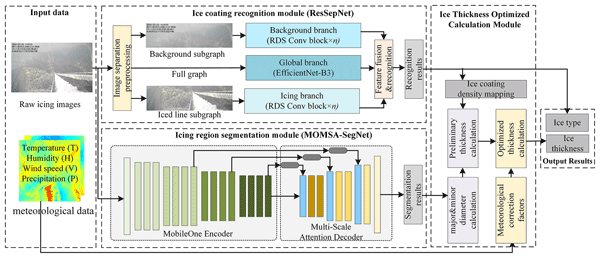
This paper integrates image recognition and semantic segmentation techniques into a dual-task deep learning model. A key innovation is the incorporation of physical characteristics of ice-covered transmission lines to physically constrain and refine the deep learning outputs. This framework not only achieves accurate identification of ice types on transmission lines but also significantly improves the computational accuracy of ice thickness estimation.
Wenjie Zhang, Mengxi Qu, Ranhao Sun, Jiarui Zhao, Guicai Ning, Aziz Inamov, Zokhid Mamatkulovd, Di Zhou, Bakhtiyor Pulatov, and Yuanjian Yang
EGUsphere, https://doi.org/10.5194/egusphere-2026-2290, https://doi.org/10.5194/egusphere-2026-2290, 2026
Short summary
Short summary
MODIS satellite temperature data lack full validation across China. Using 18 years of balloon data from 74 stations, we evaluated its accuracy, lower-atmosphere stability, and inversion detection. Nighttime accuracy exceeds daytime; upper layers outperform lower layers . A bias exists at 700 hPa. Stability retrieval is more reliable by day. Inversion detection rates are low: 6.6 % day, 13.1 % night. This guides appropriate use of MOD07_L2 in atmospheric science, hydrology, and ecology.
Nailong Zhang, Gang Qiu, Haonan Ji, Xiao Tan, and Wenjie Zhang
EGUsphere, https://doi.org/10.5194/egusphere-2026-435, https://doi.org/10.5194/egusphere-2026-435, 2026
Preprint archived
Short summary
Short summary
Reliable rainfall forecasts several weeks ahead are essential for managing weather risks in the Yangtze River Delta, where floods and winter icing cause major impacts. This study evaluates whether reducing systematic forecast biases can improve rainfall predictions. An adaptive correction applied to existing forecast models leads to higher accuracy, better spatial agreement, and improved representation of extreme events, supporting more effective early warning and risk management.
Xiong Xiong, Jiajun Chen, Yanchao Zhang, Xin Chen, Yingchao Zhang, and Xiaoling Ye
Atmos. Meas. Tech., 18, 737–748, https://doi.org/10.5194/amt-18-737-2025, https://doi.org/10.5194/amt-18-737-2025, 2025
Short summary
Short summary
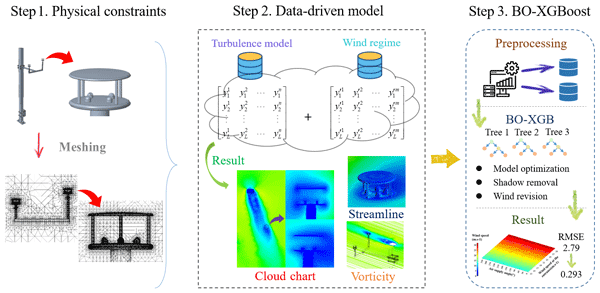
This study introduces a novel quality control method, physical constraints and data-driven collaborative artificial intelligence (PD-BX), aimed at reducing wind speed measurement errors caused by the complex environments surrounding high-speed railway lines, thereby enhancing the accuracy and reliability of measurements.
Cited articles
Breiman, L.: Random forests, Mach. Learn., 45, 5–32, https://doi.org/10.1023/A:1010933404324, 2001.
Breiman, L., Friedman, J., Olshen, R. A., and Stone, C. J.: Classification and regression trees Chapman & Hall, New York, 22 pp., ISBN 9780412048418, 1984.
Brotzge, J. A., Berchoff, D., Carlis, D. L., Carr, F. H., Carr, R. H., Gerth, J. J., Gross, B. D., Hamill, T. M., Haupt, S. E., Jacobs, N., McGovern, A., Stensrud, D. J., Szatkowski, G., Szunyogh, I., and Wang, X.: Challenges and Opportunities in Numerical Weather Prediction, B. Am. Meteorol. Soc., 104, E698–E705, https://doi.org/10.1175/BAMS-D-22-0172.1, 2023.
Demolli, H., Dokuz, A. S., Ecemis, A., and Gokcek, M.: Wind power forecasting based on daily wind speed data using machine learning algorithms, Energ. Convers. Manage., 198, 111823, https://doi.org/10.1016/j.enconman.2019.111823, 2019.
Enevoldsen, P. and Valentine, S. V.: Do onshore and offshore wind farm development patterns differ?, Energy Sustain. Dev., 35, 41–51, https://doi.org/10.1016/j.esd.2016.10.002, 2016.
Gille, S. T.: Global observations of the land breeze, Geophys. Res. Lett., 32, L05605, https://doi.org/10.1029/2004GL022139, 2005.
Global Wind Energy Council: GWEC Global Wind Report 2025, https://www.gwec.net (last access: 23 April 2025), 2025.
Gong, H., Kan, Y., Yang, D., Huang, W., Fan, C., Hao, R., Sha, L., Deng, M., and Zhang, H.: Machine learning improves mesoscale offshore wind resource assessment over the Yellow Sea, J. Meteorol. Res., 39, 1510–1526, https://doi.org/10.1007/s13351-025-5051-z, 2025.
Guyon, I., Weston, J., Barnhill, S., and Vapnik, V.: Gene selection for cancer classification using support vector machines, Mach. Learn., 46, 389–422, https://doi.org/10.1023/A:1012487302797, 2002.
He, Q., Wang, J., and Lu, H.: A hybrid system for short-term wind speed forecasting, Appl. Energ., 226, 756–771, https://doi.org/10.1016/j.apenergy.2018.06.053, 2018.
Kang, M., Ko, K., and Kim, M.: Verification of the Reliability of Offshore Wind Resource Prediction Using an Atmosphere–Ocean Coupled Model, Energies, 13, 254, https://doi.org/10.3390/en13010254, 2020.
Katinas, V., Gecevicius, G., and Marciukaitis, M.: An investigation of wind power density distribution at location with low and high wind speeds using statistical model, Appl. Energ., 218, 442–451, https://doi.org/10.1016/j.apenergy.2018.02.163, 2018.
Khazaei, S., Ehsan, M., Soleymani, S., and Mohammadnezhad-Shourkaei, H.: A high-accuracy hybrid method for short-term wind power forecasting, Energy, 238, 122020, https://doi.org/10.1016/j.energy.2021.122020, 2022.
Landberg, L.: Short-term prediction of the power production from wind farms, J. Wind Eng. Ind. Aerod., 80, 207–220, https://doi.org/10.1016/S0167-6105(98)00192-5, 1999.
Lee, M., Lee, J. H., and Kim, D. H.: Gender recognition using optimal gait feature based on recursive feature elimination in normal walking, Expert Syst. Appl., 189, 116040, https://doi.org/10.1016/j.eswa.2021.116040, 2022.
Ley, C., Martin, R. K., Pareek, A., Groll, A., Seil, R., and Tischer, T.: Machine learning and conventional statistics: making sense of the differences, Knee Surg. Sport. Tr. A., 30, 753–757, https://doi.org/10.1007/s00167-022-06896-6, 2022.
Liu, X., Zhang, H., Kong, X., and Lee, K. Y.: Wind speed forecasting using deep neural network with feature selection, Neurocomputing, 397, 393–403, https://doi.org/10.1016/j.neucom.2019.08.108, 2020.
Lloyd, S. P.: Least squares quantization in PCM, IEEE T. Inform. Theory, 28, 129–137, https://doi.org/10.1109/TIT.1982.1056489, 1982.
Lu, W.: Research on Power Prediction Algorithm for Offshore Wind Farms Based on Dual-Layer Deep Learning, Master's thesis, Nanjing University of Information Science and Technology, https://doi.org/10.27248/d.cnki.gnjqc.2025.000483, 2025.
MacQueen, J.: Some methods for classification and analysis of multivariate observations, Proceedings of the Fifth Berkeley Symposium on Mathematical Statistics and Probability, Vol. 1, 281–297, ISBN 9780520366701, 1967.
Mockus, J.: On Bayesian Methods for Seeking the Extremum, Proceedings of the IFIP Technical Conference, 400–404, https://doi.org/10.1007/978-3-662-38527-2_55, 1975.
Ouarda, T. B. M. J. and Charron, C.: Non-stationary statistical modelling of wind speed: A case study in eastern Canada, Energ. Convers. Manage., 236, 114028, https://doi.org/10.1016/j.enconman.2021.114028, 2021.
Parri, S. and Teeparthi, K.: SVMD-TF-QS: An efficient and novel hybrid methodology for the wind speed prediction, Expert Syst. Appl., 249, 123516, https://doi.org/10.1016/j.eswa.2024.123516, 2024.
Prósper, M. A., Otero-Casal, C., Fernández, F. C., and Miguez-Macho, G.: Wind power forecasting for a real onshore wind farm on complex terrain using WRF high resolution simulations, Renew. Energ., 135, 674–686, https://doi.org/10.1016/j.renene.2018.12.047, 2019.
Ren, C., Ng, Y. Y., and Katzschner, L.: Urban climatic map studies: a review, Int. J. Climatol., 31, 2213–2233, https://doi.org/10.1002/joc.2237, 2011.
Salcedo-Sanz, S., Ortiz-García, E. G., Pérez-Bellido, Á. M., Portilla-Figueras, A., and Prieto, L.: Short term wind speed prediction based on evolutionary support vector regression algorithms, Expert Syst. Appl., 38, 4052–4057, https://doi.org/10.1016/j.eswa.2010.09.067, 2011.
Salvão, N., Monteiro, M., and Soares, C. G.: An assessment of two wind model uncertainties during storm events affecting Portugal, Ocean Eng., 333, 121395, https://doi.org/10.1016/j.oceaneng.2025.121395, 2025.
Shahriari, B., Swersky, K., Wang, Z., Adams, R. P., and De Freitas, N.: Taking the human out of the loop: A review of Bayesian optimization, P. IEEE, 104, 148–175, https://doi.org/10.1109/JPROC.2015.2494218, 2016.
Shen, C.: Climate-Driven Characteristics of Sea-Land Breezes Over the Globe, Geophys. Res. Lett., 48, e2020GL092308, https://doi.org/10.1029/2020GL092308, 2021.
Sinaga, K. P. and Yang, M. S.: Unsupervised K-Means Clustering Algorithm, IEEE Access, 8, 100156–100172, https://doi.org/10.1109/ACCESS.2020.2988796, 2020.
Skamarock, W. C., Klemp, J. B., Dudhia, J., Gill, D. O., Barker, D. M., Duda, M. G., Huang, X. Y., Wang, W., and Powers, J. G.: A description of the advanced research WRF version 4, NCAR Technical Note NCAR/TN-556+STR, https://doi.org/10.5065/1dfh-6p97, 2019.
Son, N. and Jung, M.: Analysis of meteorological factor multivariate models for medium- and long-term photovoltaic solar power forecasting using long short-term memory, Appl. Sci., 11, 316, https://doi.org/10.3390/app11010316, 2021.
Stone, M.: Cross-validatory choice and assessment of statistical predictions, J Roy. Stat. Soc. B Met., 36, 111–147, https://doi.org/10.1111/j.2517-6161.1974.tb00994.x, 1974.
Sun, C., Tao, S., Luo, Y., Wang, S., and Song, L.: Land-sea breeze and the application of wind profile in the wind speed forecasting to wind farm along the coast, Chinese J. Geophys., 52, 630–636, 2009.
Tsai, C.-C., Hong, J.-S., Chang, P.-L., Chen, Y.-R., Su, Y.-J., and Li, C.-H.: Application of bias correction to improve WRF ensemble wind speed forecast, Atmosphere, 12, 1688, https://doi.org/10.3390/atmos12121688, 2021.
Wang, F., Tong, S., Sun, Y., Xie, Y., Zhen, Z., Li, G., Cao, C., Duić, N., and Liu, D.: Wind process pattern forecasting based ultra-short-term wind speed hybrid prediction, Energy, 255, 124509, https://doi.org/10.1016/j.energy.2022.124509, 2022.
Wang, Q., Zhang, H., Zong, L., Su, H., Yang, Y., and Gao, Z.: Synoptic cause of a continuous conductor icing event on ultra-high-voltage transmission lines in northern Guangxi in 2015, J. Trop. Meteorol., 37, 579–589, https://doi.org/10.16032/j.issn.1004-4965.2021.055, 2021.
Xiong, X., Zou, R., Sheng, T., Zeng, W., and Ye, X.: An ultra-short-term wind speed correction method based on the fluctuation characteristics of wind speed, Energy, 283, 129012, https://doi.org/10.1016/j.energy.2023.129012, 2023.
Xu, W., Liu, P., Cheng, L., Zhou, Y., Xia, Q., Yu, G., and Liu, Y.: Multi-step wind speed prediction by combining a WRF simulation and an error correction strategy, Renew. Energ., 163, 772–782, https://doi.org/10.1016/j.renene.2020.09.032, 2021.
Xu, Y., Jia, L., and Yang, W.: Correlation based neuro-fuzzy Wiener type wind power forecasting model by using special separate signals, Energ. Convers. Manage., 253, 115173, https://doi.org/10.1016/j.enconman.2021.115173, 2022.
Yildiz, C., Acikgoz, H., Korkmaz, D., and Budak, U.: An improved residual-based convolutional neural network for very short-term wind power forecasting, Energ. Convers. Manage., 228, 113731, https://doi.org/10.1016/j.enconman.2020.113731, 2021.
Yousuf, M. U., Al-Bahadly, I., and Avci, E.: Statistical wind speed forecasting models for small sample datasets: Problems, improvements, and prospects, Energ. Convers. Manage., 261, 115658, https://doi.org/10.1016/j.enconman.2022.115658, 2022.
Zhao, J., Wang, J., Guo, Z., Guo, Y., and Lin, W.: Multi-step wind speed forecasting based on numerical simulations and an optimized stochastic ensemble method, Appl. Energ., 255, 113833, https://doi.org/10.1016/j.apenergy.2019.113833, 2019.
Zhao, X., Liu, J., Yu, D., and Chang, J.: One-day-ahead probabilistic wind speed forecast based on optimized numerical weather prediction data, Energ. Convers. Manage., 164, 560–569, https://doi.org/10.1016/j.enconman.2018.03.036, 2018.
Zheng, C., Pan, J., and Li, C.: Global oceanic wind speed trends, Ocean Coast. Manage., 129, 15–24, https://doi.org/10.1016/j.ocecoaman.2016.05.002, 2016.
Zheng, J. and Wang, J.: Short-term wind speed forecasting based on recurrent neural networks and Levy crystal structure algorithm, Energy, 293, 130580, https://doi.org/10.1016/j.energy.2024.130580, 2024.
Zhou, R. and He, X.: Effect of model horizontal resolution on the surface wind speed forecast in the Northeast China, Advances in Meteorological Science and Technology, 7, 95–100, 2017.
Zhou, S., Gao, C. Y., Duan, Z., Xi, X., and Li, Y.: A robust error correction method for numerical weather prediction wind speed based on Bayesian optimization, variational mode decomposition, principal component analysis, and random forest: VMD-PCA-RF (version 1.0.0), Geosci. Model Dev., 16, 6247–6266, https://doi.org/10.5194/gmd-16-6247-2023, 2023.
Zhou, Z. and Ji, F.: Deep forest, Natl. Sci. Rev., 6, 74–86, https://doi.org/10.1093/nsr/nwy108, 2019.
Short summary
We developed a Bi-clustered Recursive Bayesian Forest model that improves wind speed forecast accuracy by 48.2 % and reduces error metrics by over 60 %. The model incorporates sea-land breeze, weather stability, and atmospheric circulation indices as features, and uses bi-clustering modal classification to mitigate wind speed magnitude interactions. This machine learning-based correction technique outperforms traditional numerical models, providing more reliable wind speed forecasting.
We developed a Bi-clustered Recursive Bayesian Forest model that improves wind speed forecast...