
Articles | Volume 19, issue 15
https://doi.org/10.5194/amt-19-5267-2026
© Author(s) 2026. This work is distributed under
the Creative Commons Attribution 4.0 License.
the Creative Commons Attribution 4.0 License.
https://doi.org/10.5194/amt-19-5267-2026
© Author(s) 2026. This work is distributed under
the Creative Commons Attribution 4.0 License.
the Creative Commons Attribution 4.0 License.
Research article
| 
12 Aug 2026
Research article |
| 12 Aug 2026
| 12 Aug 2026
An absolute reference frame for nitrous oxide clumped and position-specific isotopes provided by thermal equilibration

Empa, Laboratory for Air Pollution/Environmental Technology, 8600 Dübendorf, Switzerland
Nico Kueter
Department of Earth and Planetary Sciences, ETH Zürich, 8092 Zurich, Switzerland
Geological Institute, RWTH Aachen University, 52062 Aachen, Germany
Simone Brunamonti
Empa, Laboratory for Air Pollution/Environmental Technology, 8600 Dübendorf, Switzerland
Naizhong Zhang
Empa, Laboratory for Air Pollution/Environmental Technology, 8600 Dübendorf, Switzerland
Ivan Prokhorov
Empa, Laboratory for Air Pollution/Environmental Technology, 8600 Dübendorf, Switzerland
Noémy Chénier
Empa, Laboratory for Air Pollution/Environmental Technology, 8600 Dübendorf, Switzerland
Department of Environmental Science, University of Basel, 4056 Basel, Switzerland
Lukas Emmenegger
Empa, Laboratory for Air Pollution/Environmental Technology, 8600 Dübendorf, Switzerland
Béla Tuzson
Empa, Laboratory for Air Pollution/Environmental Technology, 8600 Dübendorf, Switzerland
Joachim Mohn
Empa, Laboratory for Air Pollution/Environmental Technology, 8600 Dübendorf, Switzerland
Related authors
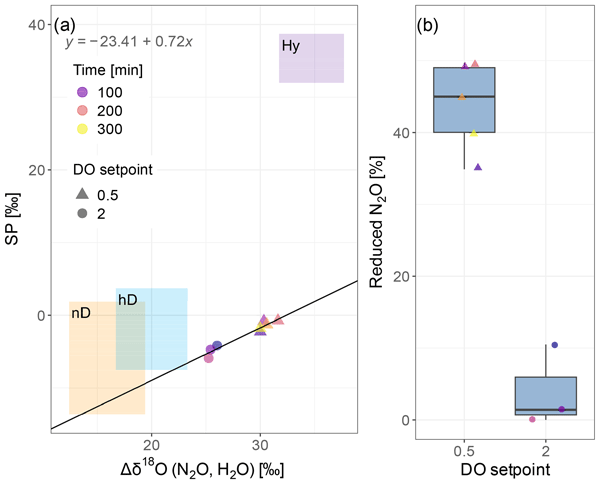
Hannes Keck, Laurence Strubbe, Paul M. Magyar, Adriano Joss, Andreas Froemelt, André Kupferschmid, Klaus-Holger Knorr, and Joachim Mohn
Atmos. Meas. Tech., 19, 6311–6326, https://doi.org/10.5194/amt-19-6311-2026, https://doi.org/10.5194/amt-19-6311-2026, 2026
Short summary
Short summary
We monitored nitrous oxide in a pilot wastewater treatment plant in real time to understand how microbes produce and remove this greenhouse gas. We designed and tested a laser-based analytical setup, with which we were able to show that denitrification is the main source of nitrous oxide emissions and that low oxygen concentrations enhances nitrous oxide removal. Our approach offers a new way to monitor the wastewater treatment processes and to cut climate-relevant nitrous oxide emissions.
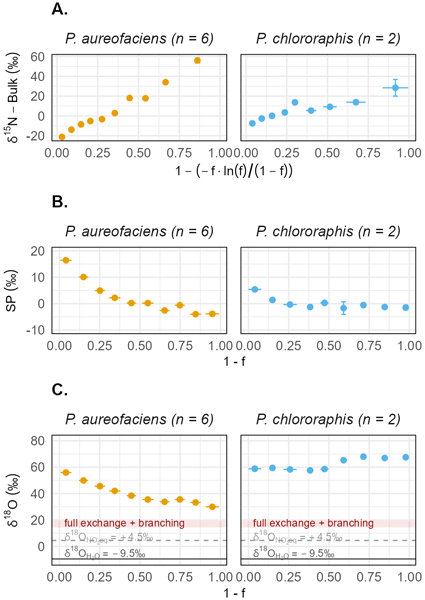
Noémy Chénier, Paul M. Magyar, Jakob Zopfi, Claudia Frey, Thomas Kuhn, Moritz F. Lehmann, and Joachim Mohn
Biogeosciences, 23, 6705–6724, https://doi.org/10.5194/bg-23-6705-2026, https://doi.org/10.5194/bg-23-6705-2026, 2026
Short summary
Short summary
N₂O is a greenhouse gas produced by microbes during nitrogen cycling. We studied two bacterial species and found that the isotope signatures of the N₂O they produced changed strongly depending on growth conditions and cell activity. Early during growth, the distribution of N isotopes within the N₂O molecule also changed unexpectedly. These results show that N₂O isotope signatures are more variable than previously assumed and depend strongly on physiology.
Hannes Keck, Laurence Strubbe, Paul M. Magyar, Adriano Joss, Andreas Froemelt, André Kupferschmid, Klaus-Holger Knorr, and Joachim Mohn
Atmos. Meas. Tech., 19, 6311–6326, https://doi.org/10.5194/amt-19-6311-2026, https://doi.org/10.5194/amt-19-6311-2026, 2026
Short summary
Short summary
We monitored nitrous oxide in a pilot wastewater treatment plant in real time to understand how microbes produce and remove this greenhouse gas. We designed and tested a laser-based analytical setup, with which we were able to show that denitrification is the main source of nitrous oxide emissions and that low oxygen concentrations enhances nitrous oxide removal. Our approach offers a new way to monitor the wastewater treatment processes and to cut climate-relevant nitrous oxide emissions.
Noémy Chénier, Paul M. Magyar, Jakob Zopfi, Claudia Frey, Thomas Kuhn, Moritz F. Lehmann, and Joachim Mohn
Biogeosciences, 23, 6705–6724, https://doi.org/10.5194/bg-23-6705-2026, https://doi.org/10.5194/bg-23-6705-2026, 2026
Short summary
Short summary
N₂O is a greenhouse gas produced by microbes during nitrogen cycling. We studied two bacterial species and found that the isotope signatures of the N₂O they produced changed strongly depending on growth conditions and cell activity. Early during growth, the distribution of N isotopes within the N₂O molecule also changed unexpectedly. These results show that N₂O isotope signatures are more variable than previously assumed and depend strongly on physiology.
Arash Hamzehloo, Erik F. M. Koene, Nikolai Ponomarev, Michael Steiner, Sven Werchner, Xavier Lapillonne, William B. Sawyer, Michael Jähn, Lukas Emmenegger, and Dominik Brunner
EGUsphere, https://doi.org/10.5194/egusphere-2026-2531, https://doi.org/10.5194/egusphere-2026-2531, 2026
This preprint is open for discussion and under review for Geoscientific Model Development (GMD).
Short summary
Short summary
Tracking where greenhouse gases and air pollutants come from, and where plants absorb carbon dioxide, requires demanding computer simulations of the atmosphere. We rewrote key parts of a widely used atmospheric model so that they run efficiently on graphics processors. The new code runs six times faster than before and uses energy more efficiently. This supports air-quality monitoring, climate research, and combining satellite data with high-resolution simulations of cities and ecosystems.
Simone Brunamonti, Yann Poltera, Gonzague Romanens, Alex Weitnauer, Philipp Scheidegger, Adrianos Filinis, Alistair Bell, Giovanni Martucci, Frank Gunther Wienhold, Thomas Peter, Peter Oelsner, Ruud Dirksen, Alexander Haefele, Lukas Emmenegger, Gunter Stober, and Béla Tuzson
EGUsphere, https://doi.org/10.5194/egusphere-2026-4762, https://doi.org/10.5194/egusphere-2026-4762, 2026
Short summary
Short summary
Accurate measurements of the concentration of water vapor in the upper atmosphere are essential for reliable climate predictions. We investigated the performance of a new lightweight (less than 4 kg) hygrometer, based on laser absorption spectroscopy, in a series of atmospheric test flights using weather balloons, reaching up to 35 km altitude. The results demonstrate the high accuracy and suitability of this technique for applications in long-term climate monitoring and atmospheric research.
Arlett Díaz-Zurita, Simone Brunamonti, Alexander Haefele, Martine Collaud Coen, Giovanni Martucci, Benjamin Tobias Brem, Martin Gysel-Beer, Hassan Lyamani, Gloria Titos, Daniel Pérez-Ramírez, Christoph Hüglin, Lucas Alados-Arboledas, Alejandro Keller, Frank Gunther Wienhold, Maxime Hervo, and Francisco Navas-Guzmán
EGUsphere, https://doi.org/10.5194/egusphere-2026-4361, https://doi.org/10.5194/egusphere-2026-4361, 2026
Short summary
Short summary
This study provides a unique framework for assessing aerosol hygroscopicity by combining Raman lidar observations with vertically resolved in situ measurements from the balloon-borne Compact Backscatter Aerosol Detector coupled with Vaisala RS41 radiosondes and ground-based tandem nephelometers. The three approaches showed good agreement. Raman lidar identified more than 200 hygroscopic aerosol layers, constituting one of the largest datasets available for statistical investigations.
Julius C. Havsteen, Mehr Fatima, Simone Brunamonti, Andrea Pogány, Thomas Hausmaninger, Benjamin Wolf, Reinhard Well, and Joachim Mohn
Atmos. Meas. Tech., 19, 3557–3580, https://doi.org/10.5194/amt-19-3557-2026, https://doi.org/10.5194/amt-19-3557-2026, 2026
Short summary
Short summary
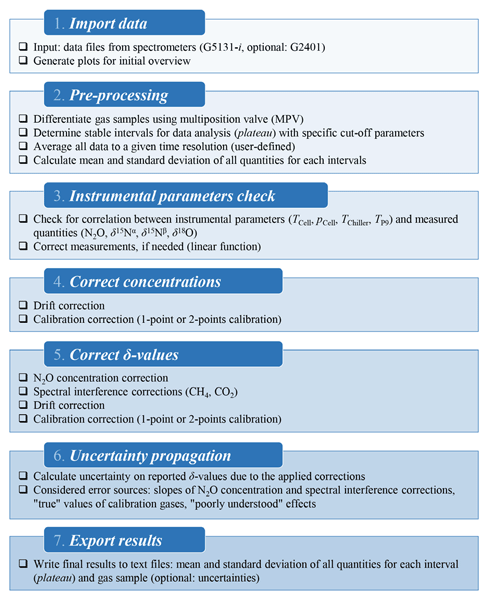
We present a new correction and calibration protocol to improve the accuracy of nitrous oxide isotope measurements obtained using laser spectroscopy. Through laboratory experiments, spectral simulations, and an automated MATLAB (Matrix Laboratory) reduction scheme, we identify and correct biases caused by matrix gas composition, spectral interferences and instrument variability. This protocol enables researchers to produce more reliable isotope data and supports standardised isotope analyses across laboratories.
Ann-Kristin Kunz, Samuel Hammer, Patrick Aigner, Laura Bignotti, Lars Borchardt, Jia Chen, Julian Della Coletta, Lukas Emmenegger, Markus Eritt, Xochilt Gutiérrez, Josh Hashemi, Rainer Hilland, Christopher Holst, Armin Jordan, Natascha Kljun, Richard Kneißl, Changxing Lan, Virgile Legendre, Ingeborg Levin, Benjamin Loubet, Matthias Mauder, Betty Molinier, Susanne Preunkert, Michel Ramonet, Stavros Stagakis, and Andreas Christen
Atmos. Chem. Phys., 26, 4967–5003, https://doi.org/10.5194/acp-26-4967-2026, https://doi.org/10.5194/acp-26-4967-2026, 2026
Short summary
Short summary
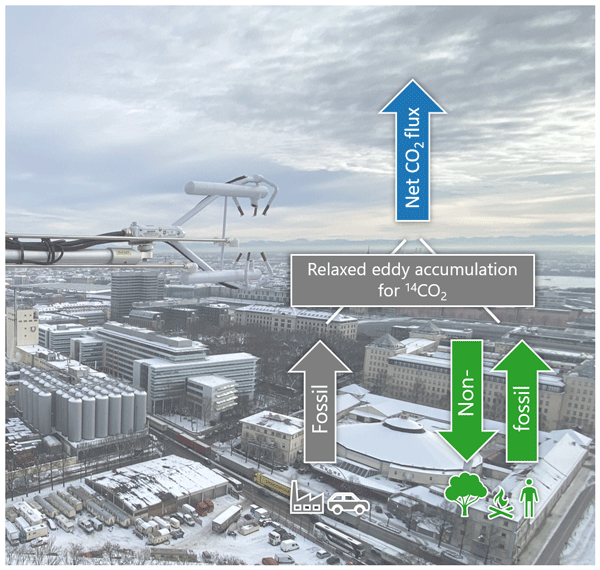
We present radiocarbon (14C)-based fossil fuel CO2 fluxes from relaxed eddy accumulation measurements on tall towers in the cities of Zurich, Paris, and Munich. By separating net CO2 fluxes into fossil and non-fossil components, these data reveal significant and variable contributions from human, plant, and soil respiration, as well as point-source emissions. These unique insights into CO2 flux composition offer crucial information for observation-based validation of urban emission estimates.
Luce Creman, Stuart K. Grange, Pascal Rubli, Andrea Fischer, Dominik Brunner, Christoph Hueglin, Lukas Emmenegger, and Leonie Bernet
Atmos. Meas. Tech., 19, 1441–1463, https://doi.org/10.5194/amt-19-1441-2026, https://doi.org/10.5194/amt-19-1441-2026, 2026
Short summary
Short summary
ZiCOS-L is a network of low-cost sensors in Zurich (Switzerland) to monitor carbon dioxide (CO2) concentrations. After correcting for drift and checking the sensor performance, we found that local factors like traffic, public events and vegetation affect CO2 levels. Even though the sensors have higher uncertainties than other sensors, the lower cost allows for a denser network with detailed insights into CO2 levels across the city, helping cities track emissions and support climate action plans.
Patrick Aigner, Jia Chen, Felix Böhm, Mali Chariot, Lukas Emmenegger, Lars Frölich, Stuart Grange, Daniel Kühbacher, Klaus Kürzinger, Olivier Laurent, Moritz Makowski, Pascal Rubli, Adrian Schmitt, and Adrian Wenzel
Atmos. Meas. Tech., 19, 745–773, https://doi.org/10.5194/amt-19-745-2026, https://doi.org/10.5194/amt-19-745-2026, 2026
Short summary
Short summary
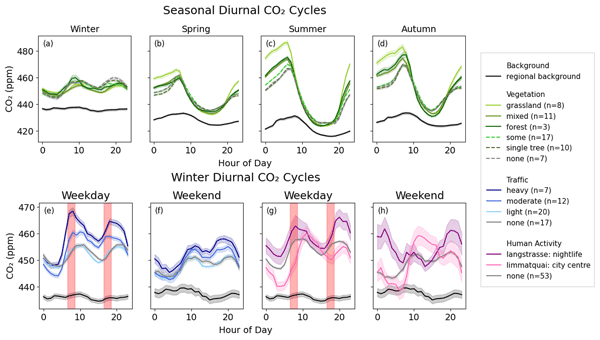
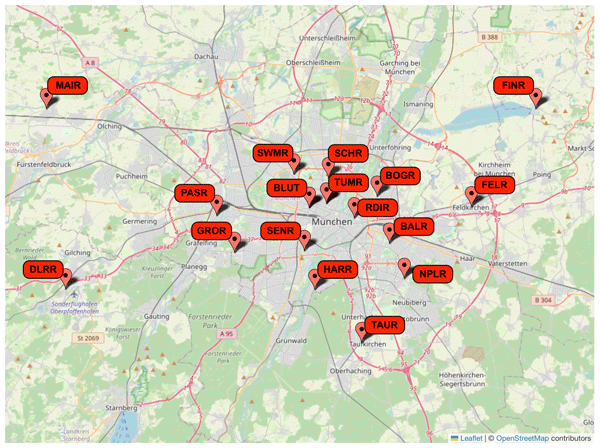
Dense urban CO2 monitoring is challenging due to cost and operational constraints. We developed a mid-cost sensor network for Munich, deployed on 17 rooftops. Temperature-stabilized enclosures and automated 2-point calibration ensured reliable performance, assessed by side-by-side comparison with a Picarro reference. In 1.5 years, the network collected 90 million measurements and resolved urban-rural gradients and seasonal diurnal patterns, capturing spatial CO2 variability at city scale.
Nikolai Ponomarev, Michael Steiner, Erik Koene, Pascal Rubli, Stuart Grange, Lionel Constantin, Michel Ramonet, Leslie David, Arash Hamzehloo, Lukas Emmenegger, and Dominik Brunner
Atmos. Chem. Phys., 26, 547–570, https://doi.org/10.5194/acp-26-547-2026, https://doi.org/10.5194/acp-26-547-2026, 2026
Short summary
Short summary
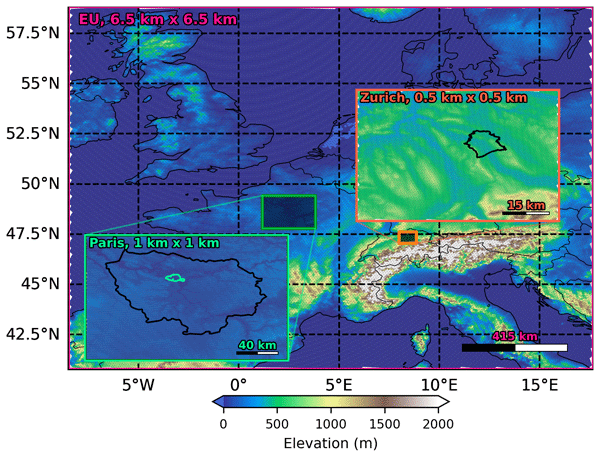
Urban inversions are gaining increasing attention, as cities are major contributors to anthropogenic emissions, making accurate emission estimates at this scale essential for supporting climate action plans and verifying reported emission reductions. We estimated carbon dioxide emissions in Zurich and Paris over one year by combining atmospheric observations with mesoscale model simulations. Our study shows how factors like city size, terrain, and measurement methods affect emission estimates.
Sara M. Defratyka, Julianne M. Fernandez, Getachew A. Adnew, Guannan Dong, Peter M. J. Douglas, Daniel L. Eldridge, Giuseppe Etiope, Thomas Giunta, Mojhgan A. Haghnegahdar, Alexander N. Hristov, Nicole Hultquist, Iñaki Vadillo, Josue Jautzy, Ji-Hyun Kim, Jabrane Labidi, Ellen Lalk, Wil Leavitt, Jiawen Li, Li-Hung Lin, Jiarui Liu, Lucía Ojeda, Shuhei Ono, Jeemin H. Rhim, Thomas Röckmann, Barbara Sherwood Lollar, Malavika Sivan, Jiayang Sun, Gregory T. Ventura, David T. Wang, Edward D. Young, Naizhong Zhang, and Tim Arnold
Earth Syst. Sci. Data, 17, 6889–6910, https://doi.org/10.5194/essd-17-6889-2025, https://doi.org/10.5194/essd-17-6889-2025, 2025
Short summary
Short summary
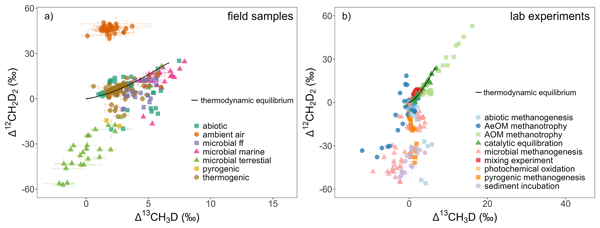
Measurement of methane’s doubly substituted isotopologues at natural abundances holds promise for better constraining the Earth’s atmospheric CH4 budget. We compiled 1475 measurements from field samples and laboratory experiments, conducted since 2014, to facilitate the differentiation of CH4 formation pathways and processes, to identify existing gaps limiting application of Δ13CH3D and Δ12CH2D2, and to develop isotope ratio source signature inputs for global CH4 flux modelling.
Dominik Brunner, Ivo Suter, Leonie Bernet, Lionel Constantin, Stuart K. Grange, Pascal Rubli, Junwei Li, Jia Chen, Alessandro Bigi, and Lukas Emmenegger
Atmos. Chem. Phys., 25, 14387–14410, https://doi.org/10.5194/acp-25-14387-2025, https://doi.org/10.5194/acp-25-14387-2025, 2025
Short summary
Short summary
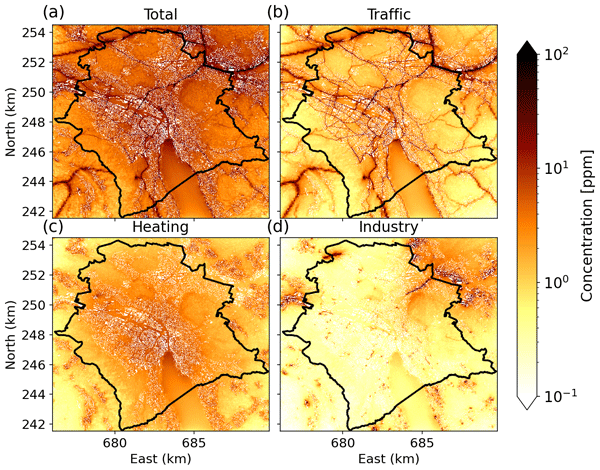
To support the city of Zurich in tracking its path to net-zero greenhouse gas emissions planned to be reached by 2040, a CO2 emission monitoring system was established. The system combines a dense network of CO2 sensors with a high-resolution atmospheric transport model GRAMM/GRAL. This study presents the setup of the model together with its numerous inputs and evaluates its performance in comparison with observations from the CO2 sensor network.
Rainer Hilland, Josh Hashemi, Stavros Stagakis, Dominik Brunner, Lionel Constantin, Natascha Kljun, Ann-Kristin Kunz, Betty Molinier, Samuel Hammer, Lukas Emmenegger, and Andreas Christen
Atmos. Chem. Phys., 25, 14279–14299, https://doi.org/10.5194/acp-25-14279-2025, https://doi.org/10.5194/acp-25-14279-2025, 2025
Short summary
Short summary
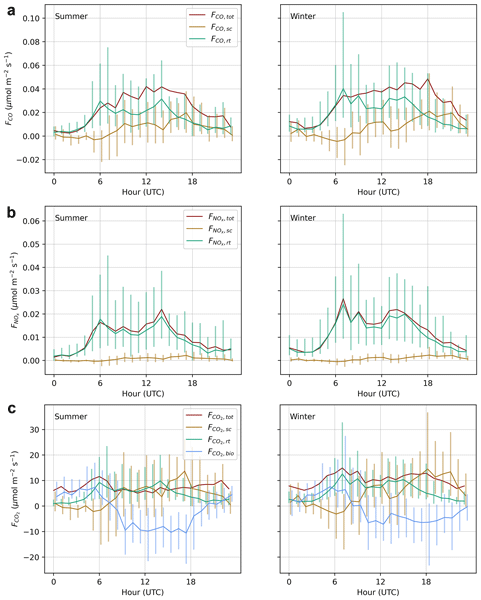
We present a study of simultaneously measured fluxes of carbon dioxide (CO2) and co-emitted species in the city of Zurich. Flux measurements of CO2 alone cannot be attributed to specific emission sectors, such as road transport or residential heating. We present a model which uses the measured ratios of CO2 to carbon monoxide (CO) and nitrogen oxides (NOx) as well as sector-specific reference ratios, to attribute measured fluxes to their emission sectors.
Yuri Brugnara, Martin Steinbacher, Simone Baffelli, and Lukas Emmenegger
Atmos. Chem. Phys., 25, 14221–14236, https://doi.org/10.5194/acp-25-14221-2025, https://doi.org/10.5194/acp-25-14221-2025, 2025
Short summary
Short summary
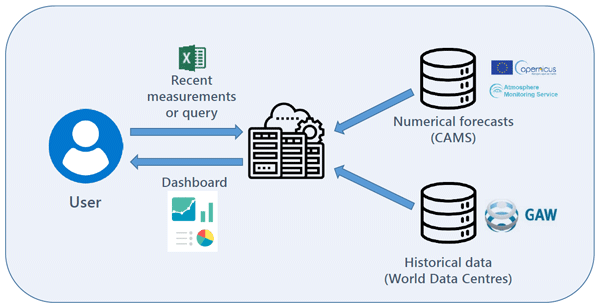
GAW-QC (Global Atmosphere Watch-Quality Control) is an interactive dashboard for the quality control of in-situ atmospheric composition measurements made at stations taking part in the Global Atmosphere Watch network. Even though it is mainly targeted at station operators who want to analyze recent, not yet published measurements, it allows anybody to verify the quality of already published measurements using various anomaly detection algorithms as well as visual comparisons.
Simone Brunamonti, Harald Saathoff, Albert Hertzog, Glenn Diskin, Masatomo Fujiwara, Karen Rosenlof, Ottmar Möhler, Béla Tuzson, Lukas Emmenegger, Nadir Amarouche, Georges Durry, Fabien Frérot, Jean-Christophe Samake, Claire Cenac, Julio Lopez, Paul Monnier, and Mélanie Ghysels
Atmos. Meas. Tech., 18, 5321–5348, https://doi.org/10.5194/amt-18-5321-2025, https://doi.org/10.5194/amt-18-5321-2025, 2025
Short summary
Short summary
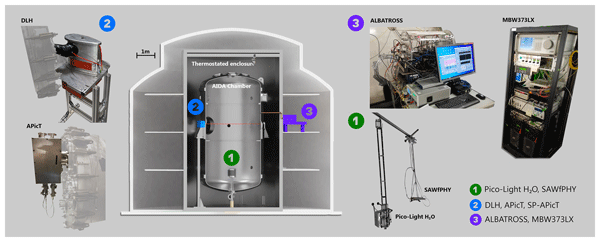
Water vapor is a strong greenhouse gas, and accurate measurements of its concentration in the upper atmosphere (~8–25 km altitude) are crucial for reliable climate predictions. We investigated the performance of four airborne hygrometers, deployed on aircraft or stratospheric balloon platforms and based on different techniques, in a climate simulation chamber. The results demonstrate the high accuracy and reliability of the involved sensors for atmospheric monitoring and research applications.
Gerrit Kuhlmann, Foteini Stavropoulou, Stefan Schwietzke, Daniel Zavala-Araiza, Andrew Thorpe, Andreas Hueni, Lukas Emmenegger, Andreea Calcan, Thomas Röckmann, and Dominik Brunner
Atmos. Chem. Phys., 25, 5371–5385, https://doi.org/10.5194/acp-25-5371-2025, https://doi.org/10.5194/acp-25-5371-2025, 2025
Short summary
Short summary
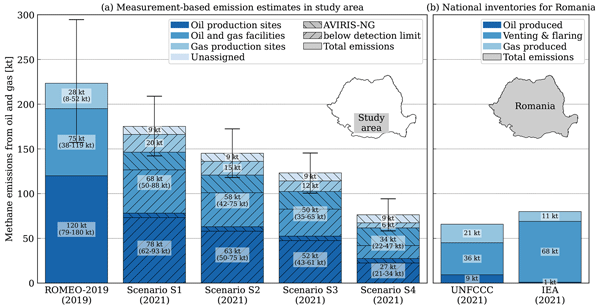
A measurement campaign in 2019 found that methane emissions from oil and gas in Romania were significantly higher than reported. In 2021, our follow-up campaign using airborne remote sensing showed a marked decreases in emissions by 20 %–60 % due to improved infrastructure. The study highlights the importance of measurement-based emission monitoring and illustrates the value of a multi-scale assessment integrating ground-based observations with large-scale airborne remote sensing campaigns.
Stuart K. Grange, Pascal Rubli, Andrea Fischer, Dominik Brunner, Christoph Hueglin, and Lukas Emmenegger
Atmos. Chem. Phys., 25, 2781–2806, https://doi.org/10.5194/acp-25-2781-2025, https://doi.org/10.5194/acp-25-2781-2025, 2025
Short summary
Short summary
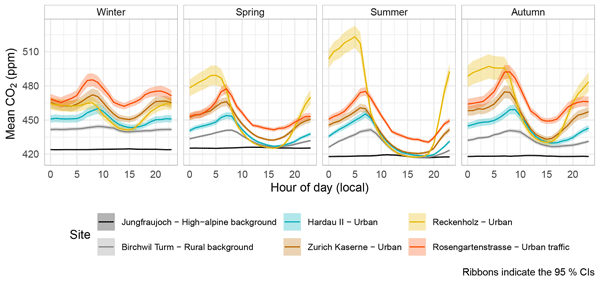
Carbon dioxide (CO2) is a very important atmospheric pollutant, and to better understand the gas's source and sink dynamics, a mid-cost sensor network hosting 26 sites was deployed in and around Zurich, Switzerland. The sensor measurement performance was quantified, and natural and anthropogenic CO2 emission sources were explored with a focus on what drives high CO2 levels. The observations will be used further by others to validate what is thought to be known about CO2 emissions in the region.
Ioannis Katharopoulos, Dominique Rust, Martin K. Vollmer, Dominik Brunner, Stefan Reimann, Simon J. O'Doherty, Dickon Young, Kieran M. Stanley, Tanja Schuck, Jgor Arduini, Lukas Emmenegger, and Stephan Henne
Atmos. Chem. Phys., 23, 14159–14186, https://doi.org/10.5194/acp-23-14159-2023, https://doi.org/10.5194/acp-23-14159-2023, 2023
Short summary
Short summary
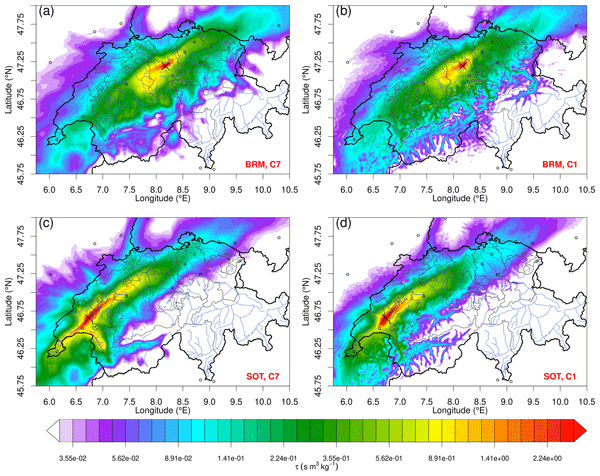
The effectiveness of climate change mitigation needs to be scrutinized by monitoring greenhouse gas (GHG) emissions. Countries report their emissions to the UN in a bottom-up manner. By combining atmospheric observations and transport models someone can independently validate emission estimates in a top-down fashion. We report Swiss emissions of synthetic GHGs based on kilometer-scale transport and inverse modeling, highlighting the role of appropriate resolution in complex terrain.
Simone Brunamonti, Manuel Graf, Tobias Bühlmann, Céline Pascale, Ivan Ilak, Lukas Emmenegger, and Béla Tuzson
Atmos. Meas. Tech., 16, 4391–4407, https://doi.org/10.5194/amt-16-4391-2023, https://doi.org/10.5194/amt-16-4391-2023, 2023
Short summary
Short summary
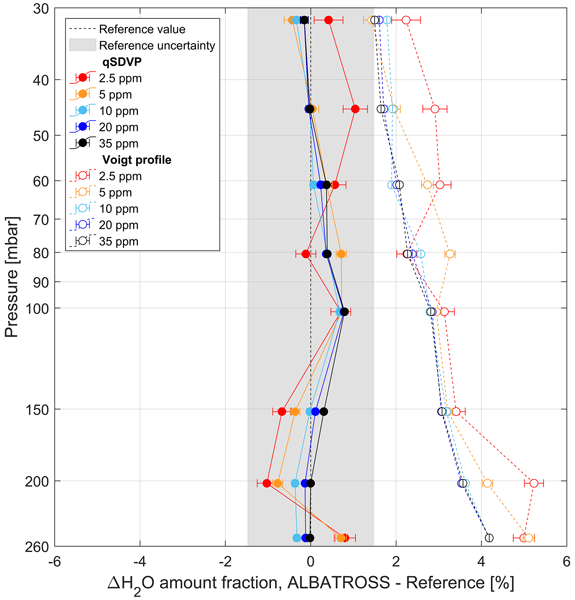
The abundance of water vapor (H2O) in the upper atmosphere has a significant impact on the rate of global warming. We developed a new lightweight spectrometer (ALBATROSS) for H2O measurements aboard meteorological balloons. Here, we assess the accuracy and precision of ALBATROSS using metrology-grade reference gases. The results demonstrate the exceptional potential of mid-infrared laser absorption spectroscopy as a new reference method for in situ measurements of H2O in the upper atmosphere.
Foteini Stavropoulou, Katarina Vinković, Bert Kers, Marcel de Vries, Steven van Heuven, Piotr Korbeń, Martina Schmidt, Julia Wietzel, Pawel Jagoda, Jaroslav M. Necki, Jakub Bartyzel, Hossein Maazallahi, Malika Menoud, Carina van der Veen, Sylvia Walter, Béla Tuzson, Jonas Ravelid, Randulph Paulo Morales, Lukas Emmenegger, Dominik Brunner, Michael Steiner, Arjan Hensen, Ilona Velzeboer, Pim van den Bulk, Hugo Denier van der Gon, Antonio Delre, Maklawe Essonanawe Edjabou, Charlotte Scheutz, Marius Corbu, Sebastian Iancu, Denisa Moaca, Alin Scarlat, Alexandru Tudor, Ioana Vizireanu, Andreea Calcan, Magdalena Ardelean, Sorin Ghemulet, Alexandru Pana, Aurel Constantinescu, Lucian Cusa, Alexandru Nica, Calin Baciu, Cristian Pop, Andrei Radovici, Alexandru Mereuta, Horatiu Stefanie, Alexandru Dandocsi, Bas Hermans, Stefan Schwietzke, Daniel Zavala-Araiza, Huilin Chen, and Thomas Röckmann
Atmos. Chem. Phys., 23, 10399–10412, https://doi.org/10.5194/acp-23-10399-2023, https://doi.org/10.5194/acp-23-10399-2023, 2023
Short summary
Short summary
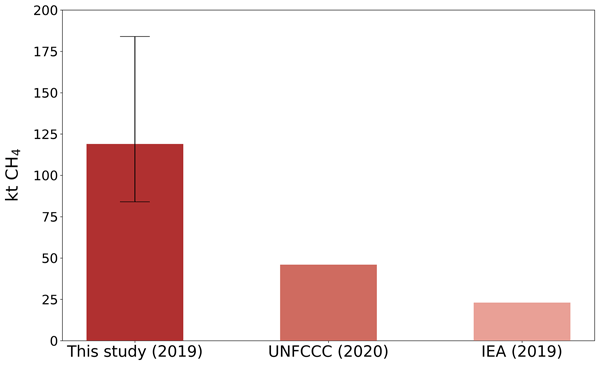
In this study, we quantify CH4 emissions from onshore oil production sites in Romania at source and facility level using a combination of ground- and drone-based measurement techniques. We show that the total CH4 emissions in our studied areas are much higher than the emissions reported to UNFCCC, and up to three-quarters of the detected emissions are related to operational venting. Our results suggest that oil and gas production infrastructure in Romania holds a massive mitigation potential.
Lars Mächler, Daniel Baggenstos, Florian Krauss, Jochen Schmitt, Bernhard Bereiter, Remo Walther, Christoph Reinhard, Béla Tuzson, Lukas Emmenegger, and Hubertus Fischer
Atmos. Meas. Tech., 16, 355–372, https://doi.org/10.5194/amt-16-355-2023, https://doi.org/10.5194/amt-16-355-2023, 2023
Short summary
Short summary
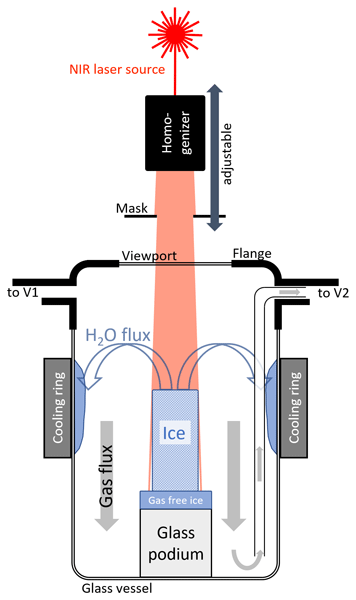
We present a new method to extract the gases from ice cores and measure their greenhouse gas composition. The ice is sublimated continuously with a near-infrared laser, releasing the gases, which are then analyzed on a laser absorption spectrometer. The main advantage over previous efforts is a low effective resolution of 1–2 cm. This capability is crucial for the analysis of highly thinned ice, as expected from ongoing drilling efforts to extend ice core history further back in time.
Simone M. Pieber, Béla Tuzson, Stephan Henne, Ute Karstens, Christoph Gerbig, Frank-Thomas Koch, Dominik Brunner, Martin Steinbacher, and Lukas Emmenegger
Atmos. Chem. Phys., 22, 10721–10749, https://doi.org/10.5194/acp-22-10721-2022, https://doi.org/10.5194/acp-22-10721-2022, 2022
Short summary
Short summary
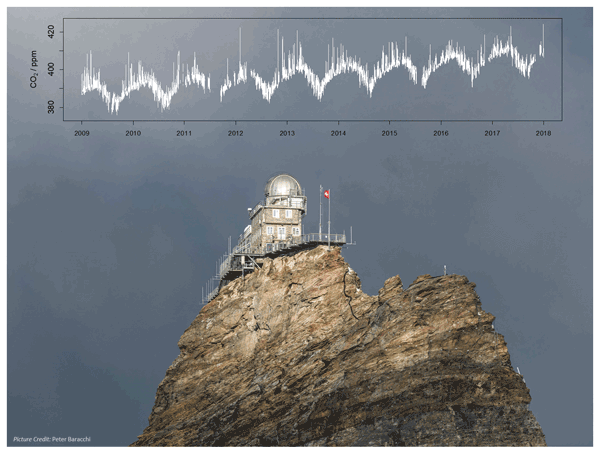
Understanding regional greenhouse gas emissions into the atmosphere is a prerequisite to mitigate climate change. In this study, we investigated the regional contributions of carbon dioxide (CO2) at the location of the high Alpine observatory Jungfraujoch (JFJ, Switzerland, 3580 m a.s.l.). To this purpose, we combined receptor-oriented atmospheric transport simulations for CO2 concentration in the period 2009–2017 with stable carbon isotope (δ13C–CO2) information.
Clare E. Singer, Benjamin W. Clouser, Sergey M. Khaykin, Martina Krämer, Francesco Cairo, Thomas Peter, Alexey Lykov, Christian Rolf, Nicole Spelten, Armin Afchine, Simone Brunamonti, and Elisabeth J. Moyer
Atmos. Meas. Tech., 15, 4767–4783, https://doi.org/10.5194/amt-15-4767-2022, https://doi.org/10.5194/amt-15-4767-2022, 2022
Short summary
Short summary
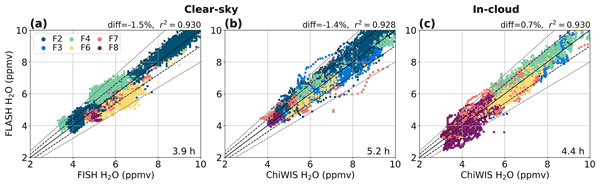
In situ measurements of water vapor in the upper troposphere are necessary to study cloud formation and hydration of the stratosphere but challenging due to cold–dry conditions. We compare measurements from three water vapor instruments from the StratoClim campaign in 2017. In clear sky (clouds), point-by-point differences were <1.5±8 % (<1±8 %). This excellent agreement allows detection of fine-scale structures required to understand the impact of convection on stratospheric water vapor.
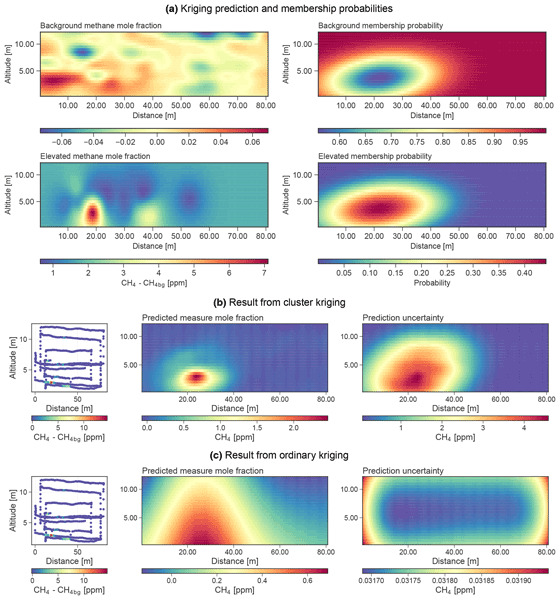
Randulph Morales, Jonas Ravelid, Katarina Vinkovic, Piotr Korbeń, Béla Tuzson, Lukas Emmenegger, Huilin Chen, Martina Schmidt, Sebastian Humbel, and Dominik Brunner
Atmos. Meas. Tech., 15, 2177–2198, https://doi.org/10.5194/amt-15-2177-2022, https://doi.org/10.5194/amt-15-2177-2022, 2022
Short summary
Short summary
Mapping trace gas emission plumes using in situ measurements from unmanned aerial vehicles (UAVs) is an emerging and attractive possibility to quantify emissions from localized sources. We performed an extensive controlled-release experiment to develop an optimal quantification method and to determine the related uncertainties under various environmental and sampling conditions. Our approach was successful in quantifying local methane sources from drone-based measurements.
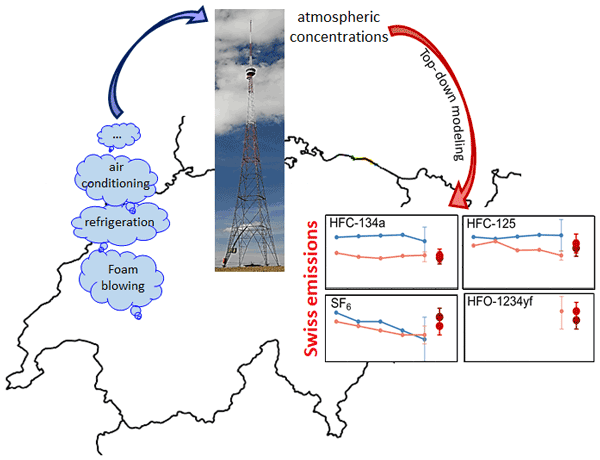
Dominique Rust, Ioannis Katharopoulos, Martin K. Vollmer, Stephan Henne, Simon O'Doherty, Daniel Say, Lukas Emmenegger, Renato Zenobi, and Stefan Reimann
Atmos. Chem. Phys., 22, 2447–2466, https://doi.org/10.5194/acp-22-2447-2022, https://doi.org/10.5194/acp-22-2447-2022, 2022
Short summary
Short summary
Artificial halocarbons contribute to ozone layer depletion and to global warming. We measured the atmospheric concentrations of halocarbons at the Beromünster tower, modelled the Swiss emissions, and compared the results to the internationally reported Swiss emissions inventory. For most of the halocarbons, we found good agreement, whereas one refrigerant might be overestimated in the inventory. In addition, we present first emission estimates of the newest types of halocarbons.
Cited articles
Bajnai, D. and Hare, V. J.: Sensitivity of tunable infrared laser spectroscopic measurements of Δ17O in CO2 to analytical conditions, Atmos. Meas. Tech., 18, 7405–7419, https://doi.org/10.5194/amt-18-7405-2025, 2025.
Bernasconi, S. M., Müller, I. A., Bergmann, K. D., Breitenbach, S. F. M., Fernandez, A., Hodell, D. A., Jaggi, M., Meckler, A. N., Millan, I., and Ziegler, M.: Reducing Uncertainties in Carbonate Clumped Isotope Analysis Through Consistent Carbonate-Based Standardization, Geochem. Geophy. Geosy., 19, 2895–2914, https://doi.org/10.1029/2017GC007385, 2018.
Bigeleisen, J.: The Relative Reaction Velocities of Isotopic Molecules, J. Chem. Phys., 17, 675–678, https://doi.org/10.1063/1.1747368, 1949.
Bigeleisen, J. and Friedman, L.: The Infra-Red Spectra of N15N14O16 and N14N15O16. Some Thermodynamic Properties of the Isotopic N2O Molecules, J. Chem. Phys., 18, 1656–1659, https://doi.org/10.1063/1.1747556, 1950.
Bigeleisen, J. and Mayer, M.: Calculation of equilibrium constants for isotopic exchange reactions, J. Chem. Phys., 15, 261–267, https://doi.org/10.1063/1.1746492, 1947.
Cancellieri, C., Gramatte, S., Politano, O., Lapeyre, L., Klimashin, F. F., Mackosz, K., Utke, I., Novotny, Z., Müller, A. M., Vockenhuber, C., Turlo, V., and Jeurgens, L. P. H.: Effect of hydrogen on the chemical state, stoichiometry and density of amorphous Al2O3 films grown by thermal atomic layer deposition, Surf. Interface Anal., 56, 293–304, https://doi.org/10.1002/sia.7282, 2024.
Cao, X. and Liu, Y.: Theoretical estimation of the equilibrium distribution of clumped isotopes in nature, Geochim. Cosmochim. Ac., 77, 292–303, https://doi.org/10.1016/j.gca.2011.11.021, 2012.
Clog, M., Lawson, M., Peterson, B., Ferreira, A. A., Neto, E. V. S., and Eiler, J. M.: A reconnaissance study of 13C–13C clumping in ethane from natural gas, Geochim. Cosmochim. Ac., 223, 229–244, https://doi.org/10.1016/j.gca.2017.12.004, 2018.
Eiler, J. M.: “Clumped-isotope” geochemistry – The study of naturally-occurring, multiply-substituted isotopologues, Earth Planet. Sc. Lett., 262, 309–327, https://doi.org/10.1016/j.epsl.2007.08.020, 2007.
Eiler, J. M. and Schauble, E. A.: 18O13C16O in Earth's atmosphere, Geochim. Cosmochim. Ac., 68, 4767–4777, https://doi.org/10.1016/j.gca.2004.05.035, 2004.
Eldridge, D. L., Korol, R., Lloyd, M. K., Turner, A. C., Webb, M. A., Miller, T. F., and Stolper, D. A.: Comparison of Experimental vs. Theoretical Abundances of 13CH3D and 12CH2D2 for Isotopically Equilibrated Systems from 1 to 500 °C, ACS Earth Space Chem., 3, 1–18, https://doi.org/10.1021/acsearthspacechem.9b00244, 2019.
Eldridge, D. L., Turner, A. C., Bill, M., Conrad, M. E., and Stolper, D. A.: Experimental determinations of carbon and hydrogen isotope fractionations and methane clumped isotope compositions associated with ethane pyrolysis from 550 to 600 °C, Geochim. Cosmochim. Ac., 355, 235–265, https://doi.org/10.1016/j.gca.2023.06.006, 2023.
Ellis, N. M., Kafaie, K. R., Wehr, R., Nelson, D. D., Herndon, S. C., Yang, W., Dawson, T. E., and Stolper, D. A.: A Method for Rapid and Precise Triple Oxygen Isotope Measurements via High-Temperature Conversion to CO Followed by Nickel-Catalyzed CO to CO2 Conversion and Laser Spectroscopy, Anal. Chem., 97, 27767–27778, https://doi.org/10.1021/acs.analchem.5c04851, 2025.
Frame, C. H., Deal, E., Nevison, C. D., and Casciotti, K. L.: N2O production in the eastern South Atlantic: Analysis of N2O stable isotopic and concentration data, Global Biogeochem. Cy., 28, 1262–1278, https://doi.org/10.1002/2013GB004790, 2014.
Gilbert, A.: The Organic Isotopologue Frontier, Annu. Rev. Earth Pl. Sc., 49, 435–464, https://doi.org/10.1146/annurev-earth-071420-053134, 2021.
Gonzalez, Y., Nelson, D. D., Shorter, J. H., McManus, J. B., Dyroff, C., Formolo, M., Wang, D. T., Western, C. M., and Ono, S.: Precise Measurements of 12CH2D2 by Tunable Infrared Laser Direct Absorption Spectroscopy, Anal. Chem., 91, 14967–14974, https://doi.org/10.1021/acs.analchem.9b03412, 2019.
Gramatte, S., Jeurgens, L. P. H., Politano, O., Simon Greminger, J. A., Baras, F., Xomalis, A., and Turlo, V.: Atomistic Simulations of the Crystalline-to-Amorphous Transformation of γ-Al2O3 Nanoparticles: Delicate Interplay between Lattice Distortions, Stresses, and Space Charges, Langmuir, 39, 6301–6315, https://doi.org/10.1021/acs.langmuir.2c03292, 2023.
Griffith, D. W. T., Parkes, S. D., Haverd, V., Paton-Walsh, C., and Wilson, S. R.: Absolute Calibration of the Intramolecular Site Preference of 15N Fractionation in Tropospheric N2O by FT-IR Spectroscopy, Anal. Chem., 81, 2227–2234, https://doi.org/10.1021/ac802371c, 2009.
Hare, V. J., Dyroff, C., Nelson, D. D., and Yarian, D. A.: High-Precision Triple Oxygen Isotope Analysis of Carbon Dioxide by Tunable Infrared Laser Absorption Spectroscopy, Anal. Chem., 94, 16023–16032, https://doi.org/10.1021/acs.analchem.2c03005, 2022.
Harris, E., Nelson, D. D., Olszewski, W., Zahniser, M., Potter, K. E., McManus, B. J., Whitehill, A., Prinn, R. G., and Ono, S.: Development of a Spectroscopic Technique for Continuous Online Monitoring of Oxygen and Site-Specific Nitrogen Isotopic Composition of Atmospheric Nitrous Oxide, Anal. Chem., 86, 1726–1734, https://doi.org/10.1021/ac403606u, 2014.
Harris, S. J., Liisberg, J., Xia, L., Wei, J., Zeyer, K., Yu, L., Barthel, M., Wolf, B., Kelly, B. F. J., Cendón, D. I., Blunier, T., Six, J., and Mohn, J.: N2O isotopocule measurements using laser spectroscopy: analyzer characterization and intercomparison, Atmos. Meas. Tech., 13, 2797–2831, https://doi.org/10.5194/amt-13-2797-2020, 2020.
Kantnerová, K., Yu, L., Zindel, D., Zahniser, M. S., Nelson, D. D., Tuzson, B., Nakagawa, M., Toyoda, S., Yoshida, N., Emmenegger, L., Bernasconi, S. M., and Mohn, J.: First investigation and absolute calibration of clumped isotopes in N2O by mid-infrared laser spectroscopy, Rapid Commun. Mass Sp., 34, https://doi.org/10.1002/rcm.8836, 2020a.
Kantnerová, K., Jespersen, M. F., Bernasconi, S. M., Emmenegger, L., Johnson, M. S., and Mohn, J.: Photolytic fractionation of seven singly and doubly substituted nitrous oxide isotopocules measured by quantum cascade laser absorption spectroscopy, Atmospheric Environ. X, 8, 100094, https://doi.org/10.1016/j.aeaoa.2020.100094, 2020b.
Kantnerová, K., Hattori, S., Toyoda, S., Yoshida, N., Emmenegger, L., Bernasconi, S. M., and Mohn, J.: Clumped isotope signatures of nitrous oxide formed by bacterial denitrification, Geochim. Cosmochim. Ac., 328, 120–129, https://doi.org/10.1016/j.gca.2022.05.006, 2022.
Kelly, C. L., Manning, C., Frey, C., Kaiser, J., Gluschankoff, N., and Casciotti, K. L.: pyisotopomer: A Python package for obtaining intramolecular isotope ratio differences from mass spectrometric analysis of nitrous oxide isotopocules, Rapid Commun. Mass Sp., 37, e9513, https://doi.org/10.1002/rcm.9513, 2023.
Łapiński, A., Spanget-Larsen, J., Waluk, J., and Radziszewski, J. G.: Vibrations of nitrous oxide: Matrix isolation Fourier transform infrared spectroscopy of twelve N2O isotopomers, J. Chem. Phys., 115, 1757–1764, https://doi.org/10.1063/1.1383031, 2001.
Lewis, R. M. and Hinshelwood, C. N.: The thermal decomposition of nitrous oxide, P. Roy. Soc. Lond. A Mat., 168, 441–454, https://doi.org/10.1098/rspa.1938.0185, 1938.
Magyar, P. M.: Insights into pathways of nitrous oxide generation from novel isotopologue measurements, PhD thesis, California Institute of Technology, Pasadena, California, https://doi.org/10.7907/Z93776RJ, 2017.
Magyar, P. M., Orphan, V. J., and Eiler, J. M.: Measurement of rare isotopologues of nitrous oxide by high-resolution multi-collector mass spectrometry: Measurement of rare isotopologues of nitrous oxide, Rapid Commun. Mass Sp., 30, 1923–1940, https://doi.org/10.1002/rcm.7671, 2016.
Magyar, P. M., Kueter, N., Brunamonti, S., Zhang, N., Prokhorov, I., Chénier, N., Emmenegger, L., Tuzson, B., and Mohn, J.: Data for An absolute reference frame for nitrous oxide clumped and position-specific isotopes provided by thermal equilibration, Zenodo [data set], https://doi.org/10.5281/zenodo.21453238, 2026.
Mohn, J., Wolf, B., Toyoda, S., Lin, C.-T., Liang, M.-C., Brüggemann, N., Wissel, H., Steiker, A. E., Dyckmans, J., Szwec, L., Ostrom, N. E., Casciotti, K. L., Forbes, M., Giesemann, A., Well, R., Doucett, R. R., Yarnes, C. T., Ridley, A. R., Kaiser, J., and Yoshida, N.: Interlaboratory assessment of nitrous oxide isotopomer analysis by isotope ratio mass spectrometry and laser spectroscopy: current status and perspectives, Rapid Commun. Mass Sp., 28, 1995–2007, https://doi.org/10.1002/rcm.6982, 2014.
Mohn, J., Gutjahr, W., Toyoda, S., Harris, E., Ibraim, E., Geilmann, H., Schleppi, P., Kuhn, T., Lehmann, M. F., Decock, C., Werner, R. A., Yoshida, N., and Brand, W. A.: Reassessment of the NH4NO3 thermal decomposition technique for calibration of the N2O isotopic composition, Rapid Commun. Mass Sp., 30, 2487–2496, https://doi.org/10.1002/rcm.7736, 2016.
Mohn, J., Biasi, C., Bodé, S., Boeckx, P., Brewer, P. J., Eggleston, S., Geilmann, H., Guillevic, M., Kaiser, J., Kantnerová, K., Moossen, H., Müller, J., Nakagawa, M., Pearce, R., von Rein, I., Steger, D., Toyoda, S., Wanek, W., Wexler, S. K., Yoshida, N., and Yu, L.: Isotopically characterised N2O reference materials for use as community standards, Rapid Commun. Mass Sp., 36, e9296, https://doi.org/10.1002/rcm.9296, 2022.
Nataraj, A., Gianella, M., Prokhorov, I., Tuzson, B., Bertrand, M., Mohn, J., Faist, J., and Emmenegger, L.: Quantum cascade laser absorption spectrometer with a low temperature multipass cell for precision clumped CO2 measurement, Opt. Express, 30, 4631, https://doi.org/10.1364/OE.447172, 2022.
Ogawa, M. and Yoshida, N.: Stable isotope fractionation of nitrous oxide during thermal decomposition and reduction processes, J. Geophys. Res.-Atmos., 109, 19301, https://doi.org/10.1029/2004JD004652, 2004.
O'Neil, J. R.: Theoretical and Experimental Aspects of Isotopic Fractionation, Rev. Mineral., 16, 1–40, 1986.
Ostrom, N. E. and Ostrom, P. H.: Mining the isotopic complexity of nitrous oxide: a review of challenges and opportunities, Biogeochemistry, 132, 359–372, https://doi.org/10.1007/s10533-017-0301-5, 2017.
Ostrom, N., Pitt, A., Sutka, R., Ostrom, P., Grandy, A., Huizinga, K., and Robertson, G.: Isotopologue effects during N2O reduction in soils and in pure cultures of denitrifiers, J. Geophys. Res., 112, G02005, https://doi.org/10.1029/2006jg000287, 2007.
Ostrom, N. E., Gandhi, H., Coplen, T. B., Toyoda, S., Böhlke, J. K., Brand, W. A., Casciotti, K. L., Dyckmans, J., Giesemann, A., Mohn, J., Well, R., Yu, L., and Yoshida, N.: Preliminary assessment of stable nitrogen and oxygen isotopic composition of USGS51 and USGS52 nitrous oxide reference gases and perspectives on calibration needs, Rapid Commun. Mass Sp., 32, 1207–1214, https://doi.org/10.1002/rcm.8157, 2018.
Prins, R.: On the structure of γ-Al2O3, J. Catal., 392, 336–346, https://doi.org/10.1016/j.jcat.2020.10.010, 2020.
Robertson, P. J., Scurrell, M. S., and Kembell, C.: Exchange of Alkanes with Deuterium over γ-Alumina, J. Chem. Soc. Farad. T. 1, 71, 903–912, https://doi.org/10.1039/F19757100903, 1975.
Sadiek, I., Hjältén, A., Friedrichs, G., and Foltynowicz, A.: HNO Dimerization as a Chemical Reference Standard for N2O Isotopomer Ratio: Ab Initio Calculations, Formation Kinetics, and Frequency Comb Spectroscopy, J. Am. Chem. Soc., https://doi.org/10.1021/jacs.5c09983, 2025.
Schlagin, J., Dinu, D., Liedl, K. R., Stolzenburg, D., Grothe, H., and Mohn, J.: Towards a calibration-free analysis of 15N site preference in N2O reference materials using matrix-isolation infrared spectroscopy, EGU General Assembly 2025, Vienna, Austria, 27 Apr–2 May 2025, EGU25-11143, https://doi.org/10.5194/egusphere-egu25-11143, 2025.
Schmidt, J. A. and Johnson, M. S.: Clumped isotope perturbation in tropospheric nitrous oxide from stratospheric photolysis, Geophys. Res. Lett., 42, 3546–3552, https://doi.org/10.1002/2015GL063102, 2015.
Stolper, D., Sessions, A. L., Ferreira, A. A., Neto, E. V. S., Schimmelmann, A., Shusta, S. S., Valentine, D. L., and Eiler, J. M.: Combined 13C–D and D–D clumping in methane: Methods and preliminary results, Geochim. Cosmochim. Ac., 126, 169–191, https://doi.org/10.1016/j.gca.2013.10.045, 2014.
Tian, H., Xu, R., Canadell, J. G., Thompson, R. L., Winiwarter, W., Suntharalingam, P., Davidson, E. A., Ciais, P., Jackson, R. B., Janssens-Maenhout, G., Prather, M. J., Regnier, P., Pan, N., Pan, S., Peters, G. P., Shi, H., Tubiello, F. N., Zaehle, S., Zhou, F., Arneth, A., Battaglia, G., Berthet, S., Bopp, L., Bouwman, A. F., Buitenhuis, E. T., Chang, J., Chipperfield, M. P., Dangal, S. R. S., Dlugokencky, E., Elkins, J. W., Eyre, B. D., Fu, B., Hall, B., Ito, A., Joos, F., Krummel, P. B., Landolfi, A., Laruelle, G. G., Lauerwald, R., Li, W., Lienert, S., Maavara, T., MacLeod, M., Millet, D. B., Olin, S., Patra, P. K., Prinn, R. G., Raymond, P. A., Ruiz, D. J., Van Der Werf, G. R., Vuichard, N., Wang, J., Weiss, R. F., Wells, K. C., Wilson, C., Yang, J., and Yao, Y.: A comprehensive quantification of global nitrous oxide sources and sinks, Nature, 586, 248–256, https://doi.org/10.1038/s41586-020-2780-0, 2020.
Toyoda, S. and Yoshida, N.: Determination of Nitrogen Isotopomers of Nitrous Oxide on a Modified Isotope Ratio Mass Spectrometer, Anal. Chem., 71, 4711–4718, https://doi.org/10.1021/ac9904563, 1999.
Turner, A. C., Korol, R., Eldridge, D. L., Bill, M., Conrad, M. E., Miller, T. F., and Stolper, D. A.: Experimental and theoretical determinations of hydrogen isotopic equilibrium in the system CH4–H2–H2O from 3 to 200 °C, Geochim. Cosmochim. Ac., 314, 223–269, https://doi.org/10.1016/j.gca.2021.04.026, 2021.
Tuzson, B., Mohn, J., Zeeman, M. J., Werner, R. A., Eugster, W., Zahniser, M. S., Nelson, D. D., McManus, J. B., and Emmenegger, L.: High precision and continuous field measurements of δ13C and δ18O in carbon dioxide with a cryogen-free QCLAS, Appl. Phys. B-Lasers O., 92, 451, https://doi.org/10.1007/s00340-008-3085-4, 2008.
Urey, H. C.: The thermodynamic properties of isotopic substances, J. Chem. Soc., 562–581, https://doi.org/10.1039/JR9470000562, 1947.
Urey, H. C. and Rittenberg, D.: Some Thermodynamic Properties of the H1H2, H2H2 Molecules and Compounds Containing the H2 Atom, J. Chem. Phys., 1, 137–143, https://doi.org/10.1063/1.1749265, 1933.
Waechter, H., Mohn, J., Tuzson, B., Emmenegger, L., and Sigrist, M. W.: Determination of N2O isotopomers with quantum cascade laser based absorption spectroscopy, Opt. Express, 16, 9239, https://doi.org/10.1364/OE.16.009239, 2008.
Wang, D. T., Sattler, A., Paccagnini, M., and Chen, F. G.: Method for calibrating methane clumped isotope measurements via catalytic equilibration of methane isotopologues on γ-alumina, Rapid Commun. Mass Sp., 34, e8555, https://doi.org/10.1002/rcm.8555, 2020a.
Wang, Z., Schauble, E. A., and Eiler, J. M.: Equilibrium thermodynamics of multiply substituted isotopologues of molecular gases, Geochim. Cosmochim. Ac., 68, 4779–4797, https://doi.org/10.1016/j.gca.2004.05.039, 2004.
Wang, Z., Nelson, D. D., Dettman, D. L., McManus, J. B., Quade, J., Huntington, K. W., Schauer, A. J., and Sakai, S.: Rapid and Precise Analysis of Carbon Dioxide Clumped Isotopic Composition by Tunable Infrared Laser Differential Spectroscopy, Anal. Chem., 92, 2034–2042, https://doi.org/10.1021/acs.analchem.9b04466, 2020b.
Webb, M. A. and Miller, T. F.: Position-Specific and Clumped Stable Isotope Studies: Comparison of the Urey and Path-Integral Approaches for Carbon Dioxide, Nitrous Oxide, Methane, and Propane, J. Phys. Chem. A, 118, 467–474, https://doi.org/10.1021/jp411134v, 2014.
Werle, P.: Accuracy and precision of laser spectrometers for trace gas sensing in the presence of optical fringes and atmospheric turbulence, Appl. Phys. B-Lasers O., 102, 313–329, https://doi.org/10.1007/s00340-010-4165-9, 2011.
Werle, P., Mücke, R., and Slemr, F.: The limits of signal averaging in atmospheric trace-gas monitoring by tunable diode-laser absorption spectroscopy (TDLAS), Appl. Phys. B-Lasers O., 57, 131–139, https://doi.org/10.1007/BF00425997, 1993.
Westley, M., Popp, B., and Rust, T.: The calibration of the intramolecular nitrogen isotope distribution in nitrous oxide measured by isotope ratio mass spectrometry, Rapid Commun. Mass Sp., 21, 391–405, https://doi.org/10.1002/rcm.2828, 2007.
Yeung, L. Y.: Combinatorial effects on clumped isotopes and their significance in biogeochemistry, Geochim. Cosmochim. Ac., 172, 22–38, https://doi.org/10.1016/j.gca.2015.09.020, 2016.
Yu, L., Harris, E., Lewicka-Szczebak, D., Barthel, M., Blomberg, M. R. A., Harris, S. J., Johnson, M. S., Lehmann, M. F., Liisberg, J., Müller, C., Ostrom, N. E., Six, J., Toyoda, S., Yoshida, N., and Mohn, J.: What can we learn from N2O isotope data? – Analytics, processes and modelling, Rapid Commun. Mass Sp., 34, e8858, https://doi.org/10.1002/rcm.8858, 2020.
Zhang, N., Prokhorov, I., Kueter, N., Li, G., Tuzson, B., Magyar, P. M., Ebert, V., Sivan, M., Nakagawa, M., Gilbert, A., Ueno, Y., Yoshida, N., Röckmann, T., Bernasconi, S. M., Emmenegger, L., and Mohn, J.: Rapid High-Sensitivity Analysis of Methane Clumped Isotopes (Δ13CH3D and Δ12CH2D2) Using Mid-Infrared Laser Spectroscopy, Anal. Chem., 97, 1291–1299, https://doi.org/10.1021/acs.analchem.4c05406, 2025.
Short summary
Human activity drives increases in atmospheric nitrous oxide. Stable isotopes help trace the pathways involved. We developed a reliable way to calibrate measurements of rare isotopic variants of nitrous oxide so results from different labs can be compared. By heating nitrous oxide with a catalyst, the molecules reach well-defined equilibrium patterns suitable as a reference. To measure these isotopic variants quickly and precisely, we improved a laser-based measurement approach.
Human activity drives increases in atmospheric nitrous oxide. Stable isotopes help trace the...


