
Articles | Volume 19, issue 16
https://doi.org/10.5194/amt-19-5353-2026
© Author(s) 2026. This work is distributed under
the Creative Commons Attribution 4.0 License.
the Creative Commons Attribution 4.0 License.
https://doi.org/10.5194/amt-19-5353-2026
© Author(s) 2026. This work is distributed under
the Creative Commons Attribution 4.0 License.
the Creative Commons Attribution 4.0 License.
Research article
| 
17 Aug 2026
Research article |
| 17 Aug 2026
| 17 Aug 2026
Airborne eddy covariance measurements of ocean-air VOC fluxes: Distinguishing signal from noise

Department of Soil, Water, and Climate, University of Minnesota, Saint Paul, MN, USA
Department of Civil and Environmental Engineering, Massachusetts Institute of Technology, Cambridge, MA, USA
Department of Soil, Water, and Climate, University of Minnesota, Saint Paul, MN, USA
Glenn M. Wolfe
NASA Goddard Spaceflight Center, Greenbelt, MD, USA
Erin R. Delaria
NASA Goddard Spaceflight Center, Greenbelt, MD, USA
University of Maryland, College Park, MD, USA
M. Julian Deventer
Department of Soil, Water, and Climate, University of Minnesota, Saint Paul, MN, USA
Markus Müller
Institute for Ion Physics and Applied Physics, University of Innsbruck, Innsbruck, Austria
now at: Ionicon Analytik GmbH, Innsbruck, Austria
Arne Schiller
Institute for Ion Physics and Applied Physics, University of Innsbruck, Innsbruck, Austria
now at: Department of Breath Research, University of Innsbruck, Innsbruck, Austria
Kenneth Lee Thornhill
NASA Langley Research Center, Hampton, Virginia, USA
Analytical Mechanics Associates, Hampton, Virginia, USA
Armin Wisthaler
Institute for Ion Physics and Applied Physics, University of Innsbruck, Innsbruck, Austria
Department of Chemistry, University of Oslo, Oslo, Norway
Related authors
No articles found.
Markus Leiminger, Tobias Reinecke, Martin Graus, Johannes Brecher, Tobias Fügenschuh, Daniel Gunsch, Gernot Hanel, Andreas Klinger, Nicholas Tovazzi, and Markus Müller
EGUsphere, https://doi.org/10.5194/egusphere-2026-5636, https://doi.org/10.5194/egusphere-2026-5636, 2026
This preprint is open for discussion and under review for Atmospheric Measurement Techniques (AMT).
Short summary
Short summary
We introduce the IONICON Laminar-flow Oxidation reactor (ILOx), a 7.5 l quartz-glass reactor for rapid photochemical aging of atmospheric organics. ILOx features CFD-optimized near-laminar flow, decoupled oxidant generation using narrow-band UVA/UVC LEDs and automated operation. Characterized via ozonolysis and OH-induced oxidation, ILOx demonstrates minimized wall interactions, reasonable SOA mass yields and robust simulation of multiple days of atmospheric aging.
Yuwei Zhao, Andrew Hallward-Driemeier, Luke D. Schiferl, Trey Maddaleno, Michael P. Vermeuel, Dylan B. Millet, Delphine Farmer, and Róisín Commane
Atmos. Chem. Phys., 26, 12911–12924, https://doi.org/10.5194/acp-26-12911-2026, https://doi.org/10.5194/acp-26-12911-2026, 2026
Short summary
Short summary
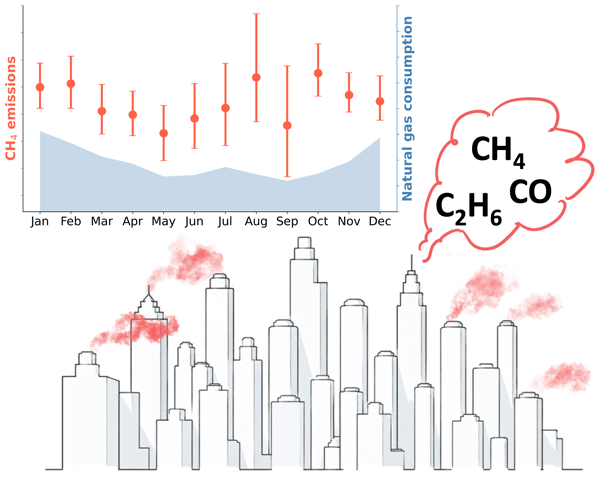
Reducing methane emissions offers a near-term climate mitigation opportunity. Cities contain large and often underestimated methane sources. In New York City, methane emissions peak during heating and cooling seasons, with natural gas as a dominant source. Emissions track gas consumption and show significant incomplete combustion signatures. We estimate a 1.7 % loss rate, ~300M USD/year in wasted gas, highlighting mechanisms of inefficient natural gas combustion as a future mitigation focus.
Abby Sebol, Glenn M. Wolfe, Timothy Canty, Jason St. Clair, Erin Delaria, Jennifer Kaiser, Nidhi Desai, Andrew Rollins, Eleanor Waxman, Kristen Zuraski, Bryan Place, Apoorva Pandey, Akanksha Singh, Allison Ring, Charles Gatebe, and Jonathan Dean-Day
Atmos. Meas. Tech., 19, 5539–5552, https://doi.org/10.5194/amt-19-5539-2026, https://doi.org/10.5194/amt-19-5539-2026, 2026
Short summary
Short summary
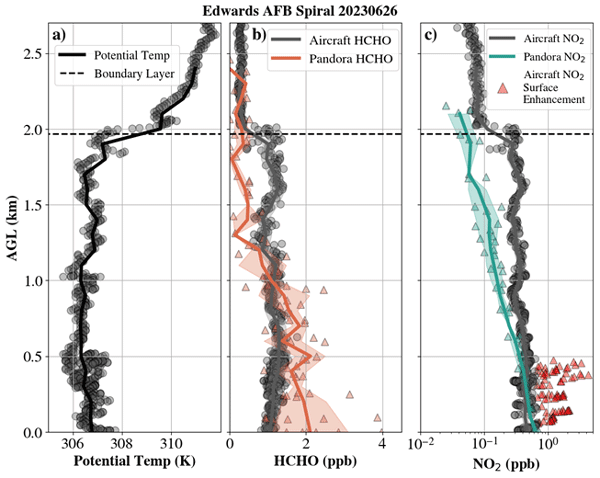
Ground-based spectrometers measuring HCHO and NO2 were compared to airborne in situ observations in the Summer 2023. Total column HCHO is within uncertainty, but with high biases near the surface. NO2 results are highly sensitive to the viewing angle of the ground monitor which must be considered during validation studies. Spectrometers in NYC show good agreement with a geostationary satellite on clear-sky days. Further quantified uncertainty for the monitors is necessary.
Apoorva Pandey, Bryan K. Place, Thomas F. Hanisco, Jong-Uk Park, Elena S. Lind, Jason M. St. Clair, Erin R. Delaria, Glenn M. Wolfe, Ronaldo Lopez, Paul V. Zimba, and K. Lee Thornhill
EGUsphere, https://doi.org/10.5194/egusphere-2026-3479, https://doi.org/10.5194/egusphere-2026-3479, 2026
Short summary
Short summary
The burden and vertical distribution of formaldehyde affects air quality and health. Pandora ground instruments observe formaldehyde in the lower atmosphere using scattered sunlight. The quality of these continuous daytime measurements needs evaluation. We compared these measurements with aircraft observations at four U.S. East Coast sites and found strong agreement at all comparison sites. We also improved the Pandora algorithm to better capture the vertical distribution of formaldehyde.
Patrick C. Taylor, Armin Sorooshian, Rei Ueyama, Sebastian Schmidt, Ihab Abboud, Quincy Allison, Kevin Barry, Sebastian Becker, Holly A. Bender, Joseph R. Bennett, James B. Blair, Niklas Bohn, Linette Boisvert, Matthew D. Brown, Roelof Bruintjes, Anthony Bucholtz, Megan Buzanowicz, Brian Cairns, Filippo Calì Quaglia, Eduard Chemyakin, Bo Chen, Gao Chen, Hong Chen, Yu-Wen Chen, Zezhen Cheng, Swarup China, Dan Chirica, Yonghoon Choi, Peter Colarco, Brian Collister, Ewan Crosbie, Maurice J. Cross, Janet Daniels, Paul DeMott, Joshua P. DiGangi, Alcide Giorgio di Sarra, Glenn S. Diskin, Erica K. Dolinar, Eva-Lou Edwards, Samuel Ephraim, Nikolaos Evangeliou, Romanos Foskinis, Francesca Gallo, Lan Gao, José Luis Gómez-Amo, Daisy Gonzalez, Christine Groot Zwaaftink, Pawan Gupta, Ivan Heckman, Michael Hendrickson, Miguel Ricardo A. Hilario, Ken Hirata, Michelle Hofton, Andrew L. Holen, Ulas Im, Alia L. Khan, Ralph Kahn, Alexei V. Korolev, Sonia Kreidenweis, Thomas Krumpen, Nathan Kurtz, Leslie Lait, Bradley Lamkin, Jack Landy, Nurun Nahar Lata, Paul Lawson, Samuel LeBlanc, Sean Leavor, Jing Li, Thorsten Markus, Hal Maring, Andreas H. Massling, Camille Mavis, Flynn McGinnity, Kerry Meyer, Gabriel Mojica, Richard H. Moore, Parker Morris, Giovanni Muscari, Vikas Nataraja, Amin R. Nehrir, Athanasios Nenes, Edward P. Nowottnick, Matteo Ottaviani, Chelsea Parker, Ryan Patnaude, Michael Perez, Russell J. Perkins, Colten Peterson, Alek Petty, Stevie Phothisane, Chris Polashenski, Kerri A. Pratt, Kayla M. Preisler, John Prytherch, David Rabine, Jens Redemann, Ju-Mee Ryoo, Joseph S. Schlosser, Vanessa Selimovic, Michael A. Shook, Morgan Silverman, Henrik Skov, Alexander Smirnov, Cassidy Soloff, Amy Solomon, Snorre Stamnes, Azusa Takeishi, David R. Thompson, K. Lee Thornhill, Rachel Tilling, Michael Tjernström, Monica Tosco, Pedro C. Valdelomar, David Van Gilst, Jian Wang, Zhien Wang, Andrzej Wasilewski, Manfred Wendisch, Brent Wilder, Edward L. Winstead, Albert Wu, Peng Xian, Lauren M. Zamora, Jiaoshi Zhang, Lei Zhang, Lu Zhang, Luke Ziemba, and Paquita Zuidema
Earth Syst. Sci. Data Discuss., https://doi.org/10.5194/essd-2026-241, https://doi.org/10.5194/essd-2026-241, 2026
Preprint under review for ESSD
Short summary
Short summary
This article summarizes the data sets collected during the Arctic Radiation Cloud aerosol Sea ice Interaction eXperiment (ARCSIX), NASA's most comprehensive Arctic field campaign to date. The overarching goal was to quantify the contributions of surface, clouds, aerosol particles, and precipitation to summer sea ice melt. This paper describes the ARCSIX implementation including the flight strategy, instruments, complementary data sets, access, and usage details.
David Wilmouth, Jennifer Hare, Laila Howar, Ross Salawitch, Eric Hintsa, Jessica Smith, David Sayres, James Anderson, Jason St. Clair, Erin Delaria, Reem Hannun, Thomas Hanisco, Daniel Czizco, Xiaoli Shen, Cameron Homeyer, Michelle Santee, T. Paul Bui, Paul Newman, Frank Keutsch, and Kenneth Bowman
EGUsphere, https://doi.org/10.5194/egusphere-2026-3480, https://doi.org/10.5194/egusphere-2026-3480, 2026
Short summary
Short summary
Inorganic chlorine chemistry in the stratosphere is extensively examined over two summers using high precision in situ aircraft data and satellite data. Measured values both agree and enable refinement to current understanding. Chlorine measurements obtained under perturbed stratospheric conditions of enhanced water vapor from convective storms or aged organic aerosol from wildfires do not appear significantly different from chlorine measurements obtained in the background stratosphere.
Young Ro Lee, Linda Arterburn, Masayuki Takeuchi, David J. Tanner, James M. Roberts, Behrooz Roozitalab, Daun Jeong, Alan J. Hills, Rebecca S. Hornbrook, Eric C. Apel, Simone Meinardi, Barbara Barletta, Nicola J. Blake, Donald R. Blake, Saewung Kim, Wojciech Wojnowski, Felix Piel, Armin Wisthaler, Katherine Ball, John D. Crounse, Paul O. Wennberg, Jason Miech, Yonghoon Choi, Joshua P. DiGangi, Glenn S. Diskin, Abby Sebol, Erin R. Delaria, Reem A. Hannun, Jason M. St. Clair, Glenn M. Wolfe, Changmin Cho, Courtney Owen, Kirk Lesko, Alessandro Franchin, Edward L. Winstead, Luke D. Ziemba, Richard Moore, Elizabeth B. Wiggins, Guy Symonds, Dongwook Kim, Douglas A. Day, Pedro Campuzano-Jost, Jose L. Jimenez, Kirk Ullmann, Samuel R. Hall, James H. Crawford, and L. Gregory Huey
Atmos. Chem. Phys., 26, 8695–8715, https://doi.org/10.5194/acp-26-8695-2026, https://doi.org/10.5194/acp-26-8695-2026, 2026
Short summary
Short summary
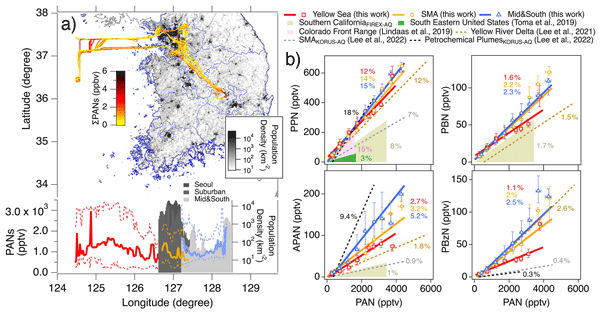
We flew a large variety of instruments on the NASA DC-8 research aircraft to measure pollution over South Korea in the winter of 2024. This works focuses on acyl peroxynitrates (PANs for short) which are formed by chemistry in air. We found high levels of PANs often associated with industrial emissions of pollutants such as ethanol and ethylene oxide. This work helps to understand how to reduce pollution of this sort.
Julianna A. Christopoulos, Pablo E. Saide, Manas R. Mohanty, Nattamon Maneenoi, Jhoon Kim, Laura Judd, Katherine R. Travis, Savitri Garivait, Agapol Junpen, Kazuyuki Miyazaki, Jinkyul Choi, Takashi Sekiya, David Peterson, Theodore M. McHardy, Nicholas Gapp, Jason M. St. Clair, Erin Delaria, Glenn M. Wolfe, Abby Sebol, Alessandro Franchin, Changmin Cho, Morgan L. Silverman, and James H. Crawford
Atmos. Chem. Phys., 26, 8021–8050, https://doi.org/10.5194/acp-26-8021-2026, https://doi.org/10.5194/acp-26-8021-2026, 2026
Short summary
Short summary
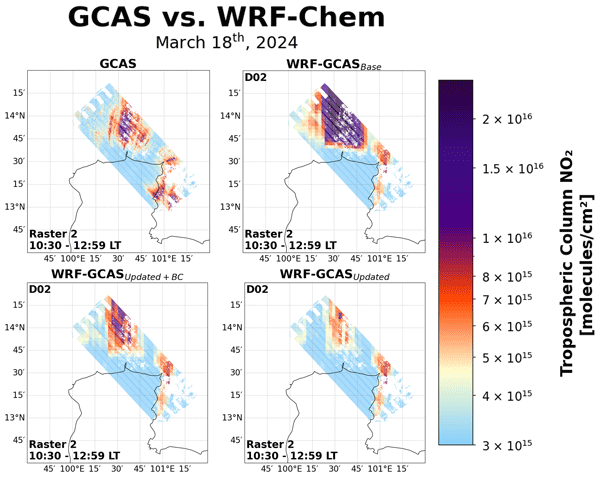
Air quality in rapidly growing cities is difficult to model because emissions vary during the day and are often poorly constrained. We demonstrate a methodology for constraining urban emissions using hourly satellite observations combined with high-resolution air quality modeling in Bangkok. We find that emissions inventories likely overestimate nitrogen dioxide emissions, and that updated emissions improve agreement between the model and independent aircraft and ground-based observations.
Julieta F. Juncosa Calahorrano, Dylan B. Millet, Kelley C. Wells, Chengyuan Hu, Jared F. Brewer, Vivienne H. Payne, Wade Permar, Lu Hu, Amy P. Sullivan, I.-Ting Ku, Emily V. Fischer, Vanessa Selimovic, Kanako Sekimoto, Aaron Lamplugh, Georgios Gkatzelis, Jessica B. Gilman, Matthew Coggon, and Carsten Warneke
EGUsphere, https://doi.org/10.5194/egusphere-2026-1669, https://doi.org/10.5194/egusphere-2026-1669, 2026
Short summary
Short summary
We use thermal infrared satellite observations to study trace gases emitted by fires. We observe large enhancements in smoke and strong relationships among key species. These relationships are consistent with aircraft observations but show greater variability than models predict. This variability is linked to pyrolysis temperatures within fires. Our results show satellite data can improve understanding of fire processes and help refine emission parameterizations in models.
Jinkyul Choi, Kazuyuki Miyazaki, Takashi Sekiya, Jinhyeok Yu, Shin-Ya Ogino, Henk Eskes, Pieter Rijdijk, Ryan Bennett, Anke Roiger, Leon Knez, Glenn S. Diskin, Jason A. Miech, Joshua P. DiGangi, Yonghoon Choi, Alessandro Franchin, Changmin Cho, Eric C. Apel, Louisa K. Emmons, Nattamon Maneenoi, Jason M. St. Clair, Reem A. Hannun, Glenn M. Wolfe, Erin Delaria, Abby Sebol, Donald R. Blake, Monica Crippa, Rachel M. Hoesly, Steven J. Smith, Jung-Hun Woo, Le Kuai, and Ronald Macatangay
EGUsphere, https://doi.org/10.5194/egusphere-2026-2380, https://doi.org/10.5194/egusphere-2026-2380, 2026
Short summary
Short summary
Asia produces half of the world's air pollution, yet emission estimates from different sources disagree widely. We assimilated satellite observations of six pollutant species to correct both concentrations and emissions. Aircraft measurements from a 2024 NASA campaign across four Asian countries confirmed the improvements. Our results reveal underreported emissions in some countries, overestimated vegetation emissions, unresolved fire estimates, and weather control on cross-border pollution.
Changmin Cho, Alessandro Franchin, Frank Flocke, Kirk Lesko, Courtney Owen, Samuel R. Hall, Kirk Ullmann, Eric C. Apel, Alan J. Hills, Rebecca S. Hornbrook, Behrooz Roozitalab, Daun Jeong, Glenn S. Diskin, Yonghoon Choi, Joshua P. DiGangi, Jason Miech, Glenn M. Wolfe, Thomas F. Hanisco, Jason M. St. Clair, Jin Liao, Erin R. Delaria, Abby Sebol, Reem A. Hannun, Paul O. Wennberg, Katherine Ball, Young Ro Lee, L. Gregory Huey, David J. Tanner, Linda Arterburn, Donald R. Blake, Nicola J. Blake, Barbara Barletta, Simone Meinardi, Kyung-Eun Min, Heejoo Kang, Woohui Nam, Armin Wisthaler, Felix Piel, Wojciech Wojnowski, Jack Dibb, and James Crawford
Atmos. Chem. Phys., 26, 6097–6116, https://doi.org/10.5194/acp-26-6097-2026, https://doi.org/10.5194/acp-26-6097-2026, 2026
Short summary
Short summary
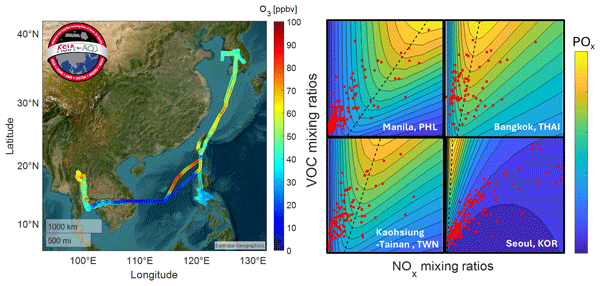
Ozone pollution is a challenge in Asian cities due to its nonlinear response to precursor controls. Using aircraft measurements, we examined how ozone production depends on nitrogen oxides and volatile organic compounds using a new isopleth-based approach. Ozone production is limited by nitrogen oxides in Metro Manila and Tainan–Kaohsiung, mixed in Bangkok, and limited by volatile organic compounds in Seoul. These results inform city-specific control strategies to reduce ozone in urban areas.
Daun Jeong, Rebecca S. Hornbrook, Alan J. Hills, Glenn Diskin, Hannah S. Halliday, Joshua P. DiGangi, Alan Fried, Dirk Richter, James Walega, Petter Weibring, Thomas F. Hanisco, Glenn M. Wolfe, Jason St. Clair, Jeff Peischl, Armin Wisthaler, Tomas Mikoviny, John B. Nowak, Felix Piel, Laura Tomsche, Christopher D. Holmes, Amber Soja, Emily Gargulinski, James H. Crawford, Jack Dibb, Carsten Warneke, Joshua Schwarz, and Eric C. Apel
Atmos. Meas. Tech., 19, 2985–3000, https://doi.org/10.5194/amt-19-2985-2026, https://doi.org/10.5194/amt-19-2985-2026, 2026
Short summary
Short summary
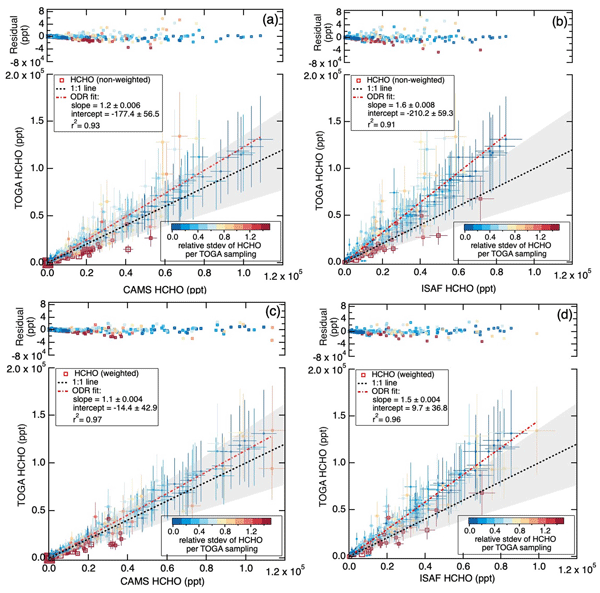
Formaldehyde is an important atmospheric species that is present at all times throughout the troposphere. Accurately measuring formaldehyde is necessary for understanding key atmospheric chemical cycles. We describe here the first wide-scale demonstration of the gas chromatographic mass spectrometric (GC/MS) technique (NSF NCAR TOGA-TOF (National Science Foundation - National Center for Atmospheric Research - Trace Organic Gas Analyzer with Time-of-Flight mass spectrometer)) for quantifying formaldehyde in the atmosphere and we show this technique to be highly sensitive and selective.
Aoxing Zhang, Tzung-May Fu, Yuhang Wang, Enyu Xiong, Wenlu Wu, Yumin Li, Lei Zhu, Wei Tao, Kelley C. Wells, Dylan B. Millet, Zhe Wang, Bin Yuan, Min Shao, Christophe Lerot, Thomas Danckaert, Ruixiong Zhang, and Kelvin H. Bates
Atmos. Chem. Phys., 26, 5123–5150, https://doi.org/10.5194/acp-26-5123-2026, https://doi.org/10.5194/acp-26-5123-2026, 2026
Short summary
Short summary
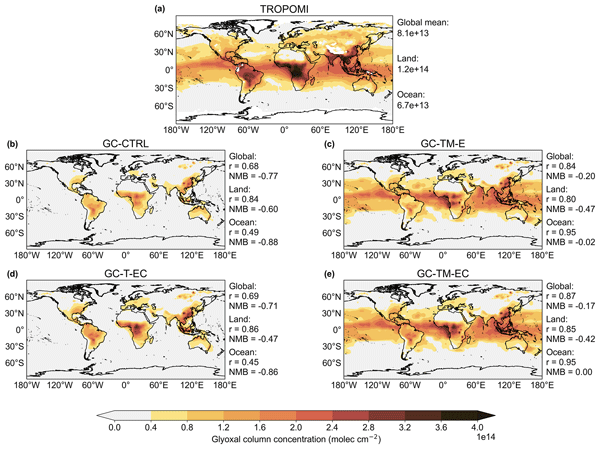
Glyoxal, a product of volatile organic compound oxidation, influences atmospheric oxidation and aerosol formation but is underestimated in models. By improving emissions, chemistry, and marine sources in GEOS-Chem, we better reproduce observed glyoxal over land and ocean, which strengthens global oxidation capacity and aerosol formation. The results highlight glyoxal's role as a proxy of atmospheric oxidation, and emphasize the needs of accurately representing glyoxal chemistry.
James Young Suk Yoon, Kelley C. Wells, Dylan B. Millet, Christian Frankenberg, Suniti Sanghavi, Abigail L. S. Swann, Joel A. Thornton, and Alexander J. Turner
Atmos. Chem. Phys., 26, 4509–4529, https://doi.org/10.5194/acp-26-4509-2026, https://doi.org/10.5194/acp-26-4509-2026, 2026
Short summary
Short summary
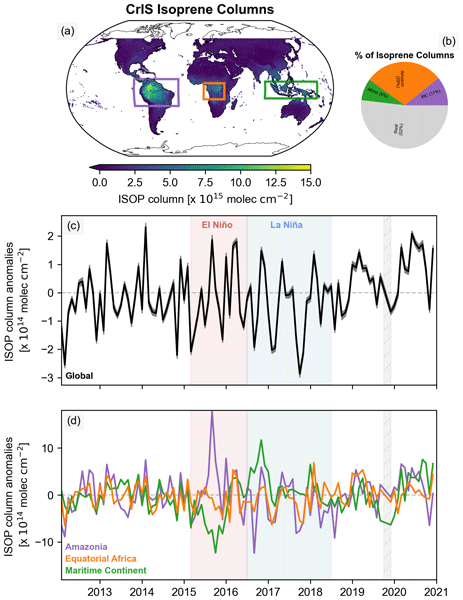
Isoprene is a molecule emitted by trees that is oxidized in the atmosphere within hours. Much of the isoprene globally is emitted in the remote tropics, where we have few direct observations of isoprene. Here, we use new satellite retrievals of isoprene to infer drivers of tropical isoprene variability. Across three regions, isoprene column variability is controlled by different factors, namely changes in isoprene emissions or changes in natural nitrogen oxide sources, like soils and fires.
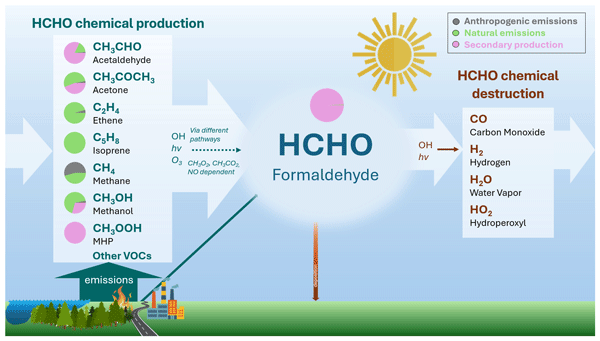
Gunnar Myhre, Øivind Hodnebrog, Srinath Krishnan, Maria Sand, Marit Sandstad, Ragnhild B. Skeie, Lieven Clarisse, Bruno Franco, Dylan B. Millet, Kelley C. Wells, Alexander Archibald, Hannah N. Bryant, Alex T. Chaudhri, David S. Stevenson, Didier Hauglustaine, Michael Prather, J. Christopher Kaiser, Dirk J. L. Olivie, Michael Schulz, Oliver Wild, Ye Wang, Thérèse Salameh, Jason E. Williams, Philippe Le Sager, Fabien Paulot, Kostas Tsigaridis, and Haley E. Plaas
Geosci. Model Dev., 19, 2577–2591, https://doi.org/10.5194/gmd-19-2577-2026, https://doi.org/10.5194/gmd-19-2577-2026, 2026
Short summary
Short summary
Volatile organic compounds (VOCs) affect air quality and climate, but their behavior in the atmosphere is still uncertain. We launched a global research effort to compare how different models represent these compounds and to improve their accuracy. By analyzing model results alongside observations and satellite data, we aim to better understand the atmospheric composition of these compounds.
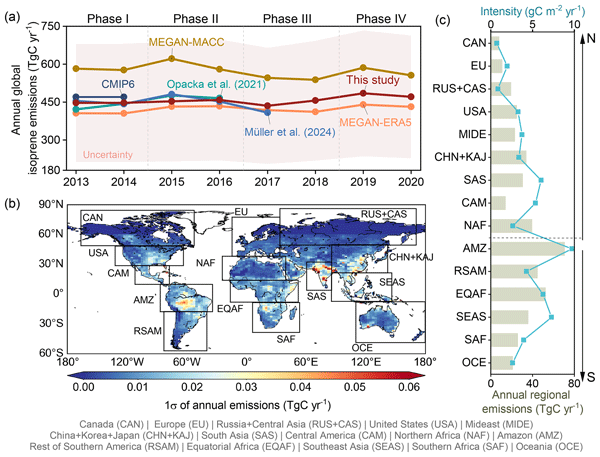
Hui Li, Philippe Ciais, Pramod Kumar, Didier A. Hauglustaine, Frédéric Chevallier, Grégoire Broquet, Dylan B. Millet, Kelley C. Wells, Jinghui Lian, and Bo Zheng
Earth Syst. Sci. Data, 17, 7035–7054, https://doi.org/10.5194/essd-17-7035-2025, https://doi.org/10.5194/essd-17-7035-2025, 2025
Short summary
Short summary
We present the first global, multi-year maps of monthly isoprene emissions (2013–2020) derived from satellite isoprene observations, averaging 456 TgC yr-1. The dataset reveals two emission peaks linked to 2015–2016 El Niño and 2019–2020 extreme heat events, driven mainly by tropical regions such as the Amazon. It highlights the region-specific sensitivity of biogenic isoprene emissions to temperature anomalies, providing new insights into their roles in air quality and climate feedbacks.
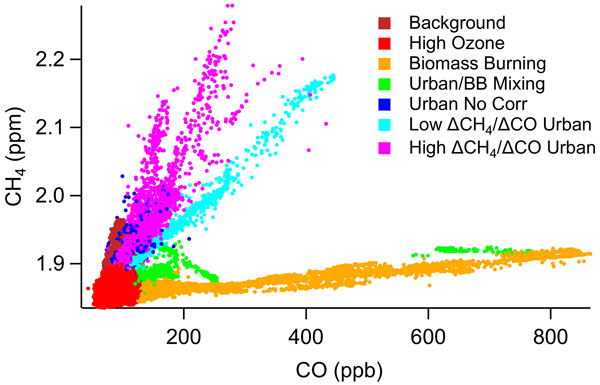
Joshua P. DiGangi, Glenn S. Diskin, Subin Yoon, Sergio L. Alvarez, James H. Flynn, Claire E. Robinson, Michael A. Shook, K. Lee Thornhill, Edward L. Winstead, Luke D. Ziemba, Maria Obiminda L. Cambaliza, James B. Simpas, Miguel Ricardo A. Hilario, and Armin Sorooshian
Atmos. Chem. Phys., 25, 17387–17397, https://doi.org/10.5194/acp-25-17387-2025, https://doi.org/10.5194/acp-25-17387-2025, 2025
Short summary
Short summary
Both fire and urban emissions are major contributors to air pollution in Southeast Asia. Relative increases in measurements of methane and carbon monoxide gases during an aircraft campaign near the Philippines in 2019 were used to isolate pollution emissions from fires vs. urban sources. Results were compared to atmospheric transport models to determine the sources' regional origins, and relationships between pollution indicators relevant to poor air quality were investigated for each source.
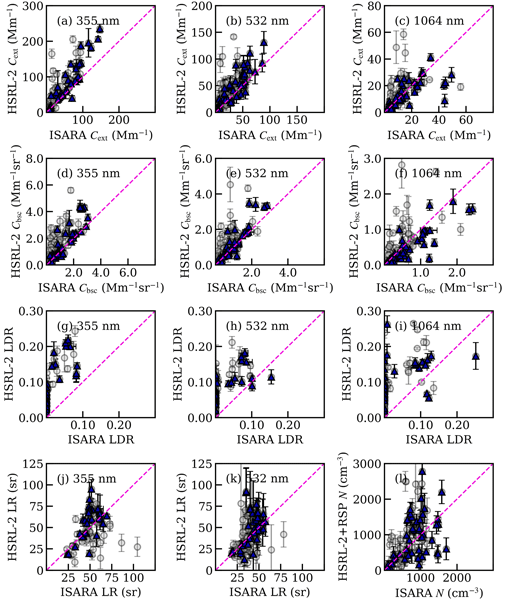
Joseph S. Schlosser, Sanja Dmitrovic, Ryan Bennett, Brian Cairns, Gao Chen, Glenn S. Diskin, Richard A. Ferrare, Johnathan W. Hair, Michael A. Jones, Jeffrey S. Reid, Taylor J. Shingler, Michael A. Shook, Armin Sorooshian, Kenneth L. Thornhill, Luke D. Ziemba, and Snorre Stamnes
Atmos. Meas. Tech., 18, 7187–7220, https://doi.org/10.5194/amt-18-7187-2025, https://doi.org/10.5194/amt-18-7187-2025, 2025
Short summary
Short summary
This study focuses on aerosol particles, which critically influence the atmosphere by scattering and absorbing light. To understand these interactions, airborne field campaigns deploy instruments that can measure these particles’ directly or indirectly via remote sensing. We introduce the In Situ Aerosol Retrieval Algorithm (ISARA) to ensure consistency between aerosol measurements and show that the two data sets generally align, with some deviation caused by the presence of larger particles.
Soodabeh Namdari, Sanja Dmitrovic, Gao Chen, Yonghoon Choi, Ewan Crosbie, Joshua P. DiGangi, Glenn S. Diskin, Richard A. Ferrare, Johnathan W. Hair, Simon Kirschler, John B. Nowak, Kenneth L. Thornhill, Christiane Voigt, Holger Vömel, Xubin Zeng, and Armin Sorooshian
Atmos. Meas. Tech., 18, 4325–4345, https://doi.org/10.5194/amt-18-4325-2025, https://doi.org/10.5194/amt-18-4325-2025, 2025
Short summary
Short summary
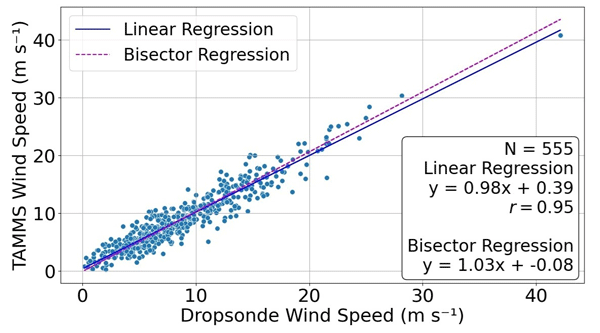
We conducted this study to assess the accuracy of airborne measurements of wind, temperature, and humidity, essential for understanding atmospheric processes. Using data from NASA's ACTIVATE campaign, we compared measurements from the Turbulent Air Motion Measurement System (TAMMS) and diode laser hygrometer (DLH) aboard a Falcon aircraft with dropsondes from a King Air, matching data points based on location and time using statistical methods. The study showed strong agreement, confirming the reliability of these methods for advancing climate models.
Jiaqi Shen, Ronald C. Cohen, Glenn M. Wolfe, and Xiaomeng Jin
Atmos. Chem. Phys., 25, 8701–8718, https://doi.org/10.5194/acp-25-8701-2025, https://doi.org/10.5194/acp-25-8701-2025, 2025
Short summary
Short summary
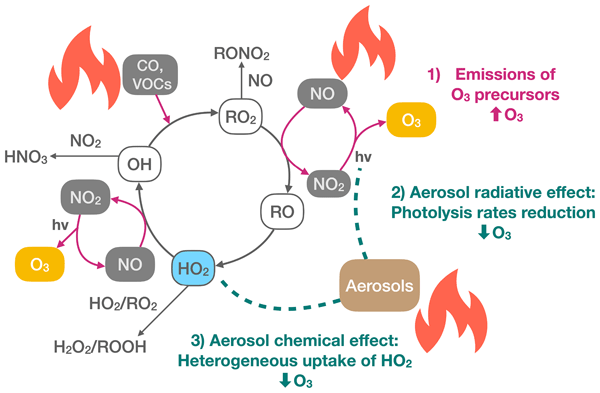
This study shows large chemical and radiative effects of smoke aerosols from fires on near-surface ozone production. Aerosol loading and NOx levels are identified as the primary factors influencing these effects. Furthermore, we show that the ratio of surface PM2.5 to NO2 tropospheric column can be used as an indicator for identifying aerosol-dominated regimes, facilitating the assessment of aerosol impacts on ozone formation through satellite observations.
Luke R. Allen, Sandra E. Yuter, Declan M. Crowe, Matthew A. Miller, and K. Lee Thornhill
Atmos. Chem. Phys., 25, 6679–6701, https://doi.org/10.5194/acp-25-6679-2025, https://doi.org/10.5194/acp-25-6679-2025, 2025
Short summary
Short summary
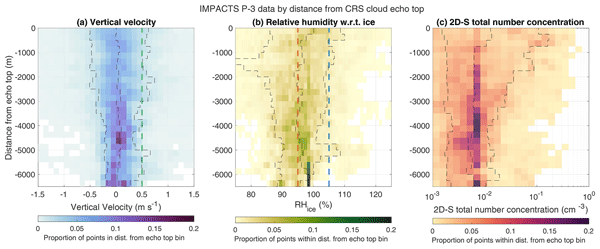
We analyzed in-cloud characteristics using in situ measurements from 42 research flights across two field campaigns into non-orographic, non-lake-effect winter storms. Much of the storm volume contains weak vertical motions (a few centimeters per second), and most updrafts ≥ 0.5 m s-1 are small (< 1 km). Within 2 km of cloud radar echo top, stronger vertical motions and conditions for ice particle growth are more common. Overturning air motions near cloud top appear important for the production of snow particles.
Ewan Crosbie, Johnathan W. Hair, Amin R. Nehrir, Richard A. Ferrare, Chris Hostetler, Taylor Shingler, David Harper, Marta Fenn, James Collins, Rory Barton-Grimley, Brian Collister, K. Lee Thornhill, Christiane Voigt, Simon Kirschler, and Armin Sorooshian
Atmos. Meas. Tech., 18, 2639–2658, https://doi.org/10.5194/amt-18-2639-2025, https://doi.org/10.5194/amt-18-2639-2025, 2025
Short summary
Short summary
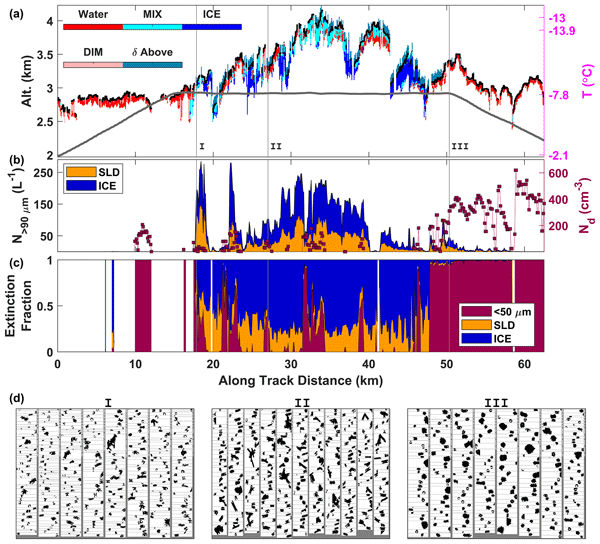
A method was developed to extract information from airborne lidar observations about the distribution of ice and liquid water within clouds. The method specifically targets signatures of horizontal and vertical gradients in ice and water that appear in the polarization of the lidar signals. The method was tested against direct measurements of the cloud properties collected by a second aircraft.
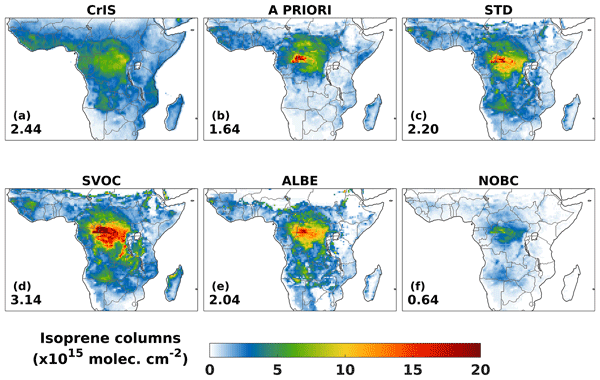
Beata Opacka, Trissevgeni Stavrakou, Jean-François Müller, Isabelle De Smedt, Jos van Geffen, Eloise A. Marais, Rebekah P. Horner, Dylan B. Millet, Kelly C. Wells, and Alex B. Guenther
Atmos. Chem. Phys., 25, 2863–2894, https://doi.org/10.5194/acp-25-2863-2025, https://doi.org/10.5194/acp-25-2863-2025, 2025
Short summary
Short summary
Vegetation releases biogenic volatile organic compounds, while soils and lightning contribute to the natural emissions of nitrogen oxides into the atmosphere. These gases interact in complex ways. Using satellite data and models, we developed a new method to simultaneously optimize these natural emissions over Africa in 2019. Our approach resulted in an increase in natural emissions, supported by independent data indicating that current estimates are underestimated.
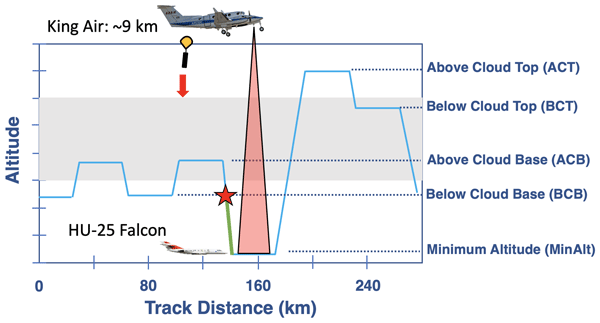
Kira Zeider, Kayla McCauley, Sanja Dmitrovic, Leong Wai Siu, Yonghoon Choi, Ewan C. Crosbie, Joshua P. DiGangi, Glenn S. Diskin, Simon Kirschler, John B. Nowak, Michael A. Shook, Kenneth L. Thornhill, Christiane Voigt, Edward L. Winstead, Luke D. Ziemba, Paquita Zuidema, and Armin Sorooshian
Atmos. Chem. Phys., 25, 2407–2422, https://doi.org/10.5194/acp-25-2407-2025, https://doi.org/10.5194/acp-25-2407-2025, 2025
Short summary
Short summary
In situ aircraft data collected over the northwest Atlantic Ocean are utilized to compare aerosol conditions and turbulence between near-surface and below-cloud-base altitudes for different regimes of coupling strength between those two levels, along with how cloud microphysical properties vary across those regimes. Stronger coupling yields more homogenous aerosol structure vertically along with higher cloud drop concentrations and sea salt influence in clouds.
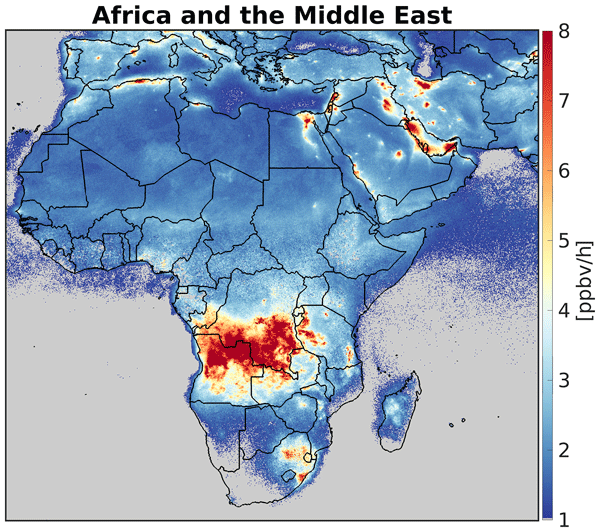
Amir H. Souri, Gonzalo González Abad, Glenn M. Wolfe, Tijl Verhoelst, Corinne Vigouroux, Gaia Pinardi, Steven Compernolle, Bavo Langerock, Bryan N. Duncan, and Matthew S. Johnson
Atmos. Chem. Phys., 25, 2061–2086, https://doi.org/10.5194/acp-25-2061-2025, https://doi.org/10.5194/acp-25-2061-2025, 2025
Short summary
Short summary
We establish a simple yet robust relationship between ozone production rates and geophysical parameters obtained from several intensive atmospheric composition campaigns. We show that satellite remote sensing data can effectively constrain these parameters, enabling us to produce the first global maps of ozone production rates with unprecedented resolution.
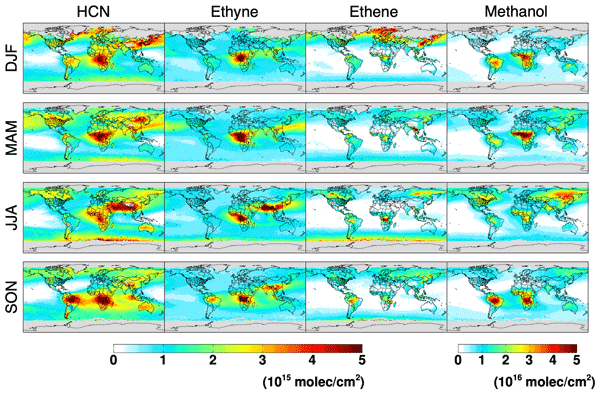
Kelley C. Wells, Dylan B. Millet, Jared F. Brewer, Vivienne H. Payne, Karen E. Cady-Pereira, Rick Pernak, Susan Kulawik, Corinne Vigouroux, Nicholas Jones, Emmanuel Mahieu, Maria Makarova, Tomoo Nagahama, Ivan Ortega, Mathias Palm, Kimberly Strong, Matthias Schneider, Dan Smale, Ralf Sussmann, and Minqiang Zhou
Atmos. Meas. Tech., 18, 695–716, https://doi.org/10.5194/amt-18-695-2025, https://doi.org/10.5194/amt-18-695-2025, 2025
Short summary
Short summary
Atmospheric volatile organic compounds (VOCs) affect both air quality and climate. Satellite measurements can help us to assess and predict their global impacts. We present new decadal (2012–2023) measurements of four key VOCs – methanol, ethene, ethyne, and hydrogen cyanide (HCN) – from the Cross-track Infrared Sounder. The measurements reflect emissions from major forests, wildfires, and industry and provide new information to advance understanding of these sources and their changes over time.
Jin Liao, Glenn M. Wolfe, Alexander E. Kotsakis, Julie M. Nicely, Jason M. St. Clair, Thomas F. Hanisco, Gonzalo González Abad, Caroline R. Nowlan, Zolal Ayazpour, Isabelle De Smedt, Eric C. Apel, and Rebecca S. Hornbrook
Atmos. Meas. Tech., 18, 1–16, https://doi.org/10.5194/amt-18-1-2025, https://doi.org/10.5194/amt-18-1-2025, 2025
Short summary
Short summary
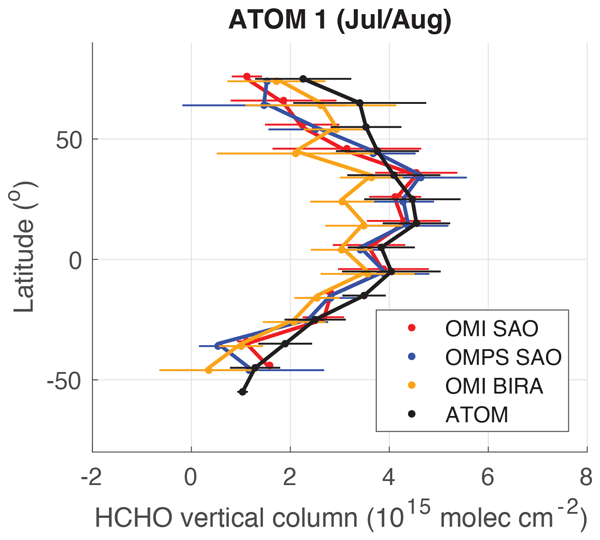
Validation of satellite HCHO over the remote marine regions is relatively low, and modeled HCHO in these regions is usually added as a global satellite HCHO background. This paper intercompares three satellite HCHO retrievals and validates them against in situ observations from the NASA ATom mission. All retrievals are correlated with ATom-integrated columns over remote oceans, with OMI SAO (v004) showing the best agreement. A persistent low bias is found in all retrievals at high latitudes.
Bryan N. Duncan, Daniel C. Anderson, Arlene M. Fiore, Joanna Joiner, Nickolay A. Krotkov, Can Li, Dylan B. Millet, Julie M. Nicely, Luke D. Oman, Jason M. St. Clair, Joshua D. Shutter, Amir H. Souri, Sarah A. Strode, Brad Weir, Glenn M. Wolfe, Helen M. Worden, and Qindan Zhu
Atmos. Chem. Phys., 24, 13001–13023, https://doi.org/10.5194/acp-24-13001-2024, https://doi.org/10.5194/acp-24-13001-2024, 2024
Short summary
Short summary
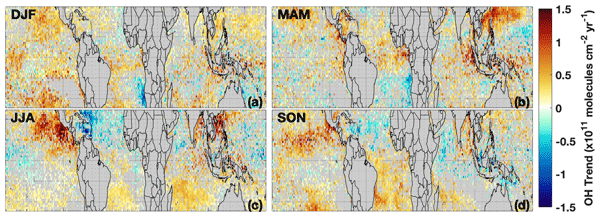
Trace gases emitted to or formed within the atmosphere may be chemically or physically removed from the atmosphere. One trace gas, the hydroxyl radical (OH), is responsible for initiating the chemical removal of many trace gases, including some greenhouse gases. Despite its importance, scientists have not been able to adequately measure OH. In this opinion piece, we discuss promising new methods to indirectly constrain OH using satellite data of trace gases that control the abundance of OH.
T. Nash Skipper, Emma L. D'Ambro, Forwood C. Wiser, V. Faye McNeill, Rebecca H. Schwantes, Barron H. Henderson, Ivan R. Piletic, Colleen B. Baublitz, Jesse O. Bash, Andrew R. Whitehill, Lukas C. Valin, Asher P. Mouat, Jennifer Kaiser, Glenn M. Wolfe, Jason M. St. Clair, Thomas F. Hanisco, Alan Fried, Bryan K. Place, and Havala O.T. Pye
Atmos. Chem. Phys., 24, 12903–12924, https://doi.org/10.5194/acp-24-12903-2024, https://doi.org/10.5194/acp-24-12903-2024, 2024
Short summary
Short summary
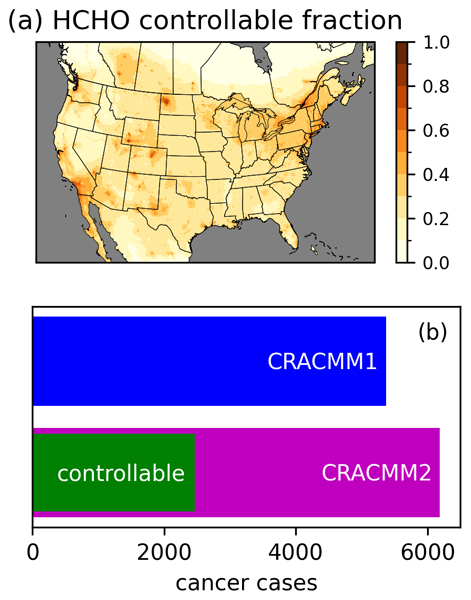
We develop the Community Regional Atmospheric Chemistry Multiphase Mechanism (CRACMM) version 2 to improve predictions of formaldehyde in ambient air compared to satellite-, aircraft-, and ground-based observations. With the updated chemistry, we estimate the cancer risk from inhalation exposure to ambient formaldehyde across the contiguous USA and predict that 40 % of this risk is controllable through reductions in anthropogenic emissions of nitrogen oxides and reactive organic carbon.
Cassidy Soloff, Taiwo Ajayi, Yonghoon Choi, Ewan C. Crosbie, Joshua P. DiGangi, Glenn S. Diskin, Marta A. Fenn, Richard A. Ferrare, Francesca Gallo, Johnathan W. Hair, Miguel Ricardo A. Hilario, Simon Kirschler, Richard H. Moore, Taylor J. Shingler, Michael A. Shook, Kenneth L. Thornhill, Christiane Voigt, Edward L. Winstead, Luke D. Ziemba, and Armin Sorooshian
Atmos. Chem. Phys., 24, 10385–10408, https://doi.org/10.5194/acp-24-10385-2024, https://doi.org/10.5194/acp-24-10385-2024, 2024
Short summary
Short summary
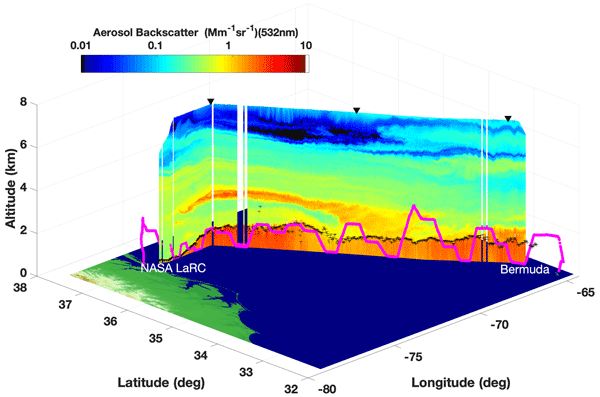
Using aircraft measurements over the northwestern Atlantic between the US East Coast and Bermuda and trajectory modeling of continental outflow, we identify trace gas and particle properties that exhibit gradients with offshore distance and quantify these changes with high-resolution measurements of concentrations and particle chemistry, size, and scattering properties. This work furthers our understanding of the complex interactions between continental and marine environments.
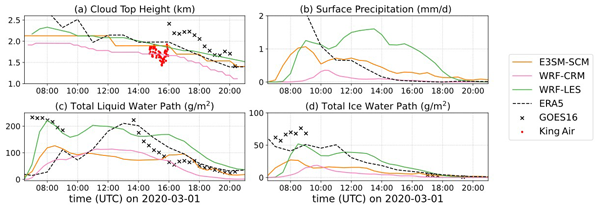
Shuaiqi Tang, Hailong Wang, Xiang-Yu Li, Jingyi Chen, Armin Sorooshian, Xubin Zeng, Ewan Crosbie, Kenneth L. Thornhill, Luke D. Ziemba, and Christiane Voigt
Atmos. Chem. Phys., 24, 10073–10092, https://doi.org/10.5194/acp-24-10073-2024, https://doi.org/10.5194/acp-24-10073-2024, 2024
Short summary
Short summary
We examined marine boundary layer clouds and their interactions with aerosols in the E3SM single-column model (SCM) for a case study. The SCM shows good agreement when simulating the clouds with high-resolution models. It reproduces the relationship between cloud droplet and aerosol particle number concentrations as produced in global models. However, the relationship between cloud liquid water and droplet number concentration is different, warranting further investigation.
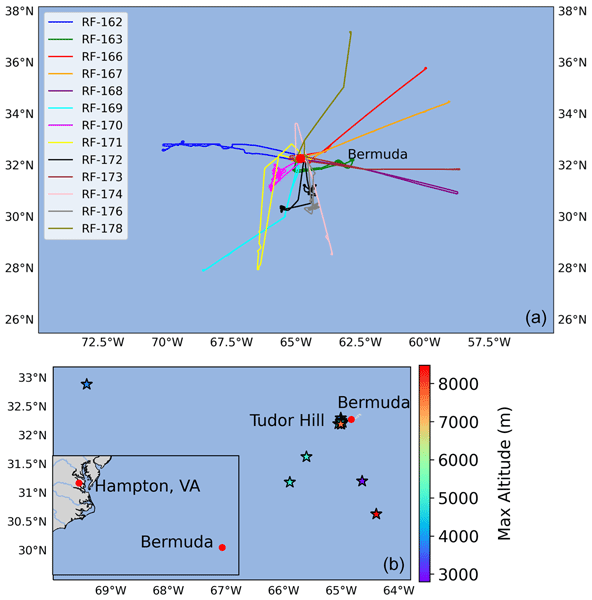
Taiwo Ajayi, Yonghoon Choi, Ewan C. Crosbie, Joshua P. DiGangi, Glenn S. Diskin, Marta A. Fenn, Richard A. Ferrare, Johnathan W. Hair, Miguel Ricardo A. Hilario, Chris A. Hostetler, Simon Kirschler, Richard H. Moore, Taylor J. Shingler, Michael A. Shook, Cassidy Soloff, Kenneth L. Thornhill, Christiane Voigt, Edward L. Winstead, Luke D. Ziemba, and Armin Sorooshian
Atmos. Chem. Phys., 24, 9197–9218, https://doi.org/10.5194/acp-24-9197-2024, https://doi.org/10.5194/acp-24-9197-2024, 2024
Short summary
Short summary
This study uses airborne data to examine vertical profiles of trace gases, aerosol particles, and meteorological variables over a remote marine area (Bermuda). Results show distinct differences based on both air mass source region (North America, Ocean, Caribbean/North Africa) and altitude for a given air mass type. This work highlights the sensitivity of remote marine areas to long-range transport and the importance of considering the vertical dependence of trace gas and aerosol properties.
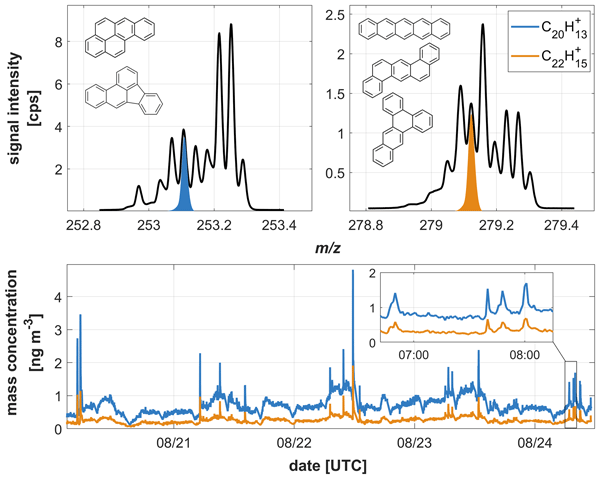
Tobias Reinecke, Markus Leiminger, Andreas Klinger, and Markus Müller
Aerosol Research, 2, 225–233, https://doi.org/10.5194/ar-2-225-2024, https://doi.org/10.5194/ar-2-225-2024, 2024
Short summary
Short summary
Condensed particulate polycyclic aromatic hydrocarbons (PAHs) are toxic compounds that may be detrimental to human health, even at low (sub-ng m-3) long-term exposure levels. The CHARON FUSION PTR-TOF 10k is capable of directly detecting PAHs on a chemical composition level at significantly lower mass concentrations. Herein, we report the time series of nine PAHs and identify three associated major sources and physicochemical processes for summertime aerosol in Innsbruck, Austria.

Hanqin Tian, Naiqing Pan, Rona L. Thompson, Josep G. Canadell, Parvadha Suntharalingam, Pierre Regnier, Eric A. Davidson, Michael Prather, Philippe Ciais, Marilena Muntean, Shufen Pan, Wilfried Winiwarter, Sönke Zaehle, Feng Zhou, Robert B. Jackson, Hermann W. Bange, Sarah Berthet, Zihao Bian, Daniele Bianchi, Alexander F. Bouwman, Erik T. Buitenhuis, Geoffrey Dutton, Minpeng Hu, Akihiko Ito, Atul K. Jain, Aurich Jeltsch-Thömmes, Fortunat Joos, Sian Kou-Giesbrecht, Paul B. Krummel, Xin Lan, Angela Landolfi, Ronny Lauerwald, Ya Li, Chaoqun Lu, Taylor Maavara, Manfredi Manizza, Dylan B. Millet, Jens Mühle, Prabir K. Patra, Glen P. Peters, Xiaoyu Qin, Peter Raymond, Laure Resplandy, Judith A. Rosentreter, Hao Shi, Qing Sun, Daniele Tonina, Francesco N. Tubiello, Guido R. van der Werf, Nicolas Vuichard, Junjie Wang, Kelley C. Wells, Luke M. Western, Chris Wilson, Jia Yang, Yuanzhi Yao, Yongfa You, and Qing Zhu
Earth Syst. Sci. Data, 16, 2543–2604, https://doi.org/10.5194/essd-16-2543-2024, https://doi.org/10.5194/essd-16-2543-2024, 2024
Short summary
Short summary
Atmospheric concentrations of nitrous oxide (N2O), a greenhouse gas 273 times more potent than carbon dioxide, have increased by 25 % since the preindustrial period, with the highest observed growth rate in 2020 and 2021. This rapid growth rate has primarily been due to a 40 % increase in anthropogenic emissions since 1980. Observed atmospheric N2O concentrations in recent years have exceeded the worst-case climate scenario, underscoring the importance of reducing anthropogenic N2O emissions.
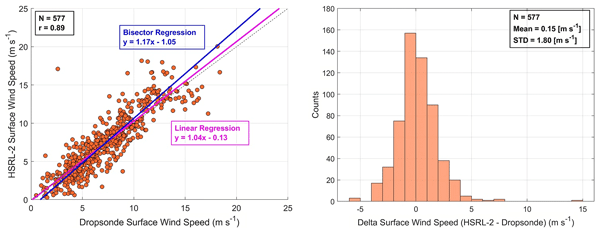
Sanja Dmitrovic, Johnathan W. Hair, Brian L. Collister, Ewan Crosbie, Marta A. Fenn, Richard A. Ferrare, David B. Harper, Chris A. Hostetler, Yongxiang Hu, John A. Reagan, Claire E. Robinson, Shane T. Seaman, Taylor J. Shingler, Kenneth L. Thornhill, Holger Vömel, Xubin Zeng, and Armin Sorooshian
Atmos. Meas. Tech., 17, 3515–3532, https://doi.org/10.5194/amt-17-3515-2024, https://doi.org/10.5194/amt-17-3515-2024, 2024
Short summary
Short summary
This study introduces and evaluates a new ocean surface wind speed product from the NASA Langley Research Center (LARC) airborne High-Spectral-Resolution Lidar – Generation 2 (HSRL-2) during the NASA ACTIVATE mission. We show that HSRL-2 surface wind speed data are accurate when compared to ground-truth dropsonde measurements. Therefore, the HSRL-2 instrument is able obtain accurate, high-resolution surface wind speed data in airborne field campaigns.
Ewan Crosbie, Luke D. Ziemba, Michael A. Shook, Taylor Shingler, Johnathan W. Hair, Armin Sorooshian, Richard A. Ferrare, Brian Cairns, Yonghoon Choi, Joshua DiGangi, Glenn S. Diskin, Chris Hostetler, Simon Kirschler, Richard H. Moore, David Painemal, Claire Robinson, Shane T. Seaman, K. Lee Thornhill, Christiane Voigt, and Edward Winstead
Atmos. Chem. Phys., 24, 6123–6152, https://doi.org/10.5194/acp-24-6123-2024, https://doi.org/10.5194/acp-24-6123-2024, 2024
Short summary
Short summary
Marine clouds are found to clump together in regions or lines, readily discernible from satellite images of the ocean. While clustering is also a feature of deep storm clouds, we focus on smaller cloud systems associated with fair weather and brief localized showers. Two aircraft sampled the region around these shallow systems: one incorporated measurements taken within, adjacent to, and below the clouds, while the other provided a survey from above using remote sensing techniques.
Luis F. Millán, Matthew D. Lebsock, Ken B. Cooper, Jose V. Siles, Robert Dengler, Raquel Rodriguez Monje, Amin Nehrir, Rory A. Barton-Grimley, James E. Collins, Claire E. Robinson, Kenneth L. Thornhill, and Holger Vömel
Atmos. Meas. Tech., 17, 539–559, https://doi.org/10.5194/amt-17-539-2024, https://doi.org/10.5194/amt-17-539-2024, 2024
Short summary
Short summary
In this study, we describe and validate a new technique in which three radar tones are used to estimate the water vapor inside clouds and precipitation. This instrument flew on board NASA's P-3 aircraft during the Investigation of Microphysics and Precipitation for Atlantic Coast-Threatening Snowstorms (IMPACTS) campaign and the Synergies Of Active optical and Active microwave Remote Sensing Experiment (SOA2RSE) campaign.
Georgios I. Gkatzelis, Matthew M. Coggon, Chelsea E. Stockwell, Rebecca S. Hornbrook, Hannah Allen, Eric C. Apel, Megan M. Bela, Donald R. Blake, Ilann Bourgeois, Steven S. Brown, Pedro Campuzano-Jost, Jason M. St. Clair, James H. Crawford, John D. Crounse, Douglas A. Day, Joshua P. DiGangi, Glenn S. Diskin, Alan Fried, Jessica B. Gilman, Hongyu Guo, Johnathan W. Hair, Hannah S. Halliday, Thomas F. Hanisco, Reem Hannun, Alan Hills, L. Gregory Huey, Jose L. Jimenez, Joseph M. Katich, Aaron Lamplugh, Young Ro Lee, Jin Liao, Jakob Lindaas, Stuart A. McKeen, Tomas Mikoviny, Benjamin A. Nault, J. Andrew Neuman, John B. Nowak, Demetrios Pagonis, Jeff Peischl, Anne E. Perring, Felix Piel, Pamela S. Rickly, Michael A. Robinson, Andrew W. Rollins, Thomas B. Ryerson, Melinda K. Schueneman, Rebecca H. Schwantes, Joshua P. Schwarz, Kanako Sekimoto, Vanessa Selimovic, Taylor Shingler, David J. Tanner, Laura Tomsche, Krystal T. Vasquez, Patrick R. Veres, Rebecca Washenfelder, Petter Weibring, Paul O. Wennberg, Armin Wisthaler, Glenn M. Wolfe, Caroline C. Womack, Lu Xu, Katherine Ball, Robert J. Yokelson, and Carsten Warneke
Atmos. Chem. Phys., 24, 929–956, https://doi.org/10.5194/acp-24-929-2024, https://doi.org/10.5194/acp-24-929-2024, 2024
Short summary
Short summary
This study reports emissions of gases and particles from wildfires. These emissions are related to chemical proxies that can be measured by satellite and incorporated into models to improve predictions of wildfire impacts on air quality and climate.
Karen E. Cady-Pereira, Xuehui Guo, Rui Wang, April B. Leytem, Chase Calkins, Elizabeth Berry, Kang Sun, Markus Müller, Armin Wisthaler, Vivienne H. Payne, Mark W. Shephard, Mark A. Zondlo, and Valentin Kantchev
Atmos. Meas. Tech., 17, 15–36, https://doi.org/10.5194/amt-17-15-2024, https://doi.org/10.5194/amt-17-15-2024, 2024
Short summary
Short summary
Ammonia is a significant precursor of PM2.5 particles and thus contributes to poor air quality in many regions. Furthermore, ammonia concentrations are rising due to the increase of large-scale, intensive agricultural activities. Here we evaluate satellite measurements of ammonia against aircraft and surface network data, and show that there are differences in magnitude, but the satellite data are spatially and temporally well correlated with the in situ data.
Victor Lannuque, Barbara D'Anna, Evangelia Kostenidou, Florian Couvidat, Alvaro Martinez-Valiente, Philipp Eichler, Armin Wisthaler, Markus Müller, Brice Temime-Roussel, Richard Valorso, and Karine Sartelet
Atmos. Chem. Phys., 23, 15537–15560, https://doi.org/10.5194/acp-23-15537-2023, https://doi.org/10.5194/acp-23-15537-2023, 2023
Short summary
Short summary
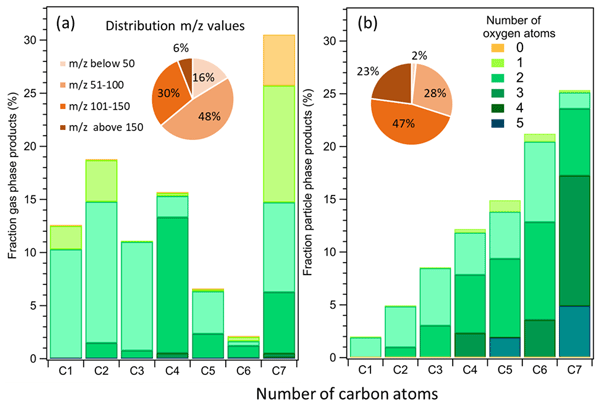
Large uncertainties remain in understanding secondary organic aerosol (SOA) formation from toluene oxidation. In this study, speciation measurements in gaseous and particulate phases were carried out, providing partitioning and volatility data on individual toluene SOA components at different temperatures. A new detailed oxidation mechanism was developed to improve modeled speciation, and effects of different processes involved in gas–particle partitioning at the molecular scale are explored.
Calvin Howes, Pablo E. Saide, Hugh Coe, Amie Dobracki, Steffen Freitag, Jim M. Haywood, Steven G. Howell, Siddhant Gupta, Janek Uin, Mary Kacarab, Chongai Kuang, L. Ruby Leung, Athanasios Nenes, Greg M. McFarquhar, James Podolske, Jens Redemann, Arthur J. Sedlacek, Kenneth L. Thornhill, Jenny P. S. Wong, Robert Wood, Huihui Wu, Yang Zhang, Jianhao Zhang, and Paquita Zuidema
Atmos. Chem. Phys., 23, 13911–13940, https://doi.org/10.5194/acp-23-13911-2023, https://doi.org/10.5194/acp-23-13911-2023, 2023
Short summary
Short summary
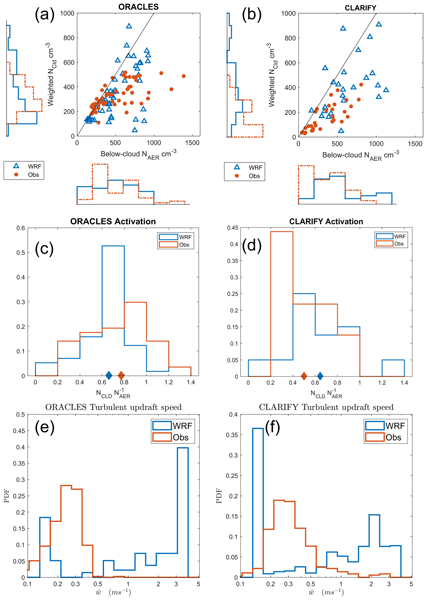
To better understand smoke properties and its interactions with clouds, we compare the WRF-CAM5 model with observations from ORACLES, CLARIFY, and LASIC field campaigns in the southeastern Atlantic in August 2017. The model transports and mixes smoke well but does not fully capture some important processes. These include smoke chemical and physical aging over 4–12 days, smoke removal by rain, sulfate particle formation, aerosol activation into cloud droplets, and boundary layer turbulence.
Simon Kirschler, Christiane Voigt, Bruce E. Anderson, Gao Chen, Ewan C. Crosbie, Richard A. Ferrare, Valerian Hahn, Johnathan W. Hair, Stefan Kaufmann, Richard H. Moore, David Painemal, Claire E. Robinson, Kevin J. Sanchez, Amy J. Scarino, Taylor J. Shingler, Michael A. Shook, Kenneth L. Thornhill, Edward L. Winstead, Luke D. Ziemba, and Armin Sorooshian
Atmos. Chem. Phys., 23, 10731–10750, https://doi.org/10.5194/acp-23-10731-2023, https://doi.org/10.5194/acp-23-10731-2023, 2023
Short summary
Short summary
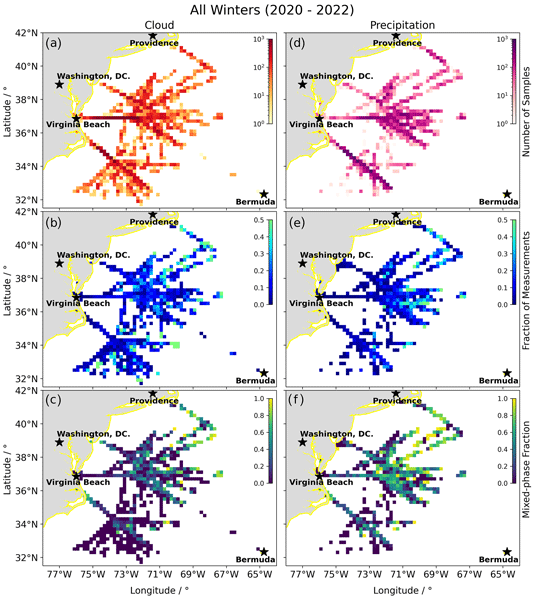
In this study we present an overview of liquid and mixed-phase clouds and precipitation in the marine boundary layer over the western North Atlantic Ocean. We compare microphysical properties of pure liquid clouds to mixed-phase clouds and show that the initiation of the ice phase in mixed-phase clouds promotes precipitation. The observational data presented in this study are well suited for investigating the processes that give rise to liquid and mixed-phase clouds, ice, and precipitation.
Brandon Bottorff, Michelle M. Lew, Youngjun Woo, Pamela Rickly, Matthew D. Rollings, Benjamin Deming, Daniel C. Anderson, Ezra Wood, Hariprasad D. Alwe, Dylan B. Millet, Andrew Weinheimer, Geoff Tyndall, John Ortega, Sebastien Dusanter, Thierry Leonardis, James Flynn, Matt Erickson, Sergio Alvarez, Jean C. Rivera-Rios, Joshua D. Shutter, Frank Keutsch, Detlev Helmig, Wei Wang, Hannah M. Allen, Johnathan H. Slade, Paul B. Shepson, Steven Bertman, and Philip S. Stevens
Atmos. Chem. Phys., 23, 10287–10311, https://doi.org/10.5194/acp-23-10287-2023, https://doi.org/10.5194/acp-23-10287-2023, 2023
Short summary
Short summary
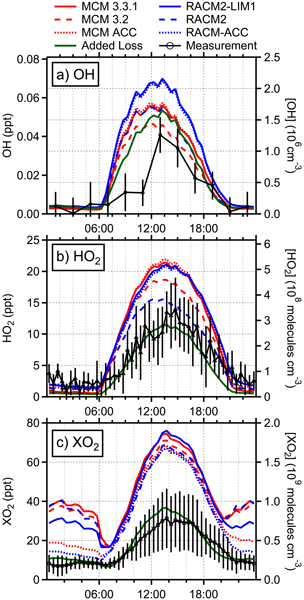
The hydroxyl (OH), hydroperoxy (HO2), and organic peroxy (RO2) radicals play important roles in atmospheric chemistry and have significant air quality implications. Here, we compare measurements of OH, HO2, and total peroxy radicals (XO2) made in a remote forest in Michigan, USA, to predictions from a series of chemical models. Lower measured radical concentrations suggest that the models may be missing an important radical sink and overestimating the rate of ozone production in this forest.
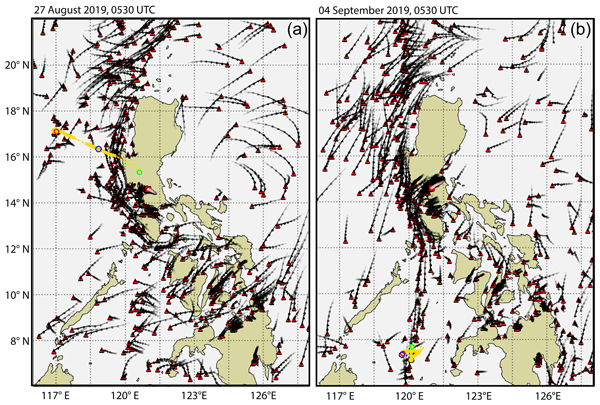
Rose Marie Miller, Robert M. Rauber, Larry Di Girolamo, Matthew Rilloraza, Dongwei Fu, Greg M. McFarquhar, Stephen W. Nesbitt, Luke D. Ziemba, Sarah Woods, and Kenneth Lee Thornhill
Atmos. Chem. Phys., 23, 8959–8977, https://doi.org/10.5194/acp-23-8959-2023, https://doi.org/10.5194/acp-23-8959-2023, 2023
Short summary
Short summary
The influence of human-produced aerosols on clouds remains one of the uncertainties in radiative forcing of Earth’s climate. Measurements of aerosol chemistry from sources around the Philippines illustrate the linkage between aerosol chemical composition and cloud droplet characteristics. Differences in aerosol chemical composition in the marine layer from biomass burning, industrial, ship-produced, and marine aerosols are shown to impact cloud microphysical structure just above cloud base.
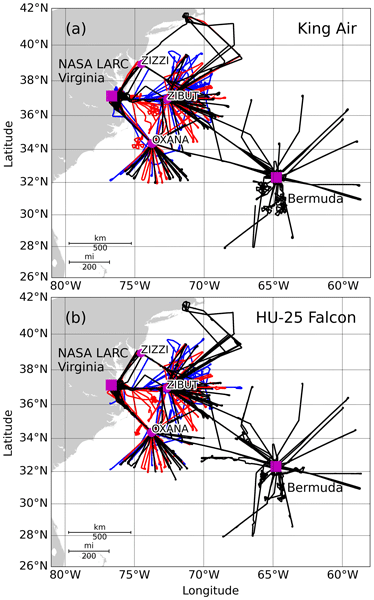
Armin Sorooshian, Mikhail D. Alexandrov, Adam D. Bell, Ryan Bennett, Grace Betito, Sharon P. Burton, Megan E. Buzanowicz, Brian Cairns, Eduard V. Chemyakin, Gao Chen, Yonghoon Choi, Brian L. Collister, Anthony L. Cook, Andrea F. Corral, Ewan C. Crosbie, Bastiaan van Diedenhoven, Joshua P. DiGangi, Glenn S. Diskin, Sanja Dmitrovic, Eva-Lou Edwards, Marta A. Fenn, Richard A. Ferrare, David van Gilst, Johnathan W. Hair, David B. Harper, Miguel Ricardo A. Hilario, Chris A. Hostetler, Nathan Jester, Michael Jones, Simon Kirschler, Mary M. Kleb, John M. Kusterer, Sean Leavor, Joseph W. Lee, Hongyu Liu, Kayla McCauley, Richard H. Moore, Joseph Nied, Anthony Notari, John B. Nowak, David Painemal, Kasey E. Phillips, Claire E. Robinson, Amy Jo Scarino, Joseph S. Schlosser, Shane T. Seaman, Chellappan Seethala, Taylor J. Shingler, Michael A. Shook, Kenneth A. Sinclair, William L. Smith Jr., Douglas A. Spangenberg, Snorre A. Stamnes, Kenneth L. Thornhill, Christiane Voigt, Holger Vömel, Andrzej P. Wasilewski, Hailong Wang, Edward L. Winstead, Kira Zeider, Xubin Zeng, Bo Zhang, Luke D. Ziemba, and Paquita Zuidema
Earth Syst. Sci. Data, 15, 3419–3472, https://doi.org/10.5194/essd-15-3419-2023, https://doi.org/10.5194/essd-15-3419-2023, 2023
Short summary
Short summary
The NASA Aerosol Cloud meTeorology Interactions oVer the western ATlantic Experiment (ACTIVATE) produced a unique dataset for research into aerosol–cloud–meteorology interactions. HU-25 Falcon and King Air aircraft conducted systematic and spatially coordinated flights over the northwest Atlantic Ocean. This paper describes the ACTIVATE flight strategy, instrument and complementary dataset products, data access and usage details, and data application notes.
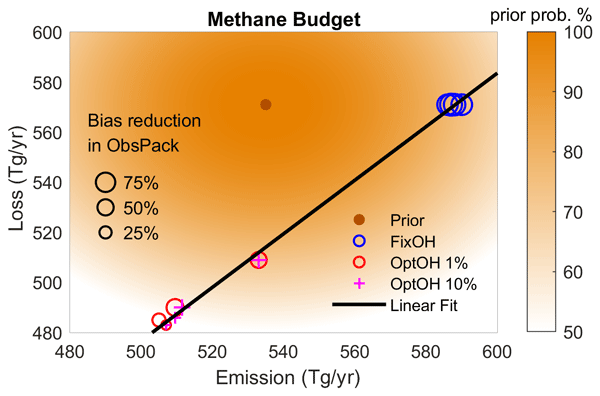
Xueying Yu, Dylan B. Millet, Daven K. Henze, Alexander J. Turner, Alba Lorente Delgado, A. Anthony Bloom, and Jianxiong Sheng
Atmos. Chem. Phys., 23, 3325–3346, https://doi.org/10.5194/acp-23-3325-2023, https://doi.org/10.5194/acp-23-3325-2023, 2023
Short summary
Short summary
We combine satellite measurements with a novel downscaling method to map global methane emissions at 0.1°×0.1° resolution. These fine-scale emission estimates reveal unreported emission hotspots and shed light on the roles of agriculture, wetlands, and fossil fuels for regional methane budgets. The satellite-derived emissions point in particular to missing fossil fuel emissions in the Middle East and to a large emission underestimate in South Asia that appears to be tied to monsoon rainfall.
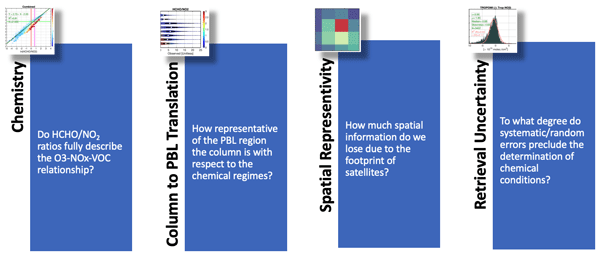
Amir H. Souri, Matthew S. Johnson, Glenn M. Wolfe, James H. Crawford, Alan Fried, Armin Wisthaler, William H. Brune, Donald R. Blake, Andrew J. Weinheimer, Tijl Verhoelst, Steven Compernolle, Gaia Pinardi, Corinne Vigouroux, Bavo Langerock, Sungyeon Choi, Lok Lamsal, Lei Zhu, Shuai Sun, Ronald C. Cohen, Kyung-Eun Min, Changmin Cho, Sajeev Philip, Xiong Liu, and Kelly Chance
Atmos. Chem. Phys., 23, 1963–1986, https://doi.org/10.5194/acp-23-1963-2023, https://doi.org/10.5194/acp-23-1963-2023, 2023
Short summary
Short summary
We have rigorously characterized different sources of error in satellite-based HCHO / NO2 tropospheric columns, a widely used metric for diagnosing near-surface ozone sensitivity. Specifically, the errors were categorized/quantified into (i) an inherent chemistry error, (ii) the decoupled relationship between columns and the near-surface concentration, (iii) the spatial representativeness error of ground satellite pixels, and (iv) the satellite retrieval errors.
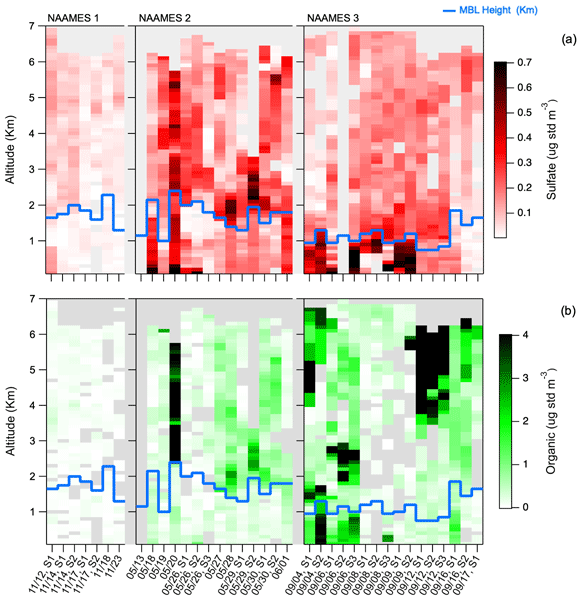
Francesca Gallo, Kevin J. Sanchez, Bruce E. Anderson, Ryan Bennett, Matthew D. Brown, Ewan C. Crosbie, Chris Hostetler, Carolyn Jordan, Melissa Yang Martin, Claire E. Robinson, Lynn M. Russell, Taylor J. Shingler, Michael A. Shook, Kenneth L. Thornhill, Elizabeth B. Wiggins, Edward L. Winstead, Armin Wisthaler, Luke D. Ziemba, and Richard H. Moore
Atmos. Chem. Phys., 23, 1465–1490, https://doi.org/10.5194/acp-23-1465-2023, https://doi.org/10.5194/acp-23-1465-2023, 2023
Short summary
Short summary
We integrate in situ ship- and aircraft-based measurements of aerosol, trace gases, and meteorological parameters collected during the NASA North Atlantic Aerosols and Marine Ecosystems Study (NAAMES) field campaigns in the western North Atlantic Ocean region. A comprehensive characterization of the vertical profiles of aerosol properties under different seasonal regimes is provided for improving the understanding of aerosol key processes and aerosol–cloud interactions in marine regions.
Hao Guo, Clare M. Flynn, Michael J. Prather, Sarah A. Strode, Stephen D. Steenrod, Louisa Emmons, Forrest Lacey, Jean-Francois Lamarque, Arlene M. Fiore, Gus Correa, Lee T. Murray, Glenn M. Wolfe, Jason M. St. Clair, Michelle Kim, John Crounse, Glenn Diskin, Joshua DiGangi, Bruce C. Daube, Roisin Commane, Kathryn McKain, Jeff Peischl, Thomas B. Ryerson, Chelsea Thompson, Thomas F. Hanisco, Donald Blake, Nicola J. Blake, Eric C. Apel, Rebecca S. Hornbrook, James W. Elkins, Eric J. Hintsa, Fred L. Moore, and Steven C. Wofsy
Atmos. Chem. Phys., 23, 99–117, https://doi.org/10.5194/acp-23-99-2023, https://doi.org/10.5194/acp-23-99-2023, 2023
Short summary
Short summary
We have prepared a unique and unusual result from the recent ATom aircraft mission: a measurement-based derivation of the production and loss rates of ozone and methane over the ocean basins. These are the key products of chemistry models used in assessments but have thus far lacked observational metrics. It also shows the scales of variability of atmospheric chemical rates and provides a major challenge to the atmospheric models.
Pamela S. Rickly, Hongyu Guo, Pedro Campuzano-Jost, Jose L. Jimenez, Glenn M. Wolfe, Ryan Bennett, Ilann Bourgeois, John D. Crounse, Jack E. Dibb, Joshua P. DiGangi, Glenn S. Diskin, Maximilian Dollner, Emily M. Gargulinski, Samuel R. Hall, Hannah S. Halliday, Thomas F. Hanisco, Reem A. Hannun, Jin Liao, Richard Moore, Benjamin A. Nault, John B. Nowak, Jeff Peischl, Claire E. Robinson, Thomas Ryerson, Kevin J. Sanchez, Manuel Schöberl, Amber J. Soja, Jason M. St. Clair, Kenneth L. Thornhill, Kirk Ullmann, Paul O. Wennberg, Bernadett Weinzierl, Elizabeth B. Wiggins, Edward L. Winstead, and Andrew W. Rollins
Atmos. Chem. Phys., 22, 15603–15620, https://doi.org/10.5194/acp-22-15603-2022, https://doi.org/10.5194/acp-22-15603-2022, 2022
Short summary
Short summary
Biomass burning sulfur dioxide (SO2) emission factors range from 0.27–1.1 g kg-1 C. Biomass burning SO2 can quickly form sulfate and organosulfur, but these pathways are dependent on liquid water content and pH. Hydroxymethanesulfonate (HMS) appears to be directly emitted from some fire sources but is not the sole contributor to the organosulfur signal. It is shown that HMS and organosulfur chemistry may be an important S(IV) reservoir with the fate dependent on the surrounding conditions.

Rachel A. Bergin, Monica Harkey, Alicia Hoffman, Richard H. Moore, Bruce Anderson, Andreas Beyersdorf, Luke Ziemba, Lee Thornhill, Edward Winstead, Tracey Holloway, and Timothy H. Bertram
Atmos. Chem. Phys., 22, 15449–15468, https://doi.org/10.5194/acp-22-15449-2022, https://doi.org/10.5194/acp-22-15449-2022, 2022
Short summary
Short summary
Correctly predicting aerosol surface area concentrations is important for determining the rate of heterogeneous reactions in chemical transport models. Here, we compare aircraft measurements of aerosol surface area with a regional model. In polluted air masses, we show that the model underpredicts aerosol surface area by a factor of 2. Despite this disagreement, the representation of heterogeneous chemistry still dominates the overall uncertainty in the loss rate of molecules such as N2O5.
Vanessa Selimovic, Damien Ketcherside, Sreelekha Chaliyakunnel, Catherine Wielgasz, Wade Permar, Hélène Angot, Dylan B. Millet, Alan Fried, Detlev Helmig, and Lu Hu
Atmos. Chem. Phys., 22, 14037–14058, https://doi.org/10.5194/acp-22-14037-2022, https://doi.org/10.5194/acp-22-14037-2022, 2022
Short summary
Short summary
Arctic warming has led to an increase in plants that emit gases in response to stress, but how these gases affect regional chemistry is largely unknown due to lack of observational data. Here we present the most comprehensive gas-phase measurements for this area to date and compare them to predictions from a global transport model. We report 78 gas-phase species and investigate their importance to atmospheric chemistry in the area, with broader implications for similar plant types.

Hossein Dadashazar, Andrea F. Corral, Ewan Crosbie, Sanja Dmitrovic, Simon Kirschler, Kayla McCauley, Richard Moore, Claire Robinson, Joseph S. Schlosser, Michael Shook, K. Lee Thornhill, Christiane Voigt, Edward Winstead, Luke Ziemba, and Armin Sorooshian
Atmos. Chem. Phys., 22, 13897–13913, https://doi.org/10.5194/acp-22-13897-2022, https://doi.org/10.5194/acp-22-13897-2022, 2022
Short summary
Short summary
Multi-season airborne data over the northwestern Atlantic show that organic mass fraction and the relative amount of oxygenated organics within that fraction are enhanced in droplet residual particles as compared to particles below and above cloud. In-cloud aqueous processing is shown to be a potential driver of this compositional shift in cloud. This implies that aerosol–cloud interactions in the region reduce aerosol hygroscopicity due to the jump in the organic : sulfate ratio in cloud.
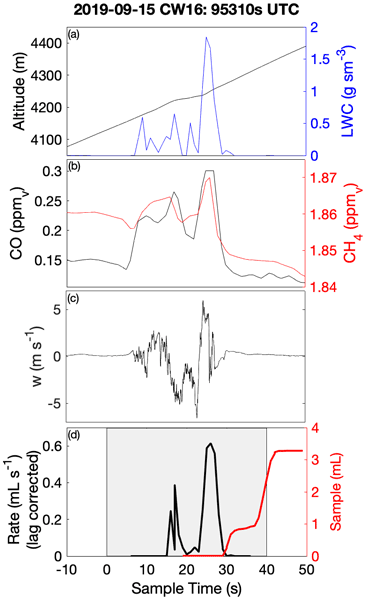
Ewan Crosbie, Luke D. Ziemba, Michael A. Shook, Claire E. Robinson, Edward L. Winstead, K. Lee Thornhill, Rachel A. Braun, Alexander B. MacDonald, Connor Stahl, Armin Sorooshian, Susan C. van den Heever, Joshua P. DiGangi, Glenn S. Diskin, Sarah Woods, Paola Bañaga, Matthew D. Brown, Francesca Gallo, Miguel Ricardo A. Hilario, Carolyn E. Jordan, Gabrielle R. Leung, Richard H. Moore, Kevin J. Sanchez, Taylor J. Shingler, and Elizabeth B. Wiggins
Atmos. Chem. Phys., 22, 13269–13302, https://doi.org/10.5194/acp-22-13269-2022, https://doi.org/10.5194/acp-22-13269-2022, 2022
Short summary
Short summary
The linkage between cloud droplet and aerosol particle chemical composition was analyzed using samples collected in a polluted tropical marine environment. Variations in the droplet composition were related to physical and dynamical processes in clouds to assess their relative significance across three cases that spanned a range of rainfall amounts. In spite of the pollution, sea salt still remained a major contributor to the droplet composition and was preferentially enhanced in rainwater.
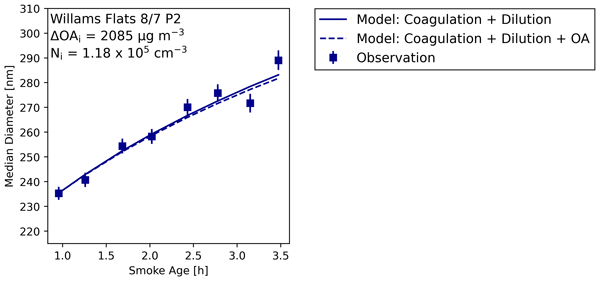
Nicole A. June, Anna L. Hodshire, Elizabeth B. Wiggins, Edward L. Winstead, Claire E. Robinson, K. Lee Thornhill, Kevin J. Sanchez, Richard H. Moore, Demetrios Pagonis, Hongyu Guo, Pedro Campuzano-Jost, Jose L. Jimenez, Matthew M. Coggon, Jonathan M. Dean-Day, T. Paul Bui, Jeff Peischl, Robert J. Yokelson, Matthew J. Alvarado, Sonia M. Kreidenweis, Shantanu H. Jathar, and Jeffrey R. Pierce
Atmos. Chem. Phys., 22, 12803–12825, https://doi.org/10.5194/acp-22-12803-2022, https://doi.org/10.5194/acp-22-12803-2022, 2022
Short summary
Short summary
The evolution of organic aerosol composition and size is uncertain due to variability within and between smoke plumes. We examine the impact of plume concentration on smoke evolution from smoke plumes sampled by the NASA DC-8 during FIREX-AQ. We find that observed organic aerosol and size distribution changes are correlated to plume aerosol mass concentrations. Additionally, coagulation explains the majority of the observed growth.
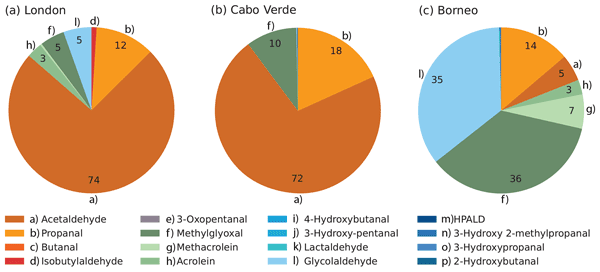
Maria Paula Pérez-Peña, Jenny A. Fisher, Dylan B. Millet, Hisashi Yashiro, Ray L. Langenfelds, Paul B. Krummel, and Scott H. Kable
Atmos. Chem. Phys., 22, 12367–12386, https://doi.org/10.5194/acp-22-12367-2022, https://doi.org/10.5194/acp-22-12367-2022, 2022
Short summary
Short summary
We used two atmospheric models to test the implications of previously unexplored aldehyde photochemistry on the atmospheric levels of molecular hydrogen (H2). We showed that the new photochemistry from aldehydes produces more H2 over densely forested areas. Compared to the rest of the world, it is over these forested regions where the produced H2 is more likely to be removed. The results highlight that other processes that contribute to atmospheric H2 levels should be studied further.
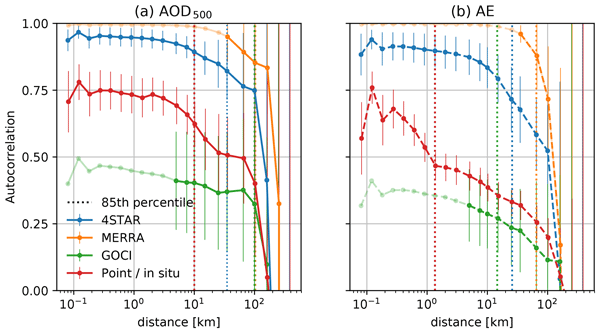
Samuel E. LeBlanc, Michal Segal-Rozenhaimer, Jens Redemann, Connor Flynn, Roy R. Johnson, Stephen E. Dunagan, Robert Dahlgren, Jhoon Kim, Myungje Choi, Arlindo da Silva, Patricia Castellanos, Qian Tan, Luke Ziemba, Kenneth Lee Thornhill, and Meloë Kacenelenbogen
Atmos. Chem. Phys., 22, 11275–11304, https://doi.org/10.5194/acp-22-11275-2022, https://doi.org/10.5194/acp-22-11275-2022, 2022
Short summary
Short summary
Airborne observations of atmospheric particles and pollution over Korea during a field campaign in May–June 2016 showed that the smallest atmospheric particles are present in the lowest 2 km of the atmosphere. The aerosol size is more spatially variable than optical thickness. We show this with remote sensing (4STAR), in situ (LARGE) observations, satellite measurements (GOCI), and modeled properties (MERRA-2), and it is contrary to the current understanding.

Simon Kirschler, Christiane Voigt, Bruce Anderson, Ramon Campos Braga, Gao Chen, Andrea F. Corral, Ewan Crosbie, Hossein Dadashazar, Richard A. Ferrare, Valerian Hahn, Johannes Hendricks, Stefan Kaufmann, Richard Moore, Mira L. Pöhlker, Claire Robinson, Amy J. Scarino, Dominik Schollmayer, Michael A. Shook, K. Lee Thornhill, Edward Winstead, Luke D. Ziemba, and Armin Sorooshian
Atmos. Chem. Phys., 22, 8299–8319, https://doi.org/10.5194/acp-22-8299-2022, https://doi.org/10.5194/acp-22-8299-2022, 2022
Short summary
Short summary
In this study we show that the vertical velocity dominantly impacts the cloud droplet number concentration (NC) of low-level clouds over the western North Atlantic in the winter and summer season, while the cloud condensation nuclei concentration, aerosol size distribution and chemical composition impact NC within a season. The observational data presented in this study can evaluate and improve the representation of aerosol–cloud interactions for a wide range of conditions.
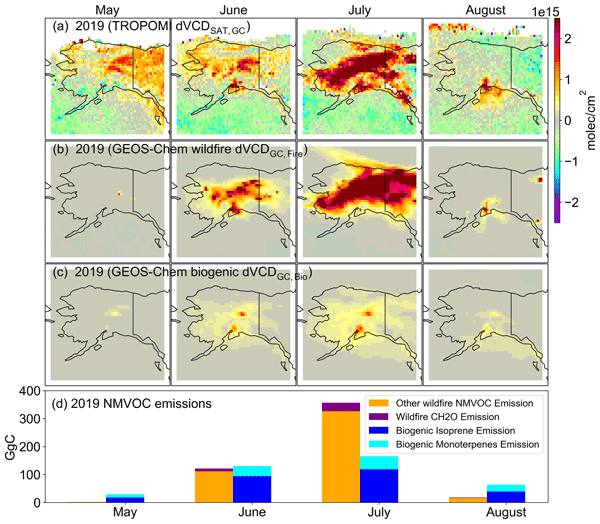
Tianlang Zhao, Jingqiu Mao, William R. Simpson, Isabelle De Smedt, Lei Zhu, Thomas F. Hanisco, Glenn M. Wolfe, Jason M. St. Clair, Gonzalo González Abad, Caroline R. Nowlan, Barbara Barletta, Simone Meinardi, Donald R. Blake, Eric C. Apel, and Rebecca S. Hornbrook
Atmos. Chem. Phys., 22, 7163–7178, https://doi.org/10.5194/acp-22-7163-2022, https://doi.org/10.5194/acp-22-7163-2022, 2022
Short summary
Short summary
Monitoring formaldehyde (HCHO) can help us understand Arctic vegetation change. Here, we compare satellite data and model and show that Alaska summertime HCHO is largely dominated by a background from methane oxidation during mild wildfire years and is dominated by wildfire (largely from direct emission of fire) during strong fire years. Consequently, it is challenging to use satellite HCHO to study vegetation change in the Arctic region.
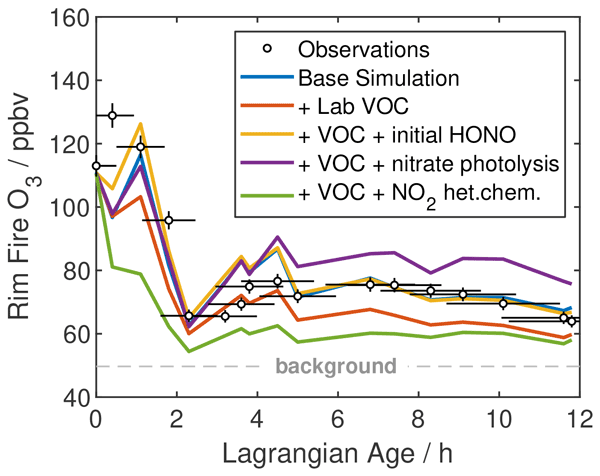
Glenn M. Wolfe, Thomas F. Hanisco, Heather L. Arkinson, Donald R. Blake, Armin Wisthaler, Tomas Mikoviny, Thomas B. Ryerson, Ilana Pollack, Jeff Peischl, Paul O. Wennberg, John D. Crounse, Jason M. St. Clair, Alex Teng, L. Gregory Huey, Xiaoxi Liu, Alan Fried, Petter Weibring, Dirk Richter, James Walega, Samuel R. Hall, Kirk Ullmann, Jose L. Jimenez, Pedro Campuzano-Jost, T. Paul Bui, Glenn Diskin, James R. Podolske, Glen Sachse, and Ronald C. Cohen
Atmos. Chem. Phys., 22, 4253–4275, https://doi.org/10.5194/acp-22-4253-2022, https://doi.org/10.5194/acp-22-4253-2022, 2022
Short summary
Short summary
Smoke plumes are chemically complex. This work combines airborne observations of smoke plume composition with a photochemical model to probe the production of ozone and the fate of reactive gases in the outflow of a large wildfire. Model–measurement comparisons illustrate how uncertain emissions and chemical processes propagate into simulated chemical evolution. Results provide insight into how this system responds to perturbations, which can help guide future observation and modeling efforts.
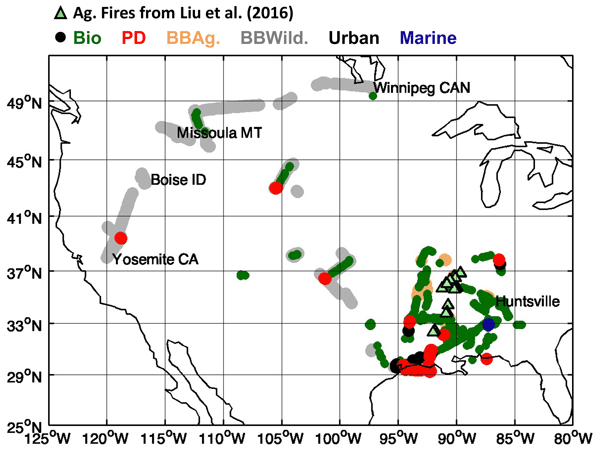
Meloë S. F. Kacenelenbogen, Qian Tan, Sharon P. Burton, Otto P. Hasekamp, Karl D. Froyd, Yohei Shinozuka, Andreas J. Beyersdorf, Luke Ziemba, Kenneth L. Thornhill, Jack E. Dibb, Taylor Shingler, Armin Sorooshian, Reed W. Espinosa, Vanderlei Martins, Jose L. Jimenez, Pedro Campuzano-Jost, Joshua P. Schwarz, Matthew S. Johnson, Jens Redemann, and Gregory L. Schuster
Atmos. Chem. Phys., 22, 3713–3742, https://doi.org/10.5194/acp-22-3713-2022, https://doi.org/10.5194/acp-22-3713-2022, 2022
Short summary
Short summary
The impact of aerosols on Earth's radiation budget and human health is important and strongly depends on their composition. One desire of our scientific community is to derive the composition of the aerosol from satellite sensors. However, satellites observe aerosol optical properties (and not aerosol composition) based on remote sensing instrumentation. This study assesses how much aerosol optical properties can tell us about aerosol composition.
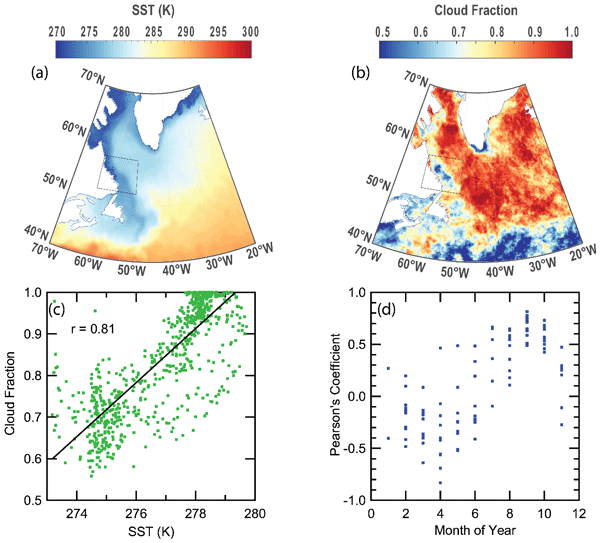
Kevin J. Sanchez, Bo Zhang, Hongyu Liu, Matthew D. Brown, Ewan C. Crosbie, Francesca Gallo, Johnathan W. Hair, Chris A. Hostetler, Carolyn E. Jordan, Claire E. Robinson, Amy Jo Scarino, Taylor J. Shingler, Michael A. Shook, Kenneth L. Thornhill, Elizabeth B. Wiggins, Edward L. Winstead, Luke D. Ziemba, Georges Saliba, Savannah L. Lewis, Lynn M. Russell, Patricia K. Quinn, Timothy S. Bates, Jack Porter, Thomas G. Bell, Peter Gaube, Eric S. Saltzman, Michael J. Behrenfeld, and Richard H. Moore
Atmos. Chem. Phys., 22, 2795–2815, https://doi.org/10.5194/acp-22-2795-2022, https://doi.org/10.5194/acp-22-2795-2022, 2022
Short summary
Short summary
Atmospheric particle concentrations impact clouds, which strongly impact the amount of sunlight reflected back into space and the overall climate. Measurements of particles over the ocean are rare and expensive to collect, so models are necessary to fill in the gaps by simulating both particle and clouds. However, some measurements are needed to test the accuracy of the models. Here, we measure changes in particles in different weather conditions, which are ideal for comparison with models.
Rupert Holzinger, Oliver Eppers, Kouji Adachi, Heiko Bozem, Markus Hartmann, Andreas Herber, Makoto Koike, Dylan B. Millet, Nobuhiro Moteki, Sho Ohata, Frank Stratmann, and Atsushi Yoshida
Atmos. Chem. Phys. Discuss., https://doi.org/10.5194/acp-2022-95, https://doi.org/10.5194/acp-2022-95, 2022
Revised manuscript not accepted
Short summary
Short summary
In spring 2018 the research aircraft Polar 5 conducted flights in the Arctic atmosphere. The flight operation was from Station Nord in Greenland, 1700 km north of the Arctic Circle (81°43'N, 17°47'W). Using a mass spectrometer we measured more than 100 organic compounds in the air. We found a clear signature of natural organic compounds that are transported from forests to the high Arctic. These compounds have the potential to change the cloud cover and energy budget of the Arctic region.
Xueying Yu, Dylan B. Millet, and Daven K. Henze
Geosci. Model Dev., 14, 7775–7793, https://doi.org/10.5194/gmd-14-7775-2021, https://doi.org/10.5194/gmd-14-7775-2021, 2021
Short summary
Short summary
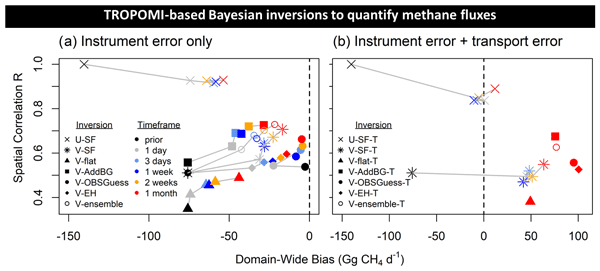
We conduct observing system simulation experiments to test how well inverse analyses of high-resolution satellite data from sensors such as TROPOMI can quantify methane emissions. Inversions can improve monthly flux estimates at 25 km even with a spatially biased prior or model transport errors, but results are strongly degraded when both are present. We further evaluate a set of alternate formalisms to overcome limitations of the widely used scale factor approach that arise for missing sources.
Jin Liao, Glenn M. Wolfe, Reem A. Hannun, Jason M. St. Clair, Thomas F. Hanisco, Jessica B. Gilman, Aaron Lamplugh, Vanessa Selimovic, Glenn S. Diskin, John B. Nowak, Hannah S. Halliday, Joshua P. DiGangi, Samuel R. Hall, Kirk Ullmann, Christopher D. Holmes, Charles H. Fite, Anxhelo Agastra, Thomas B. Ryerson, Jeff Peischl, Ilann Bourgeois, Carsten Warneke, Matthew M. Coggon, Georgios I. Gkatzelis, Kanako Sekimoto, Alan Fried, Dirk Richter, Petter Weibring, Eric C. Apel, Rebecca S. Hornbrook, Steven S. Brown, Caroline C. Womack, Michael A. Robinson, Rebecca A. Washenfelder, Patrick R. Veres, and J. Andrew Neuman
Atmos. Chem. Phys., 21, 18319–18331, https://doi.org/10.5194/acp-21-18319-2021, https://doi.org/10.5194/acp-21-18319-2021, 2021
Short summary
Short summary
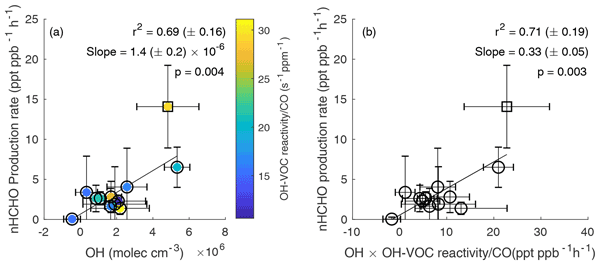
Formaldehyde (HCHO) is an important oxidant precursor and affects the formation of O3 and other secondary pollutants in wildfire plumes. We disentangle the processes controlling HCHO evolution from wildfire plumes sampled by NASA DC-8 during FIREX-AQ. We find that OH abundance rather than normalized OH reactivity is the main driver of fire-to-fire variability in HCHO secondary production and estimate an effective HCHO yield per volatile organic compound molecule oxidized in wildfire plumes.
Alexander A. T. Bui, Henry W. Wallace, Sarah Kavassalis, Hariprasad D. Alwe, James H. Flynn, Matt H. Erickson, Sergio Alvarez, Dylan B. Millet, Allison L. Steiner, and Robert J. Griffin
Atmos. Chem. Phys., 21, 17031–17050, https://doi.org/10.5194/acp-21-17031-2021, https://doi.org/10.5194/acp-21-17031-2021, 2021
Short summary
Short summary
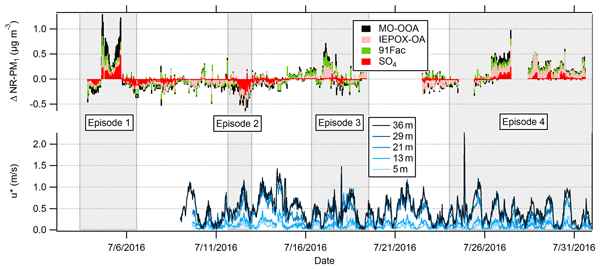
Differences in atmospheric species above and below a forest canopy provide insight into the relative importance of local mixing, long-range transport, and chemical processes in determining vertical gradients in atmospheric particles in a forested environment. This helps in understanding the flux of climate-relevant material out of the forest to the atmosphere. We studied this in a remote forest using vertically resolved measurements of gases and particles.
Zachary C. J. Decker, Michael A. Robinson, Kelley C. Barsanti, Ilann Bourgeois, Matthew M. Coggon, Joshua P. DiGangi, Glenn S. Diskin, Frank M. Flocke, Alessandro Franchin, Carley D. Fredrickson, Georgios I. Gkatzelis, Samuel R. Hall, Hannah Halliday, Christopher D. Holmes, L. Gregory Huey, Young Ro Lee, Jakob Lindaas, Ann M. Middlebrook, Denise D. Montzka, Richard Moore, J. Andrew Neuman, John B. Nowak, Brett B. Palm, Jeff Peischl, Felix Piel, Pamela S. Rickly, Andrew W. Rollins, Thomas B. Ryerson, Rebecca H. Schwantes, Kanako Sekimoto, Lee Thornhill, Joel A. Thornton, Geoffrey S. Tyndall, Kirk Ullmann, Paul Van Rooy, Patrick R. Veres, Carsten Warneke, Rebecca A. Washenfelder, Andrew J. Weinheimer, Elizabeth Wiggins, Edward Winstead, Armin Wisthaler, Caroline Womack, and Steven S. Brown
Atmos. Chem. Phys., 21, 16293–16317, https://doi.org/10.5194/acp-21-16293-2021, https://doi.org/10.5194/acp-21-16293-2021, 2021
Short summary
Short summary
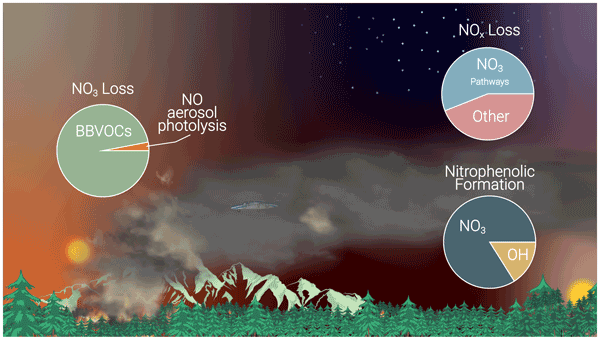
To understand air quality impacts from wildfires, we need an accurate picture of how wildfire smoke changes chemically both day and night as sunlight changes the chemistry of smoke. We present a chemical analysis of wildfire smoke as it changes from midday through the night. We use aircraft observations from the FIREX-AQ field campaign with a chemical box model. We find that even under sunlight typical
nighttimechemistry thrives and controls the fate of key smoke plume chemical processes.
Dandan Wei, Hariprasad D. Alwe, Dylan B. Millet, Brandon Bottorff, Michelle Lew, Philip S. Stevens, Joshua D. Shutter, Joshua L. Cox, Frank N. Keutsch, Qianwen Shi, Sarah C. Kavassalis, Jennifer G. Murphy, Krystal T. Vasquez, Hannah M. Allen, Eric Praske, John D. Crounse, Paul O. Wennberg, Paul B. Shepson, Alexander A. T. Bui, Henry W. Wallace, Robert J. Griffin, Nathaniel W. May, Megan Connor, Jonathan H. Slade, Kerri A. Pratt, Ezra C. Wood, Mathew Rollings, Benjamin L. Deming, Daniel C. Anderson, and Allison L. Steiner
Geosci. Model Dev., 14, 6309–6329, https://doi.org/10.5194/gmd-14-6309-2021, https://doi.org/10.5194/gmd-14-6309-2021, 2021
Short summary
Short summary
Over the past decade, understanding of isoprene oxidation has improved, and proper representation of isoprene oxidation and isoprene-derived SOA (iSOA) formation in canopy–chemistry models is now recognized to be important for an accurate understanding of forest–atmosphere exchange. The updated FORCAsT version 2.0 improves the estimation of some isoprene oxidation products and is one of the few canopy models currently capable of simulating SOA formation from monoterpenes and isoprene.
Cited articles
Apel, E. C., Asher, E. C., Hills, A. J., and Hornbrook, R. S.: ATom: Volatile Organic Compounds (VOCs) from the TOGA instrument, Version 2, NASA's Oak Ridge National Laboratory (ORNL) Distributed Active Archive Center (DAAC) [data set], https://doi.org/10.3334/ORNLDAAC/1936, 2021.
Bandy, A. R., Thornton, D. C., Tu, F. H., Blomquist, B. W., Nadler, W., Mitchell, G. M., and Lenschow, D. H.: Determination of the vertical flux of dimethyl sulfide by eddy correlation and atmospheric pressure ionization mass spectrometry (APIMS), J. Geophys. Res.-Atmos., 107, https://doi.org/10.1029/2002JD002472, 2002.
Banerjee, T., Katul, G. G., Zahn, E., Dias, N. L., and Bou-Zeid, E.: A Single Compartment Relaxed Eddy Accumulation Method, J. Geophys. Res.-Atmos., 129, https://doi.org/10.1029/2024JD040811, 2024.
Bates, K. H., Jacob, D. J., Wang, S., Hornbrook, R. S., Apel, E. C., Kim, M. J., Millet, D. B., Wells, K. C., Chen, X., Brewer, J. F., Ray, E. A., Commane, R., Diskin, G. S., and Wofsy, S. C.: The Global Budget of Atmospheric Methanol: New Constraints on Secondary, Oceanic, and Terrestrial Sources, J. Geophys. Res.-Atmos., 126, https://doi.org/10.1029/2020JD033439, 2021.
Beale, R., Dixon, J. L., Arnold, S. R., Liss, P. S., and Nightingale, P. D.: Methanol, acetaldehyde, and acetone in the surface waters of the Atlantic Ocean, J. Geophys. Res.-Oceans, 118, 5412–5425, https://doi.org/10.1002/jgrc.20322, 2013.
Beale, R., Dixon, J. L., Smyth, T. J., and Nightingale, P. D.: Annual study of oxygenated volatile organic compounds in UK shelf waters, Mar. Chem., 171, 96–106, https://doi.org/10.1016/j.marchem.2015.02.013, 2015.
Behrenfeld, M. J.: Abandoning Sverdrup's Critical Depth Hypothesis on phytoplankton blooms, Ecology, 91, 977–989, https://doi.org/10.1890/09-1207.1, 2010.
Behrenfeld, M. J. and Boss, E. S.: Student's tutorial on bloom hypotheses in the context of phytoplankton annual cycles, Glob. Change Biol., 24, 55–77, https://doi.org/10.1111/gcb.13858, 2018.
Behrenfeld, M., Hostetler, C., Moore, R., Proctor, C., Anderson, B., Bates, T., Brooks, S. D., Cairns, B., Hair, J., Hu, C., Janz, S., Johnson, J., Redemann, J., Russell, L., Saltzman, E., Thornhill, K. L., Wisthaler, A., Yang Martin, M., and Zhang, B.: North Atlantic Aerosols and Marine Ecosystems Study, NASA's Langley Atmospheric Science Data Center (ASDC) Distributed Active Archive Center (DAAC) [data set], https://doi.org/10.5067/SUBORBITAL/NAAMES/DATA001, 2018.
Behrenfeld, M. J., Moore, R. H., Hostetler, C. A., Graff, J., Gaube, P., Russell, L. M., Chen, G., Doney, S. C., Giovannoni, S., Liu, H., Proctor, C., Bolaños, L. M., Baetge, N., Davie-Martin, C., Westberry, T. K., Bates, T. S., Bell, T. G., Bidle, K. D., Boss, E. S., Brooks, S. D., Cairns, B., Carlson, C., Halsey, K., Harvey, E. L., Hu, C., Karp-Boss, L., Kleb, M., Menden-Deuer, S., Morison, F., Quinn, P. K., Scarino, A. J., Anderson, B., Chowdhary, J., Crosbie, E., Ferrare, R., Haire, J. W., Hu, Y., Janz, S., Redemann, J., Saltzman, E., Shook, M., Siegel, D. A., Wisthaler, A., Martin, M. Y., and Ziemba, L.: The North Atlantic Aerosol and Marine Ecosystem Study (NAAMES): Science Motive and Mission Overview, Front. Mar. Sci., 6, https://doi.org/10.3389/fmars.2019.00122, 2019.
Behrenfeld, M., Hostetler, C., Moore, R., Proctor, C., Anderson, B., Cairns, B., Hair, J., Redemann, J., Thornhill, K. L., Wisthaler, A., and Yang Martin, M.: NAAMES C-130 Aircraft Merge Data Files, NASA’s Langley Atmospheric Science Data Center (ASDC) Distributed Active Archive Center (DAAC) [data set], https://doi.org/10.5067/ASDC/NAAMES_MERGE_DATA_1, 2022.
Bell, T. G., Porter, J. G., Wang, W.-L., Lawler, M. J., Boss, E., Behrenfeld, M. J., and Saltzman, E. S.: Predictability of Seawater DMS During the North Atlantic Aerosol and Marine Ecosystem Study (NAAMES), Front. Mar. Sci., 7, https://doi.org/10.3389/fmars.2020.596763, 2021.
Bendat, J. S., and Piersol, A. G.: Chapter 8. Statistical Errors in Basic Estimates, in: Random Data: Analysis and Measurement Procedures, Fourth Edition, Wiley Series in Probability and Statistics, 249-287, https://doi.org/10.1002/9781118032428.ch8, 2010.
Bennett, J. R., Thornhill, K. L., and Yang Martin, M.: NAAMES C-130 Navigational and Meteorological Data, Version 1, NASA’s Langley Atmospheric Science Data Center (ASDC) Distributed Active Archive Center (DAAC) [data set], https://doi.org/10.5067/ASDC/NAAMES_METNAV, 2020.
Brewer, J. F., Fischer, E. V., Commane, R., Wofsy, S. C., Daube, B. C., Apel, E. C., Hills, A. J., Hornbrook, R. S., Barletta, B., Meinardi, S., Blake, D. R., Ray, E. A., and Ravishankara, A. R.: Evidence for an Oceanic Source of Methyl Ethyl Ketone to the Atmosphere, Geophys. Res. Lett., 47, https://doi.org/10.1029/2019GL086045, 2020.
Carpenter, L. J., Archer, S. D., and Beale, R.: Ocean-atmosphere trace gas exchange, Chem. Soc. Rev., 41, 6473–6506, https://doi.org/10.1039/c2cs35121h, 2012.
Chen, X., Millet, D., Wolfe, G., Delaria, E., Deventer, M. J., Müller, M., Schiller, A., Thornhill, K., and Wisthaler, A.: NAAMES airborne high-resolution VOC and WINDS data (selected), Zenodo [data set], https://doi.org/10.5281/zenodo.21283983, 2026.
Conley, S. A., Faloona, I., Miller, G. H., Lenschow, D. H., Blomquist, B., and Bandy, A.: Closing the dimethyl sulfide budget in the tropical marine boundary layer during the Pacific Atmospheric Sulfur Experiment, Atmos. Chem. Phys., 9, 8745–8756, https://doi.org/10.5194/acp-9-8745-2009, 2009.
Davie-Martin, C. L., Giovannoni, S. J., Behrenfeld, M. J., Penta, W. B., and Halsey, K. H.: Seasonal and Spatial Variability in the Biogenic Production and Consumption of Volatile Organic Compounds (VOCs) by Marine Plankton in the North Atlantic Ocean, Front. Mar. Sci., 7, https://doi.org/10.3389/fmars.2020.611870, 2020.
de Gouw, J. A., Warneke, C., Parrish, D. D., Holloway, J. S., Trainer, M., and Fehsenfeld, F. C.: Emission sources and ocean uptake of acetonitrile (CH3CN) in the atmosphere, J. Geophys. Res.-Atmos., 108, https://doi.org/10.1029/2002jd002897, 2003.
Deventer, M. J., Griffis, T. J., Roman, D. T., Kolka, R. K., Wood, J. D., Erickson, M., Baker, J. M., and Millet, D. B.: Error characterization of methane fluxes and budgets derived from a long-term comparison of open- and closed-path eddy covariance systems, Agric. For. Meteorol., 278, https://doi.org/10.1016/j.agrformet.2019.107638, 2019.
Donahue, N. M. and Prinn, R. G.: Nonmethane hydrocarbon chemistry in the remote marine boundary layer, J. Geophys. Res.-Atmos., 95, 18387–18411, https://doi.org/10.1029/JD095iD11p18387, 1990.
Dong, Y., Yang, M., Bakker, D. C. E., Kitidis, V., and Bell, T. G.: Uncertainties in eddy covariance air–sea CO2 flux measurements and implications for gas transfer velocity parameterisations, Atmos. Chem. Phys., 21, 8089–8110, https://doi.org/10.5194/acp-21-8089-2021, 2021.
Faloona, I., Lenschow, D. H., Campos, T., Stevens, B., van Zanten, M., Blomquist, B., Thornton, D., Bandy, A., and Gerber, H.: Observations of Entrainment in Eastern Pacific Marine Stratocumulus Using Three Conserved Scalars, J. Atmos. Sci., 62, 3268–3285, https://doi.org/10.1175/JAS3541.1, 2005.
Finkelstein, P. L., and Sims, P. F.: Sampling error in eddy correlation flux measurements, J. Geophys. Res.-Atmos., 106, 3503-3509, https://doi.org/10.1029/2000JD900731, 2001
Fischer, E. V., Jacob, D. J., Millet, D. B., Yantosca, R. M., and Mao, J.: The role of the ocean in the global atmospheric budget of acetone, Geophys. Res. Lett., 39, https://doi.org/10.1029/2011gl050086, 2012.
Göckede, M., Kittler, F., and Schaller, C.: Quantifying the impact of emission outbursts and non-stationary flow on eddy-covariance CH4 flux measurements using wavelet techniques, Biogeosciences, 16, 3113–3131, https://doi.org/10.5194/bg-16-3113-2019, 2019.
Hackenberg, S. C., Andrews, S. J., Airs, R., Arnold, S. R., Bouman, H. A., Brewin, R. J. W., Chance, R. J., Cummings, D., Dall'Olmo, G., Lewis, A. C., Minaeian, J. K., Reifel, K. M., Small, A., Tarran, G. A., Tilstone, G. H., and Carpenter, L. J.: Potential controls of isoprene in the surface ocean, Global Biogeochem. Cy., 31, 644–662, https://doi.org/10.1002/2016GB005531, 2017.
Hintsa, E. J., Dacey, J. W. H., McGillis, W. R., Edson, J. B., Zappa, C. J., and Zemmelink, H. J.: Sea-to-air fluxes from measurements of the atmospheric gradient of dimethylsulfide and comparison with simultaneous relaxed eddy accumulation measurements, J. Geophys. Res.-Oceans, 109, https://doi.org/10.1029/2002JC001617, 2004.
Hoffmann, E. H., Tilgner, A., Schrödner, R., Bräuer, P., Wolke, R., and Herrmann, H.: An advanced modeling study on the impacts and atmospheric implications of multiphase dimethyl sulfide chemistry, Proc. Natl. Acad. Sci. USA, 113, 11776–11781, https://doi.org/10.1073/pnas.1606320113, 2016.
Karl, T., Misztal, P. K., Jonsson, H. H., Shertz, S., Goldstein, A. H., and Guenther, A. B.: Airborne Flux Measurements of BVOCs above Californian Oak Forests: Experimental Investigation of Surface and Entrainment Fluxes, OH Densities, and Damköhler Numbers, J. Atmos. Sci., 70, 3277–3287, https://doi.org/10.1175/JAS-D-13-054.1, 2013.
Kettle, A. J., Rhee, T. S., von Hobe, M., Poulton, A., Aiken, J., and Andreae, M. O.: Assessing the flux of different volatile sulfur gases from the ocean to the atmosphere, J. Geophys. Res.-Atmos., 106, 12193–12209, https://doi.org/10.1029/2000JD900630, 2001.
Kim, M. J., Novak, G. A., Zoerb, M. C., Yang, M., Blomquist, B. W., Huebert, B. J., Cappa, C. D., and Bertram, T. H.: Air-Sea exchange of biogenic volatile organic compounds and the impact on aerosol particle size distributions, Geophys. Res. Lett., 44, 3887–3896, https://doi.org/10.1002/2017GL072975, 2017.
Land, P. E., Shutler, J. D., Bell, T. G., and Yang, M.: Exploiting satellite earth observation to quantify current global oceanic DMS flux and its future climate sensitivity, J. Geophys. Res.-Oceans, 119, 7725–7740, https://doi.org/10.1002/2014JC010104, 2014.
Langford, B., Acton, W., Ammann, C., Valach, A., and Nemitz, E.: Eddy-covariance data with low signal-to-noise ratio: time-lag determination, uncertainties and limit of detection, Atmos. Meas. Tech., 8, 4197–4213, https://doi.org/10.5194/amt-8-4197-2015, 2015.
Lawson, S. J., Law, C. S., Harvey, M. J., Bell, T. G., Walker, C. F., de Bruyn, W. J., and Saltzman, E. S.: Methanethiol, dimethyl sulfide and acetone over biologically productive waters in the southwest Pacific Ocean, Atmos. Chem. Phys., 20, 3061–3078, https://doi.org/10.5194/acp-20-3061-2020, 2020.
Lenschow, D. H.: Probing the Atmospheric Boundary Layer, edited by: Lenschow, D. H., Am. Meteorol. Soc., Boston, Mass., https://doi.org/10.1007/978-1-944970-14-7, 1986.
Lenschow, D. H. and Kristensen, L.: Uncorrelated Noise in Turbulence Measurements, J. Atmos. Ocean. Technol., 2, 68–81, https://doi.org/10.1175/1520-0426(1985)002<0068:UNITM>2.0.CO;2, 1985.
Lenschow, D. H., Mann, J., and Kristensen, L.: How Long Is Long Enough When Measuring Fluxes and Other Turbulence Statistics?, J. Atmos. Ocean. Tech., 11, 661–673, https://doi.org/10.1175/1520-0426(1994)011<0661:HLILEW>2.0.CO;2, 1994.
Lenschow, D. H., Wulfmeyer, V., and Senff, C.: Measuring Second- through Fourth-Order Moments in Noisy Data, J. Atmos. Ocean. Tech., 17, 1330–1347, https://doi.org/10.1175/1520-0426(2000)017<1330:MSTFOM>2.0.CO;2, 2000.
Li, Q., Jacob, D. J., Yantosca, R. M., Heald, C. L., Singh, H. B., Koike, M., Zhao, Y., Sachse, G. W., and Streets, D. G.: A global three-dimensional model analysis of the atmospheric budgets of HCN and CH3CN: Constraints from aircraft and ground measurements, J. Geophys. Res.-Atmos., 108, https://doi.org/10.1029/2002JD003075, 2003.
Liss, P. S. and Slater, P. G.: Flux of Gases across the Air-Sea Interface, Nature, 247, 181–184, https://doi.org/10.1038/247181a0, 1974.
Liu, Y., San Liang, X., and Weisberg, R. H.: Rectification of the Bias in the Wavelet Power Spectrum, J. Atmos. Ocean. Tech., 24, 2093–2102, https://doi.org/10.1175/2007JTECHO511.1, 2007.
Marandino, C. A., De Bruyn, W. J., Miller, S. D., Prather, M. J., and Saltzman, E. S.: Oceanic uptake and the global atmospheric acetone budget, Geophys. Res. Lett., 32, https://doi.org/10.1029/2005gl023285, 2005.
Marandino, C. A., De Bruyn, W. J., Miller, S. D., and Saltzman, E. S.: Eddy correlation measurements of the air/sea flux of dimethylsulfide over the North Pacific Ocean, J. Geophys. Res.-Atmos., 112, https://doi.org/10.1029/2006JD007293, 2007.
Marandino, C. A., De Bruyn, W. J., Miller, S. D., and Saltzman, E. S.: DMS air/sea flux and gas transfer coefficients from the North Atlantic summertime coccolithophore bloom, Geophys. Res. Lett., 35, https://doi.org/10.1029/2008GL036370, 2008.
Marandino, C. A., De Bruyn, W. J., Miller, S. D., and Saltzman, E. S.: Open ocean DMS air/sea fluxes over the eastern South Pacific Ocean, Atmos. Chem. Phys., 9, 345–356, https://doi.org/10.5194/acp-9-345-2009, 2009.
Marandino, C. A., Tegtmeier, S., Krüger, K., Zindler, C., Atlas, E. L., Moore, F., and Bange, H. W.: Dimethylsulphide (DMS) emissions from the western Pacific Ocean: a potential marine source for stratospheric sulphur?, Atmos. Chem. Phys., 13, 8427–8437, https://doi.org/10.5194/acp-13-8427-2013, 2013.
Mauder, M., Cuntz, M., Drüe, C., Graf, A., Rebmann, C., Schmid, H. P., Schmidt, M., and Steinbrecher, R.: A strategy for quality and uncertainty assessment of long-term eddy- covariance measurements, Agric. For. Meteorol., 169, 122-135, https://doi.org/10.1016/j.agrformet.2012.09.006, 2013.
Miller, S., Marandino, C., de Bruyn, W., and Saltzman, E. S.: Air-sea gas exchange of CO2 and DMS in the North Atlantic by eddy covariance, Geophys. Res. Lett., 36, https://doi.org/10.1029/2009GL038907, 2009.
Millet, D. B., Guenther, A., Siegel, D. A., Nelson, N. B., Singh, H. B., de Gouw, J. A., Warneke, C., Williams, J., Eerdekens, G., Sinha, V., Karl, T., Flocke, F., Apel, E. C., Riemer, D. D., Palmer, P. I., and Barkley, M.: Global atmospheric budget of acetaldehyde: 3-D model analysis and constraints from in-situ and satellite observations, Atmos. Chem. Phys., 10, 3405–3425, https://doi.org/10.5194/acp-10-3405-2010, 2010.
Misztal, P. K., Karl, T., Weber, R., Jonsson, H. H., Guenther, A. B., and Goldstein, A. H.: Airborne flux measurements of biogenic isoprene over California, Atmos. Chem. Phys., 14, 10631–10647, https://doi.org/10.5194/acp-14-10631-2014, 2014.
Mitchell, G. M.: Determination of vertical fluxes of sulfur dioxide and dimethyl sulfide in the remote marine atmosphere by eddy correlation and an airborne isotopic dilution atmospheric pressure ionization mass spectrometer, Ph.D. thesis, Drexel Univ., Philadelphia, Pa., https://doi.org/10.17918/etd-69, 2001.
Moncrieff, J., Clement, R., Finnigan, J., and Meyers, T.: Chapter 2. Averaging, Detrending, and Filtering of Eddy Covariance Time Series, Handbook of Micrometeorology: A Guide for Surface Flux Measurement and Analysis, edited by: Lee, X., Massman, W., and Law, B., Springer Netherlands, Dordrecht, 7–31, https://doi.org/10.1007/1-4020-2265-4_2, 2005.
Müller, M., Mikoviny, T., Feil, S., Haidacher, S., Hanel, G., Hartungen, E., Jordan, A., Märk, L., Mutschlechner, P., Schottkowsky, R., Sulzer, P., Crawford, J. H., and Wisthaler, A.: A compact PTR-ToF-MS instrument for airborne measurements of volatile organic compounds at high spatiotemporal resolution, Atmos. Meas. Tech., 7, 3763–3772, https://doi.org/10.5194/amt-7-3763-2014, 2014.
Müller, M., Anderson, B. E., Beyersdorf, A. J., Crawford, J. H., Diskin, G. S., Eichler, P., Fried, A., Keutsch, F. N., Mikoviny, T., Thornhill, K. L., Walega, J. G., Weinheimer, A. J., Yang, M., Yokelson, R. J., and Wisthaler, A.: In situ measurements and modeling of reactive trace gases in a small biomass burning plume, Atmos. Chem. Phys., 16, 3813–3824, https://doi.org/10.5194/acp-16-3813-2016, 2016.
Neftel, A., Flechard, C., Ammann, C., Conen, F., Emmenegger, L., and Zeyer, K.: Experimental assessment of N2O background fluxes in grassland systems, Tellus B, 59, https://doi.org/10.1111/j.1600-0889.2007.00273.x, 2007.
Novak, G. A. and Bertram, T. H.: Reactive VOC Production from Photochemical and Heterogeneous Reactions Occurring at the Air-Ocean Interface, Acc. Chem. Res., 53, 1014–1023, https://doi.org/10.1021/acs.accounts.0c00095, 2020.
Novak, G. A., Fite, C. H., Holmes, C. D., Veres, P. R., Neuman, J. A., Faloona, I., Thornton, J. A., Wolfe, G. M., Vermeuel, M. P., Jernigan, C. M., Peischl, J., Ryerson, T. B., Thompson, C. R., Bourgeois, I., Warneke, C., Gkatzelis, G. I., Coggon, M. M., Sekimoto, K., Bui, T. P., Dean-Day, J., Diskin, G. S., DiGangi, J. P., Nowak, J. B., Moore, R. H., Wiggins, E. B., Winstead, E. L., Robinson, C., Thornhill, K. L., Sanchez, K. J., Hall, S. R., Ullmann, K., Dollner, M., Weinzierl, B., Blake, D. R., and Bertram, T. H.: Rapid cloud removal of dimethyl sulfide oxidation products limits SO2 and cloud condensation nuclei production in the marine atmosphere, Proc. Natl. Acad. Sci. USA, 118, https://doi.org/10.1073/pnas.2110472118, 2021.
Novak, G. A., Kilgour, D. B., Jernigan, C. M., Vermeuel, M. P., and Bertram, T. H.: Oceanic emissions of dimethyl sulfide and methanethiol and their contribution to sulfur dioxide production in the marine atmosphere, Atmos. Chem. Phys., 22, 6309–6325, https://doi.org/10.5194/acp-22-6309-2022, 2022.
Pagonis, D., Sekimoto, K., and de Gouw, J.: A Library of Proton-Transfer Reactions of H3O+ Ions Used for Trace Gas Detection, J. Am. Soc. Mass. Spectr., 30, 1330–1335, https://doi.org/10.1007/s13361-019-02209-3, 2019.
Peltola, O., Hensen, A., Helfter, C., Belelli Marchesini, L., Bosveld, F. C., van den Bulk, W. C. M., Elbers, J. A., Haapanala, S., Holst, J., Laurila, T., Lindroth, A., Nemitz, E., Röckmann, T., Vermeulen, A. T., and Mammarella, I.: Evaluating the performance of commonly used gas analysers for methane eddy covariance flux measurements: the InGOS inter-comparison field experiment, Biogeosciences, 11, 3163–3186, https://doi.org/10.5194/bg-11-3163-2014, 2014.
Pfannerstill, E. Y., Arata, C., Zhu, Q., Schulze, B. C., Ward, R., Woods, R., Harkins, C., Schwantes, R. H., Seinfeld, J. H., Bucholtz, A., Cohen, R. C., and Goldstein, A. H.: Temperature-dependent emissions dominate aerosol and ozone formation in Los Angeles, Science, 384, 1324–1329, https://doi.org/10.1126/science.adg8204, 2024.
Phillips, D. P., Hopkins, F. E., Bell, T. G., Liss, P. S., Nightingale, P. D., Reeves, C. E., Wohl, C., and Yang, M.: Air–sea exchange of acetone, acetaldehyde, DMS and isoprene at a UK coastal site, Atmos. Chem. Phys., 21, 10111–10132, https://doi.org/10.5194/acp-21-10111-2021, 2021.
Pound, R. J., Sherwen, T., Helmig, D., Carpenter, L. J., and Evans, M. J.: Influences of oceanic ozone deposition on tropospheric photochemistry, Atmos. Chem. Phys., 20, 4227–4239, https://doi.org/10.5194/acp-20-4227-2020, 2020.
Rannik, Ü., Peltola, O., and Mammarella, I.: Random uncertainties of flux measurements by the eddy covariance technique, Atmos. Meas. Tech., 9, 5163–5181, https://doi.org/10.5194/amt-9-5163-2016, 2016.
Read, K. A., Carpenter, L. J., Arnold, S. R., Beale, R., Nightingale, P. D., Hopkins, J. R., Lewis, A. C., Lee, J. D., Mendes, L., and Pickering, S. J.: Multiannual Observations of Acetone, Methanol, and Acetaldehyde in Remote Tropical Atlantic Air: Implications for Atmospheric OVOC Budgets and Oxidative Capacity, Environ. Sci. Technol., 46, 11028–11039, https://doi.org/10.1021/es302082p, 2012.
Rocco, M., Dunne, E., Peltola, M., Barr, N., Williams, J., Colomb, A., Safi, K., Saint-Macary, A., Marriner, A., Deppeler, S., Harnwell, J., Law, C., and Sellegri, K.: Oceanic phytoplankton are a potentially important source of benzenoids to the remote marine atmosphere, Commun. Earth Environ., 2, https://doi.org/10.1038/s43247-021-00253-0, 2021.
Sanchez, K. J., Chen, C.-L., Russell, L. M., Betha, R., Liu, J., Price, D. J., Massoli, P., Ziemba, L. D., Crosbie, E. C., Moore, R. H., Müller, M., Schiller, S. A., Wisthaler, A., Lee, A. K. Y., Quinn, P. K., Bates, T. S., Porter, J., Bell, T. G., Saltzman, E. S., Vaillancourt, R. D., and Behrenfeld, M. J.: Substantial Seasonal Contribution of Observed Biogenic Sulfate Particles to Cloud Condensation Nuclei, Sci. Rep., 8, 3235, https://doi.org/10.1038/s41598-018-21590-9, 2018.
Schlundt, C., Tegtmeier, S., Lennartz, S. T., Bracher, A., Cheah, W., Krüger, K., Quack, B., and Marandino, C. A.: Oxygenated volatile organic carbon in the western Pacific convective center: ocean cycling, air–sea gas exchange and atmospheric transport, Atmos. Chem. Phys., 17, 10837–10854, https://doi.org/10.5194/acp-17-10837-2017, 2017.
Singh, H. B., Tabazadeh, A., Evans, M. J., Field, B. D., Jacob, D. J., Sachse, G., Crawford, J. H., Shetter, R., and Brune, W. H.: Oxygenated volatile organic chemicals in the oceans: Inferences and implications based on atmospheric observations and air-sea exchange models, Geophys. Res. Lett., 30, https://doi.org/10.1029/2003gl017933, 2003a.
Singh, H. B., Salas, L., Herlth, D., Kolyer, R., Czech, E., Viezee, W., Li, Q., Jacob, D. J., Blake, D., Sachse, G., Harward, C. N., Fuelberg, H., Kiley, C. M., Zhao, Y., and Kondo, Y.: In situ measurements of HCN and CH3CN over the Pacific Ocean: Sources, sinks, and budgets, J. Geophys. Res.-Atmos., 108, https://doi.org/10.1029/2002jd003006, 2003b.
Sinha, V., Williams, J., Meyerhöfer, M., Riebesell, U., Paulino, A. I., and Larsen, A.: Air-sea fluxes of methanol, acetone, acetaldehyde, isoprene and DMS from a Norwegian fjord following a phytoplankton bloom in a mesocosm experiment, Atmos. Chem. Phys., 7, 739–755, https://doi.org/10.5194/acp-7-739-2007, 2007.
Spirig, C., Neftel, A., Ammann, C., Dommen, J., Grabmer, W., Thielmann, A., Schaub, A., Beauchamp, J., Wisthaler, A., and Hansel, A.: Eddy covariance flux measurements of biogenic VOCs during ECHO 2003 using proton transfer reaction mass spectrometry, Atmos. Chem. Phys., 5, 465-481, https://doi.org/10.5194/acp-5-465-2005, 2005.
Stevens, B., Lenschow, D. H., Faloona, I., Moeng, C.-H., Lilly, D. K., Blomquist, B., Vali, G., Bandy, A., Campos, T., Gerber, H., Haimov, S., Morley, B., and Thornton, D.: On entrainment rates in nocturnal marine stratocumulus, Q. J. Roy. Meteor. Soc., 129, 3469–3493, https://doi.org/10.1256/qj.02.202, 2003.
Taddei, S., Toscano, P., Gioli, B., Matese, A., Miglietta, F., Vaccari, F. P., Zaldei, A., Custer, T., and Williams, J.: Carbon Dioxide and Acetone Air–Sea Fluxes over the Southern Atlantic, Environ. Sci. Technol., 43, 5218–5222, https://doi.org/10.1021/es8032617, 2009.
Tanimoto, H., Kameyama, S., Iwata, T., Inomata, S., and Omori, Y.: Measurement of Air–Sea Exchange of Dimethyl Sulfide and Acetone by PTR-MS Coupled with Gradient Flux Technique, Environ. Sci. Technol., 48, 526–533, https://doi.org/10.1021/es4032562, 2014.
Taylor, J. R.: An Introduction to Error Analysis: The Study of Uncertainties in Physical Measurements, 2nd edn., ISBN 978-0-935702-75-0, 1997.
Thompson, C. R., Wofsy, S. C., Prather, M. J., Newman, P. A., Hanisco, T. F., Ryerson, T. B., Fahey, D. W., Apel, E. C., Brock, C. A., Brune, W. H., Froyd, K., Katich, J. M., Nicely, J. M., Peischl, J., Ray, E., Veres, P. R., Wang, S., Allen, H. M., Asher, E., Bian, H., Blake, D., Bourgeois, I., Budney, J., Bui, T. P., Butler, A., Campuzano-Jost, P., Chang, C., Chin, M., Commane, R., Correa, G., Crounse, J. D., Daube, B., Dibb, J. E., DiGangi, J. P., Diskin, G. S., Dollner, M., Elkins, J. W., Fiore, A. M., Flynn, C. M., Guo, H., Hall, S. R., Hannun, R. A., Hills, A., Hintsa, E. J., Hodzic, A., Hornbrook, R. S., Huey, L. G., Jimenez, J. L., Keeling, R. F., Kim, M. J., Kupc, A., Lacey, F., Lait, L. R., Lamarque, J.-F., Liu, J., McKain, K., Meinardi, S., Miller, D. O., Montzka, S. A., Moore, F. L., Morgan, E. J., Murphy, D. M., Murray, L. T., Nault, B. A., Neuman, J. A., Nguyen, L., Gonzalez, Y., Rollins, A., Rosenlof, K., Sargent, M., Schill, G., Schwarz, J. P., St. Clair, J. M., Steenrod, S. D., Stephens, B. B., Strahan, S. E., Strode, S. A., Sweeney, C., Thames, A. B., Ullmann, K., Wagner, N., Weber, R., Weinzierl, B., Wennberg, P. O., Williamson, C. J., Wolfe, G. M., and Zeng, L.: The NASA Atmospheric Tomography (ATom) Mission: Imaging the Chemistry of the Global Atmosphere, Bull. Am. Meteorol. Soc., 103, E761–E790, https://doi.org/10.1175/BAMS-D-20-0315.1, 2022.
Thornhill, K. L., Anderson, B. E., Barrick, J. D. W., Bagwell, D. R., Friesen, R., and Lenschow, D. H.: Air motion intercomparison flights during Transport and Chemical Evolution in the Pacific (TRACE-P)/ACE-ASIA, J. Geophys. Res.-Atmos., 108, https://doi.org/10.1029/2002JD003108, 2003.
Torrence, C. and Compo, G. P.: A Practical Guide to Wavelet Analysis, Bull. Am. Meteorol. Soc., 79, 61–78, https://doi.org/10.1175/1520-0477(1998)079<0061:APGTWA>2.0.CO;2, 1998.
Uning, R., Latif, M. T., Hamid, H. H. A., Nadzir, M. S. M., Khan, M. F., and Suratman, S.: Sea-to-Air Fluxes of Isoprene and Monoterpenes in the Coastal Upwelling Region of Peninsular Malaysia, ACS Earth Space Chem., 5, 3429–3436, https://doi.org/10.1021/acsearthspacechem.1c00270, 2021.
Vermeuel, M. P., Novak, G. A., Jernigan, C. M., and Bertram, T. H.: Diel Profile of Hydroperoxymethyl Thioformate: Evidence for Surface Deposition and Multiphase Chemistry, Environ. Sci. Technol., 54, 12521–12529, https://doi.org/10.1021/acs.est.0c04323, 2020.
Wang, S., Hornbrook, R. S., Hills, A., Emmons, L. K., Tilmes, S., Lamarque, J.-F., Jimenez, J. L., Campuzano-Jost, P., Nault, B. A., Crounse, J. D., Wennberg, P. O., Kim, M., Allen, H., Ryerson, T. B., Thompson, C. R., Peischl, J., Moore, F., Nance, D., Hall, B., Elkins, J., Tanner, D., Huey, L. G., Hall, S. R., Ullmann, K., Orlando, J. J., Tyndall, G. S., Flocke, F. M., Ray, E., Hanisco, T. F., Wolfe, G. M., St. Clair, J., Commane, R., Daube, B., Barletta, B., Blake, D. R., Weinzierl, B., Dollner, M., Conley, A., Vitt, F., Wofsy, S. C., Riemer, D. D., and Apel, E. C.: Atmospheric Acetaldehyde: Importance of Air-Sea Exchange and a Missing Source in the Remote Troposphere, Geophys. Res. Lett., 46, 5601–5613, https://doi.org/10.1029/2019GL082034, 2019.
Wang, S., Apel, E. C., Schwantes, R. H., Bates, K. H., Jacob, D. J., Fischer, E. V., Hornbrook, R. S., Hills, A. J., Emmons, L. K., Pan, L. L., Honomichl, S., Tilmes, S., Lamarque, J.-F., Yang, M., Marandino, C. A., Saltzman, E. S., de Bruyn, W., Kameyama, S., Tanimoto, H., Omori, Y., Hall, S. R., Ullmann, K., Ryerson, T. B., Thompson, C. R., Peischl, J., Daube, B. C., Commane, R., McKain, K., Sweeney, C., Thames, A. B., Miller, D. O., Brune, W. H., Diskin, G. S., DiGangi, J. P., and Wofsy, S. C.: Global Atmospheric Budget of Acetone: Air-Sea Exchange and the Contribution to Hydroxyl Radicals, J. Geophys. Res.-Atmos., 125, https://doi.org/10.1029/2020JD032553, 2020.
Warneke, C. and de Gouw, J. A.: Organic trace gas composition of the marine boundary layer over the northwest Indian Ocean in April 2000, Atmos. Environ., 35, 5923–5933, https://doi.org/10.1016/S1352-2310(01)00384-3, 2001.
Wienhold, F. G., Welling, M., and Harris, G. W.: Micrometeorological measurement and source region analysis of nitrous oxide fluxes from an agricultural soil, Atmos. Environ., 29, 2219-2227, https://doi.org/10.1016/1352-2310(95)00165-U, 1995.
Williams, J., Holzinger, R., Gros, V., Xu, X., Atlas, E., and Wallace, D. W. R.: Measurements of organic species in air and seawater from the tropical Atlantic, Geophys. Res. Lett., 31, https://doi.org/10.1029/2004gl020012, 2004.
Wofsy, S. C., Afshar, S., Allen, H. M., Apel, E. C., Asher, E. C., Barletta, B., Bent, J., Bian, H., Biggs, B. C., Blake, D. R., Blake, N. J., Bourgeois, I., Brock, C. A., Brune, W. H., Budney, J. W., Bui, T. P., Butler, A., Campuzano-Jost, P., Chang, C. S., Chin, M., Commane, R., Correa, G., Crounse, J. D., Cullis, P. D., Daube, B. C., Day, D. A., Dean-Day, J. M., Dibb, J. E., DiGangi, J. P., Diskin, G. S., Dollner, M., Elkins, J. W., Erdesz, F., Fiore, A. M., Flynn, C. M., Froyd, K. D., Gesler, D. W., Hall, S. R., Hanisco, T. F., Hannun, R. A., Hills, A. J., Hintsa, E. J., Hoffman, A., Hornbrook, R. S., Huey, L. G., Hughes, S., Jimenez, J. L., Johnson, B. J., Katich, J. M., Keeling, R. F., Kim, M. J., Kupc, A., Lait, L. R., McKain, K., Mclaughlin, R. J., Meinardi, S., Miller, D. O., Montzka, S. A., Moore, F. L., Morgan, E. J., Murphy, D. M., Murray, L. T., Nault, B. A., Neuman, J. A., Newman, P. A., Nicely, J. M., Pan, X., Paplawsky, W., Peischl, J., Prather, M. J., Price, D. J., Ray, E. A., Reeves, J. M., Richardson, M., Rollins, A. W., Rosenlof, K. H., Ryerson, T. B., Scheuer, E., Schill, G. P., Schroder, J. C., Schwarz, J. P., St. Clair, J. M., Steenrod, S. D., Stephens, B. B., Strode, S. A., Sweeney, C., Tanner, D., Teng, A. P., Thames, A. B., Thompson, C. R., Ullmann, K., Veres, P. R., Wagner, N. L., Watt, A., Weber, R., Weinzierl, B., Wennberg, P. O., Williamson, C. J., Wilson, J. C., Wolfe, G. M., Woods, C. T., Zeng, L., and Vieznor, N.: ATom: Merged Atmospheric Chemistry, Trace Gases, and Aerosols, Version 2, NASA's Oak Ridge National Laboratory (ORNL) Distributed Active Archive Center (DAAC) [data set], https://doi.org/10.3334/ORNLDAAC/1925, 2021.
Wohl, C., Li, Q., Cuevas, C. A., Fernandez, R. P., Yang, M., Saiz-Lopez, A., and Simó, R.: Marine biogenic emissions of benzene and toluene and their contribution to secondary organic aerosols over the polar oceans, Sci. Adv., 9, eadd9031, https://doi.org/10.1126/sciadv.add9031, 2023.
Wohl, C., Villamayor, J., Galí, M., Mahajan, A. S., Fernández, R. P., Cuevas, C. A., Bossolasco, A., Li, Q., Kettle, A. J., Williams, T., Sarda-Esteve, R., Gros, V., Simó, R., and Saiz-Lopez, A.: Marine emissions of methanethiol increase aerosol cooling in the Southern Ocean, Sci. Adv., 10, eadq2465, https://doi.org/10.1126/sciadv.adq2465, 2024.
Wolfe, G. M.: Flux Tool Box, GitHub [code], https://github.com/AirChem/FluxToolbox (last access: 27 July 2026), 2013.
Wolfe, G. M., Hanisco, T. F., Arkinson, H. L., Bui, T. P., Crounse, J. D., Dean-Day, J., Goldstein, A., Guenther, A., Hall, S. R., Huey, G., Jacob, D. J., Karl, T., Kim, P. S., Liu, X., Marvin, M. R., Mikoviny, T., Misztal, P. K., Nguyen, T. B., Peischl, J., Pollack, I., Ryerson, T., St. Clair, J. M., Teng, A., Travis, K. R., Ullmann, K., Wennberg, P. O., and Wisthaler, A.: Quantifying sources and sinks of reactive gases in the lower atmosphere using airborne flux observations, Geophys. Res. Lett., 42, 8231–8240, https://doi.org/10.1002/2015GL065839, 2015.
Wolfe, G. M., Kawa, S. R., Hanisco, T. F., Hannun, R. A., Newman, P. A., Swanson, A., Bailey, S., Barrick, J., Thornhill, K. L., Diskin, G., DiGangi, J., Nowak, J. B., Sorenson, C., Bland, G., Yungel, J. K., and Swenson, C. A.: The NASA Carbon Airborne Flux Experiment (CARAFE): instrumentation and methodology, Atmos. Meas. Tech., 11, 1757–1776, https://doi.org/10.5194/amt-11-1757-2018, 2018.
Yang, M., Nightingale, P. D., Beale, R., Liss, P. S., Blomquist, B., and Fairall, C.: Atmospheric deposition of methanol over the Atlantic Ocean, Proc. Natl. Acad. Sci. USA, 110, 20034–20039, https://doi.org/10.1073/pnas.1317840110, 2013.
Yang, M., Blomquist, B. W., and Nightingale, P. D.: Air-sea exchange of methanol and acetone during HiWinGS: Estimation of air phase, water phase gas transfer velocities, J. Geophys. Res.-Oceans, 119, 7308–7323, https://doi.org/10.1002/2014JC010227, 2014a.
Yang, M., Beale, R., Liss, P., Johnson, M., Blomquist, B., and Nightingale, P.: Air–sea fluxes of oxygenated volatile organic compounds across the Atlantic Ocean, Atmos. Chem. Phys., 14, 7499–7517, https://doi.org/10.5194/acp-14-7499-2014, 2014b.
Yassaa, N., Peeken, I., Zöllner, E., Bluhm, K., Arnold, S., Spracklen, D., and Williams, J.: Evidence for marine production of monoterpenes, Environ. Chem., 5, 391–401, https://doi.org/10.1071/EN08047, 2008.
Yu, H., Guenther, A., Gu, D., Warneke, C., Geron, C., Goldstein, A., Graus, M., Karl, T., Kaser, L., Misztal, P., and Yuan, B.: Airborne measurements of isoprene and monoterpene emissions from southeastern U.S. forests, Sci. Total Environ., 595, 149–158, https://doi.org/10.1016/j.scitotenv.2017.03.262, 2017.
Yuan, B., Kaser, L., Karl, T., Graus, M., Peischl, J., Campos, T. L., Shertz, S., Apel, E. C., Hornbrook, R. S., Hills, A., Gilman, J. B., Lerner, B. M., Warneke, C., Flocke, F. M., Ryerson, T. B., Guenther, A. B., and de Gouw, J. A.: Airborne flux measurements of methane and volatile organic compounds over the Haynesville and Marcellus shale gas production regions, J. Geophys. Res.-Atmos., 120, 6271–6289, https://doi.org/10.1002/2015JD023242, 2015.
Zemmelink, H. J., Gieskes, W. W. C., Klaassen, W., de Groot, H. W., de Baar, H. J. W., Dacey, J. W. H., Hintsa, E. J., and McGillis, W. R.: Simultaneous use of relaxed eddy accumulation and gradient flux techniques for the measurement of sea-to-air exchange of dimethyl sulphide, Atmos. Environ., 36, 5709–5717, https://doi.org/10.1016/S1352-2310(02)00577-0, 2002.
Zheng, G., Wang, Y., Wood, R., Jensen, M. P., Kuang, C., McCoy, I. L., Matthews, A., Mei, F., Tomlinson, J. M., Shilling, J. E., Zawadowicz, M. A., Crosbie, E., Moore, R., Ziemba, L., Andreae, M. O., and Wang, J.: New particle formation in the remote marine boundary layer, Nat. Commun., 12, 527, https://doi.org/10.1038/s41467-020-20773-1, 2021.
Short summary
Air-sea exchange is a major uncertainty source for many volatile organic compounds (VOCs). Aircraft-based eddy covariance can be used to quantify these fluxes over large regions but such applications have been limited. We used observations over the Atlantic to characterize VOC fluxes and elucidate the drivers of measurement error. Results show how sensor noise and turbulent variability interact to determine flux detectability, and define instrumental priorities for future use of this technique.
Air-sea exchange is a major uncertainty source for many volatile organic compounds (VOCs)....


