Articles | Volume 19, issue 19
https://doi.org/10.5194/amt-19-6293-2026
© Author(s) 2026. This work is distributed under
the Creative Commons Attribution 4.0 License.
https://doi.org/10.5194/amt-19-6293-2026
© Author(s) 2026. This work is distributed under
the Creative Commons Attribution 4.0 License.
EigenFlux: a stable multi-stream radiative transfer method for strongly scattering media

Daniel P. Johnson
CORRESPONDING AUTHOR
Aerospace Research Fellow, Fridley, MN, USA
retired
Department of Chemistry, University of Copenhagen, Copenhagen, Denmark
Related authors
No articles found.
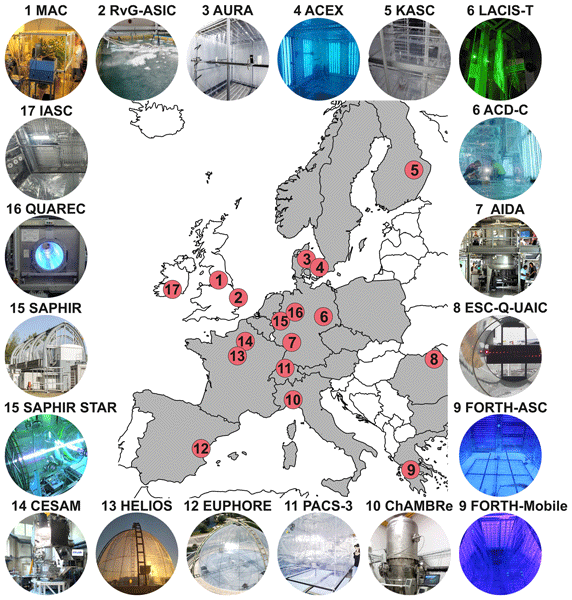
Hendrik Fuchs, Niklas Illmann, Amalia Muñoz, Mila Ródenas, Bénédicte Picquet-Varrault, M. Rami Alfarra, Cecilia Arsene, Iustinian G. Bejan, David M. Bell, Merete Bilde, Alexander Böhmländer, Mixtli Campos-Pineda, Mathieu Cazaunau, Patrice Coll, Véronique Daële, Claudia Di Biagio, Michael Flynn, Paola Formenti, Hartmut Herrmann, Kristina Höhler, Thorsten Hohaus, Matthew S. Johnson, Eija Juurola, Niku Kivekäs, Jan Kaiser, Christos Kaltsonoudis, Paolo Laj, Dario Massabò, Federico Mazzei, Gordon McFiggans, Max R. McGillen, Abdelwahid Mellouki, Peter Mettke, Ottmar Möhler, Falk Mothes, Dennis Niedermeier, Anna Novelli, Romeo I. Olariu, Spyros N. Pandis, Iulia Patroescu-Klotz, Rosa Maria Petracca Altieri, Paolo Prati, Claudiu Roman, Albert A. Ruth, Harald Saathoff, Silvio Schmalfuß, Frank Stratmann, Virginia Vernocchi, Aristeidis Voliotis, Jens Voigtländer, Annele Virtanen, Andreas Wahner, Robert Wagner, John Wenger, Sören Zorn, Peter Wiesen, and Jean-Francois Doussin
Atmos. Meas. Tech., 19, 4165–4199, https://doi.org/10.5194/amt-19-4165-2026, https://doi.org/10.5194/amt-19-4165-2026, 2026
Short summary
Short summary
Atmospheric simulation chambers enable experiments to be conducted under controlled conditions, improving our understanding of, and ability to predict, changes in the composition of the atmosphere. This is important for assessing air quality and its effects on human health, climate, the environment, and the economy. This paper describes the chambers of the European ACTRIS research infrastructure and discusses topics and directions that can be addressed in future chamber experiments.
Svend L. Bager, Luna Zamok, Stephan P. A. Sauer, and Matthew S. Johnson
EGUsphere, https://doi.org/10.48550/arXiv.2401.10053, https://doi.org/10.48550/arXiv.2401.10053, 2025
Preprint archived
Short summary
Short summary
In this work we have studied by means of quantum chemical calculations at the CCSD(T) or CASPT2 level the kinetics of reactions of both bromine and iodine compounds with Hg, which are discussed to lead to the atmospheric oxidation of Hg. The particular interest is in the question whether the reactions with iodine compounds are as fast as the corresponding reactions with bromine compounds and therefore could also contribute to mercury depletion events.
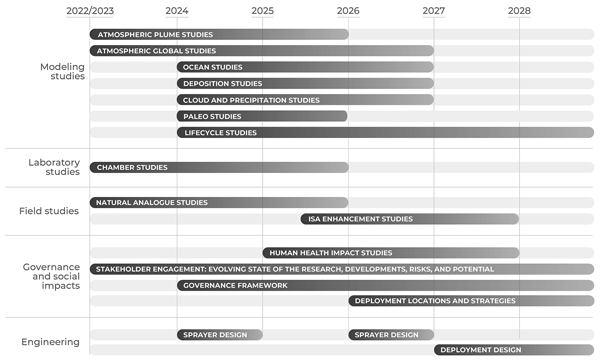
Katrine A. Gorham, Sam Abernethy, Tyler R. Jones, Peter Hess, Natalie M. Mahowald, Daphne Meidan, Matthew S. Johnson, Maarten M. J. W. van Herpen, Yangyang Xu, Alfonso Saiz-Lopez, Thomas Röckmann, Chloe A. Brashear, Erika Reinhardt, and David Mann
Atmos. Chem. Phys., 24, 5659–5670, https://doi.org/10.5194/acp-24-5659-2024, https://doi.org/10.5194/acp-24-5659-2024, 2024
Short summary
Short summary
Rapid reduction in atmospheric methane is needed to slow the rate of global warming. Reducing anthropogenic methane emissions is a top priority. However, atmospheric methane is also impacted by rising natural emissions and changing sinks. Studies of possible atmospheric methane removal approaches, such as iron salt aerosols to increase the chlorine radical sink, benefit from a roadmapped approach to understand if there may be viable and socially acceptable ways to decrease future risk.
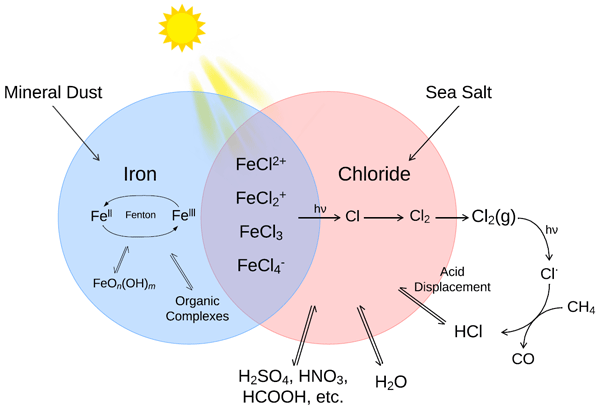
Marie K. Mikkelsen, Jesper B. Liisberg, Maarten M. J. W. van Herpen, Kurt V. Mikkelsen, and Matthew S. Johnson
Aerosol Research, 2, 31–47, https://doi.org/10.5194/ar-2-31-2024, https://doi.org/10.5194/ar-2-31-2024, 2024
Short summary
Short summary
We analyze the mechanism whereby sunlight and iron catalyze the production of chlorine from chloride in sea spray aerosol. This process occurs naturally over the North Atlantic and is the single most important source of chlorine. We investigate the mechanism using quantum chemistry, laboratory experiments, and aqueous chemistry modelling. The process will change depending on competing ions, light distribution, acidity, and chloride concentration.
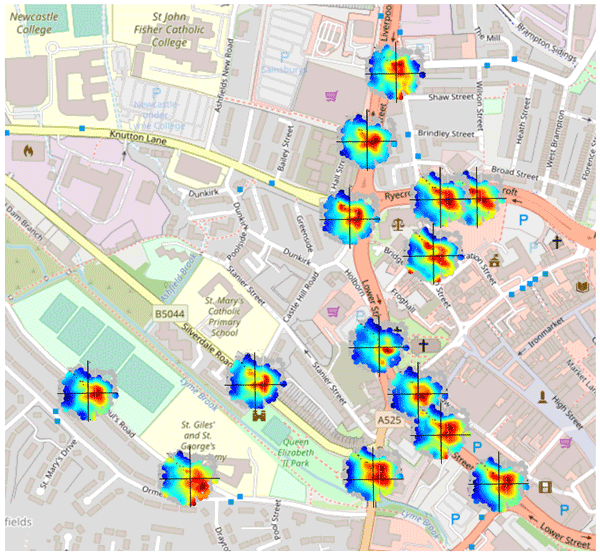
Louise Bøge Frederickson, Ruta Sidaraviciute, Johan Albrecht Schmidt, Ole Hertel, and Matthew Stanley Johnson
Atmos. Chem. Phys., 22, 13949–13965, https://doi.org/10.5194/acp-22-13949-2022, https://doi.org/10.5194/acp-22-13949-2022, 2022
Short summary
Short summary
Low-cost sensors see additional pollution that is not seen with traditional regional air quality monitoring stations. This additional local pollution is sufficient to cause exceedance of the World Health Organization exposure thresholds. Analysis shows that a significant amount of the NO2 pollution we observe is local, mainly due to road traffic. This article demonstrates how networks of nodes containing low-cost pollution sensors can powerfully extend existing monitoring programmes.
Merve Polat, Jesper Baldtzer Liisberg, Morten Krogsbøll, Thomas Blunier, and Matthew S. Johnson
Atmos. Meas. Tech., 14, 8041–8067, https://doi.org/10.5194/amt-14-8041-2021, https://doi.org/10.5194/amt-14-8041-2021, 2021
Short summary
Short summary
We have designed a process for removing methane from a gas stream so that nitrous oxide can be measured without interference. These are both key long-lived greenhouse gases frequently studied in relation to ice cores, plants, water treatment and so on. However, many researchers are not aware of the problem of methane interference, and in addition there have not been good methods available for solving the problem. Here we present and evaluate such a method.
Cited articles
Adjerid, S. and Baccouch, M.: Galerkin methods, Scholarpedia, 5, 10056, https://doi.org/10.4249/scholarpedia.10056, 2010. a
Akbari, H., P. B., Desjarlais, A., Jenkins, N., Levinson, R., Miller, W., Rosenfeld, A., Scruton, C., and Wiel, S.: Cool colored materials for roofs, in: Proceedings 2004 ACEEE Summer Study on Energy Efficiency in Buildings, American Council for an Energy-Efficient Economy, https://www.aceee.org/wp-content/uploads/proceedings-1980-2020/2004/SS04_Panel1_Paper01.pdf (last access: 30 September 2026), 2004. a
Akkaynak, D. and Treibitz, T.: Sea-Thru: A Method for Removing Water From Underwater Images, in: 2019 IEEE/CVF Conference on Computer Vision and Pattern Recognition (CVPR), IEEE Computer Society, Los Alamitos, CA, USA, 1682–1691, https://doi.org/10.1109/CVPR.2019.00001, 2019. a
Blasi, P., Le Saec, B., and Schlick, C.: A Rendering Algorithm for Discrete Volume Density Objects, Comput. Graph. Forum, 12, 201–210, https://doi.org/10.1111/1467-8659.1230201, 1993. a
Blinn, J. F.: Light reflection functions for simulation of clouds and dusty surfaces, Comp. Graph., 16, 21–29, 1982. a
Chwolson, O. D.: Grundzüge einer mathematischen Theorie der inneren Diffusion des Lichtes, Bull. Acad. Imp. Sci. St. Petersburg, Nouvelle Série I (XXXIII), 221–256, 1889. a
Coakley, J. A.: Reflectance and Albedo, Surface, in: Encyclopedia of Atmospheric Sciences, Elsevier, https://doi.org/10.1016/B0-12-227090-8/00069-5, 2003. a
Davis, P.: Circulant Matrices, John Wiley, New York, ISBN 9780471057710, 1979. a
Eddington, A.: On the radiative quilibrium of the stars, Mon. Not. R. Astron. Soc., 77, 16–35, 1916. a
Ehn, J. K., Papakyriakou, T. N., and Barber, D. G.: Inference of optical properties from radiation profiles within melting landfast sea ice, J. Geophys. Res., 113, https://doi.org/10.1029/2007JC004656, 2008. a
Emde, C., Buras-Schnell, R., Kylling, A., Mayer, B., Gasteiger, J., Hamann, U., Kylling, J., Richter, B., Pause, C., Dowling, T., and Bugliaro, L.: The libRadtran software package for radiative transfer calculations (version 2.0.1), Geosci. Model Dev., 9, 1647–1672, https://doi.org/10.5194/gmd-9-1647-2016, 2016. a, b
Emde, C., Buras, R., Mayer, B., and Blumthaler, M.: The impact of aerosols on polarized sky radiance: model development, validation, and applications, Atmos. Chem. Phys., 10, 383–396, https://doi.org/10.5194/acp-10-383-2010, 2010. a
Goody, R. M. and Yung, Y. L.: Atmospheric Radiation, Theoretical Basis, 2nd edn., Oxford University Press, New York, https://doi.org/10.1093/oso/9780195051346.001.0001, 1989. a, b
Hamre, B., Winther, J.-G., Gerland, S., Stamnes, J. J., and Stamnes, K.: Modeled and measured optical transmittance of snow-covered first-year sea ice in Kongsfjorden, Svalbard, J. Geophys. Res., 109, https://doi.org/10.1029/2003JC001926, 2004. a
Johnson, M.: Eigenflux Supplementary Information Archive, University of Copenhagen [software], https://doi.org/10.17894/UCPH.CFD8E267-97F3-496D-B434-E29984B931C8, 2025. a
Kajiya, J. T. and Von Herzen, B. P.: Ray tracing volume densities, Comp. Graph., 18, 165–174, 1984. a
Kubelka, P.: New Contributions to the Optics of Intensely Light Scattering Materials – Part I, Journal Optical Society of America, 38, 448–457, 1948. a
Kubelka, P. and Munk, F.: Ein Beitrage zur Optik der Farbenstriche, Zeitschrift Fur Technische Physik, 12, 593–601, 1931. a
Levinson, R., Berdahl, P., and Akbari, H.: Solar spectral optical properties of pigments – Part I: model for deriving scattering and absorption coefficients from transmittance and reflectance measurements, Sol. Energ. Mat. Sol. C., 89, 319–349, 2005. a
Liou, K. N.: An Introduction to Atmospheric Radiation, 2nd edn., Academic Press, ISBN 978-0124514515, 2002. a
Lommel, E.: Die Photometrie der diffusen Zurückwerfung, Sitzungsberichte der mathematische und physikalische Classe der Königlichen Bayerische Academie zu München, 17, 95–132, 1887. a
Milne, E. A.: Radiative Equilibrium in the Outer Layers of a Star: the Temperature Distribution and the Law of Darkening, Monthly Notices Royal Astron. Soc, 81, 361–375, 1921. a
Mishchenko, M. I.: 125 years of radiative transfer: Enduring triumphs and persisting misconceptions, AIP Conf. Proc., 1531, 11–18, https://doi.org/10.1063/1.4804696, 2013. a
Mobley, C.: HYDROLIGHT: Radiative Transfer Software, https://www.numericaloptics.com/hydrolight.html (last access: 14 June 2026), 2020. a
Nicodemus, F., , Richmond, J., Hsia, J., Ginsberg, I., and Limperis, T.: Geometrical Considerations and Nomenclature for Reflectance, Tech. rep., National Bureau of Standards, https://nvlpubs.nist.gov/nistpubs/Legacy/MONO/nbsmonograph160.pdf (last access: 5 October 2026), 1977. a
Pharr, M. and Humphreys, G.: Physically Based Rendering: From Theory to Implementation, MIT Press, 1st edn., ISBN 978-0125531801, 2004. a
Pharr, M., Jakob, W., and Humphreys, G.: Physically Based Rendering, Fourth Edition: From Theory to Implementation, MIT Press, 4th edn., ISBN 978-0262048026, 2023. a
Picard, G., Sandells, M., and Löwe, H.: SMRT: an active–passive microwave radiative transfer model for snow with multiple microstructure and scattering formulations (v1.0), Geosci. Model Dev., 11, 2763–2788, https://doi.org/10.5194/gmd-11-2763-2018, 2018. a
Preisendorfer, R. W.: A survey of theoretical hydrologic optics, J. Quant. Spectrosc. Ra., 8, 325–338, https://doi.org/10.1016/S0022-4073(68)80116-5, 1968. a
Preisendorfer, R. W.: Hydrologic Optics (in 6 volumes), Pacific Mar. Environ. Lab/NOAA, Seattle, WA, https://repository.library.noaa.gov/view/noaa/56606 (last access: 5 October 2026), 1976. a
Raman, C.: On the molecular scattering of light in water and the colour of the sea, P. R. Soc. Lond. A-Conta., 101, 64–80, https://doi.org/10.1098/rspa.1922.0025, 1922. a
Rayleigh, L.: On the light from the sky, its polarization and colour, Philos. Mag., 41, 107–120, 1871. a
Schuster, A.: Radiation through a foggy atmosphere, Astrophys. J., XXI, 1–22, 1905. a
Schwarzschild, K.: Ueber das Gleichgewicht der Sonnenatmosphäre, Nachrichten von der Königlichen Gesellschaft der Wissenschaften zu Göttigen, Mathematische-Physikalische Klasse, 195, 41–53, 1906. a
Schwarzschild, K.: Über Diffusion and Absorption in der Sonnenatmosphäre, Sitzungsberichte der Königlichen Preussischen Akademie der Wissenschaften, 47, 1183–1202, 1914. a
Shoulejkin, W.: On the Color of the Sea, Phys. Rev., 22, 85–100, 1923. a
Sinkhorn, R. and Knopp, P.: Concerning nonnegative matrices and doubly stochastic matrices, Pac. J. Math., 21, 343–348, 1967. a
Stamnes, K., Tsay, S., Wiscombe, W., and Jayaweera, K.: Numerically stable algorithm for discrete-ordinate-method radiative transfer in multiple scattering and emitting layered media, Appl. Optics, 27, 2502–2509, https://doi.org/10.1364/AO.27.002502, 1988. a, b, c
Stamnes, K., Hamre, B., Stamnes, J., Ryzhikov, G., Biryulina, M., Mahoney, R., Hauss, B., and Sei, A.: Modeling of radiation transport in coupled atmosphere-snow-ice-ocean systems, J. Quant. Spectrosc. Ra., 112, 714–726, https://doi.org/10.1016/j.jqsrt.2010.06.006, 2011. a, b
Tee, G.: A novel finite-difference approximation to the biharmonic operator, Comput. J., 6, 177–192, 1963. a
Tee, G. J.: Eigenvectors of Block Circulant and Alternating Circulant Matrices, New Zealand Journal of Mathematics, 36, 195–211, 2007. a
Thomas, G. E. and Stamnes, K.: Radiative Transfer in the Atmosphere and Ocean, Cambridge University Press, Cambridge, UK, https://doi.org/10.1017/CBO9780511613470, 1999. a
Torrance, K. and Sparrow, F.: Theory for Off-Specular Reflection From Roughened Surfaces, J. OSA, 57, 1105–1114, 1967. a
Varytis, P. and Busch, K.: Negative asymmetry parameter in plasmonic core-shell nanoparticles, Opt. Express, 28, 1714–1721, https://doi.org/10.1364/OE.380181, 2020. a
Wikipedia: Atmospheric radiative transfer codes, https://en.wikipedia.org/w/index.php?title=Atmospheric_radiative_transfer_codes&oldid=1350763300, (last access: 6 May 2026), 2026. a
Short summary
Light scattering is important in the atmosphere, oceans, snow, ice, paints, and many other materials. We developed EigenFlux, a new open-source method for simulating how light moves through complex materials. It remains accurate, stable, and efficient even when scattering is extremely strong or highly directional, conditions that can challenge existing methods. This broadens the range of systems that can be modeled reliably.
Light scattering is important in the atmosphere, oceans, snow, ice, paints, and many other...