
Articles | Volume 19, issue 20
https://doi.org/10.5194/amt-19-6643-2026
© Author(s) 2026. This work is distributed under
the Creative Commons Attribution 4.0 License.
the Creative Commons Attribution 4.0 License.
https://doi.org/10.5194/amt-19-6643-2026
© Author(s) 2026. This work is distributed under
the Creative Commons Attribution 4.0 License.
the Creative Commons Attribution 4.0 License.
Research article
| 
21 Oct 2026
Research article |
| 21 Oct 2026
| 21 Oct 2026
Performance validation of the GHGSat methane constellation via controlled releases

GHGSat Inc. 1130 Sherbrooke St. W, Montreal, QC, H2W 1Y5, Canada
Hanford Deglint
GHGSat Inc. 1130 Sherbrooke St. W, Montreal, QC, H2W 1Y5, Canada
Ariane Deslieres
GHGSat Inc. 1130 Sherbrooke St. W, Montreal, QC, H2W 1Y5, Canada
Lia Formenti
GHGSat Inc. 1130 Sherbrooke St. W, Montreal, QC, H2W 1Y5, Canada
Marianne Girard
GHGSat Inc. 1130 Sherbrooke St. W, Montreal, QC, H2W 1Y5, Canada
Dylan Jervis
GHGSat Inc. 1130 Sherbrooke St. W, Montreal, QC, H2W 1Y5, Canada
David J. Marshall
GHGSat Inc. 1130 Sherbrooke St. W, Montreal, QC, H2W 1Y5, Canada
Jean-Philippe W. MacLean
GHGSat Inc. 1130 Sherbrooke St. W, Montreal, QC, H2W 1Y5, Canada
Jason McKeever
GHGSat Inc. 1130 Sherbrooke St. W, Montreal, QC, H2W 1Y5, Canada
Andrew McKell
GHGSat Inc. 1130 Sherbrooke St. W, Montreal, QC, H2W 1Y5, Canada
Mathias Strupler
GHGSat Inc. 1130 Sherbrooke St. W, Montreal, QC, H2W 1Y5, Canada
Ewan Tarrant
GHGSat Inc. 1130 Sherbrooke St. W, Montreal, QC, H2W 1Y5, Canada
Related authors

Jean-Philippe W. MacLean, Marianne Girard, Dylan Jervis, David Marshall, Jason McKeever, Antoine Ramier, Mathias Strupler, Ewan Tarrant, and David Young
Atmos. Meas. Tech., 17, 863–874, https://doi.org/10.5194/amt-17-863-2024, https://doi.org/10.5194/amt-17-863-2024, 2024
Short summary
Short summary
We demonstrate the capabilities of the GHGSat satellite constellation to detect and quantify offshore methane emissions using a sun glint observation mode. Using this technique, we observe offshore methane emissions from space ranging from 180 kg h−1 to 84 000 kg h−1. We further assess the instrument performance in offshore environments, both empirically and using analytical modelling, and find that the detection limit varies with latitude and season.
Daniel Cusworth, Daniel Varon, Dylan Jervis, Jason McKeever, Alexander Turner, Christian Frankenberg, John Worden, Andrew Thorpe, Jay Fahlen, Sudhanshu Pandey, Joannes Maasakkers, Ilse Aben, Annmarie Eldering, Riley Duren, Bradley Conrad, Tia Scarpelli, Daniel Bon, Mackenzie Huffman, Itziar Irakulis-Loitxate, Luis Guanter, Jason Schroeder, Benjamin Hmiel, Evan Sherwin, Sean Crowell, Eric Kort, Adam Brandt, Frances Reuland, Maryann Sargent, James East, and Daniel Jacob
EGUsphere, https://doi.org/10.5194/egusphere-2026-6060, https://doi.org/10.5194/egusphere-2026-6060, 2026
This preprint is open for discussion and under review for Atmospheric Chemistry and Physics (ACP).
Short summary
Short summary
In this review, we summarize the current and anticipated state of satellite remote sensing for point sources. In particular, we are provide and update to the fleet of point source imaging satellites, summarize the nuance around data availability and revisit, detail data processing pipelines and validation procedures, describe how to benchmark detection performance, and finally, describe demonstrated use-cases for satellite point source observations.
Srijana Lama, Joannes D. Maasakkers, Xin Zhang, Marianne Girard, Swarna Dutt, Suyash Nandgaonkar, Daniel J. Varon, Melissa P. Sulprizio, Lucas A. Estrada, Nicholas Balasus, Robert J. Parker, Yukio Terao, and Ilse Aben
EGUsphere, https://doi.org/10.5194/egusphere-2025-6528, https://doi.org/10.5194/egusphere-2025-6528, 2026
Short summary
Short summary
Methane is the second most important anthropogenic greenhouse gas in terms of radiative forcing, with a global warming potential 27–30 times that of CO2 over a 100-year timescale. Effective mitigation requires a detailed understanding of the spatial distribution and magnitude of emissions. Here, we quantify India’s 2021 methane emissions at a resolution of up to 0.25° × 0.3125° using TROPOMI observations within the Bayesian Integrated Methane Inversion framework.

Qiurun Yu, Dylan Jervis, and Yi Huang
Atmos. Meas. Tech., 17, 3347–3366, https://doi.org/10.5194/amt-17-3347-2024, https://doi.org/10.5194/amt-17-3347-2024, 2024
Short summary
Short summary
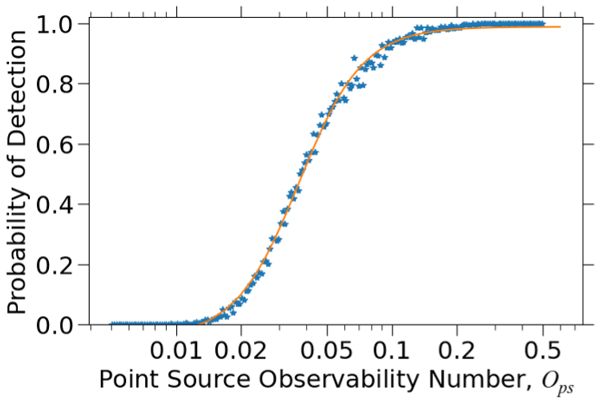
This study estimated the effects of aerosols on GHGSat satellite methane retrieval and investigated the performance of simultaneously retrieving aerosol and methane information using a multi-angle viewing method. Results suggested that the performance of GHGSat methane retrieval improved when aerosols were considered, and the multi-angle viewing method is insensitive to the satellite angle setting. This performance assessment is useful for improving future GHGSat-like instruments.
Jack H. Bruno, Dylan Jervis, Daniel J. Varon, and Daniel J. Jacob
Atmos. Meas. Tech., 17, 2625–2636, https://doi.org/10.5194/amt-17-2625-2024, https://doi.org/10.5194/amt-17-2625-2024, 2024
Short summary
Short summary
Methane is a potent greenhouse gas and a current high-priority target for short- to mid-term climate change mitigation. Detection of individual methane emitters from space has become possible in recent years, and the volume of data for this task has been rapidly growing, outpacing processing capabilities. We introduce an automated approach, U-Plume, which can detect and quantify emissions from individual methane sources in high-spatial-resolution satellite data.
Emily Dowd, Alistair J. Manning, Bryn Orth-Lashley, Marianne Girard, James France, Rebecca E. Fisher, Dave Lowry, Mathias Lanoisellé, Joseph R. Pitt, Kieran M. Stanley, Simon O'Doherty, Dickon Young, Glen Thistlethwaite, Martyn P. Chipperfield, Emanuel Gloor, and Chris Wilson
Atmos. Meas. Tech., 17, 1599–1615, https://doi.org/10.5194/amt-17-1599-2024, https://doi.org/10.5194/amt-17-1599-2024, 2024
Short summary
Short summary
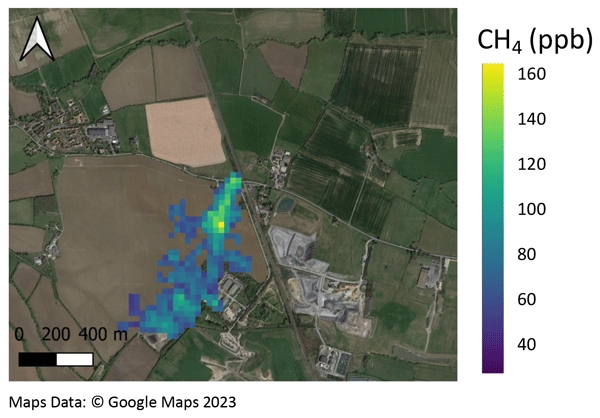
We provide the first validation of the satellite-derived emission estimates using surface-based mobile greenhouse gas surveys of an active gas leak detected near Cheltenham, UK. GHGSat’s emission estimates broadly agree with the surface-based mobile survey and steps were taken to fix the leak, highlighting the importance of satellite data in identifying emissions and helping to reduce our human impact on climate change.
Jean-Philippe W. MacLean, Marianne Girard, Dylan Jervis, David Marshall, Jason McKeever, Antoine Ramier, Mathias Strupler, Ewan Tarrant, and David Young
Atmos. Meas. Tech., 17, 863–874, https://doi.org/10.5194/amt-17-863-2024, https://doi.org/10.5194/amt-17-863-2024, 2024
Short summary
Short summary
We demonstrate the capabilities of the GHGSat satellite constellation to detect and quantify offshore methane emissions using a sun glint observation mode. Using this technique, we observe offshore methane emissions from space ranging from 180 kg h−1 to 84 000 kg h−1. We further assess the instrument performance in offshore environments, both empirically and using analytical modelling, and find that the detection limit varies with latitude and season.
Berend J. Schuit, Joannes D. Maasakkers, Pieter Bijl, Gourav Mahapatra, Anne-Wil van den Berg, Sudhanshu Pandey, Alba Lorente, Tobias Borsdorff, Sander Houweling, Daniel J. Varon, Jason McKeever, Dylan Jervis, Marianne Girard, Itziar Irakulis-Loitxate, Javier Gorroño, Luis Guanter, Daniel H. Cusworth, and Ilse Aben
Atmos. Chem. Phys., 23, 9071–9098, https://doi.org/10.5194/acp-23-9071-2023, https://doi.org/10.5194/acp-23-9071-2023, 2023
Short summary
Short summary
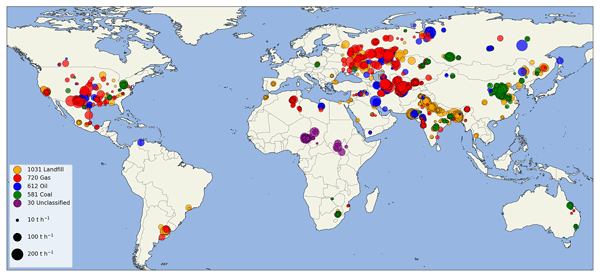
Using two machine learning models, which were trained on TROPOMI methane satellite data, we detect 2974 methane plumes, so-called super-emitters, in 2021. We detect methane emissions globally related to urban areas or landfills, coal mining, and oil and gas production. Using our monitoring system, we identify 94 regions with frequent emissions. For 12 locations, we target high-resolution satellite instruments to enlarge and identify the exact infrastructure responsible for the emissions.
Daniel J. Jacob, Daniel J. Varon, Daniel H. Cusworth, Philip E. Dennison, Christian Frankenberg, Ritesh Gautam, Luis Guanter, John Kelley, Jason McKeever, Lesley E. Ott, Benjamin Poulter, Zhen Qu, Andrew K. Thorpe, John R. Worden, and Riley M. Duren
Atmos. Chem. Phys., 22, 9617–9646, https://doi.org/10.5194/acp-22-9617-2022, https://doi.org/10.5194/acp-22-9617-2022, 2022
Short summary
Short summary
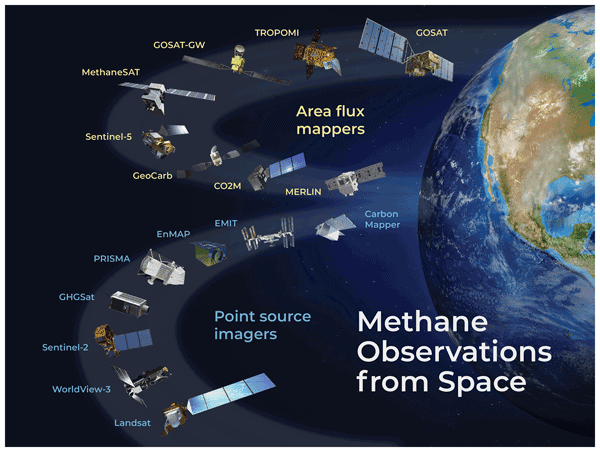
We review the capability of satellite observations of atmospheric methane to quantify methane emissions on all scales. We cover retrieval methods, precision requirements, inverse methods for inferring emissions, source detection thresholds, and observations of system completeness. We show that current instruments already enable quantification of regional and national emissions including contributions from large point sources. Coverage and resolution will increase significantly in coming years.
Cited articles
Ayasse, A. K., Cusworth, D. H., Howell, K., O'Neill, K., Conrad, B. M., Johnson, M. R., Heckler, J., Asner, G. P., and Duren, R.: Probability of Detection and Multi-Sensor Persistence of Methane Emissions from Coincident Airborne and Satellite Observations, Environ. Sci. Technol., 58, 21536–21544, https://doi.org/10.1021/acs.est.4c06702, 2024.
Bell, C., Rutherford, J., Brandt, A., Sherwin, E., Vaughn, T., and Zimmerle, D.: Single-blind determination of methane detection limits and quantification accuracy using aircraft-based LiDAR, Elementa: Science of the Anthropocene, 10, 00080, https://doi.org/10.1525/elementa.2022.00080, 2022.
Blackmore, D. C., Hickey, J.-P., Wigle, A., Osadetz, K., and Daun, K. J.: A Bayesian technique for quantifying methane emissions using vehicle-mounted sensors with a Gaussian plume model, Atmos. Environ., 344, 121002, https://doi.org/10.1016/j.atmosenv.2024.121002, 2025.
Bourlon, E., Hossain, R., Buntov, P., Dudak, Y., Risk, D., Farjami, F., Martino, R., Amaral, M., Tarakki, N., Coyle, L., Bailey, A., and Khaleghi, A.: Measurement Data from the FluxLab 2024 and 2025 Controlled Release Campaigns at the Simulation Facility for Landfill Emission Experiments (SIMFLEX) (4.0), Borealis [data set], https://doi.org/10.5683/SP3/ZYVDC1, 2026.
Bruno, J. H., Jervis, D., Varon, D. J., and Jacob, D. J.: U-Plume: automated algorithm for plume detection and source quantification by satellite point-source imagers, Atmos. Meas. Tech., 17, 2625–2636, https://doi.org/10.5194/amt-17-2625-2024, 2024.
Chen, Y., Sherwin, E. D., Berman, E. S. F., Jones, B. B., Gordon, M. P., Wetherley, E. B., Kort, E. A., and Brandt, A. R.: Quantifying Regional Methane Emissions in the New Mexico Permian Basin with a Comprehensive Aerial Survey, Environ. Sci. Technol., 56, 4317–4323, https://doi.org/10.1021/acs.est.1c06458, 2022.
Chen, Z., El Abbadi, S. H., Sherwin, E. D., Burdeau, P. M., Rutherford, J. S., Chen, Y., Zhang, Z., and Brandt, A. R.: Comparing Continuous Methane Monitoring Technologies for High-Volume Emissions: A Single-Blind Controlled Release Study, ACS EST Air, 1, 871–884, https://doi.org/10.1021/acsestair.4c00015, 2024.
CMC: Methane Detection and Quantification Testing Protocol Canada, Carbon Management Canada, https://cmcghg.com/wp-content/uploads/2025/09/MDAQ-Test-Protocol-Canada.pdf (last access: 17 March 2026), 2025.
Conrad, B. M., Tyner, D. R., and Johnson, M. R.: Robust probabilities of detection and quantification uncertainty for aerial methane detection: Examples for three airborne technologies, Remote Sens. Environ., 288, 113499, https://doi.org/10.1016/j.rse.2023.113499, 2023.
Donahue, C. P., Oberoi, K., Dillon, J. W., Hengst, V., Kennedy, B., Kearney, W., Lennox, J., Rehbein, E., Sykes, R., Dudiak, C. D., Altamura, D. T., Doherty, G., Roos, P. A., Brasseur, J. K., and Thorpe, M. J.: Aerial LiDAR-Based, Source-Resolved Methane Emissions Inventory: Permian Basin Case Study for Benchmarking U.S. Emissions, Environ. Sci. Technol., 60, 13968–13979, https://doi.org/10.1021/acs.est.5c15184, 2026.
El Abbadi, S. H., Chen, Z., Burdeau, P. M., Rutherford, J. S., Chen, Y., Zhang, Z., Sherwin, E. D., and Brandt, A. R.: Technological Maturity of Aircraft-Based Methane Sensing for Greenhouse Gas Mitigation, Environ. Sci. Technol., acs.est.4c02439, https://doi.org/10.1021/acs.est.4c02439, 2024.
FluxLab and Abichou, T.: SIMFLEX-Landfill Methane Controlled-Release Study: Measurement Performance from the Third Experimental Campaign (2025), Environmental Research & Education Foundation, https://erefdn.org/product/simflex-landfill-methane-controlled-release-study (last access: 1 June 2026), 2026.
Hossain, R. I., Buntov, P., Dudak, Y., Martino, R., Fougère, C., Naseridoust, S., Bourlon, E., Lavoie, M., Khaleghi, A., Hall, C., and Risk, D.: A controlled release experiment for investigating methane measurement performance at landfills, Elem. Sci. Anth., 14, 00048, https://doi.org/10.1525/elementa.2025.00048, 2026.
IPCC: Climate Change 2021: The Physical Science Basis. Contribution of Working Group I to the Sixth Assessment Report of the Intergovernmental Panel on Climate Change, https://doi.org/10.1017/9781009157896, 2021.
IPCC: Climate Change 2022: Mitigation of Climate Change. Contribution of Working Group III to the Sixth Assessment Report of the Intergovernmental Panel on Climate Change, edited by: Shukla, P. R., Skea, J., Slade, R., Al Khourdajie, A., van Diemen, R., McCollum, D., Pathak, M., Some, S., Vyas, P., Fradera, R., Belkacemi, M., Hasija, A., Lisboa, G., Luz, S., and Malley, J., Cambridge University Press, Cambridge, UK and New York, NY, USA, https://doi.org/10.1017/9781009157926, 2022.
Jacob, D. J., Turner, A. J., Maasakkers, J. D., Sheng, J., Sun, K., Liu, X., Chance, K., Aben, I., McKeever, J., and Frankenberg, C.: Satellite observations of atmospheric methane and their value for quantifying methane emissions, Atmos. Chem. Phys., 16, 14371–14396, https://doi.org/10.5194/acp-16-14371-2016, 2016.
Jervis, D., McKeever, J., Durak, B. O. A., Sloan, J. J., Gains, D., Varon, D. J., Ramier, A., Strupler, M., and Tarrant, E.: The GHGSat-D imaging spectrometer, Atmos. Meas. Tech., 14, 2127–2140, https://doi.org/10.5194/amt-14-2127-2021, 2021.
Jervis, D., MacLean, J.-P. W., McKeever, J., Ramier, A., and Strupler, M.: Joint Estimation of the Global Facility-Scale Oil–Gas Methane Emission Rate Distribution and Survey-Mode Detection Probabilities from Multiple Satellite Systems, Environ. Sci. Technol., acs.est.5c17089, https://doi.org/10.1021/acs.est.5c17089, 2026a.
Jervis, D., Ambler, A., Andersson-Bastable, S., Delgado Recke, A., Foing, V., Hayden, J., McKeever, J., Ramier, A., Strupler, M., and Piedboeuf, F.: Recurrent High-Resolution Satellite Observations Quantify Facility-Resolved Annual Large-Emitter Methane Emissions in the Permian Basin, https://doi.org/10.31223/X5P79F, 31 August 2026b.
Johnson, M. R., Conrad, B. M., and Tyner, D. R.: Creating measurement-based oil and gas sector methane inventories using source-resolved aerial surveys, Commun. Earth Environ., 4, 139, https://doi.org/10.1038/s43247-023-00769-7, 2023.
Maasakkers, J. D., Varon, D. J., Elfarsdóttir, A., McKeever, J., Jervis, D., Mahapatra, G., Pandey, S., Lorente, A., Borsdorff, T., Foorthuis, L. R., Schuit, B. J., Tol, P., Van Kempen, T. A., Van Hees, R., and Aben, I.: Using satellites to uncover large methane emissions from landfills, Sci. Adv., 8, eabn9683, https://doi.org/10.1126/sciadv.abn9683, 2022.
Manninen, E., Chulakadabba, A., Sargent, M., Zhang, Z., Kamdar, H., Warren, J., Roche, S., Chan Miller, C., Kyzivat, E., Benmergui, J., Pittman, J., Walker, E., Bushey, J., Samra, J., Hawthorne, J., Luo, B., Nasr, M., Sun, K., Franklin, J., Liu, X., Chen, J., and Wofsy, S.: Probabilities of Detection of Methane Plumes by Remote Sensing and Implications for Inferred Emissions Distributions, EGUsphere [preprint], https://doi.org/10.5194/egusphere-2026-115, 2026.
McKeever, J. and Jervis, D.: Validation and Metrics for Emissions Detection by Satellite, EarthArXiv, https://doi.org/10.31223/X5DH9Q, 2025.
McManemin, A., Juéry, C., Blandin, V., France, J. L., Burdeau, P., and Brandt, A. R.: Controlled release testing of commercially available methane emission measurement technologies at the TADI facility, Atmos. Meas. Tech., 19, 923–934, https://doi.org/10.5194/amt-19-923-2026, 2026.
Reuland, F. E., Adams, T., Sherwin, E. D., El Abbadi, S. H., Kort, E. A., and Brandt, A. R.: Evaluating space-based methane detection through a one-year blind test, Nature, 658, 673–681, https://doi.org/10.1038/s41586-026-11115-0, 2026.
Saunois, M., Martinez, A., Poulter, B., Zhang, Z., Raymond, P. A., Regnier, P., Canadell, J. G., Jackson, R. B., Patra, P. K., Bousquet, P., Ciais, P., Dlugokencky, E. J., Lan, X., Allen, G. H., Bastviken, D., Beerling, D. J., Belikov, D. A., Blake, D. R., Castaldi, S., Crippa, M., Deemer, B. R., Dennison, F., Etiope, G., Gedney, N., Höglund-Isaksson, L., Holgerson, M. A., Hopcroft, P. O., Hugelius, G., Ito, A., Jain, A. K., Janardanan, R., Johnson, M. S., Kleinen, T., Krummel, P. B., Lauerwald, R., Li, T., Liu, X., McDonald, K. C., Melton, J. R., Mühle, J., Müller, J., Murguia-Flores, F., Niwa, Y., Noce, S., Pan, S., Parker, R. J., Peng, C., Ramonet, M., Riley, W. J., Rocher-Ros, G., Rosentreter, J. A., Sasakawa, M., Segers, A., Smith, S. J., Stanley, E. H., Thanwerdas, J., Tian, H., Tsuruta, A., Tubiello, F. N., Weber, T. S., van der Werf, G. R., Worthy, D. E. J., Xi, Y., Yoshida, Y., Zhang, W., Zheng, B., Zhu, Q., Zhu, Q., and Zhuang, Q.: Global Methane Budget 2000–2020, Earth Syst. Sci. Data, 17, 1873–1958, https://doi.org/10.5194/essd-17-1873-2025, 2025.
Sherwin, E. D., Rutherford, J. S., Chen, Y., Aminfard, S., Kort, E. A., Jackson, R. B., and Brandt, A. R.: Single-blind validation of space-based point-source detection and quantification of onshore methane emissions, Sci. Rep., 13, 3836, https://doi.org/10.1038/s41598-023-30761-2, 2023.
Sherwin, E. D., El Abbadi, S. H., Burdeau, P. M., Zhang, Z., Chen, Z., Rutherford, J. S., Chen, Y., and Brandt, A. R.: Single-blind test of nine methane-sensing satellite systems from three continents, Atmos. Meas. Tech., 17, 765–782, https://doi.org/10.5194/amt-17-765-2024, 2024.
Thorpe, A. K., Frankenberg, C., Aubrey, A. D., Roberts, D. A., Nottrott, A. A., Rahn, T. A., Sauer, J. A., Dubey, M. K., Costigan, K. R., Arata, C., Steffke, A. M., Hills, S., Haselwimmer, C., Charlesworth, D., Funk, C. C., Green, R. O., Lundeen, S. R., Boardman, J. W., Eastwood, M. L., Sarture, C. M., Nolte, S. H., Mccubbin, I. B., Thompson, D. R., and McFadden, J. P.: Mapping methane concentrations from a controlled release experiment using the next generation airborne visible/infrared imaging spectrometer (AVIRIS-NG), Remote Sens. Environ., 179, 104–115, https://doi.org/10.1016/j.rse.2016.03.032, 2016.
Thorpe, M. J., Kreitinger, A., Altamura, D. T., Dudiak, C. D., Conrad, B. M., Tyner, D. R., Johnson, M. R., Brasseur, J. K., Roos, P. A., Kunkel, W. M., Carre-Burritt, A., Abate, J., Price, T., Yaralian, D., Kennedy, B., Newton, E., Rodriguez, E., Elfar, O. I., and Zimmerle, D. J.: Deployment-invariant probability of detection characterization for aerial LiDAR methane detection, Remote Sens. Environ., 315, 114435, https://doi.org/10.1016/j.rse.2024.114435, 2024.
Varon, D. J., Jacob, D. J., McKeever, J., Jervis, D., Durak, B. O. A., Xia, Y., and Huang, Y.: Quantifying methane point sources from fine-scale satellite observations of atmospheric methane plumes, Atmos. Meas. Tech., 11, 5673–5686, https://doi.org/10.5194/amt-11-5673-2018, 2018.
Wigle, A., Béliveau, A., Blackmore, D., Lapeyre, P., Osadetz, K., Lemieux, C., and Daun, K. J.: Estimation and Applications of Uncertainty in Methane Emissions Quantification Technologies: A Bayesian Approach, ACS EST Air, 1, 1000–1014, https://doi.org/10.1021/acsestair.4c00030, 2024.
Short summary
We validated the GHGSat fleet against a large set of precisely measured emissions from 2021 to 2026 and built a model linking detection probability to leak rate, wind, retrieval noise, and resolution. In typical conditions the satellites detect a leak of about 100 kilograms per hour half the time and quantify its rate accurately. This sets a clear benchmark for how reliably satellites detect and measure methane leaks, which is essential for trustworthy emissions reporting and mitigation.
We validated the GHGSat fleet against a large set of precisely measured emissions from 2021 to...


