
Articles | Volume 19, issue 21
https://doi.org/10.5194/amt-19-7097-2026
© Author(s) 2026. This work is distributed under
the Creative Commons Attribution 4.0 License.
the Creative Commons Attribution 4.0 License.
https://doi.org/10.5194/amt-19-7097-2026
© Author(s) 2026. This work is distributed under
the Creative Commons Attribution 4.0 License.
the Creative Commons Attribution 4.0 License.
Research article
| 
06 Nov 2026
Research article |
| 06 Nov 2026
| 06 Nov 2026
Calculation of the impacts of aerosols on cloud microphysical properties by combining ground- and space-based measurements
Suzanne Crumeyrolle
CORRESPONDING AUTHOR

Univ. Lille, CNRS, UMR 8518 – LOA – Laboratoire d'Optique Atmosphérique, 59000 Lille, France
Quentin Coopman
Univ. Lille, CNRS, UMR 8518 – LOA – Laboratoire d'Optique Atmosphérique, 59000 Lille, France
Eric Bourrianne
Univ. Lille, CNRS, UMR 8518 – LOA – Laboratoire d'Optique Atmosphérique, 59000 Lille, France
Clara Lapointe
Univ. Lille, CNRS, UMR 8518 – LOA – Laboratoire d'Optique Atmosphérique, 59000 Lille, France
Eloise Delbarre
Univ. Lille, CNRS, UMR 8518 – LOA – Laboratoire d'Optique Atmosphérique, 59000 Lille, France
Elise Devigne
Univ. Lille, CNRS, UMR 8518 – LOA – Laboratoire d'Optique Atmosphérique, 59000 Lille, France
Olivier Pujol
Univ. Lille, CNRS, UMR 8518 – LOA – Laboratoire d'Optique Atmosphérique, 59000 Lille, France
Institut Universitaire de France (IUF), Maison des Universités, 75005 Paris, France
Romain De Filippi
Univ. Lille, CNRS, UMR 8518 – LOA – Laboratoire d'Optique Atmosphérique, 59000 Lille, France
Timothy J. Garrett
Department of Atmospheric Sciences, University of Utah, Salt Lake City, UT 84112, USA
Related authors
Aino Ovaska, Daniel Holmberg, Elio Rauth, Mansour Alghamdi, Paulo Artaxo, Eija Asmi, John Backman, Benjamin Bergmans, Matthew Boyer, Liezl Bredenkamp, Maurizio Busetto, Delano Campos De Oliveira, Juan Andrés Casquero-Vera, Darius Ceburnis, Tak Chan, Tommy Chan, Sebastien Conil, Daniele Contini, Suzanne Crumeyrolle, Valentin Duflot, Kostas Eleftheriadis, Johan Esveld, Ekaterina Ezhova, Markus Fiebig, Shahzad Gani, Olga Garmash, Francisco Gómez-Moreno, Roy M. Harrison, Andras Hoffer, Rakesh Hooda, Antti Hyvärinen, Tareq Hussein, Jorma Joutsensaari, Nikos Kalivitis, Heinz Kaminski, Jutta Kesti, Radovan Krejci, Adam Kristensson, Chongai Kuang, Markku Kulmala, Lauri Laakso, Ari Leskinen, Heikki Lihavainen, Andreas Massling, Maik Merkel, Steffen Noe, Jakub Ondracek, Noemí Perez, Jean-Eudes Petit, Tuukka Petäjä, Michael Pikridas, Christopher Pöhlker, Mira Pöhlker, Jean-Philippe Putaud, Ximeng Qi, Cristina Reche, Sergio Rodríguez, Petr Roztocil, Jean Sciare, Karine Sellegri, Dongjie Shang, Ashish Singh, Mikko Sipilä, Henrik Skov, Mar Sorribas, Tamanna Subba, Junying Sun, Peter Tunved, Ville Vakkari, Pieter G. Van Zyl, Aki Virkkula, Jens Voigtländer, Kay Weinhold, Alfred Wiedensohler, Hee-Jung Yoo, Putian Zhou, Kai Puolamäki, Tuomo Nieminen, Veli-Matti Kerminen, Victoria A. Sinclair, and Pauli Paasonen
Earth Syst. Sci. Data Discuss., https://doi.org/10.5194/essd-2026-415, https://doi.org/10.5194/essd-2026-415, 2026
Preprint under review for ESSD
Short summary
Short summary
All clouds form around aerosol particles, and their abundance influences cloud properties. In turn, clouds affect climate by changing how energy moves through the atmosphere, making them important for climate change. To better understand these interactions, we need accurate information on how many aerosol particles are in the atmosphere. Therefore, we have developed a new 21-year global dataset of particle concentrations relevant for cloud formation.
Alejandra Velazquez-Garcia, Joel F. de Brito, Suzanne Crumeyrolle, Isabelle Chiapello, and Véronique Riffault
Aerosol Research, 2, 107–122, https://doi.org/10.5194/ar-2-107-2024, https://doi.org/10.5194/ar-2-107-2024, 2024
Short summary
Short summary
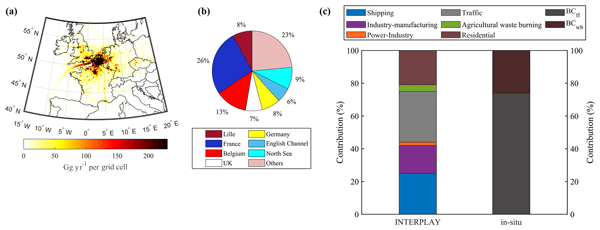
Multi-annual in situ observations were combined with back trajectory and emissions inventories to study black and brown carbon (BC, BrC) sources in the north of France. Results show BC to be mainly originated from vehicular traffic (31 %), shipping (25 %), and residential heating (21 %). Also, a significant decrease of the BrC component from residential heating is observed after 24 h of atmospheric aging. These results should lead to better climate and air pollution mitigation strategies.
Suzanne Crumeyrolle, Jenni S. S. Kontkanen, Clémence Rose, Alejandra Velazquez Garcia, Eric Bourrianne, Maxime Catalfamo, Véronique Riffault, Emmanuel Tison, Joel Ferreira de Brito, Nicolas Visez, Nicolas Ferlay, Frédérique Auriol, and Isabelle Chiapello
Atmos. Chem. Phys., 23, 183–201, https://doi.org/10.5194/acp-23-183-2023, https://doi.org/10.5194/acp-23-183-2023, 2023
Short summary
Short summary
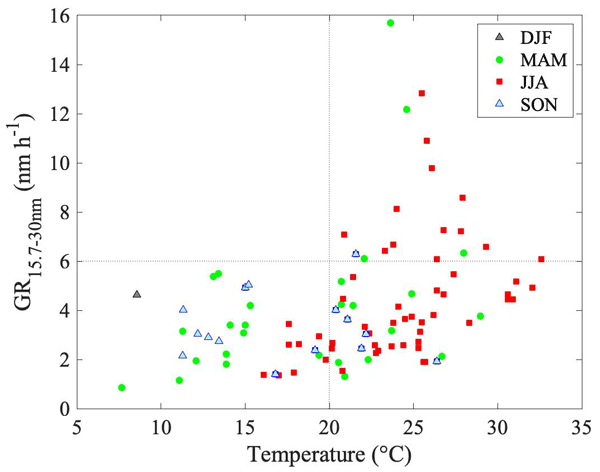
Ultrafine particles (UFPs) are particles with an aerodynamic diameter of 100 nm or less and negligible mass concentration but are the dominant contributor to the total particle number concentration. The present study aims to better understand the environmental factors favoring or inhibiting atmospheric new particle formation (NPF) over Lille, a large city in the north of France, and to analyze the impact of such an event on urban air quality using a long-term dataset (3 years).
Jérôme Brioude, Rémi Augerai, Miloud Bessafi, Stephanie Evan, Yue Jia, Olivier Pujol, and Delia Arnold
EGUsphere, https://doi.org/10.5194/egusphere-2026-5993, https://doi.org/10.5194/egusphere-2026-5993, 2026
This preprint is open for discussion and under review for Geoscientific Model Development (GMD).
Short summary
Short summary
Lagrangian particle dispersion models are widely used in the atmospheric sciences, but running them still demands technical skills unrelated to the physics studied. EASLEE is a new model of this kind, written in Julia, that removes this barrier. No compilation is needed, the same code runs under Linux, macOS and Windows, and a run is defined by one configuration file or a web interface. It includes turbulence, convection, forward and backward transport of gases and aerosols, on CPU or GPU.
Timothy J. Garrett, Ryan Szczerbinksi, Eric R. Pardyjak, Dhiraj K. Singh, Allan T. Reaburn, Benjamin H. Silberman, Karlie N. Rees, and Alexander Blackmer
EGUsphere, https://doi.org/10.5194/egusphere-2026-3996, https://doi.org/10.5194/egusphere-2026-3996, 2026
Short summary
Short summary
Two new sensors are described for the first physical principles measurement of precipitation and winds. The first uses an infrared video camera to passively measure fluctuations in the radiative temperature of a heated metal plate. The second actively maintains a dense array of micro-hotplates at an elevated temperature. Both devices show very high accuracy and sensitivity compared to existing sensors, and the potential is for winds and precipitation to be measured by a single instrument.
Aino Ovaska, Daniel Holmberg, Elio Rauth, Mansour Alghamdi, Paulo Artaxo, Eija Asmi, John Backman, Benjamin Bergmans, Matthew Boyer, Liezl Bredenkamp, Maurizio Busetto, Delano Campos De Oliveira, Juan Andrés Casquero-Vera, Darius Ceburnis, Tak Chan, Tommy Chan, Sebastien Conil, Daniele Contini, Suzanne Crumeyrolle, Valentin Duflot, Kostas Eleftheriadis, Johan Esveld, Ekaterina Ezhova, Markus Fiebig, Shahzad Gani, Olga Garmash, Francisco Gómez-Moreno, Roy M. Harrison, Andras Hoffer, Rakesh Hooda, Antti Hyvärinen, Tareq Hussein, Jorma Joutsensaari, Nikos Kalivitis, Heinz Kaminski, Jutta Kesti, Radovan Krejci, Adam Kristensson, Chongai Kuang, Markku Kulmala, Lauri Laakso, Ari Leskinen, Heikki Lihavainen, Andreas Massling, Maik Merkel, Steffen Noe, Jakub Ondracek, Noemí Perez, Jean-Eudes Petit, Tuukka Petäjä, Michael Pikridas, Christopher Pöhlker, Mira Pöhlker, Jean-Philippe Putaud, Ximeng Qi, Cristina Reche, Sergio Rodríguez, Petr Roztocil, Jean Sciare, Karine Sellegri, Dongjie Shang, Ashish Singh, Mikko Sipilä, Henrik Skov, Mar Sorribas, Tamanna Subba, Junying Sun, Peter Tunved, Ville Vakkari, Pieter G. Van Zyl, Aki Virkkula, Jens Voigtländer, Kay Weinhold, Alfred Wiedensohler, Hee-Jung Yoo, Putian Zhou, Kai Puolamäki, Tuomo Nieminen, Veli-Matti Kerminen, Victoria A. Sinclair, and Pauli Paasonen
Earth Syst. Sci. Data Discuss., https://doi.org/10.5194/essd-2026-415, https://doi.org/10.5194/essd-2026-415, 2026
Preprint under review for ESSD
Short summary
Short summary
All clouds form around aerosol particles, and their abundance influences cloud properties. In turn, clouds affect climate by changing how energy moves through the atmosphere, making them important for climate change. To better understand these interactions, we need accurate information on how many aerosol particles are in the atmosphere. Therefore, we have developed a new 21-year global dataset of particle concentrations relevant for cloud formation.
Thomas D. DeWitt, Timothy J. Garrett, and Karlie N. Rees
Atmos. Chem. Phys., 26, 6951–6971, https://doi.org/10.5194/acp-26-6951-2026, https://doi.org/10.5194/acp-26-6951-2026, 2026
Short summary
Short summary
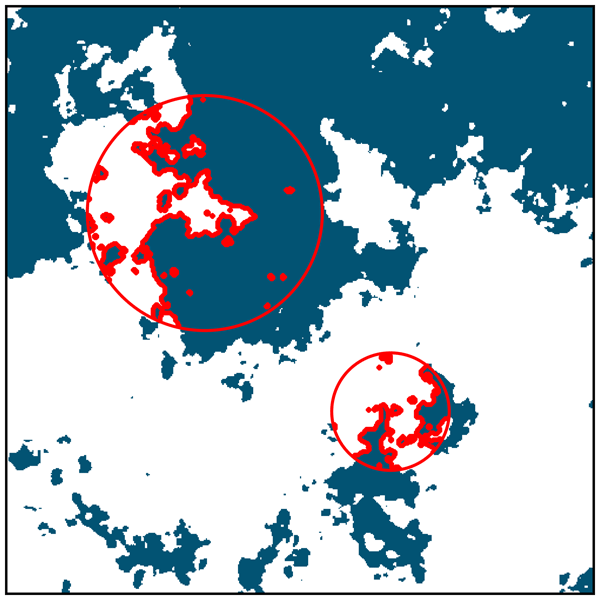
Clouds appear chaotic, but they in fact follow fractal mathematical patterns similar to coastlines. We measured their fractal properties using satellite images and found two key numbers that describe cloud shapes: one for how rough individual cloud edges are, and another for how clouds of different sizes organize together. We recommend methodology that provides objective ways to verify whether climate models accurately simulate real clouds.
Aymeric Dziduch, Guillaume Mioche, Quentin Coopman, Clément Bazantay, Julien Delanoë, and Olivier Jourdan
Atmos. Chem. Phys., 26, 4019–4047, https://doi.org/10.5194/acp-26-4019-2026, https://doi.org/10.5194/acp-26-4019-2026, 2026
Short summary
Short summary
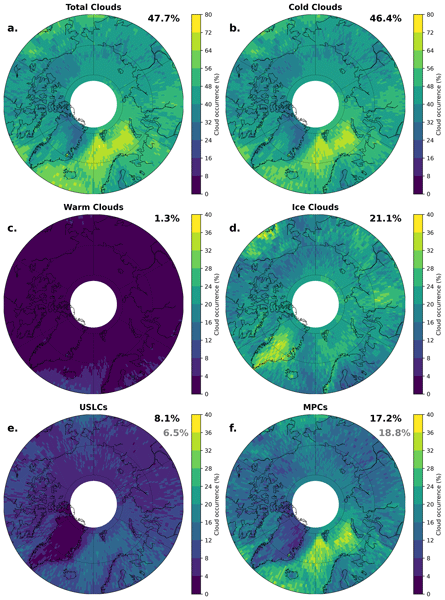
Low-level clouds play a central role in the Arctic climate by regulating energy exchanges between the surface and the atmosphere. Using eight years of CALIPSO–CloudSat observations, this study investigates the regional and seasonal variability of Arctic low-level cloud types. Mixed-phase and supercooled liquid clouds are frequent over oceanic regions, especially during transition seasons. Their occurrence is strongly influenced by surface coupling, temperature, stability, and cold-air outbreaks.
Timothy J. Garrett and Matheus R. Grasselli
EGUsphere, https://doi.org/10.5194/egusphere-2026-1304, https://doi.org/10.5194/egusphere-2026-1304, 2026
Short summary
Short summary
Widely used Integrated Assessment Model (IAM) predictions of the impact of climate change on the economy do not directly consider inflation. Here we introduce an economic identity we term Wealth – a metric of the entirety of civilization – that permits inflationary forces within IAMs, but reveals implausibly modest levels at odds with historical evidence. Within a more physics-based framework, we show global hyperinflationary shocks will quite plausibly emerge within the next half century.

Maria Fernanda Sanchez-Barrero, Philippe Goloub, Luc Blarel, Ioana Elisabeta Popovici, Benjamin Torres, Gaël Dubois, Thierry Podvin, Fabrice Ducos, Romain de Filippi, Michaël Sicard, Viviane Bout Roumazeilles, and Charlotte Skonieczny
Atmos. Meas. Tech., 19, 507–528, https://doi.org/10.5194/amt-19-507-2026, https://doi.org/10.5194/amt-19-507-2026, 2026
Short summary
Short summary
The TRANSAMA ship-based campaign (April–May 2023) aboard Marion Dufresne investigated aerosols from La Réunion to Barbados using photometer and lidar. Observations revealed clean conditions over the South Atlantic, with thin transported aerosol plumes from Southern Africa. Clouds were detected in 53 % of lidar profiles with higher occurrence in the first 2 km. The results show how combined lidar and photometer measurements can improve our understanding of aerosols in marine environment.
Raphaël Peroni, Guillaume Penide, Céline Cornet, Olivier Pujol, and Clémence Pierangelo
Atmos. Meas. Tech., 18, 7369–7385, https://doi.org/10.5194/amt-18-7369-2025, https://doi.org/10.5194/amt-18-7369-2025, 2025
Short summary
Short summary
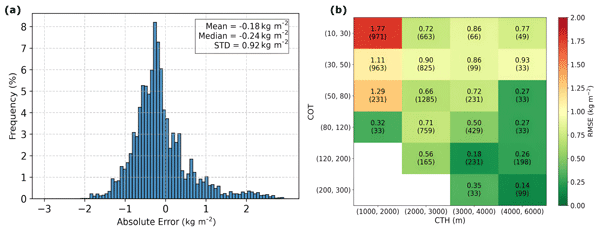
An algorithm to retrieve water vapor above clouds, based on shortwave infrared observations, is developed and tested with idealized and realistic atmospheric profiles. It aims to improve understanding of interactions between water vapor and clouds to enhance models. Integrated into the C3IEL space mission planned for 2028, it uses a Bayesian method and shows good accuracy, except for thin or low clouds.

Spencer Donovan, Dhiraj K. Singh, Timothy J. Garrett, and Eric R. Pardyjak
Atmos. Chem. Phys., 25, 16729–16746, https://doi.org/10.5194/acp-25-16729-2025, https://doi.org/10.5194/acp-25-16729-2025, 2025
Short summary
Short summary
Accurate snowfall prediction requires quantifying how snowflakes interact with atmospheric turbulence. Using field-based imaging techniques, we directly measured the mass, size, density, and fall speed of snowflakes in surface-layer turbulence. We found that turbulence and microstructure jointly modulate fall speed, often deviating from the terminal velocity in still air. These results inform new parameterizations for numerical weather and climate models.
Robin Miri, Olivier Pujol, Qiaoyun Hu, Philippe Goloub, Igor Veselovskii, Thierry Podvin, and Fabrice Ducos
Atmos. Meas. Tech., 18, 5729–5747, https://doi.org/10.5194/amt-18-5729-2025, https://doi.org/10.5194/amt-18-5729-2025, 2025
Short summary
Short summary
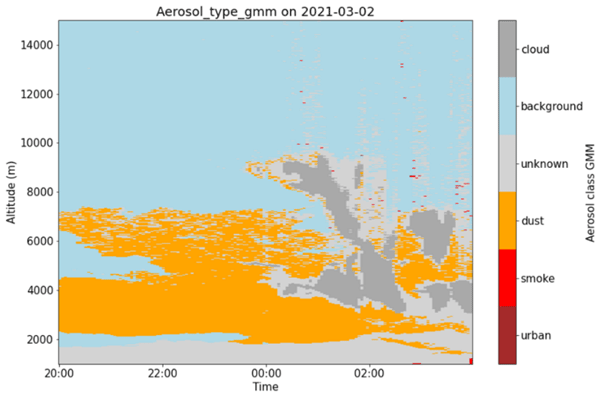
We developed a new method to automatically identify types of particles in the air, such as smoke, dust, or pollution, using a specialized laser system. This helps monitor air quality more efficiently and in greater detail. Our method uses real data collected over 3 years in northern France and can detect changes caused by weather conditions. It offers a faster and more accurate way to understand what is in the air we breathe.
Aymeric Dziduch, Guillaume Mioche, Quentin Coopman, Clément Bazantay, Julien Delanoë, and Olivier Jourdan
EGUsphere, https://doi.org/10.5194/egusphere-2025-2698, https://doi.org/10.5194/egusphere-2025-2698, 2025
Preprint archived
Short summary
Short summary
Low-level clouds play a central role in the Arctic climate, modulating the surface energy budget with competing warming and cooling effects. In this study, radar-lidar satellite products are used to investigate the geographical and seasonal variations of different cloud types observed over eight years. Oceanic regions are characterized by high occurrences of low-level mixed-phase clouds, which are influenced by atmospheric stability conditions, surface temperatures and cold air outbreaks.
Karlie N. Rees, Timothy J. Garrett, Thomas D. DeWitt, Corey Bois, Steven K. Krueger, and Jérôme C. Riedi
Nonlin. Processes Geophys., 31, 497–513, https://doi.org/10.5194/npg-31-497-2024, https://doi.org/10.5194/npg-31-497-2024, 2024
Short summary
Short summary
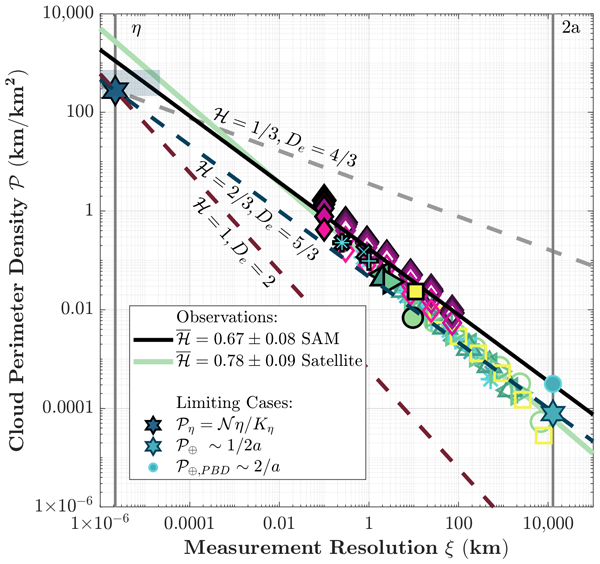
The shapes of clouds viewed from space reflect vertical and horizontal motions in the atmosphere. We theorize that, globally, cloud perimeter complexity is related to the dimension of turbulence also governed by horizontal and vertical motions. We find agreement between theory and observations from various satellites and a numerical model and, remarkably, that the theory applies globally using only basic planetary physical parameters from the smallest scales of turbulence to the planetary scale.

Dhiraj K. Singh, Eric R. Pardyjak, and Timothy J. Garrett
Atmos. Meas. Tech., 17, 4581–4598, https://doi.org/10.5194/amt-17-4581-2024, https://doi.org/10.5194/amt-17-4581-2024, 2024
Short summary
Short summary
Accurate measurements of the properties of snowflakes are challenging to make. We present a new technique for the real-time measurement of the density of freshly fallen individual snowflakes. A new thermal-imaging instrument, the Differential Emissivity Imaging Disdrometer (DEID), is shown to be capable of providing accurate estimates of individual snowflake and bulk snow hydrometeor density. The method exploits the rate of heat transfer during the melting of a snowflake on a hotplate.

Thomas D. DeWitt and Timothy J. Garrett
Atmos. Chem. Phys., 24, 8457–8472, https://doi.org/10.5194/acp-24-8457-2024, https://doi.org/10.5194/acp-24-8457-2024, 2024
Short summary
Short summary
There is considerable disagreement on mathematical parameters that describe the number of clouds of different sizes as well as the size of the largest clouds. Both are key defining characteristics of Earth's atmosphere. A previous study provided an incorrect explanation for the disagreement. Instead, the disagreement may be explained by prior studies not properly accounting for the size of their measurement domain. We offer recommendations for how the domain size can be accounted for.
Raphaël Peroni, Céline Cornet, Olivier Pujol, Guillaume Penide, Clémence Pierangelo, and François Thieuleux
EGUsphere, https://doi.org/10.5194/egusphere-2024-1560, https://doi.org/10.5194/egusphere-2024-1560, 2024
Preprint withdrawn
Short summary
Short summary
A new retrieval algorithm to measure integrated water vapor content above clouds using shortwave infrared (SWIR) observations has been developed and evaluated through both idealized and realistic atmospheric profiles. For the latter, the algorithm shows a positive bias in retrieving water vapor content above low/mid-level clouds, with an error margin of about 2.6 kg.m-2.
Robin Miri, Olivier Pujol, Qiaoyun Hu, Philippe Goloub, Igor Veselovskii, Thierry Podvin, and Fabrice Ducos
Atmos. Meas. Tech., 17, 3367–3375, https://doi.org/10.5194/amt-17-3367-2024, https://doi.org/10.5194/amt-17-3367-2024, 2024
Short summary
Short summary
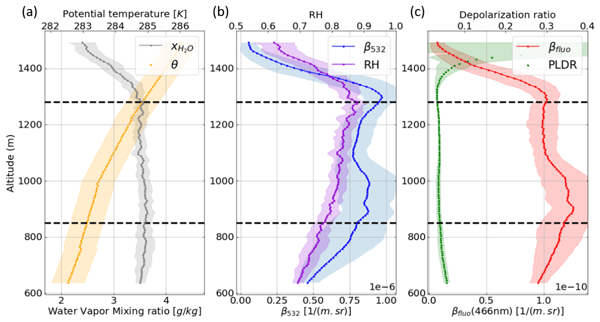
This paper focuses on the use of fluorescence to study aerosols with lidar. An innovative method for aerosol hygroscopic growth study using fluorescence is presented. The paper presents case studies to showcase the effectiveness and potential of the proposed approach. These advancements will contribute to better understanding the interactions between aerosols and water vapor, with future work expected to be dedicated to aerosol–cloud interaction.
Alejandra Velazquez-Garcia, Joel F. de Brito, Suzanne Crumeyrolle, Isabelle Chiapello, and Véronique Riffault
Aerosol Research, 2, 107–122, https://doi.org/10.5194/ar-2-107-2024, https://doi.org/10.5194/ar-2-107-2024, 2024
Short summary
Short summary
Multi-annual in situ observations were combined with back trajectory and emissions inventories to study black and brown carbon (BC, BrC) sources in the north of France. Results show BC to be mainly originated from vehicular traffic (31 %), shipping (25 %), and residential heating (21 %). Also, a significant decrease of the BrC component from residential heating is observed after 24 h of atmospheric aging. These results should lead to better climate and air pollution mitigation strategies.
Maria Fernanda Sanchez Barrero, Ioana Elisabeta Popovici, Philippe Goloub, Stephane Victori, Qiaoyun Hu, Benjamin Torres, Thierry Podvin, Luc Blarel, Gaël Dubois, Fabrice Ducos, Eric Bourrianne, Aliaksandr Lapionak, Lelia Proniewski, Brent Holben, David Matthew Giles, and Anthony LaRosa
Atmos. Meas. Tech., 17, 3121–3146, https://doi.org/10.5194/amt-17-3121-2024, https://doi.org/10.5194/amt-17-3121-2024, 2024
Short summary
Short summary
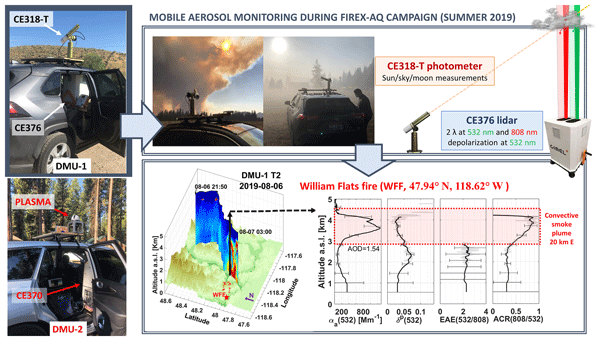
This study showcases the use of a compact elastic lidar to monitor aerosols aboard moving platforms. By coupling dual-wavelength and depolarization measurements with photometer data, we studied aerosols during events of Saharan dust and smoke transport. Our research, conducted in various scenarios, not only validated our methods but also offered insights into the atmospheric dynamics near active fires. This study aids future research to fill observational gaps in aerosol monitoring.
Thomas D. DeWitt, Timothy J. Garrett, Karlie N. Rees, Corey Bois, Steven K. Krueger, and Nicolas Ferlay
Atmos. Chem. Phys., 24, 109–122, https://doi.org/10.5194/acp-24-109-2024, https://doi.org/10.5194/acp-24-109-2024, 2024
Short summary
Short summary
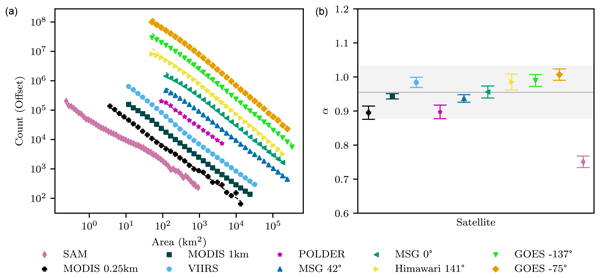
Viewed from space, a defining feature of Earth's atmosphere is the wide spectrum of cloud sizes. A recent study predicted the distribution of cloud sizes, and this paper compares the prediction to observations. Although there is nuance in viewing perspective, we find robust agreement with theory across different climatological conditions, including land–ocean contrasts, time of year, or latitude, suggesting a minor role for Coriolis forces, aerosol loading, or surface temperature.
Suzanne Crumeyrolle, Jenni S. S. Kontkanen, Clémence Rose, Alejandra Velazquez Garcia, Eric Bourrianne, Maxime Catalfamo, Véronique Riffault, Emmanuel Tison, Joel Ferreira de Brito, Nicolas Visez, Nicolas Ferlay, Frédérique Auriol, and Isabelle Chiapello
Atmos. Chem. Phys., 23, 183–201, https://doi.org/10.5194/acp-23-183-2023, https://doi.org/10.5194/acp-23-183-2023, 2023
Short summary
Short summary
Ultrafine particles (UFPs) are particles with an aerodynamic diameter of 100 nm or less and negligible mass concentration but are the dominant contributor to the total particle number concentration. The present study aims to better understand the environmental factors favoring or inhibiting atmospheric new particle formation (NPF) over Lille, a large city in the north of France, and to analyze the impact of such an event on urban air quality using a long-term dataset (3 years).

Timothy J. Garrett, Matheus R. Grasselli, and Stephen Keen
Earth Syst. Dynam., 13, 1021–1028, https://doi.org/10.5194/esd-13-1021-2022, https://doi.org/10.5194/esd-13-1021-2022, 2022
Short summary
Short summary
Current world economic production is rising relative to energy consumption. This increase in
production efficiencysuggests that carbon dioxide emissions can be decoupled from economic activity through technological change. We show instead a nearly fixed relationship between energy consumption and a new economic quantity, historically cumulative economic production. The strong link to the past implies inertia may play a more dominant role in societal evolution than is generally assumed.

Karlie N. Rees and Timothy J. Garrett
Atmos. Meas. Tech., 14, 7681–7691, https://doi.org/10.5194/amt-14-7681-2021, https://doi.org/10.5194/amt-14-7681-2021, 2021
Short summary
Short summary
Monte Carlo simulations are used to establish baseline precipitation measurement uncertainties according to World Meteorological Organization standards. Measurement accuracy depends on instrument sampling area, time interval, and precipitation rate. Simulations are compared with field measurements taken by an emerging hotplate precipitation sensor. We find that the current collection area is sufficient for light rain, but a larger collection area is required to detect moderate to heavy rain.
Cited articles
Bellouin, N., Quaas, J., Gryspeerdt, E., Kinne, S., Stier, P., Watson-Parris, D., Boucher, O., Carslaw, K. S., Christensen, M., Daniau, A. L., Dufresne, J. L., Feingold, G., Fiedler, S., Forster, P., Gettelman, A., Haywood, J. M., Lohmann, U., Malavelle, F., Mauritsen, T., McCoy, D. T., Myhre, G., Mülmenstädt, J., Neubauer, D., Possner, A., Rugenstein, M., Sato, Y., Schulz, M., Schwartz, S. E., Sourdeval, O., Storelvmo, T., Toll, V., Winker, D., and Stevens, B.: Bounding Global Aerosol Radiative Forcing of Climate Change, Rev. Geophys., 58, e2019RG000660, https://doi.org/10.1029/2019RG000660, 2020.
Benas, N., Solodovnik, I., Stengel, M., Hüser, I., Karlsson, K.-G., Håkansson, N., Johansson, E., Eliasson, S., Schröder, M., Hollmann, R., and Meirink, J. F.: CLAAS-3: the third edition of the CM SAF cloud data record based on SEVIRI observations, Earth Syst. Sci. Data, 15, 5153–5170, https://doi.org/10.5194/essd-15-5153-2023, 2023.
Bennartz, R. and Rausch, J.: Global and regional estimates of warm cloud droplet number concentration based on 13 years of AQUA-MODIS observations, Atmos. Chem. Phys., 17, 9815–9836, https://doi.org/10.5194/acp-17-9815-2017, 2017.
Boichu, M., Favez, O., Riffault, V., Petit, J.-E., Zhang, Y., Brogniez, C., Sciare, J., Chiapello, I., Clarisse, L., Zhang, S., Pujol-Söhne, N., Tison, E., Delbarre, H., and Goloub, P.: Large-scale particulate air pollution and chemical fingerprint of volcanic sulfate aerosols from the 2014–2015 Holuhraun flood lava eruption of Bárðarbunga volcano (Iceland), Atmos. Chem. Phys., 19, 14253–14287, https://doi.org/10.5194/acp-19-14253-2019, 2019.
Boucher, O., Randall, D., Artaxo, P., Bretherton, C., Feingold, G., Forster, P. M., Kerminen, V.-M., Kondo, Y., Liao, H., Lohmann, U., Rasch, P., Satheesh, S. K., Sherwood, S., Stevens, B., and Zhang, X. Y.: Clouds and Aerosols, in: Climate Change 2013: The Physical Science Basis, in: Contribution of Working Group I to the Fifth Assessment Report of the Intergovernmental Panel on Climate Change, Cambridge University Press, https://doi.org/10.1017/CBO9781107415324.016, 2013.
Bovchaliuk, V., Goloub, P., Podvin, T., Veselovskii, I., Tanre, D., Chaikovsky, A., Dubovik, O., Mortier, A., Lopatin, A., Korenskiy, M., and Victori, S.: Comparison of aerosol properties retrieved using GARRLiC, LIRIC, and Raman algorithms applied to multi-wavelength lidar and sun/sky-photometer data, Atmos. Meas. Tech., 9, 3391–3405, https://doi.org/10.5194/amt-9-3391-2016, 2016.
Chen, G., Canonaco, F., Tobler, A., Aas, W., Alastuey, A., Allan, J., Atabakhsh, S., Aurela, M., Baltensperger, U., Bougiatioti, A., De Brito, J. F., Ceburnis, D., Chazeau, B., Chebaicheb, H., Daellenbach, K. R., Ehn, M., El Haddad, I., Eleftheriadis, K., Favez, O., Flentje, H., Font, A., Fossum, K., Freney, E., Gini, M., Green, D. C., Heikkinen, L., Herrmann, H., Kalogridis, A.-C., Keernik, H., Lhotka, R., Lin, C., Lunder, C., Maasikmets, M., Manousakas, M. I., Marchand, N., Marin, C., Marmureanu, L., Mihalopoulos, N., Močnik, G., Nęcki, J., O'Dowd, C., Ovadnevaite, J., Peter, T., Petit, J.-E., Pikridas, M., Matthew Platt, S., Pokorná, P., Poulain, L., Priestman, M., Riffault, V., Rinaldi, M., Różański, K., Schwarz, J., Sciare, J., Simon, L., Skiba, A., Slowik, J.G., Sosedova, Y., Stavroulas, I., Styszko, K., Teinemaa, E., Timonen, H., Tremper, A., Vasilescu, J., Via, M., Vodička, P., Wiedensohler, A., Zografou, O., Cruz Minguillón, M., and Prévôt, A. S. H.: European Aerosol Phenomenology – 8: Harmonised Source Apportionment of Organic Aerosol using 22 Year-long ACSM/AMS Datasets, Environ. Int., 107325, https://doi.org/10.1016/j.envint.2022.107325, 2022.
Cimini, C., Marzano, F. S., Ciotti, P., Cimini, D., Westwater, E. R., Han, Y., Keihm, S. J., and Ware, R.: Atmospheric Microwave Radiative Models Study Based on Ground-Based Multichannel Radiometer Observations in the 20–60 GHz Band, in: Proceedings of the Fourteenth ARM Science Team Meeting Proceedings, Albuquerque, NM, USA, 22–26 March 2004, https://radiometrics.com/wp-content/uploads/2021/10/cimini-04.pdf (last access October 2026), 2004.
Collaud Coen, M., Praz, C., Haefele, A., Ruffieux, D., Kaufmann, P., and Calpini, B.: Determination and climatology of the planetary boundary layer height above the Swiss plateau by in situ and remote sensing measurements as well as by the COSMO-2 model, Atmos. Chem. Phys., 14, 13205–13221, https://doi.org/10.5194/acp-14-13205-2014, 2014.
Coopman, Q., Garrett, T. J., Finch, D. P., and Riédi, J.: High sensitivity of arctic liquid clouds to long-range anthropogenic aerosol transport, Geophys. Res. Lett., 45, 372–381, https://doi.org/10.1002/2017GL075795, 2018.
Costantino, L. and Bréon, F.-M.: Aerosol indirect effect on warm clouds over South-East Atlantic, from co-located MODIS and CALIPSO observations, Atmos. Chem. Phys., 13, 69–88, https://doi.org/10.5194/acp-13-69-2013, 2013.
Crewell, S. and Löhnert, U.: Accuracy of boundary layer temperature profiles retrieved with multifrequency, multiangle microwave radiometry, IEEE T. Geosci. Remote, 45, 2195–2201, 2007.
Crumeyrolle, S.: Data for acp-2022-436, Zenodo [data set], https://doi.org/10.5281/zenodo.6794562, 2022.
Crumeyrolle, S., Kontkanen, J. S. S., Rose, C., Velazquez Garcia, A., Bourrianne, E., Catalfamo, M., Riffault, V., Tison, E., Ferreira de Brito, J., Visez, N., Ferlay, N., Auriol, F., and Chiapello, I.: Measurement report: Atmospheric new particle formation at a peri-urban site in Lille, northern France, Atmos. Chem. Phys., 23, 183–201, https://doi.org/10.5194/acp-23-183-2023, 2023.
Duran, B. M., Wall, C. J., Lutsko, N. J., Michibata, T., Ma, P.-L., Qin, Y., Duffy, M. L., Medeiros, B., and Debolskiy, M.: A new method for diagnosing effective radiative forcing from aerosol–cloud interactions in climate models, Atmos. Chem. Phys., 25, 2123–2146, https://doi.org/10.5194/acp-25-2123-2025, 2025.
Dusek, U., Frank, G. P., Hildebrandt, L., Curtius, J., Schneider, J., Walter, S., Chand, D., Drewnick, F., Hings, S., Jung, D., Borrmann, S., and Andreae, M. O.: Size Matters More Than Chemistry for Cloud-Nucleating Ability of Aerosol Particles, Science, 312, 1375–1378, https://doi.org/10.1126/science.1125261, 2006.
Fan, J., Wang, Y., Rosenfeld, D., and Liu, X.: Review of Aerosol-Cloud Interactions: Mechanisms, Significance, and Challenges, J. Atmos. Sci., 73, 4221–4252, https://doi.org/10.1175/JAS-D-16-0037.1, 2016.
Feingold, G.: Modeling of the first indirect effect: Analysis of measurement requirements, Geophys. Res. Lett., 30, ASC 7-1–ASC 7-4, https://doi.org/10.1029/2003GL017967, 2003.
Feingold, G., Remer, L. A., Ramaprasad, J., and Kaufman, Y.: Analysis of smoke impact on clouds in Brazilian biomass burning regions: An extension of Twomey's approach, J. Geophys. Res., 106, 22907–22922, https://doi.org/10.1029/2001JD000732, 2001.
Forster, P., Storelvmo, T., Armour, K., Collins, W., Dufresne, J.-L., Frame, D., Lunt, D. J., Mauritsen, T., Palmer, M. D., Watanabe, M., Wild, M., and Zhang, H.: The Earth's Energy Budget, Climate Feedbacks, and Climate Sensitivity, in: Climate Change 2021: The Physical Science Basis. Contribution of Working Group I to the Sixth Assessment Report of the Intergovernmental Panel on Climate Change, edited by: Masson-Delmotte, V., Zhai, P., Pirani, A., Connors, S. L., Péan, C., Berger, S., Caud, N., Chen, Y., Goldfarb, L., Gomis, M. I., Huang, M., Leitzell, K., Lonnoy, E., Matthews, J. B. R., Maycock, T. K., Waterfield, T., Yelekçi, O., Yu, R., and Zhou, B., Cambridge University Press, Cambridge, United Kingdom and New York, NY, USA, 923–1054, https://doi.org/10.1017/9781009157896.009, 2021.
Garrett, T. J. and Zhao, C.: Ground-based remote sensing of thin clouds in the Arctic, Atmos. Meas. Tech., 6, 1227–1243, https://doi.org/10.5194/amt-6-1227-2013, 2013.
Garrett, T. J., Zhao, C., Dong, X., Mace, G. G., and Hobbs, P. V.: Effects of varying aerosol regimes on low-level Arctic stratus, Geophys. Res. Lett., 31, L17105, https://doi.org/10.1029/2004GL019928, 2004.
Grosvenor, D. P., Sourdeval, O., Zuidema, P., Ackerman, A., Alexandrov, M. D., Bennartz, R., Boers, R., Cairns, B., Chiu, J. C., Christensen, M., Deneke, H., Diamond, M., Feingold, G., Fridlind, A., Hünerbein, A., Knist, C., Kollias, P., Marshak, A., McCoy, D., Merk, D., Painemal, D., Rausch, J., Rosenfeld, D., Russchenberg, H., Seifert, P., Sinclair, K., Stier, P., van Diedenhoven, B., Wendisch, M., Werner, F., Wood, R., Zhang, Z., and Quaas, J.: Remote Sensing of Droplet Number Concentration in Warm Clouds: A Review of the Current State of Knowledge and Perspectives, Rev. Geophys., 56, 409–453, https://doi.org/10.1029/2017RG000593, 2018.
Gryspeerdt, E., Quaas, J., and Bellouin, N.: Constraining the aerosol influence on cloud fraction, J. Geophys. Res.-Atmos., 121, 3566–3583, https://doi.org/10.1002/2015JD023744, 2016.
Jia, H., Ma, X., Yu, F., and Quaas, J.: Significant Underestimation of Radiative Forcing by Aerosol–Cloud Interactions Derived from Satellite-Based Methods, Nat. Commun., 12, 3649, https://doi.org/10.1038/s41467-021-23888-1, 2021.
Jokinen, V. and Mäkelä, J. M.: Closed-loop arrangement with critical orifice for DMA sheath/excess flow system, J. Aerosol Sci., 28, 643–648, https://doi.org/10.1016/S0021-8502(96)00457-0, 1997.
Karstens, U., Simmer, C., and Ruprecht, E.: Remote sensing of cloud liquid water, Meteorol. Atmos. Phys., 54, 157–171, https://doi.org/10.1007/BF01030057, 1994.
Kim, G.-G., Miller, M. A., Schwartz, S. E., Liu, Y., and Min, Q.: The role of adiabaticity in the aerosol first indirect effect, J. Geophys. Res., 113, D05210, https://doi.org/10.1029/2007JD008961, 2008.
Kim, Y.-J., Kim, B.-G., Miller, M., Min, Q., and Song, C.-K.: Enhanced Aerosol-Cloud Relationships in More Stable and Adiabatic Clouds, Asia-Pac. J. Atmos. Sci., 48, 283–293, https://doi.org/10.1007/s13143-012-0028-0, 2012.
Klein, S. A. and Hartmann, D. L.: The Seasonal Cycle of Low Stratiform Clouds, J. Climate 6, 1587–1606, https://doi.org/10.1175/1520-0442(1993)006<1587:TSCOLS>2.0.CO;2, 1993.
Laj, P., Bigi, A., Rose, C., Andrews, E., Lund Myhre, C., Collaud Coen, M., Lin, Y., Wiedensohler, A., Schulz, M., Ogren, J. A., Fiebig, M., Gliß, J., Mortier, A., Pandolfi, M., Petäja, T., Kim, S.-W., Aas, W., Putaud, J.-P., Mayol-Bracero, O., Keywood, M., Labrador, L., Aalto, P., Ahlberg, E., Alados Arboledas, L., Alastuey, A., Andrade, M., Artíñano, B., Ausmeel, S., Arsov, T., Asmi, E., Backman, J., Baltensperger, U., Bastian, S., Bath, O., Beukes, J. P., Brem, B. T., Bukowiecki, N., Conil, S., Couret, C., Day, D., Dayantolis, W., Degorska, A., Eleftheriadis, K., Fetfatzis, P., Favez, O., Flentje, H., Gini, M. I., Gregorič, A., Gysel-Beer, M., Hallar, A. G., Hand, J., Hoffer, A., Hueglin, C., Hooda, R. K., Hyvärinen, A., Kalapov, I., Kalivitis, N., Kasper-Giebl, A., Kim, J. E., Kouvarakis, G., Kranjc, I., Krejci, R., Kulmala, M., Labuschagne, C., Lee, H.-J., Lihavainen, H., Lin, N.-H., Löschau, G., Luoma, K., Marinoni, A., Martins Dos Santos, S., Meinhardt, F., Merkel, M., Metzger, J.-M., Mihalopoulos, N., Nguyen, N. A., Ondracek, J., Pérez, N., Perrone, M. R., Petit, J.-E., Picard, D., Pichon, J.-M., Pont, V., Prats, N., Prenni, A., Reisen, F., Romano, S., Sellegri, K., Sharma, S., Schauer, G., Sheridan, P., Sherman, J. P., Schütze, M., Schwerin, A., Sohmer, R., Sorribas, M., Steinbacher, M., Sun, J., Titos, G., Toczko, B., Tuch, T., Tulet, P., Tunved, P., Vakkari, V., Velarde, F., Velasquez, P., Villani, P., Vratolis, S., Wang, S.-H., Weinhold, K., Weller, R., Yela, M., Yus-Diez, J., Zdimal, V., Zieger, P., and Zikova, N.: A global analysis of climate-relevant aerosol properties retrieved from the network of Global Atmosphere Watch (GAW) near-surface observatories, Atmos. Meas. Tech., 13, 4353–4392, https://doi.org/10.5194/amt-13-4353-2020, 2020.
Lihavainen, H., Kerminen, V.-M., and Remer, L. A.: Aerosol-cloud interaction determined by both in situ and satellite data over a northern high-latitude site, Atmos. Chem. Phys., 10, 10987–10995, https://doi.org/10.5194/acp-10-10987-2010, 2010.
Löhnert, U. and Crewell, S.: Accuracy of cloud liquid water path from ground-based microwave radiometry: Part I. Dependency on cloud model statistics, Radio Sci., 38, 8041, https://doi.org/10.1029/2002RS002654, 2003.
Louf, V., Pujol, O., Sauvageot, H., and Riédi, J.: Seasonal and diurnal water vapour distribution in the Sahelian area from microwave radiometric profiling observations, Q. J. Roy. Meteor. Soc., 141, 2643–2653, https://doi.org/10.1002/qj.2550, 2015.
Lu, M.-L., Conant, W. C., Jonsson, H. H., Varutbangkul, V., Flagan, R. C., and Seinfeld, J. H.: The Marine Stratus/Stratocumulus Experiment (MASE): Aerosol-cloud relationships in marine stratocumulus, J. Geophys. Res.-Atmos., 112, https://doi.org/10.1029/2006JD007985, 2007.
Lu, M.-L., Feingold, G., Jonsson, H. H., Chuang, P. Y., Gates, H., Flagan, R. C., and Seinfeld, J. H.: Aerosol-cloud relationships in continental shallow cumulus, J. Geophys. Res.-Atmos., 113, https://doi.org/10.1029/2007JD009354, 2008.
MacDonald, A. B., Hossein Mardi, A., Dadashazar, H., Azadi Aghdam, M., Crosbie, E., Jonsson, H. H., Flagan, R. C., Seinfeld, J. H., and Sorooshian, A.: On the relationship between cloud water composition and cloud droplet number concentration, Atmos. Chem. Phys., 20, 7645–7665, https://doi.org/10.5194/acp-20-7645-2020, 2020.
Madhavan, B. L., He, Y., Wu, Y., Gross, B., Moshary, F., and Ahmed, S.: Development of a Ground Based Remote Sensing Approach for Direct Evaluation of Aerosol-Cloud Interaction, Atmosphere, 3, 468–494, https://doi.org/10.3390/atmos3040468, 2012.
Marchand, R., Ackerman, T., Westwater, E. R., Clough, S. A., Cady‐Pereira, K., and Liljegren, J. C.: An assessment of microwave absorption models and retrievals of cloud liquid water using clear‐sky data, J. Geophys. Res., 108, 2003JD003843, https://doi.org/10.1029/2003JD003843, 2003.
Mascaut, F., Pujol, O., Verreyken, B., Peroni, R., Metzger, J. M., Blarel, L., Podvin, T., Goloub, P., Sellegri, K., Thornberry, T., Duflot, V., Tulet, P., and Brioude, J.: Aerosol characterization in an oceanic context around Reunion Island (AEROMARINE field campaign), Atmos. Environ., 268, 118770, https://doi.org/10.1016/j.atmosenv.2021.118770, 2022.
Mascaut, F., Pujol, O., Brioude, J., Jensen, A., Lefranc, M., Evan, S., and Crumeyrolle, S.: A competition–species model for water vapour-aerosol-cloud-rain interactions, Atmos. Res., 284, 106588, https://doi.org/10.1016/j.atmosres.2022.106588, 2023a.
Mascaut, F., Pujol, O., Brioude, J., and Jensen, A.: A 2D Ising-like model for cloud field organization in pristine oceans, Eur. Phys. J. Plus, 138, 76, https://doi.org/10.1140/epjp/s13360-022-03633-3, 2023b.
McComiskey, A. and Feingold, G.: The scale problem in quantifying aerosol indirect effects, Atmos. Chem. Phys., 12, 1031–1049, https://doi.org/10.5194/acp-12-1031-2012, 2012.
McComiskey, A., Feingold, G., Frisch, A. S., Turner, D. D., Miller, M. A., Chiu, J. C., Min, Q., and Ogren, J. A.: An assessment of aerosol-cloud interactions in marine stratus clouds based on surface remote sensing, J. Geophys. Res., 114, D09203, https://doi.org/10.1029/2008JD011006, 2009.
Meirink, J. F., Karlsson, K.-G., Solodovnik, I., Hüser, I., Benas, N., Johansson, E., Håkansson, N., Stengel, M., Selbach, N., Schröder, M., and Hollmann, R.: CLAAS-3: CM SAF CLoud property dAtAset using SEVIRI – Edition 3, Satellite Application Facility on Climate Monitoring [data set], https://doi.org/10.5676/EUM_SAF_CM/CLAAS/V003, 2022.
Michibata, T.: Aerosol-Cloud Interactions in the Climate System, in: Handbook of Air Quality and Climate Change, edited by: Akimoto, H. and Tanimoto, H., Springer, Singapore, https://doi.org/10.1007/978-981-15-2527-8_35-1, 2022.
Miri, R., Pujol, O., Hu, Q., Goloub, P., Veselovskii, I., Podvin, T., and Ducos, F.: Innovative aerosol hygroscopic growth study from Mie–Raman–fluorescence lidar and microwave radiometer synergy, Atmos. Meas. Tech., 17, 3367–3375, https://doi.org/10.5194/amt-17-3367-2024, 2024.
Moreira, G. D. A., Guerrero-Rascado, J. L., Bravo-Aranda, J. A., Foyo-Moreno, I., Cazorla, A., Alados, I., Lyamani, H., Landulfo, E., and Alados-Arboledas, L.: Study of the planetary boundary layer height in an urban environment using a combination of microwave radiometer and ceilometer, Atmos. Res., 240, 104932, https://doi.org/10.1016/j.atmosres.2020.104932, 2020.
Mortier, A., Goloub, P., Podvin, T., Deroo, C., Chaikovsky, A., Ajtai, N., Blarel, L., Tanre, D., and Derimian, Y.: Detection and characterization of volcanic ash plumes over Lille during the Eyjafjallajökull eruption, Atmos. Chem. Phys., 13, 3705–3720, https://doi.org/10.5194/acp-13-3705-2013, 2013.
Motos, G., Freitas, G., Georgakaki, P., Wieder, J., Li, G., Aas, W., Lunder, C., Krejci, R., Pasquier, J. T., Henneberger, J., David, R. O., Ritter, C., Mohr, C., Zieger, P., and Nenes, A.: Aerosol and dynamical contributions to cloud droplet formation in Arctic low-level clouds, Atmos. Chem. Phys., 23, 13941–13956, https://doi.org/10.5194/acp-23-13941-2023, 2023.
Müller, T., Nowak, A., Wiedensohler, A., Sheridan, P., Laborde, M., Covert, D. S., Marinoni, A., Imre, K., Henzing, B., Roger, J.-C., Santos, S. M. D., Wilhelm, R., Wang, Y.-Q., and Leeuw, G. D.: Angular Illumination and Truncation of Three Different Integrating Nephelometers: Implications for Empirical, Size-Based Corrections, Aerosol Sci. Tech., 43, 581–586,
doi10.1080/02786820902798484, 2009.
doi10.1080/02786820902798484, 2009.
Müller, T., Laborde, M., Kassell, G., and Wiedensohler, A.: Design and performance of a three-wavelength LED-based total scatter and backscatter integrating nephelometer, Atmos. Meas. Tech., 4, 1291–1303, https://doi.org/10.5194/amt-4-1291-2011, 2011.
Nandan, R., Ratnam, M. V., Kiran, V. R., and Naik, D. N.: Aerosol-cloud interaction in water clouds observed using ground-based, in-situ, and satellite-based observations over an Indian continental region, Atmos. Res., 280, 106436, https://doi.org/10.1016/j.atmosres.2022.106436 2022.
Nakajima, T. and King, M. D.: Determination of the Optical Thickness and Effective Particle Radius of Clouds from Reflected Solar Radiation Measurements. Part I: Theory, J. Atmos. Sci., 47, 1878–1893, https://doi.org/10.1175/1520-0469(1990)047<1878:DOTOTA>2.0.CO;2, 1990.
Nakajima, T., Higurashi, A., Kawamoto, K., and Penner, J. E.: A possible correlation between satellite-derived cloud and aerosol microphysical parameters, Geophys. Res. Lett., 28, 1171–1174, https://doi.org/10.1029/2000GL012186, 2001.
Painemal, D. and Zuidema, P.: The first aerosol indirect effect quantified through airborne remote sensing during VOCALS-REx, Atmos. Chem. Phys., 13, 917–931, https://doi.org/10.5194/acp-13-917-2013, 2013.
Pavolonis, M. J., Heidinger, A. K., and Uttal, T.: Daytime global cloud typing from AVHRR and VIIRS: Algorithm description, validation, and comparison, J. Appl. Meteorol., 44, 804–826, https://doi.org/10.1175/JAM2236.1, 2005.
Platnick, S., King, M. D., Ackerman, S. A., Menzel, W. P., Baum, B. A., Riédi, J. C., and Frey, R. A.: The MODIS cloud products: Algorithms and examples from Terra, IEEE T. Geosci. Remote, 41, 459–473, 2003.
Pruppacher, H. R. and Klett, J. D. (Eds.): Microstructure of Atmospheric Clouds and Precipitation, in: Microphysics of Clouds and Precipitation, Springer, Netherlands, https://doi.org/10.1007/978-0-306-48100-0_2, 2010.
Qiu, Y., Zhao, C., Guo, J., and Li, J.: 8-Year ground-based observational analysis about the seasonal variation of the aerosol-cloud droplet effective radius relationship at SGP site, Atmos. Environ., 164, 139–146, 2017.
Quaas, J., Boucher, O., and Bréon, F.-M.: Aerosol indirect effects in POLDER satellite data and the Laboratoire de Météorologie Dynamique–Zoom (LMDZ) general circulation model, J. Geophys. Res.-Atmos., 109, https://doi.org/10.1029/2003JD004317, 2004.
Quaas, J., Boucher, O., and Lohmann, U.: Constraining the total aerosol indirect effect in the LMDZ and ECHAM4 GCMs using MODIS satellite data, Atmos. Chem. Phys., 6, 947–955, https://doi.org/10.5194/acp-6-947-2006, 2006.
Quaas, J., Ming, Y., Menon, S., Takemura, T., Wang, M., Penner, J. E., Gettelman, A., Lohmann, U., Bellouin, N., Boucher, O., Sayer, A. M., Thomas, G. E., McComiskey, A., Feingold, G., Hoose, C., Kristjánsson, J. E., Liu, X., Balkanski, Y., Donner, L. J., Ginoux, P. A., Stier, P., Grandey, B., Feichter, J., Sednev, I., Bauer, S. E., Koch, D., Grainger, R. G., Kirkevåg, A., Iversen, T., Seland, Ø., Easter, R., Ghan, S. J., Rasch, P. J., Morrison, H., Lamarque, J.-F., Iacono, M. J., Kinne, S., and Schulz, M.: Aerosol indirect effects – general circulation model intercomparison and evaluation with satellite data, Atmos. Chem. Phys., 9, 8697–8717, https://doi.org/10.5194/acp-9-8697-2009, 2009.
Quaas, J., Arola, A., Cairns, B., Christensen, M., Deneke, H., Ekman, A. M. L., Feingold, G., Fridlind, A., Gryspeerdt, E., Hasekamp, O., Li, Z., Lipponen, A., Ma, P.-L., Mülmenstädt, J., Nenes, A., Penner, J. E., Rosenfeld, D., Schrödner, R., Sinclair, K., Sourdeval, O., Stier, P., Tesche, M., van Diedenhoven, B., and Wendisch, M.: Constraining the Twomey effect from satellite observations: issues and perspectives, Atmos. Chem. Phys., 20, 15079–15099, https://doi.org/10.5194/acp-20-15079-2020, 2020.
Rose, C., Collaud Coen, M., Andrews, E., Lin, Y., Bossert, I., Lund Myhre, C., Tuch, T., Wiedensohler, A., Fiebig, M., Aalto, P., Alastuey, A., Alonso-Blanco, E., Andrade, M., Artíñano, B., Arsov, T., Baltensperger, U., Bastian, S., Bath, O., Beukes, J. P., Brem, B. T., Bukowiecki, N., Casquero-Vera, J. A., Conil, S., Eleftheriadis, K., Favez, O., Flentje, H., Gini, M. I., Gómez-Moreno, F. J., Gysel-Beer, M., Hallar, A. G., Kalapov, I., Kalivitis, N., Kasper-Giebl, A., Keywood, M., Kim, J. E., Kim, S.-W., Kristensson, A., Kulmala, M., Lihavainen, H., Lin, N.-H., Lyamani, H., Marinoni, A., Martins Dos Santos, S., Mayol-Bracero, O. L., Meinhardt, F., Merkel, M., Metzger, J.-M., Mihalopoulos, N., Ondracek, J., Pandolfi, M., Pérez, N., Petäjä, T., Petit, J.-E., Picard, D., Pichon, J.-M., Pont, V., Putaud, J.-P., Reisen, F., Sellegri, K., Sharma, S., Schauer, G., Sheridan, P., Sherman, J. P., Schwerin, A., Sohmer, R., Sorribas, M., Sun, J., Tulet, P., Vakkari, V., van Zyl, P. G., Velarde, F., Villani, P., Vratolis, S., Wagner, Z., Wang, S.-H., Weinhold, K., Weller, R., Yela, M., Zdimal, V., and Laj, P.: Seasonality of the particle number concentration and size distribution: a global analysis retrieved from the network of Global Atmosphere Watch (GAW) near-surface observatories, Atmos. Chem. Phys., 21, 17185–17223, https://doi.org/10.5194/acp-21-17185-2021, 2021.
Rose, T., Crewell, S., Löhnert, U., and Simmer, C.: A network suitable microwave radiometer for operational monitoring of the cloudy atmosphere, Atmos. Res., 75, 183–200, https://doi.org/10.1016/j.atmosres.2004.12.005, 2005.
Rosenfeld, D., Sherwood, S., Wood, R., and Donner, L.: Climate Effects of Aerosol-Cloud Interactions, Science, 343, 379–380, https://doi.org/10.1126/science.1247490, 2014.
Sarna, K. and Russchenberg, H. W. J.: Ground-based remote sensing scheme for monitoring aerosol–cloud interactions, Atmos. Meas. Tech., 9, 1039–1050, https://doi.org/10.5194/amt-9-1039-2016, 2016.
Schmetz, J., Pili, P., Tjemkes, S., Just, D., Kerkmann, J., Rota, S., and Ratier, A.: An introduction to Meteosat second generation (MSG), B. Am. Meteorol. Soc., 83, 977–992, https://doi.org/10.1175/BAMS-83-7-Schmetz-2, 2002.
Schmidt, J., Ansmann, A., Bühl, J., and Wandinger, U.: Strong aerosol–cloud interaction in altocumulus during updraft periods: lidar observations over central Europe, Atmos. Chem. Phys., 15, 10687–10700, https://doi.org/10.5194/acp-15-10687-2015, 2015.
Sekiguchi, M., Nakajima, T., Suzuki, K., Kawamoto, K., Higurashi, A., Rosenfeld, D., Sano, I., and Mukai, S.: A study of the direct and indirect effects of aerosols using global satellite data sets of aerosol and cloud parameters, J. Geophys. Res.-Atmos., 108, https://doi.org/10.1029/2002JD003359, 2003.
Sena, E. T., McComiskey, A., and Feingold, G.: A long-term study of aerosol–cloud interactions and their radiative effect at the Southern Great Plains using ground-based measurements, Atmos. Chem. Phys., 16, 11301–11318, https://doi.org/10.5194/acp-16-11301-2016, 2016.
Sinclair, V. A., Ritvanen, J., Urbancic, G., Erner, I., Batrak, Y., Moisseev, D., and Kurppa, M.: Boundary-layer height and surface stability at Hyytiälä, Finland, in ERA5 and observations, Atmos. Meas. Tech., 15, 3075–3103, https://doi.org/10.5194/amt-15-3075-2022, 2022.
Stephens, G. L.: Radiation Profiles in Extended Water Clouds. I: Theory, J. Atmos. Sci., 35, 2111–2122, https://doi.org/10.1175/1520-0469(1978)035<2111:RPIEWC>2.0.CO;2, 1978.
Stubenrauch, C. J., Kinne, S., Mandorli, G., Rossow, W. B., Winker, D. M., Ackerman, S. A., Chepfer, H., Di Girolamo, L., Garnier, A., Heidinger, A., Karlsson, K.-G., Meyer, K., Minnis, P., Platnick, S., Stengel, M., Sun-Mack, S., Veglio, P., Walther, A., Cai, X., Young, A. H., and Zhao, G.: Lessons Learned from the Updated GEWEX Cloud Assessment Database, Surv. Geophys., 45, 1999–2048, https://doi.org/10.1007/s10712-024-09824-0, 2024.
Terai, C. R., Wood, R., Leon, D. C., and Zuidema, P.: Does precipitation susceptibility vary with increasing cloud thickness in marine stratocumulus?, Atmos. Chem. Phys., 12, 4567–4583, https://doi.org/10.5194/acp-12-4567-2012, 2012.
Turner, D. D.: Improved ground-based liquid water path retrievals using a combined infrared and microwave approach, J. Geophys. Res.-Atmos., 112, https://doi.org/10.1029/2007JD008530, 2007.
Twohy, C. H., Petters, M. D., Snider, J. R., Stevens, B., Tahnk, W., Wetzel, M., Russell, L., and Burnet, F.: Evaluation of the aerosol indirect effect in marine stratocumulus clouds: Droplet number, size, liquid water path, and radiative impact, J. Geophys. Res.-Atmos., 110, https://doi.org/10.1029/2004JD005116, 2005.
Velazquez-Garcia, A., Crumeyrolle, S., de Brito, J. F., Tison, E., Bourrianne, E., Chiapello, I., and Riffault, V.: Deriving composition-dependent aerosol absorption, scattering and extinction mass efficiencies from multi-annual high time resolution observations in Northern France, Atmos. Environ., 298, 119613, https://doi.org/10.1016/j.atmosenv.2023.119613, 2023.
Villani, P., Picard, D., Marchand, N., and Laj, P.: Design and validation of a 6-volatility tandem differential mobility analyzer (VTDMA), Aerosol Sci. Tech., 41, 898–906, https://doi.org/10.1080/02786820701534593, 2007.
Walbröl, A., Crewell, S., Engelmann, R., Orlandi, E., Griesche, H., Radenz, M., Hofer, J., Althausen, D., Mech, M., and Ebell, K.: Atmospheric temperature, water vapour and liquid water path from two microwave radiometers during MOSAiC, Sci. Data, 9, 440, https://doi.org/10.1038/s41597-022-01504-1, 2022.
Watson-Parris, D. and Smith, C. J.: Large uncertainty in future warming due to aerosol forcing, Nat. Clim. Chang., 12, 1111–1113, https://doi.org/10.1038/s41558-022-01516-0, 2022.
Wolters, E. L. A., Roebeling, R. A., and Stammes, P.: Cloud reflectance calculations using DAK: study on required integration points, Koninklijk Nederlands Meteorologisch Instituut, http://www.knmi.nl/publications (last access: 9 October 2026), 2006.
Zhang, R. and Jimenez, J. L.: Impact of aerosol size and chemistry on cloud condensation nuclei formation: Implications for the Twomey effect, Atmos. Environ., 101, 12–19, https://doi.org/10.1016/j.atmosenv.2014.11.023, 2015.
Zheng, X., Albrecht, B., Jonsson, H. H., Khelif, D., Feingold, G., Minnis, P., Ayers, K., Chuang, P., Donaher, S., Rossiter, D., Ghate, V., Ruiz-Plancarte, J., and Sun-Mack, S.: Observations of the boundary layer, cloud, and aerosol variability in the southeast Pacific near-coastal marine stratocumulus during VOCALS-REx, Atmos. Chem. Phys., 11, 9943–9959, https://doi.org/10.5194/acp-11-9943-2011, 2011.
Zheng, X., Xi, B., Dong, X., Logan, T., Wang, Y., and Wu, P.: Investigation of aerosol–cloud interactions under different absorptive aerosol regimes using Atmospheric Radiation Measurement (ARM) southern Great Plains (SGP) ground-based measurements, Atmos. Chem. Phys., 20, 3483–3501, https://doi.org/10.5194/acp-20-3483-2020, 2020.
Short summary
This study presents a novel methodology to improve our understanding and the estimation of aerosol–cloud interactions (ACI). Its innovation lies in the synergy between in-situ measurements and remote sensing from ground based and satellite observations. This approach aims to refine the characterization of cloud properties susceptibilities to aerosol burden as a function of particle physicochemical properties, offering new insights for climate modeling and atmospheric process understanding.
This study presents a novel methodology to improve our understanding and the estimation of...


Altmetrics
Final-revised paper
Preprint